10/04/23 Biking & Listening

Here’s a link to today’s bike ride.

Why I ride

Biking is something I both love and hate. The conflicting emotions arise from the undeniable physical effort it demands. However, this exertion is precisely what makes it an excellent form of exercise. Most days, I dedicate over an hour to my cycling routine, and in doing so, I’ve discovered a unique opportunity to enjoy a good book or podcast. The rhythmic pedaling and the wind against my face create a calming backdrop that allows me to fully immerse myself in the content. In these moments, the time spent on the bike seems worthwhile, as I can’t help but appreciate the mental and physical rewards it offers.

I especially like having ridden. The post-biking feeling is one of pure satisfaction. The endorphin rush, coupled with a sense of accomplishment, makes the initial struggle and fatigue worthwhile. As I dismount and catch my breath, I relish the sensation of having conquered the challenge, both physically and mentally. It’s a reminder that the things we sometimes love to hate can often be the ones that bring us the most fulfillment. In the end, the love-hate relationship with biking only deepens my appreciation for the sport, as it continually pushes me to overcome my own limitations and embrace the rewards that follow the effort.

My bike

A Rockhopper by Specialized. I purchased it November 2021 from Venture Out in Guntersville; Mike is top notch! So is the bike. The ‘old’ man seat was salvaged from an old Walmart bike (update: seat replaced, new photo to follow, someday).


Something to consider if you’re not already cycling.

I encourage you to start riding a bike, no matter your age. Check out these groups:

Cycling for those aged 70+(opens in a new tab)

Solitary Cycling(opens in a new tab)

Remember,

Photo by Suzy Hazelwood on Pexels.com

Memoir I’m listening to:

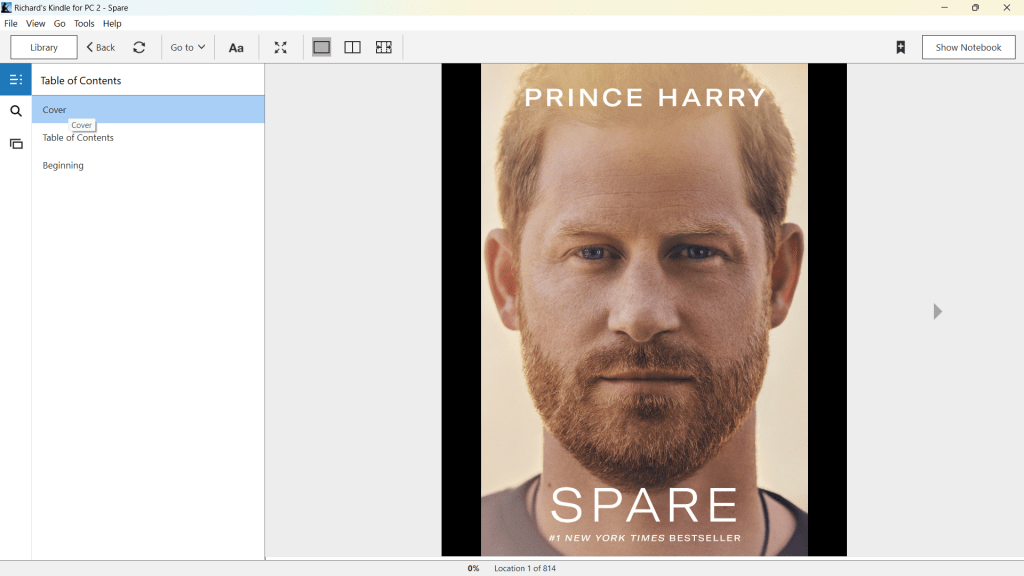
Spare by Prince Harry

Amazon abstract:

#1 NEW YORK TIMES BESTSELLER • Discover the global phenomenon that tells an unforgettable story of love, loss, and healing.

“Compellingly artful . . . [a] blockbuster memoir.”—The New Yorker

It was one of the most searing images of the twentieth century: two young boys, two princes, walking behind their mother’s coffin as the world watched in sorrow—and horror. As Princess Diana was laid to rest, billions wondered what Prince William and Prince Harry must be thinking and feeling—and how their lives would play out from that point on.

For Harry, this is that story at last.

Before losing his mother, twelve-year-old Prince Harry was known as the carefree one, the happy-go-lucky Spare to the more serious Heir. Grief changed everything. He struggled at school, struggled with anger, with loneliness—and, because he blamed the press for his mother’s death, he struggled to accept life in the spotlight.

At twenty-one, he joined the British Army. The discipline gave him structure, and two combat tours made him a hero at home. But he soon felt more lost than ever, suffering from post-traumatic stress and prone to crippling panic attacks. Above all, he couldn’t find true love. 

Then he met Meghan. The world was swept away by the couple’s cinematic romance and rejoiced in their fairy-tale wedding. But from the beginning, Harry and Meghan were preyed upon by the press, subjected to waves of abuse, racism, and lies. Watching his wife suffer, their safety and mental health at risk, Harry saw no other way to prevent the tragedy of history repeating itself but to flee his mother country. Over the centuries, leaving the Royal Family was an act few had dared. The last to try, in fact, had been his mother. . . .

For the first time, Prince Harry tells his own story, chronicling his journey with raw, unflinching honesty. A landmark publication, Spare is full of insight, revelation, self-examination, and hard-won wisdom about the eternal power of love over grief.


Novel I’m listening to:

Where the Crawdads Sing

Amazon abstract:

NOW A MAJOR MOTION PICTURE—The #1 New York Times bestselling worldwide sensation with more than 18 million copies sold, hailed by The New York Times Book Review as “a painfully beautiful first novel that is at once a murder mystery, a coming-of-age narrative and a celebration of nature.”

For years, rumors of the “Marsh Girl” have haunted Barkley Cove, a quiet town on the North Carolina coast. So in late 1969, when handsome Chase Andrews is found dead, the locals immediately suspect Kya Clark, the so-called Marsh Girl. But Kya is not what they say. Sensitive and intelligent, she has survived for years alone in the marsh that she calls home, finding friends in the gulls and lessons in the sand. Then the time comes when she yearns to be touched and loved. When two young men from town become intrigued by her wild beauty, Kya opens herself to a new life—until the unthinkable happens.

Where the Crawdads Sing is at once an exquisite ode to the natural world, a heartbreaking coming-of-age story, and a surprising tale of possible murder. Owens reminds us that we are forever shaped by the children we once were, and that we are all subject to the beautiful and violent secrets that nature keeps.

Podcasts I’m listening to:


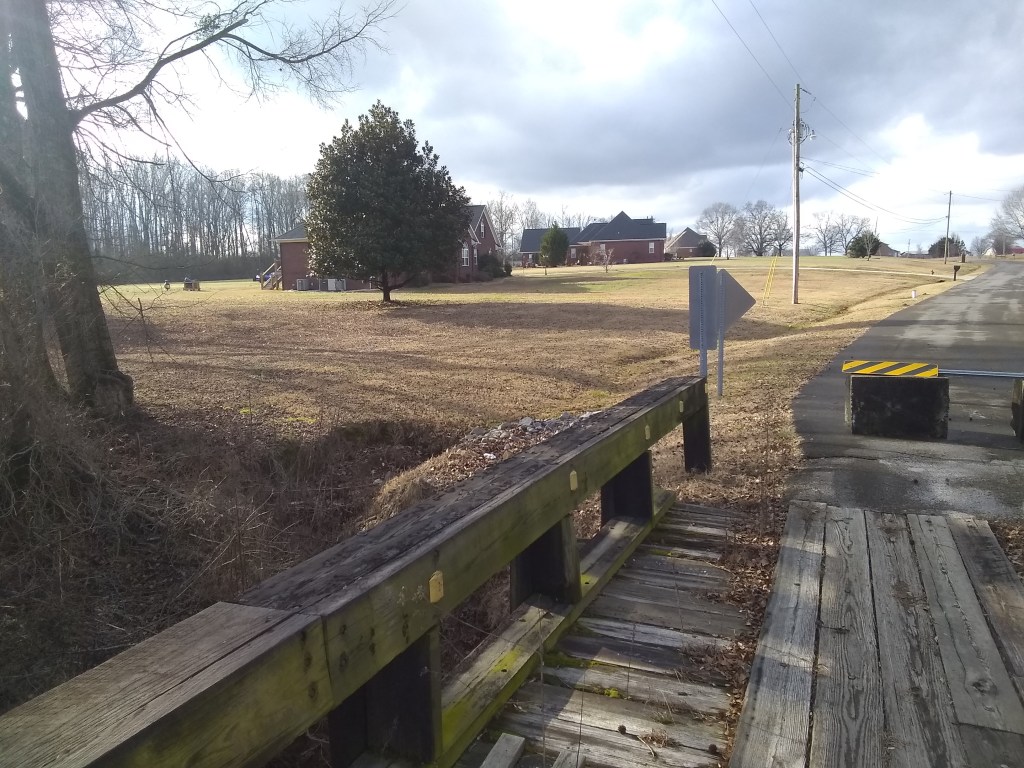
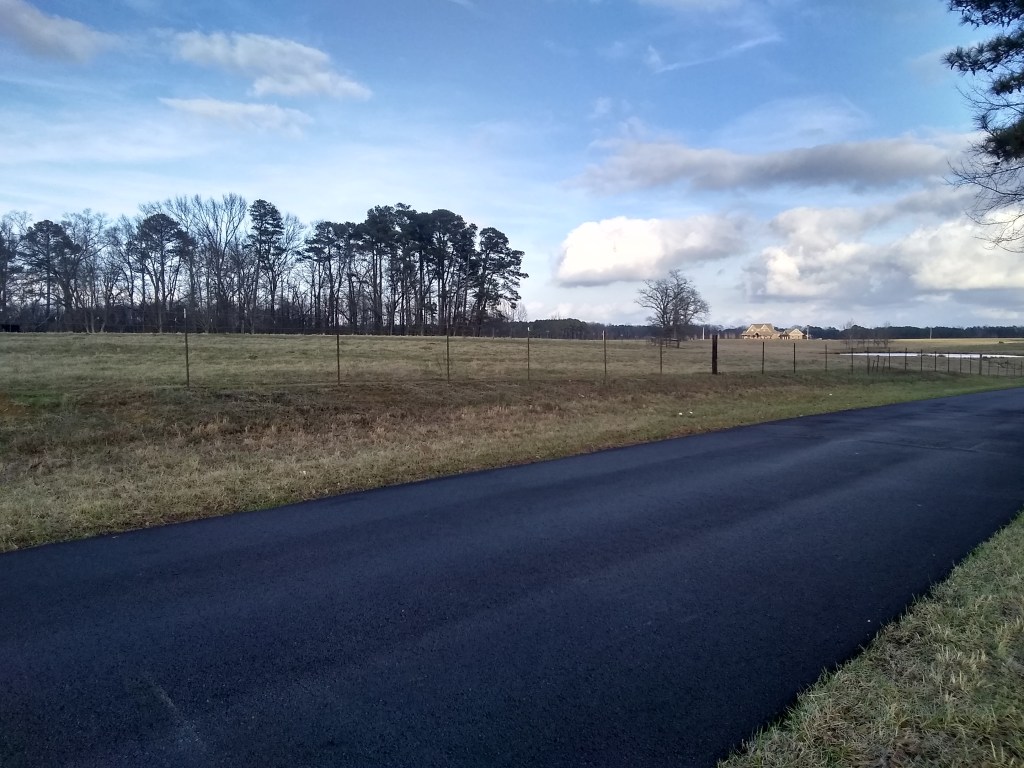
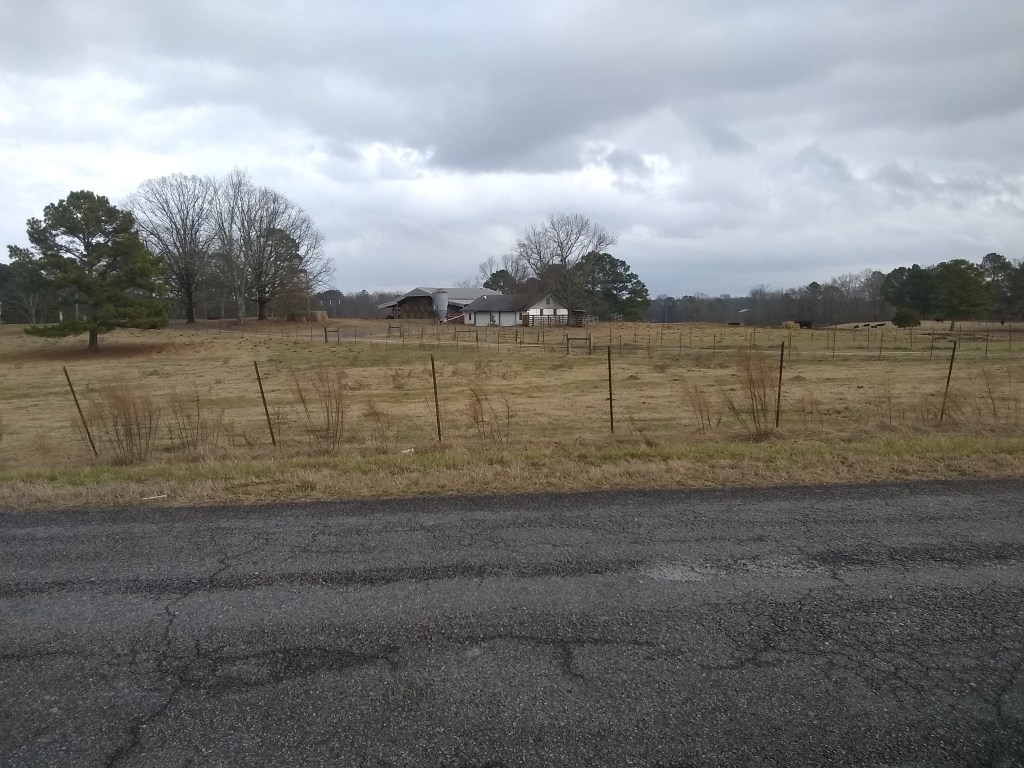
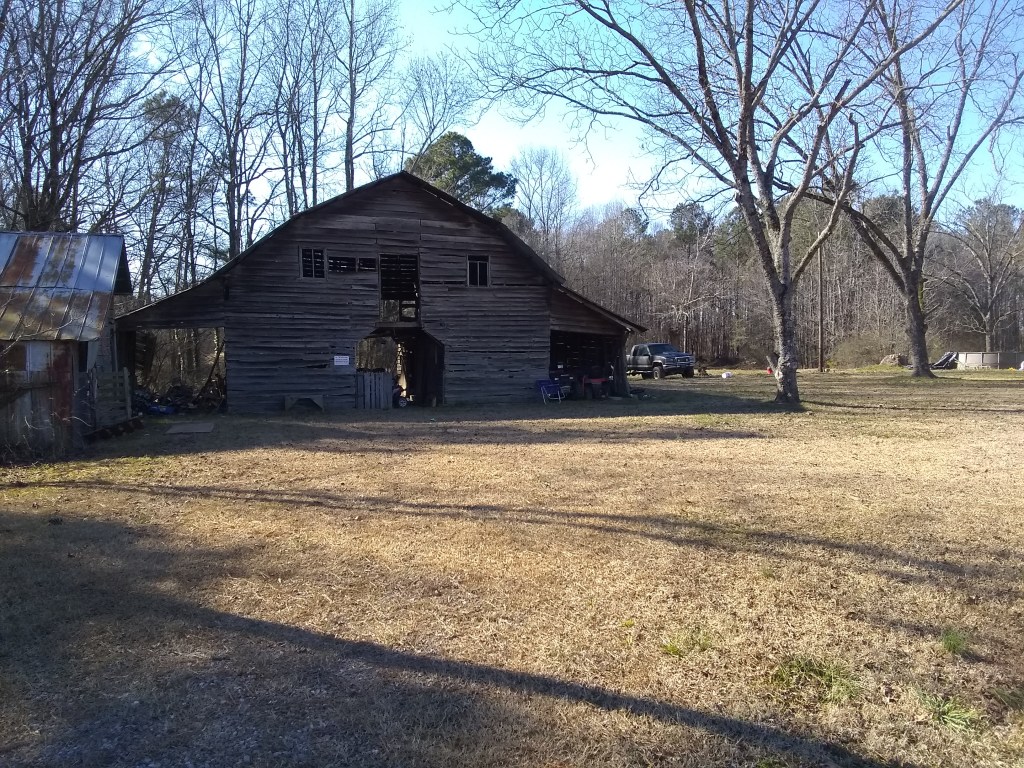
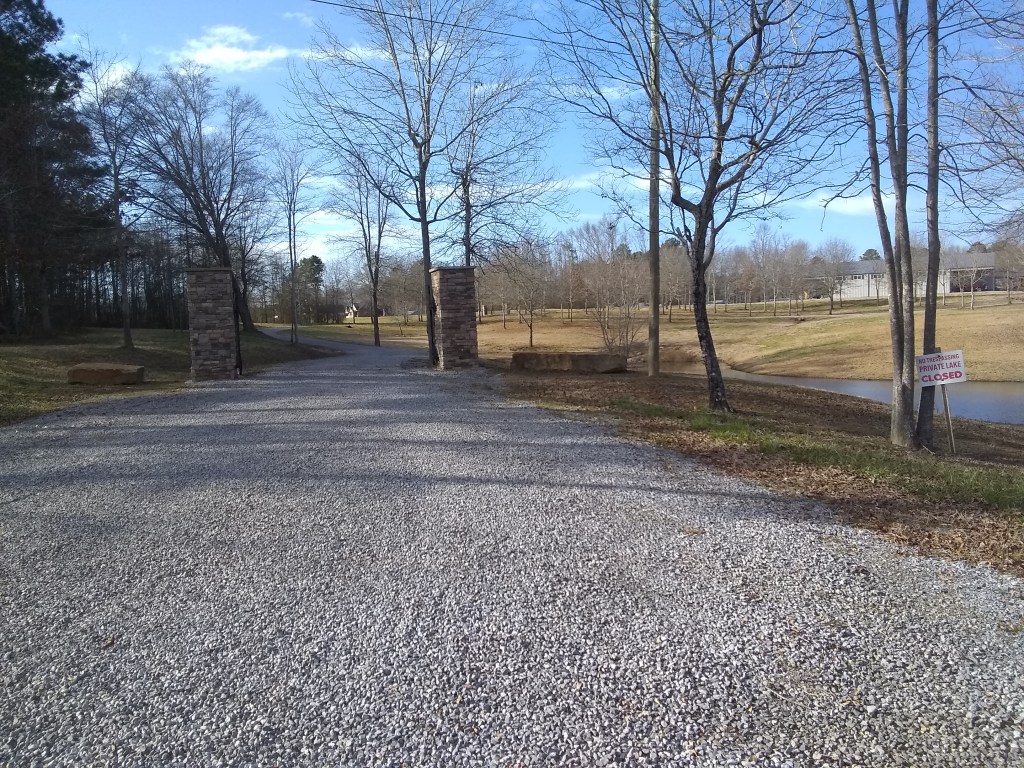
Here’s a few photos from along my pistol route:

God and Girl–Chapter 18

God and Girl is my first novel, written in 2015. I'll post it, a chapter a day, over the next few weeks.

Time is running out.  My Biology class paper, my own, not a team-paper like the ones Ellen and I have worked on every Friday night since the first week of school last September, is a major stress right now.  This solo paper is a big deal, 40% of my grade, and it is due in one week.

Dr. Ayers has really been encouraging us to get creative.  She said one reason so many people today do not know much science, especially Biology, and more especially Evolutionary Biology, is that no one has seemed to come up with a way of making it interesting reading.  She emphasized that she isn’t looking for an article publishable in a peer-reviewed scientific journal, but one that contains truth/evidence from past findings, and that is told in a simple, interesting and engaging way.

I don’t know what it was about my experience with Heather back in the sixth grade that awakened my search, my quest for truth.  Maybe, it was because the experience was so surprising.  Until mine and Heather’s first kiss—practice for the boys we told ourselves—I had never thought that my sexual orientation was for my own gender.  I had of course thought before that I was different in some way, but I had just passed it off to being Daddy’s little girl, being Daddy’s little tomboy.

With Heather, truth seemed to appear unsolicited, suddenly, and not dressed up in a sermon, Bible story, or parent lecture.  Starting then, and much more so continuing today, I have an insatiable appetite for learning.  I’m especially interested in the age-old questions: ‘where did I come from?’ ‘what am I to do?’ and ‘where am I going?’  But, ever since Ellen came along, my questions about the status quo have multiplied by a zillion, especially my questioning of age-old traditions.  And, most especially, traditions about God, the Bible, church, just Christianity in general.  Of late, I’ve had an interest in human evolution, thanks to Dr. Ayers.  So, I guess it is natural given my questioning nature to try to reconcile the long, long line of human evolution with the creation story in Genesis.  Good old Adam and Eve I’m looking for you.

It was very early this morning, probably 4:00 a.m. while I was lying in bed a little upset, that I had woken up.  I think I woke up, but maybe I was just dreaming.  Anyway, I know I was thinking about this stinking Biology paper and a creative way to share real biological information, in an interesting way with my reader—Dr. Ayers. Suddenly, it was like my mind was launched from a powerful cannon back two million years to the time of Homo Naledi.  I had recently read in National Geographic about the recent discovery in a south African cave of a whole new species of humans. Again, suddenly, one synapse, then another, and then several million later, but only milli-seconds in time, my mind was solidly rooted. I would write about this new human species from that Geographic article and everything else I could find, but more importantly, I would write from actual observation because I myself, not just my thoughts, would travel back two million years and become a part of a Homo Naledi tribe, group, family, whatever they would have been.

I take advantage of this creative gift.  I get up out of bed and go to my desk, open my laptop and continue my dream or whatever I had tapped into.  I begin pecking away on my keyboard.

Suddenly, I wake up.  I remembered yesterday’s walk-through miles of woods and then across a vast savannah.  I was laying on a bed of grass I had piled up next to a cluster of rocks, next to a clear stream of water.  My body was stiff and throbbing all over with pain.  I was so not used to this.  I finally get to my feet and I hear something coming, I know because the tall grass up on the ridge is crunching and swaying back and forth.  I don’t believe it is the wind, even though the wind is blowing, much more than when I woke up a few minutes ago.

Then they appear.  There they are, very much like the drawings I had seen in the National Geographic, pictures by artists who had been guided by scientists, all projecting and predicting what Naledi might look like. I could tell they were startled to see me.  I quickly counted and there were eighteen or nineteen in their group: men, women, and children.  Or, that’s what I will call them because they certainly didn’t look like any humans I know back home, back in the states.  There was an obvious difference between the adults.  The men, well, they were men.  I could see easily since none of them had on any type of clothes.

I move forward, towards the group, slowly.  To my surprise, they do not retreat.  Several of the larger ones are making noises, just grunts. They are very primitive looking in their face, skull, jawbone, and teeth— yes, it seemed a couple were smiling at me.  My first thought is they are apes, but upon closer look, I see they are far more advanced than an ape.  They also have human features.  Their feet look a lot like my own.  They are standing, not hunched over.  Even their legs, a little more hairy than modern man, are very much like today’s men and women, but their shoulders are more apelike, probably for climbing.

Was this new species the earliest human species?  I remembered Dr. Ayers in Biology class telling us that apes and humans both descended from a common ancestor, probably two to three million years ago.  Was I looking at the origin of our genus Homo, one that was very close in time to when we split off in one direction from our common ancestor.  Or, was I looking at a close relative of Lucy, the apelike Australopithecines, epitomized by Australopithecus Afarensis, a skeleton discovered in Ethiopia in 1974?  Scientists have determined that Lucy was pre-Homo.

The closer I got, the more I could see that I was a head taller than the tallest among them.  I am tall, almost six feet.  I estimated their tallest at 5 feet. Also, the closer I got to them, I noticed they either sat down or kneeled on the ground.  It was as though they were being reverent.  I could have sworn I saw a reverence in their eyes and faces towards me.  I wondered if they thought I was a god.  I certainly was totally different than anything they had ever seen.  I saw one woman holding a baby, just a tiny little infant.  She began holding her baby up towards the sky and then out towards me.  To my surprise she was wanting me to hold her baby.  It was like she wanted me to bless her baby, maybe endow it with special powers to look like me, or for some other reason I will never know.  I took the baby in my hands and cradled it like I had seen real mothers do.  The baby looked up at me with its odd shaped eyes, real eyes, dark-colored eyes.  The baby reached its left hand and arm out towards my face and I held its little index finger with my right hand.  Soon, the baby had moved her hand from mine and grasped tightly onto my right thumb.  I stood there and held little Ella.  I trusted my Ellen wouldn’t mind, ha.  I held her until the whole group got up and surrounded me, in a loving and gentle sort of way. Then, we all kind of drifted down the hill towards the stream.

We sat down in a circle around my campfire.  It had died down to just a few hot coals. One of the taller men grunted, almost like a squeal, and motioned toward a boy, and pointed out towards a group of trees farther down the stream.  They both got up and left.  Soon they returned, each with an armful of sticks and larger limbs.  The man knelt by the fire and methodically stacked the firewood, starting with smaller twigs, sticks, and then bigger branches.  Soon, the fire was roaring, and we had to move back from the heat. 

Two other adult males communicate in their grunt-like talk and leave.  I recognize that I have not said a word out loud since I met my new friends.  I thought it was time for me to sound out.  I figured they would hear my words as a specialized grunt.  I said, “I am Ruthie and I am happy to meet you.”  A little boy got up from his Dad’s lap and walked over to me.  He reached out his right hand and touched my lips.  He may have a tiny brain, as I had discovered in my research, but it wasn’t too small to realize that the sound he had heard, one unlike any he had ever heard, was coming from my mouth.  He pointed to his own mouth as though he wanted to make new sounds.  He let out a loud but gleeful sound, one sounding almost like yea.  I said, “great job, what is your name?”  Then, he said what sounded like wow.  For the next two hours, not only little Ryan—I guess it is natural for everyone to have a name—but everyone else in our group, except the four little babies, took their turn coming up to me, standing before me, and having little conversations.  I don’t know what on earth they could have learned from me, what they had concluded that all this meant, but I could feel a kinship growing.  After a while, we all settled back, and the talking died off, I closed my eyes and leaned back against a rock.  In a few minutes, I heard what sounded like a song.  I looked and saw three women standing next to the stream holding up their hands and softly singing.  No, it wasn’t like anything I had heard before, certainly not Adele.  It was clear that each of them was mouthing or humming a different sound.  There was a gentle and peaceful tone, almost a religious tone, to their singing.

Just as the song ended the two men who had left earlier returned with what I concluded was a deer or some animal they had killed and skinned.  I couldn’t tell really what it was.  I really didn’t want to know.  They tied two sticks together with a sort of vine in a tee-pee shape, then made another and placed them along each side of the fire.  They had already inserted a stick throughout the middle of the meat.  They placed the stick holding the meat on the two tee-pees.  The meat cooked for hours with the men taking turns rotating the meat like it was a rotisserie.  While the meat cooked I played with a group of young boys and girls, tossing a soccer size ball, it was a ball made by tightly weaving blades of grass with light, but tough vine, wrapped around the outside.  We finally wound up tossing the ball into the stream, seeing who could throw it out the farthest.  The boys took turns wading out to get the floating ball.

Dinner was good.  An all meat meal.  One of the oldest women cut the meat with a rock, but not just any rock.  I could tell it was more like a knife, having been molded carefully.  I suspect it took days and days to make this knife.  The woman obviously had culinary talents given how precisely she cut the smoky delicacy.   

After being offered seconds, I was busting full.  After another sound-out game with two little girls, I leaned back and fell asleep.

When I awoke, I was alone, at least in our camp.  But when I looked upstream, out beyond the stream, north I think, I saw what looked like the entire group of Naledi.  They were all kneeling around one woman who was standing in the middle.  She was holding a baby.  I could hear her grunting, various sounds, various pitches of sound.  The sound made me sad.  I crossed over the stream and approached the group but stopped 20 feet or so before I reached them.  After a few minutes, the group stood, and I heard again the song I had heard the night before from the three ladies who stood and sung beside the other side of the stream.  I could see the baby the woman was holding was the one I had held.  She was Ella’s mom.  It no doubt was Ella, the sweet, loving little girl who had clutched my thumb.  Ella was wrapped, fully wrapped, head to toe, in a light brown animal skin.  When the singing stopped the group turned to me, all with long, sad faces.  One woman grunted at me and motioned for me to come on.  The group started walking further northward, and I joined them.

After an hour’s walk, we came to a cave. The entire group sat down just outside the cave’s entrance, everyone except the mother and the father.  They motioned for me to come with them while everyone else stayed seated.  The three of us, with the mother and father taking turns carrying Ella, went deeper and deeper into the cave.  At one point, we reached a place I knew was a dead-end, certain we could not go any further.  I was wrong.  On hands and knees, and, at times, flat on our stomachs we crawled through a very tight place.  It seemed to go on and on.  Finally, one at a time, me being the last, we could stand up again.  We crossed a large chamber and I followed the other two, climbing up a rock wall, jagged enough to provide us with hand and foot-holds. Once we reached the top we found ourselves in a beautiful cavity with stalactites.  

Ella’s mother and father stood together with Ella in between them in their arms.  I stood as far away as I could to give them a little privacy.  I could hear their sobbing.  I could see them considering each other’s eyes.  In a few minutes, they gently kissed, and the father took Ella and seemed to disappear down into another chamber.  I walked over to look to see where he had gone.  I could see an empty space dropping down, a vertical chute, small very small.  I could only see Ella as I suspected the opening was too small for her father to carry her like a baby, cradled in his arms.  He must have been making his way down the chute, mainly with his feet, while holding Ella above his head.  Soon, Ella was gone.  I could no longer see anything but darkness down that dark, tight chute.

I went back and stood by Ella’s mother.  She was standing holding her hands together and looking up with her eyes closed.  Soon Ella’s father wiggled his way up out of the opening in the chamber floor.  There was no Ella.  He had left her somewhere down further in the cave.  He had left her in a vault.  I finally realized that this had been her funeral.  Ella’s body had been placed in the ground for all eternity.

We made our way out of the cave and I watched the entire Naledi group exchange hugs with Ella’s father and mother.  The Naledi may not be human.  Some say they are much closer to Lucy and the animal world.  But, I say they are our evolutionary ancestors.  I say they are virtually the start of our genus Homo, humankind.  Even though modern humans have changed much since two million years ago, one thing hasn’t changed, and that is love.  Maybe, the Naledi, didn’t know how to clearly say, “Always and Forever, I will love you,” in words, but they showed love by their actions.  During all my time with my Naledi friends, I never heard a cross word, and never saw anger or disgust in any face.  I saw and felt a love that modern man could learn from, could use to mend fences, whether across the world, across the street, or right in our own homes.  

But, their love was best expressed by Ella.  She was most likely sick when I first held her.  Yet, she was human enough to look me in the eye with joy.  She was human enough to take my thumb and tell me, in a primitive type of way, that we could be friends, that we could both enjoy spending time together, we could laugh together, we could cry together.  

And, Ella’s father and mother knew love too.  They showed their love for each other and for Ella by the effort they put into her burial.  Someway, somehow, they revealed, though not in words I could understand, in their own words and in their own way, that they believed in something they could not see.  They showed by their actions that they believed their loved ones who died needed a final resting place.  I don’t know if they believed in an afterlife, but something tells me they might have.  They cared for sweet little Ella as though they believed she lived on, somewhere, even though she was no longer breathing and smiling with them.  No animal, no real animal, could show love like my Naledi friends.

After our trip to the cave to bury little Ella, we returned to our camp.  I did the best I could to say my goodbyes.  And they did too.  They knew I was leaving.  Although our parting wasn’t like you’d expect from modern humans, the Naledi sounded out words, sweet words I know, and all the children came close and took turns touching my lips.  Ella’s father and mother then came and gave me a little round gourd-like object.  They looked at me as I looked at the gourd and as I moved it, I could hear a rattle.  I knew beyond doubt this was Ella’s.  This was her favorite toy, probably something she held in her left-hand clutching just like she did my right thumb. I knew it had to be something they found near a certain type tree.  I thanked them the best I could and put an arm around each of them.  They really didn’t know what to do but looked me in the eyes and nodded and turned their heads heavenward.

Slowly, I turned and started my long walk forward, through two million years, back to my desk.  But, before I got back to the forest, I realized that during my entire time in south Africa with my Naledi friends, some two million years before the 21st century, I had seen no sign of Adam or Eve, Cain or Able, and no sign of Seth.  If it was too early in history for the Garden of Eden and Adam and Eve, then they were not the first humans.  If it was just the right time in history and the Garden of Eden and Adam and Eve were somewhere else, say on the Tigris River, then they were not the only humans, and whether God knew about the Naledi or not when he created Adam and Eve, he certainly would approve of how they treated each other.  Maybe, my friends, the Naledi, were the ones living in the Garden of Eden.  Whatever my guesses, what I truly believed, especially now, is that Dr. Ayers and a million other scientists are correct.  Homo sapiens have been evolving for quite a while, most likely millions and millions of years, that we probably have a common ancestor with the apes, and that religion, real religion, didn’t start a few thousand years ago, but has been part of our species for eons.

After I dressed and as I was riding with Mom to school, all I could think about was my sweet little Ella, all alone deep, deep in that south African cave.  I found peace once my thoughts stepped out onto more solid ground.  Ella, who Ella was now, after she died in this life, was now new.  Ella’s spirit had left her body the moment she took her last breath.  Her spirit was not wrapped up inside that light brown animal skin.  It was not buried deep inside that cave.  I didn’t know where her spirit went, where it was now, but I believed, yes believed without verifiable evidence, that the real Ella, her very essence, lived on.

Something made me believe this.  I sure wanted this to be true.

I sure hope Dr. Ayers approves of how I have packaged my science research, I thought as I got out of the car and headed to class.

10/03/23 Biking & Listening

Here’s a link to today’s bike ride.

Why I ride

Biking is something I both love and hate. The conflicting emotions arise from the undeniable physical effort it demands. However, this exertion is precisely what makes it an excellent form of exercise. Most days, I dedicate over an hour to my cycling routine, and in doing so, I’ve discovered a unique opportunity to enjoy a good book or podcast. The rhythmic pedaling and the wind against my face create a calming backdrop that allows me to fully immerse myself in the content. In these moments, the time spent on the bike seems worthwhile, as I can’t help but appreciate the mental and physical rewards it offers.

I especially like having ridden. The post-biking feeling is one of pure satisfaction. The endorphin rush, coupled with a sense of accomplishment, makes the initial struggle and fatigue worthwhile. As I dismount and catch my breath, I relish the sensation of having conquered the challenge, both physically and mentally. It’s a reminder that the things we sometimes love to hate can often be the ones that bring us the most fulfillment. In the end, the love-hate relationship with biking only deepens my appreciation for the sport, as it continually pushes me to overcome my own limitations and embrace the rewards that follow the effort.

My bike

A Rockhopper by Specialized. I purchased it November 2021 from Venture Out in Guntersville; Mike is top notch! So is the bike. The ‘old’ man seat was salvaged from an old Walmart bike (update: seat replaced, new photo to follow, someday).


Something to consider if you’re not already cycling.

I encourage you to start riding a bike, no matter your age. Check out these groups:

Cycling for those aged 70+(opens in a new tab)

Solitary Cycling(opens in a new tab)

Remember,

Photo by Suzy Hazelwood on Pexels.com

Memoir I’m listening to:

Spare by Prince Harry

Amazon abstract:

#1 NEW YORK TIMES BESTSELLER • Discover the global phenomenon that tells an unforgettable story of love, loss, and healing.

“Compellingly artful . . . [a] blockbuster memoir.”—The New Yorker

It was one of the most searing images of the twentieth century: two young boys, two princes, walking behind their mother’s coffin as the world watched in sorrow—and horror. As Princess Diana was laid to rest, billions wondered what Prince William and Prince Harry must be thinking and feeling—and how their lives would play out from that point on.

For Harry, this is that story at last.

Before losing his mother, twelve-year-old Prince Harry was known as the carefree one, the happy-go-lucky Spare to the more serious Heir. Grief changed everything. He struggled at school, struggled with anger, with loneliness—and, because he blamed the press for his mother’s death, he struggled to accept life in the spotlight.

At twenty-one, he joined the British Army. The discipline gave him structure, and two combat tours made him a hero at home. But he soon felt more lost than ever, suffering from post-traumatic stress and prone to crippling panic attacks. Above all, he couldn’t find true love. 

Then he met Meghan. The world was swept away by the couple’s cinematic romance and rejoiced in their fairy-tale wedding. But from the beginning, Harry and Meghan were preyed upon by the press, subjected to waves of abuse, racism, and lies. Watching his wife suffer, their safety and mental health at risk, Harry saw no other way to prevent the tragedy of history repeating itself but to flee his mother country. Over the centuries, leaving the Royal Family was an act few had dared. The last to try, in fact, had been his mother. . . .

For the first time, Prince Harry tells his own story, chronicling his journey with raw, unflinching honesty. A landmark publication, Spare is full of insight, revelation, self-examination, and hard-won wisdom about the eternal power of love over grief.

Podcasts I’m listening to:


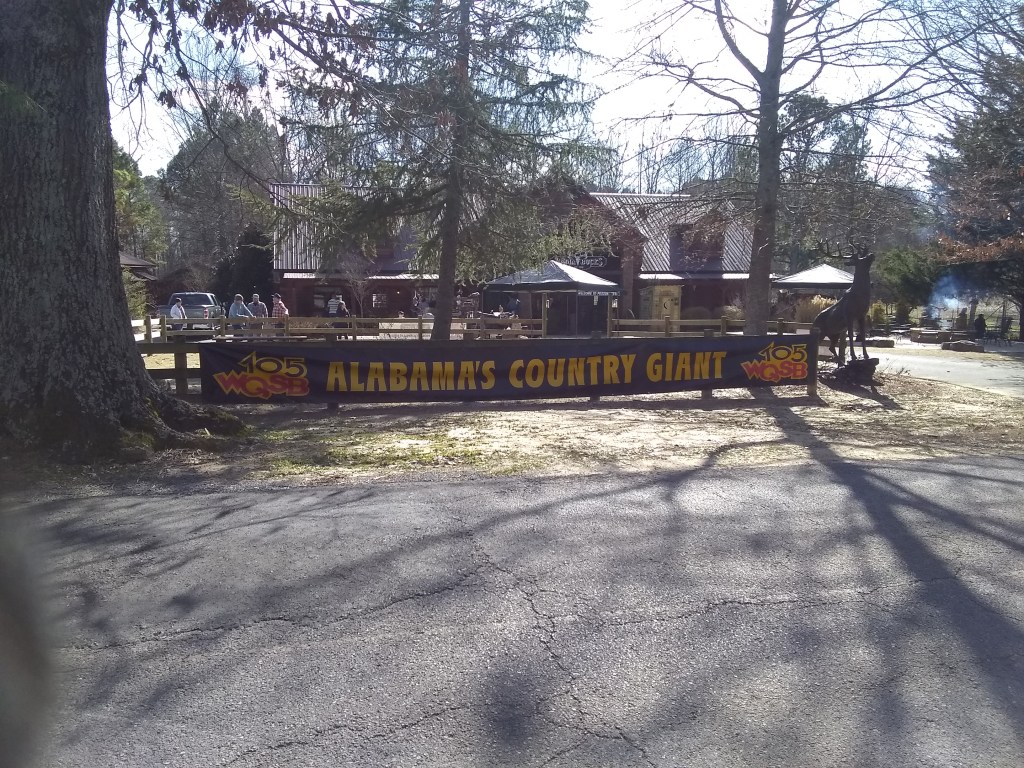
Here’s a few photos from along my pistol route:

God and Girl–Chapter 17

God and Girl is my first novel, written in 2015. I'll post it, a chapter a day, over the next few weeks.

After several weeks of prodding and pushing from Dad, I finally agreed to meet with a counselor.  I didn’t want to, but I was tired of Dad’s insistence at every turn.

I just walked out of Dr. Mathison’s office.  Mom was waiting for me in the reception area.  I told her, I just mouthed the words to her, that I would never come back here.

On our long drive home, Mom didn’t say or ask anything about my counseling session.  And, I didn’t offer anything other than to say that “Dr. Mathison is a complete jerk.  He is a know-it-all and makes you feel like you are an idiot and a lost Christian.  He is a talking head, mouthing Dad’s archaic language.”

Dr. Mathison is supposed to be a psychologist and Christian counselor, top in his field.  Looking at his ego wall in his office before he came in, I noticed that he had degrees from Yale, Duke, and Regent Universities.  He obtained his doctorate from Regent.

He had been evasive in his responses to my questions—of course I knew he was the one who would ask most of the questions. In frustration, I had finally told him that I believed in evolution, most of the Bible, and that if I had to bet, that homosexuality is genetic.  He questioned why I felt this way and his response was basically that you cannot believe everything you read, and that science and religion were in many respects in conflict and that science and the science community was losing its way because of the many atheistic scientists.  He said all science comes from the Bible.  His prescription for me was to keep a journal of my feelings and actions related to my homosexuality, and to spend time daily reading and studying the Bible and praying.

We stopped just outside Birmingham and ate dinner.  It was nearly 7:00 when we arrived home.  Dad was waiting on us in the den, obviously wanting to chat.  I went straight to my room.  I so wanted to be with Ellen, but tomorrow is a school day, so I’ll have to be satisfied with talking to her on the phone.

I turned on Pandora and my Adele station, and lay across my bed.  My thoughts were popping in and out of my head totally at random.  I got up and sat at my desk and took out my notepad.

Degrees, degrees,

all over his wall.

Yale, Duke, Regent,

He went, he studied, he earned degrees and more degrees.

All the reading,

All the writing,

All the lectures,

All the cramming,

All the testing,

All the experience,

Degrees, degrees.

All he could do to help me,

(do I need help?)

Read and study the Bible.

And pray.”

Okay, I hold my Bible.

Let’s read Genesis.

There’s Adam and Eve,

Just came out of nowhere,

Oh sorry, God created them,

Did he also create Lucy?

Did he create the Neanderthals?

Did he create Naledi?

If Genesis has it wrong,

what about the Gospels?

Seems Dad and Dr. M and 

Millions of other Bible literalists

Find all my questions irrelevant, Damning heresy.

No wonder I need counseling.

The world, at least most of my world,

is deaf, dumb, and blind,

But I probably am too,

In one or more, maybe many, ways,

But, at least I am committed to the truth,

Finding the truth,

Not burying my head in the sand,

And buying a story or stories,

That seem to be collapsing.

But Dad and his ilk

Will believe the Bible 

No matter if Jesus was found,

Dead.

Of course, to them, it wouldn’t be Jesus,

Not their Jesus, or He would just be sleeping.

Evidence is Satan’s production,

Faith isn’t natural,

It’s supernatural,

And therefore, cannot be tested by science.

Always, the Creationist’s best argument.

Is it wrong to ask questions?

No, it is the only way to learn.

God, if you are there, here, everywhere,

Why not speak to me?

Why not show yourself to me?

at least in a cloud, in the rain,

In a storm, in a rainbow.

Oh yes, I can hear it now,

‘God is speaking to you, but you cannot hear,

You are letting your sinful lifestyle deafen you.’

And the Bible says,

‘Faith is the substance of things hoped for,

the evidence of things not seen.’ 

Oh, sorry, I forgot.

You are making yourself known, really known,

was limited to Bible story days.

I was just about to call Ellen when my cell vibrated.  I didn’t recognize the number but answered anyway.  It was Erin from our youth group.  

“Ruthie, this is Erin Chandler.  I’m in your youth group at church.”

“Erin, I think I know who you are.  What’s up?”  I said.

“I really need someone to talk to and didn’t know who to call.  I don’t want to talk to my parents right now.  I thought of you.” Erin said.

“I can talk with you if you want. When?” I said.

“How about tomorrow after school?  We could meet at the gym and sit up in the bleachers away from everybody.  Okay?”  Erin said.

“How about at 3:00 tomorrow?  I’ll be waiting just inside the front door at the high school gym.”  I said.

“Sounds good.  Thanks, and I’ll see you tomorrow.”  Erin said and hung up.

I was puzzled.  What would Erin need to talk about, and why me?  Erin is in the sixth grade, a quiet, polite young lady.  She has never given any signs that she is a trouble-maker.  As far as I know, she comes from a good family and home.  Her parents are very active in church, our church.  

I finally lay down and went to sleep.  The next day was normal.  We had a substitute teacher in History and watched a movie about some war between Turkey and Spain back in the 15th century.  Ellen and I sat in the back of the room and exchanged notes.  It’s great to be able to draft romance poems out of thin air, short though they be. One of the ones I gave Ellen I had borrowed from Tyler Gregson, a haiku,

‘You will never feel.

Not for a single moment.

That I don’t love you.’

Ellen loved it. But one of hers to me was even better, because she wrote it. It was a spin off Gregson’s, even though she kind of botched the 5, 7, 5 syllable requirements:

“You will always feel.

In every single moment

now and always

That I love you.”

The movie ended, and the bell rang, too soon, much too soon, for both.

Could there be any possible way that I could have a better life and world than the one I have with my wonderful, adorable Ellen?  ‘If loving you is wrong, then I don’t want to be right.’ I seem to remember Mr. Ingram’s song was about a married man falling in love with a single lady. But, that’s not important to my thought, other than I sure am glad I’m not married to someone else.  Ha.  

Erin was waiting on me when I walked in the gym.  We walked inside and up, way up, into the bleachers and sat down.

“Thanks for meeting me.  I have a problem.  I told Jimmy I would go with him to the school dance next Friday night, but I don’t really like him, and I told him I would go because I believed no one else would ask me.  But, Stan asked me yesterday afternoon right after school.  I told him I would go.  I haven’t told Jimmy yet.  I feel so bad about lying to him.  I feel like I have let God down and that I have ruined my witness here at school. What should I do?” Erin said.

And, here I was thinking Erin had gotten herself pregnant.  I guess a sixth grader can get pregnant.  And, that she was wanting an abortion and wanted me to go with her and not tell her mom, and even for me to pay for it.  Or, something bad like that.  But, her problem seems so simple, given my life.  She is revealing herself to be a wonderful Christian.  Dad would be very proud of her.

“Have you thought of just going to Jimmy and telling him the truth?  Maybe say something like, ‘Jimmy, thanks for asking me to the dance, but I have decided to go with Stan.  I’m sorry I told you I would go but I have changed my mind. Maybe next time.’” I said.

“I know that is what I should do but it seems so hard to be truthful sometimes, but I do want to do the right thing.”  Erin said.

“I suggest you go talk to Jimmy as soon as you can.  You will say the right words and you will get through this.”

“Okay Ruthie.  I really do appreciate you meeting me and giving me good advice.”  Erin said, standing up and shaking my hand. “I’ll go try to find Jimmy.”  

As Erin walked down the stairs, I said, “Erin, be sure and pray.”

When she turned and gave me a thumb up, I sat back down. I almost fell over.  Now, I was a counselor?  And now, I was advising folks to pray?  Maybe, I should have advised her to keep her first promise to Jimmy and tell Stan the truth.  Maybe, I should have told her that she should tell both Jimmy and Stan the truth and not go with either of them, not go to the dance at all, that she should leave boys along, that she would just wind up hurt or worse, believing she was pregnant or even worse, pregnant.  It seems the more I thought about it, the more I realized that even a so-called simple little situation like Erin’s isn’t so simple.  The truth is kind of hard to find.  Maybe we must discover our own truth the very best we can.

Erin was sincere in her desire to do the right thing. Had I gotten to the point I was missing points, relevant points.  All my life until Ellen, I was like Erin, thinking God and the Bible were truth, and that prayer was real and valuable.  Maybe the words from my mouth, advising Erin to pray, were an attempt by my inner but jailed thoughts and truths to make a valiant effort to escape to the light and make themselves known-real and valuable.

This time with Erin had clearly revealed to me that I was a long way from finding truth, the real thing, or even discovering my version of the truth, if it was different.  One thing I knew, this journey I was on wasn’t going to be easy.  Yet, I was determined I had no choice, whether we engage in life or simply crawl in a cave, we are pursuing truth in our own individual way.

10/02/23 Biking & Listening

Here’s a link to today’s bike ride.

Why I ride

Biking is something I both love and hate. The conflicting emotions arise from the undeniable physical effort it demands. However, this exertion is precisely what makes it an excellent form of exercise. Most days, I dedicate over an hour to my cycling routine, and in doing so, I’ve discovered a unique opportunity to enjoy a good book or podcast. The rhythmic pedaling and the wind against my face create a calming backdrop that allows me to fully immerse myself in the content. In these moments, the time spent on the bike seems worthwhile, as I can’t help but appreciate the mental and physical rewards it offers.

I especially like having ridden. The post-biking feeling is one of pure satisfaction. The endorphin rush, coupled with a sense of accomplishment, makes the initial struggle and fatigue worthwhile. As I dismount and catch my breath, I relish the sensation of having conquered the challenge, both physically and mentally. It’s a reminder that the things we sometimes love to hate can often be the ones that bring us the most fulfillment. In the end, the love-hate relationship with biking only deepens my appreciation for the sport, as it continually pushes me to overcome my own limitations and embrace the rewards that follow the effort.

My bike

A Rockhopper by Specialized. I purchased it November 2021 from Venture Out in Guntersville; Mike is top notch! So is the bike. The ‘old’ man seat was salvaged from an old Walmart bike (update: seat replaced, new photo to follow, someday).


Something to consider if you’re not already cycling.

I encourage you to start riding a bike, no matter your age. Check out these groups:

Cycling for those aged 70+(opens in a new tab)

Solitary Cycling(opens in a new tab)

Remember,

Photo by Suzy Hazelwood on Pexels.com

Memoir I’m listening to:

Spare by Prince Harry

Amazon abstract:

#1 NEW YORK TIMES BESTSELLER • Discover the global phenomenon that tells an unforgettable story of love, loss, and healing.

“Compellingly artful . . . [a] blockbuster memoir.”—The New Yorker

It was one of the most searing images of the twentieth century: two young boys, two princes, walking behind their mother’s coffin as the world watched in sorrow—and horror. As Princess Diana was laid to rest, billions wondered what Prince William and Prince Harry must be thinking and feeling—and how their lives would play out from that point on.

For Harry, this is that story at last.

Before losing his mother, twelve-year-old Prince Harry was known as the carefree one, the happy-go-lucky Spare to the more serious Heir. Grief changed everything. He struggled at school, struggled with anger, with loneliness—and, because he blamed the press for his mother’s death, he struggled to accept life in the spotlight.

At twenty-one, he joined the British Army. The discipline gave him structure, and two combat tours made him a hero at home. But he soon felt more lost than ever, suffering from post-traumatic stress and prone to crippling panic attacks. Above all, he couldn’t find true love. 

Then he met Meghan. The world was swept away by the couple’s cinematic romance and rejoiced in their fairy-tale wedding. But from the beginning, Harry and Meghan were preyed upon by the press, subjected to waves of abuse, racism, and lies. Watching his wife suffer, their safety and mental health at risk, Harry saw no other way to prevent the tragedy of history repeating itself but to flee his mother country. Over the centuries, leaving the Royal Family was an act few had dared. The last to try, in fact, had been his mother. . . .

For the first time, Prince Harry tells his own story, chronicling his journey with raw, unflinching honesty. A landmark publication, Spare is full of insight, revelation, self-examination, and hard-won wisdom about the eternal power of love over grief.

Podcasts I’m listening to:


Here’s a few photos from along my pistol route:

God and Girl–Chapter 16

God and Girl is my first novel, written in 2015. I'll post it, a chapter a day, over the next few weeks.

It was late Saturday night. I had just gotten back from Ryan’s where our gang did its usual thing. I had asked Ellen if her Mom would mind dropping me off when she came to pick her up.  Mom and Dad were in the den, in the dark almost, with only the light from our big screen TV.  I said hello and asked were they having a romantic evening alone.  Mom semi-nodded her head.  

“If you want to call watching a debate about science and religion romance, then I guess we are.”  Mom said.

“We are watching a rerun of the debate a few weeks ago between Bill Nye and Ken Ham, held at Mr. Ham’s creation museum in Kentucky.  Mr. Nye is known as ‘the science guy.’  We found it on YouTube and for some reason your Mom acted interested and encouraged us to watch it.” Dad said.

“You can join us if you like.”  Mom said.

“Maybe for just a little while.” I said.

“The moderator had just asked Mr. Ham how old the earth is and where did we come from, when you walked in.”  Dad said.  “Let’s listen.”

Mr. Ham’s answer and explanation was rather short.  He said that “we can tell from Scriptures that the earth is around 6,000 years old.  From analyzing and comparing various chronologies, and by examining the fossil record as laid down by Noah’s Flood we reach this conclusion.  And, just as it says in Genesis, over a six-day period, six days just like our days that is, God created all life.  He created the first man, Adam, from the dust of the earth.  He created the first woman, Eve, from one of Adam’s ribs.  God spoke, and it was done.  All life was created.  God created the fish, the birds, reptiles, mammals, and humankind as their own kind, their own separate species, fully complete.  And no life has ever become a new species.  Life came from God and not evolution as Mr. Nye will argue.”

The moderator then asked Mr. Nye the same question. “The earth is approximately 4.5 billion years old.  This date is confirmed by all the well-established science fields: Geology, Physics, Chemistry, and Biology.  The universe started with the Big Bang.  Scientists are still investigating this and what caused it.  A recent discovery shows that life started shortly after the big bang occurred—just a few million years afterwards.  Unlike the story in Genesis, life started much more slowly, and much simpler.  Life started with a simple, single-celled organism and continued, again over millions of years, into a multi-celled organism, and on and on.  Science shows that all life, all living things, and all life that has died, gone extinct, has evolved from a common ancestor.  And whether we like it or not, we share a common ancestor with chimps and apes.  The fossil record establishes this.”

Dad paused the video. “And now schools can no longer teach creationism but have to teach evolution.  A theory that clearly destroys Genesis and what we believe.”  Dad said.

“It seems there is a sound scientific theory for evolution. And, that is why it is now being taught in science class.  Evolution seems to refute the creation story from Genesis.”  I said.

“I don’t care what evolutionists say, God created the world and man and all living things.  We didn’t evolve from apes.  There is no other way to explain Adam and Eve.  The Bible is clear.  It says nothing at all to indicate that Adam and Eve were anything but human, just like us.”  Dad said.

“Honey, I know this is all rather troubling.  It seems science is attacking religion, our Christianity.  At a minimum, it seems science is forcing religion to do its own research to determine how science and religion co-exist without destroying Adam and Eve and the creation story.”  Mom said looking at Dad.

“Story, is that all Genesis is?  Are you now like Ruthie, denying whether it is true, denying whether God created the universe, the earth, animals, plants and especially us?  I can’t believe I have had so little influence on my family.”  Dad said.

“Dad, could it be that we are misreading Genesis.  Maybe Adam and Eve were not the first humans, or human-like beings.  What if Adam and Eve are metaphorical, and that God gave them a soul, and they represent the first beings that shared God’s image, and that all the earlier humans and human-like beings were just part of the evolutionary process that took place.  Kind of like God started life off after the Big Bang, with Him causing the bang, and the Genesis days of creation are very, very long days?  Maybe we are just failing to properly interpret Genesis and the beginning of life.”  I said.

“The problem, and there are many, is that Genesis is clear that God created a perfect place, the Garden of Eden, and there was no death until Adam and Eve sinned.  No animals died, no life of any kind died before the Fall.  Without sin, as described in Genesis, we don’t have Original Sin, and without Original Sin, all mankind since Adam and Eve are not sinners in need of a savior.  Christ came to save all mankind from sin, from Original Sin, the sin they inherited from Adam and Eve.  And, if there was no sin imputed to all mankind, then there is no reason for Christ to have come and died the horrible death on Calvary’s Cross.  In short, Christianity falls without Adam and Eve. From what I know of evolution, which truly isn’t a whole lot, it appears there’s not much room for Christianity and God and Christ.  Evolution argues there is no God, no Christian God.”  Dad said.

“I agree, on its face, it appears evolution doesn’t need God, but I still want to believe there is much, much more we do not know—about both God and the Bible, and evolution.”  I said.

“So, the Bible could be wrong, is that what you are saying?”  Dad said.

“Well maybe, for sure it may mean we are misinterpreting the Bible.  But, maybe we are wrong to believe that the Bible is totally without error.”  I said.

“The next thing I expect you to say is that the Bible gets it wrong about Christian marriage, a marriage exclusively between one man and one woman.  Then, you or someone, will start arguing that homosexuality is not sin and that two men, or two women, have just as much right to marry as one man and one woman.”  Dad said.

“Maybe, I just don’t know anymore.  One of my teachers recently said that we need to always keep in mind that ‘we know so very little.’  Maybe the church, the Christian church, doesn’t know as much as it thinks it does.”  I said.

I could tell Dad was visibly upset. He had stood up and was pacing across the den.  

“I never dreamed I would hear my own daughter, my own Ruthie, say such a thing.  Do you hear what you are saying?  You are letting the camel into the tent.  Don’t you know that once we admit that the Bible contains some errors, even one error, we are sliding down the slope to the abyss—a place of suffering and a place of no return, a place of destruction.  This is just what the gays want.  Such an argument defeats everything I am trying to protect.  Religious freedom will change forever.  There will be no differences between gays and Christians. We will all be just one happy family.”  Dad said.

“How do you know what the gays want?  Maybe they just want to be treated with respect, the respect of being human, the respect acknowledged in our Declaration of Independence when it says all men have inalienable rights. Have you ever sat down with a gay person or a gay couple, privately, and simply talked with them as fellow human beings?”  I said feeling like I was getting a little too bold and that I might soon get kicked in the teeth, at least figuratively.

“Ruthie,” Dad said with the loudest tone I can ever remember. “Have your stripes changed, are you now in bed with the homosexuals.  I expect now you will argue that homosexuality is not a sin, that the Bible is wrong when it says that homosexuality is a sin, and that gays are just born that way.”  Dad said.

“Dad again, I don’t know.  We have learned in Biology class that that is a real possibility.  Dr. Ayers was asked that question a week or so ago.  She didn’t at all bring it up.  But, she tried to answer Danny when he asked.  Dr. Ayers said that there are several research projects across the world working on various hypotheses related to what she referred to as the ‘gay gene.’ She said that the scientific community is nowhere near arriving at a theory homosexuality is determined at birth by certain genes, or the non-functioning of certain genes, but she says there is some positive findings being made.  So, Dad, again, maybe we truly know so very little.” I said.

“Honey, don’t you think it is time we have a talk about what is going on with you?”  Mom said.

I couldn’t believe what I had just heard.  Was Mom turning on me?

“What do you mean?” Dad said.

“Honey.”  Mom said.

I wasn’t quite ready to be kicked in the teeth, but I was more than a little upset, maybe mad, at my Dad for his tone and his arrogance.  I said, to myself, and to a surprised self, oh, what the hell.  “Dad, if being in love with Ellen means I am a homosexual then I am a homosexual.”

Dad stopped his pacing, just froze, as though he had been shot in the head and in the heart.  It seemed his whole body became stiff like a rock-lifeless, ugly. “What in the hell are you saying?” Dad said.

I had never, ever, heard Dad talk like this.  I was dumbfounded to say the least.  “You heard me.  I am in love with Ellen Ayers.  I have been in love with her almost from the time I met her.  And, I am the happiest I have ever been.”  I said.

“How long have you known about this?” Dad asked Mom.

“For several weeks now.  Ellen told me, and I told her I would keep it between us until I felt it was time for you to know.”  Mom said.

“Well, thanks for trusting me, for believing enough in me to give me the truth.”  Dad said.

“Honey, I’m sorry if I have hurt you but I did what I felt the Lord was telling me to do.” Mom said.

“The Lord?  Now, you use God as though he is a broom or a mop, just a tool for a certain job?  What do you believe? I thought we had just thrown God straight into Hell, just flat out rejected Him.” Dad said.

“We are letting our emotions take over here.  Honey, when Ruthie first told me that she might be homosexual I someway felt I had real and true wisdom come upon me.  I felt that I should support her as a mom is supposed to support her children.  I didn’t tell her that, ‘oh, alright Ruthie, that is just wonderful, go have a happy life.’  I told her that sometimes life is hard and that we must find out on our own what is right for us.  I told her that I suspected that it wouldn’t do a bit of good if I locked her in a cage for the next five years.  From my own growing up years I knew that teenagers especially, have a mind of their own, an undeveloped mind no doubt, but they didn’t respond so positively to preaching and demands, imprisonment and the like.  The most important thing to me was to show Ruthie that I love her and that I will always love her.”  Mom said.

I looked at Dad and he had softened somewhat, he was no longer stiff and hard-looking as a rock.  He was standing in front of the TV with his eyes closed.  Like he was praying.  I kept on looking at him and I became convinced he was praying.  In a while, he opened his eyes.  I could see my real Dad, a man with soft and gentle eyes.  He reached out his hands and arms to me and said, “come here baby.”

I burst up and over to Dad.  He held me in his arms for, forever. Finally, he said, “Like your mom, I love you, and that will never change.  But, unlike her, I won’t be so passive about your relationship with Ellen.  I promise I will not lock you up, but I intend to come up with a way for you to learn more.  You seemed to think ‘we know so little,’ well then, we need to learn.  All I ask is that you be willing to talk with me, learn with me, maybe even go to a good Christian counselor.  Okay?” Dad said.

“Dad, all I want is the truth.  But, even if I have the truth and it says that homosexuality is not caused by a gene, but is really a sin, I do not promise at all that I will leave Ellen.  Like I said, I love her.  And, she loves me.”

“Honey, it is getting late.  I suggest we all give this a rest for now.” Mom said, and Dad agreed.

10/01/23 Biking & Listening

Here’s a link to today’s bike ride.

Why I ride

Biking is something I both love and hate. The conflicting emotions arise from the undeniable physical effort it demands. However, this exertion is precisely what makes it an excellent form of exercise. Most days, I dedicate over an hour to my cycling routine, and in doing so, I’ve discovered a unique opportunity to enjoy a good book or podcast. The rhythmic pedaling and the wind against my face create a calming backdrop that allows me to fully immerse myself in the content. In these moments, the time spent on the bike seems worthwhile, as I can’t help but appreciate the mental and physical rewards it offers.

I especially like having ridden. The post-biking feeling is one of pure satisfaction. The endorphin rush, coupled with a sense of accomplishment, makes the initial struggle and fatigue worthwhile. As I dismount and catch my breath, I relish the sensation of having conquered the challenge, both physically and mentally. It’s a reminder that the things we sometimes love to hate can often be the ones that bring us the most fulfillment. In the end, the love-hate relationship with biking only deepens my appreciation for the sport, as it continually pushes me to overcome my own limitations and embrace the rewards that follow the effort.

My bike

A Rockhopper by Specialized. I purchased it November 2021 from Venture Out in Guntersville; Mike is top notch! So is the bike. The ‘old’ man seat was salvaged from an old Walmart bike (update: seat replaced, new photo to follow, someday).


Something to consider if you’re not already cycling.

I encourage you to start riding a bike, no matter your age. Check out these groups:

Cycling for those aged 70+(opens in a new tab)

Solitary Cycling(opens in a new tab)

Remember,

Photo by Suzy Hazelwood on Pexels.com

Memoir I’m listening to:

Spare by Prince Harry

Amazon abstract:

#1 NEW YORK TIMES BESTSELLER • Discover the global phenomenon that tells an unforgettable story of love, loss, and healing.

“Compellingly artful . . . [a] blockbuster memoir.”—The New Yorker

It was one of the most searing images of the twentieth century: two young boys, two princes, walking behind their mother’s coffin as the world watched in sorrow—and horror. As Princess Diana was laid to rest, billions wondered what Prince William and Prince Harry must be thinking and feeling—and how their lives would play out from that point on.

For Harry, this is that story at last.

Before losing his mother, twelve-year-old Prince Harry was known as the carefree one, the happy-go-lucky Spare to the more serious Heir. Grief changed everything. He struggled at school, struggled with anger, with loneliness—and, because he blamed the press for his mother’s death, he struggled to accept life in the spotlight.

At twenty-one, he joined the British Army. The discipline gave him structure, and two combat tours made him a hero at home. But he soon felt more lost than ever, suffering from post-traumatic stress and prone to crippling panic attacks. Above all, he couldn’t find true love. 

Then he met Meghan. The world was swept away by the couple’s cinematic romance and rejoiced in their fairy-tale wedding. But from the beginning, Harry and Meghan were preyed upon by the press, subjected to waves of abuse, racism, and lies. Watching his wife suffer, their safety and mental health at risk, Harry saw no other way to prevent the tragedy of history repeating itself but to flee his mother country. Over the centuries, leaving the Royal Family was an act few had dared. The last to try, in fact, had been his mother. . . .

For the first time, Prince Harry tells his own story, chronicling his journey with raw, unflinching honesty. A landmark publication, Spare is full of insight, revelation, self-examination, and hard-won wisdom about the eternal power of love over grief.

Podcasts I’m listening to:


Here’s a few photos from along my pistol route:

God and Girl–Chapter 15

God and Girl is my first novel, written in 2015. I'll post it, a chapter a day, over the next few weeks.

It was the weekend of my fifteenth birthday.  Ellen’s parents had rented a cabin at DeSoto State Park.  The week before their trip, Ellen and I had spent our usual Friday night together discussing doing something special for my birthday.  I can’t truly remember but some way, including Google, we came up with the idea of going with Ellen’s parents.  But, we certainly didn’t want to stay with them.  After more searching we found Mentone.  The town’s website informed us that Mentone is a “welcoming mountain village nestled atop the west brow of Lookout Mountain. Natural beauty abounds, from scenic mountain-top views to the mists of a 104-ft. waterfall.”  It was only a few miles from DeSoto State Park, so it seemed like the logical answer to our quest. We thought about camping out at a little primitive campground right outside Mentone but we both agreed tent construction was much more challenging than poetry construction, and when it comes to nighttime, we both preferred a soft and cozy bed. Ultimately, we decided to stay at the Mountain Laurel Inn, a bed and breakfast right in the heart of Mentone. 

Ellen’s parents agreed.

We left school Friday morning around 11:00, totally psyched about a long weekend, out-of-town, and all to ourselves, our first trip together.  Ellen’s parents dropped us off around 1:30, along with our bikes and luggage, and an envelope with two pages of rules, regulations, and reminders, with the bottom of page two signed by Becky Brown and Emily Ayers. 

After we registered at the front desk and checked out our room, we decided on a walk.  It was before 2:00 and our stomachs were reminding us that we had skipped lunch and avoided Mr. Ayers’ special trail mix he kept trying to push on us as we sat in the back seat.  We kept refreshing his memory that we were staying at a bed and breakfast and that we lucked out with a special weekend package that also included Friday and Saturday night dinners.  But, now we were on our own and needing something to tide us over until tonight.

As we were about to walk out the front door of the Inn we saw a table with a bunch of brochures.  One caught my eyes, as it did Ellen’s.  On the front of a folded brochure was a pencil drawing of flowers out in a field backing up to a simple little cabin.  At the bottom were the words “Wildflower Cafe.” According to the map hand-drawn on the back fold, the Cafe was just across the street and around the corner.

We walked over and were not disappointed.  It was a very rustic place with hardwood floors, old tin ceilings and dividers between the booths, and antique-looking ceiling fans.  The tables were a unique assortment of shapes, but all made by cutting a slice from a big oak tree followed by much sanding and much more varnishing.  Ellen ordered the raspberry vinaigrette salad and Peanut Butter pie, which she shared. I opted for a chicken salad plate with grapes & slivered almonds, on a salad ring with tomatoes and parmesan cheese served with crackers.

While we were eating, a young man, I figured to be in his mid to late 20’s, came by and asked if everything was okay.  He thanked us for coming and asked would we be in town tonight.  We told him we would.  He invited us to hang-out and listen to music over in the big side-yard of the Mountain Laurel Inn.  We told him that’s where we were staying and understood that our dinner tonight was served outside.  He told us that his mother, Selena Bradford, owns the Inn.  We told him that we would see him tonight.

We finished our lunch and returned to our room for a nap.  We wanted to be well-rested for tonight.

We woke up around 7:00 and quickly changed into our new American Eagle Outfitters jeans and soft and sexy lace tanks, and matching pink Under Armor hoodies.

We walked out onto the side yard and saw Chaz on a make-shift stage.  He announced the names of about ten young musicians who would be entertaining us for a couple of hours.  They were each a solo artist just trying to find a path to the big time.  For most of them, I suspected this might be their first and last chance to woo the world.

We ambled over to three-fold-up tables with hamburgers and hot-dogs.  We chose a dog and added everything we could find, just like at Dairy Queen: ketchup, mustard, onions, kraut, and relish.  Mrs. Bradford saw us and came over encouraging us to try her sweet-potato pie.  Yuck was our hidden look at each other but we graciously obeyed.

We found two chairs by the fire and picked at our food.  Neither of us were hungry.  But, we both did like the pie.  And, we both enjoyed holding hands and just enjoying the silent music between us that flamed and crackled along with the fire.

After the ten young musicians were finished, thank you Chaz, he and his group took the stage.  This afternoon had he mentioned he would be playing guitar and singing?  His group was The Mountain Men. 

They were very good.

Chaz said that no outdoor gathering with music is right without dancing.  A few folks volunteered and shook a rug (Dad’s saying) to a couple of fast music songs. 

Ellen asked me to dance.  I was a little reserved since we had never danced in public.  Ellen can be powerfully persuasive.  She finally pulled me onto the dance floor when the Men began playing and singing ‘Country is my Rock’ by Trent Tomlinson (according to the real mountain man dancing beside us with Bud in one hand and Elle Mae in the other). Dancing there on the grass, Ellen showed me she could swing and dip and bump right up there with the winners of Dancing with the Stars, at least the Mentone version. I did loosen up a little and enjoyed a little butt bumping with the hot Ellen.  Our stars burst out and joined hands when the group played and sang Amazed by Lonestar.

Every time our eyes meet

This feeling inside me

Is almost more than I can take

Baby when you touch me

I can feel how much you love me

And it just blows me away

I’ve never been this close to anyone or anything

I can hear your thoughts

I can see your dreams

I don’t know how you do what you do

I’m so in love with you

It just keeps getting better

I wanna spend the rest of my life

With you by my side

Forever and ever

Every little thing that you do

Baby I’m amazed by you

The smell of your skin

The taste of your kiss

The way you whisper in the dark

Your hair all around me

Baby you surround me

You touch every place in my heart

Oh, it feels like the first time every time

I wanna spend the whole night in your arms

I don’t know how you do what you do

I’m so in love with you

It just keeps getting better

I wanna spend the rest of my life

With you by my side

Forever and ever

Every little thing that you do

Baby I’m amazed by you

Every little thing that you do

I’m so in love with you

It just keeps getting better

I wanna spend the rest of my life

With you by my side

Forever and ever

Every little thing that you do

Oh yeah, every little thing that you do

Baby I’m amazed by you.”

During the song, Ellen, holding me in her arms, looked at me and said that she loved me and wanted to spend her life with me.  I smiled, looked in her baby blues, and lay my head on her shoulder.  We rocked slowly until the song ended.

After our dancing, we headed back in, wanting to get some rest for our big day tomorrow.  But, we did get detoured by the side porch swing.  For the next hour we sat close, held hands, and talked, mostly silly stuff, about ‘the smell of your skin, and the taste of your kiss.’  Of course, silly can smell and taste so good.

We finally made it to our room a little after midnight, slung off our jeans, tanks, and hoodies and cuddled up in the middle of a feather bed.  We sang and kissed and kissed and sang as songs softly and sweetly poured from YouTube and Pandora.  We lost all track of time but finally fell hard into deep sleep long after we intended.

We woke up early, surprisingly, since we hadn’t gone to sleep until 2:30 (according to Ellen’s time-awareness skills), less than five hours ago. It was not quite 7:00 a.m.  We both thought long and hard about going back to sleep, but we wanted to spend the weekend awake, talking, walking, touching.  We could sleep back home. And, we had spent a lot of time planning almost every hour of this trip.

Our plan for Saturday was to have breakfast here at the Inn, since it was already included in our room charges.  We would then hang out around town milling around the big craft show that was taking place.  We would ride our bikes to DeSoto Falls in the early afternoon.  Then, we would return in time to shower and enjoy a fancy meal here at the Inn. 

We ate a southern breakfast that most northerners would enjoy.  One kind of like Mom makes when Dad is going to be home all-day Saturday and has planned one of his family work days.  Biscuits with maple or sorghum syrup, six types of jelly, gravy–the gray kind and the clear kind (yuck)–eggs anyway you want them except raw, cheesy grits, fried potatoes, smoked ham, sausage patties, thick-sliced bacon, all types of fruit, and about a half-dozen other things I couldn’t name.  Ellen and I both love breakfast. We each made a dozen pictures of each other, proving we ate with our mouths full and without napkins, since her mouth and chin hosted bright orange marmalade, and mine sorghum syrup.

After breakfast, we walked our bikes and backpacks over to Mentone Antiques and Unique Furnishings, just right across the street from the Inn.  We spent an hour or so looking around this large, two story museum that carried a wide assortment of furniture, books, trinkets, and other do-dads.  We spent most of our time perusing the book tables with Ellen finding a well-cared for copy of Whitman’s “Leaves of Grass.”  Before we left the store, we were upstairs looking in a series of display or curio cabinets when Ellen spotted two four-inch tall bone-carved figures laying side by side in a pretty box.  

They looked like angels with their features rather basic, rudimentary-carved in white, what I believed was real bone, very mysterious, almost with a small nub on each side of their shoulders, where their wings either were at one time, or were now developing for the first time.  We took them out of the cabinet and looked at them more closely.  Ellen was holding one and I was holding the other, each holding them up to the light that was filtering in from a tall window, to the east (I had been concentrating for weeks on learning my directions from the sun).  Almost, at the same time, we both spoke out loud.  She said “Always,” and I said “Forever.”  We had both noticed, carved across their backs, up towards their shoulders, these words.  That was it, we had to buy them.  We had, almost since we first met, developed and shared a language all our own.  We had discovered there were words and phrases that described our love and our relationship, words that others obviously knew, but held no special meaning. In poems, letters, texts, spoken words, and I suppose at some time, smoke signals, we had described our love and romance as a relationship that would be “Always,” that it would be “Forever,” and when we felt especially expressive, we would write or speak that “Always and Forever, I will love you.”

We put Always and Forever, our little angels, our special angels, back in their box, which was a treasure: sturdy, stained a bright mahogany, with a small latch and clasp for securing the lid.  We paid for Ellen’s poetry book and our figurines, a perfect purchase, a fateful discovery or a faithful one we didn’t yet know.

We spent the rest of the morning walking around looking at a million crafts.  Trades-people from all over—I even saw one sign that said, ‘All the way from Heaven—Dubois, Wyoming.’  It was kind of neat walking around a town where we didn’t know anyone, among mostly older folks, holding hands and smiling back at the many staring eyes.  We felt bold and beautiful, like our time together was crafting us, our relationship, into a thing of mystery and destiny.

We both grew tired of the crowd around 11:30. It was time to be alone out in nature, with whoever or whatever had painted today’s world atop Sand Mountain and Mentone. She sure knew what she was doing.  It was gorgeous and the weather cool but not anything like cold.  Fall is so beautiful and my favorite time of the year.  We walked back to the antique store for our bikes. I stuffed the mahogany box inside my backpack.  Ellen secured her book, and off we went, map readily available in Ellen’s right hand.

We had planned on riding to DeSoto Falls.  But, when we turned left onto DeSoto Falls Road, we noticed a car parked up next to the trees and woods to our right.  We also saw a trail headed into the woods.  I said, “let’s be adventurous and ditch our plan for now.”  Ellen agreed, and we rode our bikes onto the trail and out into the woods.  We soon realized our bikes were not the best way to travel—too many big roots and rocks, too many twists and turns.  So, we got off our bikes and walked away from the trail and found a spot not easily seen from the trail and locked them to two trees.  We took our packs and returned to the trail.

We hiked for thirty minutes or so and only saw two people.  We met a young couple, a boy and a girl probably around 18 years old, about 15 minutes into our hike.  We asked them what was ahead.  They told us to be sure and find the big rock, said we couldn’t miss it.  We did find it.  And, it was big.  It jutted out over a big ravine that contained a million trees, all dressed out in their beautiful fall colors.  The rock was flat on top and a perfect spot to relax and take in unbelievable beauty from the valley below, outstretched as far as we could see all around us.

We spent time during our picnic lunch in early afternoon looking at our angel figures as I called them.  We adopted our own figure.  Always was Ellen’s—her first name is before mine in the alphabet—and Forever was mine. Of course, she had found Always, and I had found Forever, back at the antique store.  We started getting a little stiff and decided to walk around a little.  We left our packs on the big rock–Rock of Ages I had called it–which spawned questions from Ellen’s inquisitive mind. We grabbed Always and Forever as I told Ellen that ‘Rock of Ages’ was a popular gospel hymn that our church had sung regularly since I could remember, but that I didn’t know its history.

We walked eastward, I think, back towards where we believed the Falls to be. We walked around the bend of the mountain, staying close to the edge, being slow and careful not to slip over into the ravine that fell sharply to our right, probably down 200 or 300 feet.  We encountered a thicket of brush and briers among the trees.  We took our time, stopping every few minutes to look north to northeast.  At just the right time, with the trees acting as though they closed their branches just for us, we saw DeSoto Falls.  One of the most beautiful waterfalls I had ever seen.  Finally, the undergrowth just seemed to stop with the ground becoming virtually barren of vegetation, just large flat rocks with an overlay of sand. We saw the boulders ahead of us, acting as though they had been glued to the side of the mountain which, itself was gaining elevation as we approached.  

We had seemingly come to the end of this route.  The deep ravine was to our right and the big boulders in front of us kept us from making our way forward around the bend of the mountain’s brow.  

“Look here.”  Ellen said.  “I think we could sit down on the ledge and make our way around. We could at least try.”

“I’m game if you are.”

We sat down on a rocky ledge that was just wide enough to make you feel you weren’t going to lunge forward.  The ledge was like a lip on a face, but more inverted, a little ‘U’ shaped.  We started sliding our way around the ledge on the lip.  At one-point Ellen started bumping along, a kind of butt bumping.  We got so tickled we probably could have fallen.  The rocky lip continued around the bend probably 30 or more feet.  Finally, the rock lip turned rather sharply to our left and we were startled by what we saw—a cave opening. But, it wasn’t going to be easy to get to. The lip we were sitting on ended just a few feet from where Ellen was.  In making the sharp turn, we had turned back towards the mountain and away from the ravine. Below our feet now was a crevice, a very deep crevice, and a mountain of rocks continued as far as we could see.  There is a rock wall, probably 30 or 40 feet tall to our left slanting back, like it is leaning backwards. Also, there is a flat ledge, probably five feet wide, maybe fifteen-foot-long, right in front of it, with the cave opening right in the center of the backward leaning rock wall.  There is a big rock directly above the cave opening.  The two together looked like they were mounted on a human face, a rather large nose, resting above a somewhat sunken- in mouth. There is only one way to get over to the flat ledge and to the mouth of the cave.  We had to stand up and jump over the crevice.  The lucky part of all of this is the crevice isn’t wide, maybe two feet.  We knew we could easily clear this space.  Ellen would go first.  She could pull her right leg up under her to give her some leverage. Also, she could find hand holds, really holds for her hands, the inside next to her wrists.  Slowly but surely, she stood up and jumped onto the flat shelf, something like a big upper lip of my imaginary hominid.

I shouted out a big cheer for her.  She encouraged me and talked me through the right moves.  Soon, I was with Ellen on the other side of the crevice, on flat rock.  We both felt a lot safer.

We turned and looked out towards the ravine and there it was again, DeSoto Falls, and the big pool of water 100 feet below.  We took in the cool air almost feeling and tasting the mist from the crashing water.  We both looked at the Falls for a long time but remembered why we had jumped over here.  We turned back to the cave door and got down on all fours and crawled inside.  Once in, we could stand up.  The cave was maybe 8 to 10 feet across, and about that same depth. It really wasn’t much of a cave.  But, around to the left, bending around another nose-type rock, there was a little space, somewhat of a separate chamber. There was room for only one of us at a time to explore this. I went first. I had to again get down on my hands and knees and crawl back.  I moved forward another 6 or 8 feet and came to a rock just popping its head up out of the floor maybe two feet or so.  This rock was just big enough to stop me from continuing into the chamber.  With the flashlight on my phone I could see that the chamber continued, farther than I could see, but it got narrower and narrower the further back I could see.  I was at a stand-still.  I could sit up on my knees and reach over the protruding rock.  I had to lay face down over the rock to reach beyond it and down to where it came up out of the cave floor.  I used my hands to dig in the soft dirt, mostly sand and thumb-end size rocks.  I kept digging and then had an idea.  First, I crawled back out and had Ellen retrace my steps inside, on hands and knees, to this rock.

“Come back out, I have an idea.” I told Ellen.

“You may think I am crazy but hear me out.  Why don’t we go get the mahogany box that Always and Forever came in.  And, come back here and bury them over beyond that rock we just found back in that little chamber.  We could use that big zip lock bag we brought our lunch in.  Plastic doesn’t deteriorate.  We could then come back in a few years and reclaim our little angels.  This act would symbolize our love, with Always and Forever waiting here for us until we come back someday for a family reunion of sorts.  What do you think?”

“I love it.  I just think, I just know, there was a good reason we found our angels and this cave.  You have noticed it is rather remote, rather hard to find, to get to, haven’t you?”  Ellen said.

So, that’s what we did.  We butt-bumped our way back around the rocky lip, hiked back to Rock of Ages, grabbed the mahogany box and the zip-lock bag, and returned to our cave. And, just as we had discussed and agreed, we buried Always and Forever, behind the big rock that blocked the smaller chamber.  Burying our figurines, Always and Forever, was symbolic of us burying ourselves, not unto death, but unto life. Ellen’s life into mine, my life into hers.

Ellen did the burying.  She said she wanted to since she had found our angels first in the antique store.  She told me that I would be the one to uncover them when we returned—since I had thought of the idea to bury them.  

After Ellen had buried the box, we sat down outside the cave.  We sat immersed in a sea of beauty, an outstretched canvas filled with colors unmatched by man.  

“When should we come back?  I mean, come back for our special angels.” I asked.

“Here’s an idea, maybe a great one. We are here celebrating your 15th birthday.  Right?  So, why don’t we come back in 15 years.  That’s double your age, mine too basically, even though I am three months older than you.  And, more specifically, why don’t we set an exact date to return and recover our Always and Forever.  I suggest we do this on your 30th birthday, exactly 15 years from today.  What thinks you?” Ellen said.

“I think it is perfect.”  I said.

 So, it was settled.  Fifteen years from today we would return and recover Always and Forever and reunite them with us.

We slowly made our way back to our rock, grabbed our backpacks, hiked to our bikes, and rode to Mentone, speaking few words, but connecting our hearts ever the deeper with smiles and sweet finger-tip touches, as we glided side-by-side along a red and orange, and yellow and purple path.

By the time we returned to the Inn, Ellen and I were both exhausted, not so much physically, but mentally, emotionally, even spiritually.  We stripped down and dove into bed, both asleep before the end of a sweet kiss.  We could have slept all evening and night, but we would get up, shower, and dress out in our formal finest.  There is no way we would miss Saturday night dinner at Mountain Laurel Inn. It was included in the price, which was nice, but it was an opportunity for us to experience and share our love in a classier setting. For two north Alabama girls (assuming Ellen has completely shed all her Chicago), our only knowledge of fine-dining was from Mom’s attempt to teach us how to properly set the dining room table, with all her fine china as she called it, in preparation for special dinners.

Formal dining in a mountain village bed & breakfast did not appeal to us.  We made it through the meal and hurried back to our room, stripping down again, and lay in bed watching a love story on Ellen’s iPad.

We fell asleep before the end of the movie and awoke just with enough time to shower and grab a sausage biscuit before Mr. and Mrs.

Ayers arrived to pick us up.

The ride home was filled with silence as Ellen and I sat in the back seat exchanging glances and smiles.  The clear and crisp dialog between my mind and my heart sounded like soft thunder and sweet lightning as I sat knowing that this weekend had changed my life for always, and forever.

09/30/23 Biking & Listening

Here’s a link to today’s bike ride.

Why I ride

Biking is something I both love and hate. The conflicting emotions arise from the undeniable physical effort it demands. However, this exertion is precisely what makes it an excellent form of exercise. Most days, I dedicate over an hour to my cycling routine, and in doing so, I’ve discovered a unique opportunity to enjoy a good book or podcast. The rhythmic pedaling and the wind against my face create a calming backdrop that allows me to fully immerse myself in the content. In these moments, the time spent on the bike seems worthwhile, as I can’t help but appreciate the mental and physical rewards it offers.

I especially like having ridden. The post-biking feeling is one of pure satisfaction. The endorphin rush, coupled with a sense of accomplishment, makes the initial struggle and fatigue worthwhile. As I dismount and catch my breath, I relish the sensation of having conquered the challenge, both physically and mentally. It’s a reminder that the things we sometimes love to hate can often be the ones that bring us the most fulfillment. In the end, the love-hate relationship with biking only deepens my appreciation for the sport, as it continually pushes me to overcome my own limitations and embrace the rewards that follow the effort.

My bike

A Rockhopper by Specialized. I purchased it November 2021 from Venture Out in Guntersville; Mike is top notch! So is the bike. The ‘old’ man seat was salvaged from an old Walmart bike (update: seat replaced, new photo to follow, someday).


Something to consider if you’re not already cycling.

I encourage you to start riding a bike, no matter your age. Check out these groups:

Cycling for those aged 70+(opens in a new tab)

Solitary Cycling(opens in a new tab)

Remember,

Photo by Suzy Hazelwood on Pexels.com

Memoir I’m listening to:

Spare by Prince Harry

Amazon abstract:

#1 NEW YORK TIMES BESTSELLER • Discover the global phenomenon that tells an unforgettable story of love, loss, and healing.

“Compellingly artful . . . [a] blockbuster memoir.”—The New Yorker

It was one of the most searing images of the twentieth century: two young boys, two princes, walking behind their mother’s coffin as the world watched in sorrow—and horror. As Princess Diana was laid to rest, billions wondered what Prince William and Prince Harry must be thinking and feeling—and how their lives would play out from that point on.

For Harry, this is that story at last.

Before losing his mother, twelve-year-old Prince Harry was known as the carefree one, the happy-go-lucky Spare to the more serious Heir. Grief changed everything. He struggled at school, struggled with anger, with loneliness—and, because he blamed the press for his mother’s death, he struggled to accept life in the spotlight.

At twenty-one, he joined the British Army. The discipline gave him structure, and two combat tours made him a hero at home. But he soon felt more lost than ever, suffering from post-traumatic stress and prone to crippling panic attacks. Above all, he couldn’t find true love. 

Then he met Meghan. The world was swept away by the couple’s cinematic romance and rejoiced in their fairy-tale wedding. But from the beginning, Harry and Meghan were preyed upon by the press, subjected to waves of abuse, racism, and lies. Watching his wife suffer, their safety and mental health at risk, Harry saw no other way to prevent the tragedy of history repeating itself but to flee his mother country. Over the centuries, leaving the Royal Family was an act few had dared. The last to try, in fact, had been his mother. . . .

For the first time, Prince Harry tells his own story, chronicling his journey with raw, unflinching honesty. A landmark publication, Spare is full of insight, revelation, self-examination, and hard-won wisdom about the eternal power of love over grief.

Podcasts I’m listening to:


Here’s a few photos from along my pistol route:

Things the Clergy Won’t Tell You

Here’s the link to this article.

By David Madison at 9/29/2023

To protect thousands of different, conflicting Christian brands 

Let’s look at four forbidden topics.

ONE

Each Christian denomination—there are so many divisions, sects, cults—screens and vets those who rise to the rank of clergy. These are the champions of the faith, as it is preached across such a wide spectrum of conflicting versions. No individual congregation would tolerate any clergy who strays far from the orthodoxy cherished by that congregation. Thus we won’t find Catholic priests stepping into their pulpits on Sunday morning to explain that Mormonism or Methodism happens to be the right brand of Christianity after all. Of course not, because all clergy are paid propagandists for their own brand of the faith. That’s how they earn their living.

But that’s not something any member of the clergy will declare out loud. That is, it’s a forbidden topic. Nor will they ever challenge the folks in the pews: “How do you know that what I’m telling you is the truth? That is, ours is the true version of the Christian faith.” In general, there is a failure to urge parishioners to be curious. Here are a couple of things that could be said from the pulpit:

“Please get on your cellphones right away, do a Google search—or whatever—to find out if what I’ve said in this sermon is correct. Can my claims, my theology be verified? It’s not a good idea to just take my word for it. Be relentlessly curious.”

“Please do some homework this coming week. I’d like each one of you to read the gospel of Mark, all sixteen chapters, from start to finish. Read it carefully, critically, and come back next Sunday with a list of problems you spotted. That is, theological problems, as well as items you find hard to believe. Be relentlessly curious.” 

Chances are very slim, of course, that the paid propagandists will make such suggestions. And it is truly baffling that laypeople don’t seem to grasp that the leader of their flock has a vested interest in diverting attention from incriminating questions and embarrassing realities.     

TWO 

The scandal of Christian division and disagreement about fundamental beliefs can be traced to the very beginning, as the apostle Paul’s complaint makes clear:

“I am astonished that you are so quickly deserting the one who called you in the grace of Christ and are turning to a different gospel—not that there is another gospel, but there are some who are confusing you and want to pervert the gospel of Christ. But even if we or an angel from heaven should proclaim to you a gospel contrary to what we proclaimed to you, let that one be accursed!” (Galatians 1:6-8)

And it only got worse, as Philip Jenkins has pointed out: “By the year 500 or so, the churches were in absolute doctrinal disarray, a state of chaos that might seem routine to a modern American denomination, but which in the context of the time seemed like satanic anarchy.” (Jesus Wars: How Four Patriarchs, Three Queens, and Two Emperors Decided What Christians Would Believe for the Next 1,500 Years, p.242)

Yes, it is routine. We are entitled to ask why Christians today aren’t horrified by this “state of chaos.”  “In Christ there is no east or west, in him no south or north, but one great followship of love throughout the whole wide earth.” What a joke. Such lyrics are part of more diversion, to keep devout folks from seeing the Christian chaos. How can their faith be the “one true faith” when it’s in such a mess? How does this possibly make sense? So this is also a forbidden topic. 

Here’s a reality: the bigger the town or city, the more different churches—i.e., denominations—there will be. This is another case where be relentlessly curious is good advice. But the clergy are not about to recommend sampling other denominations. The clergy could say to their parishioners: “For the next month, we want you all to visit other denominations on Sunday morning. Do some comparison shopping. Find out what their churches look like, what their preachers have to say, how their rituals differ from ours. Carefully compare their beliefs about Jesus with our beliefs.” In other words, be relentlessly curious why this Christian mess prevails, and shows no sign of coming to an end. Why is it that Christians cannot agree? Something is seriously wrong—which, in fact, falsifies this supposedly great religion. But the clergy won’t tell you to look critically, skeptically at this state of affairs. 

THREE

Some of the laity who show up the church every week are perhaps vaguely aware that scholarly study of the Bible is a major industry. That is, thousands of devout scholars—for several generations now—have studied the gospels and epistles intensively. Not a single word of the New Testament has escaped careful analysis. For a long time this passion was driven by the assumption—the certainty—that the Bible deserved such close attention because it had been divinely inspired. But that idea has become harder and harder to defend. The more the Bible has been studied, the more its errors, contradictions, and flaws have become so obvious. Hence there are devout scholars and apologists who make it their business to account/make excuses for the many mistakes in what was supposed to be a perfect book. 

Most of this scholarly energy and activity has gone on beyond the horizon of awareness of the folks who attend church. And the clergy have no interest in telling their parishioners, “Hey, you should be paying attention to what scholars have discovered.” Bible study at that level is dangerous. For example, for a long time now Jesus-studies have been in turmoil. Many different profiles of Jesus— “This is who he was”—have been proposed by scholars who can’t agree on which gospel texts authentically represent what Jesus said and did. Laypeople can sense this is the case: if they read Mark’s gospel, then John’s, it is so obvious that each of these authors imagined Jesus very differently. 

Why would the clergy want their followers to be thinking about these issues? Here especially, be relentlessly curious can be hazardous to the health of the church. Jesus-lord-and-savior is the primary product sold, and business would suffer if that is undermined in any way. Hence it’s unlikely that clergy, at the beginning of Advent, will say from the pulpit: “Please study carefully the Jesus birth story in Matthew 2, then do the same with Luke’s version (Luke 2:1-40). How can they we reconciled?” Nor will the clergy, at the beginning of Lent, recommend careful study of the four accounts of Easter morning in the four gospels. There is no way these accounts can be reconciled, nor is there any way they qualify as history. Back in June I published an article here, The Bible Can Be a Believer’s Worst Nightmare, offering examples of why relentless curiosity about the Bible is not encouraged. Some clergy do offer carefully crafted Bible study classes for their parishioners—that is, crafted to make excuses for/divert attention from the glaring contradictions and bad theology. 

FOUR

Any Christian layperson who might adopt relentless curiosity in studying the Bible will sooner or later come across the many books by John Loftus (e.g., Christianity Is Not Great: How Faith Fails and The End of Christianity) and Dan Barker (e.g. God: The Most Unpleasant Character in All Fiction)—and will perceive that the Bible itself doesn’t do the faith any favors. 

But there is yet another area of study that falsifies the faith decisively; namely, the cultural and religious context in which Christianity arose. In fact this is extraordinarily complex, and requires as lot of relentless curiosity and discipline. Certainly the clergy will not point their followers in this direction: the information and insights are truly alarming

A very handy resource for this endeavor is a book-sized chunk, namely pages 56-234, in Richard Carrier’s 696-page On the Historicity of Jesus: Why We Might Have Reason for Doubt. In pages 56-234 Carrier describes 48 cultural and religion elements that must be grasped to understand Christianity’s origins. In two earlier articles I commented on a few of these elements (here and here). 

Two very important elements are 47 & 48 (pp. 225-234). Carrier draws attention to the fact that the Jesus story conforms to the stories of so many other holy heroes worshipped in other ancient cults. The early Christian authors specialized in borrowing; they wanted their Jesus to share equal status with other cult heroes.  

“…the most ubiquitous model ‘hero’ narrative, which pagans also revered and to which the Gospel Jesus also conforms, is the fable of the ‘divine king’, what I call the Rank–Raglan hero-type, based on the two scholars who discovered and described it, Otto Rank and Lord Raglan. 188 This is a hero-type found repeated across at least fifteen known mythic heroes (including Jesus) …” (OHJ, p. 229)

“The idea of the ‘translation to heaven’ of the body of a divine king was therefore adaptable and flexible, every myth being in various ways different but in certain core respects the same. But the Gospels conform to the Romulus model most specifically.” (OHJ, p. 226)

“Romulus, of course, was also unjustly killed by the authorities (and came from a humble background, beginning his career as an orphan and a shepherd, a nobody from the hill country), and thus also overlaps the Aesop–Socratic type (see Element 46), and it’s easy to see that by combining the two, we end up with pretty much the Christian Gospel in outline…” (OHJ, p. 227)

Some clergy may offer Bible study classes, but, No, they won’t tell you that the story of Jesus was created following other common models. Ancient superstitions celebrated a variety of savior heroes: the early authors of the Jesus cult made sure he got into the club. 

David Madison was a pastor in the Methodist Church for nine years, and has a PhD in Biblical Studies from Boston University. He is the author of two books, Ten ToughProblems in Christian Thought and Belief: a Minister-Turned-Atheist Shows Why You Should Ditch the Faith, now being reissued in several volumes, the first of which is Guessing About God (2023) and Ten Things Christians Wish Jesus Hadn’t Taught: And Other Reasons to Question His Words (2021). The Spanish translation of this book is also now available. 

His YouTube channel is here. At the invitation of John Loftus, he has written for the Debunking Christianity Blog since 2016.

The Cure-for-Christianity Library©, now with more than 500 titles, is here. A brief video explanation of the Library is here