Writer / Observer / Builder — Presence, clarity, and living without a script
Author: Richard L. Fricks
Writer. Observer. Builder. I write from a life shaped by attention, simplicity, and living without a script—through reflective essays, long-form inquiry, and fiction rooted in ordinary lives. I live in rural Alabama, where writing, walking, and building small, intentional spaces are part of the same practice.
Regress: movement backward to a previous and especially worse or more primitive state or condition
Steve Schmidt
Listen to Steve Schmidt tell it like it is–the truth. Then listen to the first six minutes of Albert Mohler tell you how the election of Mike Johnson to Speaker of the House is a ‘good’ thing. That is, for evangelism.
Make tedious tasks fun and meaningful by inventing amusing goals and rules.
***
The Art of Noticing
Simple and uncommon exercises to reveal what’s hidden in plain sight.
In The Art of Noticing, Rob Walker—a journalist, author, and educator—invites us to attend carefully and playfully to everyday curiosities that most of us tend to overlook.
“Fending off distraction isn’t quite the same thing as making the most of our attention.” By engaging the senses, Rob says, we can enrich our daily lives with meaning, boost creativity, and even “reframe the way we take in the world.”
***
Rob Walkeris a journalist and author. He is a longtime contributor to The New York Times, and a columnist for Fast Company. His recent books are The Art of Noticing, and Lost Objects, co-edited with Joshua Glenn. He is on the faculty of the Products of Design program at the School of Visual Arts. You can find his newsletter at robwalker.substack.com.
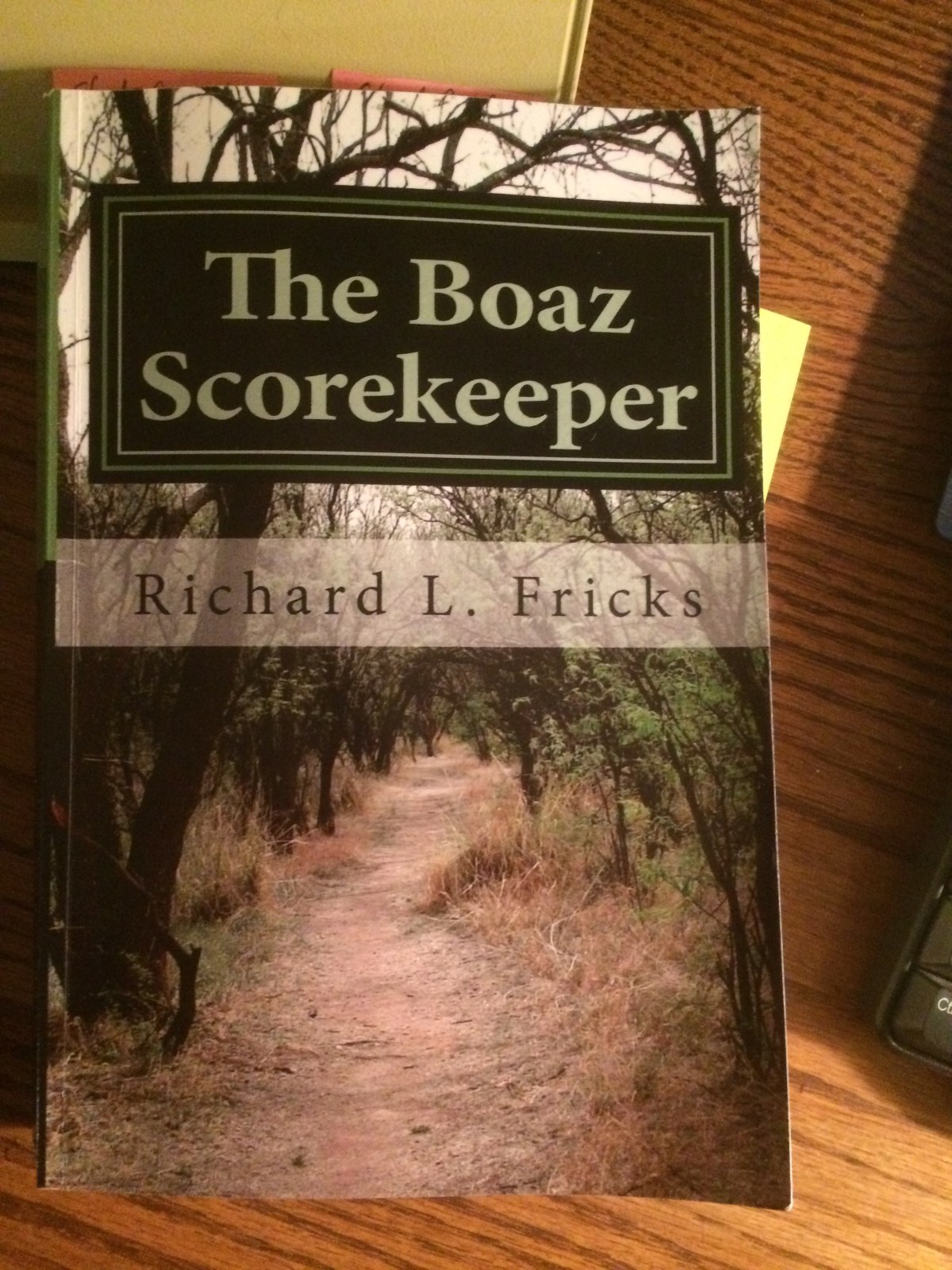
The Boaz Scorekeeper, written in 2017, is my second novel. I'll post it, a chapter a day, over the next few weeks.
Nearly every month since late Fall of our Junior year, the Flaming Five and I had camped at Club Eden. The Five had brought countless girls to the Club, at least half of which I didn’t know. Others, I did know, including every varsity cheerleader except Mandy Clements and Tracie Simmons.
I became a full member during the summer of 1971. There had been two requirements, both required me to swear on the Bible. I’m not sure what caused me the most trouble and hesitation, the swearing or the fear of the promised punishment if I broke my oath. Every one of the Flaming Five had promised me that my life would be over within a few days of breaking the trust. They didn’t say they would kill me but I took it as much. The swearing was almost an identical issue. I had been taught in church that I should never swear, but I also knew that a witness in a court case had to swear on the Bible to tell the truth. After countless hours contemplating what I should do, and dealing with the pressure to belong to Club Eden and likewise to be friends with the most popular guys in school, I finally took the oath on a hot July 4th morning. I swore that I would never disclose the location or what went on at Club Eden.
Not that I was ashamed of what I did. At no time did I ever take advantage of a girl. I never forced a girl to have sex with me. In fact, I never had sex with a girl at the Club or anywhere else, including our High School graduation party that began during the late hours of May 25, 1972.
That night we strayed a little from our routine. As usual, John, Fred, and I arrived first with the beer, food, and gear and started setting up to cook burgers or steaks. Then, Wade showed up in his blue Blazer along with four Boaz High cheerleaders. Behind Wade was Randall and James in his van. A nearly new GMC Vandura that his father had customized for him. I think it was James who had the ‘Honey Wagon’ sign painted on both sides. Two girls I didn’t know got out of the back of the van when Randall opened the door. They all walked over and Wade introduced them as Cindi and Wendi. We all pitched in and grilled a cooler full of rib-eye steaks to celebrate the occasion. After we finished supper we all sat around the fire drinking beer and listening to music.
Around 11:00 p.m. I got up and walked down to the creek and followed a path up stream to our make-shift outhouse to relieve myself. When I came out Wendi was sitting on a rock by the creek with her feet in the water. She saw me and called for me to come sit with her. I did and we talked for at least an hour. As we walked back to the fire pit she reached out and held my hand. I had never had a date in my whole life. My spine started to tingle. I thought about trying to kiss her but I didn’t.
By the time we returned to the fire-pit the tent had no vacancies. Back and forth visits went on for the next five or six hours. Cindi and the four Boaz Cheerleaders were a perfect match for the Flaming Five even though I suspect there was a lot of swapping going on. Neither Wade, James, Randall, Fred, or John approached Wendi. She sat beside me at the fire pit the rest of the night. We roasted marsh mellows and talked about our likes and dislikes.
Wendi was from Douglas. She and Cindi were twin sisters and both cheerleaders for the Douglas Eagles. She didn’t say exactly how the two of them wound up meeting James, Randall, and Wade at the Dairy Queen. She said she got spooked and almost backed out when James told them they had to wear a black hood during their ride to the Club. She said she was glad she didn’t back out, but only because she had met me.
Wendi and I truly connected during the few hours we had together. Her and Cindi’s father was a preacher but Cindi hadn’t fully bought into his Christian faith. I shared with Wendi about my church life and when I was saved, but I also shared with her my underlying doubts. I explained to her that every time I really got to thinking about how unbelievable a lot of the Bible stories really were, my doubts grew. I told her that I had never expressed my doubts to anyone except my Grandfather but all he would say is, “Micaden, you can’t think, you have to believe.”
I told Wendi the only thing I had ever heard my Dad say about his beliefs happened last December at the family’s big Christmas dinner. My Dad and his cousin had gotten into an argument over the Adam and Eve story from Genesis and Dad said, “you are wrong Cleland; the theory of evolution destroys Adam and Eve and the whole of Christianity.” My Grandmother gave my Dad a stern but quieting look and quickly changed the subject. Wendi said that my father was “simply wrong.”
It was weird that Wendi and I never fooled around even though there was temptation all around, especially from all the sounds coming from the big tent. Even more weird was that we continued to talk about the Bible. We talked openly for several hours about Adam and Eve, Noah and the Ark, the parting of the Red Sea, a talking donkey, and on and on. We also talked about how we liked each other and wanted to continue our conversation. Wendi wasn’t as shy as me. She asked me to take her to see The Good, The Bad, and The Ugly with Clint Eastwood that was playing at the Martin Theater in Albertville. I easily agreed and we exchanged phone numbers. At the time, I didn’t know what true love was but looking back I’m sure the first time I held Wendi’s hand something mysteriously special took place. But, unfortunately, the unknown would remain.
Around 2:00 a.m. the cheerleaders said they had to go. Reluctantly, Randall, John, and James left in his van. Against routine, Wade stayed with Fred and me as John seemed eager to leave. About 45 minutes later James’ van reappeared. I was surprised that Wendi and Cindi were still with them. Randall looked at me and said, “they wanted to come back with us and stay the night.”
We all sat down again around the fire pit with Wendi sitting between Wade and me. In just a few minutes John got up and grabbed Cindi’s hand and led her to the tent. Fred tried the same thing with Wendi but she refused to go. He got mad and tried forcing her to stand up. I got up and told Fred to leave her alone. Before I knew it, I was on the ground from a left fist Randall had thrown my way. I managed to stand, but Fred was already half way to the tent tugging Wendi along behind him. I tried to go after her but Randall, all six feet eight inches of him, along with James and John, stopped me. I shouted, “are ya’ll crazy? Wendi said she didn’t want to go. Sex against her will is rape you idiots.” Randall looked down at me with a smirk on his face, “Get over it. Why do you think these two girls wanted to come back here? Wendi complained that all you wanted to do all night was talk. She’s ready to party.”
I was powerless to help Wendi. I heard her screaming “no, no, no,” from inside the tent. In a few minutes James left the fire pit and went to the tent and John came out. I heard more screaming, from Wendi I think. For the next hour or more the Flaming Five took turns with Wendi and Cindi. When three of them were not busy in the tent they were guarding me.
Not long before the first signs of daylight Wade and Fred made me walk with them to the outhouse. At first, I didn’t have a clue why they were doing this but I did imagine that they were probably going to kill me. When we returned to the fire pit no one was there and the tent stood silent. Randall, John, and James, once again, had left in his van with Cindi and Wendi.
The three of us sat by the fire. I told them they knew what they had done was wrong, and that they were in big trouble with the law. They each assured me that they had everything under control if I kept my mouth shut. I told them I would not lie for them. They reminded me that I had taken an oath to never disclose what went on at Club Eden. I told them I never would have made the oath if I had any inkling that the five of them were rapists.
When Randall, James, and John returned, Wade asked if everything went okay. John responded, “Wendi and Cindi are safe at home.” I told them that I needed to go home myself. They refused saying that we all needed to get some sleep. Randall and James made me bed down in the cabin while the other three slept in sleeping bags out by the fire. I later realized that I was made to stay inside where I could be better guarded.
Around 11:00 a.m. Wade and Fred cooked us a quick breakfast while the other three were packing. By 12:00 noon we were finished. I rode away from Camp Eden with John and Fred. It was over twenty years before I returned.
Biking is something I both love and hate. The conflicting emotions arise from the undeniable physical effort it demands. However, this exertion is precisely what makes it an excellent form of exercise. Most days, I dedicate over an hour to my cycling routine, and in doing so, I’ve discovered a unique opportunity to enjoy a good book or podcast. The rhythmic pedaling and the wind against my face create a calming backdrop that allows me to fully immerse myself in the content. In these moments, the time spent on the bike seems worthwhile, as I can’t help but appreciate the mental and physical rewards it offers.
I especially like having ridden. The post-biking feeling is one of pure satisfaction. The endorphin rush, coupled with a sense of accomplishment, makes the initial struggle and fatigue worthwhile. As I dismount and catch my breath, I relish the sensation of having conquered the challenge, both physically and mentally. It’s a reminder that the things we sometimes love to hate can often be the ones that bring us the most fulfillment. In the end, the love-hate relationship with biking only deepens my appreciation for the sport, as it continually pushes me to overcome my own limitations and embrace the rewards that follow the effort.
My bike
A Rockhopper by Specialized. I purchased it November 2021 from Venture Out in Guntersville; Mike is top notch! So is the bike. The ‘old’ man seat was salvaged from an old Walmart bike (update: seat replaced, new photo to follow, someday).
Something to consider if you’re not already cycling.
I encourage you to start riding a bike, no matter your age. Check out these groups:
The Parable of the Mysterious Witness by John C. Wathey:
This fictitious story begins with a sexual predator who has been stalking a family, watching their house. His eye is on the young daughter. He has studied her habits and those of her parents long enough. He decides to attack. So he enters her room through the window, silences the frantic child with duct tape, and carries her to his car. The predator reaches a wooded area and drags the struggling girl with her muffled screams into the woods, where he brutally beats her, rapes her, and buries her alive in a shallow grave. The predator then drives away.
Shockingly there was a mysterious witness watching him, an undercover policeman. Although he carries a gun he did not intervene. Although he has a police radio he did not call for assistance. He simply watched it all take place then drove home, leaving the girl to suffocate to death. Even more shocking we’re told the policeman is the girl’s father, and that he dearly loves her! “The crime of this sexual predator must surely be among the most despicable imaginable. Yet I expect most readers of this story are even more appalled at the behavior of the mysterious witness. How can one possibly rationalize his utter failure to rescue this poor little girl, his own daughter? And yet, for the believer in the omniscient, omnipotent, and benevolent personal god, every horrendous act of evil in the world, every natural disaster, every injury, illness, and genetic defect that causes senseless suffering has just such a mysterious witness: God himself.
Look for things nobody wants you to look for. Look slowly. Look repeatedly.
***
The Art of Noticing
Simple and uncommon exercises to reveal what’s hidden in plain sight.
In The Art of Noticing, Rob Walker—a journalist, author, and educator—invites us to attend carefully and playfully to everyday curiosities that most of us tend to overlook.
“Fending off distraction isn’t quite the same thing as making the most of our attention.” By engaging the senses, Rob says, we can enrich our daily lives with meaning, boost creativity, and even “reframe the way we take in the world.”
***
Rob Walkeris a journalist and author. He is a longtime contributor to The New York Times, and a columnist for Fast Company. His recent books are The Art of Noticing, and Lost Objects, co-edited with Joshua Glenn. He is on the faculty of the Products of Design program at the School of Visual Arts. You can find his newsletter at robwalker.substack.com.
The Boaz Scorekeeper, written in 2017, is my second novel. I'll post it, a chapter a day, over the next few weeks.
For the next year and a half—the remainder of the 11th grade and all the 12th grade—I attended First Baptist Church of Christ and I hung out with the Flaming Five. Looking back, I really don’t know why they included me in their group. I seemed to be the broken spoke in a wheel that was popular and given freedoms that most other high school students could only dream of. The incident in the locker room was never mentioned again but it lingered in my thoughts and became my reason for why I was made a part of the in crowd, although Dad’s reason had a truthful ring to it. I even got my own moniker. Somewhere along the way, I think it was at the beginning of our senior year, people started calling me the Boaz Scorekeeper.
The Flaming Five didn’t disappoint a growing fan base. They rattled every opponent, winning every game, including six games in the playoffs. It was the first ever Class 3A state basketball championship for Boaz High School.
The only game ever in doubt during our Senior year was the last regular season game against the Albertville Aggies. The first half was basket for basket ending with Albertville ahead by two. As the mid-point buzzer rang and the teams were heading to their locker rooms, Wade came to the score table and whispered for me to come to the locker room. He said, “this is serious, you must come,” and walked off. I sat there for a few seconds vividly reminded of the last time I had been asked to come to the locker room. But, now things were different, these guys were my friends.
As I entered the locker room I heard John ask Coach Pearson if the team could have a few minutes alone. He agreed and walked out. The Flaming Five pulled me into a corner and said they were depending on me to help them out in the second half. I asked them what they meant. James said that if needed they would cause a disturbance to distract the refs and the fans. Fred said, “you add us a point or two during the chaos.” Randall said, “Tanner, you owe us.” I told them to forget it, that there was no way I was going to cheat for them or anyone else. John said that I had no choice but to do what they said and that if I didn’t I would regret it. I pushed my way out and returned to the gym.
The second half was pretty much a repeat of the first, basket for basket. Good to their word, with a minute left in the game, Bart Jones, who had just come in for Randall, started a fight with Albertville’s big center, Zack Wilson. The eight other players on the court rushed to the fight and started throwing punches. The refs were virtually powerless to stop the melee and half of the fans in the stands joined the fight on the court. I continued to sit at my station and spent the next minute or so thinking a week’s worth of thought. ‘I will add points. No, I won’t. I don’t care if I’m cast out and un-friended by the entire school.’ But, I did add two points to tie up the game, but got sick and gagged as though I was about to throw up. I immediately removed the two points knowing that it was wrong. I steeled myself for the coming retribution.
The entire Boaz Police force showed up a few minutes later with a megaphone and broke up the fight and quieted the crowd. The game continued and the clock ticked away as each team matched the other’s points. At the end, Albertville tied the game almost assuring an overtime session. But, the Flaming Five had a plan. Against a full-court press and a four second clock John delighted the crowd with a behind the back pass to James who was slanting across mid-court who instantly and with contorted body shot for the basket where a leaping Randall caught the ball above the rim and slammed it through the hoop. Boaz had won and they had done it fairly. There has never been a better basketball team at Boaz High School.
I guess it was God who gave me the strength and courage to face the Flaming Five at church the following Sunday. It sure wasn’t my bravery. Mr. Smith was late to class and the six of us—I never knew why the other class members also showed up late that day—sat in our circle just looking at each other. Wade spoke up and said, “Micaden, we again are ashamed of our conduct. We were wrong to ask you to cheat for us. We ask that you forgive us. We value your company and friendship. Will you forgive us?” The other four chimed in with “I’m sorry too.” Without hesitating I responded, “It’s already done. I’m a Christian and have a duty to forgive.”
Biking is something I both love and hate. The conflicting emotions arise from the undeniable physical effort it demands. However, this exertion is precisely what makes it an excellent form of exercise. Most days, I dedicate over an hour to my cycling routine, and in doing so, I’ve discovered a unique opportunity to enjoy a good book or podcast. The rhythmic pedaling and the wind against my face create a calming backdrop that allows me to fully immerse myself in the content. In these moments, the time spent on the bike seems worthwhile, as I can’t help but appreciate the mental and physical rewards it offers.
I especially like having ridden. The post-biking feeling is one of pure satisfaction. The endorphin rush, coupled with a sense of accomplishment, makes the initial struggle and fatigue worthwhile. As I dismount and catch my breath, I relish the sensation of having conquered the challenge, both physically and mentally. It’s a reminder that the things we sometimes love to hate can often be the ones that bring us the most fulfillment. In the end, the love-hate relationship with biking only deepens my appreciation for the sport, as it continually pushes me to overcome my own limitations and embrace the rewards that follow the effort.
My bike
A Rockhopper by Specialized. I purchased it November 2021 from Venture Out in Guntersville; Mike is top notch! So is the bike. The ‘old’ man seat was salvaged from an old Walmart bike (update: seat replaced, new photo to follow, someday).
Something to consider if you’re not already cycling.
I encourage you to start riding a bike, no matter your age. Check out these groups:
Sam speaks with poet and essayist Jane Hirshfield. They discuss Jane’s poems “Habit,” “Many-Roofed Building in Moonlight,” “A Cedary Fragrance,” “It Was Like This: You Were Happy,” and “Three Times My Life Has Opened,” all of which she recites.
They also discuss Jane’s experience as a member of Princeton’s first graduating class with women; the creative power of beginner’s mind; poetry as a hybrid art form; Jane’s years-long “detour” at America’s first Buddhist monastery; distinguishing between lineages and teachers; various frameworks of Buddhist practice; Jane’s experience with psychedelics; the Japanese poem that changed Jane’s life; the deliberateness of practice vs. the automaticity of routine; how a Miles Davis record inspired Jane’s first glimpse of non-duality; the fundamental unknowability of other people; and other topics.
Jane Hirshfield, in poems described by The Washington Post as belonging “among the modern masters” and in The New York Times Magazine as “among the most important poetry in the world today,” addresses the urgent immediacies of our time. A practitioner of Soto Zen for almost fifty years, she received lay-ordination in 1979 in the San Francisco Zen Center lineage of Shunryu Suzuki Roshi. Hirshfield’s honors include fellowships from the Guggenheim Foundation, Rockefeller Foundations, and the National Endowment for the Arts. She has received the Poetry Center Book Award, the California Book Award, and Columbia University’s Translation Center Award. Her books have been finalists for the National Book Critics Circle Award, National Book Award, and England’s T.S. Eliot Prize in Poetry. Her latest collection is The Asking: New and Selected Poems.
Sam Harris is a neuroscientist, philosopher, five-time New York Times bestselling author—and creator of the Waking Up app. He has practiced meditation for over 30 years and has studied with many Tibetan, Indian, Burmese, and Western meditation teachers, both in the United States and abroad.
Other words come to mind as well: indifferent, complacent, gullible. Quite bluntly: There is a lack of curiosity. If the church says that the Bible was inspired by a god, isn’t that good enough? In fact, it is one of the great ironies in the ongoing debate between believers and atheists that the Bible is one of Christianity’s biggest embarrassments. Atheists—anyone outside the faith, for that matter—can point to countless passages in the Bible and ask, “Is that really the god you believe in? Why do you follow/adore/worship Jesus when so much of his advice in the gospels is so bad?” Professional Christian apologists work very hard to make the Bible look good—make it look like it came from a divine author. But the huge problem is that so much of the good book is just awful.
But then there’s the process that created the Bible—as it exists in gleaming splendor on church altars, or the plain copies the devout have in their homes. How did dozens of ancient documents, written in languages that most laypeople today don’t know, end up in a book so widely revered?
The last stage of this process is translation—and that has produced substantial confusion. There are dozens of different English Bible translations, many of them turned out by different translators with their own faith-based agendas. In a posting here a few days ago, 16 October 2023, titled Dr. Hector Avalos on Mistranslating the Bible, John Loftus showed a few pages from Avalos’ book, The End of Biblical Studies.
[For those who follow this blog, be sure to check it every Monday. Loftus has announced his intention of posting especially value material—drawing largely on the content from the past—on a weekly basis.]
Christian apologist Bible translators take on the task of disguising what the Bible actually says, and Avalos offers examples.
It took a long time—as the Bible documents were being written over the centuries—for the concept of ONE powerful god to emerge as orthodox. But this wasn’t the case in Deuteronomy 32:8-9; Avalos quotes the Catholic New American Bible:
“When the Most High assigned the nations their heritage, when he parceled out the descendants of Adam, He set up the boundaries of the peoples after the number of the sons of God; while the LORD’s own portion was Jacob, his hereditary share was Israel.”
Avalos comments: “Most readers will miss the fact that ‘the Most High’ and the ‘LORD’ are two different gods, among many different gods, here. The term translated as ‘the Most High’ is probably the name of a god, pronounced as Elyon, and the term translated as ‘LORD’ corresponds to the Hebrew name we pronounce as Yahweh, ancient Israel’s main god.” (p. 43, The End of Biblical Studies)
The same translator trick, Avalos notes, is used in Genesis 1:1, “In the beginning when God created…”
“The word ‘God’ is probably best translated as the name of the specific god named ‘Elohim.’ If one were to be even more literal, one might note that Elohim is actually a plural noun, which could be translated as ‘gods’.” (p. 45, TEBS)
Since humans began imagining gods thousands of years ago, deities were given names. And the god who eventually stood out as the primary god of the Hebrews was Yahweh. Christians pay homage to this practice with the common formula, “In Jesus’ name we pray”—and even in the opening of the Lord’s Prayer, “…hallowed be thy name…” I suspect, however, if we asked Christians what their god’s name is, most would draw a blank. Yahweh wouldn’t be the first thing that comes to mind—primarily because translators have disguised it. Whenever we see the word Lord—in the Old Testament—in all caps, i.e., LORD, this is their substitution for Yahweh. Perhaps pious translators suspect that their god having a name makes him look like other gods.
Just beyond the pages Loftus included in the 16 October post, we find a section titled Sugarcoating Jesus—that also in a project of translators, as Avalos explains:
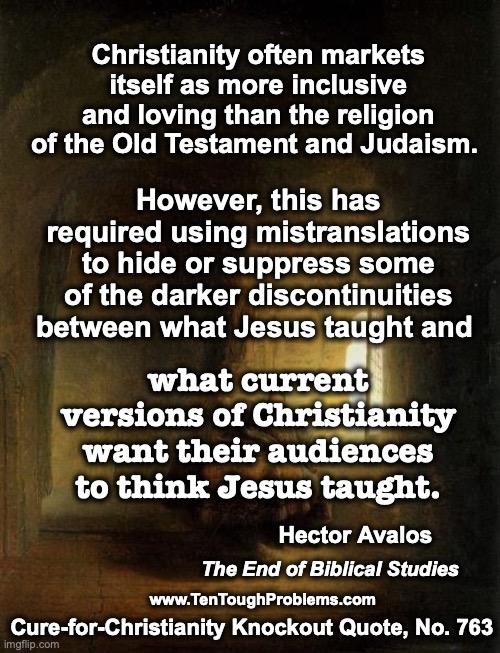
“Christianity often markets itself as more inclusive and loving than the religion of the Old Testament and Judaism. However, this has required using mistranslations to hide or suppress some of the darker discontinuities between what Jesus taught and what current versions of Christianity want their audiences to think Jesus taught.” (p. 50)
He refers specifically to the infamous Luke 14:26, in which Jesus states that hated of family, and even life itself, is required of those who want to be his disciples. Avalos adds, “According to this text, Jesus acts more like a cult leader who actively attempts to transfer allegiance from the believer’s family to himself.” (p. 50)
And he shows the efforts of some translators to disguise the plain meaning of this text; they want to deflect attention from alarming cult flavor of this quote. For an exhaustive analysis of this verse, see the 39-page chapter, “The Hateful Jesus, Luke 14:26” in Avalos’ book, The Bad Jesus: The Ethics of New Testament Ethics. The pious scholars who oversee translations have a cherished, idealized Jesus firmly embedded at the center of their faith. They can’t let even the Bible get in the way.
Some translators/editors go so far as to print the words of Jesus in red—even Luke 14:26! —to assure readers that these are the real words of Jesus. More deception. There is no way whatever to verify that the Jesus-script in the gospels is based on words that Jesus actually spoke. Churchgoers are inclined to trust their Bibles; the use of red ink for Jesus-script is a violation of that trust.
The beginning of the Bible-assembly process is also problematic, for those who are so sure that the Bible was divinely inspired. The blunt fact is that we don’t have any of the original Bible manuscripts. The traditional names of the gospel authors—Matthew, Mark, Luke and John—were added later to these anonymously written documents. The very first manuscripts of these authors have been lost. So how do we know exactly what they wrote? The invention of the printing press didn’t happen until well more than a thousand years later, so the manuscripts were copied by hand—in an era before electric lighting and eyeglasses. If the author of what we call Mark’s gospel handed his freshly finished document to three copyists, it is inevitable that each copyist would have made different errors—and those errors were repeated in copies made from those copies. So what do we have? Hundreds or even thousands of gospel copies that contain countless errors. There are scholars who devote their careers to careful examination of the old manuscripts, trying to discover the wording of the original.
Here’s another factor: copyists sometimes added words that reflected their own theologies—or if they felt something was missing. Hence we have the fake ending of Mark’s gospel, i.e., 16:9-20, which isn’t in the earliest manuscripts of the gospel. What a strange text is included here (vv. 17-18), Jesus-script promising believers:
“…by using my name they will cast out demons; they will speak in new tongues;they will pick up snakes and if they drink any deadly thing, it will not hurt them; they will lay their hands on the sick, and they will recover.”
Many modern translations put 16:9-20 in a footnote, but in two old versions of the RSV that I own, even in the footnote, vv. 17-18 are printed in red. Why would modern Christians want to be assured by Jesus that they can pick up snakes and drink poison? The translators/editors use another trick as well. The footnoted material is credited to other authorities. How do manuscripts cluttered with errors and additions qualify as authorities? Isn’t this an attempt by these pious scholars to disguise the mess that exists in the ancient manuscripts?
What are the implications of this state of affairs for the claim that the Bible was divinely inspired? Is it even remotely credible that the Christian god who took the trouble to guide the minds of New Testament authors—to write the truth—couldn’t be bothered to protect the manuscripts from error and corruption? How does that make sense? It is even more embarrassing that the first complete manuscript of the New Testament dates from the fourth century; how many errors/additions/corruptions does it contain? How far removed is it from the content of the original manuscripts? One of the things that scholars argue/speculate a lot about is the presence of interpolations, i.e., texts that may have been inserted by copyists. There are hints that a verse or two, here and there, look out of place. What a sloppy, haphazard process. Bible god seems to have been asleep on the job.
It’s hard to argue convincingly that the Bible is the Word of God. It’s not a stretch to say that the Bible you hold in your hand today in processed Word of God. Or more correctly, the Bible is processed word of men who were confident they were somehow in tune with the divine and wrote accordingly. So much in the Bible betrays its obvious human origins: the author of Luke’s gospel—whoever he was—included the hate-your-family verse. Who wants to argue that this was divinely inspired? There is so much in the Bible that falls far short of great moral teaching—there is so much that is frankly horrifying—and this is not hard to figure out, even for ordinary churchgoers who make the effort to read/study the Bible. Which most don’t bother to do, hence far too many of the laity appear to remain clueless.























 Richard L. Fricks