Richard L. Fricks is a novelist, former attorney and CPA, Fictionary Certified StoryCoach Editor, and creator of The Pencil-Driven Life. He lives in rural North Alabama near Boaz, where much of his fiction and reflection remain rooted. His work explores story, inherited purpose, faith and doubt, family pressure, moral contradiction, consciousness, ordinary life, and the practice of beginning again with a pencil.
Biking is something I both love and hate. The conflicting emotions arise from the undeniable physical effort it demands. However, this exertion is precisely what makes it an excellent form of exercise. Most days, I dedicate over an hour to my cycling routine, and in doing so, I’ve discovered a unique opportunity to enjoy a good book or podcast. The rhythmic pedaling and the wind against my face create a calming backdrop that allows me to fully immerse myself in the content. In these moments, the time spent on the bike seems worthwhile, as I can’t help but appreciate the mental and physical rewards it offers.
I especially like having ridden. The post-biking feeling is one of pure satisfaction. The endorphin rush, coupled with a sense of accomplishment, makes the initial struggle and fatigue worthwhile. As I dismount and catch my breath, I relish the sensation of having conquered the challenge, both physically and mentally. It’s a reminder that the things we sometimes love to hate can often be the ones that bring us the most fulfillment. In the end, the love-hate relationship with biking only deepens my appreciation for the sport, as it continually pushes me to overcome my own limitations and embrace the rewards that follow the effort.
Why you should ride:
Encourages Relaxation:
Cycling is not just a form of physical exercise; it also has a profound ability to encourage relaxation. Here are various ways in which cycling contributes to a relaxed state of mind and body:
Physical Activity and Stress Reduction: Engaging in physical activities like cycling can reduce the body’s stress responses. Exercise triggers the release of endorphins, the body’s natural painkillers and mood elevators, which promote relaxation. The physical effort of cycling also helps to use up the energy created by stress, aiding in calming the body.
Rhythmic Pedaling as a Meditative Practice: The repetitive nature of cycling, with its steady, rhythmic pedaling, can have a meditative effect. This rhythmic motion can help focus the mind, drawing attention away from stressful thoughts and allowing a sense of calm.
Outdoor and Nature Exposure: Cycling outdoors, especially in natural or scenic settings, can enhance relaxation. Being in nature is known to reduce stress and promote a sense of peace. The sights, sounds, and smells of the outdoors can be very soothing.
Mindfulness and Presence: Cycling requires a level of present-moment awareness, which is a key aspect of mindfulness. Practicing mindfulness has been shown to reduce stress and promote relaxation. When cycling, the focus on the immediate environment and bodily sensations can help achieve this state.
Cardiovascular Health Benefits: Regular cycling improves cardiovascular health, which can help in reducing tension in the body. A healthier heart and circulatory system can contribute to a more relaxed state overall.
Reduces Mental Clutter: A bike ride offers a break from daily routines and responsibilities, providing an opportunity to clear the mind. This mental break can be refreshing and relaxing, especially after a long day or during stressful periods.
Social Relaxation: For those who enjoy group rides, the social aspect of cycling can be relaxing. Social interactions and the sense of community found in cycling groups can contribute to overall relaxation and well-being.
Achievement and Satisfaction: Completing a challenging ride or reaching a cycling goal can bring about a sense of achievement and satisfaction. This positive feeling can promote a relaxed state, as it counters feelings of stress and anxiety.
End of Ride Relaxation Response: After a cycling session, the body often experiences a natural relaxation response. The decrease in physical activity coupled with the sense of accomplishment can lead to a profound state of relaxation.
Improves Sleep Quality: As cycling improves sleep quality, it indirectly promotes relaxation. Better sleep means the body is better rested and more capable of handling stress, leading to a more relaxed state during waking hours.
In summary, cycling’s ability to encourage relaxation is multifaceted, combining physical, mental, and emotional elements. By incorporating regular cycling into one’s lifestyle, it’s possible to cultivate a more relaxed state of being, beneficial for overall health and well-being.
Please watch
Here’s a couple of links to groups I like. Hopefully, they’ll encourage you to start riding a bike, no matter your age.
A Rockhopper by Specialized. I purchased it November 2021 from Venture Out in Guntersville; Mike is top notch! So is the bike. The ‘old’ man seat was salvaged from an old Walmart bike. Seat replaced with new one from Venture Out.
What I’m listening to:
NON-FICTION
20 Master Plots: And How to Build Them, by Ronald B. Tobias
Give your story a solid foundation – a plot that engages readers from start to finish!
The best stories linger in the hearts and minds of readers for decades. These tales gain their power through plots that connect with the audience on both an emotional and intellectual level.
Ronald B. Tobias details these 20 time-tested plots. Each is discussed and analyzed, illustrating how a successful plot integrates all the elements of a story. Tobias then reveals how to use these plots effectively in your own work.
Tobias then goes to the next level, describing how to choose and develop plot in fiction. He reveals how to craft plot for any subject matter so that you develop your work evenly and effectively. As a result, your fiction will be more cohesive and convincing, making your story unforgettable for readers everywhere.
NATIONAL BESTSELLER • The Girl with the Dragon Tattoo series continues: Lisbeth Salander must face the most important battle of her life, and will finally put her past to rest in this thriller that will “leave Salander’s legion of followers clamoring for more” (The Wall Street Journal). • Also known as the Millennium series
Mikael Blomkvist is trying to reach Lisbeth Salander—the fierce, unstoppable girl with the dragon tattoo. He needs her help unraveling the identity of a man who died with Blomkvist’s phone number in his pocket—a man who does not exist in any official records and whose garbled last words hinted at knowledge that would be dangerous to important people. But Lisbeth has disappeared. She’s sold her apartment in Stockholm. She’s gone dark. She’s told no one where she is. And no one is aware that at long last she’s got her primal enemy, her twin sister, Camilla, squarely in her sights.
Look for the latest book in the Girl with the Dragon Tattoo series, The Girl in the Eagle’s Talons, coming soon!
Here’s a few photos from previous riding adventures:
The primary aim of the "Novel Excerpts" blog category is to showcase my creative writing, specifically from the novels I've written. Hopefully, these posts will provide a glimpse into my storytelling style, themes, and narrative skills. It's an opportunity to share my artistic expressions and the worlds I've created through my novels.
The Boaz Scorekeeper, written in 2017, is my second novel. I'll post it, a chapter a day, over the next few weeks.
Over the next two weeks I worked on an appellate brief to the Alabama Supreme Court trying to convince it to overturn the Alabama Court of Criminal Appeals’ decision refusing to grant my client, Edward Sanderson, a new trial. In addition, I coached, counseled, and conferred with Gina about her case and the probability that Wade would settle and avoid trial. She also conducted two snooping sessions of his Church office turning up nothing but an extra friendly ‘Thank-You’ card from Stella Bridgestone, the Church’s music director. Gina didn’t read anything into Stella’s expressions saying that she was generally effusive and forward with all older men.
On Thursday afternoon, July 20th, I was in the conference room meeting with a new auto accident client when Tina stuck her head in and motioned for me to come out into the hall. When I did she, said that Detective Darden Clarke and Sheriff’s Deputy Clyde Vickers were in the waiting room with a warrant to search the office. Etowah County Detective Pete Morrow was also with them. I walked to the front and asked them what this was about and they showed me the warrant. It was signed by the newly appointed Circuit Court Judge Tyler Broadside. He had been appointed to fill the remaining term of soon-to-be-retiring Judge Allen Naylor who was forced to step down because of declining health. Republican Governor Shawn Applegate was from Gadsden and had received the unanimous support of the Flaming Five and their families.
Since John had disappeared in late April, I expected the issuance of search warrants and possibly even an arrest. As the days ticked by, I became more and more surprised with the absence of these almost certain events. Until, I heard through the lawyer rumor-mill that Judge Naylor, the Marshall County presiding judge, had refused to issue the warrants. He argued that just because I had been framed by the Flaming Five and their families over forty years ago was not probable cause that I had abducted John Ericson. To Naylor, that was too tenuous a connection.
This all changed upon the concurrence of two events. The appointment of sympathetic Judge Broadside, and the discovery of video footage from a flagpole on the west side of the First Baptist Church of Christ’s parking lot that pointed directly to the Family Life Center’s side door. It was closest to where John always parked his car in parking spot 275. My mistake. In all my reconnoitering, I had missed this camera. I had been careful to scour the Family Life Center building itself. I was certain there were none there. However, I failed to even consider a camera could be mounted inside the flagpole on the other side of the parking lot, right up against Gethsemane grove.
I wasn’t the only one who had missed it. The Boaz City Police and the Marshall County Sheriff’s Department deputies and detectives also missed it back in late April when they conducted their initial investigation after finding John’s car still parked by the Family Life Center. It was not until the security company that supplied the Church’s cameras and security system contacted the Church’s maintenance director that there was a problem with this camera did he realize John’s abduction could have been recorded.
This recording converted a once tenuous connection between me and John’s abduction into probable cause that I was involved with the crime. It was Judge Naylor’s missing link. Judge Broadside never hesitated. Once he was shown the video and briefed on my early, but highly controversial, relationship with John Ericson, among others, he issued the warrant to search my Boaz office. He also conferred with law enforcement and Judge Grant in Etowah County, who investigated and issued a warrant to search Hickory Hollow.
It was not like the video showed me lying in wait for John, nor of me using my taser when he reached his vehicle, and it didn’t show me forcing him into the back of his Chevrolet Traverse. However, it did show a man in black, including a black-faced toboggan–with my height and build doing all these things. Without more, something specific to me, this would not have been enough. The reasonable argument would say there are truckloads of other men who fit the height and build of the perpetrator. But, Judge Broadside was appointed by our Republican Governor who owed favors to the Flaming Five and their families.
It took a small army of deputies and police officers over three hours to search my office. At the same time, Hickory Hollow was under a similar siege. Law enforcement found nothing incriminating but they did seize my computer. I breathed a sigh of relief knowing that I had come close to making my second mistake in the disappearance of John Ericson. I had disposed of my office computer only two weeks ago. If I had not, the District Attorney’s computer specialist would have found my ransom note and the letter to the Sand Mountain Reporter. That would have been the smoking gun that put a face on the man in black caught on the hidden flagpole camera.
While the office search was being conducted, Detective Darden Clarke asked if I would submit to a formal interview. I quickly agreed. We sat in the conference room while two deputies inspected shelves loaded with over a thousand case books. Darden asked most all the commonly used ‘setting the stage’ questions. After he failed to score any points with the actual abduction and disappearance of John, he asked me if I knew anyone who might want to hurt John and or his family. I told him I did not other than myself. He looked surprised and asked me to explain. I told him that finally it appeared that one of the ones who were directly responsible for the deaths of Wendi and Cindi Murray, and possibly their parents, had received a real dose of justice. He said, “so you yourself wanted to hurt John?” I responded that I did but that I could myself only do my damage with the law and that so far, all my efforts in that regard had failed.
The interview ended with me signing a statement of one sentence: “I did not kidnap John Ericson and I have no knowledge of who did or of his whereabouts.” After Detectives Darden and Morrow, and Deputy Sheriff Vickers, and their crew left, I drove home to reassure Karla and Kaden not to worry about what they had just experienced, that it was routine for law enforcement in such a high-profile case to investigate almost everyone who even knew the victim. I further assured them the searches found nothing because there was nothing harmful to find.
Biking is something I both love and hate. The conflicting emotions arise from the undeniable physical effort it demands. However, this exertion is precisely what makes it an excellent form of exercise. Most days, I dedicate over an hour to my cycling routine, and in doing so, I’ve discovered a unique opportunity to enjoy a good book or podcast. The rhythmic pedaling and the wind against my face create a calming backdrop that allows me to fully immerse myself in the content. In these moments, the time spent on the bike seems worthwhile, as I can’t help but appreciate the mental and physical rewards it offers.
I especially like having ridden. The post-biking feeling is one of pure satisfaction. The endorphin rush, coupled with a sense of accomplishment, makes the initial struggle and fatigue worthwhile. As I dismount and catch my breath, I relish the sensation of having conquered the challenge, both physically and mentally. It’s a reminder that the things we sometimes love to hate can often be the ones that bring us the most fulfillment. In the end, the love-hate relationship with biking only deepens my appreciation for the sport, as it continually pushes me to overcome my own limitations and embrace the rewards that follow the effort.
Why you should ride:
Encourages Relaxation:
Cycling is not just a form of physical exercise; it also has a profound ability to encourage relaxation. Here are various ways in which cycling contributes to a relaxed state of mind and body:
Physical Activity and Stress Reduction: Engaging in physical activities like cycling can reduce the body’s stress responses. Exercise triggers the release of endorphins, the body’s natural painkillers and mood elevators, which promote relaxation. The physical effort of cycling also helps to use up the energy created by stress, aiding in calming the body.
Rhythmic Pedaling as a Meditative Practice: The repetitive nature of cycling, with its steady, rhythmic pedaling, can have a meditative effect. This rhythmic motion can help focus the mind, drawing attention away from stressful thoughts and allowing a sense of calm.
Outdoor and Nature Exposure: Cycling outdoors, especially in natural or scenic settings, can enhance relaxation. Being in nature is known to reduce stress and promote a sense of peace. The sights, sounds, and smells of the outdoors can be very soothing.
Mindfulness and Presence: Cycling requires a level of present-moment awareness, which is a key aspect of mindfulness. Practicing mindfulness has been shown to reduce stress and promote relaxation. When cycling, the focus on the immediate environment and bodily sensations can help achieve this state.
Cardiovascular Health Benefits: Regular cycling improves cardiovascular health, which can help in reducing tension in the body. A healthier heart and circulatory system can contribute to a more relaxed state overall.
Reduces Mental Clutter: A bike ride offers a break from daily routines and responsibilities, providing an opportunity to clear the mind. This mental break can be refreshing and relaxing, especially after a long day or during stressful periods.
Social Relaxation: For those who enjoy group rides, the social aspect of cycling can be relaxing. Social interactions and the sense of community found in cycling groups can contribute to overall relaxation and well-being.
Achievement and Satisfaction: Completing a challenging ride or reaching a cycling goal can bring about a sense of achievement and satisfaction. This positive feeling can promote a relaxed state, as it counters feelings of stress and anxiety.
End of Ride Relaxation Response: After a cycling session, the body often experiences a natural relaxation response. The decrease in physical activity coupled with the sense of accomplishment can lead to a profound state of relaxation.
Improves Sleep Quality: As cycling improves sleep quality, it indirectly promotes relaxation. Better sleep means the body is better rested and more capable of handling stress, leading to a more relaxed state during waking hours.
In summary, cycling’s ability to encourage relaxation is multifaceted, combining physical, mental, and emotional elements. By incorporating regular cycling into one’s lifestyle, it’s possible to cultivate a more relaxed state of being, beneficial for overall health and well-being.
Please watch
Here’s a couple of links to groups I like. Hopefully, they’ll encourage you to start riding a bike, no matter your age.
A Rockhopper by Specialized. I purchased it November 2021 from Venture Out in Guntersville; Mike is top notch! So is the bike. The ‘old’ man seat was salvaged from an old Walmart bike. Seat replaced with new one from Venture Out.
What I’m listening to:
NON-FICTION
20 Master Plots: And How to Build Them, by Ronald B. Tobias
Give your story a solid foundation – a plot that engages readers from start to finish!
The best stories linger in the hearts and minds of readers for decades. These tales gain their power through plots that connect with the audience on both an emotional and intellectual level.
Ronald B. Tobias details these 20 time-tested plots. Each is discussed and analyzed, illustrating how a successful plot integrates all the elements of a story. Tobias then reveals how to use these plots effectively in your own work.
Tobias then goes to the next level, describing how to choose and develop plot in fiction. He reveals how to craft plot for any subject matter so that you develop your work evenly and effectively. As a result, your fiction will be more cohesive and convincing, making your story unforgettable for readers everywhere.
Blinkist book summaries:
None today.
FICTION
Novel:
Amazon abstract:
NATIONAL BESTSELLER • The Girl with the Dragon Tattoo series continues: Lisbeth Salander must face the most important battle of her life, and will finally put her past to rest in this thriller that will “leave Salander’s legion of followers clamoring for more” (The Wall Street Journal). • Also known as the Millennium series
Mikael Blomkvist is trying to reach Lisbeth Salander—the fierce, unstoppable girl with the dragon tattoo. He needs her help unraveling the identity of a man who died with Blomkvist’s phone number in his pocket—a man who does not exist in any official records and whose garbled last words hinted at knowledge that would be dangerous to important people. But Lisbeth has disappeared. She’s sold her apartment in Stockholm. She’s gone dark. She’s told no one where she is. And no one is aware that at long last she’s got her primal enemy, her twin sister, Camilla, squarely in her sights.
Look for the latest book in the Girl with the Dragon Tattoo series, The Girl in the Eagle’s Talons, coming soon!
Podcasts:
None today.
Waking Up app series/courses:
None today.
Here’s a few photos from previous riding adventures:
The primary aim of the "Novel Excerpts" blog category is to showcase my creative writing, specifically from the novels I've written. Hopefully, these posts will provide a glimpse into my storytelling style, themes, and narrative skills. It's an opportunity to share my artistic expressions and the worlds I've created through my novels.
The Boaz Scorekeeper, written in 2017, is my second novel. I'll post it, a chapter a day, over the next few weeks.
The July 4th Celebrate Boaz concert was successful beyond imagination, at least that of every local resident. The Boaz Police Chief had to call in favors from his fellow chiefs in Albertville, Guntersville, and Arab for police reinforcements, mainly to direct traffic. Karla, Kaden, and I took three lawn chairs and a cooler filled with low-spirit drinks and enjoyed three hours of old and current Blues, Country, and even a little contemporary gospel. I must say, Shania Twain was phenomenal.
Kaden could hardly sit for more than 15 minutes so we put him in charge of hiking back and forth to the multiple food trucks that had inundated the celebration, bringing to us small samples of most every item they offered.
I took Wednesday, the Fifth, off to help Karla finish framing four of her paintings she had sold. The customer was coming from Chattanooga Friday morning to pick them up. Karla had taken up both pencil sketching and painting several years earlier to relieve stress and to discipline her to use her hands and fingers. Two medical specialists had told her this type activity was one of the best ways to significantly postpone the almost inevitable loss of dexterity in her hands from her Rheumatoid Arthritis.
Just before 4:30, and as we were clamping the last frame in place to rest until the glue dried, my cell phone rang. I didn’t recognize the number. I answered and the lady said, “Micaden, is this Micaden Tanner?” I affirmed it was and asked who was calling. It was Gina Culvert Tillman. I quickly learned that there was at least one citizen in Boaz who had not joined the unity wagon train encircling the Flaming Five and their fathers.
Culvert was her maiden name. Gina was a former high school classmate and attended the infamous 1972 graduation party. She was also one of four Boaz High School cheerleaders who had testified against me at my 1973 murder trial. To the surprise of all who knew her, Wade Tillman, the defacto pastor of First Baptist Church of Christ, had married Gina in August 1972. Gina asked if we could meet today. I told her I had taken the day off and was busy. She pleaded with me to meet her at my office at 7:30 tonight. She said that it was urgent and could be greatly beneficial to my investigations. I finally told her to tell me exactly why she wanted to meet or I would postpone my availability until tomorrow. “I am divorcing Wade and need an attorney. I also have information about Club Eden that you may find interesting and helpful.” I told her I would see her at 7:30 tonight. She asked if it would be okay for us to meet at Hickory Hollow. “I need to keep this very private for now.”
Gina arrived a few minutes early and we settled at a round table in my study.
“Micaden, I want to say again how sorry I am for how I greatly mistreated you at your trial in 1973. I will never be able to repay you and hope that you will know how sincere I am.”
“That was over forty years ago. I suspect you are no longer a naive teenager.”
“I’m certainly no longer a teenager but it’s up for grabs whether I’m any wiser. As I said on the phone, I plan on divorcing Wade and I need an attorney. I want to hire you and please know this is not an attempt to repay you for mistreating you so long ago.”
“Okay. I’ll accept that. In fact, I’ll take this approach concerning you. I’ll believe what you tell me, take it as the truth, until I learn that you are lying.” I said.
“Sounds good but I will not lie to you, ever again.”
“Now, I’m going to sit here and listen to you for a while. Why don’t you tell me what’s on your mind? I’ll interject questions for clarity or mere curiosity.”
“I suspect you know that mine and Wade’s marriage in 1972 was, as they say, a shotgun wedding of sorts. It was Mom’s idea in total. Myself, the young and dumb blond went along with it because I was stupid and lazy. I never did like school, and thought it was a way to avoid having to get a college education and work for a living. I did like Wade and all but I truly didn’t like the idea of trying to become a preacher’s wife. I guess you can do about anything if you set your mind to it.” Gina said.
“From my vantage point it seems you have done quite a good job. You graduated from the University of Alabama and you have been the poster girl of a serious and faithful preacher’s wife. Of course, I acknowledge how little I truly know.”
“That last comment is how I remember you, kind of funny while always fully serious.”
“A man has to survive.” I said.
“My life with Wade has been good. At least until 1997 when Wendi and Cindi were found. We had two beautiful children. However, I do admit that I was either too dumb or blind to not realize who Wade truly was. He convinced me early on that he had nothing to do with the disappearance of the twin girls. It was not until their bodies were found in 1997 that I realized I had been deceived by myself and others.”
“What role does the recent Sand Mountain Reporter letter have on your desire to divorce Wade?”
“It is the final straw. But, you’re jumping ahead too much. Let me fill in some gaps that you most likely don’t know about.” Gina said.
Before she continued I asked if she wanted coffee or something else to drink. She asked for coffee. I excused myself and went to the kitchen and brewed a pot and brought back two cups with sweetener and cream on a tray.
“Thanks. In 1998, I became an investigator of sorts.”
“Now, you’ve got my attention.”
“It was after Matt took my deposition in the Murray’s wrongful death case. You were there.”
“I recall.”
“That night I went home and demanded that Wade tell me the truth. I’m sure he sugarcoated it a lot but he did admit that John, Randall, and James had killed and hidden Wendi and Cindi and that their fathers, along with Walter and Fitz, had concealed the truth for all those years. Wade pleaded with me to not reveal anything he told me. He said since we were married that I could not be made to testify against him. The marriage privilege he called it. During this time frame, there were a lot of rumors circulating about what all you and Matt were uncovering and going to use at the Murray’s trial. He also said that he and his Father had settled their cases with the Murray’s.”
“That part wasn’t true. Only Walter settled. Wade was not a part of any settlement.”
“That doesn’t surprise me. Wade, I’ve learned over the past twenty years, is a master liar.”
“What else did you discover? As an investigator?”
“Wade had always handled our finances. Other than a household checking account I never knew about anything. Maybe that the church had a retirement plan. But, after I learned he had not been truthful with me in 1972 I began to ponder whether he might still be lying. So, I started snooping around. Wade had become very confident in my loyalty and faithfulness. That was a mistake. His confidence led him to be a little sloppy if he truly was trying to keep secrets.”
“Tell me more about your snooping.” I said.
“One night, I think it was the Wednesday night after the Murray’s had been discovered dead at their home. Wade was at church. I went to his study and looked in his desk. He had left it unlocked. I really don’t know if he ever locked it. I never went in. The closest I came was standing just inside the doorway telling Wade to come to dinner or something like that. I just thought it was where he studied and prepared or reviewed his sermons. Anyway, in a file drawer on the bottom left side of the desk was a file labeled “Mission Money.” It was a thick file, one of those that had multiple sections each with top prongs for fastening documents. I found copies of bank statements in one section. They were for a church bank account at First State Bank. The account title was something like ‘Cooperative Program,’ or ‘SBC Cooperative Program.’ The most recent statement was on top and it reflected a $15,000 deposit and an identical $15,000 withdrawal leaving a small balance in the account.”
“Okay, that seems to only reflect that Wade had a copy of the Church’s statement where it collected and remitted the standard 10% of donations to the Southern Baptist Convention’s Cooperative Mission’s Program.” I said.
“That’s what I thought also until I looked at the next section in that same folder. In it there was also a stack of bank statements. These were for a different account at First State Bank of Boaz. This account was titled ‘Club Eden.’ The top statement contained a $15,000 deposit and it was dated the same date as the withdrawal from the Church’s Cooperative Missions account.”
“Let me jump in. If you concluded that someway Wade was stealing Church funds for Club Eden then you have yourself jumped way out on a limb.”
“Micaden, give me a little credit. I’m not that dumb.”
“Sorry, I didn’t mean to imply that.”
“Attached to both sets of bank statements were copies of checks and deposit slips. The $15,000 Coop check was made payable to ‘SBC Missions.’ I knew banks didn’t typically deposit checks to accounts where the check didn’t bear the right account name. So, I flipped to another section in the big folder. There, I found another account, ‘Saved by Christ Missions.’ The top statement revealed a $15,000 check from this account to Club Eden. I matched up the dates and went back through several months bank statements for all three accounts. I then concluded, probably unknown to everyone except Wade and other Club Eden members, the Church was faithful in paying 10% of its receipts to the Southern Baptist Convention’s Cooperative Program, except that such funds were being diverted to an account controlled by Wade which then was transferred directly to Club Eden’s pockets.”
“You might be correct, but I’m still hesitate to commit to your position. When did you learn about Club Eden?” I said.
“Gosh, that goes back to our High School days. Don’t you remember all the rumors about the Flaming Five’s secret hideout? From the many times that I went there, black-hooded of course, I just assumed that’s all it was, a place out in the woods Wade and the others carried gullible girls.”
“I know a lot more about Club Eden than that. My knowledge came during mine and Matt’s investigation during our preparations for the Murray’s case. Club Eden goes way back. It was formed in the late 1800’s by the forefathers of the Flaming Five. It is a legal organization and has been the recipient of embezzled funds from the City of Boaz. I won’t go into details now about what I learned. For now, I’m more interested in hearing about your snooping.” I said.
“At first, I believed I was wrong, concluding Wade could be taking the mission’s money. Then, I thought, ‘what if Doris the financial secretary was totally in the dark?’ She prepared a monthly check to SBC Missions and gave it to Fitz Billingsley the Church’s treasurer. He could have switched out the attached envelope to SBC in Nashville before giving the bills and checks to Rita the music secretary that always dropped the mail off by the Post Office on her way home. If Wade and Club Eden had a secret post office box they would retrieve the check and deposit it at First State Bank not triggering any alerts since the deposit account was simply the fully written out version shown on the check. I certainly may be wrong on the ‘how’ but I am certain 10% of the monies that all the loving and kind members were dropping into the offering plates every Sunday were winding up in the hands of Club Eden.”
“There might be another source for the money. It just seems impossible that Wade could pull this off without being detected. But, I admit, having Fritz as treasurer doesn’t hurt your argument.” I said.
“There’s something else. There were other transactions on the Club Eden’s bank statements. There were copies of deposit slips that were confusing because they only included what appeared as an abbreviation or code as the source. Repeatedly throughout the statements was a monthly deposit from a ‘BU.’ That’s all that was written on each deposit slip. You’ll be proud of me. I figured out that ‘BU’ is Boaz Utilities.”
“How on earth did you reach that conclusion?” I said.
“From the checks. There was a monthly check to Steven Carrington.”
“He’s the manager at Boaz Utilities. Right?”
“He is. It took me three attempts to figure out Wade’s system. For the next two weeks while he was at Church I returned to his study. I was lucky that the desk remained unlocked. I finally concluded that Wade was paying Steven 15% of all the amounts he was sending to Club Eden. After seeing the penciled in word, ‘commission’ beside a $2,278 check to Steven I concluded he was an investor. Of course, he wasn’t investing his own money. Steven was skimming Boaz Utility money and directing it to Club Eden. I reached my conclusion by matching deposits from BU to checks to Steven. For example, the $2,278 check to Steven was 15% of the related $15,186.67 deposit from BU. Out beside this deposit Wade had scrawled the word ‘investment.’ I went online to learn what the monthly gross revenues were for Boaz Utilities. For this period, they were averaging a little over $3,000,000 per month. This was freely available from their website. I did this calculation for several months and concluded that Carrington was skimming a half percent of gross revenues.”
“Let me summarize what I think you are telling me. Club Eden has investors of a sort. At least one.” I said.
“Let me interrupt you before you continue. Steven Carrington is only one such investor. I also conducted the same analysis for several other investors, including Jarod Darlington at Quintard Pharmacy and Roger Venson at the EagleMart SuperCenter. Now, you can continue. Sorry.” Gina said.
“I know for a fact that the current members of Club Eden are Wade, James Adams, Randall Radford, Fred Billingsley, John Ericson, and each of their Fathers. For your information, I was the only other member of this Club other than these five prominent Boaz families. And, I never owned any stock. I have never received a penny from Club Eden but apparently the stockholders are getting filthy rich from its operations. All illegal I highly suspect. And, in addition, the Club has multiple ‘investors,’ all making huge profits from misdirecting funds that they control.” I said.
“I think you’ve got it. But, there’s one thing I haven’t been able to figure out.”
“What’s that?” I said.
“Where Club Eden is spending all its money. After paying off its investors the Club is writing checks to several other entities. It doesn’t keep but around $25,000 in its account at First State Bank. I calculated that the Club is taking in about $5,000,000 per year as of 1998.”
“Let’s shelve that question for now. It’s getting late. Why don’t you tell me why you want a divorce other than you’re tired of being married to a criminal?” I said.
“Since 1998 my loyalty to Wade has diminished greatly. I’ve not really sought out a special friend, even though I have met a few guys online and chatted. I got to know one guy quite well but his interest waned after he learned I was a pastor’s wife. Now, I don’t even have an online friend but I want my freedom. I want out of this shotgun wedding and away from the crime boss Wade. I want enough money to live a comfortable life, hopefully for many more years.” Gina said.
“I’ll be honored to represent you even though it will add mountains of stress to my worship experience as Karla and I attend First Baptist Church of Christ.”
“There you go again with that wicked humor.”
“Actually, my skin has grown thicker than an elephant’s over the years as I have represented the Murrays and withstood the razor eyes of half the congregation as Karla and I remained frequent-flyers in the middle section.”
“How much of a retainer do you need?”
“For a contested divorce, I normally request $10,000. But, I have an idea. What if you worked off some of this?”
“That sounds a little seductive but I know you better than that.”
“Sorry, what I mean is, what if you do a little more snooping? Here’s the kicker which you probably won’t like.”
“Spill it.”
“You continue to live with Wade for a while longer, just until we do a little more research. This includes you not filing your divorce until you move out. Do you think you could do this?” I said.
“How much time are we talking about?”
“This is just a guess, but maybe a month or so?”
“Oh, hell yes. What’s another month or two when I’ve been in prison for nearly fifty years.” Gina said.
“For now, we won’t even sign an agreement for my services. I’ll just have you complete our standard intake form. But, we can do that later. Is it okay with you if I buy us a couple of burner phones to communicate?”
“No problem.”
“As we walk out I’ll show you a fake fern on the side porch. I’ll have your phone with instructions in a box there by this time tomorrow night. You could come by any time after that and get it.”
“I’ll call you once I have the phone.” Gina said.
I walked Gina out to her car, pointing out the fern, and told her I appreciated her confidence in my lawyering abilities. She gave me a hug before getting into her car and driving off.
Biking is something I both love and hate. The conflicting emotions arise from the undeniable physical effort it demands. However, this exertion is precisely what makes it an excellent form of exercise. Most days, I dedicate over an hour to my cycling routine, and in doing so, I’ve discovered a unique opportunity to enjoy a good book or podcast. The rhythmic pedaling and the wind against my face create a calming backdrop that allows me to fully immerse myself in the content. In these moments, the time spent on the bike seems worthwhile, as I can’t help but appreciate the mental and physical rewards it offers.
I especially like having ridden. The post-biking feeling is one of pure satisfaction. The endorphin rush, coupled with a sense of accomplishment, makes the initial struggle and fatigue worthwhile. As I dismount and catch my breath, I relish the sensation of having conquered the challenge, both physically and mentally. It’s a reminder that the things we sometimes love to hate can often be the ones that bring us the most fulfillment. In the end, the love-hate relationship with biking only deepens my appreciation for the sport, as it continually pushes me to overcome my own limitations and embrace the rewards that follow the effort.
Why you should ride:
Encourages Relaxation:
Cycling is not just a form of physical exercise; it also has a profound ability to encourage relaxation. Here are various ways in which cycling contributes to a relaxed state of mind and body:
Physical Activity and Stress Reduction: Engaging in physical activities like cycling can reduce the body’s stress responses. Exercise triggers the release of endorphins, the body’s natural painkillers and mood elevators, which promote relaxation. The physical effort of cycling also helps to use up the energy created by stress, aiding in calming the body.
Rhythmic Pedaling as a Meditative Practice: The repetitive nature of cycling, with its steady, rhythmic pedaling, can have a meditative effect. This rhythmic motion can help focus the mind, drawing attention away from stressful thoughts and allowing a sense of calm.
Outdoor and Nature Exposure: Cycling outdoors, especially in natural or scenic settings, can enhance relaxation. Being in nature is known to reduce stress and promote a sense of peace. The sights, sounds, and smells of the outdoors can be very soothing.
Mindfulness and Presence: Cycling requires a level of present-moment awareness, which is a key aspect of mindfulness. Practicing mindfulness has been shown to reduce stress and promote relaxation. When cycling, the focus on the immediate environment and bodily sensations can help achieve this state.
Cardiovascular Health Benefits: Regular cycling improves cardiovascular health, which can help in reducing tension in the body. A healthier heart and circulatory system can contribute to a more relaxed state overall.
Reduces Mental Clutter: A bike ride offers a break from daily routines and responsibilities, providing an opportunity to clear the mind. This mental break can be refreshing and relaxing, especially after a long day or during stressful periods.
Social Relaxation: For those who enjoy group rides, the social aspect of cycling can be relaxing. Social interactions and the sense of community found in cycling groups can contribute to overall relaxation and well-being.
Achievement and Satisfaction: Completing a challenging ride or reaching a cycling goal can bring about a sense of achievement and satisfaction. This positive feeling can promote a relaxed state, as it counters feelings of stress and anxiety.
End of Ride Relaxation Response: After a cycling session, the body often experiences a natural relaxation response. The decrease in physical activity coupled with the sense of accomplishment can lead to a profound state of relaxation.
Improves Sleep Quality: As cycling improves sleep quality, it indirectly promotes relaxation. Better sleep means the body is better rested and more capable of handling stress, leading to a more relaxed state during waking hours.
In summary, cycling’s ability to encourage relaxation is multifaceted, combining physical, mental, and emotional elements. By incorporating regular cycling into one’s lifestyle, it’s possible to cultivate a more relaxed state of being, beneficial for overall health and well-being.
Please watch
Here’s a couple of links to groups I like. Hopefully, they’ll encourage you to start riding a bike, no matter your age.
A Rockhopper by Specialized. I purchased it November 2021 from Venture Out in Guntersville; Mike is top notch! So is the bike. The ‘old’ man seat was salvaged from an old Walmart bike. Seat replaced with new one from Venture Out.
What I’m listening to:
Novel:
Amazon abstract:
NATIONAL BESTSELLER • The Girl with the Dragon Tattoo series continues: Lisbeth Salander must face the most important battle of her life, and will finally put her past to rest in this thriller that will “leave Salander’s legion of followers clamoring for more” (The Wall Street Journal). • Also known as the Millennium series
Mikael Blomkvist is trying to reach Lisbeth Salander—the fierce, unstoppable girl with the dragon tattoo. He needs her help unraveling the identity of a man who died with Blomkvist’s phone number in his pocket—a man who does not exist in any official records and whose garbled last words hinted at knowledge that would be dangerous to important people. But Lisbeth has disappeared. She’s sold her apartment in Stockholm. She’s gone dark. She’s told no one where she is. And no one is aware that at long last she’s got her primal enemy, her twin sister, Camilla, squarely in her sights.
Look for the latest book in the Girl with the Dragon Tattoo series, The Girl in the Eagle’s Talons, coming soon!
Blinkist nonfiction book summaries:
None today.
Podcasts:
Waking Up app series/courses:
None today.
Here’s a few photos from previous riding adventures:
"Morning Mental Meanderings" is a daily practice of intellectual curiosity, self-examination, and open dialogue, all through the lens of my unique perspective and life experiences. It's an invitation to readers to start their day with a moment of thoughtful consideration and to embrace a lifestyle of creativity, imagination, continuous learning, and questioning.
Pausing to Find Purpose
In the early solitude of the Pencil Pit, my barn converted into a sanctuary for thought, I sit engulfed by a profound existential questioning. The morning light seems to cast longer shadows today, as I grapple with doubts that feel heavier than usual. “Why am I doing this?” The question resonates in the stillness, each word heavy with uncertainty.
Here I am, pencil poised, yet today the motivation to post on my blog eludes me. “Who cares if I post anything?” The thought lingers, unsettling the comfortable rhythm of my daily routine. “What am I achieving except perhaps wasting time?” This query, challenging the very essence of my actions, casts a shadow of doubt over my checklists, the very symbols of my lifelong pursuit of goals and purpose.
The thought of shutting down my website, of stepping away from my usual endeavors, suddenly doesn’t seem so far-fetched. It feels almost liberating – a release from the self-imposed shackles of constant productivity. “Why, why, why?” The question echoes, not seeking immediate answers but inviting a deeper introspection.
In this moment of doubt, I realize that perhaps it’s time for a pause. Creativity isn’t always about producing; sometimes it’s about stepping back, reevaluating, and finding new inspiration. The questions looming over me – “Am I helping anyone? Am I helping myself?” – demand more than a cursory consideration.
So, today, I make a decision that feels both difficult and necessary: to stop posting, at least for today, maybe for a few days, or perhaps forever. This pause is not an admission of defeat but an act of self-reflection, a necessary interlude to reassess my motivations and goals.
Who’s right and who’s wrong in this internal debate is no longer the focus. What matters now is giving myself the space to contemplate, away from the routine of posting and the relentless pursuit of goals. It’s in this space that I hope to find clarity, to rediscover the joy and purpose in my creative endeavors.
As I sit here in the Pencil Pit, I am reminded that creativity is not just a constant outpouring but also an ebb and flow. It requires moments of quiet, of stillness, where one can listen to the whispers of one’s own heart.
Today, and perhaps for some days to come, I will embrace this pause, this moment of stillness. It’s a time to reflect, to question, and to seek the true essence of my creative spirit – a spirit that yearns not just to create, but to understand, to grow, and to find meaning in life’s journey.
The primary aim of the "Novel Excerpts" blog category is to showcase my creative writing, specifically from the novels I've written. Hopefully, these posts will provide a glimpse into my storytelling style, themes, and narrative skills. It's an opportunity to share my artistic expressions and the worlds I've created through my novels.
The Boaz Scorekeeper, written in 2017, is my second novel. I'll post it, a chapter a day, over the next few weeks.
After the Sand Mountain Reporter published my ‘anonymous’ indictment against the five prominent families, I knew the citizens of Boaz would be in an uproar, raving against them. I could not have been more wrong. The local community circled their wagons around these five families.
For the next three weeks, in all three weekly editions of the Sand Mountain Reporter, there was a full-page ad with the title, “Boaz United: Justice for John.” The ad included a short statement that everyone deserved forgiveness but that in this case none was called for because The Flaming Five had all been acquitted (the Newspaper got its facts wrong) of all crimes against Wendi and Cindi Murray and that not one of the nine men listed in my ‘anonymous’ indictment had ever been charged with any form of crime involving the deaths of Bill and Nellie Murray. The ad said little about John’s disappearance other than calling for his release and return.
The ad contained five photographs: an aerial view of First Baptist Church of Christ, and frontal views of First State Bank of Boaz, Adams Buick, Chevrolet & GMC, Radford Hardware & Building Supply, and Ericson Real Estate and Property Development. All five photos were within a large circle in the center of the ad with an upward sloping diagonal phrase printed with the words, “Boaz Loves & Supports You.”
Three-quarters of the way down the page, in bold and large print, was the phrase, “BOAZ IS UNDER ATTACK.” Underneath this title and in regular print was a paragraph that basically urged every Boaz citizen to, as always, shop in Boaz, and to be on the lookout for strangers and for “oddities” as the article put it.
At the very bottom of the ad was an invitation to the annual, Celebrate Boaz, July 4th event held on Billy Dyar Blvd. The invitation announced that the Flaming Five would be co-hosting along with infamous country music singer Shania Twain.
Along with these full-page ads were separate quarter page ads by the families of the Flaming Five scattered throughout the newspaper. These ads offered deep discounts on merchandise if accompanied by the ad itself. The Church’s ad offered something even better, mercy, love, and forgiveness available anytime, at any hour of the day or night, simply by stopping in at the Family Center. It also included a 50% discount for every new student enrolled in the Upward Bound Bible and Basketball program.
These ads, invitations, and announcements brought a new wave of unity and solidarity. Everywhere I went within Boaz I felt a team spirit enthusiasm. Mayor Adams and the City Council had also initiated a yellow ribbon program for John revealing their desire for his return. The City’s website also included an invitation for each citizen to come to City Hall for a small yellow ribbon to wear on their label and for a large one to tie around a tree. The site also provided a short history of the yellow ribbon stating that during Desert Shield and Desert Storm the ribbons appeared along with the slogan “support our troops,” which obviously implied “bring our troops home.” The site also included singer Russ Morgan’s lyrics to “She Wore a Yellow Ribbon.” This was a song he had created (he altered the original version in 1917 by George A. Norton titled ‘Round Her Neck She Wears a Yeller Ribbon’).
“Around her hair she wore a yellow ribbon
She wore it in the springtime
In the merry month of May
And if you ask her why the heck
she wore it
She wore it for her soldier who was
Far, far away
Far away, far away
She wore it for her soldier
Who was far, far away
Around the block she pushed a baby carriage
She pushed it in the springtime
In the Merry month of May
And if you ask her why the heck
she pushed it
She pushed it for her soldier who
was far, far away
Far away, far away
She pushed it for her soldier
Who was far, far away
Behind the door her daddy kept a shotgun
He kept it in the springtime
In the merry month of May
And if you ask him why the heck he kept it
He kept it for her soldier who was far
far away
Far away, far away
He kept it for her soldier
Who was far, far away
On the grave, she laid the pretty flowers
She laid them in the springtime
In the merry month of May
And if you asked her why the heck
she laid them
She laid them for her soldier who was
Far, far away
Far away, far away
She laid them for her soldier
Who was far, far away.”
Sitting in my office the end of June, just days before the July 4th Celebrate Boaz concert, I couldn’t help but associate the blind ignorance of the Boaz community with Christianity in general. It seemed every citizen had been completely misled. Only a handful knew the truth, and every one of these, rested softly and securely in a large and extravagant Flaming Five related mansion. The citizens supported these five crime families because it was in their best interest to do so. It was that simple. These five families, in direct and indirect ways, controlled the economic well-being of every Boaz citizen. I didn’t dispute this, but, I knew the real and deeper truth. The Flaming Five and their families were simply smoke and mirrors. They acted carefully to convince their audience that they were honest, hardworking, caring, God-fearing people who, blessed beyond compare, simply wanted to make life better for everyone in their community. This seemed to me related to what Christianity does. I still felt sad, almost ashamed, to even think of my own Christian journey. I once, like virtually every Boaz citizen, believed with my whole heart that Jesus was God’s only begotten Son, who came to earth as a baby and grew up to die for my sins to give me eternal life in Heaven with Him and His Father. But, that ended when I experienced and endured the Murray’s story. That prompted me to wake up, to start researching, and with ultimately concluding that the Bible is merely man-made, there was no Adam and Eve, and even if there were an actual Jesus, he died and stayed dead just like every other man who had ever lived.
Biking is something I both love and hate. The conflicting emotions arise from the undeniable physical effort it demands. However, this exertion is precisely what makes it an excellent form of exercise. Most days, I dedicate over an hour to my cycling routine, and in doing so, I’ve discovered a unique opportunity to enjoy a good book or podcast. The rhythmic pedaling and the wind against my face create a calming backdrop that allows me to fully immerse myself in the content. In these moments, the time spent on the bike seems worthwhile, as I can’t help but appreciate the mental and physical rewards it offers.
I especially like having ridden. The post-biking feeling is one of pure satisfaction. The endorphin rush, coupled with a sense of accomplishment, makes the initial struggle and fatigue worthwhile. As I dismount and catch my breath, I relish the sensation of having conquered the challenge, both physically and mentally. It’s a reminder that the things we sometimes love to hate can often be the ones that bring us the most fulfillment. In the end, the love-hate relationship with biking only deepens my appreciation for the sport, as it continually pushes me to overcome my own limitations and embrace the rewards that follow the effort.
Why you should ride:
Encourages Relaxation:
Cycling is not just a form of physical exercise; it also has a profound ability to encourage relaxation. Here are various ways in which cycling contributes to a relaxed state of mind and body:
Physical Activity and Stress Reduction: Engaging in physical activities like cycling can reduce the body’s stress responses. Exercise triggers the release of endorphins, the body’s natural painkillers and mood elevators, which promote relaxation. The physical effort of cycling also helps to use up the energy created by stress, aiding in calming the body.
Rhythmic Pedaling as a Meditative Practice: The repetitive nature of cycling, with its steady, rhythmic pedaling, can have a meditative effect. This rhythmic motion can help focus the mind, drawing attention away from stressful thoughts and allowing a sense of calm.
Outdoor and Nature Exposure: Cycling outdoors, especially in natural or scenic settings, can enhance relaxation. Being in nature is known to reduce stress and promote a sense of peace. The sights, sounds, and smells of the outdoors can be very soothing.
Mindfulness and Presence: Cycling requires a level of present-moment awareness, which is a key aspect of mindfulness. Practicing mindfulness has been shown to reduce stress and promote relaxation. When cycling, the focus on the immediate environment and bodily sensations can help achieve this state.
Cardiovascular Health Benefits: Regular cycling improves cardiovascular health, which can help in reducing tension in the body. A healthier heart and circulatory system can contribute to a more relaxed state overall.
Reduces Mental Clutter: A bike ride offers a break from daily routines and responsibilities, providing an opportunity to clear the mind. This mental break can be refreshing and relaxing, especially after a long day or during stressful periods.
Social Relaxation: For those who enjoy group rides, the social aspect of cycling can be relaxing. Social interactions and the sense of community found in cycling groups can contribute to overall relaxation and well-being.
Achievement and Satisfaction: Completing a challenging ride or reaching a cycling goal can bring about a sense of achievement and satisfaction. This positive feeling can promote a relaxed state, as it counters feelings of stress and anxiety.
End of Ride Relaxation Response: After a cycling session, the body often experiences a natural relaxation response. The decrease in physical activity coupled with the sense of accomplishment can lead to a profound state of relaxation.
Improves Sleep Quality: As cycling improves sleep quality, it indirectly promotes relaxation. Better sleep means the body is better rested and more capable of handling stress, leading to a more relaxed state during waking hours.
In summary, cycling’s ability to encourage relaxation is multifaceted, combining physical, mental, and emotional elements. By incorporating regular cycling into one’s lifestyle, it’s possible to cultivate a more relaxed state of being, beneficial for overall health and well-being.
Please watch
Here’s a couple of links to groups I like. Hopefully, they’ll encourage you to start riding a bike, no matter your age.
A Rockhopper by Specialized. I purchased it November 2021 from Venture Out in Guntersville; Mike is top notch! So is the bike. The ‘old’ man seat was salvaged from an old Walmart bike. Seat replaced with new one from Venture Out.
What I’m listening to:
Novel:
Amazon abstract:
NATIONAL BESTSELLER • The Girl with the Dragon Tattoo series continues: Lisbeth Salander must face the most important battle of her life, and will finally put her past to rest in this thriller that will “leave Salander’s legion of followers clamoring for more” (The Wall Street Journal). • Also known as the Millennium series
Mikael Blomkvist is trying to reach Lisbeth Salander—the fierce, unstoppable girl with the dragon tattoo. He needs her help unraveling the identity of a man who died with Blomkvist’s phone number in his pocket—a man who does not exist in any official records and whose garbled last words hinted at knowledge that would be dangerous to important people. But Lisbeth has disappeared. She’s sold her apartment in Stockholm. She’s gone dark. She’s told no one where she is. And no one is aware that at long last she’s got her primal enemy, her twin sister, Camilla, squarely in her sights.
Look for the latest book in the Girl with the Dragon Tattoo series, The Girl in the Eagle’s Talons, coming soon!
Blinkist nonfiction book summaries:
None today.
Podcasts:
Waking Up app series/courses:
None today.
Here’s a few photos from previous riding adventures:
"Cognitive Clarity" blog posts are about cultivating a culture of thoughtful and informed discourse. They encourage readers to think deeply, question boldly, and approach the world with an open yet discerning mind.
In Christianese, ‘the remnant’ is a term to indicate the truest of all true Christians: themselves, of course. Other Christians, even other evangelicals, are fakers who are going to Hell. Only the remnant gets a free pass to Heaven.
Reading Time: 14 MINUTES
Avery important evangelical belief centers on the idea of the remnant. No, it’s not a horror movie title—though it very well could be in this case. Rather, it’s the belief that the very truest of all true-blue evangelicals constitute a tiny, utterly embattled and persecuted subset of Christians. Let’s unpack this belief and see where it comes from, how evangelicals use it, and why it means so much to them.
The concept of the remnant is upper-level Christianese. It’s an Extremely Important Word for evangelicals that relates to something they hold especially dear: themselves.
In the real world, a remnant in general is whatever’s left over after something has taken everything else away. So a small bit of cooking oil might be the remnant after the rest has been used. The word can also refer to a bit of unsold matter from a larger whole, like cloth or carpeting.
‘Remnant’ is an Extremely Important Word for evangelicals. It relates to something they hold especially dear: themselves.
The Old Testament generally uses the real-world sense of the word:
“But God sent me ahead of you to preserve for you a remnant on earth and to save your lives by a great deliverance.” [Genesis 45:7, spoken by Joseph to his brothers]
. . . [the locust] has eaten the remnant of that which is escaped, which is left to you from the hail, and it has eaten every tree which is springing out of the field for you . . . [Exodus 10:5, spoken by Moses to the Pharaoh]
And the remnant of the meat offering shall be Aaron’s and his sons’: it is a thing most holy of the offerings of the LORD made by fire. [Leviticus 2:3, referring to offerings]
And the priest shall make an atonement for him as touching his sin that he hath sinned in one of these, and it shall be forgiven him: and the remnant shall be the priest’s, as a meat offering. [Leviticus 5:13, referring to animals sacrificed as sin offerings]
On that day the remnant of Israel and the survivors of the house of Jacob will no longer depend on him who struck them, but they will truly rely on the LORD, the Holy One of Israel. A remnant will return, a remnant of Jacob will return to the Mighty God. Though your people, O Israel, be like the sand of the sea, only a remnant will return.
In the New Testament, though, we see this sense of remnant almost exclusively:
And the remnant [of invited guests] took his servants, and entreated them spitefully, and slew them. [Matthew 22:6, the Parable of the Banquet]
“Lord, they have killed Your prophets and torn down Your altars. I am the only one left, and they are seeking my life as well?” And what was the divine reply to him? “I have reserved for Myself seven thousand men who have not bowed the knee to Baal.” In the same way, at the present time there is a remnant chosen by grace. [Romans 11:3-5; divine reply refers to 1 Kings 19:18]
And the same hour was there a great earthquake, and the tenth part of the city fell, and in the earthquake were slain of men seven thousand: and the remnant were affrighted, and gave glory to the God of heaven. [Revelation 11:13]
As you can see, it’s a whole thing in Christianity, particularly for evangelical culture warriors. If you see a church called “Remnant,” like the one started by weird fundie weight-loss guru Gwen Shamblin (archive), you can be absolutely assured that it’s an evangelical church whose members are way into the culture wars.
The remnant in the wild
Evangelicals take this remnant stuff very seriously. To them, it means more than being the leftovers or the last bit unused. It’s more about being the only real true believers out of all the rest of the fakey-fake pseudo-believers.
For example, a Calvinist church in Tacoma exhorts its congregation to “think like a Remnant”:
To consider oneself part of the remnant today sounds and feels proud and conceited. To declare oneself part of the faithful minority as opposed to being lumped with the unfaithful majority smacks of arrogance. We remind ourselves it is God who gets to dole out labels.“Thinking Like a Remnant” (archive)
But weirdly, it’s this god’s self-appointed spokespeople who actually do the doling-out. Nobody’s ever heard their god say a thing, most especially including his own followers!
This doling-out isn’t just a fun, overly-flattering little descriptor, either. It’s a statement of condemnation of all other flavors of Christianity and all Christians who disagree with these folks. Out of every single flavor of Christianity over its almost-2000-year-long history, these particular Christians are the only ones who finally got Jesusing right.
“Jesus is so lucky to have us!”
“Thinking like a Remnant” also involves feeling super-duper-persecuted for such superior Jesusing, as this church’s site reminds the flocks:
Outnumbered? Scorned? Misunderstood? Disliked? Yes, we are. But we have been redeemed.“Thinking Like a Remnant” (archive)
That’s not why people “scorn” these Christians, of course, nor why they “dislike” them. Their imaginary redemption has nothing to do with that. However, it’s clearly much more comfortable to pin the tail on a strawman than consider the boorish and cruel behavior that actually constitutes the reasons for society’s reactions to them.
The remnant: The best of the best of the BEST, SIR! With honors!
Famous evangelical leader A.W. Tozer (1897-1963) had much the same things to say about the notion of the remnant some years ago:
I am alarmed because it has been true since Pentecost that such a vast number of people who call themselves Christians-the overwhelming majority-are nominal, and only a remnant is saved.“The Remnant. Who are they? Are you part of the Remnant?” (archive)
Tozer didn’t like knowing that many Christians felt perfectly peaceful about their faith. To him, that meant they were fakey-fake fake Christians, not the real true believers who were really going to Heaven after death:
Either we take ourselves for granted and have a sham peace or we get disturbed and then we pray through and find true peace. Most believers take themselves for granted and have a false peace. If they did what the Bible taught, they would be bothered and alarmed about themselves and would go to God with an open Bible and let the Bible cut them to pieces and put them together again, then give them peace. And the peace they had when they had been chopped to pieces by the Holy Spirit and the Sword of the Spirit-that peace, then, is a legitimate peace. [. . .]
So at the second coming of Christ, it will be as it was in the days of Noah; and in those days, Noah, the eighth person, was saved by water, by the ark. The rest of the population drowned.“The Remnant. Who are they? Are you part of the Remnant?” (archive)
Even the comments sound like people who take themselves entirely too seriously and think entirely too much of themselves.
It all reminds me of that hilarious scene from Men in Black, where Jay is trying to work out the purpose of a big meeting:
At least “Captain America over here” had objective reasons for thinking so highly of himself. As a group, evangelicals have none. But somehow, they think even more highly of themselves.
The weighty implications of being part of this glorious remnant
“Thinking like a Remnant” involves being part of the evangelical culture wars, according to Crosswalk:
One of the things we must be aware of is that if you are in Christ you are part of the present day remnant. Jesus calls you salt and one of the functions of salt is to preserve, which is what the remnant does. We are called to preserve God’s standard in the earth regardless of what we see happening in our society.“What Does Remnant Mean in the Bible?” (archive)
It’s also yet another way for Christians to lord their superior Jesusing over others. Over and over again, we see Christians using “the remnant” (archive) to refer to themselves as the real-deal true Christians—while slamming all other kinds of Christians as fakes who are doomed to Hell for their insufficient, incorrect Jesusing:
Today the church serves as God’s chosen people.[citation needed] And like the children of Israel, the church has become a sinful nation, comprised of believers laden with iniquity. They are a seed of evildoers, with children who are corrupter. They have forsaken the Lord and have provoked the Holy One unto anger. [citation needed] They have gone away backward. But despite the state of the church, God has once again left a small remnant.[citation needed] A remnant that is far from perfect, but a remnant that trust God.[citation needed]“Who is God’s remnant?” (archive)
And, amusingly enough, we also see Christians policing each other’s use of the word itself:
Claiming to be the remnant is a sign of arrogance. To excuse a church’s lack of growth on being a remnant is to claim that we are more right than others. [. . .]
You are not part of the remnant because you have stricter standards than the bigger church across town. You are not a part of the remnant because you are more separated than other churches.“Are We the Remnant?” (archive)
Of course, as that last quote illustrates, being part of the remnant implies a serious obligation to recruit more people into the fold:
This is your message, the vital message, and if you won’t carry it, who will?
Other Christians lean hard on this concept to frighten believers about the Endtimes:
In this generation, we’ve seen the final jubilee that will happen in our generation. The next one to take place during a feast will happen in 500 years. We have seen the last one. Therefore, we are the remnant generation. We are the generation that have seen Matthew 24 to come to pass, the rebirth of Israel, Daniel 12:4 come to pass, we have seen technology and science increase. Most of the people don’t know the times we are living in. Only a remnant does. Why? Because they can read the signs. When you know why these signs are happening, you will have peace and no fear because you know our redemption draws near.“End Times Chosen Remnant” (archive)
As you might already have noticed, Calvinists seem particularly enamored of remnant ideology:
The elect are not many but few—only a remnant. Jesus said, “Enter through the narrow gate. For wide is the gate and broad is the road that leads to [eternal] destruction, and many enter through it. But small is the gate and narrow the road that leads to life, and only a few find it” (Matt. 7:13–14). And Paul said, “Isaiah cries out concerning Israel: ‘Though the number of the Israelites be like the sand by the sea, only the remnant will be saved’” (Rom. 9:27). We are the remnant; we are not many.“Jesus Prays for Us” (archive)
Using remnant ideology to feel persecuted
One of the weirdest ideas to come out of evangelicalism is the notion that “the world,” meaning everybody but their own narrowly-defined tribe of real true Christians, despises the remnant and wishes to oppress and persecute everyone within it. In reality, if evangelicals actually reliably did even a tenth of what Jesus commanded his followers to do and consistently refrained from doing even a fraction of the stuff he ordered them not to do, nobody’d ever have any problem with them.
But where’s the fun in being kind, respectful, and charitable? In comforting the grieving, feeding the hungry, clothing the naked? Where are the sadistic thrills in turning the other cheek, giving everything you have to the poor, giving someone the shirt off your back when they ask for your coat, and treating everyone, including your worst enemies, with kindness and love? What power accrues while accepting whatever horrible things someone else wants to do to you, and enduring it with nothing but smiles and blessings on your lips?
And if you’re not swanning around ostentatiously Jesusing at everyone, how will they even know you’re Jesus’ very special prettiest princess?
No, anyone involved in modern evangelicalism isn’t there to do all that boring stuff, nor to refrain from doing the gratifying stuff that really revs their motors. They’re there to get a free ticket out of Hell—and to mistreat others with Jesus’ permission.
They’ve declared themselves the best, truest, most incredibly Jesusy Jesusers who ever Jesused the Jesus-Jesus. Along with that declaration, they’ve also decided all other Christians are fakers and the outside world hates them jus’ fer’ bein’ KRIS-chin.
The stage is set for them to assume that literally any pushback at all to any of their control-grabs is actually persecution of the most shocking and egregious kind. Because obviously, fakers and heathens totally hate and fear the purity and godliness of the remnant. Gosh, they’re just far too divine to handle!
Sidebar: The Spiritual Ruler strikes again
Way back in college, I was a sprightly, bright-eyed Pentecostal lass. I had a lot of friends on-campus from a number of different evangelical groups. And because I thought Pentecostals were the remnant, I regarded every one of them as well-meaning but missing the mark (archive), to use the Christianese.
For one thing, every one of them was a Trinitarian. Pentecostals rejected the Trinity, instead embracing Oneness Theology. Back then, my tribe considered Trinitarianism a filthy papist doctrine that incorporated paganism into the one true monotheistic faith.
Only the remnant understood and embraced Oneness. And spoke in tongues just like on the Day of Pentecost in the Book of Acts. And maintained a ferocious separation from the outside world’s secular ways. Etc., etc., etc.
Truly, Jesus was so lucky to have us!
The funny thing, though, is that it’s almost impossible for one Christian to persuade another that they’re dead wrong about a major doctrinal belief. They can both swear up and down that they only want to believe what’s correct and most Jesusy, and they can both pray the same prayers and study the exact same Bible verses. But they’ll only see their own beliefs confirmed and other beliefs disavowed.
Even those papist Trinitarian pagans had entire books full of reasons to reject Oneness Theology, just as Pentecostals did to debunk Trinitarianism.
I came out of Christianity with a real affection for mockingly calling particularly-pompous Trinitarians heretics. But really, every Christian who’s ever lived is aheretic to some other Christian somewhere. There’s no way to win this squabble because there’s no consistent objective standard with which Christians may compare themselves. The Bible is a laughably poor resource in that respect; its many verses can be twisted and turned to suit any interpretation imaginable—as my college friends and I discovered many, many times.
The problems with declaring themselves the prettiest, most important princesses at the ball
We’ve already seen one Christian leader chide his flocks for using remnant ideology to excuse their lack of recruitment success. We’ve also already seen another Christian leader preen and strut about how it’s totally not arrogant at all to declare oneself as the remnant. No, not at all—if he does say so himself!
It’s not just arrogant, though. It’s not just a tidy excuse, either, for a small church’s congregation size.
Posing as the realest, truest Christians ever, the only ones who are actually going to Heaven, has a marked effect on those claiming it. Remnant ideology becomes a satisfying narrative for them. The flocks greedily consume it—and then use it to rationalize their control-lust and tribalistic impulses.
That’s how Mike Johnson, the new extremely evangelical Speaker of the House, can say with such conviction (archive) that the literal only reason why his tribe’s power is being curtailed is because everybody just hates them and persecutes them fer jus’ bein’ KRISchin. I’ll bet you just about anything that the guy thinks he and his like-minded tribemates constitute the remnant.
(Author’s note: Suddenly intrigued by this idea, I went a-searching. And yes. According to Rolling Stone (archive), Mike Johnson sure does think that: “He speaks at length about a devoted Christian “remnant” — or keepers of the true faith — who can help save America from retribution.” If you’re wondering, saving America means evangelicals fully controlling Americans’ lives, Handmaid style. It’s alarming to hear Johnson further claiming (archive) that the separation of church and state is a “misnomer.”)
It’s funny to watch these Christians get mad when nobody else honors them as the pretty princesses they think they truly are.
History is replete with examples of what happens when this process is allowed to go too far. From slavery to the war crimes Japan committed against the people they called “logs,” from separate-but-equal laws to the designation of women as men’s property, nothing but harm and cruelty comes of such thinking.
Members of such a declared superior group invariably start mistreating the ones they consider inferior. And the people they mistreat usually have no recourse whatsoever, and no hope of finding justice in a system dominated by that superior group.
That’s why Paige Patterson lost his cushy seminary presidency in 2018: He systematically silenced sex-assault victims to protect the reputation of his school, and he told female domestic violence victims to meekly endure that abuse so their husbands would get convicted (ashamed, but in a really Jesusy way) enough to stop and become real true Christians at last.
Of course, the rest of that tribe still honors him as a great man and inspirational leader who got rousted unfairly out of his powerful position by lesser Christians who couldn’t understand his Jesus-osity. And boy oh boy, do they ever hate the guy who succeeded him!
The remnant might not actually be in churches anymore
Ten years ago, evangelicals gloated about the relatively faster decline of mainline and progressive churches. It’d never be them, they sneered, since they were so incredibly Jesusy that Jesus would always bless them with growth.
That smugness sure didn’t last. As it turned out, their rigid authoritarianism only held down a few extra butts in pews (BIPs, a measure of evangelical power) for a few extra years. Their rigid authoritarianism had made church membership seem a lot less optional than it really was. As the decline continued, year after year, even the most devoted evangelical BIPs realized that they could leave, and there was just nothing whatsoever that their church leaders could really do about it.
That’s when evangelicals’ decline began to keep up with and sometimes even outpace that of other flavors of Christianity.
Oh, I mean those leaders could write angry blog posts and books (archive) about their congregations quietly melting out “the back door.” Of course, the advice to church leaders was—and still is—alwaysto drill down harder on authoritarian demands (archive) to make membership feel less optional. But in terms of real-world Christian love retaliation, most of those leaving were generally safe for the first time in modern American history.
And, too, those leaders could write angry blog posts and books about how the remaining BIPs were the remnant, the truest of all true Christians, the realest-deal of everyone, while the departing members were the fakey-fake “Cultural Christian” fakers (archive) that everyone was happy to see leave.
But sooner or later, even the BIPs had to question that wisdom. It sure seemed like the people leaving had been extremely devoted. Many of those who’d left were happy to say exactly that. (You can often find them commenting on blog posts discussing that exact situation.) They became churchless believers, Christians who’d left church culture behind because it had first left them behind.
And now, the prettiest of the prettiest princesses!
The most arrogant evangelicals seem now to consider themselves the remnant of the remnant. Out of an already small number of pretty princesses, they’re the very prettiest of the pretty. As one pastor preached in 2015 on YouTube,
Within the remnant there is even those numbers that are even fewer.
So a remnant in the natural means a small portion of the original. Say you are making a dress. Those offshoots are a remnant of the original fabric that you’re using to make that dress. But here, we see God is saying ‘remnant of the remnant’. What is happening here?
See, the mark of a wise church is not how many people go to that church, but how many people fear the LORD and live differently as a result of being in that church. [. . .]
Strangely enough, though, this remnant of the remnant always looks like the usual grabby, power-maddened hypocrites we’ve always seen. Calling themselves lofty things doesn’t change who they are. It just makes them look worse. Calling themselves something even loftier only makes things even worse.
What’s next? The remnant of the remnant of the remnant, with honors, sir?
(Don’t ever think that we’ve hit rock bottom with evangelicals. They’ve always got a burning desire to dig ever-deeper. Sooner or later, that phrase will become evangelical reality.)
These remnant evangelicals don’t realize something important, though
If today’s evangelicals are what Jesus really wants, he’s welcome to them. I don’t believe an afterlife exists, but if Heaven did exist it sure wouldn’t be paradise with the remnant of the remnant there.
As for me, I’d rather be part of the vibrant, ever-unfurling tapestry of the human experience than a little piece cut off from it. I want to plunge into those colors, revel in the stitchery, glory in the smooth imperfect perfection of each hand-made stitch. I want to be part and parcel of the tapestry, to be part of the human situation, to be here now. That’s what I want: to mindfully watch its creation and add to it in any way that I can. However its last stitches get added, I want to be part of the whole.
For years now, it has astonished me that evangelicals can look at that tapestry, turn their noses up at it, and insist that they’re separate from it and far better than it could ever be. They’ve been making their own burlap abomination of a fake tapestry for years. They call this fake substitute perfect and praise it nonstop, while the real one flows behind them and past them and beyond them.
It’s just so picayune, so small, so petty. It’s looking at the glorious universe, its billions of years, the Laniakea supercluster, the filament threads flowing through the entire cosmos, and knowing that on a tiny sun-blasted, parched bit of rock, a Johnny-come-lately desert godling has ordered his tiny, ants-to-an-ant mortal followers not to get overly familiar with their own genitals for the 70 years or so that they’ll be alive.
The remnant are welcome to their Jesus, just as he’s welcome to them. I’d rather have reality. On this lovely Thanksgiving week, I’m thankful that so too, it seems, do growing numbers of other folks.
"Morning Mental Meanderings" is a daily practice of intellectual curiosity, self-examination, and open dialogue, all through the lens of my unique perspective and life experiences. It's an invitation to readers to start their day with a moment of thoughtful consideration and to embrace a lifestyle of creativity, imagination, continuous learning, and questioning.
Navigating the Labyrinth of Belief and Meaning
As the soft light of dawn filters through the Pencil Pit, my rustic haven of contemplation, my thoughts are still cycling through yesterday’s experiences, both physical and intellectual. The tranquility here contrasts sharply with the whirlwind of ideas and beliefs that I navigated while biking and listening to a thought-provoking podcast.
The debate that captured my attention was a classic one: does human life have intrinsic value, and where does meaning and purpose originate? The Christian guest’s insistence on an ultimate cosmic meaning as a prerequisite for individual purpose stood in stark contrast to the atheist philosopher’s view of a universe devoid of predetermined meaning. This dichotomy echoes my own journey of belief. For 60 years, I embraced the Christian narrative, firmly believing in a divine plan and purpose. Yet, the realization that I had never truly encountered this being led me to a profound shift in perspective.
This morning, I find myself wrestling with the Christian podcast guest’s question. How do we, as individuals, derive meaning and purpose in a universe that an atheist might see as ultimately purposeless? This conundrum is at the heart of my current struggle – reconciling the beliefs that shaped much of my life with my newfound understanding.
The frustration I feel when hearing Christians make unsupported claims is more than just a reaction to differing opinions; it is a reflection of my own journey from certainty to skepticism. It highlights the challenge of navigating a world where beliefs are often deeply entrenched and rarely questioned.
Yet, as I ponder these deep questions, I realize that my quest for truth is not about finding definitive right or wrong answers. It’s about the journey itself – the exploration of ideas, the questioning of long-held beliefs, and the openness to new perspectives. It’s about building a personal framework of meaning, one that doesn’t necessarily rely on an external, ultimate purpose but is rich and fulfilling in its own right.
In this way, my biking journey mirrors my intellectual one – both are about navigating complex paths, exploring new routes, and sometimes, facing challenging terrains. The podcast debate is not just a clash of viewpoints; it’s a reminder of the diverse ways humans grapple with the concept of meaning in life. It underscores the idea that meaning and purpose can be as varied and individual as the paths we choose to bike on.
So, who’s right and who’s wrong? Perhaps that’s not the question to ask. Instead, it might be more fruitful to embrace the diversity of thought, to acknowledge that the search for meaning is a deeply personal endeavor, and to respect the myriad ways people find purpose in their lives.
As I sit here in the Pencil Pit, surrounded by the serenity of my barn, I am reminded that life, much like a long bike ride, is about exploration, endurance, and the discovery of personal landscapes of belief and meaning. It’s about navigating the labyrinth of thought with an open mind and a willing heart.










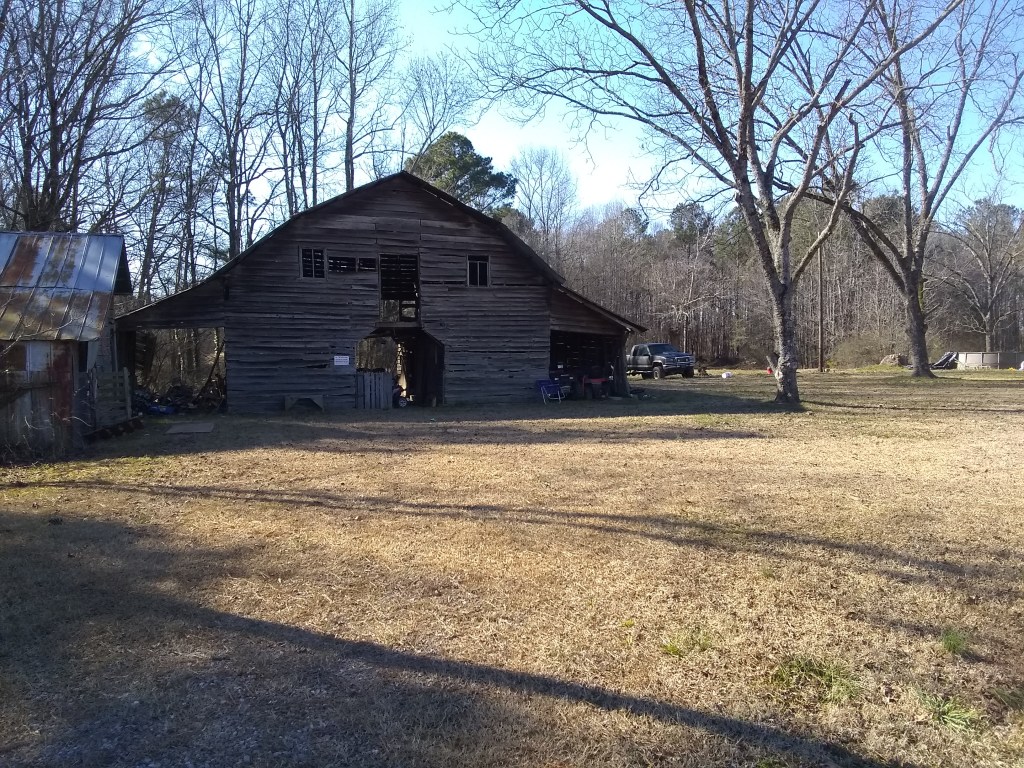


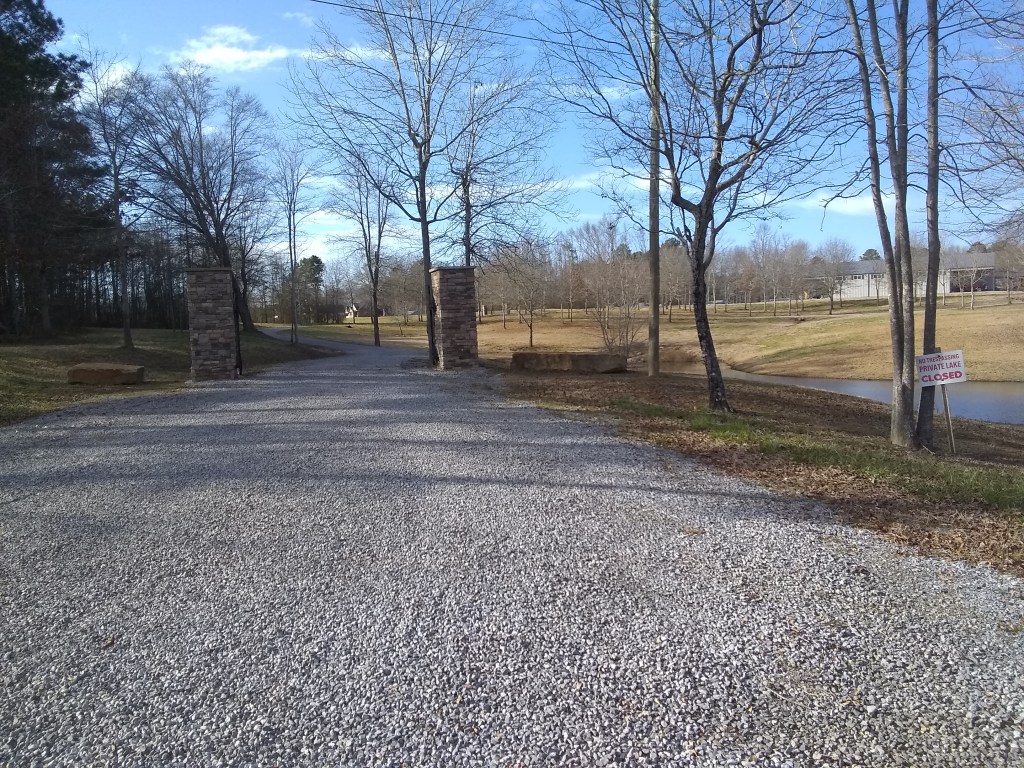


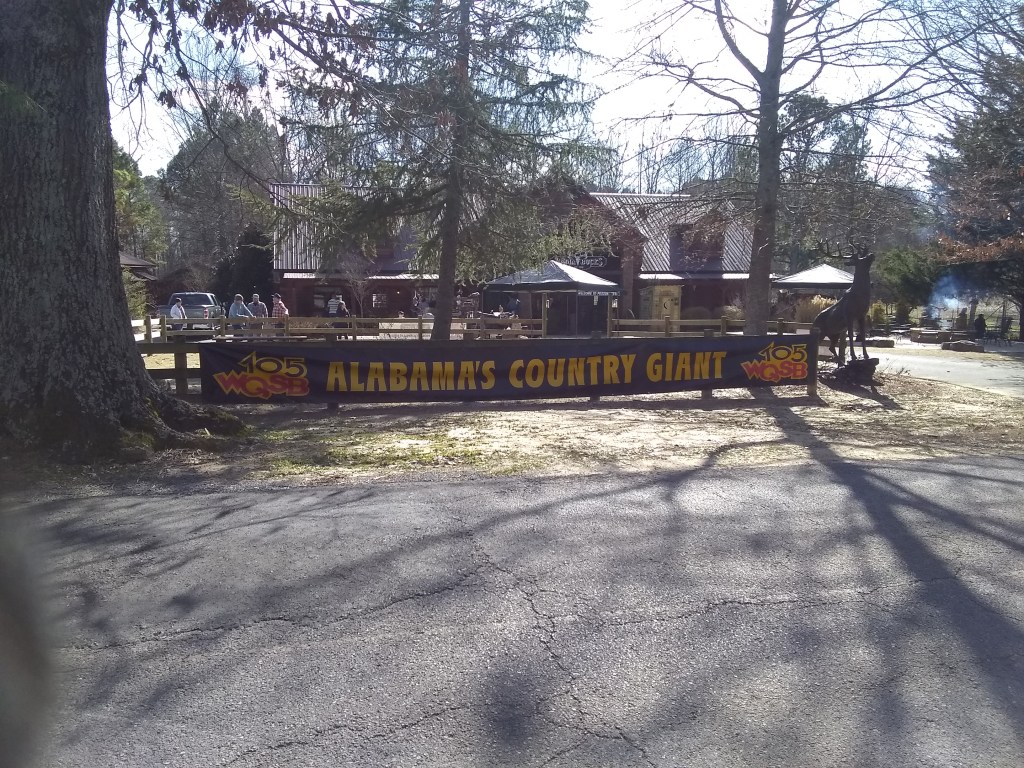





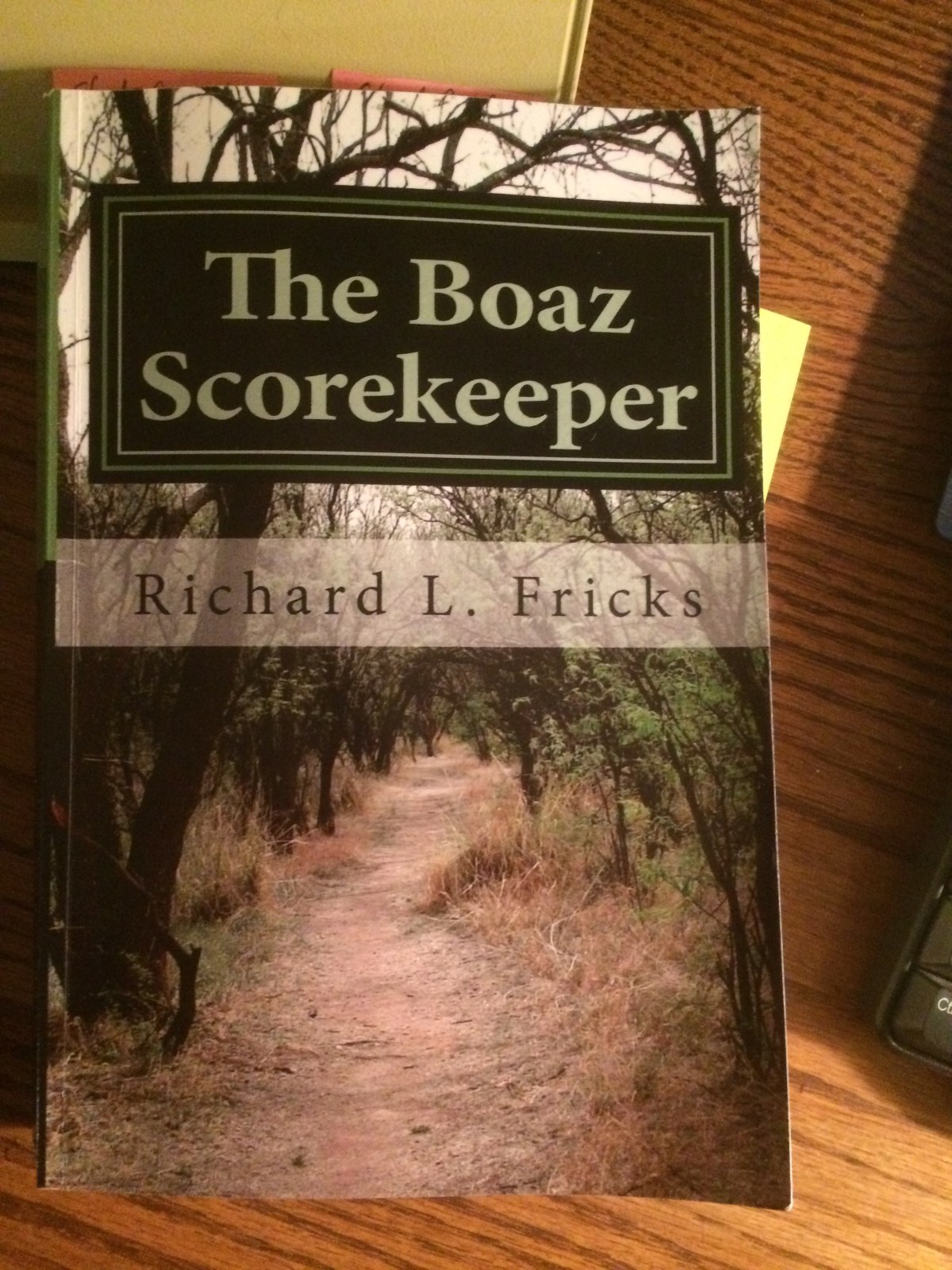


 by
by 


 Richard L. Fricks