Novels about ordinary people caught in difficult human questions.
Author: Richard L. Fricks
Richard L. Fricks is a novelist and Fictionary Certified StoryCoach Editor living near Boaz, Alabama. His fiction explores ordinary people caught in difficult human questions, and he works with a small number of beginning novelists through a year-long, in-person writing program.
Let’s beemgee. If you missed my September 3rd post, Beemgee is a company that offers a story development tool of the same name. Note, I didn’t say a story writing tool (think Scrivener). Before we can write, we need to know a few things (preferably many) about our characters and what they’ll be doing. Of course, if you are a pantser, you just start writing and discover your story as you go along.
This is my second post about Beemgee. This is also my second story development series. See my Sanity Snippets posts to review H.R. D’Costa’s method for outlining a novel. I encourage you to buy, read, and study her book, Sizzling Story Outlines.
Beemgee is clear that story development requires a detailed and thoughtful consideration of both character and plot. It recommends starting with character since plot emerges from what our characters do.
My first post in this series was about our protagonist’s external problem. This is either a situation he finds himself in or a mission he chooses or has been assigned. External problems are not limited to our protagonist. Other characters, especially the antagonist, will have their own external problem. It could be the same but usually, as far as the antagonist and his helpers are concerned, it is directly opposed to the protagonist’s problem. Think of a detective and a killer. The detective is working to discover who killed the victim. The killer is working not get caught.
For now, let’s limit our thoughts to the protagonist. After we’ve discovered his external problem we should address what he wants (we really don’t have a story unless our protagonist wants something). The answer is rather simple. He wants a resolution, to be free from his external problem.
There’s actually two different types of want: the wish, or character want, and the plot want. We’ll limit our consideration to the latter. However, to put the two wants into perspective, review this example (from Beemgee):“Marty McFly wishes to be a musician (character want). He also wants to get Back to the Future (plot want).”
As to the plot want, Beemgee puts it like this: “The desired result of this solution is usually a state of being: solving the problem leads to marital bliss, wealth, power, immortality, survival, etc. So the want tends to be abstract – a state as opposed to a specific thing or point in time. It is distinct from the wish because it comes about because of the external problem. The want is the implied reward for achieving the more concrete goal of the story.”
Here’s an example from my second novel, The Boaz Scorekeeper.
Micaden Tanner attended a high school graduation party at Club Eden, a secluded cabin owned by the families of five classmates known as the Flaming Five for their basketball prowess. Twin girls from another school also attended the party and never made it home that fateful Friday night. A few days later, Micaden is arrested and accused of kidnapping and murder although the twins have not been found. He quickly learns he has been set up.
Micaden’s external problem is apparent. He stands to lose his freedom if he’s convicted at trial.
What Micaden wants is also apparent. He wants to be free of his external problem, his arrest and his upcoming trial.
There’s more. He wants justice for the twins. In essence, Micaden wants to live in a world where the Flaming Five are held accountable for the crimes they committed that fateful night.
It’s your turn. Take out a pencil and start brainstorming. If you haven’t already, give your protagonist an external problem. Then, describe what he wants.
I encourage you to follow this series and complete each exercise. You will acquire sufficient knowledge to draft your first novel (or second, or tenth).
In my next Beemgee post, we’ll consider the protagonist’s goal.
It’s time to determine our story’s first act break. But first, let’s summarize.
We are using the three-act structure to develop our novel. Why? Because all stories have a beginning, a middle, and an end. It is well-established the beginning (Act I) comprises 25% of our story; the middle (Act II) is 50%; and the ending (Act III) fills the remaining 25%.
Act I is the setup, where we introduce our protagonist in his ordinary world. It’s where we learn a lot about him and develop a favorable attachment. He has an external problem and is called to do something about it. Even though, at first, he is reluctant, a mentor convinces him to go forward.
We are now at the end of Act I, close to the 25% mark. This is where our protagonist commits to the journey. In other words, he reacts to the Call to Action/Inciting Incident that occurred around the 12% mark. The first plot point is the point of no return. Some say this is when our hero crosses his personal Rubicon (Dictionary: “a line that when crossed permits of no return and typically results in irrevocable commitment”). Everything changes. It is a personal turning point for the protagonist. Often, it involves a change in physical setting.
Here’s an example provided by K.M. Weiland’s website: “It’s a Wonderful Life directed by Frank Capra (1947): Throughout the first quarter of the story, George Bailey’s plans for his life have progressed uninterrupted. Despite his various misadventures in Bedford Falls, he’s on the fast track to a European vacation and a college education. Then the first plot point hits, and his life is forever changed. When his father dies of a stroke, George’s plans are dashed. As in Pride & Prejudice, the standards that have already been established in the story are dramatically altered. This is no longer a story about a carefree young man freewheeling around town. From here on out, this is a story about a man forced to take responsibility by working at the Bailey Brothers’ Building & Loan.”
Notice, the protagonist thought his life was on one path (European vacation and on to college), then his father dies and the family business lands in our hero’s lap, an inescapable personal turning point. George’s life will never be the same.
What about you? What’s your novel’s first plot point? Take out pencil and paper and do some brainstorming.
In my Sanity Snippets series we’ve been progressing through H.R. D’Costa’s steps in creating a story outline (based on her excellent book, Sizzling Story Outlines). If followed, these steps will produce a viable first draft outline. D’Costa refers to this as “the first iteration” (two other books detail the second and final phases, “iterations” of her outlining process). I hope to continue creating posts (every 7 to 10 days) that track each step in the “first iteration” book.
However, I’m at the point I need to start planning my next novel. Although I’m still a few weeks away from completing the final edits of The Boaz Stranger, my mind is daily tempting me with random thoughts that could reveal the makings of a new idea. To capture, clarify, and organize my mental wanderings, I intend to Beemgee.
What in the heck is Beemgee? It’s a story development tool I recently discovered. That’s also the name of the company. From its website: “Tell a Better Story. Your tool for character development and plot outlining.”
After publishing ten novels (with the eleventh one due by November 1st) I can honestly say I need a story development tool. As you might have gathered if you are a consistent reader of my blog, I’m trying to transition from being a pantser to a plantser, possibly to becoming a plotter.
My story writing tool of choice is Scrivener. It too has many features that enable a writer to develop his story before beginning to draft. Features such as the Corkboard and the Outline views are excellent. However, Scrivener isn’t designed to provide a library of craft information.
This is where Beemgee excels. It provides a virtual storehouse of writing theory and instruction. Whether you are new to creative writing or a veteran, you will find interesting and instructive guidance on how to “[t]ell a better story.”
Beemgee’s focus is two-fold, character and plot. These are the two main characteristics all stories require. I’d safely declare that Beemgee offers a graduate level course in how to develop both character and plot. And, since it asserts that plot arises from characters (their actions and their interactions/conflicts with other characters), let’s start with character.
First, let’s get grounded. As stated, I’m at the initial stages of planning my twelfth novel. I intend to use Beemgee’s powerful software development tool to prepare before starting my first draft in Scrivener. If you are considering your first novel, why don’t you come along?
Again, to find a viable novel-length idea, we’ll start with our characters. Just so you know, this isn’t a universal approach. Some writers start with a chosen genre (mystery, romance, thriller, sci-fi, etc.), or a story seed. Since Beemgee is firm in its position that plot is produced from characters, that’s where I’ll begin.
Although my previous random thoughts have showered me with a vague picture of one of my main characters, he is sizing up to be the story’s antagonist, not the protagonist. For you, it might be different. You might one, few, or no clue about your story or your characters. That’s okay. I choose to trust the Beemgee process. I hope you will do the same.
To me, Beemgee is unique because of its approach to character development. It doesn’t per se start with the character’s backstory. It starts with his external problem. What do I mean by that?
Notice, I said “external problem” not internal. The internal problem/need comes later. Beemgee defines external problem as follows: “[t]he external problem may be a predicament the character suddenly finds him or herself in or a mission set to her or him.”
Think of a detective in a mystery story. Usually, there is a murder early on. At some time shortly thereafter, the private investigator is hired to find the killer, or the detective of a police agency or prosecuting attorney is assigned the case. Now, in this context, we know the external problem. It’s external to the private investigator or detective. And, as Beemgee says, “[m]ost stories begin with the protagonist being confronted with an external problem.” See how plot evolves from character and we’ve only addressed the first question in Beemgee’s character development tool.
So, what problem will your protagonist solve, or attempt to solve, in your novel? Of course, the list is endless, but I have a hunch it has something to do with yourself, not necessarily your personal problem, but something you are aware of from the news, or maybe a twist on a short story or novel you’ve read. Right now it could be as simple as a politician (say a U.S. Senator) with an addiction problem.
Take out pencil and paper and start brainstorming potential external problems. Don’t worry that you know virtually nothing. Don’t worry about the problem’s insignificance. That issue may reverse itself when you create another character, say your story’s antagonist. Stories thrive and survive on conflict. So think of characters who are opposed, they are on opposite sides of the external problem. For example, our detective wants to find the killer. The killer wants his freedom and will do whatever necessary to avoid being caught. And, maybe to kill again. But, that’s a different horse for now.
As you brainstorm, don’t forget to look at your own life, or that of your spouse, friend, barber, doctor, or other acquaintance. Does one of them have an external problem? Fiddle with it, manipulate it. Turn it into a problem your character wants to solve. Here’s an example. Is your friend’s boss battling a financial problem? Is the boss on the verge of declaring bankruptcy but needs to find a better alternative. Define the boss’s external problem. What will he do to ‘solve’ it?
If you brainstorm and drill deep but still come up dry, try Google. Read a few newspapers. Most every article can be fictionalized.
Writing a novel is messy work. It’s difficult at best. “I hate writing, but I love having written.” This quote is attributed to many writers, including Dorothy Parker and Frank Norris.
There’s nothing more challenging and rewarding than completing a novel. Well, that might be a stretch but at least you know what I believe.
How’s your story idea coming? Here’s an exercise that is difficult, rewarding, and necessary if you want to create an engaging novel. It’s called the logline.
Simply put, the logline is a bird’s-eye one sentence description of your story.
Why is this important? There are two main reasons. One is for your benefit. Experts say that if you cannot condense your novel into one sentence then you either don’t understand your story or you are trying to do too much (something I’m often guilty of). Your logline will keep you from chasing too many rabbits as you draft your story. In other words, it will keep you on the right track.
The second reason your logline is important is to trigger interest in a prospective reader. “Oh, that sounds interesting.” That’s what you want your audience to say. Hopefully, this, along with your book cover and blurb motivates potential readers to purchase and consume your story.
What should be addressed in your logline? H.R. D’Costa offers this helpful template in her Story Outlines book:
because of a compelling reason,
a protagonist must accomplish a goal
despite extraordinary resistance.
D’Costa also tweaks the above to include step-numbers from her detailed story outlining list.
because of the stakes [action step #6],
a protagonist [action steps #2 and #3b]
must accomplish a goal [action step #2]—
despite the antagonistic forces in his way [action #3a].
She offers several examples. I like these two the best (quotation marks omitted):
A Few Good Men: To prevent two marines from being convicted of murder, a US Navy lawyer—accustomed to easy victories—must elicit a confession from a powerful colonel desperate to suppress the truth.
Here, I’ve added the related attribute from D’Costa’s tweaked template: Because of the stakes (To prevent two marines from being convicted of murder) a protagonist (a US Navy lawyer—accustomed to easy victories) must accomplish a goal (must elicit a confession from a powerful colonel) despite the antagonistic forces in his way (desperate to suppress the truth).
Here’s the second example I like: One for the Money: Facing eviction and desperate for cash, a freshly minted female bounty hunter must apprehend a cop accused of murder…who also happens to be her ex-flame.
Here, I’ve added the related attribute from D’Costa’s tweaked template: Because of the stakes (Facing eviction and desperate for cash) a protagonist (a freshly minted female bounty hunter) must accomplish a goal (must apprehend a cop accused of murder…) despite the antagonistic forces in [her] way (who also happens to be her ex-flame).
Here’s the logline for my current work in progress, The Boaz Stranger: To get justice for the disappearance and presumed death of his high school friend half-a-century ago, a sixty-six year old Yale Law School professor must return to his North Alabama hometown to verify whether clues recently discovered inside his deceased wife’s diaries are true, and to reveal how the wealthiest man in town got away with murder.
I admit, it’s a little too long.
One thing to note before you try your hand. Your logline is not a plot by plot listing. You don’t have space and that’s not the goal. Obviously, subplots aren’t included.
Now, take out pencil and paper (or laptop) and start drafting your logline. I suggest using D’Costa’s tweaked template. Don’t worry, you don’t have to get it perfect the first time. Expect that you won’t.
Finally, and never forget this, if I can write a novel, you surely can.
Let’s talk about carryalls. There are many types. The carryall bag comes to mind. Search Google and you’ll find dozens and dozens. Golf-carts and John Deere Gators are also carryalls. Not to be outdone, Wikipedia includes horse-drawn carriages, automobiles, sleighs, and earthmoving equipment under its ‘Carryall’ title.
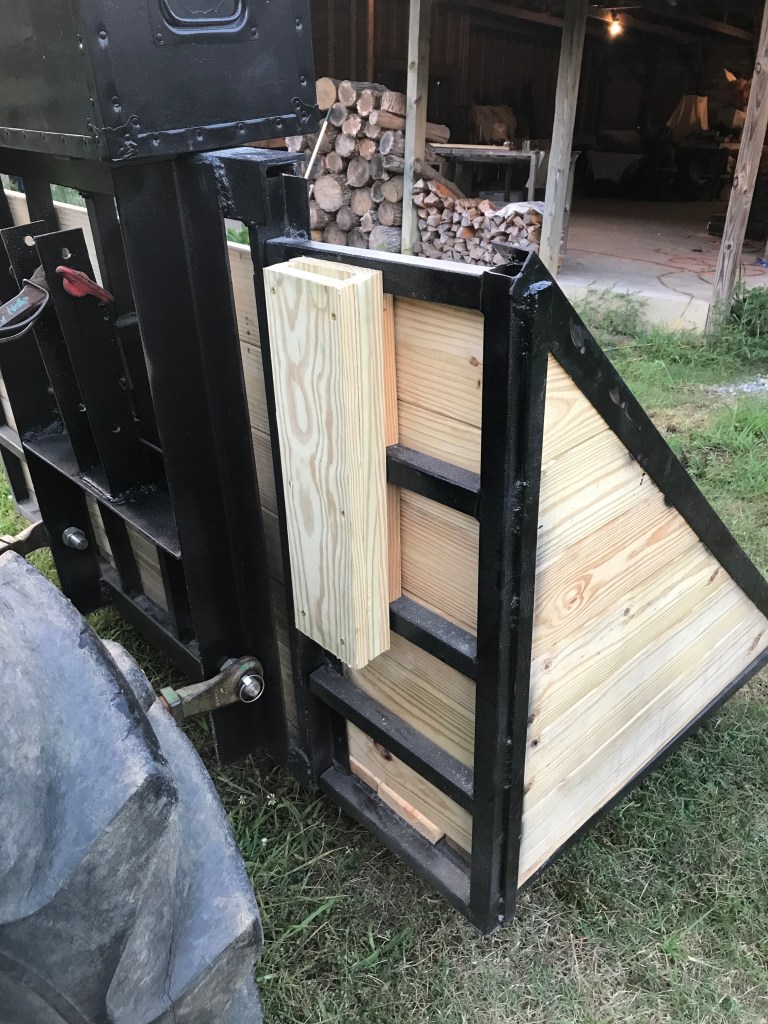
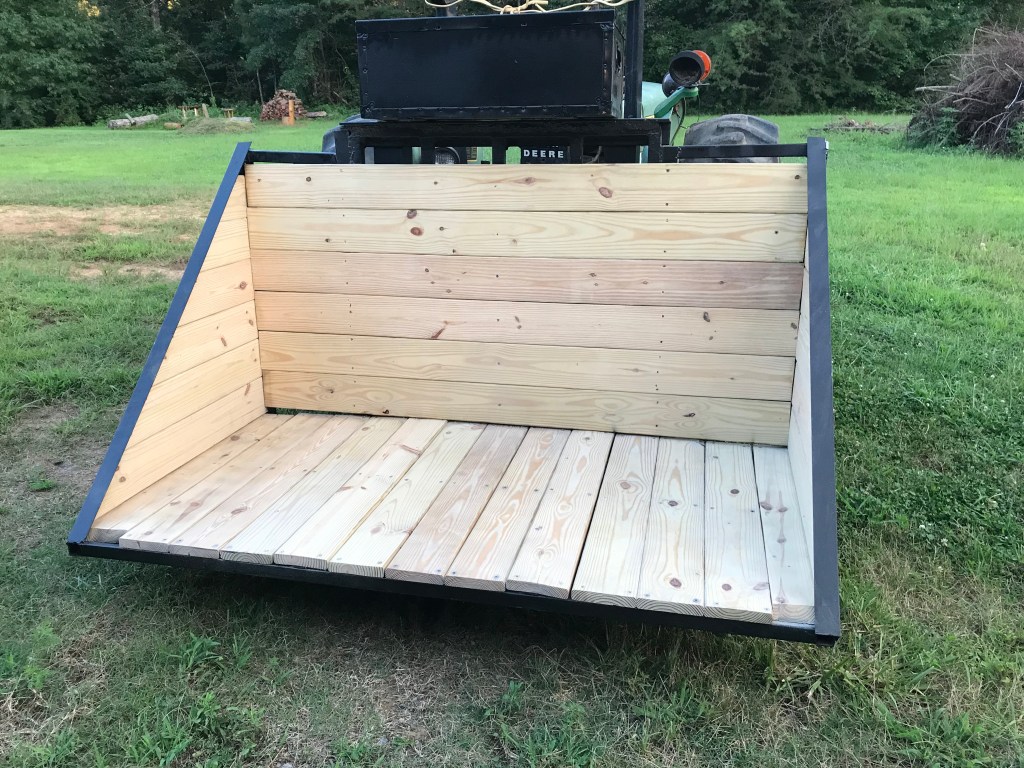
But, there’s more. Let me tell you about the one Jonathan spent weeks building while learning how to weld. Here it is, hot off the ‘press.’
Notice the chainsaw scabbard.
Notice the black box for wedges, file/sharpeners, water, and peanut butter.
Pretty amazing wouldn’t you say? Great job Jonathan.
The two of us plan on using his creation for hauling firewood from the woods. Although our carryall turned out bigger than many we’ve seen on YouTube, we believe it will be manageable in our particular forest. Hopefully, we can park it next to a fallen tree, cut it into eighteen inch chunks, and load without taking more than a few steps. The wood-splitting can wait until we return to the barn. Alternately, if by chance (and hard work) our inventory of fallen trees evaporates to zero, we can always cut down a tree that’s crying for euthanasia.
Speaking of death, or life, according to your perspective, the firewood, after burning, will become ashes. The gray and black powder is fantastic fertilizer for flowers, shrubs, and our vegetable garden. A tree dies, a bush or plant thrives. At least for a season or two.
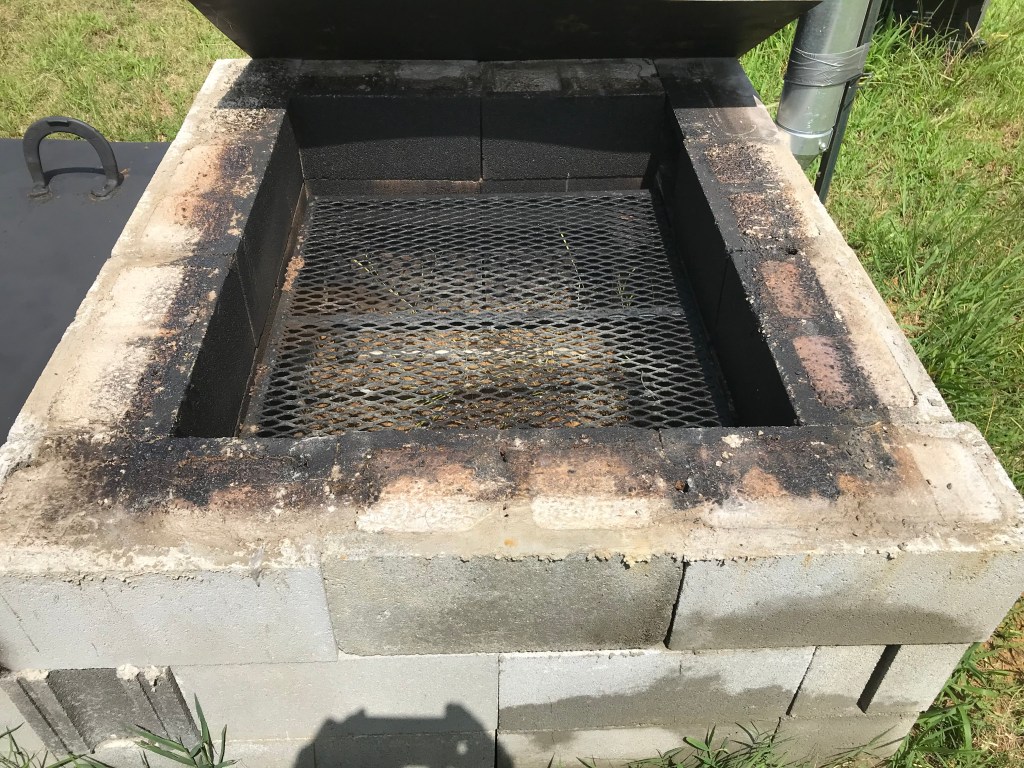
There’s another angle here. We also use our firewood in our homemade smoker. There’s nothing better than slow-smoked meat. The heat and smoke (along with a spice rub) tantalize the pork, beef, or chicken, and titillate the palate. Today, we plan on smoking some drumsticks. It only takes three hours and they are fantastic. Not only are they tasty, but they are energy for the body. Thanks firewood.
Our homemade smoker.
You might be complaining right now because you thought you’d landed on a writing blog. Hold on. I’m getting to that. In fact, I’ll declare you and I have a built-in carryall. It’s also known as the mind. Let’s see if there’s an analogy lurking.
To repeat, our minds are carryalls. They carry all kinds of thoughts, ideas, and opinions. In other words, we, along with our minds, are surrounded by a forest of information. It is overwhelming and not all true.
We could say there are many points of light beaming their way to and inside our minds every second of every day (you might prefer calling them points of darkness). Whatever, we comprehend these ‘points’ about as well as the unknown beyond our headlights when we’re driving in a dense fog. In other words, we, at best, have only a foggy idea what’s in our heads. And, we have no clue where our thoughts come from. But, one thing is certain: there is a muddy puddle between our ears.
Good news. You don’t have to stress out or give up. There is a solution, partial though it might be, that’s a universe away from a magic pill. Although, on good days, it may feel like magic.
Mental thoughts, ideas, and opinions (including those verbally expressed) are like the new wood-hauling carryall sitting inside the hall of our barn. Alone, all it can do (allow me to give Jonathan’s creation some personal characteristics) is ponder and anticipate days and adventures in the woods.
Can’t you imagine the excitement ‘he’ feels when the old 2030 John Deere eases his way backwards for hookup and announces, “wake up, it’s time for some fun.” A newer, more modern tractor, educated no doubt, might say, “Buddy, it’s time for you to focus and do what you were made for.” New or old, it is the tractor, the engine, the power, that sets our carryall free. And gives our new friend a life worth living.
Like Buddy, disconnected from their power source, our thoughts, ideas, and opinions are alone in the muddy puddle between our ears, powerless to perform as intended. At a minimum, they are vague, unsatisfying, possibly debilitating. The solution? No, not a tractor per se. Actually, it’s something more powerful. It’s called a pencil.
The lowly pencil comes to our rescue. It enables us to walk into a forest of ideas and focus on the one that seems most pressing, most urgent for our survival. The pencil transports an idea to paper (you may substitute a laptop!), enabling you or me to start whittling away.
It’s like Jonathan and me walking into our forest and choosing one fallen tree to cut up into firewood. This tree, not that tree. This cut, not the one fifty-four inches away.
Writing is the solution. It is the clear water antidote to our muddy puddle.
I like what Joan Didion said, “I write entirely to find out what I’m thinking, what I’m looking at, what I see and what it means.” Read that again. It’s not that Joan’s thinking wasn’t happening as she looked outside her window at a forest of ideas. But, it wasn’t discernible. It was like her mind was thinking in a language she didn’t understand. It’s the same with us.
For Joan (and us) writing is a tool for thinking. It enables us (and her) to see through corrective lenses, to determine what we see and what it means. Writing is to thinking, what chainsawing is to firewood production.
As stated, it is an imperfect process. Sometimes, on our bad days, we don’t conjure up enough clear water to eliminate a fraction of our muddy puddle. Put another way, our best efforts burn up and create nothing but ashes. But, don’t forget, ashes become fertilizer for another day.
Other times are like magic, the clarity after even a few words, parts the clouds and lets the sunshine in. It’s as though a hidden pump removes the dirty water and fills us with the clear, sweet, and tasty water of a mountain stream.
Let’s talk a minute about other tools. I started this post yesterday. I wrote a few paragraphs and they were disjointed at best (not to say today’s finish is measurably better). However, there’s one thing I don’t want you to miss.
Just as a good chainsaw is a necessity for cutting trees into eighteen inch chunks for splitting, a good writing program can make your job so much easier. Yes, as for our forest work, I could use an axe and a cross-cut saw as my grandfather did when he was growing up in the early 1900s.
And, as for my mental work, I could use pencil and paper (as I sometimes do). But for production and publishing sake, I use Scrivener. It’s the best I’ve found and I’ve explored many a writing program.
One thing I love about Scrivener is that you can break your writing into manageable chunks (like those manageable eighteen inch tree chunks). You don’t have to look at the blank page and say, “this is too much. I don’t know where to start. I can’t see what I’m looking at.”
In Scrivener’s sidebar binder I can outline every chunk, whether it’s a main section, paragraph or sentence. I recommend you give it a go with a free trial. No, my recommendation doesn’t earn me a penny.
Finally, I encourage you to use your mind for more than a carryall. Choose a thought, idea, or opinion, grab a pencil, and start writing. Before long, if you stick with it, you’ll have a pile of words, stacked like oak and firewood, every one the right length and properly split.
Your muddy puddle will be a smidgen clearer. Maybe, just maybe, you’ll know what you see and what it means.
Quite a bold statement isn’t it? Yes. It’s meant to be. Frankly, it’s the type of statement that gives me pause. Why? It begs for opposing argument. This confession aside, let’s ‘play like’ my title represents life’s two-sided coin. Either you wither or you write.
We’ve all heard, and mostly understood, the word wither. In its non-plant context, it means, “cease to flourish; fall into decay or decline.” Its not a real life scenario any normal person would choose.
Let me regress a little. I almost chose as my title, “Life: Cotton Candy or Sweet Potatoes?” This certainly would have hooked you. Right? So, what was my intent?
Let’s talk slang. Cotton candy: “something that is attractive but inconsequential” (Google search). Do you, do I, want to be beautiful but lacking worth or importance? Again, I suspect most normal people would answer ‘no.’
Now to a better choice. And, to more slang. Sweet potatoes: “sweet potato in Korean is used to describe someone who is frustrating or slow to catch on with the conversation” (Google search). I lied didn’t I. This isn’t better. Actually, it’s worse. Here, I bet you and I both had rather be beautiful than this sweet potato dope.
It now seems my alternate title wasn’t anything like my two-side coin title. In fact, both cotton candy and sweet potatoes makes us wish for a better alternative.
Now, we’re almost back to where I was headed after defining ‘wither.’ But, let me first share a real live example. “I don’t use Walmart’s self-checkout because it cost too many jobs.” I heard this yesterday. It was said in a casual conversation, so casual I don’t remember the context.
Now, let me be clear. I don’t know if the claim is accurate. I do know it’s the type of statement I avoid like the plague. The reason(s) I suspect is that I’m a writer. And, a lawyer. So, it’s my background and training. Notice, I didn’t say “because I am so smart.” FYI, I’m just an average Joe.
You see, many (most?) folks aren’t great talkers. They spout out claims as though they’ve been scientifically proved.
I’m sorry to be so pedantic but the Walmart claim prompted me to pursue some cursory research.
At Quora (okay, okay, hold your taters) A.C. responds to the self-checkout system, “Initially, probably quite a few. But since self-checkout became prevalent, companies have opened many new stores, partly because they know they won’t have to employ as many checkers as before. This is similar to how the number of bank tellers and the amount they are paid has actually gone up due to ATMs. Banks have said specifically that they open many more branches because they don’t have to employ as many tellers, resulting in a net gain of tellers jobs.”
And to the same question, J.M. (yes, from Quora) says, “I get a lot of people telling me they don’t like self check outs because it takes away jobs. I still have my job as a cashier. From my experience it hasn’t affected any of the cashiers. None of us have had to move to different departments because of self check out. I have been saying this to many people. There’s enough people who don’t want to scan their own stuff to still keep the cashiers doing their jobs. So no they aren’t taking away jobs.”
Okay, sorry. Yes, I admit A.C. and J.M. could be wrong. My point is, at least what I want it to be, is that life and issues aren’t so simple. Most of us know so very little we have very little right to make such broad claims.
Then why do I do the opposite, “Wither or write, you decide?” Please don’t be such a sweet potato. The answer is, writing reveals life isn’t black and white. It lets you explore the possible, pealing back the masks we all wear.
Let’s see about that.
Free advice: You should be reading Brain Pickings, Maria Popova’s online journal. In her own words, “Brain Pickings [includes] a free Sunday digest of the week’s most interesting and inspiring articles across art, science, philosophy, creativity, children’s books, and other strands of our search for truth, beauty, and meaning.
Remember, reading is vitally important for many reasons, like being a good antidote for having a cotton candy or sweet potato mind. As Stephen King declares, “If you don’t have time to read, you don’t have the time (or the tools) to write. Mark Twain spoke to the value of reading: “A person who won’t read has no advantage over one who can’t read.”
Returning to Brain Pickings. Yesterday, Maria posted, “The Unbearable Lightness of Being Opaque to Ourselves: Milan Kundera on Writing and the Key to Great Storytelling.”
You and I can learn a lot about writing, particularly novel writing. And, Maria’s words (and quotes) seem to support my title, “Wither or write, your choice.”
Maria: ” … the novel, the story, the poem, the song are each a model, an imagistic impression of the world not as it is but as the maker pictures it to be, inviting us to step into this imaginary world in order to better understand the real, including ourselves.”
Our imaginations, in story form at least, helps us understand reality.
Maria quoting Kundera: “Every novel says to the reader, ‘Things are not as simple as they seem.’ That is the novel’s eternal truth, but it grows steadily harder to hear amid the din of easy, quick answers that come faster than the question and block it off.”
Does this remind you of, “I don’t use Walmart’s self-checkout because it cost too many jobs.” Things are not simple, even the statements that appear so. Things are far from black and white. If anything, the world, reality, life, is a landscape of gray. And, don’t miss Kundera’s later point. If we live on the surface we will constantly be bombarded with “easy, quick answers.” We’ll grow deaf. And dumb. Sorry for my embellishment but it seems reasonably implied.
Let’s look at another Kundera quote: “A novel examines not reality but existence. And existence is not what has occurred, existence is the realm of human possibilities, everything that man can become, everything he’s capable of. Novelists draw up the map of existence by discovering this or that human possibility. But… to exist means ‘being-in-the-world.’ Thus both the character and his world must be understood as possibilities… [Novels] thereby make us see what we are, and what we are capable of.”
In four words, what is a novel? A work of fiction. It’s made up, wholly from the imagination. So, what good is it since it doesn’t explore reality?
It’s good because it explores existence, what could happen in the future. As Kundera says, “existence is the realm of human possibilities.” So, why is this important? Fiction writing, novel writing, offers solutions to future problems. How Billy Character mentally responded and physically reacted to the imagined scene presents value to us in the real world.
At a minimum, novel writing and novel reading makes you and me more empathetic (btw, that’s pretty much a proved fact; do your own research).
Let’s say you choose to write a novel. The protagonist is a doctor. He works for an organization that delivers needed medical care around the world, specifically inside those third world, war torn countries where poverty is widespread and spreading like a cancer.
Here’s a short snippet from your writing.
“Doctor, this way.” Claudia the head nurse led me inside a tent. I could hear what sounded like firecrackers or bombs bursting on the mountaintop beyond the river. If I didn’t know better, I’d think I was with Susie in Hyde Park watching a Fourth of July fireworks celebration taking part over Lake Michigan. “How bad is it?” I said as the weary nurse walked faster toward the exam room. “Five kids die every minute.” “Uh? I responded in disbelief.” Claudia stopped, turned, and looked into my eyes, a tear rolling down her right cheek. “Not just here in Yemen, but around the world. Five innocent kids die every minute from malnourishment.” I made a mental note to explore her statistic and other opportunities to make a difference.
Let’s step back. Could Kundera be right? “[Novels] thereby make us see what we are, and what we are capable of.”
My hypothesis: I’ll never know the full extent of what I am or what I’m capable of until I see the possibilities, through the eyes of someone else, someone wholly the product of the writer’s imagination.
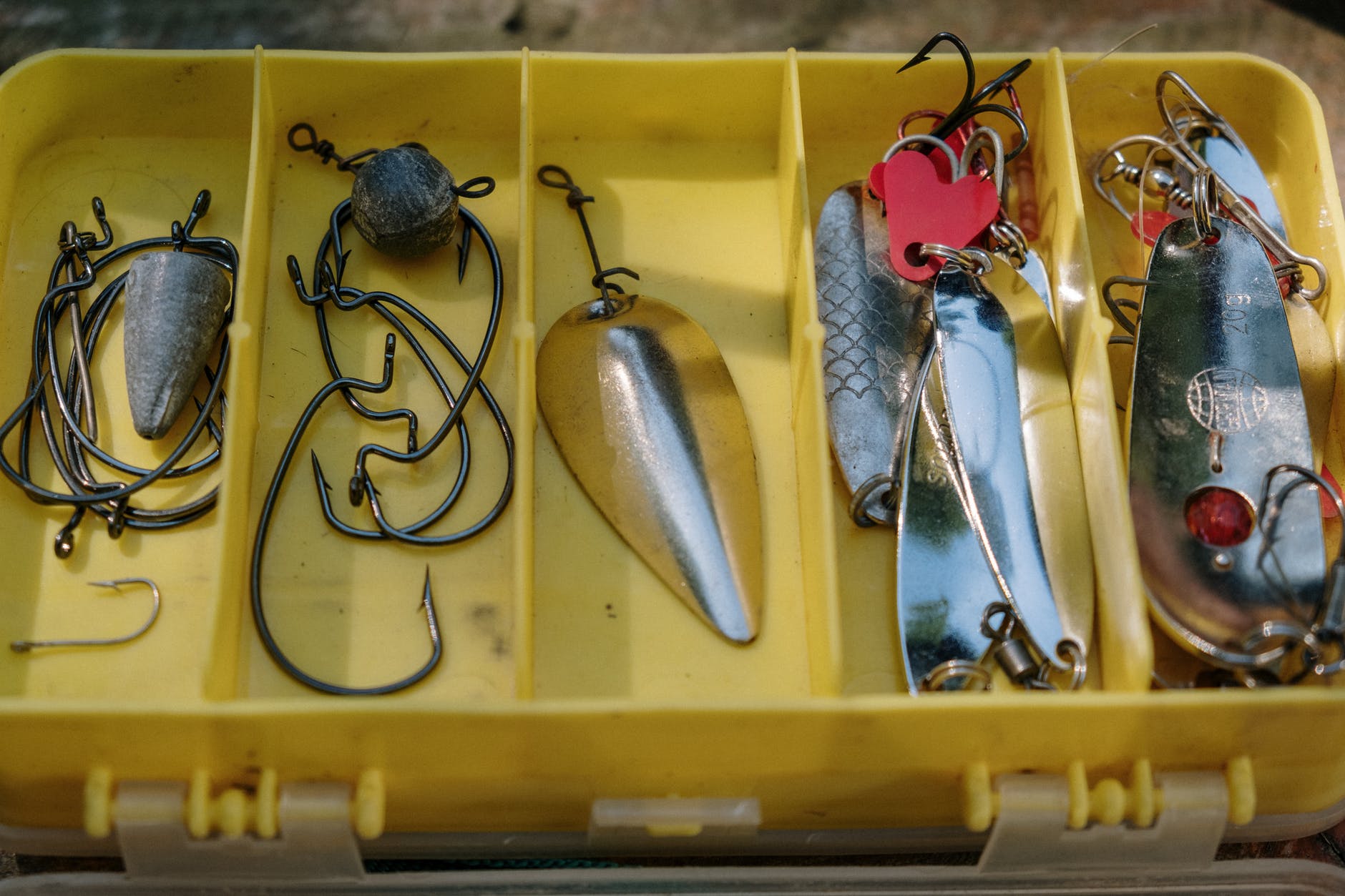
What first comes to mind? Fishing, no doubt. And now you broadly know why your story needs a hook. Without one, you won’t catch your prospective reader’s attention. Thus, she will never read your book.
H.R. D’Costa, in Sizzling Story Outlines, says story hooks come in a number of shapes and sizes, including: setting, character, origin of material, tone, title, book cover, reputation of the content creator, star power, word of mouth, and irony.
Here’s my first-thoughts about each of these eleven ‘shapes and sizes.’
Setting. The first permanent settlement on the other side of Mars.
Character. Matt Damon as Jason Bourne in the Bourne series. More about character below.
Origin of material. In Cold Blood, by Truman Capote, tells the true story of the murder of the Clutter family in Holcomb, Kansas, in 1959. It obviously isn’t a novel in its purest form (fiction). Although it is based on a real life crime (non-fiction), it’s told in long-story form.
Tone. Per Google, tone “in literary terms, typically refers to the mood implied by an author’s word choice and the way that the text can make a reader feel. The tone an author uses in a piece of writing can evoke any number of emotions and perspectives.” How a novel handles bedroom doors, open or closed, may be the hook for some readers. Some prefer not to read about what happens, others want ever detail.
Title. The book’s title itself may hook the reader. The Extraordinary Life of Sam Hell, by Robert Dugoni, did it for me. Excellent story, and more details below when we look at character.
Book cover. D’Costa calls it, “candy for the eye.” You get the picture. You’ve been in a book store browsing around and been lured in by the photo, drawing, or other depiction on the front cover before touching the book. It might be the bold (or subtle) portrayal of sex. It might be a beautiful country scene, including a snow covered forest with cabin at the end of a long winding road with soft shafts of smoke rising from the chimney. You get the idea.
Reputation of the content creator. Seeing the author’s name can be all the hook a reader needs. Think John Grisham, Stephen King, or Nicolas Sparks. As for movies, the hook may be the producer. You ever heard of Steven Spielberg?
Star power. I’ve already mentioned Matt Damon. What about Julia Roberts? Tom Hanks? Meryl Streep? George Clooney? Of course, all of these are movie actors, but there are those we know from novels. Atticus Finch and Sherlock Holmes to name two (btw, if you’d like to try a great murder-mystery series, look no further than Hulu and Elementary. It’s about a modern day Sherlock Holmes and Watson, as in Joan Watson).
Word of mouth. You know all about it. The importance of a word of mouth recommendation. Hint, I just gave you one.
Irony. As D’Costa discloses, irony deserves a lot of ink. Succinctly, irony is the pairing of opposites, things we would never (or rarely at best) ever considering joining together. Here’s an example: a real estate mogul with a cloudy reputation (to put it mildly) and without any political experience, becomes President of the United States. Now, that would make a hell of a hook for a novel.
Moving on.
A hook is a lure. It’s like a magnet, drawing its prey closer and closer until there’s an inseparable connection.
Let me close with a brief look at the novel I finished reading yesterday: The Extraordinary Life of Sam Hell, by Robert Dugoni. I believe my experience illustrates an important point about hooks. As stated, it was the book’s title that lured me in. But, it’s not what kept me reading. Now, don’t get me wrong. The title, as a theme, no doubt was present throughout the book. However, there were a number of other reasons I kept turning the pages.
It should go without saying but, well, you know, I’m about to say it anyway. Dugoni is an excellent writer. One thing I liked was the minimal description and the short chapters. This doesn’t mean I couldn’t picture (or feel) what Sam was experiencing, but Dugoni doesn’t take a whole page detailing every chink in Our Lady of Mercy’s (the Catholic church just blocks from Sam’s boyhood home) front steps.
As an aside, if you think you like long and tedious descriptions (and explanations), I encourage you to read, The Goldfinch, by Donna Tartt.
SPOILER ALERT. Let’s cut to the chase. It was Sam Hill, the protagonist, who served as the real lure for me. Sam (formally Samuel) was born to Maxwell and Madeline Hill in Burlingame, California (near San Francisco). He was born with red eyes, medically labeled, “ocular albinism.”
The story is told in two time frames: Sam’s youth and his adulthood (through, I think, his early to mid-forties). Of course, you’ve figured out that Sam’s red eyes (that’s where the ‘Hell’ comes from; he’s also called “Devil Boy”) are going to have an overwhelming affect upon his life. And, you’d be correct.
Sam’s story portrays a positive change arc. Thus, he starts one way and ends another. In between are scenes that move you from sadness and sympathy to uncontrollable laughter, with anger and more than a desire for vengence in between. They reveal what any school kid would experience if he’d been born with such a horrendous disability.
But, don’t tell Sam’s mother that her only child is disabled. She is a devout Catholic (recall, Our Lady of Mercy) who from Sam’s birth believed he is her gift from God and is destined for an extraordinary life. And, he is.
In a strong sense, I saw my own mother in Madeline Hill. She was Sam’s number one supporter throughout the story and her life, just like my dear, saintly mother. However, don’t believe Sam’s father wasn’t in his corner. He was, with his wisdom and tough love philosophy. And yes, like my own father.
I’d be remiss if I didn’t mention two other folks who made Sam’s life worth living. His black friend, the athletic Ernie Cantwell, and the girl Sam loved from first site, the unorthodox Mickie Kennedy. Without them, the story would have been far poorer and Sam’s life would have been a bore.
Finally (sorry for such a long ‘snippet’), I encourage you to think about your own book. What type of hook will lure in your reader? Take some time to write down your thoughts.
In this post I digress to share a private experience that occurred this past week.
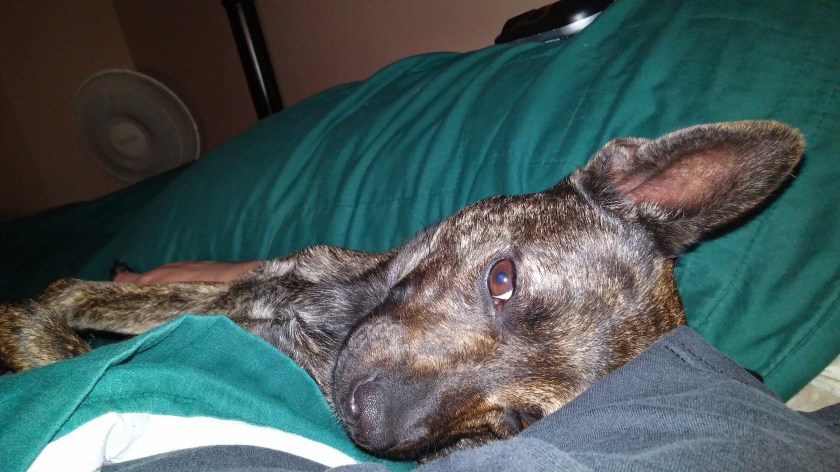
It was Tuesday night around 9:00. The family and I had just watched another episode of Elementary, stories of the brilliant, intriguing, and wholly fictional Sherlock Holmes. Shadow, our brilliant, intriguing, and wholly nonfictional Blue Healer, was in my lap enjoying my last caresses and soothing words before our nightly walk outside and onto her safe dog’s bed inside our newly renovated barn kitchen.
2015?
The moment the TV’s volume disappeared, as predictable as morning light, Shadow jumped from my lap onto the floor and pranced toward the front door. To wait. For me to rise and saunter to the foyer’s cabinet and remove collar and leash from an uncluttered drawer.
Obedient for now, Shadow sat on her rear haunches allowing my fumbling fingers to snap the two ends of the collar around her neck, worried that I might pinch an ear as I’ve done more than once. But not tonight. She looked up and back into my eyes, relaying an unspoken thank-you.
Now, with Shadow on all fours and me remaining on two, I open the storm door and we scurry onto the front porch. Shadow is already alert because she sees Kitty approaching in the grass from twenty feet away. I allow the retractable leash full freedom and quickly the two hairy friends cautiously greet each other, engaging in a semi-circular dance without touching, although I’d bet there was endless sniffing.
Kitty soon became distracted, and so did Shadow. She abruptly darted to the side yard, jerking the leash controller out of my hand. She was off, tracking a scent of some unseen animal, maybe a raccoon, rabbit, fox, coyote, or small bear. I know not. Whatever it was, the creature was clearly drunk, given the circuitous track Shadow was pursuing. I kept hollering, “Shadow, Shadow, come here.” At one point, I got within eight feet of the trailing controller that slide across the grass five feet behind my excited and distracted friend.
There was no catching the Blue Healer. I repeatedly hollered her name and warned she should come to me right now and retreat to safe quarters inside the barn. “Come here.” She didn’t listen. After racing with nose to the ground over every yard we have, including the north side of the barn, the most sweet and normally obedient Shadow pursued the intoxicating scent across the runway and into the pine thicket beyond. That’s when I realized this man and that dog had ventured into uncharted territory. The only other time Shadow had jerked the leash controller from my hand, all had ended well, she’d performed a few oddly shaped figure eights and surrendered to my loud but reasoned voice. But not tonight.
Clothed only in house-shoes, soft shorts, and a tee-shirt, I pursued, quickly losing Shadow and the front porch’s light. I eased my way into the undergrowth, quickly finding the nearest briers. Again, and repeatedly, I hollered, “Shadow, come here. This is dangerous. What are you doing?” There was no response.
I had no choice. I needed help, along with a flashlight. I walked back to the house and enlisted Donna and Jonathan’s help. They quickly responded and followed me with two flashlights, one weak, one strong. The two of us milled along the edge of the dense forest, poking light wherever we could, all the while staying on the runway (our 1,300 feet grass strip evidencing one of my former lives). We each kept verbalizing the common refrain: “Shadow, come here.” There was no response.
I finally told my two assistants they might as well go back inside. I knew what I had to do: go inside and equip myself. Less than five minutes later, I emerged from the mudroom clothed in long pants, tee-shirt, jacket, work-boots, a hat, and Jonathan’s flashlight.
I walked across the yard and runway, calling out for Shadow every other step. No response. I had no choice but to immerse myself in the undergrowth. My theory was (actually, I had two) Shadow’s zigzagging had been her undoing. As she sniffed the ground back and forth, left and right, circling and re-circling, the trailing leash and controller had become entangled around a bush or tree. She trapped herself somewhere, and I had to find her. My second hypothesis was that something had attacked and devoured her, or, at a minimum, injured Shadow enough to cause her current incapability of returning or even responding with a yelp or bark.
I set off walking and clawing westward along the hundred foot wide wilderness expanse parallel and to the north side of the runway. Again, the runway is 1,300 feet long, lying east to west. I exited the grass strip into the forest a hundred feet from the eastern end. The undergrowth was so thick I could barely move, but I kept shining my light into every crevice and calling out my dear Healer’s name. To my surprise and pleasure, the thick mass of briers, bushes, and new-growth pine trees thinned significantly the further west I walked.
After a thousand feet or more, without sight or sound of sweet Shadow, I circled back toward the east and my point of beginning. I moved northward to return by a second path, thinking and hoping I’d discover treasure around every bush and beyond every tree. I did not.
I once again thrust through the last two hundred feet of underbrush and exited to the runway. Quitting wasn’t yet on my horizon. I chose the much easier runway to walk and look, constantly peering my flashlight into the thicket. I first walked westward a thousand feet or more, continuing as always to call my sweet and loyal friend. I returned the same route and kept going past my usual thicket entrance point all the way to the eastern end of the runway. No sound, no yelp, no bark, nothing. “Shadow, where are you?”
Reluctantly and regrettably, I retired to the house. Sad, lonely, and sick. The thought, ‘I will never see my sweet Shadow again,’ rolled across my mind as I removed my boots and my sweat-drenched clothes. After a soaking sponge bath, I walked to my room, despondent over my loss. Finally, after a long attempt at reading, I had no choice but to go to bed. But, before I did, I set my alarm to 5:00 am, determined to return at dawn, invigorated to continue my search.
My plan, if it took it, was to start at the last place I’d seen my dear companion and work outward in a semi-circular pattern. I even considered using my chainsaw to remove every bush and tree I encountered. I clung to my first theory, but with one important alteration: Shadow’s leash had become entangled, effectively trapping her forever. And now that alteration: most likely, her inability to move would have occurred within 100 feet of where she entered the wilderness. I’m unsure where the number came from. I figured it was a high side distance. I knew (barring demise by the teeth of a ferocious animal) she, or her body, wasn’t far from the last place I’d last seen her.
“Would you change the channel?”
Before I continue, I want to share a little back story about how Shadow came into our lives. It was 2014, and we were one year into our family barbecue business adventure. Jeremy, as usual, had put in an all-nighter slow-smoking Boston Butts and St. Louis Ribs. He’d left the restaurant and driven his 1986 Nissan Z to a car wash on the west side of town. After washing the exterior, he started vacuuming the interior. He was kneeling down, focused on the driver’s side floorboard, when he noticed that a cute little black dog had asserted herself (gender not yet determined!) through the opened passenger door.
With no owner in sight, Jeremy gave the sweet pup a ride home, to Jeremy’s home that is. His intent was to carry the stray or lost dog to a shelter. And, of course, you already know how that worked out. The young, sweet, and loving Blue Healer look-alike became Shadow and a wonderful addition to our country oasis in North Etowah County.
Now, let’s get back to this week’s adventure.
It was a long night. I didn’t sleep well at all. What sleep I got was thin and devastating. From the last fit of sleep, I’d awoken at 4:30, half an hour before my alarm setting. I didn’t ponder or dawdle.
After dressing in last night’s drenched clothing (except for a dry tee-shirt), I grabbed a thermos of coffee and headed out. Hope sprung as I opened and walked through the main and storm doors. My anticipation that someway, somehow Shadow would be on the front porch. She’d either chewed herself free or pulled the collar over her head, exited the thicket, and pranced herself across the runway and front yard. I could almost hear her say, “Paw Paw, where have you been? I’m hungry for my morning Oscar Mayer.” To my growing sadness and regret, there was no eagerly awaiting Shadow. No Shadow eager or not.
It was as dark as midnight. I walked across the dewy grass and retrieved a lawn chair from the barn. Although I held Jonathan’s flashlight, I wanted daylight to guide my search. I had to wait until sunrise. Across the runway and six feet from my normal thicket entranceway, I unfolded the chair and sat. My coffee was bitter, like I’d forgotten to add my usual two packs of Sweet-n-Low. The undesired taste triggered a thought, one that had raised its head during the night every time I’d awoken.
‘What if I never see Shadow again?’ I tried to repulse the emotions. Memories flooded my mind. Last thoughts, last night, sitting in our chair. I recalled sweet Shadow lying in my arms like a baby and me telling her I loved her. Sitting beside the thicket, I imagined that would be the memory that haunted me for the rest of my life. Oh, why hadn’t I grasped more firmly? Why had I let the leash controller fly out of my hand? It was all my fault.
Daylight came. Eventually. I stood and with one hand on the handle of my coffee thermos and one clutching Jonathan’s flashlight; I stepped into the thicket. Thoughts of hope, of determination, of full commitment: ‘I would search as long as it took. I would not give up. Shadow deserved every ounce of effort I could muster.’ I wrangled my way thirty feet due north, relieved that I could see a hundred times better than last night. Better still, using my bright light. “Shadow, where are you? I’m here, I’m coming.” Perplexity returned. Why doesn’t she respond? There was no suitable answer. The worst being, ‘she can’t, because she’s dead, or so incapacitated, it is impossible.’
I trudged forward a few more feet and encountered a steep embankment. I stopped and turned eastward, reminding myself I hadn’t hiked inside the thicket on this end of the runway. Once again, like in the other direction, the undergrowth subsided. I was alone in a forest of new-growth pines, needles carpeting my path. “Shadow.”
I stopped. I’d heard something. It was a sound, but indecipherable. It was faint. “What was that?” I said aloud to no one but myself. I lowered my head to slide between the low-slung limbs of two trees and walked southeasterly a few feet. Another sound, slightly louder than the last. A few more feet, this time due east.
‘Could it be?’ It was just a thought. It first emerged in my deep subconsciousness. Six more feet forward. The third odd and indistinguishable sound was a pant. My deeper self (whatever that is) knew before my head turned northward and down a slightly carpeted decline. There she was, ten feet to my left. I’ll never forget her look and she likely will not forget mine. Shadow had reappeared. She was, in fact, less than a hundred feet from the thicket entry point. She gave me her best smile and her most vigorous tail wag. “Paw Paw, where have you been? I’ve been waiting for you a long scary night. Can’t you see I’m stuck?”
In way less than two seconds I was at her side, without coffee or flashlight, hauling her into my arms, squeezing too hard but not enough to stop her licking bombardment along my face and neck. It was a beautiful moment and a perfect time to express regrets over recent events and mutual neglects.
My eyes quickly traced her leash to a small sapling fifteen feet further north. It was secure around its base, just above the needle-carpeted ground. The Blue Healer could have easily untangled herself if only she had the sense and wherewithal to revisit her last steps of freedom.
With leash in hand and collar still secured, I slide the flashlight into my front left pocket and grabbed the thermos of coffee. The two of us exited the pine forest and crossed the dew-drenched runway toward home, each fully committed to a new life filled with firmer grasps and fewer sniffs.
Let’s think about genre. How do you pronounce it much less define it?
Say it like this: “zhaan·ruh.” Say it five times.
Define it like this (from Wordnet Dictionary): “a kind of literary or artistic work; a style of expressing yourself in writing; an expressive style of music; a class of art (or artistic endeavor) having a characteristic form or technique[.]”
For now let’s look at genre simply as a specific kind of story that leaves the reader with the sought after emotional experience. Said another way, genre is a way of categorizing stories. Think again of a reader. She wants to read a mystery. Book sellers want her to locate just the right one and literally or figuratively bring it to the checkout counter. Without categorization, she would have to hunt and hunt and hunt, plowing through massive stackes of disorganized books: sci-fi, horror, thriller, romance, suspense, erotica, and on and on, before she finds her mystery (I’m ignoring the fact a lot of books are hybrids. Can you imagine a mystery-romance genre?).
Of course, there is mystery and there is mystery. Uh? Let’s look at how Amazon breaks down this category, but first let’s define mystery. I found this on Google: “[t]he mystery genre is a genre of fiction that follows a crime (like a murder or a disappearance) from the moment it is committed to the moment it is solved. Mystery novels are often called ‘whodunnits’ because they turn the reader into a detective trying to figure out the who, what, when, and how of a particular crime.” Of course, this definition isn’t always rigidly applied. For example, the murder could have taken place long before the beginning of the book.
“As far as I’m concerned, you can’t beat a good whodunnit: the twists and turns, the clues and the red herrings and then, finally, the satisfaction of having everything explained to you in a way that makes you kick yourself because you hadn’t seen it from the start.”
Anthony Horowitz, Magpie Murders
Now, to Amazon. It further categorizes the mystery genre as follows: Amateur Sleuth Black & African American Collections & Anthologies Cozy Hard-Boiled Historical International Mystery & Crime LGBTQ+ Police Procedurals Private Investigators Series Traditional Detectives Women Sleuths
My favorite genre is mystery (although I do love a good legal thriller; BTW, John Grisham is still king of this genre). It’s a toss-up whether I like Amateur Sleuth or Private Investigator Series the most. But, considering that the majority of my novels fit in the Amateur slot I’d say that’s indicative of my preference.
Let’s look closer. So, what is an amateur sleuth mystery? Again, Google answers our question: “An amateur sleuth mystery features a protagonist who, having no professional direct ties to the police or other investigative agency, stumbles upon and sets out to solve or help solve various crimes, most notably murder. They are often seen in the sub-genre cozy mystery.”
To the end of not leaving you hanging, let’s look at another Google search result: “Cozy mysteries involve an amateur sleuth, usually in a small town, solving a murder. Unlike grittier mystery genres, cozies don’t have swearing, violence, or sex. With the exception of the fact that somebody has been bumped off, the cozy tends to be light in tone, and sometimes even humorous.”
Here’s an example of a book in the amateur sleuth category (note, it’s not a cozy): The Mighty Johns, by David Baldacci. Read the following and decide if the Amazon abstract makes it clear a reader would discover his desired emotional experience assuming he is seeking a good amateur sleuth story.
“From a #1 New York Times bestselling author comes a gripping thriller novella about a college football player’s investigation into the unsolved disappearance of a local legend who seemingly vanished into thin air.
Forty years ago, Herschel Ruggles, the most legendary player on the Mighty Johns football team at Draven University, disappeared after scoring a record-breaking touchdown.
Instead of tossing the ball to the referee after his near-mythical athletic feat or celebrating with the nearly 25,000 spectators in the stands, Ruggles continued running, ball in hand, into a passageway that led deep underneath the field to the Mighty Johns’ locker room—and was never seen again.
His disappearance has mystified the community for decades . . . until another player—Merlin North, a brilliant physics major—helps break Ruggles’s record for kickoff returns. After that, North turns detective and becomes fixated on discovering what happened to Herschel Ruggles.
Investigating Ruggles’s mysterious disappearance, however, will prove unexpectedly dangerous for North, as evidence of murder—and ghostly visions—reveal the truth to be far more stunning than he ever could have anticipated.”
Did you notice the word ‘thriller’ in the description’s first paragraph? Think hybrid. Here, we have a mystery, an amateur sleuth mystery, that is written at a thriller pace.
Don’t worry if all of this sounds complicated. It is. Take it from me (who, over my writing years), one who has not always given genre enough thought.
Although choosing a genre is complex, it is necessary. A genre-less book is like a piece of driftwood in the middle of the Atlantic Ocean—probably alone for ever.
I encourage you to think about your story. What genre is it? Take out pencil and paper and record some thoughts. You might consider your sixty-six year old protagonist’s goal. Is he trying to win the heart of Jill the newest waitress at the corner cafe? Or, is he trying to find out who killed his best friend back in high school? Or, is your story about both, romance and mystery? That’s okay, it is up to you.
Here’s another exercise I’d encourage. Spend some time on Amazon looking at various genres. Find your favorite and read the summaries for at least half-a-dozen. Find one that sounds a lot like a story you want to write. Buy this book and read it carefully, noting the conventions the author used.
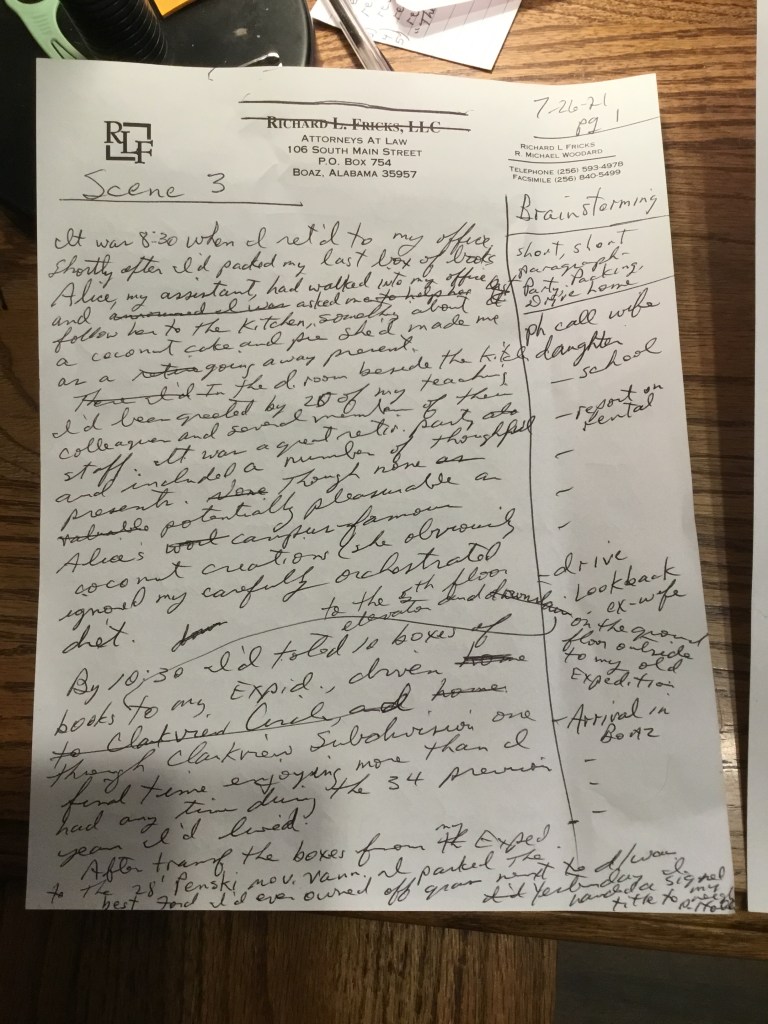
I’m trying something different. This week I started drafting a new novel. Using pen and paper (reminder: buy a box of #2 pencils). This comes close to literalizing my blog title, “The Pencil Driven Life.”
As an aside, I’m really not postured to start a new novel. I’m still editing my current work in progress, The Boaz Stranger. Over time, I’ve learned it’s better to complete an active project before attacking another. This is just the way I roll. There are many great writers who work on multiple projects at a time (not literally!). Two other things that make my pen and paper adventure so radical are my months-long craft study and near-full commitment to becoming a plotter. Instead, I had a vague idea about a guy seeking revenge and started pantsing. Come to think of it, I’ve pantsed every book I’ve written so far. Oh well.
Creating your drafts with pen (or pencil) and paper is not required. Since I started writing in 2015, I’ve always used a computer and the best software I’ve found, Scrivener. Now, after four days (I missed yesterday) I’m doubtful I’ll continue my different approach. But, that doesn’t mean it was fruitless.
Here are some things I learned. To start with, obviously, you can be anywhere and naked of all electronic devices and still write. Of course you need a pen or pencil and some paper; a pocket-sized notepad will do (as will a lump of charcoal and a tree limb stripped of its bark, but I digress into speculation). Secondly, there is real freedom by disconnecting from technology. I felt a needed distance between the creative side of my brain and that old demon who’s always saying shit like, “is that the best word here?” or “that is so lame and you’ve got it out of order. Move it before ‘Jack rolled down the hill.'”
It was refreshing to strike words and phrases. It was more refreshing drawing arrows, from here to there, and jotting down ideas in the margins–all things that’s more difficult with technology. And here’s another treat, a big one: I didn’t feel the need to be grammatically correct. Incomplete sentences were good enough to capture the jist of my thoughts.
However, one thing I didn’t like about my pen and paper adventure–transcribing my scribblings to Scrivener. There are three primary reasons. The quality of my penmanship made some words unclear. It seemed like I was wasting time by plowing similar ground twice. And, when I finished the task I felt like a slob. My usual writing method is to work slow and methodical, editing as I go (which always gives me a feeling of accomplishment). This merging of both sides of my brain is both good and bad, probably mostly bad but again, it’s the way I roll. So far.
Any way you look at it, writing is a messy business. No doubt I’m a slow learner but there’s one thing I’m chewing on as I conduct this little lookback. It’s okay to start anywhere. It’s okay to create rough drafts. Those so rough they will likely take many rewrites to start making sense, even more before the words start to flow into an enjoyable and intriguing story. Someone said (sorry, I don’t want to look it up), “writing is rewriting.” I’m saying that too. But, you have to start.
Which brings me to the real point I want to make. You are kidding yourself about the wonderfulness and greatness of your life if you are not writing. And reading. I know that’s bold and maybe not fully true for you or anyone else. But, it’s true for me and I should know given the tons of things I’ve tried over my sixty-six plus years.
Proof (kinda): even though my hand-written draft doesn’t yet include this thought, it’s in my head. What is it? James Aldridge (my protagonist) is going to connect with Micaden Tanner, my protagonist in my second novel. Sorry, you’ll have to read The Boaz Scorekeeper to learn about and understand one of my favorite characters. Btw, this book is free if you subscribe to my readers group.
Sign up for my Myths, Mysteries & Murders readers’ group for news, special offers, and to receive a FREE digital copy of The Boaz Scorekeeper: https://dl.bookfunnel.com/i9qbcspivt.
Here’s some of this week’s scribbling, and transcribing: