Novelist / Story Coach / Observer — Fiction rooted in Boaz, Alabama
Author: Richard L. Fricks
Richard L. Fricks is a novelist, former attorney and CPA, Fictionary Certified StoryCoach Editor, and creator of The Pencil-Driven Life. He lives in rural North Alabama near Boaz, where much of his fiction and reflection remain rooted. His work explores story, inherited purpose, faith and doubt, family pressure, moral contradiction, consciousness, ordinary life, and the practice of beginning again with a pencil.
Explanations and arguments: we come across both, but they’re quite different. An explanation is, “Here’s how I see it,” and an argument is, “Here’s how YOU should see it.” Don’t confuse one for the other.
Reading Time: 5 MINUTES
Years ago, I came upon a fascinating psychological experiment. Like the best of these, it was very simple.
It’s called the Copy Machine study. In 1977, when giant copy machines were shared office equipment, psychologist Ellen Langer had her research assistants try to cut into the line of people waiting to make copies. They tried three ways. The first approach was to say, “Excuse me, I have five pages. May I use the Xerox machine?” It was polite but minimal, and it worked 60 percent of the time.
Next, they added a reason: “Excuse me, I have five pages. May I use the Xerox machine, because I’m in a rush?” This worked 94 percent of the time.
But the final approach was a surprise. They asked, “Excuse me, I have five pages. May I use the Xerox machine, because I have to make copies?” It worked 93 percent of the time. It had the form of the second one, with the “because” clause, but there’s no real reason here.
Langer concluded that the form of the request was the trick, and having a “because” clause is important. It satisfies the subconscious need for a reason, regardless of whether there’s a good reason in there or not.
We find something like this empty “because” clause in many Christian arguments.
Explanation vs. argument
There’s a difference between (1) explaining how you see things or how your worldview fits together and (2) making an argument with evidence to convince me to adopt your worldview. Said another way, the two options are explaining how you see it (explanation) vs. how I should see it (argument). Apologists sometimes focus on (1) and forget that the words coming out of their mouths are backed by zero evidence.
The Strange Notions blog has an example of a Christian explanation.
[Atheist objection:] God is supposed to be all good. But he both permits evil to exist and even causes it through punishments. So God must not be all good.
[Catholic reply:] God is so good and so perfect that he permits evil to exist, and brings greater good out of it.
This reply is Catholic dogma. It’s how Catholics are supposed to think about the problem, and, as an atheist, it may be helpful for me to understand. But use it as an argument, and questions surge forward. How do we know God is good? Why should we think that all the evil in the world is there for a greater good? Why is this the best a perfect God can do? How do we even know he exists? And so on.
As “Here is how I see things,” it does the job. As an explanation that resolves reasonable questions, it fails.
“God did it” is the premiere example of an explanation rather than an argument. It explains part of someone’s worldview, but it’s no convincing argument.
The best explanations are prefaced with something like, “Okay, here’s how it makes sense to me.” For example, “Here’s how it makes sense to me: there is evil in the world, but God permits it and uses it to create a greater good” or “Here’s how it makes sense to me: God did it.” The Christian is making clear that this isn’t intended as a convincing argument.
An explanation has its place, and it may help you understand how something makes sense in a Christian’s mind. But it can be dismissed without consideration if it’s given instead of an argument.
Example 2: Trinity
Another example is the Trinity. The Athanasian Creed explains the incompatible properties that the Trinity must have. That creed is an explanation, not an argument. Imagine trying to explain to a Muslim, who shares the same god of the Old Testament, that the Trinity is not polytheism.
Example 3: consciousness
Apologist Sean McDowell insists that human consciousness must be explained.
Any honest atheist or naturalist would say at least minimally they don’t know the mechanism of how consciousness or mind can emerge from matter. But this actually isn’t a problem for a Christian or a theistic worldview, because God, who is a mind, exists before matter. We’re made body and soul, mind and matter. So it makes sense, if God is spirit, that we would be beings with spirit (@21:45).
God is a mind. God existed before matter. Humans are body and soul. I need to make copies.
Explanations are not arguments.
Example 4: providing evidence
At the “There’s no hate like Atheist love” Facebook page is a meme that reads, “Science is the study of God’s Creation. Therefore, if it doesn’t acknowledge His handiwork in all things it’s not science—it’s pseudoscience.”
In the comments beneath was this (abbreviated) exchange between Carl, who created the meme, and Alec:
Alec: Nice claim. Where is the evidence?
Carl: This is an axiom of science.
Alec: You claim there is a god and it is the work of said god. So, where is the evidence?
Carl: Everywhere
In an open exchange, in response to Alec’s request for evidence, Carl would’ve said, “Hold on—let me be clear. I’m not claiming to make an argument. I’m just explaining how it fits together in my mind. I’m making no demands on you.” In other words, he’d clarify that he was giving an explanation only, not an argument. And, of course, if Carl didn’t feel this way but was presenting the meme as an argument, then it can be dismissed without consideration.
Suppose you see a stage magic show with some friends. Everyone loves it. Afterwards, you mention your favorite trick and say that it seemed completely impossible.
One of your friends says that he is something of an amateur illusionist himself and can explain the trick. Everyone leans in.
He says, “The magician used real magic. He cast a spell.”
Is this satisfactory? Of course not—again, it’s an explanation where an argument is expected. To be an argument, it would need to resolve the questions it provokes. Is all stage magic real magic? How did the illusionist get magical powers? How does spell casting work from the standpoint of physics? And so on.
It’s like “God did it”—a claim that generates more questions than it resolves. How did God do it? What laws of physics (both known and unknown) were used or violated?
Another example is the Shroud of Turin, the claimed burial cloth that holds a faint image of Jesus as he was supernaturally zapped back to life. “God did it,” of course, but the same questions are unanswered.
Conclusion
We see Christianity’s explanation-over-argument problem everywhere. Jesus needed to die for humanity’s sins. Why? How does this make sense to someone outside your worldview?
Only with faith can you please God. Why?
Every human is tainted by Adam’s sin. Why?
Next time you read a Christian apologetic, be careful to separate it into explanation and argument. Discard any explanation pretending to be an argument and see if any substance remains.
“God did it” isn’t an argument. It’s just an explanation. You might as well say, “I need to make copies.”
Biking is something else I both love and hate. It takes a lot of effort but does provide good exercise and most days over an hour to listen to a good book or podcast. I especially like having ridden.
Here’s my bike, a Rockhopper by Specialized. I purchased it November 2021 from Venture Out in Guntersville; Mike is top notch! So is the bike, and the ‘old’ man seat I salvaged from an old Walmart bike.
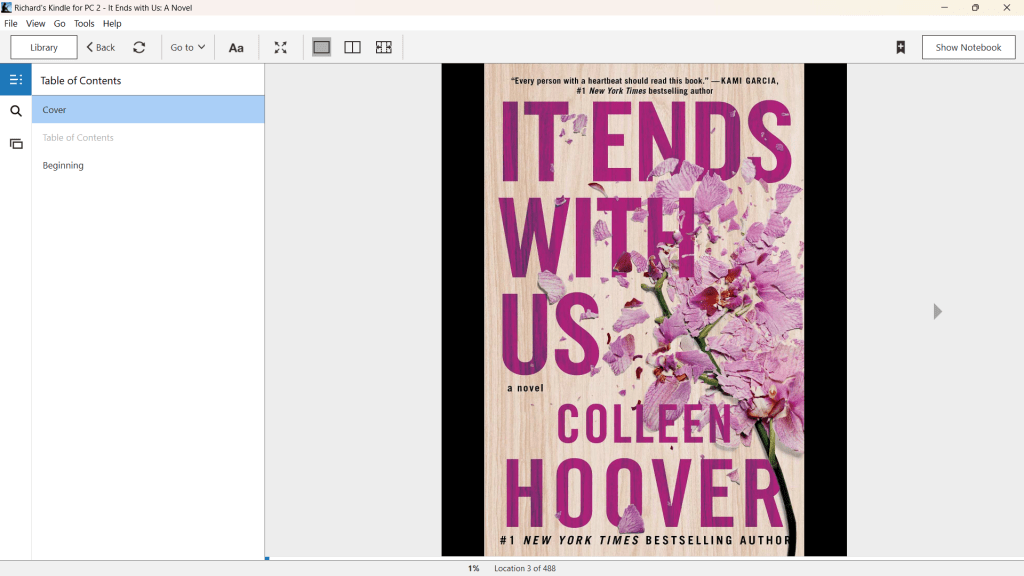
Here’s what I’m listening to: It Ends With Us, by Colleen Hoover
Amazon abstract:
In this “brave and heartbreaking novel that digs its claws into you and doesn’t let go, long after you’ve finished it” (Anna Todd, New York Times bestselling author) from the #1 New York Times bestselling author of All Your Perfects, a workaholic with a too-good-to-be-true romance can’t stop thinking about her first love.
Lily hasn’t always had it easy, but that’s never stopped her from working hard for the life she wants. She’s come a long way from the small town where she grew up—she graduated from college, moved to Boston, and started her own business. And when she feels a spark with a gorgeous neurosurgeon named Ryle Kincaid, everything in Lily’s life seems too good to be true.
Ryle is assertive, stubborn, maybe even a little arrogant. He’s also sensitive, brilliant, and has a total soft spot for Lily. And the way he looks in scrubs certainly doesn’t hurt. Lily can’t get him out of her head. But Ryle’s complete aversion to relationships is disturbing. Even as Lily finds herself becoming the exception to his “no dating” rule, she can’t help but wonder what made him that way in the first place.
As questions about her new relationship overwhelm her, so do thoughts of Atlas Corrigan—her first love and a link to the past she left behind. He was her kindred spirit, her protector. When Atlas suddenly reappears, everything Lily has built with Ryle is threatened.
An honest, evocative, and tender novel, It Ends with Us is “a glorious and touching read, a forever keeper. The kind of book that gets handed down” (USA TODAY).
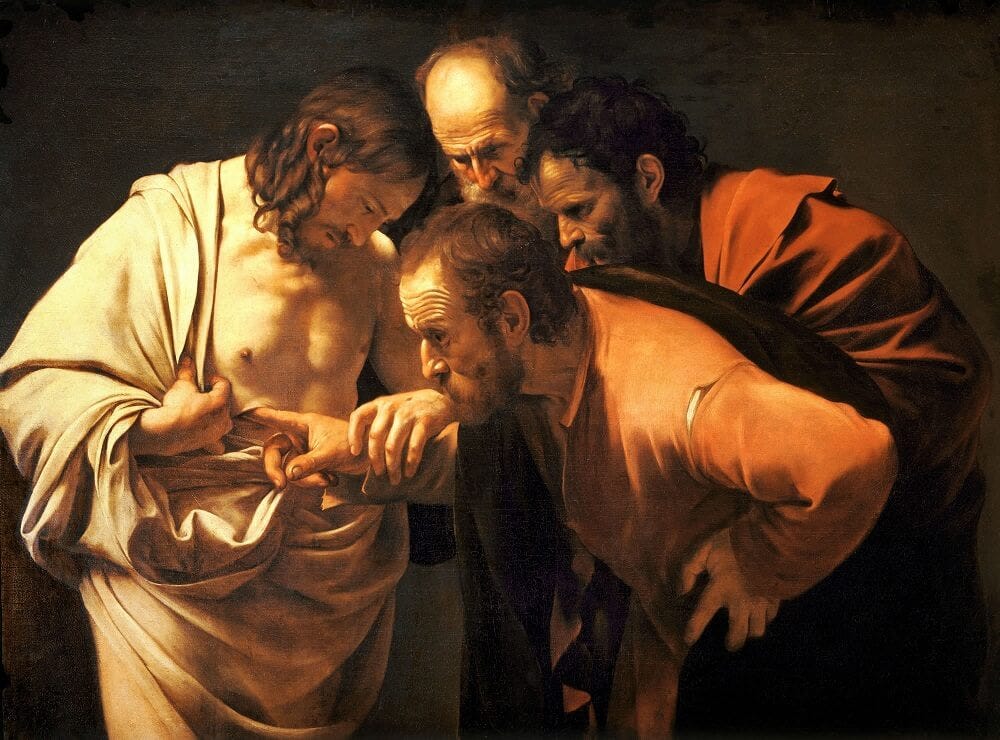
On this Easter 2023, let us reflect on what is arguably the greatest miracle ever performed—the raising from the dead the body, life, and person known as Jesus of Nazareth. This miracle is believed by over 2.6 billion people—a third of humanity—to be true. Is it? Was Jesus really raised from the dead? Like the apostle Thomas, I have my doubts.
First, let me note that what we’re talking about here is the claim of an empirical objective truth: that there was a man named Jesus who was put to death by crucifixion and resurrected from the dead three days later, after which he ascended to heaven. The claim under consideration here is not just a literary truth, as when U.S. Presidential candidate William Jennings Bryan, a deeply religious man, in his 1896 Democratic National Convention “Cross of Gold” speech, famously pronounced “we shall answer their demands for a gold standard by saying to them, you shall not press down upon the brow of labor this crown of thorns. You shall not crucify mankind upon a cross of gold.” Nor is this claim merely a metaphorical or mythic truth, in which readers might be inspired to “bear your own cross” or admonished not to be “crucified” by your enemies, or warned not to “resurrect” bad habits, or encouraged to become “born again” through good habits, or to forgive those who sin against us as God forgives us for our sins through the death and resurrection of his only begotten son.
Nor does this have to do with the proposition that Jesus died for our sins, which is a faith-based truth claim with no purchase on valid knowledge. Such a central tenet of the Christian faith cannot be tested or falsified. It cannot be confirmed or disconfirmed. It can only be believed or disbelieved based on faith or the lack thereof. It is in the realm of religious truths, which are different from empirical truths. Such literary, mythic, and metaphorical truths play a central role in human culture and learning through the arts, literature, and religion, but that is not how most Christians think about the crucifixion and resurrection of Jesus. They believe it is literally true. I know because I have debated a number of theologians and biblical scholars on this and related topics, and when they speak of the death and resurrection of Jesus they are not channeling Joseph Campbell’s “power of myth”. They accept the apostle Paul’s challenge (in 1 Cor. 15:13-19) that: “if there is no resurrection of the dead, then Christ is not risen. And if Christ is not risen, then our preaching is empty and your faith is also empty. For if the dead do not rise, then Christ is not risen. And if Christ is not risen, your faith is futile; you are still in your sins!”
The proposition that Jesus was crucified may be true by historical validation, inasmuch as a man named Jesus of Nazareth probably existed, the Romans routinely crucified people for even petty crimes (recall that the two other people crucified with Jesus that day were impenitent thieves), and most biblical scholars—even those who are atheists, such as the renowned University of North Carolina at Chapel Hill Religious Studies professor Bart Ehrman—assent to this fact. In between these propositions is Jesus’s resurrection, which is not impossible but would be a miracle if it were true. How big a miracle would it be?
Skeptic is a reader-supported publication. Paid subscriptions go to the Skeptics Society, a 501(c)(3) nonprofit. To receive new posts and support my work, consider becoming a free or paid subscriber.Subscribe
Let’s begin our analysis with the Scottish Enlightenment philosopher David Hume, and Section XII of his book Philosophical Essays Concerning the Human Understanding, titled “Of the Academical or Sceptical Philosophy.” Here Hume distinguishes between “antecedent skepticism”, such as Descartes’s method of doubting everything, that has no “antecedent” infallible criterion for belief, which means we can’t really know anything; and “consequent skepticism,” the method Hume employed that recognizes the “consequences” of our fallible senses but corrects them through reason so that we can have confidence that we can know some things with confidence. As he advised: “A wise man proportions his belief to the evidence.”
Let’s call this the principle of proportionality, better known as the ECREE principle—extraordinary claims require extraordinary evidence. Carl Sagan made famous the principle, but he was quoting the lesser-known sociologist of science Marcello Truzzi (thereby confirming the observation that pithy and oft-quoted statements migrate up to the most famous person who said them). Let’s see how this principle cashes out for a miracle like the resurrection and whether or not we should believe it.
How extraordinary a claim is the resurrection? Let’s put some numbers on it. Demographers estimate that throughout all of human history approximately 100 billion people have lived before the 8 billion people alive today. Not one of those 100 billion people has died and returned from the dead, except maybe one—Jesus of Nazareth. So the claim that one person out of those 100 billion people who died came back from the dead would be extraordinary indeed. How extraordinary? 100 billion to 1. That is about as extraordinary a claim as one will ever find. Is the evidence proportional to the conviction? No. Not even close.
According to the University of Wisconsin-Madison philosopher Larry Shapiro in his 2016 book The Miracle Myth, “evidence for the resurrection is nowhere near as complete or convincing as the evidence on which historians rely to justify belief in other historical events such as the destruction of Pompeii.” Because miracles are far less probable than ordinary historical occurrences like volcanic eruptions, “the evidence necessary to justify beliefs about them must be many times better than that which would justify our beliefs in run-of-the-mill historical events.” But, says Shapiro, it isn’t. In fact, it’s not even as good as ordinary historical events.
What about the eyewitnesses? Maybe, Shapiro suggests, they “were superstitious or credulous” and saw what they wanted to see. “Maybe they reported only feeling Jesus ‘in spirit,’ and over the decades their testimony was altered to suggest that they saw Jesus in the flesh. Maybe accounts of the resurrection never appeared in the original gospels and were added in later centuries. Any of these explanations for the gospel descriptions of Jesus’s resurrection are far more likely than the possibility that Jesus actually returned to life after being dead for three days.”
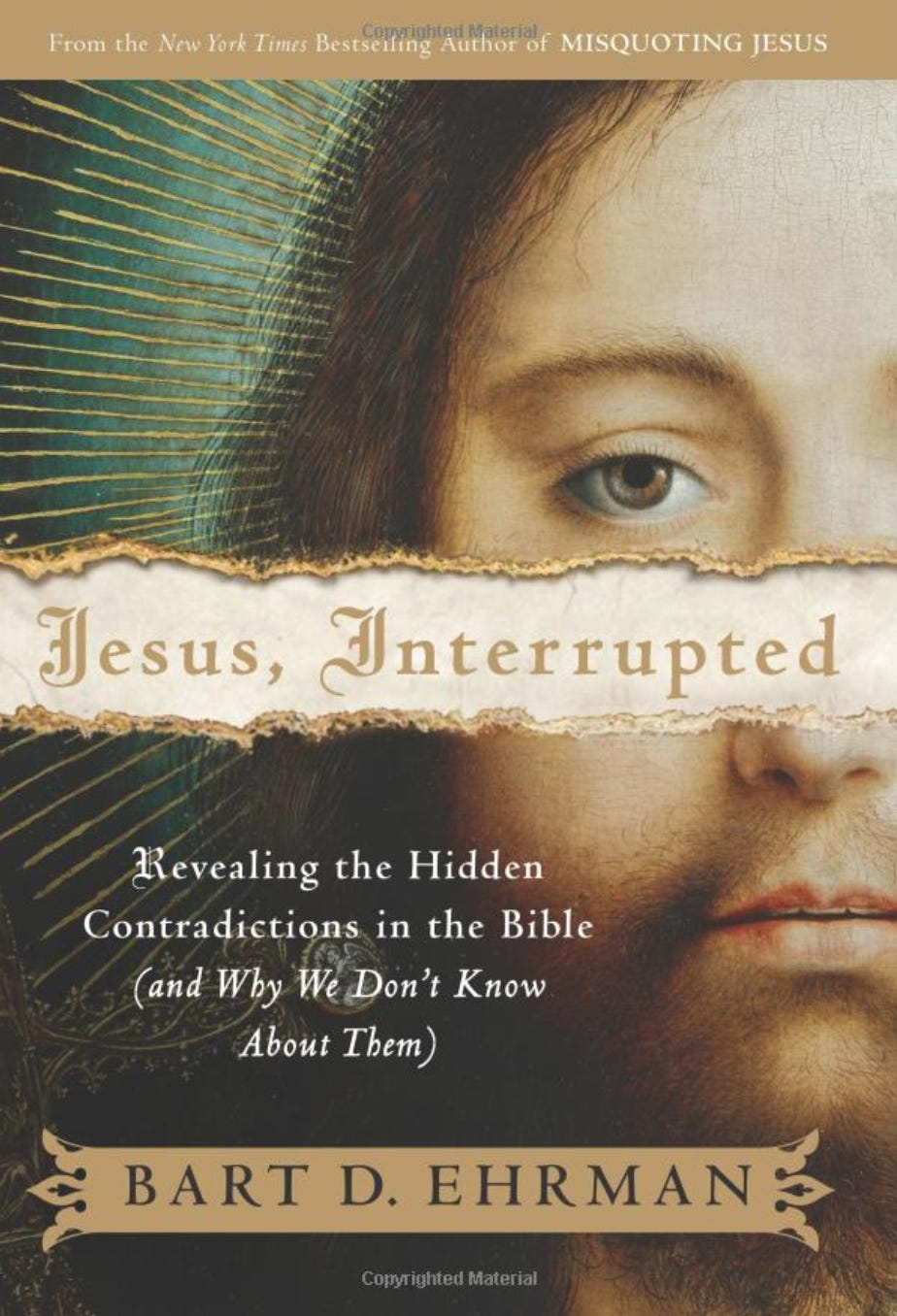
The principle of proportionally also means we should prefer the more probable explanation over the less, which these alternatives surely are. And this is a splendid example of Bayesian reasoning, in which the priors of non-Christians is low for their credence that the resurrection really happened, and to date no new evidence has come forth to change those priors, and so our credence in the verisimilitude of the resurrection remains low. Here’s a model example of Bayesian reasoning from the aforementioned biblical scholar and historian Bart Ehrman in his book Jesus, Interrupted:
Our very first reference to Jesus’ tomb being empty is in the Gospel of Mark, written forty years later by someone living in a different country who had heard it was empty. How would he know? Anyhow, suppose that it was empty. How did it get that way? Suppose…that Jesus was buried by Joseph of Arimathea in Joseph’s own family tomb, and then a couple of Jesus’ followers, not among the twelve, decided that night to move the body somewhere more appropriate. … But a couple of Roman legionnaires are passing by, and catch these followers carrying the shrouded corpse through the streets. They suspect foul play and confront the followers, who pull their swords as the disciples did in Gethsemane. The soldiers, expert in swordplay, kill them on the spot. They now have three bodies, and no idea where the first one came from. Not knowing what to do with them, they commandeer a cart and take the corpses out to Gehenna, outside town, and dump them. Within three or four days the bodies have deteriorated beyond recognition. Jesus’ original tomb is empty, and no one seems to know why.
Is this scenario likely? Not at all. Am I proposing this is what really happened? Absolutely not. Is it more probable that something like this happened than that a miracle happened and Jesus left the tomb to ascend to heaven? Absolutely! From a purely historical point of view, a highly unlikely event is far more probable than a virtually impossible one.
The number of gospel inconsistencies and incompatibilities doesn’t help the credence of the resurrection. For example, the gospels do not agree on: how many women came to the tomb (1, 2, or 3 plus “others”); when they came (“while it was still dark” or “just after sunrise”); why they came (“to look at the tomb” or “to anoint the body with spices”); who they saw (one angel, two angels, a man dressed in white, or Jesus himself); what was said, who said what, who else came (Peter, or both Peter and John); who saw the resurrected Jesus first (Peter or Mary Magdalene); or what they did as they left the tomb (“they said nothing to anyone” or “they ran to tell his disciples”).
Matthew seems to imply the stone was rolled away in the presence of the women who came to the tomb, while Mark, Luke, and John say the women arrived to discover the stone had already been rolled away. Matthew and Mark have the resurrected Jesus on his way to Galilee by the time the women arrive at the tomb, while Luke and John have the risen Messiah in Jerusalem on the night of first Easter Sunday. The Q document, thought to be the source for Matthew, does not even mention the resurrection. The Gospel of Thomas, discovered near Nag Hammadi, Egypt, in December 1945 and dated to the early 2nd century CE, also fails to mention the resurrection. The earliest reliable written testimony of the resurrection of Jesus is by Paul and the anonymous author of Mark’s Gospel. It is important to note, in the context of the propensity of human memory to forget, conflate, confabulate, edit, redact, and falsify events that happened in the past, that the earliest Gospel of Mark was circa 66-70 CE, many decades after the events in question, with the rest of the gospels written even later.
So the extraordinary resurrection miracle claim hangs on just two early testimonies, from two ancient authors, neither of whom actually saw Jesus rise up from the dead, and neither of whom touched him, or sat down with him for a face to face conversation. We have nothing written by the Romans—or the Jews for that matter!—about Jesus, the content of his preaching, why he was killed, or what they thought about claims that he had been resurrected. You would think some Roman would have exclaimed “Et tu Again, Jesus?” or some Jew would have snapped “Oy Vey!” And the accounts from Josephus, Pliny the Elder, and Tacitus that Christians cite in evidentiary support, were from the 2nd century, and they reference Christ the Messiah, not Jesus, and they too don’t mention the resurrection.
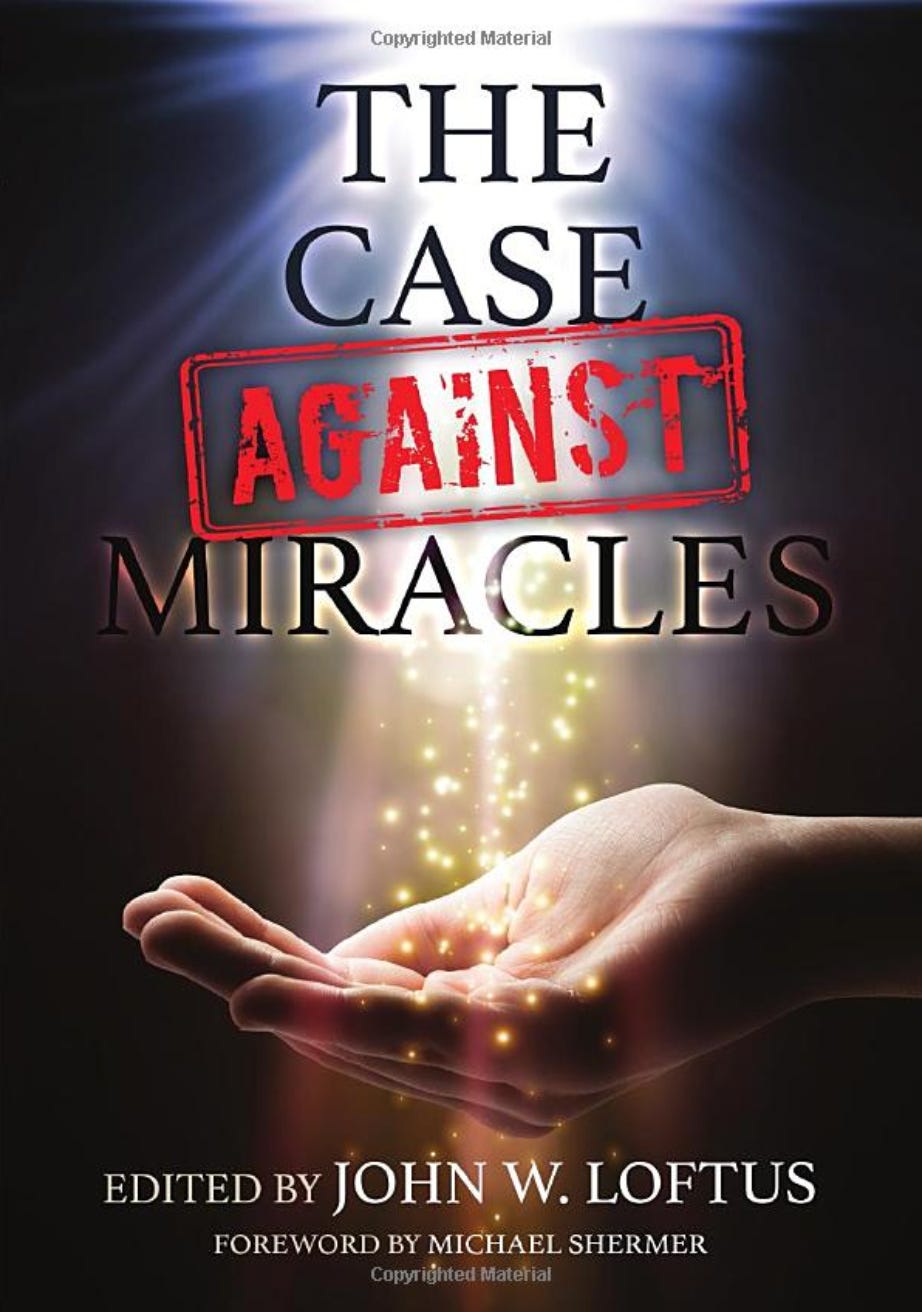
What’s more, in his book The Case Against Miracles, the biblical scholar John W. Loftus notes that “we have no independent corroboration of the Star of Bethlehem at the birth of Jesus, or that the veil of the temple was torn in two at Jesus’ death (Mark 15:38), nor that darkness came ‘over the whole land’ from noon until three in the afternoon (Mark 15:33), or that ‘the sun stopped shining’ (Luke 23:45), nor that there was an earthquake at his death (Matt. 27:51, 54), or another ‘violent’ one the day he arose from the grave (Matt. 28:2).” Could such notable events as these really have occurred without any corroborating evidence? Surely some Roman scribe would have made a note about a three-hour midday eclipse of the sun, not to mention the other miracles. No such extra-biblical evidence exists. Here, the absence of evidence is evidence of absence.
What about the 500 people the apostle Paul says saw the risen Jesus? People often interrupt this to mean that there were 500 independent eyewitness accounts of seeing Jesus after the crucifixion. Not so. We have one account saying there were 500 witnesses, by an evangelist who was highly motivated to write a history in support of his new-found religion—recall that Paul was previously Saul, who converted to Christianity from Judaism after his vision on the road to Damascus.
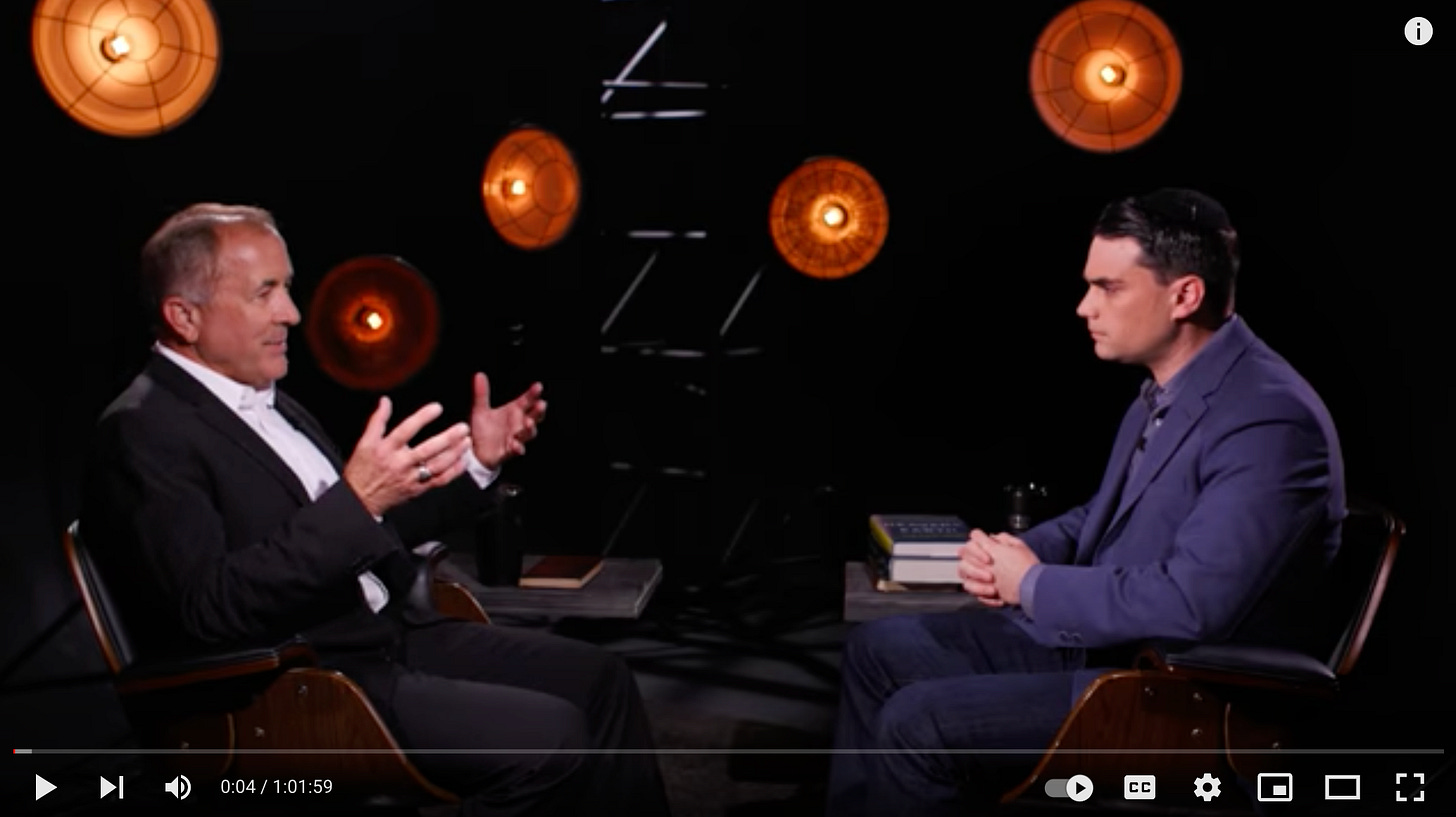
To that end, a challenge to the resurrection miracle that I often employ is that Jews do not accept it as real, neither in Jesus’ time nor in ours. Think about that: Jews believe in the same God as Christians. They accept the Old Testament of the Bible like Christians do. They even believe in the Messiah. They just don’t think Jesus of Nazareth was him. Jewish rabbis, scholars, philosophers, and historians all know the arguments for the resurrection as well as Christian apologists and theologians making the arguments, and still they reject them. Why? If the arguments and evidence for the resurrection is so solid, in time the community most expert in that field would reach a consensus about it. They haven’t. Christians believe it. Jews don’t. Ben Shapiro explains why here, in our conversation on his Sunday Special show.
Finally, it is important to put the resurrection into historical context, which Bart Ehrman does when he notes that in an ancient view of the divine realm “gods could sometimes be or become humans, and humans could sometimes be or become gods.” Ehrman outlines three models of “divine men” that were common in the ancient world:
Sometimes it was understood that gods could and would come down to earth in human form to make a temporary visit for purposes of their own.
Sometimes it was understood that a person was born from the sexual union of a god and a mortal; thus, that the person was, in some sense, part divine and part human.
Sometimes it was understood that a human was elevated by the gods to their realm, usually after death, and at that point divinized, made into a god.
As Ehrman documents, there are many stories in ancient myths about gods temporarily assuming human form to meet, speak, and interact with humans, and that these stories in many ways are similar to later Christian beliefs about Christ being a preexistent divine being who came to earth as a human, only later to return to the heavenly realm.
Perhaps this is why Jesus was silent when Pilate asked him (John 18:38) “What is truth?”
Skeptic is a reader-supported publication. All monies go to the Skeptics Society, a 501(c)(3) nonprofit. To receive new posts and support my work, consider becoming a free or paid subscriber.Subscribe
“The miracle is that we rise again out of suffering… The miracle is that we create ourselves anew.”
BY MARIA POPOVA
We spend our lives trying to anchor our transience in some illusion of permanence and stability. We lay plans, we make vows, we backbone the flow of uncertainty with habits and routines that lull us with the comforting dream of predictability and control, only to find ourselves again and again bent at the knees with surrender to forces and events vastly larger than us. In those moments, kneeling in a pool of the unknown, the heart breaks open and allows life — life itself, not the simulacrum of life that comes from control — to rush in.
She recounts attending a talk by Stephen Levine — the poet and author best known for his work on death and dying — at which an audience member asked what the meaning of life is. Acknowledging the vastness of the question, Levine paused, then offered: “I think the meaning of life is to let your heart be broken.” Reflecting on his words, Davidson writes:
Let your heart be broken. Allow, expect, look forward to. The life that you have so carefully protected and cared for. Broken, cracked, rent in two. Heartbreakingly, your heart breaks, and in the two halves, rocking on the table, is revealed rich earth. Moist, dark soil, ready for new life to begin.
Davidson — who is living with congestive heart failure after a savage bacterial infection — was a small child when her heart was first broken. Long before she became an accomplished pianist and composer, she was a three-year-old girl living with her foster parents and siblings in Sweden, until she was ripped from the only family she knew to be adopted by an English teacher from Ohio, who eighteen years later was revealed to be her birth-mother, having abandoned her newborn in the heartbreak of an ill-fated love affair. Davidson writes:
Here was the heart of loss. To my three-year-old self, my foster family was my family. The day my mother rang Solvig’s doorbell and brought me home as an adopted child, I lost my first mother and father, my three brothers, a home, a country, and a language. I lost myself and became another child. The shining child waited at the window. The dark child emerged. To the passing eye, I was unremarkable, even normal — but my inner self was silent, dark, and eternally sad for a loss that had no name.
Soon, her single mother married and Tina became the eldest of five children living in an itinerant family across Turkey, Germany, and Israel. Eventually, that dark inner child found light in music as she became an accomplished classical composer, creating with “that wonderful absorbing feeling of being,” with “a sigh of homecoming.” She writes:
Music, like life, is no more than itself. There is no implicit reason to it except that it is. And that is its magic. Like swimming in a dark underground grotto, life miraculously pulses open.
And yet an unslaked longing lurked beneath it all. Thirty years after the separation, Davidson set out to reconnect with her foster family, only to find that her foster mother had died of carcinoma a year earlier. Inhabiting her grief — grief “patient and enduring” that untucked hidden griefs she had been living with at the edges of being — became her way of wresting new life from the broken pieces of her heart. She reflects on this tender and tumultuous process:
The path of memory was littered with startling beliefs and perceptions that operated, silent and deadly, behind the scenes. My progress was uneven. I reworked an understanding, leaped ahead, then wallowed for weeks in a fog. After a remission, I emerged to work on a new piece of the puzzle. The darkness began to lighten, my rage abated, my depressions lessened; I began to breathe.
Punctuating the particular story of her own life with reflections on the universal pulse-beat of all life, she considers what readies the soil for this new fecundity as we continually tussle with our past, with the selves we have been and the lives we have lived and the losses we have lost:
The past presses on the present with staggering consistency. Nothing is separate or fresh, always an afterimage. The slow time-lapse photograph catches the multi-image movement of our lives. Danger lurks in every corner. To reconstruct will challenge perceptions of self, to restore will allow old pain to well up.
The price of forgotten memories, however, is more costly. My puppeteer of darkness is cruel. He perpetuates false beliefs and forces reenactments I cannot control.
The miracle is light. The miracle is that we rise again out of suffering. The miracle is the persistence of the soul to find itself, to look hard into the darkness, reach back, and grasp remnants of ourselves. The miracle is that we create ourselves anew.
With an eye to both creative work and life itself, she echoes Henry Miller’s penetrating insight on control and surrender, and contours the most generative orientation of being:
The word allow asks for balance and helps me rethink the issue of ownership and parentage. Allow provides a medium for growth and questions authority. Too much control forces a finger into sacred ground, leaving a trail of infection. To allow, in the end, is to have.
Let Your Heart Be Broken is a consummate read in its entirety, exploring with uncommon sensitivity and poetic insight the fundamentals of love, forgiveness, creativity, and what it takes to emerge from the inner darkness into a vast vista of light, rooted in the life-tested truth that “we are, in the end, a measure of the love we leave behind.” Complement these fragments from it with Kahlil Gibran on how to weather the uncertainties of love, Hannah Arendt on love and the fundamental fear of loss, and Alain de Botton on surviving heartbreak.
On July 26 I had a nasty cycling crash. I’m fond of telling people that cycling is a low-impact sport, unless you impact the ground, which I did that day. My cycling buddy Bob McGlashan were riding the Lake Casitas loop from Summerland, down the coast to Ventura (there’s a nice bike path next to the 101 freeway) and up the road paralleling highway 33 north. We had a howling tailwind and were flying at over 20mph on a modest upgrade. Well, at the big left turn to the lake, a car was coming the other way at high speed, so I timed my left turn to be after he flew past me, but at the last minute he hit the brakes and turned right. I had to veer right around him a little, which would have been fine, but as his car passed in front of me there was a pothole I had to swerve right to miss, sending me straight into the curb, which I hit at around 20mph, flipping me right into a dirt/rock field. I slammed my head, shoulder and hip really hard, the same side as my total hip replacement from 2013. There’s a dent in my helmet from a rock, so it did its job, but I could barely walk. As we were too far from home for a call to my wife, and no Ubers anywhere near us, I tried riding and there was almost no pain at all, so we rode the two hours back to the car. But by the time I got home I couldn’t walk from my car to the house without assistance, so I went to the Cottage Hospital ER and got an X-Ray and then a CT scan. There were two small pelvic fractures, one on the inferior ramps of the pelvic bone (not a problem) but the other one is on the acetabulum of the hip where the ball of the joint presses up against the socket (mine is titanium and plastic), so every time I put weight on the leg it hurt like hell.
I also pinched a nerve in my neck, which two days later was unbearably painful. I couldn’t sleep without strong painkillers. Another cycling partner of mine, Dr. Walter Burnham, happens to be a world-class orthopedic surgeon specializing in the spine, so he did an MRI on my neck and found some pretty severe degeneration of C-5, 6, and 7—not from the crash but from…”life” (he said, when I asked). So that led to the ACDF surgery, which Walt did on September 6, two days before my 65th birthday.
I would have done it earlier, but Medicare coverage started for me on September 1 so I had to wait in order to have the surgery fully covered. Yes, I have health insurances, with Blue Shield, and a fairly expensive plan at that, but even so my share of what would have been owed without Medicare would have been over $10,000. So, it was worth waiting a couple of weeks. I could rant for pages more about our messed up healthcare system, but I won’t as at the moment I am grateful for the near miraculous performance of Dr. Walt and his team, along with everyone else who took care of me along the way. (i.e., it’s the system that’s messed up, not the people.)
I did notice how careful everyone is now with opioid painkillers, which saved me from being miserable for weeks. When the ER docs wrote a script for a codeine painkiller, unbeknownst to me the law now requires that any opioid prescription must include a prescription for Naloxone, the inhaler that saves your life if you overdose. The codeine (Tylenol 3) was $1.57 for 12 pills. The Naloxone was $75. My wife Jennifer picked up the order for me. I called the ER to complain about the price differential. The woman explained the law to me. I told her I understood, but asked “the instructions say to take 1 every 4 hours. What moron would take all 12 at once?” She replied: “you’d be surprised.” Alas, that’s the world we live in now.
Biking is something else I both love and hate. It takes a lot of effort but does provide good exercise and most days over an hour to listen to a good book or podcast. I especially like having ridden.
Here’s my bike, a Rockhopper by Specialized. I purchased it November 2021 from Venture Out in Guntersville; Mike is top notch! So is the bike, and the ‘old’ man seat I salvaged from an old Walmart bike.
Here’s what I’m listening to: It Ends With Us, by Colleen Hoover
Amazon abstract:
In this “brave and heartbreaking novel that digs its claws into you and doesn’t let go, long after you’ve finished it” (Anna Todd, New York Times bestselling author) from the #1 New York Times bestselling author of All Your Perfects, a workaholic with a too-good-to-be-true romance can’t stop thinking about her first love.
Lily hasn’t always had it easy, but that’s never stopped her from working hard for the life she wants. She’s come a long way from the small town where she grew up—she graduated from college, moved to Boston, and started her own business. And when she feels a spark with a gorgeous neurosurgeon named Ryle Kincaid, everything in Lily’s life seems too good to be true.
Ryle is assertive, stubborn, maybe even a little arrogant. He’s also sensitive, brilliant, and has a total soft spot for Lily. And the way he looks in scrubs certainly doesn’t hurt. Lily can’t get him out of her head. But Ryle’s complete aversion to relationships is disturbing. Even as Lily finds herself becoming the exception to his “no dating” rule, she can’t help but wonder what made him that way in the first place.
As questions about her new relationship overwhelm her, so do thoughts of Atlas Corrigan—her first love and a link to the past she left behind. He was her kindred spirit, her protector. When Atlas suddenly reappears, everything Lily has built with Ryle is threatened.
An honest, evocative, and tender novel, It Ends with Us is “a glorious and touching read, a forever keeper. The kind of book that gets handed down” (USA TODAY).
Here’s the link to this article by Bart Ehrman, May 9, 2023.
On my podcast this past week (Misquoting Jesus with Bart Ehrman) someone asked me if I thought any of the Gospels of the NT were influenced by Paul. It’s an interesting question that I should post on (my view: Mark, maybe; Luke, unexpectedly and oddly not; John, I doubt it; Matthew?)
Ah, Matthew. As it turns out, I think Matthew shows a rather obvious and ironic connection with Paul. Did he know Paul’s writings? I have no idea. Did he know about Paul? Same, no idea. Did he oppose a major feature of Paul’s gospel message? Sure looks like it!! (I’m trying to say that he could be opposed to Paul’s views without necessarily knowing Paul’s writings; the views may have been more widely spread than just by Paul. In fact, they almost certainly were.
Here’s how I’ve discussed the matter once when I was reflecting at greater length in the issue:
Paul certainly had opponents in his lifetime: “Judaizers,” as scholars call them — that is, Christian teachers who maintained that followers of Jesus had to follow the Jewish Law: Men were to be circumcised to join the people of God; men and women were, evidently, to adopt a Jewish lifestyle. Presumably that meant keeping kosher, observing the Sabbath, and so on. Anyone who didn’t do this was not really a member of the people of God, since to be one of God’s people meant following the law that God had given.
In Paul’s letter to the Galatians in particular he shows that he was thoroughly incensed at this interpretation of the faith and insisted with extraordinary vehemence that it was completely wrong. The gentile followers of Jesus were not, *absolutely* not, supposed to become Jewish. Anyone who thought so rendered the death of Jesus worthless. It was only that death, and the resurrection, that made a person right with God. Nothing else. Certainly not following the Torah.
I really don’t see how Paul and the author of the Gospel of Matthew could have gotten along.
Some background: Matthew’s Gospel was probably written about thirty years after Paul wrote his letter to the Galatians; Galatians is usually dated to the mid 50s, Matthew to around 80-85 CE. We don’t know who the author of Matthew was, apart from the fact that he was obviously a highly educated Greek-speaking Christian living outside of Palestine. His book is often located to Antioch Syria, but in my view that is simply a guess based on flimsy evidence. Still, it certainly *may* have been written Antioch, a city with a large Jewish population and a burgeoning Christian church.
Matthew, like the other Gospel writers, did not produce his account simply out of antiquarian interests, to inform his readers what happened 55 years earlier in the days of Jesus. His is not a disinterested biography or an objective history. It is a “Gospel.” In other words, it is intended to proclaim the “good news” about Jesus and the salvation that he brings. When Jesus teaches something in this Gospel, Matthew expects that the teaching will be relevant to his readers, that they will want to do what Jesus says.
There is no doubt that Matthew would agree with Paul that it was the death and resurrection of Jesus that brought salvation to the world. The Gospel is not *entirely* about Jesus’ death and resurrection. But it is largely about that. It is 28 chapters long, and the last 8 chapters are focused exclusively on what happened during the last week of Jesus’ life in Jerusalem, including the crucifixion and resurrection. This is clearly the climax of the story. And for Matthew, as for his predecessor Mark, the death of Jesus is seen as “a ransom for many” (Matt. 20:28). It is through his death that he “will save his people from their sins” (Matt. 1:21).
So Matthew would agree with Paul there. But so would Paul’s Judaizing opponents in Galatia. The controversy with the Galatian opposition was not over whether Jesus’ death brings salvation. It was over whether the followers of Jesus, who accept that death, need to keep the Jewish law. And it does seem to me that this is where Paul and Matthew split company. Again, remember that when Matthew decides what to present about Jesus’ life in the Gospel it is not simply so that people can know “what really happened” in the past. It is so that the life and teachings of Jesus can direct the lives of his followers in the present.
And what does Jesus say about the Jewish law in Matthew? He says that his followers have to keep it. One of the key passages is something that you will NEVER find in the writings of Paul.
Do not suppose that I came to destroy the law or the prophets. I came not to destroy but to fulfil. For truly I say to you, until heaven and earth pass away not one iota or one stroke of a letter will pass away from the law until all is fulfilled. And so, whoever looses one of the least of these commandments and teaches others in this way will be called least in the kingdom of God, but whoever does and teaches the law will be called great in the kingdom of heaven. For I say to you that if your righteousness does not exceed that of the scribes and Pharisees, you will not enter into the kingdom of heaven. (Matt 5:17-20).
This is a really interesting passage. Does it contradict Paul that the followers of Jesus were *not* to keep the law? It certainly seems to.
Now someone *could* say that here Jesus is saying simply that the entire law has to be in effect until he dies (“until all is fulfilled”). But Jesus is saying more than that. His followers must do and teach the law. None of it will pass away until the world is destroyed (“till heaven and earth pass away”). Again, Matthew is not saying this so his readers will have a good history lesson about the Savior of the world and what he taught his disciples. He is including this passage for the same reason he includes all his passages, to teach his readers how they are to believe and live. Jesus in this passage does *not* say, “Keep the law until I die.” He says he did not come to destroy the law. It is still in effect. And will be as long as the earth lasts. His followers have to keep it.
After this Jesus launches into his “antitheses,” where he indicates what the law says and explains its fuller, deeper meaning. The law says don’t kill; to fulfill it you should not engage someone with wrath. The law says not to take someone’s spouse; to fulfill it you should not want to do so. The law says to make punishments fit the crimes (an eye for an eye a tooth for a tooth; not a head for an eye or a body for a tooth); to fulfill it you should show extreme mercy and not punish another for harm done to you. And so on.
I think that Matthew’s Jesus really meant what he says (NOTE: I’m talking about Jesus as he is portrayed in Matthew, NOT about Jesus’ own historical views). He gives no hint that following the law this closely is impossible to do. He seems to think it is possible. God gave a law. You should follow it. Scrupulously. Even more scrupulously than the righteous scribes and Pharisees. If you don’t, you will not enter the kingdom of heaven.
That’s a tall order. And in my judgment it seems very much opposed to Paul’s views, who insists that *his* readers not think that they must follow the law. Pretty big difference. In fact, Paul says anyone is cursed who disagrees with his view of the matter (Gal. 1: 6-9). Surely Matthew disagreed.
“Faith is the willingness to give ourselves over, at times, to things we do not fully understand… the full engagement with this strange and shimmering world.”
BY MARIA POPOVA
“If we ever reach the point where we think we thoroughly understand who we are and where we came from,” Carl Sagan wrote in his timeless meditation on science and religion, “we will have failed.” It’s a sentiment that dismisses in one fell Saganesque swoop both the blind dogmatism of religion and the vain certitude of science — a sentiment articulated by some of history’s greatest minds, from Einstein to Ada Lovelace to Isaac Asimov, all the way back to Galileo, and one that Sagan echoed a decade later, three months before his death, writing: “The notion that science and spirituality are somehow mutually exclusive does a disservice to both.” Yet centuries after Galileo and decades after Sagan, humanity remains profoundly uneasy about reconciling these conflicting frameworks for understanding the universe and our place in it.
In the foreword, Lightman recounts attending a lecture by the Dalai Lama at MIT, “one of the world’s spiritual leaders sitting cross-legged in a modern temple of science,” and hearing about the Buddhist concept of sunyata, translated as “emptiness” — the notion that objects in the physical universe are vacant of inherent meaning and that we imbue them with meaning and value with the thoughts of our own minds. From this, Lightman argues while adding to history’s finest definitions of science, arises a central challenge of the human condition:
As a scientist, I firmly believe that atoms and molecules are real (even if mostly empty space) and exist independently of our minds. On the other hand, I have witnessed firsthand how distressed I become when I experience anger or jealousy or insult, all emotional states manufactured by my own mind. The mind is certainly its own cosmos. As Milton wrote in Paradise Lost, “[The mind] can make a heaven of hell or a hell of heaven.” In our constant search for meaning in this baffling and temporary existence, trapped as we are within our three pounds of neurons, it is sometimes hard to tell what is real. We often invent what isn’t there. Or ignore what is. We try to impose order, both in our minds and in our conceptions of external reality. We try to connect. We try to find truth. We dream and we hope. And underneath all of these strivings, we are haunted by the suspicion that what we see and understand of the world is only a tiny piece of the whole.
[…]
Science does not reveal the meaning of our existence, but it does draw back some of the veils.
This tension between internal and external reality is also what lies at the root of the age-old tension between science and religion. In one of the best essays in the collection, titled “The Spiritual Universe,” Lightman sets out to lift the veil of this immutable inquiry. He cites a discussion that took place at a monthly gathering of scientists and artists at MIT, aimed at exploring the interplay of science and art, wherein a playwright proposed that science is the religion of our century. Lightman considers the inherent challenges to this notion:
If science is the religion of the twenty-first century, why do we still seriously discuss heaven and hell, life after death, and the manifestations of God? Physicist Alan Guth, another member of our salon, pioneered the inflation version of the Big Bang theory and has helped extend the scientific understanding of the infant universe back to a trillionth of a trillionth of a trillionth of a second after t = 0. A former member, biologist Nancy Hopkins, manipulates the DNA of organisms to study how genes control the development and growth of living creatures. Hasn’t modern science now pushed God into such a tiny corner that He or She or It no longer has any room to operate—or perhaps has been rendered irrelevant altogether? Not according to surveys showing that more than three-quarters of Americans believe in miracles, eternal souls, and God. Despite the recent spate of books and pronouncements by prominent atheists, religion remains, along with science, one of the dominant forces that shape our civilization. Our little group of scientists and artists finds itself fascinated with these contrasting beliefs, fascinated with different ways of understanding the world. And fascinated by how science and religion can coexist in our minds.
As a scientist and self-professed humanist himself, Lightman exorcises his lifelong struggle to reconcile these conflicting worldviews by proposing a set of criteria for the kind of religious belief that would be compatible with rather than contradictory to science:
The first step in this journey is to state what I will call the central doctrine of science: All properties and events in the physical universe are governed by laws, and those laws are true at every time and place in the universe. Although scientists do not talk explicitly about this doctrine, and my doctoral thesis adviser never mentioned it once to his graduate students, the central doctrine is the invisible oxygen that most scientists breathe. We do not, of course, know all the fundamental laws at the present time. But most scientists believe that a complete set of such laws exists and, in principle, that it is discoverable by human beings, just as nineteenth-century explorers believed in the North Pole although no one had yet reached it.
[…]
Next, a working definition of God. I would not pretend to know the nature of God, if God does indeed exist, but for the purposes of this discussion, and in agreement with almost all religions, I think we can safely say that God is understood to be a Being not restricted by the laws that govern matter and energy in the physical universe. In other words, God exists outside matter and energy. In most religions, this Being acts with purpose and will, sometimes violating existing physical law (that is, performing miracles), and has additional qualities such as intelligence, compassion, and omniscience.
Starting with these axioms, we can say that science and God are compatible as long as the latter is content to stand on the sidelines once the universe has begun. A God that intervenes after the cosmic pendulum has been set into motion, violating the physical laws, would clearly upend the central doctrine of science. Of course, the physical laws could have been created by God before the beginning of time. But once created, according to the central doctrine, the laws are immutable and cannot be violated from one moment to the next.
With these criteria in mind, he offers a taxonomy of religious beliefs, based on the degree of control they assign to their highest deity: At the extreme end, denying the existence of a God, is atheism; up the sliding scale of faith is deism, whose God created the universe but has not interfered since that initial spark — a favorite model in the 17th and 18th centuries, with such prominent proponents as Voltaire; then comes immanentism with yet more divine intervention, which holds that God created the physical universe and its laws, and continues to propel it but only through the stringent and consistent application of these permanent laws; at the other extreme end, opposite atheism, is interventionism — God created the universe and its laws, and can occasionally interfere with their predictable function to produce unpredictable results, commonly called miracles. Because most major religions — including Christianity, Judaism, Islam, and Hinduism — are built upon an interventionist view of God, Lightman points out that they are incompatible with science and observes the logical conclusion:
Except for a God who sits down after the universe begins, all other Gods conflict with the assumptions of science.
The situation is further muddled by the fact that the majority of laypeople who are both religious and understand the value of science don’t subscribe to its central doctrine — that same logical foundation that renders an interventionist God impossible. Lightman cites a sociological study which found that 25% of scientists at elite American universities believe in the existence of God and don’t consider science the only framework for explaining the world. Lightman, who considers himself an atheist, illustrates the conundrum with his own beliefs and points to the humanities — that essential anchor of the human experience — as the spiritual complement to science:
I completely endorse the central doctrine of science. And I do not believe in the existence of a Being who lives beyond matter and energy, even if that Being refrains from entering the fray of the physical world. However, I certainly agree with [such scientists] that science is not the only avenue for arriving at knowledge, that there are interesting and vital questions beyond the reach of test tubes and equations. Obviously, vast territories of the arts concern inner experiences that cannot be analyzed by science. The humanities, such as history and philosophy, raise questions that do not have definite or unanimously accepted answers.
This is where Lightman’s exquisite touch as both an essayist and a humanist springs so vibrantly alive:
There are things we take on faith, without physical proof and even sometimes without any methodology for proof. We cannot clearly show why the ending of a particular novel haunts us. We cannot prove under what conditions we would sacrifice our own life in order to save the life of our child. We cannot prove whether it is right or wrong to steal in order to feed our family, or even agree on a definition of “right” and “wrong.” We cannot prove the meaning of our life, or whether life has any meaning at all. For these questions, we can gather evidence and debate, but in the end we cannot arrive at any system of analysis akin to the way in which a physicist decides how many seconds it will take a one-foot-long pendulum to make a complete swing. The previous questions are questions of aesthetics, morality, philosophy. These are questions for the arts and the humanities. These are also questions aligned with some of the intangible concerns of traditional religion.
Reflecting on his early days as a physics grad student, where he was taught that the concept of a “well-posed problem” — a question stated so clearly that it would guarantee an answer — he turns to Rilke’s famous wisdom and considers both the difference and the margin of complement between art and science:
At any moment in time, every scientist is working on, or attempting to work on, a well-posed problem, a question with a definite answer. We scientists are taught from an early stage of our apprenticeship not to waste time on questions that do not have clear and definite answers.
But artists and humanists often don’t care what the answer is because definite answers don’t exist to all interesting and important questions. Ideas in a novel or emotion in a symphony are complicated with the intrinsic ambiguity of human nature. … For many artists and humanists, the question is more important than the answer. As the German poet Rainer Maria Rilke wrote a century ago, “We should try to love the questions themselves, like locked rooms and like books that are written in a very foreign tongue. Then there are also the questions that have definite answers but which we cannot answer. The question of the existence of God may be such a question.
As human beings, don’t we need questions without answers as well as questions with answers?
Faith, in its broadest sense, is about far more than belief in the existence of God or the disregard of scientific evidence. Faith is the willingness to give ourselves over, at times, to things we do not fully understand. Faith is the belief in things larger than ourselves. Faith is the ability to honor stillness at some moments and at others to ride the passion and exuberance that is the artistic impulse, the flight of the imagination, the full engagement with this strange and shimmering world.
Once again, Lightman envelops us in his enchanting storytelling to make this point as dimensional as it is when it manifests in life: He tells the story of a family of ospreys that nested near his home in Maine for many years, arriving from South America each spring to lay eggs, then raising their babies until the little ones took their first flight in late summer. Lightman and his wife recorded these cycles of life obsessively year after year in their “osprey journals” filled with notes, photographs, and lovingly collected data on that “small part of the universe.”Osprey and young from Richard Lydekker’s 19th-century natural history encyclopedia of birds of prey. (Available as a print.)
But while Lightman might describe himself as a humanist, this final anecdote exposes him as a true “creaturist” who lives with remarkable respect for non-human beings and our shared existence:
One August afternoon, the two baby ospreys of that season took flight for the first time as I stood on the circular deck of my house watching the nest. All summer long, they had watched me on that deck as I watched them. To them, it must have looked like I was in my nest just as they were in theirs. On this particular afternoon, their maiden flight, they did a loop of my house and then headed straight at me with tremendous speed. My immediate impulse was to run for cover, since they could have ripped me apart with their powerful talons. But something held me to my ground. When they were within twenty feet of me, they suddenly veered upward and away. But before that dazzling and frightening vertical climb, for about half a second we made eye contact. Words cannot convey what was exchanged between us in that instant. It was a look of connectedness, of mutual respect, of recognition that we shared the same land. After they were gone, I found that I was shaking, and in tears. To this day, I do not understand what happened in that half second. But it was one of the most profound moments of my life.
Adult and baby ospreys in nest, Maine, 2007. (Photograph courtesy of Alan Lightman)
Lightman closes the chapter with a beautiful meditation on where all of this leaves us:
Some people believe that there is no distinction between the spiritual and physical universes, no distinction between the inner and the outer, between the subjective and the objective, between the miraculous and the rational. I need such distinctions to make sense of my spiritual and scientific lives. For me, there is room for both a spiritual universe and a physical universe, just as there is room for both religion and science. Each universe has its own power. Each has its own beauty, and mystery. A Presbyterian minister recently said to me that science and religion share a sense of wonder. I agree.
The Accidental Universe is a sublime, mind-bending, soul-expanding read in its entirety, exploring such magnificent mysteries of our world and the cosmos as dark matter, multiverses, and the arrow of time, all considered through the dimensional lens of a mind at once voracious for knowledge and at peace with the unknown. Complement it with Dorion Sagan, son of Carl, on why science and philosophy need each other.

 by
by 






























 Richard L. Fricks