Novelist / Story Coach / Observer — Fiction rooted in Boaz, Alabama
Author: Richard L. Fricks
Richard L. Fricks is a novelist, former attorney and CPA, Fictionary Certified StoryCoach Editor, and creator of The Pencil-Driven Life. He lives in rural North Alabama near Boaz, where much of his fiction and reflection remain rooted. His work explores story, inherited purpose, faith and doubt, family pressure, moral contradiction, consciousness, ordinary life, and the practice of beginning again with a pencil.
Biking is something else I both love and hate. It takes a lot of effort but does provide good exercise and most days over an hour to listen to a good book or podcast. I especially like having ridden.
Here’s my bike, a Rockhopper by Specialized. I purchased it November 2021 from Venture Out in Guntersville; Mike is top notch! So is the bike, and the ‘old’ man seat I salvaged from an old Walmart bike.
Here’s what I’m listening to: The Dictionary of Lost Words, by Pip Williams
I’m on my second listen, not sure exactly why.
Amazon abstract:
NEW YORK TIMES BESTSELLER • REESE’S BOOK CLUB PICK • “Delightful . . . [a] captivating and slyly subversive fictional paean to the real women whose work on the Oxford English Dictionary went largely unheralded.”—The New York Times Book Review
“A marvelous fiction about the power of language to elevate or repress.”—Geraldine Brooks, New York Times bestselling author of People of the Book
Esme is born into a world of words. Motherless and irrepressibly curious, she spends her childhood in the Scriptorium, an Oxford garden shed in which her father and a team of dedicated lexicographers are collecting words for the very first Oxford English Dictionary. Young Esme’s place is beneath the sorting table, unseen and unheard. One day a slip of paper containing the word bondmaid flutters beneath the table. She rescues the slip and, learning that the word means “slave girl,” begins to collect other words that have been discarded or neglected by the dictionary men.
As she grows up, Esme realizes that words and meanings relating to women’s and common folks’ experiences often go unrecorded. And so she begins in earnest to search out words for her own dictionary: the Dictionary of Lost Words. To do so she must leave the sheltered world of the university and venture out to meet the people whose words will fill those pages.
Set during the height of the women’s suffrage movement and with the Great War looming, The Dictionary of Lost Words reveals a lost narrative, hidden between the lines of a history written by men. Inspired by actual events, author Pip Williams has delved into the archives of the Oxford English Dictionary to tell this highly original story. The Dictionary of Lost Words is a delightful, lyrical, and deeply thought-provoking celebration of words and the power of language to shape the world.
A recent book catalogs the Old Testament’s physical descriptions of God, who ate, probably drank, got mistaken for an ordinary man, and was likely circumcised.
Picture Art Collection/AlamyEzekiel and the hand of God; fresco from the synagogue in Dura Europos, near Salhiyah, Syria, third century CE
If human eyes could look at God’s body, what would we see? In God: An Anatomy, Francesca Stavrakopoulou catalogs the anthropomorphic references to God in the Bible, from his feet to his scalp, in order to gain a clearer picture of what the deity enshrined in its pages looks like. A professor of the Hebrew Bible and ancient religion at the University of Exeter, Stavrakopoulou draws on the testimony of those who saw God or were in his physical presence, including Abraham, Jacob, Moses, Isaiah, and Ezekiel. She searches the Bible not only for body parts but also for God’s very human behaviors, emotions, and appetites. (God is, in her reading, unquestionably male.) She returns often to the original languages of the scriptures and corroborates her findings with archaeological evidence and older mythology underlying the figure of Yahweh.
Stavrakopoulou’s study also recounts the disappearance of this body, almost like a missing-person report: while the ancient scribes of the biblical texts imagined God as embodied, over the course of centuries of Jewish and Christian doctrinal formation, rabbinic commentary, ecumenical debates, and influence from Greek philosophy, his body “gradually vanished,” becoming increasingly incorporeal, occulted, and abstract. (Although her references rove across time, from the medieval Maimonides to Jeff Koons, she does not consider the impact of Islam on conceptions of God’s nature.) This vanishing culminates in God’s alleged death with the complicity of modern atheism and science. The book ends with the image of a divine hulk stretched out on a cold marble slab; traces of human blood remain beneath his toenails, from stamping on populations as if they were grapes.
Her project resembles an earlier book called God, Jack Miles’s 1996 Pulitzer Prize–winning work that used literary criticism to depict God as the protagonist of a great epic. Stavrakopoulou’s forensic approach loses the poetic beauty of the scriptures, which Miles so brilliantly brought to the fore. She rejects metaphor, allegory, and any other veil of mystery through which humankind has usually encountered and described the divine. But her method has its own delights. Much like a fundamentalist who insists stories such as Noah’s ark are historical fact, Stavrakopoulou takes literalism as far as she can: here we meet a God who eats several of the ark animals when they are grilled after the flood. On the autopsy table, God’s belly is “swollen with spiced meat, bread, beer and wine.”
Her emphasis on the disappearance of the corporeal God sits uneasily with the fact that God’s body has never really gone away. Even if we consider God to be nonexistent or unknowable, or if we abide by religious prohibitions against imagining his physique, we still have a living picture of him in the mind’s eye. Contemporary studies, such as one from 2020 led by researchers at Stanford, have shown that in the United States God continues to take the form of an old bearded white man. He reaches out to us from chapel ceilings, reveals himself in Google image searches, and teases us in pop lyrics.
It may be that God is just a slob like us, but because he created man in his own image, anthropomorphism is always political. God’s body is our battleground. In the late nineteenth century, as mass-produced religious imagery of a white Christ flooded America, Bishop Henry McNeal Turner declared that God has black skin. When a newspaper editorial attacked him, the bishop, who had been appointed by Lincoln as the first Black chaplain to the Union Army’s troops, replied, “We do not believe that there is any hope for a race of people who do not believe that they look like God.”
From this standpoint, Stavrakopoulou’s investigation takes on greater significance. What would it mean to have a more “accurate” portrait of what God in the Bible actually looks like? Would it alter our sense of who should reign on earth? The corpse still has a pulse, and it is our own.
On a silver coin from Judah now held in the British Museum, dating to the fourth century BCE, Yahweh sits on a winged wheel, a popular vehicle for archaic Levantine deities. His body is lean and muscular; he has a long nose, high cheekbones, and thick, well-groomed hair pinned in curls. He sports a flowing beard, a symbol of sovereignty so ubiquitous in the ancient world that queens were known to wear prosthetic ones to mark their own power. It is unusual to find such Judaic depictions of Yahweh; the coin was likely made in a minting workshop that copied the models of other currencies featuring gods, perhaps from Egypt or Greece.
“Praise Yah, for Yahweh is good-looking!” Psalm 147 sings in Stavrakopoulou’s translation. While most English translations render such exaltations as “good” or “gracious,” she argues that the original Hebrew terms tob and na‘im were more often used to describe things as visually attractive rather than abstractly virtuous. In her reading, when God steps back from his creation in Genesis on the sixth day to admire his work, he sees not that it was good but rather that “it was very beautiful.” Our world was made to standards of beauty, not of righteousness, for God is an aesthete.
Fragments of an earlier body of poetry that made its way into books such as Deuteronomy suggest that Yahweh had begun his divine career in the Late Bronze Age, Stavrakopoulou writes, as “a minor but ferocious storm deity” dwelling in a marginal wasteland south of the Negev desert. Yet by the time the First Temple was built in Jerusalem around 950 BCE, the warrior Yahweh had not only usurped the throne of his father, El—who was often evoked as the “Bull” and who ruled a polytheistic household of deities that also included sons such as Baal and Mot—but had become him, taking on his name and attributes, including his horns. (In the Book of Numbers, the prophet Balaam exclaims, “God…has horns like a wild ox!”) “I am Yahweh,” he announced to Moses in Exodus 6:2–3. “I appeared to Abraham, Isaac and Jacob as El Shadday, but by my name Yahweh I did not make myself known to them.’” El Shadday is often translated as “God Almighty,” but Stavrakopoulou notes that it is more correctly “El of the wilderness.”
Yahweh’s ear was depicted on other currency in circulation in fourth-century-BCE Jerusalem; the coins functioned like phones with a direct line to the deity. It was unclear whether God would listen, but his eyesight was acute: he could see everything happening in human society and could even peer past the lining of the womb into the land of the unborn. “My frame was not hidden from you, when I was being made in secret,” a psalmist sang. “Your eyes beheld my unformed substance.” Stavrakopoulou infers that Yahweh’s eyes were lined with dark kohl, like the udjat, or Eye of Horus amulet found across Egypt and the Levant. His booming voice was said to raze everything in its path, breaking cedar trees in half, as Psalm 29 revealed. The purpose of incense, lit by temple priests, was so that God could smell it—it made his breath visible in the world as he inhaled and exhaled billowing tendrils of smoke.
In Mesopotamian myth, gods were said to “gather like flies” around sacrifices of meat; Yahweh shared the dietary preferences of his divine forebears. His penchant, as Abel knew, was for roasted firstborns of a flock, especially “their fatty parts,” which Stavrakopoulou glosses as “the succulent slipperiness coating the intestines, kidneys and liver, plus the spongy thickness of the lamb’s tail.” God preferred to eat his meat not only well-done but still on fire. His priests searched the flaming offerings for signs such as “the changing direction of the smoke’s progress” and “the precise moment at which incinerated-food remains collapsed on the altar,” Stavrakopoulou writes, “to discern the difference between a rejected sacrifice and the mysterious mechanics of divine consumption.” It is likely that Yahweh drank: his predecessors, such as the Sumerian god Enki, consumed wine and beer as a way of “transgressing their own cosmic rules.” A story on a fourteenth-century-BCE clay tablet from the ruins of Ugarit, in northern Syria, told of how El became so drunk at a feast that he “fell down like a corpse.”
In Genesis, God arrives in human size and is initially mistaken for an ordinary man, as when he appears to Abraham at the door of his tent and shares a meal of a tender calf, or when he wrestles with Jacob, dislocating his thigh. In Exodus, he gives precise toilet instructions to the fleeing Israelites, lest he step in human feces, “because Yahweh your god walks in your camp.” The Book of Chronicles relates that he likes to put his feet up on the Ark of the Covenant, using it as his footstool.
The temple built by King Solomon in Jerusalem provided a physical residence for Yahweh, yet with its destruction in 587 BCE the idea became commonplace among his exiled worshipers that God “could voluntarily abandon a temple” and the world would still be filled with his presence and power. After the Babylonian conquest, Stavrakopoulou writes, material renderings of Yahweh came to be seen “as religiously dangerous”; they were too fragile, too vulnerable to an attack, and, worse, they constrained and immobilized “an increasingly transcendent deity.” He still received offerings of dinner at the altars of the Second Temple, built in 516 BCE, but Yahweh was becoming more aloof, and around the same time the prohibition of graven images entered the Ten Commandments.
His footstool grew—it became the entire earth, as Isaiah revealed—to accommodate God’s increasingly cosmic-sized feet, as he sat enthroned in a heaven ever more distant from earth. As preserved in the Shi‘ur Qomah (Measurement of the Body), a set of anatomical calculations that circulated by the twelfth century CE, Jewish mystics tried to measure his feet. Taking Isaiah’s claim as their benchmark, they determined that the length of his soles was approximately 90 million miles.
They used the figure to illustrate that God’s body was ultimately incomprehensible to the human mind. To repeat such numbers in an incantation, again and again, was thought to induce a trancelike state in the mystic.
Seeking an uncensored view of God’s physique, Stavrakopoulou renders scriptural verse in a way that tends to be unpoetic. “I saw the Lord sitting on a throne, tall and lofty!” cries Isaiah in her translation. “His lower extremities filled the temple!” While the Hebrew term shul is nearly always translated reverently as “the train of his robe,” Stavrakopoulou argues that it is more often deployed by biblical authors “to pointedly allude to the fleshy realities of the sexual organs.” Entering the inner sanctum at Jerusalem, hit with a rush of smoke and fiery seraphim wings, Isaiah is flashed by God.
The priest Ezekiel also caught a glimpse. In a vision from exile in Babylon in the sixth century BCE, Ezekiel sees Yahweh atop a chariot of lapis lazuli:
Upward from what looked to be his motnayim, I saw it sparkling like amber, it seemed to be enveloped all around by fire. And from his motnayim downward I saw something like fire. And brilliance surrounded him. Like the bow in a cloud on a rainy day, this was the appearance of the brilliance all around.
National Museum of Syria, Damascus/Interfoto/AlamyThe god El; bronze statue with gold overlay, Ugarit, near Latakia, Syria, late fourteenth century BCE
The Hebrew motnayim is usually translated as “waist” or “loins” but more correctly refers to the genitals, Stavrakopoulou writes. While for humans the genitals must be concealed, here is a vision of God in which everything is hidden except the private parts, as if to underscore the difference between mortal and divine. (Stavrakopoulou does not draw distinctions between images of God seen in visions or dreams versus more concrete encounters.)
For rabbinic commentators, the penis posed a problem. If Adam was made in the image of God, and Adam was circumcised, then God too must have had his foreskin removed—but who circumcised God? An ancient Phoenician myth, preserved by the second-century-CE writer Philo of Byblos, reported that El (like Abraham) took matters into his own hands. In a different, Ugaritic version, El left it to horticultural specialists—experts at pruning grape vines—in preparation for consummating his marriage.
Like his predecessor, Yahweh had a wife: her traces still pervade the scriptures. El was wedded to the powerful Athirat, a goddess worshiped across the Levant who had birthed seventy divine sons and breastfed human kings. Taking her Hebrew name, Asherah, she became Yahweh’s consort. Several inscriptions from the eighth century BCE convey blessings from “Yahweh and his Asherah” at sites such as Khirbet el-Qom in the West Bank, where the words grace a burial chamber laid out as a bedroom for the dead. There is evidence that Solomon’s temple in Jerusalem housed her cult statue and that her sacred tree was planted next to Yahweh’s altars. The word asherah occurs in the Hebrew Bible forty times, but it is often rendered in English as “grove” or “sacred pole.”
With the building of the Second Temple came an era of theological reform. As Stavrakopoulou writes:
The traditional polytheism of the past was remodelled in the image of what is sometimes described as an “emergent monotheism,” but is more accurately understood as a radical form of pantheon reduction: Yahweh lost his wife, while other members of his divine council were downgraded from deities to minor divine beings, heavenly messengers, or cosmic abstractions.
Asherah was branded a prostitute, a temptress who led Yahweh’s followers astray, or she was entirely suppressed by biblical scribes. The Hebrew rendering of her name was mispronounced to sound like “shame.” Yet she is still present in an incantation in Genesis under her sobriquet, Breasts-and-Womb, and appears in ritual depictions in Jeremiah in which women burn incense to “the Queen of Heaven.”
Stavrakopoulou draws links between Asherah and Eve based on common epithets and the language of Genesis 4:1. It leads her to the unexpected claim that it was Yahweh, rather than Adam, who fathered Cain. Rejoicing at the birth, Eve declares that she has “acquired” or “gotten” a child with the “help” of the Lord, as her words are conventionally translated. The scholar David Bokovoy has demonstrated how linguistic evidence more strongly supports the meaning that she has “procreated…with Yahweh,” capturing a sense that the deity had an active part in human conception. Stavrakopoulou takes this further to suggest sex in the Garden between God and Eve but leaves the idea dangling, like a piece of forbidden fruit as yet unripe.
Yahweh reveals himself as “a powerful sexual predator,” she writes, in passages that biblical scholars tend to label “pornoprophetic” and that bring us to the limits of Stavrakopoulou’s method. In Ezekiel, God finds Israel in the form of an infant girl, with umbilical cord still protruding, covered in the blood of childbirth, and left in the wilderness. The deity rescues her, then notices her again when she has grown breasts at puberty. “You were at the age for lovemaking,” Yahweh recalls of her nakedness. “You became mine.” When his bride is unfaithful, the divinity commits acts of gruesome sexual violence. While second-century-CE rabbis banned these verses from synagogues, early Christian interpreters refused to see God in the lines at all. As the theologian Origen wrote:
Let them give an opinion on this, I ask: Jerusalem has breasts, and at one time they are not bound, and at another they are made firm, and she has an umbilical cord and is reproached because “it was not cut.” How is it possible to understand these things without allegorical interpretation?
One might wonder the same watching the strip search of God. In her section on genitals, Stavrakopoulou arrives at a portrait of God as “a predatory alpha male” who has sanctified millennia of misogyny. “The biblical God cannot and should not be let off the hook,” she writes in a presentist and activist mode. She connects the girth of Yahweh’s biblical penis in the Book of Habakkuk to our own “cultural phallocentrism,” and recounts how Donald Trump taunted Kim Jong-un over the larger size of his nuclear button. Her descriptions of ancient “alpha masculinity”—“a rock-hard erection, powerful jets of semen…an insatiable libido and penetrative domination”—could have come from Reddit. Yahweh, she later repeats, was “the paradigmatic alpha-male,” but the alpha male is only a figment that sprang out of zoology into mass consciousness about forty years ago. God’s body, in this chapter, resembles a cartoon of our own present-day supreme beings.
For rabbinic sages, God’s male body, rather than endorse a bellicose masculinity, challenged the idea of human manhood itself. As Howard Eilberg-Schwartz has shown in his study God’s Phallus, in ancient Jewish societies in which sex acts between men were harshly punished, the sexual metaphors for capturing God’s bond with Israel put male worshipers in an impossible homoerotic position. If male–female is the pairing of religious devotion, human women become the natural lovers of a male God, rendering human men as irrelevant as Joseph would be to Jesus’ birth—or perhaps as irrelevant as Adam was to Cain’s. This tension, Eilberg-Schwartz argues, contributed to the feminization of men in rabbinic thought, fostering a soft, unwarlike ideal type that the scholar Daniel Boyarin has sought to reclaim as “the eroticized Jewish male sissy.”
These other masculinities are also present in God, but they appear at a distance from the divine “phallic warrior.” Had Stavrakopoulou placed them in dialogue with one another, it might have deepened her portrait of God’s manhood and the complexity of its consequences for how men ought to live on earth. Because God is organized as an anatomical diagram, it is by nature reductive, to each body part. It risks oversimplifying biblical lines, so often read and interpreted toward contradictory ends.
Scholars in the second century CE such as the Rabbi Yohanan deduced that the deity dressed in a rabbinic style, covering his shoulders with a fringed shawl or tallit, still worn today by observant Jews. Each week God kept Shabbat with his angels, as the Book of Jubilees revealed. He joined study groups that labored to parse his sacred word. Drawing on evidence in Deuteronomy and other scriptures, the fourth-century-CE Rabbi Avin inferred that God also wore tefillin, small, talismanic boxes containing Torah verses and bound with leather straps to the upper arm and forehead. God prayed—“May it be My will”
—and offered sacrifices to himself, often amid human war. He wept for tragedies that he had caused.
The Talmudic treatise Avodah Zarah described God’s daily schedule, which included late mornings first spent “judging the entire world,” then turning to mercy when God realized—as if anew each day—humanity’s hopeless self-destructiveness. While in the afternoons God did the tiring work of giving sustenance to all creatures, in the evenings he would relax with his pet sea monster. “There is the sea, great and wide…and Leviathan whom you formed to play with!” exclaims Psalm 104. Although God delighted in his monster, it was said that Leviathan was destined to turn from pet to food. Several texts written in an apocalyptic moment, after the destruction of Jerusalem at the end of the first century CE, describe how, when God gathers the righteous for a last supper, the sea serpent will be served as the messianic meal. Drawing on a verse in Job, the rabbis determined that Leviathan is a kosher fish, “for it is written: ‘His scales are his pride.’”
But what of God’s skin? In the summer of 1890 the Lakota holy man Black Elk received a vision of a divine man with markings in the palms of his hands, an eagle feather tucked into long hair, and skin painted red. The encounter occurred during the ghost dance at Wounded Knee Creek, only a few months before the massacre of hundreds of Lakota people by US soldiers. Of all possible shades of the divine, what Black Elk saw comes closest to what Stavrakopoulou argues was the original complexion of God in the Bible. As attested by a terracotta divinity dated to around 1850 BCE and unearthed in the Sumerian city-state of Ur, red was once the hue of cosmic bodies across Mesopotamia, Egypt, and the Levant. Crimson pigment made things come alive: it transformed objects into animate beings or resurrected them, from the red painted onto neolithic skulls to the red resin used in Egyptian mummification rituals. The color embodied a certain “warrior erotica,” as human fighters stained their bodies red before battle. “My beloved is radiant and ruddy,” declares the Song of Songs, exalting a body so sublimely perfect that early rabbis supposed it could only belong to God himself.
“While I was staring hard at him, his body began to change and became very beautiful with all colors of light,” Black Elk related, “and around him there was light.” This shifting from redness into incandescence recalls the changing qualities of divine skin in the ancient world. From around 1000 BCE “the dazzling, blazing radiance of the gods’ bodies had come to be a defining characteristic of divinity,” Stavrakopoulou writes. The Assyrians called this glowing aura of fire the melammu and depicted it in iconography as abstract, wavy lines emanating in a circle. It was hot enough to boil water: the warrior goddess Ishtar boasted, “My melammu cooks the fish in the sea.” In Hebrew the word is kabod, the brilliant glory to which Ezekiel was exposed in his priapic vision. At the peak of Mount Sinai, Moses begged to see the kabod and was given a view of God’s hindquarters so luminescent it transfigured Moses’s face. Across the testaments, Yahweh appears, as in Psalm 104, “wrapped in light as with a garment,” a searing glare that is, Enoch related, too bright even for angels to look at. When Yahweh dined on sacrificial meat still on the grill, his own fieriness engulfed the flaming food.
In Greek the word is doxa, and in the New Testament it describes Jesus’ illuminated splendor, the blinding light that converted Paul. With the idea of the Trinity, God became ever more incorporeal, as Jesus’ incarnate body in many ways took the place of his father’s. God had grown old in the dreams of the writer Daniel: in the second-century-BCE text, Yahweh appears for the first time as “the Ancient of Days.” Daniel witnesses the elderly deity seated on a fiery throne, with hair “like lamb’s wool” and dressed in robes “white as snow.” In the visions of John of Patmos in Revelation, the heavenly son resembles his father: “His head and his hair were white as white wool, white as snow.” The phrase “white as snow” conveys both purity and disease in the scriptures. It appears several times in the Old Testament to describe leprosy: Yahweh temporarily turns Moses’s hand “leprous as snow”; Moses’s sister Miriam becomes “leprous, white as snow;” a servant in the Second Book of Kings meets the same fate. The association with skin lesions contrasts the crystalline perfection of divine and angelic bodies, which are, in the New Testament, often described as white. The Gospel of Mark evokes a hue beyond any human manufacture: when Jesus stands at the peak of a mountain, “his clothes became dazzling white such that no one on earth could bleach them.”
As Christian theologians forged an embattled new faith, the radiant doxa of Christ was frequently pitted against symbols of darkness and sin. While in Jewish and Greco-Roman societies dark skin “might be variously identified with beauty, majesty and wealth, as well as foreignness, erotic exoticism, or xenophobic danger,” Stavrakopoulou writes, it would become “a means of colouring sinners in need of Christian salvation.” While the priest Jerome caricatured “Ethiopians” as “black and cloaked in the filth of sin,” the Alexandrian pope Athanasius imagined the devil as a small black child. In the religious art of Western Europe, “the golden hues of Christ’s divinity were increasingly concentrated in his halo, while his skin grew ever lighter and whiter.” It was this white-skinned Christ who presided over the genocide and enslavement of people across the earth, as Christian conversion was used to sanctify acts of dispossession, exploitation, and brutality in the building of European and American empires. Stavrakopoulou deftly captures how a primeval theology of light has given way to our present-day divinity of whiteness. It is a shame she buries her analysis between sections on the belly and the bowels.
The effect of God’s alleged whiteness “is contemptuous and degrading,” argued Bishop Turner in a prescient 1898 response to his critics. It is not simply that the racialization of God’s body acts as a metaphor for supremacist ideologies: the images themselves possess a disconcerting power. A 2017 experiment at Tufts demonstrated this: over a hundred white Americans were subliminally exposed to different images before answering a set of survey questions. In their responses, the group primed with portraits of a white Jesus displayed significant increases in anti-Black racism than those who had seen pictures of a Black Jesus, which had no discernable prejudicial effects. Stavrakopoulou’s postmortem is an illuminating thought experiment, but the white God who lives among us simply rises from her autopsy table and walks away.
After spending nearly two decades trying to change the minds of Christian believers—my focus in what follows—I still don’t fully know how to do it. Regardless, I’ll share ten helpful tips for readers who, like me, want to bang their heads against a wall. I think that it’s worth doing despite the low odds of success, for any success helps rid the world of the harms of religion. Besides, one of the greatest challenges is to change minds, and I like challenges. Plus, I’ve learned a great deal by attempting this important underappreciated task.
If you choose to follow in my footsteps, begin where you are. You may not feel qualified. But you can question. If you do that, you’ll do well. Nonbelievers are first and foremost questioners, doubters, skeptics. We are nonbelievers because we are more willing than most to question everything. You can’t go wrong in doing that. There are plenty of beliefs that are not just wrong, but palpably wrong. Question them. As you get better at asking questions, learn to use the Socratic method. Use leading questions to help believers begin to doubt their certainties.[1]
I understand the cognitive bias known as the backfire effect. It shows that challenging believers with facts makes most of them dig in deeper, causing them to double down in defense of their faith. If their faith survives, their faith is strengthened. While ridicule and satire have an effect on groups of people[2], keeping personal encounters friendly will be more effective with people that you talk to. We never know if the seed sown might eventually blossom into a changed mind. Most believers cannot be reasoned out of their faith because they were never reasoned into it, but this is still the best that we can do. With enough encounters it might have a cumulative effect, especially if the believer experiences a crisis in his/her life.[3]
Belief is a product of ignorance in varying degrees. So there’s much to inform them about. As you proceed, inform them about what you know, whatever that is. You will learn as you go. Study as you go, too. The more that you know, the better that you’ll do.
(1) I would start in some cases by informing believers of the role cultural indoctrination plays in the adoption of Christianity, and why it’s an unreliable guide for adopting the correct religious faith, if there is one. Given the accidents of when and where we were born, and how we were raised, our religious faith was unthinkingly adopted just as surely as was our nationality and preferred cuisine. So at least once in their lives, believers should seriously question what they believe. Consider it a rite of passage to adulthood if nothing else.
(2) I would inform believers how hard it is to break free from one’s cultural indoctrination, like quitting smoking but much harder. Research professor of psychology Jonas Kaplan did a study of the human brain and concluded: “The brain can be thought of as a very sophisticated self-defense machine.” He added: “If there is a belief that the brain considers part of who we are, it turns on its self-defense mode to protect that belief.” Accordingly, “the brain reacts to belief challenges in the same way that it reacts to perceived physical threats.”[4] To honestly seek the truth we must determine to disarm the brain. Analogous to Alcoholics Anonymous, the first step to recovery is to recognize that we have a brain problem. It won’t allow us to entertain facts that disrupt our comfort zone, our tribalistic beliefs. It will do everything it can to reject them.
(3) I would inform believers about the cognitive biases that act like viruses on our brains. They adversely affect the ability of our brains to honestly evaluate our religious cultural indoctrination. Just knowing this is significant. Knowledge serves as a vaccine. It helps disarm the brain.
Confirmation bias is the mother of all cognitive biases. We are in constant search of confirmation; hardly ever do we seek disconfirmation. We reject and dismiss out of hand what does not comport to existing beliefs, and easily embrace that which does. There are other relevant biases, like anchoring bias, in-group bias, belief blind spot bias, belief bias effect, illusory truth effect, agent detection bias, objectivity illusion bias, the ostrich effect, hindsight bias, and so on.
These biases lead us to reason fallaciously. Believers are susceptible to fallacies like tu quoque (“You too!”—an appeal to hypocrisy/whataboutism), possibiliter ergo probabiliter (“possibly, therefore probably”), straw man/person, argument from ignorance, appeal to popularity (ad populum), equivocation, false analogy, post hoc ergo propter hoc (Latin for “after this, therefore because of this”), cherry picking, hasty generalization, circular reasoning, red herring, non sequitur, and especially special pleading.
(4) I would inform believers that the only way to disarm the brain (yes, basically the only way) is to adopt the perspective of a nonbeliever, an outsider to our indoctrinated religious beliefs. More than anything else, this can help the brain avoid cognitive biases in the honest search for truth. It will help force the believer’s brain to follow the objective evidence wherever it leads. Treat your own religion the way that you treat all other religions, with no double standards and no special pleadings. Assume that your own religion has the burden of proof. See if your faith survives.[5]
(5) At this point inform believers about their holy book and the theologies built on it. Most believers don’t read their Scriptures, or understand the doctrines of their sect-specific faiths. So encourage Christians to read the Bible. Have them read Judges 19-21 to see what the god of the Old Testament instructed the Hebrews to do. Then ask why anyone should trust anything that these bloodthirsty barbarians wrote down. Also ask them why that god commanded genocide and child sacrifice.[6]
The Bible debunks itself.[7] It contains forgeries and borrowed pagan myths, and is inconsistent within itself. It tells a plethora of ancient superstitious tales that don’t make any sense at all. It has a god that evolved from a polytheistic one who lives in the sky above the Earth, who does both good and bad, who makes room for both angels and demons, and who thinks that a god/human blood sacrifice can magically ransom us from the grip of the Devil (the first widely accepted atonement theory).
(6) Inform believers about the Church. The history of the Church, and of the people claiming to have the alleged Holy Spirit inside of them, reveals a continuous spectacle of atrocities such that its history is a damning indictment upon the god that they profess to believe in.[8]
(7) Inform believers about science and how it works. It’s answering the very mysteries that produce religious belief in the first place. The fewer mysteries that we have in the world, then the less we feel the need to believe.[9] The crowning discovery of science is evolution. On this issue, as with everything that I’m saying, it helps to provoke believers to do further research. Ask them what would make Richard Dawkins say:
Evolution is a fact. Beyond reasonable doubt, beyond serious doubt, beyond sane, informed, intelligent doubt, beyond doubt evolution is a fact…. It is the plain truth that we are cousins of chimpanzees, somewhat more distant cousins of monkeys, more distant cousins still of aardvarks and manatees, yet more distant cousins of bananas and turnips … continue the list as long as desired…. It didn’t have to be true, but it is. We know this because a rising flood of evidence supports it. Evolution is a fact…. No reputable scientist disputes it.[10]
Be sure to point out the implications of evolution: that there was no Adam & Eve, no original sin, and no need for a savior.
(8) Inform believers about the need for objective evidence in support of the miracle claims in the Bible.[11] There is no objective evidence for any of them, just a few ancient testimonies that we cannot verify.[12]
The way to honestly evaluate miracle claims is to focus on clearly obvious concrete test cases like a virgin-birthed deity.[13] It’s not to construct hypothetical miracle scenarios, to wrestle with questions over what we consider to be objective evidence, or to specify the exact demarcation point between ordinary claims and extraordinary ones.
For instance, believers will claim that nonbelievers have no objective criteria for what counts as extraordinary evidence. To cut to the chase, I respond that I know what does not count as extraordinary evidence. Second-, third-, or fourth-hand hearsay testimonial evidence doesn’t count, nor does circumstantial evidence or anecdotal evidence as reported in documents that are centuries later than the supposed events, which were copied by scribes and theologians who had no qualms about including forgeries. I also know that subjective feelings or experiences or inner voices don’t count as extraordinary evidence; nor do tales told by someone who tells others that his writings are inspired; nor does putative divine communication through dreams or visions. Once these facts are acknowledged, call on believers to do the math. Just subtract and see what’s left.
(9) Inform believers about statistics. Statistician David Hand shows us that “extraordinarily rare events are anything but. In fact, they’re commonplace. Not only that, we should all expect to experience a miracle roughly once every month.” He is not a believer in supernatural miracles, though. “No mystical or supernatural explanation is necessary to understand why someone is lucky enough to win the lottery twice, or is destined to be hit by lightning three times and still survive. All we need is a firm grounding in a powerful set of laws: the laws of inevitability, of truly large numbers, of selection, of the probability lever, and of near enough.”[14] There is a growing list of books making this same point. Extremely rare events are not miracles. Period. We should expect extremely rare events in our lives many times over. No gods made these events happen.
(10) Inform believers about the problem of horrendous suffering. This evidence is as close to a refutation of an omnipotent, omniscience, omnibenevolent God as is possible.[15] The way to honestly evaluate the compatibility of God and horrific suffering is not to specify the exact demarcation point when the suffering in our world is too much to coexist with a perfect deity. Nor is it to fuss much about whether God and horrendous suffering are logically impossible. Those questions are interesting, but in order to honestly evaluate this difficulty, the best arguments are evidential ones about clearly obvious concrete test cases like the Holocaust, or the massive numbers of children who suffer from malnutrition and die every year, or the kill or be killed law of predation in the animal world.
Notes
[1] See Peter Boghossian, A Manual for Creating Atheists (Durham, NC: Pitchstone Publishing, 2013). Anthony Magnabosco does this on a regular basis.
[14] David J. Hand, The Improbability Principle: Why Coincidences, Miracles, and Rare Events Happen Every Day (New York, NY: Scientific American/Farrar, Straus and Giroux, 2014), pp. 197-199.
[15] See Loftus (ed.), God and Horrendous Suffering (Denver, CO: Global Center for Religious Research, 2021).
Biking is something else I both love and hate. It takes a lot of effort but does provide good exercise and most days over an hour to listen to a good book or podcast. I especially like having ridden.
Here’s my bike, a Rockhopper by Specialized. I purchased it November 2021 from Venture Out in Guntersville; Mike is top notch! So is the bike, and the ‘old’ man seat I salvaged from an old Walmart bike.
Here’s what I’m listening to: The Dictionary of Lost Words, by Pip Williams
I’m on my second listen, not sure exactly why.
Amazon abstract:
NEW YORK TIMES BESTSELLER • REESE’S BOOK CLUB PICK • “Delightful . . . [a] captivating and slyly subversive fictional paean to the real women whose work on the Oxford English Dictionary went largely unheralded.”—The New York Times Book Review
“A marvelous fiction about the power of language to elevate or repress.”—Geraldine Brooks, New York Times bestselling author of People of the Book
Esme is born into a world of words. Motherless and irrepressibly curious, she spends her childhood in the Scriptorium, an Oxford garden shed in which her father and a team of dedicated lexicographers are collecting words for the very first Oxford English Dictionary. Young Esme’s place is beneath the sorting table, unseen and unheard. One day a slip of paper containing the word bondmaid flutters beneath the table. She rescues the slip and, learning that the word means “slave girl,” begins to collect other words that have been discarded or neglected by the dictionary men.
As she grows up, Esme realizes that words and meanings relating to women’s and common folks’ experiences often go unrecorded. And so she begins in earnest to search out words for her own dictionary: the Dictionary of Lost Words. To do so she must leave the sheltered world of the university and venture out to meet the people whose words will fill those pages.
Set during the height of the women’s suffrage movement and with the Great War looming, The Dictionary of Lost Words reveals a lost narrative, hidden between the lines of a history written by men. Inspired by actual events, author Pip Williams has delved into the archives of the Oxford English Dictionary to tell this highly original story. The Dictionary of Lost Words is a delightful, lyrical, and deeply thought-provoking celebration of words and the power of language to shape the world.
Biking is something else I both love and hate. It takes a lot of effort but does provide good exercise and most days over an hour to listen to a good book or podcast. I especially like having ridden.
Here’s my bike, a Rockhopper by Specialized. I purchased it November 2021 from Venture Out in Guntersville; Mike is top notch! So is the bike, and the ‘old’ man seat I salvaged from an old Walmart bike.
Sam Harris speaks with Martin Rees about the importance of science and scientific institutions. They discuss the provisionality of science, the paradox of authority, genius, civilizational risks, pandemic preparedness, artificial intelligence, nuclear weapons, the far future, the Fermi problem, the prospect of a “Great Filter”, the multiverse, string theory, exoplanets, large telescopes, improving scientific institutions, wealth inequality, atheism, the conflict between science and religion, moral realism, and other topics.
Martin Rees is the UK’s Astronomer Royal. He is based at Cambridge University where he is a Fellow (and Former Master) of Trinity College. He is a former President of the Royal Society and a member of many foreign academies. His research interests include space exploration, high-energy astrophysics, cosmology, and exobiology. He is co-founder of the Centre for the Study of Existential Risks at Cambridge University (CSER) and has served on many bodies connected with education, space research, arms control, and international collaboration in science. He is a member of the UK’s House of Lords. In addition to his research publications, he has written many general articles and ten books including On the Future: Prospects for Humanity, The End of Astronauts, and If Science is to Save Us.
Learning how to train your mind is the single greatest investment you can make in life. That’s why Sam Harris created the Waking Up app. From rational mindfulness practice to lessons on some of life’s most important topics, join Sam as he demystifies the practice of meditation and explores the theory behind it.
I’m going to be discussing soon some of the things that appear to be “misremembered” about Jesus in our early sources, but first it’s important to emphasize some of the hugely critical positive things about memory – like, that most of the time we get it basically right. Depending, of course, on what “basically” means!
Let me make a point that may not be clear from what I have said so far about the psychology of memory. In stressing the fact – which appears to be a fact – that memories are always constructed and therefore prone to error, even when they are quite vivid, I am not, I am decidedly not, saying that all of our memories are faulty or wrong. Most of the time we remember pretty well, at least in broad outline. Presumably, so too did eyewitnesses to the life of Jesus. As did the person who heard a story from an eyewitness may well have remembered in broad outline he was told. And the person who heard a story from a neighbor whose cousin was married to a man whose father told him a story that he heard from a business associate whose wife once knew someone who was married to an eyewitness. Probably in the latter case – which, as far-fetched as it sounds, may be pretty close to how most people were hearing stories about Jesus – a lot more would have been changed than in the case of an eyewitness telling someone the day after he saw something happen. But my basic point here is that despite the faults of memory, we do obviously remember a lot of things, and the fundamental memories themselves can often be right.
This is a commonplace in the psychological study of memory. We tend to remember the “gist” of an experience pretty well, even if the details get messed up. You may not remember correctly (despite what you think) where, when, with whom, or how you heard about the Challenger explosion, or the results of the O. J. Simpson trial, or even (this is harder to believe, but it appears to be true) the attacks of 9/11. But you do remember that you heard about the events, and you remember that they happened.
As we will see, this is an important point, because there are gist memories of Jesus recorded in the New Testament Gospels that are almost certainly accurate. At the same time, there are a lot of details – and in fact entire episodes – that are almost certainly not accurate. These are “memories” of things that didn’t actually happen. They are distorted memories.
Still, many of the broad outlines that are narrated in the Gospels certainly happen. Much of the gist is correct. One big question, then, is just how broad does a memory have to be in order to be considered a gist memory? Different scholars may have different views about that.
John Dean as a Test Case
A famous example can demonstrate my point. There is a much cited study done of both detailed and gist memories of a person who claimed to have, and was generally conceded to have, a very good memory: John Dean, White House Counsel to Richard Nixon from July 1970 to April 1973.
During the Watergate hearings Dean testified in detail about dozens of specific conversations he had during the White House cover up. In the course of the hearings he was asked how he could possibly remember such things. He claimed to have a good memory in general. But he also indicated that he had used later newspaper clippings about events in the White House to refresh his memory and to place himself back in the context of the events that were described. It was after he publicly described his conversations with Nixon that the White House tapes were discovered. With this new evidence of what was actually said on each occasion, one could look carefully at what Dean had earlier remembered as having been said, to see if he recalled both the gist and the details correctly.
That’s exactly what the previously mentioned Ulric Neisser did, in an intriguing article called “John Dean’s Memory: A Case Study.” Neissser examined two specific conversations that took place in the Oval office, one on September 15, 1972 and the other on March 21, 1973, by comparing the transcript of Dean’s testimony with the actual recording of the conversation. The findings were striking.[1] Even when he was not elevating his own role and position (as he did), Dean got things wrong. Lots of things wrong. Even big things.
For example, the hearing that involved the September 15 conversation occurred nine months later. The contrast between what Dean claimed was said and what really was said was sharp and striking. In Neisser’s words:
Comparison with the transcript shows that hardly a word of Dean’s account is true. Nixon did not say any of the things attributed to him here…. Nor had Dean himself said the things he later describes himself as saying…. His account is plausible but entirely incorrect…. Dean cannot be said to have reported the ‘gist’ of the opening remarks; no count of idea units or comparison of structure would produce a score much above zero.[2]
It should be stressed the Neisser does not think Dean was lying about what happened in the conversation in order to make himself look good: the conversation that really happened and the one he described as happening were both highly incriminating. So why is there a difference between what he said was said and what was really said? Neisser argues that it is all about “filling in the gaps,” the problem I mentioned earlier with respect to F. C. Bartlett. Dean was pulling from different parts of his brain the traces of what had occurred on the occasion and his mind, unconsciously, filled in the gaps. Thus, he “remembered” what was said when he walked into the Oval Office based on the kinds of things that typically were said when he walked into the Oval Office. In fact, whereas they may have been said on other occasions, they weren’t on this one. Or he might have recalled how his conversations with Nixon typically began and thought that that was the case here as well, even though it was not. Moreover, almost certainly, whether intentionally or sub-consciously, he was doing what all of us do a lot of the time: he was inflating his own role in and position in the conversation: “What his testimony really describes is not the September 15 meeting itself but his fantasy of it: the meeting as it should have been, so to speak…. By June, this fantasy had become the way Dean remembered the meeting.”[3]
Neisser sums up his findings like this: “It is clear that Dean’s account of the opening of the September 15 conversation is wrong both as to the words used and their gist. Moreover, cross examination did not reveal his errors as clearly as one might have hoped….. Dean came across as a man who has a good memory for gist with an occasional literal word stuck in, like a raisin in a pudding. He was not such a man.”[4]
And so, whether Dean had a decent gist memory probably depends on how broadly one defines “gist.” He knew he had a conversation with Nixon. He knew what the topics were. Nonetheless, he appears not to have known what was actually said, either by Nixon or himself.
In this instance we are talking about an extraordinarily intelligent and educated man with a fine memory, trying to recall conversations from nine months before. What would happen if we were dealing with more ordinary people with average memories, trying to recall what someone said maybe two years ago? Or twenty? Or forty? Try it for yourself: pick a conversation that you had two years ago with someone – a teacher, a pastor, a boss. Do you remember it word for word? Even if you think you do (sometimes we think we do!) is there any actual evidence that you do? It is important to emphasize what experts have actually learned about memory, and distorted memories. Leading memory expert Elizabeth Loftus and her colleague Katherine Ketcham reflect on this issue: “Are we aware of our mind’s distortions of our past experiences? In most cases, the answer is no. As time goes by and the memories gradually change, we become convinced that we saw or said or did what we remember.”[5]
These comments are dealing with just our own personal memories. What about a report, by someone else, of a conversation that a third person had, written long afterwards? What are the chances that it will be accurate, word for word? Or even better, what about a report written by someone who had heard about the conversation from someone who was friends with a man whose brother’s wife had a cousin who happened to be there – a report written, say, several decades after the fact? Is it likely to record the exact words? In fact, is it likely to remember precisely even the gist? Or the topics?
Jesus’ Sermon on the Mount in Matthew chapters 5-7 was recorded about fifty years after he would have delivered the sermon. But can we assume he delivered it? If he did so, did he speak the specific words now found in the Sermon (all three chapters of them) while sitting on a mountain addressing the crowds? On that occasion did he really say, “Blessed are the poor in spirit, for theirs is the Kingdom of Heaven,” and “Beware of false prophets, who come to you in sheep’s clothing but inwardly are ravenous wolves,” and “Everyone who hears these words of mind and does them will be like a wise man who built his house on a rock”? Or did he say things sort of like that on the occasion? Or did he say something sort of like that on some other occasion – any occasion at all? Which is the gist and which is the detail?[6]
Or what about episodes from Jesus’ life, recorded, say, forty years later? Was Jesus crucified between two robbers who both mocked him before he died six hours later? Are those details correct? Or is the gist correct? But what is the gist? Is it that Jesus was crucified with two robbers? Is it that Jesus was crucified? Is it that Jesus died?
[1] Ulric Neisser, “John Dean’s Memory: A Case Study,” Cognition 9 (1981) 1-22.
[5] Elizaeth Loftus and Katherine Ketcham, Witness for the Defense: The Accused, the eyewitness, and the Expert who Puts Memory on Trial (New York: St. Martin’s Press, 1991), p. 20.
Biking is something else I both love and hate. It takes a lot of effort but does provide good exercise and most days over an hour to listen to a good book or podcast. I especially like having ridden.
Here’s my bike, a Rockhopper by Specialized. I purchased it November 2021 from Venture Out in Guntersville; Mike is top notch! So is the bike, and the ‘old’ man seat I salvaged from an old Walmart bike.
Here’s what I’m listening to: The Dictionary of Lost Words, by Pip Williams
Amazon abstract:
NEW YORK TIMES BESTSELLER • REESE’S BOOK CLUB PICK • “Delightful . . . [a] captivating and slyly subversive fictional paean to the real women whose work on the Oxford English Dictionary went largely unheralded.”—The New York Times Book Review
“A marvelous fiction about the power of language to elevate or repress.”—Geraldine Brooks, New York Times bestselling author of People of the Book
Esme is born into a world of words. Motherless and irrepressibly curious, she spends her childhood in the Scriptorium, an Oxford garden shed in which her father and a team of dedicated lexicographers are collecting words for the very first Oxford English Dictionary. Young Esme’s place is beneath the sorting table, unseen and unheard. One day a slip of paper containing the word bondmaid flutters beneath the table. She rescues the slip and, learning that the word means “slave girl,” begins to collect other words that have been discarded or neglected by the dictionary men.
As she grows up, Esme realizes that words and meanings relating to women’s and common folks’ experiences often go unrecorded. And so she begins in earnest to search out words for her own dictionary: the Dictionary of Lost Words. To do so she must leave the sheltered world of the university and venture out to meet the people whose words will fill those pages.
Set during the height of the women’s suffrage movement and with the Great War looming, The Dictionary of Lost Words reveals a lost narrative, hidden between the lines of a history written by men. Inspired by actual events, author Pip Williams has delved into the archives of the Oxford English Dictionary to tell this highly original story. The Dictionary of Lost Words is a delightful, lyrical, and deeply thought-provoking celebration of words and the power of language to shape the world.
It is flat-out amazing to me how many New Testament scholars talk about the importance of eyewitness testimony to the life of Jesus without having read a single piece of scholarship on what experts know about eyewitness testimony. Some (well-known) scholars in recent years have written entire books on the topic, basing their views on an exceedingly paltry amount of research into the matter. Quite astounding, really. But they appear to have gone into their work confident that they know about how eyewitness testimony works, and didn’t read the masses of scholarship that shows they simply aren’t right about it.
Here’s how I begin to talk about eyewitness scholarship in my book Jesus Before the Gospels (HarperOne, 2016).
******************************
In the history of memory studies an important event occurred in 1902.[1] In Berlin, a well-known criminologist named von Liszt was delivering a lecture when an argument broke out. One student stood up and shouted that he wanted to show how the topic was related to Christian ethics. Another got up and yelled that he would not put up with that. The first one replied that he had been insulted. A fight ensued and a gun was drawn. Prof. Liszt tried to separate the two when the gun went off.
The rest of the students were aghast. But Prof. von Liszt informed them that the event had been staged.
He chose a group of the students to write down an exact account of what they had just seen. The next day, other students were instructed to write down what they recalled, others a week later. The results of these written reports were surprising and eye-opening. This was one of the first empirical studies of eyewitness testimony.
Prof. Liszt broke down the sequence of events, which had been carefully planned in advance, into a number of stages. He then calculated how accurately the students reported the sequence, step-by-step. The most accurate accounts were in error in 26% of the details the reported. Others were in error in as many as 80%.
As you might expect, research on the reliability of eyewitness testimony has developed significantly over the years since this first rather crude attempt to establish whether it can be trusted to be reliable. Scholarship in the field has avalanched in recent decades. But the findings are consistent in one particularly important respect. A report is not necessarily accurate because it is delivered by an eyewitness. On the contrary, eyewitnesses are notoriously inaccurate.
There have been many books written about whether the Gospels were written by eyewitnesses or by authors relying on eyewitnesses. Some of these books are written by very smart people. It is very odd indeed that many of them do not appear to be particularly concerned with knowing what experts have told us about eyewitness testimony.[2]
This chapter is focused on two questions. Are the Gospels based on stories about Jesus that had been passed around, changed, and possibly invented by Christian storytellers for decades before being written down, or were they written by eyewitnesses? If they were written by eyewitnesses , would that guarantee their essential accuracy? We will deal with the second question first.
Research on Eyewitness Testimony
Psychological studies of eyewitness testimony began to proliferate in the 1980s, in part because of two important phenomena related to criminal investigations. The first is that people started recalling ugly, painful, and criminal instances of sexual abuse when they were children.[3] These recollections typically surfaced during the process of therapy, especially under hypnosis. Both those who suddenly remembered these instances and the therapists treating them often maintained that these repressed memories explained why the patients had experienced subsequent psychological damage. Some of these reports involved incest committed by relatives, especially parents; others involved abuse by other adults, for example in child care centers. As reports of such memories began to proliferate, some psychologists started to wonder if they could all be true. Some were obviously real memories of real events. But was it possible that others were not true memories at all, but false memories that had been unconsciously implanted during the process of therapy? It turns out that the answer is a resounding yes, which creates enormous complexities and problems for all parties: the victim or alleged victim, the therapist, the accused adults, and the judges and juries of the legal system.
The other phenomenon involved the use of DNA evidence to overturn criminal convictions. Once DNA became a reliable indicator of an accused person’s direct involvement in serious crimes, such as murder or rape, a large number of previous convictions were brought back for reconsideration. Numerous convictions were overturned. As Harvard psychologist Daniel Schacter has recently indicated, in about 75% of these reversed judgments, the person charged with the crime was convicted solely on the basis of eyewitness testimony.[4] What is one to make of such findings? In the words of a seminal article in the field: “Reports by eyewitnesses are among the most important types of evidence in criminal as well as in civil law cases… It is therefore disturbing that such testimony is often inaccurate or even entirely wrong.”[5]
This particular indictment emerged out of a study unrelated to DNA evidence. It involves an interesting but tragic case. On October 4, 1992, an El Al Boeing 707 that had just taken off from Schipfol Airport in Amsterdam lost power in two engines. The pilot tried to return to the airport but couldn’t make it. The plane crashed into an eleven-story apartment building in the Amsterdam suburb of Bijlmermeer. The four crew members and thirty-nine people in the building were killed. The crash was, understandably, the leading news story in the Netherlands for days.
Ten months later, in August 1993, Dutch psychology professor Hans Crombag and two colleagues gave a survey to 193 university professors, staff, and students in the country. Among the questions was the following: “Did you see the television film of the moment the plane hit the apartment building?” In their responses 107 of those surveyed (55%) said Yes, they had seen the film. Sometime later the researchers gave a similar survey with the same question to 93 law school students. In this instance, 62 (66%) of the respondents indicated that they had seen the film. There was just one problem. There was no film.
These striking results obviously puzzled the researchers, in part because basic common sense should have told anyone that there could not have been a film. Remember, this is 1992, before cell phone cameras. The only way to have a film of the event would have been for a television camera crew to have trained a camera on this particular apartment building in a suburb of Amsterdam at this exact time, in expectation of an imminent crash. And yet, between half and two-thirds of the people surveyed – most of them graduate students and professors – indicated they had seen the non-existent film. Why would they think they had seen something that didn’t exist?
Even more puzzling were the detailed answers that some of those interviewed said about what they actually saw on the film, for example, whether the plane crashed into the building horizontally or at vertical and whether the fire caused by the plane started at impact or only later. None of that information could have been known from a film, because there was no film. So why did these people remember, not only seeing the crash but also details about how it happened and what happened immediately afterward?
Obviously they were imagining it, based on logical inferences (the fire must have started right away) and on what they had been told by others (the plane crashed into the building as it was heading straight down). The psychologists argued that these people’s imaginations became so vivid, and were repeated so many times, that they eventually did not realize they were imagining something. They thought they were remembering it. They really thought that. In fact they did remember it. But it was a false memory. Not just a false memory one of them had. A false memory most of them had.
The researchers concluded: “It is difficult for us to distinguish between what we have actually witnessed, and what common sense inference tells us that must also have been the case.” In fact, commonsense inference, along with information we get by hearsay from others, together “conspire in distorting an eyewitness’s memory.” Indeed “this is particularly easy when, as in our studies, the event is of a highly dramatic nature, which almost by necessity evokes strong and detailed visual imagery.”[6]
The witnesses to the life of Jesus certainly were recalling events “of a highly dramatic nature” – Jesus’ walking on the water, calming the storm with a word, casting out a demon, raising a young girl back to life. Moreover, these stories certainly evoked “strong and detailed visual imagery.” Even if such stories were told by eyewitnesses, could we trust that they were necessarily accurate memories?
[1] This episode is recounted in Elizabeth F. Loftus, Eyewitness Testimony, 2nd ed. (Cambridge, MA: Harvard University, 1996) pp. 20-21.
[2] The best known and very large study is Richard Bauckham, Jesus and the Eyewitnesses: The Gospels as Eyewitness Testimony (Grand Rapids: Eerdmans, 2006).
[3] See Richard J. McNally, Remembering Trauma (Cambridge, Mass: Harvard University Press, 2003).
[4] Daniel L. Schacter, “Constructive Memory: Past and Future,” Dialogues in Clinical Neuroscience 14 (2012) 7-18.
[5] Hans F. M. Crombag, Willem A. Wagenaar, Peter J. Van Koppen, “Crashing Memories and the Problem of ‘Source Monitoring,’” Applied Cognitive Psychology 1 (1996) p. 95.
“The things we want are transformative, and we don’t know or only think we know what is on the other side of that transformation… Never to get lost is not to live.”
BY MARIA POPOVA
“On how one orients himself to the moment,”Henry Miller wrote in reflecting on the art of living, “depends the failure or fruitfulness of it.” Indeed, this act of orienting ourselves — to the moment, to the world, to our own selves — is perhaps the most elusive art of all, and our attempts to master it often leave us fumbling, frustrated, discombobulated. And yet therein lies our greatest capacity for growth and self-transcendence.
Rebecca Solnit, whose mind and writing are among the most consistently enchanting of our time, explores this tender tango with the unknown in her altogether sublime collection A Field Guide to Getting Lost (public library).
Solnit writes in the opening essay:
Leave the door open for the unknown, the door into the dark. That’s where the most important things come from, where you yourself came from, and where you will go. Three years ago I was giving a workshop in the Rockies. A student came in bearing a quote from what she said was the pre-Socratic philosopher Meno. It read, “How will you go about finding that thing the nature of which is totally unknown to you?” I copied it down, and it has stayed with me since. The student made big transparent photographs of swimmers underwater and hung them from the ceiling with the light shining through them, so that to walk among them was to have the shadows of swimmers travel across your body in a space that itself came to seem aquatic and mysterious. The question she carried struck me as the basic tactical question in life. The things we want are transformative, and we don’t know or only think we know what is on the other side of that transformation. Love, wisdom, grace, inspiration — how do you go about finding these things that are in some ways about extending the boundaries of the self into unknown territory, about becoming someone else?
Illustration from ‘Where You Are: A Collection of Maps That Will Leave You Feeling Completely Lost.’ Click image for details.
Certainly for artists of all stripes, the unknown, the idea or the form or the tale that has not yet arrived, is what must be found. It is the job of artists to open doors and invite in prophesies, the unknown, the unfamiliar; it’s where their work comes from, although its arrival signals the beginning of the long disciplined process of making it their own. Scientists too, as J. Robert Oppenheimer once remarked, “live always at the ‘edge of mystery’ — the boundary of the unknown.” But they transform the unknown into the known, haul it in like fishermen; artists get you out into that dark sea.
But unlike the dark sea, which obscures the depths of what is, of what could be seen in the present moment, the unknown spills into the unforeseen. Solnit turns to Edgar Allan Poe, who argued that “in matters of philosophical discovery … it is the unforeseen upon which we must calculate most largely,” and considers the deliberate juxtaposition of the rational, methodical act of calculation with the ineffable, intangible nature of the unforeseen:
How do you calculate upon the unforeseen? It seems to be an art of recognizing the role of the unforeseen, of keeping your balance amid surprises, of collaborating with chance, of recognizing that there are some essential mysteries in the world and thereby a limit to calculation, to plan, to control. To calculate on the unforeseen is perhaps exactly the paradoxical operation that life most requires of us.
The poet John Keats captured this paradoxical operation elegantly in his notion of “negative capability,” which Solnit draws on before turning to another literary luminary, Walter Benjamin, who memorably considered the difference between not finding your way and losing yourself — something he called “the art of straying.” Solnit writes:
To lose yourself: a voluptuous surrender, lost in your arms, lost to the world, utterly immersed in what is present so that its surroundings fade away. In Benjamin’s terms, to be lost is to be fully present, and to be fully present is to be capable of being in uncertainty and mystery. And one does not get lost but loses oneself, with the implication that it is a conscious choice, a chosen surrender, a psychic state achievable through geography. That thing the nature of which is totally unknown to you is usually what you need to find, and finding it is a matter of getting lost.
T and O map by Bartholomaeus Angelicus, 1392, from Umberto Eco’s ‘The Book of Legendary Lands.’ Click image for details.
The word “lost” comes from the Old Norse los, meaning the disbanding of an army, and this origin suggests soldiers falling out of formation to go home, a truce with the wide world. I worry now that many people never disband their armies, never go beyond what they know. Advertising, alarmist news, technology, incessant busyness, and the design of public and private space conspire to make it so.
Taking back the meaning of lost seems almost a political act, a matter of existential agency that we ought to reclaim in order to feel at home in ourselves. Solnit writes:
There’s another art of being at home in the unknown, so that being in its midst isn’t cause for panic or suffering, of being at home with being lost.
[…]
Lost [is] mostly a state of mind, and this applies as much to all the metaphysical and metaphorical states of being lost as to blundering around in the backcountry.
The question then is how to get lost. Never to get lost is not to live, not to know how to get lost brings you to destruction, and somewhere in the terra incognita in between lies a life of discovery.
Illustration for ‘Mapping Manhattan.’ Click image for details.
During a recent vacation, I went horseback riding on a California ranch, home to a tight-knit equine community. Midway along the route, my horse glimpsed his peer across the field, carrying another rider on a different route, and began neighing restlessly upon the fleeting sight. Our guide explained that the horses, despite being extraordinarily intelligent beings, had a hard time making sense of seeing their friends appear out of nowhere, then disappear into the distance. Falling out of sight held the terror of being forever lost. My horse was calling out, making sure his friend was still there — that neither was lost. Underneath the geographic disorientation, one can imagine, lies a primal fear of losing control.
Despite the evolutionary distance, this equine disposition bears a disorienting similarity to the duality of our own relationship to the concept of lost — losing something we care about, losing ourselves, losing control — which Solnit captures beautifully:
Lost really has two disparate meanings. Losing things is about the familiar falling away, getting lost is about the unfamiliar appearing. There are objects and people that disappear from your sight or knowledge or possession; you lose a bracelet, a friend, the key. You still know where you are. Everything is familiar except that there is one item less, one missing element. Or you get lost, in which case the world has become larger than your knowledge of it. Either way, there is a loss of control. Imagine yourself streaming through time shedding gloves, umbrellas, wrenches, books, friends, homes, names. This is what the view looks like if you take a rear-facing seat on the train. Looking forward you constantly acquire moments of arrival, moments of realization, moments of discovery. The wind blows your hair back and you are greeted by what you have never seen before. The material falls away in onrushing experience. It peels off like skin from a molting snake. Of course to forget the past is to lose the sense of loss that is also memory of an absent richness and a set of clues to navigate the present by; the art is not one of forgetting but letting go. And when everything else is gone, you can be rich in loss.
I was reeling from so many sources by now. I’d just graduated from college and had a nice shiny degree that was more or less useless by itself. I was married to a handsome and impossibly fervent minister husband who had some measure of respect in our denomination. I had a decent little job doing something I enjoyed tolerably enough. I was a busy bee all right. But beneath that surface happiness, tension roiled like a stormcloud and nothing was what it seemed. I needed answers about prayer, and I needed them now.
We all have a number of props and supports for our religious ideas. Mine were as varied as anybody else’s. But they were getting knocked out from under me at a frightening pace.
Probably the very last one I had was that the Bible’s god was faithful to his people and an omnimax being who loved us (“omnimax” means omnipotent, omnipresent, omniscient, and omnibenevolent–omni-everything, if you will). And the best way for me to evaluate that claim was to examine my god’s response to prayer.
God loves prayer. All through the Bible, his people are told to pray and God listens to those prayers. We are also told that God uses prayers as a barometer of our needs and desires, and responds to those prayers in ways that will benefit his followers. Among many other exhortations, we have Jesus in Luke 18:1 telling us that we should always be praying. Out of every single thing that a Christian is almost always totally sure of, it’s that his or her god hears those prayers and cares about each and every one. If I found out that prayer wasn’t what it seemed, not much was going to be left.
The Bible Verses
First we’ll lay out the verses:
Mark is usually thought to be the first Gospel written (see Markan Priority), though this isn’t a totally universal idea. I think it’s first, so I’m starting there. In Mark, we see these passages:
Mark 11:23-4: Whosoever shall say unto this mountain, Be thou removed, and be thou cast into the sea; and shall not doubt in his heart, but shall believe that those things which he saith shall come to pass; he shall have whatsoever he saith. Therefore I say unto you, What things soever ye desire, when ye pray, believe that ye receive them, and ye shall have them.” There’s a bit of weaseling and fine print here (the stipulation is that the praying person have absolute faith that he or she will receive whatever is requested) that is absent in later-written Matthew, but overall the intention seems clear: if you just believe enough, you’ll get whatever you want.
Mark 16:17 follows up the general trend this way: “These signs shall follow them that believe; in my name shall they cast out devils; they shall speak with new tongues; they shall take up serpents; and if they drink any deadly thing, it shall not hurt them; they shall lay hands on the sick, and they shall recover.” So about those snake handlers who keep dying of snake bites… In my church, we regarded ourselves as a bit more sophisticated than that. My first Pentecostal pastor (remember, the good egg who discouraged Biff from running off to Waco) refused to handle snakes, and refused to let anybody in the congregation do it either. And I never once saw or heard of any group out there deliberately drinking poisons just to show the miraculous power of God, which if you think about it is *way* more impressive than handling snakes which might or might not bite. Why was that, I wondered that night as I pored over my study Bible? Why wasn’t snake handling and poison-drinking more popular? Why didn’t anybody do it in perfect safety, knowing the Bible flat-out said they could do this as a specific sign and testament given by Jesus Christ himself? (Now I know this passage is in all likelihood a later addition to Mark and as likely to have been said by Jesus himself as a Transformers quote, but at the time, I took it all as one big piece.)
Matthew 7 has Jesus telling us all about how we will be given whatever we ask for: “Ask and it shall be given you; seek, and ye shall find; knock, and it shall be opened unto you. For every one that asketh receiveth; and he that seeketh findeth, and to him that knocketh it shall be opened.” Well, that sounds really strong, doesn’t it? No less than the savior of humankind is saying that whatever we want, we’ll get, and he isn’t using any fine print here at all. (HelLO prosperity gospel! We’ll be discussing this concept in detail at some point.)
In Matthew 17, Jesus expands on this mysticism thusly: “If ye have faith as a grain of mustard seed, ye shall say unto this mountain, Remove hence to yonder place; and it shall remove; and nothing shall be impossible unto you.” Well, that sounds pretty positive too, doesn’t it? He doubles down on it in Matthew 21 when he’s just gotten done cursing that fig tree (you know, the one that wasn’t doing anything wrong at all except being out of season when Jesus had a major munchie fit for figs): “If ye have faith, and doubt not, ye shall not only do this which is done to the fig tree, but also if ye say unto this mountain, Be thou removed, and be thou cast into the sea; it shall be done. And all things, whatsoever ye shall ask in prayer, believing, ye shall receive.” Now, note that the fig tree cursing is a specific power he’s telling believers they’ll have. So all those Christians saying a prayer didn’t get answered because it was “selfish” have some explaining to do.
In Matthew 18:18-20, we even get a look at how powerful groups of Christians are (is there a word for a group of Christians, like a flock of geese or a lamentation of swans? “Congregation” is too specifically churchy): “Whatsoever ye shall bind on earth shall be bound in heaven: and whatsoever ye shall loose on earth shall be loosed in heaven. Again I say unto you, That if two of you shall agree on earth as touching any thing that they shall ask, it shall be done for them of my Father which is in heaven. For where two or three are gathered together in my name, there am I in the midst of them.” So whatever the magic power is of one Christian praying, it’s even more powerful when more than one gets together and prays. In almost every one of the church services I attended throughout the Protestant system, this verse got invoked, by the way–especially when the church prayed for one particular thing (like that pastor’s healing of brain cancer).
John’s probably the last of the gospels, and it has the strongest of all the assurances. In John 14, we see this: “He that believeth on me, the works that I do shall he do also; and greater works than these shall he do; because I go unto my Father. And whatsoever ye shall ask in my name, that will I do, that the Father may be glorified in the Son. If ye shall ask any thing in my name, I will do it.” Straightforward enough.
But now let’s look at the weaseling out of these strong assurances in the rest of the Bible:
1 John 3:22: “Whatsoever we ask, we receive of him, because we keep his commandments, and do those things that are pleasing in his sight.” So a Christian who sins won’t get what’s requested. Well, that’s about all of us, because nobody’s righteous but Jesus (Romans 3:10, but see this writeup which mysteriously we didn’t know about as Christians).
Philippians 4:19: “But my God shall supply all your need according to his riches in glory by Jesus Christ.” Well, that implies that if we don’t need it, we won’t get it.
James 1:5-7: “If any of you lack wisdom, let him ask of God, that giveth to all men liberally, and upbraideth not; and it shall be given him. But let him ask in faith, nothing wavering. For he that wavereth is like a wave of the sea driven with the wind and tossed. For let not that man think that he shall receive any thing of the Lord.” Another one that implies that faith is required. All right.
James 4:3: “Ye ask, and receive not, because ye ask amiss, that ye may consume it upon your lusts.” If you don’t get what you asked for, you probably were asking in the wrong spirit–you just wanted it out of some selfish or sinful impulse (you know, like wanting figs out of season). So it’s your fault. That does kind of knock the prosperity gospel Christians right in the nads and it’s definitely not in keeping with Jesus’ earlier assurances that he’d do whatever we asked, especially if we asked in groups, but it’s a pretty standard deflection I heard to explain away the problem.
James 5:13-18:” Is any among you afflicted? Let him pray. Is any merry? Let him sing psalms. Is any sick among you? Let him call for the elders of the church; and let them pray over him, anointing him with oil in the name of the Lord: and the prayer of faith shall save the sick, and the Lord shall raise him up; and if he have committed sins, they shall be forgiven him. . . The effectual prayer of a righteous man availeth much.” This one predicts healings aplenty and reaffirms that righteousness is required. Seems like a poisoned well excuse, doesn’t it? If someone doesn’t get what was requested, there’s probably some taint involved.
The only requirements I can see in the Gospels is that whoever’s praying for something needs to be very very fervent in believing that whatever is being requested will happen. The later books of the New Testament add a few stipulations, but overall, the insistence is there that yes, God answers prayers.
The Reality of the Bible Verses.
But that’s not how it works.
That’s not how it works at all.
And this “yes/no/later” thing that Christians repeat like a mantra isn’t mentioned in any of these verses. Ever. I didn’t even see how such a concept could be inferred from these verses. Either God answered the prayer every single time by giving the praying person what was requested, or in the later weasel words, God flat refuses due to some inadequacy on the part of the petitioner–not out of the person’s best interest, but out of inadequacy. What I’d been told about prayer just wasn’t true if the Bible was any kind of guide in the matter.
As I studied, I wondered again to myself: just when had I stopped asking for anything really supernatural? Every time I got in my car, I prayed that I’d get to my destination “safely and unharmed,” as I had learned from the older members of my church. When I went to the mall with Christian friends, they prayed that we’d get a good parking spot (and one year, on Christmas Eve, we did! Right up front! It was a miracle!). I prayed that work would go smoothly, that God would bless me in general, that God would bring my errant family to salvation (not a single one was saved yet).
But when I prayed for specific things, did I really get them? No, not normally, not any more than I might get them with random chance or my own hard work. Were parking spots really a miracle? Why would God let me get to work without a car accident when tons of other people, many who presumably prayed the same sort of way, did not get to their destinations safely? When Biff had invaded Pastor Daniel’s deathbed vigil, I tell you he’d have been quite positive he could bring about Daniel’s healing–but he got thrown out by the very people who should have most known that prayer worked. And I can tell you that thousands upon thousands of Christians banded together to beg God for Daniel’s healing, only to be denied. Are we to assume that they were all inadequate in some way?
Forget all the rationalizations. Forget all the fine print (because whoa Nelly there is a lot of fine print). Forget all the justifications for why. Just look at the situation.
The god this Bible described says over and over again that he is a wonder-working god. This god says he listens to prayer. He answers prayer. No “yes/no/later” bullshit. Yes. If you believe, yes. The later books of the Bible, written long after Jesus didn’t return as he’d said he would, were clearly scrambling for explanations for why prayers weren’t getting answered (and settled on the approach Christians would use for centuries to come: “It’s all your fault”).
I never once while a Christian ever heard of any supernatural answer to prayer that was accompanied by credible, objective evidence for the claim. I never saw evidence of supernatural healing. I never saw any mountains moved. I never experienced a single “answered prayer” that couldn’t be explained easily by some other means. And 2000 years after these promises were made, we’ve still got slavery, murder, disease, and a host of other things that prayer was specifically said to be able to stop. Not a single mountain has been moved. Nobody’s ever documented any big-time healing. No amputees have been regenerated. No missing eyeballs brought back. No dead people raised. No poison drunk safely. Reality simply did not conform to what the Bible promised.
When had I stopped bothering to ask for anything that big? I already suspected in my heart of hearts, I realized as I studied, that prayer was a waste of time. Once I’d been positive about it, yes. I knew that. But somewhere along the way I learned the hard lessons that all Christians learn, and I’d internalized those doublespeak arguments meant to stop my thinking about it and make me content to labor in delusion. Now that I wasn’t bound by those old thought-stoppers, I could think about the matter honestly for the first time.
And I rejected it all in one fell swoop. It made no sense, and I was not obligated to keep twisting and contorting my mind to accept all these contradictions and complete fallacies. Nothing held me anymore–there was no fear left in me, and whatever love I’d felt had dissolved over time and with repeated disappointments (something that was happening simultaneously with my “godly” marriage).
With the sadness of a mourner at a funeral, I closed my Bible. Biff would be home soon from his lying–er, witnessing session at the Crisis Pregnancy Center. Tomorrow was Sunday. I didn’t know what I was going to do at this point. I couldn’t just not go–I was a minister’s wife. But I couldn’t hold the truth in any longer. My eyes had been opened. I’d made my saving roll to disbelieve at last, at last, at last. I couldn’t force myself to believe again any more than you, reader, could force yourself to believe once more in Santa. I’d seen too much, learned too much, suffered too much. This religion was not true (the question of “well, is it valid then at least?” hadn’t occurred to me), and I would no longer ally myself with lies.
A Long and Scary Night.
I was in bed by the time Biff got home. I don’t remember talking to him or anything else that happened. I don’t think I slept a wink all night. I didn’t weep, though; I was out of tears. I had spent them all earlier that night. I was over Christianity, and just as you know when a romantic relationship is well and truly over, I knew this “relationship” I’d built in my own head was over too.
All night long, I tossed and turned. Later I would read about the philosopher Epicurus who presented a dilemma called “The Problem of Evil” that illustrated perfectly what was going on in my head in a far more primitive and less eloquent form. If God really was omnipotent, then he certainly could easily do anything one of his followers asked. If he really were omnibenevolent, then I couldn’t see any rational reason why he wouldn’t do simple things like heal disease or end war or violence that might hurt his children (and “well you know God, he’s just so confusing sometimes” thought terminators didn’t cut it anymore, remember?). If he really were omniscient, then it didn’t make sense why he even needed his beloved spouse to even need to ask him for anything–he should know already. The truth was clear: there was no way that the god I’d worshiped all this time was omnimax. I couldn’t trust the Bible’s history or science, and I couldn’t trust Christianity’s assertions about his power, love, or grace. I wasn’t that sad by the time morning came, really; I felt a curious sense of detachment from myself that liberated me and freed me. I felt like I hadn’t eaten in many days and had hit that stage in starvation when the human body just doesn’t feel hungry anymore.
I felt gaunt and wrung-out. But I also felt a strange exhilaration. I didn’t have to bash my brains out trying to reconcile those things which are not by their nature reconcilable. I no longer had to struggle to understand that which makes no sense whatsoever. Slowly I began to feel strength coursing back into my body as my liberation became more and more clear. I was free. And I would never be enslaved again.
As the grey morning light began its creep across my bedroom floor toward the bed, I realized I could just not go to church. I could just skip out. I could just quit going. And nobody could make me go if I didn’t want to go. That is where you first joined me in this blog, dear reader; this very bedroom and this very dawn is where you first met me. I had just closed an old book full of mold and fungus and rot, and I’d just made a new beginning that was fresh and clean and full of hope. And this new beginning is where we shall start our journey together. Thank you for making it with me.
XXX
This was a huge post for me, and like all big projects, it didn’t happen without help. I’d like to give a grateful tip of the hat to Why Won’t God Heal Amputees?, which very devastatingly and sensitively covers the argument against prayer’s effectiveness in greater (and probably way more eloquent and relevant) detail. I used the site as a gathering-point for many of the Bible verses as I don’t pretend to remember them all now. I’d also like to thank Skeptic’s Annotated Bible, which has such a great search function and such helpful collections of the Bible’s various flaws and absurdities. I wish these sites had existed when I was a Christian; their existence would have made my transition a lot easier and faster. I encourage those who question and doubt to check those sites out.



























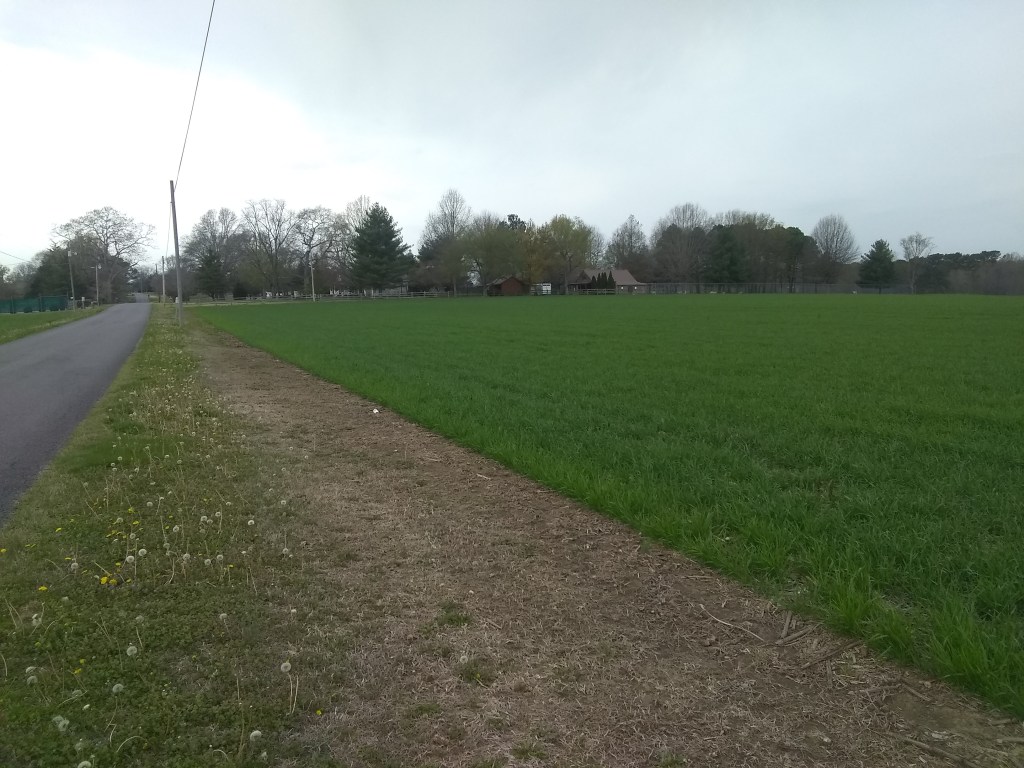


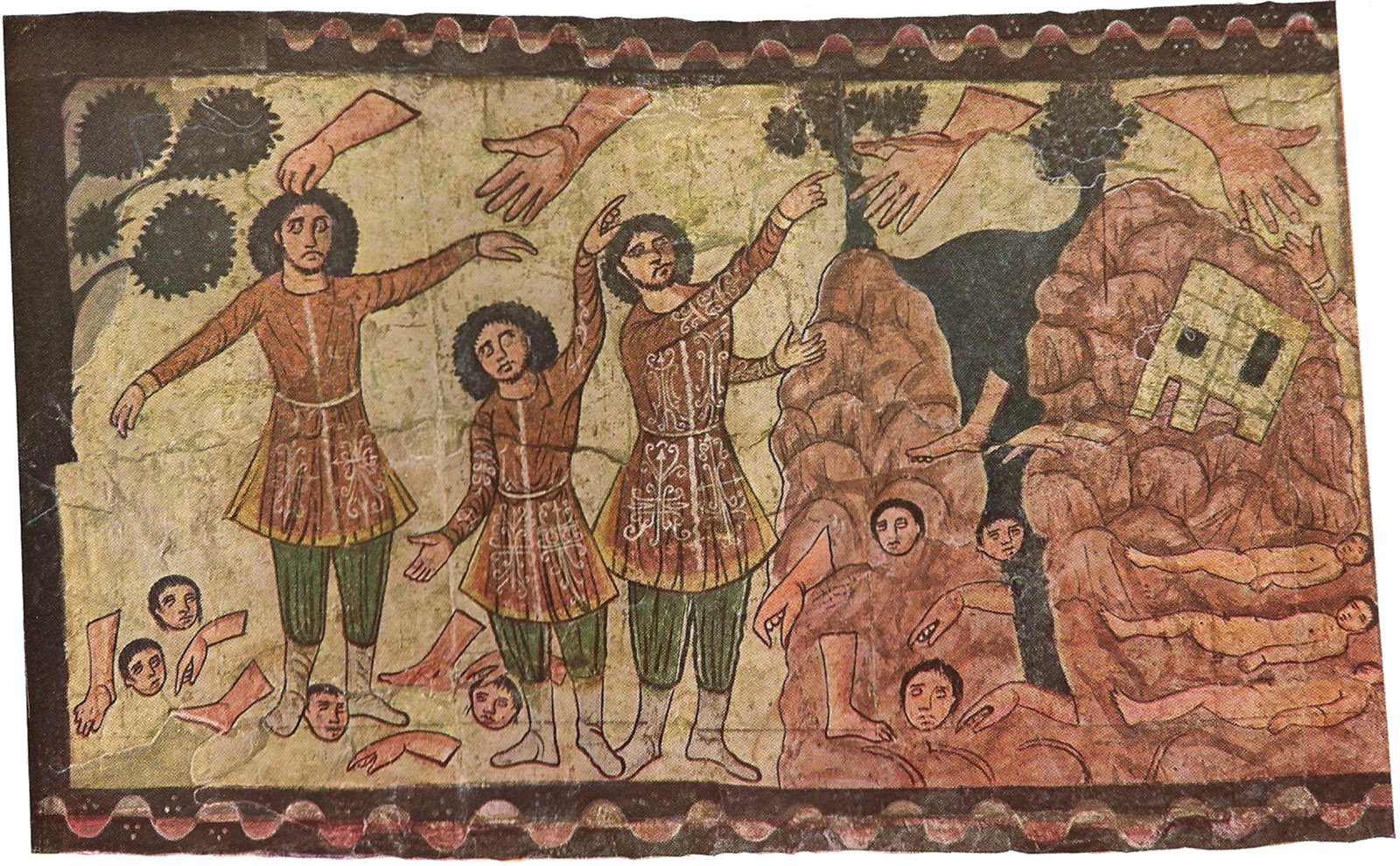
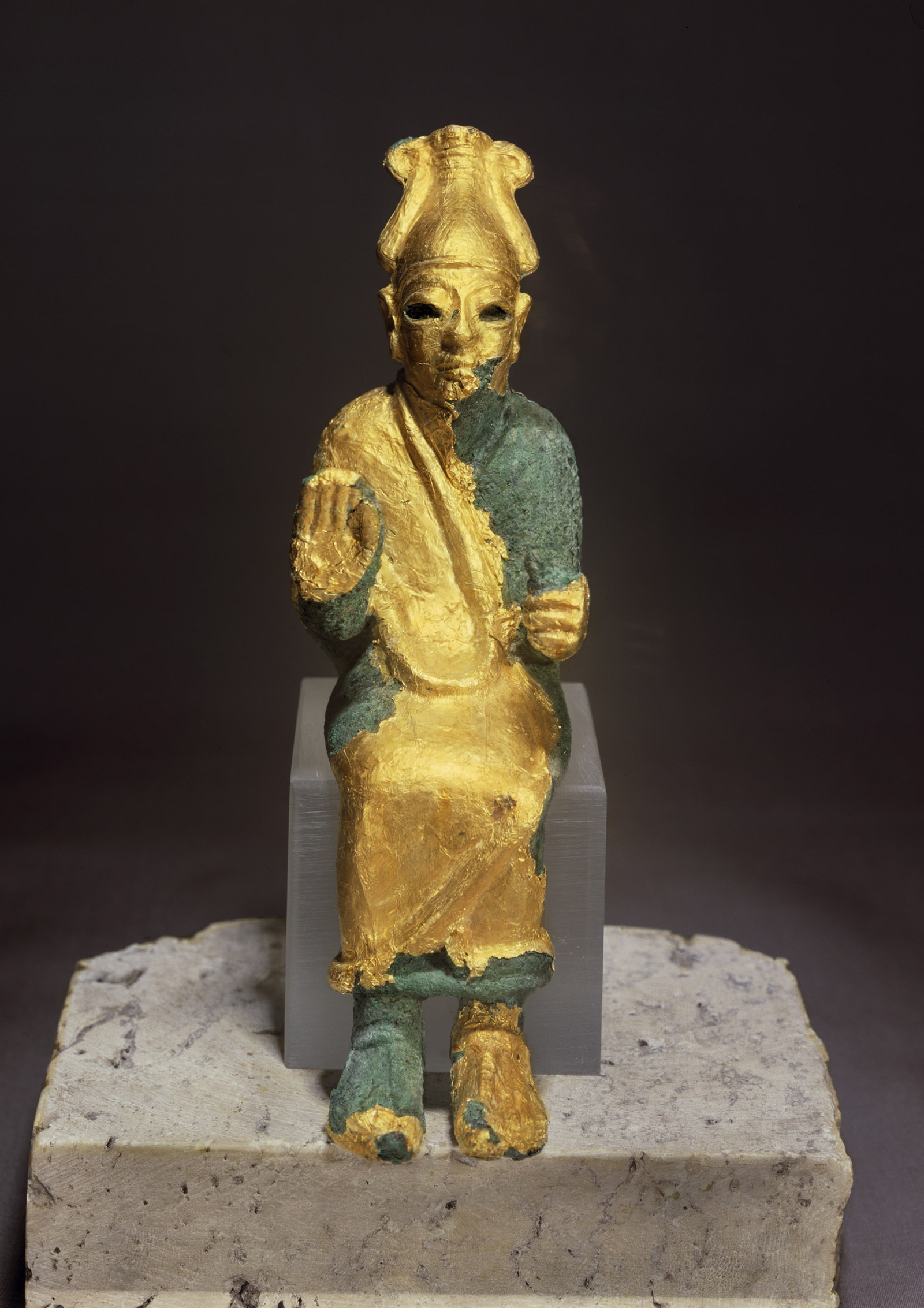

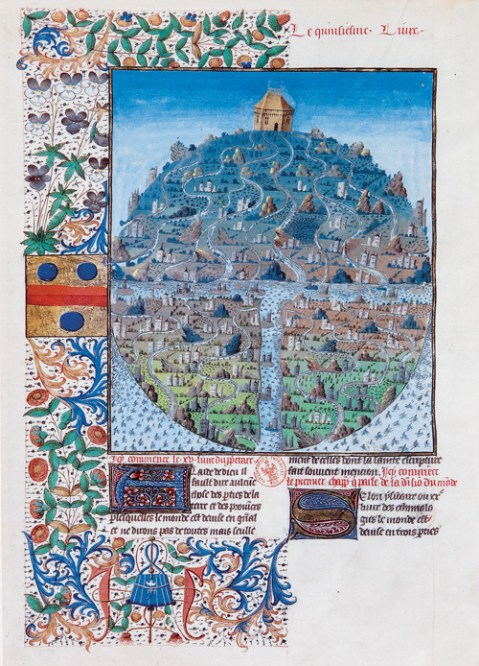

 by
by 

 Richard L. Fricks