
Author: Richard L. Fricks
Writer. Observer. Builder. I write from a life shaped by attention, simplicity, and living without a script—through reflective essays, long-form inquiry, and fiction rooted in ordinary lives. I live in rural Alabama, where writing, walking, and building small, intentional spaces are part of the same practice.
The Bible Can Be a Believers Worst Nightmare
07/01/23 Biking & Listening

Biking is something else I both love and hate. It takes a lot of effort but does provide good exercise and most days over an hour to listen to a good book or podcast. I especially like having ridden.
Here’s my bike, a Rockhopper by Specialized. I purchased it November 2021 from Venture Out in Guntersville; Mike is top notch! So is the bike, and the ‘old’ man seat I salvaged from an old Walmart bike.

Here’s a link to today’s bike ride.
Something to consider if you’re not already cycling.
I encourage you to start riding a bike, no matter your age. Check out these groups:
Cycling for those aged 70+(opens in a new tab)
Solitary Cycling(opens in a new tab)
Remember,
Here’s a writing craft podcast I’m listening to: The Essential Guide to Writing a Novel
Here’s a novel I’m listening to: The Dictionary of Lost Words, by Pip Williams
I’m on my second listen, not sure exactly why.

Amazon abstract:
NEW YORK TIMES BESTSELLER • REESE’S BOOK CLUB PICK • “Delightful . . . [a] captivating and slyly subversive fictional paean to the real women whose work on the Oxford English Dictionary went largely unheralded.”—The New York Times Book Review
“A marvelous fiction about the power of language to elevate or repress.”—Geraldine Brooks, New York Times bestselling author of People of the Book
Esme is born into a world of words. Motherless and irrepressibly curious, she spends her childhood in the Scriptorium, an Oxford garden shed in which her father and a team of dedicated lexicographers are collecting words for the very first Oxford English Dictionary. Young Esme’s place is beneath the sorting table, unseen and unheard. One day a slip of paper containing the word bondmaid flutters beneath the table. She rescues the slip and, learning that the word means “slave girl,” begins to collect other words that have been discarded or neglected by the dictionary men.
As she grows up, Esme realizes that words and meanings relating to women’s and common folks’ experiences often go unrecorded. And so she begins in earnest to search out words for her own dictionary: the Dictionary of Lost Words. To do so she must leave the sheltered world of the university and venture out to meet the people whose words will fill those pages.
Set during the height of the women’s suffrage movement and with the Great War looming, The Dictionary of Lost Words reveals a lost narrative, hidden between the lines of a history written by men. Inspired by actual events, author Pip Williams has delved into the archives of the Oxford English Dictionary to tell this highly original story. The Dictionary of Lost Words is a delightful, lyrical, and deeply thought-provoking celebration of words and the power of language to shape the world.
WINNER OF THE AUSTRALIAN BOOK INDUSTRY AWARD
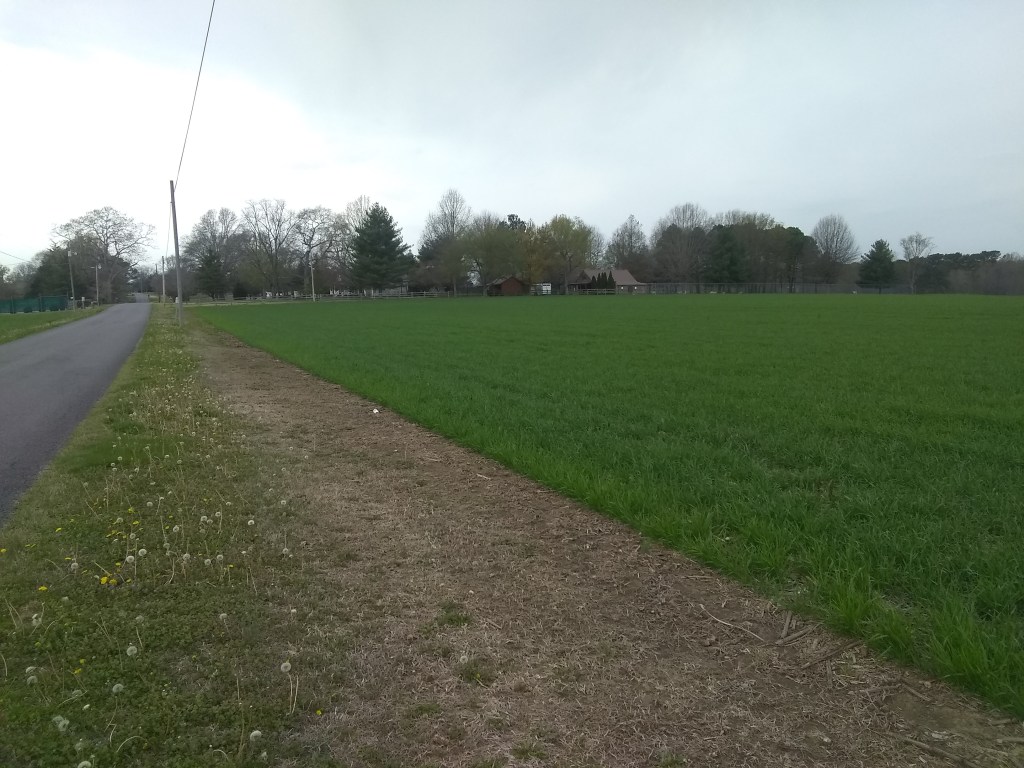
Here’s a few photos from along my pistol route:

























A Pop-Quiz for Christians, Number 8
Here’s the link to this article.
By David Madison, 06/16/2023
Dealbreakers in the Bible

Based on my own experience—I was pastor of churches for nine years, and have authored two books critical of Christianity—I’m pretty sure of this: devout folks don’t want to think too much about issues that can undermine their faith. Which means that reading the Bible is almost a No-No. Because there is so much in scripture that should prompt educated people to say, “Well, that can’t be right.” There are so many deal-breaker texts, just in the gospels. So in this Pop-Quiz for Christians I want to focus on some of these really embarrassing texts. How can the faithful read, study, reflect seriously on these patches of scripture—and not head for the exit?
Every one of the questions I’ll pose has to do with texts that belong in dystopian fairy tales or science fiction. If the faithful saw them depicted on the big screen, most of them would laugh off these absurd scenes and sayings—and might even object to them for being in such poor taste.
But, hey, my Christian friends, these are in your Bible, which your theology claims was inspired by god. A word of caution: as you try to explain these texts, it’s a sign of weakness to resort to the standard dodges or excuses, e.g., it’s a metaphor, god works in mysterious ways, look for the symbolic meaning, rather than taking it literally.
Please deal honestly with these texts.
Question One:
Do you accept or reject Matthew 27:52-53 in your understanding of Christianity? Can you explain why Matthew included this story? Here we read that, at the moment Jesus died:
“The tombs also were opened, and many bodies of the saints who had fallen asleep were raised. After his resurrection they came out of the tombs and entered the holy city and appeared to many.”
Question Two:
Mark’s gospel could be subtitled, Jesus and the Demons: Mark portrays Jesus as an exorcist, most dramatically in Mark 5:1-20. Please read these verses carefully, critically, analytically. List a few ways in which they are an embarrassment to Christian theology.
Question Three:
How is this not the biggest deal-breaker of all? Jesus-script in Luke 14:26 has caused no end of anguish for Christian theologians and preachers. They hope that most of their faithful followers don’t know it’s there—and indeed many don’t:
“Whoever comes to me and does not hate father and mother, wife and children, brothers and sisters, yes, and even life itself, cannot be my disciple.”
Caution: please don’t say “Jesus couldn’t have meant that”—because that answer is based on wishful thinking. It’s better to tackle this verse from another perspective: why would Luke report that Jesus said this?
Question Four:
Now read John 6:53-57. In this Jesus-script, we read that eating the body, and drinking the blood of Jesus is a way to get to live forever. This text probably gave rise to the Catholic concept of transubstantiation, i.e., during the “miracle of the mass,” the cracker and wine become the real body and blood of Jesus. Read these graphic verses carefully, critically. How is this not a marker of dystopian fantasy: eat a god and get eternal life?
Question Five:
In Acts 5:1-11 we find a depiction of life in the early church. We read that a couple, Ananias and Sapphira, upon selling a field, didn’t give all the money to the church, provoking the fury of Peter. He confronted Ananias (v. 3): “…why has Satan filled your heart to lie to the Holy Spirit and to keep back part of the proceeds of the land?” Ananias dropped dead on the spot, and was buried right away. A few hours later, Sapphira showed up and got a similar severe scolding—and she dropped dead too. No surprise: “And great fear seized the whole church and all who heard of these things.” (v. 11)
Is this any way to run a church? Why did the author of Acts offer no hint of criticism of Peter? Is this story compatible with your understanding of church life?
Question Six:
The apostle Paul was one of the heroes of the early church, and his Letter to the Romans was ranked by one devout scholar as “the first great work of Christian theology.” Yet in its opening chapter (vv. 29-32), Paul became unhinged when he thought about sinners:
“Full of envy, murder, strife, deceit, craftiness, they are gossips, slanderers, God-hatres, insolent haughty, boastful, inventors of evil, rebellious toward parents, foolish, faithless, heartless, ruthless. They know God’s decree, that those who practice such things deserve to die…”
What? Gossips, boastful people, and rebellious children deserve to die? There are so many examples of Paul’s bad theology in Romans—and in his other letters. Are you able to fit this text into your understanding of how Christianity is supposed to work? How would you do that?
Answers and Comments
Question One, Matthew 27:52-53. This story is not found in the other gospels, nor did any historians of the time report what would have been a sensation: newly alive dead people walking around Jerusalem. But Matthew frequently indulges in fantasy; he was writing propaganda for his cult, so what actually happened didn’t matter at all. There is magical thinking here: when Jesus died, bodies in tombs came alive, then on Easter morning—when he resurrected—they walked around the city. Maybe Matthew was counting on the wow-factor here, but this embarrassment adds nothing to Christian theology. Nor does Matthew describe what happened to these newly alive corpses—probably because he wasn’t interested; follow-up might have diminished the wow-factor. Did they return to their tombs and die

again? Artist James Tissot’s 1896 painting shows the shrouded corpses floating around the city. Biblical literalists who claim that this really happened aren’t doing their faith any favors by embracing this deal-breaker. Since, apparently, Mathew made up this tall tale maybe—oh dear—the same is true about the resurrection of Jesus.
Question Two: Mark 5:1-20. This episode—Jesus transferring demons from a man into a herd of pigs—perfectly reflects ancient superstitions: the spiritual realm swarms with angels and demons, including Satan, the chief demon. Catholic theology joins in the superstition by adding to the mix thousands of saints who hear prayers. Jesus had come from this realm, hence the demons know who he was. Here mental illness is assumed to be demon possession, which begs the question why an all-knowing god—in a book designed to help humans—would allow Mark 5:1-20 to promote this misunderstanding. It would seem that Jesus used a magic spell, whereby he gave the demons permission (v. 13) to enter the pigs. And what drama! The 2,000 pigs ran off the cliff, fell into the sea and drowned. No wonder the folks in the region asked Jesus to leave! (v. 17) From Mark’s perspective, this story gives a boost to his Hero the Exorcist. But Christian theology should learn to get along without demon superstitions. Taking this story literally is a deal breaker.
Question Three: Luke 14:26. The positioning of this hate-your-family verse helps us see why Luke included it, since it comes after Jesus’ Parable of the Banquet. Here we’re told that, at the last minute, people invited to a dinner offered excuses for why they couldn’t attend. So the host ordered his servants: “Go out at once into the streets and lanes of the town and bring in the poor, the crippled, the blind, and the lame.” (v. 21) The point seems to be that health or social status didn’t matter to the early Jesus cult: you were welcome. But one thing that was not tolerated was divided loyalty. This rule has always been standard policy with cults, so it’s hardly a surprise that Luke would stress it as well. Of course, it won’t do today, especially for a religion that claims to champion family values. It’s no use trying to wiggle out of the plain meaning of the text. Yes, the Greek word for hate, miseó, is right there. One way out of this awful embarrassment is to admit that we have no way at all to verify any of the supposed words of Jesus in the gospels. We have Jesus-script created by the gospel authors. But there it is—in red letters no less in some translations—which is enough to get the Bible tossed out. Luke 14:26 is a major deal breaker.
Question Four: John 6:53-57, eat Jesus’ flesh and drink his blood—to get eternal life. Of course there are other New Testament texts that suggest this isn’t true, but we’re used to the theology inflation we find in John’s gospel. In Matthew 19:21 we find Jesus-script about selling possessions and giving to the poor, to “find treasure in heaven.” And in the Last Judgement scene in Matthew 25, showing compassion is the key, while failure to show compassion will get you tossed into eternal fire. By all reasonable standards, John 6:53-57 is bad theology heavily tinged with magical thinking: the flesh and blood of Jesus have become magic potions: “eat this, drink that—and presto—you’ve won a seat in heaven.” It’s simplistic nonsense, which isn’t erased by adding elaborate ritual, i.e., the Catholic Mass. When I was a kid, growing up in the Methodist church, we had communion Sunday once a quarter. We used bread and grape juice as symbols of Jesus’ body and blood. Without noticing that it was a ghoulish thing to do.
Question Five: Acts 5:1-11, in which we read that Peter was furious because a couple kept some of the money they got from selling a field—instead of giving it all to the church. They both dropped dead upon hearing his scathing tirade. The author of Luke also probably wrote Acts, so we’re not surprised by the cult fanaticism found here as well. Give everything to the church, even as you hate your family. But it would seem that Peter ignored the advice he got from Jesus in Matthew 18:22, i.e., to forgive people seventy-times-seven. Jesus-script created by Luke collides with Jesus-script created by Matthew! Acts 5:1-11 reflects what I call totalitarian monotheism: god watches everything you do, so keep in line, or else. Now, of course, the church can’t grab everything: it has to settle for the ten percent tithe. There’s no hint of criticism of Peter in this text, despite the ending: “great fear seized the whole church.” If this were church policy today, a lot of folks would head for the exit.
Question Six: The Book of Romans 1:29-32. On Paul’s good days, he could say that “love is patient and kind,” but a careful reading of his letters shows that his good days were outnumbered by his bad days. He was convinced that his god’s default emotion was wrath (see Romans 2:5-8 especially). And when he got triggered, he fumed, hence this raging text in the first chapter of Romans: even rebellious children deserve to die. The gospel of Matthew was written long after Paul’s time—and in any case Paul shows little awareness of the teachings of Jesus—so he was not influenced by the Jesus-script in Matthew 18:22 about forgiving seventy-times-seven. The Book of Romans has had high impact on Christian theology, and is one of the most intensely studied documents in Western history. No doubt it has fueled so much pious rage against the “ungodly”—after all, the faithless are among those who deserve to die. But this is not the way to make the world a better place. I’m at a loss trying to figure out how this text can fit into a compassionate version of Christianity. Paul was so wrong about so many things. Just stay away from him, or read his letters to find more reasons to head for the exit.

I’ve just scratched the surface in this exploration of dealbreakers in the Bible. There are 1,001 embarrassing Bible texts, which keeps the apologists busy. Dr. Jaco Gericke speaks the truth:
“If you read the scriptures and are not shocked out of all your religious beliefs, you have not understood them.” (p. 137, The End of Christianity, edited by John W. Loftus)
David Madison was a pastor in the Methodist Church for nine years, and has a PhD in Biblical Studies from Boston University. He is the author of two books, Ten Tough Problems in Christian Thought and Belief: a Minister-Turned-Atheist Shows Why You Should Ditch the Faith (2016; 2018 Foreword by John Loftus) and Ten Things Christians Wish Jesus Hadn’t Taught: And Other Reasons to Question His Words (2021). The Spanish translation of this book is also now available.
His YouTube channel is here. He has written for the Debunking Christianity Blog since 2016.
The Cure-for-Christianity Library©, now with more than 500 titles, is here. A brief video explanation of the Library is here.
06/30/23 Biking & Listening
Biking is something else I both love and hate. It takes a lot of effort but does provide good exercise and most days over an hour to listen to a good book or podcast. I especially like having ridden.
Here’s my bike, a Rockhopper by Specialized. I purchased it November 2021 from Venture Out in Guntersville; Mike is top notch! So is the bike, and the ‘old’ man seat I salvaged from an old Walmart bike.
Here’s a link to today’s bike ride.
Something to consider if you’re not already cycling.
I encourage you to start riding a bike, no matter your age. Check out these groups:
Cycling for those aged 70+(opens in a new tab)
Solitary Cycling(opens in a new tab)
Remember,
Here’s a writing craft podcast I’m listening to: The Essential Guide to Writing a Novel
Here’s a novel I’m listening to: The Dictionary of Lost Words, by Pip Williams
I’m on my second listen, not sure exactly why.
Amazon abstract:
NEW YORK TIMES BESTSELLER • REESE’S BOOK CLUB PICK • “Delightful . . . [a] captivating and slyly subversive fictional paean to the real women whose work on the Oxford English Dictionary went largely unheralded.”—The New York Times Book Review
“A marvelous fiction about the power of language to elevate or repress.”—Geraldine Brooks, New York Times bestselling author of People of the Book
Esme is born into a world of words. Motherless and irrepressibly curious, she spends her childhood in the Scriptorium, an Oxford garden shed in which her father and a team of dedicated lexicographers are collecting words for the very first Oxford English Dictionary. Young Esme’s place is beneath the sorting table, unseen and unheard. One day a slip of paper containing the word bondmaid flutters beneath the table. She rescues the slip and, learning that the word means “slave girl,” begins to collect other words that have been discarded or neglected by the dictionary men.
As she grows up, Esme realizes that words and meanings relating to women’s and common folks’ experiences often go unrecorded. And so she begins in earnest to search out words for her own dictionary: the Dictionary of Lost Words. To do so she must leave the sheltered world of the university and venture out to meet the people whose words will fill those pages.
Set during the height of the women’s suffrage movement and with the Great War looming, The Dictionary of Lost Words reveals a lost narrative, hidden between the lines of a history written by men. Inspired by actual events, author Pip Williams has delved into the archives of the Oxford English Dictionary to tell this highly original story. The Dictionary of Lost Words is a delightful, lyrical, and deeply thought-provoking celebration of words and the power of language to shape the world.
WINNER OF THE AUSTRALIAN BOOK INDUSTRY AWARD
Here’s a few photos from along my pistol route:
Trump and his cult of cognitive dissonance
Here’s the link to this article.
 by
by JUN 13, 2023

Overview:
Trumps is in legal hot water. But what will be more interesting for observers is not his reaction but that of his fervent followers.
Things are looking bleak for former President Donald Trump’s future freedom. He is in trouble. 37 criminal charges of trouble. Though his present indictment woes were amply evident when it was unsealed, with a very strong, evidenced case weighing against him, Trump is still facing an array of cases going forward.
The classified documents case really is strong. Remember the case against Hilary Clinton concerning her emails? Trump was President and the evidence to be brought into play, and the charges’ seriousness, are orders of magnitude greater than Clinton’s.
But what will be most interesting to watch is not Trump and his eminently predictable reaction—a performance of bravado and flat denial written in capitals—but his followers. From Rep. Jim Jordan down to the grassroots MAGA base, there will be an air of desperation as well a sense of entrenchment. We can easily imagine a scenario where few of them will fall by the wayside.
After all, we know as well as anyone how difficult it can be to give up on God.
The tales of deconversion that many writers and readers have experienced here at OnlySky and at any number of repositories for skeptical and secular folk are chock full of psychological and sociological anguish. For those MAGA fans, that potential anguish is far less desirable than fighting like an injured bear backed into a corner.
We should expect some serious guttural roaring and flailing of paws.
The problem is, those paws can flail and do some damage. Let us hop that there is no violence that comes from such an indictment in the way we observed on Jan 6th. They’ve got form.
As I have said before, Christian theologians and apologists have one job: to maintain the primacy—the moral perfection—of both God and the Bible. Everything they do is to maintain both at the apex of reality. Such believers hold to a presupposition of the goodness of God and his awesome revelation.
Whether it be in dealing with slavery or rape in the Bible, or understanding suffering and evil in the world, one “truth” must be held: the Bible and God are untouchably awesome and simply cannot be at fault. Theology is then created to muddy the waters, claim that atheists have no right to make moral judgments, blame humans for God’s design and creation faults, and ultimately get God off the hook.
Because God cannot be anything but morally perfect.
Trump is a divine member of the MAGA pantheon, positioned just above Yahweh, and just below…no other entitity in human conception. When Trump is so obviously in trouble because he has so obviously broken a list of rules longer than one of his golf courses, then his followers have to engage in mental gymnastics just as theologians do to explain ebola in light of their supposedly all-loving God.
This is cognitive dissonance reduction. Cognitive dissonance is the disharmony we experience in our minds when we hold a core belief and are then confronted with evidence against that belief. Our brains do not like disharmony and so go through a number of mental processes in an attempt to harmonize the contradiction.
The overarching lesson to be learned here is that people will go to extraordinary lengths to maintain a core belief. This might mean experiencing one of the following:
- Adapting the core belief marginally.
- Ignoring the contrary data—burying one’s head in the sand.
- Compartmentalizing the contrary data and core belief.
- Adapting the contrary data.
- Denying the contrary data.
- Delegitimizing the source of the new data.
- Reducing the importance or value of either the contrary data or the core belief.
- Whataboutism.
- Attacking the messenger of the contrary data.
The recent indictment won’t touch the die-hard believers—data bouncing off the impenetrable Trumpian rock of core belief like morality trying to enter into the mind of their leader. There are stark similarities between Trump and God, or, more accurately, between the die-hard supporters of Donald J. Trump and Christian apologists.
Trump is their god, and cannot be budged from the zenith of political worship. Therefore, for the Trump apologist, conspiracy theories muddy the waters, whataboutery obfuscates by pointing at faults in others, blame is apportioned to Clinton, Obama, Biden, and, well, anybody else other than Trump and… (refer to the list above). Because Trump, to them at least, cannot be anything but morally perfect.
This is no better witnessed than at Trump rallies—political megachurches, if you will—where he whips his supporters into a political fervor. And just as the poor attendees of megachurches so often overlook the obscene wealth of their church leaders, and overlook their often multitudinous moral shortcomings, so too do Trump cultists.
The next few months, especially if further court cases being to gain traction, will be a mighty test for the cognitive dissonance reduction abilities of so many in the GOP, from Marjorie Taylor Greene to Matt Gaetz, and from your neighbor to your work colleague. Humans are strange things, and the likelihood is that Trump’s overtly criminal behavior (that they wouldn’t, for a second, have stood for had it been committed by a Democrat politician) will most probably be excused by so many of his followers.
Perhaps a Trump 2.0 will turn up and allow those cast adrift on the rotten ship Trump, drifting on the currents of borrowed time, to wholesale escape to a new vessel.
And yet the USS DeSantis sunk before it could even leave port.
The problem is, even if Trump sinks, all of those aboard will have no option but to jump ship. But they can all swim. And when they finally get ashore, they’ll be angry as hell.
Then what?
06/29/23 Biking & Listening
Biking is something else I both love and hate. It takes a lot of effort but does provide good exercise and most days over an hour to listen to a good book or podcast. I especially like having ridden.
Here’s my bike, a Rockhopper by Specialized. I purchased it November 2021 from Venture Out in Guntersville; Mike is top notch! So is the bike, and the ‘old’ man seat I salvaged from an old Walmart bike.
Here’s a link to today’s bike ride.
Something to consider if you’re not already cycling.
I encourage you to start riding a bike, no matter your age. Check out these groups:
Cycling for those aged 70+(opens in a new tab)
Solitary Cycling(opens in a new tab)
Remember,
Here’s a writing craft podcast I’m listening to: The Essential Guide to Writing a Novel
Here’s a novel I’m listening to: The Dictionary of Lost Words, by Pip Williams
I’m on my second listen, not sure exactly why.
Amazon abstract:
NEW YORK TIMES BESTSELLER • REESE’S BOOK CLUB PICK • “Delightful . . . [a] captivating and slyly subversive fictional paean to the real women whose work on the Oxford English Dictionary went largely unheralded.”—The New York Times Book Review
“A marvelous fiction about the power of language to elevate or repress.”—Geraldine Brooks, New York Times bestselling author of People of the Book
Esme is born into a world of words. Motherless and irrepressibly curious, she spends her childhood in the Scriptorium, an Oxford garden shed in which her father and a team of dedicated lexicographers are collecting words for the very first Oxford English Dictionary. Young Esme’s place is beneath the sorting table, unseen and unheard. One day a slip of paper containing the word bondmaid flutters beneath the table. She rescues the slip and, learning that the word means “slave girl,” begins to collect other words that have been discarded or neglected by the dictionary men.
As she grows up, Esme realizes that words and meanings relating to women’s and common folks’ experiences often go unrecorded. And so she begins in earnest to search out words for her own dictionary: the Dictionary of Lost Words. To do so she must leave the sheltered world of the university and venture out to meet the people whose words will fill those pages.
Set during the height of the women’s suffrage movement and with the Great War looming, The Dictionary of Lost Words reveals a lost narrative, hidden between the lines of a history written by men. Inspired by actual events, author Pip Williams has delved into the archives of the Oxford English Dictionary to tell this highly original story. The Dictionary of Lost Words is a delightful, lyrical, and deeply thought-provoking celebration of words and the power of language to shape the world.
WINNER OF THE AUSTRALIAN BOOK INDUSTRY AWARD
Here’s a few photos from along my pistol route:
Anselm “Faith Seeking Confirmation”
Here’s the link to this article.
By John W. Loftus at 5/18/2020
I think Anselm’s dictum “faith seeking understanding” is to be understood in the history of theology and philosophy to be equivalent to “Faith Seeking Confirmation.” If that’s how it’s historically used then that’s what it means. Below is an updated edit from chapter 2 of my my book, Unapologetic: Why Philosophy of Religion Must End.
There is a common theme among St. Anselm’s work and the work of other obfuscationist theologians and philosophers that needs to be highlighted. It’s called faith seeking confirmation. We see this in Anselm with regard to his new atonement theory and his ontological argument.
Anselm therefore is exhibit “A” in defense of what atheist philosopher Stephen Law said: “Anything based on faith, no matter how ludicrous, can be made to be consistent with the available evidence, given a little patience and ingenuity.”1 If I could pick one sentence, one aphorism, one proverb that highlights the main reason philosophy of religion (PoR) must end, it’s Law’s. I’ll call it Law’s law of faith.–Begin Excerpt:
Faith Seeking Confirmation
Anselm’s most enduring legacy just might be his statement, credo ut intelligam (“I believe in order that I may understand”), or in its most famous form, Fides quaerens intellectum (“faith seeking understanding”).26 While others have expressed this idea, the point is that people first believe then seek to understand. First they believe then they seek data. First they believe then they seek to confirm their beliefs. No one in the history of the confessional church probably said anything different, or if they did, faith was surreptitiously smuggled in the back door. Few if any Christian intellectuals ever said “understanding seeks faith,” because the obvious sequitur is that if they achieved understanding they wouldn’t need faith. Seeking confirmation of one’s religious faith rather than truth reverses what reasonable people should do with one’s religious faith. In fact, it goes against science since science is based on the search for truth. So in this sense, faith should be recognized as a known cognitive bias sure to distort any honest inquiry into the truth, confirmation bias.
In 1987 a large-scale US antinarcotics campaign by Partnership for a Drug-Free America launched. It featured two televised public service announcements (PSAs) and a related poster campaign. The original thirty-second ad showed a man who held up an egg and said, “This is your brain.” Then he showed a hot frying pan and said, “This is drugs.” Then he cracked the egg and put it in the pan. It immediately began to cook. He brought the pan closer to the camera and said, “This is your brain on drugs.” He ended the PSA by saying, “Any questions?” It was a very powerful commercial.
I want people to consider the drug metaphor for faith, taking our cue from Karl Marx, who described religious faith as the opiate of the people. When you think of the commercial you need to hear the actor say, “This is your brain on faith.” That’s what I think. Here then are five ways faith makes the brain stupid:
1. Faith causes the believer to denigrate or deny science.
2. Faith causes the believer to think objective evidence is not needed to believe.
3.Faith causes the believer to deny the need to think exclusively in terms of the probabilities.
4. Faith causes the believer to accept private subjective experiences over the objective evidence.
5. Faith causes the believer to think faith has an equal or better method for arriving at the truth than scientifically based reasoning.
Any questions?
Christian, before you mindlessly quote mine from the Bible or the theology based on it, consider what you think of other brains on faith, like those of Scientologists, Mormons, Muslims, Jews, pantheists, and so on. Clearly you think their brains are on the opiate of faith just as I do. Watch some videos about these other faiths. Study them. Talk to practitioners of them. Try to argue with the best representatives of them and see if you can penetrate their brains with reason and science. Can’t do it? Why? Why do you think their faith makes them impervious to reason and your faith does not make you impervious to reason?
I had a discussion with a person of faith not long ago where she said there was nothing I could ever say to change her mind. I simply replied that no scientist would ever say such a thing. I went on to say she should think like a scientist and recommended that she read Guy Harrison’s chapter in my anthology, Christianity in the Light of Science, titled, “How to Think Like a Scientist: Why Every Christian Can and Should Embrace Good Thinking.” I recommended it because thinking like a scientist is the antithesis of thinking with the drug of faith on one’s brain.
Scientifically minded people argue we should reason like a scientist. Believers in different faiths will demur, saying we cannot justify our own reasoning capabilities, since we accept the fact of evolution. I think my evolved brain can make reliable (though not perfect) judgments based on the evidence of course, and that should be good enough. But ignoring this for the moment, what if these believers are correct? Then what? It gets them nowhere as in no-where. They still cannot settle their differences because they are left with no method to do so. They will argue for faith over reason, which leaves them all back at the starting gate, with faith. They are special pleading and that’s it, thinking that if they can deny reason in favor of their particular faith then it follows their particular faith ends up being the correct one. No, if they deny reason in favor of faith the result is there’s no way to settle these disputes between people of different faiths. My claim is that religions debunk themselves and because this is clearly the case, the only alternative to know the truth about the world is through scientifically based reasoning.
The fact that I can say nothing to convince most of them of this is maddening. They are impervious to reason, almost all of them. This is what faith does to their brains.
Randal Rauser is an associate professor of historical theology at Taylor Seminary, Edmonton, Canada. He and I coauthored a debate-style book together titled “God or Godless?”27 He is a Christian believer. I cowrote the book to reach any honest believers since I consider him impervious to reason. I could say it of any Christian pseudo-intellectual to some degree, depending on how close he or she is to the truth (liberals are closer than progressive evangelicals who are closer than fundamentalists). I admit Rauser reasons well in other areas of his life unrelated to his faith. He could even teach a critical thinking class. So he’s rational, very much so. But like all believers his brain must basically shut down when it comes to faith. When it comes to faith his brain must disengage. It cannot connect the dots. It refuses to connect them. Faith stops the brain from working properly. Faith is a cognitive bias that causes believers to overestimate any confirming evidence and underestimate any disconfirming evidence. So his brain will not let reason penetrate it, given his faith bias. Some people have even described faith as a virus of the brain (or mind). It makes the brain sick. Maybe Marx said it best though. It’s an opiate, a deadening drug.
Alvin Plantinga has argued that what’s essential to have a “warranted belief” is “the proper functioning of one’s cognitive faculties in the right kind of cognitive environment.” I actually think he’s right. But faith, like an opiate, causes the brain to stop functioning properly in matters related to faith. Christian apologetics is predicated on a host of logical fallacies. Take away the logical fallacies they use in defense of their faith and they wouldn’t have any arguments left at all. They certainly don’t have good objective sufficient evidence for what they believe. A critical thinker like Rauser, who thinks more rationally than most others in every area unrelated to his faith, cannot see this, but it is the case. Now why can’t Rauser see this? Why can’t he come to the correct religious conclusions? Why can’t he think rationally about his faith? Because his faith, like an opiate, will not let him. The opiate of faith deadens those areas in his brain that are related to his faith. Rauser surely sees this with regard to other believers in different religious faiths. He will say the same things about them that I say about him. But he refuses to see the same drug deadening his own brain. Once again, faith is a cognitive bias, a virus of the mind, an opiate. It prevents people of faith from connecting the dots.
Rauser admits that like everyone else he depends on “motivated reasoning” to some degree. Well then, why won’t he apply the antidote, which is to require sufficient objective evidence for what he believes? That’s the only way to overcome the cognitive bias of faith, the only way to kill that virus in his mind, the only way to nullify the opiate of faith, and the only way to stop being swayed by his own motivated reasoning. Yet he questions the need for sufficient objective evidence apart from a private subjective ineffable feeling. Who in their right mind would do this after admitting he depends on “motivated reasoning” to some degree? No reasonable person, that’s who.
Subjective private ineffable religious experiences offer believers the most psychologically certain basis for believing in a particular divine being or religion. When believers have a religious experience it’s really hard, if not psychologically impossible, to argue them away from their faith. How is it possible then for believers who claim to have had such experiences to look at those experiences as an outsider might? We can point out the mind often deceives us and provide many examples of this phenomenon (brainwashing, wish-fulfillment, cognitive dissonance). But believers will maintain their particular religious experience is real because it was experienced, despite the odds their brain is deceiving them. We can point out that countless others of different faiths all claim to have the same type of religious experiences, whether they are Mormon, Muslim, Catholic, or Jew, but believers will still say their experiences are true ones (or veridical), despite the odds that what others believe as a result of their experiences makes it seem obvious they could be wrong too (and vice versa).
Sometimes in the face of such an experiential argument I simply say to the believer, “If I had that same experience I might believe too. But I haven’t. So why not? Why doesn’t your God give me that same religious experience?” At this point the believer must blame me and every living person on the planet for not being open to such a sect-specific religious experience. Depending on the religious sect in question that might include most every person, 7.4 billion of us and counting. But even this realization doesn’t affect believers who claim to have had such religious experiences. Calvinists among them will simply say, “God doesn’t want various people to have a saving religious experience.” It never dawns on any of these believers what this means about the God they worship, that only a mean-spirited barbaric God would send people to an eternal punishment because that same God did not allow them a certain type of religious experience.
Believers will always argue in such a fashion in order to stay as believers. No matter what we say they always seem to have an answer. What they never produce is any cold hard objective evidence, convincing evidence, for their faith claims. Ever. They are not only impervious to reason. They are also impervious to the evidence. They even see evidence where it doesn’t exist because they take the lack of evidence as evidence for their faith. When it comes to prayer they count the hits and discount the misses.
There is only so much a person can take when dealing with people who have lost touch with reality. Must we always maintain a patient attitude when we already know their arguments? Must we always respond in a dispassionate manner to people who are persuaded against reason to believe something delusional? We know this about them based on everything we know (i.e., our background knowledge). They are pretending to know that which they don’t know when they pretend to know with some degree of certainty their faith is true. If it’s faith, how then can something be known with any degree of probability at all, much less certainty? Faith by definition always concerns itself with that which is unsure. Something unsure involves lower probabilities. So faith is always about that which has lower probabilities to it. So again, how can something based on faith be known with any degree of certainty? It can’t, and only deluded minds think otherwise, minds that are impervious to reason and evidence. We can only hope they can function in life. It can be quite surprising they can.
Concluding Thoughts
Anselm of Canterbury’s key theological contributions in philosophy of religion highlight what reasonable people see as the need for philosophy of religion to end. He holds a preeminent place among the best philosophical theologians the Church ever produced. And yet, as we’ve seen, even among the best of the best there’s nothing here but rhetoric without substance based on his faith and the social climate of his day. His best contributions didn’t solve anything. Almost no one accepts his atonement theory today. His idiosyncratic perfect-being conception was based on nothing more than special pleading on behalf of his parochial Western concept of god. His ontological argument does not work either. Further, we’ve found that when Anselm’s perfect being is compared to the biblical god Yahweh and his supposed son, it doesn’t make any sense nor can it be reconciled. So the only reason to study Anselm seems to be one of historical curiosity. Anselm’s key contributions did not advance anything since we are no closer at getting to objective knowledge about anything than we would be if he never wrote a thing. When it comes to the history of philosophy he made no contributions that furthered understanding, the very thing he sought to do.
It does no good to say we’ve learned from Anselm what is false and cannot be defended, as if by learning what isn’t the case he advanced our understanding. He sidetracked our understanding for a millennium. He was doing obfuscationist puzzle-solving theology unrelated to the honest desire to understand. If we proportioned our intellectual assent to the probabilities based on sufficient evidence (per Hume), we would know all we need to know to know that Anselm and many other unevidenced beliefs are false and cannot be defended.
Karl Barth, considered one of the greatest theologians of the last century, who rejected natural theology with a big fat “Nein,” argued Anselm’s ontological argument was an example of his faith seeking understanding, rather than an argument proving God exists. Anselm did not seek to “prove” the truth of the Christian faith, Barth argued, but to understand it.28 Anselm’s ontological argument in chapter 2 of the Proslogion comes after asking God for help to understand his faith in chapter 1. There he prays, “I do not seek to understand that I may believe, but I believe in order to understand. For this also I believe, — that unless I believed, I should not understand.” Then just before developing the argument in chapter 2, Anselm prays, “Lord, do you, who do give understanding to faith, give me, so far as you know it to be profitable, to understand that you are as we believe; and that you are that which we believe.” So while there is disagreement about what he was doing, Anselm at least tacitly acknowledges his argument comes from faith rather than leading to faith. And that’s exactly what we find. The ontological argument depends on his Christian faith, which subsequently seeks to confirm his faith, what he already believes about his parochial god. There’s a recognized informal fallacy here I’ve mentioned a time or two. It’s called special pleading. It’s also the mother of all cognitive biases, something to avoid if we want to know the truth.
Philosophers of religion who have dealt with Anselm’s argument and developed their own versions of it, such as Charles Hartshorne, Norman Malcolm, and Alvin Plantinga, should take note. They don’t know their own theology. Or, perhaps more correctly and importantly, they fail to realize they’re doing the same thing Anselm did. He sought after arguments that confirmed his faith rather that seeking out sufficient objective evidence for his God.
What we’re led to conclude is that the problem of philosophy of religion stems from faith. If faith is trust then there is no reason to trust faith. Anything based on faith has lower probabilities to it by definition. Christian pseudo-philosophers do no more than build intellectual castles in the sky without any solid grounding to them. There doesn’t seem to be any good principled reason for not getting fed up with the pretend game of faith with its ever-receding theology.
–End Excerpt
06/28/23 Biking & Listening
Biking is something else I both love and hate. It takes a lot of effort but does provide good exercise and most days over an hour to listen to a good book or podcast. I especially like having ridden.
Here’s my bike, a Rockhopper by Specialized. I purchased it November 2021 from Venture Out in Guntersville; Mike is top notch! So is the bike, and the ‘old’ man seat I salvaged from an old Walmart bike.
Here’s a link to today’s bike ride.
Something to consider if you’re not already cycling.
I encourage you to start riding a bike, no matter your age. Check out these groups:
Cycling for those aged 70+(opens in a new tab)
Solitary Cycling(opens in a new tab)
Remember,
Here’s a writing craft podcast I’m listening to: The Essential Guide to Writing a Novel
Here’s a novel I’m listening to: The Dictionary of Lost Words, by Pip Williams
I’m on my second listen, not sure exactly why.
Amazon abstract:
NEW YORK TIMES BESTSELLER • REESE’S BOOK CLUB PICK • “Delightful . . . [a] captivating and slyly subversive fictional paean to the real women whose work on the Oxford English Dictionary went largely unheralded.”—The New York Times Book Review
“A marvelous fiction about the power of language to elevate or repress.”—Geraldine Brooks, New York Times bestselling author of People of the Book
Esme is born into a world of words. Motherless and irrepressibly curious, she spends her childhood in the Scriptorium, an Oxford garden shed in which her father and a team of dedicated lexicographers are collecting words for the very first Oxford English Dictionary. Young Esme’s place is beneath the sorting table, unseen and unheard. One day a slip of paper containing the word bondmaid flutters beneath the table. She rescues the slip and, learning that the word means “slave girl,” begins to collect other words that have been discarded or neglected by the dictionary men.
As she grows up, Esme realizes that words and meanings relating to women’s and common folks’ experiences often go unrecorded. And so she begins in earnest to search out words for her own dictionary: the Dictionary of Lost Words. To do so she must leave the sheltered world of the university and venture out to meet the people whose words will fill those pages.
Set during the height of the women’s suffrage movement and with the Great War looming, The Dictionary of Lost Words reveals a lost narrative, hidden between the lines of a history written by men. Inspired by actual events, author Pip Williams has delved into the archives of the Oxford English Dictionary to tell this highly original story. The Dictionary of Lost Words is a delightful, lyrical, and deeply thought-provoking celebration of words and the power of language to shape the world.
WINNER OF THE AUSTRALIAN BOOK INDUSTRY AWARD
Here’s a few photos from along my pistol route:
The Secular Seven
Here’s the link to this article.
 by
by MAR 24, 2023

There have always been non-believers. But for the first time in recorded history, there are now numerous societies with a majority of people who don’t believe in God.
According to an analysis of the best internationally-available data by Isabella Kasselstrand, Ryan T. Cragun, and me, published in our new book Beyond Doubt: The Secularization of Society, the seven democratic countries in the world today with more atheists, agnostics, and assorted nontheists than God-believers are Estonia, the Netherlands, Norway, Sweden, South Korea, the United Kingdom, and the Czech Republic.
Of course, not every nonbeliever in these nations actively or personally identifies as an atheist or agnostic, per se—the former label is heavily stigmatized, while the latter is relatively obscure in certain cultures. But the percentage of the population in each country that answers “no” when asked if they believe in God is as follows:
Sweden – 63.9%
Czech Republic – 61.6%
South Korea – 59.4%
Netherlands – 56.3%
Estonia – 54.3%
Norway – 52.7%
United Kingdom – 51.6%
While there may be similar or even higher percentages of nonbelievers in other nations such as China or Vietnam, we ought not consider them because they are unfree dictatorships where the atheistic government actively polices, prohibits, and represses religion; in such societies, people have a fear of expressing their true religious beliefs, and thus, survey data is suspect. But in open, free democracies where being neither openly religious nor openly secular provokes the government’s wrath, answers to surveys are much more valid and reliable.
Why these seven?
Why are these seven nations so secular?
Each country has its own unique history that contributes to low levels of theism. For example, the UK is the birthplace of Charles Darwin, whose ideas regarding evolution have been detrimental to Christian faith. Anti-clericalism has been a significant strain of Czech nationalism going all the way to the Hussite Wars of the 15th century. Estonia experienced 50 years of Soviet occupation, during which time religion was squelched, and it never rebounded, even after the fall of the USSR. In South Korea, the educational system places a strong emphasis on scientific knowledge and technology, with little attention paid to religion.
But regardless of each country’s idiosyncrasies that may have contributed towards their high degree of irreligion, they have all experienced some combination of the following: greatly improved levels of social welfare, societal well-being, and existential security; increased degrees of wealth and prosperity; increased levels of educational attainment; a significant transition from a traditional, rural, non-industrial society to a contemporary, urban, industrial (or post-industrial) society; increased rationalization, whereby the ordering of society based on technological efficiency, bureaucratic impersonality, and scientific and empirical evidence. As our research shows, these factors are all strongly conducive to increased secularization in society.
How are they faring?
It has long been a staple of conservative propaganda that if a society loses its religion, things will go to shyte. And even some on the left buy into this nonsense; earlier this month, New York mayor Eric Adams blamed America’s never-ending school shooting epidemic on a lack of religion. “When we took prayers out of schools,” he proclaimed, “guns came into schools.”
Of course, as I have been arguing for over a decade now, if godlessness led to national depravity or high rates of violence, then we would expect to find those countries that are the least religious to be the most horrible, impoverished, unhealthy, and crime-ridden. But we find exactly the opposite correlation. These seven most godless democracies provide excellent examples, as they all boast high levels of societal health and well-being, high GDPs, extremely low rates of violent crime, almost no school shootings, superior healthcare, and more. Consider Norway, where Christianity has plummeted in the last half-century, with rates of belief in God, church attendance, and church membership at all-time lows – and yet Norwegian society is simultaneously characterized by fantastic schools, health care, elder care, access for the disabled, gender equality, economic prosperity, as well as very low rates if murder.
Indeed, five of these seven highly secular nations rank in the top 20 on the United Nations’ Human Development Index. The remaining two, Estonia and the Czech Republic, come in at 31 and 32, respectively.
It is not that these majority-non-believing nations are thriving because of their godlessness; there are too many variables at play to establish such causation. But as to the right-wing article of faith that godlessness leads to social depravity – that thesis can be flatly rejected.
Also, it should be noted that these societies are not utopias. They all have their problems. The northernmost nation of the UK, Scotland, is currently struggling with a dangerous drug epidemic. South Korea’s birth rate is shockingly low. Sweden is struggling with immigration issues. Affordable housing is in relatively short supply in the Netherlands. And so on. But compared to the vast majority of countries in the world, when looking at nearly every single indicator of societal well-being, these secular seven are doing extremely well, overall. Heck, according to the US News and World Reports rankings of top countries with the best quality of life, Sweden ranks at #1, Norway #5, Netherlands #8, the UK #12, South Korea #24, Czech Republic at #27, and Estonia at #42. Clearly, going godless does not result in national dystopia.
Godlessness goes global
Our analysis found that there are many other countries where almost half of the population does not believe in God, such as France, Denmark, Australia, Finland, and New Zealand. Given current trends, we expect these nations to join the pack of majority-godless nations in the next decade or so. And while the US is quite far from such a state of irreligiosity, belief in God has nonetheless been dropping significantly: the percentage of Americans who believe in God has dropped from 98% in the 1950s to 81% today. Among Americans under 30, it is down to an unprecedented 68%.
The term “village atheist” was common parlance a while back, suggesting that in every village, there was always some single curmudgeon who didn’t believe in god. Well today, we can longer accurately speak of the village atheist. Rather, we must accept the increasing reality of villages with many atheists. And not just villages, but towns, cities, and countries all around the globe.
 Richard L. Fricks