Writer / Observer / Builder — Presence, clarity, and living without a script
Author: Richard L. Fricks
Writer. Observer. Builder. I write from a life shaped by attention, simplicity, and living without a script—through reflective essays, long-form inquiry, and fiction rooted in ordinary lives. I live in rural Alabama, where writing, walking, and building small, intentional spaces are part of the same practice.
Biking is something else I both love and hate. It takes a lot of effort but does provide good exercise and most days over an hour to listen to a good book or podcast. I especially like having ridden.
Here’s my bike, a Rockhopper by Specialized. I purchased it November 2021 from Venture Out in Guntersville; Mike is top notch! So is the bike, and the ‘old’ man seat I salvaged from an old Walmart bike.
In my previous Skeptic column, Deconstructing the Decalogue, I offered a personal view on how to think about the Ten Commandments from the perspective of 3,000 years of moral progress since they were first presented in two books of the Old Testament (Exodus 20:1-17 and Deuteronomy 5:4-21). Here I would like to reconstruct them from the perspective of a science- and reason-based moral system, a fuller version of which I developed in my 2015 book The Moral Arc, from which this material is partially excerpted.
Note: This is a purely intellectual exercise. I am not a preacher or teacher of moral values, nor do I hold myself up as some standard-bearer of morality. Since I do not believe in God, nor do I think that there are any rational reasons to believe that morals derive from any source outside of ourselves, I feel the necessity to offer an alternative to religious- and faith-based morality, both descriptively (where do morals come from if not God?) and prescriptively (how should we act if there is no God?), which I have done in 30 years of publishing Skeptic magazine and in a number of my books, including How We Believe (1999), The Science of Good and Evil (2004), and the aforementioned The Moral Arc. Here I am building on the work of secular philosophers and scholars from the ancient Greeks through the Enlightenment and into the modern era where a massive literature exists addressing these deep and important matters.
Galileo Demonstrating the New Astronomical Theories at the University of Padua. Painting by Félix Parra, 1873. Museo Nacional de Arte, Mexico City.
Skeptic is a reader-supported publication. Your subscription goes to the Skeptics Society, a 501(c)(3) nonprofit. To receive new posts and support my work, consider becoming a free or paid subscriber.
Upgrade to paid
The problem with any religious moral code that is set in stone is just that—it is set in stone. Anything that can never be changed has within its DNA the seeds of its own extinction. A science-based morality has the virtue of having built into it a self-correcting mechanism that does not just allow redaction, correction, and improvement; it insists upon it. Science and reason can be employed to inform—and in some cases even determine—moral values.
Science thrives on change, on improvement, on updating and upgrading its methods and conclusions. So it should be for a science of morality. No one knows for sure what is right and wrong in all circumstances for all people everywhere, so the goal of a science-based morality should be to construct a set of provisional moral precepts that are true for most people in most circumstances most of the time—as assessed by empirical inquiry and rational analysis—but admit exceptions and revisions where appropriate. Indeed, as humanity’s concept of “who and what is human, and entitled to protection” has expanded over the centuries, so we have extended moral protection to categories once thought beneath our notice.
Here are some suggested commandments for our time. Feel free to add your own in the comments section below.
1. The Golden-Rule Principle: Behave toward others as you would desire that they behave toward you.
The golden rule is a derivative of the basic principle of exchange reciprocity and reciprocal altruism, and thus evolved in our Paleolithic ancestors as one of the primary moral sentiments. In this principle there are two moral agents: the moral doer and the moral receiver. A moral question arises when the moral doer is uncertain how the moral receiver will accept and respond to the action in question. In its essence this is what the golden rule is telling us to do. By asking yourself, “how would I feel if this were done unto me?” you are asking “how would others feel if I did it unto them?”
2. The Ask-First Principle: To find out whether an action is right or wrong, ask first.
The Golden Rule principle has a limitation to it: what if the moral receiver thinks differently from the moral doer? What if you would not mind having action X done unto you, but someone else would mind it? Smokers cannot ask themselves how they would feel if other people smoked in a restaurant where they were dining because they probably wouldn’t mind. It’s the nonsmokers who must be asked how they feel. That is, the moral doer should ask the moral receiver whether the behavior in question is moral or immoral. In other words, the Golden Rule is still about you. But morality is more than just about you, and the Ask-First Principle makes morality about others.
3. The Happiness Principle: It is a higher moral principle to always seek happiness with someone else’s happiness in mind, and never seek happiness when it leads to someone else’s unhappiness through force or fraud.
Humans have a host of moral and immoral passions, including being selfless and selfish, cooperative and competitive, nice and nasty. It is natural and normal to try to increase our own happiness by whatever means available, even if that means being selfish, competitive, and nasty. Fortunately, evolution created both sets of passions, such that by nature we also seek to increase our own happiness by being selfless, cooperative, and nice. Since we have within us both moral and immoral sentiments, and we have the capacity to think rationally and intuitively to override our baser instincts, and we have the freedom to choose to do so, at the core of morality is choosing to do the right thing by acting morally and applying the happiness principle. (The modifier “force or fraud” was added to clarify that there are many activities that do not involve morality, such as a sporting contest, in which the goal is not to seek happiness with your opponent’s happiness in mind, but simply to win, fairly of course.)
4. The Liberty Principle: It is a higher moral principle to always seek liberty with someone else’s liberty in mind, and never seek liberty when it leads to someone else’s loss of liberty through force or fraud.
The Liberty Principle is an extrapolation from the fundamental principle of all liberty as practiced in Western society: The freedom to think, believe, and act as we choose so long as our thoughts, beliefs, and actions do not infringe on the equal freedom of others. What makes the Liberty Principle a moral principle is that in addition to asking the moral receiver how he or she might respond to a moral action, and considering how that action might lead to your own and the moral receiver’s happiness or unhappiness, there is an even higher moral level toward which we can strive, and that is the freedom and autonomy of yourself and the moral receiver, or what we shall simply refer to here as liberty. Liberty is the freedom to pursue happiness and the autonomy to make decisions and act on them in order to achieve that happiness.
Only in the last couple of centuries have we witnessed the worldwide spread of liberty as a concept that applies to all peoples everywhere, regardless of their race, religion, rank or social and political status in the power hierarchy. Liberty has yet to achieve worldwide status, particularly among those states dominated by theocracies and autocracies that encourage intolerance, and dictate that only some people deserve liberty, but the overall trend since the Enlightenment has been to grant greater liberty, for more people, everywhere. Although there are setbacks still, and periodically violations of liberties disrupt the overall historical flow from less to more liberty for all, the general trajectory of increasing liberty for all continues, so every time you apply the liberty principle you have advanced humanity one small step forward.
5. The Fairness Principle: When contemplating a moral action imagine that you do not know if you will be the moral doer or receiver, and when in doubt err on the side of the other person.
This is based on the philosopher John Rawls’ concepts of the “veil of ignorance” and the “original position” in which moral actors are ignorant of their position in society when determining rules and laws that affect everyone, because of the self-serving bias in human decision making. Given a choice, most people who enact moral rules and legislative laws would do so based on their position in society (their gender, race, class, sexual orientation, religion, political party, etc.) in a way that would most benefit themselves and their kin and kind. Not knowing ahead of time how the moral precept or legal law will affect you pushes you to strive for greater fairness for all. A simpler version is in the example of cutting a cake fairly: if I cut the cake you choose which piece you want, and if you cut the cake then I choose which piece I want.
6. The Reason Principle: Try to find rational reasons for your moral actions that are not self-justifications or rationalizations by consulting others first.
Ever since the Enlightenment the study of morality has shifted from considering moral principles as based on God-given, Divinely-inspired, Holy book-derived, Authority-dictated precepts from the top down, to bottom-up individual-considered, reason-based, rationality-constructed, science-grounded propositions in which one is expected to have reasons for one’s moral actions, especially reasons that consider the other person affected by the moral act. This is an especially difficult moral commandment to carry out because of the all-too natural propensity to slip from rationality to rationalization, from justification to self-justification, from reason to emotion. As in the first commandment to “ask first,” whenever possible one should consult others about one’s reasons for a moral action in order to get constructive feedback and to pull oneself out of a moral bubble in which whatever you want to do happens to be the most moral thing to do.
7. The Responsibility and Forgiveness Principle: Take full responsibility for your own moral actions and be prepared to be genuinely sorry and make restitution for your own wrong doing to others; hold others fully accountable for their moral actions and be open to forgiving moral transgressors who are genuinely sorry and prepared to make restitution for their wrong doing.
This is another difficult commandment to uphold in both directions. First, there is the “moralization gap” between victims and perpetrators, in which victims almost always perceive themselves as innocent and thus any injustice committed against them must be the result of nothing more than evil on the part of the perpetrator; and in which perpetrators may perceive themselves to have been acting morally in righting a wrong, redressing an immoral act, or defending the honor of oneself or family and friends. The self-serving bias, the hindsight bias, and the confirmation bias practically ensure that we all feel we didn’t do anything wrong, and whatever we did was justified, and thus there is no need to apologize and ask for forgiveness.
As well, the sense of justice and revenge is a deeply evolved moral emotion that serves three primary purposes: (1) to right wrongs committed by transgressors, (2) as a deterrent to possible future bad behavior, (3) to serve as a social signal to others that should they commit a similar moral transgression the same fate of your moral indignation and revenge awaits them.
8. The Defend Others Principle: Stand up to evil people and moral transgressors, and defend the defenseless when they are victimized.
There are people in the world who will commit moral transgressions against us and our fellow group members. Either through the logic of violence and aggression in which perpetrators of evil always feel justified in their acts, or through such conditions as psychopathy, a non-negligible portion of a population will commit selfish or cruel acts. We must stand up against them.
9. The Expanding Moral Category Principle: Try to consider other people not of your gender, sexual orientation, class, family, tribe, race, religion, or nation as an honorary group member equal to you in moral standing.
We have a moral obligation not only to ourselves, our kin and kind, our family and friends, and our fellow in-group members; we also owe it to those people who are different from us in a variety of ways, who in the past have been discriminated against for no other reason than that they were different in some measurable way. Even though our first moral obligation is to take care of ourselves and our immediate family and friends, it is a higher moral value to consider the moral values of others, and in the long run it is better for yourself, your kin and kind, and your in-group to consider members of other groups to be honorary members of your own group, as long as they so honor you and your group (see #8 above).
10. The Biophilia Principle: Try to contribute to the survival and flourishing of other sentient beings, their ecosystems, and the biosphere as a whole.
Biophilia is the love of nature, of which we are a part. Expanding the moral sphere to include the environments that sustain sentient beings is the loftiest of moral commandments.
If by fiat I had to reduce these Ten Commandments to just one it would be this:
Try to expand the moral sphere and to push the arc of the moral universe just a bit further toward truth, justice, and freedom for more sentient beings in more places more of the time.
“I have a theory,” was the only thing Lillian would say as she drove us to her place off Cox Gap Road.
For the fourth time, as she unlocked the back door, I repeated my response, “let’s hear it.”
Inside, she motioned me to sit at the kitchen table and said, “I’ll be right back.” I did as I was told and wondered if she was playing some silly game.
I waited several minutes. She finally yelled, “Lee, come in here.”
I stood and shook my head whispering to myself, “is Lillian playing a new version of hide-n-seek?”
She was sitting at a makeshift desk in the spare bedroom, half piled with unloaded boxes. “What you got?” I asked as she pulled two folders from an opened box.
Without introduction or pretext, Lillian announced: “Ray’s been paying Rob and Rosa for years. Grab a chair.” She pointed back toward the kitchen. I returned and sat beside her before an unlevel platform constructed from a weathered door and three semi-squished boxes on each end.
“What in Heaven’s name makes you say that?” Lillian had placed one folder on the desk and was rifling through another one lying across her lap. I could see the documents were bank statements.
“I’ve long wondered what this $2,500 was for.” Lillian pointed to a line item on a July 1990 First State Bank of Boaz account, and the same amount on the October 2020 statement she had removed from Ray’s study on Monday.
“I’m lost. What makes you think this monthly disbursement had anything to do with Rob and Rosa?”
“Two things.” Lillian flipped the 1990 statement over, revealing an index-sized hand-written note taped to the back. It read, ‘It’s your turn. I no longer will pay for your mistake. Pay or sink, your choice.’ It was signed, ‘Dad.’
“I’m guessing Dad is Ray’s father.”
“Right, and this is where the $2,500 per month draft started.” Lillian returned the older statement to its place in the folder and stared at the one she’d just stolen. “See, it continues.” She reached for a highlighter and swiped across the disbursement.
“Sorry, I’m not seeing the connection, but you said you had two reasons. What’s the other one?” I was thinking Lillian was trying to see a non-existent pattern.
She laid the thick folder on top of the other one and started clicking at her laptop. She must have turned it on when she first came in. After a couple of screen changes, I could tell she was at First State Bank of Boaz’ website. Two keystrokes later she said, “look here.”
“Okay, I see a bunch of debits and credits. Ray’s account?”
“Yes.” She scrolled the screen, stopped, and pointed to two withdrawals. “This is Ray’s discretionary account.” One is for $150,000, the other $100,000. “This one was for me.” Lillian pointed to the larger amount.
“What about the hundred thousand?”
“I bet the Aviator it’s what Ray paid Buddy James. Look at the date.” It was the 25th of November, the day before Thanksgiving and two days before the Hunt House exploded and burned the interior to a crisp.
My feelings were mixed. I was happy Lillian had ongoing access to Ray’s online banking but was frustrated by her interpretation. I couldn’t see any connection to Rob and Rosa other than the obvious property-destroying fire. “You’ve got me where you want me.” I said. Our eyes met. She smiled and nodded.
Lillian reopened the bank statement folder and removed a single sheet of letter sized paper with a large paper clip at the top. “Union Central Bank.” She handed it to me and pointed. The sheet contained a copy of both sides of a much smaller document, one the size of a personal check. “That’s both sides of the $2,500 draft I copied. Notice the bottom picture.” It appeared to be a rubber stamp. It read, ‘Union Central Bank, Roanoke, VA.’
Now I was catching up. “That’s odd and interesting.”
Lillian interrupted before I could continue. “Earlier, after you got off the phone with Rosa, you mentioned the cabin being in Roanoke. I didn’t know that, but when you said Rob and Rosa owned the place, I remembered this monthly draft going to a bank in the same city. Don’t you think that’s more than a coincidence?”
“Not sure. I’m skeptical of your conclusion. It appears unwarranted.” Lillian slapped my knee.
“You damn attorneys, needing to read the entire book, twice, before you fathom the ending. This all fits with Ray being Kyle’s murderer.”
“How so?”
“Remember, I told you Ray does nothing for free or out of generosity. When Rosa told you about the extra funds he’d paid Rob for the Hunt House, he got something in return. Now, I believe he, and his father before him, have been paying Rob and Rosa for years and years.”
It was now my turn to interrupt. “For what, Shirley Holmes?”
“Let me answer with a question. What subject would be so important to Ray, again assuming he killed Kyle, to motivate him and his father to pay a shit pot full of money over all these years?”
Lillian had a point, but I was nowhere ready to reach her conclusion. But I could craft a hypothesis. “What if Ray has paid all this money to Rob and Rosa in exchange for their silence?”
“Good boy.” Lillian swiveled toward me in her chair and nudged my knee with hers. I won’t say how I felt. “And, let me say it for you, what would your in-laws know that would motivate Ray to keep the money flowing?”
My legal hat nestled downward around my head. “Here’s another question. Would my in-laws, for any amount of money, keep quiet for Ray alone? Do they, did they, have another reason to keep quiet?” Lillian’s leg pressed against mine, easy, but firm.
“Let’s continue this discussion on the couch. This chair is hurting my butt.” I stood and caught the scent of lavender. Funny, I hadn’t noticed it before.
***
I followed Lillian to the den and to the couch. Just as we sat, she quickly stood and headed for the front door. “I’m expecting a package.” She walked outside and immediately yelled, “Lee, come here.”
The near pungent smell dominated the air. “Wow, I haven’t smelled chicken litter in a while.”
“Burning rubber?” Lillian reached for a small box seated in a rocking chair.
I looked across Alexander Road to the neighboring house. There was a streetlamp on the far side, maybe half a football field away. Smoke was circling the pole like a swarm of bees. “I don’t know if it’s rubber, but something is burning.” I pointed to the ghostlike figure.
“Oh yeah, I see. Let me grab my phone to call Neva. Do you think we need to walk over there?”
“We can.” I wasn’t too interested, given the cold. The wind had picked up, and the temperature had plunged since we arrived an hour earlier. At least it wasn’t raining.
Lillian was in and out of the house in no time. “Come on, I’ll call while we walk.” Again, I trailed along, wishing we’d grabbed our coats.
By the time we reached the far side of the Clifton’s house, we heard a fire truck’s siren, and saw the flames. Nestled between a detached garage and a six-bay clean-up shop was a large barn. They had stacked round hay bales three high as far as I could see. The fire had engulfed the far-right corner of the half-sided pole building.
“She’s at the fire,” Lillian said, pulling me forward. “Tony’s in Atlanta and Neva’s spraying water.” I marveled at how quickly Lillian had met her new neighbors. She’d already entered Neva’s phone number into her iPhone’s contacts.
The firetruck arrived as we rounded the corner at the clean-up shop. “There she is.” I saw a woman standing thirty feet from the barn arching a pencil size stream of water from a garden hose onto the chaotic flames.
Neva and Lillian exchanged a few words as the firefighters positioned their truck, and the heat from the growing flames grew.
“Stand back,” a big burly man with a thick gray beard said, unfolding a hose in our direction. I retreated toward the shop. “Ladies, please move.”
I grabbed Lillian by the elbow. “Come on, they’ve got this, and I’m freezing.” Once we circled the firetruck, I felt a shy hand engulf my own. Oddly, I seemed to forget the knifing wind and numbing cold as we scurried across the neighbor’s yard to the home of the woman who had broken my heart half-a-century ago.
Strangely, I did not disconnect hands during our entire walk. Lillian did that when we stepped onto her front porch, and she reached for her package. “Hurry, let’s get inside.” I opened the door, allowing her to go first. She set the box on the coffee table and hustled to a wall mounted gas heater I hadn’t noticed before. “I’m so glad I had AllGas install this. My central unit sucks.”
I asked for details. With no response forthcoming, I complied with Lillian’s head motion, ‘come here and warm.’ I stood beside her while we both held our hands close to the welcoming heat. In a minute, she pivoted her body to warm her backside while I continued to massage my hands.
I’m not sure how it happened. We both had pursued a pivot-and-warm routine at least three times. The last one was defective since we made it only halfway. Now, face to face, our hands reached out and pulled the other one close. I must admit I’d considered this moment since I’d laid eyes on Lillian two weeks ago at Old Mill Park. What had started as a fantasy had evolved into reality.
As Lillian laid her head on my shoulder and clutched both hands behind my back, she was the first to talk. “Lee, I’m so sorry. Please know I have always regretted what I did. Can you forgive me?”
I normally didn’t enjoy plowing the same ground more than once, but I sensed her seriousness and need for affirmation. I nuzzled my mouth close to her ear. The lavender scent grew stronger, triggering feelings I feared. “I know, and I forgive you. Ask me tomorrow and I’ll tell you the same.” I gave her a squeeze.
Lillian popped her head back and said, “are you being a smart ass?”
“Maybe, but a serious one.” She smiled and returned her head to my shoulder. Our bodies couldn’t have gotten a hair closer.
Without thinking, I brushed back her hair with my hand and kissed her neck. Once, twice, three times, each time exploring a unique spot. “Don’t stop,” she whispered.
By now, I was sweating. I manipulated us both a yard away from the heater. “Whew, I’m on fire.” Secretly, I laughed at my involuntary statement.
“Me too, for several reasons.” We untangled ourselves and what started quietly transformed into a knee-slapping roar. Finally, Lillian returned to the heater and dialed it down from HIGH to LOW.
Just as quickly, she returned to me and pulled my head to hers. The kiss was intense, inciting, and irresistible, a one-way ticket to her king-size bed.
It was after ten when we reassembled our clothing and exited her back porch. We said little during the drive to Kyla’s. Tonight, for me, was something I’d never experienced with Rachel. It really wasn’t the sex, although it was the most passionate I’d ever experienced. It was the time, touch, and talk we’d exchanged under the covers. This new road was going to be a leap into love or a stumble into the abyss. I hoped it was the former.
Various constitutional lawyers have been weighing in lately on whether former president Donald Trump and others who participated in the effort to overturn the results of the 2020 presidential election are disqualified from holding office under the Fourteenth Amendment to the Constitution. The third section of that amendment, ratified in 1868, reads:
“No person shall be a Senator or Representative in Congress, or elector of President and Vice-President, or hold any office, civil or military, under the United States, or under any State, who, having previously taken an oath, as a member of Congress, or as an officer of the United States, or as a member of any State legislature, or as an executive or judicial officer of any State, to support the Constitution of the United States, shall have engaged in insurrection or rebellion against the same, or given aid or comfort to the enemies thereof. But Congress may by a vote of two-thirds of each House, remove such disability.”
On August 14 an article forthcoming from the University of Pennsylvania Law Review by William Baude of the University of Chicago Law School and Michael S. Paulsen of the University of St. Thomas School of Law became available as a preprint. It argued that the third section of the Fourteenth Amendment is still in effect (countering arguments that it applied only to the Civil War era secessionists), that it is self-executing (meaning the disqualification of certain people is automatic, much as age limits or residency requirements are), and that Trump and others who participated in trying to steal the 2020 presidential election are disqualified from holding office.
This paper was a big deal because while liberal thinkers have been making this argument for a while now, Baude and Paulsen are associated with the legal doctrine of originalism, an approach to the law that insists the Constitution should be understood as those who wrote its different parts understood them. That theory gained traction on the right in the 1980s as a way to push back against what its adherents called “judicial activism,” by which they meant the Supreme Court’s use of the law, especially the Fourteenth Amendment, to expand the rights of minorities and women. One of the key institutions engaged in this pushback was the Federalist Society, and both Baude and Paulson are associated with it.
Now the two have made a 126-page originalist case that the Fourteenth Amendment prohibits Trump from running for president. Their interpretation is undoubtedly correct. But that interpretation has even larger implications than they claim.
Moderate Republicans—not “Radical Republicans,” by the way, which was a slur pinned on the Civil War era party by southern-sympathizing Democrats—wrote the text of the Fourteenth Amendment at a specific time for a specific reason that speaks directly to our own era.
When John Wilkes Booth assassinated President Abraham Lincoln in April 1865, Congress was not in session. It had adjourned on the morning of Lincoln’s second inauguration in early March, after beavering away all night to finish up the session’s business, and congressmen had begun their long journeys home where they would stay until the new session began in December.
Lincoln’s death handed control of the country for more than seven months to his vice president, Andrew Johnson, a former Democrat who wanted to restore the nation to what it had been before the war, minus the institution of slavery that he believed concentrated wealth and power among a small elite. Johnson refused to call Congress back into session while he worked alone to restore the prewar system, dominated by Democrats, as quickly as he could.
In May, Johnson announced that all former Confederates except for high-ranking political or military officers or anyone worth more than $20,000 (about $400,000 today) would be given amnesty as soon as they took an oath of loyalty to the United States. He pardoned all but about 1,500 of that elite excluded group by December 1865.
Johnson required that southern states change their state constitutions by ratifying the Thirteenth Amendment prohibiting enslavement except as punishment for a crime, nullifying the ordinances of secession, and repudiating the Confederate war debts. Delegates did so, grudgingly and with some wiggling, and then went on to pass the Black Codes, laws designed to keep Black Americans subservient to their white neighbors.
Under those new state constitutions and racist legal codes, southern states elected new senators and representatives to Congress. Voters put back into national office the very same men who had driven the rebellion, including its vice president, Alexander Stephens, whom the Georgia legislature reelected to the U.S. Senate. When Congress reconvened in December 1865, Johnson cheerily told them he had reconstructed the country without their help.
It looked as if the country was right back to where it had been in 1860, with legal slavery ended but a racial system that looked much like it already reestablished in the South. And since the 1870 census would count Black Americans as whole people for the first time, southern congressmen would have more power than before.
But when the southern state delegations elected under Johnson’s plan arrived in Washington, D.C., to be seated, Republicans turned them away. They rejected the idea that after four years, 600,000 casualties, and more than $5 billion, the country should be ruled by men like Stephens, who insisted that American democracy meant that power resided not in the federal government but in the states, where a small, wealthy minority could insulate itself from the majority rule that controlled Congress.
In state government a minority could control who could vote and the information to which those voters had access, removing concerns that voters would challenge their wealth or power. White southerners embraced the idea of “popular sovereignty” and “states’ rights,” arguing that any attempt of Congress to enforce majority rule was an attack on democracy.
But President LIncoln and the Republicans reestablished the idea of majority rule, using the federal government to enforce the principle of human equality outlined by the Declaration of Independence.
And that’s where the Fourteenth Amendment came in. When Johnson tried to restore the former Confederates to power after the Civil War, Americans wrote into the Constitution that anyone born or naturalized in the U.S. was a citizen, and then they established that states must treat all citizens equally before the law, thus taking away the legal basis for the Black Codes and giving the federal government power to enforce equality in the states. They also made sure that anyone who rebels against the federal government can’t make or enforce the nation’s laws.
Republicans in the 1860s would certainly have believed the Fourteenth Amendment covered Trump’s attempt to overturn the results of a presidential election. More, though, that amendment sought to establish, once and for all, the supremacy of the federal government over those who wanted to solidify their power in the states, where they could impose the will of a minority. That concept speaks directly to today’s Republicans.
In The Atlantic today, two prominent legal scholars from opposite sides of the political spectrum, former federal judge J. Michael Luttig and emeritus professor of constitutional law at Harvard Law School Laurence H. Tribe, applauded the Baude-Paulsen article and suggested that the American people should support the “faithful application and enforcement of their Constitution.”
Biking is something else I both love and hate. It takes a lot of effort but does provide good exercise and most days over an hour to listen to a good book or podcast. I especially like having ridden.
Here’s my bike, a Rockhopper by Specialized. I purchased it November 2021 from Venture Out in Guntersville; Mike is top notch! So is the bike, and the ‘old’ man seat I salvaged from an old Walmart bike.
Issue 1, a cynical attempt to persuade Ohioans to vote away their own power, goes down to resounding defeat. The way is cleared for reproductive autonomy to become a protected right in the Buckeye State.
Abortion rights extended their winning streak in Ohio this summer. Progressives and freethinkers have reason to cheer as Issue 1 went down to defeat.
In 2019, Ohio governor Mike DeWine signed a total ban on abortion, which went into effect when the right-wing Supreme Court repealed Roe. It’s this law that gave rise to the infamous case of a pregnant 10-year-old rape victim who had to go to Indiana for an abortion.
(When this story was first reported, right-wingers angrily insisted it must be a fabrication intended to make them look bad. When it was proven to be true, they went silent.)
Since then, Ohio’s abortion ban has been ping-ponging between state courts. It’s currently blocked again. However, pro-choice groups saw no reason to leave the final outcome up to the discretion of a judge. Polls show that abortion rights enjoy support from a majority of Ohio residents. So they gathered signatures to put a constitutional amendment on the ballot which would make reproductive choice a human right. It will go before the voters in November, and polls say it should pass easily.
Cynical and contemptuous tactics
Sensing their looming defeat, Ohio Republicans tried to cut it off at the knees. The legislature proposed their own constitutional amendment, Issue 1, which would have raised the threshold for passing future amendments from a simple majority to a 60% supermajority. It also would have made the process for getting an amendment on the ballot more arduous.
That was a cynical tactic, since polls showed support for abortion rights at just under 60% (literally, 59%). However, what they did next showed even more contempt for voters.
The legislature hastily scheduled Issue 1 for an August special election—historically, a time of rock-bottom turnout. As recently as January, those same legislators moved to outlaw August special elections on the grounds of low turnout, only to do an about-face. Clearly, Ohio Republicans were hoping that no one would pay attention and only their backers would show up.
Instead, in a classic case of the Streisand Effect, their efforts to ensure a low-turnout election ensured massive publicity and voter interest. It shone a spotlight on their scheme, and voters responded. It didn’t hurt that pro-choice advocates had tapes of Issue 1’s sponsors, including Ohio Secretary of State Frank LaRose, admitting that it was intended to forestall the abortion amendment.
More than 3 million voters cast ballots. That’s staggering turnout for a special election in the dog days of summer. It’s almost double the number of people who typically vote in Ohio primaries, and five times the number that showed up for the last August election.
When the votes were all in, Issue 1 lost by a resounding margin, 57% to 43%. As it turns out, citizens don’t want to vote away their own power. It’s a stinging rebuke to conservatives who are angling for permanent minority rule.
More dirty tricks thwarted
This wasn’t the only dirty trick that anti-choicers pulled to try to thwart the will of the people. They also filed a lawsuit to get the pro-abortion amendment stricken from the ballot on a technicality, arguing it should have explicitly listed the laws it would repeal. The Ohio Supreme Court unanimously rejected this argument. (The court answered one technicality with another: a constitutional amendment doesn’t “repeal” an existing law, it voids it.)
The defeat of Issue 1 is a bellwether for reproductive freedom in Ohio. It’s a sign to right-wing legislators that, for all their gerrymandering and voter suppression, they’re not above the will of the voters. They can’t expect to have their own way forever without the majority getting a chance to have its say.
It also clears the way for more progressive constitutional amendments. Next on tap in Ohio, there’s one to raise the minimum wage and another to create a bipartisan redistricting commission to fix gerrymandered congressional maps.
And more pro-choice constitutional amendments are coming soon in other states. From Politico:
Similar efforts to put abortion rights to a popular vote are also brewing in Arizona, Florida, Missouri, Nevada and South Dakota. Activists in many of these states are hoping to get the issue before voters in 2024, in which turnout will be especially high due to the presidential election.“Abortion rights won big in Ohio. Here’s why it wasn’t particularly close.” Madison Fernandez, Alice Ollstein and Zach Montellaro. Politico, 8 August 2023.
It’s now very clear that abortion is a winning issue for Democrats, even in red states. According to a PRRI poll from February 2023, almost two-thirds of Americans say abortion should be legal in all or most cases, including majorities in many traditionally red states. What’s more, abortion is a motivating issue. It energizes voters and drives huge turnout.
In their single-minded drive to ban abortion at all costs, Republicans are running directly against the will of the majority. They’re setting themselves up to lose in states where by all rights they should win. If they were willing to moderate their beliefs, they’d likely be able to win many of these voters back. Instead, they’re becoming more and more anti-democratic.
Kyla was backing out of the carport when Lillian and I returned from Guntersville and a late meeting with the DA. I stopped as she eased backwards, unaware of our presence. I was still thinking of the District Attorney’s professionalism and her proactive nature. She had promised to touch base with law enforcement folks in New Haven to discuss the likely connection between my home’s burglary and local billionaire Ray Archer. It hadn’t hurt that DA Pam was understanding after hearing of Monday’s altercation at the Lodge and mine and Lillian’s subsequent arrests.
“I’m headed to church. There’s homemade chicken soup in the crock pot.” Sis said as she finally pulled beside my Hyundai. Tonight, was Kyla’s first time to help Jane prepare and feed a hundred hungry teenagers inside First Baptist Church of Christ’s basement kitchen/cafeteria combo. The youth group’s name, Fusion, sounded like something to do with a nuclear power plant.
“Sounds good. I’m hungry.” I hadn’t eaten since breakfast, and it was only a bowl of Raisin Bran cereal. Lillian and I had spent the day trying to absorb and digest Kyle’s tenth grade essay, the full version. Thankfully, Ms. Smith had kept her word and forwarded a copy of the complete version my dear friend had written and submitted before disappearing.
“Your Mom’s recipe?” Lillian asked as Kyla raised her window and drove away. “Oh, well.”
I parked near the front of the barn and headed to the house while Lillian stood and watched the five Nubians locked inside the hallway. I was halfway to the front porch steps when my cell rang. It was Rosa. It was a dreaded call.
“Hey Mom.”
“Well, he’s gone.” Over the past several days, Rob’s condition has deteriorated. His brain had bled and had become infected. Last night, despite the craniotomy, the swelling had intensified. Early this morning, after a conference call with the five of us, including Randy, Rosa had decided it was time to remove life support. It was what Rob wanted per the advance directive he’d updated less than three months ago.
“I’m so sorry. I’ll never forgive myself for not being there for you.”
“Lee, I don’t want to hear that. Remember, I’m the one who made you stay. Please never blame yourself.”
I wanted to disagree, maybe to lessen the pain she was feeling, but I didn’t. “Are you still at the hospital?”
“Leah and Lyndell are exploring the best way to transport Rob’s body back to Boaz. I’m in a small waiting room outside the Chapel.” I didn’t ask about the grands, knowing they were safe.
We talked at length about Rob’s funeral after his body arrives. I walked inside and dipped a bowl of soup while Lillian remained intrigued with the goats. Frank probably was showing out for his four wives, and number two fan.
I sat at the kitchen table listening to Rosa argue with herself over the funeral’s order of service, especially which songs Rob would want. Her sudden pivot surprised me. “How’s the haul?” It was an odd way to put it, but I knew she was speaking of the Hunt House.
“Sand Mountain Demolition & Removal Company moved sixteen loads yesterday. Remember, it’s going to take at least a week.” The State Fire Marshall had released the property Monday afternoon around sundown, but it was too late for Sand Mountain to begin work.
I’d been wanting to ask Rosa, but never felt the moment was right. Now seemed the time. “I have a question if you don’t mind me asking.” I burned my lips on my first bite of soup. It was scalding hot.
“Of course, you know that.”
“Why are you paying for the debris to be hauled off if you no longer own the Hunt House?”
I heard a familiar voice in the background. It was Leah. “Honey, give me a few minutes,” Rosa said as Lillian came inside from the front porch.
“Lee, sorry about that. I guess now is as good a time as any to be fully open, but first let me ask a question. How did you find out Rob had sold the Hunt House?”
Before responding, my mind thought of wires and recording devices. Surely, there was no way Kyla’s place was bugged, or the Roanoke General Hospital. “The deed. I have a friend of a friend who works at the Probate Office. He found the deed. It was recorded three days before the fire.”
“Okay. I see. Well, it’s true. Ray Archer owns the Hunt House, or better put, the real estate it once sat on.”
“May I ask how the sale came about? To be blunt, it shocked me to learn Rob would do business with Ray.” Lillian dipped a bowl of soup and joined me at the table.
“He saw the writing on the wall. I suppose that’s one way of looking at the transaction. Now, looking back, I believe he was contemplating his death, almost like he saw what was coming. So, he took the money to make sure it got to the ‘right’ people, as he described it.” Now I could faintly hear Leah and Lyndell talking in the background.
“Since we’re being open, and don’t think I’m acting greedy, how much was the sales price?” Lillian cocked her head sideways at me and squinted her eyebrows.
“Lee, I know you are not money hungry. And, you would have learned all this if Rob had lived to get back home. Ray paid $800,000.” I had Rosa repeat the number. According to Micaden, it was $500,000. Someone was wrong.
“That’s a lot more than I would have thought given Ray’s last offer.” I quickly realized my statement was inaccurate. I had no way of knowing when Ray made his most recent offer.
“Honey, can you get me a cup of coffee?” I heard both my children agree.
“That’s not the full story. Again, you would know this as soon as we returned.”
“What’s that?”
“Rob persuaded Ray to pay off the cabin and give us what he called, ‘a bonus.’” My shock level skyrocketed. I did not know Rob and Rosa owned the cabin.
“Are you referring to the Roanoke cabin you guys have visited for the last fifteen or twenty years?”
“Yes.” I was hoping Rosa would provide more details. The difference, whether it was two or three hundred thousand, was a chunk of money. Ray’s generosity didn’t fit.
“Let’s go back just a moment and address a legal question that’s got me in tangles.”
“Okay, ask anything you want. Thanks, dear.” Leah and Lyndell had returned.
“My question is mere curiosity, not that it’s important now.” I paused and contemplated my words. I didn’t want to appear insensitive. “Now that Rob has passed.”
“Lee, just ask. Quit being so formal. We’re family and I love you.” Rosa sipped her coffee.
“Thanks. Was the Hunt House titled to Rob, or you and Rob?” I motioned for Lillian to dip me more soup.
“Just Rob. Funny, we had talked a hundred times over the years about putting the property in both our names. I’m sure you recall some of those discussions.” I breathed a sigh of relief. This was one good thing to come out of Rob’s death. Wow, that was insensitive. If Rob had died before deeding the property to Ray Archer, his estate would have to be probated.
“I’ll answer it before you ask. The money from Ray is still in mine and Rob’s joint checking account. Well, other than the check we mailed Wells Fargo Mortgage.” Rosa had just given me credit where none was due. I hadn’t considered that the same probate issue would exist if the money was now sitting in an account titled solely to him.
“Thanks again for your openness. I didn’t mean to pry.”
Rosa’s voice rose but maintained total civility. “Oh Lee, you’re as curious as a newborn tiger, but thank goodness your teeth are not as sharp.” We both laughed.
I heard Leah tell Rosa they needed to be going. The babysitter had an appointment in an hour. “One last question. Back to the demolition and haul bill. I’m still confused about why you are paying for that.”
“We got sidelined, didn’t we? Sorry. Ray asked me to pay for it and promised he’d reimburse whatever I spent.”
Again. Something odd. “Why didn’t he pay for it himself, directly?”
“I really don’t know. Maybe he thought it would look suspicious.” Unfortunately, Rosa didn’t give me time to explore her last statement. She politely ended our call and left me, as usual, confused over things as innocent as words.
I finished my second bowl of soup and shared with Lillian what I’d learned. She presented a good question. Two in fact. How does a missionary couple afford to buy a mountain cabin? And why would Ray suddenly become so generous? The only probable answer to the latter question was that the extra cost to Ray got him something in return.
“The man does nothing for free. Someone always pays a price.” Without comment from me, Lillian stood, walked our empty bowls to the kitchen sink, and announced she had to go check on her place. Even with Ray in jail, I sensed I shouldn’t let her be alone.
Biking is something else I both love and hate. It takes a lot of effort but does provide good exercise and most days over an hour to listen to a good book or podcast. I especially like having ridden.
Here’s my bike, a Rockhopper by Specialized. I purchased it November 2021 from Venture Out in Guntersville; Mike is top notch! So is the bike, and the ‘old’ man seat I salvaged from an old Walmart bike.
Sam Harris speaks with Carl Robichaud about the ongoing threat of nuclear war. They discuss the film “Oppenheimer,” the ethics of dropping atomic bombs on Hiroshima and Nagasaki, the false lessons of the Cuban Missile Crisis, the history and future of nuclear proliferation, the logic of deterrence, cyber vulnerabilities, the history of de-escalation, the war in Ukraine, war games, the nuclear taboo, growing tensions between the U.S. and China, artificial intelligence, getting to nuclear zero, the role for private citizens in mitigating nuclear risk, the Longview Nuclear Risk Policy Fund (https://www.longview.org/fund/nuclear-weapons-policy-fund/), and other topics.
Carl Robichaud co-leads Longview’s program on nuclear weapons policy. For more than a decade, Carl led grantmaking in nuclear security at the Carnegie Corporation of New York, a philanthropic fund which grants over $30 million annually to strengthen international peace and security. Previously, Carl worked with The Century Foundation and the Global Security Institute, where his research spanned arms control, international security policy, and nonproliferation. Robichaud holds an MPA in public policy and international affairs from Princeton University and a BA from Wesleyan University. He is a 1999 Thomas J. Watson fellow and a 2003 Harold W. Rosenthal fellow for international affairs and security at the Stimson Center and the Council on Foreign Relations. He lives in Brooklyn with his wife, Elsie Kagan, a painter.
This popular atheist meme values sophistication over pop atheists.
In this essay I’m going to defend what has come to be known as Hitchens’ razor: “What can be asserted without evidence can also be dismissed without evidence.”[1] The point Christopher Hitchens was making is that miracle claims without any evidence should be dismissed without a further thought. Bayes’ theorem (which I’ll explain shortly) requires the existence of some credible evidence—or data—before it can be correctly used in evaluating miracle claims. So to be Bayes-worthy, a miracle claim must first survive Hitchens’ razor, which dismisses all miracle claims asserted without any evidence. If this first step doesn’t take place, Bayes is being used inappropriately and must be opposed as irrelevant, unnecessary, and even counterproductive in our honest quest for truth.[2]
From the outset I should say something about the so-called New Atheism of writers like Sam Harris, Richard Dawkins, and Christopher Hitchens, considered to be pop atheists by the philosophical elite, and not to be taken seriously when speaking of philosophical, biblical, and theological issues. The judgment of both believing and atheist intellectuals is summed up by Steven Poole, writing for The Guardian in 2019: “New Atheism’s arguments were never very sophisticated or historically informed.”[3]I hope to change that perception with regard to Hitchens’ razor. More importantly, I hope to chip away at the value elitist philosophers place on their sophistications.
I do this as a philosopher myself, one who is by no means an anti-intellectual. My difference lies in our motivations. I’m with Karl Marx, who famously said, “The philosophers have hitherto only interpreted the world in various ways. The point, however, is to change it.” While other motivations are valuable, such as discussing issues to further our understanding or more completely learn why people disagree, the goal to sharpen our critical thinking skills by eliminating the use of poor arguments is not one of them. For if that’s the goal, any subject matter will do. That’s like playing chess for the sake of learning to play better, which is fun and challenging, but it doesn’t change the world. Why not sharpen our critical thinking skills on the most difficult task of all, changing the world by changing minds? I’m convinced we already know enough to philosophize with a hammer, as Friedrich Nietzche argued.
I’m not alone in this. Julian Baggini echoes my thoughts in his Secular Web review of Michael Martin and Ricki Monnier’s anthology The Impossibility of God.[4] He said of it, “I just don’t believe that detailed and sophisticated arguments make any significant difference to the beliefs of the religious or atheists.” Why? Because “the unintellectual will obviously have no interest in over four hundred pages of carefully argued philosophy. Employing the arguments it contains against someone who has never seriously considered the basic problem of evil is like using a surgeon’s knife to chop down a tree.” But what of intellectuals? Baggini added: “I suspect that a statistically insignificant number of intellectuals will switch sides on the basis of the kinds of arguments contained here.” While we both admit Martin and Monnier’s anthology is valuable because bad philosophy must be answered, Baggini makes a fundamental point—that it probably benefits theists more. For all that their anthology does “is provide fresh challenges to faith, which can only ultimately show its strength. That which does not kill faith usually makes it stronger, and as a matter of empirical fact these arguments aren’t just not lethal, they barely injure.” Baggini concludes that “when we get to this level of detail and sophistication, the war has become phoney. Converts are won at the more general level.”
So much for sophistication if the goal is to change minds.
Theodore Drange says similar kinds of things when reviewing Jordon Howard Sobel’s book Logic and Theism.[5] Its sophistication is plain to see: “The book is long, abstruse, technical (making ample use of symbolic logic and Bayesian notation), and written in a rather difficult style.” While we both recommend it highly for the philosophical elite, Drange questions its value for others, noting, “The main emphasis of the book is on logic rather than theism.” For as an analytical philosopher, Sobel’s “focus is not so much on issues of fact and content as on issues of definition and logical structure.” But for people “who are more interested in theism than logic,” “who have an interest in converting others either to or away from theism,” who “seek arguments that are both cogent and persuasive,” Sobel’s book “has very limited use for such people.” Drange concludes: “Overall, the book is excellent and of great value for professional analytical metaphysicians and philosophers of religion…. But for the average person with an interest in arguments for and against God’s existence, it would be quite safe to pass it by.”
If the point is to change the world, I would rather have more popular books written by people like Harris, Dawkins, and Hitchens than philosophical elites like Martin and Sobel. It’s not that I agree with how Harris and company present their arguments, since they suffer from a lack of precision, depth, and sophistication. It’s rather that I agree with many of their main points, even defending the main point of Dawkins’ ultimate Boeing 747 gambit.[6] I’m happy those points have been thrust into the general population for discussion, especially when they argue against blind faith in bizarre unevidenced miraculous beliefs. On that score, Hitchens’ razor is all anyone needs to honestly evaluate and subsequently dismiss the miraculous claims of religion.
My specialties are theology, philosophical theology, and especially, apologetics. I am an expert on these subjects even though it’s very hard to have a good grasp of them all. Now it’s one thing for theologically unsophisticated intellectuals like Harris, Dawkins, and Hitchens to argue against religion. It’s quite another thing for a theologically sophisticated intellectual like myself to defend them by saying they are within their epistemic rights to denounce religion from their perspectives. And I do. I can admit they lack the sophistication to understand and respond point for point to sophisticated theology. But it doesn’t matter because all sophisticated theology is based on faith, blind faith, unevidenced faith in the Bible—or Koran or Bhagavad Gita—as the word of God, and/or faith in the Nicene Creed (or other creeds), and/or faith in a church, synagogue, or temple. No amount of sophistication changes this fact.
Three Important Razors
(1) Ockham’s Razor
William of Ockham (1285-1349) had previously articulated what is known as Ockham’s razor, whereby “entities should not be multiplied without necessity.” In other words, simpler explanations that explain all the available evidence should be preferred over more complex ones. Ockham cut out a path for modern scientific inquiry because the addition of supernatural entities adds unnecessary complexity to our explanations. Applying Ockham, supernatural explanations of all the available evidence are not preferred because natural explanations are simpler. The best explanations are those that make the fewest assumptions that fit the available evidence.
One can see this in the work of Pierre-Simon de Laplace (1749-1827), a French mathematician, astronomer, and physicist, who wrote a five-volume work titled Celestial Mechanics (1799-1825). In it he offered a complete mechanical interpretation of the solar system without reference to a god. Upon hearing of Laplace’s work, legend has it that Emperor Napoleon Bonaparte said to him, “They tell me you have written this large book on the system of the universe, and have never even mentioned its creator.” To which Laplace reputedly responded, “Sir, I had no need of that hypothesis.”
(2) Sagan’s Razor
Carl Sagan popularized the aphorism, “Extraordinary claims require extraordinary evidence” (ECREE), which is sometimes referred to as Sagan’s razor. It’s based on a reasonable understanding about claims having to do with the nature, workings, and origins of the natural world. These types of claims require sufficient corroborating objective evidence commensurate with the nature of the claim being made. In my anthology The Case against Miracles, I defended this aphorism in chapter 3. I described three types of claims about the objective world and the evidence needed to accept them.
Ordinary claims require only a small amount of fair evidence.
These are claims about events that take place regularly every day and, as such, require only the testimonial evidence of someone who is trustworthy under normal circumstances. If a trustworthy person tells us there was a car accident on Main Street, we would accept it. There’s no reason not to.
Extraordinary claims require extraordinary levels of evidence.
These are claims about extremely unusual events within the natural world. They require sufficient corroborating objective evidence. The objective evidence should be sufficient, regardless of whether it’s a large amount of unremarkable objective evidence, or a small amount of remarkable objective evidence. If someone claimed to have consecutively sank 18 hole-in-one’s in a row on a par-3 golf course, we would simply scoff at him. Testimonial evidence alone is always insufficient for establishing an extraordinary claim like that. Such a feat is possible, though. Art Wall, Jr. (1923-2001) holds the record of 45 lifetime hole-in-one’s on the PGA tour. But they were not sunk in consecutive order.[7]
Take for another instance the extraordinary claim that aliens abducted a man. Without any objective evidence, there isn’t any reason to believe his testimony. Objective evidence of his alien abduction would include things like him being beamed back down the very next day into a large crowd of family and friends as an older man, in full view of the alien spaceship, who now shows a superior technological knowledge beyond our comprehension, having in his hand a mysterious rock not from our planet, who was implanted with a futuristic tracking device, and is now able to predict the future with pinpoint accuracy. That’s objective evidence. No reasonable person would reject his story. But we never have this kind of strong objective evidence, and strong evidence is required.
Miraculous claims are the highest type of extraordinary claims and require the highest quality and/or quantity of objective evidence.
A miracle is an event impossible to occur by natural processes alone. Miraculous events by definition involve divine supernatural interference in the natural order of the world. Other descriptive words are appropriate here, like the suspending, or transgressing, or breaching, or contravening, or violating of natural law; otherwise, they’re not considered miracles, just extremely rare extraordinary events within the world of nature. If you recover after being told you have a one-in-a-million chance of being healed, that’s not equivalent to a miracle, one that suspends natural law. It simply means you beat the odds, and it happens every day, every hour, and every minute, around the globe. The reason believers see evidence of miracles in extremely rare coincidental events is simply because they’re ignorant about statistics and the probabilities built on them. There can be no reasonable doubt about this.
Statistician David Hand convincingly shows that “extraordinarily rare events are anything but. In fact, they’re commonplace. Not only that, we should all expect to experience a miracle roughly once every month.” He is not a believer in supernatural miracles, though: “No mystical or supernatural explanation is necessary to understand why someone is lucky enough to win the lottery twice, or is destined to be hit by lightning three times and still survive.”[8] Extremely rare events are not miracles. We should expect extremely rare events in our lives many times over. No gods made these events happen.
To believe someone’s testimony that a god suspended natural laws to perform a miracle requires enough objective evidence to overcome our extremely well-founded conviction that the world behaves according to natural processes that can be understood and predicted by scientists. David Hume put it this way: “No testimony is sufficient to establish a miracle, unless the testimony be of such a kind, that its falsehood would be more miraculous, than the fact, which it endeavors to establish.”[9] However, human testimony of a miracle is woefully inadequate for this task, as Hume went on to argue. For if we wouldn’t believe someone’s testimony to have sunk 18 hole-in-one’s in a row on a par-3 golf course, we would all rightly dismiss and ridicule as delusional the additional testimony that the golfer flew in the air like Superman from tee to tee in scoring that perfect 18.
Both Ockham’s razor and Sagan’s razor are epistemological in nature, and both are important. Ockham’s razor has to do with the burden of proof. It’s placed squarely on anyone making miraculous claims since they require the existence of additional entities. I think all reasonable people should agree with Ockham’s razor, which explains why scientists should not invoke a god to explain the complexity of the universe, the evolution of life, or the beginnings of life. Sagan’s razor has to do with the kind and quality of evidence needed to establish one’s burden of proof. The more extraordinary the claim, the better the evidence must be. I think all reasonable people should agree with Sagan’s razor, which requires a sufficient amount of credible evidence commensurate with the type of claim being made.
(3) Hitchens’ Razor
Hitchens’ razor has to do with something more fundamental, the need for objective evidence. Lacking it, miracle claims can be dismissed out of hand without a second’s thought. The application of Hitchens’ razor, which comes from a “pop atheist,” stands in opposition to the application of Bayes’ theorem, the domain of sophisticated philosophers.
To be clear, when we dismiss miracle claims, we still have a responsibility to share the reasons why we dismiss them, depending on the number of believers in a society who hold them and how much these beliefs cause harm. We should do what judges do in a court case. They explain why the case is being dismissed so people can understand. Most of the time they simply say the evidence is not there. Judges almost never state the conditions under which they could be convinced, nor specify the amount of evidence needed. They only need to say that the case doesn’t meet the evidential standards required. So all we have to show is why the needed objective evidence doesn’t exist, and that should be the end of it. There wouldn’t be a reason to respond in much depth at all. Depending on the circumstances, ridicule and mockery are even appropriate.[10] Having said this, I will dispassionately suggest what should be convincing, starting with the Christian belief in a virgin-birthed incarnate god.
There is No Objective Evidence for the Virgin Birth So It Should Be Dismissed
All of the miracle claims in the Bible can legitimately be dismissed out of hand since there is no objective evidence for any of them. Consider the Christian belief in their virgin-birthed deity. Just ask for the objective evidence. You don’t need to do anything until that evidence is presented. Until then, such a belief should be dismissed out of hand.
There is an oft-repeated argument that marijuana is the gateway drug leading to dangerous drugs.[11] There is another gateway, one that leads to doubting the whole Bible. I focus on the virgin birth miracle because it’s the gateway to doubting the Gospel narratives, just as Genesis 1-11 is the gateway to doubting the Old Testament narratives. It was for me, anyway. The objective textual evidence from the Bible shows that, contrary to the virgin birth narratives: (1) The genealogies are inaccurate and irrelevant; (2) Jesus was not born in Bethlehem; (3) there was no worldwide census as claimed; (4) there was no slaughter of the innocents; (5) there was no Star of Bethlehem; (6) the virgin-birthed prophecies are faked; and (7) the belief that Jesus was born of a virgin most likely derived from pagan parallels in those days.[12] It was concocted in hindsight to explain how their belief in an incarnate god came into the world to redeem sinners.
The fact is there is no objective evidence to corroborate the Virgin Mary’s story. We hear nothing about her wearing a misogynistic chastity belt to prove her virginity. No one checked for an intact hymen before she gave birth, either. After Jesus was born, Maury Povich wasn’t there with a DNA test to verify Joseph was not the baby daddy. We don’t even have first-hand testimonial evidence for it since the story is related to us by others, not by Mary or Joseph. At best, all we have is second-hand testimony reported in just two later anonymous gospels by one person, Mary, or two if we include Joseph, who was incredulously convinced Mary was a virgin because of a dream—yes, a dream (see Matthew 1:19-24). We never get to independently cross-examine them or the people who knew them, which we would need to do since they may have a very good reason for lying (pregnancy out of wedlock, anyone?).
Now one might simply trust the anonymous Gospel writers who wrote down this miraculous tale, but why? How is it possible they could find out that a virgin named Mary gave birth to a deity? Think about how they would go about researching that. No reasonable investigation could take Mary’s and/or Joseph’s word for it. With regard to Joseph’s dream, Thomas Hobbes tells us, “For a man to say God hath spoken to him in a Dream, is no more than to say he dreamed that God spake to him; which is not of force to win belief from any man” (Leviathan, chap. 32.6). So the testimonial evidence is down to one person, Mary, which is still second-hand testimony at best. Why should we believe that testimony?
On this fact, Christian believers are faced with a serious dilemma. If this is the kind of research that went into writing the Gospels—taking Mary’s word and Joseph’s dream as evidence—we shouldn’t believe anything else the Gospel writers wrote without corroborating objective evidence. The lack of evidence for Mary’s story speaks directly to the credibility of the Gospel narratives as a whole. Since there’s no good reason to believe the virgin birth myth, there’s no good reason to believe the resurrection myth, either, since the claim of Jesus’ resurrection is told in those same Gospels. If the one is to be dismissed, so should the other.[13]
There are other tales in those same Gospels that should cause us to doubt, like tales of resurrected saints who allegedly came out of their tombs and walked around Jerusalem, but who were never interviewed and never heard from again (Matthew 27:52-53). Keep in mind we’re talking about miracle claims from an ancient superstitious era, as Richard Carrier described:
The age of Jesus was not an age of critical reflection and remarkable religious acumen. It was an era filled with con artists, gullible believers, martyrs without a cause, and reputed miracles of every variety. In light of this picture, the tales of the Gospels do not seem very remarkable. Even if they were false in every detail, there is no evidence that they would have been disbelieved or rejected as absurd by many people, who at the time had little in the way of education or critical thinking skills. They had no newspapers, telephones, photographs, or public documents to consult to check a story. If they were not a witness, all they had was a man’s word. And even if they were a witness, the tales tell us that even then their skills of critical reflection were lacking.[14]
In another place, Carrier is unmistakable:
When we pore over all the [early Christian] documents that survive, we find no evidence that any Christian convert did any fact-checking before converting or even would have done so. We can rarely even establish that they could have, had they wanted to. There were people in antiquity who could and would, but curiously we have no evidence that any of those people converted. Instead, every Christian who actually tells us what convinced him explicitly says he didn’t check any facts but merely believed upon hearing the story and reading the scriptures and just “feeling” it was right. Every third-person account of conversions we have tells the same story. Likewise, every early discussion we have from Christians regarding their methodology for testing claims either omits, rejects, or even denigrates rational, empirical methods and promotes instead faith-based methods of finding secrets hidden in scripture and relying on spiritual inspirations and revelations…. Skepticism and doubt were belittled; faith without evidence was praised and rewarded.
Hence, when we look closely, we discover that all the actual evidence that Jesus rose from the dead consisted of unconfirmable hearsay, just like every other incredible claim made by ancient religions of the day. Christian apologists make six-figure careers out of denying this, but their elaborate attempts always collapse on inspection. There just wasn’t any evidence Jesus really rose from the dead other than the word of a few fanatics and a church community demonstrably full of regular hallucinators and fabricators.[15]
What’s Wrong With Bayes’ Theorem?
In his writings and talks, Carrier does a good job of explaining Bayes’ theorem and is its best advocate for examining the claims of history, including those of miracles. It’s a mathematical formula that asks us to input numbers representing determinants of the probability of a given hypothesis we wish to test, say of whether a murder took place.[16] It asks us to input values for the initial likelihood of a murder based on relevant background factors that would increase or decrease that initial likelihood, such as if the suspect had a motive for murdering the victim, or if the victim was suicidal, accident prone, or had a known enemy sworn to kill him. It also asks us to input values for important factors like what we should expect to find if a murder took place compared to if it didn’t. For instance, we might expect to find a dead body that shows evidence of a struggle, as opposed to a dead body lying peacefully in bed. Then it asks us to input values for the probabilities of alternative scenarios, such as the possibility the victim died of an accident, or faked his own death in order to frame the suspect for murder. After inputting the numbers in the equation, we do the calculations, and the resulting percentage is the probability that a murder took place.
I don’t object to using Bayes’ theorem when it’s applied appropriately to questions for which we have prior objective data to determine their initial likelihood, along with subsequent data to help us in our final probability calculations. It’s an excellent tool when these conditions obtain. Nothing I say in what follows undercuts its proper use. But a problem occurs when someone uses Bayes as if it is the only tool in the tool chest. To people who only have a hammer, everything looks like a nail. The proper tool to use on miracles before there is any objective evidence is Hitchens’ razor. Only after there is some objective evidence can we turn to Bayes’ theorem.
My contention is that using Bayes without any prior or subsequent objective data is using it in a pseudostatistical way. Just consider how you could use Bayes to evaluate my bare assertion, without any objective evidence, that I’m levitating right now. That’s all you need to consider and you can understand my point. All miracle claims must begin and end with objective evidence. Without it, there is nothing else to say or do but dismiss them. No math is needed. No other issue demands to be asked or answered.
I have five specific objections to using Bayes’ theorem to assess miracle claims.
With miracles, there is no objective data to work from.
As just explained, Bayes’ theorem is a mathematical formula that can only be useful when there is objective data to work from. We’re told every logically possible claim has a nonzero probability to it, and that’s true. But the prior probability of a miracle cannot be calculated because we have no prior probability value to input. A pig that can fly of its own power would be a miracle. So we need prior objective data to work from if we’re to use Bayes to assess a specific claim that a pig flew. How many pigs have ever flown of their own power? If anything, the only previous objective data available suggests that the answer is none. So Bayes isn’t the proper tool to use when assessing miracles that lack previous data.
I agree with William L. Vanderburgh, who defended Hume against his critics, that applying Bayes to miracle claims is inappropriate, ineffective, and unnecessary.[17] Hume knew of Bayes’ theorem, but chose not to use it when arguing against miracles.[18] That’s because his objections to miracles also serve to debunk a god of miracles.[19] Even if there is a deity of some kind, which is supposed to tip the balance of probabilities toward accepting miracle claims, Hume argues it’s unreasonable to accept miracle claims as reported by others. As Paul Russell explains, “The key issue, for Hume’s critique of miracles, is whether or not we ever have reason to believe on the basis of testimony that a law of nature has been violated. Hume’s arguments lead to the conclusion that we never have reason to believe miracle reports as passed on to us.”[20] Since there is no good reason to believe testimonies of miracles, there is no good reason to believe in a god of miracles, either. Russell again: “What really matters for assessing Hume’s critique of miracles is to keep in mind that his primary aim is to discredit the actual historical miracle claims that are supposed to provide authority and credibility for the major established religions—most obviously, Christianity.” And on that score Hume’s arguments succeed, since all we have in the Bible are ancient reports of miracles found in ancient texts. So as miracles go by the wayside, so also goes a god of miracles. Just as Hume’s previous objections to design in the universe served to debunk an intelligent, perfectly good divine designer[21], so too his objections to miracles show us there isn’t a good reason to believe in a god of miracles.[22]
When it comes to the supposed miracle of the virgin birth, much less of a virgin-birthed deity, there is no verifiable data that it ever occurred. Since there’s no reason to think any deity was born of a virgin, the odds of such a miracle is at least as low as the number of babies who have ever been born, 1 out of 120 billion! Since we can’t see into the future for the first occurrence of a virgin-birthed deity, there could be an additional 120 billion people or more before such a miraculous event takes place (if ever). So if we justifiably cannot input any numbers for the initial likelihood of this miracle, or only input a prior probability so low that it’s only negligibly distinguishable from zero, we have nothing to input into Bayes’ theorem for us to calculate.
It’s claimed we can use something called “Bayesian reasoning” on miracle claims rather than exact numbers, as with a range of numbers (i.e., not 0.4 but rather 0.4 to 0.01). But if this is true, then we would no longer be using the theorem. For by definition, the application of a theorem requires exact mathematical inputs that can be multiplied and divided. More to the point, the mathematical part of the theorem is the indispensable part of Bayes’ theorem. It’s the part considered to be the original contribution of Thomas Bayes (1702-1761). What makes it important is that the reasoning process behind it “has been quantified, i.e., made it into an expressible equation” for the first time. The “actual process of weighing evidence and changing beliefs is not a new practice.”[23]
In other words, we’ve been reasoning about objective evidence and changing our minds based on the available evidence throughout human history. We’ve also been weighing alternative hypotheses and seeking the best explanation of the evidence for as long as we’ve been reasoning well. So what ends up being called Bayesian reasoning is a cluster of separate questions reasonable people seek answers for when seeking the best conclusion from the available evidence. There’s nothing about Bayesian reasoning we didn’t already do before Bayes quantified it. Every question Bayes asks was already being asked and answered before Thomas Bayes quantified that process. So there’s nothing about what is being called “Bayesian reasoning” that’s specifically due to Bayes’ theorem. One can ask and answer these questions and call it Bayesian reasoning if they want to do so. But it’s not something that originated with Bayes’ theorem, nor is it doing any math, nor is this reasoning helpful unless there is first some objective evidence.
Using Bayes’ theorem gives undue credibility to some miracle claims over others when none of them have any objective evidence for them.
When working with numbers, all possibilities have a nonzero probability. What number should we assign to miracles, which by definition involve the suspension, transgressing, breaching, contravening, or violating of natural law? It’s argued that we should be generous with our initial probabilities for the sake of argument by inputting higher numbers than warranted when dealing with miracles. But why? Why do that if we’re seeking truth?
Some will say Bayes is useful for evaluating hypothetical scenarios—for example, if one wants to make a case that even given the best imaginable evidence, such evidence still wouldn’t support an opponent’s conclusion that a miracle occurred. But why abandon real concrete cases in favor of imagined hypotheticals? To play this language game is to pretend something false, that there is some evidence for a miracle when there isn’t. How does that serve to advance the honest quest for truth? Even if we do this, Baggini’s earlier quote is still spot on, that “a statistically insignificant number of intellectuals will switch sides” on the basis of such sophistication. So there’s little reason to think this strategy will work. Besides, what makes anyone think we can show that a specific miracle claim has no objective evidence for it, if we grant that it has some objective evidence for it? That’s counterproductive. Keep in mind Baggini also said, “That which does not kill faith usually makes it stronger.”
In my book Unapologetic, I explain why responding to fundamentalist arguments in kind gives their beliefs a certain undeserved respectability. To treat the resurrection story as if it has some objective evidence for it when it doesn’t, is to give it undeserved credibility over the other miracle tales told around the world, in previous centuries, reputedly performed by different gods and goddesses, who have had millions of devotees. It also gives it undeserved credibility for the miracle tales told in the very Gospel texts where we read of the Resurrection. Why is no one doing a mathematical analysis of the Christian virgin-birthed son of God, or the supposed resurrected saints at the time of the death of Jesus (Matthew 27:52-53)? That’s the point!
My critiques of religion focus on the lack of objective evidence for the claims of religion.[24] Imagine if every nonbeliever responded to theistic arguments as I advocate? What if every time an apologist for their sect-specific god offered an argument or quoted their scriptures nonbelievers all responded in unison, saying there is no objective evidence for what they claim? If nonbelievers all responded as Hitchens’ razor calls for, Christian apologists would be forced to consider they are pretending their faith true, just as surely as the Sophists in the days of Socrates were pretending to be wise. This is how we currently treat conspiracy theories from QAnon and others. We should treat religions likewise since they are themselves conspiracy theories made up based on no evidence but anonymous sources.
The only response to an assertion that a pig can fly of its own power is to demand to see one fly under test conditions.[25] Lacking any objective data that shows pigs can fly of their own power, the proper way to deal with such a claim is to dismiss it. To go through the motions of calculating such a probability, beginning with a completely made-up nonzero prior probability, is foolishness. It would grant pig-flying believers the credibility they so desperately crave for such a bizarre claim, just because we took it seriously.
Using Bayes’ theorem won’t help convince anyone.
Using Bayes is probably worse as a strategy to convince others, for the only people who would sludge through it are far less likely to be convinced by it, and those who use it don’t show any signs of agreeing. Even among people using Bayes’ theorem, they’re coming to very different conclusions:
Vincent Torley calculated there’s about a 60-65% chance that Jesus rose up from the dead. After reading Michael Alter’s book, Resurrection: A Critical Inquiry (Xlibris Press, 2015). Torley doesn’t think historical evidence can show that a miracle like the Resurrection took place.[26] Now, with his changed mind, the historical evidence for the resurrection of Jesus is probably down to 25-30% for him.
Richard Swinburne calculated the probability of the bodily resurrection of Jesus at 97%.[27]
Timothy and Lydia McGrew calculated the likelihood ratio of the resurrection of Jesus to be 1044 to 1, or 1 followed by 44 zeros to 1.[28]
In Richard Carrier’s estimation, Bayes’ theorem leads him to think the probability that Jesus did not exist could be as high as 67%.[29] So much the worse for a resurrection of a nonexistent person!
Tools are supposed to help. If Bayes helps us, then why does it produce these wildly diverse results? The reason is clear. There are different results precisely because there is no data or evidence for miracles for Bayesians to calculate. This should be evidence all on its own that Bayes is not the right tool when it comes to miracle claims. The right tool is Hitchens’ razor, which requires some credible evidence of a miracle before we give it serious consideration.
Using Bayes’ theorem won’t help clarify our differences.
We don’t need Bayes to know where our differences are to be found. We already know. The main difference between us is that believers value faith—blind faith, the only kind of faith there is, faith without objective evidence—while nonbelievers value sufficient objective evidence, and seek to proportion their views to the strength of the evidence as best as possible. That’s why we’re nonbelievers.
Christian apologists David Marshall and Timothy McGrew scoff at my depiction of faith as “an irrational leap over the evidence.” They define faith as “trusting, holding to, and acting on what one has good reason to believe is true, in the face of difficulties.” They go on to document that “for nearly two millennia many of the greatest names in the Christian tradition have grounded faith in reason and evidence.”[30] However, it’s quite clear to me that most believers in the churches and colleges tout the virtues of faith without evidence. Just watch the many interventions that street epistemologist Anthony Magnabosco has published on his YouTube channel. There you’ll see the overwhelming anecdotal evidence. When questioned, believers on the street almost always revert to blind faith as an answer.[31]
It seems as though average Christian believers understand their faith better than Christian apologists do, just as those same apologists understood their faith before attending Christian seminaries. Average believers have read and understood their Bible, such as the Gospel story of doubting Thomas, who refused to believe without any objective evidence.[32] The whole point of the tale is that faith without objective evidence is a virtue, not a vice. The lesson to be learned comes from the character of Jesus himself: “Blessed are those who have not seen and yet have believed.” This is what 2 Corinthians 5:7 affirms, that “we walk by faith, not by sight,” as does Hebrews 11:1: “Faith is being sure of what we hope for. It is being sure of what we do not see” (NRSV).
In any case, how Marshall and McGrew define faith is irrelevant since there’s no objective evidence for their miracles. Not until they can produce the requisite evidence can they justifiably define faith as trust. Otherwise, their definitions of faith are pure, unadulterated obfuscations hiding the fact that they don’t have any objective evidence for their sect-specific Christian faith. They end up with a faith that trusts in nonexistent objective evidence, so there is every reason not to trust in their faith.[33]
Imagining what might convince us of a miracle is largely an exercise in futility.
Bayes’ theorem asks us to imagine what might convince us of a given hypothesis. This is a reasonable request in criminal trials, and in other kinds of scenarios where actual evidence is being considered. In order to imagine what would convince us to believe that a miracle occurred, however, we will always have to imagine sufficient objective evidence, and it doesn’t exist. Given the miracle tales told in the Bible, this would require changing the past, and that can’t be done. If an overwhelming number of Jews in first-century Palestine had become Christians, that would’ve helped. They believed in their God. They believed their God did miracles. They knew their Old Testament prophecies. They hoped for a Messiah/King based on these prophecies.[34] We’re even told they were beloved by their God! Yet the overwhelming majority of those first-century Jews did not believe Jesus was raised from the dead.[35] They were there and they didn’t believe. So why should we?
If I could go back in time to watch Jesus coming out of a tomb, that would work. But I can’t travel back in time. If someone recently found some convincing objective evidence dating to the days of Jesus, that would work. But I can’t imagine what kind of evidence that could be. As I’ve argued, testimonial evidence wouldn’t work, so an authenticated handwritten letter from the mother of Jesus would be insufficient. If a cell phone was discovered and dated to the time of Jesus containing videos of him doing miracles, that would work. But this is just as unlikely as his resurrection. If Jesus, God, or Mary were to appear to me, that would work. But that has never happened, even in my believing days, and there’s nothing I can do to make it happen either. Several atheists have suggested other scenarios that would work, but none of them panned out.[36]
Believers will cry foul, complaining that the kind of objective evidence needed to believe cannot be found, as if we concocted this need precisely to deny miracles. But this is simply what reasonable people need. If that’s the case, then that’s the case. Bite the bullet. Once honest inquirers admit the objective evidence doesn’t exist, they should stop complaining and be honest about its absence. It’s that simple. Since reasonable people need this evidence, God is to be blamed for not providing it. Why would a God create us as reasonable people and then not provide what reasonable people need? Thinking people should always think about these matters in accordance to the probabilities based on the strength of the objective evidence.
Believers will object that I haven’t stated any criteria for identifying what qualifies as extraordinary evidence for an extraordinary claim. But I know what does not count. Second-, third-, or fourth-hand hearsay testimony doesn’t count. Nor does circumstantial evidence. Nor still does anecdotal evidence as reported in documents that are centuries later than the supposed events, which were copied by scribes and theologians who had no qualms about including forgeries. I also know that subjective feelings, experiences, or inner voices don’t count as extraordinary evidence. Neither do claims that one’s writings are inspired, divinely communicated through dreams, or were seen in visions.
Chasing the definitional demand for specific criteria sidetracks us away from that which matters. Concrete suggestions matter. If nothing else, a God who desired our belief could have waited until our present technological age to perform miracles, because people in this scientific age of ours need to see the evidence. If a God can send the savior Jesus in the first century, whose death supposedly atoned for our sins and atoned for all the sins of the people in the past, prior to his day, then that same God could have waited to send Jesus to die in the year 2022. Doing so would bring salvation to every person born before this year, too, which just adds twenty centuries of people to save.
In today’s world it would be easy to provide objective evidence of the Gospel miracles. Magicians and mentalists would watch Jesus to see if he could fool them, like what Penn & Teller do on their show. There would be thousands of cell phones that could document his birth, life, death, and resurrection. The raising of Lazarus out of his tomb would go viral. We could set up a watch party as Jesus was being put into his grave to document everything all weekend, especially his resurrection. We could ask the resurrected Jesus to tell us things that only the real Jesus could have known or said before he died. Photos could be compared. DNA tests could be conducted on the resurrected body of Jesus, which could prove his resurrection, if we first snatched the foreskin of the baby Jesus long before his death. Plus, everyone in the world could watch as his body ascended back into Heaven above, from where it was believed he came down to earth.
Christian believers say their God wouldn’t make his existence that obvious. But if their God had wanted to save more people, as we read he did (2 Peter 3:9), then it’s obvious he should’ve waited until our modern era to do so. For the evidence could be massive. If nothing else, their God had all of this evidence available to him, but chose not to use any of it, even though with the addition of each unit of evidence, more people would be saved.
It’s equally obvious that if a perfectly good, omnipotent God wanted to be hidden, for some hidden reason, we should see some evidence of this. But outside the apologetical need to explain away the lack of objective evidence for faith, we don’t find it. For there are a number of events taking place daily in which such a God could alleviate horrendous suffering without being detected. God could’ve stopped the underwater earthquake that caused the 2004 Indian Ocean tsunami before it happened, thus saving a quarter of a million lives. Then, with a perpetual miracle, that God could’ve kept it from ever happening in the future. If God did this, none of us would ever know that he did. Yet he didn’t do it. Since there are millions of clear instances like this one, where a theistic God didn’t alleviate horrendous suffering even though he could do so without being detected, we can reasonably conclude that a God who hides himself doesn’t exist. If nothing else, a God who doesn’t do anything about the most horrendous cases of suffering doesn’t do anything about the lesser cases of suffering either, or involve himself in our lives.
This is how to properly think of miracle claims. We simply have to ask for objective evidence. If it doesn’t exist, then say so, say why if you wish to, and be done with it. Just dismiss those claims like reasonable people do to a great number of miracle claims from the beginning of time. Period!
In any case, imagining some nonexistent evidence that could convince us Mary gave birth to a divine son sired by a male god in the ancient superstitious world is a futile exercise, since we already know there’s no objective evidence for it. One might as well imagine what would convince us that Marshall Applewhite, of the Heaven’s Gate suicide cult, was telling the truth in 1997 that an extraterrestrial spacecraft following the comet Hale-Bopp was going to beam their souls up to it, if they would commit suicide with him. One might even go further to imagine what would convince us that he and his followers are flying around the universe today! Such an exercise would be utter tomfoolery, because faith is tomfoolery.
As anthropology professor James T. Houk said, “Virtually anything and everything, no matter how absurd, inane, or ridiculous, has been believed or claimed to be true at one time or another by somebody, somewhere in the name of faith.”[37] Faith-based beliefs cannot be calculated because there’s nothing to base our calculations on.[38]
Final Thoughts
Only if someone thinks there is some credible evidence on behalf of miracles can Bayes be utilized to assess miracle claims. From all I know, there isn’t any.
Again, believers should bite the bullet. We don’t concoct the rules of evidence. If there were a reasonable God, he should know to produce credible evidence for miracles that is commensurate with the rules of evidence he allegedly created.
Again, uncorroborated testimonies cannot establish an extraordinary claim, much less an extraordinary miracle claim of the highest order. Testimonies alone are not objective evidence, nor are hearsay, circumstantial evidence, anecdotal stories, subjective experiences, or claims of divine dreams, visions, or inspiration.
If nonbelievers wish to go into greater depth in dismissing an unevidenced miracle claim, even though it’s not strictly necessary, they can still use the full range of reasoning and scientific skills available by culling from the best of the best. It depends on the level of sophistication needed. Such sophistication does trickle down to the university level, and to less sophisticated educated people in the pulpit, and in the pews. Just keep in mind that the greater the sophistication, the less convincing the argument becomes, since from my experience Baggini is correct that conversion takes place on the general level.
Notes
[1] Christopher Hitchens, God is Not Great: How Religion Poisons Everything (New York, NY: Atlantic Books, 2008), p. 150.
[2] This is a significantly edited essay derived from chapter 1 (pp. 17-49) of my anthology, God and Horrendous Suffering (Denver, CO: GCRR Press, 2021). The original chapter title is “In Defense of Hitchens’s Razor” and contains nearly 15,000 words.
[6] See “Case Studies in Atheistic Philosophy of Religion,” chapter 4 of my book Unapologetic: Why Philosophy of Religion Must End (Pitchstone Publishing, 2016). An excerpt of the chapter is available online.
[8] David J. Hand, The Improbability Principle: Why Coincidences, Miracles, and Rare Events Happen Every Day (New York, NY: Scientific American/Farrar, Straus and Giroux, 2014). See also: Leonard Mlodinow, The Drunkard’s Walk: How Randomness Rules Our Lives (New York, NY: Vintage Books, 2009); Joseph Mazur, Fluke: The Math and Myth of Coincidence (New York, NY: Basic Books, 2016); and Jeffrey S. Rosenthal, Knock on Wood: Luck, Chance, and the Meaning of Everything (Toronto, Canada: HarperCollins Publishers, 2018).
[10] One misunderstanding of ridicule is that it changes the minds of the people we ridicule. It doesn’t. They double down. But they aren’t likely to change their minds anyway. It can and does change the minds of people who are undecided. Another misconception is that I’m arguing we should ridicule believers to their faces. See John W. Loftus, “On Justifying the Use of Ridicule and Mockery” (January 17, 2013). Debunking Christianity blog. <https://www.debunking-christianity.com/2013/01/on-justifying-use-of-ridicule-and.html>. See also John W. Loftus, Unapologetic: Why Philosophy of Religion Must End (Durham, NC: Pitchstone Press, 2016), pp. 211-235.
[11] I think this is largely false, but don’t get sidetracked by it.
[15] Loftus, The End of Christianity (Amherst, NY: Prometheus Books, 2011), pp. 62-63; emphasis mine. I’ll leave it to Carrier to explain why Bayes’ theorem is needed to assess the resurrection miracle even though he admits it has no evidence for it. I thank him for highly recommending my book, God and Horrendous Suffering, where my objections to Bayes are stated in chapter 1, despite his disagreement with me (so far).
[17] On this, see William L. Vanderburgh, David Hume on Miracles, Evidence, and Probability (Lanham, MD, Lexington Books, 2019), which I reviewed in the Appendix to The Case against Miracles, pp. 551-560. Vanderburgh’s book is a direct response to the criticisms of John Earman, Hume’s Abject Failure: The Argument against Miracles (Oxford, UK: Oxford University Press, 2000).
[25] Craig S. Keener has touted a lot of anecdotal miracle stories in his 2-volume work, Miracles: The Credibility of the New Testament Accounts (Grand Rapids, MI: Baker Academic, 2011). To understand how to scientifically examine miracle claims, see Darren M. Slade, “Properly Investigating Miracle Claims” in The Case against Miracles (pp. 114-147) ed. John W. Loftus (United Kingdom: Hypatia Press, 2019). See especially: Theodore Schick, Jr., and Lewis Vaughn, How to Think about Weird Things: Critical Thinking for a New Age, now in its 8th edition (Boston< MA: McGraw-Hill, 2019); Carl Sagan, The Demon Haunted World: Science as a Candle in the Dark (New York, NY: Random House, 1996); the Amazing James Randi, An Encyclopedia of Claims, Frauds, and Hoaxes of the Occult and Supernatural (New York, NY: St. Martin’s Press, 1995); Joe Nickell, The Science of Miracles: Investigating the Incredible (Amherst, NY: Prometheus Books, 2013); and Michael Shermer, Why People Believe Weird Things: Pseudoscience, Superstition, and Other Confusions of Our Time (New York, NY: Holt Paperbacks, 2002).
[27] Richard Swinburne, The Resurrection of God Incarnate (Oxford, UK: Clarendon Press, 2003).
[28] Timothy and Lydia McGrew, “The Argument from Miracles: A Cumulative Case for the Resurrection of Jesus of Nazareth” in The Blackwell Companion to Natural Theology (pp. 593-662) ed. William Lane Craig and J. P. Moreland (Malden, MA: Wiley-Blackwell, 2012).
[29] Richard Carrier, On the Historicity of Jesus: Why We Might Have Reason for Doubt (Sheffield, UK: Sheffield Phoenix Press Ltd, 2014).
[30] Tom Gilson and Carson Weitnauer, True Reason: Confronting the Irrationality of the New Atheism (Grand Rapids, MI: Kregel Publications, 2013), p. 149.
[33] The lack of any objective evidence for miracles is why there are five major strategies for doing apologetics. Upwards to eighty percent of Christian theologians/apologists reject the primary need for objective evidence for their faith in favor of other things. On this, see my chapter 6, “The Abject Failure of Christian Apologetics” (pp. 171-209) in The Case against Miracles.
[34] To see how early Christian’s misused Old Testament prophecy, see Robert J. Miller’s excellent book, Helping Jesus Fulfill Prophecy (Eugene, OR: Cascade Books, 2015).
[35] The most plausible estimate of the first-century Jewish population comes from a census of the Roman Empire during the reign of Claudius (48 CE) that counted nearly 7 million Jews. See the entry “Population” in Encyclopedia Judaica, vol. 13. In Palestine there may have been as many as 2.5 million Jews. See Magen Broshi, “Estimating the Population of Ancient Jerusalem.” Biblical Archaeological Review Vol. 4, No. 2 (June 1978): 10-15. Despite these numbers, Catholic New Testament scholar David C. Sim shows that “Throughout the first century the total number of Jews in the Christian movement probably never exceeded 1,000.” See “How Many Jews Became Christians in the First Century: The Failure of the Christian Mission to the Jews. Hervormde Teologiese Studies Vol. 61, No. 1/2 (2005): 417-440.
Kyla and Lillian were sitting at opposite ends of the couch when I entered the kitchen. I greeted both and poured a large mug of coffee. “I need some air.” Yesterday morning I’d ventured upstairs to borrow one of Dad’s heavy coats.
“You want some company?” Kyla asked as I walked to the front door.
“No. Not for an hour. I need to think.”
“It’s only seven, but we’ve reached today’s high: a scorching 30 degrees.” Lillian should have been a meteorologist. She tracks the weather like a bloodhound tracks a rabbit.
It felt like ten degrees as I eased down the frost covered steps. I didn’t need another fall. The last one had aggravated my shoulder, but it was Ray’s kick that had kept me awake most of the night. I wondered if he’d broken a rib or two.
I walked to the barn, through the gate, and on to the pond. I opted against the pier. Too frosty, and the two wooden Adirondack chairs sitting at the end would freeze my butt even though I had on two layers. Instead, I started making laps around the half-frozen water.
Yesterday was unbelievable. What had started as hopeful had ended in third level Hell. Good ole Ray had wasted no time. He made a 911 call at 10:08 AM. My co-conspirator and I learned this from the two Boaz police officers who appeared at Kyla’s front door at 3:00 pm. Officer Wilson had announced they were here to arrest Lillian and me on charges of criminal trespassing and assault. After a ride to the Boaz City Jail, it had taken nearly three hours for processing, including Micaden’s intervention to convince the city judge to ignore the city attorney’s no-bail warrants and grant our O.R. (own recognizance) request to avoid bail at any amount. The asshole City Attorney had likely kowtowed to Ray’s instructions, knowing his request was illegal.
Three laps down, and out of coffee, I returned to the gate and headed for the mailbox. Mine and Lillian’s inside look at the criminal justice system had not been yesterday’s last adventure. The call came at 4:30 PM. Unfortunately, I was sitting in a holding cell awaiting news concerning bail. It had been six before our release and the jailer returned my iPhone. During the ride home, thanks to Kyla, I returned the call wholly unconcerned. Sophia had misunderstood my instructions and hadn’t looked in the right place.
My hands and feet were freezing although I had on gloves and a pair of Dad’s insulated boots. I ended my pilgrimage into the cold and returned to Kyla’s toasty den recalling Sophia’s frantic words displaying her worst English, “Mr. Lee, I can’t find the diaries. Please call me.”
Her first words had been all Spanish. She kept saying “robara.” I finally convinced her I didn’t understand. A youthful voice (probably her teenage son) in the background finally said, “ransacked.” After I relayed an imagined scene in Rachel’s library, Sophia calmed down and delivered a reasonably cohesive and coherent accounting of her early afternoon experience. The bottom line, someone had broken into mine and Rachel’s house and stolen her diaries.
I kept standing in front of the gas heater for half an hour, ignoring Kyla and Lillian, and thought there was only one person who could have masterminded the burglary. Hopefully, the Marshall County Sheriff’s Department would cuff Ray Archer for arson before sunset.
***
Ray slept later than normal. The digital clock on his bedside table read 8:21. It was 8:26 when he returned from the bathroom. The thirty-foot round trip was a struggle. Hopefully, the three Tylenol would dull his screaming neck.
After dressing in jogging pants and a sweatshirt, Ray inched to the kitchen using walls and furniture for support. Breakfast comprised a bowl of oatmeal, two slices of dry toast, and a large glass of orange juice. His stomach didn’t feel like coffee.
Ray stared through the back door glass, across the valley below, and remembered yesterday’s invasion. His anger was still raw from what Lillian had done to his neck, but it was the thought that Lee Harding might have been prowling around inside his house that made him want to break things.
Enough of that. For now. It was past time to update the Lodge’s security system. And, as expected, it was a bitch, partially because it was Ray’s first attempt. Before, he relied on the tech-savvy Lillian to reset the codes. Today, it took forty minutes and two calls to ADT support before the system accepted the new eight-digit number/symbol combination, and the three exterior keypads reactivated. The delay had something to do with Ray’s failure to be in ‘programming’ mode. Ray slammed the ADT door panel on the utility room wall and walked to his study. There was another pressing issue he had to address.
Two recent cash withdrawals had ravaged his discretionary account, the one only he and First State Bank of Boaz knew anything about. It was the hundred-grand to Buddy. The other was the hundred and fifty thousand to Lillian. Fire and fucking were getting a tad expensive. The laptop booted up and Ray squirmed in the wooden hand-me-down chair from his father, much too stiff for an aching neck.
Ray opened the bottom right drawer and virtually kicked himself for being so lax. He had, again, left it unlocked. He thought of Lillian, and possibly Lee, inside. Could he believe her excuse for the framed picture? Was that the real reason for her unannounced visit? The bank statement at the front of the file was for September. Ray had made the cash withdrawals in early December. He recognized that he should have the October bank statement. November’s would arrive any day. He checked the next two folders for misfiling. They were correct. After accessing First Bank of Boaz online and replenishing his secret account (from his Real Estate Acquisitions account), Ray brushed aside the thought of Lillian stealing a bank statement or two. The only revelations would be the account name and number and the debit and credit amounts. He never wrote checks, and he never labeled deposits or withdrawals. Ray gave himself a praiseworthy nod, closed the drawer, and logged out of his account.
Ray closed his laptop and retreated to the master and his favorite recliner. Pulling up the footrest, he reminded himself that Lillian was the least of his worries. Although she had seen and heard what had gone on at Ted’s cabin on Friday night, it was only circumstantial evidence. No one had said or done anything that directly linked him to the Hunt House fire, and that was why Ray’s attorney assured him the Judge would have little choice in setting Ray’s bail in the event of arrest. Of course, this ignored the possibility that the DA might squeeze Buddy James enough to make him squeal.
A genuine concern was what his father had told him yesterday morning. Ronald was about to sell his Dogwood Trail farm. He had threatened several times over the years to give the proceeds to Ray’s estranged brother, Roland. The idea the farm’s new owners might discover and reveal long-buried secrets triggered panic and an image of a multi-year stay inside an eight-by-eight prison cell.
The second concern, equally frightening as the first, was Kent Bennett’s quest to avenge the death of his brother. An early Sunday morning email had been short, cogent, and direct. Kent had accused Ray of killing his twin brother, Kyle, and admitted he had evidence that would reopen the cold case. First was that Ray had lied in the statement he had given Detective Darden the day after Kyle disappeared. Kent had not elaborated, but Ray knew immediately what he meant. “Damn you Jackie Frasier,” Ray spouted to himself.
Kent’s second source of evidence was mysterious. He had alleged that Kyle himself left clues pointing to his killer. Kent had asked Ray a question. “Do you remember Kyle writing two essays for you in the Fall of 1970?” Ray recalled Mayor King asking him about this during their ride to the cabin Friday night. Ray wished he’d attended Kyle’s memorial service, where he could have heard exactly what Lee Harding had said.
***
The vibration of his iPhone awakened Ray. It was Ted King, and it was almost 2:00 PM. Ray had been asleep in his recliner for three hours. “Hey.”
“You ready for a ride to Guntersville?” Ted liked to joke. Ray rarely knew when to take him seriously.
“I am if you’re buying. I’m hungry.”
“They say the food’s unique.” Ted paused, dreading the news he had to deliver. “Ray, the DA secured a warrant for your arrest.”
“Oh shit. That was quick. What do you know?” The news wasn’t surprising, but it was unnerving. Ray lowered his footrest and stood wincing from the neck pain. He repeated his question. “What do you know?”
“My source in the Clerk’s office said the District Attorney tried for a warrant yesterday afternoon but someone had alerted Morton. He’d called Judge Broadside and requested an immediate hearing.”
“I know all that. Morton called me last night and said the hearing wasn’t until later this afternoon.” Ray headed for his bedroom.
“It got moved up. Just concluded.” Ted worried little about his own freedom. First, because he had done nothing wrong, or at least nothing he couldn’t explain away. Second, he knew too much dirt on the Judge Broadside.
Ray asked Ted whether he knew if bail was discussed at the hearing. Before he responded, Ray received another call. This time, it was Morton Selvidge. “I’ve got to go. It’s my attorney.”
“What about bail?” Ray asked without greeting. There were several disparate voices in the background. Ray imagined Morton in the Courthouse’s cafeteria. The basement was like the inside of a drum.
“Bad news. Won’t be until Thursday at the earliest.”
“What the fuck?” Ray collapsed onto the foot of his king-sized bed.
“The charges: arson and felony murder. Judge B promised the new DA forty-eight hours to prepare.” Morton’s office was in Huntsville, but he’d driven to Guntersville late Saturday afternoon after receiving Ray’s call and desperate plea.
“Murder?” Even though he’d known about the charred body found inside the Hunt House, he’d naively believed he bore no responsibility. That was on Buddy. Morton’s description of felony murder had fallen on closed ears.
“The news favors the prosecutor.”
Ray interrupted before Morton could continue. “What news?”
“Eric Snyder and Buddy James. They have a history together, not to mention both worked at The Shack.” Ray closed his eyes, confused. How did the DA know about Buddy? Lillian and Lee Harding flashed across his mind. Fuck.
“Why does this matter?” Ray believed he understood the law. But beliefs aren’t always true.
“You’re tied to Buddy. Buddy’s tied to Eric. That ties you to Eric. Hold on.” Ray heard Morton order a large coffee and more chattering. “Listen, I have to return to Huntsville, but I’ll be ready on Thursday. Just keep your head up and your mouth shut.”
Ray almost yelled a dozen cusses at Morton but didn’t. He needed the man. “Please don’t let me rot in jail.”
Ray ended the call, but not before Morton guaranteed his client’s release from jail no later than Thursday afternoon.
***
The doorbell rang at 4:52 PM. Ray was ready, well, as ready as he could be. He had been watching his driveway through the master bedroom window ever since his phone conversation with Morton. After seeing the two deputies, one male, one female, Ray walked to the front door.
On the second ding, Ray opened the door. “Are you Ray Archer?” the woman, Tammie per her name tag, asked, standing on the narrow front porch beside the much taller Jared.
“I am. Come in out of the cold.” Ray was the master of a unique smarminess.
“Sir, we are Marshall County deputies and have a warrant for your arrest.” Jared said, stepping a foot closer, laying one hand on the giant front door.
“I understand, but come in. Can I grab my coat?” Ray inched backwards, allowing the two officers to enter.
“Whoa, hold on. We must go with you.” Jared said as Tammie slapped a cuff on Ray’s right hand.
Ray had planned this moment. He knew he would panic. The imagined scene, handcuffed, waist-chained, and shackled around the ankles, left him with no option. “Please don’t put me in restraints. Can we make a deal?”
“Sorry sir, its standard procedure. Where’s your coat?” Tammie asked as she pulled Ray’s hands behind his back and secured the other cuff. By now, the three had retreated several feet into the cavernous den with its thirty-foot ceilings, grand rock fireplace, cypress walls, and spiraling staircase.
“Wow, what a place.” Jared said.
Ray was fidgeting and attempting in vain to free his hands. His face turned pallid. “Please, I can’t take this. I’m about to pass out.” Jared and Tammie each grabbed an arm and lowered Ray onto the stairwell’s third tread. “I’ll pay you $500.00 each if you don’t cuff me.”
Jared and Tammie exchanged looks. “I’m sorry, that would be a bribe. Now, where’s your coat?” The two said almost in unison. What Ray didn’t know was he had triggered a negotiation.
Sheriff Wayne Waldrup started the program shortly after being elected in 2016. Technically, the practice was unethical, and Wayne was a highly ethical man. However, budgetary constraints allowed only minimum wage pay for beat deputies, slightly more for supervisory officers, and no room for bonuses. These ‘accommodations,’ as Waldrup called them, were pooled and distributed to every employee to maintain and improve morale.
“I have the cash on my desk.” Ray nodded to his left, sweat popping out across his forehead.
“Not enough for the risk,” Jared said, pulling Ray to his feet while Tammie unlocked one cuff.
“How about a thousand? Each.”
“Can you make it five total?” Tammie asked, easing Ray forward and clutching the hand that was still cuffed.
“I can, but I’ll need to access my safe.” Ray was already feeling better, but he wanted to clarify the deal. “What exactly do I get for the five grand?”
“No cuffs or restraints of any kind until we’re parked outside the jail. Then, I’ll cuff your hands, in front of you, and lead you into the jail. As soon as you’re inside a holding cell, I’ll unlock you.”
Jared walked past the stairs and looked down a short hallway. “Is the safe back here, with your desk?”
“Yes.”
“Bring him Tammie.” The officers followed Ray down the hallway and through the master.
“Can I have some privacy? My safe is hidden.” Ray knew the answer but thought it wouldn’t hurt to ask.
“Sorry Mr. Archer. You know we cannot let you out of our sight.” Jared said, trailing behind inside the master and marveling at all the mounted deer heads.
“Okay.” It’s behind the bookshelves.
It took less than ten seconds for the hidden passage to open, Ray to work the spinning combination, and remove five thousand cash, all denominated in hundred-dollar bills. Tammie had the best view, standing closest to Ray. She could see many stacks of cash in the thick walled Mosler. She concluded it was a floor model that had been raised to sit at eye-level on a concrete platform. What she didn’t know was that after Ray had purchased the Lodge, he’d hired a crew from Birmingham to move the Mosler from Wiley Jones’ upstairs study. The out-of-town crew had hidden it inside a newly created room behind a now smaller walk-in closet.
After closing the safe and the sliding bookcase, Ray handed Tammie the five grand and walked to his desk. “Here.” He held out the two five-hundred-dollar bundles toward Jared. “If you’ll make sure I have a private cell and quality food, you can have this as a bonus.” Jared accepted the money. More ‘accommodations’ for higher morale.
The thirty-five-minute drive to Guntersville was uneventful. Just what Ray wanted.





























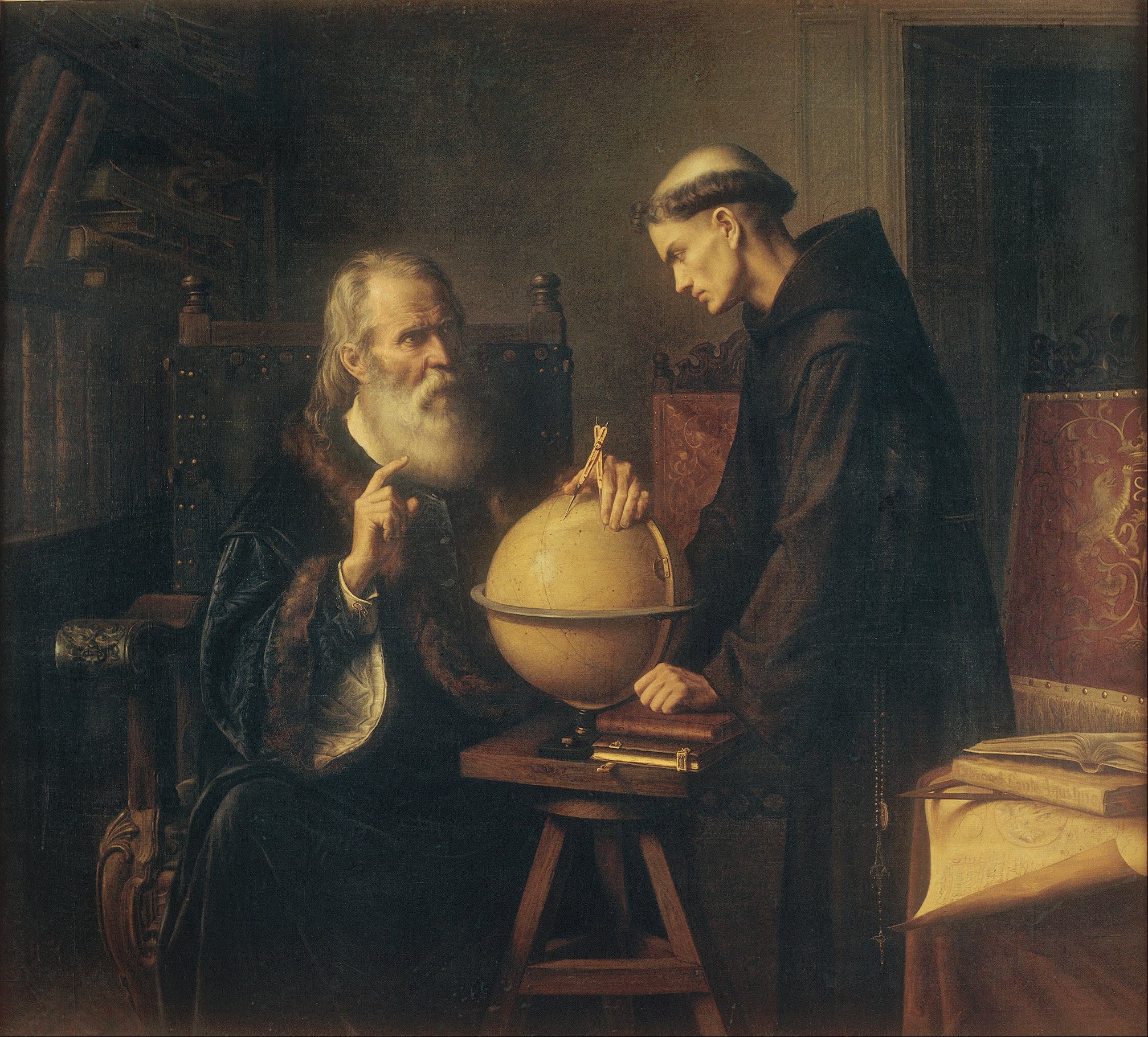

 by
by 
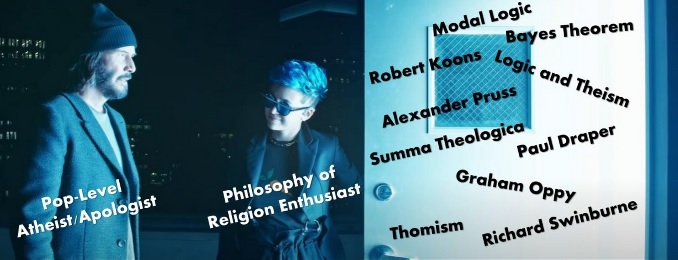
 Richard L. Fricks