A Change in Where I’m Writing

For a long time, my writing has lived in several places.

Some of it was about belief.
Some of it about purpose.
Some of it about craft, or questioning, or simply noticing what it feels like to be alive in an ordinary day.

Over time, I began to see that what mattered wasn’t the category — it was the practice underneath it.

I’ve moved my primary writing home to a new place called The Pencil-Driven Life on Substack.

It’s not a rebrand.
It’s a narrowing.

The Pencil-Driven Life is where I’m now writing about attention, work, and ordinary moments — noticed as they happen. Sometimes through story. Sometimes through reflection. Sometimes through questions that don’t ask to be resolved.

If you’ve been following my work here, nothing essential is being left behind.
It’s simply being gathered into one place.

You can find it here:
👉 https://thepencildrivenlife.substack.com/

I’ll continue to let the pencil move.

Unscripted — Week 7–Seven Dogs, Zero Agendas: Lessons in Unfiltered Living

Welcome to Unscripted, a weekly reflection on what it means to live without inherited stories, rigid identities, or predetermined purpose. Each Monday, I explore a different part of this shift toward presence and clarity—one moment, one breath, one pencil stroke at a time.

There are seven dogs at Oak Hollow.

They arrived at different times, from different places, carrying different histories. Some came timid. Some loud. Some cautious. Some hungry for attention. None came with a plan.

They don’t share a philosophy. They don’t know the language I use to describe this life. They don’t care whether I’m present or distracted.

And yet, they may be the most reliable teachers of presence I’ve ever lived with.

No Narrative, No Improvement Plan

The dogs don’t wake up wondering who they should be today.

They don’t rehearse yesterday. They don’t plan tomorrow. They don’t carry a storyline about progress, productivity, or meaning.

They wake up. They stretch. They step into the day exactly as it is.

If there is sun, they notice it. If there is food, they eat. If there is movement, they follow. If there is rest, they take it.

Nothing is optimized. Nothing is withheld. Nothing is postponed.

Their lives are not efficient. They are complete.

Attention Without Agenda

One of the quiet surprises of living with animals is how differently attention behaves.

When a dog looks at you, there is no strategy behind it. No expectation. No story.

The attention is total, but uninvested. Present, but unattached.

They don’t want you to be better. They don’t need you to change. They don’t expect a version of you.

They simply register what is.

Being around that kind of attention has a way of stripping things down.

The mind, so used to narrating and evaluating, slowly loses its footing. There’s nothing to perform for. Nothing to explain. Nothing to manage.

Just contact.

Time Without Measurement

Dogs don’t experience time as a problem.

They don’t divide the day into productive and wasted hours. They don’t rush toward the next thing or resist the current one.

A walk is the walk. A nap is the nap. Waiting is waiting.

Time isn’t something they spend or save. It’s something they inhabit.

Watching this, day after day, begins to loosen the grip of urgency. Not dramatically. Not all at once.

Just enough to notice how much of human life is lived somewhere other than where the body already is.

Relationship Without Identity

Each dog has a personality, but none of them carry an identity.

They don’t introduce themselves. They don’t defend who they are. They don’t live up to a role.

If one is cautious, it’s cautious. If one is playful, it plays. If one needs space, it takes it.

There’s no tension between who they were yesterday and who they are today.

They don’t remember themselves.

That absence of self-story creates a surprising kind of freedom. Not freedom from constraint, but freedom from commentary.

They live without an inner narrator explaining their lives to themselves.

Presence That Doesn’t Try

What makes the dogs such effective teachers isn’t that they are wise or calm or enlightened.

It’s that they don’t try to be anything at all.

Presence isn’t something they practice. It’s simply the condition of being alive.

Living alongside that kind of unfiltered existence does something subtle to the human nervous system. It lowers the volume. It shortens the distance between thought and experience.

You stop asking: Am I doing this right? What should this mean? Where is this leading?

You just notice: This is happening.

How This Fits the Pencil-Driven Life

The Pencil-Driven Life isn’t about becoming more disciplined or more intentional.

It’s about removing the extra layers we’ve learned to carry.

Dogs don’t erase. They don’t revise. They don’t reflect.

They simply move.

And in that movement, something essential is revealed: life doesn’t need a storyline to be fully lived.

Sometimes the clearest way back to presence isn’t through effort or insight, but through proximity—to beings who never left it.

A Small Invitation

You don’t need seven dogs. You don’t need animals at all.

But you might notice:

  • where attention already rests easily
  • where time doesn’t feel pressured
  • where you aren’t managing an identity

Stay there a little longer than usual.

No lesson required. No meaning extracted.

Just notice what it’s like to live without an agenda—even briefly.


A Closing Thought

The dogs don’t know they’re teaching anything.

They don’t care whether I understand them. They don’t need me to apply the lesson.

They simply live.

And in their living, they quietly remind me of something I keep forgetting:

Presence isn’t something to achieve. It’s what remains when nothing else is required.

The pencil is already moving.

Unscripted — Week 6 – Walking the Runway: A Daily Practice of Awareness

Welcome to Unscripted, a weekly reflection on what it means to live without inherited stories, rigid identities, or predetermined purpose. Each Monday, I explore a different part of this shift toward presence and clarity—one moment, one breath, one pencil stroke at a time.

Most mornings at Oak Hollow begin the same way.

Not because I planned it that way, but because repetition has a way of finding you when you stop resisting it.

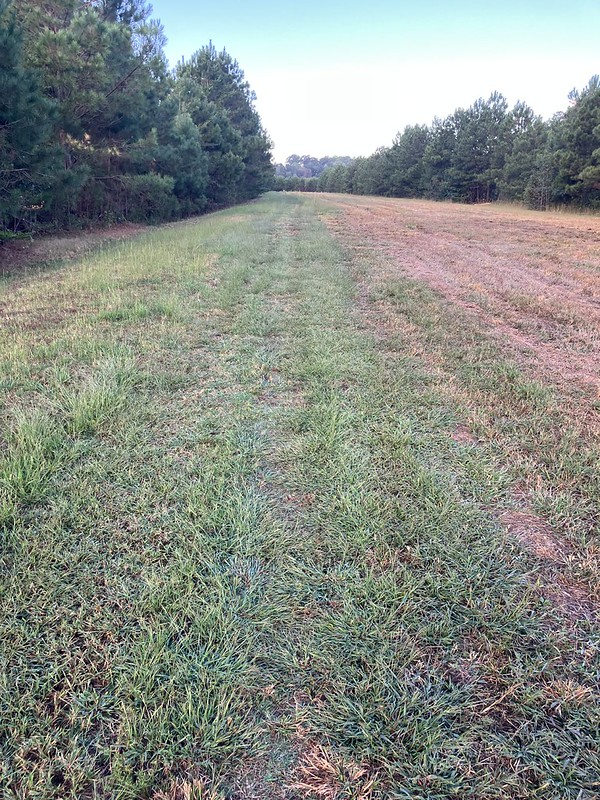
After the early hours of writing—after coffee, pages, silence—I step outside and walk the runway.

It’s a long, simple strip of grass cut into the land years ago for a different purpose. Once, it existed to lift something into the air. Now it exists for something quieter: walking, noticing, returning.

There’s nothing symbolic about it when I start walking. No intention to practice awareness. No goal to “be present.” I’m just moving my body across familiar ground.

And that’s the point.

A Practice Without Ambition

The word practice usually comes with expectations attached. Improvement. Discipline. Progress. Outcomes.

This isn’t that.

Walking the runway isn’t about achieving a state of mind or cultivating a particular feeling. It’s not meditation in disguise. It’s not exercise pretending to be spiritual.

It’s simply walking the same stretch of land, day after day, long enough for the mind to lose interest in performing.

At first, the mind does what it always does:

  • It narrates.
  • It plans.
  • It revisits old conversations.
  • It anticipates what comes next.

I don’t correct it. I don’t argue with it. I don’t try to replace it with better thoughts.

I keep walking.

Over time—sometimes minutes, sometimes not at all—the noise thins. Not because it’s been defeated, but because it no longer needs attention.

Awareness doesn’t arrive with fanfare. It shows up quietly, like noticing you’ve already been breathing.

The Runway as a Container

What makes this walk different from any other isn’t the scenery or the distance. It’s the container.

The runway doesn’t change. The trees don’t rearrange themselves. The path doesn’t offer variety or novelty.

Because the space stays constant, what changes becomes easier to see.

Some mornings:

  • the body feels heavy
  • the mind resists movement
  • the walk feels pointless

Other mornings:

  • light filters differently
  • birds are louder
  • the body moves without commentary

The runway doesn’t respond to any of this. It doesn’t reward effort or punish distraction.

It simply holds whatever shows up.

That steadiness is what allows awareness to surface—not as an idea, but as direct experience.

Awareness Is Not Something You Add

One of the quiet misunderstandings about presence is the belief that it’s something you do.

As if awareness is a skill to be developed, a habit to be installed, a discipline to master.

Walking the runway has taught me otherwise.

Awareness isn’t added to the walk. It’s what’s left when nothing else is required.

When there’s no destination, no performance, no improvement to chase, attention naturally returns to what’s already happening:

  • the rhythm of breath
  • the feeling of feet meeting ground
  • the way light shifts as clouds move

None of this needs interpretation.

The runway doesn’t ask me to understand it. It asks me to notice it.

The Body Knows Before the Mind

There are days when thought remains loud the entire walk.

Even then, something else is happening underneath.

The body walks. The arms swing. The breath adjusts.

The body doesn’t wait for clarity to proceed.

This is one of the quieter lessons the runway offers: awareness doesn’t depend on mental quiet. It depends on contact.

Feet on ground. Air on skin. Movement unfolding.

The mind may comment, but the body is already here.

A Ritual Without Meaning

I don’t walk the runway because it represents something. I walk it because it’s there.

Over time, the routine has taken on a shape of its own—not as ritual, but as rhythm.

Not sacred. Not symbolic. Just familiar.

That familiarity becomes an invitation. Not to transcend daily life, but to inhabit it more fully.

Walking the runway doesn’t make the day better. It makes the day real.

How This Fits the Pencil-Driven Life

The Pencil-Driven Life isn’t about adding practices to an already crowded life.

It’s about noticing where awareness naturally appears when you stop demanding meaning from everything you do.

For me, awareness shows up:

  • while walking the runway
  • while stacking wood
  • while feeding dogs
  • while writing early in the morning before the world asks anything of me

None of these moments are optimized. None are performed. None are shared to prove anything.

They are simply where attention settles when the pencil is allowed to move on its own.

If You’re Looking for a Runway of Your Own

You don’t need land. You don’t need a routine as specific as mine. You don’t need to call it a practice.

What you need already exists:

  • a path you walk often
  • a movement you repeat
  • a space that doesn’t demand improvement

Let it stay ordinary. Let it remain unremarkable.

Walk it without expecting awareness to arrive.

If it does, fine. If it doesn’t, fine.

The walking is enough.


A Closing Thought

The runway doesn’t teach me how to be present.

It reminds me that presence was never missing.

It was only waiting for me to stop trying to get somewhere else.

I walk. The mind talks. The body moves. The day begins.

That’s the practice.

The pencil is already moving.

Unscripted — Week 5: Life at Oak Hollow: Why We Built a Place for Presence

Welcome to Unscripted — a weekly reflection on living without inherited stories, rigid identities, or predetermined purpose. Each Monday, I explore a different facet of this shift toward presence and clarity, one moment, one breath, one pencil stroke at a time.

Oak Hollow didn’t begin as a plan.

There was no mission statement, no long-term vision document, no intention to “build a place” for anyone else. What existed first was a piece of land and a growing awareness that life felt different there—quieter, less insistent, less arranged.

Not escape.
Pause.

Room to stop long enough to notice what was already happening.

Over time, that pause began to take shape.

A Place That Doesn’t Demand Performance

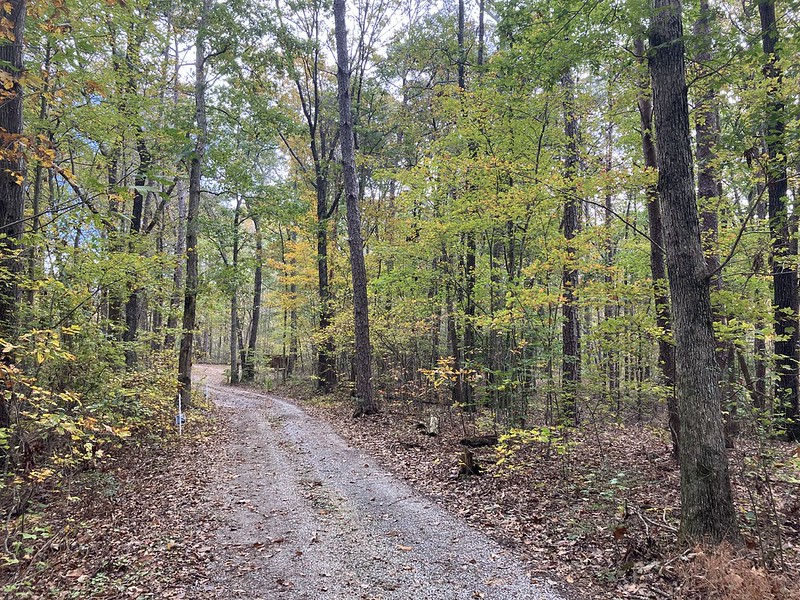
Oak Hollow sits on seventy acres in North Alabama. There are trees and trails, uneven ground, long stretches where nothing happens at all. There are dogs—rescued, stubborn, affectionate—who don’t care what day it is or what you planned to accomplish. There are cabins, a greenhouse, a workshop, a small library, and projects that move forward slowly, by hand.

Most days include quiet labor:
splitting wood
fixing something that broke
walking the land
feeding animals
sitting without doing much at all

None of it is optimized.
None of it is symbolic.

It isn’t curated for an audience.

It’s just life, lived close enough to feel.

Why Build Anything at All?

At some point it became clear that presence doesn’t survive easily inside systems designed for constant output. The modern world rewards speed, certainty, and productivity. Even reflection becomes something to perform. Even rest turns into a metric.

Oak Hollow emerged as a counterweight—not in opposition, but in practice.

A place where time stretches back out.
Where days don’t have to justify themselves.
Where work is physical enough to quiet the mind.
Where silence isn’t treated as a problem to solve.

The cabins aren’t being built to retreat from life.
They’re being built to return to it.

Philosophy Made Ordinary

Nothing here is meant to persuade.

The Pencil-Driven Life isn’t taught at Oak Hollow. It’s tested here, daily, in ordinary ways:

  • Does presence remain when plans fall apart?
  • Does clarity appear when there’s no deadline?
  • Can meaning exist without externally assigned purpose?
  • What happens when attention is allowed to settle instead of being pulled?

Some days the answer is calm.
Other days it’s frustration.
Some days nothing resolves at all.

That, too, belongs.

Oak Hollow doesn’t produce insight on demand.
It simply removes enough noise for what’s already present to be felt.

Not a Retreat—But Becoming Shareable

Oak Hollow didn’t begin as a retreat, and it still resists being packaged as one. It began as a place to live this philosophy day by day.

In early 2026, that life becomes shareable in a small, deliberate way—through the Threshold Cabin, the first space in East Hollow designed for presence rather than escape. What follows after that will unfold the same way Oak Hollow always has: slowly, attentively, and without a script.

There is no program here.
No transformation promised.
No version of yourself you’re expected to become.

Just a place where the noise is lower, the pace is honest, and attention has room to land.

A Living Studio, Not a Destination

I sometimes think of Oak Hollow as a living studio.

Not a finished space.
Not a solution.
Not a destination.

A place where life is lived close enough to notice.

Writing happens here, but it isn’t the point.
Building happens here, but it isn’t the point.
Even presence isn’t a goal.

The land doesn’t care what I understand.
The dogs don’t respond to philosophy.
The work doesn’t become easier because it’s meaningful.

That’s what makes it honest.

Why Share This at All?

Because some readers are looking for evidence—not evidence of ideas, but evidence that life can be lived differently without collapsing.

Oak Hollow isn’t offered as a model.
It’s simply evidence.

Evidence that a quieter life is possible.
That attention can be practiced.
That meaning doesn’t require a script.
That ordinary days are enough.


This isn’t a destination.
It’s a practice.

The pencil moves.
The work continues.
Life unfolds at its own pace.