Thursday morning, the Supreme Court issued decisions in four cases, none of them involving Donald Trump. Nor were any of the other high profile cases we’ve been following on the docket this morning. That means cases about the power of administrative agencies, whether it’s constitutional to make it a crime for someone under a domestic protection order to possess a firearm, and whether hospitals are obligated to stabilize patients in emergency situations, including by providing an abortion where appropriate, are still on the docket.
In Louisiana (we’ll get to it in a minute), the state legislature has passed a law requiring that the Ten Commandments be posted in all public school classrooms. The law is clearly at odds with existing First Amendment jurisprudence, suggesting that passing it was a provocative act designed to get a test case to the Supreme Court to make classrooms Christian again.
Thanks for reading Civil Discourse! If you aren’t already, I hope you’ll consider becoming a paid subscriber, which lets me devote more time & resources to this work and reach more people, by making the newsletter available for free
And there’s still more for us to discuss. It was a day!
I was up bright and early in front of a camera, only to learn we have to wait at least until Friday morning, perhaps longer, to learn whether the Court believes Donald Trump is entitled to immunity from prosecution.
The Court will announce opinions again tomorrow, Friday morning, at 10:00 a.m. ET. Quick reminder: we never know which cases or how many of them we will get on a particular day.
Today the Court decided
Moore, where the Court held it was constitutional to charge U.S. taxpayers who own shares in foreign corporations a one-time tax on their share of earnings under a provision of the 2017 Tax Cuts and Jobs Act known as the “mandatory repatriation tax.”
Chiaverini, a case involving whether a defendant in a criminal case can raise a claim of malicious prosecution if one of several charges lodged against them turns out to be baseless. The Court held that the presence of some valid charges does not prevent a malicious prosecution claim on the basis of another, invalid charge.
Diaz, where the Court ruled prosecutors could offer expert testimony that “most people” in a certain group have a particular mental state. This case involved a drug courier and an expert who testified that most people transporting drugs know what they are doing.
Gonzalez, where the Court held that the 5th Circuit failed to apply the rules for evaluating a claim of retaliatory arrest properly and sent the case back to them to do so.
I flag these cases, which we haven’t previously discussed, to give you some sense that every case that makes its way to the Supreme Court is important. If we weren’t starring down the barrel of a possible second Trump presidency, these cases would be getting far more attention, particularly the ones about possible police misconduct and the kinds of evidence that can be used in criminal cases. But we continue to live in a timeline where Trump’s attack on democracy consumes far too much attention, distracting us from other critical issues. Removing Trump from our politics is essential to facing future challenges like climate change, criminal justice reform, Supreme Court reform, and restoring the right to vote, along with a host of other issues.
Seventeen cases remain on the Supreme Court’s docket. That means next week is going to be busy if the Court intends to finish up by the end of the month, its *normal* time—although they’ve gone into the first week of July several times in recent years. The Court’s website has been updated to show they will hand down more cases next Wednesday. That means it’s highly unlikely there will be additional dates before then although we can expect to see Thursday and perhaps even Friday dates again.
We know what’s left on the Court’s calendar for this term. But we also got a preview of a case that is likely headed to the Supreme Court in a future session. The First Amendment prohibits the establishment of any religion by government. Until recently, that’s meant in schools too. But with the new conservative supermajority on the Court, there has been some erosion of precedent.
The Louisiana Legislature passed a law on Wednesday designed to get the Court to expand the role of religion in the courtroom. The law requires a display of the Ten Commandments in every public school classroom, including at the college level. The display must be 11” x 14” poster, with the Commandments the central focus in a large and easily readable font. The display must include a three paragraph statement claiming the Ten Commandments have been a prominent part of American education for almost three centuries. What’s next? Racism was also a “prominent part” of American education for decades.
Nobody involved in passing this legislation thinks it complies with the law. There’s a 1980 case, Stone v. Graham, that’s directly on point. The Court invalidated a Kentucky law that required posting the Ten Commandments in classrooms, finding it violated the Establishment Clause of the Constitution. The Court found that the requirement “had no secular legislative purpose” and was “plainly religious in nature” because the Commandments involve religious matters like worshiping God and observing the Sabbath. Louisiana’s new religious mandate clearly violates the law.
This is what people with an agenda do when they think the Supreme Court is on their side. They know the law violates established interpretations of the First Amendment. But after Dobbs and the Supreme Court’s utter abandonment of precedent, why not feel emboldened? Why not try to get decades of precedent reversed while you can? These are, after all, the folks who in Project 2025, have signaled that education will be left to the states. That means eliminating the Department of Education and permitting states to opt out of federal programs or standards. A little Ten Commandments in the classroom goes nicely with that.
This Court has already signaled interest in advancing the role of religion (presumably, that’s limited to Christianity, and they’d find a way to prohibit postings of Sharia law or satanic practices) in earlier cases. Notably, in 2022, the Court considered whether a high school football coach could engage in post-game prayer on the field, with players and students gathered around him. The Bremerton School District told Joseph Kennedy, the praying coach, that he needed to stop so they wouldn’t be sued. He refused and doubled down, reaching out to local and national television, print media, and social media for support. The school district suspended him, and Kennedy sued.
After losing in the lower court, Kennedy won in the Supreme Court. Here’s how the conservative Federalist Society characterized the ruling: “The Free Exercise and Free Speech Clauses of the First Amendment protect an individual engaging in a personal religious observance from government reprisal; the Constitution neither mandates nor permits the government to suppress such religious expression. Justice Neil Gorsuch authored the majority opinion of the Court.” The Court ruled in Kennedy v. Bremerton that the coach’s prayer was a personal religious observance and that it would actually violate his First Amendment protections for free speech and free exercise of religion to prevent him from engaging in prayer on the field.
The ACLU took about 30 minutes to announce that it would be filing a lawsuit along with other groups next week.
What’s next if Louisiana gets away with this? Will the Chief Justice of a state supreme court plant a 2.5 ton granite monument of the Ten Commandments in the courthouse and refuse to remove it after he’s ordered to by the courts, saying that it serves as a reminder to lawyers and judges that justice could only be done if ‘the favor and guidance of almighty God” was invoked first? Oh wait, that already happened in Alabama, where Chief Justice Roy Moore (you may remember him. He lost a Senate race against Doug Jones following a campaign where his interest in young girls came to light) refused to remove his rock from the rotunda of the Alabama Supreme Court after the Eleventh Circuit Court of Appeals directed him to. Following his refusal, Moore was removed from office and prosecuted by Alabama Attorney General Bill Pryor, who is now the Chief Judge on the Eleventh Circuit Court of Appeals, for judicial misconduct because he failed to comply with the order of the federal court.
The Kentucky case, Stone, the Bremerton School District case, and Roy Moore’s courthouse monument case all have one thing in common, the Lemon test. That test, used to determine whether the First Amendment’s establishment of religion clause has been violated, has been in place since the Court decided Lemon v. Kurtzmanin 1971. A statute must pass all three prongs of the Lemon test to pass constitutional muster:
The statute must have a secular legislative purpose,
its principal or primary effect must be one that neither promotes nor inhibits religion, and
it must not foster “excessive government entanglement with religion.”
In the praying football coach case, the Supreme Court suggested Lemon had been “abandoned.” Now, it looks like Louisiana will ask the Court to formally overrule 40 years of precedent, permitting the Ten Commandments in classrooms, with who knows what else to follow. This is a situation to watch carefully. Its implications will affect people across the country in multiple ways, not just students in Louisiana’s classrooms. No child should feel like their religious beliefs, or lack of them, determine whether they’re welcome in the classroom. No litigant should feel like they won’t receive impartial justice from a judge because they don’t stand to pray before court starts. This is a dangerous slippery slope.
One final note tonight: we here at Civil Discourse are not alone in being concerned about Judge Aileen Cannon’s ability to handle the Mar-a-Lago case. On the eve of her unusual hearing tomorrow, where amici will argue alongside lawyers regarding the constitutionality of the special counsel appointment mechanism, the New York Times has an extraordinary report. They reveal that two federal judges in Florida, including the chief judge in the Southern District of Florida where she sits, privately urged Judge Cannon to step aside when the classified documents case was randomly assigned to her. Cannon refused, which is how we ended up where we are.
Chief judges have no supervisory authority over the other judges on their courts. They cannot tell them what to do. But a wiser judge than Cannon would have listened to other judges on her court. This gives new impetus to concerns that there is more at work here than inexperience.
The primary aim of the "Novel Excerpts" blog category is to showcase my creative writing, specifically from the novels I've written. Hopefully, these posts will provide a glimpse into my storytelling style, themes, and narrative skills. It's an opportunity to share my artistic expressions and the worlds I've created through my novels.
The Boaz Schoolteacher, written in 2018, is my fifth novel. I'll post a chapter a day over the next few weeks.
Book Blurb
In the summer of 2017, Katie Sims and her daughter Cullie, moved from New York City to Katie’s hometown of Boaz, Alabama for her to teach English and for Cullie to attend Boaz High School . Fifteen years earlier, during the Christmas holidays, five men from prominent local families sexually assaulted Katie. Nine months later, Katie’s only daughter was born.
Almost from the beginning of the new school year, as Katie and fellow-teacher Cindy Barker shared English, Literature, and Creative Writing duties for more than 300 students, they became lifelong friends.
For weeks, Katie and Cindy endured the almost constant sexual harassment at the hands of the assistant principal. In mid-October, after Cindy suffered an attack similar to Katie’s from fifteen years earlier, the two teachers designed a unique method to teach the six predators a lesson they would never forget. Katie and Cindy dubbed their plan, Six Red Apples.
Read this mystery-thriller to experience the dilemma the two teachers created for themselves, and to learn the true meaning of real justice. And, eternal friendship.
Chapter 33
Cindy was absent from school Thursday and Friday. With the school week finally over, I dropped Cullie off to spend the night with Alysa and as she was getting out of the car I told her that next Friday night she had to stay with us. I sent a text to Cindy that I would call her later just as I had done Thursday evening. As I drove home I recognized the reason Cullie loved staying at Cindy and Steve’s. They were a real family. Steve was an in-the-flesh father. By the time I turned off Sardis Road and onto Wayne’s long driveway, I felt sick about something I had to do. Cindy wasn’t the only one harboring a secret. I had to tell Cullie the truth about how she was conceived. It was the last thing I wanted to do.
Yesterday afternoon before taking Cullie to Cindy’s I had dropped by Wells Fargo Bank and removed my copy of Darla’s journal from my safety deposit box. For weeks I had been feeling the need to complete my review. There were whole sections I had not read.
After my early morning writing session and eating a cold pop-tart seated at the kitchen table reminiscing over Sammie’s Saturday morning pancakes, I returned to my hobby room. I had followed Karen’s lead, Wayne’s deceased wife, in naming the smallest of three bedrooms on the west end of the sprawling ranch. In a sense, our hobbies were similar. Karen had cross stitched. Her pictures were scattered along walls and tabletops all over the house. Both hobbies included the use of thread, weaving threads throughout the framed picture and creating patterns. The patterns told a story. For Karen, it seemed she loved weaving together country scenes. Writing, especially novel writing, if it was any good at all, used many threads, some brightly colored, to weave together various story lines that intersect to form patterns, the main ones always altered the lives of everyone they touched. After considering this analogy I decided to call mine and Karen’s little room, The Threader.
I had read Darla’s journal for nearly an hour before she introduced a new thread. It’s funny how prior thoughts sometimes linger. It seemed I had split my concentration over the prior sixty minutes between an almost insatiable desire to continue the cross-stitching and writing analogy, and Darla’s equally strong need to capture the exploits of her husband. I had found it interesting that Raymond had been so open with Darla about what he and Walter Tillman, David Adams, Fitz Billingsley, and Franklin Ericson were doing; at a minimum, all activities involved shady business dealings. However, it was clear that she either didn’t know the full details or chose not to record them. I concluded it was probably some of both. By the time I finished Darla’s 2015 entries, a new thread appeared. It had to do with Cynthia Radford, Raymond’s first wife, the woman he abandoned for the beautiful Darla Sims who was a full generation younger than the fading Cynthia.
In Darla’s January 1st, 2016 entry, she wrote, “New Year’s Day was a disaster. Raymond, normally brilliant, but often stupid, invited the subtly-callous Cynthia to join the two of us, along with Rachel and Randall and their families. Randall’s daughter Riley spoke loudly above the blare from the Rose Bowl game asking Raymond if he would pay for her college if she chose Stanford. Cynthia had spoken up and said, ‘dear, please don’t ask me, I’m a pauper. If granddad cannot cough up the dough, I bet sweet Darla will. She’s loaded, unless the aging giant kicks over before she turns eighty years old.” I hadn’t seen Raymond in years, probably a decade or more. I guess, even in Cynthia’s eyes, he was, in more ways than one, a big man.
Apparently, Cynthia’s statement had set off a major blow-up between Raymond’s two women. The last sentence Darla had written after spending nearly two pages describing, in detail, how Riley’s question had spawned a verbal cat fight between her and Cynthia, caught my attention. It read, “how in the hell did Cynthia know the details of mine and Raymond’s prenuptial?”
Throughout Darla’s 2016 journal were scattered entries that documented the escalating tension between the two women. After noticing an absent Cynthia from Darla and Raymond’s Thanksgiving festivities, I took a break for an hour, reviewed fifteen or twenty Facebook comments by my tenth graders related to Monday’s vocabulary word, ad Hominem, and made a pot of coffee. When I returned and read the first December entry, Friday the 2nd, I froze. Darla had written, “Per Raymond, the Texas lawyer, Thomas, called and said Cynthia had agreed to his offer. He (Raymond) told me, “Cynthia knew too much. I didn’t have any choice.” The next part of Darla’s entry was disjointed at best, but it seemed to indicate that Raymond had changed his will leaving the vast portion of his estate to the last to die of Darla and Cynthia. No doubt this had made Darla mad. Towards the end of the entry, she had written, “the stupid man can’t see that Cynthia now has a motive to knock me off.” Apparently, Raymond’s statement, “Cynthia might be a bitch, but she’s no killer,” did little to appease Darla’s worrying.
For nearly two weeks Darla didn’t write anything else concerning Cynthia or the deal Raymond had made with her. Then, on Tuesday, December 13th, she wrote. “The bitch said I was looking old. Raymond will be looking for him something younger if he hasn’t already.” Apparently, this statement was made before a meeting took place in Raymond’s study at his and Darla’s Country Club home. Darla only recorded the highlights, but Cynthia was there with her attorney, a man by the name of Clayton Thomas. She had my attention. Darla, for whatever reason, had taped his business card to the top of the following page where her description of the meeting continued. I noted Clayton’s firm was named Thomas and Thomas. Then, I saw it, the second member of the firm, the second partner, was named Clifford Thomas. The firm was located at a San Marcos, Texas address. It had to be the same Cliff Thomas that was representing Nathan Johnson, the man who probably had killed Darla (and the same man Cindy and I had likely seen Wednesday night as we peered over the brick wall into Warren’s basement). I was shaking; I could hardly sit still. I managed to scan the remaining paragraph of Darla’s entry. Raymond had made her and Cynthia, in exchange for him changing his will and the two cats’ mutual promises to call a truce to their bickering, sit down together and sign a written document. It was not attached or included in Darla’s journal, but she had summarized its contents. If either one of the women initiated an altercation between them of any kind, Raymond would disown both.
After leaving The Thread and walking to the kitchen and pouring another cup of coffee, I pulled my iPad from my book bag that was still sitting on the bar where I had left it yesterday afternoon after arriving home from school. I pressed the Google icon and typed in “San Marcos and Google Maps.” After finding the address for Thomas and Thomas I expanded the map. I almost closed the iPad but then I saw Fredericksburg to the west of San Marcos. A synapse or two connected. That’s the city listed on the back of the candy bar wrapper Ralph Williams had given me just a few days before he had died. Fredericksburg was less than seventy miles from San Marcos. There had to be something relevant at work here. I shook my head as though trying to clear my mind of the cobwebs that had fogged my thinking. Finding a link between Raymond, Cynthia, and Nathan Johnson was already relevant, significant in fact. Something was telling me there was yet more to discover. As I closed my iPad I couldn’t help but believe that Cliff Thomas had once again traveled to Alabama on Cynthia’s behalf, this time trying to eliminate a threat to her well-being as well as that of Raymond’s. I walked outside onto the screened-in back porch and speculated that Cliff Thomas had some connection to the Lone Star Candy Company. My thought was a stretch.
Cindy came over around 2:30 p.m. I was sitting at the pond at the end of a long pier. Wayne had two chairs secured to the wood slats by a lightweight chain. I wondered who the second chair was for. I saw her drive up and yelled at her when she exited her car. As she walked through the pasture gate and along the pier, I could see the stress she was carrying. She kept her gaze downward. Of course, this could be because she was being careful walking an uncommon path. But, it was her hands that betrayed her. She kept clenching and unclenching her fists. Finally, when she sat down beside me I noticed the tell-tell sign. Her normally light green eyes had a vivid yellow tint. I had seen her on more than one occasion with dark green eyes, but this was different. It was like an abundance of blood had mixed in with the green, yielding yellow. I didn’t know if this meant she was being extremely cautious or she was tasting blood.
“Are you feeling better?” I might as well ask a dumb question.
“I’m great. Steve and the kids went fishing at Henderson’s pond. He encouraged me to get out and maybe come see you.”
“I’m glad he did. I’ve missed you at school. It’s not the same when you’re not there.”
“I’ve been thinking and researching. Not all vasectomies are foolproof. I read that only about two percent of women get pregnant after her husband or partner has a vasectomy. I have a plan. I’m going to be open with Steve about my pregnancy. He’ll have the typical questions, but I can convince him that it happens and that I’m one of the two percent. I’ll rave and cry and express my excitement over having another child. Steve’s the type that won’t investigate to determine if his doctor screwed up the procedure. He’ll just think it was God’s miracle.”
“That sounds good. If it works. But, what if word gets back to him that contradicts your story? You know some men like to brag about their conquests. Cindy, it might be ten plus years from now, but you need to recognize what I’m saying isn’t too far-fetched.”
“You haven’t heard the second half of my plan.” Cindy said scanning a text she just received. “Steve says hi and that Cullie just caught a big catfish. I won’t read the rest.”
“Remember, you can’t do that. We’ve agreed, if you start something you have to finish. So, what else did Steve say?” I hated it when someone said stuff like, ‘I’ll tell you later’ or ‘No, I better keep that to myself’ as they ponder some world-changing rumor they just heard.
“It’s kind of private but you caught me. He said he wants us to make love in the back of his truck beside Henderson’s pond, out under the stars.”
“Darling, you are one lucky woman. Now, tell me the remaining part of your brilliant plan.”
“Wilkins has to disappear.” Cindy said as though she was a veteran mob boss.
“As in die?” I figured I already knew what she meant.
“Sort of, probably. If he can’t talk or communicate then I’m not at risk, Steve is not exposed to learning the truth.”
“That’s assuming he is the only other person in the world who knows he impregnated you.” I started to be much more graphic but decided that would just inflame Cindy even more.
“That’s a risk I’ll have to take. Even if someone other than Wilkins told Steve about the rape, I would deny it, saying it’s a despicable rumor.”
“I think we are avoiding the elephant in the room. Murder isn’t some screen-saver prank. It’s a horrible crime, virtually the worst, and it carries with it the strong likelihood that you will spend the rest of your life in prison. Do you actually want to take that risk?” I said, mentally recapping how the Six Red Apples project was cruising headfirst towards the precipice of the Grand Canyon.
“It won’t be murder. It will be a killing, a justified killing. You know, justice. And, we won’t go to prison if we aren’t caught.”
“There you go with that ‘we’ stuff again.”
“I thought we were way beyond this silly conversation. Remember, Six Red Apples?” Cindy asked.
“I do and I’m not going back on my word, but we, I at least, have not quite developed a murdering mind. The worst I’ve considered is some type of extortion, blackmail, whatever, making the five bastards pay real money along with a written but uncirculated apology.”
“I’m a little surprised that even after your Faking Five killed Darla and Nanny, your two mothers, and attempted to kill you and your own daughter, you wouldn’t be ready to blow their brains out, saw up their bodies into little pieces, and feed the remains to the wolves.”
“Truthfully, you’re close to the truth, but I reckon I’m a scaredy-cat.” I said.
“Then, we’ll have to create such a foolproof plan that your nerves will take a long nap.” Cindy said typing a return text, no doubt to the loving Steve. I stopped myself from asking her how she had responded. That’s when the fantasy blasted across my mind. Steve’s suggestion had triggered a foreign feeling, one I hadn’t felt since before my attack. Walt had me pressed against one of the giant oaks I was seeing beyond the pond, the one closest to his little cabin I could barely make out. Our lips were locked in a long and sensuous kiss. Then, I chuckled to myself. It wasn’t Walt doing the pressing and kissing, it was Wayne.
For the next hour Cindy and I semi-planned how Patrick Wilkins would disappear. She shared how he managed to stay in such good shape. He was a slow-jogger, fast-walker type. Someway she had learned that the criminal asshole Wilkins spent an hour before school every morning jogging and walking. Cindy labeled it his right-road routine. She explained that when he left his Country Club, Lindo Drive home at 5:00 a.m. Monday through Friday, he only made right hand turns until he returned home. She clearly had done her homework because every turn easily rolled off the tip of her tongue. Right turns on each of the following streets and roads: Lindo Drive, Highway 205, Aurora Road, Tarvin Road, Pleasant Hill Cutoff Road, Pleasant Hill Road, Highway 205, and Lindo Drive. Cindy said, “this is his routine. At least it was Thursday and Friday mornings. Also, on Saturdays, at least today, he goes at 8:00 a.m. to the Therapy Plus Fitness Center next to the hospital. It was after 10:00 this morning when he left.
I didn’t ask Cindy how she had gotten out of her house to go sleuthing the last three mornings.
Every novel begins as a whisper, a fleeting thought that tickles the mind. If you’ve ever dreamed of writing a novel, you know it’s a mixture of inspiration, craftsmanship, and sheer stubbornness.
But where does one even begin? Right here, right now, my friend.
You, the aspiring novelist, are the deity of the realms you conjure. But even deities need a game plan. Forget the romanticized myths of muses and writer’s blocks; this 9-step guide to novel writing demystifies the process, providing you with a clear framework to bring your story to life.
With this guide—and a little sprinkle of Fictionary magic—you’ll be equipped to start and empowered to thrive. Let’s transform your dream into a manuscript that breathes life into your characters and their journeys.
What’s the Secret to Writing a Novel?
The secret to writing a novel is that there is no secret—just a lot of caffeine, crying, and questioning your life choices.
Just kidding. Kind of.
Writing a novel takes hard work, dedication, and a structured process. But hey, having the right tools can make this wild ride a bit smoother and maybe enjoyable enough that you only want to throw your laptop out the window once a week instead of daily.
There are three key elements you need to consider to craft a compelling novel:
Compelling Characters: How can you create a protagonist who drives the story forward and keeps readers engaged?
A Solid Story Structure: How can you ensure your plot has a clear beginning, middle, and end, with well-placed plot points and a satisfying resolution?
A Vivid Setting: How can you create an immersive world, rich with details that bring it to life?
Understanding how a good story works, both overall and at the scene level, is essential. This means knowing your characters so well you could predict their Starbucks order, structuring your plot like you’re organizing a heist, and painting your setting so vividly it makes Bob Ross look like an amateur.
Whether you’re a plotter or a pantser, these elements are crucial. Plotters like to outline their story in meticulous detail before they start writing, minimizing the need for extensive edits later. They’re the ones with color-coded binders and flowcharts that rival NASA’s launch plans.
Pantsers, on the other hand, leap into writing with just a spark of a character, plot, or setting, and they often spend more time editing afterwards to ensure their story works cohesively. These brave souls thrive on chaos, and their first drafts look like a literary Jackson Pollock painting.
Both methods are totally valid.
Heck, you could even merge the two into a writerly hybrid called the planster. Plot a bit and then go wild within the loose structure you designed for yourself. Or plot a bit, but leave enough wiggle room for your creative spirit to hijack the story and take it on a joyride, and then adjust your outline afterward. Embrace the madness!
Speaking of embracing the madness, let’s talk about Fictionary—a powerful tool that can keep you from pulling your hair out, regardless of your writing style.
Fictionary supports the meticulous plotter and the daring pantser. It tracks 38 different story elements and offers gorgeous data visualizations that make your story’s strengths and weaknesses as clear as a crystal ball—albeit a crystal ball filled with bar charts, line charts, graphs, and interactive spreadsheets.
That said, while Fictionary is an incredible guide, the real magic comes from your own creativity and effort. Turning a spark of an idea into a fully-fledged novel is challenging, no doubt about it. But it’s also incredibly rewarding—like finishing a marathon, except you’re sitting down the whole time, and there are fewer blisters.
So, get ready to transform your idea into a manuscript that dazzles. With Fictionary by your side, your journey from concept to completion just got a whole lot smoother and a lot more fun.
9 Steps to Writing a Novel
The nine steps for writing your novel are: decide why you are writing, craft your central point, pick your protagonist, write your skeleton blurb, summarize your plot points, envision the world, choose the location, use sensory details, and integrate weather.
These nine steps are split into four categories: Your book’s concept, plot, and setting.
Your Book’s Concept
Now, I know some of you might be itching to dive headfirst into writing, emerging from a creative fugue state with a gloriously sloppy first draft in hand. And that’s perfectly fine! Many great stories have started that way.
But, if you’re reading an article entitled “How to Write a Novel in 9 Steps,” chances are you appreciate a bit of structure. Or, you tried the fugue state and it didn’t work out for you.
Either way, welcome! We’re glad to have you.
We’re going to start with some conceptual planning. The point of doing this big picture thinking first is to help you focus your story and keep the final goal in mind. Think of it as setting your GPS before embarking on a road trip. Sure, you might take a few scenic detours, but having a clear destination ensures you don’t end up lost in the middle of nowhere.
Step 1: Figure Out Why You Are Writing This Book
Ah, the existential question every writer faces: why write this book? What core belief or driving force compels you to tell this particular story at this specific moment? Your “why” is the heart of your novel.
So, why must you write this book? Here are some prompts to get those creative juices flowing:
Personal Connection
Is there a personal experience or emotion that you need to explore through fiction? Maybe your protagonist’s journey mirrors your own path of self-discovery, or perhaps the themes in your story reflect challenges you’ve faced.
Writing from a place of personal connection can add depth and authenticity to your story, making it resonate more powerfully with readers.
Universal Themes
Consider the broader themes and messages you want to convey. Are you tackling issues of love, justice, freedom, or redemption? Great fiction often stems from universal ideas that speak to the human condition. Think about what you want your readers to take away from your novel. What lasting impact do you hope your story will have?
Passion and Curiosity
Sometimes the “why” is as simple as a burning passion or curiosity. Maybe you’ve always been fascinated by the mythology of ancient Greece, the complexities of human psychology, or the mysteries of the deep sea. Let your interests and obsessions guide you. Writing a novel can be an exhilarating journey when fueled by something you’re passionate about.
Social Commentary
Is there a social issue or injustice that you feel strongly about? Fiction can be a powerful vehicle for commentary on real-world issues, offering readers new perspectives and inspiring change. Whether it’s through dystopian worlds, historical settings, or contemporary narratives, your story can shine a light on important topics and provoke thought and discussion.
Creative Experimentation
Perhaps you’re drawn to the idea of pushing the boundaries of traditional storytelling. Are you experimenting with narrative structure, playing with genre conventions, or blending multiple storytelling techniques? Your “why” could be rooted in the desire to innovate and challenge yourself as a writer.
Step 2: Craft Your Central Point Statement
Once you’ve pondered these aspects, try to distill your book’s concept into a clear, concise statement. This is a touchstone to return to whenever you feel lost in the labyrinth of your plot. Here’s a simple template to help you get started:
“I am writing this novel because [core belief or reason], and through this story, I want to explore [key theme or message], connect with [ideal reader], and evoke [desired emotional response].”
For example:
“I am writing this novel because I believe in the resilience of the human spirit, and through this story, I want to explore the theme of overcoming adversity, connect with readers who have faced similar struggles, and evoke a sense of hope and empowerment.”
Having a clear understanding of why you’re writing your novel, combined with a strong central theme, and a clear reader in mind, will keep you focused and infuse your story with the authenticity and passion that will captivate those readers from the first page to the last.
Now, take that touchstone concept and make it literal. Write it down—perhaps on a nice rock. Or print it out. Use pretty fonts, calligraphy, glitter—whatever tickles your fancy and makes it eye-catching. Then, place it in your writing space so that whenever you feel discouraged, lost, frustrated, or ready to fling your laptop out the window, you can look at this guiding statement and find your way back.
Got it? Great. Now that we know the WHY, let’s talk about the WHO.
Characters
Welcome to the grand casting call of your novel! This is where you’ll decide who takes center stage, who supports from the wings, and who occasionally steals the spotlight. What is your dream team of heroes, villains, and quirky sidekicks? Each one should bring something unique to the table, making your story vibrant and dynamic.
In this article, we’ll focus on the story’s protagonist, the character who will bear the weight of your plot, endure countless trials, and (hopefully) emerge victorious by the final chapter.
Let the auditions begin!
Step 3: Pick Your Story’s Protagonist
Your protagonist is the star of the show. They have the most at stake, undergo the biggest change, and drive the action forward. The protagonist is the character around whom your story revolves, embodying its key themes and pulling readers into their world.
Consider the type of protagonist you want:
Single Protagonist: One central character driving the plot, like Harry Potter.
Dual Protagonist: Two main characters sharing a common goal, such as Thelma and Louise.
Group Protagonist: Multiple characters with interconnected goals, like in Game of Thrones.
If this is your first novel, I highly advise sticking with a single protagonist to avoid the complexities of juggling multiple main characters. This is ultimately, of course, up to you. I am merely passing along the advice I am kicking myself for failing to heed when I started writing. Dual protagonists are so much more work!
Ahem. Moving on. A strong protagonist needs depth, flaws, and motivations that make them relatable. Remember our example central point statement?
“I am writing this novel because I believe in the resilience of the human spirit and want to explore overcoming adversity, connect with readers who have faced similar struggles, and evoke hope and empowerment.”
Let’s use this to create our protagonist. We shall call her Jane. Now, sure, you can dive into Jane’s physical appearance, her quirky habits, and her questionable fashion choices. But that’s not what makes a character memorable. It’s not what gives them depth or makes them believable as a real human person (or ferret—I don’t know your story).
What truly breathes life into Jane is her inner world—her fears, her dreams, and the gritty details of her struggles. Make her a walking contradiction with strengths and weaknesses that clash. Give her a backstory that tugs at the heartstrings and motivations that drive her actions. This is what transforms Jane from a cardboard cutout into a living, breathing character who leaps off the page and into your readers’ hearts.
Here are some aspects of your protagonist to consider:
Core Wound: Start by identifying an emotional injury from their past that influences their actions and decisions even today. It doesn’t need to be a full-on trauma, but it certainly can be. Just consider your genre and your ideal reader.
For Jane, our determined single mother, perhaps her core wound could be a childhood betrayal by a loved one, making her wary of trusting others.
Fatal Flaw: This core wound often ties into their fatal flaw, a significant character weakness they must overcome. At first it is an obstacle, but then it becomes a growing edge, and by the end of the novel, your protagonist has faced and started the path to fixing their fatal flaw.
Jane’s fatal flaw might be her stubborn independence, preventing her from accepting help even when she desperately needs it. She doesn’t want anyone else to betray her, after all.
Goals and Desires: Define your protagonist’s external and internal goals. What do they ultimately want in life? These goals will shape your protagonist’s journey and development throughout the narrative.
Jane’s external goal might be to pass her business on to her daughter, while her internal goal is to find a sense of security and build a core group of family and friends she feels safe with.
Growth Arc: As the story progresses, the protagonist should experience a growth arc, showing tangible development and change. This growth arc is one in which they overcome their fatal flaw, often by facing their core wound.
Jane’s journey could involve learning to trust again and recognizing that accepting help is a strength, not a weakness.
Internal and External Conflicts: Outline the challenges your protagonist faces—what keeps her from reaching her goals and fulfilling her growth arc?
Perhaps Jane’s external conflict involves her business partner engaging in business fraud. He frames her for it, then skips town, leaving her with huge debt, her beloved business in shambles, and a town that doesn’t trust her.
Ironically, Jane’s internal conflict revolves around overcoming her own mistrust and accepting help from others—help that, at the beginning, the town doesn’t want to give anyway.
Moral Compass: Consider their moral beliefs and how these guide their actions. What does your protagonist value? What do they believe about the world? What keeps them in check?
Let’s say that Jane’s moral compass is shaped by her desire to give her daughter a good life. This will guide her through the story’s challenges.
By incorporating these character elements, you create a protagonist that reflects the core message of your story and keeps readers glued to their struggles and triumphs.
This step-by-step approach ensures your protagonist is well-rounded and deeply engaging, aligning with your story’s central theme. In the case of our example, it is one of resilience and empowerment.
Plot and Story Structure
Alright, aspiring novelists, it’s time to get down to brass tacks. We have our why. We have our theme. We have our protagonist. We’ve discussed the importance of your protagonist’s goals and conflicts. Now, let’s dive into the heartbeat of your story, the plot.
Plot is the sequence of events that make up your story, driving your protagonist’s journey and shaping their growth. It’s what keeps readers turning pages, eager to see what happens next. In this section, we’ll cover two critical components of plot development: the skeleton blurb and the main plot points.
Ready to build a plot that dazzles? Let’s get started.
Step 4: Write Your Skeleton Blurb
A skeleton blurb is a concise statement that encapsulates your protagonist’s goal and the stakes involved. This blurb will serve as the backbone of your story, guiding you as you write, edit, and revise.
Like your central point statement is the touchstone that helps you stay on track with your theme and your why, the skeleton blurb ensures your story always comes back to three things: the protagonist, the story goal, and the stakes. This is the template for a skeleton blurb:
Protagonist MUST story goal OTHERWISE stakes.
This step connects your “why” with your protagonist’s journey and helps you define the stakes that will keep readers hooked. So, how do we determine a good story goal?
Determining a Story Goal
A strong story goal is essential for driving your narrative forward. It provides your protagonist with a clear objective to strive for, giving their journey purpose and direction. It will also connect to your protagonist’s life goal and dreams.
Here are the key characteristics of an effective story goal:
Addressable: The goal must be something your protagonist can actively work towards or achieve.
External: It should be a tangible and visible objective, not just an internal desire.
Relatable: Readers should be able to understand and empathize with the goal.
In Line with Genre Expectations: The goal should fit within the norms and expectations of your genre.
Specific: A clear and well-defined goal helps maintain focus and drive the narrative.
Going back to our example: Jane’s life goal is to pass her business down to her daughter. Her internal goal is to find a sense of security and build a core group of family and friends she feels safe with.
So a good story goal for Jane might be to rebuild her business after discovering that her former business partner committed financial fraud and disappeared. This goal is addressable, external, relatable, in line with the expectations of a contemporary drama, and specific.
Determining Compelling Stakes
The stakes in your story should be both external and compelling enough to create tension. They represent the consequences of your protagonist failing to achieve their story goal.
The stakes must:
Matter: The stakes should be significant enough to drive the protagonist’s actions and keep readers invested in the outcome.
Be Specific: Clearly defined stakes help create a sense of urgency and importance.
In Jane’s story, the stakes are losing the business she dreams of passing on to her daughter. These stakes are external, tangible, and significant enough to drive her actions and create tension, ensuring that readers are invested in her success.
By defining a clear story goal and high stakes, you create a framework that will guide your narrative and keep readers hooked. Now, let’s continue building Jane’s story with a skeleton blurb that encapsulates her journey and the stakes involved:
Jane, a determined single mother MUST rebuild her business after a devastating financial fraud OTHERWISE she will lose the legacy she wants to pass down to her daughter.
By combining these elements, the blurb highlights Jane’s resilience and the thematic focus on overcoming adversity, connecting seamlessly with the initial “why” behind writing the novel.
And here’s why this process is so helpful: Even as I’m crafting this fake example for a Fictionary article, I had a lightbulb moment. The theme doesn’t quite fit! It’s fine, but wouldn’t it be even better if Jane’s lesson was about legacy? About how maybe she doesn’t need to pass on a business to her daughter to have a legacy? Or perhaps her daughter doesn’t even want the business, and Jane saves it, only to realize that her true legacy is her daughter, not the business.
Wow. At this step, as an author, I would have a decision to make. If the story goal and stakes don’t quite match up to the novel’s theme, one needs to change. Which one am I most attached to? A story of resilience or a story about legacy and the power of motherhood? Am I more attached to the plot or to my theme?
Why not both? Jane can still grow and become more resilient, but now that becomes secondary to the main theme in which Jane learns the true meaning of legacy and comes to see her daughter for the wonderful person she is, not what Jane is trying to mold her into.
So, take a moment and compose your own skeleton blurb. Once you have that, you’re ready to move onto the main plot points.
Step 5: Summarize the Main Plot Points
Creating a compelling story involves identifying the crucial events that propel the narrative forward and challenge your protagonist.
If you aren’t sure whether you’re a plotter or a pantser, plotting out only these five main plot points is a nice happy medium between plotting and pantsing. You get just enough structure to know you have a story but not so much that you can’t still make creative decisions along the way.
Here’s how to summarize the main plot points so that you can have a solid story arc, followed by how this plot point might be applied with our protagonist Jane.
Inciting Incident: The event that sets the story in motion, disrupting the protagonist’s world and presenting the central conflict. This is when the protagonist first encounters the story goal—though they may not be aware of it yet.
Jane discovers that her business partner has disappeared, leaving behind evidence of financial fraud.
Plot Point 1: A significant turning point that pushes the protagonist into a new direction, often marking the end of the first act. From here, there is no turning back for the protagonist.
Jane decides to take legal action and begins the daunting task of rebuilding her business from scratch. She also starts to see the impact of the turmoil on her daughter, who seems distant and preoccupied.
Midpoint: The moment in the middle of the story that raises the stakes and changes the protagonist’s understanding of their goal. It is often a moment of decision for the protagonist, and they often make the wrong one here.
Jane finds a potential investor, but they require her to rebuild trust in the community first. She throws herself into regaining the community’s support, further straining her relationship with her daughter, who feels neglected.
Plot Point 2: Another major turning point that leads into the climax, often presenting the protagonist with their greatest challenge. This is the quintessential “all hope is lost” scene. The protagonist is at their lowest, and they could give up. But they don’t. Instead, they get that last bit of whatever it is they need to move forward.
Just as Jane is about to secure the investment, her former partner reappears, threatening to ruin her reputation further. At the same time, Jane’s daughter reveals she has no interest in taking over the business, shattering Jane’s vision of their shared legacy.
Climax: This is the peak of the story where the protagonist faces the central conflict head-on, leading to a resolution. This is the penultimate scene—the one in which the protagonist either achieves or does not achieve their story goal.
Jane confronts her former partner publicly, exposes the fraud, and wins the support of the community and the investor. She also has a heartfelt conversation with her daughter, realizing that her legacy isn’t the business but the values and love she passes on.
Resolution: The conclusion is where loose ends are tied up, and the protagonist’s journey is completed.
Jane successfully rebuilds her business and decides to pass on the leadership to a trusted colleague. She regains stability for her family, builds a closer relationship with her daughter, and finds a renewed sense of trust, empowerment, and understanding of what legacy truly means.
Each of these events should be tied to the protagonist’s inner emotional journey, showing their growth and transformation.
This can be an iterative process. For instance, upon reflection, the climax here feels a bit disjointed. It has two actions that are not connected. So, how can we tie Jane’s confrontation with her partner to heartfelt conversation with her daughter?
Maybe in the climax, Jane’s daughter steps up to help confront the partner, revealing her talents and hinting at a future as a lawyer. Jane then realizes her daughter’s strengths lie elsewhere, not in the family business.
This prompts Jane’s realization after a heart-to-heart with her daughter, in which her daughter tells Jane that she learned grit and tenacity from Jane. Jane realizes that her daughter is her legacy, not some store.
Setting
Welcome to the world-building wonderland! The setting of your novel is so much more than a mere backdrop for your characters’ shenanigans—it’s the very stage on which your entire narrative unfolds. From the bustling streets of a futuristic metropolis to the eerie silence of an abandoned mansion, the setting sets the tone, mood, and atmosphere of your story. It shapes your characters’ experiences and drives the plot forward.
Ready to create a world your readers will get lost in? Let’s do this.
Step 6: Envision Your Story’s World
When done well, your novel’s setting is a character in its own right, ready to stir up trouble or lend a helping hand. If your story takes place in an unfamiliar world, you’ve got some serious world-building to do.
Think of it as planning the ultimate vacation spot but with more political intrigue and fewer margaritas. Map out the rules, history, environment, and culture. Consider the political climate, social structures, and geographical features. This groundwork will add depth and authenticity to your world.
In our sample story, Jane’s world is our everyday world. But, we might want to consider what specific aspects of the town she lives in might be relevant. Perhaps Jane’s story unfolds in a small town where the gossip travels faster than a sneeze in a classroom.
This quaint, nosy little town will crank up the tension when people start whispering that Jane caused her business’s downfall. And when it’s time for her redemption arc, re-establishing trust in this tight-knit community will be a journey worthy of popcorn and a comfy chair.
Step 7. Choose Locations with Purpose
Each location in your story should serve a purpose. For each scene, consider whether the location is important to the plot, characters, or theme. Also consider the emotional impact of the location. Consider how each location also resonates with your POV character’s emotional state, enhancing the scene’s mood and tension. A dark alley might heighten fear, while a bustling café might enhance a character’s feeling of loneliness.
If a location doesn’t pull its weight, it’s time for a change.
For Jane, imagine her standing in the town’s cozy, yet claustrophobic, coffee shop. It’s the perfect spot for tension to brew (pun intended) as the barista throws her a pitying glance while the regulars whisper behind their mugs. This setting amplifies Jane’s feelings of isolation and paranoia. Then, contrast it with the town park, where she plans a community event to win back trust. The open space and cheerful atmosphere reflect her hopes and determination, making every location in Jane’s story work double duty to elevate the narrative.
Step 8: Use Sensory Details
Sensory details breathe life into your setting and characters. Without them, your scene risks falling flatter than a pancake. Using the POV character’s senses to describe the action pulls your reader closer to the character.
Engage all five senses (and at least three per scene) to bring the setting to life. Don’t just describe how things look. Include sounds, smells, textures, and tastes. Instead of telling the reader the forest is eerie, show it through the rustling leaves, the distant hoot of an owl, and the damp, decaying wood underfoot.
For Jane, the sensory details are what transform her world from flat to fabulous. Picture this:
Jane walks into the bakery, and the sweet scent of freshly baked bread wraps around her like a warm hug. The bell above the door jingles, alerting the ever-watchful eyes of Mrs. Thompson, who sits by the window, her gaze as sharp as the taste of the tangy lemon tart Jane nervously nibbles.
The rough wooden tables, worn smooth in spots from years of elbows and coffee cups, remind Jane of the town’s long history and her uncertain place within it. When Jane steps outside, the crisp autumn air bites her cheeks, and the distant church bells toll, each chime a reminder of the community she’s striving to reconnect with.
Step 9. Integrate Weather Thoughtfully
Weather isn’t just background noise; it can be a powerful tool to reflect or contrast the character’s inner world. A sudden storm can symbolize turmoil, while a sunny day might ironically contrast a character’s despair.
For Jane, imagine a storm rolling in just as she’s about to attend a crucial town meeting. The dark clouds mirror her anxiety, and the driving rain keeps people indoors, emphasizing her isolation. The wind howls around the corners of the old town hall, making the rickety windows rattle—each gust a reminder of the turbulent emotions she’s battling.
Later, when Jane starts rebuilding her life, let the sunshine break through the clouds, symbolizing hope and new beginnings. Picture her standing in the town square, bathed in golden light, the warmth on her skin reflecting the warmth she hopes to rekindle in her community.
Bringing It All Together
By following these steps, you’ll create settings that provide a backdrop for your story and enhance the emotional depth and engagement of your narrative. From envisioning your story’s world to thoughtfully integrating weather, each element of setting plays a crucial role in bringing your story to life.
How to Write a Good Book Tips
As you embark on this creative journey, keep these final tips in mind to help you craft a compelling and cohesive story.
Develop a regular writing habit and stick to a schedule.
Create character profiles to understand their backstories, desires, and motivations.
Use all five senses when describing settings and action.
Balance showing what happens with revealing characters’ inner thoughts and feelings.
Cut out unnecessary backstory, description, and exposition.
Make sure every scene advances the plot and character development.
Read your dialogue out loud to make sure it sounds natural.
Get feedback from beta readers or a writing group, and be open to constructive criticism.
Edit your complete first draft multiple times before considering it finished.
Don’t give up when you hit writing blocks—power through and write a bad first draft.
How to Write Fiction: Conclusion
Writing a novel requires coming up with a compelling premise, developing memorable characters, constructing a well-paced plot, and putting it all together through the hard work of writing, rewriting, and editing. Leveraging storytelling tools and the nine steps outlined above can help you navigate the novel writing process.
There is no substitute for your own imagination and effort in crafting an original story.
But resources like Fictionary can help you wrangle the beast that is your brain. Fictionary provides customizable story templates and intuitive tracking tools to make your novel writing experience more manageable, productive, and rewarding.
The journey to a finished book is challenging but worthwhile for turning your creative vision into an immersive experience to share with readers. The key is to get started, persevere through the process, and never stop improving your writing craft.
**”The Second Deadly Sin” by Lawrence Sanders** is a captivating detective novel that delves into the intricacies of a high-profile murder investigation in New York City, weaving a complex web of art, passion, and dark secrets.
### One Sentence Summary:
In **”The Second Deadly Sin,”** NYPD Captain Edward X. Delaney investigates the brutal murder of an up-and-coming artist in her Manhattan apartment, uncovering a tangled web of artistic obsession, high society scandals, and deep personal secrets.
### One Paragraph Summary:
**”The Second Deadly Sin”** centers around the murder of a talented and beautiful artist, whose life is cut tragically short in her own studio apartment, starting NYPD Captain Edward X. Delaney on a complex trail through New York’s elite art circles and into the darkest corners of the city’s high society. As Delaney digs deeper, he encounters a motley collection of art collectors, gallery owners, and fellow artists, each with their own secrets and motives for murder. The investigation becomes increasingly personal as Delaney struggles with his wife’s deteriorating health, finding solace and distraction in unraveling the artist’s life, which is marked by ambition, love, and devastating betrayal. The novel is a masterful blend of a police procedural and psychological thriller, with sharp dialogue and vivid characters driving a plot that explores the devastating impact of envy and greed.
### One Page Summary:
**”The Second Deadly Sin”** by Lawrence Sanders is a thrilling addition to the “Deadly Sins” series, featuring the methodical and thoughtful NYPD Captain Edward X. Delaney as he faces one of his most challenging cases yet. The novel opens with the shocking murder of Barbara Ettinger, a young and promising artist found dead in her Manhattan loft, a single stab wound in her back and a priceless painting missing, suggesting a robbery gone wrong.
Delaney, already burdened by his wife’s serious illness, takes on the case, which draws him into the sophisticated yet perilous world of New York’s art scene. Each person Delaney interviews seems to have a hidden agenda—from the wealthy patron who discovers Barbara’s body to her jealous peers and the gallery owners who profit from her works. Delaney’s sharp instincts lead him to scrutinize subtle clues and the victim’s complex relationships, revealing layers of jealousy, competition, and malice.
As the investigation unfolds, Delaney navigates a series of misdirections and false leads. He methodically pieces together Barbara’s past, discovering her rise from obscurity to prominence and the pressures and expectations that accompanied her success. The missing painting, a portrait of Barbara, becomes a key piece of the puzzle, symbolizing both her talent and the passions she inspired, which Delaney suspects may be central to her murder.
Parallel to the murder investigation, Delaney grapples with his personal life, where his wife’s illness progresses, leaving him torn between his duty as a husband and his responsibilities as a detective. His professional resolve provides a distraction from his pain, but also strains his conscience as he delves deeper into the lives disrupted by Barbara’s death.
The climax of the novel is tense and revealing, as Delaney sets a trap to catch the killer, using the stolen painting as bait. In a dramatic confrontation, the true culprit is exposed—a close associate driven by envy and a sense of entitlement, whose facade of friendship and loyalty masked a deadly greed.
In conclusion, **”The Second Deadly Sin”** is a tightly woven narrative that explores the destructive power of envy and the thin line between admiration and obsession. Lawrence Sanders expertly crafts a suspenseful thriller that not only provides a compelling mystery but also offers a poignant look at human emotions and the moral conflicts faced by his protagonist. The novel is a profound commentary on the art world and the human condition, making it a standout in Sanders’ acclaimed body of work.
The primary aim of the "Novel Excerpts" blog category is to showcase my creative writing, specifically from the novels I've written. Hopefully, these posts will provide a glimpse into my storytelling style, themes, and narrative skills. It's an opportunity to share my artistic expressions and the worlds I've created through my novels.
The Boaz Schoolteacher, written in 2018, is my fifth novel. I'll post a chapter a day over the next few weeks.
Book Blurb
In the summer of 2017, Katie Sims and her daughter Cullie, moved from New York City to Katie’s hometown of Boaz, Alabama for her to teach English and for Cullie to attend Boaz High School . Fifteen years earlier, during the Christmas holidays, five men from prominent local families sexually assaulted Katie. Nine months later, Katie’s only daughter was born.
Almost from the beginning of the new school year, as Katie and fellow-teacher Cindy Barker shared English, Literature, and Creative Writing duties for more than 300 students, they became lifelong friends.
For weeks, Katie and Cindy endured the almost constant sexual harassment at the hands of the assistant principal. In mid-October, after Cindy suffered an attack similar to Katie’s from fifteen years earlier, the two teachers designed a unique method to teach the six predators a lesson they would never forget. Katie and Cindy dubbed their plan, Six Red Apples.
Read this mystery-thriller to experience the dilemma the two teachers created for themselves, and to learn the true meaning of real justice. And, eternal friendship.
Chapter 32
By 4:30 a.m. Wednesday morning I had made my choice. Ten days without writing had left me as anxious and frustrated as I had ever been. Yesterday morning, the first morning to awaken in mine and Cullie’s new home, should have been a productive session. It wasn’t, although I had gotten up at my appointed time, grabbed my coffee and strolled into Wayne’s giant study off the master bedroom. I spent nearly an hour trying to get situated. The room was nice, completely paneled with twelve-inch tongue and groove pine boards with a light beige tile floor. The desk was perfect. It was solid oak, large and included an L-shaped side desk, at the perfect height for my computer keyboard. The problem was the room just didn’t feel right. I never was able to put my finger on the exact issue. It could have been how the light entered the room from a giant light fixture under the rear eve of the garage right beside the house. The double windows in the study didn’t have blinds or curtains so I couldn’t shut out the light. It could have been the clutter. The bookshelves on three walls made for an impressive library, mostly biographies, military fiction, and, surprisingly, every novel written by Nicolas Sparks, my favorite romance writer. The real clutter was Wayne’s collection of dogs and arrowheads. They were everywhere and in most every form. Figurines, mostly encased in curio cabinets, small and large, but with a sizable number placed high and low on corner tables, shelves, and along the front of his giant desk. The walls were covered in both drawings and photographs of dogs and arrowheads. By 5:45 a.m. yesterday morning, after writing one sentence, three times and finally deleting it, I ended my session more frustrated and anxious than ever.
This morning, I knew the moment I walked into the smaller of the three bedrooms on the opposite end of the house that I had found my spot. Wayne had said he had just finished painting it. The room had been his wife’s hobby room and it had taken his sons five years to convince their father it was time to move on with his life. The only thing Wayne had left was an antique black walnut roll-top desk that was, as he had said, “from her French ancestors.” Monday night I had found one very similar on eBay. It heralded from France. The eBay description on the only desk I could find like Wayne’s was, “a Unique French secretary (Scriban), Empire period (Napoleon I), Circa 1800, from La Rochelle, France, very famous for the quality of its ‘Meubles de port.’ Made from fruit wood, walnut, rosewood and marquetry.” My new writing desk had fabulous carvings on each side with lion’s heads on each of its six drawers. The chair no doubt had originated with the desk. It was uncomfortable enough to keep me alert and focused on my writing. The sparseness of the room, completely absent of clutter, was exactly what I needed.
Just because I had missed my early morning writing session ten days in a row didn’t mean I hadn’t thought about my current project. In fact, during my walks around Steve and Cindy’s swimming pool last Saturday evening I had decided to abandon my current project. I would put it in a drawer for now, until the end of the year. I had always focused on only one project at a time. This was the best way I had found for preventing me from being divided. I needed to be consumed with one story at a time, live it, breathe it, smoke it if I smoked, and eat it, every moment of every day. My Real Justice novel writing project was infecting my mind. Saturday night I had decided to devout all my efforts into living naked as a jaybird. It was best for my students if I gave them my fully-devoted attention. This morning I figuratively traveled to Ellijay, Georgia to begin my immersion into Stella Gibson’s world.
The scene I drafted contained two characters. Stella and Pastor Aiden Walker. I keyed off Team 3’s character sketch. It was my responsibility to write the transitions and the scenes whereby Stella interacted with each of the Real Justice’s antagonists.
Outwardly, Walker’s overarching life’s purpose was to spread the Gospel of Jesus Christ. He had minored in marketing at the University of Georgia and was always contemplating ways to perk the interest of every resident of Ellijay who were not yet affiliated with First United Baptist Church. This had prompted his first visit with Stella Gibson, the new editor of the Times-Courier. During his drive to the newspaper he knew she would likely refer him to her Advertising Manager, but he wanted an opportunity to at least begin a friendly relationship with the woman who was the talk of the town. Before he walked into her office his mind had been under attack by what his four jaybirds had told him last night at their weekly meeting. “She’s a single-parent and a former Miss Southern Belle while she was in college at the University of Virginia. She declined to be a part of Miss America because of a jealous boyfriend.”
Inwardly, Aiden Walker was a lady’s man, or that’s how he viewed himself. His wife and his congregation knew him as humble and dedicated to his Lord and Savior. His four jaybirds knew he enjoyed an occasional Hagar (the Old Testament Abraham’s concubine, his wife Sarah’s servant, who she had shared with her husband and that had led to a little trouble for Abraham, his clan, and the world in perpetuity). So far, Aiden had avoided a public scandal, although there was the finally-hushed rumor among the Church’s deacons that Pastor Walker and the Chairwoman of the WMU had, for over a year during the first decade of the 21st century, been on a very different mission of sorts. To Aiden’s surprise, the gorgeous Stella had devoted over an hour sharing several ideas that she believed could help him inspire many locals to visit his vibrant First United Baptist Church. As he returned to the Church’s office he was proud of himself, Stella had agreed to a weekly meeting to closely monitor the responsiveness of the two new ads.
During lunch with Cindy I had reluctantly agreed to attend Prayer Meeting with her tonight. She was correct in arguing that if we were going to learn the routines of our six red apples we had to hang around their orchard. I sometimes loved and sometimes hated how Cindy put things. Here, she was right. After nearly an hour of prayers that addressed every sickness, temptation, and addiction both known and suspected, Cindy and I hid out in a grove of trees on the edge of the parking lot closest to the east side of the Fellowship Hall. “I’m pretty sure this is where Pastor Warren exits and heads over to the Parsonage.” Cindy had said.
The slow drip didn’t begin for another twenty minutes. First, Fulton and Warren appeared and headed toward the rear of the Parsonage. Five minutes later, Ryan and Justin drove up and parked within fifty feet of where Cindy and I were standing. Finally, before the two of them disappeared between a thick hedgerow at the rear of Warren’s place, Danny Ericson exited the Fellowship Hall, walked to his late model Suburban, tossed something in its front seat, and vanished into the dark between the hedges. Cindy and I waited another fifteen minutes and crept towards the Pastor’s house. “See why I told you to wear black.” Cindy whispered as we approached what I could tell now were Blue Hollies.
I was impressed with Cindy’s courage. After reaching the edge of the Pastor’s yard, I hesitated to move closer. She had instructed me to “stay here, next to the hedge, keep a lookout.” I obeyed and worked up a worry that she would be seen or worse, captured by the enemy. It took her nearly five minutes to reappear. “Come, follow me. You have to see this.”
I reluctantly tip-toed behind the daring Cindy. There was just enough light to make out a set of stairs that headed down to what I assumed would be the basement. She moved a little to the right as I started down the stairs. “No.” She almost shouted, way above a whisper. “Come here.” Cindy was down on her belly crawling towards the top of a brick wall that extended above the ground maybe a foot. I mimicked her and when we both were laying on our sides next to the wall she said, “look over the top but don’t linger.” When I did I saw six men sitting around a round table a few feet inside a half-lighted room. The Faking Five and another man, whose back was to me and who seemed to be caught in a light-less zone. I lowered my head and asked, “who is the other man? I see the Faking Five. That’s not Wilkins is it?”
“No, I’m sure of that. Wilkins is thicker than that. And, his hair is not as gray.”
Cindy and I had almost lingered at the brick wall too long. We thought we were caught a few minutes later when Justin and Ryan exited the rear door out onto the patio below and stood next to a pile of firewood. They each smoked a cigarette and chatted. Even though we were within ten feet of them we couldn’t quite make out what they were saying. The central unit was running and drowning out their conversation. But, just before they walked back inside, the unit shut-down and we heard one of them say, “he’s a smart ass but if he can make Johnson disappear I’ll vote for it.”
After they had gone back inside we lost no time returning to our vehicles. I told Cindy what we had done was insane and could get us killed. She insisted we were being wise and cautious. She also insisted I follow her to MacDonald’s. She had something else she needed to tell me.
Right as we sat down in a corner booth, over two McCafé French Vanilla Latte’s, Cindy didn’t mince a word. “I think I’m pregnant.”
“Oh, my heavens. You’ve got to be kidding. It’s too soon to know. What makes you think that?” I could have continued spouting out a battery of questions. I had surprised myself that my first thought had connected Cindy’s declaration to Patrick Wilkins, and not her recent disclosure that husband often Steve joked about having ten kids but for the vasectomy Cindy had demanded he have.
“I’ve been spotting. And, it’s not my time. Also, I’ve been cramping like you wouldn’t believe. I did some research because I don’t remember doing this with my other three kids. It seems my symptoms are common, early signs of pregnancy. They call it implantation bleeding. It occurs anywhere from six to twelve days after the egg is fertilized. It seems many women mistakenly conclude the cramps and the bleeding are simply the start of their monthly period.”
“Oh hell, hell, hell, hell.” I said believing I was living a dream. The nightmare was getting worse by the day. If only Wilkins hadn’t raped Cindy. I could have dealt with my problems. Hell, I had dealt with them for nearly fifteen years, holding it together pretty good and raising a fatherless daughter.
“Katie, my worst nightmare is coming true. After Wilkins raped me I had a dream one night. I kept asking myself, ‘what if I get pregnant?’ Now, it’s not a dream and I’m asking myself, ‘what am I going to do?’”
“Cindy, you have no choice, no choice at all. If you are pregnant, and I’m hoping you are wrong, you must have an abortion.”
“Oh, you heathen woman. I could never do that.” Cindy said finishing off the first of two cinnamon rolls she had bought.
“So, okay, don’t do that. Go home tonight and tell Steve the truth. I’m sure, from what I’ve heard you say, he will simply forgive both you and criminal asshole Wilkins. And, you and the perfect Steve will live happily ever after raising the bastard child.” I said regretting the child’s description, realizing that Cullie was identical and I had always loved her with all my heart no matter if I had not been married to her father when she was conceived.
“Don’t say that. You know I would love the baby with every fiber of my being. I don’t know what to do. If Steve hadn’t had a vasectomy I probably would just lie to him, let him believe the baby was his.”
“Oh, so lying is okay, but having an abortion is totally unacceptable?” I asked.
“For now, I’m just praying for a miscarriage. Maybe my little problem will simply go away.”
“I hope the resolution is that simple, but if I had to bet, you have a hard road ahead of you. But please, don’t ever doubt I will be with you every step of the way. I will never abandon you. I love you Cindy.” The words had just flowed out of my mouth. I felt such compunction to say something truthful and reassuring. The truth was certainly not reassuring but my commitment to my best friend was both.
“Thanks, dear. Maybe this is all one big test. God is seeing how much I love him and how faithful I will be. He tested Job and he came through the storm.” Cindy’s faith-talk worried me. I hadn’t read the Book of Job in ages, but I did remember the central part of the story. It was all about his suffering and his questioning God. I had to do my best to help Cindy avoid such pain.
“You better be praying that God works a miracle in Steve’s life and does it in a couple of months at the latest. If you don’t miscarry, Steve will learn, probably before Christmas, that you are pregnant with another man’s baby. Maybe God will give Steve an extraordinary ability to forgive.” I said.
“Forgive, I haven’t done anything wrong. I didn’t have an affair and got pregnant. I was raped. It’s not my fault.” Cindy, probably unknown to herself, was making a ton of sense.
“Exactly, and that’s why you need to tell him. Furthermore, it’s why you need to complain to the police. Please let me talk to Sheriff Waldrup.”
“No and hell no. A lot can happen in two or three months. I have to have faith that God will work a miracle and I won’t have to tell anybody.” Cindy said bowing her head and whispering, “oh dear precious Jesus, help me, please help me.”
The primary aim of the "Novel Excerpts" blog category is to showcase my creative writing, specifically from the novels I've written. Hopefully, these posts will provide a glimpse into my storytelling style, themes, and narrative skills. It's an opportunity to share my artistic expressions and the worlds I've created through my novels.
The Boaz Schoolteacher, written in 2018, is my fifth novel. I'll post a chapter a day over the next few weeks.
Book Blurb
In the summer of 2017, Katie Sims and her daughter Cullie, moved from New York City to Katie’s hometown of Boaz, Alabama for her to teach English and for Cullie to attend Boaz High School . Fifteen years earlier, during the Christmas holidays, five men from prominent local families sexually assaulted Katie. Nine months later, Katie’s only daughter was born.
Almost from the beginning of the new school year, as Katie and fellow-teacher Cindy Barker shared English, Literature, and Creative Writing duties for more than 300 students, they became lifelong friends.
For weeks, Katie and Cindy endured the almost constant sexual harassment at the hands of the assistant principal. In mid-October, after Cindy suffered an attack similar to Katie’s from fifteen years earlier, the two teachers designed a unique method to teach the six predators a lesson they would never forget. Katie and Cindy dubbed their plan, Six Red Apples.
Read this mystery-thriller to experience the dilemma the two teachers created for themselves, and to learn the true meaning of real justice. And, eternal friendship.
Chapter 31
I had never missed an entire week of school. I had also never missed a week of writing, at least since I began, in earnest, after taking my first teaching job in Los Angeles. This wet and foggy Monday morning my classroom looked like it had been frozen in time since I was last here Friday afternoon over a week ago. I placed the bologna sandwich that Cindy had made me in my refrigerator and walked to my little office and sat down. I reviewed my To-Do list, now quite stale, and noticed the third item from the bottom.
It read, “take Nanny to the Fall Festival.” The tears came unannounced. I wasn’t one to cry so easily. For over two weeks before her death, Nanny kept reminding me she wanted to go to this once per year celebration of sorts. It was Liberty Baptist Church’s long-standing event to praise God for an abundant harvest. It was rooted in long-ago times where farming was most everyone’s livelihood. The church, Papa and Nanny’s church since they married, felt obligated to continue this tradition. Nanny had missed last year’s event because of a bout with the shingles, and I was determined to take her this year. What was making me so sad was how I had contemplated asking Sammie to take her. What a selfish woman I was. Now, I would never have the chance to see the joy spread across Nanny’s face. She was dead, and she had died a most horrible death, and in a sense, it was all my fault. If I had only handled things differently. If I hadn’t been such a smart ass and practically told Pastor Warren I had the videotape, Nanny might still be alive. Furthermore, I’m now positive, the Faking Five found out about my visit with Ralph Williams.
“You in there?” I heard Cindy’s voice blaring.
“Back here.” I wiped my eyes and opened my literature teacher’s guide.
“Sorry, I missed you this morning. You must have left early. Cullie’s in my classroom with Alysa.” Since I hadn’t written this morning, nor for the previous eight days, I had gotten dressed early and driven out to the home place on Bruce Road. I hadn’t been but once since the fire over a week ago. I think my need to see the past before engaging the future was why I went. As a writer, transitions were important. It was like I was both writing a story and living as the main character.
“Thanks for bringing her to school. I didn’t want her with me as I strolled around a war zone.” Even though the house was destroyed, it had maintained a semblance of its former glory. All the outer walls on the first floor were still standing. I should thank the Boaz and Sardis City fire departments for all their valiant efforts. Even though the upper floor had fallen in, I sensed the surviving walls were a testimony to Nanny and her resilience over the years. It was like they were pointing upwards praising God in the bad times just as they had done during the many good and bad times for going on seventy years.
“I just wanted to see you for just a minute before our first classes and wish you godspeed.”
“Thanks Cindy, you are the best. I hope you know how much I love you and how much I’m grateful for all you, Steve, and your family have done for Cullie and me, especially since the fire.” I said trying to remember when I had told another teacher that I loved her. I hadn’t even told Ellen Fink that.
“I love you too. And, I hope you know you do not have to move out. Why don’t you stay a while longer? I’m still a little uneasy about you moving in with Sheriff Waldrup.”
“That’s not happening. I told you he is going to be staying in his little cabin on the back side of his property.” I said, recalling mine and Cullie’s visit yesterday afternoon and how we both fell in love with his home, a ranch nearly as large as Steve and Cindy’s.
“Why do I sense a little romance in your future. Wayne, you’ll need to call him Wayne, is a mighty handsome man. Even if he is ten years older than you. That’s what you said, right?”
“He is but at best all I’m interested in is a platonic relationship.”
“Oh, so you are thinking about a relationship. Good. You silly teacher, don’t you know that all romances start out being platonic?” I didn’t know why on earth Cindy was being so humorous. Maybe she thought I needed it. My eyes were probably red from crying.
“Get out of here. I have things to do.”
“So, hurry up. I’ll be back at 10:30, if that’s okay. I’ve got an idea.” Cindy said walking out and not even asking me permission to crash my planning period.
Over the next thirty minutes I realized that my week off had been productive. At least from the standpoint of the Real Justice novel writing project. All during the week I had received multiple emails from each of the five Creative Writing teams. Everyone had shared their condolences and asked how I was doing. They even told me how much they missed me. I was proud of how hard they were working, and I was impressed with their almost-completed character sketches and with their first chapter drafts. Who says high school students don’t have initiative?
After scanning the wave of emails from yesterday and Saturday, I noticed that the five teams were coalescing around the story’s inciting incident and key event. Every novel, the experts say, needs to follow a structure. All of them contend writers should follow a three-act structure, and in act one, two things need to occur. The first thing is the inciting incident. This is a plot point that begins a story’s problem. The key event is the time when the main character, the protagonist, becomes connected or engaged by the inciting incident. I like the example that expert K.M. Weiland (her name is Katie!) uses to illustrate these two terms: “In most detective stories, the inciting event (the crime) takes place apart from the main character, who doesn’t become involved with it until the key event, when he takes on the case.” I wish I was half as smart as this Katie. She is a master at word pictures: “the key event is the glue that sticks the character to the impetus of the inciting event.”
I shouldn’t have been so surprised that my five Real Justice teams had decided that our five antagonists (Mason Campbell, Noah Fletcher, Aiden Walker, Jackson Burke, and Daniel Taylor) were all part of a secret club that thrived off sinister games, including sexual exploitation and murder. The five teams were a little vague in their email description, I think intentionally, but I gathered that the five antagonists were involved with the disappearance of a high school girl whose father is an outspoken blogger. Stella received an anonymous tip that triggered her interest and investigation. Thus, the tip is the glue that stuck Stella to the inciting event, what appeared to be an abduction of a teenage girl by a club known as Jaybird. The only meaning I could ascribe to the club’s name was ‘naked as a jaybird.’ I think the phrase had originated nearly a century ago. At the time it was simply ‘J-bird,’ and meant jailbird. It referred to prisoners brought in from a bus and after taking a shower they had to walk naked from one end of the prison to the other. As I walked to the auditorium and my first period class, all I could think about was how the Faking Five still imagined me ‘naked as a jaybird.’ No doubt, I was still in prison.
My first three classes were easy. I didn’t resist letting each class talk. The first two had been as active as my official Real Justice students although these outliers were contemplating the five Ellijay antagonists individually preying on Stella Gibson. She became glued to the story’s problem because she herself was the independent focus, for sexual gratification I might add, of the Mayor, the Bank President, the Pastor, the business owner, and the Judge.
The third class, my senior English class, was content discussing Ernest Hemmingway’s Hills Like White Elephants, a story about the end of a relationship. The class discussion quickly moved from one of the story’s main themes, the difficulty of dealing with an unplanned pregnancy, and onto abortion. It was clear most of the guys were for it and the girls were not, at least if it didn’t concern them.
Cindy was sitting in my room when I returned at 10:30. Sometimes, I almost wished we hadn’t exchanged classroom keys. At least she had waited until I arrived to enter my private little office behind my classroom.
“You look tired. Difficult classes? Here, I brought you a Red Bull.” I took the can, thanked her, and walked into my office. Cindy was right on my heels and her voice, both high pitch and rapid, revealed she may have been literally full of Bull. “Let’s start with Pastor Warren. He seems to be closer friends with Wilkins than the other four members of your Faking Five.”
“Start with? Explain.” I almost regretted having shared with Cindy my anger and my comparing myself to a Mama Bear protecting her cubs.
“Burn their asses.” Cindy said sitting across from me.
“Wow, I’m beginning to think you were in the Navy. Lately, you’ve been cussing like a sailor.
“Who says revenge is Victorian?” Cindy said, no doubt referring to Victorian England when women were thought to be shy and virtually perfect in dress, manner, and especially speech.
“I’m listening.” I may not have said it so bluntly as Cindy did but I hadn’t changed my mind. I was ready to teach six men a lesson. I was ready for Six Red Apples. Although, I hadn’t thought about burning them at the stake.
“If Pastor Warren and criminal asshole Wilkins are as good friends as we think they are, then they do things together; they spend time talking. Maybe they play golf every Thursday afternoon. I don’t know but we must find out. Once we learn their routine we can begin planning how to burn their asses.”
“You’re liking that phrase. I can tell.”
The remainder of my planning period, until 11:25, Cindy described how she had already been conducting a little surveillance on Danny Ericson and Fulton Billingsley. She wanted to stay on during my lunch period, but I persuaded her I had a ton of work I needed to do since being away for over a week.
After school, Cullie and I ran by Walmart to buy a few groceries, mainly cold items. Yesterday afternoon Wayne had suggested this since the only thing in his refrigerator was a half-empty gallon of three-day expired milk, a large bag of wilted salad mix, and the remainder of a green bean casserole that his sister had left last Tuesday. What he lacked in the refrigerator he made up for in his pantry. It was stocked with every imaginable type of canned soup and vegetables, and at least four kinds of cereals. I was thankful Cullie and I had spent Saturday shopping for clothes. I was content with Walmart selections but, not wanting to drive to Gadsden, Cullie had been surprisingly pleased with what she had found at Goodies and Factory Connections. I was also thankful we had left all our furniture in storage after moving to Boaz from New York City. Although we didn’t need furniture now that we were at Wayne’s, we would in a few months after we built a house at Nanny’s.
A little before 7:30 p.m., right after I had cleaned off mine and Cullie’s soup bowls from the table in the breakfast nook, I heard a knock at the back door. I looked and saw Wayne. I hadn’t closed the blinds on the door. He had his hands around a large cardboard box. I walked over and opened the door.
“Hi Katie. I promise I’m not going to be a pest but I need to apologize.” I motioned him in and noticed the box contained several Walmart shopping bags.
“Why do you need to apologize?” I said, not having a clue what he was talking about.
“I invite you to stay here and don’t even give you a house-warming gift. Here’s a few things I hope you and Cullie enjoy.” He set the box on a kitchen counter and started pulling out packs of steak, pork chops, and chicken.
“You didn’t need to do this. Letting us stay here is gift enough. By the way, I’m going to pay you rent, no matter what you’ve said.”
“Oh no. Forget that. Again, I’m sorry I didn’t clean out the refrigerator.”
Cullie had walked in from the den where she was watching TV. After she smiled at Wayne and inventoried all the good meats he had brought, she thanked him and returned to the opposite side of the great room and kitchen combination. “I suspect you are tired and wanting to go home. Sorry, you are home. I meant your new home.” I said.
“But, you would like to know if I have learned anything new?” I guess Wayne was a mind-reader or I had a big question mark carved into my forehead.
“Yes, do you mind?”
“Not at all. That’s another reason I came by. Late this afternoon I received word from Montgomery that Nathan Johnson’s DNA was on the Lone Star Candy Bar wrapper you gave me from Ralph’s.”
“How did they match it? How did they have Johnson’s DNA?” I said.
“I thought I had told you. When Cliff Thomas, Johnson’s lawyer from Texas, arrived a week ago, he gave us permission to swab his client’s mouth. That was before he knew we had any tangible evidence other than the gun. I guess he already knew from talking with his client that Nathan’s fingerprints would have to be on the 22-pistol since we had him on camera at Joe’s Pawn Shop trying to hock it. Again, we kind of conned him by not disclosing the candy bar wrapper.”
“So, that shows Johnson was at the murder scene?” I asked.
For a minute, Wayne didn’t responsd. He rolled his head around like he was unsure what to say. “Probably, but not definitively. The DNA match proves Nathan had handled the candy bar wrapper. Mr. Thomas might argue that his client had left the wrapper in Danny Ericson’s truck but was not with him that morning at Ralph Williams’ place. But, with what Ralph told you about the passenger he saw in Ericson’s truck, it seems likely that Johnson was there.”
“What about Ralph being dead? Obviously, he cannot testify. Isn’t my word hearsay?”
“You’re correct. I’m sorry the law and criminal cases can be so complicated.”
“I already knew that. I’ve watched enough Law and Order and CSI and those type shows to realize Darla’s case wasn’t going to be easy to resolve.”
Wayne looked at his watch. I was still amazed by people who still wore watches. Now that smartphones hang on nearly every belt. “I’ve got a few calls to make so I must go. Do you need any help putting up these groceries?”
“No. I think I can handle that.” I said looking up at the tall and handsome Wayne Waldrup. His blue eyes met mine and lingered about two seconds longer than he probably meant to. He smiled and said, “Remember, you promised me you would tell me if I became a bother.”
“I promised that. Yes. I will honor that promise. You better believe.”
“Let me know if you need anything. Oh, one other thing. I nearly forgot. The gas cans seized at the fire. The perpetrators either wiped them clean or they used gloves. There were no fingerprints on them.”
“I’m sorry to hear that. I was hoping we might get a break.”
“The closest to that right now is that all six of the cans were the same brand. Locally sold only by Walmart and Radford Hardware and Building Supply.”
“If they were new cans couldn’t we, you, investigate the sales at both locations?” I said feeling like I wanted to write a detective series.
“Already on it. It’s a long shot but at least it’s a lead of sorts. I’ll keep you posted. Sorry, I’m running late but I have to go.”
“When do you ever rest? I’m sure you have more than the fire and Darla’s cases to deal with.” I said, feeling sorry for him.
“I rest all the time. I’ve been here, what fifteen minutes? It has been like an afternoon at DeSoto Falls, just talking with you. Sorry, that didn’t come out just right. What I meant is I find it peaceful and satisfying talking with you. You are so kind and respectful.”
“I take that as an extreme compliment. Thanks. I enjoy you too. Talking with you. I appreciate all your help. I’m sorry we had to meet under these circumstances but I’m still enjoying getting to know you.”
“Take care Katie and get some rest yourself. You’ve been through a lot. Tell Cullie goodnight.”
“I will.” He left, and I watched him open the door of an older looking Ford Bronco. It didn’t have a Sheriff Department insignia on it. I figured it was a personal vehicle. I smiled as I thought Wayne Waldrup was a spitting image of Walt Longmire, the only man I had let into my heart since that horrible night in 2002.
There is a form of being together that feels as easy and spacious as being alone, when your experience is not crowded out or eclipsed by the presence of the other but deepened and magnified. Such companionship is extremely rare and extremely precious. All other company, no matter how dear, inevitably reaches a saturation point and begins to suffocate. If one is an introvert, that point comes sooner and more violently. A return to solitude then becomes nothing less than a rapture.
Rose Macaulay (August 1, 1881–October 30, 1958) channels this ecstatic relief with great charm and poetic passion in a piece from Personal Pleasures: Essays on Enjoying Life (public library) — her 1935 collection of reflections kindred to, and a century ahead of, poet Ross Gay’s wonderful Book of Delights.
Rose Macaulay
Despite publishing twenty-two books in twenty years, alongside numerous essays, poems, and newspaper columns — prolificacy only possible through the deepest and most undistracted solitude, haunted by Susan Sontag’s lament that “one can never be alone enough to write” — Macaulay was no hermit. She gave talks, attended events, threw parties, and appeared frequently on public radio to offer incisive commentary on the state of the world. During WWI, she worked as a nurse and a civil servant. During WWII, like Marie Curie a war earlier, she became a volunteer ambulance driver at the age of sixty. She regularly wrote to the editors of the Oxford English Dictionary — her favorite book — with suggestions, corrections, and improvements. (“To amend so great a work gives me pleasure,” she writes in one of these essays on life’s littlest and deepest joys.) When her flat was demolished in the Blitz, all her books destroyed, it was the dictionary volumes she most mourned. When she rebuilt her home, she continued hosting friends for salons and soirees.
But despite her surface sociality, Macaulay embodied the true test of an introvert — not whether one engages in social activity, but whether one is charged or drained by it. In an essay titled “Departure of Visitors,” she exults in the pleasure of being at last left alone:
An exquisite peace obtains: a drowsy, golden peace, flowing honey-sweet over my dwelling, soaking it, dripping like music from the walls, strowing the floors like trodden herbs. A peace for gods; a divine emptiness.
[…]
The easy chair spreads wide arms of welcome; the sofa stretches, guest-free; the books gleam, brown and golden, buff and blue and maroon, from their shelves; they may strew the floor, the chairs, the couch, once more, lying ready to the hand… The echo of the foolish words lingers on the air, is brushed away, dies forgotten, the air closes behind it. A heavy volume is heaved from its shelf on to the sofa. Silence drops like falling blossoms over the recovered kingdom from which pretenders have taken their leave.
What to do with all this luscious peace? It is a gift, a miracle, a golden jewel, a fragment of some gracious heavenly order, dropped to earth like some incredible strayed star. One’s life to oneself again. Dear visitors, what largesse have you given, not only in departing, but in coming, that we might learn to prize your absence, wallow the more exquisitely in the leisure of your not-being.
Paradoxically, even Macaulay’s muse was a visitor from whom she eventually needed a break. In another essay, she offers a strikingly similar inner response to finishing a book — that moment when, upon setting down the last word on the last page, the mind becomes uncrowded again. She writes:
Leisure spreads before my dazzled eyes, a halcyon sea, too soon to be cumbered with the flotsam and jetsam of purposes long neglected, which will, I know it, drift quickly into view again once I am embarked upon that treacherous, enticing ocean. Leisure now is but a brief business, and past return are the days when it seemed to stretch, blue and unencumbered, between one occupation and the next. There are always arrears, always things undone, doubtless never to be done, putting up teasing, reproachful heads, so that, although I slug, I slug among the wretched souls whom care doth seek to kill. But now, just emerged as I am from the tangled and laborious thicket which has so long embosked me, I will contemplate a sweet and unencumbered slugging, a leisure and a liberty as of lotus eaters or gods.
I’m also no longer shocked that MAGA dumbfucks are so uneducated, most of them have no idea that the German Nazis were not left-wing socialists. They were right-wing capitalists, who are world famous for slaughtering anyone who supports socialism:
“Hitler allied himself with leaders of German conservative and nationalist movements, and in January 1933 German President Paul von Hindenburg appointed him chancellor. Hitler’s Third Reich had been born, and it was entirely fascist in character. Within two months Hitler achieved full dictatorial power through the Enabling Act.
In April 1933 communists, socialists, democrats, and Jews were purged from the German civil service, and trade unions were outlawed the following month. That July Hitler banned all political parties other than his own, and prominent members of the German Communist Party and the Social Democratic Party were arrested and imprisoned in concentration camps.“
“In 1933–1939, before the onset of war, most prisoners consisted of German Communists, Socialists, Social Democrats, Roma, Jehovah’s Witnesses, homosexuals, and persons accused of ‘asocial’ or socially ‘deviant’ behavior by the Germans.”
I figure MAGA dumbfucks can be forgiven for not knowing this stuff, because corrupt Republican politicians have been underfunding schools to create a legion of braindead pinheads. So I don’t really expect them to know anything about European history, or even to be able to find Europe on a map.
But since many Americans are obsessed with the Civil War, as if it’s the only thing that ever happened in history, you’d think even MAGA dumbfucks know at least the basics. Like which side supported slavery, and who the good guys and the bad guys were.
Nope. Most of them don’t even know that.
They don’t even know what the Civil War was about:
Lots of Americans don’t think slavery caused the civil war
Students aren’t learning about slavery: A new report from the Southern Poverty Law Center finds that students in the U.S. simply aren’t learning much about the country’s history of slavery.
U.S. students’ disturbing lack of knowledge about slavery: Only 8 percent of U.S. high school seniors can identify slavery as the central cause of the Civil War.
There really are millions of MAGA dumbfucks who have no fucking clue that the Confederates were the bad guys who supported slavery, and the Union were the good guys who wanted to abolish slavery.
Pro-slavery Confederates = KKK = MAGA = Republicans
The reason why MAGA dumbfucks don’t know this is simple: Fox News lies to them all day every day, about everything. And they’re too dumb to know that they’re being lied to.
Fox News and corrupt Republican politicians like to confuse dumb Republican voters by pretending the KKK was founded by today’s progressive Democrats. Of course that’s complete bullshit, but MAGA dumbfucks are too dumb to see through the lies.
So let me explain it in a way even a child can understand. With simple words, short sentences, and lots of pictures:
The KKK was started by pro-slavery Confederate soldiers. Today they call themselves Republicans, not Democrats.
Fact check: Democratic Party did not found the KKK, did not start the Civil War
Who gets upset when pro-slavery Confederate monuments get torn down by Democrats? Republicans.
Yes, it’s true, pro-slavery Confederates used to call themselves Democrats for a while, until they got upset because the Democratic party supported equality for black people.
That’s when the pro-slavery Confederates started to call themselves Republicans.
Princeton’s Ilyana Kuziemko and Yale’s Ebonya Washington use this data to argue that nearly all of the Democratic Party’s losses in the South from 1958-1980 can be explained by white voters’ racially conservative views.
‘Racially conservative’ attitudes led white Southerners to leave Democratic Party
Racial attitudes were the primary reason white Southerners abandoned the Democratic Party after party leaders began to advocate for civil rights legislation during the last half of the 20th century, a new study finds.
That’s why racist MAGA dumbfucks still run around with pro-slavery Confederate flags.
Conservatives want to hold on to the old ways, like slavery and white supremacy.
Progressives strive to make progress, by finding new, better ways of making everyone’s life better. For example by getting rid of old traditions like slavery and promoting new ideas like racial equality.
Sometimes words and their meanings change. Over time, people use different labels to describe themselves or others.
Lincoln would be a Democrat today, say Doris Kearns Goodwin and Tony Kushner: The Pulitzer Prize winners behind the new biopic say that the 16th president’s political beliefs would see him in a different party in 2012.
Here’s a little video that explains why Southern Baptists aka Evangelicals were pro-slavery during the Civil War, and why they’re still bat-shit crazy:
Dear MAGA dumbfucks: You are the bad guys.
You are the pro-slavery Confederates.
You are the racist KKK.
You are the racist white-supremacy pro-slavery party.
In the suburban quiet of Maplewood, the neat hedges and well-kept lawns belied the growing tension between John Green and his neighbor, Rick Dale. John, an avid gardener, cherished the tranquility of his garden, while Rick, indifferent to neighborhood aesthetics, owned a large, unruly Rottweiler named Max. This discord simmered unnoticed until the day Max tore through a weak spot in the shared fence and viciously attacked John’s gentle Beagle, Toby.
The attack left Toby gravely injured, and though he survived, the trauma was evident in his every timid step and fearful whimper. John, seething with anger, confronted Rick, demanding not just a fence repair but justice for Toby’s suffering. Rick’s dismissive response, attributing the incident to mere animal instinct, fueled John’s wrath further. He warned Rick of consequences, but his threats were met with scoffs and indifference.
John’s days and nights morphed into a timeline of plotting revenge. His initial plans of calling authorities or seeking legal recourse gave way to darker strategies as he watched Rick negligently patch the fence, leaving gaps wide enough for Max to menace through. The sight of Toby flinching at the mere sound of Max’s bark pushed John past the brink of tolerance.
One late evening, under the cover of darkness, John executed his plan. He stealthily opened a section of the weak fence, placed a trail of meat leading from Rick’s yard to the busy street nearby, and waited. Like clockwork, Max took the bait, escaping into the night. The next morning brought news of chaos: Max, found miles away, had caused an accident on a busy road, resulting in injuries and Max being captured by animal control.
Rick was distraught and furious upon discovering Max’s fate and immediately suspected John’s hand in it. Confronting John yielded a cold admission and a chilling reminder of Toby’s undeserved pain. “You never cared to secure him, so I did what I had to do,” John declared with icy finality.
This bitter exchange severed what little civility had existed between them. Rick faced hefty fines and legal trouble over the accident caused by Max, while John was left with a silent neighborhood devoid of Max’s barks but filled with the hollow victory of his revenge. Neither man spoke to the other again, each day widening the chasm of animosity between their homes.
Toby, though recovering physically, remained a shadow of his former self, forever altered by the attack. John, while satisfied with his retaliation, found no real peace in his victory. The garden he once tended with love now stood as a stark reminder of the cost of vengeance. As the seasons changed, the fence remained firmly in place, a boundary stronger and more impenetrable than ever, not just between properties, but between hearts irrevocably turned cold.



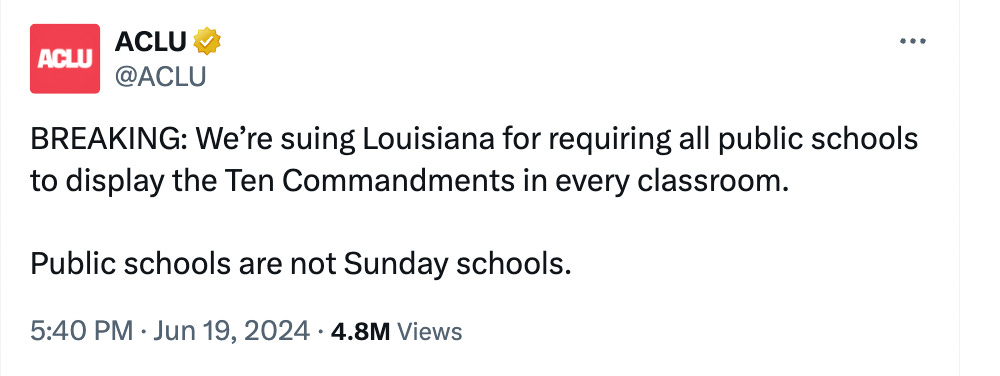









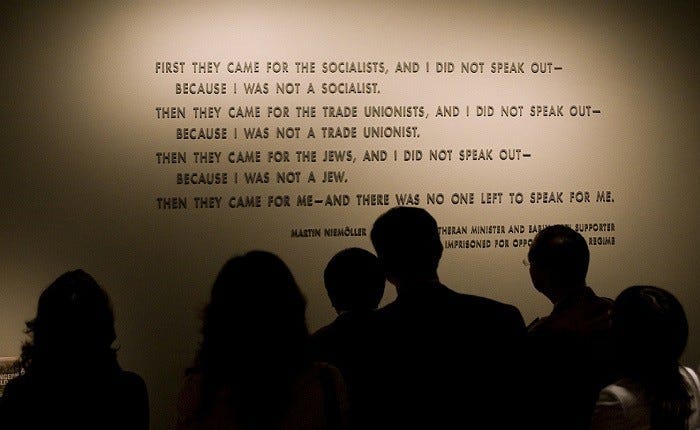
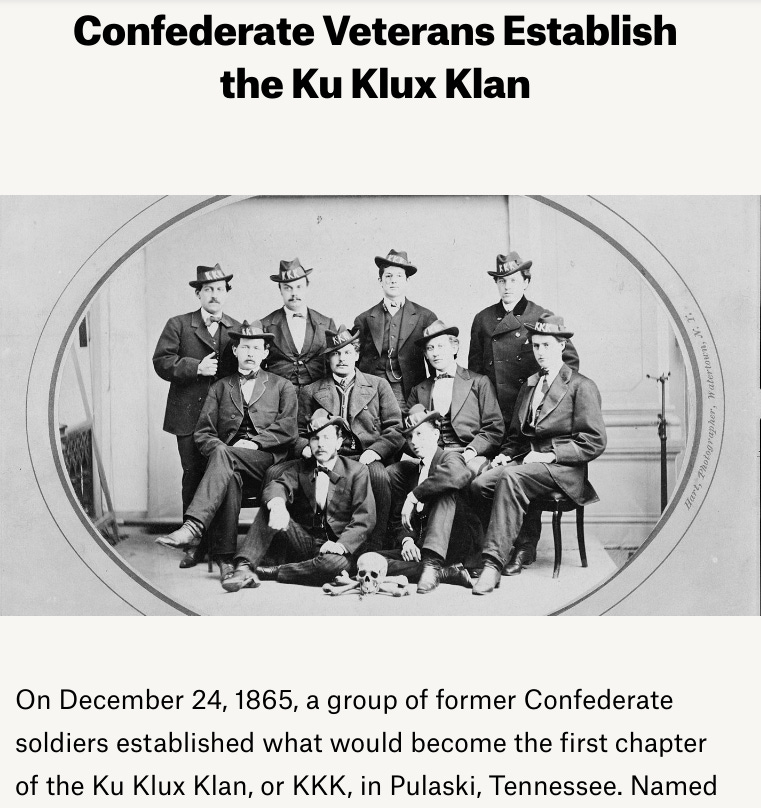





 Richard L. Fricks