The primary aim of the "Novel Excerpts" blog category is to showcase my creative writing, specifically from the novels I've written. Hopefully, these posts will provide a glimpse into my storytelling style, themes, and narrative skills. It's an opportunity to share my artistic expressions and the worlds I've created through my novels.
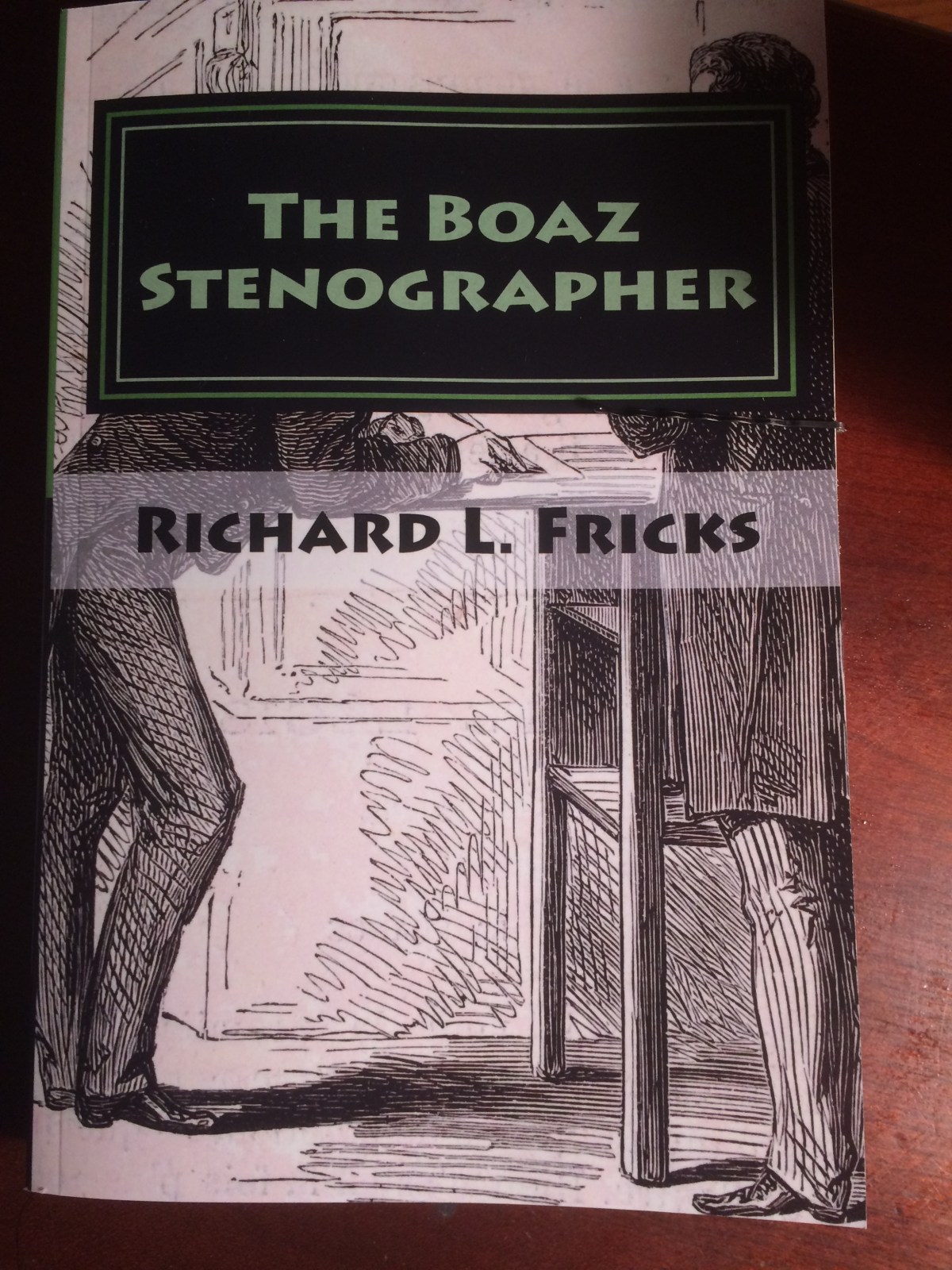
The Boaz Stenographer, written in 2018, is my fourth novel. I'll post a chapter a day over the next few weeks.
Book Blurb
Walt Shepherd, a 35 year veteran of the White House’s stenographic team, is fired by President Andrew Kane for refusing to lie.
Walt returns to his hometown of Boaz, Alabama and renews his relationship with Regina Gillan, his high school sweetheart, who he had ditched right before graduation to marry the daughter of a prominent local businessman. Regina has recently moved back to Boaz after forty years in Chicago working at the Tribune. She is now editor of the Sand Mountain Reporter, a local newspaper.
Walt and Regina’s relationship transforms into a once in life love at the same time they are being immersed in a growing local and national divide between Democrats and traditional Republicans, and extremist Republicans (known as Kanites) who are becoming more dogmatic about the revolution that began during President Kanes campaign.
Walt accepts two part-time jobs. One as a stenography instructor at Snead State Community College in Boaz, and one as an itinerant stenographer with Rains & Associates out of Birmingham.
Walt later learns the owner of Rains & Associates is also one of five men who created the Constitution Foundation and is involved in a sinister plot to destroy President Kane, but is using an unorthodox method to achieve its objective. The Foundation is doing everything it can to prevent President Kane from being reelected in 2020, and is scheming to initiate a civil war that will hopefully restore allegiance to the U.S. Constitution.
While Walt is writing a book, The Coming Civil War, he is, unwittingly, gathering key information for the Constitution Foundation.
Will Walt discover a connection between the Foundation and the deaths of three U.S. Congressmen in time to save his relationship with Regina, prevent President Kane from being reelected as the defacto head of a Christian theocracy, and the eruption of a civil war that could destroy the Nation ?
Chapter 1
I will not lie for President Kane. I will not lie for the President. I kept saying to myself as I waited in the secretary’s office just one door away from where the world’s most powerful man sat with Fritz Archer, the President’s Chief of Staff, and Zack Quitman, my boss and Head of the Stenographic core.
“You can come in now Mr. Shepherd.” Jane Goodman, the President’s secretary said as she walked in from the Oval Office.
I tapped my forehead with my handkerchief one final time, stood, and walked through the door into a room with six eyes of hot steel that instantly wounded my determination to hold unwaveringly to honesty and truth. These men would give me only two choices, lie or walk my integrity off the gang plank into a raging ocean.
“Good afternoon Walt.” Fritz said, reaching out to shake my hand. The President sat behind his desk without a word, or glimmer of a smile. Zack twisted in his seat and gave me a slight affirmative nod, like he was signaling me to say yes to whatever demand was coming my way.
“Thank you for coming. Please sit here.”
“My meeting with Billy Graham yesterday in the Rose Garden has created quite a stir.” The President said while looking at his laptop screen that sat on his desk in front of him.
“Walt, I have reviewed your transcript of the President’s and Mr. Graham’s meeting. I’ve also reviewed Tad Goldstein’s transcript. Tad, as you know, was the closest to the President when he said, ‘Billy, I never met with a single Russian during my campaign.’ Why is it that you didn’t hear the word never?” Zack asked.
“Sirs, I can only record what I hear. I heard the President say, ‘Billy, I met with a single Russian during my campaign.’”
“Mr. Shepherd, even though you have worked nearly 35 years as a White House stenographer, Tad Goldstein has won every major competition the National Stenographic Society has held in the past five years. I believe you simply misheard. Why is it that you cannot acknowledge that?” The President said, continuing to look at his laptop screen.
“Sir, in all due respect, I am not the only one who did not hear the word ‘never’ in the subject sentence. I’m aware that several reporters have said they did not hear the word.” I said feeling the sweat run down my back.
Fritz glared at me and sat forward to the edge of his seat, “Sharon Hawkings with Fox News, who, like Tad, was closer to the President than the reporters you mention, is adamant. She says the President never said he had met with a Russian during his campaign. In fact, she said his next sentence confirms that. ‘I am the most patriotic president this country has ever had.’”
I didn’t respond but acted like a school kid who had been caught cheating on an exam.
“Let’s be very clear Mr. Shepherd. You will change your transcript to match Tad’s or you’re fired. Do you understand what I’m saying here?” the President said.
“Yes, clearly.” I said wanting to stand up and run out of the Oval Office.
“Walt, it’s 3:30 now. I’ll give you until 5:00 p.m. today to make your decision. I fully expect you to get on board with Tad.” Zack said, continuing to give me an affirmative nod.
“Am I dismissed?” I said as I stood up directly facing the President. He never made eye contact. He never even looked up from his laptop.
“You may leave Mr. Shepherd but please know there is a price to pay for blindly following your principles. I trust you are hearing what I am saying.” Fritz said as the door to Jane Goodman’s office opened and she herded me like I was a cull cow headed for the slaughter house.
As I walked outside the West Wing and toward the Eisenhower
Executive Office Building I knew my thirty-five-year career here at the White House was over. No Administration had ever asked me to lie. No one had even asked me to correct a verb tense. But, that hadn’t stopped me from making the biggest mistake of my White House career. The only time I ever modified what a President said was in 2000 when I changed President Bush’s ‘is’ to ‘are.’ At a stump speech in Florence, South Carolina on Jan. 11, 2000, Bush asked a question — “Is our children learning?” I had caught hell over transcribing the statement to “Are our children learning?” I was wrong. It was not my job to protect the President. My duty was to record the truth, exactly what was said. I swore then I would die before I ever recorded anything except exactly what the President said. I was not about to change my mind. I didn’t care if it cost me my job.
Three days later, at 6:35 a.m., we left Washington, D.C. It was me in my loaded down 2014 Ford F150 pickup with all my boxed-up transcripts in the truck’s bed under a new camper shell. Behind me, for now at least, were two men in a Peterbilt with a growling CAT engine pulling a 53-foot dry box trailer loaded down with the remainder of my worldly possessions.
The two men crew and rig from Elrod Moving and Storage arrived yesterday shortly after noon and began the ten-hour loading sprint. I had paid their overnight hotel bill at the Georgetown Inn on Wisconsin Avenue and they had returned at 6:00 a.m. to conduct their required 26-point truck and trailer inspection, and to eat a Hardee’s breakfast I had waiting for them. Our plan was simple: drive, virtually non-stop, to 5583 Crosson Road in Boaz, Alabama. They would manage their own schedule, I would mine. I could lead or follow, go on without them, or stop for a nap. One of the requirements was for all to meet at
6:00 a.m. in the morning at the designated spot and start unloading the trailer.
Eighty miles after leaving my home on Rosalyn Street in Georgetown, somewhere around Middleton, Virginia, I pulled past the long semi and settled in to endure one of my least favorite things. I always thought driving, and even worse, riding as a passenger, was boring. For a little over seven chapters I listened to The Last Juror, a John
Grisham book, but surprisingly got tired of Clanton, Mississippi and Willie Traynor, although it was one of my favorite stories, having previously read it in hardcover and on my Kindle.
My mind took a different direction just as Miss Callie Ruffin finished her prayer, and her and Willie were about to eat a feast for lunch out on her front porch in Lowtown. I was 15 and was walking up the back-porch steps to my parents’ house, my home on Crosson Road, when I was startled by a woman’s voice coming from the swing on the far side of the porch. Vann Elkins, my 16-year-old friend, the same grade as me but a few months older, had just dropped me off from an after-church gathering at the Dickerson’s house in Country Club. The back-porch lights were off, and I hadn’t seen Mother. I also hadn’t seen her crying. This is what altered her voice and startled me.
“Walt, let’s talk.” Mother’s voice was clearer now.
I walked over and sat down in a lounging chair. “Are you okay? It’s after 10:00, late for you. What’s wrong?” Mother was always in bed by 9:00 p.m. sharp.
“I’m worried about you. You’re changing, and I don’t like it.”
“You don’t like me growing up?” I was really confused. Why would Mother be worried about how much I was growing. Since last year, the beginning of 9th grade, I had grown nearly three inches taller and gained fifty pounds. She knew how hard I had worked with Coach Hicks in the weight room, on the practice field, and running an obstacle course, he had helped lay out here at Shepherd’s Cove, our 40acre domain off Crosson Road.
“No, silly, it’s not that. I am very proud of how you have stuck to your goal of playing football. Son, what is breaking my heart is how you are falling away from God.” Mother barely got the words out.
Before I could think of what to say Dad opened the back door and turned on the porch light. He didn’t get a word out before Mother shooed him back inside.
“Mom, I was at church tonight and I led the prayer at the
Dickerson’s before ice cream and cake.”
“That’s good Walt, but don’t patronize me. I hear the type of questions you are asking in Mr. Smith’s Sunday School class and I see how you act during Brother Walter’s sermons. When you slouch down in the pew I know you are not listening or you are disagreeing with what you are hearing. Be honest with me. Tell me what is going on.” Mother had laid her tissues aside. She was gaining composure. I knew my goose was cooked.
“I have my doubts about Christianity. There, I said it.” I said standing up and moving over by the porch rails.
I know now a little more how those words broke Mother’s heart.
That night we talked until after midnight. I told her how the year before I had started reading how the Bible came about, and, this year, had gotten interested in evolution, thanks to Dr. Ayers, my Biology teacher. At the end of those two hours, the only thing we accomplished was to agree to disagree. For sure, one thing didn’t change, and that was my love for my Mother and her love for me.
My mind was now solidly in the past. I kept driving. By the end of high school, I was, at a minimum, a closet atheist. No, I didn’t stop going to First Baptist Church of Christ. I respected my Mother more than that, Dad too. By graduation night, May 25, 1972, I had accumulated nearly four years of reading, studying, and contemplating. Atheist was not the right word. I didn’t have the right word to describe me. What do you call a person who strongly doubts most of the stories from the Bible? Who believes in an old, old earth, and that all life is connected and has arisen through the evolutionary process? What do you label a person who both doubts God and loves God, or the things my life had associated with God? Whatever I was, by the end of high school, I still was open to God, most days was eager to hear from Him.
I truly was open to knowing Him. I just needed evidence.
Mother was the most open-minded about my fall from grace, as she put it. In fact, her and Dr. Ayers were the only two people I knew of who didn’t think I was a disgrace to the community. It didn’t take long for word to spread around church and around town that I was different. It didn’t take me long to figure out that a closed mind is such a dangerous thing. In a way, I felt like church folks threw me into the same camp with homosexuals. We were all heathens and destined for hell.
After graduating, I attended Snead State Community College for one year. During the summer of 1973, Jennifer Ericson and I married, and her rich father opted to pay our way at the University of Virginia, a truly great school, and the one I had dreamed of attending since the tenth grade. I majored in English and minored in Creative Writing. We had stayed in Charlottesville during the summer after our sophomore year. I got a job at Pizza Hut and right before the end of summer I delivered a pizza to Craig Langston sitting on the steps of the Rotunda. He was a talkative professor. After he learned I was an English major, he invited me to sit, even gave me a slice of his pizza. He asked me a dozen questions and ended advising me to take a couple of stenographic courses. He said I needed to find a way to, as efficiently as possible, take notes from what I was reading. He warned me that my sophomore year was going to be heck, but my junior and senior years would be hell. He strongly encouraged me to pursue “the best note-taking system known to man.” I will never forget those words.
I did follow his advice, ultimately taking six courses over the next three years, almost deciding to change my major. I’ve often wondered if Craig Langston was an angel sent from God to guide my life. Probably not, but for sure he played a significant role in my future. After graduating, I tried for over a year to find a teaching position. I wanted to teach at the college level but soon learned I needed a PhD. That wasn’t happening. I wound up teaching night classes in stenography at Prince George’s Community College in Largo, Maryland. How I got there was a whole other story. It was only fate that I met Sally Pelham, the sister of the College’s President who had been a stenographer at the White House for nearly twenty years. Out of the blue one Thursday evening, nearly six years after I started teaching at Prince George, Sally and her sister, Suzie, the College’s President, dropped by my class. They stayed the remaining hour of the class, even had me demonstrate my ability on the steno machine. After all my students left, Sally gave me her card telling me to call her if I wanted “a note-taking job in a high stress environment.” A month later, November 18, 1982, I was the newest staff member of the White House’s stenographic core.
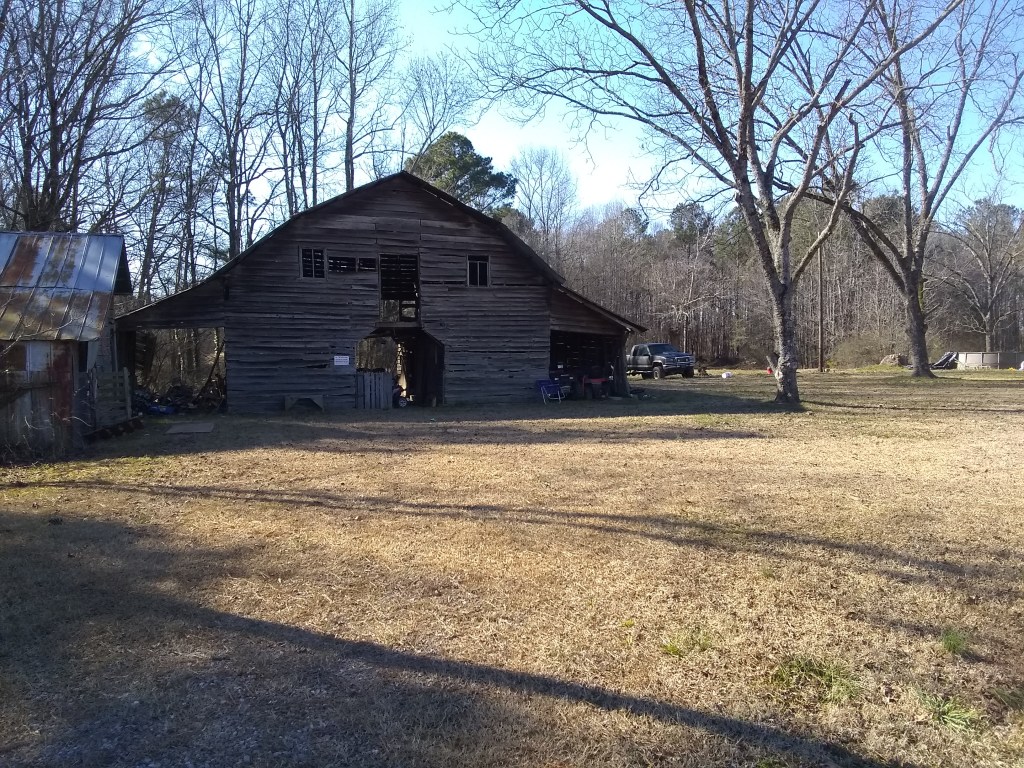
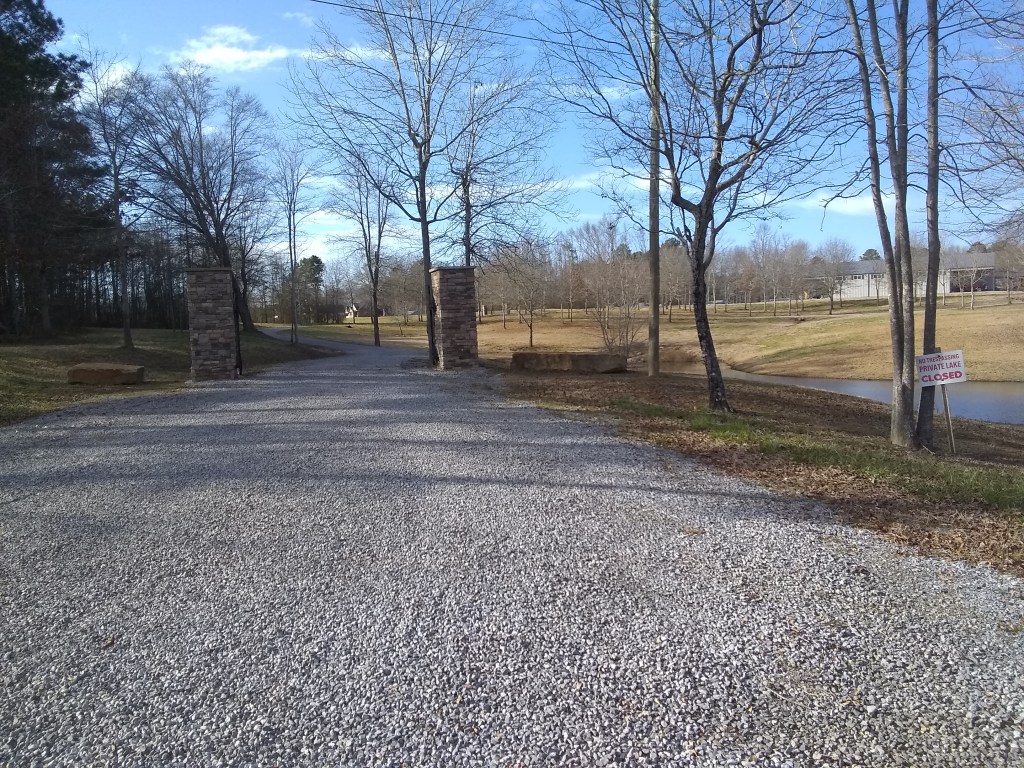
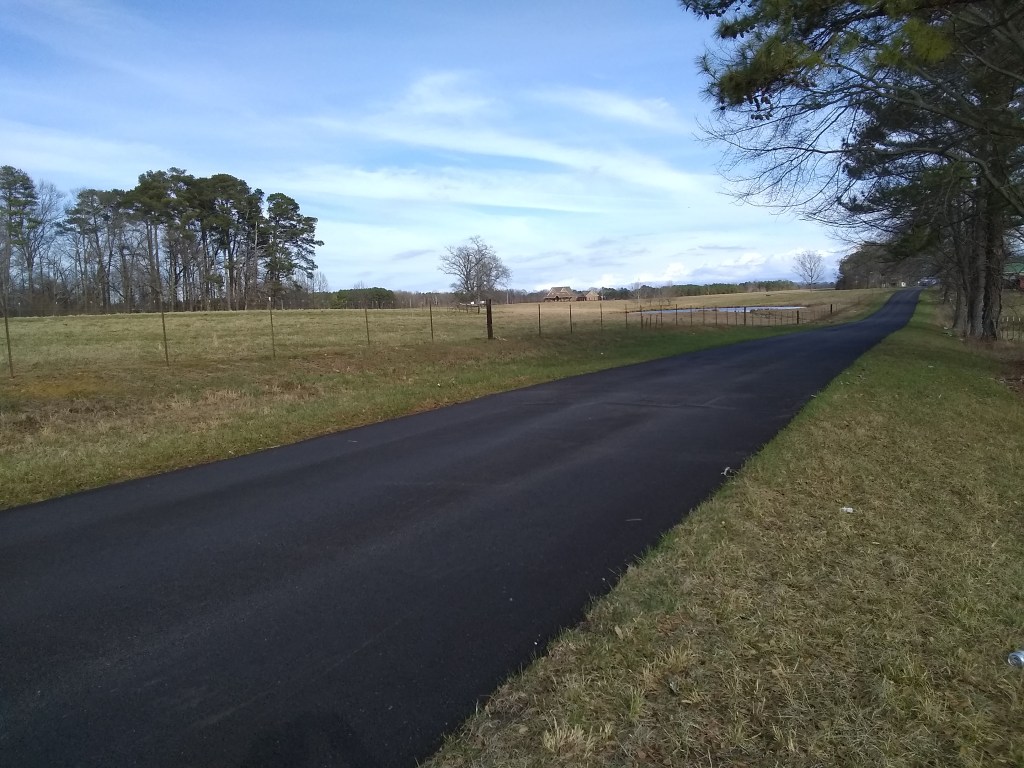
Over the next eight hours, my mind jumped between alternating scenes, from my 35-year career at the White House, back to high school girlfriends Regina Gillan, and the late Jennifer Ericson. At 6:35 p.m., twelve hours after leaving my townhouse in Georgetown, I pulled my Ford pickup into the driveway at Shepherd’s Cove, 5583 Crosson Road, Boaz, Alabama.

















 Richard L. Fricks