
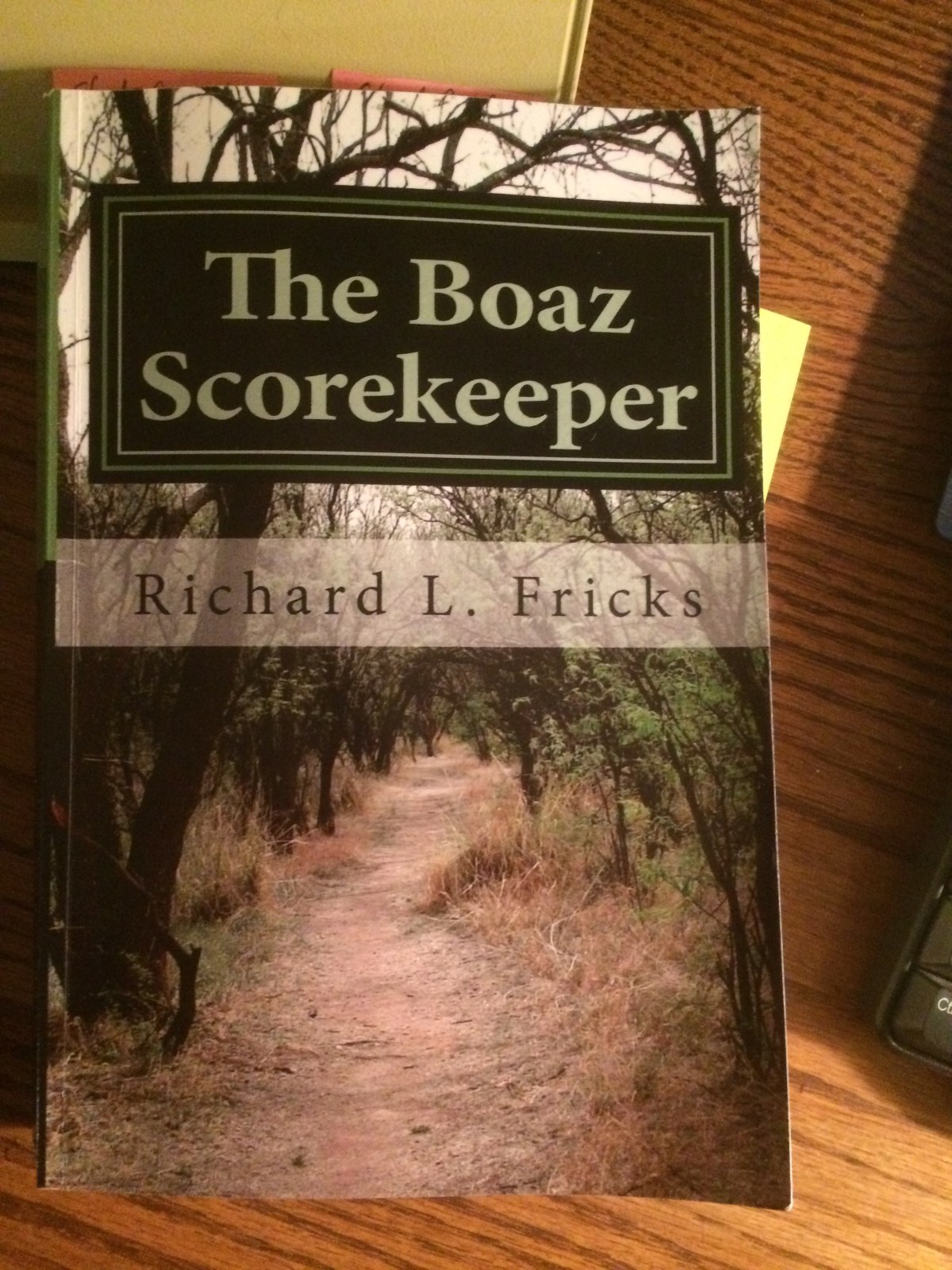
The primary aim of the "Novel Excerpts" blog category is to showcase my creative writing, specifically from the novels I've written. Hopefully, these posts will provide a glimpse into my storytelling style, themes, and narrative skills. It's an opportunity to share my artistic expressions and the worlds I've created through my novels.
The Boaz Scorekeeper, written in 2017, is my second novel. I'll post it a chapter a day over the next few weeks.
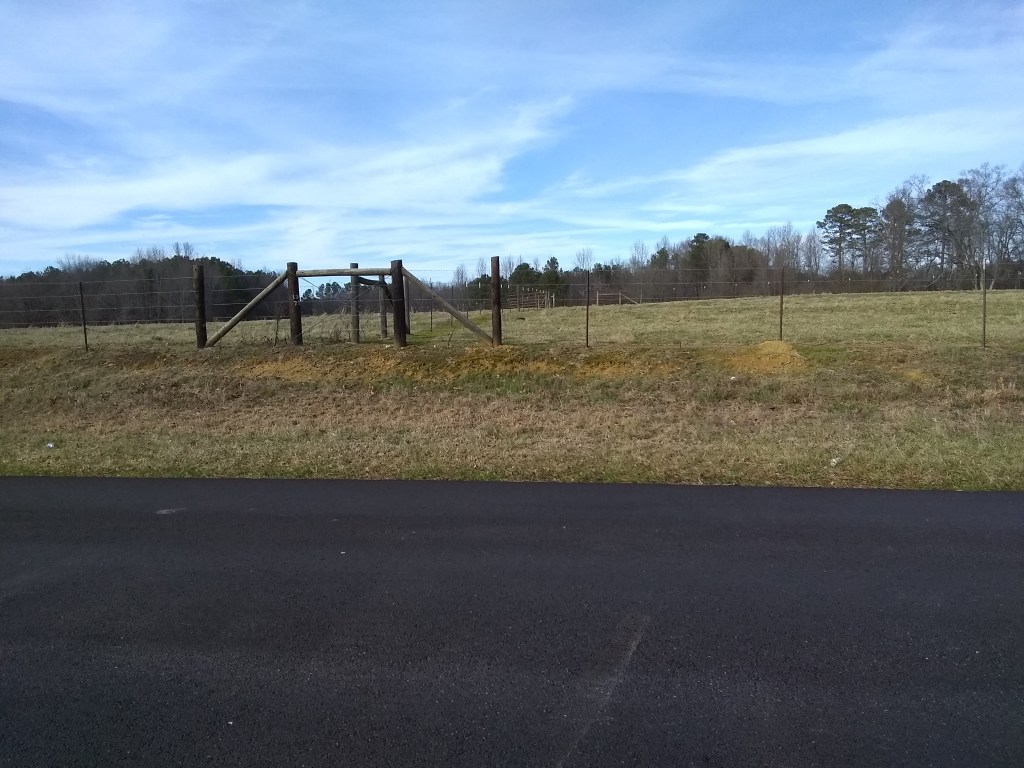
The next morning, I was on my way to Russellville for a Hearing on my Motion to Suppress Evidence in the State of Alabama’s case against my client, Thomas Lee Nixon. There were two key issues the defense and the prosecution would fight over. One was whether the Lawrence County deputy who pulled Tommie Lee over on the night of March 27, 2017 as he drove east on Taborlane Road had probable cause to make the traffic stop. The second issue was whether the deputy had probable cause to search the trunk of my client’s car. I was confident I could win this motion given that the Deputy’s video-cam clearly showed that Tommie Lee’s taillights were functioning properly. This was a pretextual stop and therefore illegal. But, I also knew that anything could happen at these type hearings. The Deputy could now say that he also saw my client’s car wander across the center line. Answering my question why he hadn’t put this in his report, he could simply respond, “I must have forgotten.” Judges in Alabama, I knew from experience, often sided with the Prosecution, many of them having been former prosecutors. But, the more difficult problem for the DA was what had justified the Deputy to search the trunk of Tommie Lee’s vehicle. Again, what should be an easy win for the defense would most likely fade away. I could hear the Deputy saying, “earlier in the evening I had received an anonymous call that someone driving a 2007 Chrysler Charger was transporting a large amount of meth.”
I was pondering my cross-examination questions for Deputy Lightsey, when Matt called my cell phone. I answered and before I could say hello or anything Matt said, “Greg just called and said he has the forensics report.”
“I assume you are referring to the three Aurora Lake bodies?”
“I am. Greg is emailing me a copy. I’ll forward it to you as soon as I get it. Hold on to your hat, the three bodies are Fred Billingsley, David Howsley, and Baynard Reed. I can’t talk any more right now. See you late afternoon when you get back in.”
The April 27th tornado and discovery of the 1946 Beetle had put Aurora Lake on the go-to map of every serious scuba diver within 200 miles. Within a week, a few local divers were exploring the waters, none of which had the equipment to adequately explore the deeper waters along the dam. It took a little longer for the professional divers to arrive. The Huntsville Diving Club, a fifty-year-old club from Madison County, made its first weekend trip on Saturday, May 6th. By 9:00 a.m., the seven men and five women, all engineers and computer specialists, each equipped with a Light & Motion Sola Dive 800 L.E.D. Hands Free Light, had created a 15-section grid to explore the waters along the west end next to the dam, stretching 150 yards to the east. By 5:00 p.m., the six teams retired for the day having completed their ‘B’ level exploration of sections 1 through 7. At 10:45 a.m. on Sunday morning, Team Three members, Sharon Teal and Lee Thompson, in section 8 and 80 feet of water, found the skeletal remains of two bodies, both weighed down with rocks and chains. By 4:00 p.m., the dive team from the Etowah County Sheriff’s Department Search and Rescue Squad, was on site and in the water. At 4:30, the team found the third body, this one encased in a modern-day funeral home body-bag.
Even though there had been no public announcement, nor private leak, of the identity of the three bodies found in early May by the Huntsville Diving Club, I already knew that Fred Billingsley was one of them. A couple of weeks ago I had done a little research. Knowing that I had put his body inside the airtight mortuary bag I had purchased online from Classic Plastics Corporation, I wondered what condition his body would be in less than six months after his death. I had framed a quick Google query, “how does a body deteriorate inside an airtight container,” and the first hit had been from Reddit. The writer posted this quote from Wikipedia: “Oxygen present in the body is quickly depleted by the aerobic organisms found within. This creates an ideal environment for the proliferation of anaerobic organisms. Anaerobic organisms, originating in the gastrointestinal tract and respiratory system, begin to transform carbohydrates, lipids, and proteins, to yield organic acids (propionic acid, lactic acid) and gases (methane, hydrogen sulfide, ammonia). The process of microbial proliferation within a body is referred to as putrefaction and leads to the second stage of decomposition, known as bloat.” It seemed that since anaerobic bacteria were involved, the airtight container would have no effect on decomposition.
I drove another thirty minutes and pulled off Highway 24 in front of an old cotton mill to see if Matt’s email had arrived. It had. There were several documents attached to Greg’s email. Three were the individual autopsy reports, and one was a detailed description of the condition of the bodies when they arrived at the State Lab in Montgomery on May 7, 2018. This latter document said that Fred’s body was found in 78 feet of water held down by cable tied to six cement blocks. The body was inside a body bag that was commonly used in the funeral and mortuary industry. The body was fully decomposed. I scanned over a paragraph describing the various forms of bacteria found and read that a small leather calendar/notebook was found inside the bag. It was in remarkably good condition having a zipper to protect its contents. The document also noted that they had found a set of car keys.
Another document referred to Fred’s vehicle. The Etowah County Sheriff’s Department had transported the Camaro to the State Forensic Lab in Birmingham after it was discovered six days after Fred went missing. An older man living in the area had called ‘911’ when he spotted two teenagers he knew trying to load the car on the back of a trailer the man knew was owned by the widow of his best friend. The report stated that the keys were those to Fred’s Camaro, and the only finger prints found in both the car and on the keys, were those of Fred Billingsley. This document referred to a ‘Car Analysis’ report.
Addressing Fred’s calendar/notebook, the first document referred to a Forensic Accounting report for a full analysis. That report, just like the Car Analysis report, was not attached, but the one I was reading stated that on the day Fred disappeared (October 27, 2017) there was an appointment with ‘Wade’ listed for 3:30 p.m. Within a parenthesis besides ‘Wade’ was written ‘Club Eden.’ The only other reference the document made to Fred’s calendar was an undated note that read, ‘never saw James so mad as today in Wade’s study. Was afraid.’
I scanned Fred’s autopsy and saw ‘gunshot to the center of the forehead along with blunt force trauma to the neck and head’ listed as the cause of death. ‘Probable gunshot to the chest’ was listed as the cause of death for both David Howsley and Baynard Reed.
As I pulled back onto Hwy. 24, I couldn’t help but wonder how the Department had determined the identity of Howsley and Reed. I knew it would be through DNA testing. By the time I reached the Lawrence County Courthouse in Russellville I admitted it could have been as simple as a Facebook plea. I figured local law enforcement would have told the Department the story of these two missing men. But then I remembered all the public knew was that Howsley and Reed had simply left town to return to San Francisco.


















 Richard L. Fricks