Novel Excerpts–The Boaz Scorekeeper, Chapter 84

The primary aim of the "Novel Excerpts" blog category is to showcase my creative writing, specifically from the novels I've written. Hopefully, these posts will provide a glimpse into my storytelling style, themes, and narrative skills. It's an opportunity to share my artistic expressions and the worlds I've created through my novels.
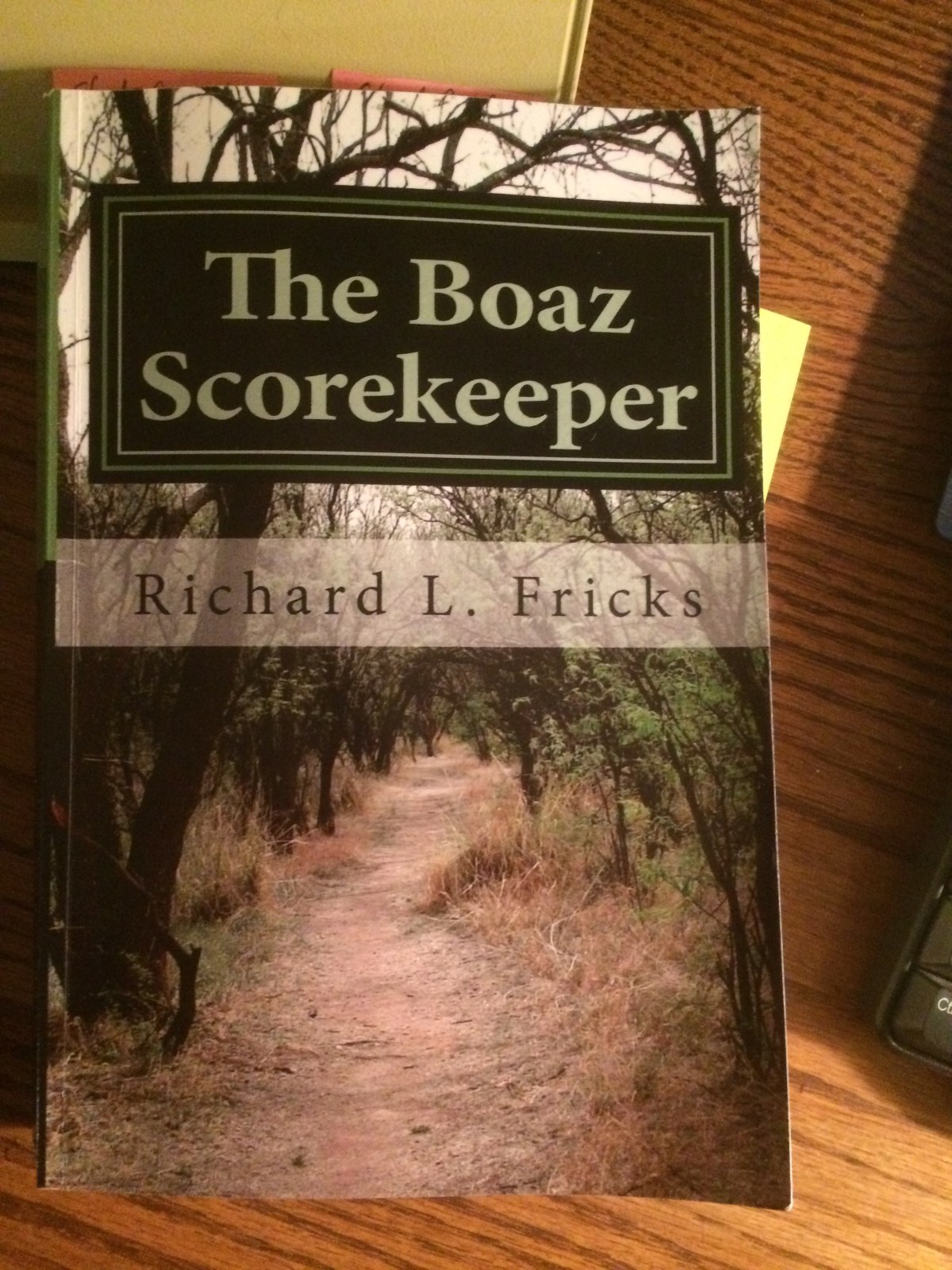
The Boaz Scorekeeper, written in 2017, is my second novel. I'll post it a chapter a day over the next few weeks.

After rereading Nate’s article, I was packing my briefcase when Matt stuck his head in my office. “You got a minute?”

“Sure, what’s up?”

“I want you to meet two nice gentlemen.  Can you come to the conference room please?”  Matt said.

When I entered, I saw two young, clean-cut, well-dressed Hispanic males.

“Hello, I’m Micaden Tanner.”  I said reaching my hand across the conference room table.

They both stood, smiled, and shook my hand. “I’m Santiago Castenada.”

“I’m Nico Castenada, Santiago’s brother.  It’s nice to meet you.”

Matt explained that the two young men had completed graduate studies in California. Santiago received his Masters of Education from the University of Southern California’s Rossier School of Education, and Nico a Master’s of Divinity from Southern California Seminary in El Cajon, California.

“That’s impressive. Are you guys from Boaz?”  I asked.

“No, but we are planning on moving here.” Nico responded.

“They are from Texas but have spent the past eight years in college and graduate school.  They have hired us as general counsel.”  Matt said.

“We are starting a Christian private school for Hispanics.” Santiago said.

“Again, I’m impressed.  But, why Boaz?”

Our uncle was Mateo Castenada.  We owe him so much.  He is the reason for the opportunity we had to receive such an excellent education.  We want to continue his work here in Boaz, although in a slightly different way. Until his disappearance, his church was instrumental in giving hope to hundreds, thousands of local Hispanics.  There is now a void here, all while the Hispanic population continues to explode.  It’s all about providing hope and opportunity.  Education is the key.”

“That is a totally admirable pursuit.  Also, a very expensive one.  I assume you have already arranged your financing.”  I asked.

“Not totally, but we are making progress.  We have a few benefactors lined up.  We are also participating in the Federal Department of Education’s new voucher program instituted by President Trump in 2017.  As you probably have heard, it allows students to attend certified private Christian schools.  The student’s tuition is paid by the program in an amount equal to the applicable State’s cost to educate a public-school student.  Right now, here in Alabama, that amounts to about $10,000 per student per year.” Nico said.

“Here’s something you will find interesting.” Matt said. “I’ve shared Nick’s New York Times article with Santiago and Nico.  They believe it will trigger rioting.  Even before coming in today, they have spent the last several days in the local Hispanic community and observed the smoldering anger that is widespread.”

“Hispanics generally are quiet, peace loving, and law-abiding citizens.  Like most people, they can be pushed too far.  What has happened over the years is like bringing a pot of chili to a slow boil.  I’d say the recipe is complete: the kidnapping and murders of Mateo, his wife, and Alma, the sex trafficking, and the general abuse Hispanics have endured for years, and now, this article that describes how five of the families who founded Boaz have been manipulating and pillaging the whole community.  The pot is at full boil.”  Santiago said.

The four of us talked for another hour before Nico received a cell call and the two of them had to leave.  Matt and his wife were headed to their daughter’s in Atlanta for the July 4th holiday.  I grabbed my briefcase and drove home.  Tonight, might be the night that I had been waiting for.

Rampant Gospel Confusion, Number 2: Why Four Different Endings?

Here’s the link to this article.

By David Madison at 1/05/2024

Theology is written this way, not history


Devout scholars have been pondering—and arguing about—the four gospel endings for a long time now. Is there any way that these different endings qualify as history? So much has been written about this, so I’m going to mention here just a few of the issues that come to mind. For those who want to insist that the story of Jesus is supremely important, the end of his story—well, the end of his supposed earthly existence—should be of the best possible quality. But that’s not what we find. Let’s look at each of the four endings.

Mark: the first gospel written, and the least said 
 
Until the invention of the printing press in the fifteen century, New Testament manuscripts were copied by hand, and as old manuscripts came to light, it was obvious that a lot of errors and intentional changes had been made: we are at the mercy of scribes who worked without benefit of electric lighting and eyeglasses, and who modified texts according to their theological views. 

The ending of Mark’s gospel—in the oldest manuscripts—is a puzzle. In these documents Mark ends at 16:8. Three women had gone to the tomb, were alarmed to find a young man sitting there. He told them Jesus had been raised and would see them in Galilee. Then the abrupt ending, verse 8: “So they went out and fled from the tomb, for terror and amazement had seized them, and they said nothing to anyone, for they were afraid.”  

There has been disagreement among scholars: did the gospel really end this way? Nothing at all about the activities of the risen Jesus? There can be little doubt that this ending failed to satisfy some early readers, hence an unknown person—just an unknown as the author of the gospel itself—created additional text, verses 9-20, which shows up in later manuscripts. 

This author, no surprise, was committed to the superstitions of the Jesus cult. At the opening of Mark 16, we read that three women had gone to the tomb: Mary Magdalene, Mary the mother of James and Salome. Now in verse 16 it is claimed that Jesus first appeared to Mary Magdalene, “from whom he had cast out seven demons.” She then told his disciples that Jesus had appeared alive to her—and they didn’t believe it. What happened next? “After this he appeared in another form to two of them, as they were walking into the country. And they went back and told the rest, but they did not believe them.” (vv. 12-13)

It is a major violation of cult rules not to believe what the cult teaches. So the author of this supplement reports next that Jesus appeared to the eleven and scolded them for their doubts. There are consequences for not believing: “The one who believes and is baptized will be saved, but the one who does not believe will be condemned.” (v. 16) The primary reason for belonging to the cult of a dying-rising god is to be saved. The primary purpose of this text is to promote that agenda. 

Then we find one of the most bizarre texts in the gospels: 


“And these signs will accompany those who believe: by using my name they will cast out demons; they will speak in new tongues;they will pick up snakes, and if they drink any deadly thing, it will not hurt them; they will lay their hands on the sick, and they will recover.” (vv. 17-18)

The use of Jesus’ name works like a magical spell. It can be used to cast out demons and heal people by touch. And why not throw into the bargain speaking in tongues, picking up snakes, and drinking poison?
We can be confident that not too many clergy these days base sermons on this text—aside from those in snake-handling Jesus-cults in Appalachia.

As soon as Jesus finished saying these goofy things (yes, goofy: believers would agree if no one told them that this is Jesus-script), he ascended to heaven: “So then the Lord Jesus, after he had spoken to them, was taken up into heaven and sat down at the right hand of God.” (v. 19) There is no hint here that forty days had gone by. This author was unaware of the ascension story that would end up in the first chapter of Acts (the forty-day reference in Acts 1:3). 

One final comment on Mark 16:9-20. Modern Bible translators/editors have been honest enough to put this text in a footnote. But their honesty has its limits. They commonly attribute variant readings to “other ancient authorities.” But they have no idea at all who wrote Mark 16:9-20, for example. How does it make sense to call him an authority? This is an attempt to cover up the scandal of so many errors having been made in the copying process. The biggest piece of dishonesty, however, is printing Jesus-script in red, as is the case with Mark 16:15-18—which includes the goofy quote. The translators/editors know very well there is no way whatever to verify that these are authentic words of Jesus. In fact, none of the Jesus-script in the gospels can be verified. 

Matthew, with a touch of Comic Book fantasy 

In the last chapter of Matthew (28) we read that two women (Mary Magdalene and “the other Mary”) went to the tomb. Now we’re told about a dazzling hero flying from the sky:

“And suddenly there was a great earthquake, for an angel of the Lord, descending from heaven, came and rolled back the stone and sat on it. His appearance was like lightning and his clothing white as snow.For fear of him the guards shook and became like dead men.” (Matthew 28:2-4)
 
It is this angel (not a man sitting in the tomb) who tells them that Jesus has risen, and advises them to alert the disciples. But on their way, suddenly they ran into Jesus himself: “And they came to him, took hold of his feet, and worshiped him.” (v. 28:9) His message for the disciples is to go on to Galilee. There indeed they met him: “When they saw him, they worshiped him, but they doubted.” (v. 28:17) Then we find more cult fanaticism: our holy hero has it right:
 
“All authority in heaven and on earth has been given to me. Go therefore and make disciples of all nations, baptizing them in the name of the Father and of the Son and of the Holy Spiritand teaching them to obey everything that I have commanded you. And remember, I am with you always, to the end of the age.”  (28:18-20)
 
Make disciples of all nations, baptize them, teach them to obey. So much damage has been caused by scripture: The Christian colonial powers many centuries later took this as their mandate to invade, conquer, and impose their religion.  
 
Luke, and the Jesus ghost who is not a ghost
 
We read in Luke 24 that Mary Magdalene, Joanna, and Mary the mother of James—and other women as well—went to the tomb, and were surprised that the body of Jesus wasn’t there.

“… suddenly two men in dazzling clothes stood beside them. The women were terrified and bowed their faces to the ground, but the men said to them, ‘Why do you look for the living among the dead? He is not here but has risen.Remember how he told you, while he was still in Galilee, that the Son of Man must be handed over to the hands of sinners and be crucified and on the third day rise again.’” (Luke 24:4-7)
 
The women reported what had happened to the eleven disciples and others, “But these words seemed to them an idle tale, and they did not believe them.” (v. 11) The next verse is missing from some manuscripts—another example of tampering. It reports that Peter rushed to the tomb, saw that it was empty, and went home amazed. 
 
What is truly amazing is that there was disbelief, that the disciples themselves hadn’t camped out at the tomb to see Jesus come alive again, as he had predicted he would do three times
 
Next this author displays his skill as a propagandist for the Jesus cult, i.e., the story of the risen Jesus appearing to two followers on their way to Emmaus (which is not reported in the other gospels). They don’t recognize him, and he draws them into conversation. They explain to this stranger what had happened to Jesus, and how puzzled and disappointed they are—and they get a scolding: 

“‘Oh, how foolish you are and how slow of heart to believe all that the prophets have declared! Was it not necessary that the Messiah should suffer these things and then enter into his glory?’” Then beginning with Moses and all the prophets, he interpreted to them the things about himself in all the scriptures.” (Luke 24:25-27)
 
It was one of the certain beliefs of the cult that Moses himself and “all the prophets” had predicted Jesus’ role in history. 
 
The two fellows persuade Jesus to stop with them to dine at Emmaus. At the very moment when Jesus blessed the bread, “Then their eyes were opened, and they recognized him, and he vanished from their sight.” (v. 31) Isn’t that what ghosts do? 
 
The two fellows rushed back to Jerusalem: “Then they told what had happened on the road and how he had been made known to them in the breaking of the bread.” (v. 35) Then, suddenly, Jesus was right there among them. 
 
“They were startled and terrified and thought that they were seeing a ghost.  He said to them, ‘Why are you frightened, and why do doubts arise in your hearts?  Look at my hands and my feet; see that it is I myself. Touch me and see, for a ghost does not have flesh and bones as you see that I have.’” (vv. 37-39)
 
To drive home the point, Jesus asked for something to eat—and they watched as he ate a piece of boiled fish. Once again, he emphasized what Moses and the prophets had taught about him, and promises what the cult members wanted to hear: “And see, I am sending upon you what my Father promised, so stay here in the city until you have been clothed with power from on high.” (v. 49)
 
Then they headed out to Bethany. “While he was blessing them, he withdrew from them and was carried up into heaven.” More tampering here: “and was carried up into heaven” is missing from some manuscripts. This ascension—quite soon after the resurrection—would contradict the story in Acts 1 that Jesus ascended after forty days. 
 
Robert Conner, in his book, Apparitions of Jesus: The Resurrection as Ghost Story, has demonstrated that the gospel resurrection tales were based on ghost folklore. Luke reports that Jesus ate a piece of fish to prove he wasn’t a ghost, yet he vanished from the dinner table at Emmaus the instant he broke bread. Luke seems not to have grasped his own plot flaws. 
 
John, more piling on of resurrection events
 
The author of John’s gospel was a master at exaggeration. He was obsessed with promotion of the Jesus-cult, centered on its version of a dying-rising savior (an idea absorbed from other such cults). Anyone who has carefully studied Mark, Matthew, and Luke cannot help being puzzled by John’s eccentric, inflated, and sometimes crude theology. He excelled at inflated theology: he claimed that the Galilean peasant preacher had been present at creation. How could he possibly know such a thing? 
 
His story of the raising of Lazarus (missing from the other gospels) is contrived—and crude: Jesus said he was glad he wasn’t there to save Lazarus from dying. The climax of this magical tale (the resurrection is voice activated), is Jesus’ claim that he is the resurrection and the life. Likewise his story of Doubting Thomas (also missing from the other gospels) seems designed to make the point—crucial to the cult: don’t look for evidence on what to believe: just take it on faith. 
 
John’s account of the resurrection differs substantially from the others. It is Mary Magdalene alone who goes to the tomb. She reported to Peter, and the disciple “whom Jesus loved” that Jesus was nowhere to be found. They ran to the tomb, found it empty and returned home. Mary looked in the tomb again, saw two angels dressed in white, then, turning around, saw Jesus, whom she mistook for the gardener. When she realized who it was, she went back to the disciples to report what she’d seen.

Then, in verses 19-29, we find the famous Doubting Thomas story, followed by two verses that feel very much like the end of the gospel. But then we get chapter 21, in which Jesus shows up—unrecognized—at the Sea of Tiberias, where Peter and other disciples had gone fishing. They’ve had bad luck, until Jesus tells then what to do—and they have a massive catch of fish. And that’s breakfast! 

Then Jesus asked Peter three times if he loved him—to the annoyance of Peter. And readers too must wonder: What was the point? The chapter concludes with reference again to “the disciple whom Jesus loved,” with the final claim that it was this disciple who wrote down all these things about Jesus: “This is the disciple who is testifying to these things and has written them, and we know that his testimony is true. But there are also many other things that Jesus did; if every one of them were written down, I suppose that the world itself could not contain the books that would be written.” We know that his testimony is true. This is cult bragging, but it is not the way authentic history is written. The supposed events presented in John 20-21 escaped the notice of the other gospel authors. 
 
A crucial factor needs to be stressed repeatedly: there is no contemporaneous documentation (diaries, letters, transcripts, and other archival materials) by which to verify any of the events and teachings reported in the gospels. Inventing a beloved disciple (unknown to the other gospel authors) who recorded everything doesn’t alter that reality. The four different gospel endings were the inventions of four different advocates for the Jesus-cult. 
 
               
David Madison was a pastor in the Methodist Church for nine years, and has a PhD in Biblical Studies from Boston University. He is the author of two books, Ten ToughProblems in Christian Thought and Belief: a Minister-Turned-Atheist Shows Why You Should Ditch the Faith, now being reissued in several volumes, the first of which is Guessing About God (2023) and Ten Things Christians Wish Jesus Hadn’t Taught: And Other Reasons to Question His Words (2021). The Spanish translation of this book is also now available. 

His YouTube channel is here. At the invitation of John Loftus, he has written for the Debunking Christianity Blog since 2016.
 
The Cure-for-Christianity Library©, now with more than 500 titles, is here. A brief video explanation of the Library is here

Novel Excerpts–The Boaz Scorekeeper, Chapter 83

The primary aim of the "Novel Excerpts" blog category is to showcase my creative writing, specifically from the novels I've written. Hopefully, these posts will provide a glimpse into my storytelling style, themes, and narrative skills. It's an opportunity to share my artistic expressions and the worlds I've created through my novels.
The Boaz Scorekeeper, written in 2017, is my second novel. I'll post it a chapter a day over the next few weeks.

Nate concluded his article with the story of a remarkable Hispanic girl who had been called Golden Goose by Mateo, her preacher father.

Eighteen years prior, she had barely survived birth. Throughout the first five years of her life she had endured the pain and suffering of polio, before a complete healing at age six, a Mateo miracle their Christian brethren called it. From there, her life exploded into academic, sports, and spiritual achievement.  Mateo said that she had single-handedly drawn together Hispanics from as far away as Oneonta to the south and Fort Payne to the northeast.  All coming to Boaz and Esperanza Baptist Church to hear Mateo bring Jesus to life, always using Alma as the visual representation that the Son of God continues to perform miracles. 

Friday, May 26, 2017, was graduation day for Alma and 115 fellow students from a mixed class of 46% Hispanics, 52% white, and 2% listed as ‘Other.’  Alma had a perfect 4.0 GPA, in fact, she had never received anything less than a B+ on any report card throughout her 13 years in the Boaz School System.  And, that B+ was in the Sixth Grade in a Physical Education class where the long-gone teacher gave A’s only to students who could do 25 pull-ups in less than one minute.  Alma did 24 even without the full use of her left hand that had been partially disabled from the polio.

Alma’s Valedictorian speech was scathing, and scintillating, but always respectful, and deeply heartfelt.  She praised the school system for an excellent education but condemned community leaders for allowing blatant discrimination against Hispanics.  Alma came close to calling the names of those she deeply believed were responsible for the disappearance of a dozen missing Hispanic girls, and four young men and their families.  She ended her speech lauding the efforts First Baptist Church of Christ had tirelessly made in establishing Esperanza Baptist and by warmly welcoming the overflowing Hispanic congregation that could no longer crowd into its undersized auditorium.

Two months earlier, Club Eden had developed its plan to transfer Alma and Mateo to ‘a more suitable environment.’  If left unhindered, their influence would decimate the once all-white community, changing its face and its character in unacceptable ways.  The Sunday morning worship hour attendance was already nearly 35% Hispanic. 

But, there was another reason Alma and Mateo had to go.  Thirty-seven-year-old Warren Tillman had fallen in love with the eighteen-year-old Alma.  Wade knew this, although Alma did not.  She had known Warren since she was a child and had always had the most respect for him.  He had liked her from the beginning but as she grew and matured into a beautiful young woman he had become enamored with her.  He arranged his schedule and her church involvement to make sure they were together working, planning, ministering as many hours per week as he could.  He had never done anything inappropriate with her but fantasized someday being together as husband and wife.  Wade had become keen to Warren’s infatuation several weeks earlier when, unnoticed, Wade had seen how Warren looked at and spoke with Alma.  Just as his ancestor Waymon Tillman was against interracial marriages, Wade was even more bigoted, protesting even friendly relationships between his children and Hispanics or Negroes. 

The initial plan was non-violent.  Alma would be given a fully paid education at Harvard and Mateo and his wife would be moved to San Marcos, Texas, given a nice home in an even nicer suburban neighborhood, and a job as associate Pastor at First Baptist Church of San Marcos.  Two weeks ago, Mateo and Alma had agreed, buying into Wade, James, and Fred’s argument that the Hispanic community was becoming too dependent upon the two of them, eventually causing a loss of faith and trust in God.  Alma was scheduled to spend the summer in Mexico with the Tarahumara Indians, and Mateo and his wife were moving to San Marcos in two weeks.

Three hours before Alma’s speech and the graduation ceremony, Mateo and Alma changed their minds and told Wade Tillman and James Adams.  They explained how they had prayed for nearly a week and had met with two other Hispanic pastors, one from Huntsville and the other from Birmingham, who both encouraged them to stay put, that God was at work and was not instructing them to leave.

After the graduation ceremony ended, Alma and her best friend Esmarelda Andres, along with several other Hispanic graduates, had plans to attend a celebration at St. William Catholic Church in Albertville where that City’s Hispanic graduates were also meeting. As the other Hispanic graduates drove out of the parking lot, Alma and Esmarelda were showered with gifts and congratulations from Wade and James before they too headed to St. William’s.

Eight minutes later Boaz Police Officers Chris Anderson and Paul Thomas blue-lighted Alma’s car on South Broad Street.  Less than two minutes later, Alma and Esmarelda were lying in the trunk of Alma’s car, hands tied behind their back, with Paul Thomas driving and Chris Anderson in tow in the BPD car.  Across town, Boaz Police Officers Dale Watson and Edward Hall had just completed their abduction of Mateo and Natamar Castenada.  The police officers drove all four vehicles to 1675 Shady Grove Road and Club Eden’s 288-acre hideaway.

Upon arrival, Chris Anderson and Edward Hall loaded Esmarelda Andres into the trunk of a 2017 Chevrolet Malibu and set out for the airport in Muscle Shoals.  Earlier, Club Eden and Gustav Nilsson had agreed to exchange Alma Castenada and $100,000 at 1:00 a.m. Saturday morning.  Esmarelda and Alma, though unrelated, could pass for twins.  Both were tall, almost 5 feet 7 inches.  Their weights converged on 125 pounds.  Both, of course, had long black hair.  Both possessed stellar beauty.  At 1:25 a.m., Gustav Nilsson and his two sons had stowed Esmarelda in their King Air 250 and were at 10,000 feet on a direct route northeasterly, to a destination unknown.

By 2:30 a.m., Mateo, Natamar, and Alma were laying side-by-side in the back of a 2017 Chevrolet Suburban courtesy of Adams Chevrolet, Buick & GMC.  The three gentle and caring souls lay silent, sleeping an eternal sleep from a lethal dose of cyanide poisoning.  Wade Tillman and James Adams were driving Interstate 59 northward to Valley Head and a 145-acre farm between Big Wills Creek and Rock Ridge Road that Club Eden had purchased in February for special purposes such as tonight’s.

It would be nearly nine months before Wade Tillman and James Adams were indicted for the kidnapping of Esmarelda Andres, and the kidnapping and murders of Mateo, Natamar, and Alma.  Looking back from that day, February 2018, one hundred seventeen years had passed since the murders of Leroy and Toby Jones, and ninety-two years since the murders of David Howsley and Baynard Reed.  All deaths were rooted in the hatred and bigotry of Club Eden’s full membership.

01/05/24 Biking & Listening

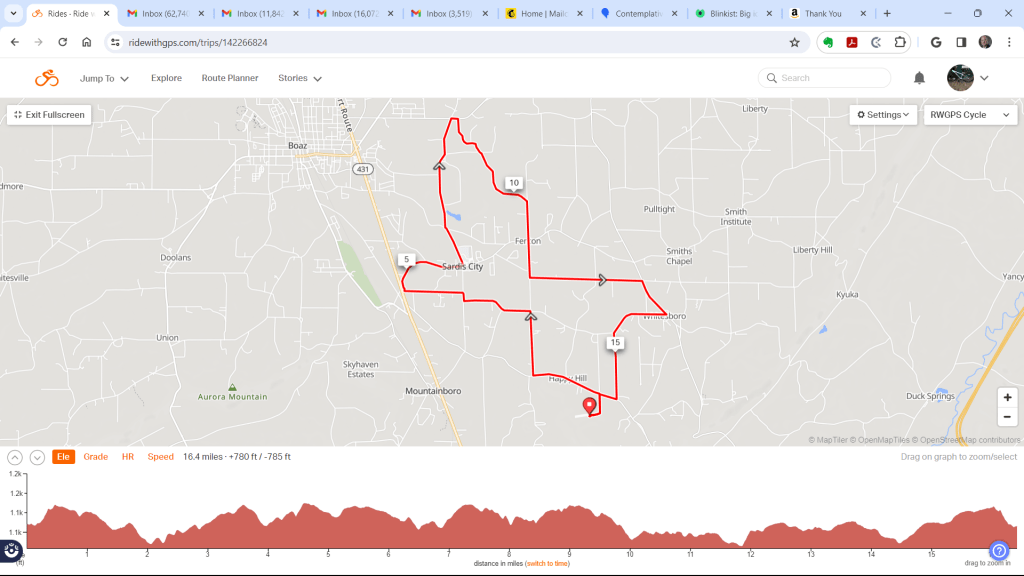
Here’s today’s bike ride metrics. Temperature at beginning of ride: 41 degrees. Clear and cold. Mild wind. 


Photos from today’s ride:

None today.

Why I ride:

Biking is something I both love and hate. The conflicting emotions arise from the undeniable physical effort it demands. However, this exertion is precisely what makes it an excellent form of exercise. Most days, I dedicate over an hour to my cycling routine, and in doing so, I’ve discovered a unique opportunity to enjoy a good book or podcast. The rhythmic pedaling and the wind against my face create a calming backdrop that allows me to fully immerse myself in the content. In these moments, the time spent on the bike seems worthwhile, as I can’t help but appreciate the mental and physical rewards it offers.

I especially like having ridden. The post-biking feeling is one of pure satisfaction. The endorphin rush, coupled with a sense of accomplishment, makes the initial struggle and fatigue worthwhile. As I dismount and catch my breath, I relish the sensation of having conquered the challenge, both physically and mentally. It’s a reminder that the things we sometimes love to hate can often be the ones that bring us the most fulfillment. In the end, the love-hate relationship with biking only deepens my appreciation for the sport, as it continually pushes me to overcome my own limitations and embrace the rewards that follow the effort.


Why you should ride:

Encourages Relaxation:

Cycling is not just a form of physical exercise; it also has a profound ability to encourage relaxation. Here are various ways in which cycling contributes to a relaxed state of mind and body:

  • Physical Activity and Stress Reduction: Engaging in physical activities like cycling can reduce the body’s stress responses. Exercise triggers the release of endorphins, the body’s natural painkillers and mood elevators, which promote relaxation. The physical effort of cycling also helps to use up the energy created by stress, aiding in calming the body.
  • Rhythmic Pedaling as a Meditative Practice: The repetitive nature of cycling, with its steady, rhythmic pedaling, can have a meditative effect. This rhythmic motion can help focus the mind, drawing attention away from stressful thoughts and allowing a sense of calm.
  • Outdoor and Nature Exposure: Cycling outdoors, especially in natural or scenic settings, can enhance relaxation. Being in nature is known to reduce stress and promote a sense of peace. The sights, sounds, and smells of the outdoors can be very soothing.
  • Mindfulness and Presence: Cycling requires a level of present-moment awareness, which is a key aspect of mindfulness. Practicing mindfulness has been shown to reduce stress and promote relaxation. When cycling, the focus on the immediate environment and bodily sensations can help achieve this state.
  • Cardiovascular Health Benefits: Regular cycling improves cardiovascular health, which can help in reducing tension in the body. A healthier heart and circulatory system can contribute to a more relaxed state overall.
  • Reduces Mental Clutter: A bike ride offers a break from daily routines and responsibilities, providing an opportunity to clear the mind. This mental break can be refreshing and relaxing, especially after a long day or during stressful periods.
  • Social Relaxation: For those who enjoy group rides, the social aspect of cycling can be relaxing. Social interactions and the sense of community found in cycling groups can contribute to overall relaxation and well-being.
  • Achievement and Satisfaction: Completing a challenging ride or reaching a cycling goal can bring about a sense of achievement and satisfaction. This positive feeling can promote a relaxed state, as it counters feelings of stress and anxiety.
  • End of Ride Relaxation Response: After a cycling session, the body often experiences a natural relaxation response. The decrease in physical activity coupled with the sense of accomplishment can lead to a profound state of relaxation.
  • Improves Sleep Quality: As cycling improves sleep quality, it indirectly promotes relaxation. Better sleep means the body is better rested and more capable of handling stress, leading to a more relaxed state during waking hours.

In summary, cycling’s ability to encourage relaxation is multifaceted, combining physical, mental, and emotional elements. By incorporating regular cycling into one’s lifestyle, it’s possible to cultivate a more relaxed state of being, beneficial for overall health and well-being.


Please watch

Here’s a couple of links to groups I like. Hopefully, they’ll encourage you to start riding a bike, no matter your age.

Cycling for those aged 70+(opens in a new tab)


Solitary Cycling(opens in a new tab)


My bike:

A Rockhopper by Specialized. I purchased it November 2021 from Venture Out in Guntersville; Mike is top notch! So is the bike. The ‘old’ man seat was salvaged from an old Walmart bike. Seat replaced with new one from Venture Out.


What I’m listening to:

NONFICTION

Blinkest summaries

None today.

Podcasts:

None today.

Waking Up app series/courses:

Natural Clarity.

FICTION

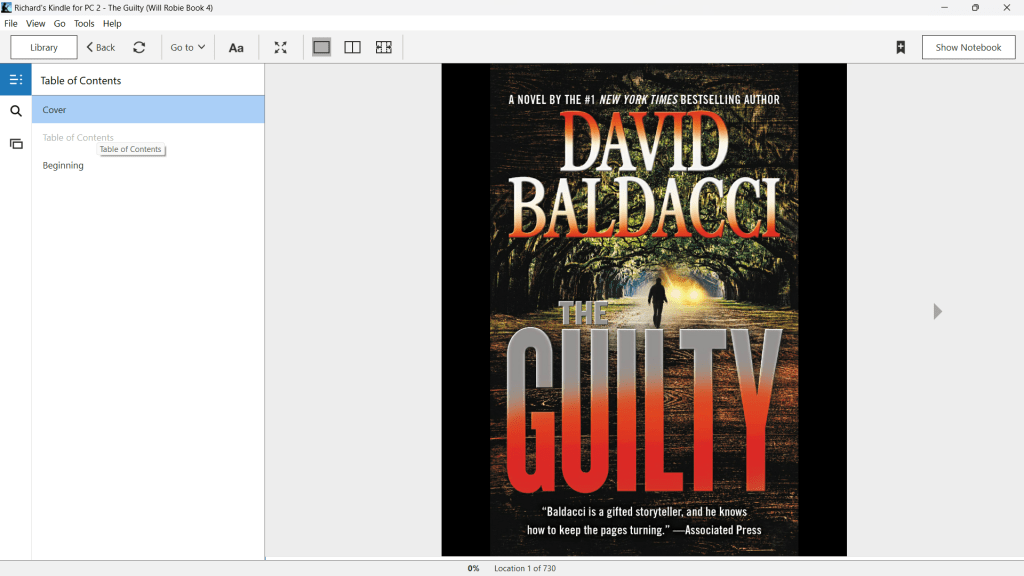
Novels:

Amazon abstract:

After failing a critical assignment overseas, Will Robie must investigate a murder accusation against his father–but to save him, he’ll have to face a violent and deadly fallout in this New York Times bestselling thriller.

Will Robie escaped his small Gulf Coast hometown of Cantrell, Mississippi after high school, severing all personal ties, and never looked back. Not until the unimaginable occurs. His father, Dan Robie, has been arrested and charged with murder.

Father and son haven’t spoken or seen each other since the day Robie left town. In that time, Dan Robie–a local attorney and pillar of the community–has been elected town judge. Despite this, most of Cantrell is aligned against Dan. His guilt is assumed.

To make matters worse, Dan has refused to do anything to defend himself. When Robie tries to help, his father responds only with anger and defiance. Could Dan really be guilty?

With the equally formidable Jessica Reel at his side, Robie ignores his father’s wishes and begins his own desperate investigation into the case. But Robie is now a stranger to his hometown, an outsider, a man who has forsaken his past and his family. His attempts to save his father are met with distrust and skepticism…and violence.

Unlike the missions Robie undertook in the service of his country, where his target was clearly defined, digging into his father’s case only reveals more questions. Robie is drawn into the hidden underside of Cantrell, where he must face the unexpected and possibly deadly consequences of the long-ago choices made by father and son. And this time, there may be no escape for either of them.


Blinkest fiction book summaries:

None today.

Music:

None today.


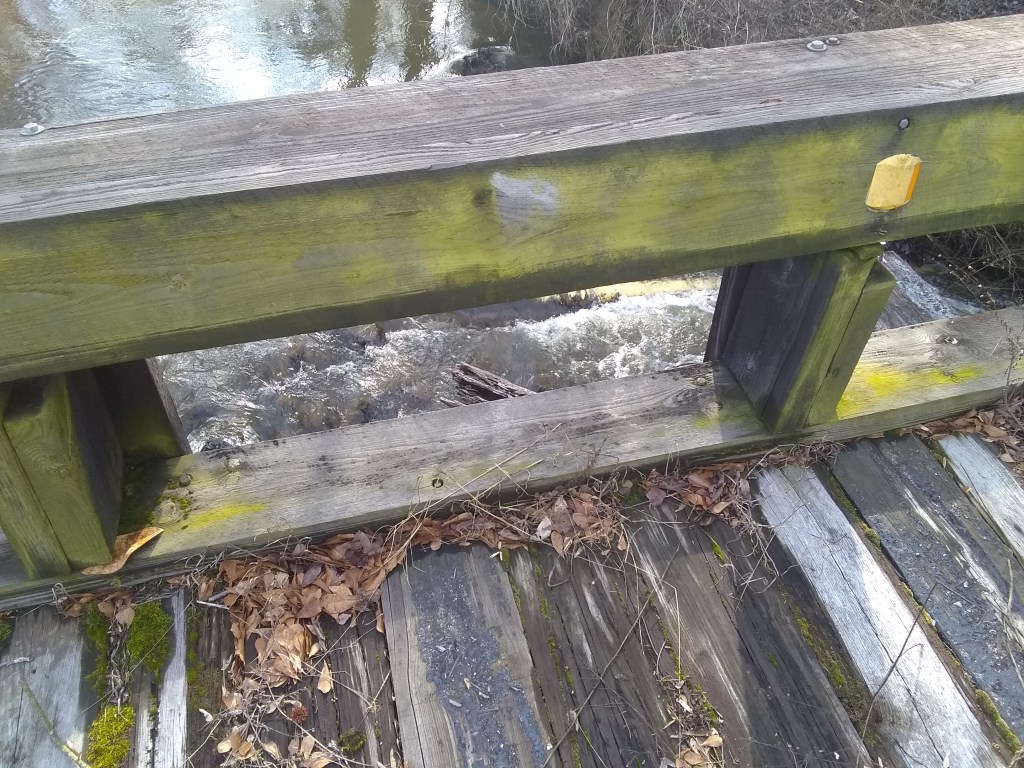
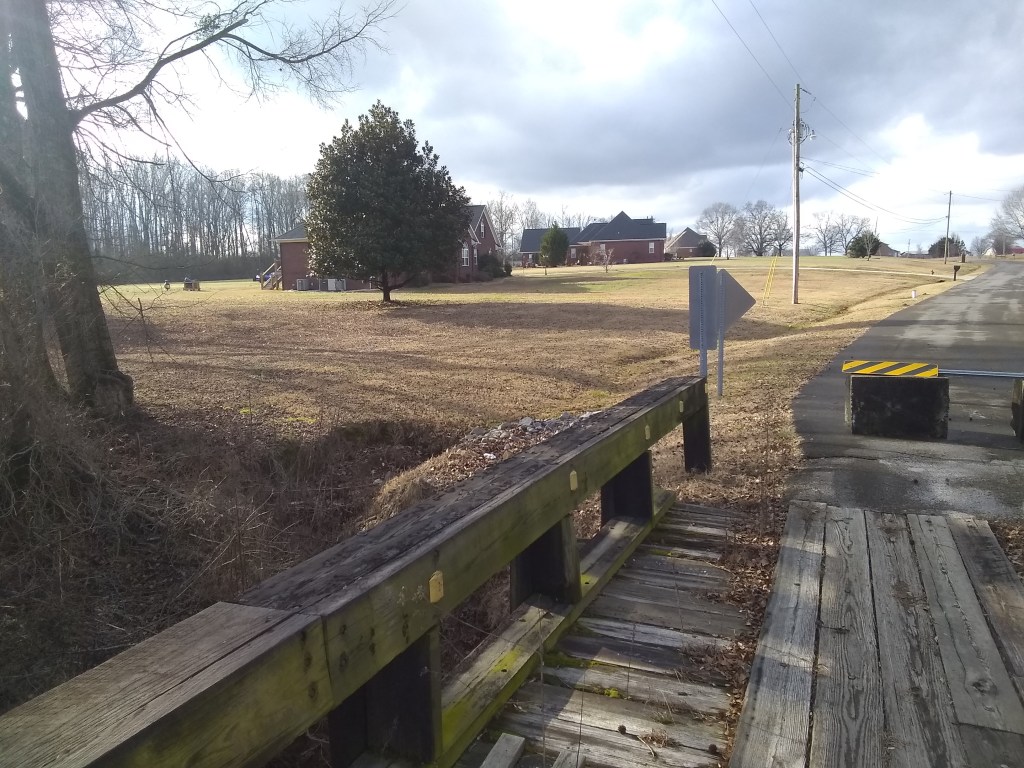
Here’s a few photos from previous riding adventures:

01/04/24 Biking & Listening

Here’s today’s bike ride metrics. Temperature at beginning of ride: 41 degrees. Clear and cold. Mild wind. 


Photos from today’s ride:

None today.

Why I ride:

Biking is something I both love and hate. The conflicting emotions arise from the undeniable physical effort it demands. However, this exertion is precisely what makes it an excellent form of exercise. Most days, I dedicate over an hour to my cycling routine, and in doing so, I’ve discovered a unique opportunity to enjoy a good book or podcast. The rhythmic pedaling and the wind against my face create a calming backdrop that allows me to fully immerse myself in the content. In these moments, the time spent on the bike seems worthwhile, as I can’t help but appreciate the mental and physical rewards it offers.

I especially like having ridden. The post-biking feeling is one of pure satisfaction. The endorphin rush, coupled with a sense of accomplishment, makes the initial struggle and fatigue worthwhile. As I dismount and catch my breath, I relish the sensation of having conquered the challenge, both physically and mentally. It’s a reminder that the things we sometimes love to hate can often be the ones that bring us the most fulfillment. In the end, the love-hate relationship with biking only deepens my appreciation for the sport, as it continually pushes me to overcome my own limitations and embrace the rewards that follow the effort.


Why you should ride:

Encourages Relaxation:

Cycling is not just a form of physical exercise; it also has a profound ability to encourage relaxation. Here are various ways in which cycling contributes to a relaxed state of mind and body:

  • Physical Activity and Stress Reduction: Engaging in physical activities like cycling can reduce the body’s stress responses. Exercise triggers the release of endorphins, the body’s natural painkillers and mood elevators, which promote relaxation. The physical effort of cycling also helps to use up the energy created by stress, aiding in calming the body.
  • Rhythmic Pedaling as a Meditative Practice: The repetitive nature of cycling, with its steady, rhythmic pedaling, can have a meditative effect. This rhythmic motion can help focus the mind, drawing attention away from stressful thoughts and allowing a sense of calm.
  • Outdoor and Nature Exposure: Cycling outdoors, especially in natural or scenic settings, can enhance relaxation. Being in nature is known to reduce stress and promote a sense of peace. The sights, sounds, and smells of the outdoors can be very soothing.
  • Mindfulness and Presence: Cycling requires a level of present-moment awareness, which is a key aspect of mindfulness. Practicing mindfulness has been shown to reduce stress and promote relaxation. When cycling, the focus on the immediate environment and bodily sensations can help achieve this state.
  • Cardiovascular Health Benefits: Regular cycling improves cardiovascular health, which can help in reducing tension in the body. A healthier heart and circulatory system can contribute to a more relaxed state overall.
  • Reduces Mental Clutter: A bike ride offers a break from daily routines and responsibilities, providing an opportunity to clear the mind. This mental break can be refreshing and relaxing, especially after a long day or during stressful periods.
  • Social Relaxation: For those who enjoy group rides, the social aspect of cycling can be relaxing. Social interactions and the sense of community found in cycling groups can contribute to overall relaxation and well-being.
  • Achievement and Satisfaction: Completing a challenging ride or reaching a cycling goal can bring about a sense of achievement and satisfaction. This positive feeling can promote a relaxed state, as it counters feelings of stress and anxiety.
  • End of Ride Relaxation Response: After a cycling session, the body often experiences a natural relaxation response. The decrease in physical activity coupled with the sense of accomplishment can lead to a profound state of relaxation.
  • Improves Sleep Quality: As cycling improves sleep quality, it indirectly promotes relaxation. Better sleep means the body is better rested and more capable of handling stress, leading to a more relaxed state during waking hours.

In summary, cycling’s ability to encourage relaxation is multifaceted, combining physical, mental, and emotional elements. By incorporating regular cycling into one’s lifestyle, it’s possible to cultivate a more relaxed state of being, beneficial for overall health and well-being.


Please watch

Here’s a couple of links to groups I like. Hopefully, they’ll encourage you to start riding a bike, no matter your age.

Cycling for those aged 70+(opens in a new tab)


Solitary Cycling(opens in a new tab)


My bike:

A Rockhopper by Specialized. I purchased it November 2021 from Venture Out in Guntersville; Mike is top notch! So is the bike. The ‘old’ man seat was salvaged from an old Walmart bike. Seat replaced with new one from Venture Out.


What I’m listening to:

NONFICTION

Blinkest summaries

None today.

Podcasts:

None today.

Waking Up app series/courses:

Attending to Freedom.

FICTION

Novels:

Amazon abstract:

After failing a critical assignment overseas, Will Robie must investigate a murder accusation against his father–but to save him, he’ll have to face a violent and deadly fallout in this New York Times bestselling thriller.

Will Robie escaped his small Gulf Coast hometown of Cantrell, Mississippi after high school, severing all personal ties, and never looked back. Not until the unimaginable occurs. His father, Dan Robie, has been arrested and charged with murder.

Father and son haven’t spoken or seen each other since the day Robie left town. In that time, Dan Robie–a local attorney and pillar of the community–has been elected town judge. Despite this, most of Cantrell is aligned against Dan. His guilt is assumed.

To make matters worse, Dan has refused to do anything to defend himself. When Robie tries to help, his father responds only with anger and defiance. Could Dan really be guilty?

With the equally formidable Jessica Reel at his side, Robie ignores his father’s wishes and begins his own desperate investigation into the case. But Robie is now a stranger to his hometown, an outsider, a man who has forsaken his past and his family. His attempts to save his father are met with distrust and skepticism…and violence.

Unlike the missions Robie undertook in the service of his country, where his target was clearly defined, digging into his father’s case only reveals more questions. Robie is drawn into the hidden underside of Cantrell, where he must face the unexpected and possibly deadly consequences of the long-ago choices made by father and son. And this time, there may be no escape for either of them.


Blinkest fiction book summaries:

None today.

Music:

None today.


Here’s a few photos from previous riding adventures:

Novel Excerpts–The Boaz Scorekeeper, Chapter 82

The primary aim of the "Novel Excerpts" blog category is to showcase my creative writing, specifically from the novels I've written. Hopefully, these posts will provide a glimpse into my storytelling style, themes, and narrative skills. It's an opportunity to share my artistic expressions and the worlds I've created through my novels.
The Boaz Scorekeeper, written in 2017, is my second novel. I'll post it a chapter a day over the next few weeks.

The next section of Nate’s lengthy article was titled, The 1926 Murder of a Homosexual Couple.

In February 1926, David Howsley and Baynard Reed moved to Boaz from San Francisco.  Reed’s aunt had passed away in 1925 and left him her house on Elm Street, and Reed Flowers and Gifts, the only such shop in Boaz.  It was a small operation that allowed Sonya Reed to eke out a semi-comfortable living but not big enough to garner Club Eden’s attention.  That is, until it found out David and Baynard were homosexuals.  By the time the Club found out about the two men’s sexual orientation they had already leased a larger building for a flower shop. The new facility was next to present day Eaglemart and offered much better exposure to potential business.  The old building, which Sonya owned, was small, on a back street, and suffered from fifteen years of sagging floors and leaking roof.

It was on a Monday, the first after the July 4th City wide celebration, that early morning customers saw the sign on the Shop’s front door.  It read, “Thanks for all your support but we miss the West Coast.  Good luck and God Bless.”  Within two weeks, Anna Criar, the woman who the following year would become the wife of Benjamin Ericson, had reopened the shop as “Heaven’s Scent.”

Nate shared the story Rudolph had told him.  He said that he and his fellow club members thought interracial marriage was the most despicable thing they would ever have to deal with.  That was until homosexuals Howsley and Reed moved to town.  Rudolph admitted that Club Eden was on very thin ice from a Scriptural standpoint concerning their hatred of colored people but clearly the Bible supported their virulence against homosexuality.

At first, Rudolph had told Nate that the Club had simply threatened harm if the couple didn’t leave Boaz, and that violence was unnecessary.  With the Huntsville Dive Club’s discovery in May, Nate knew Rudolph was lying.  Ultimately, on Nate’s second visit to Creekside Nursing Home, Rudolph admitted that Club Eden had abducted and murdered the two men.

Rudolph said Farris Billingsley and Benjamin Ericson watched the two men for nearly three weeks, enough to learn their weekend routine. On Sundays, Howsley and Reed would take their two English Terriers to R.A. Mitchell’s place outside Gadsden. The couple had met the former mayor of Gadsden shortly after opening their shop.  He had come into town to purchase flowers for a cousin who had passed away.  The three hit it off and Mitchell invited them to visit his place in Gadsden.  The property, which later became Noccalula Falls, was the perfect place for an outdoor adventure: hiking, swimming, and picnicking.

During Howsley and Reed’s fourth Sunday trip to Mitchell’s, Eugene Adams and Samuel Radford accosted the two men as their Model T Ford made a horseshoe turn coming up Cox Gap. Rudolph Tillman and Farris Billingsley were standing outside the raised hood of Farris’ 1923 Buick Master.  In less than five minutes, the four Club Eden men had the homosexual couple tied up in the back seat of the Buick.  Adams drove the Howsley’s Model T Ford while Radford accompanied him. 

When they arrived at Club Eden’s 288-acre headquarters, Benjamin Ericson had a two-horse wagon ready.  The two men were removed from the Buick, and loaded onto the back of the wagon.    They were carried to the backside of the land and walked inside a cave containing a spring that fed the creek that ran behind the Club’s cabin.  Eugene Adams shot David Howsley, and Samuel Radford shot Baynard Reed.  The bodies were left there until 1988 when their remains were boxed up and buried 80 feet below the surface of the man-made Aurora Lake. 

Novel Excerpts–The Boaz Scorekeeper, Chapter 81

The primary aim of the "Novel Excerpts" blog category is to showcase my creative writing, specifically from the novels I've written. Hopefully, these posts will provide a glimpse into my storytelling style, themes, and narrative skills. It's an opportunity to share my artistic expressions and the worlds I've created through my novels.
The Boaz Scorekeeper, written in 2017, is my second novel. I'll post it a chapter a day over the next few weeks.

The next section of Nate’s lengthy article was titled, The 1901 Murder of a Black Man and his Son.

Success for the five prominent families didn’t come uninterrupted.  Things changed forever in 1901.  Waymon’s long held belief that all men were created in God’s image was radically altered when Leroy Jones, his wife Eliza, and their two children, Sally and Toby, moved into the Boaz community.  Waymon had never had much contact with black folks even though for the first twelve years of his life he lived where there were hundreds of slaves on dozens of plantations all within a few miles of downtown Jackson, Georgia.  But, Waymon had never spoken with one.  His father was a preacher and they lived in town.  His father forbid Waymon from engaging with black folks.

At Mercer Preparatory School, Waymon learned from Professor Sherwood that Abraham Lincoln believed Negroes were inferior to whites and that the two races should not mix socially or politically.  But Waymon, deeply influenced by Sherwood and his infatuation with the Book of Ruth and the colorblind Boaz, remained, at a minimum, neutral in his beliefs. 

This changed when Mary, his daughter, feel in love with Toby Jones. The two met at Red Apple church in the late Spring of 1901.  Mary, at 19, had traveled with a group of ladies from First Baptist Church of Christ to Red Apple to host a Vacation Bible School for a sister church whose pastor had been killed by a falling tree during a heavy snow storm the past February.

Toby and his family lived across the road from Red Apple Church alongside the Church’s cemetery.  Toby and his sister Sally had been out working in their garden when Mary was strolling through the cemetery before their School started that morning.  Toby was tall and handsome with light brown skin.  Mary, for the first time in her life, felt sexual desire as she watched Toby working a middle buster plow behind a short, white pony. 

Over the next nine days of Bible School, Mary visited the cemetery every morning, and someway Toby found a reason to always be in the family garden.  After three days, they were talking.  Mary was surprised how clearly and intelligently Toby spoke and conversed.  She had read many books that all seemed to paint Negroes as ignorant and unsavory.  On day four, they were sharing thoughts of their favorite books and stories.  Mary invited Toby to town to visit the new library that had recently opened, but Toby declined saying that wouldn’t be possible right now.  On day five, they were sitting on a stump toward the back side of the cemetery unseen to anyone across the road at the Church.  Day eleven was a Saturday, the day after Vacation Bible School had ended.  Mary got up early and walked the three miles and met Toby, as planned, at the old oak stump.  They spent all day walking and talking, sitting and laying on a blanket Toby had brought.  They enjoyed a picnic down by Clear Creek that ran behind the Jones’ place. As late afternoon approached, Mary stood up and packed her basket.  Toby rolled up their blanket and they returned to the old oak stump.  It was there their physical intimacy began.  But, not because of Toby’s initiation.  It was Mary who reached out and pulled Toby’s face into hers for their first kiss.  Mary, standing on top of the old oak stump, was face to face with the man, the Negro man, she had fallen in love with in less than two weeks.  Neither one of them realized that Matt Rawlings was watching their every move through a grove of white oaks on the other side of the fence as he sat fishing alongside a long-neglected pond.

Nate shared that he could have written an entire article about the sweet and innocent love affair between Mary and Toby.  However, his editors wouldn’t allow it.  Nate shared how Waymon found out what Mary was up to and forbid her ever seeing Toby Jones again.  Everyone could predict her next move.  Waymon next went to visit Leroy Jones and the meeting didn’t go well.  Leroy’s beliefs sounded like Waymon’s, well, the former Waymon.  By now, Waymon’s true heart had erupted and he found justification in Scripture for his current belief that whites and blacks should not date or marry, or otherwise intermingle.  Mary’s behavior and rejection of him led to Waymon’s pure hatred.  This was the birth of Waymon’s lifelong bigotry toward people of color.

In early Fall, Leroy and his son Toby, went missing.  Four days later they were found, and a week later Leroy’s wife and daughter moved back to their hometown of Gadsden.  Waymon and the other four members of Club Eden had lured the two Negroes to Nedmore Grocery where supposedly the store owner held a package for them that he had mistakenly picked up at the Red Apple Post Office.  A mile before reaching Nedmore, Waymon and company surprised the two who had slowed their small buggy to cross a creek.  Rumors had it that Earl Adams and Rufus Radford hung Leroy from a low-hanging oak limb, and Frasier Billingsley and Abraham Ericson stoned Toby and cut off his private part as he lay dying.  Four days later, their bodies were found where the five members of Club Eden had left them.  Leroy and Toby Jones’ killers were never found.  Nate declared that it is more than rumor that Mary, a week after Eliza and Sally moved away from Red Apple, left Boaz to never return.

01/03/24 Biking & Listening

Here’s today’s bike ride metrics. Temperature at beginning of ride: 41 degrees. Clear and cold. No wind. 


Photos from today’s ride:

None today.

Why I ride:

Biking is something I both love and hate. The conflicting emotions arise from the undeniable physical effort it demands. However, this exertion is precisely what makes it an excellent form of exercise. Most days, I dedicate over an hour to my cycling routine, and in doing so, I’ve discovered a unique opportunity to enjoy a good book or podcast. The rhythmic pedaling and the wind against my face create a calming backdrop that allows me to fully immerse myself in the content. In these moments, the time spent on the bike seems worthwhile, as I can’t help but appreciate the mental and physical rewards it offers.

I especially like having ridden. The post-biking feeling is one of pure satisfaction. The endorphin rush, coupled with a sense of accomplishment, makes the initial struggle and fatigue worthwhile. As I dismount and catch my breath, I relish the sensation of having conquered the challenge, both physically and mentally. It’s a reminder that the things we sometimes love to hate can often be the ones that bring us the most fulfillment. In the end, the love-hate relationship with biking only deepens my appreciation for the sport, as it continually pushes me to overcome my own limitations and embrace the rewards that follow the effort.


Why you should ride:

Encourages Relaxation:

Cycling is not just a form of physical exercise; it also has a profound ability to encourage relaxation. Here are various ways in which cycling contributes to a relaxed state of mind and body:

  • Physical Activity and Stress Reduction: Engaging in physical activities like cycling can reduce the body’s stress responses. Exercise triggers the release of endorphins, the body’s natural painkillers and mood elevators, which promote relaxation. The physical effort of cycling also helps to use up the energy created by stress, aiding in calming the body.
  • Rhythmic Pedaling as a Meditative Practice: The repetitive nature of cycling, with its steady, rhythmic pedaling, can have a meditative effect. This rhythmic motion can help focus the mind, drawing attention away from stressful thoughts and allowing a sense of calm.
  • Outdoor and Nature Exposure: Cycling outdoors, especially in natural or scenic settings, can enhance relaxation. Being in nature is known to reduce stress and promote a sense of peace. The sights, sounds, and smells of the outdoors can be very soothing.
  • Mindfulness and Presence: Cycling requires a level of present-moment awareness, which is a key aspect of mindfulness. Practicing mindfulness has been shown to reduce stress and promote relaxation. When cycling, the focus on the immediate environment and bodily sensations can help achieve this state.
  • Cardiovascular Health Benefits: Regular cycling improves cardiovascular health, which can help in reducing tension in the body. A healthier heart and circulatory system can contribute to a more relaxed state overall.
  • Reduces Mental Clutter: A bike ride offers a break from daily routines and responsibilities, providing an opportunity to clear the mind. This mental break can be refreshing and relaxing, especially after a long day or during stressful periods.
  • Social Relaxation: For those who enjoy group rides, the social aspect of cycling can be relaxing. Social interactions and the sense of community found in cycling groups can contribute to overall relaxation and well-being.
  • Achievement and Satisfaction: Completing a challenging ride or reaching a cycling goal can bring about a sense of achievement and satisfaction. This positive feeling can promote a relaxed state, as it counters feelings of stress and anxiety.
  • End of Ride Relaxation Response: After a cycling session, the body often experiences a natural relaxation response. The decrease in physical activity coupled with the sense of accomplishment can lead to a profound state of relaxation.
  • Improves Sleep Quality: As cycling improves sleep quality, it indirectly promotes relaxation. Better sleep means the body is better rested and more capable of handling stress, leading to a more relaxed state during waking hours.

In summary, cycling’s ability to encourage relaxation is multifaceted, combining physical, mental, and emotional elements. By incorporating regular cycling into one’s lifestyle, it’s possible to cultivate a more relaxed state of being, beneficial for overall health and well-being.


Please watch

Here’s a couple of links to groups I like. Hopefully, they’ll encourage you to start riding a bike, no matter your age.

Cycling for those aged 70+(opens in a new tab)


Solitary Cycling(opens in a new tab)


My bike:

A Rockhopper by Specialized. I purchased it November 2021 from Venture Out in Guntersville; Mike is top notch! So is the bike. The ‘old’ man seat was salvaged from an old Walmart bike. Seat replaced with new one from Venture Out.


What I’m listening to:

NONFICTION

Blinkest summaries

None today.

Podcasts:

None today.

Waking Up app series/courses:

None today.

FICTION

Novels:

Amazon abstract:

After failing a critical assignment overseas, Will Robie must investigate a murder accusation against his father–but to save him, he’ll have to face a violent and deadly fallout in this New York Times bestselling thriller.

Will Robie escaped his small Gulf Coast hometown of Cantrell, Mississippi after high school, severing all personal ties, and never looked back. Not until the unimaginable occurs. His father, Dan Robie, has been arrested and charged with murder.

Father and son haven’t spoken or seen each other since the day Robie left town. In that time, Dan Robie–a local attorney and pillar of the community–has been elected town judge. Despite this, most of Cantrell is aligned against Dan. His guilt is assumed.

To make matters worse, Dan has refused to do anything to defend himself. When Robie tries to help, his father responds only with anger and defiance. Could Dan really be guilty?

With the equally formidable Jessica Reel at his side, Robie ignores his father’s wishes and begins his own desperate investigation into the case. But Robie is now a stranger to his hometown, an outsider, a man who has forsaken his past and his family. His attempts to save his father are met with distrust and skepticism…and violence.

Unlike the missions Robie undertook in the service of his country, where his target was clearly defined, digging into his father’s case only reveals more questions. Robie is drawn into the hidden underside of Cantrell, where he must face the unexpected and possibly deadly consequences of the long-ago choices made by father and son. And this time, there may be no escape for either of them.


Blinkest fiction book summaries:

None today.

Music:

None today.


Here’s a few photos from previous riding adventures:

Novel Excerpts–The Boaz Scorekeeper, Chapter 80

The primary aim of the "Novel Excerpts" blog category is to showcase my creative writing, specifically from the novels I've written. Hopefully, these posts will provide a glimpse into my storytelling style, themes, and narrative skills. It's an opportunity to share my artistic expressions and the worlds I've created through my novels.
The Boaz Scorekeeper, written in 2017, is my second novel. I'll post it a chapter a day over the next few weeks.

Nate’s New York Times article was published Sunday, July 1st.  I couldn’t have been more surprised.  I was expecting a slew of facts about Gina and Alma’s murder and all the indictments that were pending against Wade, James, their fathers, Raymond Radford and Franklin Ericson, and the three Boaz Police officers.  Nate met my expectations here but the remainder of his article reached much farther back in history.  I also thought the article title was rather odd: “City of Possibilities: A Southern Town Turns Good Myth into Bad Money.”

Up front, Nate shared his chief source, Rudolph Tillman (DOB 1911), the 106-year-old father of Walter Tillman, and grandfather of Wade Tillman.  Rudolph resided at Creekside Nursing Home in Boaz.  Years ago, Parkinson’s took away his mobility, but at the time of Nate’s interviews, his mind was a near perfect computer.

Nate’s article revealed Rudolph’s story, it was a story he had heard from the lips of his father, Morton Tillman (DOB 1873/DOD 1962), and his grandfather, Waymon Tillman (DOB 1844/DOD 1937).

Waymon was born October 16, 1844 in Jackson, Georgia, the county seat of Butt’s County located midway between Atlanta and Macon. He had an exceptional intellect and, at age 13, was accepted to Mercer University Preparatory School in Penfield, some 70 miles away.  Here, he was exposed to the Hebrew language, Old Testament textual criticism, and professor and Baptist minister Adiel Sherwood.  It was Sherwood’s love of the Biblical story of Boaz and Ruth, and his disdain for Abraham Lincoln, that rooted deep into Waymon’s subconsciousness.

Sherwood taught that Boaz was the perfect model of Christ, and that Waymon and his fellow students would find deep meaning and life purpose by adopting a redemptive mindset.  He portrayed Boaz as the type leader all decent men should follow, often contrasting him with the bigoted Lincoln.

Sherwood was from Macon and subscribed to the Georgia Telegraph, a daily newspaper that was adamantly against the tall and lanky senator from Springfield, Illinois.  In the Fall of 1858, Sherwood had shared with his class an article from the Telegraph which included a statement Lincoln had made on September 18th during his fourth debate with Stephen A. Douglas at Charleston, Illinois:

“I will say then that I am not, nor ever have been in favor of bringing about in anyway the social and political equality of the white and black races – that I am not nor ever have been in favor of making voters or jurors of negroes, nor of qualifying them to hold office, nor to intermarry with white people; and I will say in addition to this that there is a physical difference between the white and black races which I believe will forever forbid the two races living together on terms of social and political equality. And, in so much as they cannot so live, while they do remain together there must be the position of superior and inferior, and I as much as any other man am in favor of having the superior position assigned to the white race. I say upon this occasion I do not perceive that because the white man is to have the superior position the negro should be denied everything.”

Sherwood taught that, unlike Lincoln, Boaz was colorblind, accepting the Moab woman named Ruth without hesitation.  Boaz saw her, not as a dark-skinned freak of nature, but simply a human being, made, like him, in God’s image. The professor painted Lincoln as more against the Southern way of life with its plantations and slaves, than for the best interests of the Negro. Sherwood’s viewpoint that blacks should have both social and political equality was certainly a minority view in the deep South just three years before the outbreak of the Civil War.

Waymon’s love for and faith in Yahweh grew by leaps and bounds during his first year at Mercer.  Things changed when Azoulay Waxman, a visiting professor from Jerusalem, showed up during the summer of Waymon’s second year.  Waxman was a middle-aged man whose forefathers were all scholars of the Hebrew language and the Jewish faith.  It was during an August 1859 lecture on the Exodus story, where Moses led the Israelites out of Egypt and on their 40 years of wandering before reaching the Promised Land, that Waxman praised the power of myth and legend.  He asked the class to consider the affects the Exodus story and the life of Moses had had on the world even though he never lived.  This statement caused an uproar in class and led to Waxman saying that the value of story is not dependent on the historical veracity of its occurrence, but on the lesson, it teaches and, most importantly, whether people believe it to be true.  Waymon would never forget the exact words Waxman said at the end of that day’s lecture. “I’m shocked that all of you, for the 15 or so years you have been living, actually believed that Adam and Eve, Noah, Moses, Abraham, David, all these Old Testament characters were historical figures.”

Waxman and his teaching was a light-bulb time for Waymon. During the remainder of his days at Mercer, he never doubted God’s existence but he interpreted scripture in a whole new light.  Sherwood returned many times to the story of Boaz and Ruth with a clear objective of persuading Waymon and his fellow students to become true leaders by rejecting stereotypes and prejudice and by reaching out to the weak, colored, and disadvantaged. However, Waymon’s Hebrew interpretation approach, buttressed by Waxman’s revelation, developed into a rather practical method. Concerning the story of Boaz and Ruth, Waymon’s interest gravitated to Naomi, a character Professor Sherwood didn’t say much about.  Reading and searching the story for its usefulness, Waymon concluded that it was Naomi’s desire to improve her and Ruth’s lot in life that was the true nugget of wisdom.  Naomi was a plotter and a planner, a real-life schemer. Even though Boaz was kind and generous to Ruth by allowing her to glean his barley fields, it was Naomi that recognized opportunity when she saw it.  Her thankfulness for the blessing of a steady supply of food didn’t deter her from shooting for the stars.  Her plot to live like a queen at the expense of Boaz was what she wanted for her and her daughter-in-law Ruth. 

In June 1861, Waymon graduated from Mercer Preparatory School. He left Penfield enlightened by the power of story and how it didn’t have to be historically true for the multitudes to believe it was true.  His years at Mercer had produced in him the core principle that having a selfish and hidden purpose is acceptable if you are improving the life of those around you. 

Another thing Waymon had learned at Mercer, was that a true leader is willing to fight for what he believes.  Two days after returning to Jackson, Waymon forged his parents’ name on enlistment papers and joined the Confederate army.  His purpose was not to fight for the right to own slaves but, as a chaplain, to spread the redemptive, but practical, message of Old Testament stories. Waymon would spend the next four years attempting to persuade young and scared soldiers to put their faith and trust in the Hebrew God who had a practical plan and purpose for their lives.

After four years of dodging bullets, enduring near-starvation, and searching for the hand of God among a pathway of bloody, lifeless bodies, Waymon returned to a much-destroyed Jackson.  It was there, 1865, he met Earl Adams, Rufus Radford, Frasier Billingsley, and Abraham Ericson.  All these men, except Frasier, had fought in the Civil War.  Over the next fifteen years, they formed a brotherhood of sorts, centered mainly around their failed efforts to find direction and purpose, spending most of their time trying to till, tease, or cuss-out a living from the red Georgia clay.  Finally, Waymon told them it was time to be a Naomi and go looking for their redeemer.  They were easy to convince because they all knew, sure as hell, their redeemer didn’t live in Jackson, Georgia.

On a cold and snowy April morning in 1880, the five men, along with their wives and five children, left Jackson in wagons loaded down with every possession they owned.  Their intended destination was Memphis, Tennessee.  It seemed the further west they traveled the more they heard about a place called Sand Mountain.  Two people, at two different places, had even referred to a high and lush Garden of Eden.  Nine days later, they lost two wagons and nearly fifty-percent of their worldly goods in the flood waters of the Coosa River in a valley-community known as Gadsden, Alabama.

Dejected, depressed, and near defeat, the five men lost all vision and purpose and literally sat down to die.  Gadsden wouldn’t have been a bad place to settle.  It was a bustling community lying along the Coosa River, a community filled with a diverse population of hard-working whites, blacks, and American Indians.  Named Gadsden in 1845, the city became the county seat of Etowah County. 

The group spent three days licking their wounds, and half-way hoping to just die.  They would have probably turned over and pulled their blankets over their heads if not for an itinerant preacher named Thaddeus Gibbons who set-up camp just upriver and began bellowing out a ‘never-die’ sermon rooted in the story of David and Goliath from 1st Samuel.  It seemed Gibbons preached non-stop, and Waymon listened non-stop.

Four days after losing a battle with a belching and churning river, Waymon was determined not to lose the war.  He pushed and prodded, and shouted and screamed, until the fifteen men, women, and children were rolling northward.  A day later, they limped and crawled atop Sand Mountain, ten miles north-west of Gadsden, and camped that night under a star-filled sky in what became the Egypt community, sharing a meal of their remaining beef jerky and stale bread.

Before turning in for the night, Waymon told a story describing how Naomi truly felt upon her return to Bethlehem after ten years in Moab.  “Don’t call me Naomi,” she told them. “Call me Mara, because the Almighty has made my life very bitter.  I went away full, but the Lord has brought me back empty. Why call me Naomi?  The Lord has afflicted me; the Almighty has brought misfortune upon me.” Waymon encouraged the tired and discouraged around him to take heart.  Just like Naomi and Ruth found their paradise, they were now on the very outskirts of their own Garden of Eden. He encouraged them to take heart and seek the Lord through the night.  The next morning, Waymon announced that during the darkest hour of the night, God had revealed himself, ordering them to forsake their Memphis plans and to set down roots in the next community they reached.  Waymon declared that God was calling them to form an alliance before reaching their new home. He told the group that God had commanded them to form a secret club known as Club Eden and swear an oath that they would forever remain loyal to each other.  After packing, the group of fifteen set off north on a narrow and rutty trail carved through a forest of pine, oak, and hickory.

At mid-afternoon, they pulled into a bustling little community they quickly learned was called Sparkstown.  They were greeted warmly and kindly and experienced generosity like they had never known, hardly even realizing how they had found their way to the Garden of Eden. Abraham Ericson always speculated God had sent a mighty chariot commanded by the Archangel Michael who had swooped down and flew them all, including three wagons and six horses, to a barley-filled heaven on earth.

By early Fall, all five families were living in small cabins, the result of the community’s gift of labor, logs, lumber, and love.  Although it could have been, in part, from the widespread belief that Sparkstown needed a church with an educated and visionary preacher.  While Waymon preached and ministered, Earl Adams, Rufus Radford, Frasier Billingsley, and Abraham Ericson were busy building houses and learning they were not the only folks who heralded from Butts County, Georgia.  An eleven wagon, forty-two-person caravan known as the Sparks Wagon Train of 1878 had taken only eleven days to make their way to Eden from central Georgia. It was this group that the vibrant community atop Sand Mountain had taken its name, Sparkstown.

Over the next six years, the five families, secretly known as Club Eden, built a foundation of prosperity that, to many, appeared eternal.  Even though the group believed it was a miracle from God that brought them to Sparkstown, they all knew that it was Waymon and his belief in the practicality of Naomi that spawned their success.  He again called on his education from Mercer Preparatory School, this time from an economics course taught by the School’s founder.  It was there that Waymon learned there are five key ingredients for a thriving community, and that whoever controlled these, controlled the community.  It was this structure that the Club Eden families pursued:  Earl Adams and transportation (horses, mules, oxen, wagons and related gear); Rufus Radford and hardware and building materials; Frasier Billingsley and banking; Abraham Ericson and real estate trading and development.  Finally, and to Waymon, the most important ingredient of all, religion, more particularly, the Christian faith.

It was Waymon’s discovery at Mercer Preparatory School, at the feet of visiting professor, Azoulay Waxman, that grounded Club Eden’s overarching plan.  Controlling the four key areas of commerce was paramount, but controlling the minds of the general citizenry was the deeply rooted heart. Waxman’s revelation that virtually every Bible story was legendary but still taken as absolute truth fed Waymon’s idea to secure his own future.  If he could contrive a story, no doubt tied to his favorite Old Testament character, the infamous Naomi, the community would hold him invincible forever. In his sermons, he began sharing how at Mercer he had learned he was a direct descendant of the Biblical Boaz, and how God had confirmed this in a revelation during their trip to Sand Mountain and the informally named Sparkstown.

Waymon’s luck could not have been better or more valuably timed.  In mid-summer 1886 George M. Emory Mann applied for a post office. State authorities required a formal name. Rumors have it that it was a simple meal that generated the winning name for the small but vibrant community.  The following Sunday, Mann asked his dinner guests their thoughts for a name.  The Henry McCord’s, Mann’s in-laws, shared how Pastor Tillman had preached that day on the book of Ruth and how a man named Boaz had cared for this Moabite woman and her Jewish mother-in-law.  Mrs. McCord had said that Boaz was a true man of God, exemplifying not only generosity but a lifestyle not blinded by prejudice.  She shared how Boaz had treated Ruth, a dark-skinned foreigner, as an equal human being.  Mr. McCord then exclaimed that there could be no better name for a city set on a hill than Boaz, a man of prosperity and piousness.  Mann’s decision was made and the name Boaz was approved.  Now, Waymon’s story gained the strength it needed.  The next Sunday he announced how blessed he was that God had favored him, an ancestor of the Biblical Boaz, to live in a city that was named, uninfluenced by him, in honor of a true redeemer.

Success continued in every way for the Tillman’s and the other four Club Eden families.  In 1897 the five men formally organized the Club by creating The Garden, Ltd.  The wives were excluded.  Club Eden became a man’s club.  By now, there were five other entities surrounding the five club members: First Baptist Church of Christ, Adams Transportation, Radford Hardware & Building Supplies, First State Bank of Boaz, and Ericson Real Estate Sales & Development.

01/02/24 Biking & Listening

Here’s today’s bike ride metrics. Temperature at beginning of ride: 43 degrees. Clear and cold. No wind. 


Photos from today’s ride:

None today.

Why I ride:

Biking is something I both love and hate. The conflicting emotions arise from the undeniable physical effort it demands. However, this exertion is precisely what makes it an excellent form of exercise. Most days, I dedicate over an hour to my cycling routine, and in doing so, I’ve discovered a unique opportunity to enjoy a good book or podcast. The rhythmic pedaling and the wind against my face create a calming backdrop that allows me to fully immerse myself in the content. In these moments, the time spent on the bike seems worthwhile, as I can’t help but appreciate the mental and physical rewards it offers.

I especially like having ridden. The post-biking feeling is one of pure satisfaction. The endorphin rush, coupled with a sense of accomplishment, makes the initial struggle and fatigue worthwhile. As I dismount and catch my breath, I relish the sensation of having conquered the challenge, both physically and mentally. It’s a reminder that the things we sometimes love to hate can often be the ones that bring us the most fulfillment. In the end, the love-hate relationship with biking only deepens my appreciation for the sport, as it continually pushes me to overcome my own limitations and embrace the rewards that follow the effort.


Why you should ride:

Encourages Relaxation:

Cycling is not just a form of physical exercise; it also has a profound ability to encourage relaxation. Here are various ways in which cycling contributes to a relaxed state of mind and body:

  • Physical Activity and Stress Reduction: Engaging in physical activities like cycling can reduce the body’s stress responses. Exercise triggers the release of endorphins, the body’s natural painkillers and mood elevators, which promote relaxation. The physical effort of cycling also helps to use up the energy created by stress, aiding in calming the body.
  • Rhythmic Pedaling as a Meditative Practice: The repetitive nature of cycling, with its steady, rhythmic pedaling, can have a meditative effect. This rhythmic motion can help focus the mind, drawing attention away from stressful thoughts and allowing a sense of calm.
  • Outdoor and Nature Exposure: Cycling outdoors, especially in natural or scenic settings, can enhance relaxation. Being in nature is known to reduce stress and promote a sense of peace. The sights, sounds, and smells of the outdoors can be very soothing.
  • Mindfulness and Presence: Cycling requires a level of present-moment awareness, which is a key aspect of mindfulness. Practicing mindfulness has been shown to reduce stress and promote relaxation. When cycling, the focus on the immediate environment and bodily sensations can help achieve this state.
  • Cardiovascular Health Benefits: Regular cycling improves cardiovascular health, which can help in reducing tension in the body. A healthier heart and circulatory system can contribute to a more relaxed state overall.
  • Reduces Mental Clutter: A bike ride offers a break from daily routines and responsibilities, providing an opportunity to clear the mind. This mental break can be refreshing and relaxing, especially after a long day or during stressful periods.
  • Social Relaxation: For those who enjoy group rides, the social aspect of cycling can be relaxing. Social interactions and the sense of community found in cycling groups can contribute to overall relaxation and well-being.
  • Achievement and Satisfaction: Completing a challenging ride or reaching a cycling goal can bring about a sense of achievement and satisfaction. This positive feeling can promote a relaxed state, as it counters feelings of stress and anxiety.
  • End of Ride Relaxation Response: After a cycling session, the body often experiences a natural relaxation response. The decrease in physical activity coupled with the sense of accomplishment can lead to a profound state of relaxation.
  • Improves Sleep Quality: As cycling improves sleep quality, it indirectly promotes relaxation. Better sleep means the body is better rested and more capable of handling stress, leading to a more relaxed state during waking hours.

In summary, cycling’s ability to encourage relaxation is multifaceted, combining physical, mental, and emotional elements. By incorporating regular cycling into one’s lifestyle, it’s possible to cultivate a more relaxed state of being, beneficial for overall health and well-being.


Please watch

Here’s a couple of links to groups I like. Hopefully, they’ll encourage you to start riding a bike, no matter your age.

Cycling for those aged 70+(opens in a new tab)


Solitary Cycling(opens in a new tab)


My bike:

A Rockhopper by Specialized. I purchased it November 2021 from Venture Out in Guntersville; Mike is top notch! So is the bike. The ‘old’ man seat was salvaged from an old Walmart bike. Seat replaced with new one from Venture Out.


What I’m listening to:

NONFICTION

Blinkest summaries

None today.

Podcasts:

None today.

Waking Up app series/courses:

None today.

FICTION

Novels:

Amazon abstract:

After failing a critical assignment overseas, Will Robie must investigate a murder accusation against his father–but to save him, he’ll have to face a violent and deadly fallout in this New York Times bestselling thriller.

Will Robie escaped his small Gulf Coast hometown of Cantrell, Mississippi after high school, severing all personal ties, and never looked back. Not until the unimaginable occurs. His father, Dan Robie, has been arrested and charged with murder.

Father and son haven’t spoken or seen each other since the day Robie left town. In that time, Dan Robie–a local attorney and pillar of the community–has been elected town judge. Despite this, most of Cantrell is aligned against Dan. His guilt is assumed.

To make matters worse, Dan has refused to do anything to defend himself. When Robie tries to help, his father responds only with anger and defiance. Could Dan really be guilty?

With the equally formidable Jessica Reel at his side, Robie ignores his father’s wishes and begins his own desperate investigation into the case. But Robie is now a stranger to his hometown, an outsider, a man who has forsaken his past and his family. His attempts to save his father are met with distrust and skepticism…and violence.

Unlike the missions Robie undertook in the service of his country, where his target was clearly defined, digging into his father’s case only reveals more questions. Robie is drawn into the hidden underside of Cantrell, where he must face the unexpected and possibly deadly consequences of the long-ago choices made by father and son. And this time, there may be no escape for either of them.


Blinkest fiction book summaries:

None today.

Music:

None today.


Here’s a few photos from previous riding adventures: