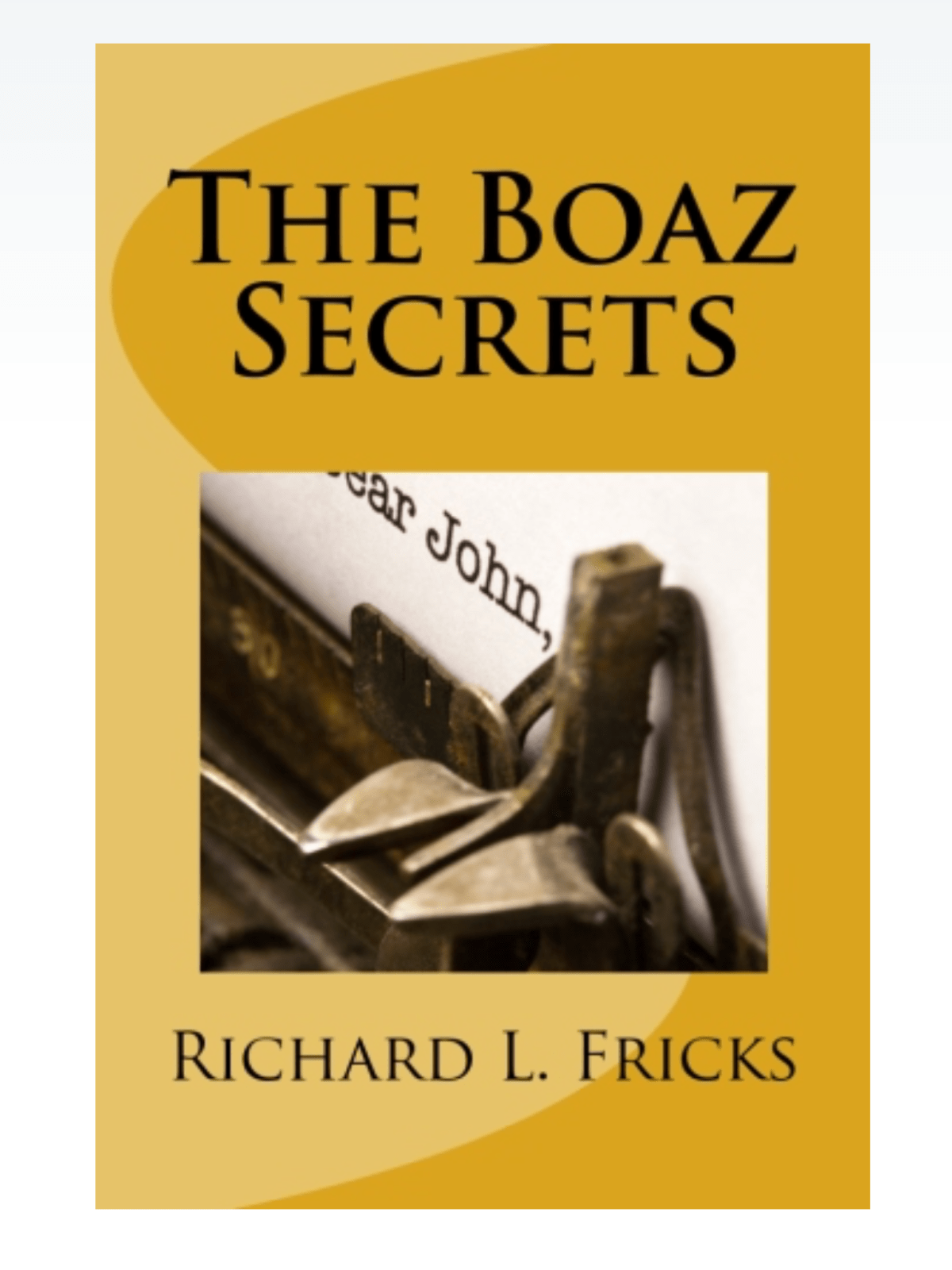
Novel Excerpts–The Boaz Secrets, Chapter 1

The primary aim of the "Novel Excerpts" blog category is to showcase my creative writing, specifically from the novels I've written. Hopefully, these posts will provide a glimpse into my storytelling style, themes, and narrative skills. It's an opportunity to share my artistic expressions and the worlds I've created through my novels.
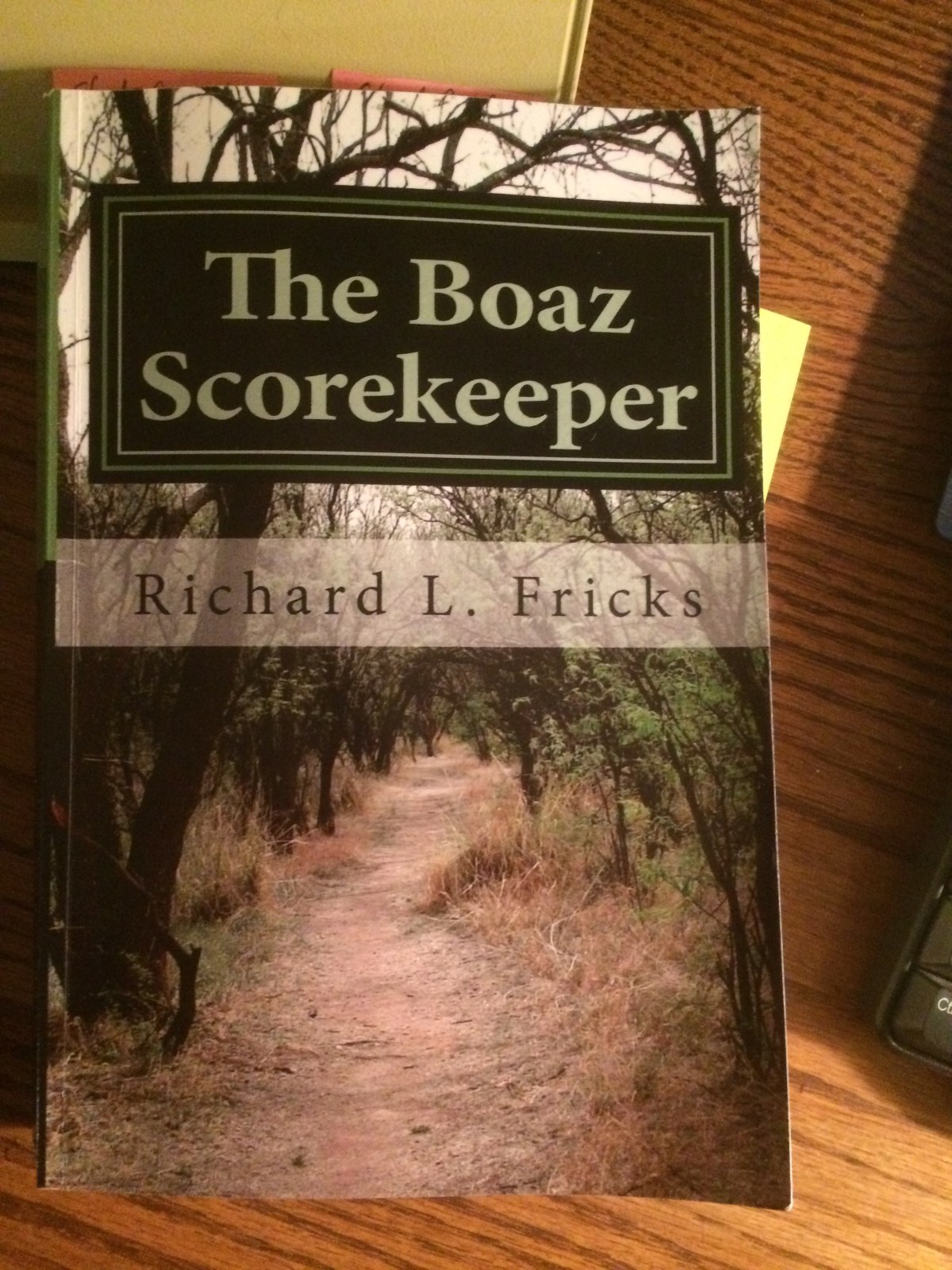
The Boaz Secrets, written in 2018, is my third novel. I'll post it a chapter a day over the next few weeks.

Book Blurb

Fifteen year-old Matt Benson moves with Robert, his widowed father, to Boaz, Alabama for one year as Robert conducts research on Southern Baptist Fundamentalism.  Robert, a professor of Bible History and new Testament Theology at the University of Chicago’s Divinity School enlists Matt to assist him as an undercover agent at First Baptist Church of Christ.  Matt’s job is to befriend the most active young person in the Church’s youth group and learn the heart and mind of teenagers growing up as fundamentalist Southern Baptists.

Olivia Tillman is the fourteen year old daughter of Betty and Walter Tillman.  He is the pastor of First Baptist Church of Christ.  Robert and Matt move to Boaz in June 1970, and before high school begins in mid-August, Matt and Olivia become fast friends.   Olivia’s life is centered around her faith, her family, and her friends.  She is struck with Matt and his doubts and vows to win him to Christ.  Over the next year, Matt and Olivia’s relationship blossoms into more than a teenage romance, despite their different religious beliefs. 

June 1971 and Matt’s return to Chicago comes too quickly, but the two teenagers vow to never lose what they have, even promising to reunite at college in three years after Olivia graduates from Boaz High School.

The Boaz Secrets is told from the perspective of past and present.  The story alternates between 1970-1971, and 2017-2018.  After Matt left Boaz in June 1971, life happened and Olivia and Matt’s plans fell apart.  However, in December 2017, their lives crossed again, almost miraculously, and they have a month in Boaz to catch up on forty-six years of being apart.  They attempt to discover whether their teenage love can be rekindled and transformed into an adult romance even though Matt is 63 and Olivia is 61.

In 2017, Olivia and Matt are quick to learn they are vastly different people than they were as fifteen and sixteen year old teenagers– especially, when it comes to religion and faith.  Will these religious differences unite them?  The real issue is the secret Olivia has kept.  Will Matt’s discovery destroy any chance he and Olivia have of rekindling their teenage relationship?

Chapter 1

June 1970

“Matt, if we’re going to get there before dark we have to be going.  Now.”  Dad yelled up the stairs.

“I’m coming.  Give me five minutes.”  It was nearly 9:30 a.m. and I’d dawdled away the last two hours.  Last night we had finished packing the moving trailer, leaving me with packing a few books and my workout clothes this morning.

I really wasn’t interested in driving ten plus hours to a whole new world.  I was happy living on the South Side of Chicago, working part-time making pizzas at Papa-Mama’s on Dearborn Boulevard until high school starts back in a little over a month.  I couldn’t imagine being away from Brantley, Jessie, and Tyler for my entire 11th grade year.

“Don’t forget your tennis racket.  Dean Naylor said the College has a pretty nice tennis court.”

“It’s already on the trailer.”

An hour and a half later we were south of Gary, Indiana filling Dad’s truck up with gas and eating breakfast at a Waffle House at the I-90 and I-65 interchange.

“Since you’re on your third helping of pancakes, take a breather and tell me again what your job is in Alabama.  I want you in role from the minute we get there.”  Dad said having eaten about half of his eggs and one piece of toast.

“We’ve been over this a hundred times since last Saturday.  It’s now only Tuesday.  Do you think I forget that quickly?”  I responded pouring more syrup on the best pancakes I had ever eaten.

“Last time.  I promise.  At least for a week.”

“Dad, it’s simple.  I start attending First Baptist Church of Christ and get tied in with their youth group.  As soon as I can, I’m to become friends with the kid who’s the most active, the one who’s always present.  My job is to observe what the youth leaders and students are doing and saying and report these things to you.”

“Don’t forget to note the Bible passages being referenced and the interpretations being used.”

“Remind me how much I’m earning for all this work.  You’ve never told me exactly, just that it will be well worth my time.”  I said as the waitress came by and asked if I wanted another stack.  Dad motioned her away.

“Twice what you make at Papa-Mama’s.  It will probably amount to over a thousand dollars, minimum, before the year is up.”

“Plus, you promised to buy me a good, used car for my birthday.  That’s next month you know.”

“I thought we had decided on a new bicycle.”

“Don’t be funny.”

For the next nine plus hours we rode mile after mile with hardly a word exchanged between us.  Dad’s collection of eight tracks tapes, all flavored with classical music, quickly lulled me into semi-consciousness, and a dream, or nightmare, of how my life had taken such a bad turn.  One that was forcing me, along with Dad, to Boaz, a small town in North Alabama.  This wasn’t going to be a vacation.  A year of living with a bunch of hillbilly rednecks was not what I had envisioned for my life, especially now.

Dad, Robert William Benson, was on assignment and I was stuck with tagging along.  If Mother had lived, I believe I could have convinced her to stay in Chicago and let Dad travel alone seven hundred miles to the little community named after the Old Testament Jew that befriended the lovely Moabite woman named Naomi.  Or, was it beguiled?  Deceived?  Whatever.

Dad was a tenured professor of Biblical History and New Testament Theology at the University of Chicago’s Divinity School and, for the first time in years, had been granted a year’s sabbatical to work on a research project.  I still didn’t know exactly how or why he had gotten interested in Southern Baptist Fundamentalism.  Dad’s choices for a mission field to study had boiled down to Sanford, North Carolina and Boaz, Alabama.  The School’s Committee that Dad answered to left the final choice to him.  I think he chose Boaz because of his interest in college football and the opportunity to go see Paul ‘Bear’ Bryant’s Alabama Crimson Tide.  Also, it didn’t hurt that Sarah Dickerson, an Old Testament professor at the Divinity School, had been undergraduate classmates with John Naylor at Duke University in the early sixties.  Naylor was now the Dean of Snead State Junior College in Boaz. 

Professor Dickerson, at the request of Dad’s Committee, had asked Dean Naylor if he would provide Dad with a part-time position for a year.  The timing had been perfect since Snead State was adding a Bible Literature class to its English Department and had not found a suitable instructor.  Dad would teach this class, beginning in September.  This provided Dad plenty of time to conduct his Divinity School project without becoming too suspicious.

The Committee had approved Dad’s request to hire me to go undercover with the youth group.  A key part of Dad’s research project dealt with how young people were indoctrinated into a virtual life-long commitment to Southern Baptist Fundamentalism.  Dad’s short definition for this brand of Fundamentalism was, “They believe the Bible was written by God.  They read it literally.”  The best way Dad and the Committee had come up with to learn what teachings and methodologies were being used to expose young people and obtain their allegiance was to infiltrate a youth group at a large enough church that had a full-time youth pastor and had a long history of year-round events and activities.  Since Dad was way past his youth, and was in no position to be hired by a church as a youth pastor, education director, or any other position, the brilliant folks at the Divinity School had suggested I assist Dad.  Thus, I was now an undercover agent.  I just hoped my mission wasn’t dangerous.

As we drove south I couldn’t think of anything to look forward to, so my mind settled on my job.  I was concerned that I wouldn’t fit in.  Not only did I have a Chicago accent, but I was a far thing from being a Jesus lover.  Mother was a Catholic and I had gone to Mass with her all my life.  Dad was a virtual atheist.  He rarely went to church and when he did it was on a special occasion such as Easter or Christmas.  Dad had influenced my religious thinking more than Mother, but he had always done it out of her earshot.  He was good to Mother and respected her beliefs and worked hard to keep peace in the family.  However, this didn’t mean he hadn’t often shared his beliefs with me.  Dad and I had always been close and had, for years, spent a ton of time together.  We both were avid runners and ever since I was in fourth or fifth grade, Dad and I had shared a couple of runs every week, normally on the weekends.

I thought it strange that Dad could be a professor of Biblical History and New Testament Theology at a major Divinity School but not believe that Jesus was the Son of God.  Dad had always told me that he was a researcher and teacher and it was unnecessary to buy into what he discovered.  He said he was more like a reporter who researched the effects of steroids on an athlete’s performance.  The reporter didn’t have to agree that steroids were a good thing.  I knew Dad’s story like the back of my hand.  I had heard it many times, for mile after mile along the banks of the Chicago River that we often ran on Sunday afternoons.

Dad said, “if it weren’t for my profession, my research and writing, my work at the Divinity School, I probably would still be a believer.”  Dad had grown up attending First Baptist Church in Western Springs, Illinois.  As luck, fate, or God’s grace would have it, Billy Graham served briefly as pastor in 1943–44.  Dad was thirteen years old and became enamored by Graham.  From then until Dad started graduate school at Princeton University, he was sold out to Jesus Christ as Lord and Savior.  It was in the mid-fifties, after I was born in 1954, that Dad’s beliefs started to ebb.  His journey of disbelief took several years but by the time he landed an associate professorship at the University of Chicago in 1962, he was a die-hard agnostic, virtually an atheist, even though he never said that he knew God did not exist, but always laid it out as, “there simply isn’t good evidence to believe in the God of the Bible, or Jesus for that matter.”

We pulled into Boaz after dark.  We found the Dairy Queen and bought hamburgers and onion-rings and two giant strawberry milkshakes.  We ate at an outdoor table beside one with a man and woman and what we gathered were their four kids.  We did our best to not laugh out loud at the Southern drawl that rose from the six voices like a drunk cow on a foggy morning, lost and looking for the path to the milking barn.  I didn’t know much about cows and could only imagine that a soused cow would bawl at a much slower pace than one that had avoided the brew.  The only words the family spoke that registered with us were something the mother said as they left their table and walked close beside us on their way to an old Ford pickup where the two oldest children, a boy and a girl, climbed into the bed of the truck.  The mother said summer revivals always made her repent, repent for failing to keep her kids noses in the Bible.  She said, “Clint, mark my words, that’s going to change beginning tonight.”

After a second trip back inside for another burger, Dad and I drove to downtown Boaz and College Avenue to the little four room house Dad had been able to rent through Ericson Real Estate.  I was glad Dad had David Adams, the property owner, furnish the house with cheap but suitable furniture.  It was hard enough unloading our clothes, books, bicycles, pillows and bedding, and a dozen or so boxes containing Dad’s research materials.  By 10:00 p.m., we were sweating profusely and sitting on the front porch listening to a host of crickets that seem to be living in the thick hedgerow along the driveway.  For the next hour, until we went inside to make our beds and go to bed, not a single car passed in front of 118 College Avenue.

“Good night.  I hope you sleep sound in your new home away from home.”  Dad said at 11:30 as he pulled his door shut.  As I lay across my bed, all I could think about and see with my mind’s eye was Brantley, Jessie, and Tyler hanging out in Hyde Park across from Papa-Mama’s talking about girls, and girls, and girls.

A Big Chunk of Cult Posturing in John’s Gospel

Here’s the link to this article.

By David Madison at 1/12/2024

A mighty stream of pompous theobabble

Insight into Christian origins is provided by three texts, written by a man who never met Jesus. (1) The apostle Paul states in Galatians 1:11-12: “For I want you to know, brothers and sisters, that the gospel that was proclaimed by me is not of human origin,for I did not receive it from a human source, nor was I taught it, but I received it through a revelation of Jesus Christ.” A revelation as he imagined it, unless you’re willing to credit visions claimed by hundreds of other religions. (2) He also imagined that Jesus was a dying-rising savior god; that is, those who believe in this hero are entitled to eternal life, as he states in Romans 10:9: “…if you confess with your mouth that Jesus is Lord and believe in your heart that God raised him from the dead, you will be saved.” (3) In I Thessalonians 4:17, Paul assured his followers that their dead Christian relatives and friends would be the first to rise to meet Jesus when he arrives on the clouds: “Then we who are alive, who are left, will be caught up in the clouds together with them to meet the Lord in the air, and so we will be with the Lord forever.”

Yes, this toxic mix of fantasy, nonsense, and magical thinking was bouncing around in Paul’s imagination, fueled by what he had absorbed from other cults. For full details on this, see Richard Carrier’s essay, Dying-and-Rising Gods: It’s Pagan Guys. Get Over It.

Paul seems to have had no clue about the real Jesus (if, indeed, there was one). All of the abundant detail about the ministry and miracles of Jesus that we find in the gospels is missing from Paul’s letters. That wasn’t what mattered to him. He was attached to the dying-rising hero, and that’s what he proclaimed so enthusiastically.

The author of Mark’s gospel (no one knows who he actually was) wrote his tale of Jesus a couple of decades later. Everything he relates could have happened in a few weeks, and we lack any information at all as to where and how he came by the stories he relates. Devout scholars argue that this author had access to reliable oral tradition and eyewitness accounts, but there is no evidence for this. We suspect he relied on his imagination, as much as Paul did. Matthew and Luke copied most of Mark’s gospel (but neglected to admit doing so) and added material from their imaginations. Again, it’s hard to avoid this conclusion since they don’t name their sources. 

But the first prize as Champion at Imagining must go to the author of John’s gospel. Anyone who has carefully studied Mark, Matthew, and Luke has to wonder where and how John came up with all the stuff he tells. He offers a baffling opening: Jesus, the Galilean peasant preacher, had been present at creation. The other gospel authors knew nothing about this—or at least they failed to mention it. If anyone had challenged John: how do you know that Jesus was present at creation, he would have no doubt claimed that his god told him. And, of course, that has been the claim of theologians—who don’t agree—for thousands of years. They can’t provide reliable, verifiable evidence, but no matter, they (somehow) know the mind of god. 

Be suspicious, very suspicious. 

In this article, I will focus on a few verses in John 14-17, a huge Jesus monologue found nowhere else. How did the other gospel authors miss it—if they used reliable oral tradition and eyewitness testimonies? How did they miss it if they were inspired by god to tell the truth about Jesus? All of the gospel authors were motivated to advance the early Jesus cult, but John 14-17 stresses the benefits of being a member of the cult: it is an example of massive overpromotion.  

John was obsessed with the certainty that knowing Jesus, belonging to Jesus, was the only way to connect with god at the most profound level—and be guaranteed eternal life. He was sure that his god—his god alone—could make sure this happened. 

Cult comfort

How well I recall, from my childhood, the opening of John 14:1-2, in the wonderful language of the King James Version: “Let not your heart be troubled: ye believe in God, believe also in me.In my Father’s house are many mansions: if it were not so, I would have told you. I go to prepare a place for you.”

Verse 3 offers the ultimate assurance to the cult members: “And if I go and prepare a place for you, I will come again and will take you to myself, so that where I am, there you may be also.” And here’s the whole purpose of the cult, vv. 6-7: “I am the way and the truth and the life. No one comes to the Father except through me.If you know me, you will know my Father also. From now on you do know him and have seen him.”

Near the end of this long monologue, at the start of chapter 17, Jesus “looked up to heaven” to address the Father. This reflects the cozy view of the cosmos then accepted: the Father is above, as is his dwelling with “many mansions” that the cult members will settle into, after their escape from death, thanks to the dying-rising hero Jesus. These folks are assured they are the most privileged, 14:13-14: “I will do whatever you ask in my name, so that the Father may be glorified in the Son. If in my name you ask me for anything, I will do it.”  

Because the members of the cult adore the dying-rising hero, his departure will not be a source of alarm, vv. 18-20: “I will not leave you orphaned; I am coming to you. In a little while the world will no longer see me, but you will see me; because I live, you also will live.On that day you will know that I am in my Father, and you in me, and I in you.” And verse 26: “But the Advocate, the Holy Spirit, whom the Father will send in my name, will teach you everything and remind you of all that I have said to you.” 

Thus the author of this gospel offers his assurance that the cult will be continually guided by this Holy Spirit. The irony, of course, from our perspective many centuries later, is that the Christian cult has fought and splintered endlessly because there is so little agreement on exactly what the Holy Spirit has taught. John’s imagination was not up to the task of seeing the history of the church that was to come. 

Cult threats

Chapter 15 begins with another of the “I am” claims made by Jesus—according to this author: “I am the true vine, and my Father is the vinegrower. He removes every branch in me that bears no fruit. Every branch that bears fruit he prunes to make it bear more fruit.” But then comes the warning, the cult has high expectations, v. 6: “Whoever does not abide in me is thrown away like a branch and withers; such branches are gathered, thrown into the fire, and burned.” Lack of full commitment, full loyalty are not permitted. This reminds us of the brutal verse that we find in Luke’s gospel, 14:26: “Whoever comes to me and does not hate father and mother, wife and children, brothers and sisters, yes, and even life itself, cannot be my disciple.”

Hatred against the cult

What was it like to have a conversation with the author of John’s gospel? In chapters 14-17 especially, his religious arrogance is on full display: “Ours is the only right religion, we’re privileged to be uniquely loved and favored by god.” Did he behave this way in his every-day interaction with other people? If so, it’s not hard to imagine that people didn’t like him, wanted to keep their distance: “What a pompous ass!” He must not have been too bothered by this shunning, and he created Jesus-script to explain it:

“If the world hates you, be aware that it hated me before it hated you. If you belonged to the world, the world would love you as its own. Because you do not belong to the world, but I have chosen you out of the world, therefore the world hates you.” (15:18-19)

It would seem that being hated is part of the divine plan. Maybe John just failed to notice that being arrogant and pompous produced hateful responses. 

The seeds of the most destructive hatred

One of the great sins of the New Testament is its fueling of anti-Semitism. The Jesus cult was a breakaway Jewish sect: the vast majority of Jews rejected the idea that Jesus qualified as the Messiah. The author of John’s gospel responded by lashing out. He devised this Jesus-script at chapter 8:44, addressing the Jews: “You are from your father the devil, and you choose to do your father’s desires.” As Hector Avalos has pointed out, “That verse later shows up on Nazi street signs.” (The Christian Delusion: Why Faith Fails, ed. by John Loftus, p. 378) This theme is repeated in a different way in chapter 16:1-4: 

“I have said these things to you to keep you from falling away. They will put you out of the synagogues. Indeed, an hour is coming when those who kill you will think that by doing so they are offering worship to God.And they will do this because they have not known the Father or me.But I have said these things to you so that when their hour comes you may remember that I told you about them.”

They have not known the Father. This blunt accusation—along with the suggestion that the Jews have the devil for their father—has caused so much damage. No doubt Martin Luther’s virulent anti-Semitic rantings derive from such texts. 

Promises to the cult 

Later in chapter 16, verses 23-24, the benefits of belonging to the cult are defined precisely: “Very truly, I tell you, if you ask anything of the Father in my name, he will give it to you. Until now you have not asked for anything in my name. Ask and you will receive, so that your joy may be complete.” Countless devout Christians have discovered that this is simply not true.

And devotees of the cult will be protected, verse 16:33: I have said this to you so that in me you may have peace. In the world you face persecution, but take courage: I have conquered the world!”  

More fluff—first rate theobabble—that emerged from this author’s imagination.

The Jesus-script prayer to the Father in chapter 17 includes this promise as well, verses 21-23: 

“As you, Father, are in me and I am in you, may they also be in us, so that the world may believe that you have sent me. The glory that you have given me I have given them, so that they may be one, as we are one, I in them and you in me, that they may become completely one, so that the world may know that you have sent me and have loved them even as you have loved me.” 

That they may become completely one. A bigger failed promise can hardly be imagined. 

My constant appeal to the devout is please read the gospels. Dr. Jaco Gericke has stated the harsh truth: “If you read the scriptures and are not shocked out of all your religious beliefs, you have not understood them.” (The End of Christianity, ed. by John Loftus, p. 137) This actually requires more than reading: put curiosity and critical thinking into high gear—which is so hard to do for those who have been indoctrinated, who have been persuaded from their earliest years that the Bible is a reliable source of god-information. Break out of the Sunday School mentality. Study John 14-17. It’s not hard to see that the ancient theologian who wrote these chapters did a lot of damage to the religion he was supposedly championing. Your religious beliefs are in for a major shock.  

David Madison was a pastor in the Methodist Church for nine years, and has a PhD in Biblical Studies from Boston University. He is the author of two books, Ten ToughProblems in Christian Thought and Belief: a Minister-Turned-Atheist Shows Why You Should Ditch the Faith, now being reissued in several volumes, the first of which is Guessing About God (2023) and Ten Things Christians Wish Jesus Hadn’t Taught: And Other Reasons to Question His Words (2021). The Spanish translation of this book is also now available. 

His YouTube channel is here. At the invitation of John Loftus, he has written for the Debunking Christianity Blog since 2016.

The Cure-for-Christianity Library©, now with more than 500 titles, is here. A brief video explanation of the Library is here

Novel Excerpts–The Boaz Scorekeeper, Chapter 92

The primary aim of the "Novel Excerpts" blog category is to showcase my creative writing, specifically from the novels I've written. Hopefully, these posts will provide a glimpse into my storytelling style, themes, and narrative skills. It's an opportunity to share my artistic expressions and the worlds I've created through my novels.
The Boaz Scorekeeper, written in 2017, is my second novel. I'll post it a chapter a day over the next few weeks.

Kaden heard a faint knocking at the door and raised his head and opened his eyes to a blinding sun coming in through the half-open blinds on the double windows.  He had been dreaming, really fantasizing, of what life might be like for him if he moved back to Hickory Hollow and joined Trevor Nixon and Dalton Martin to practice law.  His last subconscious thought about continuing Micaden’s fight against Club Eden evaporated as he saw Lewis standing in the doorway holding a tray and what Kaden hoped was a giant cup of hot and black coffee.  His stomach wasn’t ready for Lewis’ standard breakfast of two eggs over-easy, two pieces of nearly burnt but buttered toast, two slices of overcooked bacon, strawberry jelly, and a small glass of orange juice.  Lewis smiled, set down the tray, and walked out.

At 4:45 a.m., Kaden had laid his head down on the library’s round table after completing his reading of The Boaz Scorekeeper. Since he returned from The Exchange Bank late yesterday morning, Kaden had been immersed in Micaden’s story, taking a break to eat a bowl of Lewis’ chili that he had brought to Kaden at 6:00 p.m., and taking a midnight walk along a moonlit lane from the house to the entrance of Hickory Hollow and back.  

Sipping his hot coffee, Kaden moved over and sat down in Micaden’s more comfortable desk chair and contemplated his book.  Kaden believed every word of it, even, surprisingly, accepting what Micaden had done.  Murder, from a strictly legal sense, was not something Kaden knew much about, only what he had learned in his Crime and Punishment class from law school nearly fifteen years ago.  No doubt, Micaden had committed three murders.  If tried in a court of law he would be convicted.  Micaden had known this but was called to action by his response to one overarching question, ‘how much evil would you allow to go unpunished?’  Kaden sided with his grandfather.  John Ericson, Randall Radford, and Fred Billingsley deserved to die.  They had escaped formal justice that was supposed to come from the criminal courts. They also had escaped a semblance of justice they should have received from the civil courts.  But for Micaden, the Flaming Five would have gotten off scott-free.

Probably the most disturbing thing about Micaden’s life story, was finding out now, after his death, that he so deeply loved Wendi, and his Christian deconversion experience her death had brought about.  Kaden couldn’t help but wish that his grandfather had been more open with him and shared every aspect of his life.  Kaden reminisced how Micaden would spend time with him hunting, fishing, woodworking, splitting firewood, playing chess, and talking about life while working in the garden.  Kaden now felt his grandfather was simply protecting him from the brutal reality of life, postponing if he could, what Kaden would no doubt learn as he went to college, and on through life. 

Kaden pulled his chair closer to Micaden’s desk.  It was stacked with manila files and books of fiction all around the edges.  In the center was several books, opened, but lying face down.  Micaden had always been reading several different novels at the same time.  Kaden never understood how his grandfather could keep up with so many characters and disconnected plot lines at one time.  Kaden, without thinking, inserted an index card as a bookmark into each open book and laid them aside.  Underneath was a copy of The Birmingham News dated Friday, December 19, 2050.  Kaden, for years, had thought his grandfather was too old school, continuing to buy an expensive hardcopy newspaper when he could just read it online.  The newspaper was opened to page two with an article above the fold highlighted in yellow.  The title read, ‘Two Boaz Men Dead Two Days After Release from Federal Prison.’  Kaden’s heart raced as he scanned the article then returned for a deeper reading.

The article stated that Wade Tillman and James Adams were granted parole on Tuesday, December 16th and released later that afternoon. They were both 96 years old having spent the past 32 years at Cumberland Island Federal Penitentiary in Georgia.  The two men had been picked up late afternoon at the prison by family members who drove them back to a hotel in Atlanta to spend the night.  The next morning, they had driven to their hometown of Boaz, Alabama.  Wade spent all day at his grandson Warren’s house, and James stayed with his grandson Justin. 

At 6:00 p.m. on Wednesday, they were driven to the Family Life Center at First Baptist Church of Christ.  The previous Sunday, Warren had preached a heart-wrenching sermon imploring his fellow members to exercise true Christian spirit and forgive the two men who had done horrible things but had paid their punishment in full.  After eating a hardy meal, and enjoying a multitude of heartfelt welcome-home handshakes, the men were driven to Creekside Village, an Assisted Living Facility, on the outskirts of town, where they were left alone in their individual rooms around 9:30 p.m.

The two men were found dead in their beds by Village staff at 6:30 a.m. Thursday morning.  There was no sign of struggle.  At press time, the cause of death was unknown.

Kaden had a million questions but stood up, walked out onto the balcony, and smiled.  He had no doubt the deaths were from the hands of the Boaz Scorekeeper.

Final score:

The Boaz Scorekeeper 5

The Flaming Five        0.

THE END

01/14/24 Biking & Listening

Here’s today’s bike ride metrics. Temperature at beginning of ride: 44 degrees. Cloudy.

Took a bad tumble today. Hit the pavement hard. Tractor-trailer passed me and either pushed me to the right or I edged myself over. I ran off the road and, stupidly, tried to return. Three inch thick asphalt edge opposed me. Bike laid over.

Happened quickly. Knew it was happening but helpless to stop it. Sure was glad no one was behind me or I might be a goner.

Sore, stiff, but seemingly unhurt.  


Photos from today’s ride:

None today.

Why I ride:

Biking is something I both love and hate. The conflicting emotions arise from the undeniable physical effort it demands. However, this exertion is precisely what makes it an excellent form of exercise. Most days, I dedicate over an hour to my cycling routine, and in doing so, I’ve discovered a unique opportunity to enjoy a good book or podcast. The rhythmic pedaling and the wind against my face create a calming backdrop that allows me to fully immerse myself in the content. In these moments, the time spent on the bike seems worthwhile, as I can’t help but appreciate the mental and physical rewards it offers.

I especially like having ridden. The post-biking feeling is one of pure satisfaction. The endorphin rush, coupled with a sense of accomplishment, makes the initial struggle and fatigue worthwhile. As I dismount and catch my breath, I relish the sensation of having conquered the challenge, both physically and mentally. It’s a reminder that the things we sometimes love to hate can often be the ones that bring us the most fulfillment. In the end, the love-hate relationship with biking only deepens my appreciation for the sport, as it continually pushes me to overcome my own limitations and embrace the rewards that follow the effort.


Why you should ride:

Encourages Relaxation:

Cycling is not just a form of physical exercise; it also has a profound ability to encourage relaxation. Here are various ways in which cycling contributes to a relaxed state of mind and body:

  • Physical Activity and Stress Reduction: Engaging in physical activities like cycling can reduce the body’s stress responses. Exercise triggers the release of endorphins, the body’s natural painkillers and mood elevators, which promote relaxation. The physical effort of cycling also helps to use up the energy created by stress, aiding in calming the body.
  • Rhythmic Pedaling as a Meditative Practice: The repetitive nature of cycling, with its steady, rhythmic pedaling, can have a meditative effect. This rhythmic motion can help focus the mind, drawing attention away from stressful thoughts and allowing a sense of calm.
  • Outdoor and Nature Exposure: Cycling outdoors, especially in natural or scenic settings, can enhance relaxation. Being in nature is known to reduce stress and promote a sense of peace. The sights, sounds, and smells of the outdoors can be very soothing.
  • Mindfulness and Presence: Cycling requires a level of present-moment awareness, which is a key aspect of mindfulness. Practicing mindfulness has been shown to reduce stress and promote relaxation. When cycling, the focus on the immediate environment and bodily sensations can help achieve this state.
  • Cardiovascular Health Benefits: Regular cycling improves cardiovascular health, which can help in reducing tension in the body. A healthier heart and circulatory system can contribute to a more relaxed state overall.
  • Reduces Mental Clutter: A bike ride offers a break from daily routines and responsibilities, providing an opportunity to clear the mind. This mental break can be refreshing and relaxing, especially after a long day or during stressful periods.
  • Social Relaxation: For those who enjoy group rides, the social aspect of cycling can be relaxing. Social interactions and the sense of community found in cycling groups can contribute to overall relaxation and well-being.
  • Achievement and Satisfaction: Completing a challenging ride or reaching a cycling goal can bring about a sense of achievement and satisfaction. This positive feeling can promote a relaxed state, as it counters feelings of stress and anxiety.
  • End of Ride Relaxation Response: After a cycling session, the body often experiences a natural relaxation response. The decrease in physical activity coupled with the sense of accomplishment can lead to a profound state of relaxation.
  • Improves Sleep Quality: As cycling improves sleep quality, it indirectly promotes relaxation. Better sleep means the body is better rested and more capable of handling stress, leading to a more relaxed state during waking hours.

In summary, cycling’s ability to encourage relaxation is multifaceted, combining physical, mental, and emotional elements. By incorporating regular cycling into one’s lifestyle, it’s possible to cultivate a more relaxed state of being, beneficial for overall health and well-being.


Please watch

Here’s a couple of links to groups I like. Hopefully, they’ll encourage you to start riding a bike, no matter your age.

Cycling for those aged 70+(opens in a new tab)


Solitary Cycling(opens in a new tab)


My bike:

A Rockhopper by Specialized. I purchased it November 2021 from Venture Out in Guntersville; Mike is top notch! So is the bike. The ‘old’ man seat was salvaged from an old Walmart bike. Seat replaced with new one from Venture Out.


What I’m listening to:

NONFICTION

Blinkest summaries

None today.

Podcasts:

Waking Up app series/courses:

None today.

FICTION

Novels:

Amazon abstract:

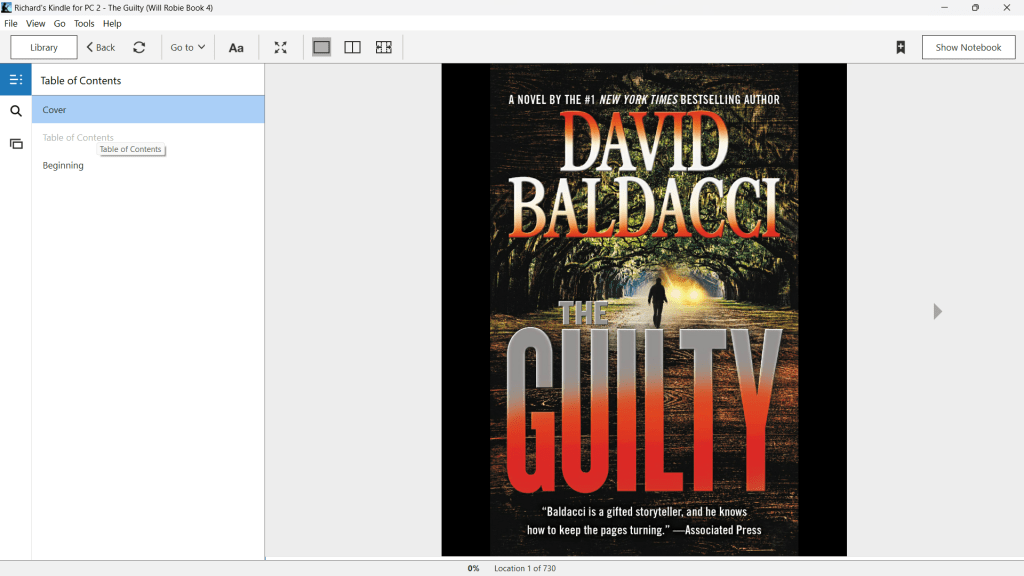
After failing a critical assignment overseas, Will Robie must investigate a murder accusation against his father–but to save him, he’ll have to face a violent and deadly fallout in this New York Times bestselling thriller.

Will Robie escaped his small Gulf Coast hometown of Cantrell, Mississippi after high school, severing all personal ties, and never looked back. Not until the unimaginable occurs. His father, Dan Robie, has been arrested and charged with murder.

Father and son haven’t spoken or seen each other since the day Robie left town. In that time, Dan Robie–a local attorney and pillar of the community–has been elected town judge. Despite this, most of Cantrell is aligned against Dan. His guilt is assumed.

To make matters worse, Dan has refused to do anything to defend himself. When Robie tries to help, his father responds only with anger and defiance. Could Dan really be guilty?

With the equally formidable Jessica Reel at his side, Robie ignores his father’s wishes and begins his own desperate investigation into the case. But Robie is now a stranger to his hometown, an outsider, a man who has forsaken his past and his family. His attempts to save his father are met with distrust and skepticism…and violence.

Unlike the missions Robie undertook in the service of his country, where his target was clearly defined, digging into his father’s case only reveals more questions. Robie is drawn into the hidden underside of Cantrell, where he must face the unexpected and possibly deadly consequences of the long-ago choices made by father and son. And this time, there may be no escape for either of them.


Blinkest fiction book summaries:

None today.

Music:

None today.


Here’s a few photos from previous riding adventures:

Zeke Piestrup On His New Film, “Satan’s Guide to the Bible!”

Here’s the link to this article.

Whether you are a believer or not, you should watch the full film. Don't let the title or cartoonish nature stop you from watching ... and thinking.

By John W. Loftus at 1/10/2024

[This is a guest post by Zeke Piestrup about his new film. Don’t let the cartoonish background fool you as it quotes from Bible scholars, especially Hector Avalos and Bart Ehrman.]

Praise John Loftus for allowing me to grab the wheel of DC, in hopes of steering y’all straight to my new flick: Satan’s Guide to the Bible! Satan is the substitute Sunday school teacher. Today’s lesson? All the Bible secrets the children’s pastor learned at Christian seminary, but won’t share. He’d get fired. Below is a trailer and the full movie!

Trailer:


Full film:


The film will not be monetized. It will remain paywall and commercial free, so as to be accessible as possible. I eschewed the normal film festival to distributor route (ala my last film APOCALYPSE LATER: HAROLD CAMPING VS THE END) because Christian fascism is a continuing, rising threat to our democracy. Mike Johnson (the House speaker), Greg Abott (the governor of Texas), NAR, Dominionism, Neo-Charismatic Evangelicals… These are adults(!) playing Dungeons and (Revelation) Dragons. As January 6th showed, they’re not thinkers, they’re violencers.

I collaborated on this film with Dreamworks animation director Tim Johnson. He directed ANTZ, HOME, and OVER THE HEDGE. All the animation designs were done by Tim. He even voiced the smooth-talking Satan. Our goal was for the animation quality to be on par with the first season of South Park. I think we met that goal.

For a long time, DC was home to my favorite biblical scholar, the late Dr. Hector Avalos. Praise His name! The first credit at the end of the film is a dedication to Dr. Avalos’ memory. At Dr. Avalos’ service, I stole John’s line about Dr. A being “probably the greatest biblical scholar of our generation.” Thanks, John, and apologies for not citing you.

We are a no-budget operation, dependent upon good people sharing the good news of Satan’s Guide to the Bible! The film is a one-stop shop for the “standard stuff” taught in Christian seminaries. And it’s a rebuttal to pastors, politicians, and Alice Cooper telling us all to read our Bibles.

I hope you all dig the film, while getting a heavy dose of Dr. Avalos. We love and miss you, Dr. A!

01/13/24 Biking & Listening

Here’s today’s bike ride metrics. Temperature at beginning of ride: 54 degrees. Cloudy.  


Photos from today’s ride:

None today.

Why I ride:

Biking is something I both love and hate. The conflicting emotions arise from the undeniable physical effort it demands. However, this exertion is precisely what makes it an excellent form of exercise. Most days, I dedicate over an hour to my cycling routine, and in doing so, I’ve discovered a unique opportunity to enjoy a good book or podcast. The rhythmic pedaling and the wind against my face create a calming backdrop that allows me to fully immerse myself in the content. In these moments, the time spent on the bike seems worthwhile, as I can’t help but appreciate the mental and physical rewards it offers.

I especially like having ridden. The post-biking feeling is one of pure satisfaction. The endorphin rush, coupled with a sense of accomplishment, makes the initial struggle and fatigue worthwhile. As I dismount and catch my breath, I relish the sensation of having conquered the challenge, both physically and mentally. It’s a reminder that the things we sometimes love to hate can often be the ones that bring us the most fulfillment. In the end, the love-hate relationship with biking only deepens my appreciation for the sport, as it continually pushes me to overcome my own limitations and embrace the rewards that follow the effort.


Why you should ride:

Encourages Relaxation:

Cycling is not just a form of physical exercise; it also has a profound ability to encourage relaxation. Here are various ways in which cycling contributes to a relaxed state of mind and body:

  • Physical Activity and Stress Reduction: Engaging in physical activities like cycling can reduce the body’s stress responses. Exercise triggers the release of endorphins, the body’s natural painkillers and mood elevators, which promote relaxation. The physical effort of cycling also helps to use up the energy created by stress, aiding in calming the body.
  • Rhythmic Pedaling as a Meditative Practice: The repetitive nature of cycling, with its steady, rhythmic pedaling, can have a meditative effect. This rhythmic motion can help focus the mind, drawing attention away from stressful thoughts and allowing a sense of calm.
  • Outdoor and Nature Exposure: Cycling outdoors, especially in natural or scenic settings, can enhance relaxation. Being in nature is known to reduce stress and promote a sense of peace. The sights, sounds, and smells of the outdoors can be very soothing.
  • Mindfulness and Presence: Cycling requires a level of present-moment awareness, which is a key aspect of mindfulness. Practicing mindfulness has been shown to reduce stress and promote relaxation. When cycling, the focus on the immediate environment and bodily sensations can help achieve this state.
  • Cardiovascular Health Benefits: Regular cycling improves cardiovascular health, which can help in reducing tension in the body. A healthier heart and circulatory system can contribute to a more relaxed state overall.
  • Reduces Mental Clutter: A bike ride offers a break from daily routines and responsibilities, providing an opportunity to clear the mind. This mental break can be refreshing and relaxing, especially after a long day or during stressful periods.
  • Social Relaxation: For those who enjoy group rides, the social aspect of cycling can be relaxing. Social interactions and the sense of community found in cycling groups can contribute to overall relaxation and well-being.
  • Achievement and Satisfaction: Completing a challenging ride or reaching a cycling goal can bring about a sense of achievement and satisfaction. This positive feeling can promote a relaxed state, as it counters feelings of stress and anxiety.
  • End of Ride Relaxation Response: After a cycling session, the body often experiences a natural relaxation response. The decrease in physical activity coupled with the sense of accomplishment can lead to a profound state of relaxation.
  • Improves Sleep Quality: As cycling improves sleep quality, it indirectly promotes relaxation. Better sleep means the body is better rested and more capable of handling stress, leading to a more relaxed state during waking hours.

In summary, cycling’s ability to encourage relaxation is multifaceted, combining physical, mental, and emotional elements. By incorporating regular cycling into one’s lifestyle, it’s possible to cultivate a more relaxed state of being, beneficial for overall health and well-being.


Please watch

Here’s a couple of links to groups I like. Hopefully, they’ll encourage you to start riding a bike, no matter your age.

Cycling for those aged 70+(opens in a new tab)


Solitary Cycling(opens in a new tab)


My bike:

A Rockhopper by Specialized. I purchased it November 2021 from Venture Out in Guntersville; Mike is top notch! So is the bike. The ‘old’ man seat was salvaged from an old Walmart bike. Seat replaced with new one from Venture Out.


What I’m listening to:

NONFICTION

Blinkest summaries

None today.

Podcasts:

Waking Up app series/courses:

None today.

FICTION

Novels:

Amazon abstract:

After failing a critical assignment overseas, Will Robie must investigate a murder accusation against his father–but to save him, he’ll have to face a violent and deadly fallout in this New York Times bestselling thriller.

Will Robie escaped his small Gulf Coast hometown of Cantrell, Mississippi after high school, severing all personal ties, and never looked back. Not until the unimaginable occurs. His father, Dan Robie, has been arrested and charged with murder.

Father and son haven’t spoken or seen each other since the day Robie left town. In that time, Dan Robie–a local attorney and pillar of the community–has been elected town judge. Despite this, most of Cantrell is aligned against Dan. His guilt is assumed.

To make matters worse, Dan has refused to do anything to defend himself. When Robie tries to help, his father responds only with anger and defiance. Could Dan really be guilty?

With the equally formidable Jessica Reel at his side, Robie ignores his father’s wishes and begins his own desperate investigation into the case. But Robie is now a stranger to his hometown, an outsider, a man who has forsaken his past and his family. His attempts to save his father are met with distrust and skepticism…and violence.

Unlike the missions Robie undertook in the service of his country, where his target was clearly defined, digging into his father’s case only reveals more questions. Robie is drawn into the hidden underside of Cantrell, where he must face the unexpected and possibly deadly consequences of the long-ago choices made by father and son. And this time, there may be no escape for either of them.


Blinkest fiction book summaries:

None today.

Music:

None today.


Here’s a few photos from previous riding adventures:

Novel Excerpts–The Boaz Scorekeeper, Chapter 91

The primary aim of the "Novel Excerpts" blog category is to showcase my creative writing, specifically from the novels I've written. Hopefully, these posts will provide a glimpse into my storytelling style, themes, and narrative skills. It's an opportunity to share my artistic expressions and the worlds I've created through my novels.
The Boaz Scorekeeper, written in 2017, is my second novel. I'll post it a chapter a day over the next few weeks.

A ‘Not Guilty’ verdict is uncommon, an almost unheard-of thing in a capital murder case.  And, finding a person who has avoided a guilty verdict in two capital murder cases in one lifetime is rare indeed.  Even though I had not received a “Not Guilty’ verdict in either case, I still believed I was a rare commodity.  It was impossible to reconcile the two forms of justice I had received in my two criminal trials.  It was also impossible to understand the role mercy and justice played in the shoot-out at Oak Hollow.

A week after I was discharged from Gadsden Regional Medical Center, Karla drove us to Atlanta where we spent the night and caught a flight to Jackson, Wyoming for a two-week vacation that included two nights at the Trial Lawyer’s College in Dubois.  On Friday night, I was introduced as the only member of the tribe who had truly experienced what it was like to be a capital murder defendant, who had exchanged bullets with four of his accusers, and who had represented capital murder defendants all the way from pre-indictment through death-penalty sentencing.  Friday night, I shared the story of my most recent case, and on Saturday afternoon, sat on a panel with three other non-lawyer, former capital murder defendants, and with two tribe member lawyers who had either won outright ‘Not Guilty’ verdicts, or had won on appeal, or through other post-trial proceedings. The rest of mine and Karla’s time in Wyoming was spent taking day trips to the nearby Rocky Mountains and at night, after grilling steaks over a campfire, sitting by the Wind River behind the cabin we had rented. The night before we were to fly back to Atlanta, Trevor had called and said Wade and James were now locked away at Cumberland Island Federal Penitentiary in Georgia.  Two days later I was in the law office.  I continued to practice law although I did limit my work to murder and capital murder cases

The year 2020 was unique and special for many reasons including the opening of Sparksburg on the site of the old Boaz Spinning Mills.  My client (the strawman of course) did everything he promised, and then some.  He also purchased nearly a city block’s worth of property across the street to the south, razed all the old buildings, and built a huge parking lot with a 100-foot statute named Murray Tower.  At its base, was a four-foot square bronze plaque that memorialized the lives of the four Murrays and the tragic events that ended their lives.  It was a miniature Statute of Liberty. 

Two other reasons 2020 was memorable was the opening of a Home Depot store across from the new Radford Hardware and Building Supply facility on Highway 431, and just north, the opening of Prader Volkswagen on the south side of Adams Chevrolet, Buick, & GMC that had relocated across from Marshall Medical Center.  My strawman was instrumental in the opening of these two new businesses.  However, that would have been impossible without the interest and connections of Terry Lynn Gaines.  By early 2019, when my plans began unfolding, Terry was a veteran U.S. Senator serving as Chairman of the Intelligence Committee, and a frequent contributor to all the major TV news networks.  With his substantial power and growing influence it wasn’t easy to convince Terry to come to Hickory Hollow and hear my demands.  In early January, in the quiet and privacy of my library, Terry signed over title to Oak Hollow, and agreed to fully support my Boaz investment plans. 

Later that afternoon, I was amazed how powerful and persuasive Terry Lynn Gaines truly was.  So much so that phone calls to the CEOs was enough to clinch the two deals.  However, his influence just went so far.  Over the next several months, it took dozens of phone calls and two trips to Nuremberg, Germany to convince Helmuth Katz to participate in the Grand Opening and ribbon cutting ceremony.  A visit from Michael Horn, president of Volkswagen of America, was the final tipping point. 

On a dark and stormy afternoon in late December 2020, 94-year-old Katz stood between his 70-year-old twin-daughters, and cut the golden ribbon for the first new car dealership to open in Boaz since Earnest Adams and his son Eugene started Adams Chevrolet in 1920, a hundred years ago to the day.  I thought I had put five million of Club Eden’s money to good use.

The other million, along with the $43,276.81 of interest earned, was contributed to Castenada Academy.  Nico and Santiago fulfilled their promise and opened the first private Christian school in America dedicated solely to educating Hispanics.  They won a $3,000,000 grant from the U.S. Department of Education, and, along with my assistance, persuaded Terry Gaines to enlist the help of all four Hispanic U.S. Senators, Mel Martínez, Ken Salaza, Bob Menendez, and Marco Rubio, to host a one-day telethon promoting the Academy.  It raised nearly $4,000,000 and enabled Nico and Santiago to purchase sixty acres on College Avenue only a mile west of the Platinum Foods facility, and to build a modern, high-tech campus. Nico and Santiago hired the best teachers from across America regardless of their race or ethnicity.  On a hot and muggy day in mid-August 2021, nearly 2,000 Hispanics from as far away as Fort Payne, assembled in 118 classrooms to experience the beginnings of a world-class education, tuition free, thanks to the Trump Administration’s Charter School and Voucher Programs.     

Karla retired from teaching school in May 2021.  Lewis remarried and moved to Chattanooga in 2031 after Kaden graduated from Sardis High School. Kaden earned a full scholarship to Emory University and was set to stay there for law school but changed his mind, over my objection, and chose George Washington University Law School in Washington, D.C. instead.  After graduating and passing the Bar he worked several years in D.C. for the firm of Hastings and Hoogle before moving to New York City to specialize in intellectual property with the law firm of Bainbridge and Shuttleworth. 

Losing Matt was traumatic, something only mildly tolerable even until now, but losing Karla in 2033 was the single worst thing that I had ever experienced.  I was unprepared for her death.  I suppose I had subconsciously thought after she got sick that she would likely die before I did, but I assumed it couldn’t be worse than the loss of Wendi and the aftermath that followed.  I think it was the trust factor.  She was truly a woman of faith.  She didn’t need evidence for her beliefs.  She said she had faith.  She trusted God completely and she did likewise the same with me, although in one big regard, I didn’t deserve it.

In January 1, 2045, my two law partners, Trevor Nixon and Dalton Martin, gave me a triple dose party celebrating my retirement, my 91st birthday, and of course, the New Year.  Overall, I enjoyed my party but I couldn’t help but feel sad and nostalgic recalling the day Matt was gunned down at Oak Hollow.

A few months after Karla’s death, I started writing this book.  Someway, the pain and difficulty of reliving the rough spots of my life was the antidote to the painful depression I was still enduring from Karla’s death.  My writing was the only thing that got me up in the mornings.  But, it didn’t last.  By 2035 I was in the deepest funk of my life.  I truly don’t know what happened over the next nine or ten years.  However, for some strange reason, my retirement party gave me the push I needed to return to my manuscript.  Even then it was a slow slog.  It took me until early 2046 to complete a full first draft and almost another eight months before finishing.  On October 5, 2046, I completed the final edit and on October 16th, I held my one and only book, a hardback titled The Boaz Scorekeeper

Reading the back cover and flipping through the pages I almost wished I had titled my book, Micaden Lewis Tanner, the Tyrant Slayer, but then was reminded that there were still two members of the Flaming Five who were alive and well, walking, eating, and breathing, albeit in a Federal Penitentiary.  Wade and James had avoided the ultimate justice they deserved.  So far at least.

At 92, I had to reconcile myself to the likely fate for Wade and James.  They would die in prison.  I just couldn’t see the Federal Pardons and Parole Board granting them parole in two years even though both would be 95 years old.  I rationalized that my overall score was better than fifty percent:

The Boaz Scorekeeper  3

The Flaming Five         2.

If there was an afterlife, I hoped Wendi and Cindi, and Bill and Nellie, were all giving me the thumbs up.  But, I suspected that Gina was still not completely satisfied that she had received justice.

01/12/24 Biking & Listening

Here’s today’s bike ride metrics. Temperature at beginning of ride: 54 degrees. Cloudy.  


Photos from today’s ride:

None today.

Why I ride:

Biking is something I both love and hate. The conflicting emotions arise from the undeniable physical effort it demands. However, this exertion is precisely what makes it an excellent form of exercise. Most days, I dedicate over an hour to my cycling routine, and in doing so, I’ve discovered a unique opportunity to enjoy a good book or podcast. The rhythmic pedaling and the wind against my face create a calming backdrop that allows me to fully immerse myself in the content. In these moments, the time spent on the bike seems worthwhile, as I can’t help but appreciate the mental and physical rewards it offers.

I especially like having ridden. The post-biking feeling is one of pure satisfaction. The endorphin rush, coupled with a sense of accomplishment, makes the initial struggle and fatigue worthwhile. As I dismount and catch my breath, I relish the sensation of having conquered the challenge, both physically and mentally. It’s a reminder that the things we sometimes love to hate can often be the ones that bring us the most fulfillment. In the end, the love-hate relationship with biking only deepens my appreciation for the sport, as it continually pushes me to overcome my own limitations and embrace the rewards that follow the effort.


Why you should ride:

Encourages Relaxation:

Cycling is not just a form of physical exercise; it also has a profound ability to encourage relaxation. Here are various ways in which cycling contributes to a relaxed state of mind and body:

  • Physical Activity and Stress Reduction: Engaging in physical activities like cycling can reduce the body’s stress responses. Exercise triggers the release of endorphins, the body’s natural painkillers and mood elevators, which promote relaxation. The physical effort of cycling also helps to use up the energy created by stress, aiding in calming the body.
  • Rhythmic Pedaling as a Meditative Practice: The repetitive nature of cycling, with its steady, rhythmic pedaling, can have a meditative effect. This rhythmic motion can help focus the mind, drawing attention away from stressful thoughts and allowing a sense of calm.
  • Outdoor and Nature Exposure: Cycling outdoors, especially in natural or scenic settings, can enhance relaxation. Being in nature is known to reduce stress and promote a sense of peace. The sights, sounds, and smells of the outdoors can be very soothing.
  • Mindfulness and Presence: Cycling requires a level of present-moment awareness, which is a key aspect of mindfulness. Practicing mindfulness has been shown to reduce stress and promote relaxation. When cycling, the focus on the immediate environment and bodily sensations can help achieve this state.
  • Cardiovascular Health Benefits: Regular cycling improves cardiovascular health, which can help in reducing tension in the body. A healthier heart and circulatory system can contribute to a more relaxed state overall.
  • Reduces Mental Clutter: A bike ride offers a break from daily routines and responsibilities, providing an opportunity to clear the mind. This mental break can be refreshing and relaxing, especially after a long day or during stressful periods.
  • Social Relaxation: For those who enjoy group rides, the social aspect of cycling can be relaxing. Social interactions and the sense of community found in cycling groups can contribute to overall relaxation and well-being.
  • Achievement and Satisfaction: Completing a challenging ride or reaching a cycling goal can bring about a sense of achievement and satisfaction. This positive feeling can promote a relaxed state, as it counters feelings of stress and anxiety.
  • End of Ride Relaxation Response: After a cycling session, the body often experiences a natural relaxation response. The decrease in physical activity coupled with the sense of accomplishment can lead to a profound state of relaxation.
  • Improves Sleep Quality: As cycling improves sleep quality, it indirectly promotes relaxation. Better sleep means the body is better rested and more capable of handling stress, leading to a more relaxed state during waking hours.

In summary, cycling’s ability to encourage relaxation is multifaceted, combining physical, mental, and emotional elements. By incorporating regular cycling into one’s lifestyle, it’s possible to cultivate a more relaxed state of being, beneficial for overall health and well-being.


Please watch

Here’s a couple of links to groups I like. Hopefully, they’ll encourage you to start riding a bike, no matter your age.

Cycling for those aged 70+(opens in a new tab)


Solitary Cycling(opens in a new tab)


My bike:

A Rockhopper by Specialized. I purchased it November 2021 from Venture Out in Guntersville; Mike is top notch! So is the bike. The ‘old’ man seat was salvaged from an old Walmart bike. Seat replaced with new one from Venture Out.


What I’m listening to:

NONFICTION

Blinkest summaries

None today.

Podcasts:

Waking Up app series/courses:

None today.

FICTION

Novels:

Amazon abstract:

After failing a critical assignment overseas, Will Robie must investigate a murder accusation against his father–but to save him, he’ll have to face a violent and deadly fallout in this New York Times bestselling thriller.

Will Robie escaped his small Gulf Coast hometown of Cantrell, Mississippi after high school, severing all personal ties, and never looked back. Not until the unimaginable occurs. His father, Dan Robie, has been arrested and charged with murder.

Father and son haven’t spoken or seen each other since the day Robie left town. In that time, Dan Robie–a local attorney and pillar of the community–has been elected town judge. Despite this, most of Cantrell is aligned against Dan. His guilt is assumed.

To make matters worse, Dan has refused to do anything to defend himself. When Robie tries to help, his father responds only with anger and defiance. Could Dan really be guilty?

With the equally formidable Jessica Reel at his side, Robie ignores his father’s wishes and begins his own desperate investigation into the case. But Robie is now a stranger to his hometown, an outsider, a man who has forsaken his past and his family. His attempts to save his father are met with distrust and skepticism…and violence.

Unlike the missions Robie undertook in the service of his country, where his target was clearly defined, digging into his father’s case only reveals more questions. Robie is drawn into the hidden underside of Cantrell, where he must face the unexpected and possibly deadly consequences of the long-ago choices made by father and son. And this time, there may be no escape for either of them.


Blinkest fiction book summaries:

None today.

Music:

None today.


Here’s a few photos from previous riding adventures:

Novel Excerpts–The Boaz Scorekeeper, Chapter 90

The primary aim of the "Novel Excerpts" blog category is to showcase my creative writing, specifically from the novels I've written. Hopefully, these posts will provide a glimpse into my storytelling style, themes, and narrative skills. It's an opportunity to share my artistic expressions and the worlds I've created through my novels.
The Boaz Scorekeeper, written in 2017, is my second novel. I'll post it a chapter a day over the next few weeks.

I showed Matt my secret hideout.  First, the house with its two converted bedrooms.  One for teasing short stories from my imagination.  The other, for taming runaway and incoherent facts into case stories that would connect defendants to a juror’s heart.  After showing Matt an old wood-fired cook stove in the kitchen, we walked outside onto a small patio with two lawn chairs. I asked him to sit down because I had a confession to make.

I told him that Gina was the only other person who had sat here since I bought the place.  That’s where I began my story.  I went on to share almost every detail.  Ever since I had come to know Matt, over 45 years now, he had been a father figure to me.  He cared deeply for me and was always eager to share his wisdom.  Now, after telling him that I had taken the lives of three men, I regretted not having spent more time with him outside our law practice. I wondered if my life would have turned out differently if I had spent more personal time with Matt. 

We walked down to the graveyard and I shared even more details about the two nights I had abducted John Ericson and Randall Radford.  Matt asked me why I had changed my mind about Fred.  Why I had not brought him here and buried him in one of my pre-dug graves.  I told him that I really didn’t know.  I admitted that at first, I had wanted to dispose of all the Flaming Five at Aurora Lake but eventually concluded it was simply too dangerous.  All members of Club Eden had access and the sons of the Flaming Five, just like they did, used it frequently to camp and just hang out with girls.  But, after John and Randall, my reason and caution went to the wind.  That day I buried Fred at the bottom of Aurora Lake, I acted carelessly, making mistakes that could still land me in prison.
The grave sites were a mess.  The crime scene investigative team had left the graves unfilled after digging up Gina’s body and the two sets of horse bones.  Matt couldn’t believe they had stopped three feet short of reaching John and Randall’s bodies buried beneath the dead horses.  I told him about how I had researched hiding a body by burying an animal on top of the human body, and how this stood a good chance of tricking both the cadaver dogs and their handlers into believing they had found their target. 

We decided we needed a little exercise so we grabbed two shovels that were standing in a pile of dirt and began tossing it back into the grave where investigators had found Gina. After a few minutes, I had Matt follow me back to the house.  I gave him a set of work clothes.  We changed out of our suits and ties and returned to the graveyard.  We spent the next three hours shoveling dirt back into the graves.  We even drove to Farmtown to buy some flower bulbs.  It was almost dark when we finished setting them out.  Matt said he needed to call his wife.  He had left his cell phone on the console in my car so he walked back to the front of the house.  I used a shovel as a rake and started pulling leaves over the graves. 

Bam, Bam, Bam. I heard three shots. Immediately, I ran toward the back door, across the patio, through the kitchen, and into my writing room.  In an old mahogany armoire, I had a Glock 9 mm and a Smith & Wesson 45.  They were fully loaded.  I switched off the safeties and grabbed another clip for each pistol.  I went out the back door and ran around the house toward the front yard.  Turning the corner, I saw Matt laying on the ground in a pool of blood and a black Suburban with four men standing on either end, two at the back of the vehicle and two on the far side of the hood.  I had no doubts.  It was Walter, David, Raymond, and Franklin.

Before I reached Matt, they started shooting at me.  I was maybe fifty feet from them. I raised my 45 and aimed at Franklin Ericson. I had been taught by my Gramp’s growing up that if you’re going to shoot, you need to be aiming at something.  I knew I had to be methodical.  It was as though Franklin tossed his pistol onto the top of the Suburban’s hood.  My bullet centered his heart and in the fraction of a second before he died, his brain ordered his hand to attempt one final return shot.  He died before his action could be completed.

‘Fear no man.’ I could hear Aubrey Kilpatrick tell his son James.  Time seemed to slow to a crawl.  It was like I was experiencing a movie where I was both actor and a movie-watcher.  The reel was rolling at quarter speed.  I had never met Aubrey or James but their story, what had been shared with me by my Dad and Gramp’s, and later through newspaper articles and books that had been written about that fateful day in May 1951, had framed a big part of my mind and heart.  Maybe as much or more than the life teachings of Brother G at Creek Side Baptist Church.

A bullet ripped through the muscle in my left arm, a couple of inches below the top of my shoulder.  I hit the ground and rolled two times to my right and fired two shots just as I stopped.  This time I hit Raymond in his left hip and in the middle of his chest as he fell. 

I got up and started running toward the Suburban, shooting at David who had been standing beside Raymond.  I missed both shots but his last shot hit me in the right side, again, not a wound that would kill me.  My next shot centered his forehead.  I was close enough to see the terror run through his eyes just before my bullet pierced his skull.  

‘Fear no man. Stand tall and deal with trouble head on.’  Walter, by now, had run over behind the old well on the other side of the driveway.  I could barely see the top of his head as he scrunched down beside the round concrete cylinder that capped off the hand-dug well.  I walked toward him and semi-broke my own rule by emptying my clip six feet above his head.  Twenty feet from where he hid, I pulled my Glock from my waistband.  As soon as I did, Walter stood up ready to shoot.  Before I heard his first shot, I saw his pistol raised.  I aimed first for the center of his chest, then for his head.  Both my shots hit their target a fraction of a second after his first shot missed me.  I heard it hit the Suburban behind me, glass shattering.  His second shot ripped flesh from the side of my left chest and the underside of my left arm.  The bullet did minimum damage. 

I walked over behind the well to verify for sure that Walter was dead knowing without looking that what I had learned about shooting and the handling of a gun growing up had prepared me for this shoot-out far better than these guys.

I pulled my cell phone from my front right pocket but it had taken a bullet for me, sparing me from a fourth injury.  I walked toward my car to retrieve Matt’s cell phone, the one he was after when he was gunned down just like Aubrey Kilpatrick. My vehicle was parked forty feet beyond David’s Suburban.  I could see that Walter’s last bullet had busted out the Suburban’s rear window.  I glanced in as I was about to walk on to my car and noticed two bodies, one almost on top of the other.  I opened the rear hatch.  Dale Watson’s body fell to the ground leaving Fitz Billingsley laying face up with a two-foot piece of rope around his neck.  Watson had a hole in his head.  Both were beyond dead.

I walked on to my car and called 911.

Novel Excerpts–The Boaz Scorekeeper, Chapter 89

The primary aim of the "Novel Excerpts" blog category is to showcase my creative writing, specifically from the novels I've written. Hopefully, these posts will provide a glimpse into my storytelling style, themes, and narrative skills. It's an opportunity to share my artistic expressions and the worlds I've created through my novels.
The Boaz Scorekeeper, written in 2017, is my second novel. I'll post it a chapter a day over the next few weeks.

On Tuesday morning, the other four defense attorneys cross-examined me until 11:30 a.m.  After my testimony, Judge Chambliss called for an early lunch recess.  Matt and I went downstairs to Drake’s Courthouse Cafe and were just finishing up our apple pie and ice-cream when my cell phone vibrated.  It was Greg. “Good news.  Wade and James are ready to deal. You don’t have to rush back.”

I told Matt, paid our ticket, and nearly ran the three flights of stairs back to Judge Chambliss’ courtroom.  The parties, Greg and his two associates, and Wade and James and their attorneys were all meeting in the Judge’s Chambers.  I didn’t see the three police officers or their attorneys.  Periodically, Federal Marshalls were transferring Wade and James between Judge’s Chambers and a holding cell just down the hall.

Matt and I sat on a bench just around the corner from the Judge’s office.  We speculated on what was about to happen, our positions differed.  Matt thought Wade and James would agree to life in prison if all State charges against their father and grandfathers were dropped.  I just couldn’t see Greg going for that, nor DA Abbott from Marshall County.  I felt like Wade and James could avoid the death penalty, maybe even life in prison, but someone else was going to spend a few years in State prison.

At 1:15 p.m., Greg came out and told us about the agreement and the pleas Wade and James were about to enter.   These two would plea to the murders of Gina Tillman, Alma Castenada, her parents, four counts of kidnapping for sexual exploitation, and conspiracy to commit a hate crime against a specific people group.  They would be sentenced to life in prison with the possibility of parole in 30 years.  Walter Tillman and Franklin Ericson would plea in State Court to embezzlement and extortion and be sentenced to eight years in prison with the possibility of parole in three years. David Adams and Raymond Radford would plea in State court to two counts of murder in the deaths of Harold Maples and Shawn Taylor.  They would be sentenced to 20 years in prison with the possibility of parole in seven years.  No one would plea to the three hate crimes that occurred in 1901, 1926, and 1946.  The evidence was simply too thin, but the main problem was all the grandfathers and great-grandfathers of the Flaming Five were all dead, except 106-year-old Rudolph Tillman, who had just two days ago suffered a massive stroke and was now in a coma.  The three police officers, Chris Anderson, Paul Thomas, and Edward Hall, would all plead guilty to and were sentenced, like Wade and James, to life with possibility of parole in 30 years.  Dale Watson, like Fitz, escaped formal condemnation and prison in exchange for his cooperation.

At 1:45 p.m., Wade, James, and the three police officers, plead guilty and were taken into custody by the Federal Marshalls.   David, Raymond, Walter, and Franklin would plea Friday in State Court in Marshall County.  By agreement, they could remain on bail. However, DA Abbott warned them to have their affairs in order because Judge Broadside would revoke their bail and place them in custody immediately upon the entering their pleas.

Matt and I left the Courthouse’s parking deck at 2:20 p.m., and drove home telling each other that if we were Fitz Billingsley and Dale Watson we would pack our bags and get lost.  By becoming rats as big as Texas they had escaped felony conviction and prison but had spawned a fiery hatred that would never be extinguished.  As for Fitz, I reminded Matt of Club Eden’s promised punishment for any turncoat.  He asked, “surely the fathers of the Flaming Five would not risk life in prison or even death to carry out the Club’s sentencing.” 

“Are you forgetting the sons of the Flaming Five. They too are members, probably since the mid-nineties.  They are now in their mid-thirties.  I know it seems Warren Tillman is a fine, upstanding man as pastor of First Baptist Church of Christ, but Club loyalty can go rather deep.  I just know that if I were Fitz I would hightail it out of Boaz.”  I said.

As we reached the top of the mountain coming up Highway 431, I knew I had to tell Matt the full truth.  Naturally, I was torn.  I much preferred to let him continue to think I was a better person than I really was.  But, by the time we got to Mountainboro, I was committed to the truth.  He had a right to know the real Micaden Lewis Tanner.  I turned right onto Mountainboro Road and then right again on Cox Gap Road.  In five minutes, we were sitting in the driveway of Oak Hollow.