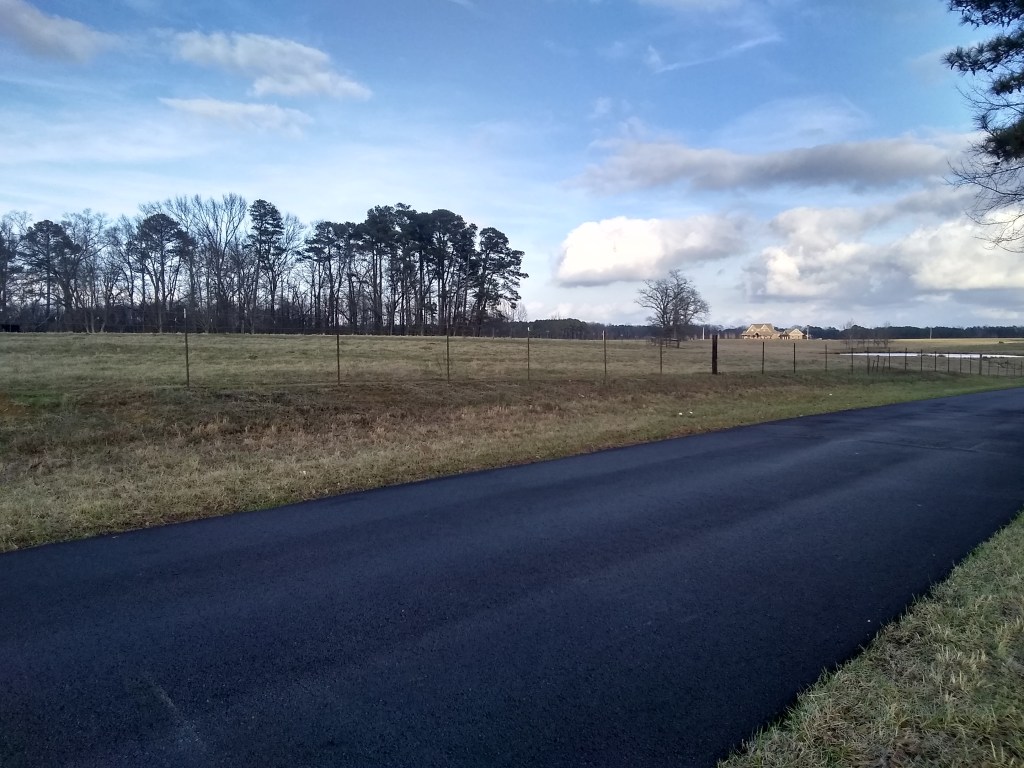
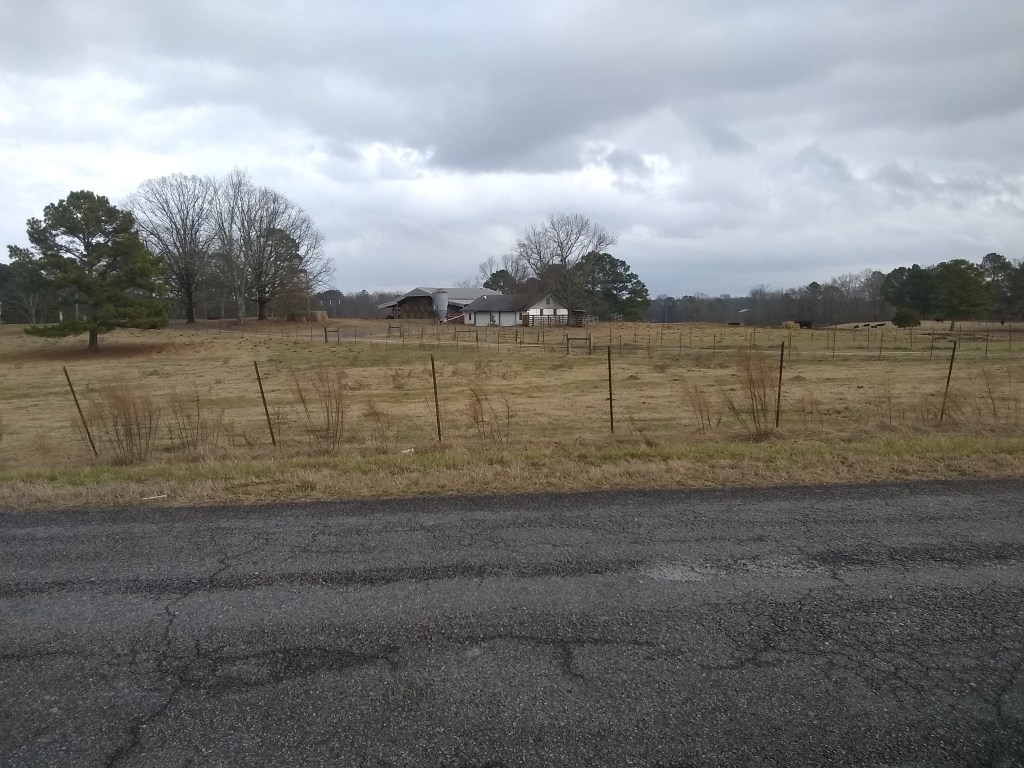
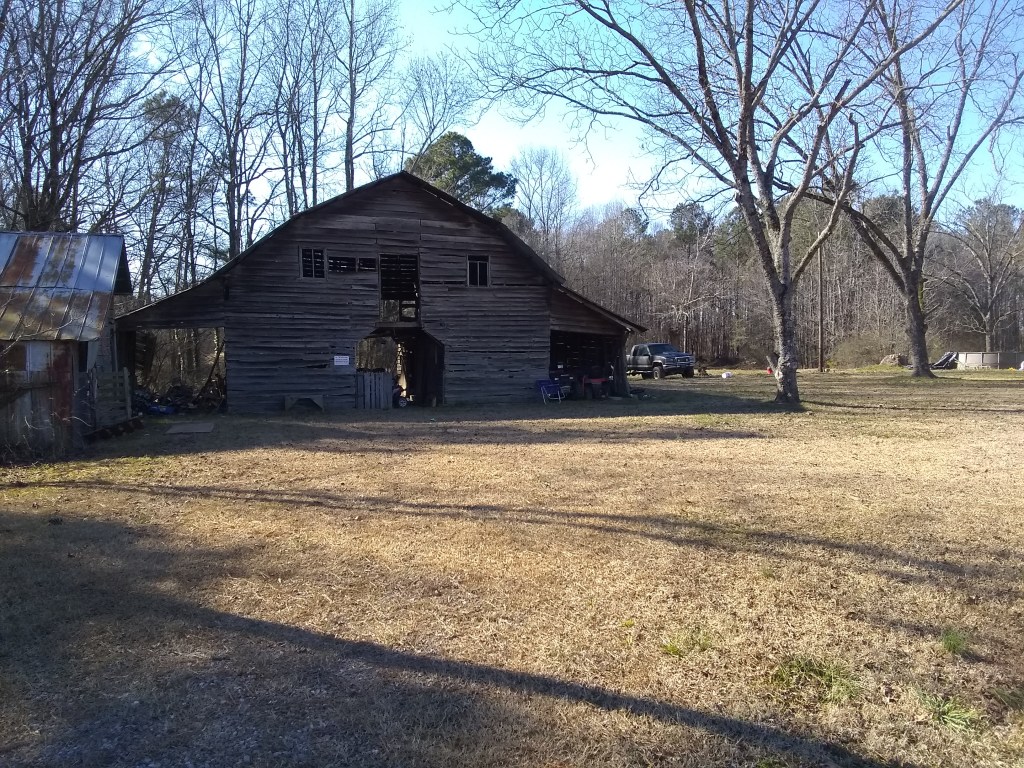
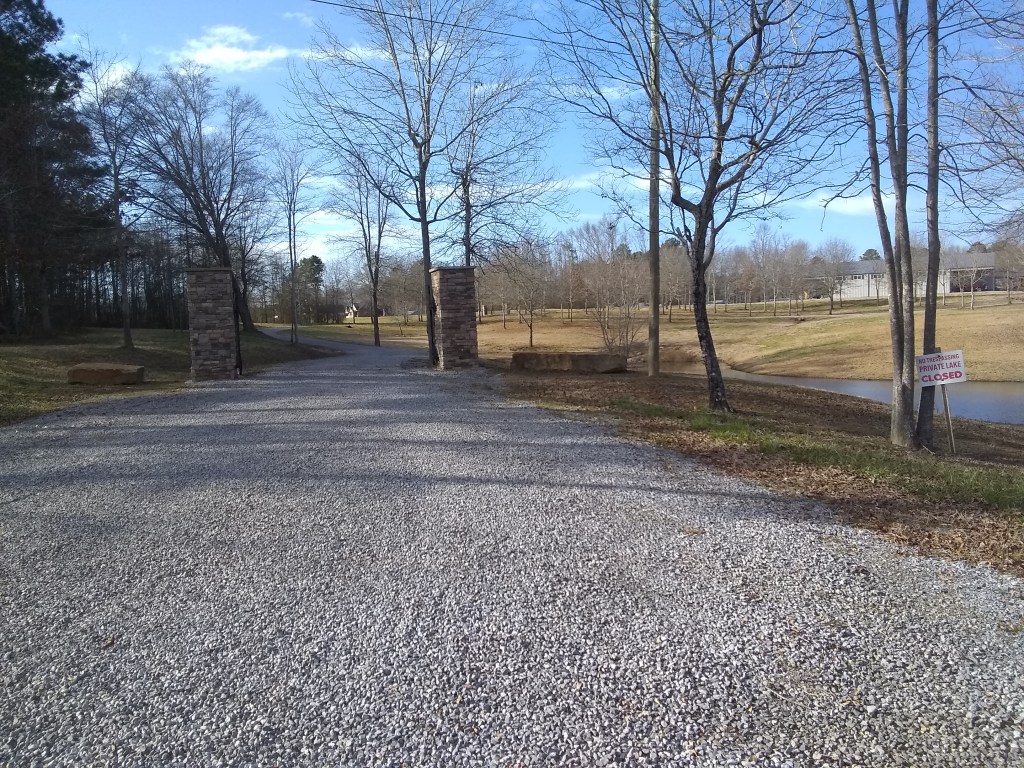
12/23/23 Biking & Listening

Here’s today’s bike ride metrics. Temperature at beginning of ride: 56 degrees. Warmer day; sunny with clear blue sky.


Photos from today’s ride:

None today.

Why I ride:

Biking is something I both love and hate. The conflicting emotions arise from the undeniable physical effort it demands. However, this exertion is precisely what makes it an excellent form of exercise. Most days, I dedicate over an hour to my cycling routine, and in doing so, I’ve discovered a unique opportunity to enjoy a good book or podcast. The rhythmic pedaling and the wind against my face create a calming backdrop that allows me to fully immerse myself in the content. In these moments, the time spent on the bike seems worthwhile, as I can’t help but appreciate the mental and physical rewards it offers.

I especially like having ridden. The post-biking feeling is one of pure satisfaction. The endorphin rush, coupled with a sense of accomplishment, makes the initial struggle and fatigue worthwhile. As I dismount and catch my breath, I relish the sensation of having conquered the challenge, both physically and mentally. It’s a reminder that the things we sometimes love to hate can often be the ones that bring us the most fulfillment. In the end, the love-hate relationship with biking only deepens my appreciation for the sport, as it continually pushes me to overcome my own limitations and embrace the rewards that follow the effort.


Why you should ride:

Encourages Relaxation:

Cycling is not just a form of physical exercise; it also has a profound ability to encourage relaxation. Here are various ways in which cycling contributes to a relaxed state of mind and body:

  • Physical Activity and Stress Reduction: Engaging in physical activities like cycling can reduce the body’s stress responses. Exercise triggers the release of endorphins, the body’s natural painkillers and mood elevators, which promote relaxation. The physical effort of cycling also helps to use up the energy created by stress, aiding in calming the body.
  • Rhythmic Pedaling as a Meditative Practice: The repetitive nature of cycling, with its steady, rhythmic pedaling, can have a meditative effect. This rhythmic motion can help focus the mind, drawing attention away from stressful thoughts and allowing a sense of calm.
  • Outdoor and Nature Exposure: Cycling outdoors, especially in natural or scenic settings, can enhance relaxation. Being in nature is known to reduce stress and promote a sense of peace. The sights, sounds, and smells of the outdoors can be very soothing.
  • Mindfulness and Presence: Cycling requires a level of present-moment awareness, which is a key aspect of mindfulness. Practicing mindfulness has been shown to reduce stress and promote relaxation. When cycling, the focus on the immediate environment and bodily sensations can help achieve this state.
  • Cardiovascular Health Benefits: Regular cycling improves cardiovascular health, which can help in reducing tension in the body. A healthier heart and circulatory system can contribute to a more relaxed state overall.
  • Reduces Mental Clutter: A bike ride offers a break from daily routines and responsibilities, providing an opportunity to clear the mind. This mental break can be refreshing and relaxing, especially after a long day or during stressful periods.
  • Social Relaxation: For those who enjoy group rides, the social aspect of cycling can be relaxing. Social interactions and the sense of community found in cycling groups can contribute to overall relaxation and well-being.
  • Achievement and Satisfaction: Completing a challenging ride or reaching a cycling goal can bring about a sense of achievement and satisfaction. This positive feeling can promote a relaxed state, as it counters feelings of stress and anxiety.
  • End of Ride Relaxation Response: After a cycling session, the body often experiences a natural relaxation response. The decrease in physical activity coupled with the sense of accomplishment can lead to a profound state of relaxation.
  • Improves Sleep Quality: As cycling improves sleep quality, it indirectly promotes relaxation. Better sleep means the body is better rested and more capable of handling stress, leading to a more relaxed state during waking hours.

In summary, cycling’s ability to encourage relaxation is multifaceted, combining physical, mental, and emotional elements. By incorporating regular cycling into one’s lifestyle, it’s possible to cultivate a more relaxed state of being, beneficial for overall health and well-being.


Please watch

Here’s a couple of links to groups I like. Hopefully, they’ll encourage you to start riding a bike, no matter your age.

Cycling for those aged 70+(opens in a new tab)


Solitary Cycling(opens in a new tab)


My bike:

A Rockhopper by Specialized. I purchased it November 2021 from Venture Out in Guntersville; Mike is top notch! So is the bike. The ‘old’ man seat was salvaged from an old Walmart bike. Seat replaced with new one from Venture Out.


What I’m listening to:

NONFICTION
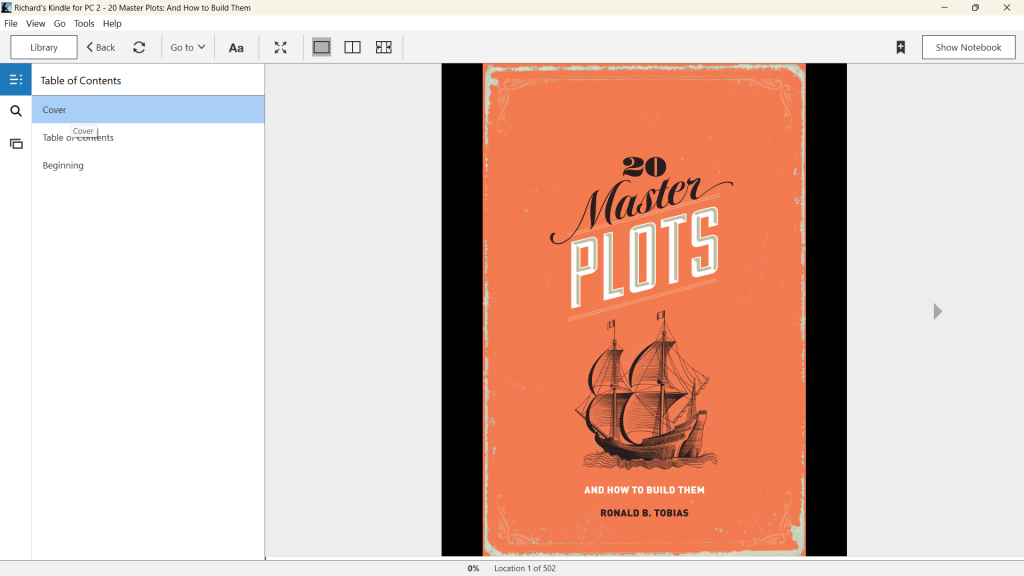
20 Master Plots: And How to Build Them, by Ronald B. Tobias

Give your story a solid foundation – a plot that engages readers from start to finish!

The best stories linger in the hearts and minds of readers for decades. These tales gain their power through plots that connect with the audience on both an emotional and intellectual level.

Ronald B. Tobias details these 20 time-tested plots. Each is discussed and analyzed, illustrating how a successful plot integrates all the elements of a story. Tobias then reveals how to use these plots effectively in your own work.

Tobias then goes to the next level, describing how to choose and develop plot in fiction. He reveals how to craft plot for any subject matter so that you develop your work evenly and effectively. As a result, your fiction will be more cohesive and convincing, making your story unforgettable for readers everywhere.

Blinkist nonfiction book summaries:

None today.

Podcasts:

Waking Up app series/courses:

None today.

FICTION

Novels:

Amazon abstract:

GMA BOOK CLUB PICK • AN NPR BOOK OF THE YEAR • From the New York Times bestselling author of I Was Anastasia and Code Name Hélène comes a gripping historical mystery inspired by the life and diary of Martha Ballard, a renowned 18th-century midwife who defied the legal system and wrote herself into American history.

“Fans of Outlander’s Claire Fraser will enjoy Lawhon’s Martha, who is brave and outspoken when it comes to protecting the innocent. . . impressive.”—The Washington Post

“Once again, Lawhon works storytelling magic with a real-life heroine.” —People Magazine


Maine, 1789: When the Kennebec River freezes, entombing a man in the ice, Martha Ballard is summoned to examine the body and determine cause of death. As a midwife and healer, she is privy to much of what goes on behind closed doors in Hallowell. Her diary is a record of every birth and death, crime and debacle that unfolds in the close-knit community. Months earlier, Martha documented the details of an alleged rape committed by two of the town’s most respected gentlemen—one of whom has now been found dead in the ice. But when a local physician undermines her conclusion, declaring the death to be an accident, Martha is forced to investigate the shocking murder on her own.

Over the course of one winter, as the trial nears, and whispers and prejudices mount, Martha doggedly pursues the truth. Her diary soon lands at the center of the scandal, implicating those she loves, and compelling Martha to decide where her own loyalties lie.

Clever, layered, and subversive, Ariel Lawhon’s newest offering introduces an unsung heroine who refused to accept anything less than justice at a time when women were considered best seen and not heard. The Frozen River is a thrilling, tense, and tender story about a remarkable woman who left an unparalleled legacy yet remains nearly forgotten to this day.


Blinkest fiction book summaries:

None today.

Music:

None today.


Here’s a few photos from previous riding adventures:

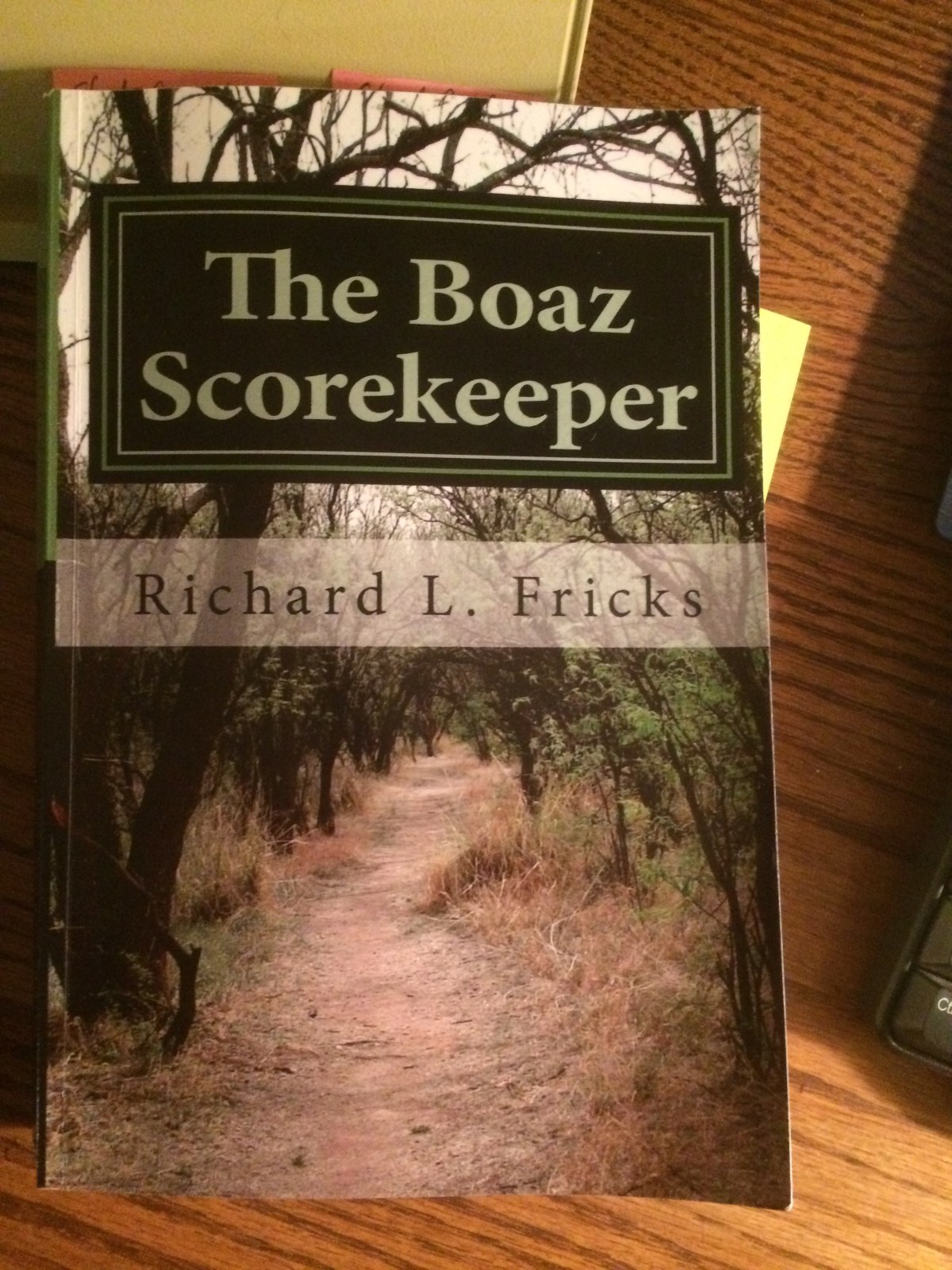
Novel Excerpts–The Boaz Scorekeeper, Chapter 69

The primary aim of the "Novel Excerpts" blog category is to showcase my creative writing, specifically from the novels I've written. Hopefully, these posts will provide a glimpse into my storytelling style, themes, and narrative skills. It's an opportunity to share my artistic expressions and the worlds I've created through my novels.
The Boaz Scorekeeper, written in 2017, is my second novel. I'll post it a chapter a day over the next few weeks.

I hadn’t spoken to Greg Gambol, my first boss out of law school, in five years. In 2012, he was still a practicing criminal defense lawyer in Atlanta.  The world-famous criminal defense attorney Gerry Spence, of The Trial Lawyer’s College, had chosen Greg to serve as an instructor at the annual Capital Defense workshop that is held every July at Thunderhead Ranch outside Dubois, Wyoming, 100 miles or so from Jackson Hole.  Like Greg, I also attended this 2012 workshop.

Gerry had represented many high-profile clients.  He gained international notoriety in the Karen Silkwood case.  As to Karen, I could nearly quote the back cover from Gerry’s book: “Karen Silkwood was a chemical technician at the Kerr-McGee plutonium-production plant, where she became an activist and vocal critic of plant safety, as what would now be known as a whistleblower. On November 13, 1974, Silkwood died in a one-car crash under suspicious circumstances after reportedly gathering evidence for her union. Spence represented Silkwood’s father and children, who charged that Kerr-McGee was responsible for exposing Silkwood to dangerous levels of radiation. Spence won a $10.5 million verdict for the family.”

Gerry never lost a criminal case that was presented to a jury.  Ruby Ridge is included among Gerry’s many high-profile cases.  My memory from another of Gerry’s books: “Spence successfully defended Randy Weaver on murder, assault, conspiracy, and gun charges in the Ruby Ridge, Idaho, federal standoff case, by successfully impugning the conduct of the FBI and its crime lab. Spence never called a witness for the defense. He relied only on contradictions and holes in the prosecution’s story.”

Other high-profile cases were Gerry’s acquittal of former Filipino First Lady Imelda Marcos in New York City on federal racketeering charges, and a 2008 acquittal of Detroit lawyer Geoffrey Fieger, who was charged with making unlawful campaign contributions. Before returning a not guilty verdict, the federal court jury deliberated 18 hours over four days.

I had spent a month at the College in 2007 learning Gerry’s criminal defense philosophy.  Its purpose is to show you how to “become a real person.”  It describes how “only then can you crawl into the skin of your client, your witness, the DA, even the judge.”  Gerry taught that the more an attorney understood himself, the deeper he could understand clients, opposing counsel, judges and, ultimately, the jurors.  Psychodrama was the key tool the College taught its students.  Gerry describes psychodrama as “an archaeological dig of the soul.”  During the month I spent in Wyoming’s open air and endless sky at the peaceful and secluded ranch, I took time for myself, enabling me to self-reflect. 

In 2012, I had returned to the ranch and the Trial College for a graduate course in capital defense, one that focused on Voir Dire, Opening Statement, Direct and Cross Exam, and Closing Argument.  There I learned a lot more about how psychodrama worked and discovered how to identify the real and compelling story of my cases that hopefully helped resonate with my jurors.  Greg had led several of the sessions.  This two-week course also gave me an opportunity to connect with Greg more than I ever had during the 17 years we worked together in Atlanta.  Nearly every day, after an early breakfast, we walked the unpaved roads up towards either the Absaroka or Wind River mountains, or sat together beside either the East Fork or Bear Creek river that flowed through the ranch.  And, at night, after the last session of the day, we sat with other lawyers around the infamous fire ring that had spun much folklore of Gerry and the College.

The two attorneys that I thought embodied more of Gerry Spence’s traits than any other lawyer I had ever known were Greg Gambol and my own law partner and criminal defense attorney Matt Bearden.  Today, I would meet with both these fine lawyers.

On Tuesday, and after Matt had met with the DA and learned that he was in no mood to lock down a full waiver of his right to pursue the death penalty against me, Matt had called Greg and someway motivated him to drive up from Birmingham.  Even though it was Friday, only four days after my arrest, Greg ignored his hectic schedule and was on his way to Gadsden, Alabama. 

In 2014, Greg, at 82, had switched sides, as lawyers like to label it.  He gave up defending those accused of a crime and began prosecuting federal crimes. At the time, I thought it a rather odd move for Greg but after learning that his father had made a career with the U.S. Department of Justice it made a little more sense.  Greg was appointed U.S. Attorney for the Northern District of Alabama in 2015.  I had spoken to him by phone shortly after Gina uncovered Club Eden’s sexual trafficking activity.  He had quickly solicited the help of the FBI and it quickly ordered two of its Special Agents to Boaz to spy on the four police officers that were involved.

At 1:30 p.m., I was already sitting in Interrogation Four when Matt and Greg walked in.  I reached out to shake his hand as he brushed it aside pulling me in for a bear hug.  After a few minutes of pleasantries over our families, Greg said the information that Gina had secured and that Matt had shared was persuasive and was already feeding his and the FBI’s investigation. 

“Micaden, you know that I cannot be directly involved in your case here in Etowah County, but I trust that if we are able to bring a case against James Adams and Wade Tillman, maybe others, that such federal prosecution will have an indirect affect upon your case.  Nothing would be better than for both James and Wade to be convicted in federal court before your case comes to trial.  You could then use their felony convictions to impugn their credibility in your case.  I’m not telling you anything you don’t know of course but I would bet that neither of them will give testimony in your case.  They will both plead the Fifth.”  Greg said.

“Here’s a thought.  What if James and Wade had strong motivation to testify in Micaden’s case?”  Matt said.

“Right now, I don’t see that happening.  I feel I know for sure they will not testify in my federal case, again, assuming the U.S. Attorney’s office is able to get an indictment against them.  Further, if we can obtain convictions for kidnapping for committing sexual crimes, the Judge is required to impose a life sentence with the possibility of parole.”  Greg said.

“Is there any feasible way to charge James and Wade with a federal crime that carries the death penalty?”  Matt asked.

“The crime would have to be for treason, terrorism, espionage, federal murder, or large-scale drug trafficking.”  Greg said.

“Seems like the only possibility would be for terrorism, but that might be a stretch.  What is the federal definition for terrorism?”  Matt asked.

Greg was unable to quote the definition but pulled from his briefcase a copy of the Federal Criminal Code.  After five minutes of flipping between sections and scanning, he said, “terrorism is ‘the unlawful use of force and violence against persons or property to intimidate or coerce a government, the civilian population, or any segment thereof, in furtherance of political or social objectives.’”

“To me that sounds a lot like what Club Eden has done for years against Hispanics in Boaz.  When Boaz Poultry sold out to Platinum Foods, it spawned an unprecedented growth in Hispanics.  Club Eden created its own plan to discourage them from living in Boaz.  The four officers it hired started targeting Hispanics, stopping their vehicles with a pretextual reason.  Later, the Club directed the officers to start planting illegal drugs and alcohol.  When these tactics didn’t work to the degree the Club wanted, it struck a deal with the Russian mob to start furnishing it with pretty Hispanic girls.  But, underlying all of this is the Club’s hatred of Hispanics and its willingness to use force or violence to, what does the code say?”  Matt asked.

“To intimidate or coerce a segment of the civilian population.  My paraphrase.”  Greg said.

“So, if you and the DA were to agree to waive the death penalty on both the federal and state levels in exchange for James and Wade’s testimony in Micaden’s trial admitting they had abducted and murdered Gina, they might have the needed motivation?”  Matt asked.

“Yes, but that is a long shot.  We would have to obtain an indictment for the terrorism case, and that will necessarily involve many more defendants than just Wade and James.”  Greg said.

“Therein may be another strong dose of motivation for Mr. James and Mr. Wade.  What if the Flaming Five fathers all were indicted?  You know that since they are also Club members, they had to be involved in this whole scheme.”  Matt said.

“It’s at least something to consider.”

Matt and Greg spent the next hour with me reviewing, at least in summary version, all the evidence the DA had against me and the evidence we had on my behalf.  We all agreed our case could possibly hinge on evidence that sure appeared problematic from an admissibility standpoint.

Greg had to be in Birmingham by 4:15 p.m., so he left a little before 3:00.  I told him how much I appreciated him coming and I would do everything I could to help him make his federal cases.

After Greg left, Matt and I sat in silence with me pondering the best approach to my Preliminary Hearing which was set for Monday the 27th.  I’m not sure what Matt was thinking during my silence, but around 3:35 he said, “we must find a way to show Gina made two phone calls to you on Saturday morning, where these calls originated, and where Gina’s phone was located when it went silent.  That should be at the Club Eden cabin when James and Wade opened the trunk of James’ car and saw Gina on the phone.”

“Matt, I’m thankful once again for your help.  I am so sorry to put such a burden on you at this late stage of your career.”  I said.

“It’s something to do.”  Matt said.

That was always his default response no matter how overloaded he was.  Matt then gave me a hug while tapping on the window for the deputies to let him out of Interrogation Four.

Friday night was another long night but I did have something positive to think about.  Karla and Kaden were coming to see me tomorrow morning.  For that, I was thankful.

12/22/23 Biking & Listening

Here’s today’s bike ride metrics. Temperature at beginning of ride: 45 degrees. Cold, but sunny with clear blue sky.


Photos from today’s ride:

None today.

Why I ride:

Biking is something I both love and hate. The conflicting emotions arise from the undeniable physical effort it demands. However, this exertion is precisely what makes it an excellent form of exercise. Most days, I dedicate over an hour to my cycling routine, and in doing so, I’ve discovered a unique opportunity to enjoy a good book or podcast. The rhythmic pedaling and the wind against my face create a calming backdrop that allows me to fully immerse myself in the content. In these moments, the time spent on the bike seems worthwhile, as I can’t help but appreciate the mental and physical rewards it offers.

I especially like having ridden. The post-biking feeling is one of pure satisfaction. The endorphin rush, coupled with a sense of accomplishment, makes the initial struggle and fatigue worthwhile. As I dismount and catch my breath, I relish the sensation of having conquered the challenge, both physically and mentally. It’s a reminder that the things we sometimes love to hate can often be the ones that bring us the most fulfillment. In the end, the love-hate relationship with biking only deepens my appreciation for the sport, as it continually pushes me to overcome my own limitations and embrace the rewards that follow the effort.


Why you should ride:

Encourages Relaxation:

Cycling is not just a form of physical exercise; it also has a profound ability to encourage relaxation. Here are various ways in which cycling contributes to a relaxed state of mind and body:

  • Physical Activity and Stress Reduction: Engaging in physical activities like cycling can reduce the body’s stress responses. Exercise triggers the release of endorphins, the body’s natural painkillers and mood elevators, which promote relaxation. The physical effort of cycling also helps to use up the energy created by stress, aiding in calming the body.
  • Rhythmic Pedaling as a Meditative Practice: The repetitive nature of cycling, with its steady, rhythmic pedaling, can have a meditative effect. This rhythmic motion can help focus the mind, drawing attention away from stressful thoughts and allowing a sense of calm.
  • Outdoor and Nature Exposure: Cycling outdoors, especially in natural or scenic settings, can enhance relaxation. Being in nature is known to reduce stress and promote a sense of peace. The sights, sounds, and smells of the outdoors can be very soothing.
  • Mindfulness and Presence: Cycling requires a level of present-moment awareness, which is a key aspect of mindfulness. Practicing mindfulness has been shown to reduce stress and promote relaxation. When cycling, the focus on the immediate environment and bodily sensations can help achieve this state.
  • Cardiovascular Health Benefits: Regular cycling improves cardiovascular health, which can help in reducing tension in the body. A healthier heart and circulatory system can contribute to a more relaxed state overall.
  • Reduces Mental Clutter: A bike ride offers a break from daily routines and responsibilities, providing an opportunity to clear the mind. This mental break can be refreshing and relaxing, especially after a long day or during stressful periods.
  • Social Relaxation: For those who enjoy group rides, the social aspect of cycling can be relaxing. Social interactions and the sense of community found in cycling groups can contribute to overall relaxation and well-being.
  • Achievement and Satisfaction: Completing a challenging ride or reaching a cycling goal can bring about a sense of achievement and satisfaction. This positive feeling can promote a relaxed state, as it counters feelings of stress and anxiety.
  • End of Ride Relaxation Response: After a cycling session, the body often experiences a natural relaxation response. The decrease in physical activity coupled with the sense of accomplishment can lead to a profound state of relaxation.
  • Improves Sleep Quality: As cycling improves sleep quality, it indirectly promotes relaxation. Better sleep means the body is better rested and more capable of handling stress, leading to a more relaxed state during waking hours.

In summary, cycling’s ability to encourage relaxation is multifaceted, combining physical, mental, and emotional elements. By incorporating regular cycling into one’s lifestyle, it’s possible to cultivate a more relaxed state of being, beneficial for overall health and well-being.


Please watch

Here’s a couple of links to groups I like. Hopefully, they’ll encourage you to start riding a bike, no matter your age.

Cycling for those aged 70+(opens in a new tab)


Solitary Cycling(opens in a new tab)


My bike:

A Rockhopper by Specialized. I purchased it November 2021 from Venture Out in Guntersville; Mike is top notch! So is the bike. The ‘old’ man seat was salvaged from an old Walmart bike. Seat replaced with new one from Venture Out.


What I’m listening to:

NONFICTION

20 Master Plots: And How to Build Them, by Ronald B. Tobias

Give your story a solid foundation – a plot that engages readers from start to finish!

The best stories linger in the hearts and minds of readers for decades. These tales gain their power through plots that connect with the audience on both an emotional and intellectual level.

Ronald B. Tobias details these 20 time-tested plots. Each is discussed and analyzed, illustrating how a successful plot integrates all the elements of a story. Tobias then reveals how to use these plots effectively in your own work.

Tobias then goes to the next level, describing how to choose and develop plot in fiction. He reveals how to craft plot for any subject matter so that you develop your work evenly and effectively. As a result, your fiction will be more cohesive and convincing, making your story unforgettable for readers everywhere.

Blinkist nonfiction book summaries:

None today.

Podcasts:

None today.

Waking Up app series/courses:

None today.

FICTION

Novels:

Amazon abstract:

GMA BOOK CLUB PICK • AN NPR BOOK OF THE YEAR • From the New York Times bestselling author of I Was Anastasia and Code Name Hélène comes a gripping historical mystery inspired by the life and diary of Martha Ballard, a renowned 18th-century midwife who defied the legal system and wrote herself into American history.

“Fans of Outlander’s Claire Fraser will enjoy Lawhon’s Martha, who is brave and outspoken when it comes to protecting the innocent. . . impressive.”—The Washington Post

“Once again, Lawhon works storytelling magic with a real-life heroine.” —People Magazine


Maine, 1789: When the Kennebec River freezes, entombing a man in the ice, Martha Ballard is summoned to examine the body and determine cause of death. As a midwife and healer, she is privy to much of what goes on behind closed doors in Hallowell. Her diary is a record of every birth and death, crime and debacle that unfolds in the close-knit community. Months earlier, Martha documented the details of an alleged rape committed by two of the town’s most respected gentlemen—one of whom has now been found dead in the ice. But when a local physician undermines her conclusion, declaring the death to be an accident, Martha is forced to investigate the shocking murder on her own.

Over the course of one winter, as the trial nears, and whispers and prejudices mount, Martha doggedly pursues the truth. Her diary soon lands at the center of the scandal, implicating those she loves, and compelling Martha to decide where her own loyalties lie.

Clever, layered, and subversive, Ariel Lawhon’s newest offering introduces an unsung heroine who refused to accept anything less than justice at a time when women were considered best seen and not heard. The Frozen River is a thrilling, tense, and tender story about a remarkable woman who left an unparalleled legacy yet remains nearly forgotten to this day.


Blinkest fiction book summaries:

None today.

Music:

None today.


Here’s a few photos from previous riding adventures:
Novel Excerpts–The Boaz Scorekeeper, Chapter 68

The primary aim of the "Novel Excerpts" blog category is to showcase my creative writing, specifically from the novels I've written. Hopefully, these posts will provide a glimpse into my storytelling style, themes, and narrative skills. It's an opportunity to share my artistic expressions and the worlds I've created through my novels.
The Boaz Scorekeeper, written in 2017, is my second novel. I'll post it a chapter a day over the next few weeks.

Sunday night I finally slept. I had been operating on pure adrenalin since Saturday morning and had only caught a few quick naps.  It wasn’t like I was now rested when my phone alarm went off at 5:00 a.m.  I had preferred to stay in bed but, of all days, I had two court hearings in Etowah County.  I got up, showered, grabbed my coffee, and headed to the office to review my two files while leaving Karla in bed.  School was out today for some recently created City holiday.

Three hours later, I pulled into the parking lot beside the Courthouse and across the street from both the Judicial Building and the Etowah County Detention Center.  It was there that I would be incarcerated since Gina’s body would be found in Etowah County, so it would have jurisdiction.  I should have felt a little relief since the Center was a modern, well-maintained facility, unlike the Marshall County Jail where I had stayed for six months when, at only age 18, I fought my first battle with the criminal justice system.  As an attorney, I had visited many clients in both jails over the years, and always got the creeps every time inside the Marshall County Jail.  The reality is that both places equally accomplished their mission: to keep criminals and their cousins penned up and locked away from the common and elite citizens walking the streets. Each jail also was a place to slowly but surely whittle away at a man’s mind, daily piling little slivers of hope beside the bunk of every man whether he was laying down staring at the ceiling or pacing back and forth across his six by eight-foot cage.

To my surprise, my court appearances before two different judges went smoothly.  I didn’t see a single eye give me a suspicious glance.  I met Matt for lunch at the Blue-Collar Diner on 4th Street.  He had spent the morning in Bankruptcy Court in Anniston and visiting a client in the Calhoun County Jail.  We spent the next two hours continuing our conversation from late yesterday afternoon with him once again demanding that I not say anything at all to law enforcement after I was arrested but to wait to be interviewed in his presence.

After lunch, I drove the Noccalula Falls route back to the office.  I wouldn’t dare turn down Dogwood Trail but after passing the turnoff, I met two police cars, noting in my rear-view mirror, they turned toward Oak Hollow. I decided not to return to the law office but to go home instead.  I wanted to get outside and enjoy a long walk among the trees, many still brilliant with red, orange, purple, and an assortment of other multi-colored leaves.

It was nearly dark when I returned to the house.  Karla had accompanied me for an hour or so but had returned to the house around 3:30 after failing to gain control of her crying.  I should have not waited so long to tell her the inevitable.  I had just changed my clothes and was heading to the kitchen for supper when the doorbell rang.  Two middle-aged, but well-muscled, deputies wearing grim faces were standing shoulder to shoulder as I opened the front door.  I knew both, having dealt with them on several occasions either at the jail or in the courtroom.  “Mr. Tanner, we have a warrant for your arrest.  Please step out on the porch.”  I complied and after they allowed Karla to bring my most comfortable shoes, I was in the back of their squad car heading to the Etowah County Detention Center.

It was nearly 8:00 p.m. before I was fully processed and locked in a private cell.  Many inmates want to be in, what is known as, ‘General Population.’ This is where you can mingle with other inmates during the day in a large room with bolted down tables and chairs, and then at night be locked up with another inmate in a six by eight cell along the outer walls of the central room.  I preferred being alone, all the time.  After getting my wish and sitting on my bunk for an hour or so, two deputies came to my cell door and one of them said, “get up Tanner, you’re needed in Interrogation Four.”

After my hands and feet were shackled, they led me to one of four interrogation rooms just outside the main lockup.  I was familiar with each of these rooms having spent many hours in each one interviewing my own clients over the years.  Matt and Detective Pete Morrow both stood when the deputies opened the door and gently nudged me forward.  Morrow agreed to Matt’s request that I be unshackled.  That was nice.

After a few not so pleasant pleasantries, Morrow got down to business.  “Tanner, let me be clear.  I am here for one purpose and that is to get your confession.  I have just come from a meeting with the DA and after a long briefing he has authorized me to extend a very generous offer.  In exchange for your confession to the abduction and murder of Gina Culvert Tillman, the DA will waive his right to pursue the death penalty.”

Matt looked at me and slightly shook his head sideways. “Detective Morrow, my client has no intention to plead to anything.  He is not guilty and we can prove it.”

“I figured it was going to be this way, even told such to the DA.  Your client’s tough guy stance is admirable right now, before knowing what we know.  Let me brief you on the evidence we have.  Gina’s body was found where an anonymous tip said it would be.  Even though you do not own this property, we have eyewitnesses who saw you and Gina go there just this past Friday.  We also know that you have been using this property, the house that is, as an office of sorts.  So, we know you had full access and use of this property.”

“If your investigation has been thorough then you know that two of your eyewitnesses are Franklin and Danny Ericson, two enemies of my client.”  Matt said.

“We are aware there has been some bad blood between them over the years.  But, Mr. Tanner and the Riggins are and have been on friendly terms.”  Morrow said.

“Here is Micaden’s statement that covers virtually every minute of his comings and goings since last Friday morning.  It includes full details of the visit he had yesterday with James Adams and the victim’s husband, Wade Tillman.”  Matt said.

Morrow took the statement and spent ten minutes reading it, twice.  Matt had encouraged me to prepare a written statement.  He said that my memory was the best it would ever be concerning what had happened since Gina called me Saturday morning.  At first, I was against giving the DA anything so tangible, so quickly, but ultimately, I yielded to Matt’s advice.  I would have been a fool not to listen to the man who had single-handedly pulled off a miracle nearly 50 years earlier.

“Sounds like we have the wrong man and that we need to arrest James and Wade.  I’m sorry Mr. Tanner, but we are not quite so gullible.  I forgot to tell you that not only did we dig up Gina Tillman’s body, but our dogs alerted us to two other graves right beside Ms. Tillman’s.  The bones our backhoe operator unearthed are being examined at the State Forensic Lab in Montgomery as we speak.”  Morrow said.

Matt looked at me and again motioned me to keep quiet.  I got the clear impression that if Matt had been in a boxing match his look would be a mirror image of a dominate boxer having just experienced an unexpected and mighty left hook.

“Is there anything else either one of you would like to say?” Morrow asked.

“As my client has stated, he knows nothing about how Gina’s body wound up at what he calls Oak Hollow, nor does he know anything about any other bones.  I urge you to pursue the clues clearly laid out in Micaden’s statement.”  Matt said as though he had no choice but to use all his powers to get back to his feet and sling out some type of punch.

Morrow stood, walked to the door, looked through the window, and caught the eye of the deputies who had been standing outside Interrogation Four. As they were chaining and shackling me, Matt said he would come see me tomorrow after meeting with the DA.  By 10:00 p.m., I was laying on my back on my bunk anticipating a very long and restless night.

12/21/23 Biking & Listening

Here’s today’s bike ride metrics. Temperature at beginning of ride: 45 degrees. Cold, but sunny with clear blue sky.


Photos from today’s ride:

None today.

Why I ride:

Biking is something I both love and hate. The conflicting emotions arise from the undeniable physical effort it demands. However, this exertion is precisely what makes it an excellent form of exercise. Most days, I dedicate over an hour to my cycling routine, and in doing so, I’ve discovered a unique opportunity to enjoy a good book or podcast. The rhythmic pedaling and the wind against my face create a calming backdrop that allows me to fully immerse myself in the content. In these moments, the time spent on the bike seems worthwhile, as I can’t help but appreciate the mental and physical rewards it offers.

I especially like having ridden. The post-biking feeling is one of pure satisfaction. The endorphin rush, coupled with a sense of accomplishment, makes the initial struggle and fatigue worthwhile. As I dismount and catch my breath, I relish the sensation of having conquered the challenge, both physically and mentally. It’s a reminder that the things we sometimes love to hate can often be the ones that bring us the most fulfillment. In the end, the love-hate relationship with biking only deepens my appreciation for the sport, as it continually pushes me to overcome my own limitations and embrace the rewards that follow the effort.


Why you should ride:

Encourages Relaxation:

Cycling is not just a form of physical exercise; it also has a profound ability to encourage relaxation. Here are various ways in which cycling contributes to a relaxed state of mind and body:

  • Physical Activity and Stress Reduction: Engaging in physical activities like cycling can reduce the body’s stress responses. Exercise triggers the release of endorphins, the body’s natural painkillers and mood elevators, which promote relaxation. The physical effort of cycling also helps to use up the energy created by stress, aiding in calming the body.
  • Rhythmic Pedaling as a Meditative Practice: The repetitive nature of cycling, with its steady, rhythmic pedaling, can have a meditative effect. This rhythmic motion can help focus the mind, drawing attention away from stressful thoughts and allowing a sense of calm.
  • Outdoor and Nature Exposure: Cycling outdoors, especially in natural or scenic settings, can enhance relaxation. Being in nature is known to reduce stress and promote a sense of peace. The sights, sounds, and smells of the outdoors can be very soothing.
  • Mindfulness and Presence: Cycling requires a level of present-moment awareness, which is a key aspect of mindfulness. Practicing mindfulness has been shown to reduce stress and promote relaxation. When cycling, the focus on the immediate environment and bodily sensations can help achieve this state.
  • Cardiovascular Health Benefits: Regular cycling improves cardiovascular health, which can help in reducing tension in the body. A healthier heart and circulatory system can contribute to a more relaxed state overall.
  • Reduces Mental Clutter: A bike ride offers a break from daily routines and responsibilities, providing an opportunity to clear the mind. This mental break can be refreshing and relaxing, especially after a long day or during stressful periods.
  • Social Relaxation: For those who enjoy group rides, the social aspect of cycling can be relaxing. Social interactions and the sense of community found in cycling groups can contribute to overall relaxation and well-being.
  • Achievement and Satisfaction: Completing a challenging ride or reaching a cycling goal can bring about a sense of achievement and satisfaction. This positive feeling can promote a relaxed state, as it counters feelings of stress and anxiety.
  • End of Ride Relaxation Response: After a cycling session, the body often experiences a natural relaxation response. The decrease in physical activity coupled with the sense of accomplishment can lead to a profound state of relaxation.
  • Improves Sleep Quality: As cycling improves sleep quality, it indirectly promotes relaxation. Better sleep means the body is better rested and more capable of handling stress, leading to a more relaxed state during waking hours.

In summary, cycling’s ability to encourage relaxation is multifaceted, combining physical, mental, and emotional elements. By incorporating regular cycling into one’s lifestyle, it’s possible to cultivate a more relaxed state of being, beneficial for overall health and well-being.


Please watch

Here’s a couple of links to groups I like. Hopefully, they’ll encourage you to start riding a bike, no matter your age.

Cycling for those aged 70+(opens in a new tab)


Solitary Cycling(opens in a new tab)


My bike:

A Rockhopper by Specialized. I purchased it November 2021 from Venture Out in Guntersville; Mike is top notch! So is the bike. The ‘old’ man seat was salvaged from an old Walmart bike. Seat replaced with new one from Venture Out.


What I’m listening to:

NONFICTION

20 Master Plots: And How to Build Them, by Ronald B. Tobias

Give your story a solid foundation – a plot that engages readers from start to finish!

The best stories linger in the hearts and minds of readers for decades. These tales gain their power through plots that connect with the audience on both an emotional and intellectual level.

Ronald B. Tobias details these 20 time-tested plots. Each is discussed and analyzed, illustrating how a successful plot integrates all the elements of a story. Tobias then reveals how to use these plots effectively in your own work.

Tobias then goes to the next level, describing how to choose and develop plot in fiction. He reveals how to craft plot for any subject matter so that you develop your work evenly and effectively. As a result, your fiction will be more cohesive and convincing, making your story unforgettable for readers everywhere.

Blinkist nonfiction book summaries:

None today.

Podcasts:

Waking Up app series/courses:

None today.

FICTION

Novels:

Amazon abstract:

GMA BOOK CLUB PICK • AN NPR BOOK OF THE YEAR • From the New York Times bestselling author of I Was Anastasia and Code Name Hélène comes a gripping historical mystery inspired by the life and diary of Martha Ballard, a renowned 18th-century midwife who defied the legal system and wrote herself into American history.

“Fans of Outlander’s Claire Fraser will enjoy Lawhon’s Martha, who is brave and outspoken when it comes to protecting the innocent. . . impressive.”—The Washington Post

“Once again, Lawhon works storytelling magic with a real-life heroine.” —People Magazine


Maine, 1789: When the Kennebec River freezes, entombing a man in the ice, Martha Ballard is summoned to examine the body and determine cause of death. As a midwife and healer, she is privy to much of what goes on behind closed doors in Hallowell. Her diary is a record of every birth and death, crime and debacle that unfolds in the close-knit community. Months earlier, Martha documented the details of an alleged rape committed by two of the town’s most respected gentlemen—one of whom has now been found dead in the ice. But when a local physician undermines her conclusion, declaring the death to be an accident, Martha is forced to investigate the shocking murder on her own.

Over the course of one winter, as the trial nears, and whispers and prejudices mount, Martha doggedly pursues the truth. Her diary soon lands at the center of the scandal, implicating those she loves, and compelling Martha to decide where her own loyalties lie.

Clever, layered, and subversive, Ariel Lawhon’s newest offering introduces an unsung heroine who refused to accept anything less than justice at a time when women were considered best seen and not heard. The Frozen River is a thrilling, tense, and tender story about a remarkable woman who left an unparalleled legacy yet remains nearly forgotten to this day.


Blinkest fiction book summaries:

None today.

Music:

None today.


Here’s a few photos from previous riding adventures:
Novel Excerpts–The Boaz Scorekeeper, Chapter 67

The primary aim of the "Novel Excerpts" blog category is to showcase my creative writing, specifically from the novels I've written. Hopefully, these posts will provide a glimpse into my storytelling style, themes, and narrative skills. It's an opportunity to share my artistic expressions and the worlds I've created through my novels.
The Boaz Scorekeeper, written in 2017, is my second novel. I'll post it a chapter a day over the next few weeks.

After James and Wade left, I knew that I only had a short time, maybe a day or two at the most, before I would be arrested.  I also knew that I could not let fear rule my thoughts and actions.  I had to start developing a plan.  One that would both defend myself, and expose James and Wade as the real murderers of Gina Tillman.  Thinking logically would also enable me to realize that it was more than possible that investigators would dig up John and Randall, while they were uncovering Gina’s body.

Someway I had to gain access to Gina’s email account, the one she had set up for her hidden audio-recorder to send transcripts of voices from Wade’s semi-secret study.  I pulled Gina’s file and found the transcript she had given me, the one where James was red-hot against Wade and Fred for continuing the sex trafficking.  The transcript was simply an email.  Gina had told me that the audio-recorder automatically sent her a full transcript of everything said, 30 minutes after the last voice activation.  I had suspected that she had set up a unique Gmail account to receive the transcriptions.  I was right.  At the top of the transcript was Gina’s name, Gina Tillman, and beside it, her Gmail address, unvarnishedtruth_finally1972@gmail.com.  I had to give it to Gina, she was spot-on in naming the account that received verbal communications from Wade’s secret study.  I couldn’t help but gloat a little about how Wade, James, and Fred thought they were so clever in holding their secret meetings, locked away from the world.  They were confident in knowing they could be totally open, even brass.  Yet, truth be, they were being recorded all along, every word, to be exposed to the world at some future date.

I was confident that Gina had used her Google account to create this new Gmail account.  I was aware that one could create multiple Gmail accounts within his own Google account.  Gina had shown me how she had set up a unique Google account and one email account each for Wade, James, and Fred.  She had done this handy-work on Wade’s home-study computer.  Somehow, I needed to access Gina’s Google account and unvarnishedtruth_finally1972@gmail.com. 

I walked to my desk and accessed my Gmail account which was already open.  I clicked on my photo in the top right corner and clicked the ‘Sign Off’ button.  A new screen appeared giving me the option to sign back into my account or ‘another account.’  I clicked on the last option.  Next, I was asked for either an email address or phone number.  I looked again at Gina’s file for the law firm’s standard intake form.  Matt and I had always been very careful to complete this form with every new client.  It contained empty boxes for us to fill in contact information.  One such box requested the client’s email address.  Gina’s intake form revealed her email address as ginaculvert1972@gmail.com.  Pretty standard method she had used, other than using her maiden name instead of her married name.  That probably said more than I could ever know.  I entered this address.  I knew I would get stumped.  Google was asking for Gina’s password.

I tried to guess several times, for nearly an hour.  I got frustrated and was about to give up when I remembered something Gina had said when we were together during our trip to Gadsden.  For some reason, Judith Ericson’s name had come up and I got the courage to ask Gina about her relationship with Judith.  I had told Gina what Nate Baker, the New York Times reporter, had said his investigators had learned.  I shared with Gina that Nate had said she and Judith took frequent trips, every Wednesday in fact, to Huntsville and that they always wound up at the Huntsville Hilton. After I told Gina this, what to me now seemed a bizarre story, Gina had burst out laughing.  “So, you and Mr. Nate thought that Judith and I were lovers.  That is hilarious.  I guess his investigators never followed us inside and to the employees’ locker room where we changed clothes and became waitresses for the next six hours.”  Gina had explained to me that she and Judith so wanted to be normal people that this was their way of escaping their carefully choreographed lives in Boaz, enabling them to rub shoulders with people they didn’t know, those who only expected them to be great waitresses.

I pulled out a phone book and found a number for John and Judith Ericson.  I called Judith and told her what was going on.  She said that she had heard that Gina was missing.  I could tell by her voice that she was frantic.  Before I could tell her, Judith said that Gina had told her that she was leaving Wade and that I was helping her.  I told Judith I desperately needed her help.  I gave her a very short and top-level version of why I needed Gina’s password to access her email.  Judith said she didn’t know.  She asked me to give her a few minutes to ponder and if she thought of something she would call me back.  I thanked her.

I sat back down at my computer and kept attempting to guess Gina’s password.  Within five minutes or less Judith called me and said that she had an idea.  She said that both she and Gina had to set up an online employee account at Hilton.  It wasn’t an email account but just a place on the restaurant’s internal system to use to communicate with its staff.  Judith said she remembered twenty or more years ago when they were setting up their accounts how they had laughed about how creative they were in completing Hilton’s online form.  Judith said she chose her nickname as ‘Sugar’ and Gina chose ‘Spice.’  And, they used these nicknames within their passwords.  Judith said hers was sugarbaby1972 and Gina’s was spicebaby1972. 

With Judith still on the phone, I typed in spicebaby1972 in the slot where Google was requesting the password for Gina’s Google account.  Bingo.  That was it.  I profusely thanked Judith for her help and told her how much Gina loved her.  She was crying when we hung up.

Looking at the computer screen, I realized I wasn’t home free by any means.  There was Gina’s email account, her regular one, ginaculvert1972@gmail.com.  I walked up front to Tina’s desk and used her computer to toy around with my own Google account.  I learned that when I signed out of my active Gmail account it showed my other Gmail accounts.  I returned to my desk and signed out of Gina’s regular account.  There was a listing of her other Gmail accounts including the unvarnishedtruth_finally1972@gmail.com.  I clicked on it and once again was faced with needing a password.  I tried ‘spicebaby1972’ but it didn’t work.  Think Micaden think.  When Gina first came to me she talked about being ready to be released from prison.  When Gina dropped by Hickory Hollow she was wearing a flowery blouse.  During our ride to Gadsden we had talked about how she loved flowers and her intentions of moving to Atlanta to work in her Aunt’s florist.  Gina had even said that her favorite flower was a red rose.  Prison, flower, rose.  I typed in every combination of these three words and as expected came up with total failure.  I glanced again at Gina’s intake form and saw that I had written ‘Ginja Ninja’ in the box labeled ‘Other Names.’  I remembered when I had asked her that question she said that this was a nickname from High School and that as far as she knew she had not been called that, at least to her face, since she graduated.  I recalled that she had been rather sympathetic toward that name, at one point saying, “if only I had pursued this character.”  When I asked her what she meant she said that during High School she had a reputation for being, as she put it, ‘loose’ or ‘easy.’  She admitted that she was. She explained that her cheerleader teammates started referring to her as a Ninja because she was so limber, flexible, and overall athletic.  She said the Flaming Five started calling her Ginja Ninja, with the insinuation that she was good in bed.  She hated that reference and secretly hoped that she could someday become a real Ninja, not a warrior really, but someone who stood her ground and wouldn’t take crap off anybody. 

For the next hour, once again, I tried every combination of Ginja Ninja, prison, flower, and rose.  I was just about to give up when I again became extremely lucky.  After typing in ‘ginjaninjarose2017’ my computer screen opened to the sought-after email account, unvarnishedtruth_finally1972@gmail.com.  I took Gina’s password to mean that the abused Gina became a real ninja, and rose to confront her demons.  I noticed that the very last email that Gina had received from her auto-recorder was Saturday morning, November 4, 2017, yesterday morning. I read the transcript of James and Wade’s conversation in his church study.  Just as Gina had told me during that frantic call yesterday morning when I told her to flee, James and Wade were on to her snooping.  They were now clearly aware of the threat that she posed.  I reread the transcript again and again imagining I was Gina reading it for the first time.  I felt just a sliver of the terror she must have felt as she realized the transcript was at least thirty minutes old, and that James and Wade were likely coming for her any minute.  I sat back in my chair, shut my eyes, and tried to visualize Gina rushing and desperately trying to grab Wade’s ‘Missions Money’ Journal and get to her car. 

After a few minutes, I stood up and remembered what I had told James and Wade just a few hours ago.  “You two idiots have my full permission to bring your best shot.  But, you better be ready to pay the piper if you’re going to play this song.”

I knew I was facing another long and difficult road.  I would be arrested and charged with Gina’s murder.  But, this time, I had some solid ammunition to return fire.

At the time, I couldn’t have known how silly I was, how ignorant, no, stupid, to think I could ever stand up to the two remaining members of the Flaming Five, and to their families.

12/20/23 Biking & Listening

Here’s today’s bike ride metrics. Temperature at beginning of ride: 45 degrees. Cold, but sunny with clear blue sky.


Photos from today’s ride:

None today.

Why I ride:

Biking is something I both love and hate. The conflicting emotions arise from the undeniable physical effort it demands. However, this exertion is precisely what makes it an excellent form of exercise. Most days, I dedicate over an hour to my cycling routine, and in doing so, I’ve discovered a unique opportunity to enjoy a good book or podcast. The rhythmic pedaling and the wind against my face create a calming backdrop that allows me to fully immerse myself in the content. In these moments, the time spent on the bike seems worthwhile, as I can’t help but appreciate the mental and physical rewards it offers.

I especially like having ridden. The post-biking feeling is one of pure satisfaction. The endorphin rush, coupled with a sense of accomplishment, makes the initial struggle and fatigue worthwhile. As I dismount and catch my breath, I relish the sensation of having conquered the challenge, both physically and mentally. It’s a reminder that the things we sometimes love to hate can often be the ones that bring us the most fulfillment. In the end, the love-hate relationship with biking only deepens my appreciation for the sport, as it continually pushes me to overcome my own limitations and embrace the rewards that follow the effort.


Why you should ride:

Encourages Relaxation:

Cycling is not just a form of physical exercise; it also has a profound ability to encourage relaxation. Here are various ways in which cycling contributes to a relaxed state of mind and body:

  • Physical Activity and Stress Reduction: Engaging in physical activities like cycling can reduce the body’s stress responses. Exercise triggers the release of endorphins, the body’s natural painkillers and mood elevators, which promote relaxation. The physical effort of cycling also helps to use up the energy created by stress, aiding in calming the body.
  • Rhythmic Pedaling as a Meditative Practice: The repetitive nature of cycling, with its steady, rhythmic pedaling, can have a meditative effect. This rhythmic motion can help focus the mind, drawing attention away from stressful thoughts and allowing a sense of calm.
  • Outdoor and Nature Exposure: Cycling outdoors, especially in natural or scenic settings, can enhance relaxation. Being in nature is known to reduce stress and promote a sense of peace. The sights, sounds, and smells of the outdoors can be very soothing.
  • Mindfulness and Presence: Cycling requires a level of present-moment awareness, which is a key aspect of mindfulness. Practicing mindfulness has been shown to reduce stress and promote relaxation. When cycling, the focus on the immediate environment and bodily sensations can help achieve this state.
  • Cardiovascular Health Benefits: Regular cycling improves cardiovascular health, which can help in reducing tension in the body. A healthier heart and circulatory system can contribute to a more relaxed state overall.
  • Reduces Mental Clutter: A bike ride offers a break from daily routines and responsibilities, providing an opportunity to clear the mind. This mental break can be refreshing and relaxing, especially after a long day or during stressful periods.
  • Social Relaxation: For those who enjoy group rides, the social aspect of cycling can be relaxing. Social interactions and the sense of community found in cycling groups can contribute to overall relaxation and well-being.
  • Achievement and Satisfaction: Completing a challenging ride or reaching a cycling goal can bring about a sense of achievement and satisfaction. This positive feeling can promote a relaxed state, as it counters feelings of stress and anxiety.
  • End of Ride Relaxation Response: After a cycling session, the body often experiences a natural relaxation response. The decrease in physical activity coupled with the sense of accomplishment can lead to a profound state of relaxation.
  • Improves Sleep Quality: As cycling improves sleep quality, it indirectly promotes relaxation. Better sleep means the body is better rested and more capable of handling stress, leading to a more relaxed state during waking hours.

In summary, cycling’s ability to encourage relaxation is multifaceted, combining physical, mental, and emotional elements. By incorporating regular cycling into one’s lifestyle, it’s possible to cultivate a more relaxed state of being, beneficial for overall health and well-being.


Please watch

Here’s a couple of links to groups I like. Hopefully, they’ll encourage you to start riding a bike, no matter your age.

Cycling for those aged 70+(opens in a new tab)


Solitary Cycling(opens in a new tab)


My bike:

A Rockhopper by Specialized. I purchased it November 2021 from Venture Out in Guntersville; Mike is top notch! So is the bike. The ‘old’ man seat was salvaged from an old Walmart bike. Seat replaced with new one from Venture Out.


What I’m listening to:

NONFICTION

20 Master Plots: And How to Build Them, by Ronald B. Tobias

Give your story a solid foundation – a plot that engages readers from start to finish!

The best stories linger in the hearts and minds of readers for decades. These tales gain their power through plots that connect with the audience on both an emotional and intellectual level.

Ronald B. Tobias details these 20 time-tested plots. Each is discussed and analyzed, illustrating how a successful plot integrates all the elements of a story. Tobias then reveals how to use these plots effectively in your own work.

Tobias then goes to the next level, describing how to choose and develop plot in fiction. He reveals how to craft plot for any subject matter so that you develop your work evenly and effectively. As a result, your fiction will be more cohesive and convincing, making your story unforgettable for readers everywhere.

Blinkist nonfiction book summaries:

None today.

Podcasts:

None today.

Waking Up app series/courses:

None today.

FICTION

Novels:

Amazon abstract:

GMA BOOK CLUB PICK • AN NPR BOOK OF THE YEAR • From the New York Times bestselling author of I Was Anastasia and Code Name Hélène comes a gripping historical mystery inspired by the life and diary of Martha Ballard, a renowned 18th-century midwife who defied the legal system and wrote herself into American history.

“Fans of Outlander’s Claire Fraser will enjoy Lawhon’s Martha, who is brave and outspoken when it comes to protecting the innocent. . . impressive.”—The Washington Post

“Once again, Lawhon works storytelling magic with a real-life heroine.” —People Magazine


Maine, 1789: When the Kennebec River freezes, entombing a man in the ice, Martha Ballard is summoned to examine the body and determine cause of death. As a midwife and healer, she is privy to much of what goes on behind closed doors in Hallowell. Her diary is a record of every birth and death, crime and debacle that unfolds in the close-knit community. Months earlier, Martha documented the details of an alleged rape committed by two of the town’s most respected gentlemen—one of whom has now been found dead in the ice. But when a local physician undermines her conclusion, declaring the death to be an accident, Martha is forced to investigate the shocking murder on her own.

Over the course of one winter, as the trial nears, and whispers and prejudices mount, Martha doggedly pursues the truth. Her diary soon lands at the center of the scandal, implicating those she loves, and compelling Martha to decide where her own loyalties lie.

Clever, layered, and subversive, Ariel Lawhon’s newest offering introduces an unsung heroine who refused to accept anything less than justice at a time when women were considered best seen and not heard. The Frozen River is a thrilling, tense, and tender story about a remarkable woman who left an unparalleled legacy yet remains nearly forgotten to this day.


Blinkest fiction book summaries:

None today.

Music:

None today.


Here’s a few photos from previous riding adventures:

Ben Franklin’s noble lie

Here’s the link to this article.

Avatar photoby ADAM LEE DEC 11, 2023

A portrait of Benjamin Franklin at his desk | Ben Franklin's noble lie

Overview:

In his published works, Benjamin Franklin expressed the misanthropic view that most people can’t behave without religion to keep them in line. What does the evidence say about this noble lie?

Reading Time: 5 MINUTES

When do we need to deceive people for their own good?

Philosophers have debated this question for ages. The optimistic viewpoint holds that there’s never a conflict between truth and goodness. It’s only ignorance that gives rise to evil actions. The smarter and more informed people are, the better they’ll behave.

If this is true, that would be convenient, because it would spare us from having to make unsavory choices. However, some famous historical figures have argued that some truths are too dangerous to spread around. For people’s own good and the good of society, they say, the masses need to be taught falsehoods that keep them in line and make them behave.

The most famous expression of this idea is in Plato’s Republic, where he discusses the noble lie: a mythology taught by elites to make the common people virtuous. What’s shocking is that it was also the view of an American founding father renowned for his wisdom.

“Unchaining the tiger”

Benjamin Franklin wrote a famous letter, responding to an unknown freethinker who sent him a manuscript criticizing religion. We don’t know the identity of Franklin’s correspondent, although some historians argue it was Thomas Paine.

Whoever he was writing to, he expresses a cynical and pessimistic view of human nature:

“I have read your Manuscript with some Attention. By the Arguments it contains against the Doctrine of a particular Providence, tho’ you allow a general Providence, you strike at the Foundation of all Religion: For without the Belief of a Providence that takes Cognizance of, guards and guides and may favour particular Persons, there is no Motive to Worship a Deity, to fear its Displeasure, or to pray for its Protection.

…You yourself may find it easy to live a virtuous Life without the Assistance afforded by Religion; you having a clear Perception of the Advantages of Virtue and the Disadvantages of Vice, and possessing a Strength of Resolution sufficient to enable you to resist common Temptations. But think how great a Proportion of Mankind consists of weak and ignorant Men and Women, and of inexperienc’d and inconsiderate Youth of both Sexes, who have need of the Motives of Religion to restrain them from Vice, to support their Virtue, and retain them in the Practice of it till it becomes habitual… …I would advise you therefore not to attempt unchaining the Tyger… If Men are so wicked as we now see them with Religion what would they be if without it?

In Poor Richard’s Almanac, Franklin offered a pithier version of the same idea:

“Talking against Religion is unchaining a Tyger; The Beast let loose may worry his Deliverer.”

Notably, this was printed in a book for public consumption. That shows that this wasn’t just his private opinion which he spoke in confidence among friends, but something he was comfortable saying in the open.

The founders’ anti-democratic prejudices

With due respect to Benjamin Franklin, I wonder if he was aware of how misanthropic these words are.

He goes beyond saying that humans are often weak-willed, selfish, or corruptible—something I might be persuaded to agree with. Instead, he compares humanity to a bloodthirsty predator, a dangerous wild animal that’s only kept at bay by a chain. There might be a few wise elites, like Franklin’s correspondent and presumably Franklin himself, who can behave themselves without religious restraints, but most people can’t.

The massive irony of this is that it’s a fundamentally anti-democratic argument. Democracy rests on the basis that the people are the best guardians of their own interests. They can be trusted to decide for themselves. If they’re given the power, they’ll make better choices than distant and uncaring elites.

Franklin’s logic, on the other hand, argues that most people can’t be trusted. It’s too dangerous to let them ask questions, use their own judgment or make up their own minds. Taken to its logical conclusion, this leads straight back to the theory of government that he and America’s other founders rebelled against: that the people should be ruled by aristocrats who know better than the commoners do what’s best for them.

It’s safe to assume that Benjamin Franklin wasn’t the only American founding father who thought this way. When you know that the founders had this deep distrust of the common people, it makes sense that they designed such a creaky, stagnant electoral system, with so many roadblocks against the voters’ will.

By the standards of what existed in the world at the time, the American system was revolutionary. But as the decades pass and our politics become increasingly gridlocked or regressive, it’s showing its age. More truly democratic, more representative systems have proven their worth in creating better results for the people who live under them.

A moral epiphenomenon

There’s an obvious question that, for all Franklin’s wisdom, he never asked: What made him so sure that religion was making people better than they would otherwise have been? How did he know it wasn’t a moral epiphenomenon, sanctifying the beliefs they held already without actually changing their behavior? In fact, how did he know it wasn’t actively making the world worse?

At the time Franklin wrote those words, the United States was overwhelmingly Christian. In fact, most of the colonies had state churches and blasphemy laws which outlawed all dissenting opinions. While there were deistsfreethinkers and nonbelievers, most of them kept their opinions quiet or else suffered persecution and punishment.

When it was literally illegal to be an atheist, there was no basis for deciding whether Christianity or atheism was better for instilling morality in the average person. The law was forcing an answer without even permitting the question to be asked.

In fact, in another letter, Franklin contradicted himself by expressing doubt about whether religion was really producing any beneficial effects in the world:

“The Faith you mention has doubtless its use in the World. I do not desire to see it diminished, nor would I endeavour to lessen it in any Man. But I wish it were more productive of good Works, than I have generally seen it: I mean real good Works, Works of Kindness, Charity, Mercy, and Publick Spirit; not Holiday-keeping, Sermon-Reading or Hearing; performing Church Ceremonies, or making long Prayers, filled with Flatteries and Compliments, despis’d even by wise Men, and much less capable of pleasing the Deity. The worship of God is a Duty; the hearing and reading of Sermons may be useful; but, if Men rest in Hearing and Praying, as too many do, it is as if a Tree should Value itself on being water’d and putting forth Leaves, tho’ it never produc’d any Fruit.”

However, in the centuries since then, we’ve obtained enough data to answer this question empirically. Blasphemy laws and other theocratic conceits have been repealed almost everywhere. Especially in the last few decades, religion is in rapid decline.

Has the rise of nonbelief made us worse? Has the country spiraled into chaos without churches holding the whip over us? Have people run wild, killing and pillaging, without the fear of God to keep them in check?

Just the opposite has happened. We’ve become less violent and less warlike. We’ve abolished slavery and other cruel customs. Poverty has declined and literacy has increased. We’ve made great strides toward achieving equal rights under the law for everyone. We’ve become less prejudiced and more tolerant: of immigrants, of all races and cultures, of other religions, of LGBTQ people. The U.S. has become more democratic than it was in the founders’ day, thanks to voting-rights reforms.

To the extent that humanity still believes in cruelty, oppression and prejudice, it’s clearer than ever that religion is to blame for that. Religion sows the seeds of prejudice, inspiring xenophobia and bigotry. It promotes closed-mindedness and hostility to science, to progress, and to new and different ideas. It justifies war and violence in the name of God.

The decline of religion, rather than making us worse, has made us better. We’ve scrapped many of the mystical dogmas that never had any reason behind them. The rules with a genuine connection to human well-being have survived. We’ve also crafted some new ones as social reformers brought to light injustices that had previously been overlooked.

Benjamin Franklin got it wrong. There was never any tiger, no growling, slavering beast ready to pounce on its liberators. Human beings aren’t so vicious as that. It turns out, without that choking chain of religion, we’re more like peaceful lap cats.

Novel Excerpts–The Boaz Scorekeeper, Chapter 66

The primary aim of the "Novel Excerpts" blog category is to showcase my creative writing, specifically from the novels I've written. Hopefully, these posts will provide a glimpse into my storytelling style, themes, and narrative skills. It's an opportunity to share my artistic expressions and the worlds I've created through my novels.
The Boaz Scorekeeper, written in 2017, is my second novel. I'll post it a chapter a day over the next few weeks.

After church, I told Karla I had to go to the law office for a couple of hours but that I would see her by 3:00 at the latest.

I swung by McDonald’s for a sandwich and pulled in the parking lot by 12:20 p.m.  James Impala was parked in my usual spot and he and Wade were walking towards the office stoop.

I parked and got out.

“Micaden, we need to talk. It is in your best interest and ours to talk this thing out.”  James said.

I should have refused, simply told them to get lost.  No, I should have told them I would spend the rest of my life making sure Gina found justice.  But, I didn’t do either.  Instead, I allowed them to follow me into the office and on into the conference room.

James did most of the talking.  “We suspect you are behind the disappearances of John, Randall, and now Fred.  Yes, we know we will never see any of them again.  Fred has been gone for nearly ten days.  Even though Fritz originally told us Fred was away on a little trip we know he has gone the way of John and Randall.  It has to be you.” 

I didn’t respond.

“Wade and I have a deal for you.  We will not tell the police where you buried Gina if you will not tell them what the two of you found out about the business operations of Club Eden, including our little sex trafficking ring.”

Again, I didn’t respond, but I could tell my silence was pissing off Wade.

“Tanner, the only reason we haven’t killed you is because you are a member of Club Eden.  Have you forgotten the oath you took?  The same one we took.  You do recall the part that says, ‘My duty is to my fellow Club members and therefore I will do everything I possibly can to protect each of them from all harm from every source.’”  Wade said.

“You’re not as safe as you think you are.”  James motioned for Wade to be quiet.  “We found your little hideout down Dogwood Trail.  You know Franklin and Danny saw you as you passed them outside with the Riggins the day after Halloween.  They were not sure but they thought they saw Gina with you.” 

“Were you and Gina having an affair?” Wade asked.

I couldn’t sit silent any longer.  “No, absolutely not.  I was her attorney.”

“Why did she need an attorney?” Wade asked.

“She was leaving your sorry ass.  She had had enough of your hypocrisy and criminal lifestyle.”  I said.

“Tanner, here is why you are going to strike this deal with us.  Gina’s body is now in your third grave on your property at the end of Dogwood Trail.   We suspect you buried two of our brothers in those other two graves.  Wade and I didn’t take the time to dig them up.  If you do not agree to our offer, the minute we leave here I am calling Detective Morrow and telling him that I have just received an anonymous call telling me where Gina’s body is buried.  As soon as he knows that location, his fellow officers will race to your little hideout and you will be arrested for Gina’s murder.  Is that what you want?”  James said.

“It scares me to death to think that I could be back in jail before I see another sunrise.  But, let me be clear with you two criminals.  No matter what you do, what you threaten me with, I will not sway from my commitment to the Murray family.  My life’s mission is to see that the two of you and every other person in any way responsible for their deaths receive real justice.” I said.

“Tanner, you are a fool. You may have gotten away with killing John, Randall, and Fred, but your luck has run out.  You can’t destroy Club Eden.  It is too powerful.  It is too well connected.  This time, you will lose.  You will be convicted and sentenced to death.  You do know that the abduction and murder of Gina will be a capital crime?”  Wade said.

“You two idiots have my full permission to bring your best shot.  But, you better be ready to pay the piper if you’re going to play this song.  Don’t ever forget that Gina was a master of espionage.  She got enough goods on you two and the Club to earn you a lifetime pass to Death Row at Holman Prison.  Now, get out of my office.”  I said walking over to a bookshelf and pulling a Smith & Wesson 357 Magnum pistol from behind a row of Southeastern Reporters, the ones I had put back after the law office was searched in July.

Wade and James walked to the front door, with me trailing and pointing the barrel of my gun towards James’ back.