12/27/23 Biking & Listening

Here’s today’s bike ride metrics. Temperature at beginning of ride: 50 degrees. Damp and cloudy.


Photos from today’s ride:

None today.

Why I ride:

Biking is something I both love and hate. The conflicting emotions arise from the undeniable physical effort it demands. However, this exertion is precisely what makes it an excellent form of exercise. Most days, I dedicate over an hour to my cycling routine, and in doing so, I’ve discovered a unique opportunity to enjoy a good book or podcast. The rhythmic pedaling and the wind against my face create a calming backdrop that allows me to fully immerse myself in the content. In these moments, the time spent on the bike seems worthwhile, as I can’t help but appreciate the mental and physical rewards it offers.

I especially like having ridden. The post-biking feeling is one of pure satisfaction. The endorphin rush, coupled with a sense of accomplishment, makes the initial struggle and fatigue worthwhile. As I dismount and catch my breath, I relish the sensation of having conquered the challenge, both physically and mentally. It’s a reminder that the things we sometimes love to hate can often be the ones that bring us the most fulfillment. In the end, the love-hate relationship with biking only deepens my appreciation for the sport, as it continually pushes me to overcome my own limitations and embrace the rewards that follow the effort.


Why you should ride:

Encourages Relaxation:

Cycling is not just a form of physical exercise; it also has a profound ability to encourage relaxation. Here are various ways in which cycling contributes to a relaxed state of mind and body:

  • Physical Activity and Stress Reduction: Engaging in physical activities like cycling can reduce the body’s stress responses. Exercise triggers the release of endorphins, the body’s natural painkillers and mood elevators, which promote relaxation. The physical effort of cycling also helps to use up the energy created by stress, aiding in calming the body.
  • Rhythmic Pedaling as a Meditative Practice: The repetitive nature of cycling, with its steady, rhythmic pedaling, can have a meditative effect. This rhythmic motion can help focus the mind, drawing attention away from stressful thoughts and allowing a sense of calm.
  • Outdoor and Nature Exposure: Cycling outdoors, especially in natural or scenic settings, can enhance relaxation. Being in nature is known to reduce stress and promote a sense of peace. The sights, sounds, and smells of the outdoors can be very soothing.
  • Mindfulness and Presence: Cycling requires a level of present-moment awareness, which is a key aspect of mindfulness. Practicing mindfulness has been shown to reduce stress and promote relaxation. When cycling, the focus on the immediate environment and bodily sensations can help achieve this state.
  • Cardiovascular Health Benefits: Regular cycling improves cardiovascular health, which can help in reducing tension in the body. A healthier heart and circulatory system can contribute to a more relaxed state overall.
  • Reduces Mental Clutter: A bike ride offers a break from daily routines and responsibilities, providing an opportunity to clear the mind. This mental break can be refreshing and relaxing, especially after a long day or during stressful periods.
  • Social Relaxation: For those who enjoy group rides, the social aspect of cycling can be relaxing. Social interactions and the sense of community found in cycling groups can contribute to overall relaxation and well-being.
  • Achievement and Satisfaction: Completing a challenging ride or reaching a cycling goal can bring about a sense of achievement and satisfaction. This positive feeling can promote a relaxed state, as it counters feelings of stress and anxiety.
  • End of Ride Relaxation Response: After a cycling session, the body often experiences a natural relaxation response. The decrease in physical activity coupled with the sense of accomplishment can lead to a profound state of relaxation.
  • Improves Sleep Quality: As cycling improves sleep quality, it indirectly promotes relaxation. Better sleep means the body is better rested and more capable of handling stress, leading to a more relaxed state during waking hours.

In summary, cycling’s ability to encourage relaxation is multifaceted, combining physical, mental, and emotional elements. By incorporating regular cycling into one’s lifestyle, it’s possible to cultivate a more relaxed state of being, beneficial for overall health and well-being.


Please watch

Here’s a couple of links to groups I like. Hopefully, they’ll encourage you to start riding a bike, no matter your age.

Cycling for those aged 70+(opens in a new tab)


Solitary Cycling(opens in a new tab)


My bike:

A Rockhopper by Specialized. I purchased it November 2021 from Venture Out in Guntersville; Mike is top notch! So is the bike. The ‘old’ man seat was salvaged from an old Walmart bike. Seat replaced with new one from Venture Out.


What I’m listening to:

NONFICTION

20 Master Plots: And How to Build Them, by Ronald B. Tobias

Give your story a solid foundation – a plot that engages readers from start to finish!

The best stories linger in the hearts and minds of readers for decades. These tales gain their power through plots that connect with the audience on both an emotional and intellectual level.

Ronald B. Tobias details these 20 time-tested plots. Each is discussed and analyzed, illustrating how a successful plot integrates all the elements of a story. Tobias then reveals how to use these plots effectively in your own work.

Tobias then goes to the next level, describing how to choose and develop plot in fiction. He reveals how to craft plot for any subject matter so that you develop your work evenly and effectively. As a result, your fiction will be more cohesive and convincing, making your story unforgettable for readers everywhere.

Blinkist nonfiction book summaries:

Reader, Come Home, by Maryanne Wolf

Proust and the Squid, by Maryanne Wolf

Podcasts:

Waking Up app series/courses:

None today.

FICTION

Novels:

Amazon abstract:

GMA BOOK CLUB PICK • AN NPR BOOK OF THE YEAR • From the New York Times bestselling author of I Was Anastasia and Code Name Hélène comes a gripping historical mystery inspired by the life and diary of Martha Ballard, a renowned 18th-century midwife who defied the legal system and wrote herself into American history.

“Fans of Outlander’s Claire Fraser will enjoy Lawhon’s Martha, who is brave and outspoken when it comes to protecting the innocent. . . impressive.”—The Washington Post

“Once again, Lawhon works storytelling magic with a real-life heroine.” —People Magazine


Maine, 1789: When the Kennebec River freezes, entombing a man in the ice, Martha Ballard is summoned to examine the body and determine cause of death. As a midwife and healer, she is privy to much of what goes on behind closed doors in Hallowell. Her diary is a record of every birth and death, crime and debacle that unfolds in the close-knit community. Months earlier, Martha documented the details of an alleged rape committed by two of the town’s most respected gentlemen—one of whom has now been found dead in the ice. But when a local physician undermines her conclusion, declaring the death to be an accident, Martha is forced to investigate the shocking murder on her own.

Over the course of one winter, as the trial nears, and whispers and prejudices mount, Martha doggedly pursues the truth. Her diary soon lands at the center of the scandal, implicating those she loves, and compelling Martha to decide where her own loyalties lie.

Clever, layered, and subversive, Ariel Lawhon’s newest offering introduces an unsung heroine who refused to accept anything less than justice at a time when women were considered best seen and not heard. The Frozen River is a thrilling, tense, and tender story about a remarkable woman who left an unparalleled legacy yet remains nearly forgotten to this day.


Blinkest fiction book summaries:

None today.

Music:

None today.


Here’s a few photos from previous riding adventures:

Novel Excerpts–The Boaz Scorekeeper, Chapter 73

The primary aim of the "Novel Excerpts" blog category is to showcase my creative writing, specifically from the novels I've written. Hopefully, these posts will provide a glimpse into my storytelling style, themes, and narrative skills. It's an opportunity to share my artistic expressions and the worlds I've created through my novels.
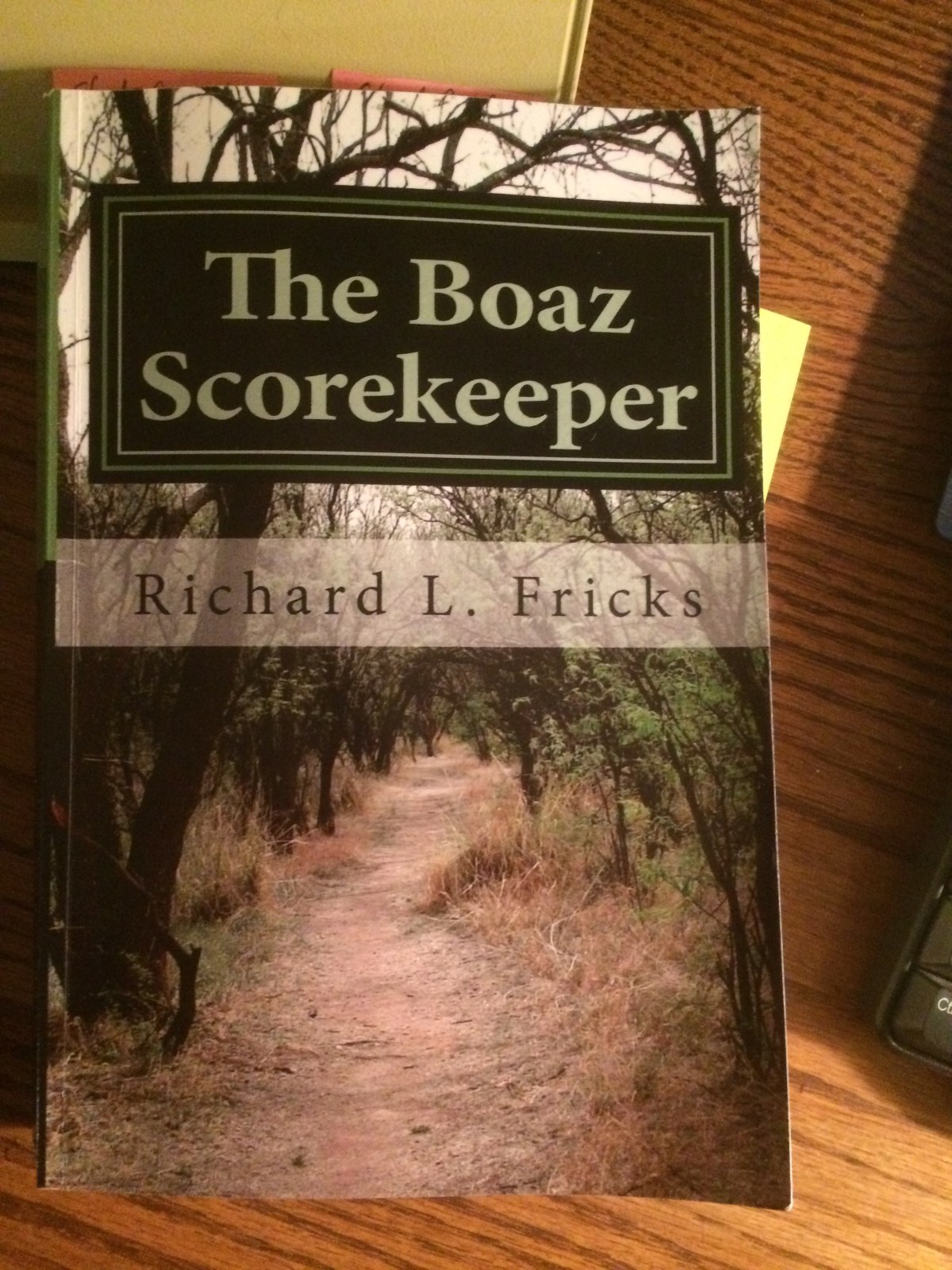
The Boaz Scorekeeper, written in 2017, is my second novel. I'll post it a chapter a day over the next few weeks.

I knew without doubt that it would happen.  As the old saying goes, ‘the DA can indict a ham sandwich.’  The indictment process before a Grand Jury is totally secret.  The defense has no right to attend these proceedings.  The District Attorney summons witnesses to serve as jurors.  He then presents them with the evidence he wants them to hear.  It is truly a rare thing for the Grand Jury to fail to indict.

The capital murder indictment declared that I had, on Saturday, November 4, 2017, kidnapped and murdered Gina Culver Tillman.  It was a two-count indictment, one charge for kidnapping and the other one for the murder.  The indictment was made capital by statute, by one of the listed aggravating circumstances.  In my indictment, murder during a kidnapping.

12/26/23 Biking & Listening

Here’s today’s bike ride metrics. Temperature at beginning of ride: 51 degrees. Damp and cloudy.


Photos from today’s ride:

None today.

Why I ride:

Biking is something I both love and hate. The conflicting emotions arise from the undeniable physical effort it demands. However, this exertion is precisely what makes it an excellent form of exercise. Most days, I dedicate over an hour to my cycling routine, and in doing so, I’ve discovered a unique opportunity to enjoy a good book or podcast. The rhythmic pedaling and the wind against my face create a calming backdrop that allows me to fully immerse myself in the content. In these moments, the time spent on the bike seems worthwhile, as I can’t help but appreciate the mental and physical rewards it offers.

I especially like having ridden. The post-biking feeling is one of pure satisfaction. The endorphin rush, coupled with a sense of accomplishment, makes the initial struggle and fatigue worthwhile. As I dismount and catch my breath, I relish the sensation of having conquered the challenge, both physically and mentally. It’s a reminder that the things we sometimes love to hate can often be the ones that bring us the most fulfillment. In the end, the love-hate relationship with biking only deepens my appreciation for the sport, as it continually pushes me to overcome my own limitations and embrace the rewards that follow the effort.


Why you should ride:

Encourages Relaxation:

Cycling is not just a form of physical exercise; it also has a profound ability to encourage relaxation. Here are various ways in which cycling contributes to a relaxed state of mind and body:

  • Physical Activity and Stress Reduction: Engaging in physical activities like cycling can reduce the body’s stress responses. Exercise triggers the release of endorphins, the body’s natural painkillers and mood elevators, which promote relaxation. The physical effort of cycling also helps to use up the energy created by stress, aiding in calming the body.
  • Rhythmic Pedaling as a Meditative Practice: The repetitive nature of cycling, with its steady, rhythmic pedaling, can have a meditative effect. This rhythmic motion can help focus the mind, drawing attention away from stressful thoughts and allowing a sense of calm.
  • Outdoor and Nature Exposure: Cycling outdoors, especially in natural or scenic settings, can enhance relaxation. Being in nature is known to reduce stress and promote a sense of peace. The sights, sounds, and smells of the outdoors can be very soothing.
  • Mindfulness and Presence: Cycling requires a level of present-moment awareness, which is a key aspect of mindfulness. Practicing mindfulness has been shown to reduce stress and promote relaxation. When cycling, the focus on the immediate environment and bodily sensations can help achieve this state.
  • Cardiovascular Health Benefits: Regular cycling improves cardiovascular health, which can help in reducing tension in the body. A healthier heart and circulatory system can contribute to a more relaxed state overall.
  • Reduces Mental Clutter: A bike ride offers a break from daily routines and responsibilities, providing an opportunity to clear the mind. This mental break can be refreshing and relaxing, especially after a long day or during stressful periods.
  • Social Relaxation: For those who enjoy group rides, the social aspect of cycling can be relaxing. Social interactions and the sense of community found in cycling groups can contribute to overall relaxation and well-being.
  • Achievement and Satisfaction: Completing a challenging ride or reaching a cycling goal can bring about a sense of achievement and satisfaction. This positive feeling can promote a relaxed state, as it counters feelings of stress and anxiety.
  • End of Ride Relaxation Response: After a cycling session, the body often experiences a natural relaxation response. The decrease in physical activity coupled with the sense of accomplishment can lead to a profound state of relaxation.
  • Improves Sleep Quality: As cycling improves sleep quality, it indirectly promotes relaxation. Better sleep means the body is better rested and more capable of handling stress, leading to a more relaxed state during waking hours.

In summary, cycling’s ability to encourage relaxation is multifaceted, combining physical, mental, and emotional elements. By incorporating regular cycling into one’s lifestyle, it’s possible to cultivate a more relaxed state of being, beneficial for overall health and well-being.


Please watch

Here’s a couple of links to groups I like. Hopefully, they’ll encourage you to start riding a bike, no matter your age.

Cycling for those aged 70+(opens in a new tab)


Solitary Cycling(opens in a new tab)


My bike:

A Rockhopper by Specialized. I purchased it November 2021 from Venture Out in Guntersville; Mike is top notch! So is the bike. The ‘old’ man seat was salvaged from an old Walmart bike. Seat replaced with new one from Venture Out.


What I’m listening to:

NONFICTION

20 Master Plots: And How to Build Them, by Ronald B. Tobias

Give your story a solid foundation – a plot that engages readers from start to finish!

The best stories linger in the hearts and minds of readers for decades. These tales gain their power through plots that connect with the audience on both an emotional and intellectual level.

Ronald B. Tobias details these 20 time-tested plots. Each is discussed and analyzed, illustrating how a successful plot integrates all the elements of a story. Tobias then reveals how to use these plots effectively in your own work.

Tobias then goes to the next level, describing how to choose and develop plot in fiction. He reveals how to craft plot for any subject matter so that you develop your work evenly and effectively. As a result, your fiction will be more cohesive and convincing, making your story unforgettable for readers everywhere.

Blinkist nonfiction book summaries:

None today.

Podcasts:

None today.

Waking Up app series/courses:

Ethics and Emptiness. A conversation between Diane Musho Hamilton and Sam Harris.

FICTION

Novels:

Amazon abstract:

GMA BOOK CLUB PICK • AN NPR BOOK OF THE YEAR • From the New York Times bestselling author of I Was Anastasia and Code Name Hélène comes a gripping historical mystery inspired by the life and diary of Martha Ballard, a renowned 18th-century midwife who defied the legal system and wrote herself into American history.

“Fans of Outlander’s Claire Fraser will enjoy Lawhon’s Martha, who is brave and outspoken when it comes to protecting the innocent. . . impressive.”—The Washington Post

“Once again, Lawhon works storytelling magic with a real-life heroine.” —People Magazine


Maine, 1789: When the Kennebec River freezes, entombing a man in the ice, Martha Ballard is summoned to examine the body and determine cause of death. As a midwife and healer, she is privy to much of what goes on behind closed doors in Hallowell. Her diary is a record of every birth and death, crime and debacle that unfolds in the close-knit community. Months earlier, Martha documented the details of an alleged rape committed by two of the town’s most respected gentlemen—one of whom has now been found dead in the ice. But when a local physician undermines her conclusion, declaring the death to be an accident, Martha is forced to investigate the shocking murder on her own.

Over the course of one winter, as the trial nears, and whispers and prejudices mount, Martha doggedly pursues the truth. Her diary soon lands at the center of the scandal, implicating those she loves, and compelling Martha to decide where her own loyalties lie.

Clever, layered, and subversive, Ariel Lawhon’s newest offering introduces an unsung heroine who refused to accept anything less than justice at a time when women were considered best seen and not heard. The Frozen River is a thrilling, tense, and tender story about a remarkable woman who left an unparalleled legacy yet remains nearly forgotten to this day.


Blinkest fiction book summaries:

None today.

Music:


Here’s a few photos from previous riding adventures:

12/25/23 Biking & Listening

Here’s today’s bike ride metrics. Temperature at beginning of ride: 61 degrees. Wet, sloppy day. At least it was warm.


Photos from today’s ride:

None today.

Why I ride:

Biking is something I both love and hate. The conflicting emotions arise from the undeniable physical effort it demands. However, this exertion is precisely what makes it an excellent form of exercise. Most days, I dedicate over an hour to my cycling routine, and in doing so, I’ve discovered a unique opportunity to enjoy a good book or podcast. The rhythmic pedaling and the wind against my face create a calming backdrop that allows me to fully immerse myself in the content. In these moments, the time spent on the bike seems worthwhile, as I can’t help but appreciate the mental and physical rewards it offers.

I especially like having ridden. The post-biking feeling is one of pure satisfaction. The endorphin rush, coupled with a sense of accomplishment, makes the initial struggle and fatigue worthwhile. As I dismount and catch my breath, I relish the sensation of having conquered the challenge, both physically and mentally. It’s a reminder that the things we sometimes love to hate can often be the ones that bring us the most fulfillment. In the end, the love-hate relationship with biking only deepens my appreciation for the sport, as it continually pushes me to overcome my own limitations and embrace the rewards that follow the effort.


Why you should ride:

Encourages Relaxation:

Cycling is not just a form of physical exercise; it also has a profound ability to encourage relaxation. Here are various ways in which cycling contributes to a relaxed state of mind and body:

  • Physical Activity and Stress Reduction: Engaging in physical activities like cycling can reduce the body’s stress responses. Exercise triggers the release of endorphins, the body’s natural painkillers and mood elevators, which promote relaxation. The physical effort of cycling also helps to use up the energy created by stress, aiding in calming the body.
  • Rhythmic Pedaling as a Meditative Practice: The repetitive nature of cycling, with its steady, rhythmic pedaling, can have a meditative effect. This rhythmic motion can help focus the mind, drawing attention away from stressful thoughts and allowing a sense of calm.
  • Outdoor and Nature Exposure: Cycling outdoors, especially in natural or scenic settings, can enhance relaxation. Being in nature is known to reduce stress and promote a sense of peace. The sights, sounds, and smells of the outdoors can be very soothing.
  • Mindfulness and Presence: Cycling requires a level of present-moment awareness, which is a key aspect of mindfulness. Practicing mindfulness has been shown to reduce stress and promote relaxation. When cycling, the focus on the immediate environment and bodily sensations can help achieve this state.
  • Cardiovascular Health Benefits: Regular cycling improves cardiovascular health, which can help in reducing tension in the body. A healthier heart and circulatory system can contribute to a more relaxed state overall.
  • Reduces Mental Clutter: A bike ride offers a break from daily routines and responsibilities, providing an opportunity to clear the mind. This mental break can be refreshing and relaxing, especially after a long day or during stressful periods.
  • Social Relaxation: For those who enjoy group rides, the social aspect of cycling can be relaxing. Social interactions and the sense of community found in cycling groups can contribute to overall relaxation and well-being.
  • Achievement and Satisfaction: Completing a challenging ride or reaching a cycling goal can bring about a sense of achievement and satisfaction. This positive feeling can promote a relaxed state, as it counters feelings of stress and anxiety.
  • End of Ride Relaxation Response: After a cycling session, the body often experiences a natural relaxation response. The decrease in physical activity coupled with the sense of accomplishment can lead to a profound state of relaxation.
  • Improves Sleep Quality: As cycling improves sleep quality, it indirectly promotes relaxation. Better sleep means the body is better rested and more capable of handling stress, leading to a more relaxed state during waking hours.

In summary, cycling’s ability to encourage relaxation is multifaceted, combining physical, mental, and emotional elements. By incorporating regular cycling into one’s lifestyle, it’s possible to cultivate a more relaxed state of being, beneficial for overall health and well-being.


Please watch

Here’s a couple of links to groups I like. Hopefully, they’ll encourage you to start riding a bike, no matter your age.

Cycling for those aged 70+(opens in a new tab)


Solitary Cycling(opens in a new tab)


My bike:

A Rockhopper by Specialized. I purchased it November 2021 from Venture Out in Guntersville; Mike is top notch! So is the bike. The ‘old’ man seat was salvaged from an old Walmart bike. Seat replaced with new one from Venture Out.


What I’m listening to:

NONFICTION

20 Master Plots: And How to Build Them, by Ronald B. Tobias

Give your story a solid foundation – a plot that engages readers from start to finish!

The best stories linger in the hearts and minds of readers for decades. These tales gain their power through plots that connect with the audience on both an emotional and intellectual level.

Ronald B. Tobias details these 20 time-tested plots. Each is discussed and analyzed, illustrating how a successful plot integrates all the elements of a story. Tobias then reveals how to use these plots effectively in your own work.

Tobias then goes to the next level, describing how to choose and develop plot in fiction. He reveals how to craft plot for any subject matter so that you develop your work evenly and effectively. As a result, your fiction will be more cohesive and convincing, making your story unforgettable for readers everywhere.

Blinkist nonfiction book summaries:

None today.

Podcasts:

None today.

Waking Up app series/courses:

Ethics and Emptiness. A conversation between Diane Musho Hamilton and Sam Harris.

FICTION

Novels:

Amazon abstract:

GMA BOOK CLUB PICK • AN NPR BOOK OF THE YEAR • From the New York Times bestselling author of I Was Anastasia and Code Name Hélène comes a gripping historical mystery inspired by the life and diary of Martha Ballard, a renowned 18th-century midwife who defied the legal system and wrote herself into American history.

“Fans of Outlander’s Claire Fraser will enjoy Lawhon’s Martha, who is brave and outspoken when it comes to protecting the innocent. . . impressive.”—The Washington Post

“Once again, Lawhon works storytelling magic with a real-life heroine.” —People Magazine


Maine, 1789: When the Kennebec River freezes, entombing a man in the ice, Martha Ballard is summoned to examine the body and determine cause of death. As a midwife and healer, she is privy to much of what goes on behind closed doors in Hallowell. Her diary is a record of every birth and death, crime and debacle that unfolds in the close-knit community. Months earlier, Martha documented the details of an alleged rape committed by two of the town’s most respected gentlemen—one of whom has now been found dead in the ice. But when a local physician undermines her conclusion, declaring the death to be an accident, Martha is forced to investigate the shocking murder on her own.

Over the course of one winter, as the trial nears, and whispers and prejudices mount, Martha doggedly pursues the truth. Her diary soon lands at the center of the scandal, implicating those she loves, and compelling Martha to decide where her own loyalties lie.

Clever, layered, and subversive, Ariel Lawhon’s newest offering introduces an unsung heroine who refused to accept anything less than justice at a time when women were considered best seen and not heard. The Frozen River is a thrilling, tense, and tender story about a remarkable woman who left an unparalleled legacy yet remains nearly forgotten to this day.


Blinkest fiction book summaries:

None today.

Music:


Here’s a few photos from previous riding adventures:

Novel Excerpts–The Boaz Scorekeeper, Chapter 72

The primary aim of the "Novel Excerpts" blog category is to showcase my creative writing, specifically from the novels I've written. Hopefully, these posts will provide a glimpse into my storytelling style, themes, and narrative skills. It's an opportunity to share my artistic expressions and the worlds I've created through my novels.
The Boaz Scorekeeper, written in 2017, is my second novel. I'll post it a chapter a day over the next few weeks.

After returning to my cell and eating a plate of watery mashed potatoes, slimy green beans, and rubbery chicken, I lay down on my bunk.  Surprisingly, I fell off to sleep and didn’t wake up until midnight.  My mind already had a picture waiting for me to consider.  It was Orin Snyder standing before the Smartboard with Judge Grant only a few feet away.  I closed my eyes and saw two blue dots.  I considered how Verizon’s technology had verified that I had told the truth concerning the whereabouts and activity of mine and Gina’s phones on Saturday the day she died.

But ADA Gifford would have no problem destroying any link between this information and my innocence.  I could hear her at trial now, much better prepared to cross-examine Snyder, “you don’t know who was in possession of these phones on Saturday, November 4th, do you?  You don’t know who was using these phones, do you?  You don’t know anything about the conversations that were being conducted on these phones, do you?” And on and on.

I thought of something Matt had asked Detective Morrow when questioning him about the affidavit he had used to secure a search warrant for the house at Oak Hollow.  “How did you know the grave site where Gina’s body was found was only 978 feet from the boundary of Micaden’s 100-acre tract?”  Morrow had said he used his iPhone and an App the National District Attorneys Association had developed less than two years ago.  It was his next statement, made almost as an afterthought, that now had my attention.  Morrow had said unsolicited, “I have this App in my car but I can’t figure out how to use it.”

It was like one of those rare light-bulb moments that you just know you have stumbled onto an oasis of sorts.  Matt had told me a few weeks ago about his new car.  It was a GMC Terrain, equipped with OnStar, a General Motors service.  He said that it’s an on-board computer that can help you in case you have an accident, and even open your car if you have locked yourself out. Matt had said that it came standard with a built-in cell phone, GPS, and Sirius Satellite Radio.  Other services were available for an additional monthly fee.  I had a hunch OnStar might keep up with where a vehicle had traveled.  I knew right then that James’ car, his 2017 Impala, most likely was equipped with OnStar.  If that data was still available, it should answer quite a few of ADA Gifford’s questions at trial.  Now, the most pressing question was, ‘where is James’ Impala?’

Matt and I hadn’t even discussed an independent search of James’ Impala?  This was clearly a mistake even if the OnStar system wouldn’t give us any information concerning the whereabouts of the vehicle.  I was convinced Wade and James had used his car to abduct and dispose of Gina.  She had told me that James had put her into the trunk of his car.  I felt positive that law enforcement had not conducted any type forensic evaluation of James’ car.  It just might be my ticket out of here.  It is imperative Matt convince Judge Grant to order the Impala seized, impounded, and a detailed forensic examination conducted.

It was not until 10:00 a.m. that I convinced my friend, Deputy Owens, to let me use the inmate’s pay phone outside Intake and Processing.  Tina answered and neither Matt nor Trevor Nixon, our new associate, was available.  I dictated a detailed message for Matt and urged Tina to get it to him ASAP.  She assured me she would.

Here We Go Again with the Fake News Christmas Story

Here’s the link to this article.

By David Madison at 12/21/2023

It’s not hard to find the goofs and gaffs

[First Published in December 2022] Churches all over the world will once again get away with the traditional Christmas story, for one simple reason: the folks in the pews can’t be bothered to carefully read the Jesus birth stories in Matthew and Luke. It’s just a fact these stories don’t make sense and cannot be reconciled: Fake News! A few of the more charming verses from these stories have been set to music and are recited during Christmas pageants; these deflect attention from the utter failure of these stories to quality as history.

Sam Harris, in The End of Faith: Religion, Terror, and the Future of Reason, tells it like it is:


“Surely there must come a time when we will acknowledge the obvious: theology is now little more than a branch of human ignorance. Indeed, it is ignorance with wings.” (p. 173)

The Jesus birth stories are prime examples of theological ignorance in full flight. John Loftus demonstrates this abundantly in chapter 10, “Was Jesus Born of a Virgin?” in the recently published book, Debating Christianity: Opening Salvos in the Battle with Believers. Loftus analyzes the birth stories—far beyond the issue of Mary’s virginity, but he does cover that. Do the devout ever wonder where the Jesus-virgin-birth claim came from? Are they even remotely aware of the religious context that gave rise to Christianity? When this is understood, the virgin birth of Jesus takes a serious hit. Loftus refers to the research of Robert Miller, as summarized in his book, Born Divine:

“People in the ancient world believed that heroes were the sons of gods because of the extraordinary qualities of their adult lives, not because there was public information about the intimate details of how their mothers became pregnant. In fact, in some biographies, the god takes on the physical form of the woman’s husband in order to have sex with her.” (p. 134) Loftus offers examples:

“There was Theagenes, the Olympic champion, who was regarded as divine for being one of the greatest athletes in the ancient world. Hercules was the most widely revered hero of the ancient world. He was promoted to divine status after his death, and it was said he was fathered by Zeus. Alexander the Great was believed to be conceived of a virgin and fathered in turn by Heracles. Augustus Caesar was believed to be conceived of a virgin and fathered by Apollo, as was Plato, the philosopher. Apollonius of Tyana was believed to be a holy man born of a virgin and fathered by Zeus. Pythagoras the philosopher was believed to be a son of Apollo. There were also savior-gods, like Krishna, Osiris, Dionysus, and Tammuz, who were born of virgins…” (page 127, Kindle)

So it’s no big surprise that some early Christian writers felt that Jesus had to be assigned the same high honor. But a couple of the earliest Christian authors hadn’t absorbed this idea. There is no mention of virgin birth in the letters of Paul, and Mark’s gospel gets along quite well without it. The author of John’s gospel had no use for it either. These writers had no way of knowing that science would one day agree, as Loftus notes: “ ..one cannot even have a human being without the genetic contributions of both a male seed and a female egg.” (p. 121, Kindle)

But in the wake of the virgin birth tales in Matthew and Luke, “theological ignorance with wings” got a big boost. The Catholic Church decided that Mary remained a virgin her whole life. The idea of Mary—the mother of the God—having sex was too distasteful. But they had to deal with Mark 6:3: “Is not this the carpenter, the son of Mary and brother of James and Joses and Judas and Simon, and are not his sisters here with us?” The church has claimed that these were children of Joseph from an earlier marriage—based on no evidence whatever. But that didn’t stop even more ignorance with wings. 

It dawned on theologians that virgin birth explained how original sin had not been passed on to Jesus: he didn’t have a human father. Problem solved! Well, not quite. Could not Jesus have been tainted with original sin through his mother? This issue was debated by medieval theologians, and in 1854—wasn’t this a little late in the game? —the Vatican announced the dogma of the Immaculate Conception, i.e., when Mary herself was conceived, miraculously that conception was clean of original sin. Based on no evidence whatever. And it gets even more ridiculous: in 1950, the Vatican announced this: “We proclaim and define it to be a dogma revealed by God that the immaculate Mother of God, Mary ever virgin, when the course of her earthly life was finished, was taken up body and soul into the glory of heaven.” It didn’t provide any evidence that this was revealed by God. Faithful Catholics assume that the Vatican is perfectly tuned into God, so why bother?

There are other examples of theological ignorance with wings that are easy to spot in the Jesus birth stories:

Ignorance with Wings, #1:

For some early Christians, it was especially important that Jesus was descended from king David: that was one of the qualifications for being the messiah. Hence genealogies were proposed to prove exactly that. Both Matthew and Luke deemed it appropriate to include genealogies (but this is awkward: they’re different genealogies), but how does this make any sense at all if Jesus didn’t have a human father? One of the sections of the Loftus essay is titled, “The Genealogies are inaccurate and irrelevant.” Both the authors of Matthew and Luke—we have no idea who they really were—must have had some level of savvy to write lengthy gospels in Greek, but they didn’t notice this contradiction? —or didn’t care. It would seem critical thinking skills were not their strong suits; virgin birth is inconsistent with genealogies intended to prove Jesus’ pedigree. Nor was their readership likely to pay much heed to this blunder.  

Ignorance with Wings, #2:

Detecting this one requires very careful reading and comparison of gospel texts. There is no mention of Bethlehem as the birthplace of Jesus in any of the letters of Paul, and Mark’s gospel states simply that Jesus “came from Nazareth of Galilee” to be baptized by John (1:9). The author of John’s gospel ignored the birth stories in Matthew and Luke; Loftus calls attention to verses John 7:42, 52, and points out: “Jesus was rejected as the Messiah precisely because the people of Nazareth knew he was born and raised in their town! That’s the whole reason they rejected him as the Messiah! They rhetorically asked, ‘How can the Messiah come from Galilee?’” (p. 122 Kindle) Matthew’s solution to this problem was to depict Mary and Joseph living in Bethlehem. That was their town. After the birth of Jesus, to protect him from king Herod, they fled to Egypt—which is a truly farfetched part of Matthew’s account—but once the danger had passed (an angel told him in a dream that Herod had died) Joseph was afraid to return to Bethlehem:

“But when he heard that Archelaus was ruling Judea in place of his father Herod, he was afraid to go there. And after being warned in a dream, he went away to the district of Galilee. There he made his home in a town called Nazareth…” (2:22-23) 

So Matthew’s story was that Mary and Joseph had lived in Bethlehem, then relocated to Nazareth. Apparently, the author of Luke’s gospel believed that Mary and Joseph lived in Nazareth: so how to get them to Bethlehem for Jesus’s birth? He reports that Caesar Augustus had ordered “all the world” to be registered, and since Joseph’s ancestors had come from Bethlehem, he had to travel there for the registration—and took the pregnant Mary with him. But historians have found no record of such a massive registration ordered by the emperor. Even if there had been one, chaos would have resulted if people had been required to go their ancestral homes. This was Luke’s clumsy device for getting Mary and Joseph to Bethlehem. The distance from Nazareth to Bethlehem is some seventy miles. Are we to believe that Mary, about to have a baby, would have made that journey on foot—or on a donkey as commonly depicted in art? 

After the birth of Jesus, after his circumcision and presentation at the temple, “When they had finished everything required by the law of the Lord, they returned to Galilee, to their own town of Nazareth.”  (Luke 2:39) Notice here the huge conflict here with Matthew’s account. Luke says nothing about a “flight to Egypt” and Mary and Joseph subsequently relocating to Nazareth

Both Matthew and Luke wrote their gospels many decades after the birth of Jesus. They were storytellers, not historians. There is no contemporaneous documentation whatever by which we could verify, fact-check the narratives they created. These are indeed fantasy literature, which include god talking to humans in dreams and angels with speaking roles.

Ignorance with Wings, #3:

Matthew also got away with the tall tale of the star-of-Bethlehem. Devout Christians should ask themselves if they really want to contaminate their theology with this bit of astrology. It was a common superstition in the ancient world that heavenly signs could indicate the birth of heroes. 

“In the time of King Herod, after Jesus was born in Bethlehem of Judea, magi [= astrologers] from the east came to Jerusalem, asking, ‘Where is the child who has been born king of the Jews? For we observed his star in the east and have come to pay him homage.’” (Matthew 2:1-2)

Huge mistake, theologically. Why didn’t god whisper the news to them that Bethlehem was the place to go? Their stop in Jerusalem alerted Herod, which resulted in the Slaughter of the Innocents when he was hunting for Jesus. But this never happened either; see Loftus’ comments, “There Was No Slaughter of the Innocents.” (p. 124, Kindle) 

The ignorance with wings is on full display when Matthew reports that the star guided the magi (i.e., moved from north to south—Robert Price has said that it turned into Tinkerbell!) and came to rest over the house where Jesus was. There is no mention of a stable, and Luke knew nothing of the star of Bethlehem. These authors had no idea of what stars are. As Loftus observes, stars

“…certainly don’t appear to move in a southerly direction. They all appear to move from the east to west, like the sun, because of the spin of the earth. Then we’re told the Star stopped in the sky directly over a place in Bethlehem. But there’s no way to determine which specific house a star stopped over, if it did! This is only consistent with pre-scientific notions of the earth being the center of the universe with the stars being moved by a god who sits on a throne in the sky” (p. 125, Kindle).

Nor did the arrival of the magi—according to Matthew—happen on the night Jesus was born. They had seen his star after he was born (Matthew 2:1). How long would their journey have taken? How long did their stopover in Jerusalem take? It’s fair to say Jesus could have been several months old, and was living in a house with his parents, i.e., their home in Bethlehem.  

Whenever I see the Wise Men depicted adoring the new-born Jesus in a stable, surrounded by shepherds and livestock, my impulse is to say, “Get them out of there! Read your Bibles! Pay attention to the texts!” Matthew also specialized in taking Old Testament verses out of context to make them apply to Jesus. For this, see Loftus’ section, “The Prophecies Are Faked.” (p. 125, Kindle) 

Here’s one of my fantasies: that someday laypeople will carefully—with all their critical faculties engaged—read the Jesus birth stories in Matthew and Luke. They will thus be equipped for an encounter with their priests and preachers. They show up for the typical Christmas Eve pageant, but take the clergy in charge aside: “Reverend, why are you continuing to present these fake news stories as if they actually happened? How is it a good idea to fool the children—and the adults, for that matter? Isn’t there a better way to promote the Christian faith?” 

Sad to say—or rather, glad to say—the birth stories are just the tip of the iceberg: the gospels as a whole are a minefield, providing abundant reasons for doubting and rejecting the Christian faith. No wonder the laity avoid reading them, and the clergy are just as happy that they don’t. 

David Madison was a pastor in the Methodist Church for nine years, and has a PhD in Biblical Studies from Boston University. He is the author of two books, Ten Tough Problems in Christian Thought and Belief: a Minister-Turned-Atheist Shows Why You Should Ditch the Faith (2016; 2018 Foreword by John Loftus) and Ten Things Christians Wish Jesus Hadn’t Taught: And Other Reasons to Question His Words (2021). His YouTube channel is here. He has written for the Debunking Christianity Blog since 2016.

The Cure-for-Christianity Library©, now with more than 500 titles, is here. A brief video explanation of the Library is here.

Novel Excerpts–The Boaz Scorekeeper, Chapter 71

The primary aim of the "Novel Excerpts" blog category is to showcase my creative writing, specifically from the novels I've written. Hopefully, these posts will provide a glimpse into my storytelling style, themes, and narrative skills. It's an opportunity to share my artistic expressions and the worlds I've created through my novels.
The Boaz Scorekeeper, written in 2017, is my second novel. I'll post it a chapter a day over the next few weeks.

I was looking forward to the Preliminary Hearing if for no reason than to be outside my jail cell and to enjoy some sense of normalcy.  I had for almost twenty years frequented each of the four courtrooms in the Judicial Building, often representing those charged with capital murder.

Monday mornings were the scheduled times for all preliminary hearings in Etowah County.  But Judge Grant had specially scheduled my hearing for Monday afternoon since it was a capital murder case and would no doubt require more time than the run-of-the mill felony cases.  Most defense attorneys waived their client’s preliminary hearing after a quick and casual discussion with one of the assistant district attorneys. In return for the waiver, the prosecution would allow the defense attorney to review the arresting officer’s incident and offense report, and any toxicology reports that might arrive later from the State Forensic Lab.  Since the accused’s attorney knows that the prosecution has a rather low burden at the preliminary hearing, he will not risk losing the information gleaned from the DA’s file simply for the freak chance the judge might rule against the State.  All the prosecutor must show is probable cause.  The prosecution has met its burden when it can demonstrate to the court that law enforcement has facts and circumstances that would lead a reasonable person to believe the suspect has committed the crime.

Matt and I had known all along how the Preliminary Hearing would turn out.  Judge Grant would issue his ruling that he finds probable cause that Gina Tillman was murdered and that I murdered her.  Again, this doesn’t mean that I have been found guilty, only that the State had met its burden at this early stage of the criminal proceedings.  Capital murder cases are very different from all other felony cases because they carry the death penalty as a possible punishment, unlike all the other felony cases.  Good criminal defense attorneys always arrange a court reporter to be present to take down all testimony in a capital murder case.  Here, the defense hoped that one of the prosecution’s witnesses would say something on the stand that would give the defendant some possible sliver of daylight to pursue and hopefully use at trial to persuade the jury in his favor.

Assistant District Attorney (ADA) Claire Gifford’s first witness was Detective Pete Morrow.  After asking him how law enforcement had come to find a body, Morrow testified that on Monday, November 6, 2017 Dispatch had received an anonymous call that …. Matt was on his feet before Morrow could say anything about what Dispatch or the caller had said.  Matt objected to Morrow giving hearsay testimony. Judge Grant normally would have allowed Morrow to provide this type testimony in any other preliminary hearing but was reluctant to do so in a capital murder case where the stakes were so high and appellate judges scrutinized lower court’s rulings with a powerful microscope.

Judge Grant did allow the ADA a fifteen-minute recess to get the dispatcher from her post next door into the courtroom.  She testified that at approximately 8:20 a.m. on Monday, November 6, 2017, she received a call from an anonymous caller that … Again, Matt objected to her providing any hearsay testimony.  This time Judge Grant overruled Matt and let the dispatcher continue.  She testified the unnamed caller had simply said “Gina Tillman’s body could be found at the dead-end of Dogwood Trail off Cox Gap Road, behind a barn that had been a part of the Black’s home place for over sixty years.”  She next stated that she delivered this message to her supervisor and she assumed he passed it on to the Sheriff.  Matt sat still and allowed this hearsay to come into evidence knowing that nothing would be gained by having the ADA bring in the dispatcher’s supervisor.

The ADA recalled Detective Morrow and he testified that a search team with sniffer dogs was summoned to the location and within an hour the dogs had alerted to a body.  The recover team with a front-end loader arrived on site and within an hour had discovered a body.  By this time Morrow was on the scene.  He testified to seeing a woman’s body that appeared to have been killed by some sort of blunt force to the head.  He said that after the on-site forensic team had photographed the body, it was transferred to the State Lab in Birmingham for autopsy.

Morrow also testified that he had prepared an application for a search warrant with supporting affidavit while on the scene and had sent it via his assistant.  Judge Grant issued the requested search warrant and Morrow and deputies searched the house located on the premises and found the house filled with documents and a computer.  He said that several documents appeared to be manuscripts of stories.  On the first page of each manuscript was the phrase, “By Micaden Lewis Tanner.”  Morrow also said that they found several files that appeared to be legal case files.  On the front cover of each one was ‘Bearden and Tanner, Attorneys at Law,’ along with their Boaz address and phone number.  Morrow said from this he concluded that the house was occupied by attorney Micaden Tanner even though there were not many clothes in the closet.  The ADA had him clarify where I lived, and that he had been there before.

The ADA apologized to the court for getting her presentation out of order.  She then asked Morrow to report what he had observed the immediately preceding Saturday.  Without objection from Matt he testified how I had called 911 reporting that Gina had been taken by James Adams and Wade Tillman.  He gave a fairly detailed accounting of all efforts Saturday to locate James’ Impala.  He told the Court that James and Wade had showed up at Wade’s house around 9:00 p.m. after a day of golfing and fishing.  The last thing ADA Gifford asked Morrow about was what else was found besides Gina’s grave.  Morrow said the dogs also alerted to two other bodies, that the backhoe operator dug up those sites and the recovery team extracted a multitude of bones that are now being examined at the State Lab.

Matt did an excellent job cross-examining Morrow.  Matt made him admit that he had absolutely no evidence that tied me to the murder other than my things being found in the house.  He also admitted that it could be interpreted as odd that a killer would call and notify law enforcement that someone else had abducted someone, the very someone that the caller had abducted and had either already murdered or was about to murder.  Matt also got Morrow to admit that when he met with me Saturday night that I showed no signs that I had been involved in a crime, things such as cuts, bruises, torn, ragged, or dirty clothing or shoes, or any other indicators that something was amiss.  Morrow also admitted that he had not attempted to verify the whereabouts of James and Wade at any time Saturday other than when they showed up at Wade’s house around 9:00 p.m.  Morrow also testified that I had told him that I represented Gina in her upcoming divorce action against Wade and that I had even showed him the file the law office had set up when Gina came in to hire us.

ADA Gifford’s final witness was Sean Tolbert with the State Lab who testified that the body transferred from 1398 Dogwood Trail to the Birmingham division of the State Lab was that of Gina Culvert Tillman.  He said that her husband Wade had identified her body.  He also testified to obtaining copies of Gina’s dental records from her dentist and after comparison, identifying the teeth of those of Gina Tillman.  Tolbert also testified that Gina had died from blunt force trauma to the head.  He said in his professional opinion she had been struck several times across the face and head with a shovel.  The only question Matt had for Tolbert was “do you have any evidence, because of your autopsy and work with the body of Gina Tillman, that would lead you to believe my client had anything to do with her death?”  Of course, he said, “no.”

I was surprised, almost shocked, when ADA Gifford announced, “the State rests” after Sean Tolbert’s testimony.  I thought, ‘it can’t be.’ Just as soon as Gifford made her announcement and sat down Matt and I just stared at each other.  I knew what he was thinking, the same thing I was.  This rarely happens in a capital murder case.  Unless Matt and I were both having a total brain freeze it was clear to both of us that the State had failed to show probable cause.  Truly, the only thing that they had proven was that Gina was dead, murdered, and that her body was found near a house where I wrote short stories and reviewed case files. The State had wholly failed to connect me to Gina’s death.  We continued to sit staring at each other in silent conversation.

“Mr. Bearden, if you don’t know, Ms. Gifford’s little statement there is a signal for you to call your first witness.”  Judge Grant said without a smile.

And, the Judge’s statement was our signal that he did not see things the same way Matt and I did.

Finally, Matt stood up and said, “the Defense calls Orin Synder.”

He was a Systems Controller at Verizon Cellular.  He had driven up to Gadsden from their regional office in Birmingham.  He hadn’t done this voluntarily.  Matt had subpoenaed him but with the promise that one meal and his mileage would be fully reimbursed.

After quite a bit of needless wrangling with ADA Gifford, the Judge allowed Matt to solicit most of what he wanted.  Synder testified that Verizon had provided service to two phones purchased on July 6th, 2017 at Walmart in Pell City. He provided the model types and serial numbers of the two phones, along with their accompanying phone numbers. Matt then said, “Mr. Synder can you identify Defense’s exhibit number 1?” while handing him my phone.  This spawned another wave of objections from the ADA with Judge Grant calling her and Matt to the bench for a private conference.  After a long and seemingly intense session Judge Grant waived both attorneys back to their tables.

Matt continued his examination and Mr. Synder said that Verizon did not have information on who purchased the phones but simply that they were purchased and a detailed activity log for their usage.  He provided the Court with a certified copy of every call made on the two phones with detailed call location information, including latitude and longitude and the identification of the tower used to service each call.

Matt called Mr. Synder’s attention to the activity beginning on Saturday, November 4th, asking him to tell the court the locations of the two phones, their proximity to each other, and the times they were being used.  Synder delivered a long and detailed incoherent statement that I’m sure he understood but left the Judge looking puzzled.  The Judge interjected that maybe it would be clearer if Synder went to the whiteboard and attempted to sketch out what he was trying to say.  Synder looked at the Judge, sat up straighter in his chair, and with an eager tone said, “I can do much better than that.  We have a computer program that makes all this crystal clear.  I have my computer and as long as I have Wi-Fi I can demonstrate it through your Smart Board there.”

ADA Gifford again objected but Matt didn’t even respond.  He knew that Judge Grant had already made his decision having instructed the Bailiff to turn the Smart Board more towards his bench.

It didn’t take Synder but a few minutes to boot up his computer and access and project his program on the huge screen.  He typed in the serial numbers of mine and Gina’s phones, and inserted November 4, 2017 in the ‘date-beginning’ field and clicked on ‘Activate.’  Almost immediately, a Google Map-like screen showed two blue dots, one labeled 1 and the other labeled 2.  Synder clicked on ‘Pause,’ and looked at Judge Grant as though he was waiting on further instructions, who then motioned for Matt to continue.

With Matt’s questions, Synder again provided the Court with the activity of the two phones throughout Saturday, November 4th, however this time it was, as Synder had promised, ‘crystal clear.’  Verizon’s real-time program showed the two blue dots first light-up at 9:30 when Dot 1 was at Gina’s house on Sparks Avenue and Dot 2 was at my house off Cox Gap Road.  By 9:32, both dots went dark but stayed fixed at their same locations.  At 9:44 a.m., both dots lite up again but this time Dot 1 was moving west on Sparks Avenue.  By this time, Judge Grant was fully engaged, having walked down from the bench to stand within 10 feet of the Smart Board.  For the next ten minutes, everyone in the courtroom watched the two dots.  As I sat and watched mine and Gina’s phones mirror the journey that was forever etched in my memory, I became nauseous when I saw how close I was to Gina when I turned right on Shady Grove Road after I had left the cabin at Club Eden.  James and Wade, with Gina in his trunk, had turned left and pulled to the back side of Aurora Market’s property.  I didn’t anything for the next several minutes.

The next thing I knew, Matt was nudging my shoulder and asking the Judge for a short break.  Judge Grant ordered Matt to continue.  He did.  By this time, Synder was down in front of the Smart Board standing five feet from Judge Grant.  Matt had Synder use a laser pointer to indicate the last place Dot 1, Gina’s phone, was used.  He could rewind the activity to where Dot 1 turned left off Shady Grove Road and travel the five hundred yards or so to the Cabin at Club Eden.  It was only seconds after the blue dot stopped moving that the glow disappeared.  “That’s when the first phone went dead.” Synder said.  The time on the screen was 9:54 a.m. on Saturday, November 4, 2017.  “That was the last time this phone was used.”

The most valuable part of Synder’s testimony came when Matt asked him whether Dot 2 (my phone) had been at 1345 Dogwood Trail in Boaz since Friday, November 3rd.  He reset the program’s date and activated the program beginning at 12:01 a.m.  The program showed my phone at this address on Friday but that it had not returned at any time before Gina’s body was found.  This fact didn’t prove I hadn’t been back there, but I hoped that it was the most logical conclusion given the proven use of my phone earlier Saturday and at several times throughout the day.  To me, Synder’s testimony, at a minimum, pointed to someone else as the killer of Gina Tillman.

Judge Grant spoke up and said, “can you do this for any Verizon phone?”  Synder replied in the affirmative.  “What if I give you my phone, can you show its activity for any time I choose?”  Again, Synder agreed saying all he needs is verification that it is the Judge’s phone.  Judge Grant ordered a recess as he went to his office.  After he returned, Synder verified the Judge’s paperwork and entered his phone’s serial number.  Judge Grant asked Synder to show his phone’s activity for this past Sunday.  After he entered the date and time to start, he activated the program.  This time one blue dot appeared on the Google Map on Lockhart Street in Marietta, Georgia.  Judge spoke up and said, “that’s correct.  My wife and I spent Saturday night with my son and his wife in Georgia.  I didn’t use my phone until after church.  The screen revealed the phone stayed at Lockhart Street until 10:15 a.m., and then moved across town to Moulton Avenue.  Google Maps even showed a symbol of the First Presbyterian Church.  Then, at 1:15 p.m., the blue dot lite up indicating a call was being made.

It was only after ADA Gifford suggested to Judge Grant that she had to pick up her daughter at her babysitter by 5:30 p.m. that the Judge returned to his bench saying, “that is very interesting. You may cross examine the witness.”  Gifford asked only one question, “Mr. Synder, as good as your program is, can it tell us who is using the phone, who has possession of the phone?”  The answer obviously was no.

For the next two hours, I was on the stand and Matt had me communicate to Judge Grant a multitude of information including that I knew Gina from high school, how she gave false testimony against me in my 1973 trial, that I had never held a grudge against her, and how she had come to hire me as her divorce attorney, how she had spied on her husband Wade and that she was just about to go public with very incriminating evidence against not only Wade but James Adams.  At one-point, Judge Grant virtually took over questioning, asking me about Oak Hollow and what I expected the State Lab to show after they completed their examination of the bones discovered in the two graves besides Gina’s.  I told him that I had a hobby of adopting old horses, ones that no one else wants, and that I had buried two horses there back earlier this year.  I reminded him that Detective Morrow’s report referred to three horses found on the premises.  Matt had no further questions for me.

ADA Gifford tried her best to get me to break, or at a minimum, concede something that could create ever so small an opening for her to ram through.  She didn’t.  She even tried to paint me as a serial killer referencing the disappearances and likely deaths of John Ericson, Randall Radford, and Fred Billingsley, alleging in her questions that these three and Gina all were involved in the attempt to frame me for two murders that took place in 1972.  Before Judge Grant cut her off, she did an excellent job hiding a question in her statement, “Mr. Tanner, you had the motive, the means, and the opportunity to kill Gina Tillman.”  I responded ‘no’ to the none-question, even though I certainly knew that I had, at one time, had all three.  The only truth to my response was that I truly had never contemplated killing Gina.

Right up until 5:15 p.m., ADA Gifford launched question after question at me.  With my every response, she became more and more frustrated and eventually gave up.  I’m not sure she gave up because of the time and her need to go pickup her daughter at her babysitter, or she finally and fully realized that I was at least as much an expert as her in cross examination.  I had no doubt that in my 37 years of criminal defense work I had grown an armor that could protect the most hardened criminal.

When she sat down, Judge Grant didn’t wait for me to get halfway back to the defense table where Matt was seated.  “I find that the State of Alabama has failed to show probable cause in the capital murder case of Micaden Lewis Tanner.”  Once again, Matt and I sat shell-shocked staring at each other, both knowing Judge Grant had issued the correct legal ruling.  But, we both also knew reality.  It is a rare thing indeed, especially in a capital murder case, for the judge not to give the prosecutor the benefit of all doubts.

This was a major victory, but, it was only a win in a minor skirmish.  I would remain in jail and wait until the District Attorney obtained an indictment.  Alabama Rules of Criminal Procedure give the prosecutor the right to carry any case to a Grand Jury, regardless of whether he has obtained a ruling of probable cause from a District Court.

Judge Grant left the bench and returned to his Chambers as two deputies re-shackled me and led me back to the backdoor of the Courtroom.  I looked back over my shoulder at Matt who gave me a thumb up.

12/24/23 Biking & Listening

Here’s today’s bike ride metrics. Temperature at beginning of ride: 54 degrees. Sunny with clear blue sky.


Photos from today’s ride:

First trip to Scooter’s Coffee.

Why I ride:

Biking is something I both love and hate. The conflicting emotions arise from the undeniable physical effort it demands. However, this exertion is precisely what makes it an excellent form of exercise. Most days, I dedicate over an hour to my cycling routine, and in doing so, I’ve discovered a unique opportunity to enjoy a good book or podcast. The rhythmic pedaling and the wind against my face create a calming backdrop that allows me to fully immerse myself in the content. In these moments, the time spent on the bike seems worthwhile, as I can’t help but appreciate the mental and physical rewards it offers.

I especially like having ridden. The post-biking feeling is one of pure satisfaction. The endorphin rush, coupled with a sense of accomplishment, makes the initial struggle and fatigue worthwhile. As I dismount and catch my breath, I relish the sensation of having conquered the challenge, both physically and mentally. It’s a reminder that the things we sometimes love to hate can often be the ones that bring us the most fulfillment. In the end, the love-hate relationship with biking only deepens my appreciation for the sport, as it continually pushes me to overcome my own limitations and embrace the rewards that follow the effort.


Why you should ride:

Encourages Relaxation:

Cycling is not just a form of physical exercise; it also has a profound ability to encourage relaxation. Here are various ways in which cycling contributes to a relaxed state of mind and body:

  • Physical Activity and Stress Reduction: Engaging in physical activities like cycling can reduce the body’s stress responses. Exercise triggers the release of endorphins, the body’s natural painkillers and mood elevators, which promote relaxation. The physical effort of cycling also helps to use up the energy created by stress, aiding in calming the body.
  • Rhythmic Pedaling as a Meditative Practice: The repetitive nature of cycling, with its steady, rhythmic pedaling, can have a meditative effect. This rhythmic motion can help focus the mind, drawing attention away from stressful thoughts and allowing a sense of calm.
  • Outdoor and Nature Exposure: Cycling outdoors, especially in natural or scenic settings, can enhance relaxation. Being in nature is known to reduce stress and promote a sense of peace. The sights, sounds, and smells of the outdoors can be very soothing.
  • Mindfulness and Presence: Cycling requires a level of present-moment awareness, which is a key aspect of mindfulness. Practicing mindfulness has been shown to reduce stress and promote relaxation. When cycling, the focus on the immediate environment and bodily sensations can help achieve this state.
  • Cardiovascular Health Benefits: Regular cycling improves cardiovascular health, which can help in reducing tension in the body. A healthier heart and circulatory system can contribute to a more relaxed state overall.
  • Reduces Mental Clutter: A bike ride offers a break from daily routines and responsibilities, providing an opportunity to clear the mind. This mental break can be refreshing and relaxing, especially after a long day or during stressful periods.
  • Social Relaxation: For those who enjoy group rides, the social aspect of cycling can be relaxing. Social interactions and the sense of community found in cycling groups can contribute to overall relaxation and well-being.
  • Achievement and Satisfaction: Completing a challenging ride or reaching a cycling goal can bring about a sense of achievement and satisfaction. This positive feeling can promote a relaxed state, as it counters feelings of stress and anxiety.
  • End of Ride Relaxation Response: After a cycling session, the body often experiences a natural relaxation response. The decrease in physical activity coupled with the sense of accomplishment can lead to a profound state of relaxation.
  • Improves Sleep Quality: As cycling improves sleep quality, it indirectly promotes relaxation. Better sleep means the body is better rested and more capable of handling stress, leading to a more relaxed state during waking hours.

In summary, cycling’s ability to encourage relaxation is multifaceted, combining physical, mental, and emotional elements. By incorporating regular cycling into one’s lifestyle, it’s possible to cultivate a more relaxed state of being, beneficial for overall health and well-being.


Please watch

Here’s a couple of links to groups I like. Hopefully, they’ll encourage you to start riding a bike, no matter your age.

Cycling for those aged 70+(opens in a new tab)


Solitary Cycling(opens in a new tab)


My bike:

A Rockhopper by Specialized. I purchased it November 2021 from Venture Out in Guntersville; Mike is top notch! So is the bike. The ‘old’ man seat was salvaged from an old Walmart bike. Seat replaced with new one from Venture Out.


What I’m listening to:

NONFICTION

20 Master Plots: And How to Build Them, by Ronald B. Tobias

Give your story a solid foundation – a plot that engages readers from start to finish!

The best stories linger in the hearts and minds of readers for decades. These tales gain their power through plots that connect with the audience on both an emotional and intellectual level.

Ronald B. Tobias details these 20 time-tested plots. Each is discussed and analyzed, illustrating how a successful plot integrates all the elements of a story. Tobias then reveals how to use these plots effectively in your own work.

Tobias then goes to the next level, describing how to choose and develop plot in fiction. He reveals how to craft plot for any subject matter so that you develop your work evenly and effectively. As a result, your fiction will be more cohesive and convincing, making your story unforgettable for readers everywhere.

Blinkist nonfiction book summaries:

101 Essays That Will Change The Way You Think, by Brianna Wiest

Stop Doing That Sh*t, by Gary John Bishop

Podcasts:

Waking Up app series/courses:

None today.

FICTION

Novels:

Amazon abstract:

GMA BOOK CLUB PICK • AN NPR BOOK OF THE YEAR • From the New York Times bestselling author of I Was Anastasia and Code Name Hélène comes a gripping historical mystery inspired by the life and diary of Martha Ballard, a renowned 18th-century midwife who defied the legal system and wrote herself into American history.

“Fans of Outlander’s Claire Fraser will enjoy Lawhon’s Martha, who is brave and outspoken when it comes to protecting the innocent. . . impressive.”—The Washington Post

“Once again, Lawhon works storytelling magic with a real-life heroine.” —People Magazine


Maine, 1789: When the Kennebec River freezes, entombing a man in the ice, Martha Ballard is summoned to examine the body and determine cause of death. As a midwife and healer, she is privy to much of what goes on behind closed doors in Hallowell. Her diary is a record of every birth and death, crime and debacle that unfolds in the close-knit community. Months earlier, Martha documented the details of an alleged rape committed by two of the town’s most respected gentlemen—one of whom has now been found dead in the ice. But when a local physician undermines her conclusion, declaring the death to be an accident, Martha is forced to investigate the shocking murder on her own.

Over the course of one winter, as the trial nears, and whispers and prejudices mount, Martha doggedly pursues the truth. Her diary soon lands at the center of the scandal, implicating those she loves, and compelling Martha to decide where her own loyalties lie.

Clever, layered, and subversive, Ariel Lawhon’s newest offering introduces an unsung heroine who refused to accept anything less than justice at a time when women were considered best seen and not heard. The Frozen River is a thrilling, tense, and tender story about a remarkable woman who left an unparalleled legacy yet remains nearly forgotten to this day.


Blinkest fiction book summaries:

None today.

Music:

None today.


Here’s a few photos from previous riding adventures:

Rampant Gospel Confusion

Here’s the link to this article.

By David Madison at 12/22/2023

The gospels could have been so much better

Here’s a story I’ve told before, but deeper research has revealed more details. Matthew, Mark, Luke, and John had submitted their gospels to the New Testament Approval Committee. They had been instructed to go to a nearby bar to await the decision on whose gospel would be chosen. So they sat there at the same table, sipping cheap booze, and there was a lot of tension: these guys didn’t like each other at all. Mark was furious that both Matthew and Luke had copied most of his gospel, without mentioning they’d done so, without giving him any credit. Mark was wondering how long it would take for plagiarism to be considered a sin. He was also annoyed they’d changed his wording whenever they saw fit.

Mark had presented Jesus as an apocalyptic prophet, who would soon descend through the clouds to bring his kingdom to earth, hence he neglected to include much ethical teaching. Matthew wanted to correct this error, so he added the clumsy patchwork of Jesus-script that we now know as the Sermon on the Mount. This includes instructions that many Christians today find impossible, and simply ignore. Matthew was annoyed with Luke, who shortened the sermon, changed the wording, and said that it took place on a plain—not on a mount. Luke had added a Jesus birth story that contradicted Matthew’s birth story. Matthew said that Jesus followers had to love Jesus more than their families, but Luke thought that was too mild. He said that Jesus followers had to hate their families, and even life itself. 

John thought that Mark had messed up the story from the get-go. Mark had claimed that Jesus taught only in parables (and did so to prevent people from repenting and being forgiven), but John portrayed a Jesus who didn’t use parables at all. John included long, quite tiresome Jesus monologues that the other authors knew nothing about. John told about miracles the others had never heard of, e.g., changing water into wine, raising Lazarus from the dead. John had no use for the Eucharist at the Last Supper—instead, in his version, Jesus washed the feet of the disciples. All of the events described in Mark could have happened in a matter of weeks, John stretched everything out to three years. 

The other gospel writers were turned off by John’s theological bombast. He seemed to have been drunk on theology—or was he on drugs? He added layers of theobabble unknown to the other gospel writers, even claiming that the Galilean preacher had been present at creation. Hence he was horrified that Mark reported that Jesus’ last words on the cross were, “My God, my God, why hast thou forsaken me.” What blasphemy! Jesus and God were one, hence Jesus’ last words—according to John—were “It is finished.”

So these four authors sat there, glaring at each other. Then their cell phone all pinged at the same moment—and it was the same text: “Congratulations, all four of the submitted gospels have been chosen, and they will be published side by side at the opening of the New Testament.” 

A round of cursing breaks out. What a disaster. How dare they do that! “Only one of us got the story right!” How is it that no one on the selection committee could see what would happen? If these gospels are published together, there will be so much confusion. Readers will be able to see the contradictions and disagreements. Belief in Jesus will be ridiculed. 

But, not to worry. It would be many centuries before laypeople had access to the Bible, and in the meantime theologians could work out plenty of excuses. And even when laypeople did get access to the Bible, most of them wouldn’t bother to read it. Well, they wouldn’t bother to read it carefully, critically.

Serious Bible study never caught on as a favorite pastime: “We’ll trust that our clergy will tell us what we need to know/believe about the Bible.”   

Nonetheless, the four gospels published together remain an embarrassment. They are Exhibit A for anyone looking for hard evidence that the Bible could not have been divinely inspired. We have to wonder why the gospels couldn’t have been so much better. We can see the high quality of modern biographies, based on thorough research and the use of contemporaneous documentation. Is it really possible that an all-knowing god wouldn’t have foreseen this development? And that professionally trained historians would figure out that the gospels do not qualify as reliable sources of information about Jesus? 

Let’s look at a few ways in which the gospels could have been so much better.

Could Have Been So Much Better, One

So much is missing from the gospels! Why doesn’t Mark include an account of Jesus’ birth? And why would John omit one? And credibility is missing from the birth narratives in Matthew and Luke, which fully qualify as fantasy literature. What about the life of Jesus before he began his ministry? Luke reports that when Jesus was twelve years old, on his family’s trip to Jerusalem, he headed to the Temple to converse with the religious leaders—and remained there for days. Mary and Joseph were well on their way home when they realized he wasn’t “among their relatives and friends.” They headed back to Jerusalem, eventually found him, and gave him a scolding. Historians don’t take this episode seriously: how would Luke know any of this? What were his sources? Who was there taking notes? Out of his imagination, Luke was portraying a holy hero at age twelve. 

Tim Sledge has identified the central issue here: 

“The temple visit at age 12 marks the start of 18 years of silence about the life of the only person who—according to Christianity—ever managed to avoid committing even one sinful thought or act. Why do we know absolutely nothing about the world’s only perfect life between the ages of 13 and 29?…I see the Bible’s silence on these years of Jesus’s life as a glaring and troubling omission.” (p. 55, Four Disturbing Questions with One Simple Answer: Breaking the Spell of Christian Belief)

“If only we had more stories of Jesus’s early years that clearly portrayed real-life examples of what doing the right thing looks like—in as many situations as possible…And what if we had the details of Jesus’s life in his twenties? How did he transition from adolescence to adulthood? How did he build strong, meaningful friendships? How did he deal with sexual temptations? …Wouldn’t you wonder why the God empowering this perfect life failed to ensure that someone wrote about events from its every year?” (pp. 55, 56 & 57, Four Disturbing Questions with One Simple Answer)

We’ve got the gospels as they are because the authors weren’t historians. Their primary agenda was promoting the theology/mythology of the Jesus cult. 

Could Have Been So Much Better, Two

And speaking of mythology, resurrection of a dead hero fully qualifies. What an embarrassment that a major world religion remains committed to this idea. Dying/rising savior cults were a feature of the religious landscape of the time, as Richard Carrier has demonstrated so well in his 2018 essay, Dying-and-Rising Gods: It’s Pagan, Guys. Get Over It. Somehow the idea caught on that Jesus belonged to this elite group, but the gospel writers did a poor job incorporating it in their Jesus stories. Mark wrote that Jesus predicted his resurrection to his disciples three times (8:31-33, 9:30-32, 10:32-34)—but, no surprise, “But they did not understand what he was saying and were afraid to ask him.” (9:32) Even so, when Jesus was killed, how could they forget this thrice-repeated prediction? Yet they didn’t camp out near the tomb to witness the miracle, and have a welcome-back-Jesus celebration! As Robert Conner has pointed out, “Remember, in the canonical gospels nobody actually witnesses the risen Jesus leave the tomb.” (Kindle, loc 2568, Apparitions of Jesus: The Resurrection as Ghost Story)

The gospels could have been so much better if the four gospel accounts of Easter morning had been consistent. The confusion becomes obvious to anyone who reads them, one after the other. Theologians, clergy, and various apologists have put considerable effort into making them look compatible, but that’s a real stretch. It’s so hard to take these accounts seriously when Matthew added the story that people who had come alive in their tombs at the moment Jesus died, walked out and toured Jerusalem on Eastern morning. Luke didn’t help either with his story of Jesus appearing, unrecognized, to disciples “on the road to Emmaus”—then poof! —vanished the moment they realized who he was. It’s very helpful to read Conner’s book referenced above: the gospel authors were influenced by ghost folklore.  

Could Have Been So Much Better, Three 

Why not be honest about what actually happened to Jesus in the end? In the first chapter of Acts we find the story of Jesus ascending above the clouds to join Yahweh in the sky. That story works only if the ancient view of the cosmos is correct. We now know a few miles overhead there is the cold and lethal radiation of space—and how to get there. 

As A. N. Wilson put it:                                                                                                          “For a modern observer, of whatever

religious beliefs, it is impossible not to know that a man ascending vertically from the Mount of Olives, by whatever means of miraculous propulsion, would pass into orbit.” (Jesus: A Life, p. 3)

Theologians now may wish to read the story symbolically—for example, “Jesus now lives and reigns with god” —but no matter, it never happened. Jesus never left planet earth, and—even if you believe that he resurrected—he died again. But the resurrection is fantasy as well, unless you’re willing to concede that the other dying/rising savior gods truly did the same thing. 

We’re stuck wondering what actually happened to Jesus. The gospels could have been so much better if they had told the truth, an accurate story, based on history, not theology.  

Could Have Been So Much Better, Four

In Mark’s gospel, 14:62, Jesus tells those attending his trial that they will see him “seated at the right hand of power, and coming with the clouds of heaven.” Mark was perhaps influenced by the apostle Paul’s assurance in I Thessalonians 4 that dead Christians will rise from their graves to join with living believers—himself included—to meet Jesus in the air, to be with him forever. I suspect that a high percentage of Christians today pay little attention to these bits of scripture, although many believers still keep an eye on the sky, hoping desperately that Jesus will arrive to rescue the world.

This is an ancient version of the Superman comic book hero, who will come flying through the air to perform good deeds. In the Christian version, based on the gospels and Paul, Jesus will do so much more: he’ll kick out the hated Roman tyrants, he’ll save the world. There is nothing whatever to disprove that this is simply more ancient superstition, a level of nonsense that deserves no respect whatever. The gospels could have been so much better had they depicted Jesus as a great moral teacher. But the gospel authors were not satisfied with that; they were promoting a cult that glorified a hero, belief in whom guaranteed eternal life. This religious gimmick has been a constant for millennia. 

A healthy embrace of reality can break the spell of this gimmick, and a healthy embrace of skepticism and critical thinking can dimmish the hold the sloppy gospels have on Christian belief. 

David Madison was a pastor in the Methodist Church for nine years, and has a PhD in Biblical Studies from Boston University. He is the author of two books, Ten ToughProblems in Christian Thought and Belief: a Minister-Turned-Atheist Shows Why You Should Ditch the Faith, now being reissued in several volumes, the first of which is Guessing About God (2023) and Ten Things Christians Wish Jesus Hadn’t Taught: And Other Reasons to Question His Words (2021). The Spanish translation of this book is also now available. 

His YouTube channel is here. At the invitation of John Loftus, he has written for the Debunking Christianity Blog since 2016.

The Cure-for-Christianity Library©, now with more than 500 titles, is here. A brief video explanation of the Library is here

Novel Excerpts–The Boaz Scorekeeper, Chapter 70

The primary aim of the "Novel Excerpts" blog category is to showcase my creative writing, specifically from the novels I've written. Hopefully, these posts will provide a glimpse into my storytelling style, themes, and narrative skills. It's an opportunity to share my artistic expressions and the worlds I've created through my novels.
The Boaz Scorekeeper, written in 2017, is my second novel. I'll post it a chapter a day over the next few weeks.

Gina’s funeral was delayed until Sunday, November 12th, because of her autopsy.  I had mixed feelings about being unable to go.  One side of my mind desperately wanted to be there, to make sure she had at least one real friend standing by her side.  The other side was divided.  It wanted at all cost to avoid another dose of the exhaled air spewing from the mouth, eyes, and hands of Wade and James, and every male member of the families of the Flaming Five.  From this, I could tell I still felt somewhat positive about their wives, especially Judith, and their ex-wives, Sara and Cynthia.

I found a strange form of peace after Matt’s funeral report.  He said First Baptist Church of Christ was packed, and Wade was showered and bathed in Christian love as the choir sang Amazing Grace, How Great Thou Art, and Beulah Land.  Pastor Kevin Walton from Pell City lead the service with calmness and cogency.  He couched his statements under the banner of worship restating Bible promises that the body returns to dust but the spirit goes immediately to be with the Lord.  He admitted that the evil of violence is difficult to accept but understandable in a fallen world if it is only something we read about that has happened at a distance.  However, when it strikes us and our loved ones, the best we can do is endure the black night of mystery with absolute assurance that God is still in control, and has built for us a glorious home in Heaven.

Matt shared that Gina’s funeral was one of the most uncomfortable meetings he had ever attended.  He said, even though he was not a member of First Baptist Church of Christ, he expected to be treated with loving kindness.   It was anything but that, with stares and looks that could cut one in half.  Matt concluded that Gina’s friends and church family could easily accept spiritual principles laid down in Scripture, but weren’t so eager to hold to the Constitutional principle of innocent until proven guilty, even though this too was a Biblical principle.  “It was good for Wade that he was not yet a suspect.  I won’t be surprised if his church family circles their wagons in his behalf.  Hard to figure people out sometimes.”

After Gina’s funeral, Matt told me he and his wife Ginger went for lunch at Grumpy’s Diner. He shared how he had used his ‘ear piece’ as he called it.  It was some high-tech devise he had ordered online.  Matt said he overheard scuttlebutt from two nearby tables.  From the closest table, the gossip was that Wade and Gina had been having trouble and she was planning on leaving him.  From the table a little farther away, the two men and two women both agreed that something big was about to go down in Boaz.  The younger couple’s son was a Boaz Police Officer and had shared with them that two officers on the night patrol had been seeing a suspicious vehicle around Boaz that looked ‘federal.’

Matt brought me a copy of yesterday’s Sand Mountain Reporter and encouraged me to read the ‘Unsettled Issues’ column.  This was a recent creation for the Reporter.  It seemed to be their attempt to offer a hardcopy social media forum.  The column consisted of the Newspaper’s Chief Editor describing a major Sand Mountain area issue that desperately needed attention.  Readers go online and comment like they do on Facebook.  The Reporter’s twist is to print all the comments in the next issue.  The ‘Unsettled Issues’ column Matt wanted me to read was titled, “Where are John, Randall, and Fred?”  The Editor had written that it seemed their cases had gone cold and it was time the community united and solved these crimes.  The Reporter had printed nearly two pages of reader comments.  Matt had highlighted a string of similar comments on the second half of the first page and scattered on to the end.  The first highlighted comment by a reader named ‘SHolmes1972,’ said that “Micaden Tanner has the strongest motive to kill every member of the Flaming Five than anyone I know.  Who wouldn’t want to commit violence against someone who had set you up and was the cause of you spending over six months in jail and suffering from the fear of being convicted for murder and spending the rest of your life in prison.  I know I would not just have motive I would kill the bastards that did this to me.  Has police taken a close look at Tanner and whether he was involved in these deaths?”

After Matt left, I read not only the comments he had highlighted, but every comment printed throughout the two pages.  When I finished, and was returned by two deputies to my cell, I lay on my bunk and had that same strange and sick feeling that my current capital murder case could turn even more serious.  I hadn’t thought that possible before Matt had arrived.  Of course, I was often naive.