Biking is something I both love and hate. The conflicting emotions arise from the undeniable physical effort it demands. However, this exertion is precisely what makes it an excellent form of exercise. Most days, I dedicate over an hour to my cycling routine, and in doing so, I’ve discovered a unique opportunity to enjoy a good book or podcast. The rhythmic pedaling and the wind against my face create a calming backdrop that allows me to fully immerse myself in the content. In these moments, the time spent on the bike seems worthwhile, as I can’t help but appreciate the mental and physical rewards it offers.
I especially like having ridden. The post-biking feeling is one of pure satisfaction. The endorphin rush, coupled with a sense of accomplishment, makes the initial struggle and fatigue worthwhile. As I dismount and catch my breath, I relish the sensation of having conquered the challenge, both physically and mentally. It’s a reminder that the things we sometimes love to hate can often be the ones that bring us the most fulfillment. In the end, the love-hate relationship with biking only deepens my appreciation for the sport, as it continually pushes me to overcome my own limitations and embrace the rewards that follow the effort.
My bike
A Rockhopper by Specialized. I purchased it November 2021 from Venture Out in Guntersville; Mike is top notch! So is the bike. The ‘old’ man seat was salvaged from an old Walmart bike (update: seat replaced, new photo to follow, someday).
Something to consider if you’re not already cycling.
I encourage you to start riding a bike, no matter your age. Check out these groups:
Kate Cohen’s excellent essay about the importance of atheists being open about their atheism is exactly right. But maybe we need to extend that sentiment even further.
I’ve been in both situations: a onetime Pentecostal who saw Christianity as the default setting for humanity, and an outsider who was no longer part of the tribe.
Recently, Kate Cohen wrote a moving opinion piece for Washington Post concerning atheism. In her essay, she speaks of a number of reasons why atheists should—if they can—be vocally atheistic. All of them sound perfectly fine. I’d like to add one more: the essential nature of diversity in a society that values human rights and civil liberties. That diversity destroys dysfunctional authoritarians’ perceived base of power even as it opens the door to dialogues between different people.
I learned that lesson myself at a very tender age when I got my first taste of being a despised majority.
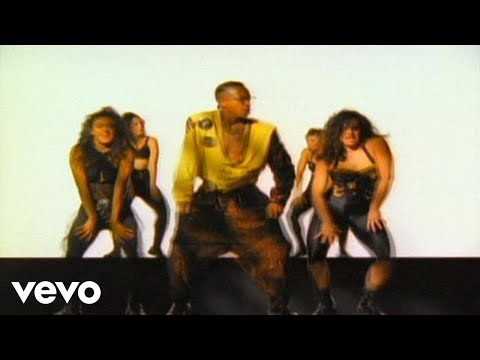
Set your Wayback Machine for about 1990. Grunge was taking over the world, and yet Princess Di still owned our hearts. The best Total Recall adaptation came out that year, along with The Hunt for Red October. One of the most popular songs that year was “U Can’t Touch This” by MC Hammer.
As far as I knew, though, we were damn near 100% of the count.
That year, I was in college and newly married to my Evil Ex Biff. One day, he announced that he would be starting a prayer group on campus with a weird new-convert friend of his named James. Mainly, this was James’ idea, but Biff loved it.
We attended a very large state-funded university that was very generous to student groups. Thus, it cost Biff nothing whatsoever to start this group. They’d give us meeting rooms, audiovisual materials of all sorts almost upon demand, and even a small allowance we could use for campus events. All they really required in exchange for that largesse were three officers who were actively-enrolled students there, and for us to actually use what we requested from them.
Eventually, the group ran afoul of both requirements.
First of all, there simply weren’t three Pentecostals on campus willing to act as active officers of the group. James wasn’t even enrolled anywhere. And I’m female and therefore was ineligible (in our flavor of Christianity) for any leadership over men, even if my demanding school schedule allowed me to be active in any group. After some fuss, Biff discovered a friend from church who attended our school, then calmed his misogyny long enough to ask me to sign me up anyway. With Tim and me willing to pretend to be officers at least, Biff could file the startup paperwork for the group. He titled it PRAYER WARRIORS FOR JESUS. Yes, in all caps. Of course. Before its first meeting, Biff had already drawn up a logo with impressively sharp, gleaming, sword-like edges to the words.
We officers represented the entire membership of the group. Nobody ever joined for what now seem like obvious reasons.
Undeterred, Biff reserved rooms for our group to use for prayer five days a week.
Now, why did three or four individual Christians need a whole meeting room reserved for prayer? Why couldn’t they just pray anywhere in our school’s expansive, garden-like campus that they liked? Or even, dare I mention, at the school’s beautiful nondenominational chapel?
Because our university printed campus-group meeting schedules every day, then posted them all over the place. Biff wanted everyone to see PRAYER WARRIORS FOR JESUS prominently figuring in those schedules.
This desire of Biff’s had nothing to do with evangelism. Maybe that motivated James, but not Biff, who never once mentioned soulwinning as a motivation. What Biff actually said at the time was that he wanted people to see the name and know that TRUE CHRISTIANS™ were on campus.
Biff’s special calling was apparently to combat atheism on campus
In evangelicalism as well as in other flavors of Christianity, Christians believe that Jesus has created every person with a special role to play in his divine, ineffable plan for Earth. They call this role their divine calling. It represents their main purpose in life. It’s the reason they exist, the mission for which they were born.
At some point, Biff got the idea that his calling involved converting atheists and defeating atheism on our college campus. He very mistakenly thought that tons of atheists attended our university, making atheism a valid enemy to Christians like himself.
Being in Texas, most students there were Christian. But there were some outspoken atheists among the student body, and Biff glommed right onto them.
He’d been unsuccessfully evangelizing atheists for two years by the time we married and he started PRAYER WARRIORS FOR JESUS.
Something strange was happening on campus, though. People did notice the group. They just weren’t reacting as I’d expected. Biff, I think, expected all of the reactions he ever got. He was an experienced RL troll (what people sometimes more graciously term a provocateur and less graciously a chain-yanking asshole). But I sure wasn’t, and so I didn’t.
What it’s like to grow up in a cultural bubble
I grew up before everything, it feels like: Before nearly ubiquitous home computers, before the internet, before cell phones, before smartphones, before AI, before the internet of things. For the first two decades of my life, most libraries used card catalogs with actual typed-up 3×5″ cards in long drawers to keep track of their books. Local-area dial-up Bulletin Board Systems (BBSs) barely began to pop up in major cities when I was in my teens.
Making my world even more insular, I was also a military brat. My family lived on military bases sometimes, in regular houses other times, but we always tended to center our lives on my dad’s work.
So my entire world was Christian. I didn’t need to attend parochial school to be fully immersed in that bubble!
Everybody I knew was Christian. Everything in my world centered around Christianity and its rituals, its myths and folklore, its rules, its culture, its entire worldview. The only real question to ask was what flavor of Christian someone was, not whether they were Christian at all. We all already knew the answer to that.
(This is how I suspect Southerners picked up the habit of asking newcomers to their communities what church they attend. They still do it. Long ago, it was a legit question. Nowadays, it’s much more of a veiled interrogation.)
Until I went to college, I didn’t know anyone who wasn’t at least nominally Christian. If I ever ran into anyone who wasn’t, I didn’t even think about them. They were exceptions; they fell out of my mind and memory. Confirmation bias ensured that.
Nowadays, you’ve got to be a religiously-homeschooled evangelical kid with particularly controlling parents to come even close to this level of insularity. Back then, though, it was normal for kids in my area and circumstances. We just didn’t have any counterpoints or other frames of reference.
Well, college fixed that for me in a hurry.
My worldview takes a roundhouse to the jaw
I attended a couple of prayer meetings myself, but very soon I became entirely too busy for it. (I had also gotten weirded out at how non-divine prayer looked and felt when performed in a corporate meeting room.) That was fine, though. The entire idea was really the Biff and James Show, live every weekday at 12:00 noon.
One day while relaxing in a student lounge, I opened our campus newspaper. I was (and still am) a readaholic who must read All. The. Words, so I started with the letters to the editor. A minor funding squabble had erupted on campus over an increase in student fees covering campus groups, so most letters addressed that subject. One in particular stood out to me: A student making the point that that fee covered all students, even those with groups diametrically opposed to the views of any one particular student, and that this was a good thing because it encouraged diverse opinions in an educational setting.
She used PRAYER WARRIORS FOR JESUS as a specific example of what she meant in her own case.
I just stared at that letter for a long time. My brain had gone into vapor lock. My entire worldview had just tilted on its ear and divided by zero.
It’s not like I hadn’t recognized the group’s name as an attention-seeking tactic from my supremely narcissistic then-husband. But the way that student talked, she wasn’t even Christian at all.
Atheism is part of the human situation
By then, I’d been in college for two years. However, I still perceived Christianity as the default state of humanity. When I considered the overall arc of human history, I still put Christianity front and center. Though I’d met any number of atheists and pagans and Muslims (oh my!) by then, I still generally perceived them as pre-Christian. Even the other Christians I met got judged by my own doctrinal beliefs, even if I wasn’t arguing with them for anywhere near as long as Biff did.
Yes, I was exactly that Christian kid in the iconic “Jesus is so lucky to have us!” cartoon:
“Isn’t Jesus lucky to have us!” Tom’s Doubts #14, by Saji
As if by magic, that student’s letter pulled me out of my entire way of thinking. Perhaps it was because I didn’t have any idea who she was. She could have been any woman I walked past on campus. Any woman I walked past on campus, in other words, could be thinking that PRAYER WARRIORS FOR JESUS was dumb, irrelevant, and utterly counter to her own worldview. For that matter, any person period could be thinking that.
With that, my perception of myself began to subtly alter. The arrogance and privilege of my presumptuous placement of Christianity as the default began to fade. It could not survive my sudden realization that lots of people lived in this world and all had their own ideas about religion.
I suspect most people learn similar lessons in childhood. Somehow, I’d avoided that one until I was twenty. But better late than never. My world became a tapestry of living colors as if I was an extra in the movie Pleasantville.
Just a couple of years later, when my slow-burn deconversion began in earnest, I still didn’t know anyone who’d deconverted. For a long time, I thought I was the literal only person in the history of Christianity who’d ever believed what we called the full gospel and then realized it wasn’t true. I didn’t meet another ex-Pentecostal for a long time, and when I did, she had thought the same about herself!
We ex-Christians had to forge a path from scratch, just about, on an individual basis with each one of our deconversions. Nowadays, that’s nowhere near as common a story. There’s such a painful sense of sheer isolation when you’re positive you’re the only one who ever.
It’s not just atheism. The world needs everyone who can do so to be vocal about who and what they are.
As Kate Cohen notes in her essay, lots of people even in America aren’t free to express their beliefs/nonbelief. Anyone who’s done hard time in the Deep South likely knows this truth painfully well. It can be risky to declare one’s status as out-of-step with the lockstep march that evangelicalism in particular demands.
Insular religious communities like those are risky precisely because the members of the perceived majority like it that way. They like there being no other options besides the one they offer. There’s way less chance of someone veering out of step that way.
When someone isn’t keeping the beat, it’s glaringly obvious to everyone else. That poor schmuck stands out! As a result, it doesn’t take much effort from the rest of the group to get that person back into line. Social freezing-out, nasty comments, loss of customers, maybe trouble fomented at school or a little “evandalism” of the black sheep’s possessions: it’s minor stuff that functions as a prelude to the big guns: mysteriously losing one’s job, marriage, kids, and community standing.
But if a solid 25% of the marchers lose step and start veering off-course, the majority suddenly has a whole bunch of problems. Now there are too many targets for the tribe’s usual methods of retaliation. They can’t focus properly on any one person, much less on all of the people requiring their Christian love.
It’s like adding another person to the safety net’s edges to hold it out for the others
Oh, but matters get still worse for the majority. Thirty years ago, a whole bunch of Christians didn’t even know anyone who wasn’t Christian. Now, with so many more non-Christians floating around in the mix, Christians can’t help knowing at least one person who isn’t like themselves. In fact, they probably know a lot of non-Christians by now.
The tribe’s party line about outsiders can hold only when there aren’t a lot of ’em around. The more Christians learn about outsiders, the more they’ll realize the party line isn’t correct at all. Once one false belief gets shaken, let me tell you from painful personal experience along exactly these lines, it’s a lot easier to shake the rest.
Those false beliefs have lasted for many years precisely because the majority group heard next to no pushback about them. The sort of Christians who want to rule over everything, in particular, tend to assume that if they don’t hear any pushback, then whatever they’re doing is A-OK.
So if it’s safe for anyone to start being vocal and open about their worldview, that makes the waters just a tiny bit safer for every other person who wants to do the same, but can’t right now.
(In other words, don’t ever wonder why it’s those Christians who viciously fight against diversity and anti-racism measures.)
Whether someone is simply an ex-Christian, a None, an agnostic, an atheist, a pagan, or whatever else, they have a part in this glorious multicolored tapestry that depicts the human situation. With every new, colorful thread woven into it, it becomes progressively more difficult for the one-time majority to go back to their monochrome world.
The more hands we can get on deck, the better it’ll get for those who must watch quietly from the shore.
It isn’t difficult to accomplish everything you want to. It’s impossible.
***
You Are Here
Find greater enjoyment and meaning in navigating life’s unknowns.
In You Are Here, author and journalist Oliver Burkeman offers a collection of essays exploring the nature of limitation, uncertainty, unpredictability, accomplishment, enjoyment, and more.
“Life is so intrinsically confusing and precarious,” Burkeman says. But when we stop struggling against that reality, we are “liberated at last to give this admittedly rather preposterous business of being a human absolutely everything we’ve got.”
***
Oliver Burkemanisthe author of the New York Times bestseller Four Thousand Weeks: Time Management for Mortals, about embracing limitation and finally getting around to what counts. For many years, he wrote a popular column on psychology for The Guardian, “This Column Will Change Your Life,” and has reported from London, New York, and Washington, DC.
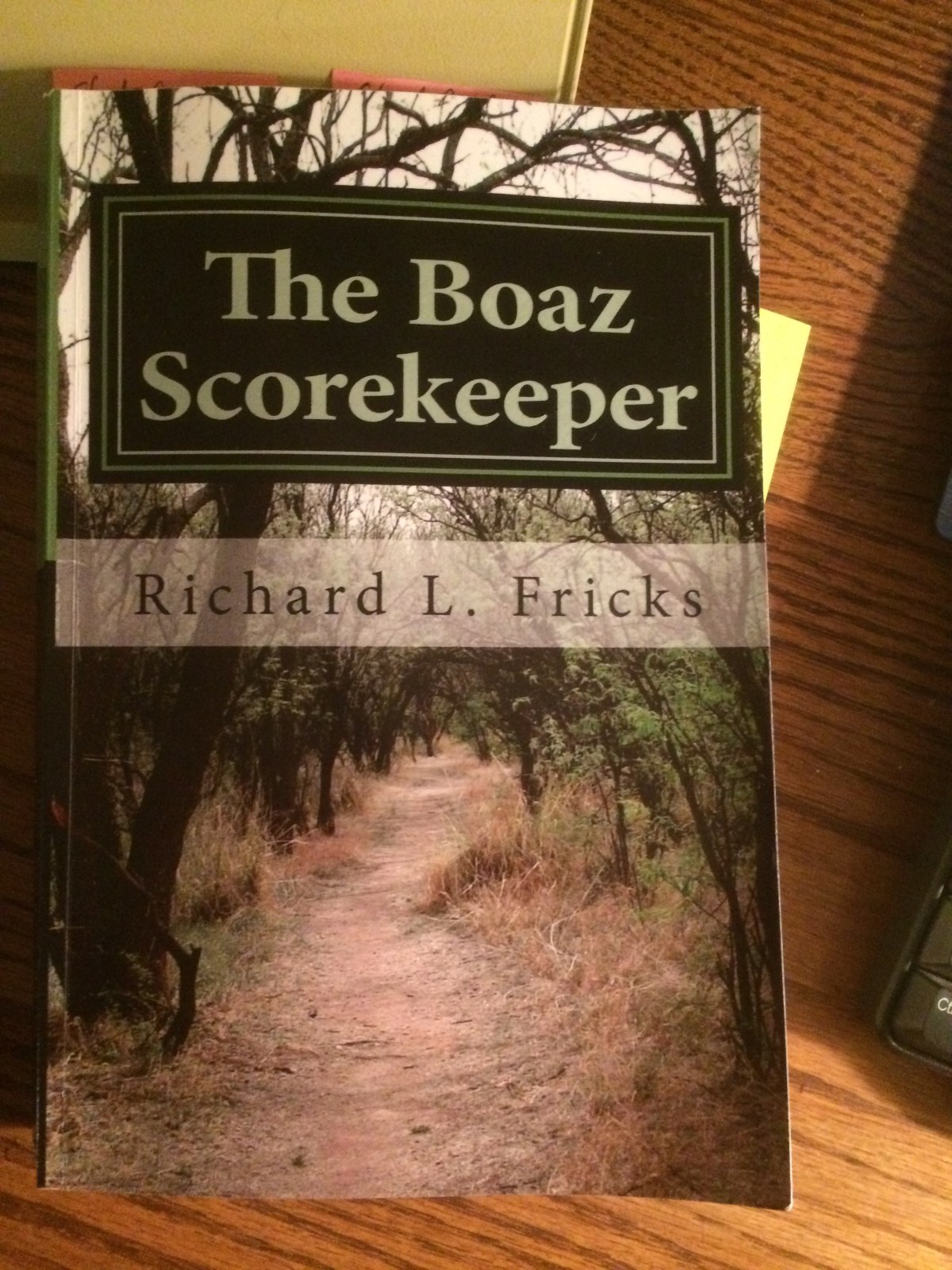
The Boaz Scorekeeper, written in 2017, is my second novel. I'll post it, a chapter a day, over the next few weeks.
I never told anybody about what happened that night. But, I never forgot. The next week football season ended and basketball season became the talk of the town. There was much anticipation and hope for a winning season. Wade, James, Randall, Fred, and John became an almost unbeatable team. They only lost to Etowah and Guntersville but went on to win the County tournament and made it to the final four in the State playoffs.
Before the quarter-finals and after school on Thursday, Wade Tillman approached me as I was closing my locker. He said that he was sorry about what happened in October and invited me to church on Sunday. As other students were leaving, James, Randall, Fred, and John walked up and apologized. They said they were ashamed how they had treated me and hoped that I would forgive them. They said they had rededicated their lives to God during the youth revival that had been going on all week at First Baptist Church of Christ.
Now, right before my seventeenth birthday I wasn’t as religious as I had been in Elementary and Junior High school, but I rarely ever missed a Sunday at Clear Creek Baptist Church listening to a Brother G sermon. I had never been to First Baptist. It was the biggest church in town and had the reputation for being a little too uppity-up for me and my blue-collar family. I told them not to worry about what had happened and said I would think about coming to church on Sunday.
Biking is something I both love and hate. The conflicting emotions arise from the undeniable physical effort it demands. However, this exertion is precisely what makes it an excellent form of exercise. Most days, I dedicate over an hour to my cycling routine, and in doing so, I’ve discovered a unique opportunity to enjoy a good book or podcast. The rhythmic pedaling and the wind against my face create a calming backdrop that allows me to fully immerse myself in the content. In these moments, the time spent on the bike seems worthwhile, as I can’t help but appreciate the mental and physical rewards it offers.
I especially like having ridden. The post-biking feeling is one of pure satisfaction. The endorphin rush, coupled with a sense of accomplishment, makes the initial struggle and fatigue worthwhile. As I dismount and catch my breath, I relish the sensation of having conquered the challenge, both physically and mentally. It’s a reminder that the things we sometimes love to hate can often be the ones that bring us the most fulfillment. In the end, the love-hate relationship with biking only deepens my appreciation for the sport, as it continually pushes me to overcome my own limitations and embrace the rewards that follow the effort.
My bike
A Rockhopper by Specialized. I purchased it November 2021 from Venture Out in Guntersville; Mike is top notch! So is the bike. The ‘old’ man seat was salvaged from an old Walmart bike (update: seat replaced, new photo to follow, someday).
Something to consider if you’re not already cycling.
I encourage you to start riding a bike, no matter your age. Check out these groups:
I like to say that my kids made me an atheist. But really what they did was make me honest.
I was raised Jewish — with Sabbath prayers and religious school, a bat mitzvah and a Jewish wedding. But I don’t remember ever truly believing that God was out there listening to me sing songs of praise.
I thought of God as a human invention: a character, a concept, a carry-over from an ancient time.
Today I realize that means I’m an atheist. It’s not complicated. My (non)belief derives naturally from a few basic observations:
The Greek myths are obviously stories. The Norse myths are obviously stories. L. Ron Hubbard obviously made that stuff up. Extrapolate.
The holy books underpinning some of the bigger theistic religions are riddled with “facts” now disproved by science and “morality” now disavowed by modern adherents. Extrapolate.
Life is confusing and death is scary. Naturally, humans want to believe that someone capable is in charge and that we continue to live after we die. But wanting doesn’t make it so.
Child rape. War. Etc.
And yet, when I was younger, I would never have called myself an atheist — not on a survey, not to my family, not even to myself.
Being an “atheist,” at least according to popular culture, seems to require so much work. You have to complain to the school board about the Pledge of Allegiance, stamp over “In God We Trust” on all your paper money and convince Grandma not to go to church. You have to be PhD-from-Oxford smart, irritated by Christmas and shruggingly unmoved by Michelangelo’s “Pietà.” That isn’t me — but those are the stereotypes.
And then there are the data.Studies have shown that many, many Americans don’t trust atheists. They don’t want to vote for atheists, and they don’t want their children to marry atheists. Researchers have found that even atheists presume serial killers are more likely to be atheist than not.
Given all this, it’s not hard to see why atheists often prefer to keep quiet about it. Why I kept quiet. I wanted to be liked!
But when I had children — when it hit me that I was responsible for teaching my children everything — I wanted, above all, to tell them the truth.
Their first atheist lesson was completely impromptu. Noah was 5, Jesse was 3, and we were sitting on the couch before bed reading from “D’Aulaires’ Book of Greek Myths,” a holdover from my childhood bookshelf. One of the boys asked what a “myth” was, and I told them it was a story about how the world works. People used to believe that these gods were in charge of what happened on Earth, and these stories helped explain things they didn’t understand, like winter or stars or thunder. “See” — I flipped ahead and found a picture — “Zeus has a thunderbolt.”
“They don’t believe them anymore?” No, I said. That’s why they call it “myth.” When people still believe it, they call it “religion.” Like the stories about God and Moses that we read at Passover or the ones about Jesus and Christmas.
The little pajama-clad bodies nodded, and on we read.
That was it — the big moment. It was probably also the easiest moment.
Before one son became preoccupied with death. Before the other son had to decide whether to be bar mitzvahed. Before my daughter looked up from her math homework one day to ask, “How do we know there’s no God?”
Religion offers ready-made answers to our most difficult questions. It gives people ways to mark time, celebrate and mourn. Once I vowed not to teach my children anything I did not personally believe, I had to come up with new answers. But I discovered as I went what most parents discover: You can figure it out as you go.
Establishing a habit of honesty did not sap the delight from my children’s lives or destroy their moral compass. I suspect it made my family closer than we would have been had my husband and I pretended to our children that we believed in things we did not. We sowed honesty and reaped trust — along with intellectual challenge, emotional sustenance and joy.
Those are all personal rewards. But there are political rewards as well.
My children know how to distinguish fact from fiction — which is harder for children raised religious. They don’t assume conventional wisdom is true and they do expect arguments to be based on evidence. Which means they have the skills to be engaged, informed and savvy citizens.
We need citizens like that.
Lies, lying and disinformation suffuse mainstream politics as never before. A recent Washington Post-ABC News poll found that 29 percent of Americans believe that President Biden was not legitimately elected, a total composed of those who think there is solid evidence of fraud (22 percent) and those who think there isn’t (7 percent). I don’t know which is worse: believing there to be evidence of fraud when even the Trump campaign can’t find any or asserting the election was stolen even though you know there’s no proof.
Meanwhile, we are just beginning to grasp that artificial intelligence could develop an almost limitless power to deceive — threatening the ability of even the most alert citizen to discern what’s real.
We need Americans who demand — as atheists do — that truth claims be tethered to fact. We need Americans who understand — as atheists do — that the future of the world is in our hands. And in this particular political moment, we need Americans to stand up to Christian nationalists who are using their growing political and judicial power to take away our rights. Atheists can do that.
Fortunately, there are a lot of atheists in the United States — probably far more than you think.
Some people say they believe in God, but not the kind favored by monotheistic religions — a conscious supreme being with powers of intercession or creation. When they say “God,” they mean cosmic oneness or astonishing coincidences. They mean that sense of smallness-within-largeness they’ve felt while standing on the shore of the ocean or holding a newborn baby or hearing the final measures of Chopin’s “Fantaisie-Impromptu.”
So, why do those people use the word “God” at all? The philosopher Daniel C. Dennett argues in “Breaking the Spell”that since we know we’re supposed to believe in God, when we don’t believe in a supernatural being we give the name instead to things we do believe in, such as transcendent moments of human connection.
Whatever the case, in 2022, Gallup found that 81 percent of Americans believe in God, the lowest percentage yet recorded. This year, when it gave respondents the option of saying they’re not sure, it found that only 74 percent believe in God, 14 percent weren’t sure, and 12 percent did not believe.
Not believing in God — that’s the very definition of atheism. But when people go around counting atheists, the number they come up with is far lower than that. The most recent number from Pew Research Center is 4 percent.
What’s with the gap? That’s anti-atheist stigma (and pro-belief bias) at work. Everybody’s keeping quiet, because everybody wants to be liked. Some researchers, recognizing this problem, developed a workaround.
In 2017, psychologists Will Gervais and Maxine Najle tried to estimate the prevalence of atheism in the United States using a technique called “unmatched count”: They asked two groups, of 1,000 respondents each, how many statements were true among a list of statements. The lists were identical except that one of them included the statement “I believe in God.” By comparing the numbers, the researchers could then estimate the percentage of atheists without ever asking a direct question. They came up with around 26 percent.
If that’s true or even close, there are more atheists in the United States than Catholics.
Do you know what some of those atheists call themselves? Catholics. And Protestants, Jews, Muslims and Buddhists. General Social Survey data back this up: Among religious Americans, only 64 percent are certain about the existence of God. Hidden atheists can be found not just among the “nones,” as they’re called — the religiously unaffiliated — but also in America’s churches, mosques and synagogues.
“If you added up all the nominal Christians, Jews, Muslims, Hindus, Buddhists, etc. — those who are religious in name only,” Harvard humanist chaplain Greg M. Epstein writes in “Good Without God,”“you really might get the largest denomination in the world.”
Atheists are everywhere. And we are unusually disposed to getting stuff done.
Iused to say, when people asked me what atheists do believe, that it was simple: Atheists believe that God is a human invention.
But now, I think it’s more than that.
If you are an atheist — if you do not believe in a Supreme Being — you can be moral or not, mindful or not, clever or not, hopeful or not. Clearly, you can keep going to church. But, by definition, you cannot believe that God is in charge. You must give up the notion of God’s will, God’s purpose, God’s mysterious ways.
In some ways, this makes life easier. You don’t have to work out why God might cause or ignore suffering, what parts of this broken world are God’s plan, or what work is his to do and what is yours.
But you also don’t get to leave things up to God. Atheists must accept that people are allowing — we are allowing — women to die in childbirth, children to go hungry, men to buy guns that can slaughter dozens of people in minutes. Atheists believe people organized the world as it is now, and only people can make it better.
That’s right: Atheists take more political action — donating to campaigns, protesting, attending meetings, working for politicians — than any other “religious” group. And we vote. In his study on this data, sociologist Evan Stewart noted that atheists were about 30 percent more likely to vote than religiously affiliated respondents.
We also vote far more than most religiously unaffiliated people. That’s what distinguishes atheists from the “nones” — and what I didn’t realize at first.
Atheists haven’t just checked out of organized religion. (Indeed, we may not have.) We haven’t just rejected belief in God. (Though, obviously, that’s the starting point.) Where atheism becomes a definite stance rather than a lack of direction, a positive belief and not just a negative one, is in our understanding that, without a higher power, we need human power to change the world.
I want to be clear: There are clergy members and congregations all across this country working to do good, not waiting for God to answer their prayers or assuming that God meant for the globe to get hotter. You don’t have to be an atheist to conduct yourself as if people are responsible for the world they live in — you just have to act like an atheist, by taking matters into your own hands.
Countless good people of faith do just that. But one thing they can’t do as well as atheists is push back against the outsize cultural and political power of religion itself.
That power is crushing some of our most vulnerable citizens. And I don’t mean my fellow atheists. Atheists, it’s true, are subject to discrimination and scapegoating; somehow we’re to blame for moral chaos, mass shootings and whatever the “trans cult” is. Yes, we are technically barred from serving as jurors in the state of Maryland or joining a Boy Scout troop anywhere, but we do not, as a group, suffer anything like the prejudice that, say, LGBTQ+ people face. It’s not even close.
Peel back the layers of discrimination against LGBTQ+ people, though, and you find religion. Peel back the layers of control over women’s bodies — from dress codes that punish girls for male desire all the way to the Supreme Court striking down Roe v. Wade — and you find religion. Often, there isn’t much peeling to do. According to the bill itself, Missouri’s total abortion ban was created “in recognition that Almighty God is the author of life.” Say what, now?
And when religion loses a fight and progress wins instead? Religion then claims it’s not subject to the resulting laws. “Religious belief” is — more and more, at the state and federal levels — a way to sidestep advances the country makes in civil rights, human rights and public health.
In 45 states and D.C., parents can get religious exemptions from laws that require schoolchildren to be vaccinated. Seven states allow pharmacists to refuse to fill contraceptive prescriptions because of their religious beliefs. Every business with a federal contract has to comply with federal nondiscrimination rules — unless it’s a religious organization. Every employer that provides health insurance has to comply with the Affordable Care Act’s contraceptive mandate — unless it’s, say, a craft supply store with Christian owners.
You don’t have to be an atheist to worry about the structural integrity of Thomas Jefferson’s “wall of separation between Church & State.” You don’t have to be an atheist to think that religion should not shape public policy or that believers should have to follow the laws that everyone else does. You don’t have to be an atheist to see that Christian nationalists are using “religious liberty” to perpetuate much of the discrimination Americans suffer today.
But atheists can do one thing about the country’s drift into theocracy that our religious neighbors won’t: We can tell people we don’t believe in God. The more people who do that, the more we normalize atheism in America, the easier it will be — for both politicians and the general public — to usher religion back out of our laws.
Okay, but should you say you’re an atheist even if you believe in “God” as the power of nature or something like that?
Yes. It does no one any favors — not the country, not your neighbors — to say you believe in God metaphorically when there are plenty of people out there who literally believe that God is looking down from heaven deciding which of us to cast into hell.
In fact, when certain believers wield enough political power to turn their God’s presumed preferences into law, I would say it’s dangerous to claim you believe in “God” when what you actually believe in is awe or wonder. (Your “God is love” only lends validity and power to their “God hates gays.”)
So ask yourself: Do I think a supernatural being is in charge of the universe?
If you answer “no,” you’re an atheist. That’s it — you’re done.
But if you go further: You’ll be doing something good for your country.
When I started raising my kids as atheists, I wasn’t particularly honest with the rest of the world. I wasn’t everybody’s mom, right? Plus, I had to get along with other people. Young parents need community, and I was afraid to risk alienating new parent friends by being honest about being — looks both ways, lowers voice — an atheist.
But, in addition to making me be honest inside our home, my children pushed me to start being honest on the outside. In part, I wanted to set an example for them, and in part, I wanted to help change the world they would face.
It shouldn’t be hard to say you don’t believe in God. It shouldn’t be shocking or shameful. I know that I’m moral and respectful and friendly. And the more I say to people that I’m an atheist — me, the mom who taught the kindergarten class about baking with yeast and brought the killer cupcakes to the bake sale — the more people will stop assuming that being an atheist means being … a serial killer.
And then? The more I say I’m an atheist, the more other people will feel comfortable calling themselves atheists. And the stigma will gradually dissolve.
Can you imagine? If we all knew how many of us there are?
It would give everyone permission to be honest with their kids and their friends, to grapple with big questions without having to hold on to beliefs they never embraced.
And it would take away permission, too. Permission to pass laws (or grant exemptions to laws) based on the presumed desires of a fictional creation. Permission to be cruel to fellow human beings based on Bible verses. Permission to eschew political action in favor of “thoughts and prayers.”
I understand that, to many people, this might sound difficult or risky. It took me years to declare myself an atheist, and I was raised Reform Jewish, I live in the Northeast, I’m White, I work at home, and my family and friends are a liberal bunch. The stakes were low for me. For some, I fully concede, the stakes are too high.
If you think you’d lose your job or put your children at risk of harassment for declaring your atheism, you get a pass. If you would be risking physical harm, don’t speak out. If you’re an atheist running for school board somewhere that book bans are on the agenda, then feel free to keep it quiet, and God bless.
But for everyone else who doesn’t believe in God and hasn’t said so? Consider that your honesty will allow others to be honest, and that your reticence encourages others to keep quiet. Consider that the longer everyone keeps quiet, the longer religion has political and cultural license to hurt people. Consider that the United States — to survive as a secular democracy — needs you now more than ever.
And the next time you find yourself tempted to pretend that you believe in God? Tell the truth instead.
We can endure life’s tasks with discipline—or welcome them with enjoyment.
***
You Are Here
Find greater enjoyment and meaning in navigating life’s unknowns.
In You Are Here, author and journalist Oliver Burkeman offers a collection of essays exploring the nature of limitation, uncertainty, unpredictability, accomplishment, enjoyment, and more.
“Life is so intrinsically confusing and precarious,” Burkeman says. But when we stop struggling against that reality, we are “liberated at last to give this admittedly rather preposterous business of being a human absolutely everything we’ve got.”
***
Oliver Burkemanisthe author of the New York Times bestseller Four Thousand Weeks: Time Management for Mortals, about embracing limitation and finally getting around to what counts. For many years, he wrote a popular column on psychology for The Guardian, “This Column Will Change Your Life,” and has reported from London, New York, and Washington, DC.
The Boaz Scorekeeper, written in 2017, is my second novel. I'll post it, a chapter a day, over the next few weeks.
Things were much different during my Junior year. Five players, all classmates of mine since Elementary school, survived the sophomore season and were determined to return Boaz to basketball glory: Wade Tillman, James Adams, Randall Radford, Fred Billingsley, and John Ericson. They had spent their summer in the gym running, shooting, and developing dialog and plays. These five even organized Thursday night pickup games throughout the Fall, often having players from surrounding high schools and junior colleges form teams to scrimmage. These scrimmages were open to the public and drew an ever-increasing crowd even though it was football season. After the first couple of games I was asked to start maintaining the scoreboard.
I had always gotten along with these guys. This all changed Thursday night October 7th, 1970. After the scrimmage, I was leaving the gym when James Adams’s sister asked me to give him a message. I told her that he was in the locker room and should be out in a few minutes. She said it was urgent and handed me a folded sheet of paper pleading with me not to read it. I agreed and walked to the locker room. I found James and gave him the note. He looked at me and ordered me to sit down on a bench in the middle of the room in between two rows of lockers. I told him I had to go and started walking out. For an unknown reason, all five of them started taunting and pushing me around. I was strong and got in a couple of punches but I was no match for the five of them. They grabbed my legs and I fell to the floor. Two of them held my arms back over my head and the other three removed my pants. Then they removed my shoes and shirt and stood me up.
Fred Billingsley said, “Tanner, this is payback for costing us the Albertville game last year. If you know what’s good for you, you will make sure we win the real close games. Surely you can feed us a few points over the course of a game.” James Adams then told me to go home. I tried to get my clothes but Wade Tillman said, “You will remember our orders better if you go home naked. Now, get the hell out of here.”
I walked out of the gym and to my car. Fortunately, only James’ sister Loree, and her friend Kristie saw me. When I got home I went inside the barn and found a burlap bag to cover myself as I walked in the kitchen. Mom and Dad never heard me come in and never knew what had happened.
Biking is something I both love and hate. The conflicting emotions arise from the undeniable physical effort it demands. However, this exertion is precisely what makes it an excellent form of exercise. Most days, I dedicate over an hour to my cycling routine, and in doing so, I’ve discovered a unique opportunity to enjoy a good book or podcast. The rhythmic pedaling and the wind against my face create a calming backdrop that allows me to fully immerse myself in the content. In these moments, the time spent on the bike seems worthwhile, as I can’t help but appreciate the mental and physical rewards it offers.
I especially like having ridden. The post-biking feeling is one of pure satisfaction. The endorphin rush, coupled with a sense of accomplishment, makes the initial struggle and fatigue worthwhile. As I dismount and catch my breath, I relish the sensation of having conquered the challenge, both physically and mentally. It’s a reminder that the things we sometimes love to hate can often be the ones that bring us the most fulfillment. In the end, the love-hate relationship with biking only deepens my appreciation for the sport, as it continually pushes me to overcome my own limitations and embrace the rewards that follow the effort.
My bike
A Rockhopper by Specialized. I purchased it November 2021 from Venture Out in Guntersville; Mike is top notch! So is the bike. The ‘old’ man seat was salvaged from an old Walmart bike (update: seat replaced, new photo to follow, someday).
Something to consider if you’re not already cycling.
I encourage you to start riding a bike, no matter your age. Check out these groups:






















 by
by 



 Richard L. Fricks