The Boaz Stranger–Chapter 50

Last night, after the quick trip to her house, Jane had reluctantly agreed to sleep in Kyla and Lee’s parents’ old bedroom. It had remained the same since Bonnie and Zeke Harding had spent their last night snuggled in each other’s arms. Less than sixteen hours after awakening, a horrible auto accident ended their lives. That was New Year’s Eve 2018, minutes before the dawning of a new year.

Before crawling into bed, Jane had spent an hour researching home safes. There were many brands, models, and sizes, but only two types: dial and digital. The latter would contain a keypad and require the entry of a numerical code. Numbers also dictated the dial type, but the method of entry was more complicated, including a four-step process of spinning the dial in alternating counter-clockwise and clockwise directions. The final article she’d read described the emergency key feature of all dial types, but Jane didn’t pay it much mind since she figured Ray’s safe would be the digital type; he always tried to shun the difficult.

 Jane felt befuddled. Ray’s safe was the combination type. Unusual, she thought, more difficult than simply punching in a code on a keypad, but doable.

Jane turned the dial counterclockwise, passing 12 four times. She stopped at 12 on her 5th rotation. Her best guess, again, was that Ray had chosen his football number in some alternating sequence. She next turned the dial clockwise, past 21 twice, and stopped at 21 on her third time. Jane removed the slip of paper from her jeans pocket containing notes she’d made from an article found last night online. She wanted to verify the third step. She did, and proceeded, turning the dial counterclockwise, passing 42 once, and stopping at 42 the second time. On to step 4, which required her to turn the dial clockwise until the dial stopped. Jane eased the dial towards the diary table, hoping she’d guessed right. She hadn’t. The dial didn’t stop.

Forty-five minutes later, Jane was ready to give up. She had attempted four additional times to discover the correct combination, using various sequences (including doubling and tripling) from the numbers embroidered across Ray’s football jersey.

Jane had also left the hidden room and searched in three places for the infamous emergency key: Ray’s desk, his gun-cleaning kit atop the giant gun cabinet in the great room, and the cabinet style toolbox in the detached garage on the wall behind Ray’s shiny Corvette. No key anywhere, but she had discovered the weather was getting colder, and it was sleeting.

Now, shivering and staring at Ray’s safe, she decided she needed a break. Maybe that would somehow generate a better idea. Jane exited the hidden room, yearning for a cup of coffee. She closed the bookcase door. As she slid the bolt to the left, she recalled something she’d seen when helping Ray remove his ankle monitor. It was a small and weirdly shaped piece of copper wedged inside a clear plastic sleeve rolled up with a dozen sizes and types of tweezers. That day, also a Saturday, the last place Jane remembered Ray had gone before the little green pouch had appeared, was the master bathroom. And that’s where Jane found it, lying along the right edge of the middle drawer of the massive mahogany dresser that served as the vanity.

After returning to the hidden room, Jane pushed back the diaries and unrolled the pouch, laying it open and flat against the table’s top. There, in the brightness of her flashlight, lay twenty or more types of tweezers. And that odd-shaped piece of copper. It had to be the emergency key.

And it was. From her research, she had learned how to remove the dial contraption itself from the front of the safe. All it took was a firm grip and a quick snap to the left. Once removed, Jane used the flashlight to locate the tiny keyhole. In the center, with three teethed wheels forming a pyramid style triangle around it, the emergency key fit snug like a gloved hand. One simple and easy turn to the right was all it took. Jane depressed the handle and pulled the thick door open. She had done it. With God’s help. It had to be a miracle. “Thank you, Jesus,” she said in a whisper.

***

This time, it was Lillian’s voice. “If you’re successful at opening the safe, snap a photo of the insides. This way you can return the contents to their same position. Ray would notice this type of thing.” Jane laid the flashlight on top of the diaries, removed her iPhone from her left rear pocket, and did as instructed. A timesaving and light enhancing idea came to mind.

It took three trips for Jane to remove the safe’s contents, walk them to Ray’s study, and lay them across his giant desk. Nothing struck her as a smoking gun: a ledger book with frayed spine; one bundle of cash; one or more deeds folded inside a plastic sleeve; an opaque ziplock bag containing what felt like an assortment of jewelry; and one canary-colored envelope, thick like it contained several DVDs.

Jane stared at the items and pondered where to start, jewelry or the envelope. The former seemed uninteresting—probably trophies from the many women Ray had bedded. The envelope it was.

Jane unfolded the metal clasp and removed the contents. One rubber-banded stack of 4 inch by 6-inch photographs was it. An over-sized sticky note concealed the top photo. Ray had scrawled ‘Destroy,’ across it. Jane whispered, “who keeps photos in a safe unless they are vitally important?” She sat in Ray’s antique desk chair, removed the rubber band and note, and was shocked by what she saw. Who in the hell had captured this on camera? It was her, Ray, and Rachel standing in front of his blue Chevrolet pickup; it had to be the night Kyle disappeared, and there she was, decked out in his clothes, all for Ray and Rachel to create a story, one untrue, but one to be masqueraded and marshaled to sustain a fictional account. Given the required position of the photographer, someone took the photos (all fourteen of them) from the direction of Jackie Frasier’s mobile home.

Then Jane recalled the rumors. Jade, Jackie’s daughter, disabled, disfigured, lived a lonesome and solitary life in the tiny mobile home. She wouldn’t dare appear in public, but word was, she roamed the sparsely populated neighborhood at night, secretly capturing outdoor scenes in the rural world she loved to explore.

It was Rachel’s idea. “It’s well known that us four left the warehouse to return the church’s PA system, and for Ray to taxi each of us home. We made it look like that’s what he did.” Rachel’s statement had come after her, Ray, and Jane had bound, gagged, and stashed Kyle inside an old shed between the train station and the ice plant. Ray had pointed a gun at Kyle to convince him to strip down. Rachel had insisted Jane slip on his clothes. Ray had driven to King Street and the intersection of Kent and Kyle’s driveway. Someone, no doubt Jade Frazier, had captured multiple photos of Jane walking away, along the Bennetts’ driveway towards their house. Until she was out of sight. A hundred feet before reaching the old rickety house, Jane had turned right into the woods and hiked a semi-circular path back to King Street, where Ray and Rachel were waiting. Jane couldn’t do anything but close her eyes and shake her head. This was unbelievable. But how had Ray come to have these photos in the first place?

Jane used her iPhone to snap a copy of each of the photos before returning them to the envelope. The last one, the fourteenth one, felt thicker than the others. As she tucked them away, she noticed it was two stuck together, making fifteen photographs that Ray had labeled ‘Destroy.’ Jane gently separated the two and was again surprised. It wasn’t a photo of her strolling down Kyle’s driveway. It was a snapshot of a much younger Stella Lancaster (now Newsome). Jackie Frasier was standing beside her. The two were in front of Jackie’s mobile home, posing along the edge of the small front porch. It looked like someone snapped the photo at sundown, given the dark sky beyond the single bulb to the top right of the door. The only thing Jane could conclude was that Jade was a former patient of Stella, who was a private nurse for at least twenty-five years before going to work at the hospital in the ICU. Jane snapped a copy of Stella and Jackie and returned the stack to the envelope, not forgetting to secure them with the rubber band.

Five minutes later, Jane believed she had figured it out. From a quick review of the ledger, she discovered Ray had recently paid Jade Frasier $25,000. Jane surmised that somehow he had learned Jade possessed incriminating evidence against him. Maybe it was Jade who had started the conversation and asked for money. Either way, Ray now possessed photos that revealed Ray, Rachel, and Jane were involved with Kyle’s disappearance.

The ledger was old. In fact, it predated Ray’s adulthood. There were payments to Rob and Rosa Kern, payments to Buddy and Billy James, and many others. The amounts varied from small to large. The writer provided no explanations. Each contained only the name, date, and amount. The most recent payment was to Jade. The one before that was to Buddy James for $100,000. Jane figured one had to do with the Hunt House, given its proximity to the fire.

Jane flipped through the few remaining blank pages in the ledger and found a half-folded sheet of notebook paper tucked inside the back cover. Written across the top was $7,500. Underneath was “Darrell Clements/Buddy’s truck and HorsePens 40.” Jane didn’t have a clue what this meant. Had Ray paid this Clements fellow $7,500? And how was this related to Buddy’s truck and HorsePens 40? Finally, why hadn’t Ray already recorded the amount and date (what date?) in the ledger?

It took several minutes to snap photos of every page in the ledger, including the Clements note. It was now 9:00 AM. The three hours Jane had allotted were racing by. She sat aside the ledger and picked up the plastic sleeve.

It contained two deeds. One evidencing Ray purchased the Hunt House property. Rob Kern was the grantor. The second deed posed another mystery. Again, Ray was the buyer/grantee. The seller/grantor was a man named Harlan Johnson. Jane attempted to read the legal description, but it was all gibberish, stuff like “Southeast quarter of Southeast quarter (SE 1/4 of SE 1/4),” but a little farther down she noticed a comprehensible phrase, “containing sixty (60) acres of land, more or less, together with residence, garage, barns and garden used by Henry and Nancy Johnson for the past sixty-eight (68) years.” The date at the bottom of the deed was December 11th, 2020. Two weeks ago. Jane had no inclination why Ray had purchased another piece of real estate. What was he up to? She surmised it was a response to his father refusing to sell him the Dogwood Trail farm. Ray would never, could never, cede defeat.

Jane started brainstorming ideas to find the sixty acres. A gust of wind against the side of the Lodge made the blinds rattle. A heavy thud followed. Jane walked to the window and saw that a large limb had fallen from the tree nearest the driveway. What really startled her was a landscape of solid white. The sleet had turned to snow. “I’ve got to get out of here,” Jane whispered, and activated her iPhone. It was now 9:24, but she still wanted to inspect the jewelry.

She returned to the antique chair, opened the brownish-colored bag, and gently dumped the contents on Ray’s desk. Jane had been correct. There was an assortment: ten or twelve rings, all for females, some with diamonds, some without; a gold cross and chain; and two items wrapped in tissue paper. Jane removed the paper from the lightest and thinnest item. What she saw further validated that the contents of Ray’s safe would be his undoing. The small, thin, silver-colored metal was easily identified. It was a dog tag. Jane held it near her eyes. The machine-stamped indentions read:

KYLE THOMAS BENNETT

DOROTHY BENNETT

294 KING STREET

BOAZ, ALA,

12 3 53 P

“Kyle’s dog tag? Ray is so stupid. This is almost as bad as having a video recording of him committing murder.” Unbelievable, Jane muttered, shaking her head with eyes closed. She couldn’t help but recall what Kyla had told her that Lee had discovered: Mrs. Bennett had Sharon Teague’s dog tag. She had found it in a shoebox in Kyle’s closet after he disappeared.

Jane removed the tissue paper from the second item. It was roundish and much thicker and heavier, a class ring. It too was gold or gold plated. Starting at the left side of the beautiful emerald stone and continuing in an arch were the words, “Albertville High School.” Inscribed inside the band was “Sharon Elizabeth Teague.” Oh, my fucking god, Jane thought, pausing a second to seek God’s forgiveness. “Ray’s ass is cooked,” was her loudest whisper so far.

Another gust of wind, this one stronger than the previous, was Jane’s siren call. She had to leave even if she wanted to stay and read a while in the diaries.

It took five minutes to photograph the jewelry and return everything to its proper place. Jane verified her arrangement by thrice checking her previous photos. She removed the emergency key and re-affixed the dial to the outside of the safe. After returning the tweezer pouch to the vanity drawer, Jane returned and snapped a few photos of the diary table. She exited the hidden room, closed the bookshelf door, and slid the bolt in place. She stuffed the flashlight inside her duffel, walked to the kitchen, and stared outside at the snow-covered deck.

Jane’s journey to her car took several minutes, given the icy, snowy conditions. She nearly slipped when she transitioned from the steps to the sidewalk. Thankfully, the backyard provided more traction and improved her pace. When she reached the Equinox, she looked at her iPhone. It was 10:48 AM. She had been at the Lodge going on four hours. As she tossed her duffel in the back seat, she remembered she’d forgotten to reset the disconnect breakers. “Oh my God, that was close.”

During the two-minute walk to and from the corner of the house, Jane worried about two things: what if Ray returns home before the snow melts and sees all her tracks? And, what if he has some type of battery-operated camera that captures her every move?

She almost slipped again as she crawled inside the Equinox. It started on the first attempt. Jane breathed a sigh of relief, concerned that her soon-to-be car might present problems given the harshness of the weather. She let the engine warm a minute before shifting the transmission into reverse. She eased pressure on the gas pedal. That’s when she learned she had another problem. Her rear tires were spinning. She was stuck in the ice and snow. She’d made a terrible mistake pulling onto the grass beside the detached garage. Oh, my fucking god, Jane thought, pausing a second to seek God’s forgiveness.

Bremerton’s praying football coach got what he wanted, so now he may quit for good

Here’s the link to this article.

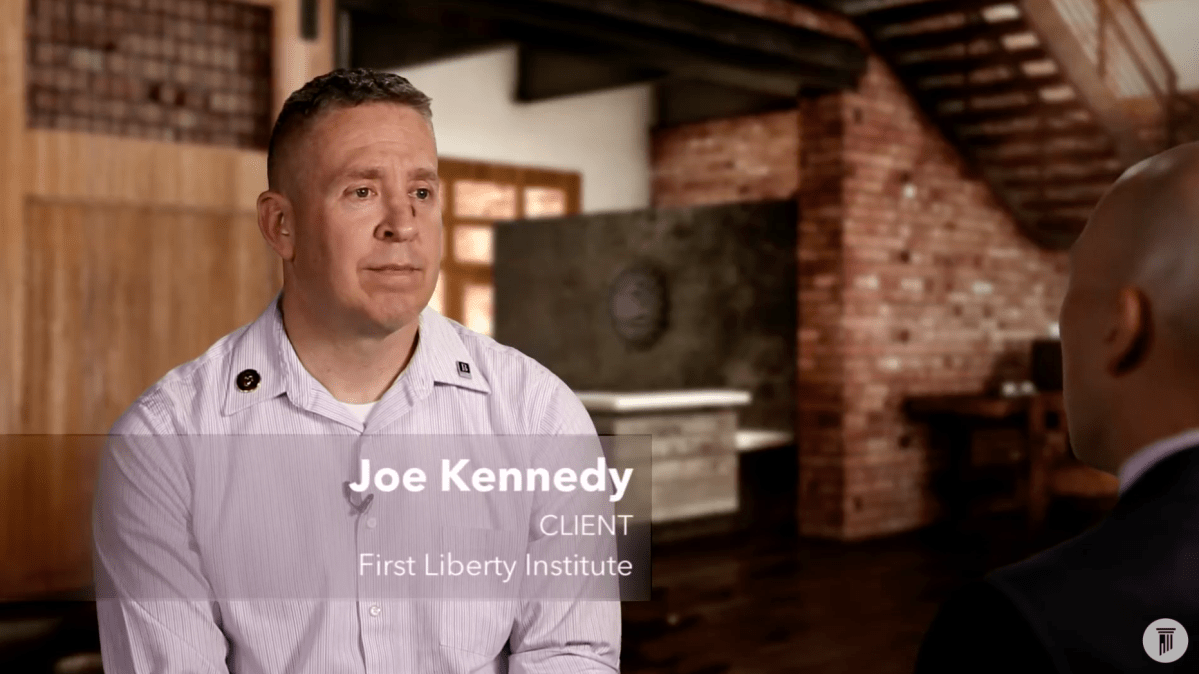
Christian football coach Joe Kennedy returned to the field Friday night, perhaps for the last time

HEMANT MEHTA

SEP 2, 2023


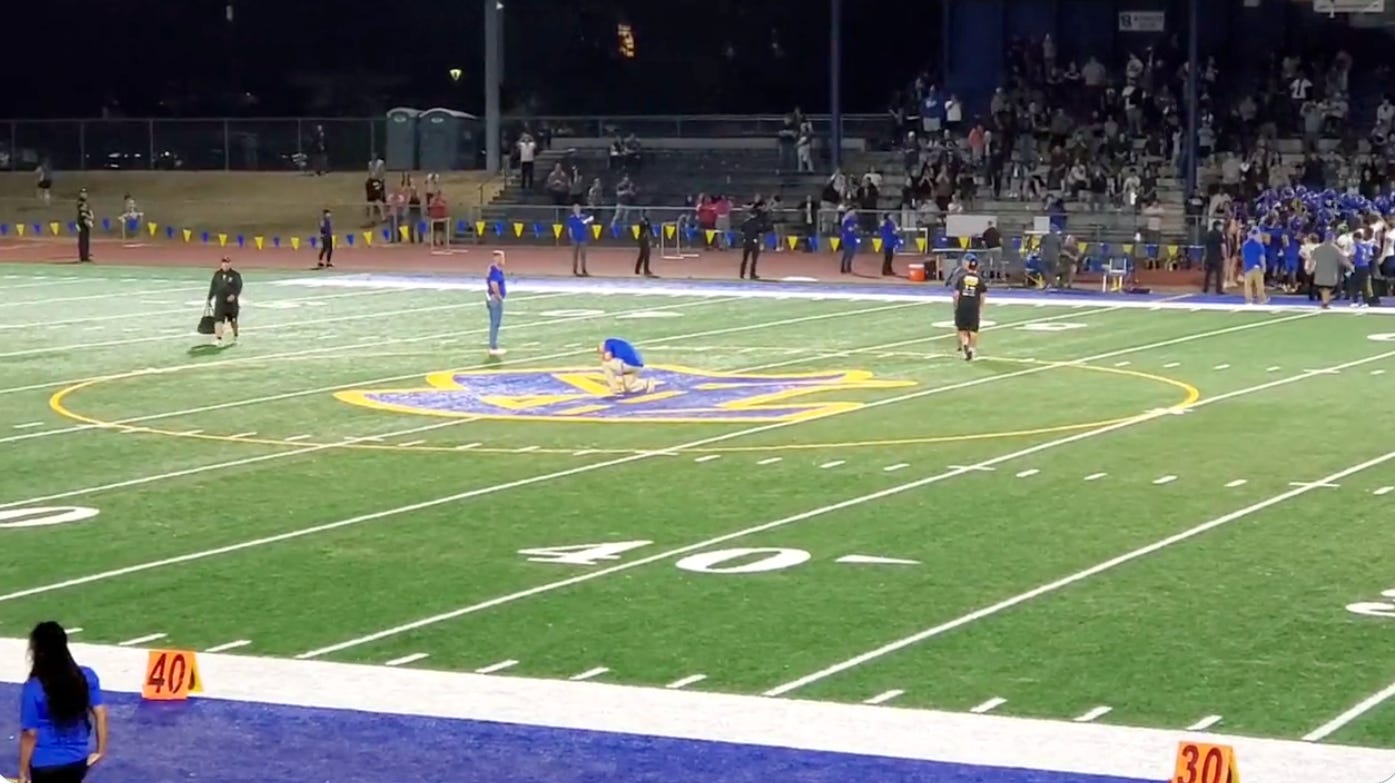
Last night marked the first football game of the season for the boys at Bremerton High School in Washington—they won 27-12—but the majority of spectators were there to watch something else entirely: A post-game prayer from assistant coach Joe Kennedy. A prayer made possible by a right-wing majority on the Supreme Court that ignored the facts in order to let Kennedy have his moment at the 50-yard line.

After the game was over, Kennedy walked to midfield for a brief, uneventful prayer during which he wasn’t surrounded by anyone. He got the attention he wanted before heading back to the locker room.

For all the events that led up to that moment, it may have been his last time on the field.

Joe Kennedy delivers a performative prayer after Bremerton’s game (via @JeffGrahamKS / Twitter)

A quick refresher in case you forgot: Kennedy argued that he lost his coaching job in 2015 because he wanted to deliver a quiet Christian prayer at midfield after games. All of that was exaggerated or untrue. He was never actually fired. The prayers weren’t “quiet.” And the concern was far more about the coercive nature of his showboat prayers, not his ability to privately pray. But the only reason the Bremerton case was in front of the Supreme Court at all was because, theoretically, their decision was the only way Kennedy could regain his job and the right-wing justices were eager to jump into the fray.

In 2022, the Court’s conservative majority ignored the facts of the case and sided with Kennedy, further eroding church/state separation and requiring the district to give him his old job back. The district is now obligated to pay attorneys’ fees amounting to over $1.7 million, some portion of which will be paid through their insurance.

Despite Supreme Court win, Bremerton's praying football coach is long gone | Former Bremerton football coach Joe Kennedy

The irony with the Supreme Court’s decision was that it seemed hard to believe Kennedy was just going to waltz back onto the football field. He moved away from Bremerton to Florida years ago. Was he seriously going to move back for a low-paying coach position?

Last September, months after the decision came down, the Seattle Times reported that Kennedy was nowhere to be found. Was he too busy being a conservative celebrity to actually do the job he claimed he wanted (which is precisely what atheist groups predicted would happen)? Yes and no.

It’s true that Kennedy will soon release a ghostwritten memoir called Average Joe: The Coach Joe Kennedy Story. There’s also a movie about him in the works produced by the God’s Not Dead people; while he’s not directly involved with it, he’ll presumably be involved with the publicity campaign. But the delay on the field likely had more to do with paperwork than anything else. Only this past March did the district announce that everything was finally completed:

Mr. Kennedy will be an assistant football coach for Bremerton High School for the 2023 season.  Mr. Kennedy has completed human resources paperwork and we are awaiting the results of his fingerprinting and background check.  Mr. Kennedy will need to complete all training required by WIAA.  Football coach contracts are approved by the Board at the August 3, 2023 board meeting, and begin in mid-August. As with any other assistant coach, Mr. Kennedy will be included in coaching staff communication and meetings, spring football practice and other off-season football activities.

That’s why it took until last night for Kennedy to finally get back on the field. First Liberty Institute, the conservative legal group that backed him, urged other coaches to pray at midfield Friday night in solidarity, though it’s not clear if anyone did that.

But despite everything Kennedy went through to get back his position, it may also have been his final game because the pull of Christian celebrity is as strong as ever. Besides the book and movie, the Seattle Times notes that Kennedy gets paid to give speeches and that politicians like Ron DeSantis have attempted to get his endorsement. (Not surprisingly, Kennedy is a firm Donald Trump supporter.)

Need more evidence coaching isn’t in his future? He hasn’t bothered moving back to Bremerton.

He’s currently housesitting, and said he and his wife have talked about parking an RV on her sister’s property in the area during football season.

They’re not looking for homes in the community. They haven’t sold their property in Pensacola. Kennedy wouldn’t answer questions about his plans beyond Friday:

… Will Kennedy stick around after the first game?

On the last question, he’s not saying. Everything’s been leading up to Friday’s game, he said, “the fine bow” on top of his Supreme Court victory, which overturned lower court rulings and the public school district’s directive against overt activity while on duty that could be taken as an endorsement of religion. He insisted he can’t think further ahead than Friday.

What sort of football coach can’t see past the first game of the season? One who’s already heading toward the exits, that’s who. Kennedy also added that his future plans might include “some ministry or something.”

If and when he walks away, it’ll be definitive proof that he’s only coaching for the purpose of praying on the field. Does anyone seriously think he’s doing this for the students? How shitty must those athletes feel knowing that, regardless of how they play, all the media attention will be on a coach who has already planned a future without them?

As any high school coach could tell you, the job is a sacrifice. You don’t get paid much and it takes a lot of time, but you do it because you love the students. You do it because what you get out of it is more valuable than a paycheck. When Kennedy used his platform to advertise his religion, it was clear the students were not his main priority. It’s clear that hasn’t changed in eight years.

He never cared about the kids, the team, or the job. He only ever cared about himself.

Last night, the Freedom From Religion Foundation announced that they had placed a billboard about two minutes away from the high school. It says, “Wishing Bremerton High School a safe, secular & successful school year.”

It’s a fine message that capitalizes on the story, but it’s telling that the atheists are focused on what’s best for students while Joe Kennedy’s main concern is staring back at him in the mirror.

“Coach Kennedy’s antics are a desperate way of keeping his unconstitutional agenda in the spotlight,” says FFRF Legal Director Rebecca Markert. “We’ll be countering it whichever way we can.”

To their credit, the district issued strict guidelines about Kennedy’s prayers in accordance with the SCOTUS decision and the law as it stands: Any prayers (a.k.a. “personal conduct”) had to occur outside of game time when coaches were on duty, and only when students were at least 25 feet away at the start of it. In short, they were saying the prayer had to be a solo event after the game even if students decided to join in after it began. Looks like the students didn’t want to do that last night.

If Kennedy really cared about these students, he’d accept his SCOTUS victory and let the kids play without him there. He has no reason to be there other than a desperate desire for the spotlight—and to create a postscript for the movie version of his life. He could easily have stayed in Florida and said that God gave him the ultimate victory so now, for the sake of the children, he’ll stay put in Pensacola so that the attention remains on the student athletes where it belongs. He didn’t do that. He wanted to bask in the glory once more because he thinks high school football is all about him.

Once he’s gone, which could be very soon, the attention will finally be where it belongs: on the students playing the game, not the coach using them for his personal benefit.

09/05/23 Biking & Listening

Biking is something else I both love and hate. It takes a lot of effort but does provide good exercise and most days over an hour to listen to a good book or podcast. I especially like having ridden.

Here’s my bike, a Rockhopper by Specialized. I purchased it November 2021 from Venture Out in Guntersville; Mike is top notch! So is the bike, and the ‘old’ man seat I salvaged from an old Walmart bike.

Here’s a link to today’s bike ride.


Something to consider if you’re not already cycling.

I encourage you to start riding a bike, no matter your age. Check out these groups:

Cycling for those aged 70+(opens in a new tab)

Solitary Cycling(opens in a new tab)

Remember,

Photo by Suzy Hazelwood on Pexels.com

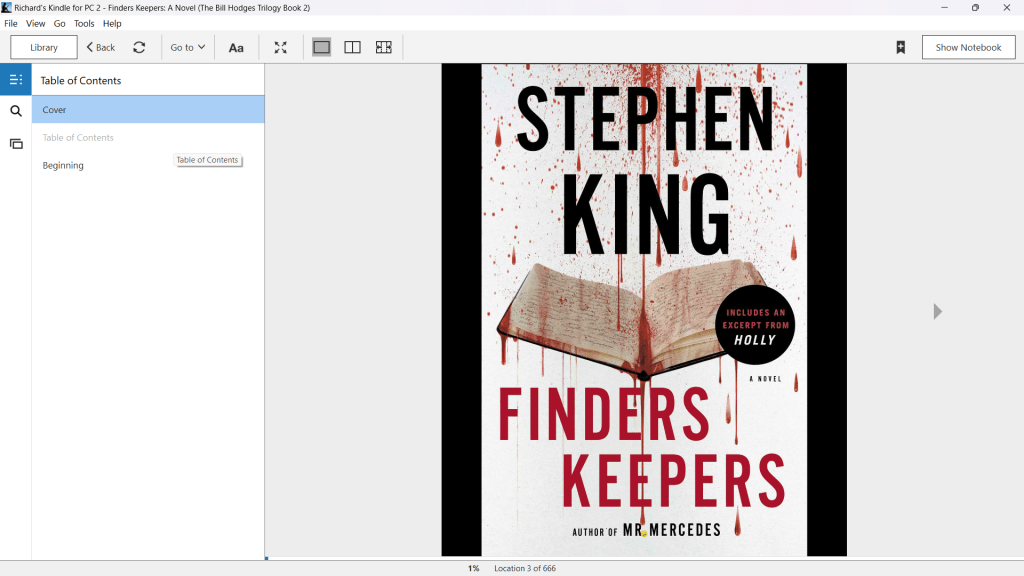
Novel listening: Finders Keepers by Stephen King

Abstract of Finders Keepers

The second book in Stephen King’s Bill Hodges trilogy (Mr. MercedesFinders KeepersEnd of Watch)—now an AT&T Audience Original Series!

“Stephen King’s superb stay-up-all-night thriller is a sly tale of literary obsession that recalls the themes of his classic 1987 novel Misery” (The Washington Post)—the #1 New York Times bestseller about the power of storytelling, starring the same trio of unlikely and winning heroes Stephen King introduced in Mr. Mercedes.

“Wake up, genius.” So announces deranged fan Morris Bellamy to iconic author John Rothstein, who once created the famous character Jimmy Gold and hasn’t released anything since. Morris is livid, not just because his favorite writer has stopped publishing, but because Jimmy Gold ended up as a sellout. Morris kills his idol and empties his safe of cash, but the real haul is a collection of notebooks containing John Rothstein’s unpublished work…including at least one more Jimmy Gold novel. Morris hides everything away—the money and the manuscripts no one but Gold ever saw—before being locked up for another horrific crime. But upon Morris’s release thirty-five years later, he’s about to discover that teenager Pete Saubers has already found the stolen treasure—and no one but former police detective Bill Hodges, along with his trusted associates Holly Gibney and Jerome Robinson, stands in the way of his vengeance…

Not since Misery has Stephen King played with the notion of a reader and murderous obsession, filled with “nail biting suspense that’s the hallmark of [his] best work” (Publishers Weekly).

Podcasts listened to


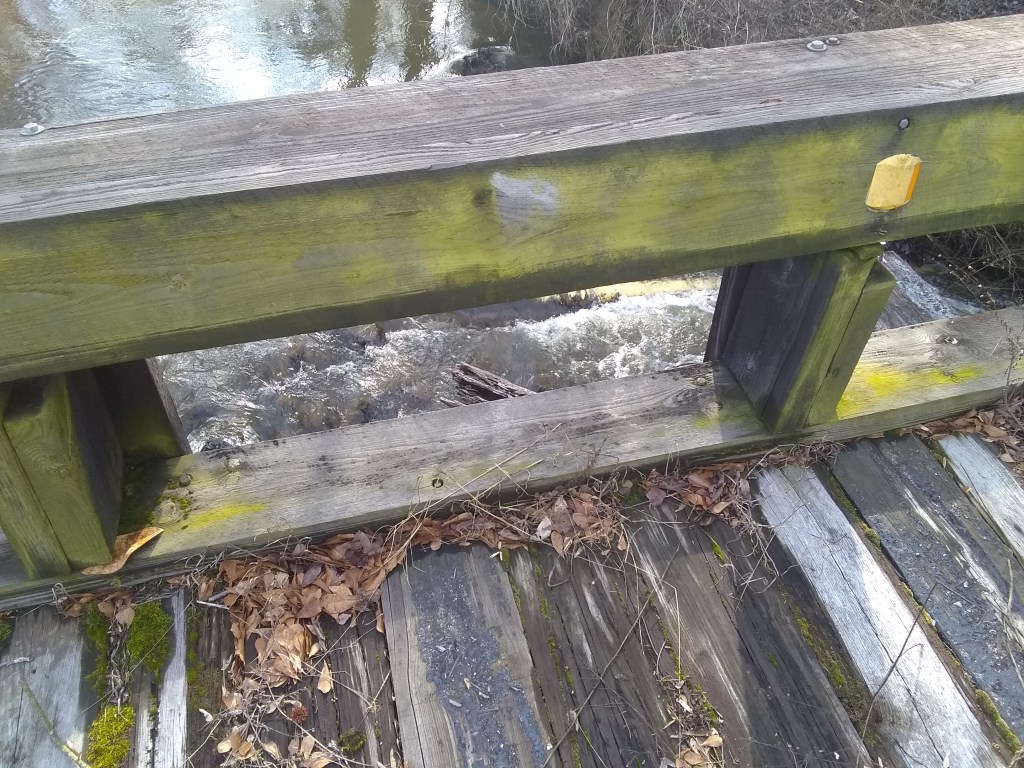
Here’s a few photos from along my pistol route:

They’re Picking on Religion, So Onward Christian Soldiers

Here’s the link to this article.

By David Madison at 9/01/2023

But a few Standards of Honesty are in order

While I was in the process of writing my 2016 book, Ten Tough Problems in Christian Belief, I set up a Facebook page to promote it. When the book was published, I did weekly paid boosts to help sales. I specified the target markets, e.g.. atheists, secular, humanist. Even so—don’t ask me how—my boosts showed up on Christian Facebook pages. What horrible reactions! None of the enraged Christians showed the least interest in engaging in the issues I raised. It was all hate and hasty conclusions, e.g., you were never a real Christian, you’re a terrible person, you’re going to hell. I eventually gave up on the paid boosts. So I guess the Christians won that round.

I also resolved never to go onto Christian blogs or websites to advocate atheism. This would be akin to me walking into a church on Sunday morning, going up to the pulpit and arguing with the preacher. Among other things, this would be bad manners. 

But does this mean that Christians arguing with atheists on the Debunking Christianity Blog is bad manners? No, not at all

However, there are a few Standards of Honesty that should be observed, respected. On 11 August, I published an article here, “My overdosing on religion was becoming a serious problem.” I offered my comments on a 2016 essay by Josiah Hesse, in which he confessed the agonies he suffered because of childhood indoctrination, in an apocalyptic Christian cult; it had been a brutal experience. This prompted a Christian apologist—I assume—RosAnarch, to dive in with very long comments, which provoked heated exchanges with regular followers of this blog. To date, there have been 209 comments. I wondered what Standards of Honesty should apply.    

Standard of Honesty One: Don’t remain anonymous

Anyone who wants to take on a major role as expert and critic should identify themselves. Why hide behind a pseudonym? Especially since being a defender of religion is not, in the current climate, dangerous. Why RosAnarch instead of your name? Who are you, what are your credentials and your profession? What Christian brand do you represent—if indeed you are an apologist? If I were to walk into that church on a Sunday morning to argue with the preacher, I’d state my name and credentials: Ex-clergy atheist, nine years a Methodist pastor, PhD in Biblical Studies. My business card, which I give to anyone who seems interested, reads David Madison, Atheist Author and Advocate.  

Standard of Honesty Two: Address the primary point of an article, i.e., avoid diversionary tactics. 

The point of my 11 August article was that early childhood indoctrination—these days called grooming—had done considerable damage to Josiah Hesse. RosAnarch set out to show that I was misrepresenting religion, and cited studies showing that evils can derive as well from folks who are not religious at all. How can there be any debate about that? Greed, territoriality, lust for power, and just plain being terrible people has caused so much evil and suffering. But when you add fervent conviction that there is a god justifying horrible acts,the evil can be intensified. In the 11 August article I mentioned the Crusades, and anti-Semitism fueled by the gospel of John and Martin Luther’s deranged rants against the Jews. For the role of religion in rage against Jews, see especially Hector Avalos’ essay, “Atheism Was Not the Cause of the Holocaust,” in The Christian Delusion: Why Faith Fails, edited by John Loftus. 

Take a look at the French Wars of Religion, and the Thirty Years’ War, which John Loftus has pointed out 

“…pitched Christians against Christians. Roman Catholicism and Protestant Calvinism figured prominently in the opposing sides of this conflict…Estimates show that one-third of the entire population of Germany was killed…we’re talking about a Christian bloodbath.” (The Christian Delusion: Why Faith Fails, p. 194)

But enough of this diversion. My article was about the harm done by Christian grooming. Even if Sunday School, catechism, and parental coaching don’t cause the extreme damage that Josiah Hesse endured, what do the clergy construe as a positive outcome? They’re delighted if the children in their charge grow up accepting a bundle of ancient superstitions. Christian theology is grounded in the brutal, rampaging god of the Old Testament—with little improvement in the New Testament. Required animal sacrifices in the ancient scriptures were replaced—after the destruction of the Jerusalem Temple in 70 CE—by a single human sacrifice, as a way to get right with god. Some Christian theologians added the ghoulish idea that eating the flesh and drinking the blood of the human sacrifice was proper ritual for gaining eternal life. That is, magic potions. The apostle Paul added magic spells, e.g. Romans 10:9. If you believe—and say it—that the human sacrifice rose from the dead, you’ll be saved. 

How in the world does accepting this bundle of superstitions help people function in our world today? I suspect many of them just park it in the backs of their minds, and get on with life. And if any of them were asked for evidence to verify what their clergy/parents had taught them, they would be at a loss. Their response might be, “Gee, isn’t it in the Bible?”   

I recommend reading Josiah Hesse’s article, to get a full grasp of what he went through. That was the damage done by religion I hoped to convey. 

On the issue of damage caused by religion, there are historical realities that it is helpful to recall—and difficult to dismiss. Theologians have found it necessary to knock the rough edges off the god depicted in the Bible, and in their flights of speculation and fantasy, they came to portray their god as all-powerful, caring, loving—and in the bargain—aware of everything that goes on with every human. It takes a great deal of gerrymandering to make this god look good. In the face of so much suffering—genetic diseases, plagues, mental illness, very high infant mortality rates for millennia—it’s indeed a great mystery that a wise, competent god neglected to give humanity crucial information that could have helped enormously. We have a Bible—more than a thousand pages of it—with no information on why we get sick, and how to prevent it. 

In fact, there are Bible texts that are quite misleading. In the famous story of the Jesus healing the paralytic who had been lowered through the roof to reach Jesus, we find this Jesus-script:

“Which is easier: to say to the paralytic, ‘Your sins are forgiven,’ or to say, ‘Stand up and take your mat and walk’? But so that you may know that the Son of Man has authority on earth to forgive sins”—he said to the paralytic— “I say to you, stand up, take your mat, and go to your home.”  (Mark 2:9-11)

The concept here is that sin causes illness. And at the time of the Black Plague in the 14th century, this idea provoked extreme behavior. Barbara Tuchman describes the behavior of the flagellants:

“In desperate supplication for God’s mercy, their movement erupted in a sudden frenzy that sped across Europe with the same fiery contagion as the plague. Self-flagellation was intended to expressed remorse and expiate the sins of all. As a form of penance to induce God to forgive sin, it long antedated to plague years. Flagellants saw themselves as redeemers who by re-enacting the scourging of Christ upon their own bodies and making the blood flow, would atone for human wickedness and earn another chance for mankind. 

“Organized groups of 200 to 300 and sometimes more (the chroniclers mention up to 1,000) marched from city to city, stripped to the waist, scourging themselves with leather whips tipped with iron spikes until they bled. While they cried aloud to Christ and the Virgin for pity, and called upon God to ‘Spare us!’, the watching townspeople sobbed and groaned in sympathy.” (p. 119, Tuchman, A Distant Mirror: The Calamitous 14th Century

This is religion-induced misery.

Tuchman mentions another example of religion-induced rage. RosAnarch criticized me for stating that religion can result in rage—but this makes my point:

“In February 1349, before the plague had yet reached the city, the Jews of Strasbourg, numbering 2,000, were taken to the burial ground, where all except those who accepted conversion were burned at rows of stakes erected to receive them.” (p. 119, A Distant Mirror)

Why didn’t god show up in some fashion, get the word out in some way?  “No, no, no, you’re not getting sick because of sin or rebellion against Christ. It’s microbes, it’s the fleas!” How do theologians/clergy make sense of this divine neglect/incompetence? “God works in mysterious ways” is a useless cliché —it doesn’t work at all.   

Standard of Honesty Three: Try to offer balanced evaluations

At the beginning of my 11 August article, I mentioned the volcano of Christian rage that erupted on social media when Christopher Hitchens died in 2011. This was when many pious folks learned for the first time about his famous title, God Is Not Great: How Religion Poisons Everything. This set off RosAnarch, who referred to the book as “a big pile of garbage”—and provided links to a couple of very negative reviews. The review in the New York Times was candid in acknowledging Hitchens’ eccentricities, but failed to mentioned that the book was a pile of garbage. Links to a few positive reviews might have been helpful. No doubt, all those alarmed Christians who fumed on social media would have been egged on by anyone who called the book garbage—which would have been all the more reason not to read it.

Standard of Honesty Four: Avoid behavior that resembles a toddler tantrum

At one point, after being challenged and critiqued by many readers,

RosAnarch declared, “This whole blog is truly a clown circus.” So, the resort to ad hominem. No surprise, after his “pile of garbage” remark. Hey, I won’t try to defend the atheists here who might have been unkind in their responses to RosAnarch. But he—assuming it’s not she—came on the blog posing as a scholar/specialist on religion. So:  behave accordingly, act like it. 

Standard of Honesty Five: Admit that Christianity is a blend of superstitions

Well, apologetics is a major industry, so we can assume this Standard of Honestly will never gain traction. Apologists are part of the faith bureaucracy, dedicated to making sense of the superstitions, miracle folklore, magical thinking, and fanciful/bad theology preserved in the New Testament. Even the problematic Jesus-script in the gospels has become a headache, and efforts to verify any events in the life/ministry of Jesus have stalled because of the utter lack of contemporaneous documentation. Some moderate/liberal brands of Christianity are making the effort to put much of the superstition (e.g. human sacrifice) behind them. 

But apologists are dedicated to creating scenarios that overcome all these difficulties. The church bureaucracy has two thousand years of momentum, and has managed to get away with promoting the blend of superstitions. Honesty shows no signs of surfacing. 

David Madison was a pastor in the Methodist Church for nine years, and has a PhD in Biblical Studies from Boston University. He is the author of two books, Ten ToughProblems in Christian Thought and Belief: a Minister-Turned-Atheist Shows Why You Should Ditch the Faith, now being reissued in several volumes, the first of which is Guessing About God (2023) and Ten Things Christians Wish Jesus Hadn’t Taught: And Other Reasons to Question His Words (2021). The Spanish translation of this book is also now available. 

His YouTube channel is here. At the invitation of John Loftus, he has written for the Debunking Christianity Blog since 2016.

The Cure-for-Christianity Library©, now with more than 500 titles, is here. A brief video explanation of the Library is here

The Boaz Stranger–Chapter 49

It had been the best Christmas Jane ever experienced, at least since she’d become an adult. Kyla had called Thursday night and insisted she spend the entire day at Harding Hillside. Both Lillian and Lee had voiced their agreement, albeit in semi-distant voices half-suffocated by Bing Crosby’s legendary performance of “Happy Holidays.”

Although the day had provided a healthy dose of normality—listening to more Crosby and Lillian’s favorite, Barbra Streisand, sharing childhood stories of Santa beliefs, and eating a five-star-chef level mid-afternoon dinner compliments of Kyla—the four had spent two hours contemplating and planning today’s mission.

The skull session was prompted by the richness of the meal—honey-glazed ham, several casseroles including nibblet corn, green-beans, sweet potatoes, homemade bread, and two desserts, pecan pie and coconut cake—and two round-trip walks to the mailbox and back.

Lillian fumed after Lee expressed gratitude that Connor Ford had delivered two recording devices to the District Attorney’s office before someone ransacked her house and riddled the king’s headboard with sixteen nine-millimeter bullets. “We have no choice but to kick Ray in the balls.” Lillian then suggested she and Lee, Jane and Kyla if they chose, go to Ray’s house and shoot out all eight of the floor-to-ceiling windows surrounding the Lodge’s great room.

Thankfully, Lee had offered a better idea. “Too noisy. We silently broke into his place once, let’s do it again. We just need to find a time he’s going to be out-of-town a day or two.” Jane instantly knew Lee’s suggestion was one that fit her to a tee, with slight modifications. Not because she was a seasoned burglar, but because she needed to prove her worth to her three companions.

“Too risky, and don’t forget you two got caught.” Jane had said. “In the off-chance Ray was to show up at the worst time, I’d have a better chance of weaseling my way to safety than if he caught you two lovebirds. Again.”

Lee had given Jane an opportunity to further distance herself from Ray and to earn some loyalty points for the good side, as Lillian called it. “He’d probably shoot you on sight. You’re ten times the threat to him as the three of us.” Lee said, reaching for Lillian’s hand as they approached McVille Road and Kyla’s mailbox.

Jane had quickly responded. “No, he won’t. He doesn’t know I’ve jumped ship.”

And this convinced Lee and Lillian to support today’s project: Jane, after verifying Ray was spending two days with Ted at his Guntersville cabin on the lake, would go to the Lodge alone, enter, and explore to her heart’s content. She was confident Ray had not changed the back door security code but was less certain she could figure out the safe’s combination.

***

Now it’s showtime. Christmas is over. And so was yesterday’s gorgeous weather. A cold front had moved in at midnight. At 6:00 AM, it was foggy and 34 degrees with only a light mist, but forecasters warned of freezing rain mixed with snow by midmorning. Saturday was going to be sloppy and slippery.

After plotting today’s mission, Kyla had insisted Jane spend the night. The two had made a quick run to Jane’s house for proper clothing, toiletries, her One Year Bible, and her leather-bound copy of Oswald Chambers’ “My Utmost for His Highest.” The last two items Jane described as, “something she couldn’t live without.”

It was now 6:30. God and Chambers had spiritually refreshed Jane during her one-hour devotion. As she descended the front porch steps, she couldn’t believe her good fortune. The new Equinox was a godsend. Although the deep blue Chevrolet was only a loaner, she believed she could afford it. “Thank you, Jesus.”

The problem hadn’t been money, although that’s the excuse she’d used with Lee when she’d asked for his advice. Her 1999 Impala had broken down, for the umpteenth time, last Tuesday and she’d called Lee. He and Lillian had come immediately and given her a ride to Boaz Chevrolet. After the wrecker arrived with her old clunker, Lillian had insisted it was time for Jane to pull the plug on the car her parents had bought new, even offered to help Jane make the car payment.

For two hours, Jane, along with Lee and Lillian, had considered new vs. used, Malibu’s vs. Equinox’s. Jane had finally decided on a gorgeous but high-mileage 2019 Equinox, with one condition: she be allowed to test drive it a few days before making the final decision.

Jane slowed as she approached Highway 431. She glanced to her left and saw her decrepit Impala in the Boaz Chevrolet service center’s parking lot. Lee and Lillian were so good to her. It embarrassed Jane, given her lying, especially lying about something as insignificant as whether she could afford a newer vehicle. “Little things can become big things,” Jane thought as the red light changed and she pressed the gas pedal. The Equinox lunged forward, nearly bumping the car in front. Her Impala would have barely moved.

Ray was the only one who knew (other than her out-of-town bank) that she was a wealthy woman, wealthy by Boaz and Sand Mountain standards. Lee and Lillian would die if they knew Elita’s adoptive parents had paid Jane a million dollars in 1986 as a reward for the disclosure of the whereabouts of Elita, their adopted daughter. Jane thought of nothing else as she drove south on Highway 431.

At Mountainboro Road, Jane turned right and tried to imagine the pain Rachel felt when she lost Elita the second time.

***

The mist had turned to a drizzle by the time Jane arrived at the Lodge. She eased the Equinox down the steep incline to the left side of the detached garage. Here, her vehicle was hidden from Skyhaven Drive.

Jane exited, grabbed an empty duffel except for a flashlight, and cut across the yard to the back door. She didn’t hesitate at entering 12122121, Ray’s high school football number forward and backwards two times each. Almost instantly, the green light appeared at the top right of the keypad and the device beeped. She depressed the door handle and breathed a sigh of relief, not knowing what she would have done if Ray had changed the code. She took two steps inside and recalled what Lee had suggested.

Jane left the back door open and retreated across the small deck and down the stairs. She walked the sidewalk to the right rear of the primary structure and stood inspecting the electrical panels. Lee had noticed during his and Lillian’s break-in that the electrical power to the Lodge was fed underground from Skyhaven Drive. There were three 200-amp boxes connected to the main meter. Jane suspected one fed the Lodge, another, the detached garage, and the last, Ray’s outdoor kitchen and pavilion. As instructed, she flipped off all three disconnects. Now, any electrically energized cameras or other recorders would be inoperable, and she knew Ray didn’t have a generator.

Back inside, Jane walked across the great room and suppressed the temptation to ascend the angled stairway to explore the upstairs. Instead, she continued and turned left down an L-shaped hall and on to the master bedroom. It was a mess. The bed was unmade. Clothes scattered on the floor and slung across a rocker in the far-right corner. The door to Ray’s separate study was closed, but thankfully, it was unlocked.
 Jane walked past Ray’s giant custom-built desk and opened the blinds. Across the room, she stood staring at the bookcases. She almost panicked when she imagined the doorway to the hidden room would need electricity to open. After moving a few books on the eye-level shelf, a slide-bolt appeared. “Thank you, Jesus.” That’s all that secured the hinged bookcase door from the bookcase to its left. In seconds, Jane was inside the hidden space, mostly dark given the overcast sky and the absence of electricity. Jane retrieved the flashlight Kyla had insisted she bring. The safe was on the left wall, a little above chest high, but something else caught her attention.

On a far table, one maybe three feet by three feet, virtually the width of the narrow room, she instantly recognized her and Rachel’s diaries. Jane took two steps and saw an accordion file folder toward the back of the table. Inside was her wall decor: an assemblage of printed photos, newspaper articles, and even the red, white, and blue streamers she’d salvaged from the spinning ball at the Valentine’s dance that night fifty years ago where it all started. “Ray must have moved everything from his office to here.” Jane said in a whisper. “I guess he thought it was safer.”

Jane found Rachel’s 7/1/69 – 12/31/69 diary and turned to the first page. Again, tempted. This time to retreat into Ray’s study, sit at his desk, and read for hours. Thankfully, she recalled Kyla’s words before leaving Mom and Pop Harding’s bedroom last night, “stay brave and stay focused. Sharon, Kyle, and the James brothers are depending on you.” Jane closed the diary, laid it next to a dozen others, and returned to Ray’s safe.

The lights are flickering in Red America

Here’s the link to this article. You might also want to read this article titled, “Alabama’s attorney general says the state can prosecute those who help women travel for abortions.”

Alabama’s attorney general says the state can prosecute those who help women travel for abortions

Avatar photoby ADAM LEE

AUG 31, 2023

Ante Samarzija via Unsplash

Overview:

Abortion bans, anti-vax ideology, and other right-wing culture-war issues are creating a mass exodus of doctors from red states. Conservative voters will end up paying with their lives for the policies they wanted.

Reading Time: 6 MINUTES

[Previous: Failed states]

It’s a bad time to be pregnant in Idaho:

Bonner General Health, the only hospital in Sandpoint, announced Friday that it will no longer provide obstetrical services to the city of more than 9,000 people, meaning patients will have to drive 46 miles for labor and delivery care.

… “The Idaho Legislature continues to introduce and pass bills that criminalize physicians for medical care nationally recognized as the standard of care,” the hospital’s news release said. “Consequences for Idaho physicians providing the standard of care may include civil litigation and criminal prosecution, leading to jail time or fines.”

… The release also said highly respected, talented physicians are leaving the state, and recruiting replacements will be “extraordinarily difficult.”“Idaho hospital to stop delivering babies. One reason? ‘Bills that criminalize physicians.’” Kelcie Moseley-Morris, Idaho Statesman, 17 March 2023.

The abortion bans springing up across red-state America force physicians into a cruel dilemma. If a pregnant person comes into the emergency room, hemorrhaging or suffering sepsis from a miscarriage or dying from preeclampsia—but the fetus still has a heartbeat—doctors could face criminal charges if they intervene. Their only chance is to hope that the fetus dies before it’s too late to save the mother.

This isn’t a hypothetical scenario. In Oklahoma, a woman with a molar pregnancy—a cancerous, nonviable fetus—sought medical attention, but was told the hospital couldn’t do anything to help her. Staff suggested she wait in the parking lot until she was about to die so that they could act. She gambled on traveling out-of-state instead, and got the care she needed. But it’s only a matter of time until we have an American Savita Halappanavar.

This is an impossible position for doctors and nurses. They either desecrate their professional ethics by standing by and watching someone die whom they could have saved, or else face criminal charges. Understandably, many of them are voting with their feet. They’re leaving these barbarous and backward places in favor of progressive states where they won’t be jailed for practicing medicine.

Sandpoint, Idaho is a case in point. It used to be a medical hub for north Idaho, Montana and Washington, with an ob-gyn ward that delivered hundreds of babies each year—until the fall of Roe and the enactment of abortion bans.

In March, Sandpoint’s obstetrics department completely shut down as doctors fled. Idaho women with high-risk pregnancies now have to travel much further for medical care, like St. Luke’s hospital in Boise. But that one may soon be closed too. It has only six doctors left, most of whom are near the end of their careers. Two younger, recent recruits have already left the state.

Anticipating the likely result, Idaho’s conservative legislature took action. They stopped collecting data on maternal mortality.

Red state brain drain

Red states are suffering brain drain, and not just in Idaho. Doctors are packing up and leaving states like Ohio, Tennessee, West Virginia, and more.

Wyoming has one of the worst physician shortages in the country, with rural hospitals closing their maternity wards. Meanwhile, the state legislature is mulling an abortion ban that will make the problem worse. In South Carolina, more than one-third of counties have no prenatal care at all. In Missouri, rural hospitals are closing in droves.

Texas is an especially sharp example of the problem. Doctors are fleeing the state, worsening a shortage that was already at critical levels:

Almost every provider I spoke with for this story has thought about leaving their practice or leaving Texas in the wake of S.B. 8 and Dobbs. Several have already moved or stopped seeing patients here, at least in large part because of the abortion bans. “If I was ever touch a patient again, it won’t be in the state of Texas,” said Charles Brown, chair of the Texas district of the American College of Obstetricians and Gynecologists (ACOG), who stopped seeing patients last year after decades working as a maternal fetal medicine specialist.

…In 2022, 15 percent of the state’s 254 counties had no doctor, according to data from the state health department, and about two-thirds had no OB-GYN. Texas has one of the most significant physician shortages in the country, with a shortfall that is expected to increase by more than 50 percent over the next decade, according to the state’s projections. The shortage of registered nurses, around 30,000, is expected to nearly double over the same period.

In addition to abortion bans, right-wing persecution of transgender people is worsening the problem. Dell Children’s Hospital in Austin had a world-renowned adolescent health clinic, which treated conditions from eating disorders to menstrual and hormonal problems.

But in May, Texas opened an investigation into the clinic for providing gender-affirming care to trans teenagers. In response, all its doctors quit. The clinic was effectively shuttered, and kids who had been relying on it were left without care.

In another high-profile case, Dr. Jake Kleinmahon, a nationally recognized expert in pediatric transplant surgery, announced in August he was leaving his home state of Louisiana for New York. Dr. Kleinmahon is gay, and he decided that the state’s hostility toward LGBTQ people and families was intolerable:

“Tom and I have discussed at length the benefits of continuing to live in the South, as well as the toll that it takes on our family. Because of this, we are leaving Louisiana. Our children come first. We cannot continue to raise them in this environment,” Kleinmahon wrote.

“Physicians are human beings too”

These departing doctors won’t be easy for red states to replace, if it’s possible at all. A survey of third- and fourth-year medical students—not just OB/GYNs, but other specialties as well—found that more than three-quarters said that abortion restrictions would affect where they choose to live and practice. Almost 60% said they wouldn’t apply to a state that has them.

The decrease for OB-GYN residency applications, 5.2%, was seen in all states, regardless of abortion laws. That percentage dropped by almost double—to a 10.5% decrease—in applications in states with near-total abortion bans.

If the surveys bear out, there could be a serious shortage of OB-GYNs in states with the tightest abortion restrictions. These states already tend to have higher maternal and infant mortality rates.

Another study gives similar numbers:

Our recent study published in the Journal of General Internal Medicine begins to answer this question. In a survey of more than 2,000 current and future physicians on social media, we found that most (82.3%) would prefer to work or train in states with preserved abortion access. In fact, more than three-quarters (76.4%) of respondents would not even apply to states with legal consequences for providing abortion care. The same holds true for states with early or complete bans on abortion or Plan B. In other words, many qualified candidates would no longer even consider working or training in more than half of U.S. states.

…The reasons for physicians’ practice location preferences include, but are not limited to, patient care. While 77.8% of respondents report that their preferences are influenced by patient access to abortion care, others also prioritize preserved access for themselves or their partner (56.1%) or other family members (42.5%). This should not surprise us: physicians are human beings, too, with healthcare needs and personal lives that are not wholly defined by their career choices.How Overturning Roe v. Wade Changed Match Day 2023.” Sarah McNeilly, Morgan S. Levy, Simone A. Bernstein, MD, Jessi A. Gold, MD, MS, and Vineet Arora, MD, MAPP. MedPage Today, 20 March 2023.

At the very least, red states will have to pay more to attract and keep medical practitioners. That means taxes and insurance premiums will skyrocket in these states—for everyone. Conservative voters are going to be hit squarely in the pocketbooks by these spiteful, regressive bans they wanted. It’s also likely that wait times will increase and quality of care will decrease, as these states may be forced to take practitioners who can’t get jobs anywhere else.

Heaping more weight on the pile

The U.S. was already facing a shortage of physicians. However, entrenched conservative hostility to science and medicine is making the problem worse.

This began long before the overturning of Roe v. Wade. For years, right-wing refusal to accept Medicaid expansion has been forcing dozens of rural, red-state hospitals to close. Even before abortion bans, large swaths of rural America were maternity care deserts. The South already had the worst maternal mortality and child welfare rates in the country.

Then COVID-19 came along. As the pandemic raged, Republican politicians nurtured a hydra of conspiracy theories. They displayed a bitter resistance to masks, vaccines, lockdowns, and every other policy created by people who were trying to save lives. They loudly proclaimed that “freedom” sanctified their right to get sick, infect their neighbors, and die slow, agonizing deaths. They accused doctors and hospitals of murdering their loved ones.

They paid an awful price for their obstinacy. During the pandemic, conservative voters died at disproportionate rates compared to pro-science Democrats. COVID deaths dragged life expectancy in Missouri down to a four-decade low. So many people died in Alabama that the total population shrank for the first time on record.

Their partisan rejection of science didn’t end with the pandemic, either. It’s spread to become a mistrust of all vaccines. As a result, long-vanquished diseases like measles, whooping cough and polio are making a comeback.

The people who live in red states are confronting a dire scenario of their own creation.

Republican voters are demanding policies that directly harm themselves and their loved ones. In the name of lower taxes, they forced their own hospitals to close. In the name of freedom, they refused vaccines that would have saved their lives during a pandemic. Now, in the name of banning abortion, they’re heaping even more weight on this pile. They’ve passed laws which ensure that their wives, their daughters, and they themselves won’t have medical care in a crisis. Their culture-war victories are purchased at the cost of their own lives.

The people who live in red states—especially white conservatives who live in far-flung, poverty-stricken rural areas—are confronting a dire scenario of their own creation. In the very near future, they’ll have to travel hundreds of miles for routine care, if they can get it at all. The reddest, most impoverished areas will be reduced to medieval conditions. They’ll regularly suffer from outbreaks of disease, dying from conditions that modern medicine could have cured.

09/04/23 Biking & Listening

Biking is something else I both love and hate. It takes a lot of effort but does provide good exercise and most days over an hour to listen to a good book or podcast. I especially like having ridden.

Here’s my bike, a Rockhopper by Specialized. I purchased it November 2021 from Venture Out in Guntersville; Mike is top notch! So is the bike, and the ‘old’ man seat I salvaged from an old Walmart bike.

Here’s a link to today’s bike ride.


Something to consider if you’re not already cycling.

I encourage you to start riding a bike, no matter your age. Check out these groups:

Cycling for those aged 70+(opens in a new tab)

Solitary Cycling(opens in a new tab)

Remember,

Photo by Suzy Hazelwood on Pexels.com

Podcasts listened to


Here’s a few photos from along my pistol route:

For the Trump faithful, it comes down to plot armor

Here’s the link to this article.

Avatar photoby DALE MCGOWAN

AUG 30, 2023

Unsplash

Overview:

If you are trying to puzzle out reality, Donald Trump is done. If you are writing a story with Trump as the hero, he’s invulnerable. The difference comes down to an irritating artifact of bad drama.

Reading Time: 6 MINUTES

In a 2004 article in the New York Times Magazine, journalist Ron Suskind recounted a surreal conversation he had with an aide to President George W. Bush:

The aide said that guys like me were ‘in what we call the reality-based community,’ which he defined as people who ‘believe that solutions emerge from your judicious study of discernible reality’…’That’s not the way the world really works anymore,’ he continued. ‘We’re an empire now, and when we act, we create our own reality. And while you’re studying that reality—judiciously, as you will—we’ll act again, creating other new realities, which you can study too, and that’s how things will sort out.Ron Suskind, “Faith, Certainty and the Presidency of George W. Bush,” NYT Magazine, Oct 17, 2004

It was a simpler time. We thought we had reached our presidential nadir. The reaction from those of us in the reality-based community (RBC) to the statement by the aide—now believed to have been Karl Rove—was utter disbelief that such gibberish could emanate from the White House.

Like I said, a simpler time.

But in the fullness of time, that bush-league reference to created realities would be trumped…

YouTube video

…and given a shiny new name:

YouTube video

Chuck Todd’s sputtering, incredulous reaction to the invocation of “alternative facts,” like mine, was classic RBC. Conway had said something transparently insane. And then both Chuck and I went on our way, shaking our heads but never stopping to wonder if Karl and Kellyanne, each in their own era, might have signaled something useful about this ludicrous timeline of ours.

The question has a new urgency as a former president juggles the court calendar for four felony criminal indictments while his supporters retreat further into another false reality—one in which this obvious figure of unprecedented criminality, corruption, and incompetence is actually a Christ-like victim of a leftist conspiracy bent on keeping him from retaking the White House to resume his ordained mission to fix everything.

The RBC imagines that enormous energy must be required in Trump-supporting heads to manage the cognitive dissonance between the obvious reality and the Beloved Story. But there is no dissonance to manage in a mind that has never done any reality curation to begin with. It’s Beloved Story all the way down. Far from creating dissonance, a perceived attack on a Beloved Story often results in a redoubled commitment and deeper retreat into the story—a psychological defense called reactance or the backfire effect.

https://www.tiktok.com/embed/v2/7262528826960350510?lang=en-US&referrer=https%3A%2F%2Fonlysky.media%2Fdale%2Ffor-the-trump-faithful-it-comes-down-to-plot-armor%2F&embedFrom=oembed

This is the essential point that we in the RBC keep missing. When you’ve spent a lifetime trying to figure out the real world around you, despite your own weaknesses and biases, it’s natural to assume that others are doing the same thing, just really badly.

That’s not what’s happening.

One of the defining features of the human mind is the continuous creation of what research psychologist Dan McAdams calls “narrative identity”—a coherent story into which we can comfortably embed ourselves. That process is inherently subjective. As much as we’d like to think of our senses and minds as faithful recorders of reality, it is never true. Every perception and data point passes through a subjective filter, and our identity emerges from that.

As neuroscientist Mary Helen Immordino-Yang puts it, “Emotion and cognition are not ever separate. There’s no such thing as one without the other. Emotion is the quality of engagement we have with the cognition, and the cognition is driving how we’re going to react and make sense out of it.”

Being in the RBC or engaging in science doesn’t exempt someone from this. The scientific method didn’t eradicate emotion from our observations of the world. It created procedures and systems that control for the subjective emotion that is always, always present where humans are involved, so we could maybe start getting more things right.

But our basic nature has not changed. We are not just incidentally storytellers—it is, for better or worse, a defining feature of who we are.

The luxury to care about the truth

Because of mostly unearned circumstances, I’ve had the luxury to care more about figuring out what’s true than about creating a story in which I could feel safe. When new information presented itself, I learned to deploy a small kit of tools that are mostly designed to get the mess that is me out of the way. It becomes a habit, then a way of life.

As a result, I’ve been able to take in some harsh realities—death is final, there is no all-powerful protector, we broke the climate and probably can’t fix it, my country/race/gender is responsible for enormous suffering, and so on—and incorporate them into my narrative identity without much need for alternative facts. More often than not, I have enough personal security to accept reality, even when it grates against my preferences.

This isn’t the human default.

Consider someone who lacks those advantages. They were born into a family that either didn’t value critical education or couldn’t afford it. They grew up surrounded by parents and peers and pastors who reinforced comforting narratives, plus an entire mediascape devoted to the profitable maintenance of that bubble. They are continually assured that they live in the greatest country in the world, that they worship the right god in the right way, that they will live forever under his wing, and that all those who contradict this story are in thrall to [insert demonic being or social system or political party here].

Now shift the culture under their feet in a way that tips them out of dead center.

A presidential candidate comes along who shares their temperamental disregard for reality, albeit for different reasons. When during the first Republican debate in August 2015, he says, “I think the big problem this country has is being politically correct,” jaws drop on both sides of the reality barrier—the RBC in horror, the narrative-weavers in love.

At that moment, Donald Trump acquired plot armor.

Bending the rules to protect the main character

Plot armor is present when you know an important character in a drama will survive a dangerous situation because they are needed for the plot to continue.

My son discovered this phenomenon at age nine, watching a lightsaber duel in Star Wars: The Phantom Menace. “I hate these fights,” he said. “You know the good guy is going to win.” Maybe it’ll be magic, or luck, or the sudden appearance of the cavalry, or a bending of the laws of physics. One way or another, the necessary good guy will live.

That’s plot armor.

From the reality-based POV, it is beyond bizarre that 80% of white Evangelicals support Trump. But once you grasp narrative identity, it makes perfect sense. They are a people born and bred on the creation of preferred narratives that disregard inconvenient realities, narratives in which they are the good guys and they win. The reason Jesus couldn’t stay dead is the same reason Trump’s support will never drop below a certain floor: both are needed on set for the plot to continue to the cathartic fourth act.

From the white Evangelical perspective, America in 2015 had lost the plot terribly. It was agony. Church attendance and membership were plummeting, the nonreligious were on the rise, a president of the wrong color was finishing his second term, reproductive rights were near their peak, and same-sex marriage was the law of the land. They could feel themselves sliding away from the center of the culture. This was not in the script, the story with which they were raised.

And in that moment, Trump said, You’re right, the world has gone crazy with all this political correctness. Everyone is blaming you, but it’s not your fault. It’s their fault! And I alone can fix it.

That was a moment of intense narrative lock, a way to restore the triumphant story of white Christian supremacy that had been rudely interrupted by all that progress. Nobody else was talking this way. And the other 6,895 candidates in that GOP primary, with their political mealy mouths and half measures, winked out of existence.

This is the crucial realization: Trump supporters are not trying to get it right. They didn’t arrive at their support by examining evidence badly. When the reality-based community says, “How the hell can they still support him?” then trots out the Access Hollywood tape and 30,573 lies and hush money for porn stars and calls for violence and religious and political illiteracy and two open-and-shut impeachments and four criminal indictments and call it “evidence”—it’s only evidence of our failure to get through our heads what they are actually engaged in. They are not trying to get it right. They are trying to finish a story in which they are the good guys and they win.

And you, with your bad storytelling, are going to get thrown out of the writers’ room.

I don’t remember who I was talking to when this dynamic finally struck me. I was arguing against some theological nonsense with an intelligent friend, years ago, assuming that we were engaged in the same enterprise, but seeing him miss the catch over and over, when it hit with the force of revelation: He is not trying to figure it out. He is writing an acceptable story and wondering why I am being so obtuse by losing the plot.

The fortunate thing about Trump’s plot armor is that it doesn’t translate to the ballot box. The unfortunate thing is that when he loses, at the ballot box or in the courtroom, there is no extreme measure the faithful remnant will not consider in defense of the Beloved Story.

The Boaz Stranger–Chapter 48

Don’t forget to check the temperature of the chicken.” It was the third time this morning Kyla had reminded me. I guess she saw how focused I was on grading exams.

She was scrambling to leave for Sunday School. Common to both of us was the habit of forcing too much into too little time. Sometimes it worked, often it didn’t. Kyla had risen a little later than normal, but had already made a trip to Walmart, fed and watered the goats, replaced a set of white lights on the Christmas tree, baked a cake, and put on a whole chicken in the crock-pot for today’s lunch. Her hair was only half-dry as she tucked her Bible under her arm and headed for the front door. “Anything else I need to do?” I said, trying to look like a team player, though truthfully, I was enjoying being a professor again.

“Turn it to ‘Warm’ when it reaches 160 degrees.” Sis rolled her eyes and shook her head as she backed through the opened door onto the front porch. “And you can set the table before I return.”

“Yes, ma.” Kyla’s religious beliefs were a mystery, but she leaned toward some form of supernatural being, maybe even the Christian God. She seemed especially interested in Dr. Mork’s prayer prediction although I’d argued it was a post hoc fallacy: if B follows A, it doesn’t mean A caused B. Now, I didn’t know why I’d shared the doctor’s opinion or been verbally critical of his response.

Lillian was half-dozing in a Lazy Boy while listening to Pandora on her iPhone. I was glad she was using her earphones.

Three hours ago, I’d taken over the den and kitchen, arranging one-hundred three bluebooks neatly, by class, along the leather couch. Bluebook #6719 was at the opposite end of the table; a B minus earned by one of thirty-eight students in my Torts II class. I was now reviewing #4382, which had to be Jodie Allison’s almost incomprehensible scribblings. Although Dean Waters had granted my request to alter the end-of-semester exam and grading procedures (normally, exams are taken on computer and the professor reviews and grades them without knowing the student’s identity), Jodie’s awful penmanship was a megaphone, slowly, clearly, and loudly announcing every syllable of her name.

My teaching colleague Lea had called at 4:30 Friday afternoon and announced her and Steve had packed and shipped the hundred and five blue books an hour after they administered the last exam. Fed-X had delivered the package to Kyla’s before dark yesterday afternoon while Lillian and I were at her house, for the second time since the hospital released her from ICU a week ago.

I returned to Jodie’s (aka, #4382) poor penmanship but par excellence for legal analysis. This Grafton, West Virginia native had grown up with three strikes against her but was inspiring despite her stubbornness. By third grade, the school had identified her as learning disabled and placed the awkward child in special classes. Truth was, Jodie suffered from writer’s cramp and chose not to do any work that required the use of a pencil. Bored, she began reading every book offered by the library in her small and pitifully poor hometown. By age 14, she’d used cunning and shamelessness to misrepresent her age and earn her GED. How at 15 (and after one semester at Pierpont Community College in Fairmont, WV) she’d won a four-year scholarship to Yale was still a mystery. However, Jodie’s near-perfect score on her LSAT was clear-as-day proof why she’d been admitted to the law school. I’d learned a lot about her as a faculty adviser and had somehow convinced her to seek medical care. Jodie suffers from hand dystonia, which causes excessive muscle contractions in the hand and arm. Thankfully, after six weeks of arguing, I’d persuaded her to enroll in a long-term occupational therapy program. Unfortunately, it was too early to tell if penmanship improvements were on the horizon.

I placed an A+ at the top of #4382’s first essay and glanced at Lillian. To my surprise, she was looking straight at me. I returned her smile and slid my chair backwards. Given my mental trip to West Virginia, I needed to stay focused on my grading. Then, I remembered how close I’d come to losing the most important person in my life.

It was now December the twentieth, eight days since they had released Lillian from ICU. As far as we knew, she was doing well. The only noticeable change from her pre-injury status was her frequent naps. This had worried me the first few days after her discharge but now seemed natural and harmless since otherwise she was the same wild and crazy woman I’d fallen in love with.

Speaking of mysteries and injuries, the Etowah County investigators had refused to bring charges against Ray Archer. After interviewing Lillian last Tuesday, they concluded there was insufficient evidence to connect Ray to her injury. Their hypothesis was that a two by four board with an attached L-shaped piece of angle iron had fallen and struck Lillian’s head. Prior to falling, the board hung horizontally across the barn’s ceiling. Somehow, like the closing of a hinge, the end pointing to Cox Gap Road had fallen, hitting Lillian on the side of the head as the board completed its journey, ending in a vertical position against an interior wall. It was the weirdest coincidence I’d ever encountered, making me think it wasn’t. I stood, took three strides to Lillian, and knelt beside her chair, wishing Sherlock Holmes was real and currently applying his enormous mental skills to this deeply troubling mystery.

I clutched her right hand with both of mine and kissed her fingertips. “Have I told you this morning that I love you?”

“Two times, not counting that one.” She lowered her footrest and pulled my head forward. “I’m not complaining,” she whispered as our lips met. It seemed Lillian’s injury and recovery had affected me more than her. I was now a full-blown romantic: more touchy, talkative, and embarrassingly clingy than I’d ever been with Rachel. My discovery of intimacy had to be the product of brushing against the near loss of the sensuous Lillian.

I was still feeling guilty for not going with her and Jane last night to Gadsden. It was the first time we’d been apart since her release from the hospital. I should have joined their shopping and worshiping adventure. Jane had broached the idea, saying it would do Lillian good to go to church and express her thankfulness for her new lease on life. And the shopping would be like icing on the cake.

My left leg was cramping, so I stood and pulled a chair from the dining room table and nestled it close to Lillian’s Lazy Boy. “Don’t forget to give me the receipt.”

She reached to the end table to her left and snatched a slip of paper. “Two hundred thirty-eight dollars and forty-two cents, including taxes and shipping.”

“When should they arrive?” After Lea had called late Friday updating me on the bluebooks, I’d realized I’d forgotten to buy her and Steve a thank-you/Christmas gift. Lillian had suggested HoneyBaked of Rainbow City, relaying that their hams and turkeys had been her choice for the past ten years.

“Tuesday. Even though you paid for overnight shipping. They won’t process your order until tomorrow.”

“Thanks again for taking care of me.” I’d given my debit card to Lillian and insisted she buy Lea and Steve each a turkey and a ham, and another ham for our own Christmas dinner at Harding Hillside. Lillian had taken Kyla’s cooler and a few icepacks and left our ham protected in Jane’s trunk as the two attended a revival service at First Baptist Church in Gadsden. The evangelist must have been long-winded since it was after nine when Lillian walked through the front door with notable sadness on her face.

Now I looked into Lillian’s eyes and saw the same sadness. “What’s wrong, you’ve seemed distant since you returned last night?” I had a feeling I knew the answer. It had everything to do with how I felt. No doubt we brought it on when she helped buy my airplane ticket. We were at her place in Sardis when I reviewed my To-Dos in Evernote. It was a practice I’d let slide since coming to Alabama. I’d seen the one instructing me to buy Lea and Steve a gift. Thankfully, Lillian had the answer to that. Then, I’d seen the task I’d dreaded and subconsciously postponed: the purchase of a plane ticket heralding my departure from Alabama and the woman I loved. I’d used Lillian’s laptop to purchase a Delta one-way ticket to New Haven, departing Birmingham at 2:50 PM on Friday, January the 29th. That date seemed like a semester away, but in the grand scheme of things, the forty-one days would pass like a single sunset.

A lone tear rolled down Lillian’s right cheek. She glanced at me and lowered her footrest. “I can’t stand it. Lee, how long are we going to postpone the inevitable?” I knew what she was talking about. One of us had broached the subject several times since her release. Each time it had been after we’d made love and were lying in her oversized bed in her undersized bedroom.

“You know I’m against you staying in Boaz while you wait for the divorce proceedings to end. That’s why I wanted to purchase two tickets.” I didn’t care if Lillian ever divorced. During the days she was in a coma, I discovered how truly important she was to my very existence. I wanted us together forever, and I intended to make that happen.

“Ray will be in jail before you leave town. I’ll be safe for the few weeks it takes to settle everything. By spring at the latest, I’ll be knocking on your door.” Lillian was exuding her self-confidence.

I thought differently. “You can be so naïve. Why not come with me and deal with the legal wrangling from a distance?” We both stood at the same time.

“I need more coffee and you need to get back to grading papers.” Lillian reached toward the end table for her mug and headed to the coffeemaker beside the sink. I reluctantly returned to my bluebooks.

I mumbled under my breath, “what you need is glasses,” before attacking Jodie’s response to essay question #2.

Before I could absorb three paragraphs of the brilliant student’s near-incomprehensible scribbling, Lillian’s half-scream (a high pitch, ‘oh’) brought me to my feet. She had wandered to the kitchen counter closest to the front door. Her hands were outstretched, holding onto the edge of the countertop. Something was wrong. Was she having a stroke? A heart attack?

Thankfully, in two seconds I learned she was reading yesterday’s Sand Mountain Reporter that Kyla had retrieved from the mailbox earlier this morning and had laid, along with a stack of bills and junk mail, at the end of the counter. “This better be good for the scare you gave me.”

“Read this.” Lillian pointed to an above-the-fold article titled, “Hikers Discover Two Bodies in Dekalb County.” To the right of the text was a bird’s-eye view of a map where the bodies were found. The artist had identified and labeled several locations in the small town of Valley Head, including Valley Head Baptist Church. Each location was to the west of the heavily forested discovery area.

I stood beside Lillian, who was ready to turn the page and read the rest of the article on page 9. “Hold on. Let me catch up.” The first sentence declared the moderately decomposed bodies of two men related to a puzzle local law enforcement were trying to solve. The article didn’t disclose their names but did share those matching tattoos across their lower backs pointed to the same two men from Guntersville who’d been missing for over a week. Before I motioned Lillian to flip the pages, the journalist reported that a 2015 pickup truck found a week ago by a St. Clair County Sheriff’s deputy at Horse Pens 40, a nature park in Steele, Alabama, was likely owned by one of the men. “I’d bet they know more than their sharing.”

“How so?” Lillian said, turning to page 9.

“This article is too aggressive. Better put, the newspaper wouldn’t have announced a connection between these two events—the bodies in Dekalb County and the missing truck in St. Clair County—unless they had confirmed these facts with the investigative agencies.” I tried to think of a way to learn more. I’d always heard and believed the Sand Mountain Reporter was a first-class operation, one with outstanding journalistic integrity.

Lillian seemed to read my mind. She flipped back to page 1. “Nick Lancaster. That’s Stella Newsome’s brother.”

“Uh?” I quickly answered my question when I noticed who’d written the article.

“Jane and Stella are good friends. Maybe she could get us an inside view. I’ll call Jane.”

“Not yet. Flip back to page 9. Let’s see what else Nick has to say.” I couldn’t help but think of what Jane had told me in the hospital’s dining room a few minutes before Lillian had awakened from her coma. Jane had followed Ray to Dogwood Trail and waited. Later, she’d seen him turn right onto Cox Gap Road with his Suburban pulling a flatbed trailer. On it was Buddy’s jacked-up pickup. Before continuing our reading, Lillian and I exchanged looks. Without words, our expressions were clear. We both were confident Ray had killed Buddy and Billy.

“Ray was transporting more than Buddy’s truck. If Jane was being truthful, Ray had killed the brothers at the farm and was moving them to what he thought was their eternal resting place.”

“Like he did Sharon Teague and Kyle Bennett.” I said, sick of the man’s horrendous brutality. Almost as bad was the vivid reminder that he and Lillian had shared a bed for half a century.

On page 9, Nick was even more aggressive. He described a third piece of the puzzle: Sheriff’s deputies had discovered several incriminating items inside Buddy and Billy’s travel trailer. The two had rented space from the State Park in Guntersville for over three years. A nephew had become suspicious when his uncles disappeared. He had attempted to find them, including calling their cell phones, visiting The Shack, the restaurant where they both worked, and finally, breaking into their camper. Inside, he’d discovered a sizeable amount of cash and two paperbacks describing the process of remotely starting a fire.

Nick was thorough. He even answered my question, why would the nephew disclose his findings? There were two reasons. One had to do with the campground’s manager who’d threatened to call the police after being tipped off that a burglary was in process. The second reason, probably the most important, was that the nephew was a preacher. “Though tempted, God gave me strength to do the right thing,” was a direct quote by Nick.

After Lillian and I read the full column on page 9, she repeated her “oh,” thankfully not as loud as the first one, and added a “my goodness.”

“What now? What’d I miss?” I was feeling guilty over the misuse of my grading time.

“The preacher, Alex Mandy, last night at the revival. He’s the nephew, Billy and Buddy’s nephew.”

“No.” I shook my head. “That’s highly unlikely.”

“Hear this before you walk out that limb.” Lillian refolded the newspaper and returned to the coffeemaker. Without looking back at me, she said. “Last night, before the evangelist started preaching, he asked the congregation for prayer. He shared that his two uncles had gone missing, and their bodies had recently been discovered. He said they’d been murdered. At the end of his sermon, Mr. Mandy returned to the subject of his uncles saying that as far as he knew, the two had never accepted Christ as savior, and now it was too late. There were four people in the congregation who responded to the evangelist’s end-of-sermon altar call. Two said Jesus saved them.”

All I could say was, “it’s a small world,” before returning to the bluebooks.

09/03/23 Biking & Listening

Biking is something else I both love and hate. It takes a lot of effort but does provide good exercise and most days over an hour to listen to a good book or podcast. I especially like having ridden.

Here’s my bike, a Rockhopper by Specialized. I purchased it November 2021 from Venture Out in Guntersville; Mike is top notch! So is the bike, and the ‘old’ man seat I salvaged from an old Walmart bike.

Here’s a link to today’s bike ride.


Something to consider if you’re not already cycling.

I encourage you to start riding a bike, no matter your age. Check out these groups:

Cycling for those aged 70+(opens in a new tab)

Solitary Cycling(opens in a new tab)

Remember,

Photo by Suzy Hazelwood on Pexels.com

Podcasts listened to


Here’s a few photos from along my pistol route: