The Boaz Stranger–Chapter 14

After stirring the chili, I walked outside into a cool but gorgeous blue-sky day. I stared at the barn, the five goats nudging the fence, and the pond beyond, before checking the doors on my Explorer. I had no good reason to believe they had somehow come unlocked, but I had to verify. Last night I’d left the pistol in its plastic bag laying underneath the floor mat behind the driver’s seat. I’d stuffed the diary and Bonhoeffer’s book inside my briefcase and brought them inside to the bedroom of my youth, tiptoeing to avoid waking Kyla, who I assumed was sound asleep in her upstairs bed.

I went inside and poured a cup of lukewarm coffee from Kyla’s automatic maker that had already turned itself off. After nuking it for forty seconds, I almost returned to the front porch, but given the temperature, opted for the kitchen table. I was glad I had this time alone to organize and digest the things I’d learned from yet another one of Rachel’s diaries. This one, found stuffed inside a wall for who knows how long.

I don’t know why, but last night, lying in my old bed, I read Rachel’s last entry. It was dated Saturday, December 27, 1969. Now, more alert, I fetched it from my bedroom, returned to the den, and again flipped to the back. “In two days, I will fly with my family from Atlanta to Miami, and from there, sail to Hong Kong, along with the baby turning and kicking inside me.” I was still as much in shock as I had been at 2:00 a.m. this morning.

Since I hadn’t brought the diaries from Rachel’s basement library, confusion set in. My memory was cloudy, but before I set foot on Alabama soil, I would have bet her abortion had taken place while she was still living in Alabama. Now, the latest diary stated the very opposite. Had Rachel lied to me?

After her first suicide attempt, she told me the reason she had tried to kill herself was because of an abortion at age 16. During the months after her disclosure, I’d fought my way to acceptance, concluding teenagers do stupid things; I chalked her sex, pregnancy, and abortion to youthful indiscretion.

Maybe I had read between the diary lines or subconsciously created facts that didn’t exist. But one thing now appeared true. The diary I was holding laid out Rachel’s account of her last thirty days as a tenth grader at Boaz High School. Two other things I felt were correct. This diary and the pistol had been inside the wall since shortly before Rachel returned to Hong Kong in December 1969. However, the Bonhoeffer book had joined its companions in the not-so-distant past. The reason I believe the latter to be true is that Rachel had written notes that strongly suggested she had made them after her first suicide attempt. Somehow, during the six months before she hanged herself, November 29, 2019, she had traveled to Boaz and visited the Hunt House. Then I realized there might be another option. What if Rachel had given The Cost of Discipleship to someone else and that person had hidden it inside the wall?

I raided Kyla’s refrigerator for a bottle of grape juice and changed mental gears. What I’d learned early this morning about Kyle Bennett was even more shocking.

In all the years we’d been friends, I’d never known he was greedy or opportunistic. That assessment had changed whether Rachel’s diary was trustworthy. Somehow, Kyle had learned about her pregnancy. Rachel had expressed confidence Kyle’s source had come from Dr. Harold Malone’s office. Kyle’s mother worked for him as a nurse. Kyle and Kent often took the bus there after school.

With his newfound knowledge, Kyle had concocted a plan, one that would eventually (so he thought) enable him to purchase a car. Even though Kyle, like me, was a half foot shorter than Ray Archer and a hundred pounds lighter, he presented a demand for $500.00 in exchange for his silence. Apparently, at first, Ray kept his cool, even seeking Rachel’s advice. This negotiation had ended with Ray borrowing the money from his father (the ruse being Ray needed the money to buy Rachel a ring) and giving it to Kyle. Per Rachel’s stipulation, Kyle had signed a document she had prepared that acknowledged his promise of confidentiality, and that Ray had paid him in full for his ‘knowledge.’

Kyle’s second demand took only a week: “one-thousand dollars by Thanksgiving.” This demand revealed my friend’s naivety and stupidity, illustrating he was unaware of the risks he was taking. Albeit Ray’s hair-trigger temper and superior strength.

To Rachel’s surprise, Ray again paid the money. This time sweet-talking Arlene Baker, his father’s bookkeeper, for a ‘short-term’ loan. After Ray tendered the money to the conniving Kyle, he expressed his anger at Rachel and acknowledged their near-hopeless situation. “This shit won’t ever end (Ray was sometimes short-sighted).” He pleaded with Rachel to do something. “Use your smarts and figure out a way to convince Kyle this has to stop.”

By the morning of Friday, December 12, the day of the Boaz Christmas Parade, Ray had given up on Rachel’s intelligence and creativity. Just as she had written in one of her basement diaries, she and Ray had taken care of Kyle after removing the PA system from the tenth-grade float.

Ray had shot and killed Kyle. But, unlike the basement diaries, the walled-off diary provided additional details. After dropping off the PA system at First Baptist Church of Christ, with Kyle sitting between Ray and Rachel on the bench seat of his 1968 step-side Chevrolet pickup, he had driven to a farm his father owned off Cox Gap Road. It was a subterfuge. Ray shared his intent to give his 1964 Ford Mustang to Kyle in exchange for his eternal silence and that, “tonight was as good a time as any to show off the red fireball.” According to Rachel, Ray’s father had bought the car directly from the factory and it was one of the first ever to be built by Ford Motor Company.

Once Ray turned right onto Dogwood Trail, Kyle started fidgeting, like he’d just had a rude awakening. He offered to refund the money and asked to be let out of the truck. Ray laughed. In a mile, he turned left onto an old logging road and wound his way beyond a barn and to a clearing next to a pond. Ray had parked, gotten out of the truck, leaving Kyle and Rachel sitting. During this time, Kyle had asked why they had stopped and where the Mustang was. In less than a minute, Ray was back. Rachel opened her door and exited the vehicle. Ray ordered Kyle to slide on the seat and come to him, all the while pointing the Smith & Wesson at Kyle’s head.

Ray had walked a shaking and nervous Kyle to the edge of the pond and ordered him to keep walking and never come back. Kyle had screamed, cried, and begged Ray to forgive him and save his life, again promising to return the money. Ray had shot two times, the first hitting the water ten feet from the shore. Rachel didn’t know if this was simply a bad shot or a tease to terrorize Kyle even more. The second blast hit Kyle in the head, at the base of the skull. He was dead before his body hit the water.

I closed my eyes and lifted my head. In my thirty-eight years as an attorney, I’d read countless murder cases appealed to a higher court. Everyone sets out facts determined at trial. Everyone involved a victim, all horrible situations, some more terrorizing than others. Now, my mind changed forever. The victim in this case, my best childhood friend, had experienced mental trauma I wouldn’t wish on the most horrible person I could imagine. Then, it hit me, this was no appeals case on behalf of the murderer. No defendant existed or ever argued for a directed verdict or a new trial. In Kyle’s situation, there had never been a trial. There had been no justice of any kind for my dearly departed friend. For half a century, the brutal and evil billionaire enjoyed unlimited freedom. Tossing and teasing justice like a cat terrorizing a mouse.

I stood and walked to the front porch. It seemed colder than it had an hour earlier. I sat in Kyla’s swing and started audibly repeating the same word. “Why, why, why?” Why would it have mattered if Ray and Rachel disclosed the commonly occurring facts? Why would they take such drastic steps to keep them secret? Why did they value their future, which was uncertain, over the life of a fellow human being, one they should have considered a friend?

The answer I kept getting had something to do with Rachel’s abortion. The lawyer in me couldn’t stay still. What if Rachel admitted her abortion to Ray, but that had been a lie? If the last entry in the walled-off diary was true, Rachel was pregnant with Ray’s baby the day she left with family to return to Hong Kong.

I became nauseated when another thought crossed my mind: what if Kyle knew more truth than he’d shared with Ray? What if Kyle knew Rachel had lied to Ray about her having the abortion?

And more nauseating still: what if Rachel herself was an accessory to Kyle’s murder? Doing more than simply hide the Smith & Wesson? Again, if she had written the truth, she had done nothing to stop Ray. Couldn’t she have warned Kyle? Somehow? Couldn’t she have talked Ray out of his evil intent?

I dug myself deeper into my hole of confusion. I stayed there until I heard Kyla’s truck crunching gravel as it left McVille Road headed my way.


Rehabilitating Ferals of the Digital Age

Here’s the link to this article.

Eating books, training deep attention, and a practical guide to reading

RUTH GASKOVSKI

JUL 14, 2023

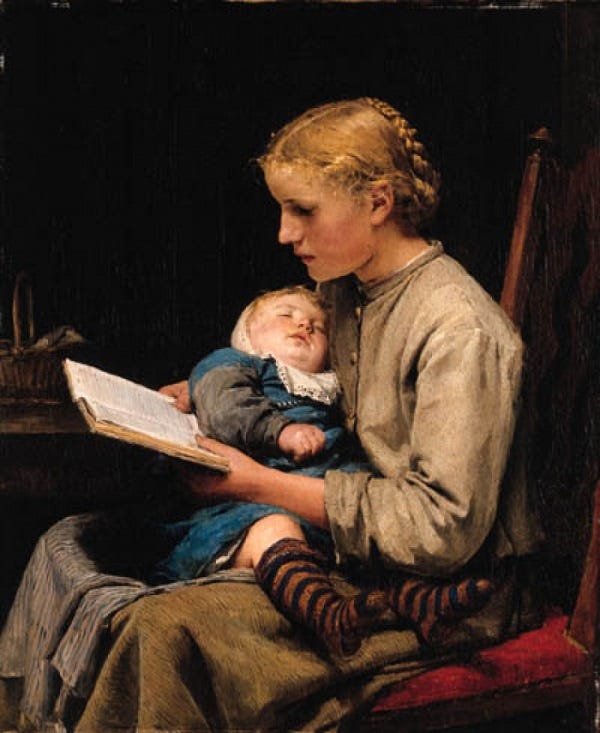
A Gotthelf Reader — Albert Anker – Biblioklept
A Gotthelf Reader by Albert Anker, 1884

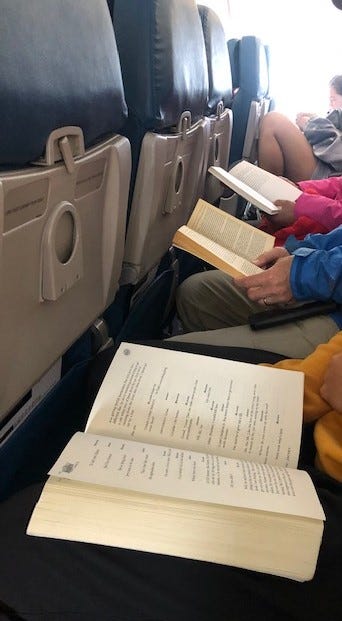
Our recent transatlantic flight from Switzerland back to Canada proved to be an “accidental detox” for passengers, as to the horror of most, there were no screens on the seat backs, and no charging ports for devices. After the first gasps of surprise and dismay (especially of parents with small children) subsided, a wonderful scene unfolded. I had no idea so many people still read books! The photo below is the view across the row from me. The plane was humming with conversation; two men behind me who had never met before, struck up a conversation (a joy to listen to Scottish accents) and shared beers and stories, children played paper games, and our family rotated through reading Thomas Hardy, Seinfeld scripts, Ian McEwan, C.S. Lewis, and Calvin and Hobbes (something for every age and interest). It seemed like a flight in a time machine, where people still remembered how to converse, play, read books, and spend time away from black mirrors.

The following day 

Thomas J Bevan

 pondered aloud on Notes, if people were to jettison their screens, how long it would take for minds and attention spans to return to “normal”, leading 

Hilary White

 to wonder further, “We Gen-X and older have a default to go back to. What do we do for people born after 1995 who don’t?”

Thinking about this question more deeply, I realized that the offspring of the digital age have grown up as attentional and relational ferals. Many have grown up isolated from deep attention from a very young age, have social behaviour stilted by online interactions, and suffer from emaciated language skills. While the “accidental detox” flight did ignite some hope in me regarding people’s ability to engage their minds differently, this scene could only occur because people were left no other choice. I am also quite sure that that everyone quickly reverted to their usual patterns of distraction as soon as they were off that flight.

There are a myriad of things that make us human. But the ability to pay attention lies at the core. Relationships require attentive listeners; learning takes dedicated attention to grow knowledge and skills; reading demands attention to words, meaning, and context; work demands attention to produce carefully crafted products or services; democracy involves attention to truth and opposing positions; faith requires attention for prayer, silence, and reading scripture. Attention is it.

When deep attention has to compete with hyper attention (fractured attention that quickly zips from one point of focus to the next), it is akin to throwing a dolphin into a tank filled with piranhas and hoping that they will find a way to coexist. Although we are prone to fool ourselves, there cannot really exist a “healthy balance” between dolphins and piranhas.

I discussed this attentional issue in a couple of earlier articles (such as TikTok-Time is running out for saving our children’s brains), relating accumulating research on the detrimental effects of digital device use, especially on children and youth. In this Wall Street Journal article, Michael Manos, clinical director of the Center for Attention and Learning at Cleveland Clinic states that, “Directed attention is the ability to inhibit distractions and sustain attention and to shift attention appropriately…If kids’ brains become accustomed to constant changes, the brain finds it difficult to adapt to a non-digital activity where things don’t move quite as fast.”

The current generation is habituated to switching tasks every few seconds. Indeed in 2017, before the new crop of social media apps, a study found that even undergraduates, who are more cerebrally mature than K–12 students and therefore have stronger impulse control, “switched to a new task on average every 19 seconds when they were online.” 19 seconds. I cannot think of one coherent task that only takes 19 seconds to fully complete. Even brushing your teeth takes longer.

Paul Bennett, the director of Halifax-based firm Schoolhouse Institute and adjunct professor of education at Saint Mary’s University explains that, “the more time young people spend in constant half-attentive task switching, the harder it becomes for them to maintain the capacity for sustained periods of intense concentration. A brain habituated to being bombarded by constant stimuli rewires accordingly, losing impulse control. The mere presence of our phones socializes us to fracture our own attention. After a time, the distractedness is within us.” Near constant distraction by phones and other tech has serious side-effects, especially for reading. No wonder that by 2016, just 16 percent of 12th-grade students read a book or magazine on a daily basis.

This post is not intended as a lament, but as a starting point for rehabilitating attentional ferals of the digital age, whether they be young or old. All of us who use digital devices are affected by the easy lure of hyper attention, and if our aim is — as 

Peco

 suggests, “to be anchored to our core meanings in life and situate technology’s proper place in the order of things” — then it is up to us to train, grow, and reestablish deep attention.

Albert Bartholomé | The Artist's Wife (Périe, 1849–1887) Reading | The  Metropolitan Museum of Art
The Artist’s Wife Reading by Albert Bartholomé, 1883

On eating books

In order to reclaim our attention, deciding to start with a digital detox can be a helpful first step (see From Feeding Moloch to Digital Minimalism for a concrete game plan). With regard to actually training the mind to refocus and develop deep attention, reading books provides the best rehabilitation. This not only for attention’s sake, but because books allow us to dig our minds into the humus of time, people, and civilization as a whole.

In his essay In Defense of Literacy, Wendell Berry explains the importance of reading books as follows:

I am saying then, that literacy – the mastery of language and the knowledge of books – is not an ornament, but a necessity. It is impractical only by the standards of quick profit and easy power. Longer perspective will show that it alone can preserve in us the possibility of an accurate judgement of ourselves and the possibilities of correction and renewal. Without it, we are adrift in the present, in the wreckage of yesterday, in the nightmare of tomorrow.

In other words, without the knowledge of books and mastery of language, the nightmare of tomorrow may well turn us into what 

Peco

 refers to as “thin humans”, forever on the surface of things, “the surface of time, by forcing too much hurry and efficiency; the surface of relationships, which will be shallower and more functional; the surface of information, which will keep us credulous; the surface of our own thoughts and feelings, which will keep us alienated from our own depths.”

In contrast, extensive knowledge of books and the wisdom transmitted through the authors behind them expands us into a fuller, more rooted human being. We gain intellectual nourishment, personal insights, and a deeper understanding of the world around us from tasting, eating, and digesting books. In An Experiment in Criticism, C.S. Lewis explains,

“Those of us who have been true readers all our life seldom fully realise the enormous extension of our being which we owe to authors,” … “We realise it best when we talk with an unliterary friend. He may be full of goodness and good sense but he inhabits a tiny world. In it, we should be suffocated. The man who is contented to be only himself, and therefore less a self, is in prison. My own eyes are not enough for me, I will see through those of others.

According to Susan Wise Bauer, men and women have been undertaking self-education based on reading and discussing books for centuries: “Any literate man [or woman, we would add] can rely on self-education to train and fill the mind. All you need are a shelf full of books, a congenial friend or two who can talk to you about your reading, and a ‘few chasms of time not otherwise appropriated’”.

Earlier this year 

Ted Gioia

, who writes The Honest Broker, started a small firestorm of enthusiasm by sharing his Lifetime Reading Plan (prompting other writers such as 

Rachel Sudeley

 to share theirs in turn). He richly describes the path of his self-education and details his “orca-sized time blocks” devoted to reading. Notably he admitted to being a slow reader, affirming that reading fast has nothing to do with being well-read. In The Well-Educated Mind, Susan Wise Bauer supports this notion by stating, “The idea that fast reading is good reading is a twentieth-century weed, springing out of the stony farmland cultivated by the computer manufacturers…The speed ethic shouldn’t be transplanted into an endeavour that is governed by very different ideals.”

Upgrade to paid

Share

A Practical Guide to Reading

Read physical books

In Reading as Counter Practice

L. M. Sacasas

 discusses Maryanne Wolf’s research on the importance of reading tangible books. This includes the way in which a book provides cues to the embodied mind:

….visual placement on a page or the shifting weight of one side of the book against the other as we make our way through it – which subtly scaffold our comprehension and retention. And, and of course, the book is not also the gateway to countless other forms of media the way a smartphone, tablet, or even internet-connected e-reader might be. In these ways, the affordances of the books might be uniquely suited to sustaining deep reading.

Reading a book on any kind of screen keeps your mind in “device mode” and will likely lead to greater struggles maintaining attention. On that note, keeping devices away from your body and out of reach and sight helps to redirect your mind toward the book in hand. Devices are subconsciously associated with the regular dopamine-drips most of us have grown accustomed to; physical books take you into a different realm and cast off avenues for distraction. My daughter commented that she enjoys reading physical copies because she views them as a form of a gift by the author, complete with design, type-face, weight, and feel of the pages. She experiences this as an opening, a portal to the story that does not exist with devices.

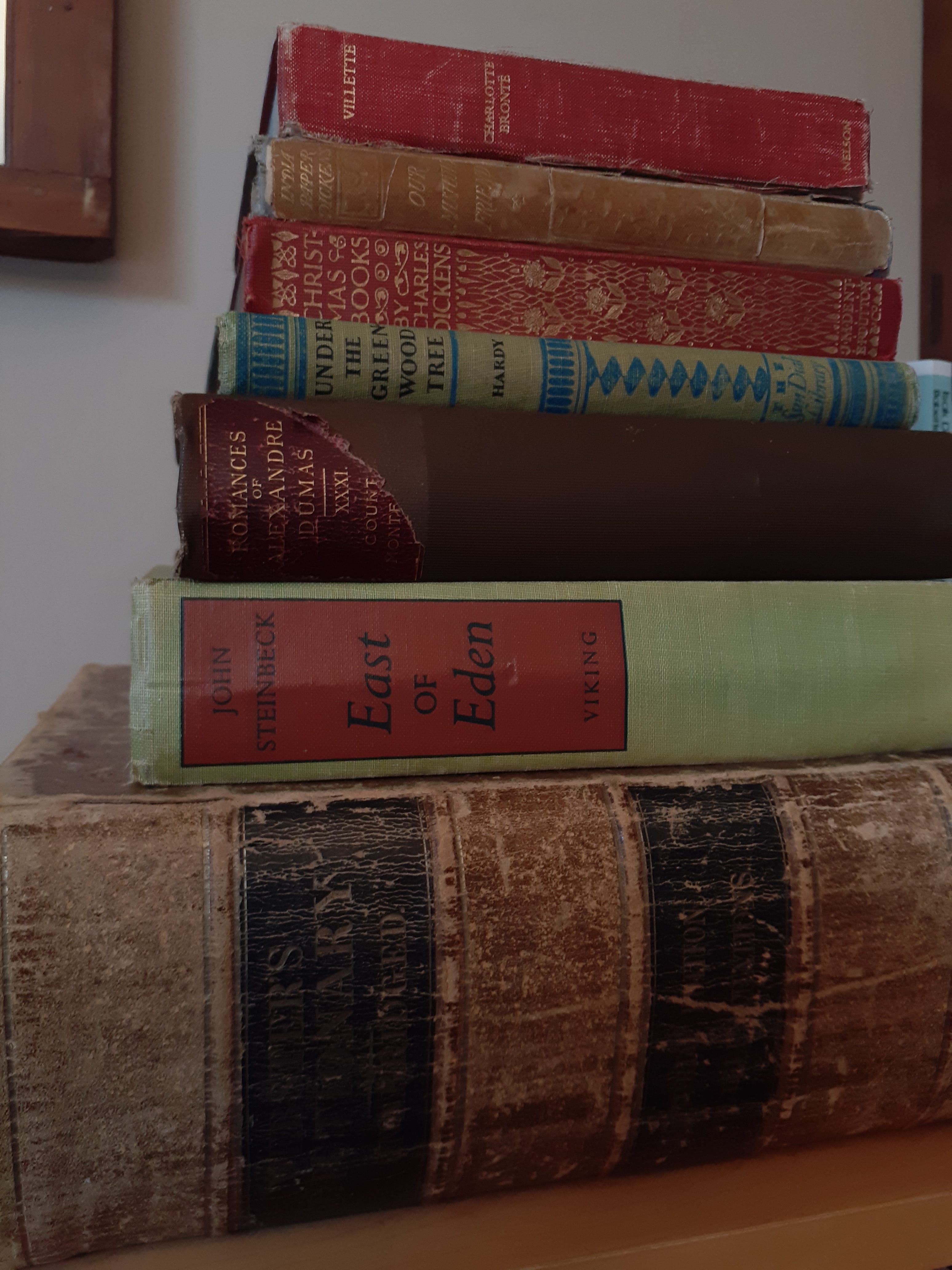
Also, to me, the feel and beauty of tangible books is simply irresistible. Here are some of my favourites:

Webster’s Dictionary (1859 pictorial edition), East of Eden by Steinbeck (first edition), The Count of Monte Cristo by Dumas (1894 ed.), Under the Green Wood Tree by Hardy (first edition), Christmas Books by Charles Dickens, Our Mutual Friend by Charles Dickens, Villette by Charlotte Brontë

Read old books

Getting started on reading any book is the main goal, but the ideal is to work toward reading classic books. In the God in the Dock collection of essays, C.S. Lewis explains why reading old books is of particular importance:

 “…if he must read only the new or only the old, I would advise him to read the old. And I would give him this advice precisely because he is an amateur and therefore much less protected than the expert against the dangers of an exclusive contemporary diet. A new book is still on its trial and the amateur is not in a position to judge it…. “If you join at eleven o’clock a conversation which began at eight you will often not see the real bearing of what is said.” 

Classics differ especially in the attention that they demand from their readers. Deep reading of dense, complex prose is demanding, but provides rich rewards cognitively, aesthetically, and emotionally. Classics also provide a measuring stick for the depth, language, and complexity that makes a book worthwhile. This is in stark contrast to modern books, which are often filled with twaddle

1

.

Where can parents get started if their child shows no interest in classics?

  • Lead by example. By putting away a device or turning off Netflix and instead picking up a book, you set a tone to be followed.
  • Have a regular quiet time in the afternoon where everyone reads. We have done this since our first child was born and still continue with this practice over 17 years later.
  • Make books available in the home. I always have been fond of being surrounded by books and we thus have 17 bookshelves throughout our home including in all bedrooms, the living room, and the library.
  • If the reading level seems to complex for your child, try Classic Starts which provide a simplified version of the story.
  • Use Librivox and allow the child to listen to the story (while maybe reading along).
  • Read aloud to your child. When the kids were little we used to start our mornings on the couch, reading through a pile of classic picture books before breakfast. When they were older we would do read-aloud time of longer classics in the afternoons and evenings.
  • If you are interested in introducing your child to Charles Dickens, I created a Classic Learner’s Edition of A Christmas Carol which includes the unabridged original text, a 40 min. read-aloud version, deep and varied classical vocabulary study, and Victorian parlour games.

It is a good rule, after reading a new book, never to allow yourself another new one till you have read an old one in between. If that is too much for you, you should at least read one old one to every three new ones.

C.S. Lewis

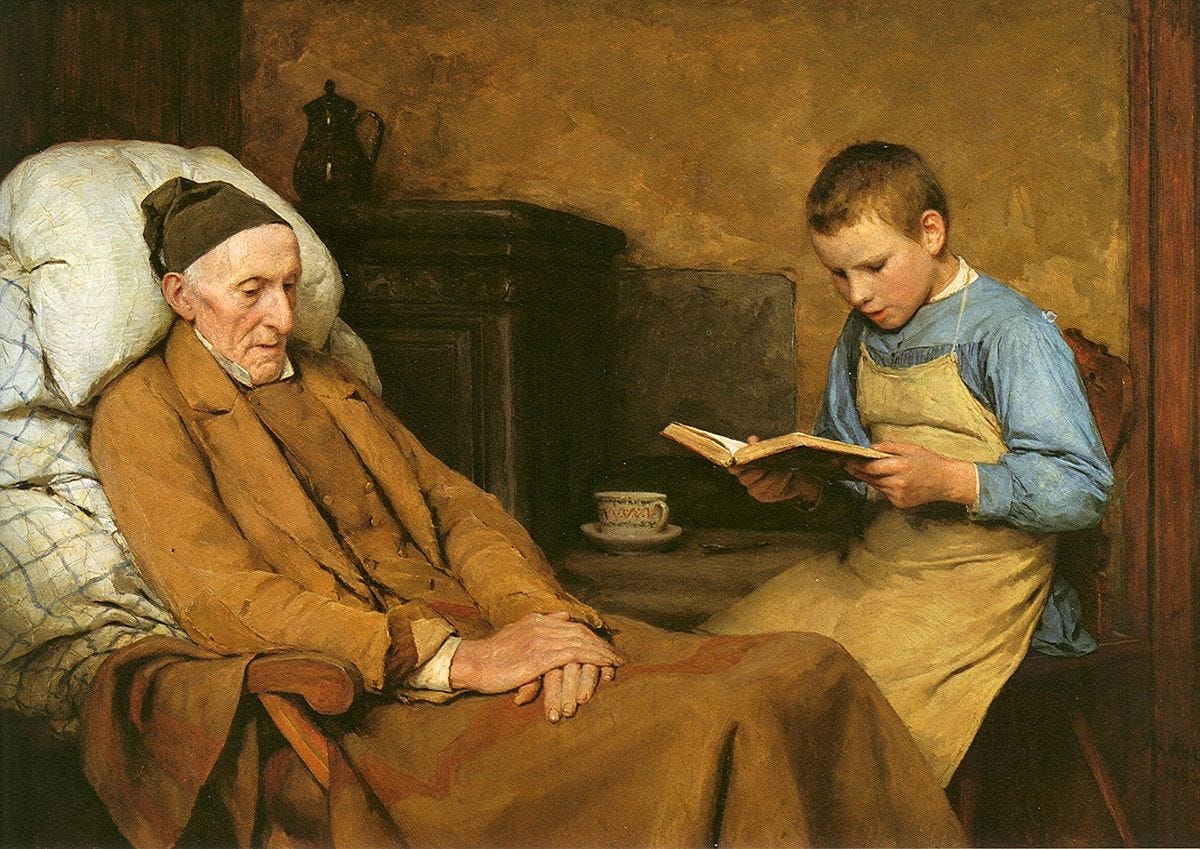
File:Anker- Die Andacht des Grossvaters 1893.jpg - Wikimedia Commons
Die Andacht des Grossvaters by Albert Anker, 1893

Get familiar with classic vocabulary

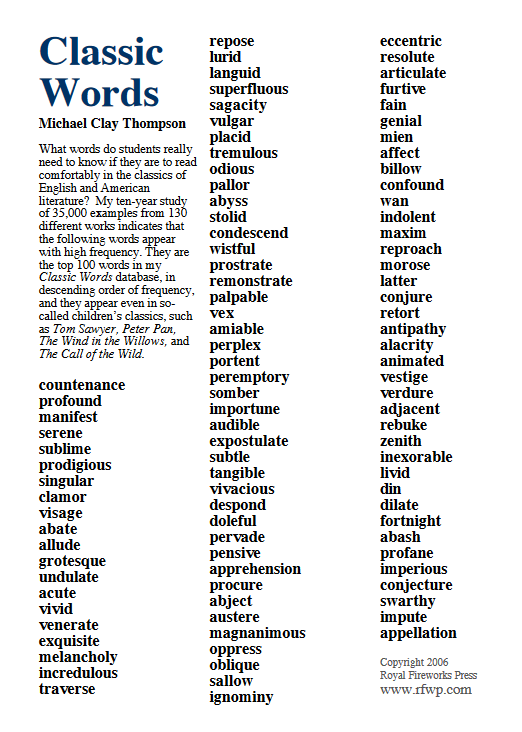
When embarking on the journey to read classics, many readers feel daunted by the complexity of advanced vocabulary richly peppered throughout older books. As a second language learner, I recall reading the Hobbit for the first time with a German-English dictionary in one hand, and the novel in the other. I thus have an appreciation for struggling through texts, and an even greater appreciation for the work by educator Michael Clay Thompson, who wondered over 20 years ago what the best words in the English language were.

As an educator who develops language arts curricula for gifted children, Thompson began marking advanced vocabulary in every English language classic that he read, a task which eventually developed into a ten-year study of 35,000 examples from 135 different works. From his research he distilled the top 100 words that appear with high frequency in classic works of English and American literature.

100-classic-words-by-MCTDownload

This list is profoundly useful and my students have often thanked me for introducing them to these essential classic words. I have developed the following worksheets that help you or your student master the top 100 classic words.

100-classic-words-with-definitions Download

Here is the list broken into 10 parts with space for you to practice
Classic-words-practiceDownload
. This is what the pages look like (as a fan of cursive writing, I always leave space for copying words):

Reading lists

For Adults

If you happen to be a homeschooler

2

, you are most likely familiar with Susan Wise Bauer’s The Well-Trained Mind. For adults who crave a classical education that they never received, she wrote The Well-Educated Mind. It provides a guide and plan to read the “Great Books”, and allows you to “read chronologically through six types of literature: fiction; autobiography; history and politics; drama; poetry; and science and natural history.” She is an ambitious (and at times intimidating) author, and I do not suggest that you have to follow her proposed method (which includes reading each book three times – has anyone actually ever done this?), but her book lists are immensely useful and the accompanying commentary is illuminating.

The Mensa reading list for grades 9-12 is also an excellent, extensive source to get started for adults.

For Kids and Youth

  • Mensa Excellence in Reading Program provides wonderfully extensive reading lists students starting with kindergarten all the way to high school. The books can be read independently by the student, read aloud by the parent, or listened to as an audiobook (also, when a student completes a reading list, they receive a certificate of achievement and t-shirt). You can find the lists here:

K-3 Reading List

Grades 4-6 Reading List

Grades 7-8 Reading List

Grades 9-12 Reading List

Non-fiction Reading List


  • Memoria Press Supplemental Reading List This is one of my favourite reading lists: a superb collection of books sorted according to grade/lexile levels.The recommended books for grades 3-up are in three categories: (1) classics (2) light reading (3) informational reading.


  • Learning Resource Center (CLRC) Reading Lists are divided in to early elementary, late elementary, and middle school. They are not exhaustive lists but a selection of excellent books that “we have enjoyed with our own children and with many children whom we have taught over the years”. They provide a good foundation in the joy of reading and listening to stories and set the stage for the appreciation of many great classical epics in later years.

Finally there are many excellent substack writers who provide book reviews, inspiration, and guided reading groups. A few that have come to my attention are 

MILLER’S BOOK REVIEW 📚

Close Reads HQ

 ,

By the Books

 , 

The Common Reader

 , and

Study the Great Books

. Also, don’t miss this post on 

Substack

’s Book Clubs. Feel free to add your own shoutouts to “bookish” substacks in the comments.

In the end, you will have to simply pick up a book, read, and start reclaiming your attention.

Ooh! Aah! 11 Beautiful Paintings Of People Reading - AmReading
Rosa and Bertha Guggar by Albert Anker, 1883

What are your reading habits

3

? When do you carve out time? How do you decide what to read next

4

? How do you help create reading habits in your children? I would love to hear your thoughts in the comments below !

If you found this post helpful (or hopeful), found the vocabulary worksheets or readings lists useful, consider supporting my work by becoming a paid subscriber, or simply show your appreciation with a ‘like’ or ‘share”.

1

Twaddle is to literature as a Twinkie is to nutrition; maybe tasty but would you feed it to your child as a wholesome diet? Twaddle is reading-made-easy, second-rate, stale, predictable, scrappy, weak, diluted, silly, insignificant. You get the idea.

2

Reading is one area where homeschoolers seem to particularly excel, reading on average two grade levels above their peers. In one U.S. study, Dr. Brian Ray utilized 15 independent testing services, to obtain information from 11,739 homeschooled students from all 50 states, Guam, and Puerto Rico, who took three well-known tests—California Achievement TestIowa Tests of Basic Skills, and Stanford Achievement Test.  The study found that while public school students scored at the 50th percentile, homeschool students came in at the 89th percentile. Interestingly, the findings also revealed “that issues such as student gender, parents’ education level, and family income had little bearing on the results of homeschooled students.”

3

I generally read about three concurrent books – one at the breakfast table (non-fiction), one for the couch in the afternoon (fiction), and one to take along for appointments or while at the climbing gym with my youngest (fiction / non-fiction).

4

I have almost worked my way through the ‘novel’ section of The Well-Trained Mind, and I keep to a mostly classic book diet with a P.D. James palate cleanser from time to time.

Subscribe to School of the Unconformed

By Ruth Gaskovski · Launched 6 months ago

Family, education, and navigating daily life in the Machine Age. Committed to staying grounded in reality, spreading seeds of truth, beauty, and goodness. Swiss polyglot, homeschooler, lover of classic books. Homeschool advisor — Richard Syrett Show.

Upgrade to paid

07/31/23 Biking & Listening

Biking is something else I both love and hate. It takes a lot of effort but does provide good exercise and most days over an hour to listen to a good book or podcast. I especially like having ridden.

Here’s my bike, a Rockhopper by Specialized. I purchased it November 2021 from Venture Out in Guntersville; Mike is top notch! So is the bike, and the ‘old’ man seat I salvaged from an old Walmart bike.

Here’s a link to today’s bike ride.


Something to consider if you’re not already cycling.

I encourage you to start riding a bike, no matter your age. Check out these groups:

Cycling for those aged 70+(opens in a new tab)

Solitary Cycling(opens in a new tab)

Remember,

Photo by Suzy Hazelwood on Pexels.com

I’m listening to The One From The Other by Philip Kerr

Amazon Abstract

In the fourth mystery in Philip Kerr’s New York Times bestselling series, Bernie Gunther—a former policeman and reluctant SS offier—attempts to start over in the aftermath of World War 2 and quickly learns that the past is never far behind you…

Berlin, 1949
. Amid the chaos of defeat, Germany is a place of dirty deals, rampant greed, and fleeing Nazis. For Bernie Gunther, Berlin has become far too dangerous. After being forced to serve in the SS in the killing fields of Ukraine, Bernie has moved to Munich to reestablish himself as a private investigator. 

Business is slow and his funds are dwindling when a woman hires him to investigate her husband’s disappearance. No, she doesn’t want him back—he’s a war criminal. She merely wants confirmation that he is dead. It’s a simple job, but in postwar Germany, nothing is simple—nothing is what it appears to be. Accepting the case, Bernie takes on far more than he’d bargained for, and before long, he is on the run, facing enemies from every side.


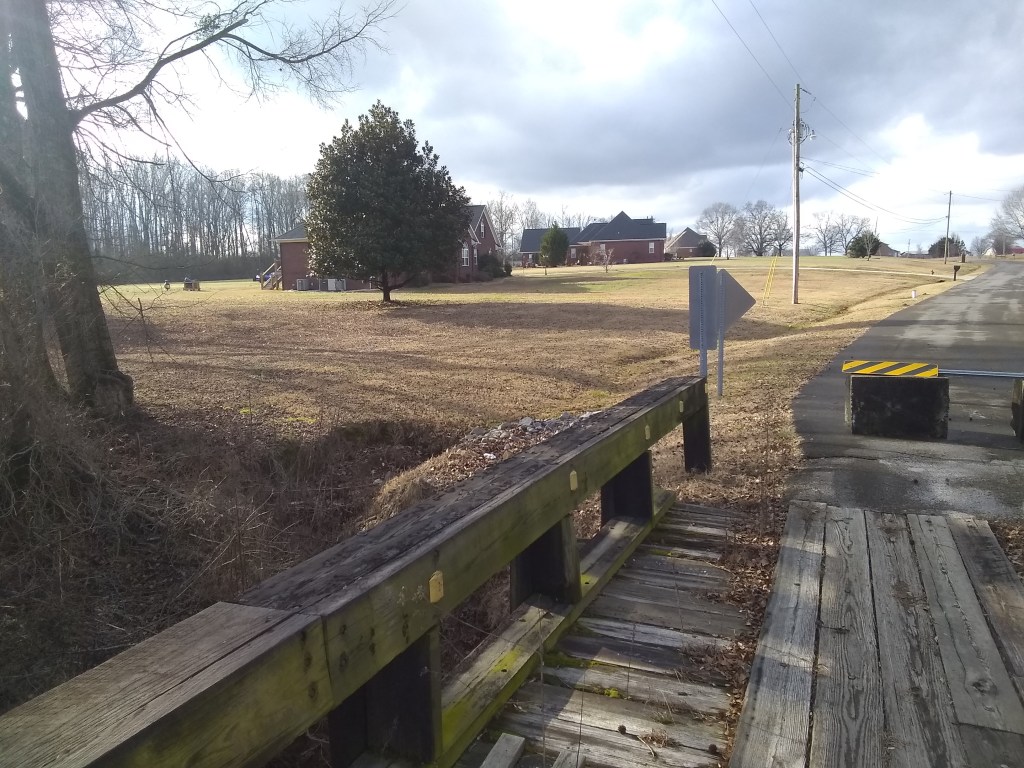
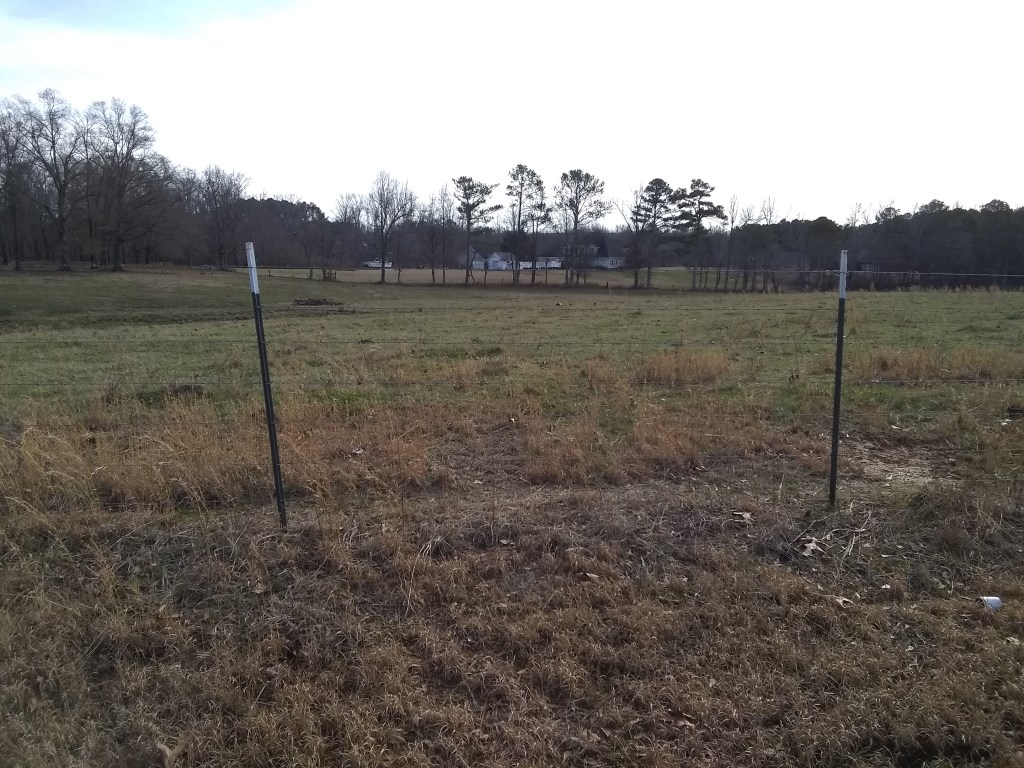
Here’s a few photos from along my pistol route:

Fact check: The Inquisition convicted Galileo of heresy, not science fraud

Here’s the link to this article.

Christian apologists would have you believe medieval priests were, first, men of science

Avatar photoby RICK SNEDEKER

MAY 04, 2023

The Inquisition convicted Galileo of heresy, not science fraud | Jupiter and one of its moons
One Jupiter moon, Ganymede (foreground), orbits its host planet. Galileo was first to discover these moons. | Adobe Stock, Manuel Mata

Overview

Yes, religious leaders in the Middle Ages believed they honored science. But they only did so when science first agreed with scripture.

Reading Time: 6 MINUTES

Catholics even today can’t seem to give up the conceit that legendary Italian astronomer Galileo Galilei (1564-1642) wasn’t persecuted by the Church in the 17th century for heretical religion but, instead, for bad science.

As if.

No matter that the Inquisition, the Church’s fearsome heresy-prosecuting arm in the Middle Ages, convicted the pioneering, cosmos-exploring scientist of heresy—i.e., criminally unorthodox religious views—not science fraud, for proposing that the Earth orbited the Sun, rather than vice versa (the scientific consensus at the time). He was then sentenced to life under house arrest.

Were top clergy in Galileo’s day science aficionados or deniers?

After all, Catholic pundits claim today, the 17th century Catholic Church had its own in-house priest-scientist cadre and was a thoroughly rational institution based on the era’s most internationally advanced scientific knowledge and analysis.

No matter that, with zero scientific verification, the faith’s core dogma—then as now—holds that an invisible, unlocatable deity universally orchestrates all existence and also personally attends to every infinitesimal aspect of each individual human being’s life on earth—and in the hereafter.

True believers in the permanently unknowable realm (i.e., divine religion) have a serious conflict of interest when also ostensibly professing authentic fealty to the known and unknown-but-knowable realms.

Yet a 2020 article in America: The Jesuit Review ezine—“What the story of Galileo gets wrong about the church and science”—its apologist authors wave any paradoxes aside by insisting that top-ranking Catholic clergy in the time of Galileo embraced cutting-edge scientific knowledge:

When churchmen … were against Galileo, they were not denying science. They had science on their side.

But the authors then added, “Nevertheless, as we know now, they were wrong.”

With science and religion, the twain never meet

No matter how endlessly Catholic thinkers and Galileo naysayers continue to claim faith and science are two sides of the same coin, they must necessarily fail. Indeed, faith can never be rationally conjoined with or contained within science, which requires an unbreakable connection with material reality.

Gods, angels and demons, for example, are not part of material reality as far as anyone can reasonably affirm. But planetary orbits certainly are. As are heresy convictions.

Still, just this week, I tripped over several articles—particularly this one in America: The Jesuit Review—zealously trashing as “myth” the idea that the Catholic Church targeted Galileo because it was presumably “anti-science.” The apologists claim that the Church was and is, in fact, uber-scientific in outlook, and Galileo was not persecuted for his unorthodox religious views but for scientific ideas widely viewed as rubbish in his day.

Why prosecute Galileo for heresy, not fraud?

If so, why did the Inquisition try Galileo for a religious crime and not, say, have a civil court prosecute him under scientific fraud statutes?

Sure, it was a far different time then, but still. The original charge of heresy against Galileo is a big tell of the Inquisition’s core intent. No, this was no civil trial, no principled defense of science purity. It was a power move by the Church to protect liturgical orthodoxy under the guise of protecting scientific truth.

And Catholic orthodoxy in Galileo’s time was, as Ptolemy and then Aristotle had long before (erroneously) surmised and the Bible then seconded: that the Earth is the center of the universe, and all heavenly bodies—the Sun and stars and other planets, etc.—revolve around it.

The Bible—particularly Ecclesiastes 1:5 (KJV)—embedded this speculative idea as divine law in medieval Western culture:

The sun also ariseth, and the sun goeth down, and hasteth to his place where he arose.

Even lionized American author Ernest Hemingway referenced this piece of scripture in the title of his novel The Sun Also Rises.

The Bible assumes the Sun rises. It doesn’t.

Except the “ariseth” Sun wasn’t true (the Sun, not Earth, is the celestial body around which other orbs “hasteth” in our solar system), and as medieval proto-scientists started snooping around the universe available to their eyes and primitive instruments, they began to see the lie in the Bible’s astronomical assumptions.

NASA’s Earth Observatory website observes:

For nearly 1,000 years, Aristotle’s view of a stationary Earth at the center of a revolving universe dominated natural philosophy, the name that scholars of the time used for studies of the physical world. A geocentric worldview became engrained in Christian theology, making it a doctrine of religion as much as natural philosophy. Despite that, it was a priest who brought back the idea that the Earth moves around the Sun.

The Polish Catholic priest “who brought back the idea,” Nicholas Copernicus (1473-1543), was also an astronomer. In 1515 he heretically realized that the Earth floated in a heliocentric (Sun-centered) solar system, where everything orbited the Sun.

Faith can never be rationally conjoined with or contained within science, which requires an unbreakable connection with material reality.

Copernicus, reportedly fearful of Church disapproval of his theory (although some scholars believe he was more worried about his findings being falsified), did not publish his heliocentric conclusions until shortly before he passed away in 1543.

Copernicus’ revolutionary theory unheralded for many years

From a modern vantage, it seems unfathomable, but Copernicus’ revolutionary idea did not catch fire for many years after his death, because disciples in his own and other countries also feared the Church’s wrath if they publicly supported heliocentrism.

One such scientist, Italian Giordano Bruno, was burned at the stake and his tongue pulled out with a red-hot poker in 1600 for teaching his students heliocentrism, among other ideas deemed heretical by the Church.

German astronomer Johannes Kepler (1571-1630) synthesized and expanded on Copernicus’ ideas, formulating three formal laws of planetary motion, including the actuality of heliocentrism and the discovery that planets followed elliptical rather than circular orbits.

But, unhelpfully, Kepler had a mystical bias toward his discoveries, according to Encyclopaedia Britannica:

Kepler himself did not call these discoveries “laws,” as would become customary after Isaac Newton derived them from a new and quite different set of general physical principles. He regarded them as celestial harmonies that reflected God’s design for the universe.

Galileo devised a much more powerful telescope than previously existed, with which he was able to see what no one had seen before. NASA writes:

When Galileo pointed his telescope into the night sky in 1610, he saw for the first time in human history that moons orbited Jupiter. If Aristotle were right about all things orbiting Earth, then these moons could not exist. Galileo also observed the phases of Venus, which proved that the planet orbits the Sun.

Galileo friend became an enemy once elected pope

But even Galileo’s old friend Mafeo Barberini, who when he was ostensibly a science-supporting cardinal backed Galileo after his heliocentric theory was attacked by another cardinal, ultimately—after Barberini became Pope Urban III—was unconvinced by the theory and considered it biblically heretical.

Worse, Pope Urban believed Galileo had betrayed their friendship by publishing a book slyly espousing heliocentrism in a fictional conversation between three men. In Dialogue Concerning the Two Chief World Systems, one of the men, conservative Simplicio—“a composite of all of Galileo’s opponents”—promoted the geocentric system, which science was edging toward completely debunking and Galileo had spent the previous 400 pages of Dialague systematically trashing.

Opponents of Galileo convinced Pope Urban that by having Simplico endorse the threatened geocentric—earth-centered—view of the solar system, Galileo’s “intent must have been to make fun of it and, worse, of Urban himself,” noted a 1998 Washington Post article by Hal Hellman, author of Great Feuds in Science: Ten of the Liveliest Disputes Ever (1998).

READ: Religious bigotry muzzled Copernicus, Galileo, Jefferson and Darwin

Why this would matter to Christendom is plain: The centrality of mankind and Earth, which everything in the cosmos revolves around, according to scripture, are a critical precept of Christianity. This dovetails nicely with ancient Earth-centered cosmology. In addition, Hellman wrote:

The Christian idea of heaven and hell also melded beautifully with the geocentric system, which saw the heavenly bodies as perfect and immutable.

Church feared heliocentrism would ‘shred’ Christian doctrine

Hellman also suggests that Church authorities well knew even for years before Galileo published his damnable treatise that if heliocentrism were irrefutably demonstrated, “it would shred a significant portion of church doctrine.”

on the other hand
ON THE OTHER HAND | Curated contrary opinions

America/The Jesuit Review: What the story of Galileo gets wrong about the church and science

In 1616, well before Galileo published Dialogue, Cardinal Robert Bellarmine commented on a heliocentric treatise in support of Copernicus’ findings. In a letter to its author, Rev. Paolo Antonio Foscarini, he wrote:

I say that, if there were a true demonstration that the Sun was in the center of the universe… then it would be necessary to use careful consideration in explaining the Scriptures that seemed contrary… But I do not think there has been any such demonstration.

In a series of meetings between Pope Urban III and Galileo, the pontiff believed that the scientist had agreed to only write about heliocentrism as a hypothetical, not manifest fact. Urban’s view was that Dialogue sneakily did the opposite.

Inquisition ‘suspected’ Galileo of heresy

In the end, Galileo was convicted by the Roman Inquisition of having “rendered yourself suspected by this Holy Office of heresy.” After being forced to disavow heliocentrism and the integrity of his life’s work in science, and not write or talk publicly about it, he was sentenced to life under home confinement. Also, Dialogue was added to the Church’s endless list of banned books.

It wasn’t until 300 years later, in 1992, that the Church formally accepted heliocentrism, absolved Galileo, and de-banned the scientist’s earth-shaking treatise.

Even learned scientists in Galileo’s day refused to accept the idea that the Earth, rather than the Sun, moved. They offered the argument that if it were true, if you threw a ball in the air, it would land behind, in front or beside of you, depending which way the Earth was moving.

Which, of course, it wouldn’t.

But, it’s like the famous 1935 Porgy and Bess lyric by Ira Gershwin in his brother’s song, “It Ain’t Necessarily So”:

It ain’t necessarily so

It ain’t necessarily so

The things that you’re liable to read in the Bible

It ain’t necessarily so

However, as the history of religion proves, if you have enough ecclesiastic power, you can just arbitrarily command that it’s so.

The Boaz Stranger–Chapter 13

By 7:00 a.m. Saturday morning, Kyla had already fed the five Nubians, walked twice around the pond, and started a recipe of her mom’s slow-cook chili in the crock pot. Lee’s bedroom door was still closed, and she hadn’t heard a peep. The only way she knew he was home was by the silver Explorer parked halfway to the barn. Kyla wrote a note and placed it in the hallway, where he’d be sure to see it. “Helping Lillian move. Call me. Hope you rested.”

Easing through the stop sign at Johnson Builders, Kyla tried to remember the last time she’d been on Cox Gap Road. It had to be Rachel’s going-away party in the middle of tenth grade. It was the day after Christmas, a Friday night. Cold wasn’t the right word for that God-forsaken farm owned by Ronald Archer, Ray’s father. Kyla turned up the heat in her Silverado and tried to recall the name of the road. All she could say for sure was that it was a couple of miles past Happy Hill Baptist Church. She remembered the church because her grandparents had taken her and Lee to an all-day Sunday singing when they were in the third grade. Or was it the fourth? Anyway, the road was quite a way beyond the church, and it was a turn to the right. Lillian and Jane had both screamed at Kyla’s attempt to navigate the winding road.

Rounding the curve, Kyla saw a Weathers Furniture truck backed to the front door, a one-story cedar-sided cabin. Small, but cute. Lillian had asked her two days ago if she would mind helping her move. Kyla turned right on Alexander Road. She pondered where to park, beside the split-rail fence along the road or in the driveway. She opted for the latter.

It was between another split-rail fence surrounding a pond and the cabin. Kyla parked next to Lillian’s Aviator. The pond was gorgeous. Kyla especially liked the spewing fountain in the center and the gazebo at the beginning of the pier.

“Hey friend,” Lillian yelled from the back porch as Kyla removed a dozen donuts she’d purchased at Y-Mart.

“Hey, hope you’re hungry.” Walking to Lillian, Kyla considered what was happening with her best friend. The place was quaint, naturally seductive, even romantic. Any outdoorsy person would love it. But Lillian had never been that type. She had grown up in town and, after marrying Ray, had enjoyed all the finer things of life. Kyla concluded that, unlike herself, Lillian was too sophisticated for this place.

“Come on in, the Weathers guys are just finishing up. I hope you like my cabin.” Lillian held open a screen door and pointed across the porch to the kitchen door. There was another arched doorway on the opposite end, closed.

Inside, the place seemed larger. Pine-paneled walls perfectly accentuated the rusticity of the outdoors. The cabinets were the same. Kyla laid the donuts on a small but new-looking table. “Wow, I love it.”

“Let me give you a quick tour. It won’t take but a minute.” Lillian laughed and pointed toward a coffee maker about half finished with a fresh pot.

Lillian was correct. The cabin was small, with a ‘big enough’ den. There were two bedrooms on the north side separated by a ‘not-quite-big-enough’ bathroom. The bedroom toward the barn was full of boxes. No furniture. The front bedroom had a way-too-big bed. Kyla quickly calculated that Weathers had delivered a leather couch and matching chair, two end tables, an oversized coffee-table, a huge Armoire, and the small round table in the kitchen. According to Lillian, the former tenants left the gigantic bed in the front bedroom.

“When did you move all those boxes?” Kyla had understood Lillian to say two days ago they would make several trips this morning between her and Ray’s lodge and what she called ‘the Corbett place.’

“Uh, last night.” The two returned to the kitchen. “Coffee?” Lillian asked as she motioned Kyla to sit and handed her two paper plates and plastic forks.

“Half a cup, black.” She had already had two cups in her den waiting for Lee to join her. “Why not wait until morning? You asked me to help.” Kyla opened the box and removed her favorite, a lemon-filled with thick layered melted cream cheese.

“Couldn’t sleep.”

“Why? I thought you take a sleeping pill.”

“Didn’t work, thanks to you.” Lillian delivered two cups of coffee in Styrofoam cups and sat facing the back door.

“Uh? What did I do?”

“Like you are that dense, you twerp. Do I have to draw you a picture?”

“Seems so, you got me.”

“I can’t draw, so I’ll spell it out for you: L E E.”

“Oh, my gosh.” The sophisticate surprised Kyla once again. Even though she knew Lillian had recently asked about her brother, it was only after Kyla had mentioned Lee. She recalled telling Lillian her brother was helping his in-laws with a case involving the old Hunt House. Now, she appeared star struck for want of a better term. “You’ve got to be kidding. That train left the station a century ago.”

“Half a century. Can’t you count?” Lillian paused and closed her eyes like she was searching the universe. “See if you can visualize this picture. Lee and I were both on that train. Unfortunately, we were in separate cars, rolling down the track headed in the same direction for fifty years. Now, here we are.”

Kyla broke her fork and grabbed another one from a box beside the coffeemaker. Instead of sitting, she leaned against the sink. “You’re fantasizing. The real world is brutal. Lee has scars, deep scars that feed his depression. I’m afraid he’ll never recover from Rachel’s suicide.”

Lillian stood and joined Kyla next to the sink. “A girl can dream, can’t she?”

“Of course. But you must be realistic. Even if by some miracle the two of you, what should I call it? Reconnect? I can think of at least two mountain-size problems. Three. I already mentioned the effects of Rachel’s death.” Kyla took one step and faced Lillian. Her eyes were sad. A tear was running down her left cheek. “Here’s the second problem. It’s called marriage. The way you’ve been for many decades. I doubt your loving husband will send you off with his blessings.”

“Oh please, I can do without your sarcasm. And I doubt even the repulsive Ray would appreciate the smarmy compliment.” Lillian rolled her eyes.

Kyla didn’t relent. “If those two are not large enough obstacles, there’s the third one. It likely is the worst: too tall, deep, and wide for a petted and pampered little darling like you.” The girlfriends had always preferred openness and honesty, albeit brutal.

Lillian turned away from Kyla and looked out the kitchen window toward the pond and the gushing fountain. “You’re so negative. Just like a psychiatrist I once knew.”

“Okay, I’ll hush. Don’t we need to get to work?” Kyla said with a twinge of sadness. She, like Jane Fordham, was an old maid, as in single. And, even worse, she’d never even been in love, so what the heck did she know?

“Oh girl, you don’t get to play that smart ass professor routine and then skip out to your next class. Tell me about the enormous elephant blocking my path.”

Kyla pondered Lillian’s analogy. Not bad for the girl who’d never worked in her life, assuming you didn’t count her teenage job at Fred King’s. Kyla nudged Lillian to the side. Now, each had their own sink to hold. “Okay, you asked for it. It’s called first love or teenage infatuation. No matter the label, it has long since faded into the sunset. Those feelings you shared with your first boyfriend weren’t real. Here’s reality. All you and Lee would get out of a current day soap opera would be some passionate sex. Don’t forget, because I haven’t. These are your words on more than one occasion, ‘there’s so much more to love than sex.’”

Lillian poured the remaining coffee down the drain and turned off the warmer. “I know you’re just trying to help, but I’ll always believe there is one special person out there who would get me and get to me. It would be a real intimacy that electrified every cell in our minds and bodies.”

Kyla walked to the table and closed the lid on the donuts. “I think you’re reading too many romance novels.”

Lillian said something about chemistry when Kyla’s cell rang. She removed it from last night’s jeans. It was Lee. “Perfect timing you have big brother.”

“Uh?” Lee was stirring the chili, trying to decide what he wanted to do while Kyla was away.

“I bought donuts at Y-Mart. Your favorite, lemon-filled smothered in cream cheese. I’m saving you one.”

“No way.” Lee asked questions about Lillian and why she and Ray were moving. “This chili smells great. Mother’s recipe. Right?”

“Always. Oh, if you will, add two tablespoons of sugar. Don’t forget to stir.” Kyla couldn’t imagine what Lee had gone through, was still going through. They had lost both parents in a car accident, but, as tragic as that was, Lee losing his wife to suicide seemed worse. No wonder he was so depressed.

“What time will you be back? I’m trying to plan my day.” Lee said, removing the crock pot’s lid and using the sugar bowl to pour in an undetermined amount.

“Probably by early afternoon. Lillian had her furniture delivered. We’re about to unpack and shelve her kitchen stuff.”

“What about Ray’s stuff?” Lee doubted Ray would move his own furniture. Something seemed odd.

“He’s staying at the Lodge. Lillian’s leaving. Moving in here at the old Corbett place.”

Lee didn’t pursue additional details. “I may get out a while. Do you need anything?”

“No, but thanks for the groceries. I saw them this morning. By the way, why were you so late?”

“Listen, we can talk this afternoon. You better get to work.”

Lee ended the call. He knew nothing about the Corbett place.

***

Lillian knew instantly that Kyla’s call was from Lee. “I’ll be in the bedroom.” She’d said as she exited the kitchen.

When Kyla joined her in the front bedroom, Lillian had already unpacked an assortment of burgundy sheets, pillows and cases, an ocean scene quilt, and a dual-sided black and gray coverlet. “Grab the box-spring cover.” Lillian motioned her head toward the back room.

It took the two of them several minutes and multiple tries to lift each side of the heavy mattress and manipulate the extra tight cover. “Dang, how about some fresh air?” Kyla assumed the sunshine coming through the thick wooden shutters against the outside wall hid a workable window. That statement had triggered Lillian’s story of forest scented Febreze and a woman named Faye. Their laughs became exhausting. They ultimately crashed across the bed.

Lillian finally stood, opened the shutters, and raised the window. “I bet I’ll never come to bed at night without seeing Faye and the adorable Eddie making love. Maybe I should have sold it to her.”

“Well, it’s not too late. Don’t you have a better king than this in your bedroom at the Lodge?” Kyla despised the idea of sleeping on a used mattress even if Febreze sanitized every inch.

“I do, but I don’t own it. It belongs to Ray.” Lillian said, tossing Kyla the edge of a mattress pad.

To Kyla, that seemed an odd way to operate a marriage. “Let me see if I’ve got this straight. When you two tied the knot, it was the first marriage for both. Right? So, why the ‘his and mine’ routine?”

“Pull it down, tighter toward the bottom.” Lillian said, as a domestic expert. “Who said anything about my stuff?”

Kyla couldn’t believe sophisticated Lillian didn’t own a thing even though Ray (and presumably she herself) was rich. Gossip was that he was worth a billion dollars or more. Further, the two married five decades ago. “So, you don’t own a thing? Then how did you buy new furniture from Weathers?”

Lillian struggled to stuff an over-sized pillow into its case. “It’s complicated. I used Ray’s account, with his permission, mind you. And I don’t literally own anything. He’s about to pay me $100,000. Less what I’ve charged.”

Kyla asked a dozen questions, and Lillian answered them all. Yet, there was something confusing about the one and only modification to the prenup. “Then how did you get to move out and still keep your place in Ray’s will?”

“I grew a second set of balls.” Lillian’s word pictures were getting worse. “The first time was when Ray was negotiating the sale of his pharmacy chain. This time, he’s on the verge of building a Rylan’s in our hometown. There’s nothing more important to the local boy who made it big than his personal reputation, and his standing with First Baptist Church of Christ.”

“So, you threatened to disclose the three affairs?”

“Four actually, but let’s not quibble.”

“You said the prenup prevents you from divorcing Ray and from ever remarrying.” Kyla was having the same difficulty as Lillian with the undersized pillowcases.

“Or, ever cohabitating.” Lillian added.

Kyla had learned a lot about the law during her forty-plus year career in the marketing department at Coca Cola in Atlanta. “Dear, I don’t think that’s exactly legal. Are you sure you have a correct interpretation?”

“You’re not only beautiful but extremely perceptive.” Lillian smiled and motioned Kyla to follow her to the den. After sitting on her new leather couch, she continued. “It’s illegal, but my attorney has advised me to keep my mouth shut on that subject. Until I find some credible evidence, something that would transform my husband into playdough.”

“Now, I’m really confused.” Lillian patted the couch cushion beside her, showing she wanted Kyla close by.

“Listen carefully and know you’re sworn to secrecy. This is something I’ve told no one. Except my attorney. For years I’ve suspected that Ray, to put it mildly, isn’t a saint, not even considering his womanizing. I could provide a litany of examples, but the most recent might be more interesting. Did you know that Mayor King had initially suggested the old Outlet Center for Rylan’s location?”

“No. So, what changed? Why move it to a low-traffic area like Thomas Avenue?” Kyla knew little about the City’s expansion plans or its politics. But she had read one article in the Sand Mountain Reporter describing Rob Kern’s opposition to Boaz taking the title to the Hunt House. And, of course, she knew this controversy was why Lee was in town for the first time since 2002.

“This may sound crazy, but I think it has something to do with the Hunt House. Something infatuated Ray with that place.” Lillian pivoted her neck up and down, then back and forth, her neck bones making multiple cracking sounds.

Kyla was second to only her older brother in her ability to think, especially brainstorming. “That’s so weird. You know, the first thing that came to mind was Rachel Kern. Shit, if that’s true, this hits too close to home. My poor depressed brother.”

“You’re not totally wrong, but it might be for a different reason than you’re thinking. Ray is not pursuing a way to honor his high school girlfriend but to wipe away all her memories, his memories of her.”

“You’ve lost me. I know Ray and Rachel dated only during the first two years of high school, well, until Christmas of our tenth-grade year. Then, she and brother Randy, along with their missionary parents, left for China. Fast forward three years, might be four, and Lee and Rachel were engaged after meeting during their second year at the University of Virginia.”

Lillian started speaking before Kyla could finish Virginia. “And Ray and I were in Tuscaloosa and engaged about the same time.”

“So, what is it? Why would Ray have such negative feelings toward Rachel?” Kyla asked, remembering how smitten Lee had been when the mature-beyond-her-age brunette had moved to Boaz at the beginning of ninth grade. Lee literally fell in love after one look. But he didn’t have a chance against the athletic Ray Archer.

Lillian jumped up and ran away. Kyla thought she had suddenly gotten sick. But she returned as quickly as she’d left. “It’s getting cold in here. I forgot I left my bedroom window open. Now, to your question. I don’t want to say much because it’s mere speculation right now, but I’m searching. Based on what I’ve observed with Ray, when the name Rachel Kern or Rachel Harding comes up, he’s like the proverbial deer in the headlights. I can’t put my finger on it but there’s a physical reaction.”

“Let’s make a list.” The brainstorming Kyla was always eager to create a hypothesis. “I’ll start. What if something bad happened between the two?” Kyla laughed out loud. “Like, Rachel discovered Ray was gay.”

Lillian returned to the end of the couch. “Funny. Let me assure you that item doesn’t belong on your list. But I know there were rumors.”

“Rumors of what?” It was now Kyla’s turn to stand. Her mind was the one now racing.

“That Ray got Rachel pregnant.”

“No.” Kyla shook her head. “That isn’t enough. Especially given what you’ve said about Ray. And don’t forget, Rachel moved away. She took Ray’s problem to China.”

“Okay, that’s enough of the guessing game. Hopefully, I’m going to learn Ray’s financial secrets, maybe discover he’s dealing drugs or something. Anything to give me an out.”

“What does that mean?”

“The prenup. There’s a clause where he and I promise we have disclosed all our assets, and everything that would apply to the negotiations. If Ray’s been lying to me, let’s say he is a drug dealer, then I am free as a bird, and get half of his wealth.”

Kyla looked at her iPhone. It was half past noon. “I got to get going. I told Lee I’d be back by early afternoon.” Before she left, she apologized to Lillian for not being more help. The two hugged at the back door and Kyla made her way to her Silverado.

Lillian stepped off the bottom step and yelled. “I’ll keep you updated. And you take good care of Lee Harding.” Kyla shook her head and gave her best friend a wave.

When she turned left on Cox Gap Road, she regretted not asking Lillian the question that was on the tip of her tongue: “How are you going to learn this juicy stuff now that you’re no longer living with the man you despise?”

Little did Kyla know Lillian had a plan. Last night, in between moving relays, she installed two hidden video/audio cameras.

A Texas district called for 22 days of prayer to launch the new school year

Here’s the link to this article.

An atheist group called on the Burnet CISD to “cease promoting prayer and remove this post”

HEMANT MEHTA

JUL 28, 2023


This newsletter is free, but it’s only able to sustain itself due to the support I receive from a small percentage of regular readers. Would you please consider becoming one of those supporters? You can use the button below to subscribe to Substack or use my usual Patreon page!

Upgrade to paid


Earlier this week, the Burnet Consolidated Independent School District in Texas posted an official call for prayer leading up to the new school year.

Their image was even titled “Pray to the First Day,” with each of the next 22 days dedicated to a different school or group of adults, with the students themselves saved until the very end.

Needless to say, a public school district has no business telling people to pray, even if it doesn’t go into detail regarding which religion or what to say.

On Thursday, the Freedom From Religion Foundation sent a letter to the district urging officials to “cease promoting prayer and remove this post from its official social media.” Anne Nicol Gaylor Legal Fellow Samantha Lawrence wrote:

The District serves a diverse community that consists of not only religious students, families, and employees, but also atheists, agnostics, and those who are simply religiously unaffiliated. By promoting prayer, the District sends an official message that excludes all nonreligious District students and community members. Thirty-seven percent of the American population is non-Christian, including the almost 30 percent who are nonreligious. At least a third of Generation Z (those born after 1996) have no religion, with a recent survey revealing almost half of Gen Z qualify as “nones” (religiously unaffiliated).

This wasn’t a lawsuit. It wasn’t a threat. It was a reminder that calls for prayer shut out every member of the community who isn’t religious. And let’s be honest: The implication is that these are Christian prayers, so non-Christians are excluded too.

If a church in the area wants to waste its time praying for a better school year, that’s their business. But it sure as hell shouldn’t be something district officials call for.

The good news is that the Burnet CISD has already relented. In an email to FFRF sent less than 90 minutes after the initial letter went out, Superintendent Keith McBurnett wrote, “The Facebook post referenced has been removed, and the District will refrain from posting anything similar in the future.”

Problem solved… unless people notice and complain, in which case it’ll be interesting to see how district officials respond.

In any case, if the people in the community actually want to make a difference, then they should demand the Republican-dominated state legislature give educators raises to keep them in the profession and reverse a statewide teacher shortage, stop banning books that challenge students’ minds, end the assault on LGBTQ students, and do more to prevent gun violence instead of putting more armed guards in schools.

They won’t. Instead, they’re just praying (for nothing in particular in most cases) while voting to make schools worse. 78% of the county voted to re-elect Republican Greg Abbott as governor in 2022. Other Republicans on the ballot won by similar margins.

The end result is that students will continue to struggle because most of the adults in their lives have no clue how to fix the problems they’ve created.

07/30/23 Biking & Listening

Biking is something else I both love and hate. It takes a lot of effort but does provide good exercise and most days over an hour to listen to a good book or podcast. I especially like having ridden.

Here’s my bike, a Rockhopper by Specialized. I purchased it November 2021 from Venture Out in Guntersville; Mike is top notch! So is the bike, and the ‘old’ man seat I salvaged from an old Walmart bike.

Here’s a link to today’s bike ride.


Something to consider if you’re not already cycling.

I encourage you to start riding a bike, no matter your age. Check out these groups:

Cycling for those aged 70+(opens in a new tab)

Solitary Cycling(opens in a new tab)

Remember,

Photo by Suzy Hazelwood on Pexels.com

I’m listening to The One From The Other by Philip Kerr

Amazon Abstract

In the fourth mystery in Philip Kerr’s New York Times bestselling series, Bernie Gunther—a former policeman and reluctant SS offier—attempts to start over in the aftermath of World War 2 and quickly learns that the past is never far behind you…

Berlin, 1949
. Amid the chaos of defeat, Germany is a place of dirty deals, rampant greed, and fleeing Nazis. For Bernie Gunther, Berlin has become far too dangerous. After being forced to serve in the SS in the killing fields of Ukraine, Bernie has moved to Munich to reestablish himself as a private investigator. 

Business is slow and his funds are dwindling when a woman hires him to investigate her husband’s disappearance. No, she doesn’t want him back—he’s a war criminal. She merely wants confirmation that he is dead. It’s a simple job, but in postwar Germany, nothing is simple—nothing is what it appears to be. Accepting the case, Bernie takes on far more than he’d bargained for, and before long, he is on the run, facing enemies from every side.


Here’s a few photos from along my pistol route:

Is atheism unnatural?

Here’s the link to this article.

Avatar photoby PHIL ZUCKERMAN

FEB 03, 2023

Shutterstock

Reading Time: 8 MINUTES

Ten years ago, Psychology Professor Justin L. Barrett published a book called Born Believers, arguing that all humans are naturally wired to be religious—that we are literally born with an intrinsic propensity to believe in God. Religious faith for Barrett is therefore not only normal but deeply natural. And, thus, to be a nonbeliever is—you guessed it—abnormal and unnatural. According to Barrett, atheists and agnostics live in conflict with an innate predisposition that is an integral part of our humanity.

Barrett isn’t the only scholar to push this odd view. Leading sociologist of religion Christian Smith describes religion as “irrepressibly natural to being human.” Religious faith is so genuinely, naturally human, he says, that to live secularly is analogous to “crab-walk[ing] backwards.” Sure, it can be done, but it is awkward, untenable, if not downright idiotic. Smith even compares atheists and agnostics to individuals who choose to “repeatedly hit themselves in the head with sharp objects.” That is, we can choose to not believe in God if we really want to, but it is obviously inimical to natural, normal well-being.

Then there’s sociologist Peter Berger, who argued that the “religious impulse” is such a “perennial feature of humanity” that a lack of religiosity would entail a “mutation of the species.” Sociologist Paul Froese claims that “a religious sentiment is deeply ingrained in human nature” and that “a basic demand for a religious worldview is universal.” And economist Laurence Iannaccone recently insisted that religious faith is so naturally fundamental to being human that without it, people would “cease being recognizably human.”

And so forth.

The bottom line from this perspective is that religiosity is normal, irrepressible, and innate, while secularity is artificial, unnatural—almost unhuman.

Except it isn’t.

Religion is no more “natural” to humans than being nonreligious.

As I argue in my new book, Beyond Doubt: The Secularization of Society (co-authored with Isabella Kasselstrand and Ryan Cragun) evidence shows that: (1) there have always been nonreligious people throughout recorded history, (2) a large number of people today are not religious, (3) a growing number of societies are increasingly secular, and (4) when children are raised without religion, they tend to stay secular as adults. These facts debunk the claim that atheism and agnosticism are abnormal or unnatural.

Secularity in the past

First, there have always been secular people—at least as long as there have been religious people.

The earliest known documentation of irreligiosity comes from the Indian writings of the Carvaka —also referred to as the Lokayata—who lived in India during the 7th century BCE. The Carvaka expressed a naturalistic worldview and rejected the supernaturalism of primordial Hindu religion. They were atheistic materialists who saw no evidence for the existence of gods or karma or an afterlife. “Only the perceived exists,” they argued, and “there is no world other than this.” In ancient China, Xunzi, who lived in the 3rd century BCE, taught that only this natural world exists and that morality is a social construct, with no divine component. Also in ancient China, both Wang Ch’ung and Hsun Tzu were nonbelievers who argued that there is nothing supernatural or spiritual out there. Only natural phenomena.

Early forms of atheism, agnosticism, anti-religiosity, and naturalistic orientations were abundant among the sages of ancient Greece and Rome, including Protagoras, Xenophanes, Carneades, Lucretius, Epicurus, Democritus, Anaxagoras, Prodicus, Critias, Anaximander, Hippo of Samos, Clitomachus, Celsus – and so many others. In ancient Israel, Psalms 14, written sometime around the 3rd or 2nd century BCE, explicitly attests to the existence of atheists, and the ancient Jewish philosopher known as Kohelet, from the 3rd century BCE, voiced existential, skeptical doubt, claiming that all life is ultimately meaningless and that there is no life after death.

In early Islamic civilization, Muhammad Al-Warraq, of the 9th century, doubted the existence of Allah and was skeptical of religious prophets; Muhammad al-Razi, of the 10th century, was a freethinking man who criticized religion; Omar Khayyam, of the 11th century, expressed a decidedly naturalistic worldview; and Averroes, of the 12th century, was known for his secular skepticism.

In short, plenty of historical evidence exists of agnosticism, skepticism, atheism, naturalism, secularism, humanism, and irreligion throughout history, going back thousands of years. Such evidence illustrates that secularity has always been around, and as such, is just as much a normal, natural part of the human condition as religiosity.

High rates of secularity today

Granted, being openly secular was relatively rare in the ancient world. But it certainly isn’t anymore. Today, a massive proportion of humanity is openly secular. The existence of so many secular people in the world renders manifestly absurd the argument that secularity is unnatural.

If we totaled up all unaffiliated, non-practicing, and nonbelieving people in the world, the number of secular humans – according to Pew international data – would be around one billion. For some random global highlights: in China, over 500 million people are explicitly nonreligious, along with about 3.5 million Taiwanese individuals and at least 60 million people in Japan. In the Czech Republic, there are 6 million people alive today who are secular, 10 million in the Netherlands, 30 million in France, around 1.5 million in Argentina, and around 1 million in Uruguay. Given such demographic realities, it is irrational to characterize secularity as somehow unnatural.

To be sure, most humans the world over are religious, and only a minority are secular. No question about that. But just because a minority of humans are left-handed, or have perfect pitch, or are over six feet tall, or monolingual, or illiterate, or homosexual, or vegetarian, or colorblind, or have 20/20 vision, or are secular, does not make any of these traits, characteristics, or orientations unnatural.

And it is crucial to recognize that even though most people in the world are religious, there are now a handful of societies in which it is the other way around: secular people constitute the majority and religious people comprise the minority. The Czech Republic, the Netherlands, Japan, China, Estonia, Vietnam, Hong Kong, Macau, South Korea, Uruguay, France, Hungary, and Australia – all have religiously unaffiliated majorities. Scotland bears emphasis: with a population of 5.5 million, at least 58% the population currently has no religion. How can such widespread secularity be described as unnatural, at least with a straight face? Or consider Estonia, a Baltic country of 1.3 million, where widespread indifference towards religious beliefs and practices reigns: only 46% of adults believe in God; only 17% claim that religion is important in their life; nearly 90% never talk about religion with their friends or family; nearly 80% never think about religion; 75% never pray; only 4% engage in daily prayer. Is it accurate to describe the majority of this country as somehow unnatural? No. Their widespread secularity is simply a natural part of human cultural variation.

But haven’t these highly secular nations only had a nonreligious majority in recent years? Isn’t their explosive secularity a new historical phenomenon? Yes and yes. Yet even this indicates that religion is not irrepressibly natural and secularity artificially unnatural. For if religion can be widely abandoned and secularity widely emergent in such a short time period, then this speaks to the former not being so intrinsic to humanity after all, and secularity not being some unnatural beast.                                     

Socialization

But how is religion widely abandoned in society? One clear mechanism: parents stop socializing their children to be religious.

Socialization is the process whereby we passively, informally, and often unconsciously internalize the norms and values of our culture. Our experience of socialization is most profound and powerful when we are young, as we are growing up. And the people who most potently socialize us are those who raise us, keeping us fed and safe – usually our parents and other immediate family members. But any humans we come into contact with – either in-person or virtually – can socialize us, to varying degrees: neighbors, friends, teachers, coaches, nurses, or those we see in TV shows, movies, on TikTok and on Instagram.

Socialization is fundamental to religion’s maintenance and reproduction. Contrary to Justin Barrett’s claims, babies do not start out religious; they have to be taught religion. The process, in short, goes like this: small children are raised by religious people, who teach them the norms, beliefs, and rituals of their religion. Those children internalize that religious socialization and go on to be religious themselves as they grow up. They accept as true the religious beliefs that have been presented to them as such by their loved ones; they come to practice and value the religious rituals they have been socialized to perform; they come to personally identify with the religious group in which they were raised. And when these kids grow up and have kids of their own, the cycle is repeated.

In 2016, the Pew Research Center found that parents’ religiosity within the United States is a very strong predictor of people’s religiosity. Of Americans who identify as Protestant Christians, 80 percent of them were raised by two Protestant Christian parents; however, if one parent was a Protestant Christian and the other identified with no religion (“none”), then only 56 percent identify as Protestant Christian, with 34 percent being religiously unaffiliated. Among those who were raised by a Protestant parent and a Catholic parent, 38 percent now identify as Protestant, 29 percent as Catholic, and 26 percent as non-religious. We see similar correlations within Catholicism: of people who were raised by two Catholic parents, 62 percent are Catholic today, but of those who had one parent who was Catholic and one parent who was not, only 32 percent are Catholic today. As for people raised by two non-religious parents, 63 percent are non-religious themselves.

There are more permutations within this Pew study, but the primary finding is obvious: our parents strongly shape our religiosity, or lack thereof. Numerous studies spanning over a century bear these assertions out: people generally adhere to the religion in which they were raised; such is the unparalleled power of religious socialization.

But what is most relevant for our discussion, is that when children are raised secularly, without religion, they generally don’t become religious as adults. For example, Hart Nelsen found – looking at American families back in the 1980s – that if both parents were secular, then about 85 percent of children raised in such homes grew up to be secular themselves. These findings were confirmed in a British context by Steve Bruce and Tony Glendinning, who also found that children raised without religion rarely grow up to become religious themselves; only about 5 percent of people raised in secular homes by nonreligious parents ended up being religious themselves later in life.

Clearly, we have an innate, natural propensity to believe what our parents teach us, to accept the reality presented to us by those who care for us, to internalize the worldview of our immediate culture, and to enjoy, value, and despise what we have been socialized to enjoy, value, and despise. If religion is part of our socialization, we will most likely be religious. If it is not, then we will most likely be secular. And thus, if religiosity can evaporate in just one generation – as a result of secular socialization – it is quite erroneous to speak of it as irrepressibly innate. Barrett is mistaken to characterize humans as “born believers,” given the evidence showing that children’s religiosity is something that they get socialized into, and when that socialization is secular, children tend to remain secular.

Golden delicious

Secularity is just as normal, natural, and innate to humanity as is religiosity. While it is true that religious beliefs are popular, deep, and widespread, they are no more inborn to us than their absence. Religious faith is no more rooted in our nature than skepticism and rationalism. Maintaining a supernatural worldview is no more inherently human than maintaining a naturalistic worldview. In the strong words of historian Tim Whitmarsh:

“The notion that a human is an essential religious being…is no more cogent than the notion that apples are essentially red. When most of us think of an apple we imagine a rosy glow, because that is the stereotype that we have grown up with…and indeed it is true enough that many apples are tinctured with red. But it would be ludicrous to see a Golden Delicious as any less ‘appley’ just because it is pure green. Yet this is in effect what we do to atheists…we treat them as human beings who are not somehow complete in their humanity, even though they are genetically indistinct from their peers.”

Amen.

Er, I mean: Hear! Hear!

The Boaz Stranger–Chapter 12

It took several tries before I got the key to work. It was old. Probably as old as the house itself, being passed down from Mr. Whitman, the original builder, to Dr. Hunt, then to Rob’s brother Randall, whose estate turned it over to Rob. I assume Barbara as tenant had used it for the fifty-plus years she operated her bed-and-breakfast.

Once inside, I flipped on three light switches to my right. The grand foyer came alive, as brilliant as an exploding star. The chandelier contained dozens of uniquely shaped bulbs. It was like each had a specific job: to highlight a particular section of the walls and ceiling. I was glad Marshall-Dekalb Electric Coop had not yet disconnected the power. If it had, I’d be dependent solely on my iPhone’s flashlight.

Everything I saw was oak: the floor, the walls, the ceiling, and the staircase. The only difference was the stair treads were stained a darker color. As I headed to the second floor, I expected some creaking and groaning. None. I don’t know why I’d imagined the Hunt House was falling apart.

My knowledge of the house came mainly from Rosa. During mine and Rachel’s marriage, we’d see Rosa and Rob once a year, unless they were still serving as missionaries in China. During those rare visits, I’d always quizzed my mother-in-law outside Rachel’s presence. She despised the place.

On the second floor, Randy’s room was to the left, Rachel’s to the right. What interested me was the narrow stairwell landing behind her bedroom that led two ways: down sixteen steps to the first floor beside a pantry, along the east side of the giant kitchen, and up eight steps to a low-ceiling attic transformed into a reading and pondering room, as Rosa described it. This cozy room had one double window facing Julia Street Methodist Church and was Rachel’s favorite spot.

I entered Rachel’s old bedroom and immediately saw the door that led to the narrow stairs. Stepping inside, I turned, looked up, and reached above the door frame and felt the board that lay horizontally above the stairwell’s entrance. The light from Rachel’s bedroom sufficed to descend the stairs to the kitchen, but it barely reflected upwards where I needed. I removed my iPhone and clicked on its flashlight. Four nails secured the board I had felt. Two nails per side. But, higher, above the ten-to-twelve-inch first board, looked like a hollow cavity. My problem was I couldn’t reach it.

After descending the stairs to the kitchen, I exited the back door and walked to the detached garage. It was locked, but I found a half-rotten stepladder entangled along a vine-infested rear wall. Another problem. It seemed clear to me it was too long to do me any good. I probably could use the front stairwell to tote it to the second floor and inside Rachel’s bedroom, but even if I could stand it inside the closet-sized space, the ceiling of the narrow stairwell was such that I couldn’t climb the ladder. I needed something else, maybe a stepstool.

I had no choice but to return tomorrow better equipped for the task.

***

I hurried down the foyer stairs. It was a few minutes before 10:00. I wanted to be at Kyla’s before she got home.

I had already closed the door and was fiddling with the key when I looked upwards through the glass panels. The chandelier was still on. I turned the knob and reopened the door. When I reached to my right to flip the three switches, I heard a thud. Something had fallen. It was heavy. I left the lights on and returned to the porch. Two men were sitting in a swing twenty feet away. A shattered pot of red Mums lay inches from the feet of Mayor Ted King. Black soil lay across the wooden floor. At first, I didn’t recognize the other man, but then, like a computer, my brain searched for and retrieved decades-old memories and superimposed a fifty-year aging process. Voila. Ray Archer.

“I hope we didn’t startle you.” Ted had changed clothes. He was now wearing a pair of blue jeans, crimson red running shoes, and a dark brown cardigan sweater. His carefully combed dark hair looked like he’d pulled his sweater over his head and didn’t bother with his disheveled look.

Both men stood and walked towards me. I had no known reason to fear either of them, physically. Yet, I did. I now knew the fight-or-flight feeling I’d heard about my whole life. Ted was only slightly larger than me. I would describe both of us as scrawny. Ray was six or more inches taller and outweighed me by a hundred pounds. Although he had lost most of his high school physique, he could decimate me with one blow. I stayed quiet.

“You find what you’re looking for?” Ray’s attire was halfway between formal and informal. Unlike Ted who had been at the park, formal. But not as casual as Ted was now, informal. Ray’s pants were more elegant than your standard Khaki’s and his blue oxford cloth shirt looked like he’d just taken it from an ironing board. He wasn’t wearing a tie, coat, or sweater. His shoes were casual, tan-colored loafers. Ray’s gray hair made him look older than the image in my mind, a youthful Ray sporting a full mane of brown hair.

I wanted to lock the door and walk away, never saying a word to either of them. I decided that wasn’t a viable option. “Just looking, always wanted to see inside.” For a lawyer, that was an unneeded admission.

“But Rachel wouldn’t let you.” Ray said, now standing two feet away like a light-pole. His eyes were dark, like the inside of a cave. Outside of my one attempt to play junior high football, I’d never wanted to hit someone. That had changed.

“Let it go, Ray.” Ted stepped in. “Listen, Mr. Harding. We respect what you’re trying to do for your in-laws, but the law is on our side.”

“Whose side is that? The City’s or Mr. Archer’s?” I was saying too much. Ted reached his left arm out as though blocking Ray, like a traffic cop stopping someone from crossing the street.

Ted continued. “I admit this is a beautiful place, a landmark, but half-a-million dollars is a lot of money. A lot of help for Rob and Rosa. You should encourage them to take it.”

Ted could restrain Ray just so much. “Would help them forget their dead daughter.” What a complete asshole.

“Ray, go sit.” I was glad Ted had more control than his lumbering friend. “Lee, may I call you Lee?” Ray didn’t do as told but retreated to the brick and concrete porch railing. He leaned back and removed his cell phone.

“Okay, Ted.” I wouldn’t ask permission.

“I’ve read your motion and I must admit, it rings true if you look at history, what’s in the past. But let’s be practical. Barbara is gone. It’s unlikely there will be another bed-and-breakfast host to come along. And, you know Rob and Rosa will never return. The house is too big, I’d say awkward for such an old couple, and this ignores all the needed maintenance.”

I interrupted. “I haven’t seen problem issues.”

“Mold and mildew. Plus, the foundation is cracking. Again, the only reasonable way to look at this property is from a financial standpoint.”

“Rachel would vote for progress.” Ray couldn’t keep quiet.

I felt my blood pressure rising, but I bit my lip. “Ray, I’m warning you. Have some respect.” I must admit, I saw some decency in Mayor King. “I’ll tell you what I’ll do. Monday night, I’ll ask the council to approve another $50,000. That’s $550,000 for a property that two appraisers have said is worth, at most, $300,000.”

“How about three-quarters of a million?” I was pushing the envelope, wanting to see how high the mayor would go. I had no authority from my client to make an offer or settle on any terms.

Ray got riled. He stood straight and came at me, ignoring Ted’s arm. I didn’t back down as he stared down at me. He had been drinking. “You little shit-face. I’ll burn this fucking place to the ground.”

I’m not sure what would have happened if Ted hadn’t squeezed himself in between Ray and me. For sure, it wouldn’t have been good for me. “Okay guys let’s keep this civil. Ray, you agreed to come here to negotiate, not start a bar brawl.”

What Ray did and said next went beyond anything I could imagine, especially his words. He pointed his right finger in my face even though the mayor was trying to hold him back. The tip of his finger poked my forehead. “You’d think you wouldn’t be so damn interested in where your wife lost her virginity.”

How I kept from physically responding is beyond me. But this didn’t mean I wasn’t responding inside. It was like the proverbial fire hydrant exploded. Revenge was all I could think about. Thankfully, Mayor King persuaded Ray to retreat. The two walked down the stairs.

“Lee, I’m sorry about all this. Please know my offer stands.” I was still staring in disbelief when the two drove away in the Mayor’s Mercedes.

***

I forced myself to switch gears, away from Ray’s horrible words and toward the puzzle that presented itself. Once I focused, it didn’t take long to frame the most likely scenario.

After Kyla and I walked away from the refreshments table, Lillian had answered Ted’s question: “who was that guy?” Also, earlier, she may have seen and heard Rosa and Kyla exchanging the key. Later, Ted found Ray somewhere within the park and hatched the plot. Together, they agreed to pay me a brief visit at the Hunt House.

Without going back inside and turning off the lights, I locked the front door and semi-jogged to my Explorer. Ray’s statement, “I’ll burn the fucking house to the ground,” rang in my ears. I wondered if it had a hidden meaning.

I drove to Walmart and bought a three-foot stepstool, a claw-hammer, a screwdriver, a flashlight, and a box of vinyl gloves. During the return to the Hunt House, I mentally reviewed Rachel’s diaries. The 38 caliber should be right where she had hidden it. Unless she had lied. I truly believed I’d find the Smith & Wesson in that hollow space at the top of the narrow stairwell.

When I returned to the Hunt House, I exited my vehicle and did a full 360-degree scan of my surroundings. Once clear, I grabbed my purchases and climbed the front porch steps. Luckily, I was learning how to use the old key. The scene with Ted and Ray prompted me, after flipping on the chandelier, to lock the door from the inside.

I took it slow up the foyer stairs, not wanting to slip and fall. I didn’t know why I was now stepping so softly. Who was listening?

Inside Rachel’s bedroom, I laid aside the tools, gloves, and flashlight and expanded the stepstool. I placed one side on the stairwell landing and the other half about a foot inside the bedroom. I centered it below the door frame and provided the right amount of clearance to ease to the second step. Now, I could reach inside the hollow void above the board Rachel had said she removed.

Even though I felt something, maybe the spine of a book, I couldn’t reach down far enough to grab whatever was behind the board. This made me question why Rachel would need to remove the board. If she could access the opening, she wouldn’t need to do anything else. Just slip it over the board’s edge and let it go. She was right and often said I had the unpleasant habit of over-analyzing things.

I eased down from my perch and opened the vinyl gloves, sticking two in a front pocket. After tucking the screwdriver in a belt loop, I grabbed the hammer and flashlight, and re-climbed the steps. It didn’t take but a couple of minutes, holding the flashlight handle between my teeth, to pry the board away from the studs. It was maybe 30 to 32 inches long. Once removed, I lowered it to the floor and dropped it. Another thud, which rekindled my anger at the son-of-a-bitch Ray Archer.

By now, the flashlight was shining sideways, and I couldn’t make out what I’d uncovered. As I clutched it in my right hand and turned it toward Thomas Avenue and inside the now exposed hollow cavern, I saw the pistol. Rachel had sealed it in a zip-lock bag and laid it sideways against the boards that lined the wall inside Rachel’s bedroom. And there was more. To the right of the pistol were two books, both laying on their side with the spine reaching skyward. The one whose front faced me was another diary. I paused and put on my gloves. I removed the diary and couldn’t have been more shocked. The other book was The Cost of Discipleship by Dietrich Bonhoeffer, the book Rosa had loaned Rachel.

07/29/23 Biking & Listening

Biking is something else I both love and hate. It takes a lot of effort but does provide good exercise and most days over an hour to listen to a good book or podcast. I especially like having ridden.

Here’s my bike, a Rockhopper by Specialized. I purchased it November 2021 from Venture Out in Guntersville; Mike is top notch! So is the bike, and the ‘old’ man seat I salvaged from an old Walmart bike.

Here’s a link to today’s bike ride.


Something to consider if you’re not already cycling.

I encourage you to start riding a bike, no matter your age. Check out these groups:

Cycling for those aged 70+(opens in a new tab)

Solitary Cycling(opens in a new tab)

Remember,

Photo by Suzy Hazelwood on Pexels.com

I’m listening to The One From The Other by Philip Kerr

Amazon Abstract

In the fourth mystery in Philip Kerr’s New York Times bestselling series, Bernie Gunther—a former policeman and reluctant SS offier—attempts to start over in the aftermath of World War 2 and quickly learns that the past is never far behind you…

Berlin, 1949
. Amid the chaos of defeat, Germany is a place of dirty deals, rampant greed, and fleeing Nazis. For Bernie Gunther, Berlin has become far too dangerous. After being forced to serve in the SS in the killing fields of Ukraine, Bernie has moved to Munich to reestablish himself as a private investigator. 

Business is slow and his funds are dwindling when a woman hires him to investigate her husband’s disappearance. No, she doesn’t want him back—he’s a war criminal. She merely wants confirmation that he is dead. It’s a simple job, but in postwar Germany, nothing is simple—nothing is what it appears to be. Accepting the case, Bernie takes on far more than he’d bargained for, and before long, he is on the run, facing enemies from every side.


Here’s a few photos from along my pistol route: