About the Holy Bible, by Robert G. Ingersoll (1894): Part XII: The Real Bible

This is a very long article. I’ll post it by part.

Here’s the link to the full article.

XII: The Real Bible

For thousands of years men have been writing the real Bible, and it is being written from day to day, and it will never be finished while
man has life. All the facts that we know, all the truly recorded events, all the discoveries and inventions, all the wonderful machines whose
wheels and levers seem to think, all the poems, crystals from the brain, flowers from the heart, all the songs of love and joy, of smiles and
tears, the great dramas of Imagination’s world, the wondrous paintings, miracles of form and color, of light and shade, the marvelous marbles
that seem to live and breathe, the secrets told by rock and star, by dust and flower, by rain and snow, by frost and flame, by winding stream
and desert sand, by mountain range and billowed sea.

All the wisdom that lengthens and ennobles life, all that avoids or cures disease, or conquers pain—all just and perfect laws and rules
that guide and shape our lives, all thoughts that feed the flames of love the music that transfigures, enraptures and enthralls the victories
of heart and brain, the miracles that hands have wrought, the deft and cunning hands of those who worked for wife and child, the histories of
noble deeds, of brave and useful men, of faithful loving wives, of quenchless mother-love, of conflicts for the right, of sufferings for the
truth, of all the best that all the men and women of the world have said, and thought and done through all the years.

These treasures of the heart and brain—these are the Sacred Scriptures of the human race.

Viktor Frankl on the Art of Presence, the Soul-Stretching Capacity of Suffering, and How to Persevere in Troubled Times

Here’s the link to this article.

“When a man finds that it is his destiny to suffer… his unique opportunity lies in the way he bears his burden.”

BY MARIA POPOVA

The life-story of Austrian psychiatrist and Holocaust survivor Viktor Frankl (March 26, 1905–September 2, 1997) , is one of history’s greatest testaments to the tenacity of the human spirit. In his remarkable 1946 psychological memoir Man’s Search for Meaning (public library), previously discussed at length here, Frankl reflects on what his devastating time at Auschwitz taught him about the most essential driver of life — the inextinguishable human hunger for meaning, which separated those who survived from those who perished.

In one particularly poignant passage of the book, Frankl reminds us that the art of presence — an art so central to our everyday well-being — isn’t merely about savoring the pleasant moments of everyday blessedness. Rather, its canvas stretches all the more exquisitely in precisely the opposite circumstances — those most trying and turbulent moments, when the ability to inhabit the present makes all the difference between life and death, both figuratively in matters of the soul and, in Frankl’s Auschwitz experience, literally and bodily:

A man who let himself decline because he could not see any future goal found himself occupied with retrospective thoughts. In a different connection, we have already spoken of the tendency there was to look into the past, to help make the present, with all its horrors, less real. But in robbing the present of its reality there lay a certain danger. It became easy to overlook the opportunities to make something positive of camp life, opportunities which really did exist. Regarding our “provisional existence” as unreal was in itself an important factor in causing the prisoners to lose their hold on life; everything in a way became pointless. Such people forgot that often it is just such an exceptionally difficult external situation which gives man the opportunity to grow spiritually beyond himself. Instead of taking the camp’s difficulties as a test of their inner strength, they did not take their life seriously and despised it as something of no consequence. They preferred to close their eyes and to live in the past. Life for such people became meaningless.

To be sure, Frankl is far from advocating for filtering the present through rose-colored glasses in order to soften its intolerable pain. Quite the opposite — much like John Cage came to believe when he discovered Buddhism, Frankl argues that presence comes from leaning into suffering, not from tensing against it:

When a man finds that it is his destiny to suffer, he will have to accept his suffering as his task; his single and unique task. He will have to acknowledge the fact that even in suffering he is unique and alone in the universe. No one can relieve him of his suffering or suffer in his place. His unique opportunity lies in the way in which he bears his burden.

Frankl points to commitment, be it to human relationships — “the soft bonds of love [which] are indifferent to life and death,” to use Isaac Asimov’s poetic language — or to purposeful work and cultural contribution, as the essential anchor of presence, the umbilical cord that links those in the most trying of circumstances to their own lives:

This uniqueness and singleness which distinguishes each individual and gives a meaning to his existence has a bearing on creative work as much as it does on human love… A man who becomes conscious of the responsibility he bears toward a human being who affectionately waits for him, or to an unfinished work, will never be able to throw away his life. He knows the “why” for his existence, and will be able to bear almost any “how.”

Man’s Search for Meaning is a remarkable read, life-changing in the most earnest sense of the phrase. See more of it here, though no annotated excerpt could possibly do justice to the expansive richness of its entirety.

05/01/23 Biking & Listening

Biking is something else I both love and hate. It takes a lot of effort but does provide good exercise and most days over an hour to listen to a good book or podcast. I especially like having ridden.

Here’s my bike, a Rockhopper by Specialized. I purchased it November 2021 from Venture Out in Guntersville; Mike is top notch! So is the bike, and the ‘old’ man seat I salvaged from an old Walmart bike.

Here’s a link to today’s windy bike ride. This is my pistol ride.

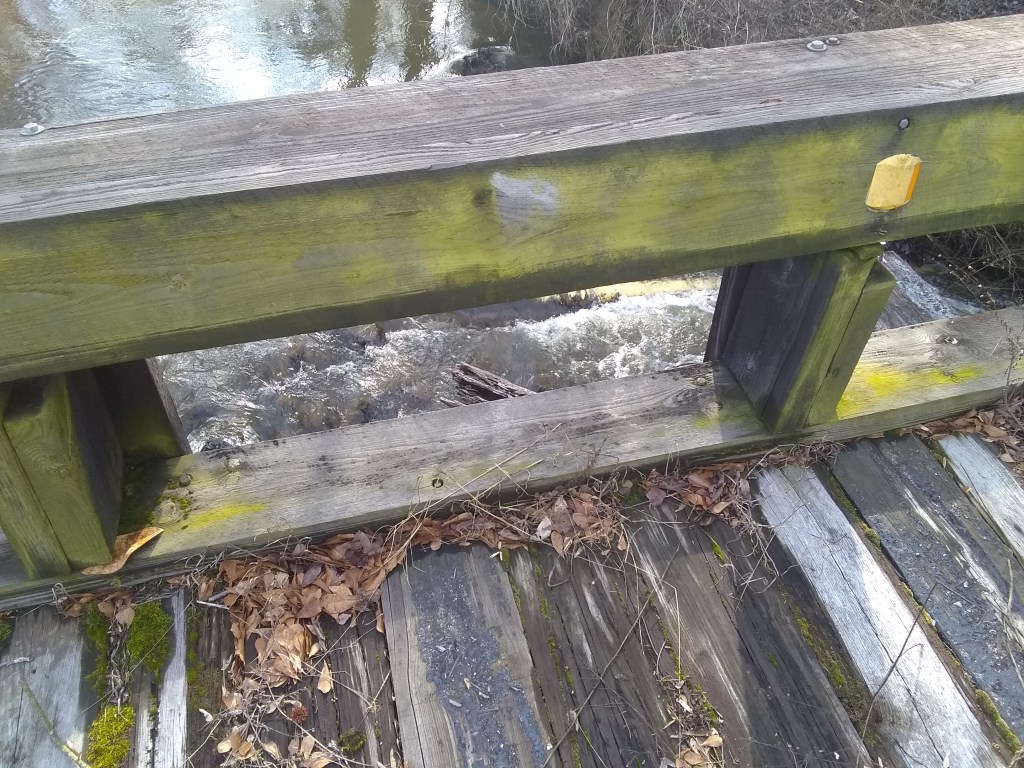
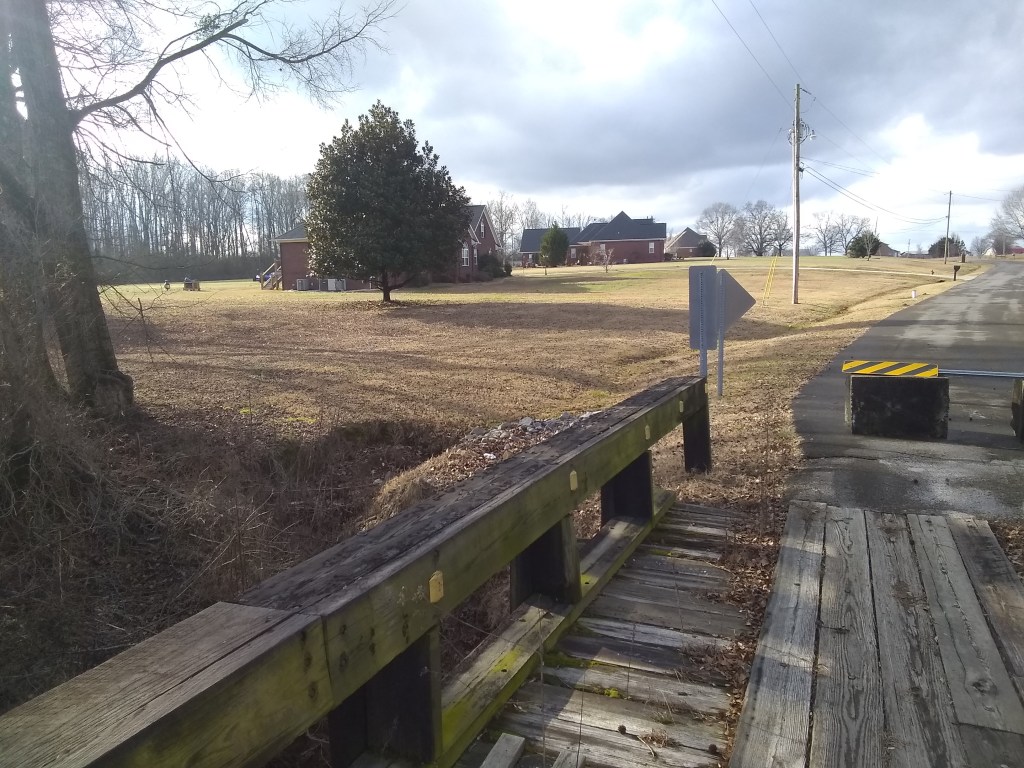
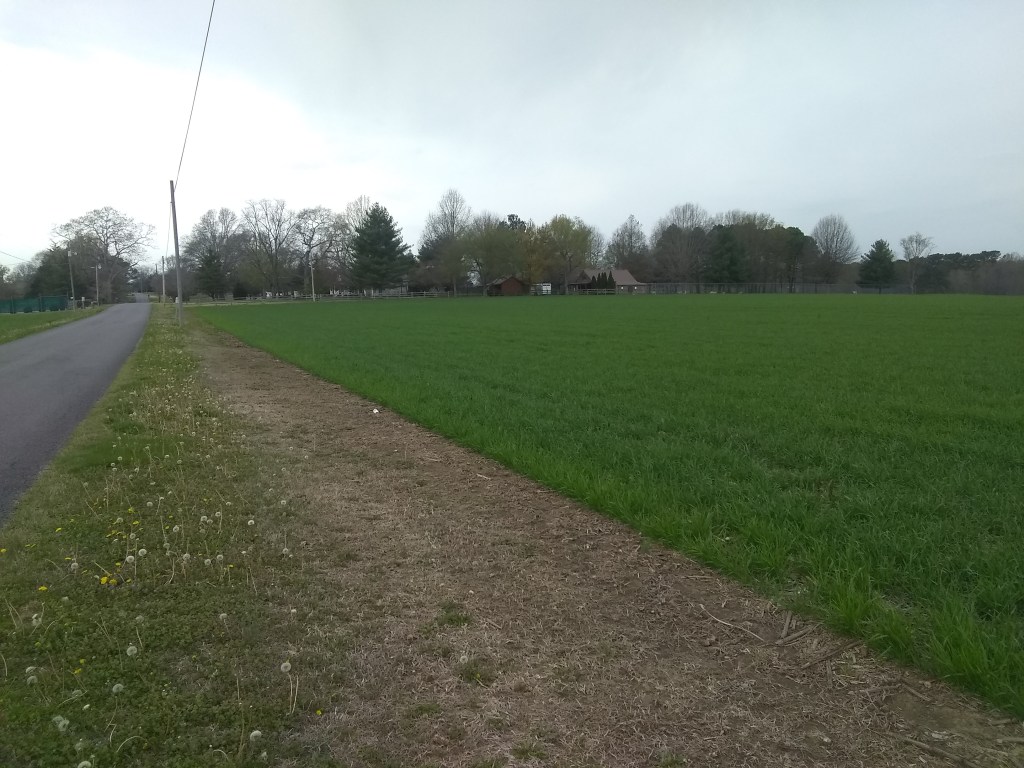
Here’s a few photos taken along my route:

Here’s what I listened to today: I Will Find You, by Harlan Coben

Amazon abstract:

Five years ago, an innocent man began a life sentence for murdering his own son. Today he found out his son is still alive.
 
David Burroughs was once a devoted father to his three-year-old son Matthew, living a dream life just a short drive away from the working-class suburb where he and his wife, Cheryl, first fell in love–until one fateful night when David woke suddenly to discover Matthew had been murdered while David was asleep just down the hall. 
 
Half a decade later, David’s been wrongly accused and convicted of the murder, left to serve out his time in a maximum-security prison—a fate which, grieving and wracked with guilt, David didn’t have the will to fight. The world has moved on without him. Then Cheryl’s younger sister, Rachel, makes a surprise appearance during visiting hours bearing a strange photograph. It’s a vacation shot of a bustling amusement park a friend shared with her, and in the background, just barely in frame, is a boy bearing an eerie resemblance to David’s son. Even though it can’t be, David just knows: Matthew is still alive.

David plans a harrowing escape, determined to achieve the impossible – save his son, clear his own name, and discover the real story of what happened. But with his life on the line and the FBI following his every move, can David evade capture long enough to reveal the shocking truth?

A few top reviews from the United States:

vegasbill

VINE VOICE

5.0 out of 5 stars Another great story from this author

Reviewed in the United States on April 13, 2023

Verified Purchase

Harlan Coben can spin a yarn! Once again he has proven that in I Will Find You. This intricate plot is populated by a colorful and interesting cast of characters, especially the two FBI Special Agents, Max and Sarah, assigned to this case. They provide the comic relief in an otherwise very serious story of murder and a missing child. While cracking wise to each other they manage to cut through the distractions provided by Coben’s other characters and home in the most important issues.

David Burroughs is accused and convicted of killing his three year old son. While in prison he learns the son might still be alive, a scenario which makes no sense as the son’s body was found in his bed, beaten to death. In order to find out if that is true David must find a way to get out of prison and find his son.

The story is compelling and moves swiftly with lots of suspense and things that keep the reader guessing. If there is any flaw, there are parts of the plot which sound more like a soap opera rather than a murder mystery. That didn’t detract from my enjoyment of the book. I recommend this to all who enjoy a good mystery/thriller.

KC

5.0 out of 5 stars Harlan Coben at his best!

Reviewed in the United States on April 16, 2023

Verified Purchase

The story begins with David Burroughs five years into serving a life sentencing for murdering his son. He feels his life his over and never fought his conviction since he felt his life was over without his son. He never felt he would have murdered his own son but he had no memory of the night in question. David refused visitors in his first years at the prison until one day when his sister-in-law, Rachel, shows up requesting to see him. The visit causes him to question if his son is actually still alive. The book is an another great by Harlan Coben! I couldn’t put it down until the last page. I highly recommend this book and this author.

Daniel Kramer

5.0 out of 5 stars An Amazing Ride

Reviewed in the United States on March 28, 2023

Verified Purchase

I Will Find You has a premise which I have not found in another novel. A man convicted of murdering his child, who thinks that he may have done it in a drunken moment of hysteria, finds out that the murdered child in his house that evening was not his son and that his son is still alive. Great idea for a book. How will Harlan Coben bring the pieces together so that it makes sense and gives the reader a thrilling ride? I will divulge nothing other than Harlan Coben did a really nice job of giving me the ride that I was hoping for.
Is the book perfect? Am I still a little confused by the ending? Yes. Does it matter? No. The book is a roller coaster ride which you should take if you like thrillers or you have read everything that Coben has ever written.
His best book ever was The Boy From The Woods. By far, that book was perfect and exceptional. This book is right up there and worth your time.

Jodie Short

5.0 out of 5 stars Harlan Coben has done it again!! This book will be your favorite this year!

Reviewed in the United States on April 7, 2023

Verified Purchase

Wow! The storyline in this book is beyond! I didn’t know if I even wanted to know the truth behind how it happened, but I had to know! That is what makes Harlan Coben a standout beyond all the rest! The characters, as usual, you will fall in love with and some you will love to hate! His style of writing is the reason I love to read! I would recommend this book to anyone and everyone! I already recommended it before I even finished it myself! I gave this book a five-star rating because Harlan Coben gets an A+ and every area of his writing! The plot, the characters, his style of writing the mystery! He has ramped up the edginess in this one!

About the Holy Bible, by Robert G. Ingersoll (1894): Part XI: Inspiration

This is a very long article. I’ll post it by part.

Here’s the link to the full article.

XI: Inspiration

Not before about the third century was it claimed or believed that the books composing the New Testament were inspired.

It will be remembered that there were a great number of books, of Gospels, Epistles and Acts, and that from these the “inspired” ones
were selected by “uninspired” men.

Between the “Fathers” there were great differences of opinion as to which books were inspired; much discussion and plenty of hatred.
Many of the books now deemed spurious were by many of the “Fathers” regarded as divine, and some now regarded as inspired were believed
to be spurious. Many of the early Christians and some of the “Fathers” repudiated the Gospel of John, the Epistle to the Hebrews, Jade,
James, Peter, and the Revelation of St. John. On the other hand, many of them regarded the Gospel of the Hebrews, of the Egyptians, the Preaching
of Peter, the Shepherd of Hermas, the Epistle of Bar nabas, the Pastor of Hermas, the Revelation of Peter, the Revelation of Paul, the
Epistle of Clement, the Gospel of Nicodemus, inspired books, equal to the very best.

From all these books, and many others, the Christians selected the inspired ones.

The men who did the selecting were ignorant and superstitious. They were firm believers in the miraculous. They thought that diseases
had been cured by the aprons and handkerchiefs of the apostles, by the bones of the dead. They believed in the fable of the Phoenix, and
that the hyenas changed their sex every year.

Were the men who through many centuries made the selections inspired? Were they—ignorant, credulous, stupid and malicious—as well
qualified to judge of “inspiration” as the students of our time? How are we bound by their opinion? Have we not the right to judge
for ourselves?

Erasmus, one of the leaders of the Reformation, declared that the Epistle to the Hebrews was not written by Paul, and he denied the
inspiration of Second and Third John, and also of Revelation. Luther was of the same opinion. He declared James to be an epistle of straw,
and denied the inspiration of Revelation. Zwinglius rejected the book of Revelation, and even Calvin denied that Paul was the author of Hebrews.

The truth is that the Protestants did not agree as to what books are inspired until 1647, by the Assembly of Westminster.

To prove that a book is inspired you must prove the existence of God. You must also prove that this God thinks, acts, has objects, ends and
aims. This is somewhat difficult.

It is impossible to conceive of an infinite being. Having no conception of an infinite being, it is impossible to tell whether all the
facts we know tend to prove or disprove the existence of such a being.

God is a guess. If the existence of God is admitted, how are we to prove that he inspired the writers of the books of the Bible?

How can one man establish the inspiration of another? How can an inspired man prove that he is inspired? How can he know himself that
he is inspired? There is no way to prove the fact of inspiration. The only evidence is the word of some man who could by no possibility
know anything on the subject.

What is inspiration? Did God use men as instruments? Did he cause them to write his thoughts? Did he take possession of their minds and
destroy their wills?

Were these writers only partly controlled, so that their mistakes, their ignorance and their prejudices were mingled with the wisdom of God?

How are we to separate the mistakes of man from the thoughts of God? Can we do this without being inspired ourselves? If the original writers
were inspired, then the translators should have been, and so should be the men who tell us what the Bible means.

How is it possible for a human being to know that he is inspired by an infinite being? But of one thing we may be certain: An inspired book
should certainly excel all the books produced by uninspired men. It should, above all, be true, filled with wisdom, blossoming in beauty—perfect.

Ministers wonder how I can be wicked enough to attack the Bible.

I will tell them: This book, the Bible, has persecuted, even unto death, the wisest and the best. This book stayed and stopped the onward
movement of the human race. This book poisoned the fountains of learning and misdirected the energies of man.

This book is the enemy of freedom, the support of slavery. This book sowed the seeds of hatred in families and nations, fed the flames of
war, and impoverished the world. This book is the breastwork of kings and tyrants—the enslaver of women and children. This book has
corrupted parliaments and courts. This book has made colleges and universities the teachers of error and the haters of science. This book has
filled Christendom with hateful, cruel, ignorant and warring sects. This book taught men to kill their fellows for religion’s sake. This book
funded the Inquisition, invented the instruments of torture, built the dungeons in which the good and loving languished, forged the chains that
rusted in their flesh, erected the scaffolds whereon they died. This book piled fagots about the feet of the just. This book drove reason from
the minds of millions and filled the asylums with the insane.

This book has caused fathers and mothers to shed the blood of their babes. This book was the auction block on which the slave- mother
stood when she was sold from her child. This book filled the sails of the slave-trader and made merchandise of human flesh. This book
lighted the fires that burned “witches” and “wizards.” This book filled the darkness with ghouls and ghosts, and the bodies
of men and women with devils. This book polluted the souls of men with the infamous dogma of eternal pain. This book made credulity the greatest
of virtues, and investigation the greatest of crimes. This book filled nations with hermits, monks and nuns—with the pious and the useless.
This book placed the ignorant and unclean saint above the philosopher and philanthropist. This book taught man to despise the joys of this life,
that he might be happy in another—to waste this world for the sake of the next.

I attack this book because it is the enemy of human liberty—the greatest obstruction across the highway of human progress.

Let me ask the ministers one question: How can you be wicked enough to defend this book?

What Is Science? From Feynman to Sagan to Asimov to Curie, an Omnibus of Definitions

Here’s the link to this article.

“The most beautiful experience we can have is the mysterious — the fundamental emotion which stands at the cradle of true art and true science.”

BY MARIA POPOVA

“We live in a society absolutely dependent on science and technology,” Carl Sagan famously quipped in 1994, “and yet have cleverly arranged things so that almost no one understands science and technology. That’s a clear prescription for disaster.” Little seems to have changed in the nearly two decades since, and although the government is now actively encouraging “citizen science,” for many “citizens” the understanding of — let alone any agreement about — what science is and does remains meager.

So, what exactly is science, what does it aspire to do, and why should we the people care? It seems like a simple question, but it’s an infinitely complex one, the answer to which is ever elusive and contentious. Gathered here are several eloquent definitions that focus on science as process rather than product, whose conduit is curiosity rather than certainty.

Stuart Firestein writes in the excellent Ignorance: How It Drives Science:

Real science is a revision in progress, always. It proceeds in fits and starts of ignorance.

Isaac Asimov knew this when he appeared on the Bill Moyers show in 1988 and shared some timeless, remarkably timely insights on creativity in science and education:

Science does not purvey absolute truth, science is a mechanism. It’s a way of trying to improve your knowledge of nature, it’s a system for testing your thoughts against the universe and seeing whether they match.

Carl Sagan echoed the same sentiment when he remarked:

Science is a way of thinking much more than it is a body of knowledge.

In a letter to Hans Mühsam dated July 9th, 1951, an elderly Albert Einstein observed:

One thing I have learned in a long life: that all our science, measured against reality, is primitive and childlike — and yet it is the most precious thing we have.

In his recent New York Review of Books piece on Margaret Wertheim’s Physics on the Fringe: Smoke Rings, Circlons, and Alternative Theories of EverythingFreeman Dyson offers:

All of science is uncertain and subject to revision. The glory of science is to imagine more than we can prove.

Claude Lévi-Strauss, widely regarded as the father of modern anthropology, articulated the same idea in 1964 in the first volume of his iconic Mythologiques collection of cultural anthropology:

The scientist is not a person who gives the right answers, he’s one who asks the right questions.

In the fantastic A General Theory of Love, psychologists Thomas Lewis, Fari Amini, and Richard Lannon give this beautiful definition:

Science is an inherent contradiction — systematic wonder — applied to the natural world.

This element of wonder and whimsy also comes through in the words of iconic physicist and mathematician Max Born (thanks, Joe):

Science is not formal logic — it needs the free play of the mind in as great a degree as any other creative art. It is true that this is a gift which can hardly be taught, but its growth can be encouraged in those who already possess it.

In his iconic book On Human Nature, which should be required reading for all, the great biologist and naturalist E. O. Wilson observed:

The heart of the scientific method is the reduction of perceived phenomena to fundamental, testable principles. The elegance, we can fairly say the beauty, of any particular scientific generalization is measured by its simplicity relative to the number of phenomena it can explain.

In 1894, upon having received her second graduate degree, Marie Curie wrote in a letter to her brother:

One never notices what has been done; one can only see what remains to be done…

Curie also likely inspired this interpretation of her famous words on the essence of the scientific ethos:

Nothing in life is to be feared, it is only to be understood. Now is the time to understand more, so that we may fear less.

Richard Feynman would have nodded in agreementEinstein certainly did when he observed:

The most beautiful experience we can have is the mysterious — the fundamental emotion which stands at the cradle of true art and true science.

This comes full-circe to Firestein’s book on ignorance, where he asserts:

Being a scientist requires having faith in uncertainty, finding pleasure in mystery, and learning to cultivate doubt. There is no surer way to screw up an experiment than to be certain of its outcome.

But hardly anyone captures the essence and ethos of science more eloquently than The Great Explainer. In 1966, the National Science Teachers Association asked the great Richard Feynman to give an address that answers the question, “What is science?” The answer comes true to character:

And so what science is, is not what the philosophers have said it is, and certainly not what the teacher editions say it is. What it is, is a problem which I set for myself after I said I would give this talk.

After some time, I was reminded of a little poem:

A centipede was happy quite, until a toad in fun
Said, “Pray, which leg comes after which?”
This raised his doubts to such a pitch
He fell distracted in the ditch
Not knowing how to run.

All my life, I have been doing science and known what it was, but what I have come to tell you–which foot comes after which–I am unable to do, and furthermore, I am worried by the analogy in the poem that when I go home I will no longer be able to do any research.

Later in the speech, Feynman hones a more answer-like answer:

[I]f you are going to teach people to make observations, you should show that something wonderful can come from them. I learned then what science was about: it was patience. If you looked, and you watched, and you paid attention, you got a great reward from it — although possibly not every time.

Later:

[Science] teaches the value of rational thought as well as the importance of freedom of thought; the positive results that come from doubting that the lessons are all true.

He closes with a keen point for his audience of professional science educators:

Science alone of all the subjects contains within itself the lesson of the danger of belief in the infallibility of the greatest teachers of the preceding generation.

Science, then, necessitates a certain comfort with being wrong, a tolerance for the fear of failure — perhaps cultivating that capacity is an essential prerequisite not only for science but also for the basic appreciation of science.