War, Peace, and Listicles: Young Leo Tolstoy on Money, Fame, and Writing for the Wrong Reasons

Here’s the link to this article.

A lament on being “self-confident and self-satisfied as only those can be who are quite holy or who do not know what holiness is.”

BY MARIA POPOVA

Celebrated as a titan of literature, Leo Tolstoy (September 9, 1828 – November 20, 1910) wasn’t always a man of timeless wisdom on how to live well and immutable insight on what makes great art. In his 1879 memoir of emotional crisis, A Confession (public library), he recounts with exquisite self-awareness and harrowing remorse his early days of breaking into writing — a time during which he had become blinded to the deeper meaning of life by the lustrous promise of fame and money, embodying Orwell’s cynical assertion that “all writers are vain, selfish, and lazy”:

During that time I began to write from vanity, covetousness, and pride. In my writings I did the same as in my life. To get fame and money, for the sake of which I wrote, it was necessary to hide the good and to display the evil. And I did so. How often in my writings I contrived to hide under the guise of indifference, or even of banter, those strivings of mine towards goodness which gave meaning to my life! And I succeeded in this and was praised.

The pursuit of that praise became a religion at the altar of which Tolstoy began to worship zealously as he came to believe that the artist’s goal was to teach mankind — a proposition at which he winces in hindsight, realizing that to teach requires to know what is meaningful to be taught:

I was considered an admirable artist and poet, and therefore it was very natural for me to adopt this theory. I, artist and poet, wrote and taught without myself knowing what. For this I was paid money; I had excellent food, lodging, women, and society; and I had fame, which showed that what I taught was very good.

This faith in the meaning of poetry and in the development of life was a religion, and I was one of its priests. To be its priest was very pleasant and profitable. And I lived a considerable time in this faith without doubting its validity.

But in a couple of years, he began to doubt this religion of authorship-as-sainthood and to notice its toxic hypocrisies, which both he and his circle of peers — his “personal micro-culture,” as William Gibson might say — embodied. And still, he found himself at once repelled by the duplicity of the acclaim he had worked so hard for and attracted to the status it bestowed upon him:

Having begun to doubt the truth of the authors’ creed itself, I also began to observe its priests more attentively, and I became convinced that almost all the priests of that religion, the writers, were immoral, and for the most part men of bad, worthless character, much inferior to those whom I had met in my former dissipated and military life; but they were self-confident and self-satisfied as only those can be who are quite holy or who do not know what holiness is. These people revolted me, I became revolting to myself, and I realized that that faith was a fraud.

But strange to say, though I understood this fraud and renounced it, yet I did not renounce the rank these people gave me: the rank of artist, poet, and teacher. I naively imagined that I was a poet and artist and could teach everybody without myself knowing what I was teaching, and I acted accordingly.

From my intimacy with these men I acquired a new vice: abnormally developed pride and an insane assurance that it was my vocation to teach men, without knowing what.

Leo Tolstoy at age 20, 1848

His most poignant lament, however, is chillingly prescient of today’s linkbait “journalism” of ceaseless listicles and vacant slideshows published by those who seek easy riches rather than the enrichment of a reader’s soul — or their own souls — with articles like “20 Amazing Things You Didn’t Know about Miley Cyrus’s Cat.” Tolstoy writes:

We were all then convinced that it was necessary for us to speak, write, and print as quickly as possible and as much as possible, and that it was all wanted for the good of humanity. And thousands of us, contradicting and abusing one another, all printed and wrote — teaching others. And without noticing that we knew nothing, and that to the simplest of life’s questions: What is good and what is evil? We did not know how to reply, we all talked at the same time, not listening to one another, sometimes seconding and praising one another in order to be seconded and praised in turn, sometimes getting angry with one another — just as in a lunatic asylum.

[…]

It was terribly strange, but is now quite comprehensible. Our real innermost concern was to get as much money and praise as possible. To gain that end we could do nothing except write books and papers. So we did that. But in order to do such useless work and to feel assured that we were very important people we required a theory justifying our activity. And so among us this theory was devised: “All that exists is reasonable. All that exists develops. And it all develops by means of Culture. And Culture is measured by the circulation of books and newspapers. And we are paid money and are respected because we write books and newspapers, and therefore we are the most useful and the best of men.” This theory would have been all very well if we had been unanimous, but as every thought expressed by one of us was always met by a diametrically opposite thought expressed by another, we ought to have been driven to reflection. But we ignored this; people paid us money and those on our side praised us, so each of us considered himself justified.

A Confession is immeasurably poignant in its entirety, at once timeless and timely whenever it is read. Complement it with this rare recording of Tolstoy reading from his Calendar of Wisdom shortly before his death.

Drafting–Colton & Sandy head to NYC

“I’ve got to call my sister.” Sandy said as he exited the tiny bath, shirtless and rolling on deodorant, cursing to himself why there was no cell service. “Plus, I’m tired of cooking.”

Since late Tuesday afternoon Sandy and Colton had been off the grid, parked at camping spot #70 inside Black Moshannon State Park just west of Philipsburg, Pennsylvania. It was now Wednesday afternoon and the two were restless as hell.

“It was your idea, not mine, to come to this god-forsaken place.” Colton declared, reclining on the rear couch. Tuesday afternoon, while the pair drove east on I-90 Sandy had suggested they spend a couple of days where he and his parents had come when he was seven years old. He could still remember the week him, his sister, and his parents had spent exploring the 3,480 acres that comprised the Pennsylvania state park. But, there had been another reason, one just as important, at least to Sandy: he wanted Millie and Molly, especially Molly, to have a peaceful Christmas together in their new home. Of course, Sandy hadn’t mentioned this to Colton.

Sandy slipped on a Chicago Bears sweatshirt, and a jacket from the tiny closet. “Let’s go to Philipsburg and let me make my call. We can eat while we’re there.”

“Like something in that tiny town will be open.” Colton said, slipping on his boots and standing.

Ten minutes later, when passing Philipsburg Elementary School on State Highway 504, Sandy noticed he had cell service. He clicked on the Google icon and typed, “restaurants in Philipsburg open on Christmas.” RJ’s Pub & Grill was the second one listed. He pressed the link. “Looks like a good spot on 9th street.” Sandy held his phone out to Colton who was fiddling with his own cell. Sandy clicked on the address link and activated Google Maps. He then dialed his sister.

“I’m not interested in turkey and dressing or sweet potato pie.” Colton said, reading a series of texts he’d received since they’d parked at Black Moshannon.

“Hey sis. Merry Christmas. Hold on.” Sandy covered the receiver and described to Colton the chicken fajita wrap RJ’s had on special from opening at 3:00 PM until 6:00 when the Logyard Beer on tap party started.

“That’ll work,” was Colton’s reply.

“Sis, sorry about that. How’s your day?” Although Sandy and Sarah weren’t close they were compelled to keep the promise they’d made their late mother—to talk every Christmas.

“Blessed. And you?” Sarah started to ask how Pop’s place was working out but wasn’t truly interested in anything her little brother would say.

“Listen Sarah, I wanted you to know I’ve messed up my checking account and will be setting up another one in a few days. Don’t transfer any money to my old account.”

This wasn’t a surprise to Sarah. Sandy couldn’t point a broom handle straight ahead. “Overdraw again?” She could ask a dozen questions if she cared but couldn’t wash away the many memories of Sandy draining their mother’s bank account over the last few years of her life.

“Turn right on 322.” Sandy said pointing to a large “Welcome to Philipsburg” sign touting two of the town’s historic landmarks: the Union “Old Mud” Church, completed in 1842, and the Simler House, the oldest known structure in Philipsburg.

Colton made the right turn and was thankful his finances were in good shape, unlike Sandy’s. He’d had no trouble setting up a new account at Republic Bank of Chicago, but they wouldn’t work with Sandy since his credit score was so low. He’d begged for some of Mildred’s money to use but Colton had refused.
For the next five miles Sandy and Sarah’s conversation devolved into an argument. The only thing Colton could surmise from the one voice he was hearing was Sandy still believed he should be paid something for caring for their mother the last few months of her life.

“Take the next left.” Sandy said as they approached 9th Street.

Colton pulled into a near-full parking lot outside RJ’s Bar and Grill. It wasn’t quite 2:30. “Oh boy, I guess a lot of folks didn’t want to cook on Christmas.”

It turned out the parking lot served not only RJ’s but two other restaurants: Hogs Galore and Main Won, the first, a barbecue joint; the second served Asian and Chinese dishes.

Inside RJ’s, the crowd consisted of four older men sitting at the bar; all overweight. A teenager-looking girl whisked Sandy and Colton to a table for two in a back corner next to the building’s front windows. “Not much demand for chicken fajita wraps,” Colton remarked, but acknowledging RJ’s didn’t officially open until 3:00.

Both men ordered today’s special and Wildcat Hollow beers. Sandy asked, “how’s your plan coming?” So far, all his partner had said was ‘he was thinking about how to handle the situation once we knock on Millie’s door.’

“You have less than a day. If we leave early tomorrow we should be there by noon, so you better think of something.” Sandy paused and stared at his phone, contemplating whether to send a text to Sarah just to make sure she didn’t forget his request. “And, it better not include kidnapping.”

After departing Perrysburg yesterday, Sandy had researched the address Ray and his wife had given them. The easy part was determining the location. There was no doubt, Millie and Molly lived in Queens, New York, in an apartment building known as The Allendale. According to Google, it’s a pre-war co-op building in Queens’s Jackson Heights neighborhood. The building contains 48 units and rises 6 stories. Sandy had learned a co-op was cooperative housing, which is a type of homeownership, a building jointly owned by a corporation made up of its inhabitants. Neither Colton or Sandy could imagine how Millie could afford to purchase an apartment. The only logical thing either could fathom was someone had given or loaned her the money.

Colton concluded he might as well share with Sandy the first phase of the plan he’d mentally constructed. “The second Millie opens the door, I’m going to apologize for everything bad I’ve ever done to her, including surprising her in New York City. Then, I’m going to do my best to humbly request she return to Chicago with us and give a statement to DA Hooks.”

The waitress delivered their food and drinks and invited them to attend RJ’s half-price beer night starting at 6:oo PM. “Thanks.” Sandy said, waiting until the tight-jeaned teenager walked away. “Even if Millie returns to Chicago and meets with the DA, you won’t be there to know what she tells him.”

Colton took a bite of his fajita and said with a mouthful: “I don’t see that as a problem since Molly will be with us.” Colton knew the first phase of his plan involved a little coercion but at least it wasn’t violent. That would come later, but only if necessary.

“So much for your ‘humble request.’ And what about the outstanding arrest warrants?” Sandy covered his fries with ketchup.

Colton doubted his first phase plan would work but he believed they had to try. “I’m hoping our attorneys can persuade the DA and the Judge to withdraw them, maybe they can throw in a good excuse. How about, we thought the hearing was next Monday; we just got our dates wrong?”

Sandy downed half his bottle of Wildcat Hollow beer. “Oh yea, that’ll work.”

“Well what else can we do?” There was no way Colton could share what he strongly believed. His response was his way to throw the issue back on Sandy. There was no way Millie’s statement would be enough to stop the trial. To Colton, that lion’s den was inevitable, and the only thing that would change that nightmare was the disappearance of Gina Patton. Of course, even her absence might not stop the trial. His attorney had told Colton that the admissibility of evidence was strictly up to Judge Stewart and even if he was wrong, the only way to attack the ruling was an appeal. Colton imagined sitting in prison for months before an appeals court would even consider the issue. The bottom line, what Colton wouldn’t share, was that his and Sandy’s crimes most likely had destined them to a life on the run. What this necessarily included, at least to Colton’s twisted mind, was that Sandy would become a liability at some point and have to be eliminated.”

Sandy pondered his response and finally said, “everything we’ve done, attacking the two students and killing Ellen in the fire we set, killing Mildred, and what we’re planning on doing, virtually kidnapping Millie and Molly, not to mention missing court, is simply guaranteeing we’re going to prison.” He pushed back his plate. “I’ve lost my appetite.” Colton cleaned his plate and ordered another fajita while Sandy stared through the window at the parking lot.

After leaving RJ’s, Colton drove them back to Spot #70 at Black Moshannon State Park. Neither spoke to the other the rest of the day.

It was 8:00 AM Friday morning before Colton and Sandy headed to New York City. The stomach bug, food poisoning, or whatever it was had struck eight hours after they’d left RJ’s. According to Sandy’s research, their sickness was likely Norovirus, contracted from the teenage waitress who’d handled their plates. Whatever it was, the vomiting, diarrhea, and listlessness had lasted until midnight last night. Seven hours of sleep was welcome.

Colton stopped to fill up the van where Pennsylvania Route 99 intersected with I-80. When he returned from the convenience store with two coffees Sandy relayed troubling news. “We made the papers. Well, at least the online version of the Chicago Tribune. The asshole Andrew Spivey’s like a dog after a bone.”

Staying silent to think was a common habit Colton had learned years ago. Although he frequently let his emotions dictate, today he realized it wouldn’t do any good to cuss and threaten the persistent journalist. He waited until the van was at seventy-miles per hour before responding. “Well, what did he write?”

Sandy sipped coffee and reread the short article titled, “Have you seen these two men?” “Spivey repeats his earlier story about us missing the hearing but apparently the guy’s been spying on us.”

“Why do you say that?” Colton asked, slowing the van and resetting the cruise to sixty-four miles per hour.

“He checked your garbage can, or somebody did and told him about it. He writes, ‘Last Friday, two men matching Colton Atwood and Sanford Brown’s descriptions entered Atwood’s house on Princeton Avenue. They exited less than an hour later and tossed two stuffed bags into the garbage can at the street. After the men drove away in a dark grey Sprinter van, this writer’s assistant searched the bags. One bag contained cold-to-the-touch items likely removed from a refrigerator. Things like: half-filled ketchup, mayonnaise, mustard, and pickle jars, left-over pizza, unopened bags of salad mix, and, an out-of-date gallon of milk. The other bag contained an assortment of old clothes, and files filled with several years worth of water, gas, and electric bills. The bills were all in the name of Millie Anderson.’”

“Shit. Now the world knows we’re in this damn van.” Colton said, banging his fist on the steering wheel.

“Listen to Spivey’s final paragraph. ‘These facts strongly indicate all former members of 7925 Princeton Avenue are now on the run, along with Atwood’s friend Sanford Brown. The two men are running from the law. The bigger question is why Millie Anderson and her twelve year old daughter are running? Are they running from the two men? Are the two men running after Millie and her daughter? Whatever the question, one thing’s for sure, there are outstanding arrest warrants for both men. If you see them, or know anything about this situation, call me, Andrew Spivey, at 1-800-4583-7198.’”

Colton drove ten minutes before speaking. “We’re probably safe until Mildred’s body is discovered, or her neighbor … what’s her name?”

“Alice, Alice Landers.” Sandy replied.

“Or, until Alice puts two and two together and concludes both Mildred and her van are missing. That’s when she’ll call the police. Damn, we intended to call Alice and replay one of Mildred’s recordings.” It wasn’t that Colton had forgotten, but he’d concluded Sandy’s idea was dumb as fuck. There’s no way the neighbor would believe it was Mildred calling.

Sandy tried to imagine what would make Alice suspicious, even if she didn’t hear from Mildred. “Here’s a thought. I’d bet Alice will eventually call Mildred on her cell. We still have it. So, when Alice calls, I could answer playing like I’m Mason.”

“Who’s Mason?”

“Mildred’s son. Dumbass, we’ve talked about him. I could make up some excuse why she couldn’t come to the phone. She’s asleep, or she’s not feeling well. I could tell her we’re in Montana or Arizona or someplace.”

“Won’t work. Not for long. Eventually, Alice will get suspicious and we’re toast, or headed there.” Colton knew what they had to do: ditch the van. At the latest, get rid of it soon after they arrive in New York City. “We’ll trade vehicles before we head back to Chicago with Millie and Molly. Maybe we can find a car-crusher place.”

Sandy grabbed his cell from the console and searched Google. “That’s a bust, at least in Pennsylvania. You have to have a title to scrap a vehicle or sell it to a salvage yard.”

“Good work. Maybe we’ll just hide it like we did my RAM.” Colton said and Sandy groaned. He closed his eyes and pictured him and Colton driving their lives into an ever narrowing funnel already past the point of choosing to turn around.

A Calendar of Wisdom: Tolstoy on Knowledge and the Meaning of Life

Here’s the link to this article.

“The most important knowledge is that which guides the way you lead your life.”

BY MARIA POPOVA

On March 15, 1884, Leo Tolstoy (September 9, 1828–November 20, 1910) wrote in his diary:

I have to create a circle of reading for myself: Epictetus, Marcus Aurelius, Lao-Tzu, Buddha, Pascal, The New Testament. This is also necessary for all people.

So he set out to compile “a wise thought for every day of the year, from the greatest philosophers of all times and all people” — a florilegium five centuries after the golden age of florilegia and a Tumblr a century and a half before the golden age of Tumblr, a collection of famous words on the meaning of life long before the concept had become a cultural trope. The following year, he wrote to his assistant, describing the project:

I know that it gives one great inner force, calmness, and happiness to communicate with such great thinkers as Socrates, Epictetus, Arnold, Parker. … They tell us about what is most important for humanity, about the meaning of life and about virtue. … I would like to create a book … in which I could tell a person about his life, and about the Good Way of Life.

Armenian sculptor Sergei Dmitrievich Merkurov (1881-1952) working on his statue of Leo Tolstoy. (Public domain, Library of Congress)

Tolstoy spent the next seventeen years collecting those pieces of wisdom. In 1902, in his late seventies, seriously ill and confronting mortality, he finally sat down to write the book under the working title A Wise Thought for Every Day. Once he sent the manuscript to his publisher, he returned to the diary and exhaled:

I felt that I have been elevated to great spiritual and moral heights by communication with the best and wisest people whose books I read and whose thoughts I selected for my Circle of Reading.

Retitled to Thoughts of Wise Men, the book was first published in 1904, followed closely by an expanded and reorganized edition titled A Calendar of Wisdom, in which the quotes were organized around specific daily themes and which included several hundred of Tolstoy’s own thoughts. It wasn’t until 1997 that the compendium received its first English translation, by Peter Sekirin, titled A Calendar of Wisdom: Daily Thoughts to Nourish the Soul, Written and Selected from the World’s Sacred Texts (public library).

Tolstoy writes in the introduction:

I hope that the readers of this book may experience the same benevolent and elevating feeling which I have experienced when I was working on its creation, and which I experience again and again, when I reread it every day, working on the enlargement and improvement of the previous edition.

Running through the book are several big-picture threads that string together the different quotations. One of them is Tolstoy’s intense preoccupation with the acquisition and architecture of knowledgeignorance, and the meaning of life. Here are several of the insights he culls from other thinkers, along with the respective days of the year to which Tolstoy assigned them:

Better to know a few things which are good and necessary than many things which are useless and mediocre.

What a great treasure can be hidden in a small, selected library! A company of the wisest and the most deserving people from all the civilized countries of the world, for thousands of years, can make the results of their studies and their wisdom available to us. The thought which they might not even reveal to their best friends is written here in clear words for us, people from another century. Yes, we should be grateful for the best books, for the best spiritual achievements in our lives.

(Ralph Waldo Emerson, January 1)

Read the best books first, otherwise you’ll find you do not have time.

(Henry David Thoreau, January 1)

Knowledge is real knowledge only when it is acquired by the efforts of your intellect, not by memory.

Only when we forget what we were taught do we start to have real knowledge.

(Henry David Thoreau, January 9)

A constant flow of thoughts expressed by other people can stop and deaden your own thought and your own initiative…. That is why constant learning softens your brain…. Stopping the creation of your own thoughts to give room for the thoughts from other books reminds me of Shakespeare’s remark about his contemporaries who sold their land in order to see other countries.

(Arthur Schopenhauer, January 9)

Real wisdom is not the knowledge of everything, but the knowledge of which things in life are necessary, which are less necessary, and which are completely unnecessary to know. Among the most necessary knowledge is the knowledge of how to live well, that is, how to produce the least possible evil and the greatest goodness in one’s life. At present, people study useless sciences, but forget to study this, the most important knowledge.

(Jean Jaques Rousseau, March 16)

Science can be divided into an infinite number of disciplines, and the amount of knowledge that can be pursued in each discipline is limitless. The most critical piece of knowledge, then, is the knowledge of what is essential to learn and what isn’t.

A huge amount of knowledge is accumulated at present. Soon our abilities will be too weak, and our lives too short, to study this knowledge. We have vast treasures of knowledge at our disposal but after we study them, we often do not use them at all. It would be better not to have this burden, this unnecessary knowledge, which we do not really need.

(Immanuel Kant, April 1)

What is important is not the quantity of your knowledge, but its quality. You can know many things without knowing that which is most important.

There are two types of ignorance, the pure, natural ignorance into which all people are born, and the ignorance of the so-called wise. You will see that many among those who call themselves scholars do not know real life, and they despise simple people and simple things.

(Blaise Pascal, April 18)

There is only one real knowledge: that which helps us to be free. Every other type of knowledge is mere amusement.

(Vishnu Purana, Indian Wisdom, June 23)

The way to true knowledge does not go through soft grass covered with flowers. To find it, a person must climb steep mountains.

(Josh Ruskin, September 20)

A sage is not afraid of lack of knowledge: he is not afraid of hesitations, or hard work, but he is afraid of only one thing — to pretend to know the things which he does not know.

You should study more to understand that you know little.

(Michel de Montaigne, October 1)

The most important knowledge is that which guides the way you lead your life.

(Seneca, November 14)

Armenian sculptor Sergei Dmitrievich Merkurov (1881-1952) working on his statue of Leo Tolstoy. (Public domain, Library of Congress)

But most poignant of all are Tolstoy’s own thoughts, which appear after the collected quotations on various days. A sampling:

The difference between real material poison and intellectual poison is that most material poison is disgusting to the taste, but intellectual poison, which takes the form of cheap newspapers or bad books, can unfortunately sometimes be attractive. (January 1)

A thought can advance your life in the right direction only when it answers questions which were asked by your soul. A thought which was first borrowed from someone else and then accepted by your mind and memory does not really much influence your life, and sometimes leads you in the wrong direction. Read less, study less, but think more.

Learn, both from your teachers and from the books which you read, only those things which you really need and which you really want to know. (January 9)

A scholar knows many books; a well-educated person has knowledge and skills; an enlightened person understands the meaning and purpose of his life.

There are a limitless number of different sciences, but without one basic science, that is, what is the meaning of life and what is good for the people, all other forms of knowledge and art become idle and harmful entertainment.

We live a senseless life, contrary to the understanding of life by the wisest people of all times. This happens because our young generations are educated in the wrong way—they are taught different sciences but they are not taught the meaning of life.

The only real science is the knowledge of how a person should live his life. And this knowledge is open to everyone. (January 18)

If all knowledge were good, then pursuit of every sort of knowledge would be useful. But many false meditations are disguised as good and useful knowledge; therefore, be strict in selecting the knowledge you want to acquire. (March 16)

If you see that some aspect of your society is bad, and you want to improve it, there is only one way to do so: you have to improve people. And in order to improve people, you begin with only one thing: you can become better yourself. (March 17)

Beware of false knowledge. All evil comes from it.

Knowledge is limitless. Therefore, there is a minuscule difference between those who know a lot and those who know very little. (April 1)

Ignorance in itself is neither shameful nor harmful. Nobody can know everything. But pretending that you know what you actually do not know is both shameful and harmful. (April 18)

Every person has only one purpose: to find perfection in goodness. Therefore, only that knowledge is necessary which leads us to this. (May 3)

There are two very clear indications of real science and real art: the first inner sign is that a scholar or an artist works not for profit, but for sacrifice, for his calling; the second, outer sign is that his works are understandable to all people. Real science studies and makes accessible that knowledge which people at that period of history think important, and real art transfers this truth from the domain of knowledge to the domain of feelings.

Creating art is not as elevated a thing as many people guess, but certainly it is a useful and kind thing to do, especially if it brings people together and arouses kind feelings in them. (July 2)

It is better to know less than necessary than to know more than necessary. Do not fear the lack of knowledge, but truly fear unnecessary knowledge which is acquired only to please vanity. (September 23)

Though much of A Calendar of Wisdom bears the dated religiosity of the era — and of an old man confronting his mortality in that era — many of the collected thoughts resonate with timeless secular sagacity. Complement it with Montaigne on the art of living and the collected wisdom of modern icons on the meaning of life.

04/15/23 Biking & Listening

Biking is something else I both love and hate. It takes a lot of effort but does provide good exercise and most days over an hour to listen to a good book or podcast. I especially like having ridden.

Here’s my bike, a Rockhopper by Specialized. I purchased it November 2021 from Venture Out in Guntersville; Mike is top notch! So is the bike, and the ‘old’ man seat I salvaged from an old Walmart bike.

Here’s a link to today’s bike ride. Beautiful day.

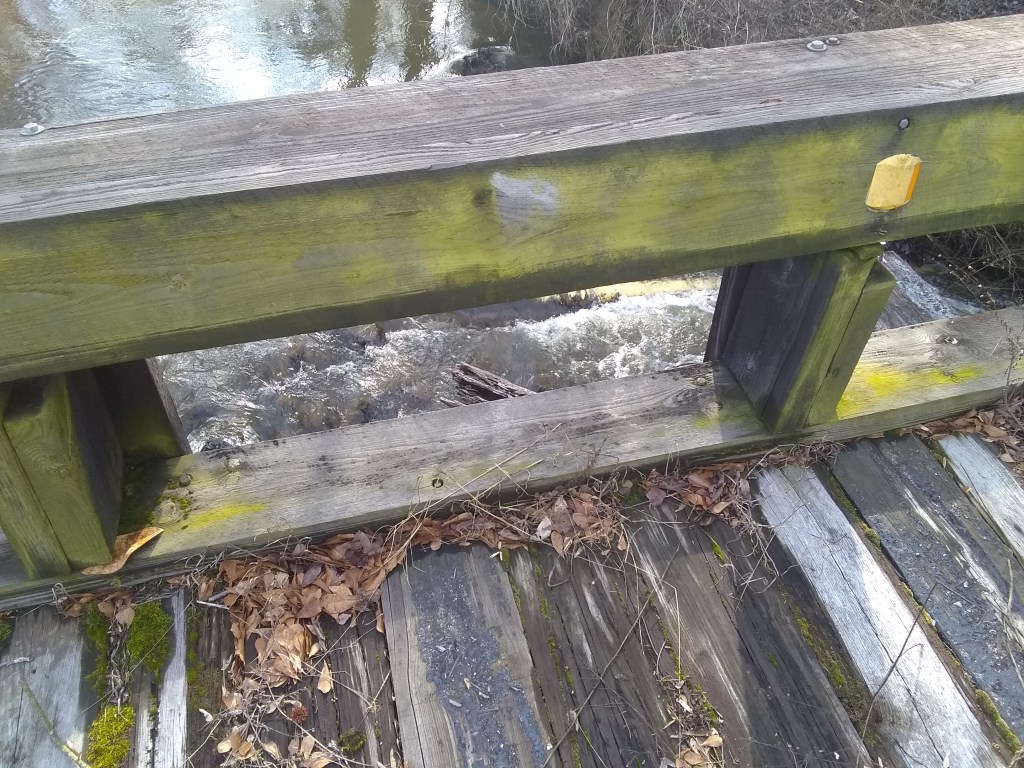
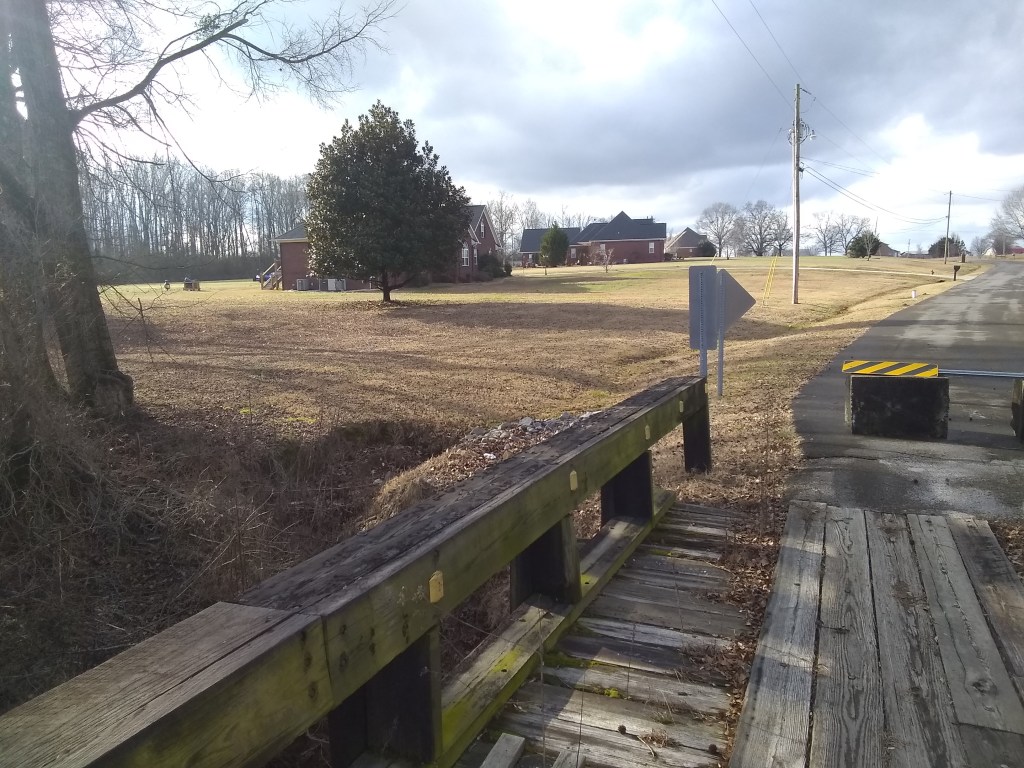
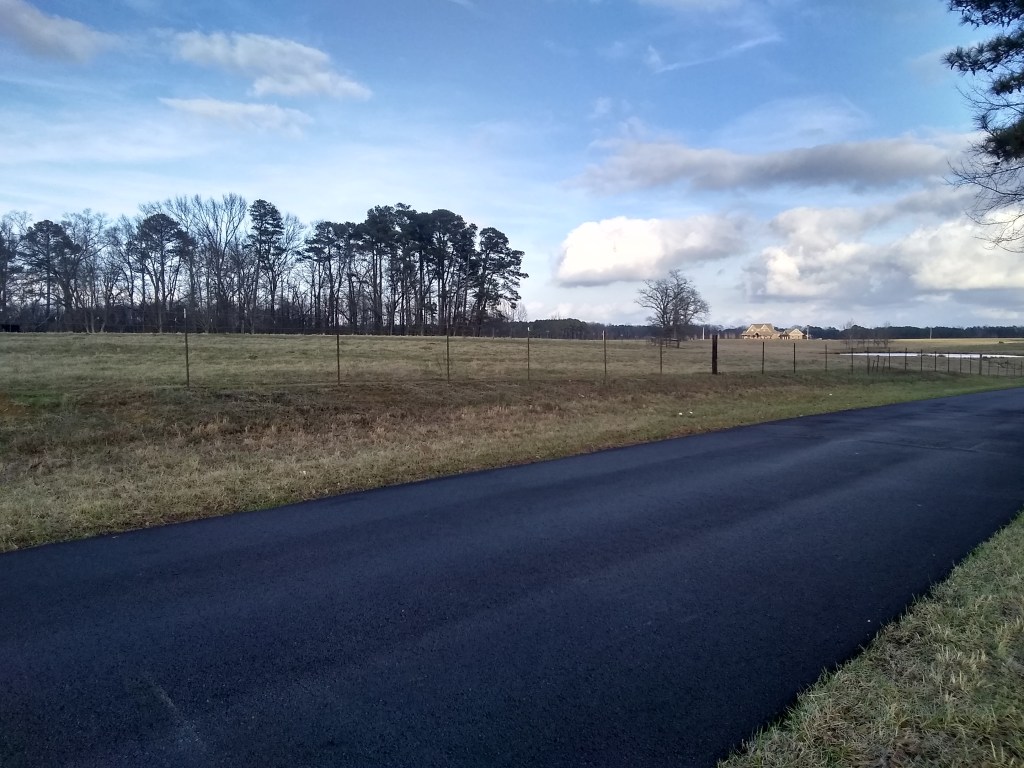
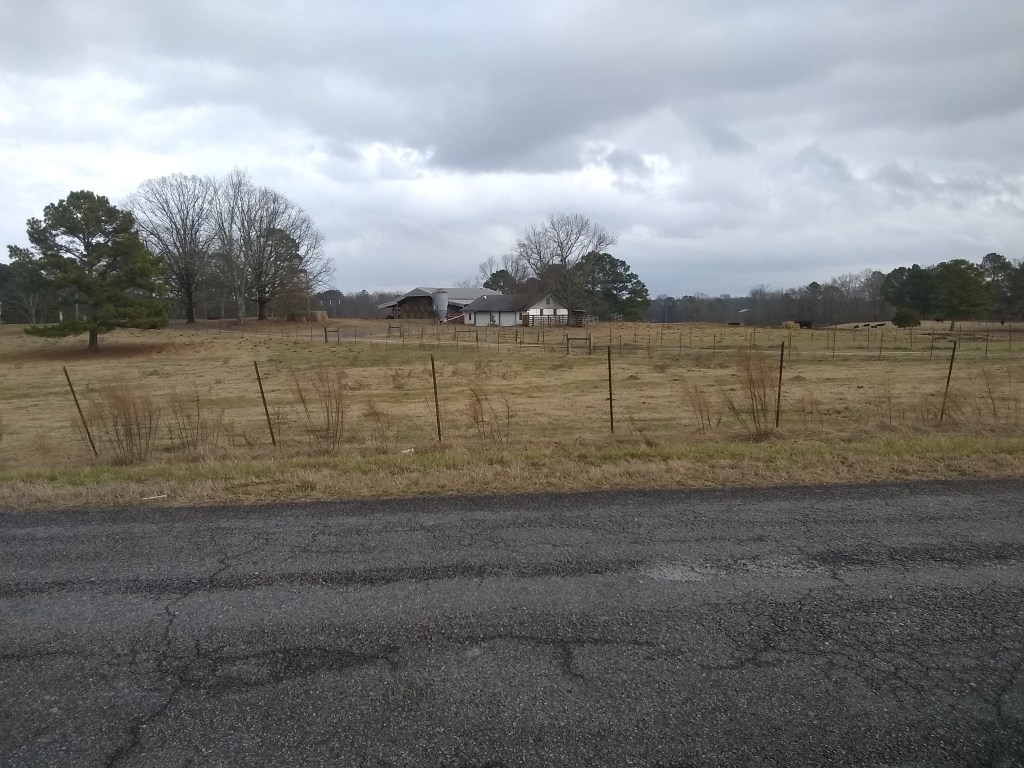
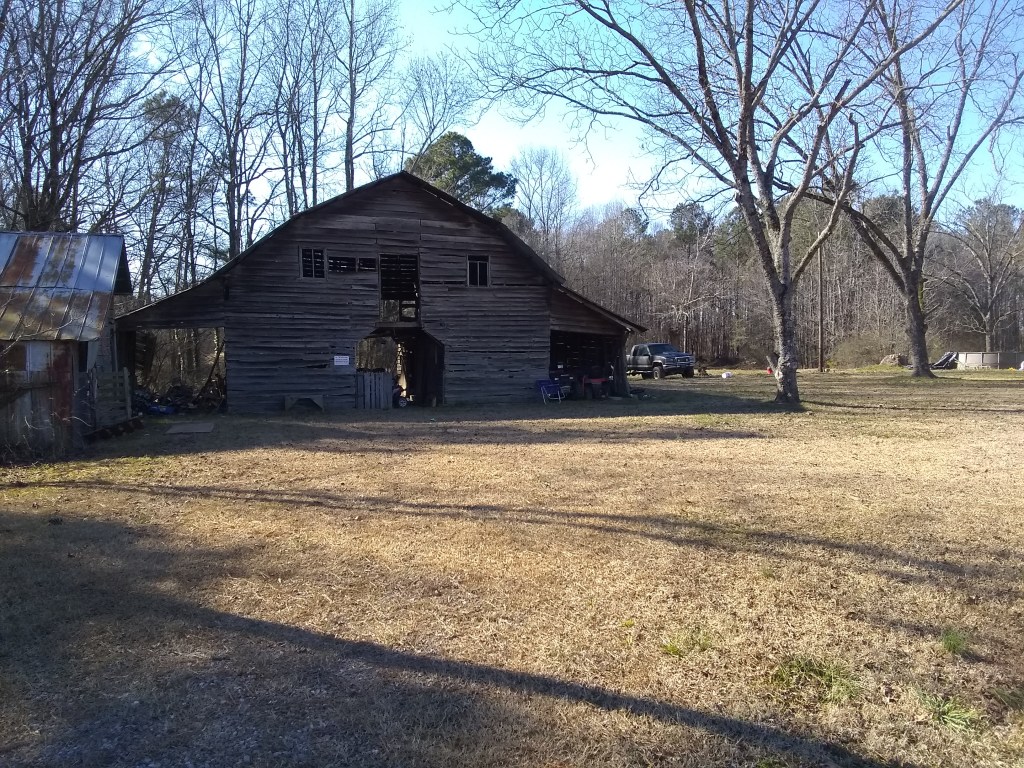
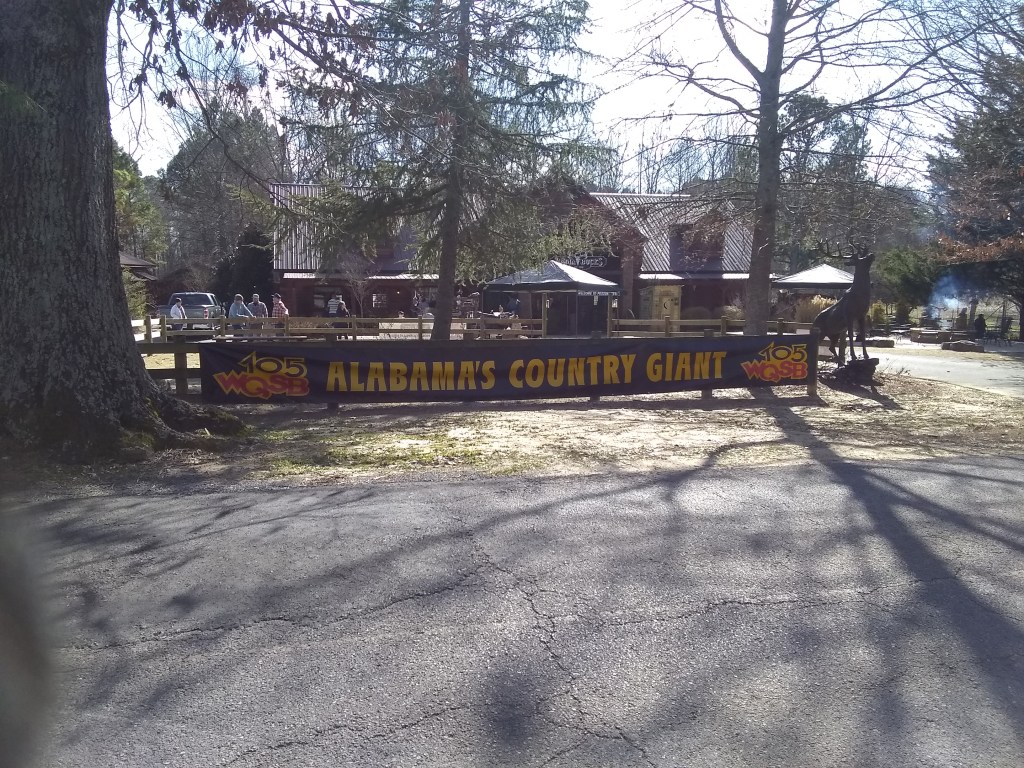
Here’s a few photos taken along my route:

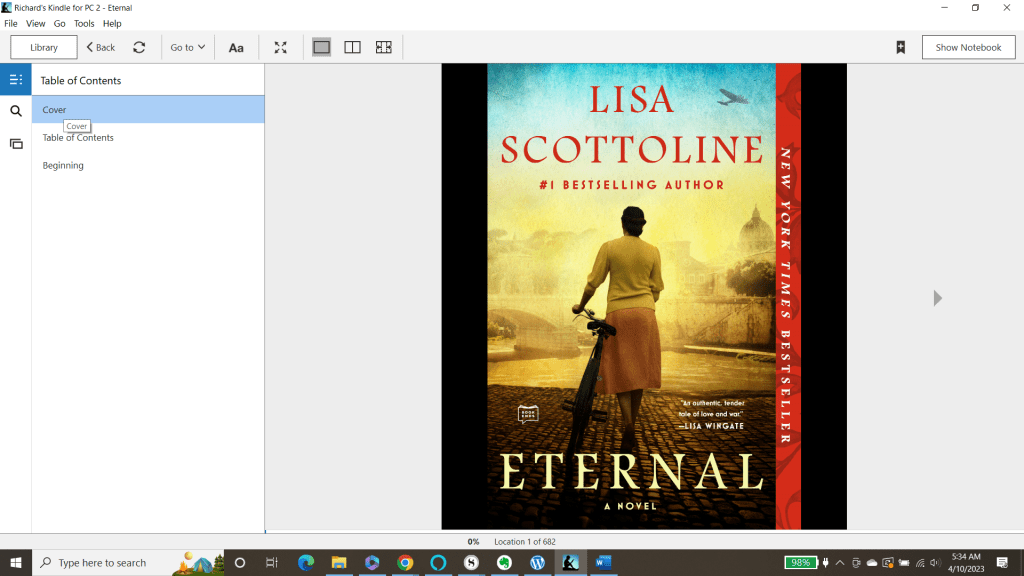
I’m listening to Eternal, by Lisa Scottoline:

Amazon Abstract

NEW YORK TIMES BESTSELLER
 
#1 bestselling author Lisa Scottoline offers a sweeping and shattering epic of historical fiction fueled by shocking true events, the tale of a love triangle that unfolds in the heart of Rome…in the creeping shadow of fascism.


What war destroys, only love can heal.

Elisabetta, Marco, and Sandro grow up as the best of friends despite their differences. Elisabetta is a feisty beauty who dreams of becoming a novelist; Marco the brash and athletic son in a family of professional cyclists; and Sandro a Jewish mathematics prodigy, kind-hearted and thoughtful, the son of a lawyer and a doctor. Their friendship blossoms to love, with both Sandro and Marco hoping to win Elisabetta’s heart. But in the autumn of 1937, all of that begins to change as Mussolini asserts his power, aligning Italy’s Fascists with Hitler’s Nazis and altering the very laws that govern Rome. In time, everything that the three hold dear–their families, their homes, and their connection to one another–is tested in ways they never could have imagined.

As anti-Semitism takes legal root and World War II erupts, the threesome realizes that Mussolini was only the beginning. The Nazis invade Rome, and with their occupation come new atrocities against the city’s Jews, culminating in a final, horrific betrayal. Against this backdrop, the intertwined fates of Elisabetta, Marco, Sandro, and their families will be decided, in a heartbreaking story of both the best and the worst that the world has to offer.

Unfolding over decades, Eternal is a tale of loyalty and loss, family and food, love and war–all set in one of the world’s most beautiful cities at its darkest moment. This moving novel will be forever etched in the hearts and minds of readers.

George Lucas on the Meaning of Life

Here’s the link to this article.

“There is no why. We are. Life is beyond reason.”

BY MARIA POPOVA

When a frustrated young woman asked the most brilliant man in the world why we’re alive, Einstein responded in five poignant lines. This question — at the heart of which is a concern with the meaning of life — has since been answered by many other great minds: For David Foster Wallace, it was about going through life fully conscious; for Carl Sagan, about our significant insignificance in the cosmos; for Annie Dillard, about learning to live with impermanence; for Richard Feynman, about finding the open channel; for Anaïs Nin, about living and relating to others “as if they might not be there tomorrow”; for Henry Miller, about the mesmerism of the unknown; and for Leo Tolstoy, about finding knowledge to guide our lives.

But one of the most profound answers comes from legendary Star Wars director George Lucas. In The Meaning of Life: Reflections in Words and Pictures on Why We Are Here (public library) — that remarkable 1991 anthology that gave us timeless meditations on existence from a number of luminaries — Lucas uses an autobiographical anecdote as the springboard for a larger meditation on the meaning of life and our best chance for reaching its fullest potential:

When I was eighteen I was in an automobile accident and went through a near-death experience. I was actually taken away from the scene, presumed dead, and it wasn’t until I reached the hospital that the doctors revived my heartbeat and brought me back to life. This is the kind of experience that molds people’s beliefs. But I have found that most of my conclusions have evolved from observing life since that time. If I’ve come to know anything, it’s that these questions are as unknowable for us as they would be for a tree or for an ant.

Like John Updike, who argued that “the mystery of being is a permanent mystery”, and like John Cage, who believed that “the world, the real is not an object [but] a process,” Lucas considers the just-is nature of life:

Scholars who have studied myth and religion for many years and have connected all of the theories spawned over the ages about life and consciousness and who have taken away the superficial trappings, have come up with the same sensibility. They call it different things. They try to personify it and deal with it in different ways. But everybody seems to dress down the fact that life cannot be explained. The only reason for life is life. There is no why. We are. Life is beyond reason. One might think of life as a large organism, and we are but a small symbiotic part of it.

Lucas arrives at a conclusion rather similar to Alan Watts’s ideas about the interconnectedness of all life and writes:

It is possible that on a spiritual level we are all connected in a way that continues beyond the comings and goings of various life forms. My best guess is that we share a collective spirit or life force or consciousness that encompasses and goes beyond individual life forms. There’s a part of us that connects to other humans, connects to other animals, connects to plants, connects to the planet, connects to the universe. I don’t think we can understand it through any kind of verbal, written or intellectual means. But I do believe that we all know this, even if it is on a level beyond our normal conscious thoughts.

If we have a meaningful place in this process, it is to try to fit into a healthy, symbiotic relationship with other life force. Everybody, ultimately, is trying to reach a harmony with the other parts of the life force. And in trying to figure out what life is all about, we ultimately come down to expressions of compassion and love, helping the rest of the life force, caring about others without any conditions or expectations, without expecting to get anything in return. This is expressed in every religion, by every prophet.

The Meaning of Life is superb in its entirety. Sample it further with answers from Carl SaganJohn Cage, Annie Dillard, Stephen Jay Gould, Arthur C. Clarke, and Charles Bukowski.

04/14/23 Biking & Listening

Biking is something else I both love and hate. It takes a lot of effort but does provide good exercise and most days over an hour to listen to a good book or podcast. I especially like having ridden.

Here’s my bike, a Rockhopper by Specialized. I purchased it November 2021 from Venture Out in Guntersville; Mike is top notch! So is the bike, and the ‘old’ man seat I salvaged from an old Walmart bike.

Here’s a link to today’s bike ride. Shorter ride today. Got caught out in the rain with no rain suit. A little miserable.

Here’s a few photos taken along my route:

I’m listening to Eternal, by Lisa Scottoline:

Amazon Abstract

NEW YORK TIMES BESTSELLER
 
#1 bestselling author Lisa Scottoline offers a sweeping and shattering epic of historical fiction fueled by shocking true events, the tale of a love triangle that unfolds in the heart of Rome…in the creeping shadow of fascism.


What war destroys, only love can heal.

Elisabetta, Marco, and Sandro grow up as the best of friends despite their differences. Elisabetta is a feisty beauty who dreams of becoming a novelist; Marco the brash and athletic son in a family of professional cyclists; and Sandro a Jewish mathematics prodigy, kind-hearted and thoughtful, the son of a lawyer and a doctor. Their friendship blossoms to love, with both Sandro and Marco hoping to win Elisabetta’s heart. But in the autumn of 1937, all of that begins to change as Mussolini asserts his power, aligning Italy’s Fascists with Hitler’s Nazis and altering the very laws that govern Rome. In time, everything that the three hold dear–their families, their homes, and their connection to one another–is tested in ways they never could have imagined.

As anti-Semitism takes legal root and World War II erupts, the threesome realizes that Mussolini was only the beginning. The Nazis invade Rome, and with their occupation come new atrocities against the city’s Jews, culminating in a final, horrific betrayal. Against this backdrop, the intertwined fates of Elisabetta, Marco, Sandro, and their families will be decided, in a heartbreaking story of both the best and the worst that the world has to offer.

Unfolding over decades, Eternal is a tale of loyalty and loss, family and food, love and war–all set in one of the world’s most beautiful cities at its darkest moment. This moving novel will be forever etched in the hearts and minds of readers.