On September 11, 2001, millions of people watched in horror as the second plane crashed into the World Trade Center. Why did God allow it to happen? Many were praying for God to protect their loved ones. And yet they watched the dreadful destruction occur. Why did this happen? Did God not love those people in the towers and in the planes? Did God not have the power to stop it? Christians would certainly say he had the power to prevent it. But he did not.
What about the thousands that died that day? You might suggest that God had some mysterious purpose in letting them die. Perhaps their time on earth was done.
Imagine the details that God would have had to control to assure that only those people whose time had come were killed. What if the planes had hit several stories higher or lower? What if the flights had been delayed 10 minutes? What if somebody in the towers had gotten stuck in traffic that morning? What if the planes had hit at a different angle? All these things would have altered the death toll. If God had planned for certain people to die that day, then he must have guided all these details. He must have guided the planes to hit the buildings exactly where they did. In other words, God would have had to have been in control of those airplanes, and the terrorists were merely doing what God directed. All of this is of course absurd. Such a God is a micro-manager. Such a God wanted those planes to hit the towers where they did.
And so, I conclude that the reason these people died had nothing to do with God having a purpose in them dying. It just happened. Random forces were at work. God was not in control.
Some would tell me he allowed it to happen to punish people. Did all those that died that day deserve to be punished? How did God control it so only those who deserved to die were killed?
Why does God allow suffering? Why do 3 million children starve every year? Why is there so much disease? Why does God not stop terrorists? These questions have been asked many times.
And it is good to ask such questions. A good God would expect us to ask questions.
Somehow, God is said to have a reason for it all. If a car misses us, that must have been God’s protection. If it hits us, somebody will say God is trying to teach us something. Everything must have a purpose. Otherwise, we are left with a God who refuses to help.
You and I would not respect a policeman who sees a rape about to take place and did nothing. It would be hard to respect someone who could help and refuses to do anything.
Where was God on 9/11? People cannot bear the thought that God might have just stood back and not cared. So, we are told that God must surely have had a purpose.
If God was in control of what happened to the people in those planes on September 11, and if he wanted them to die this way, then this event was not a tragedy. It was God’s will. But we all agree that it was a tragedy. So, it therefore was not a good God’s will. Things happened that a good God would not have wanted. For whatever reason, God, if he exists, did not take control.
Now if God did not want it to be this way, and could have stopped it, how can you explain his actions? Many people have been blamed for that day. We have heard the pundits criticize the FBI and CIA. We have heard how airport and airline security was lax, and that airplane doors were not designed correctly. What about God? He apparently could have stopped it all, wanted to stop it, and did not stop it.
Likewise, disease has destroyed many lives throughout history. What did God think in the past when he looked down on children in polio wards? Did he look at the pain and suffering of innocent children, and think it was good? Did it have a purpose? No, I think not.
Many people were sure that this suffering was pointless. They thought that nature was acting by itself and causing this suffering. They wanted to stop it. They looked for a natural cause, and they found it. Then they looked for a way to overcome that natural cause, and they developed a vaccine. When the vaccine and other preventions became readily available, the illness was controlled. If God had a purpose for polio, were these people right to try to prevent it? Yes. They were very right. Polio was bad.
Did God cease to have a purpose for polio the moment prevention became readily available? Does God still have a purpose in allowing under-privileged children to suffer who do not have access to medicine? Isn’t it odd that the probability that God will have a purpose in a child being crippled by polio has a direct correlation with whether the child has access to modern medicine and sanitation?
Suppose that firemen arrive at a burning house with a child inside that they could rescue. Is it possible that God wants this child to suffer? If God wants the child to suffer, are they doing the child a disservice by rescuing her? Of course not. The firemen would not think that for a minute. They would do everything they could to rescue the child. They would assume that the suffering was bad.
Tomorrow, almost everyone will be doing something to prevent others from suffering. Nurses will care for the sick. Policemen will protect us. Road workers will fill in potholes. Researchers will look for cures for diseases. Truckers and sailors will bring us lots of cool stuff–all the way from China. We will go about our lives hoping to minimize the suffering of others. We all know suffering is bad. And so, we will try to stop it.
Which brings us to God. Suffering will happen tomorrow. God, if he exists, will not stop it. People will get sick. Accidents will happen. And where will God be? For whatever reason he will not stop it. But people will know that it hurts. They will know it is bad, and they will try to stop it. Even if you tell us that suffering has a purpose, we will assume it is pointless, and will try to prevent it. But God will not stop it.
You think that he sometimes helps? Fine, but why is there all that suffering that he does not stop?
Some would argue that God is there comforting the suffering people. But how does that solve the problem? Would a fireman be excused for ignoring a fire if he later comforts the survivors? It is a good thing to comfort the suffering, but when it is completely within somebody’s power to stop suffering, and he does not do so, his comfort is small consolation to the victims. Has God been demoted from Supreme Ruler to Comforter-in-Chief?
It appears that God was not in control of the circumstances when those planes hit the towers. So why think that he is in control when somebody takes your parking space, a tree falls on your house, or a loved one has cancer? Why try to answer the agonizing question about why God did this? Is God trying to teach you patience? Is he trying to win people to himself? Is he punishing you, or teaching you to rely on him? No, it would seem to me that it just happens. And it seems that our minds can be much more at peace when we realize this.
I don’t think God has a purpose when bad things happen. I do not see a strong wind or a mighty movement of the earth when I need it. Random events cause random suffering. I accept that. God is not in control.
Or maybe God doesn’t even exist.
Some people might say that I should not be looking for God to intervene in might or power, but I should be listening instead for a still, small voice. I discuss that next.
Biking is something else I both love and hate. It takes a lot of effort but does provide good exercise and most days over an hour to listen to a good book or podcast. I especially like having ridden.
Here’s my bike, a Rockhopper by Specialized. I purchased it November 2021 from Venture Out in Guntersville; Mike is top notch! So is the bike, and the ‘old’ man seat I salvaged from an old Walmart bike.
This is what I’m listening to: The God Delusion, by Richard Dawkins.
A preeminent scientist — and the world’s most prominent atheist — asserts the irrationality of belief in God and the grievous harm religion has inflicted on society, from the Crusades to 9/11.
With rigor and wit, Dawkins examines God in all his forms, from the sex-obsessed tyrant of the Old Testament to the more benign (but still illogical) Celestial Watchmaker favored by some Enlightenment thinkers. He eviscerates the major arguments for religion and demonstrates the supreme improbability of a supreme being. He shows how religion fuels war, foments bigotry, and abuses children, buttressing his points with historical and contemporary evidence. The God Delusion makes a compelling case that belief in God is not just wrong but potentially deadly. It also offers exhilarating insight into the advantages of atheism to the individual and society, not the least of which is a clearer, truer appreciation of the universe’s wonders than any faith could ever muster.
You may have been told that you will live forever, but that seems quite unlikely to me. For our brains will one day be gone. All our lives those brains have been the seat of our thoughts, emotions, and memories. So, when the brain is gone, then the lights must go out. Surely then it is all over.
But some will tell me that something else lives on even after the brain has disintegrated. They often call this the soul. And ultimately, they say, the soul is the seat of the mind. And so, even if the brain is gone, the mind can continue as a function of a soul that survives death.
If the soul is really in charge, why do you even need a brain? If thinking is done by the soul, what is left for the brain to do? Some propose that the brain is simply an interface to the body. It gathers information from the senses and feeds it to the soul. There the soul processes the incoming data, saves memories, and makes decisions. The soul then somehow directs the brain to drive the muscles of the body. The soul is in charge, and the brain handles the interface with the body.
But science has shown that it is truly the brain that is in charge. We think with our brains, not with immaterial souls.
Have you got soul?
Let’s look at some evidence that the brain is in charge, and that there is no separate, non-material soul.
First, there is the evidence of amnesia. When elderly people suffer a stroke, or when trauma occurs to the brain, patients often lose the ability to remember things that happen after that tragic event. The person loses an important mental function, the ability to remember new things. But it was not the soul that had been damaged. The brain was damaged. Somehow damage to the brain causes that person to lose the ability to efficiently store new memories. If memories are actually a function of the soul, why would damage to the brain affect the functioning of the soul? Since damage to the brain affects the ability to store memories, then it must be the brain that stores the memories.
You might argue that what happened is that the brain stops giving the soul new data. Thus, the soul has nothing to remember. But that is clearly not what is happening. The essence of the person is still communicating with us. That person sees us, recognizes us, and communicates. The mind’s senses are still working. The mind is still able to observe, but the person forgets what was observed. Why? The brain is damaged. And this damage hinders memory storage. So, it must be the brain that is remembering. When the brain is affected, the mind is affected.
Second, when conditions prevent a brain from developing properly, the personality does not reach maturity. If the soul is distinct from the brain, why wouldn’t the soul go on to maturity?
A third evidence that the brain is doing the thinking is the fact that, if the brain slows down and goes to sleep at night, the soul also sleeps. Suppose your soul is something different from the brain. Why does the soul go to sleep when the brain sleeps? Why can’t it just keep on being your soul, wide awake, even though the brain goes to sleep and has stopped giving the soul input from the world? It doesn’t work that way. When the brain is affected, the mind is affected.
The effect is even more pronounced under anesthesia. In such procedures, one loses virtually all contact with the world and does not sense even severe pain. After waking up, one is not even aware of the passage of time while he was unconscious. If the soul was distinct from the brain, one would think you could simply start counting as you go under and keep on counting into the thousands in your soul while contact with the world goes blank. It would be like losing the connection while on a Zoom call. The soul would still be awake. The person whose brain is sleeping would still be able to count or plan his next day, but the incoming senses of the world would temporarily be blank. This is not what happens.
Fourth, evidence shows that we inherit our basic personality through our genes. How is it that genes can affect our personality? Genes must surely be directing the brain’s physical development, which then influences the personality development. How could genes also change a separate, immaterial soul? That makes no sense. Personality must therefore be a function of the brain, not of a separate entity known as the soul. How else could genes have such a significant effect on the personality?
Fifth, a patient with Alzheimer’s disease enters a period of altered mental capability due to brain disease. Is the soul of the Alzheimer’s victim also changed by his physical condition? That makes no sense. The disease affects the brain, not the soul. But if the soul is working normally, why are the thoughts so confused?
You may argue that the soul is still normal, but the connection of the brain to the soul is blurred. And yet we can still communicate with the essence of the Alzheimer’s victim, with the part you would call the soul. That spark of the inner person is still there. The communication still works. But we can see that the very essence of the inner person is changing. The part you would call the soul is deteriorating. Why? The brain is being altered. Since the mind is a function of the brain, it too becomes altered.
Are we to believe that death does for the Alzheimer’s victim what no medicine can do? Does death suddenly restore the mind to full functioning? How could that be? The disease gradually destroys the brain, and this deteriorate the mind. How then could the full destruction of the brain at death cause the mind to become restored?
Sixth, if the soul is separate from the brain, exactly how does a soul interface with the brain? As far as we can tell, brain function consists of movements of electrons and chemicals. How could our soul communicate with this brain? Does the soul somehow start moving electrons around in our brains so that the brain knows to move a certain muscle or to command the mouth to say a certain word? How can the stuff of the soul push matter? Wouldn’t a soul push right through an electron, just like spirits supposedly pass through walls?
And if souls actually push molecules or electrons around, why can’t they push the molecules that are outside of the brain? If your soul can push molecules in your brain, why can’t it push molecules in my brain?
None of this can be observed in nature. Nowhere do we find evidence for souls deflecting molecules. So, how can a non-physical soul affect the movements of the body? It can’t. I conclude the mind is simply a function of the brain.
Seventh, as discussed earlier in my Dare to Question series, we have evolved from other animals. Do apes have souls? Do reptiles, fish and germs have souls? If not, exactly when was a soul inserted for the first time? Was the first being to have a soul raised by someone without a soul? It is easy to see how mind functions could develop incrementally through many generations as we evolved. It is difficult to see how an evolved creature would somehow suddenly get a separate, immaterial soul for the first time. And if apes don’t have souls, how do their brains partially duplicate some of the functions we require a soul to do?
For all these reasons, I conclude that it is the brain, not an immaterial soul, that stores memories and does the thinking. For more on mind-brain dependence see The Case Against Immortality by Keith Augustine, Mind-Brain Dependence by Steven J. Conifer, and section III.6 of Sense and Goodness without God by Richard Carrier.
Consciousness
Yes, I know, you look inside, and you see your conscious mind is in there telling the body what to do. Your consciousness is in charge, or so it seems to you. And you equate that consciousness with a soul that is separate from the body. So how can you be perceiving this soul inside you to be directing the show, when actually it is brain molecules that are doing the heavy lifting? Good question.
Science has shown that the brain decides to do things before the person is aware that he made the decision. One experiment that verified this involved subjects who were told to decide to bend their wrist while watching a slowly spinning disk. They were told to tell the experimenters exactly where the disk was when they decided to bend their wrist. The experimenters used this information to determine when the subject was aware that he was making the decision. The subjects were also hooked up to sensors that could detect brain activity that occurred when the subjects decided to act.
It turns out that the brainwaves started before the subjects were aware that they were deciding. If you asked the subjects, they would tell you that they made the decision consciously at the moment that they were aware of it. But the instruments they were wired to indicate otherwise. The brain cells had begun to fire and started the process of commanding the hand to move before the person was consciously aware of the decision. [1]
Could it be that our brain cells are running the show, and that what we call the conscious mind comes along later and fills in the story after the fact? This kind of after-the-fact consciousness has been demonstrated in another experiment. Here is how it worked. A red dot was projected onto a screen. Then the red dot was turned off and, a split second later, a green dot was projected near the spot where the red dot had been. When people saw this, they reported that they saw the red dot start to move to the side, then change suddenly to a green dot as it moved along, and then continue to the new location as a green dot. Obviously, this is not what they saw. There was no moving dot that changed colors. The dot had never been in the middle. But the conscious mind told the story that the dot had traveled, and that the dot’s color had changed from red to green at the middle. The conscious mind was convinced that it had observed this happen. It was mistaken. [2]
And so, in that experiment, we find that minds rewrote history, just like the historians in the novel 1984 rewrote history to reflect what Big Brother wanted. A similar thing must have happened in the minds of the subjects. Their minds had known that objects don’t usually just disappear and immediately show up in a new location. They knew that, in such instances, the object probably moved from point A to point B. And if it changed colors, it had to change somewhere. The mind makes up the story that it observed the dot changing color when it was in the middle of its movement. The subject’s minds rewrote their memories and did it so well that they were confident the revised story was true.
Their conscious memory of seeing the dot change color as it moved was a sheer fabrication. The subjects “remember” it, but it never happened.
You have probably observed the mind rewriting memories. A significant event may happen to somebody, and immediately he tells us what happened. Ten minutes later you hear him tell the same story again, but it is a little different this time. An hour later, the story has been modified further. We hear the same story the next day and the next week. Each time we hear it, it is a little different. And often we can observe a trend in the rewrite. What the person thinks he should have said becomes a memory of what he did say.
True, sometimes the person modifying the story may be deliberately deceptive. But often the person is not trying to lie to us. He is an honest person, and yet his mind is changing the story.
Folks have probably observed a similar thing in you and me. Our minds gradually and unconsciously change the memories of the past so that they conform to what makes sense to us. Thus, we end up with memories of being conscious of something in the past, even though we never actually experienced it that way.
Notice that the memories of the person who saw a dot disappear and another dot appear are just like the memories of the person who truly saw a dot move. One memory reflects what was consciously observed. One is a fabrication. We cannot tell the difference. Our minds are being misinformed about what we consciously experienced. We believe the lies that are being written to our memories.
Notice also that it is our memory of past events that is fundamental to our consciousness. Suppose that you had no ability to remember anything. You would be constantly aware of your current state at each moment, but you would be totally unaware of anything that had happened a microsecond earlier. It would be like listening to a music CD that was stuck on the same chord. Now that would not be real music. Music requires change, and so does consciousness. To really mean anything, our consciousness must consist of an awareness of the narrative that has brought us to the current state.
But as we have seen, this narrative is often freely being changed. We think we have conscious memories of how the story has unfolded, but somehow what we call our conscious memory is only the modified story that our minds create. What we call consciousness is just the story of how we got to where we are. The problem is, this story is somewhat illusory, since our minds are constantly revising that story, sometimes incorrectly.
So perhaps this explains how our minds can deceive ourselves into believing that there is a soul inside that is making the decision, even though experiments show that the decisions were made before we were aware of them. Perhaps our minds continuously create the story we call consciousness and write it in such a way that we think consciousness is making the decisions.
Where do your words come from?
Think about it. Where do your decisions come from? When you decide to speak, for instance, where do those words come from? You really don’t know, do you?
Think about all that is involved in creating spontaneous speech. Your brain contains information about thousands of thoughts that you could express. You have a vocabulary of thousands of words that you can use, and your mind knows the definition of each. And these words must be put together according to the syntax of your language. But you don’t remember sorting through your mental dictionary to look up the meanings of all relevant words to select the proper words to express the thought you chose. No, you just speak, and the right words present themselves to you. And you and your listeners both hear the sentence from your mouth at the same time. But where did the words come from?
If your soul is the speechwriter, why isn’t the soul aware of how the words came into your consciousness? Why isn’t your soul aware of looking up the meanings of all the words it could have used? Instead, behind the scenes, something must be working to look up available words and form those sentences for you. I contend this something is nothing more than the millions of neurons in your brain. They must be working behind the scenes to write your speech for you. You and I think that our conscious mind is speaking, but the conscious mind isn’t even aware of how the speech is being written.
Even when we slowly deliberate, weighing every word carefully before speaking, we cannot tell where those word options originated. The words just present themselves to us. Something looked through our mental dictionary and pulled those words up for us.
Many Christians seem to recognize that thoughts come to us fully formed. I have heard some ascribe different authors to the thoughts that stream through their minds. It is interesting to hear them describe the experience. They will tell me that Satan was saying something in their minds, and then they responded, and then God said something, and then the old nature argued, and then Jesus said something, and so on. It must be interesting being them! There are enough of people inside to have great conversation. But perhaps they are mistaken. Perhaps various thoughts originate, not from various competing spirit beings inside the mind, but from various competing coalitions of neurons in the brain.
Science indicates that there are millions of neurons working in our brains, and that this activity produces thoughts. It is a cacophony of voices, with many different ideas competing for dominance. But somehow the winning thoughts come to the top and present themselves as a string of conscious ideas. The real work, however, is done among all these competing neurons.
Often our language betrays the fact that things are going on outside of our direct conscious control. We say things like “I didn’t mean to do that,” “The words wouldn’t come,” “I couldn’t help myself,” or “I don’t know why I did that.” In such statements there is a subtle recognition that our consciousness is not really in charge.
The consciousness is along for the ride, observing the finished work that the neurons have put together. And the consciousness rewrites its memories in such a way that it seems to us that our consciousness is making the decisions.
I conclude that thinking is done by the brain, and these thoughts produce our consciousness. Consciousness does not come from an immaterial soul.
Life after death
We know that brain activity stops when we die. If our memories are in the brain, how could they remain after death? And how can the inherited personality survive if the very brain that produced it is destroyed? It seems that it too must be gone. If my memories and personality are gone, how can I still be said to exist?
Some will agree that the brain is doing the thinking here on earth, but there is a soul in there also. And the soul just so happens to want the same thing the brain wants and store the same memories the brain stores. So, though the brain is gone at death, the soul that works in parallel remains. How convenient. Seems implausible to me. So, I won’t waste time hoping that it is so.
Ah, but someone might ask if God couldn’t just make a copy of all that we experienced in our brain. When we die, God restores everything from the backup, just like we would do on a computer. Our mind would literally be backed up in the cloud.
If there is a backup of my mental database that will be used to drive a new body someday, how do we know it won’t happen to two bodies, or even a thousand? Will there be thousands of copies of me out there running off the same backup database of me? It is difficult to see how we can refer to any of those backups as “me”. They are copies, not me. The same thing can be said about the first copy made from a backup database of my memories. It’s not really me. Would it be fair to punish or reward a copy of me for what I have done here on earth?
Is it possible a God is making a backup copy of me that can live forever? Perhaps, but I can make hundreds of similar wild guesses as to what might happen someday. For instance, is there a possibility that aliens will land on Jupiter, transform it into a paradise for humans, and then offer free shuttle service back and forth to earth? Perhaps. But I don’t spend long hoping for that to happen. Nor do I spend long hoping that some backup copy of me lives forever.
So it appears that neither a soul nor a copy of the brain’s database survives death.
But what about bodily resurrection? Perhaps the brain lies dormant until God puts it back together and resurrects the body. But how could that happen? What about the bodies of people that died a thousand years ago? Their bodies have disintegrated, and the constituent atoms are spread throughout the world. Some of those particles could be in your brain now. Some atoms may have been part of many people’s brains throughout history. To which brain will they go in the resurrection?
If, on the other hand, I am reconstructed from a new set of molecules, is not such a reconstructed me just one of many possible copies of me that could be made? We are left with a copy, or even multiple copies, not a continued existence of my mind. A copy of me is not the same thing as me.
So, it appears that our minds will not survive death. Your mind is a function of your brain, and your brain will someday die. If you and I are going to find the good life, we will need to make the most of what we have here. Let us make this life count.
Where does this leave God if he exists? If he is not preparing a place for us, what is he doing for us in this life? Let’s explore that next.
In an online debate of this page, Mountainmanmike suggested that near-death experiences are evidence for souls. He contended that souls can somehow travel from the body and sense events happening remote from the body.
Near-death experiences are reported by less than 20% of people that were near death. If souls really do these things near death, why do not most people observe this?
There are many things that can cause such experiences. Oxygen deprivation, for instance, will restrict side vision, and make it appear like one is in a dark tunnel. Hence, the reports of traveling through a tunnel.
Did the reported experiences truly happen while physical consciousness was gone? We have no proof of that. There can be a rush of thoughts as one fades in and out of consciousness. So, the reported vague consciousness during the experience can simply be memories as one went in and out of consciousness.
What about the fact that people sometimes have knowledge of things that were happening in the room? Such knowledge can come while partially conscious, from later hearing about the events from others, or by simply making educated guesses about what happened.
WHAT ABOUT PEOPLE WHO SENSE THINGS FAR AWAY?
Mountainmanmike also argued that twins can sense the death of a twin far away.
Although there are many such claims, none can be repeated in controlled studies. Yes, a twin may die, and the other twin may report having a strange feeling at that moment, but how does that prove that the soul of the dead twin travelled to be with the other twin? We are going strictly off the memory of the events. And memories change with time. We selectively remember things that match what we want. We ignore all those times when we felt uneasy, and there was no tragedy elsewhere, or when tragedy happened, and nobody reports this experience.
Such claims of remote sensing were never verified in controlled studies, where we would need to show that the knowledge supposedly transmitted was such that it was unlikely to have happened by chance.
And even if twins are shown to consistently know when a distant twin dies, how would that prove that a soul left a body? How would you know that is not just some yet unknown sense such as a bat’s radar that can sense things from a distance?
WHY DO WE NEED CONTROLLED STUDIES?
Anecdotal evidence is extremely unreliable. For years people were pitching snake oil and all kinds of claims based on anecdotal evidence. But people see what they want to see. So, if they invest in snake oil, for instance, they will often think they see fantastic things happen with snake oil. And they will tell stories of the success of snake oil. That is why scientists got away from trusting such anecdotal evidence and look instead for the results of controlled studies.
If we accept claims of remote sensing without having a controlled study to verify it, we are relying only on anecdotal evidence. Should we also go back to the days where all sorts of flimflam cures were promoted on nothing more than anecdotes? Should we abandon modern medicine based on controlled studies, and instead trust anecdotes? I prefer scientific evidence and controlled studies.
WHEN A SCIENTIST DESCRIBES AN EXPERIMENT, ISN’T THAT JUST ANECDOTAL?
Mountainmanmike continued with a long list of pseudoscience mixed with descriptions of science. Since all stories can be called anecdotes, is all evidence anecdotal?
He is confusing telling an account of the experimental procedure and uncontrolled anecdotal evidence. When scientists speak of anecdotal evidence, they are speaking of a claim with no scientific methodology to prevent bias from influencing the result. Real scientists use studies that are designed to discover the truth, regardless of any pre-existing bias that they may have. And when they do such experiments, they describe what they did. Such descriptions of experiments are quite different from anecdotal evidence.
Scientific observation is based on getting information that is not the result of the scientist’s bias. For instance, when testing new medicines, the medicine is tested in a controlled double-blind trial. Such studies, when properly done, minimize the effects of bias on the results. So, the studies give valuable information.
When Mountainmanmike reports that a twin had an odd feeling when a distant twin died, what controls were used to keep bias out of the claim?
There is a difference between a properly done statistical study and anecdotal evidence that has no scientific controls. The table listed at Learn How Anecdotal Evidence Can Trick You is a good description of the difference.
WHAT ABOUT DREAMS?
On this thread, Yaaten wrote, “The soul sleeps at night because the brain is asleep?…Don’t you dream when you’re asleep?”
Yes, of course, I dream while asleep. We can go through stages of consciousness, especially when fading in and out of sleep. But clearly the conscious mind is not in the same state during sleep as it is while awake.
How can you explain that? If you are counting sheep when going to sleep, you will always stop counting when you go to sleep. If your soul or mind is the conscious part of you, and is distinct from the brain, why doesn’t it continue to be the conscious part in a fully alert state while your brain sleeps? Why can’t your independent soul just keep on counting, fully conscious, while the brain dozes?
If the soul is in charge, and the brain is just my connection to the world, why would the soul start dreaming when the connection gets cut off? But if instead, the brain is the seat of the mind, and it goes through various stages of sleep, it is certainly understandable that the brain could then act differently and cause the mind to dream.
NOTES
1. Dennett, Daniel C., Consciousness Explained (Boston: Back Bay Books, 1991) pp. 162-163
2. Dennett, Daniel C., Consciousness Explained (Boston: Back Bay Books, 1991) p 114
Copyright Merle Hertzler 2002, 2005, 2006, 2022. All rights reserved.
Dealing with some of the curiosities in Matthew’s gospel
I have often pointed out that the gospels are a minefield. Randel Helms has said it even better: “The Bible is a self-destructing artifact.” We are far removed from the thought world of those who wrote the New Testament, so it’s hardly a surprise that we find some very strange things in the gospels. One of my purposes in these Pop Quizzes for Christians is to encourage them to look beneath the rituals, ceremonies, and sermons—all of which are designed to present a magnificent case for Christianity. But is that what we actually find in the gospels? If the brain is fully in gear, if folks were in the habit of questioning everything, they could see that far too much just doesn’t make sense. When we open the New Testament, the gospel of Matthew is the first thing we see—although Mark was actually the first to be written. There is a lot in Matthew that should make Christians wonder how/why it should be taken seriously.
This quiz is designed to draw attention to some major flaws that should not exist in a divinely inspired document. Here are the links to previous quizzes: OneTwoThreeFourFiveSix
Question One:
Matthew’s gospel opens with a 16-verse genealogy of Jesus, tracing his lineage back to King David; this was an essential credential to establish Jesus as the messiah. But then Matthew declares that Jesus was conceived by the holy spirit: Joseph wasn’t the father. Discuss why Matthew felt he could present—and get way with—such a contradiction.
Question Two:
This is verse 20 of Matthew 1: “…an angel of the Lord appeared to him in a dream and said, ‘Joseph, son of David, do not be afraid to take Mary as your wife, for the child conceived in her is from the Holy Spirit.’” Discuss the problems any historian faces when the argument is made that this should be taken seriously.
Question Three:
Read Isaiah 7 and Hosea 11. Do you find anything in these two chapters that reference Jesus of Nazareth? Yet Matthew used Isaiah 7:14 and Hosea 11:1 to boost his argument that Jesus had special divine status. Discuss Matthew’s theology in this deceptive use of scripture.
Question Four:
Matthew 6:19-20: “Do not store up for yourselves treasures on earth, where moth and rust consume and where thieves break in and steal,but store up for yourselves treasures in heaven, where neither moth nor rust consumes and where thieves do not break in and steal.”
Explain how Christians today square this with their extravagant consumer lifestyles?
Question Five:
We are stumped by conflicting Jesus-script that Matthew presents. Consider:
Matthew 18:21-22: “Then Peter came and said to him, ‘Lord, if my brother or sister sins against me, how often should I forgive? As many as seven times?’ Jesus said to him, ‘Not seven times, but, I tell you, seventy-seven times.’”
But when Jesus sent his disciples out to preach, this level of forgiveness is absent:
Matthew 10:14-15: “If anyone will not welcome you or listen to your words, shake off the dust from your feet as you leave that house or town. Truly I tell you, it will be more tolerable for the land of Sodom and Gomorrah on the day of judgment than for that town.”
Similar severity is found in the last judgement scene in Matthew 25: Those who fail to show sufficient compassion will end up in eternal fire (vv. 41 and 45).
How can this incoherence in Matthew’s Jesus-script be explained?
Question Six:
Here is one of the strangest texts in the New Testament:
At themoment Jesus died,Matthew reports (27:52-53): “The tombs also were opened, and many bodies of the saints who had fallen asleep were raised. After his resurrection they came out of the tombs and entered the holy city and appeared to many.” This remarkable happening is not mentioned in the other gospels or in the epistles—nor does it appear in any other records of the time. Explain why historians have trouble believing this account, which looks very much like a tale suitable for Halloween.
Answers and Comments
Question One:
Descended from David, or conceived by a holy spirit, with no human father? For modern readers—who give it much thought—this seems to be a blend of theologies that, in fact, cannot be blended. But those for whom Matthew wrote were probably satisfied that the man who raised Jesus was descended from David; that justified the genealogy. Did it even occur to them that there is a major blunder here?
This was an audience that accepted the superstitions and miracle folklore of the ancient world. Other cults believed that their heroes and deities had been conceived by gods and born to human women, hence Matthew probably felt, “Why not?” when he added this to his story of Jesus. Contemporary readers are right to assume that Matthew wasn’t bound by rigorous logic, and he wrote long before there was a scientific understanding of reproduction. Luke went along with Matthew’s idea, in fact he elaborated substantially on the fantasy. Mark, John, and the apostle Paul fail to mention the miraculous origin of Jesus; it’s a minority opinion in the New Testament.
Question Two:
In Matthew 1:20 we read that it was in a dream that Joseph got word about Mary being pregnant by a holy spirit. Most New Testament scholars date Matthew’s gospel to the late first century, at least fifty years after the death of Jesus—and eighty years after his birth. So historians can’t take this story seriously unless they know where/how Matthew got his information. Writing accurate, authentic history requires access to contemporaneous documentation, items that were created very near the time of an event. So how could Matthew have found out about Joseph’s dream? Maybe Joseph kept a diary? But was he literate? If he did keep a diary, where was it archived so that Matthew had access to it? And even if such a diary existed, and he wrote about a dream, how could we possibly verify that an angel had spoken to him?
I have lots of weird dreams, and when I wake up I’m relieved to be back to reality!
John Loftus has described the dilemma for historians: “How might anonymous gospel writers, 90-plus years later, objectively know Jesus was born of a virgin? Who presumably told them? The Holy Spirit? Why is it God always speaks to individuals in private, subjective, unevidenced whispers? Those claims are a penny a dozen.” (Debunking Christianity Blog, 25 December 2016)
Matthew 1 is fantasy literature, not history.
Question Three:
Isaiah 7:14: “…the young woman is with child and shall bear a son and shall name him Immanuel.” Hosea 11:1: “…When Israel was a child, I loved him, and out of Egypt I called my son.” The context of these verses has nothing whatever to do with the prediction of a coming messiah or savior. But Matthew was hunting for Old Testament verses that for him were proof that Jesus had been predicted centuries in advance. Today we simply identify this as abuse/misuse of scripture—theology off on a wrong track completely. In fact, Matthew got really carried away. Read Luke’s birth story: after the birth of Jesus, Joseph and Mary headed back to Nazareth with Jesus. For Luke, that was where they lived, and there is no mention of a flight to Egypt; nor is it found in the other gospels. But Matthew was so eager to apply Hosea 11:1 to Jesus: “Out of Egypt I have called my son.” Clearly, however, the Hosea text is about the people of Israel. Matthew was driven by his theology to make things up.
Imagine a theologian, five or six centuries from now, wanting to show that Harry Potter was a divine hero, by citing Isaiah 64:8, Jeremiah 18:6, Matthew 27:7—all of which include the word potter. We’d say, “How goofy is that,” but this is exactly the technique Matthew used in applying Isaiah 7:14 and Hosea 11:1 to Jesus. But his case is even weaker: the word Jesus does not appear in these verses in Isaiah or Hosea.
Question Four:
“Do not store up treasures on earth” (Matthew 6:19) appears to have little impact on the behavior of church-going Christians I know. As much as anyone else they acquire nice houses with giant TVs and a wide array of indispensable consumer goods—and they train their kids to behave the same way. “More, more, more,” seems to be their basic creed—”as much as we can afford.” Of course, the most important storing of treasure on earth is the pension plan, and retirement savings accounts. A few verses later, in Matthew 6:25, we read: “…do not worry about your life, what you will eat or what you will drink or about your body, what you will wear. Is not life more than food and the body more than clothing?” Is that really how any of us, Christians included, manage life today?
These verses are in the Sermon on the Mount, Matthew 5-7, which includes other commands that most believers I know simply ignore, e.g., give to anyone who begs, don’t refuse anyone who asks to borrow from you, if you are sued, hand over more than you’re sued for. And the worst advice imaginable: “Do not resist an evildoer” (verse 5:39). In fact, it would be quite a challenge for most of the devout to read the Sermon on the Mount carefully and decide what they can take seriously. It would seem that Matthew wrote his Jesus-script based on the assumption that the Kingdom of God would arrive soon, thus all earthy concerns would vanish: hence the importance of storing up treasures in heaven—whatever that means. So much advice in this famous sermon strikes us as naïve and unrealistic.
Question Five:
From time to time when I’m watching Father Brown on TV, the good priest assures folks that god is loving and forgiving—as long as the sinner repents and asks for forgiveness. This is the kindly Man Upstairs that the devout want most to believe in. Maybe Jesus was right: he forgives seventy times seven (Matthew 18:22). But is that really the message that Matthew intended? There is too much incoherence in Matthew’s Jesus-script. Jesus assured his disciples that any village or household that refused to listen to their preaching would be destroyed—they would suffer the same fate as Sodom and Gomorrah. One of the most beloved texts in the gospels is Jesus speaking of those who do a variety of good deeds, e.g. feed the hungry, clothe the naked, visit those in prison. “…just as you did it to one of the least of these brothers and sisters of mine, you did it to me” (Matthew 25:40). This is indeed a beautiful text, but then this sentiment is wiped out by the assurance that those who don’t show sufficient compassion will be dispatched to suffer in eternal fire. Believers who want Father Brown’s version of god can’t be happy with this. It sounds very much like extreme, brutal theology typical of cults that aren’t bothered by incoherence.
Question Six:
Matthew 27:52-53 has been ridiculed a lot: zombies—recently brought back to life at the moment Jesus died—then leaving their tombs on Eastern morning to tour Jerusalem. Why didn’t Jesus bother to hang out with them for a while? Just on the face of it, historians can’t be bothered to take this seriously. Other than these two verses—written decades later—there is no other mention anywhereof this macabre episode. Yes, it qualifies as a tall tale, one, in fact, that undermines belief in the resurrection of Jesus. Maybe that’s a tall tale as well, as
Robert Conner illustrates in his book, Apparitions of Jesus: The Resurrection as Ghost Story. With these two verses, Matthew makes a joke of any claim that he was a divinely inspired author—if so, he went rogue far too much of the time.
Matthew tells us nothing of his sources: did he really know anything about Jesus? He copied most of Mark’s gospel without admitting he’d done so—and changed Mark’s wording as he saw fit. Isn’t plagiarism a sin? It sure isn’t what we’d expect if an author’s pen is guided by divine inspiration.
Biking is something else I both love and hate. It takes a lot of effort but does provide good exercise and most days over an hour to listen to a good book or podcast. I especially like having ridden.
Here’s my bike, a Rockhopper by Specialized. I purchased it November 2021 from Venture Out in Guntersville; Mike is top notch! So is the bike, and the ‘old’ man seat I salvaged from an old Walmart bike.
This is what I’m listening to: The God Delusion, by Richard Dawkins.
A preeminent scientist — and the world’s most prominent atheist — asserts the irrationality of belief in God and the grievous harm religion has inflicted on society, from the Crusades to 9/11.
With rigor and wit, Dawkins examines God in all his forms, from the sex-obsessed tyrant of the Old Testament to the more benign (but still illogical) Celestial Watchmaker favored by some Enlightenment thinkers. He eviscerates the major arguments for religion and demonstrates the supreme improbability of a supreme being. He shows how religion fuels war, foments bigotry, and abuses children, buttressing his points with historical and contemporary evidence. The God Delusion makes a compelling case that belief in God is not just wrong but potentially deadly. It also offers exhilarating insight into the advantages of atheism to the individual and society, not the least of which is a clearer, truer appreciation of the universe’s wonders than any faith could ever muster.
In my new book Armageddon (see below for additional information), which saw the light of published day just a few days ago, I talk about where the “rapture” came from, the evangelical belief that Jesus was soon to return to snatch his followers out of this world before a horrible time of Tribulation hits the earth.
That too will be the subject of a lecture, with Q&A, that I will be giving (unrelated to the blog) on April 15. For information about THAT, go to my website http://bartehrman.com/courses
I left off yesterday with a bit of a tease, indicating that the following passage, one of the main prooftexts for a rapture, is in fact not about the rapture at all. Here’s the passage, and then my explanation:
For we tell you this by a word of the Lord: we who are living, who are left until the coming of the Lord, will not go before those who sleep. For the Lord himself will descend from heaven with a cry, with the voice of an archangel, and with the trumpet of God—and the dead in Christ will rise first. Then we who are living, who remain, will be taken up together with them in the clouds, to meet the Lord in the air. And so we will always be with the Lord. (1 Thessalonians 4:15–18)
How can this not be referring to the rapture?
To begin with, it is important to read the passage, and all passages of the Bible, in context—a point I will be beating like a drum throughout this book. Paul certainly did believe Jesus would be returning from heaven and it would be soon. The key, though, is to understand Paul’s explanation of what will actually occur at that second coming.
Throughout his writings Paul insists that Christ will return in judgment. Jesus was crushed by his enemies at the crucifixion, but he is coming back to annihilate them. His return will bring destruction to everyone who has not accepted the good news of his salvation. The “saved” will survive the onslaught and be rewarded with glorious bodies that will never again be hurt, sick, or die; they will then live forever with Christ in the coming kingdom (see 1 Corinthians 15 and 1 Thessalonians 1:9–10).
I want to pause here to discuss something seemingly small that will help us understand this passage, and every other passage in the Bible. Our Bibles today have chapter and verse divisions. These are extremely helpful, of course, since without them it is very hard indeed to tell someone where to find a passage. But the authors did not write in chapters and verses. One problem with our having them is that they make us think that the next chapter (or even verse) is changing the subject. But Paul would have written the first sentence of what is now 1 Thessalonians 5 right after the final sentence of what is now chapter 4 (quoted above) without skipping a beat. In these next words, he indicates that the coming of the Lord (4:13–18) will bring “sudden destruction” for those not expecting it (5:3). Christ will be like a “thief in the night” (5:4). This is not a reassuring image. The robber comes to harm, not to help. But the good news for Paul is that this harm will come only to those who are not among Jesus’s followers; his faithful will survive the onslaught, “For God has not destined us for wrath but for salvation through our Lord Jesus Christ” (5:9).
So what does Paul mean in 4:17 when he says that Jesus’s followers will “meet him in the air”? It can’t be a “rapture” that removes his followers from the world before the long-term tribulation. Jesus is not coming to provide an escape for his followers but “sudden destruction” for his enemies. Then why are his followers floating up to meet him?
Thessalonians, reading this letter in 50 CE, would have had no trouble understanding it. As scholars have long suggested, Paul’s description of Jesus, the “Lord,” coming to his “kingdom” uses an image familiar in antiquity. When a king or high-ranking official arrived for a visit to one of his cities, the citizens would know in advance he was coming and would prepare a banquet and festivities. When the long-awaited king and his entourage approached, the city would send out its leading figures to meet and greet him before escorting him back to their town with great fanfare.
For Paul in 1 Thessalonians, that’s what it will be like when Jesus comes. He is the king coming to visit his own people, who will go out to greet him. In this case, though, he is not coming with his entourage on horses; he is coming with his angels from heaven to destroy his enemies. And so, to greet him, his followers—all of them, not just the leaders—will be taken “up” to “meet him in the air.” But this escort will not remain in the air any more than, on earth, the king’s welcoming committee would remain outside the city walls. They will accompany him back to earth, where he will enter his kingdom and rule forever, in a paradise provided to his chosen ones, now that all others have been suddenly destroyed.
There is no “rapture” here, no account of Jesus’s followers being taken to heaven to escape a massive and prolonged tribulation on earth. The same is true of other passages used by fundamentalists who insist that the rapture is taught in Scripture. Another popular verse—we used to love this one—is Matthew 24:39–40:
So too will be the coming of the Son of Man. Then two will be in the field; one will be taken and one will be left. Two women will be grinding meal together; one will be taken and one will be left. Keep awake therefore, for you do not know on what day your Lord is coming.
We took the verse out of context as a pretty obvious reference to the rapture, where some will be taken out of the world and others abandoned for long-term misery. If we had read it in context, however, we would have seen that this is the opposite of what Jesus was teaching. In the verses right before the passage (Matthew 24:38–39), Jesus likens the coming of the Lord to what happened in “the days of Noah,” when only Noah and his family were saved in the ark when the flood took away—that is, drowned—everyone else. In this passage, then, it is the people who are “taken” who are destroyed; those “left behind” are the ones who are saved.
Both Matthew and Paul warn their readers that they need to be alert because Jesus is coming soon. But how soon? When Paul talks about this coming day of judgment, he speaks about the reward that will come to Jesus’s true followers, both those who have already died, who will be raised from the dead, and those who are still alive. Notice that Paul includes himself among the living at the time. When he speaks of the two groups, he refers to “those” who are dead and “we” who will still be alive. It’s a point worth emphasizing. These New Testament authors who speak of Christ’s return thought it was to happen in their own day.
Bart’s latest book:
Amazon abstract:
A New York Times bestselling Biblical scholar reveals why our popular understanding of the Apocalypse is all wrong—and why that matters.
You’ll find nearly everything the Bible has to say about the end in the Book of Revelation: a mystifying prophecy filled with bizarre symbolism, violent imagery, mangled syntax, confounding contradictions, and very firm ideas about the horrors that await us all. But whether you understand the book as a literal description of what will soon come to pass, interpret it as a metaphorical expression of hope for those suffering now, or only recognize its highlights from pop culture, what you think Revelation reveals…is almost certainly wrong.
In Armageddon, acclaimed New Testament authority Bart D. Ehrman delves into the most misunderstood—and possibly the most dangerous—book of the Bible, exploring the horrifying social and political consequences of expecting an imminent apocalypse and offering a fascinating tour through three millennia of Judeo-Christian thinking about how our world will end. By turns hilarious, moving, troubling, and provocative, Armageddon presents inspiring insights into how to live our lives in the face of an uncertain future and reveals what the Bible really says about the end.
We turn now to the central issue of Christianity. Did Jesus rise from the dead?
First, can we agree that this is an extraordinary claim? People that were dead for several days don’t rise again. If your claim is extraordinary, I would like extraordinary evidence, please.
You may think I have just set the bar too high. After all, Peter didn’t have a smart phone or even a printing press. He could not take a movie clip or print a book. Give the guy some slack!
But I am not asking anything different then you would ask when faced with extraordinary claims.
For instance, consider the many tales about the legendary lumberjack, Paul Bunyan. People said that he could chop down a full forest with one swing of his ax, and that he personally dug out Lake Michigan. People have reported that he made the Grand Canyon when he drug his ax along as he walked. Do you believe these stories? I am sure you don’t. Why not? Have you personally reviewed the sources to see if they are credible? I doubt if you have. But you do know that the claim that he made the Grand Canyon by dragging his ax is not credible. It’s not worth taking the time to investigate. He didn’t do it.
When faced with such incredible claims, we would want very strong evidence before we believed it. We would want the evidence to be so overwhelmingly convincing that we would find no choice but to suspend our natural skepticism and accept the claim about Paul Bunyan’s ax.
One would think the same skepticism would apply when faced with the claim of a resurrection.
As I have explained earlier I don’t find the gospels to be reliable history. So if your evidence consists of what the Gospels say, you might not get far in convincing me.
The most likely explanation
Nevertheless, it would be important for us to ask what explanations for the phenomenon of early Christianity are more likely than an actual resurrection. So here I will lay out what I see as the most credible explanation.
PAUL’S VIEW
Yes, I know you usually begin at the Gospels, but I find them to be written late and untrustworthy. So, I will turn to the most prolific writer of the early church, Paul, to see what the early Christians actually thought.
Paul says that Christ rose from the dead ( 1 Corinthians 15: 3-5). But the Christ of which he speaks seems to be a spirit. For instance, he writes, “I am crucified with Christ, “ nevertheless I live; yet not I, but Christ liveth in me: and the life which I now live in the flesh I live by the faith of the Son of God, who loved me, and gave himself for me.” (Galatians 2:20) Obviously he does not mean that the body of the Jesus who walked on earth now lives in him. Jesus would not fit. No, Paul must be referring to some spirit being who somehow indwells him.
Colossians goes on to say that all Christians have Christ in them (Col 1:27). So, if Christ Jesus is now a spirit that dwells in many people, he really cannot now have an earthly body. So what need was there for the earthly body to resurrect? Would it not be better to leave the stinking body behind, and ascend in spirit?
After all, that is how Christians think they will live on after death. The body decays, but the spirit moves on.
So, when I read Paul I want to ask him, “How was Jesus raised? With what body did he come?”
Fortunately for us, Paul asks and answers those very questions:
35 But someone will say, “How are the dead raised? And with what kind of body do they come?” 36 You fool! That which you sow does not come to life unless it dies; 37 and that which you sow, you do not sow the body which is to be, but a bare grain, perhaps of wheat or of something else. 38 But God gives it a body just as He wished, and to each of the seeds a body of its own. 39 All flesh is not the same flesh, but there is one flesh of mankind, another flesh of animals, another flesh of birds, and another of fish. 40 There are also heavenly bodies and earthly bodies, but the glory of the heavenly is one, and the glory of the earthly is another. 41 There is one glory of the sun, another glory of the moon, and another glory of the stars; for star differs from star in glory. 42 So also is the resurrection of the dead. It is sown a perishable body, it is raised an imperishable body; 43 it is sown in dishonor, it is raised in glory; it is sown in weakness, it is raised in power; 44 it is sown a natural body, it is raised a spiritual body. If there is a natural body, there is also a spiritual body.I Corinthians 15:35-44
What is his answer? Paul tells us the earthly body, the terrestrial body, is different from the celestial body. The terrestrial body perishes at death. The celestial body lives on. He compares it to sowing wheat. The grain that we planted never comes out of the ground. But somehow springing up from the inside of that seed comes another plant, with a different body.
Paul seems to be saying this is the way all resurrections work. So, he must also have been saying the same thing about Jesus. When he says that Jesus rose and was seen by witnesses (I Cor 15:3-8), he apparently is saying that the inner spirit of Jesus, the soul, ascended from the physical body, and moved on to glory. Then people supposedly saw visions of that risen spirit.
And that does not require an empty tomb, a missing body, or physical interactions with a human in a body.
Yes, I know, you have read all about a bodily resurrection in the Gospels, but remember, we are starting strictly with the early record. If we turn strictly to Paul, without forcing preconceived notions from reading the later Gospels, we are not seeing a bodily risen Jesus mentioned.
When Paul says Jesus “appeared to me,” is that convincing? According to Acts, that sight consisted only of seeing a bright light and hearing a voice. Is that enough to convince you of a bodily resurrection?
If somebody told you she saw a bright light and heard her deceased grandfather last night, would you take that as proof that the corpse of the grandfather was now alive? Or would you suspect that this person had been drinking too much?
So, if Paul tells us he saw a bright light and heard Jesus, does that make Paul a credible witness to the bodily resurrection? No.
What of the others that Paul mentions seeing Jesus? What did they see? Paul does not tell us. If we are going to read I Corinthians 15: 3-8 at face value, I think we need to conclude that Paul was claiming they saw the same type of thing he apparently was claiming: a vision.
Ah, but you have read all the stories of Peter and the other apostles interacting with a bodily risen Jesus. Yes, but those stories come from the Gospels, which come later. We will discuss those later. Here we are looking only at the earliest record, at Paul. It appears that he claimed nothing more than a vision of a spirit Jesus. One would expect that he thought the other apostles also saw nothing more than he did.
We have several books of the New Testament that claim to be written by the other apostles. We don’t know if any of these are genuine. Let’s assume for now that 1 Peter really was written by Peter as claimed. If he interacted with a risen Jesus, we would expect that story to flow spontaneously from his writing. It doesn’t. Here is what he says about the resurrection:
For Christ also hath once suffered for sins, the just for the unjust, that he might bring us to God, being put to death in the flesh, but quickened by the Spirit: By which also he went and preached unto the spirits in prison;1 Peter 3:18-19
We find no passion of a man who had recently witnessed a bodily resurrection. Rather, we see a theological statement about Jesus being raised by the Spirit and going to preach to spirits. That sounds much more like a spirit Jesus than a Jesus in a body. So, this book does not confirm a bodily resurrection. We are not finding that confirmation in any of the earliest writings.
We have looked at the earliest record, at books by Paul and reportedly by Peter. All are consistent with belief in a spirit resurrection.
BUT WHAT ABOUT THE EARLY CHURCH?
But what about the great explosion of resurrection-believers we hear about in Acts? Again, Acts is late, and is doubtful as history. If we turn to secular history for verification, we find no signs of a massive following of a resurrected Jesus in the first century. If the great explosion of resurrection-believers really happened, as Acts records, how is it that all these secular writers were unaware that this was happening? Earl Doherty wrote:
The Alexandrian Jewish philosopher Philo, who lived until about 50 CE and wrote of unusual sects like the Therapeutae and the Essenes, has nothing to say about Jesus or Christians. Justus of Tiberias, a Jewish historian who wrote in Galilee in the 80s (his works are now lost), is reported later to have made no mention whatever of Jesus. Pliny the Elder (died 79 CE) collected data on all manner of natural and astronomical phenomena, even those which were legendary and which he himself did not necessarily regard as factual, but he records no prodigies associated with the beliefs of Christians, such as an earthquake or darkening of the skies at a crucifixion, or any star of Bethlehem. The first Roman satirist to scorn a sect which believed in a crucified Judean founder who had been a god was not Martial at the end of the first century, nor Juvenal in the first half of the second century, but Lucian in the 160s. Reports of Epictetus, the great Stoic philosopher of the early second century who preached universal brotherhood to the poor and humble masses, record no knowledge on his part of a Jewish precursor. Nor does Seneca, the empire’s leading ethicist during the reign of Nero, make reference to such a figure. Other historians of the time, like Plutarch and Quintilian, are equally silent.Source: The Jesus Puzzle
There simply is no need to explain the surge of people preaching a bodily resurrection in Judea in the first century. If it happened, where is the evidence? Only the later book of Acts details it, and there are reasons to be skeptical about that book.
I contend that the early church was only proclaiming a spirit resurrection and was making no stir about a bodily resurrection.
MARK
All this changes around 70 AD with the writing of Mark. As we saw earlier, Mark believed Daniel’s promise about the Son of Man coming shortly after the Abomination of Desolation applied to his day. Thus, he was looking for Jesus shortly after the fall of Jerusalem.
Mark tells the story of Jesus on earth and the crucifixion scene. Where did he get his information? We don’t know. But we have no record of anybody saying much of anything about the earthly story of Jesus until he writes.
The original book ends at Mark 16:5-8 with 3 ladies visiting the tomb:
5 And entering the tomb, they saw a young man sitting at the right, wearing a white robe; and they were amazed. 6 But he said to them, “Do not be amazed; you are looking for Jesus the Nazarene, who has been crucified. He has risen; He is not here; see, here is the place where they laid Him. 7 But go, tell His disciples and Peter, ‘He is going ahead of you to Galilee; there you will see Him, just as He told you.’” 8 And they went out and fled from the tomb, for trembling and astonishment had gripped them; and they said nothing to anyone, for they were afraid.Mark 16: 5-8
That may seem like an odd place to stop, but it fit Mark purposes well. He is telling his audience that Jesus will see them soon in Galilee. That is consistent with his interpretation of Daniel as found in Mark 13.
If the earlier Christians were only speaking of a spirit resurrection, as I contend, how can Mark explain to his audience that it really was a bodily resurrection? If it was bodily, why did nobody notice? Why was nobody talking about it? Mark apparently came up with a neat trick. He declares that an unknown man told some women that the body of Jesus was not there. The women told nobody. So why was nobody talking about it? Mark had a ready explanation. Nobody knew about it but these women, and they were too scared to tell anybody.
The theme of it all being a secret is consistent throughout Mark. Repeatedly Mark had Jesus tell people not to tell others what was happening. (e.g., Mark 3:12, 5:43, etc.) Could it be that Mark was just throwing this in to explain why nobody else had heard these things?
At any rate, we don’t see the original Mark as much evidence for the resurrection.
MATTHEW
With these things in mind, we come to Matthew’s story of the resurrection. Matthew apparently thinks he needs a better witness than the stranger the women found at the tomb in Mark.
2 And behold, a severe earthquake had occurred, for an angel of the Lord descended from heaven and came and rolled away the stone, and sat upon it. 3 And his appearance was like lightning, and his clothing as white as snow. 4 The guards shook from fear of him and became like dead men.Matt 28:2-4
Mark had said the women saw a man. This angel described in Matthew is not a man. This is not even an angel that looks like a man. No, this is an angel that looks like an angel. Had Mark been referring to this angel, how could he call this a man? But Mark had written only about a man. The accounts contradict.
Mark says the women ran with fear and told nobody, but Matthew says they ran to tell the disciples. Both cannot be correct.
Remember Mark had said the disciples would later see Jesus in Galilee. But he tells no story of them seeing him there. When we consider that Mark was claiming Jesus would triumphantly appear in power in Galilee a few years after he wrote, this could well be what he was talking about. His reported stranger at the tomb (a gardener?) could have been saying that when people find themselves scattered in the mountains of Galilee after the fall of Jerusalem, Jesus will arrive there to lead them to victory.
But Matthew, a decade or two after Mark, seeing that this did not happen, comes up with the explanation that the disciples actually saw Jesus in Galilee years before, right after the resurrection. A creative change to the story, but what is it based on? Seeing Matthew’s propensity to insert things into the story, such as many dead people rising and appearing to many, some of us don’t trust him.
So, we find creative changes to the book of Mark, but no reason to believe any of those changes came from an actual witness. We are again left empty.
LUKE AND JOHN
Luke and John come along and add additional stories of resurrection appearances. The four gospels accounts however, are hopelessly incompatible.
This has all the appearance of people adding stories decades later, rather than telling what happened.
Growth of a Legend (Approx. dates. Actual dates are unknown)
So, I find this as the most likely scenario: Paul and the early Christians spoke of a spirit resurrection. Years later the gospel writers came along and added increasingly dramatic tales of a physical resurrection.
Other possibilities
Of course, it could be that there really was a story of a bodily resurrection in apostolic times. Let’s look at a few ways such a story could have originated other than through a physical resurrection.
A LOST BODY
One possibility is that the Easter story could have developed after some women had mistakenly searched the wrong grave, or if the body had been removed for some reason. “They have taken away the Lord,” exclaimed Mary after seeing the empty grave, “and we do not know where they have laid Him.” (John 20:2) Of course! Mary had street-smarts that is oddly missing in modern times. The body is not where she expected it to be? Who took it? Where did they put it? It could well be that Mary was right, that somebody did indeed take the body.
Some have argued that the tomb of Joseph could well have been a temporary tomb to hide the body during the Sabbath, and that the body was moved early the next day. If so, this would explain why the women could not find the body.
The story of the missing body could have passed on to others, who could have wondered about it and talked about it frequently. The story could have grown with each telling, until 40 years later the legend had grown to the point where it involved a physical resurrection, leading to the story found in Mark.
RESUCITATION
A second possibility is that Jesus might not have actually died but had been mistakenly thought to be dead. He could have revived and left the grave. Josephus tells us of a man who survived crucifixion (see this offsite link). The Romans were not experts in diagnosing death, and they could have been mistaken. Jesus could have revived and walked off, only to later die in hiding in the wilderness. The stories of the missing Jesus could have circulated and grew, until they developed into a legend of the resurrection.
Now the possibility of an unconscious Jesus that revived may be unlikely. Few people are ever proclaimed dead and then are found to be still alive. But it has happened. If you hear of a man in a third world country who was thought to be dead, and was later found to be alive, which is more likely: that the man was mistakenly thought dead, or that the man actually resurrected? It seems to me that the mistaken diagnosis is far more likely. So, isn’t a mistaken diagnosis of Jesus’s death more likely than the possibility that he rose from the dead?
STOLEN BODY
A third possibility is that somebody could have stolen the body. No, it does not need to be an elaborate hoax in which all 11 remaining disciples were involved. We are told Joseph of Arimathea owned the tomb. He and a helper could have stolen the body and hid it to make it look like Jesus had risen. The disciples could have all been fooled. Only Joseph would have known, and he wasn’t about to tell.
So, we have listed four options here, all of which I think are more likely than a bodily resurrection.
A perceived spirit resurrection.
A lost body
A resuscitation.
A hoax.
I find Mark’s account was most likely not the result of an actual resurrection. The stories added by the other gospel writers appear to be nothing more than fiction.
So, did the resurrection occur? If the first five books ohttps://www.richardcarrier.info/archives/15182f the New Testament are seen for what they probably are, later fabrications, we have no real evidence for it. Since the evidence is shaky, and the story is implausible, are we not justified in doubting the story?
What if I am wrong?
What if I am wrong? I frequently am. Do you think that God will condemn me for using my intellect to arrive at this conclusion? I don’t think so.
Can you imagine that you and I will be confronted with a history exam at the pearly gates? Imagine that we are asked to tell what happened at that grave to gain admittance to heaven. Why would a question of history be so important? People differ about history. People differ about whether George Washington cut down the cherry tree; about whether the Trojan Horse story really happened; and about what exactly caused the collapse of the Maya civilization. And isn’t that okay? Can’t we still be friends, even though we may have different interpretations of the past record?
If somebody thinks all three persons of the Godhead remained in heaven, with the resurrection happening in spirit in the heavens, and his view turns out to be historically false, should that person be condemned forever for misunderstanding history?
And will the final exam ask how many persons are in the Godhead? If we answer four, one, or even zero persons, then what? Will people be cast from heaven if they have the wrong count? So perhaps it is okay for you and I to honestly look at history, and come to our own conclusions. I have done that, and I now do not believe in the story of the earthly resurrection.
Let’s move on. If there is no resurrected savior, is there any reason to believe that you and I will survive death? Let’s look at that question next.
Biking is something else I both love and hate. It takes a lot of effort but does provide good exercise and most days over an hour to listen to a good book or podcast. I especially like having ridden.
Here’s my bike, a Rockhopper by Specialized. I purchased it November 2021 from Venture Out in Guntersville; Mike is top notch! So is the bike, and the ‘old’ man seat I salvaged from an old Walmart bike.
This is what I’m listening to: The God Delusion, by Richard Dawkins.
A preeminent scientist — and the world’s most prominent atheist — asserts the irrationality of belief in God and the grievous harm religion has inflicted on society, from the Crusades to 9/11.
With rigor and wit, Dawkins examines God in all his forms, from the sex-obsessed tyrant of the Old Testament to the more benign (but still illogical) Celestial Watchmaker favored by some Enlightenment thinkers. He eviscerates the major arguments for religion and demonstrates the supreme improbability of a supreme being. He shows how religion fuels war, foments bigotry, and abuses children, buttressing his points with historical and contemporary evidence. The God Delusion makes a compelling case that belief in God is not just wrong but potentially deadly. It also offers exhilarating insight into the advantages of atheism to the individual and society, not the least of which is a clearer, truer appreciation of the universe’s wonders than any faith could ever muster.
This post is immediately relevant for me in two ways. My book on Revelation has now appeared (I kept *saying* it was “coming soon”!) AND I will be doing a lecture soon, April 15, on the idea of the “rapture,” the belief that Jesus is soon to return to take his followers out of the world before the Antichrist arises and all hell breaks out on earth. You don’t wanna be here for that. You don’t want to be “Left Behind”! The lecture is not connected with the blog per se; you can find out more about it on my website, http://www.bartehrman.com/courses
Here, to titillate your interest on both fronts, is a bit of what I say about the rapture in ch. 1 of my book (I say much more about it in a later section):
********************************
Almost everyone today thinks that Revelation provides a blueprint of what is to happen in the near future—at least those who think about it at all. There are, of course, some holdouts, even among conservative Christians, who maintain the book needs to be read another way. But the popular perception is that, whether absolutely right or terribly wrong, the book of Revelation tries to describe what is going to happen to us here in the twenty-first century.
Why does this seem to be the natural, commonsensical reading? Because the fundamentalists have won. It is not that fundamentalists have won over the great bulk of society to the entire panoply of their religious views. The vast majority of the human race decidedly does not think the Bible is completely inerrant in everything it says, that the world was created in six days some six thousand years or so ago, that there really was an Adam and Eve, and that . . . well, make your list. But fundamentalists have succeeded in convincing everyone (or at least those who are remotely interested) that Revelation describes what will happen in our own future, and probably soon. Possibly starting next year, or, well, next Thursday.
But here is a little-known factoid: The word “rapture” never appears in the Bible. Here’s another: Even apart from the actual word, the book of Revelation never says anything about the followers of Jesus being taken out of the world before it all goes up in flames. The idea of the rapture has not been taken from the Bible; it has been read into the Bible.
Here is an even more interesting factoid: No one had even thought of the idea of a “rapture” until the 1830s. Of the many, many thousands of serious students of the Bible throughout Christian history who pored over every word—from leading early Christian scholars such as Irenaeus in the second century; to Tertullian and Origen in the third; to Augustine in the fifth; to all the biblical scholars of the Middle Ages up to Aquinas; to the Reformation greats Luther, Melanchthon, and Calvin; on to, well, everyone who studied or simply read or even just heard passages from the Bible— this idea of the rapture occurred to no one until John Nelson Darby came up with the idea in the early 1800s (as we will discuss in chapter 3).
Even so, back in my fundamentalist days, I, too, was completely certain the rapture was in the Bible, right there in black and white. The key passage was 1 Thessalonians 4:13–18, a letter by the apostle Paul to his converts in the city of Thessalonica, written to provide assurance and comfort because they were about “those who have fallen asleep.” That’s a euphemism in the Bible for “those who have died.” When Paul converted the Thessalonians, he had taught them that the end of the present age was coming very soon: God was about to bring a utopian world to the world, the glorious kingdom of God. Now, some of the Thessalonians had died before this could happen, and the survivors were very upset: Had those who were no longer living lost out on their chance for the coming kingdom?
Paul writes to assure these people that they do not need to “grieve as the others who do not have hope” (that is, the non-Christians; 1 Thessalonians 4:13). When Jesus returns from heaven, the very first to be rewarded will be the believers who have already died. They will be raised up from their graves to meet Jesus on his way down; then those still living on earth will also rise up to meet him in the air.
That’s the rapture, right? It sure seems to be if you read the passage with fundamentalist eyes:
For we tell you this by a word of the Lord: we who are living, who are left until the coming of the Lord, will not go before those who sleep. For the Lord himself will descend from heaven with a cry, with the voice of an archangel, and with the trumpet of God—and the dead in Christ will rise first. Then we who are living, who remain, will be taken up together with them in the clouds, to meet the Lord in the air. And so we will always be with the Lord. (1 Thessalonians 4:15–18)
It is difficult to convince a skeptic to take the Bible as God’s Word. And so Christian apologists often take a different tack. Their goal is to convince unbelievers to first accept that the gospels are historical. Once this is agreed to, they argue that this historical Jesus–who is said to have risen from the dead–must therefore be God, and that the sayings attributed to him in the gospels should therefore be taken seriously. They argue that this Jesus believed the scriptures, including Genesis. But I must stop them at their first point. Are the gospels historically accurate?
Who Wrote the Gospels?
First, we don’t know who wrote the gospels. None of these authors identifies himself. Who were they? Were they honest? Did they have first-hand knowledge or accurate sources? We don’t know.
The first record we have of anybody clearly associating the names of Matthew, Mark, Luke, and John with these books was Irenaeus in 180 AD, a century and a half after the reported events. Is it possible that he was mistaken or made up the names of the authors? This was a long time after the events reportedly happened.
Yes, there was one earlier mention of books by a Matthew and a Mark. Papias mentions this around 130 AD. We have only an excerpt of his book as recorded by Eusebius centuries later. The books Papias describes seem to be very different from our copies of Matthew and Mark, so we don’t know what books he is talking about.
So, we really don’t know who wrote the gospels. If we do not know the authors, how do we know they can be trusted?
By convention we continue to name the books as Irenaeus did: Matthew, Mark, Luke and John. That does not mean we think these are the names of the authors. It is simply the names that we give to the books.
When Were they Written?
Not only are the authors unknown, but they appear to be writing long after the events they record.
The book we call Mark was most likely first. We have good reason to believe it was written after 70 AD. Mark 13 describes in detail the destruction of Jerusalem, which happened in 70 AD. How did Mark know about this? The skeptic would say he must have written after this event. Thus, he knew all about the fall of Jerusalem.
“Ah,” you might say, “but Jesus was a prophet. Mark was recording the words of one who knew all this before it happened.”
However, if we carefully read all of Mark 13, we can see that Mark is not writing as one that now accurately knows the future. Yes, Mark does say Jerusalem will be destroyed, but he also prophesies,
in those days, after that tribulation, the sun will be darkened and the moon will not give its light, and the stars will be falling from heaven, and the powers that are in the heavens will be shaken. And then they will see the Son of Man coming in clouds with great power and glory.Mark 13:24-26
Mark says this will happen “in those days”, that is, immediately after the fall of Jerusalem that he just described. Elsewhere in this chapter, he specifically says the disciples he is speaking to will see these things. He also specifically says these things will happen before the disciples’ generation has passed away, that is, in their lifetime.
Mark was wrong. These things did not happen. So no, Mark 13 was not reporting the words of an infallible prophet.
If Mark 13 was not reporting the words of an infallible prophet, how did he know the details of the destruction of Jerusalem that happened in 70 AD? The most likely answer is that he wrote after this date.
Up until 70 AD, the supposed prophecy of Mark 13 is accurate. After that, he is completely wrong. Why? Most likely the events of 70 AD were history to him, but the predictions of events after that were Mark’s failed predictions.
Other reasons for dating Mark after 70 AD include the fact that Mark has an anachronism about hand washing that would have been irrelevant 40 years earlier. And Mark’s portrayal of the crucifixion sounds far more descriptive of the turbulence of 70 AD rather than the peaceful period around 30 AD. All this indicates he wrote sometime after 70 AD.
So, there must be at least 40 years from the supposed time of Jesus to the writing of the gospels. Memories can change over time. When the gospels say that Jesus said something, how can we be sure they are quoting Jesus accurately? Did Jesus really say he was the way, the truth, and the life? Did he really state support for the Hebrew scriptures? Did he speak of the flood as though it really happened? Did he really promise heaven and warn of hell? We don’t know.
Another reason this late date is important is that it would now have been hard for anybody to disprove what was written. When the gospels were first circulating, the disciples probably were no longer alive. If they had actually survived the destruction of Jerusalem, they were likely scattered in the hills. If in the meantime the gospels came around with fictional accounts, how would anyone disprove them? Who would you talk to? Would you dig around for a 40-year-old corpse to prove it is still there?
So, the late date gives the opportunity to slip things into the story that never happened.
Kooks and Quacks
And by the way, why would one even want to bother to disprove these things? People would not have had time to disprove every myth that they heard. There were too many kooks and quacks. Would you be running around looking for evidence to show every kook wrong?
Even if somebody did find Peter and hear that this wasn’t quite how it happened, why bother to write that down? Would people be documenting the error in writing every time a quack said something? So, absence of an early rebuttal of the resurrection story is not proof that the resurrection happened.
The book we call Mark, which was probably first, may have never been intended as history. Many have observed that his book appears to have been derived from the Old Testament and from previous epic tales. How do you know that Mark intended his book to be interpreted as history? Mark never tries to represent his book as history. He calls it a gospel. If Mark meant it as fiction, why should you and I think it is true? And if other writers expanded on his story, why should we think their accounts are true? So, unless you can show that Mark thought it was historical, it has limited value as history.
Matthew and Luke copy much of Mark, often word for word.
For instance, in Mark 13, Mark pauses in the middle of Jesus’s speech to say “Let the reader understand” (Mark 13:14). Obviously, this is Mark’s insertion. Had Jesus said this in his speech, he would have said something like, “Let those who hear understand.” But Mark here is putting in a comment to the readers –“Let the reader understand”. He thinks this is important, so he emphasizes that the reader needs to understand this.
Matthew repeats the same speech, complete with the same parenthetical– “Let the reader understand”. (Matthew 24:15) Why did Matthew decide to insert the same comment right where Mark did? Are we to believe that, at the exact same point in the speech, both Matthew and Mark decided to insert the exact same comment to the readers? It certainly looks like Matthew was copying Mark.
If you lay Matthew and Mark side by side, you find Matthew repeating 90% of Mark’s verses, often word for word. For instance, here is what it would look like if you took Mark 2:14-17 and edited it to make Matthew 9: 9-12. The base text below is Mark’s. Strikethroughs indicate where Matthew deleted from Mark, and brackets indicate additions.
Mark 2:14 And as he [Jesus] passed by from thence, he saw Levi theson of Alphaeus [a man, called Matthew,] sitting at the place of toll, and he saith unto him, Follow me. And he arose and followed him.
Mark 2:15 And it came to pass, that [as] he was sitting [sat] at meat in his [the] house, and many publicans and sinners [came and] sat down with Jesus and his disciples: forthere were many, and theyfollowed him.
Mark 2:16 And [when] scribes of the Pharisees,when they saw that he was eating with the sinners andpublicans [saw it, they] said unto his disciples, How is it that he [Why] eateth and drinketh [your Teacher] with [the] publicans and sinners?
Mark 2:17 And when Jesus [he] heard it, he [saithunto them] [said], They that are whole have no need of a physician, but they that are sick: I came not to call therighteous, but sinners.
If Matthew and Mark were handing in their work as a school project, and the teacher saw this, he would know instantly that one was copying, or perhaps both were copying from a common source.
Matthew adds additional stories and teachings, yes, but where he tells Mark’s story, he basically copies with edits. He is not telling it from scratch from his viewpoint. He is copying. This seem to discredit Matthew as an eyewitness. Wouldn’t an eyewitness tell it from his own viewpoint?
If the writer really was Matthew, the very man being called to follow Jesus in these verses, surely this story would have been burned into his memory. This was the moment he personally was called to be a disciple of Jesus! Why doesn’t his own account flow freely here? Why doesn’t he tell it in his own words? But he does not do that. He simply copies Mark –“he [Matthew] arose and followed him.” Really Matthew? That is all you have to say about your life-changing event?
So, it is hard to take the book we call Matthew as a credible witness. The author is plagiarizing. The author hardly qualifies as an independent witness to what Mark says.
By the way, there are many reasons to think it was Matthew that copied Mark, and not the other way around. Matthew often cleans up needless repetition found in Mark. That’s a logical thing to do. Matthew adds stories about the birth and resurrection, and a lot of teachings of Jesus, which is also a logical thing to do. But it doesn’t make much sense for Mark to copy Matthew, completely leaving out much important content, while inserting needless redundancies. So, we think Matthew came later and copied from Mark.
Luke’s Sources
Luke, like the previous gospels, is completely anonymous, so we really don’t know who wrote it. We still call the book Luke, because that is what everybody calls it, but we don’t know the writer’s name.
Luke copies over 50% of the verses in Mark with minor changes. And so, just like Matthew, he must have written significantly after 70 AD.
Also, Luke shows signs that he was using Josephus, so that puts him after Josephus. The book is commonly dated at 80 – 130 AD by critical scholars. I put it after 95 AD. That probably puts the book too late to be a reliable document unless the author had good sources. What were his sources? Let’s look at his introduction:
Inasmuch as many have undertaken to compile a narrative of the things which have been accomplished among us,
just as they were delivered to us by those who from the beginning were eyewitnesses and ministers of the word,
it seemed good to me also, having followed all things closely for some time past, to write an orderly account for you, most excellent The-oph’ilus,
that you may know the truth concerning the things of which you have been informed(Luke 1:1-4)
Luke simply does not tell us his sources. He does tell us that there were many books about Jesus that had been written. He does not tell us whether he used any of the books we know, or even that he used any books. He just says that he knows and is writing to tell us the truth. This could be implying that the former accounts (e.g., Matthew and Mark) were not always truthful.
What books is Luke talking about? We know of the book of Mark, and the book of Matthew. The early church fathers have quoted a few other books, including Secret Mark, Gospel of the Narzoreans, and the Gospel of the Ebionites. None of these books exists today, but we know enough about them from quotes of the early church fathers to say that they were probably close to our Matthew and Mark.
Where did these books come from? Probably there was an original book of Mark that evolved into Secret Mark, Mark, and a Proto-Matthew. This Proto-Matthew then appears to have evolved into our modern Matthew and also the other two gospels listed above.
Likely Synoptic Gospel Family Tree. There were probably many other intermediate stages and parallel variations.
Early versions of some of these may have been available to Luke. These may be what he is referring to. Or he could be referring to early versions of the Gospel of Thomas, the Gospel of Peter, or other books. At any rate, we have the testimony of Luke that there were many books about Jesus.
One can easily see how the story would spread with changes. Matthew and Mark were apparently written to Jews who were scattered around Galilee and Syria, many of them having fled after the recent fall of Jerusalem. These books may have been available at community centers, where people clung to the idea of a Jesus coming to Galilee and leading them to a new age free of the Romans.
We don’t know if they thought the stories were even true. Perhaps those in charge knew that these were mostly religious fiction. But as these books built up hope, folks copied the gospels. As they copied, they made changes. We ended up with the many similar books of which the early church fathers spoke.
The copies likely experienced something similar to biological evolution. Many changes were probably being made to the copies. After all, these folks would have been amateur scribes on the run. Those copies that were the most popular were copied the most. Hence, we have “speciation” and “survival of the fittest”. We really don’t know which of the many copies were most like the original. What we have left are those popular copies that survived.
A book that wins in the contest to be copied and preserved by scattered folks in the hills fleeing the fallen Jerusalem is not necessarily the truest. It it the one that was most liked.
Luke
Luke had a unique purpose. He was writing to a more general audience of Christians spread throughout the Roman Empire. They were likely followers of Paul. Paul wrote little if anything about the earthly life of Jesus. It was not his concern. His later followers might have heard of the gospels floating around Galilee and would have wanted a book that gave them the straight scoop. So, Luke tells them that he is now giving them the real story. However, he does not tell us how he knows he has it right.
Luke ends up using some version of Mark as a source, but also uses a lot of the sayings of Jesus that are found in Matthew. The sayings are usually word for word, so some book must be the source. Some have suggested that both Matthew and Luke got these sayings from a proposed book we call Q. Recently this idea has been losing popularity. Instead, it is being recognized that Luke likely had been using both Mark and Matthew, or perhaps just an early version of Matthew. So, there is no need for Q. (See links table below). Luke appears to have selected Matthew and Mark, or something close to them, and set out to write his book. He could have gotten all the “Q” sayings straight from Matthew.
When Were the Gospels Written? I examine this issue in more detail. Synoptic Problem by Daniel Wallace of Dallas Theological Seminary. He argues that Luke and Matthew copied from Mark. I disagree with his early dates but agree with his analysis that Matthew copied from Mark. The Case Against Q by Mark Goodacre. Luke may have known about Matthew, and wrote contradictory things anyway. Why do we Still Believe in Q? by Richard Carrier How Matthew used Mark’s Gospel This site lists the texts side by side for easy comparison. Luke and Josephus by Richard Carrier. Why we think Luke and Acts were written after Josephus
Synoptic Gospels Links
Luke respects Mark and follows him fairly closely when he tells the same story. But he freely changes Matthew.
Matthew, for instance starts out with a genealogy, tracing the line of Jesus down through the kings of Judah, leading to the claim that Jesus is the rightful heir. Luke’s readers would not be looking for a Jewish king, so Luke traces Jesus through a different line, through a different son of David. Matthew and Luke cannot both be telling the truth. Luke likely knew what Matthew wrote, and flatly contradicted him anyway. That blatant contradiction, knowing that Matthew had written differently, leaves both Matthew and Luke in question.
There are other differences. Matthew interpreted scripture as saying Jesus was born in Bethlehem. Thus, he needed some way to get Jesus, who is reported to be from Nazareth, born in Bethlehem. And so, he tells how the family of Jesus in Bethlehem had to flee to Egypt, and later to Nazareth, as fugitives from Herod, who wanted to kill Jesus. But Luke will have none of that. Perhaps he knew, if such an event as the mass killing of babies by Herod had happened, he would have surely heard about it.
So, Luke, having found out about a census under Quirinius, decides the family was actually native to Nazareth, and had gone to Bethlehem specifically for the census. When they finished their trip, they had simply returned home.
Incidentally, the forced travel of everybody to the home of their ancestors as described by Luke is also historically bogus. The Romans would never do something like that. Such a disruption of everybody’s life would have had no purpose.
So, were Joseph and Mary fugitives coming from Bethlehem to Nazareth to escape Herod as Mathew writes? Or were they local natives of Nazareth, who, having taken a short trip to Bethlehem, were now coming back home, as Luke writes? Luke simply does not care that his story differs with Matthew. He writes a different, contradictory story to get the Bethlehem-born Jesus to grow up in Nazareth
As another example of Luke contradicting Matthew, consider that, if Luke is true, then Jesus had to be born after 6 AD, in the time of Quirinius. But Matthew has him born under Herod, who died in 4 BC. Both cannot be true.
Differing stories after Easter
Mark had promised that the disciples would see Jesus in Galilee to establish his kingdom shortly after the fall of Jerusalem (Mark 13). The original Mark, which ends at 16:8, says nothing about Jesus actually appearing before this promised appearance after the fall of Jerusalem.
Matthew, writing perhaps a decade or two later, sees that it did not yet happen as Mark wrote. So Matthew tries to explain the delay in the coming. (Matthew 24:42-25:13) He also adds a story of an appearance in Galilee a few weeks after Easter (Matthew 28:19-20). So, Matthew finds a way to write that Jesus had already appeared in Galilee as Mark had promised. How did Matthew know this? He doesn’t tell us. If it really happened, why did Mark say nothing about it?
But Luke has no need to discuss an appearance in Galilee. He is not writing to a limited set of Jews in Galilee. Instead, he is writing to the empire. He has no need to tell his diverse audience that Jesus is coming to the hills of Galilee. Luke has the disciples stay in Jerusalem until Pentecost, where, miraculously, they start speaking many different languages. Thus, they begin a ministry throughout the empire. Luke says that Jesus appeared to them in Jerusalem on Easter day. There, he commands them to stay in Jerusalem (Luke 24:36-49). Luke continues in Acts to confirm that the disciple had indeed stayed at Jerusalem until Pentecost. This is a flat disagreement with Matthew, which says they went to Galilee.
So, how is it that Matthew speaks of the appearance in Galilee? If Luke is correct, the disciples had already seen him in Jerusalem, and had been commanded not to leave Jerusalem.
So, Luke adds details that simply are not in the earlier gospels, details that in fact contradict the earlier gospels. Yet he gives no source of information that he used to overrule the other books. Many of us conclude that he made up the stories that he adds about Easter.
So I don’t find in Luke the credible history we need.
John
Then we come to the book of John. It adds many fantastic stories and statements of Jesus that are not mentioned anywhere else.
Once again, we find the author of this book does not identify himself. He does however, hint at a source. John 21:24 says, “This is the disciple which testifieth of these things, and wrote these things: and we know that his testimony is true.” In context, this refers to a mysterious “disciple whom Jesus loved” that appears only in the book of John. We don’t know who he was, but the book of John claims him as a source. Some have claimed he is John, but they cannot prove that.
Note that the author is not saying “I am the disciple whom Jesus loved”. No, he says “he is the disciple that testifies these things”, that is, the writer of John claims to have a witness, a source, the disciple whom Jesus loved.
Again, we will call the author by the name John since that is what everybody calls him, but we do not know the author’s real name.
Neither do we know when the book was written. Since the author appears to be aware of the other books, especially Luke, and the other books appear to not know of John, John probably was the last to be written. The concepts expressed in John are quite advanced. Critical scholars date John typically in the range of 90 -120 AD.
For most of his book, John at least speaks for himself rather than copy from Mark. John apparently reads the others and decides he can do better. Starting with a plain piece of papyrus, he writes a different gospel. John simply ignores much of the other gospels up until passion week. Instead, he inserts new stories. In John, for the first time, we learn that Jesus turned water into wine, that the first person getting into a certain pool after an angel stirred the water was healed, and that Jesus raised Lazarus from the dead. But are these stories true?
Tall Tales
Let’s break here and talk about new stories. Mark had let the cat out of the bag. Not only were people copying Mark with changes, but people started to come up with all sorts of different stories about Jesus.
For instance, in the Infancy Gospel of James, we learn that Joseph won Mary’s hand in marriage because a dove flew out of his staff. We read that Salome lost her hand performing an exam to prove Mary a virgin, but it was later restored. And, in the Infancy Gospel of John, we learn:
At the age of 5, Jesus formed twelve sparrows out of mud, clapped his hands and told the birds: “Off you go!“. They flew away. Later, Jesus collected some water. Another boy, Annas, scattered the water. Jesus cursed Annas and he instantly withered up. Later, Jesus and Zeno were playing on the roof of a house. Zeno fell to the ground and was killed. Jesus restored him to life.(See The Gospels of Mary and Judas. The infancy gospels of Thomas and James )
And in the Gospel of Peter we read, that the cross itself follows Jesus out of the tomb, and answers a question. (See Gospel of Peter – Wikipedia )
I mention these stories, not because I think they are true, but to illustrate the new phenomenon of people trying to outdo each other in their tales of Jesus. I think most Christians will agree that many of these new stories are simply wrong. And yet a new cottage industry has sprung up, and people are busy spinning tales about Jesus. In light of that, when we start to see new stories like we read in John that have never been told before, should we believe them?
Getting back to John, not only are the stories that John tells very different from the other known gospels, but the message is very different. Whereas the other gospels have Jesus dispensing simple folk wisdom, as in the Sermon on the Mount, the book of John really has no moral teaching other than to love. Instead, we find John’s Jesus giving endless lectures on theology and his own greatness, proclaiming himself the way, the truth and the life; declaring himself the light of the world; and even claiming “before Abraham was I am”. And John has a constant emphasis that all one needs to do is believe. (e.g., John 3:16) Where is any of that in the other gospels?
One can understand how different authors might emphasize different things, but how can the other three authors show no interest in these grand statements of Jesus, while John shows no interest in their folk morality? It sure looks like people may have been writing that Jesus said whatever they wanted him to say, rather than accurately reporting what happened.
And what about the signs? Mark had reported that Jesus gave no signs. Matthew ups that to one, saying that they Jesus gave them the sign of the prophet Jonah. But when we get to John, we read that Jesus gave many signs. So how many signs were there? Was the story developing with time?
John writes a lot of comments about Jesus, which sound very much like what he quotes Jesus as saying. Since John is the only one that has Jesus making these claims, and since the quotes John gives for Jesus sound very much like what John himself writes, it looks to many like John is just putting words into Jesus’s mouth. That is not reliable reporting.
The books are not verified by other sources. Other historians were writing during this time, but nobody seems to have noticed the life of Christ. Why do none of these secular historians note that Herod killed all babies up to two years old in Bethlehem? How could they miss it? Jesus supposedly did many miracles and preached to many. Nobody outside of the small religious group seems to have noticed. Could that be because these stories are just made up?
Matthew tells a fantastic tale: “The graves were opened,” he writes, “and many bodies of the saints which slept arose, And came out of the graves after his resurrection, and went into the holy city, and appeared unto many.” (Matthew 27:52-53) Think about it. This is not a claim of one isolated resurrection. Oh, no. Many dead people came out of their graves and appeared to many. Surely people must have been talking about it. Yet no historian mentions it. None of the other gospels mentions it. Only Matthew writes about it. Did other writers not notice that many people were reporting that they were seeing dead people walking?
By contrast, the book of Acts records the difficulty the apostles supposedly had in trying to convince the people of Jerusalem that Jesus had risen from the dead. If Matthew is to be believed, many in Jerusalem had just seen many of the other dead that arose when the graves were opened. Why was it hard to convince people of a resurrection? If you had just seen your grandfather rise from the dead, would it be hard for you to believe that Jesus also had resurrected that week? Jesus would have just been one of the many that resurrected. And yet the disciples in the book of Acts, as Luke tells the story, don’t even mention it. They ignored their strongest argument that resurrections occur. Everybody seems to be unaware that this mass resurrection even happened.
In addition, the accounts are often implausible. In John 8, for instance, we find Jesus having a conversation back and forth with the Jews. How can you hold such a detailed conversation with an entire crowd? With different people, yes, but with the crowd? Notice how the crowd responds in John 8:52-53 :
The Jews said to Him, “Now we know that You have a demon. Abraham died, and the prophets also; and You say, ‘If anyone keeps My word, he will never taste of death.’ Surely You are not greater than our father Abraham, who died? The prophets died too; whom do You make Yourself out to be?”
Did they speak in unison?
Perhaps the author was merely writing a drama years later. Perhaps he made up this conversation to compare Jewish thought with Christian thought. It seems implausible that such a conversation ever took place between Jesus and a crowd of people. The author must have made it up.
Many other things are implausible. How could a star lead the wise men to a particular building? Look up at the night sky and tell me which building those stars are over. And as the stars move along as the night progresses, how can they continue to point to the same building? But Matthew tells us a star stood over the building where the baby Jesus was, and that it guided the wise men to this exact building. That is not plausible, is it?
Is it likely that many dead people got out of their graves and appeared to many? Is it really plausible that a swarm of demons would leave a man and enter a herd of pigs, causing the pigs to all stampede into a lake and kill themselves?
Later Edits
Even if the original accounts were accurate, we do not know what was changed in the gospel texts after the original writing. The four gospels were apparently never widely distributed until more than 100 years after Christ. Rather, they were passed along by people in the hills and in small communities. Outside documents seem to be unaware that the gospels existed. What changes were made to them in that period? We do not know. Could there have been major changes?
We do not know who had custody of these books. We do not know if any effort was made to keep them unaltered. But we have reasons to suspect that some people were changing them.
Ah, but what about the thousands of manuscripts we have? They are from the Middle Ages. Ten thousand manuscripts from the Middle Ages mean nothing. What is important is the line of transmission in the first two centuries.
Conclusion
What really happened? The gospel accounts were written late by unknown authors with unknown sources. They conflict with known history and contradict each other. They are often implausible. They were kept in unknown custody for years. There are good reasons to doubt that they can be trusted as accurate history.
This brings us to the resurrection. Despite the reasons for doubt, do we have enough evidence to at least establish the possibility of that story having a core of historical truth? We will ask that question next.





























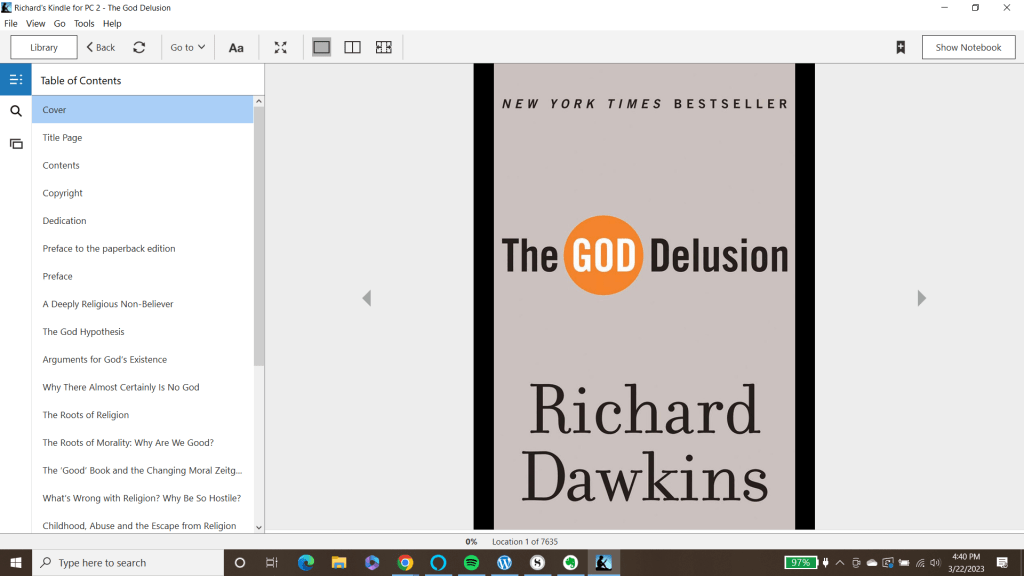





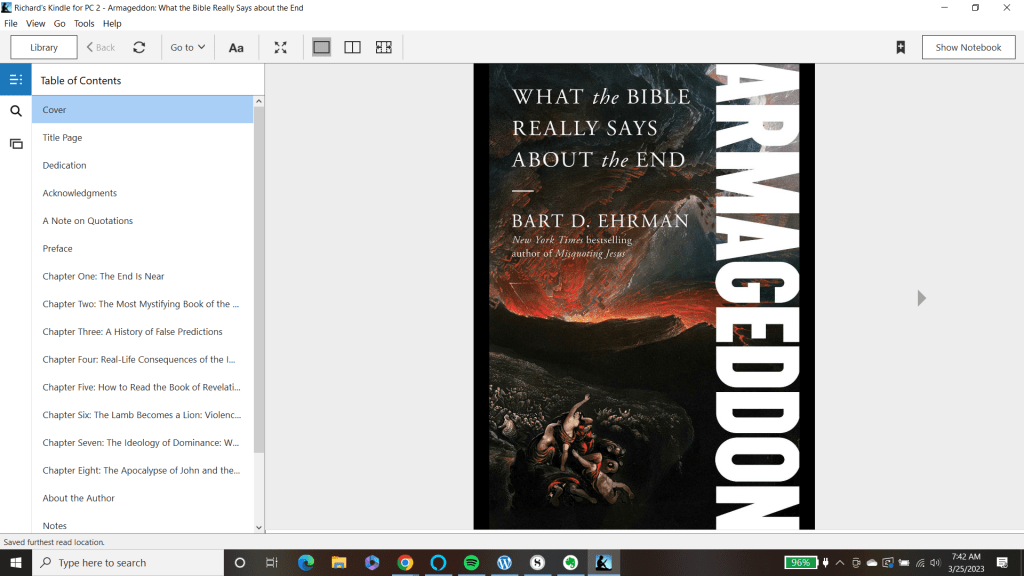
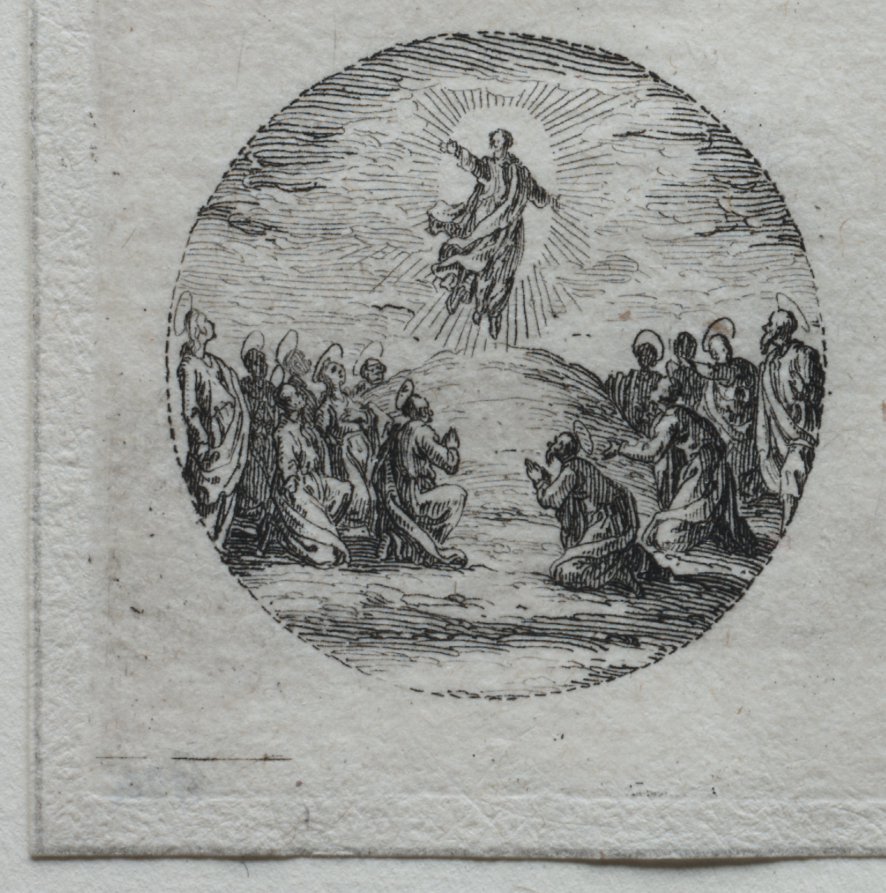

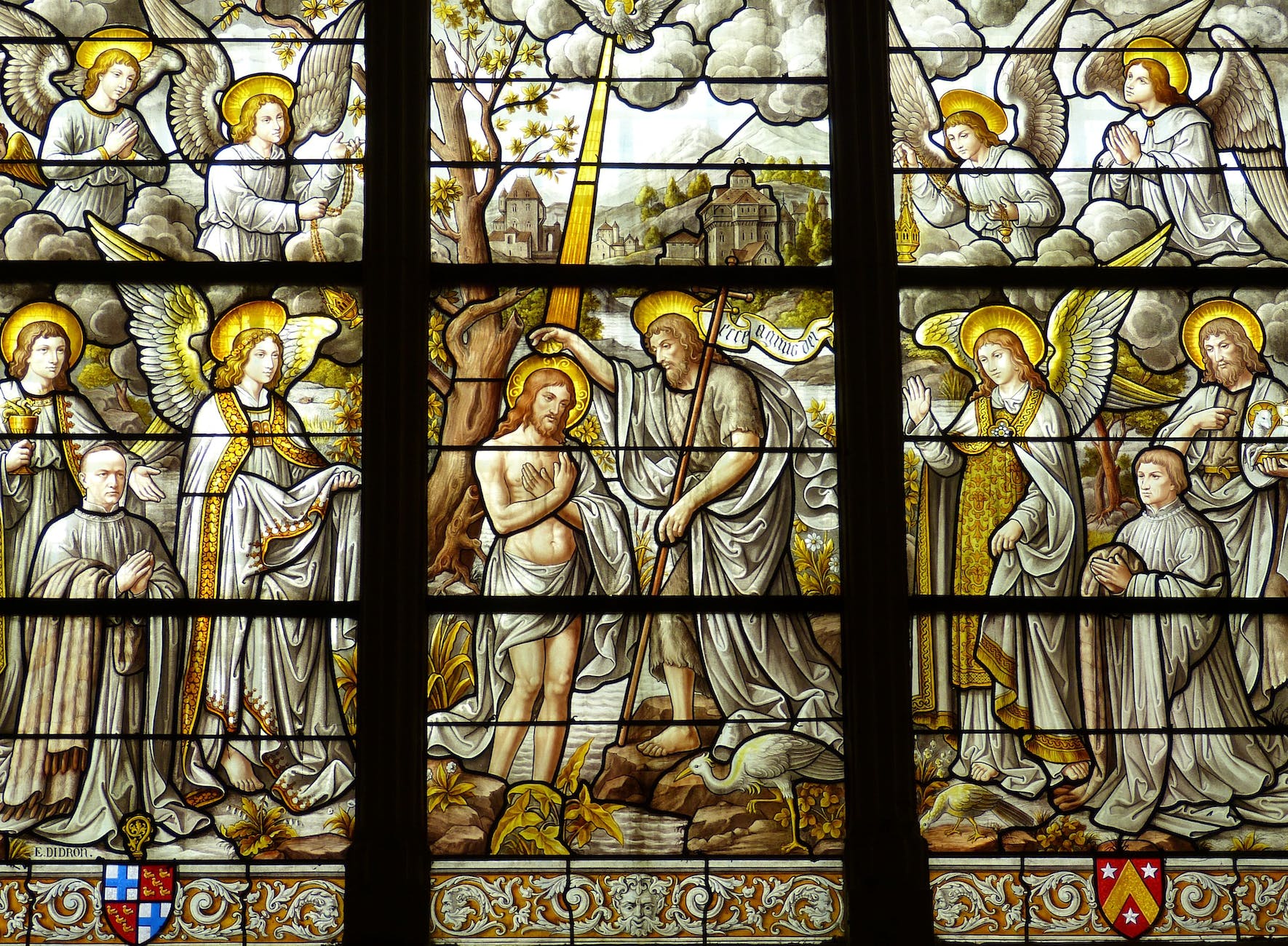

 Richard L. Fricks
