Writing Journal—Monday writing prompt

Your character finds an odd wooden cube in an antique store, which she obtains at a good price because the owner is unable to open it. Something rattles inside, and after some time studying the box’s markings, your heroine finds the catch that opens the box.

One Stop for Writers

Guidance & Tips

Write the scene of discovery (i.e., tell a story), or brainstorm and create a list of related ideas.

Here’s five story elements to consider:

  • Character
  • Setting
  • Plot
  • Conflict
  • Resolution

Never forget, writing is a process. The first draft is always a mess.

The first draft of anything is shit.

Ernest Hemingway

03/12/23 Biking & Listening

Biking is something else I both love and hate. It takes a lot of effort but does provide good exercise and most days over an hour to listen to a good book or podcast. I especially like having ridden.

Here’s my bike, a Rockhopper by Specialized. I purchased it November 2021 from Venture Out in Guntersville; Mike is top notch! So is the bike, and the ‘old’ man seat I salvaged from an old Walmart bike.

Here’s a link to today’s bike ride. This is my pistol ride.

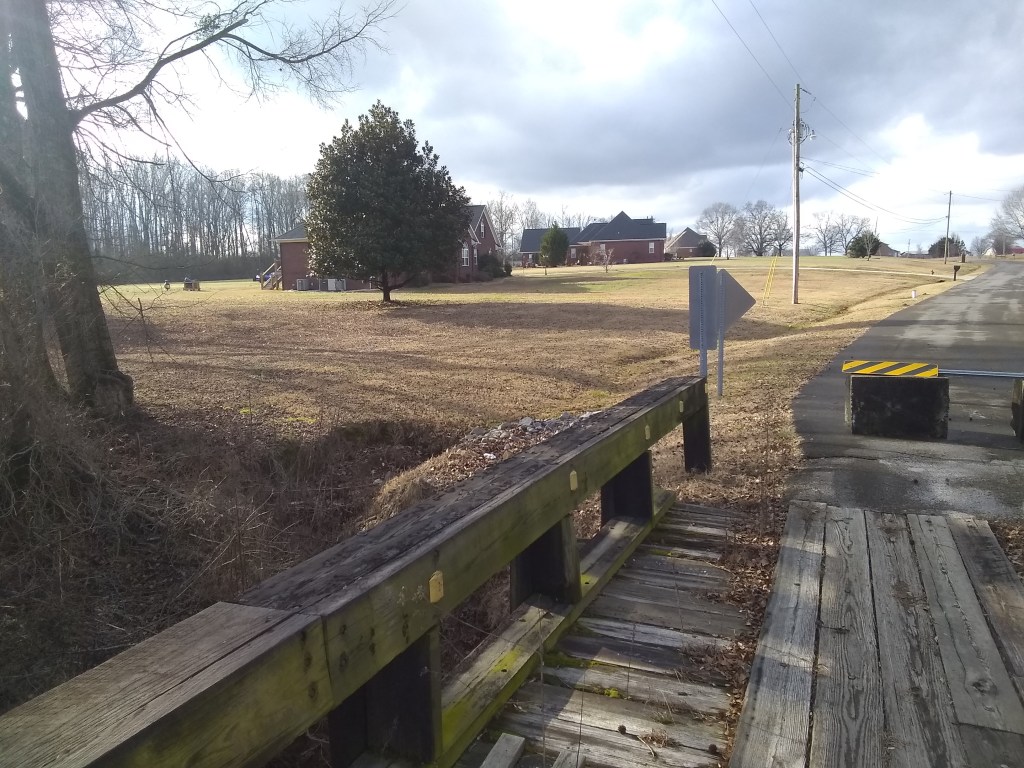
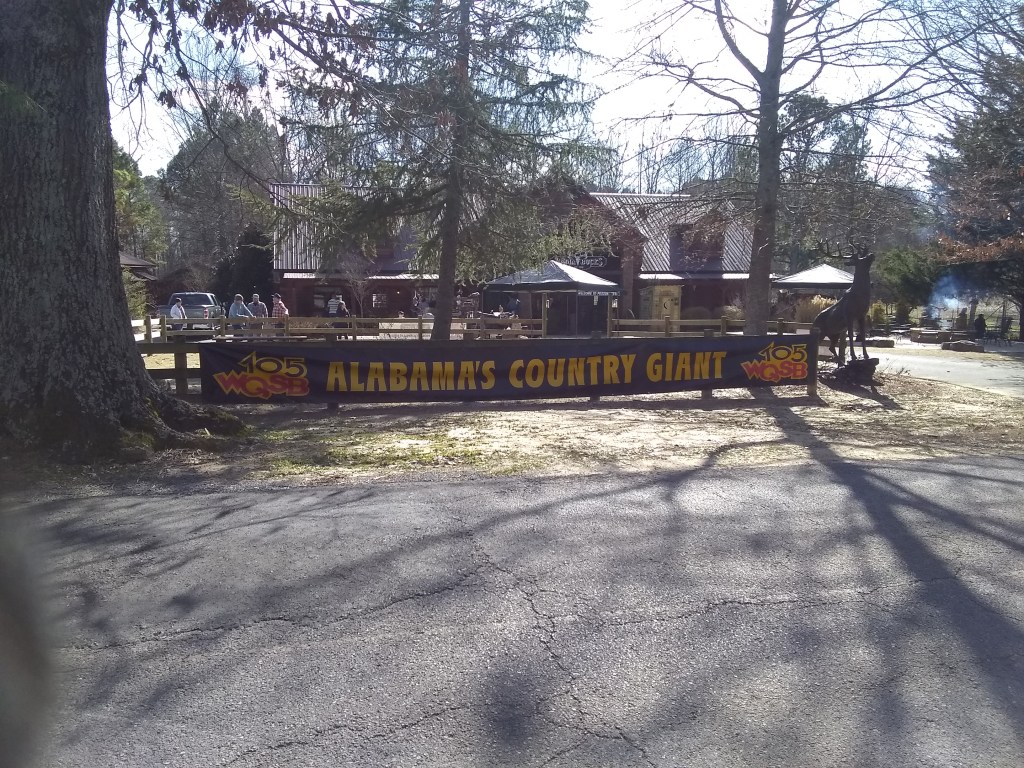
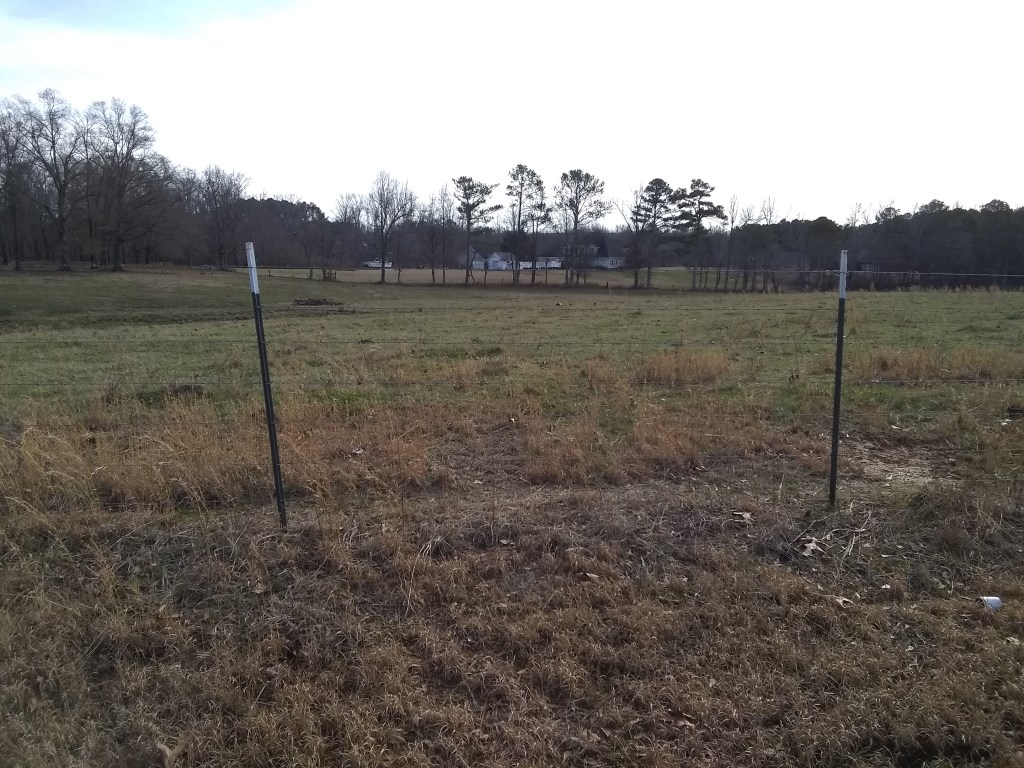
Here’s a few photos taken along my route:

Here’s what I’m currently listening to: McNally’s Secret, by Lawrence Sanders

He was a tremendously talented writer.

Amazon abstract:

First in the series starring the sleuthing Palm Beach playboy from the #1 New York Times–bestselling and Edgar Award–winning author.
 Inveterate playboy Archy McNally gets paid to make discreet inquiries for Palm Beach’s power elite. But keeping their dirty little secrets buried will take some fancy footwork in McNally’s latest case. A block of priceless 1918 US airmail stamps has gone missing from a high-society matron’s wall safe. Lady Cynthia Horowitz, now on her sixth husband, is a nasty piece of work who lives in a mansion that looks like Gone With the Wind’s Tara transplanted to southern Florida. McNally’s search takes him into a thickening maze of sex, lies, scandal, and blackmail. When passion erupts into murder and McNally must dig even deeper to uncover the truth, he unearths a shocking secret that could expose his own family’s skeletons.  

Top reviews from the United States

Linda G. Shelnutt

5.0 out of 5 stars Cure Cultural Volcanics with Bubbling Champagne. Design Life To Suit Taste & Times.

Reviewed in the United States on May 21, 2006

Verified Purchase

This book didn’t merely capture my reading interest. It became a book of my heart…

In McNally’s SECRET, the pilot to this series, we’re informed that the pater McNally is not an “old-money” man. Okay. I get that and I like it. (That’s not the secret.)

Having reviewed 4 of the original 7 McNally books by Lawrence Sanders, I had accepted the face value (not realizing the facade) of the Palm Beach mansion and the genteel lifestyle of pater Prescott McNally, Yale graduate, leather-bound-Dickens-reading, attorney-at-law. Upon reading (in McNally’s Secret) the illuminating passages of Archy’s grandparent’s ways into money, I began to wonder what other Secrets this novel might expose.

Usually, if possible, I prefer to read a series in order, pilot first. I can’t explain why, but, in this case I’m glad I read 4 of the original 7 McNally’s prior to reading SECRET (though I believe this series can be satisfyingly read in any order).

The opening of this novel was classic, and felt to be the initiation of what Sanders was born and itching to write, beyond the sagas of his other fine works. The introductory remarks were exquisite in mapping the reasons for, “Can’t you ever be serious, Archy?” I’d love to quote that paragraph, but maybe I should allow you to read it with the book in hand. I will quote a few other passages, however, which might serve as appropriate appetizers to this banquet of a book.

Comparing himself to S. Holmes, Archy says:

“I can’t glance at a man and immediately know he’s left-handed, constipated, has a red-headed wife, and slices lox for a living. I do investigations a fact at a time. Eventually they add up – I hope. I’m very big on hope.”

Archy’s description of the start up of the Pelican Club were the best type of soul food. This is how and why such a club should be started (then survive through a near hit of Chapter 7). Of course you really should read the book to get the whole of that brief history, but here’s a prime paring:

“We were facing Chapter 7 when we had the great good fortune to hire the Pettibones, an African-American family who had been living in one of the gamier neighborhoods of West Palm Beach and wanted out.”

They “wanted out” and they deserved a chance where their skills could and would save not only themselves, but those who hired them. Isn’t that the type of win/win the world needs now?

I almost sobbed at the below passage, I felt such a deep surge of “right on” (definitely did a breath-catch hiccup and heart moan):

“… we formed a six-piece jazz combo (I played tenor kazoo), and we were delighted to perform, without fee, at public functions and nursing homes. A Palm Beach critic wrote of one of our recitals, `Words fail me.’ You couldn’t ask for a better review than that.”

Yep. This is a book of my heart. Words don’t often fail me in reviews; too much the contrary. But I’m getting better at refraining from using my critic hat with a steel-studded-bat accessory, which is what Archy was getting at.

Some might wonder why a person in my position, with my un-hidden agendas, would take so much time to write raves on a series by a deceased author. Mostly, I love Archy. But, possibly the live spirits of the dead are sometimes more able to be helpful than dead souls of the living? Keeping my tongue in cheek, I might add that freed spirits probably have better connections for helping an author into the right publishing contacts for a character series with ironic assonance with this one.

Moving quickly onward and upward, though not with wings attached yet…

In contrast to the other 4 I’ve read, I noticed that this Archy is less bubbly-buffoonish (though the buffoon is always endearing) and slightly more serious, sensitive, and quietly contemplative. I like both versions of Archy, though I prefer the slight edge of peaceful acquiescence in the pilot, and I can’t help but wonder, as I do with all series, how much reader feedback, and editor/agents’ interpretation of it, directed the progression of balance of certain appealing or potentially irritating qualities. I wonder how each series would have progressed if the feedback had been balanced and pure (as a species, we’re not there yet, but forward motion is perceptible), rather than inevitably polluted by the “life happens” part of the sometimes perverted, capricious tastes of us squeaky wheels, and the healthy ego needs of professionals in positions of swallow and sway.

I’m still trying to understand why honesty is the most appealing human quality to me, yet honest criticism does not speak to my heart, nor to my soul, not even to my head. Often, though, it does speak in perfect pitch to my funny bone. And, of course true Honesty (with the capital “H”) leaps beyond speaking the “truth” as one happens to “see” it on a good or bad day. Cultural honesty, of the type dramatized by Stephen King, Lawrence Sanders, Tamar Myers, Barbara Workinger, Joanne Pence, Sue Grafton, (and others) is what most often pushes me to stand up and cheer.

Somewhere.

One of the best spots I’ve found is on the edge of the clear cliff of ozone found in Amazon’s sacred forum of Customer Reviewers.

Of course the first lines in SECRET, the sipping of champagne from a belly button would snag the attention of even the most sexually skittish reader of the nose-raised, neck-cricked, personality persuasion. But, truly and honestly, what sunk me with every hook were the few lines exposing why Archy could never be serious. I know I said I wouldn’t, but I have to quote this passage, beginning on page 1 chapter 1. For me, it’s one of the main selling points of the series:

“I had lived through dire warnings of nuclear catastrophe, global warming, ozone depletion, universal extinction via cholesterol, and the invasion of killer bees. After a while my juices stopped their panicky surge and I realized I was bored with all these screeched predictions of Armageddon due next Tuesday. It hadn’t happened yet, had it? The old world tottered along, and I was content to totter along with it.”

I’d bet my fortune (which is based on a skill of “make do”; there are no bananas in it) that the above passage is what captured a collection of readers so absolutely in a “right on” agreement that this series spanned the grave of the author and is still spewing pages and stretching shelves. And, of course, this attitude of “if you can’t lick `em; flick `em” which Archy aimed toward “kvetch-ers” as he terms them, continues from the above, with relish accumulating, throughout the book.

Archy is a rare sane person swimming along nicely within the insanity of a last-gasp-culture (which is “drowning in The Be Careful Sea” as I described and termed that syndrome in one of my sci fi manuscripts titled MORNING COMES).

To Jennifer, of the champagne sea in her belly button, Archy answered why he wasn’t an attorney:

“Because I was expelled from Yale Law for not being serious enough. During a concert by the New York Philharmonic I streaked across the stage, naked except for a Richard M. Nixon mask.”

That answer brought to mind the bright side of Howard Roark (from Ayn Rand’s FOUNTAINHEAD, see my review posted 10/14/05) who was arrogantly unconcerned about his and the Dean’s reasons for Roark’s being expelled from architectural school. You’d be right to wonder where I got that comparison, since Roark could never be accused of being anything but serious. Syncopated irony? Assonance?

You be the judge. Get the SECRET of the McNally collection.

As I relished the final chapters and pages of SECRET, I had a thought about the beauty, warmth, lovely literary melancholy, and subtly complex richness radiating from those concluding textual treasures:

In retrospect, this novel doesn’t feel like a planned pilot to a mystery series. It feels to be a singular novel, like but not like, the ones Sanders had written prior to it. What it feels like to me is that Lawrence hit upon a “soul speak” story which couldn’t halt the cultural conversation it had initiated, however serendipitous that initiation may have been.

Yes, I do recall that in some of my other reviews (“reveries” according to my Amazon Friend, L.E. Cantrell) I speculated on something which could seem contradictory to the above mentioned “thought.” I had wondered if Parker’s Senser series might have been somehow a spark for this McNally series. I continued to see references to Boston in this book (as in other McNally’s I’ve reviewed), which, of course, is the city for which Spenser did the Walkabout. So possibly SECRET was somewhat an antithetical homage to Spenser, possibly even a hat “doff” with a friendly, competitive “one-better” attempt, meant only to be a single novel rather than a never-die series.

Based on Agatha Christie’s official web site, Miss Marple was not originally intended to be another Poirot, and look what happened there (see my Listmania of the Miss Marple series).

To me, Archy appears to be a gatekeeper for pure and primal, hidden wishes and dreams. Living home comfortably, guiltlessly at 37, on the top floor of his parent’s mansion in Palm Beach; eating drool-food from a house chef; having established a club like The Pelican as a side atmosphere to partake in daily; working at a cushy, just challenging enough, engaging career for discreet inquiries … If an author’s (or reader’s) going to retire that would be da place (or at least an entertaining option).

It’ll be interesting to see if/how I’m able to bridge the gap from Lawrence Sanders’s Archy to Vincent Lardo’s. I’d love to know how that bridge was built and continues to be maintained.

Though a perfectly acceptable, gorgeous reprint in a mass market paperback was (probably still is) available on Amazon’s Super Saver Special, I felt lucky to find a vender on Amazon (a-bookworm2) holding a used G. P. Putnam’s Sons hardcover of this novel, a first printing of the 1992 copyright. What an honor it will be to have this version of the pilot of such an auspicious series from such a life-perceptive author, Lawrence Sanders. The glossy-black jacket provides a luscious background for the name and title printed in thick, gleaming, copper ink, with the artwork of an antique magnifying glass and fancy-brass scissors weighing down the million-dollar-valued, 1918 US Stamp of the Inverted Jenny.

This pilot is a rare find in a rare series.

Linda G. Shelnutt

Why we need public school: Pluralism is how progress happens

Here’s the link to this article by Adam Lee.

MAR 02, 2023

Two children studying and doing schoolwork | Why we need public school: Pluralism is how progress happens
Credit: Pixabay

Overview:

An openly white supremacist homeschooling network raises hard questions about how much control parents should have over their children’s education, and what public school offers that homeschooling can’t replace.

The battle over public schools is a clash of values.

There’s no such thing as neutral or value-free education. Every choice about what to present or what to omit from the classroom carries ideological weight.

That’s why red-state politicians want to present one version of the world, a version that’s scrubbed of references to racism, LGBTQ people, and non-Christians. They want to present their perspective to the exclusion of all others, and they demand that no white student should ever be exposed to facts that make them feel bad or that might cause them to question their parents’ worldview. They want public school to be (ahem) a safe space that doesn’t challenge their preconceptions.

On the other hand, liberals and progressives want an education that’s pluralistic and secular, one that presents a diversity of viewpoints without demanding that students adopt one of them in particular. We believe that this is the way for young people to mature into informed adults who have the power to choose for themselves. And if it stirs up some uncomfortable emotions along the way, that’s not a bad thing. Confronting facts that challenge what you believe is the only path to wisdom and personal growth.

Why is pluralism so important? To find out, let’s consider the opposite scenario: a disturbing case of anti-pluralistic education. What happens when education is purged of every viewpoint except one? When that desire is taken to an extreme, we end up in a dark and ugly place.

Unmasking “Dissident Homeschool”

“Dissident Homeschool” is a chat channel on the messenging service Telegram with several thousand subscribers. According to a report in the Huffington Post, it’s a haven for neo-Nazis and white supremacists seeking advice on how to raise and educate their children away from the “corrupting” influence of liberal, democratic society.

The owners of the channel, who went by the handles “Mr. Saxon” and “Mrs. Saxon”, created lesson plans steeped in their hateful ideology. They wrote about teaching their kids to celebrate Adolf Hitler’s birthday and copying out Hitler quotes as penmanship exercises. Their history curriculum pours hate on Martin Luther King and celebrates American racists like Robert E. Lee and George Lincoln Rockwell. Even math lessons are twisted into a tool to teach kids that non-white people are violent and dangerous.

This Nazi couple claimed to be proud of their beliefs, but their actions showed the opposite. They knew their racist ideas were evil, shameful and indefensible. That’s why they tried to keep their real identities secret. That’s also why they taught their children not to repeat these teachings where outsiders could hear:

We do not start teaching our children these things until we know they are able to *not* say certain things, and to keep things quiet around certain people. Also, when our children do have that “accidental racism”, we as parents can quickly step in and chuckle, and say “Oh kids! They say the darndest things!”

Despite these precautions, they weren’t careful enough. From clues they disclosed about themselves, an anti-fascist group called Anonymous Comrades Collective unmasked them as Katja and Logan Lawrence from Upper Sandusky, Ohio.

The Huffington Post followed up with additional confirmation, including relatives who recognized their voices when they were interviewed on a Nazi podcast, Achtung Amerikaner.

Because of the First Amendment, there aren’t legal consequences for teaching these ideas, abhorrent as they are. But the social consequences are very real. Shortly after being unmasked, Logan Lawrence was fired from his family’s insurance business. They’re now pariahs, as they should be.

The value of homeschooling

The idea of secret Nazis among us, taking their kids out of public school to teach them racism, sounds like a test case for why homeschooling should be banned. However, I wouldn’t go that far.

What I would say is that most kids are better off in public school. Most of us parents, even the best-educated and enthusiastic ones, aren’t qualified to teach every subject in a standard curriculum. It’s an incredible privilege to have an array of professionals working together to teach our kids.

However, homeschooling can be a vital safety valve. For kids who are suffering persistent bullying or harassment, or who have special needs the school can’t or won’t address, it’s valuable to have as an option. There are thousands of atheist, agnostic and secular families who homeschool for these reasons. Plus, especially since COVID, it can be a way to protect medically fragile kids from disease.

That said, homeschooling shouldn’t be a free-for-all. Society has a responsibility to ensure that everyone gets an education that meets basic standards. Ideally, homeschooling would be well-regulated. There should be a curriculum of topics that have to be taught, and at least occasional inspections or tests to ensure that homeschooled kids aren’t falling behind.

If homeschooling has a bad reputation, it’s because most homeschool families are religious fundamentalists, or belong to other ugly ideologies like this one, who want to raise their children in a bubble. They do it so they can control their kids’ access to information and prevent them from learning facts their parents don’t approve of.

Pluralism and progress

This story is a cautionary tale about the virtues of pluralism. Besides the other virtues of public education, it’s intrinsically good for young people to meet and get to know people whose beliefs and cultures are different from theirs. Public schools are better at offering that experience than either homeschooling or exclusive private schools.

It’s not proof against every evil ideology—I’m not claiming that no Nazi ever graduated from public school—but it makes it harder for the most hateful ideas to take root. When you get to know Black, or Jewish, or gay, or Latino, or atheist people, you can see that they’re human beings who are the same as you, with the same aspirations and the same struggles.

It’s through encounters with different cultures and different ideas that moral progress happens. In some right-wing visions for society, there would be no more public schools. Instead, every family would seek out a private school that taught dogmas they agreed with. Everyone would be sorted into ideological silos, never having to learn about or come into contact with anyone or anything that’s different, new, or challenging. That’s a recipe for stagnation and factionalism.

Pluralism opens up our intellectual horizons. It’s what leads us to see the world through other eyes. It’s what nudges us to consider perspectives other than the familiar. And, through hearing critiques and dissents from what we already believe, it’s what pushes us to reevaluate those ideas and see if they hold up. It’s the vital ingredient in people forming views that are truly their own, rather than just mindlessly regurgitating what they’ve been taught. It’s no surprise that it’s anathema to Nazis, white supremacists and other acolytes of hate. And, for the same reason, you should immediately be suspicious of any politician who proposes to limit pluralism by banning or burning books.

Adam Lee

DAYLIGHT ATHEISM

Adam Lee is an atheist author and speaker from New York City. His previously published books include “Daylight Atheism,” “Meta: On God, the Big Questions, and the Just City,” and most recently “Commonwealth: A Novel of Utopia.” He’s published editorials for NBC News, Political Research Associates, The Guardian, Salon, and AlterNet.

How to Bear Your Loneliness: Grounding Wisdom from the Great Buddhist Teacher Pema Chödrön

Here’s the link to this article.

“We are cheating ourselves when we run away from the ambiguity of loneliness.”

BY MARIA POPOVA

How to Bear Your Loneliness: Grounding Wisdom from the Great Buddhist Teacher Pema Chödrön

“You are born alone. You die alone. The value of the space in between is trust and love,” the artist Louise Bourgeois wrote in her diary. How much trust and love we wrest from life and lavish upon life is largely a matter of how well we have befriended our existential loneliness — a fundamental fact of every human existence that coexists with our delicate interconnectedness, each a parallel dimension of our lived reality, each pulsating beneath our days.

In When Things Fall Apart: Heart Advice for Difficult Times (public library) — her timeless field guide to transformation through difficult times — the Buddhist teacher Pema Chödrön explores what it takes to cultivate “a nonthreatening relationship with loneliness,” to transmute it into a different kind of “relaxing and cooling loneliness” that subverts our ordinary terror of the existential void.

Sunlit Solitude by Maria Popova. (Available as a print.)

She writes:

When we draw a line down the center of a page, we know who we are if we’re on the right side and who we are if we’re on the left side. But we don’t know who we are when we don’t put ourselves on either side. Then we just don’t know what to do. We just don’t know. We have no reference point, no hand to hold. At that point we can either freak out or settle in. Contentment is a synonym for loneliness, cool loneliness, settling down with cool loneliness. We give up believing that being able to escape our loneliness is going to bring any lasting happiness or joy or sense of well-being or courage or strength. Usually we have to give up this belief about a billion times, again and again making friends with our jumpiness and dread, doing the same old thing a billion times with awareness. Then without our even noticing, something begins to shift. We can just be lonely with no alternatives, content to be right here with the mood and texture of what’s happening.

In Buddhism, all suffering is a form of resistance to reality, a form of attachment to desires and ideas about how the world should be. By befriending our loneliness, we begin to meet reality on its own terms and to find contentment with the as-is nature of life, complete with all of its uncertainty. Chödrön writes:

We are fundamentally alone, and there is nothing anywhere to hold on to. Moreover, this is not a problem. In fact, it allows us to finally discover a completely unfabricated state of being. Our habitual assumptions — all our ideas about how things are — keep us from seeing anything in a fresh, open way… We don’t ultimately know anything. There’s no certainty about anything. This basic truth hurts, and we want to run away from it. But coming back and relaxing with something as familiar as loneliness is good discipline for realizing the profundity of the unresolved moments of our lives. We are cheating ourselves when we run away from the ambiguity of loneliness.

Lone Man by Rockwell Kent, 1919. (Available as a print and as stationery cards.)

So faced, loneliness becomes a kind of mirror — one into which we must look with maximum compassion, one that beams back to us our greatest strength:

Cool loneliness allows us to look honestly and without aggression at our own minds. We can gradually drop our ideals of who we think we ought to be, or who we think we want to be, or who we think other people think we want to be or ought to be. We give it up and just look directly with compassion and humor at who we are. Then loneliness is no threat and heartache, no punishment. Cool loneliness doesn’t provide any resolution or give us ground under our feet. It challenges us to step into a world of no reference point without polarizing or solidifying. This is called the middle way, or the sacred path of the warrior.

Complement with Rachel Carson on the relationship between loneliness and creativity and Barry Lopez on the cure for our existential loneliness, then revisit poet May Sarton’s splendid century-old ode to the art of being contentedly alone.

Fear Thesaurus Entry: Conditional Love

Here’s the link to this article.

March 11, 2023 by BECCA PUGLISI Leave a Comment

Debilitating fears are a problem for everyone, an unfortunate part of the human experience. Whether they’re a result of learned behavior as a child, are related to a mental health condition, or stem from a past wounding event, these fears influence a character’s behaviors, habits, beliefs, and personality traits. The compulsion to avoid what they fear will drive characters away from certain people, events, and situations and hold them back in life. 

In your story, this primary fear (or group of fears) will constantly challenge the goal the character is pursuing, tempting them to retreat, settle, and give up on what they want most. Because this fear must be addressed for them to achieve success, balance, and fulfillment, it plays a pivotal part in both character arc and the overall story.

This thesaurus explores the various fears that might be plaguing your character. Use it to understand and utilize fears to fully develop your characters and steer them through their story arc. Please note that this isn’t a self-diagnosis tool. Fears are common in the real world, and while we may at times share similar tendencies as characters, the entry below is for fiction writing purposes only.

Fear of Being Loved Conditionally

Notes
Conditional love has to be earned through performance or achievements. A character who has experienced love in this way is likely to develop certain habits that they believe will ensure the acceptance of others. They may also perceive their value as being tied to certain behaviors or successes. These thought patterns and actions may continue to plague the character even after they’ve recognized that this kind of love is unhealthy and they want no part of it.

What It Looks Like
Being a people pleaser
Being an overachiever
Perfectionism
Making choices based on what other people want or like rather than on the character’s own desires
Difficulty setting or maintaining personal and emotional boundaries
Being oversensitive to signs of anger, disappointment, or disapproval from others
Being slow to open up
Building up emotional walls to keep others away
Stopping romantic relationships before they progress too far; keeping things superficial
Apologizing for the smallest of mistakes
Ghosting others
Only expressing positive emotions (to avoid driving people away)
Needing frequent reminders of a friend or partner’s love
The character seeking approval for their thoughts, actions, and emotions
Only showing the best side of themselves to others
Staying in a toxic relationship
Being highly obedient or subservient
Being too permissive (not knowing how to love someone while also expressing criticism or correction) 
Loving others unconditionally
Being highly attuned to signs of conditional love in others

Common Internal Struggles
Constantly needing to prove themselves to others
Analyzing other people to determine what must be done to earn their love
Wanting to be in a relationship but being afraid of disappointing the other party
Overthinking interactions with the other person to determine if the character is doing all they should be doing or has done anything wrong
The character doubting their own worth
The character constantly doubting where they stand with the other party
Believing they are unlovable
Vowing to never love others conditionally but worrying that this is exactly what the character is doing

Flaws That May Emerge
Inhibited, Insecure, Nagging, Needy, Obsessive, Oversensitive, Perfectionist, Pushy, Resentful, Selfish, Subservient, Weak-Willed, Withdrawn

Hindrances and Disruptions to the Character’s Life
Difficulty forming intimate relationships
Getting entangled in an ongoing cycle of toxic relationships
Not knowing what true love looks or feels like
Struggling to love fully and vulnerably
The character viewing minor setbacks as major failures and defining moments
Relational friction caused by the character’s constant need for affirmation or frequent questioning of the other person’s love

Scenarios That Might Awaken This Fear
Having to interact with a parent, ex, or sibling who loved the character conditionally
Beginning a new friendship and not knowing what’s expected
Being asked out
A past abuser or manipulator asking for forgiveness
The character realizing they have loved someone conditionally
Making a mistake that hurts someone else
Falling short of the conditional standard someone has placed upon the character
Being blown off or ignored
Getting dumped

Other Fear Thesaurus entries can be found here.

Need More Descriptive Help?

While this thesaurus is still being developed, the rest of our descriptive collection (16 unique thesauri and growing) is accessible through the One Stop for Writers THESAURUS database.

If you like, swing by and check out the video walkthrough for this site, and then give our Free Trial a spin.

BECCA PUGLISI

BECCA PUGLISI

Becca Puglisi is an international speaker, writing coach, and bestselling author of The Emotion Thesaurus and its sequels. Her books are available in five languages, are sourced by US universities, and are used by novelists, screenwriters, editors, and psychologists around the world. She is passionate about learning and sharing her knowledge with others through her Writers Helping Writers blog and via One Stop For Writers—a powerhouse online library created to help writers elevate their storytelling.

Commentary on D. James Kennedy’s book Why I Believe–Chapter 2

Here’s the link to this article.

(Argumentum Ad Verecundiam)

In Chapter 2 of Why I Believe, D. James Kennedy continues with his explanation of why he believes in the Bible, this time using evidence from archaeology rather than prophecy. He stands on more solid ground here. Until the 1970s, a strong alliance existed between the relatively new science of archaeology (starting in the 19th century) and the defense of the Bible as history. Archaeology has been quite useful in filling in historical gaps, and confirming or disproving beliefs for which no evidence previously existed.

As with chapter 1, Kennedy’s well-thought-out presentation impressed me before I began seeking more knowledge. Now, I find the Fallacy of Composition still looms in the background, as do other problems. In particular, as in Chapter 1, there is a lot Kennedy does not say. He is again quite selective in the evidence he chooses to present, denying the reader a complete picture from which to draw a conclusion; he also refers to questionable sources. In this essay I will cover some of his omissions and comment on his sources afterward.

Questionable evidence

One cannot deny that much evidence exists from archaeology supporting certain events and places described in the Bible. Kennedy identifies numerous examples, but he omits some crucial information.

Let us first consider the Flood, of which Kennedy writes three short paragraphs. Ignore, for now, the non-archaeological fact that a flood as described in the Bible would require an enormous volume of water to be present on the earth, and that the earth does not have a tenth as much water, even if we count the ice at the poles. Many cultures do have ancient flood stories. The fact is, there are no archaeological records supporting the notion of a world-wide deluge.

Judging from genealogies, Noah’s Flood would have taken place about 2400 BC. However, Kennedy neglects to mention that continuous written records exist during that time from both Egypt and Mesopotamia (especially the former); scribes kept writing their chronicles through that period as if nothing whatsoever had happened except for the usual annual overflow of the Nile.

It is likely that the Biblical Flood story was based, if not on legend, on some actual but local flood in Sumerian history.[1]

Sumeria was a flat land between two large rivers. As in the case of our own Missouri and Mississippi Rivers, unusual rises bring about floods. A country as flat as Sumeria would not require much flooding before large portions of the entire region are covered. A particularly bad flood would live on in the memories of later generations, and such bad floods definitely occurred. In 1929, English archaeologist Sir Charles Leonard Woolley found water-deposited layers at least ten feet thick in his excavations near the Euphrates, indicating that roughly around 3000 BC there were indeed drastic floods of at least a local nature. Such deposits were not found everywhere, however, and records of Sumerian culture showed no overall break.

Inevitably, as the story got told and retold, a flood spreading out over Sumeria and neighboring regions, with a great loss of life, would be said to have covered “all the world,” meaning the entire region. And of course, later generations, having a much broader knowledge of geography, would accept the phrase “all the world” literally. The same sort of thing happened with Alexander the Great, who “conquered the world” and then wept for “other worlds to conquer,” when he had actually conquered only 4 or 5 percent of the earth’s land surface.

Some people suspect rain alone cannot account for the seriousness of the Flood, and suggest that there may have been a sudden rise in the Persian Gulf, leading to a disastrous invasion of water from the sea. Asimov proposes a meteorite splashdown resulting in a huge wave that moved inland catastrophically, sweeping everything in its path. Indeed, Genesis 7:11 supports this concept: “. . . were all the fountains of the great deep broken up, and the windows of heaven were opened.” In other words, a tidal wave plus rain.

In 1872, English archaeologist George Smith deciphered ancient tablets from the remains of a royal Assyrian library and found a tale of Gilgamesh trying to obtain the secret of eternal life from a man claiming to be a former king of a Sumerian city who rode out a flood in a large ship. The tale is based on still older legends dating back to Sumerian times. Because the details of this Sumerian flood tale are so similar to a number of points in the Bible, it seems likely that the Biblical Flood story is a version of this much earlier tale.

Aside from the Flood, archeological evidence provides inadequate support for the conquest of Canaan by the Israelites and the genocide that they, according to their own account, allegedly practiced on the previous inhabitants. In particular, for Joshua’s conquest of Jericho, Kennedy again omits crucial information:

  • Walls can fall outward without supernatural help, contrary to the chapter’s claim. Most likely, while the attention of Jericho’s defenders was occupied by the slow procession of Joshua’s army about the city, accompanied by an awesome trumpeting, they might not have seen nor heard Joshua’s sappers slowly undermining the city’s walls.[2]
  • Archaeological evidence does not establish that the destructions of Jericho, Hazor, and Gibeon were the work of invaders, let alone the same invaders (the Israelites).
  • In fact, at site after site, firm negatives face the cities and walls Joshua supposedly stormed. Archaeology reveals that Jericho’s walls were flattened centuries before Joshua came along! Biblical historian Robin Fox writes, “After 1320 BC there may have been a fair-sized village, but nothing like a city or an impregnable wall. After 1300 the place was not settled at all; on the usual dating of the Exodus and Conquest (circa 1250 – 1230 BC), the Israelites would not even have needed to blow a trumpet to take the site by storm.”[3]

Similarly, a fortunate find in 1973 dated the ruin of Lachish (see Joshua 10:32) conclusively to the reign of Egyptian Pharaoh Ramses III (circa 1194 – 1163 BC), far too late for a conquest by Joshua. Several other sites in Palestine, named in the books of Joshua and Judges, either show no signs of walled urban settlement during Joshua’s time, or they show no signs of a single wave of common destruction.[4]

So much for the declaration, at the end of the chapter, that no archaeological discovery has ever controverted a Biblical reference. Here’s a short list of some other historical events in the Bible that should be supported by archaeological evidence, but aren’t:[5]

  • There are no Egyptian records of the events of the Exodus, had they happened as described in the Bible. The confrontation with the Israelites, the natural disasters, the pursuit of the Israelites, and the drowning of the Pharaoh and his army in the Red Sea are all events that could not have escaped the notice of any Egyptian chronicler.
  • Joshua’s telling the Sun to stop moving across the sky (Joshua 10:12-14) should be recorded in numerous existing chronicles; it would have happened around 1240 BC, when there were scribes at work not only in Egypt and Mesopotamia, but also in ancient Turkey and Crete.
  • In the Book of Jonah, we find that Jonah got the people of the Assyrian capital of Nineveh to repent of their sins. This remarkable event is not confirmed anywhere else in the Bible, nor in the chronicles and libraries of Nineveh or any neighboring city.
  • The massacre of baby boys ordered by Herod (Matthew 2) is mentioned nowhere else in the Bible, or by any outside historians, some of whom describe Herod in great detail.
  • The Star of Bethlehem (Matthew 2) is also mentioned nowhere else in the Bible, and historical evidence contradicts the generally accepted birthdate for Jesus as 4 BC. We know from Roman history that Halley’s comet appeared over Rome in 12 BC when the famous commander Marcus Agrippa died, and Chinese astronomical records allege a comet appearing at that time, which might explain a moving, not fixed, star guiding the Wise Men to Bethlehem. It’s likely that Matthew’s story isn’t history but rather was constructed from messianic prophecies, and the Wise Men were added as another legend.[6]
  • How could Jesus (according to Luke) be born at a time when a census was ordered by Caesar Augustus, when Quirinius governed Syria and Herod ruled the Jews? Historical evidence says that Herod’s rule ended in 4 BC and the census did not occur until 6 AD when Quirinius was governing Syria.[7]

For more information on historical myths in the Bible as they relate to archaeology, try the book Out Of The Desert by William H. Steibing Jr.

This chapter seems like a good place for Kennedy to address the classic argument about the age of human civilization as indicated by the Bible versus evidence from archaeology, but he neglects to do so. This is an interesting topic so I’ll examine it here.

By our calendar, the Jews of the Middle Ages calculated the date of creation as October 7, 3761 BC, and this is still used in calculating the Jewish calendar year. The most familiar and accepted Christian calculation for the date of creation is one worked out by James Ussher, an Anglican archbishop of Armagh, Ireland, in 1654. He determined that the creation took place in 4004 BC. This is the date often found at the head of the first pages in King James editions of the Bible.[8]

4004 BC is actually a pretty good date for the establishment of prehistoric times, as humans began to have a proper history only after the invention of writing a bit before 3000 BC. However, ignoring that 4004 BC contradicts geologic evidence for the age of the earth, this date also opposes archaeological evidence of the age of human civilization. The first cities were organized as early as 8,500 BC. In the Far East, 14,000-year old evidence has been found of agriculture and pottery and other expressions of human culture and technology.

Sources lacking credibility

Dr. Kennedy commits another logical fallacy throughout Chapter 2: argumentum ad verecundiam, otherwise known as Appeal To Authority, which uses the admiration of the famous to try and win support for an assertion unrelated to the field of expertise for that authority. It proves nothing to say that “Newton believed in God” (Newton’s achievements in physics have little to do with his personal beliefs), or “Roger Penrose concluded that intelligent computers are impossible” (Penrose is a famous mathematician, not necessarily well-qualified to speak about machine intelligence). Kennedy quotes archaeologist William F. Albright (who is neither linguist nor historian) to support his assertion that Moses wrote the Pentateuch, when current knowledge about ancient religious traditions, language analysis, and internal inconsistencies in Genesis point to the fact that the Pentateuch had several authors.[9] Most Biblical scholars agree on this point,[10] even without pondering the fact that the end of Deuteronomy contains an account of Moses’s own death.

I noticed also, that to give his claims an appearance of authority, Kennedy uses superlatives like “most outstanding archaeologist of the twentieth century,” “one of the great scholars of our time,” “renowned,” etc. to describe his sources (Albright, Kenyon, and Glueck, respectively). Possibly some are true, at least in Kennedy’s intellectual circle, although I think those qualifications are debatable.

In chapter 2, Kennedy cites Josh McDowell’s book, Evidence That Demands a Verdict, five times. I am not familiar with most of the other references in this chapter, but I am acquainted with McDowell’s books, which even many Christians cannot take seriously. One reviewer, James Meritt, in the introduction to his meticulous 50+ page commentary on this book, describes its intellectual dishonesty:

The entire text is rife with circular reasoning, attempts at incremental confirmation, pleading to authority, and insufficient set definition, but there are many other logical errors. . . . Since his title seems to indicate some judicial standpoint, using “verdict,” I believe that this will show that it is either wrong, unconfirmed, debatable, or biased. Thus, it “demands” no such thing. Given the wide press this book gets, I expected better.[11]

See The Jury Is In: The Ruling on McDowell’s “Evidence” for more information. Similar charges of intellectual dishonesty have been leveled, in scrupulous detail, against Henry Morris and Duane Gish, whom Kennedy cites later in chapter 4.

Conclusion

Dr. Kennedy states that Biblical skepticism has been “discredited by discovery after discovery.” He misunderstands the evidence. New discoveries discredit some skeptics, confirm others, pose new questions, and lead to newer, more accurate descriptions of history. Instead of contesting or force-fitting the evidence, is it not better to accept that the evidence helps us to read the Bible correctly? Archaeology can aid in teaching us which passages are meant as allegory or legend, and which ones represent real historical accounts.

Writing Journal—Sunday writing prompt

As he’s taking out his garbage before work, a neighbor kicks your protagonist’s dog. In a twist of fate, the neighbor forgets to close his garage door as he drives off. How might your character get revenge? 

One Stop for Writers

Guidance & Tips

Write the scene of discovery (i.e., tell a story), or brainstorm and create a list of related ideas.

Here’s five story elements to consider:

  • Character
  • Setting
  • Plot
  • Conflict
  • Resolution

Never forget, writing is a process. The first draft is always a mess.

The first draft of anything is shit.

Ernest Hemingway

Drafting–Millie & Molly visit the law firm of Bird & Foley

It was almost noon Monday when the heating & air guys showed up. Millie and Molly’s two nights and one day without heat hadn’t been unbearable but still left them with that ‘tent-camping’ feeling of tiredness, not to mention Molly’s irritability.

Like yesterday, they each had stayed under the covers until there was an interruption. Sunday’s was the super knocking on the door, just checking in and updating them on when to expect the repairmen. This morning, at 10:30, it was Alisha’s text. To Molly’s chagrin, the notification beep had spawned an instant lie.

“Who’s that?” Millie had asked three feet away head barely visible from beneath a mountain of covers.

“Oh, someone offering psychic reading services.”

While untangling from the twisted coverlet and thermal blanket, Millie had responded with a multi-sentence castigation of Google and its ‘listening’ ability. “Dang, it must have picked up on our conversation last night about psychiatrists in New York City.”

Molly dared not reveal she’d used her new phone to communicate with Alisha during the last leg of her and her mother’s bus ride. The battery in Alistar’s secret phone had been low and Molly couldn’t wait to tell her best friend they’d almost reached the Big Apple.

“Me first.” Molly was out of bed in a flash, running to the bathroom, iPhone in hand. “I’m about to bust.” Millie just stared and walked to the kitchen.

Inside, on the commode, Molly sent Alisha a text. “Me here, you here. Morning. Can’t talk now, and don’t use this number. I used it Saturday by mistake. I’ll text you later from Alistar’s phone. Love you.” The lack of privacy was definitely going to be an issue, Molly thought as she stood, washed her face, and rolled her eyes as Millie knocked on the bathroom door.

Molly and Millie took showers, dressed, and were out of the apartment by 12:30 PM, leaving the hard work to the two heating and air guys.

Yesterday afternoon, Millie had called her new boss as he’d requested. Like Matt in Chicago, Stephen Canna was polite, respectful, generous, and anxious to acclimate Millie to her new work home, a few of her associates, and a summary of her initial job assignments. The two had agreed on 1:15 as a convenient time for all parties to meet.

With Molly’s help, Millie had decided the best way to travel to (and from) the law firm of Bird & Foley at the Woolworth Building in south Manhattan was New York City’s subway system; it definitely was cheaper than Uber or a taxi. The journey planning, with the aid of Google Maps, was relatively simple, although it included two walks, a nine minute one from their apartment building at 334 East 79th Street to the 77th Street subway station, and a second one, five minutes at the tail end, from the Brooklyn Bridge City Hall Station to the Woolworth Building. The cost, each way, per person, was only $2.75. Even better, Millie had discovered the MTA (Metropolitan Transportation Authority) offered a monthly discount card for $127.00 which provided unlimited use of the subway system. Again, per person.

The walk to the 77th Street station was enjoyable with a blue sky and an unusually warm temperature. Thank goodness the snow had stopped and the streets and sidewalk were clear. Two things caught Molly’s attention during the nine minute walk: the Yorkville Library on 79th Street just before turning left on 3rd Avenue, and the Spectrum Store on 3rd Avenue before turning right on East 77th Street. To her, it wasn’t too early to start thinking about things to do after school and while waiting on her mom to arrive home from work, which, from past history, could often be as late as six or seven PM.

Millie and Molly descended the stairs to the subway tunnel at 12:33 PM. A train was departing as they approached. Per the overhead digital sign, the next train would arrive in four minutes. Both Millie and Molly had downloaded the OMNY App (One Metro New York) to use in paying fares. They approached a turnstile and tapped their smart phones. The dings meant they’d successfully paid the $2.75 fare.

Molly wasn’t really surprised at the eclectic mix of strangers busing around the platform: business professionals in suits, pink-haired teenagers with piercings and tattoos, mothers pushing strollers, vagrants sleeping on the benches along the concrete walls, and older men or women with tattered back packs likely containing everything they owned.

Like Greyhound bus-lines, the next train arrived on time. The second it stopped the narrow doors opened. Although there were available seats, Millie insisted they stand next to one of the vertical poles equally spaced along the center of the train, and hold onto the leather hand loops dangling from the ceiling. Her reasoning was this would be good practice for the time they’d have no choice given a large crowd of weary travelers.

Molly counted thirteen stops along their twenty-two minute ride; none took longer than a minute or two. Over the creaks and squeaks of the metal tube shimming at high speed, Millie was lost in thought the entire trip, mostly imagining a typical day once she started work at Bird & Foley. What she dreaded and hated the most was Molly having to fend for herself. Although the two would leave the apartment at the same time each morning five days per week, their walk paths would diverge at 2nd Avenue where Molly would go left and walk three blocks to Robert F. Wagner Middle School, while Millie continued onward to the 77th Street station. She made a mental note to search for another student who attended Molly’s school. Maybe the two could become friends, but, at least walk together the seven minutes to and from school. Somehow the air changed directions and the putrid smell of body odor racked Millie back into reality. A greasy haired man in a dirty hooded jacket stood beside her anxious to exit the train.

As expected, the train ride ended at the Brooklyn Bridge City Hall Station. After waiting for a dozen other passengers to depart, including two well-dressed professionals, three older women lugging shopping bags, and a young mother clutching a young child, Millie and Molly exited the train.

After ascending the stairs, Millie immediately recognized the Woolworth Building although they were a five minute walk away. It was grand, beautiful, and no doubt, commanded a premium monthly rental. Bird and Foley had to be a financially solid firm. From Millie’s research, she’d learned the neo-Gothic structure was built in 1913, and once was the world’s tallest building. No doubt, it remains an architectural landmark.

After their five minute walk, both Molly and Millie shed their jackets. The wind had calmed and the temperature was approaching sixty degrees.

They were several minutes early so they took the time to stare at the Woolworth Building’s unbelievably beautiful lobby. It was ornate to say the least, not only for its marble floors and granite walls, but for the various sculptures, mosaic ceiling, and other architectural touches. In a word, it was dazzling.

Millie’s favorite sculpture was rather grotesque, one depicting the building’s original owner, Frank W. Woolworth, with him holding one of the nickels that created his five-and-dime empire. Molly liked the sculpture depicting Cass Gilbert, the architect of the Woolworth Building, holding a model of the tower.
During the elevator ride to the twenty-eighth floor all Millie could think about was the boring, uncreative design of the Chicago skyscraper that housed Matt’s office. She hoped the Woolworth Building foreshadowed a new and exciting world, one intricately designed to shed wonder, hope, and vision to its occupants. When they reached their floor, Molly asked, “what world did you go to?”

The elevator doors opened, and a tall, thin man with close-cropped red hair stood smiling in the hallway outside double mahogany doors. When Millie sent Stephen a text announcing they were in the building she hadn’t expected him to give them such a welcome. He took three steps toward them and held out his right hand as though to shake but quickly removed it and gave Millie a hug.

“It’s so nice to finally meet you.” He turned to the precocious twelve-year-old. “Gosh, this can’t be Molly. You could pass for my ninth grade daughter.” Instead of hugging, they did a fist bump.

After a few questions about the new apartment, and both Molly and Millie thanking Stephen for the groceries, he guided them through the giant mahogany doors to the law firm of Bird & Foley.

“This is Candice, our receptionist.” Stephen said as he walked toward a sixty’ish looking woman with narrow eye-glasses perched on her nose, wearing a denim jacket, and standing behind a semicircular counter built to match the heavy wooden front doors. “If you’re ever in doubt who to ask for something, start with Candice.”

“Hello Millie and Molly, welcome to Bird & Foley.” Candice said, smiling, but quickly returning her attention to a document she’d been reading.

The office was huge, encompassing the entire twenty-eighth floor. Stephen’s tour consisted of two phases. First, he quickly led them past an assortment of multi-sized conference rooms, associate attorneys offices that were as nice as any at Quinn Law in Chicago, a giant room filled with cubicles for support staff, and through another set of double-oak doors, and past ten offices with great views along the south and west sides of the Woolworth Building. These larger offices were reserved for the partners. So far, other than Candice, neither Millie or Molly had seen another person.

The second phase started with a brisk walk to the eastern side of the building and into a large room that housed the firm’s kitchen and dining room. There, Stephen paraded Millie and Molly around and introduced them to at least forty people of all shapes and sizes, many wearing Santa hats. Obviously, the casually dressed hoard was enjoying a final party and exchange of gag gifts before departing early for a long Christmas holiday.

Not once did Stephen attach a label to identify what the person’s role was within the firm. There was no, “Ken is a partner”; “Sally is Ken’s secretary”; or, “Billy is our custodian.” The same feeling Millie had sensed when Candice welcomed her and Molly, instantly recognizing them, was how she felt. Wow, every employee was aware of her joining the firm.

Before exiting the dining room, Stephen, who seemed to possess detailed knowledge about each of the firm’s employees, introduced Millie and Molly to a man named Ed, whose daughter, Elizabeth, is an eighth grader at Robert Wagner Middle School. “Give me your number and I’ll have Lizzie call you.” Ed said looking at Molly, who looked at Millie before announcing her phone number.

Surprisingly, Stephen’s office was the most unkempt of all the partners. Unlike theirs, created, designed, and selected, Stephen’s was random, chaotic, and accumulated. The bookcases on two walls were anything but neat and orderly. The two arm chairs facing his giant, drawer-less desk were piled with an assortment of multi-colored folders. The small round table in the corner was strewn with pencils, markers, opened envelopes, and both letter and legal size documents in disarray. Even the couch that backed to the floor-to-ceiling windows was a mess. A New York Giants coverlet that likely was intended to lay across the length of the couch was pushed to one end and titled. The thermal blanket and two pillows in white cases loudly declared its occupant spent nights in the office.

Stephen quickly removed the bed items, tossed them into one of two chairs at the round table, and motioned for Millie and Molly to sit on the couch. “I’ll grab some water.” Stephen said without asking. He walked to and opened a small refrigerator on the credenza behind his desk. Millie hadn’t noticed it before. He returned, handed each of them a bottle, and repositioned the remaining chair to face Millie and Molly.

“I won’t take long since I know you have tons of things you need to do. But, I wanted to give you an idea of what to expect on the sixth when you start. Millie was thankful for two weeks before the roller-coaster ride of work and life outside the Woolworth Building began.

“First, if it’s acceptable to you, I want you to work on the civil side of the practice.” Millie recognized Stephan’s politeness and consideration. She was his employee, her work assignments didn’t have to meet her approval. Anyway, it was the thought that counted. He digressed a little and gave an overview of the firm’s practice: pretty much equally divided between the law’s two main divisions, criminal and civil. “Oh, to start with, you’ll be in the trenches, that’s what we call the large room we walked by with all the cubicles. This is where all the paralegals and other support staff have their homes. Except for the four supervisors. These experienced paralegals direct a team that corresponds to the four main practice areas, criminal, blue-collar; criminal, white-collar; civil, personal injury, non-death cases; and, civil, personal injury, death cases.

Molly raised a hand as though she was in class. “Where’s the nearest restroom?” Millie made a mental note to ask her daughter if she was having any health problems. It seemed she’d been going to the bathroom a lot lately.

“Through that door.” Stephen pointed to an oak door beside his credenza at the opposite side from the small refrigerator. Molly thanked him and left Millie and Stephen alone. He leaned forward and asked, “I want you to tell you in person that you can confide in me, about anything. I can only imagine what you’ve gone through and continue to go through.”

Millie thought about Matt’s caring and compassion. Now, Stephen seemed to be a spitting image. How fortunate could she be? “Thanks so much. That means the world to me, but I don’t want to be a burden. It’s imperative for me to do my job and become an asset to your firm.”

“Our firm. It belongs to all of us. You’ll see when you receive your first bonus. But, let’s talk about that during orientation.” Molly returned and started surfing her phone.

There was a soft knock on the door next to the hallway. It was Candice. Millie and Stephen had arranged this yesterday afternoon. Candice would take Molly to the front desk and start introducing her to the phone system. His ninth grade daughter was already adept at receiving and transferring calls and had offered the same to Millie on behalf of Molly. “We’ll be along in thirty or forty minutes.” Stephen said as Molly followed Candice.

“Now, here’s my plan. The supervising paralegals all have private offices. They’re scattered among the associate offices we passed. The other partners and I have agreed to create a whole new division, which will necessiate another supervising paralegal. The placeholder name, for now, is civil, personal injury, churches. Notice, I didn’t distinguish death and non-death because these lawsuits ….” Stephen paused as though to catch his breath, he seemed so excited, or to scan his mind for what he hadn’t previously said but should have. “Bird & Foley is a criminal defense and plaintiff’s firm. We do not represent defendants in civil cases. Now, back to this new division.

“Over the past few years we’ve represented a number of individuals who have been hurt by the church and other religious organizations. Of late, we’ve been inundated with cases against Southern Baptist Churches. I don’t know if you’ve heard but the Southern Baptist Convention has recently released a report that details widespread sexual abuse cases. We have several new cases in this area. But, that’s not the only type case we’re involved with and continually trying to add to our inventory.

One such case, a fairly new case is the wrongful death case brought by the family of Deanna Parisi. Here it is in a nutshell, obviously, we’ll discuss it at length on the sixth. Our claim is Mount Zion Baptist Church and its lead pastor, Carl Warren, were negligent in the counsel they provided Ms. Parisi, which later committed suicide. There’s also a claim of sexual misconduct against a currently unidentified person, who also was or is still a member of Mount Zion.

Stephen paused to give Millie a chance to speak. “I assume I’ll do typical paralegal work on this case, things like conduct legal research and write memos that will go to an associate for review; prepare discovery requests, review discovery requests, and index depositions.”

Stephen raised a hand, palm out. “Of course, but I’m interested in you becoming much more involved. For now, let me just say, I’ll want you to do some investigating on your own. Nothing dangerous mind you, but scouting out and interviewing potential witnesses.”

This is something Millie didn’t have much experience in. “Isn’t this normally done by the firm’s investigative team?”

Before Stephen could answer, Ed from the dining room, stuck his head inside and asked if he could have a few minutes. Stephen nodded and motioned him inside, and looked again at Millie. “Our investigators are currently swamped, and, I hate to say, pretty well known in Manhattan. I need you to be more incognito, and disarming.”

Ed seemed anxious to speak with Stephen alone so he dismissed Millie but not before reminding her to call if she had questions or needed any help at all.

03/11/23 Biking & Listening

Biking is something else I both love and hate. It takes a lot of effort but does provide good exercise and most days over an hour to listen to a good book or podcast. I especially like having ridden.

Here’s my bike, a Rockhopper by Specialized. I purchased it November 2021 from Venture Out in Guntersville; Mike is top notch! So is the bike, and the ‘old’ man seat I salvaged from an old Walmart bike.

Here’s a link to today’s bike ride. This is my pistol ride.

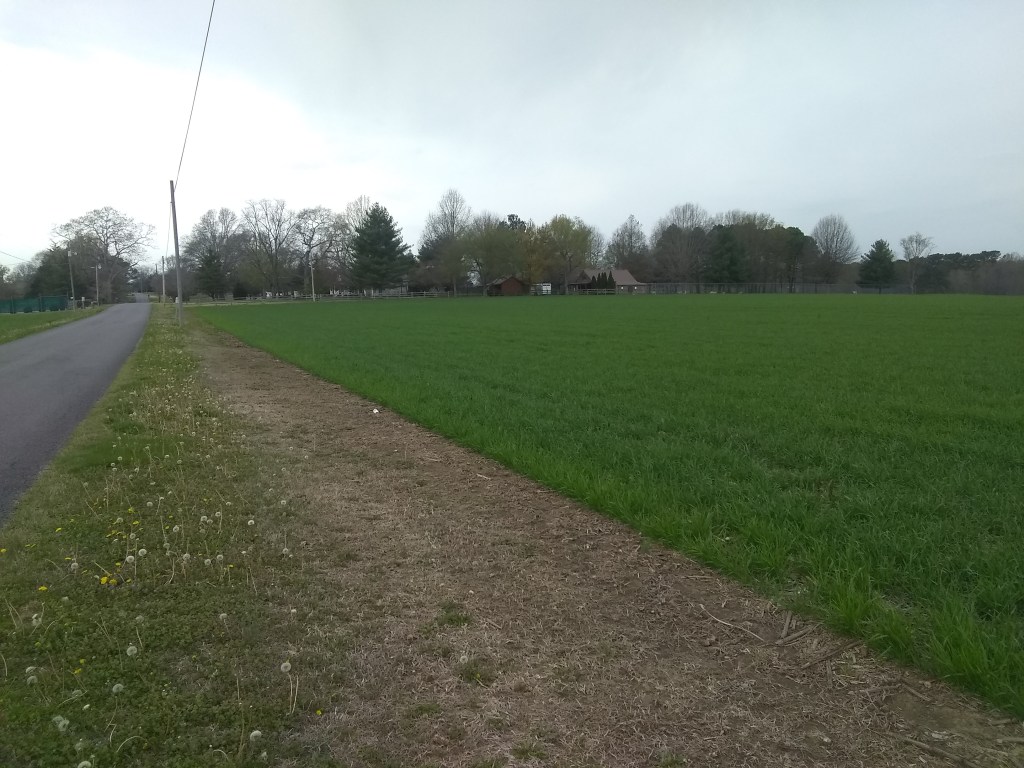
Here’s a few photos taken along my route:

Here’s what I’m currently listening to: McNally’s Secret, by Lawrence Sanders

He was a tremendously talented writer.

Amazon abstract:

First in the series starring the sleuthing Palm Beach playboy from the #1 New York Times–bestselling and Edgar Award–winning author.
 Inveterate playboy Archy McNally gets paid to make discreet inquiries for Palm Beach’s power elite. But keeping their dirty little secrets buried will take some fancy footwork in McNally’s latest case. A block of priceless 1918 US airmail stamps has gone missing from a high-society matron’s wall safe. Lady Cynthia Horowitz, now on her sixth husband, is a nasty piece of work who lives in a mansion that looks like Gone With the Wind’s Tara transplanted to southern Florida. McNally’s search takes him into a thickening maze of sex, lies, scandal, and blackmail. When passion erupts into murder and McNally must dig even deeper to uncover the truth, he unearths a shocking secret that could expose his own family’s skeletons.  
Top reviews from the United States

Linda G. Shelnutt

5.0 out of 5 stars Cure Cultural Volcanics with Bubbling Champagne. Design Life To Suit Taste & Times.

Reviewed in the United States on May 21, 2006

Verified Purchase

This book didn’t merely capture my reading interest. It became a book of my heart…

In McNally’s SECRET, the pilot to this series, we’re informed that the pater McNally is not an “old-money” man. Okay. I get that and I like it. (That’s not the secret.)

Having reviewed 4 of the original 7 McNally books by Lawrence Sanders, I had accepted the face value (not realizing the facade) of the Palm Beach mansion and the genteel lifestyle of pater Prescott McNally, Yale graduate, leather-bound-Dickens-reading, attorney-at-law. Upon reading (in McNally’s Secret) the illuminating passages of Archy’s grandparent’s ways into money, I began to wonder what other Secrets this novel might expose.

Usually, if possible, I prefer to read a series in order, pilot first. I can’t explain why, but, in this case I’m glad I read 4 of the original 7 McNally’s prior to reading SECRET (though I believe this series can be satisfyingly read in any order).

The opening of this novel was classic, and felt to be the initiation of what Sanders was born and itching to write, beyond the sagas of his other fine works. The introductory remarks were exquisite in mapping the reasons for, “Can’t you ever be serious, Archy?” I’d love to quote that paragraph, but maybe I should allow you to read it with the book in hand. I will quote a few other passages, however, which might serve as appropriate appetizers to this banquet of a book.

Comparing himself to S. Holmes, Archy says:

“I can’t glance at a man and immediately know he’s left-handed, constipated, has a red-headed wife, and slices lox for a living. I do investigations a fact at a time. Eventually they add up – I hope. I’m very big on hope.”

Archy’s description of the start up of the Pelican Club were the best type of soul food. This is how and why such a club should be started (then survive through a near hit of Chapter 7). Of course you really should read the book to get the whole of that brief history, but here’s a prime paring:

“We were facing Chapter 7 when we had the great good fortune to hire the Pettibones, an African-American family who had been living in one of the gamier neighborhoods of West Palm Beach and wanted out.”

They “wanted out” and they deserved a chance where their skills could and would save not only themselves, but those who hired them. Isn’t that the type of win/win the world needs now?

I almost sobbed at the below passage, I felt such a deep surge of “right on” (definitely did a breath-catch hiccup and heart moan):

“… we formed a six-piece jazz combo (I played tenor kazoo), and we were delighted to perform, without fee, at public functions and nursing homes. A Palm Beach critic wrote of one of our recitals, `Words fail me.’ You couldn’t ask for a better review than that.”

Yep. This is a book of my heart. Words don’t often fail me in reviews; too much the contrary. But I’m getting better at refraining from using my critic hat with a steel-studded-bat accessory, which is what Archy was getting at.

Some might wonder why a person in my position, with my un-hidden agendas, would take so much time to write raves on a series by a deceased author. Mostly, I love Archy. But, possibly the live spirits of the dead are sometimes more able to be helpful than dead souls of the living? Keeping my tongue in cheek, I might add that freed spirits probably have better connections for helping an author into the right publishing contacts for a character series with ironic assonance with this one.

Moving quickly onward and upward, though not with wings attached yet…

In contrast to the other 4 I’ve read, I noticed that this Archy is less bubbly-buffoonish (though the buffoon is always endearing) and slightly more serious, sensitive, and quietly contemplative. I like both versions of Archy, though I prefer the slight edge of peaceful acquiescence in the pilot, and I can’t help but wonder, as I do with all series, how much reader feedback, and editor/agents’ interpretation of it, directed the progression of balance of certain appealing or potentially irritating qualities. I wonder how each series would have progressed if the feedback had been balanced and pure (as a species, we’re not there yet, but forward motion is perceptible), rather than inevitably polluted by the “life happens” part of the sometimes perverted, capricious tastes of us squeaky wheels, and the healthy ego needs of professionals in positions of swallow and sway.

I’m still trying to understand why honesty is the most appealing human quality to me, yet honest criticism does not speak to my heart, nor to my soul, not even to my head. Often, though, it does speak in perfect pitch to my funny bone. And, of course true Honesty (with the capital “H”) leaps beyond speaking the “truth” as one happens to “see” it on a good or bad day. Cultural honesty, of the type dramatized by Stephen King, Lawrence Sanders, Tamar Myers, Barbara Workinger, Joanne Pence, Sue Grafton, (and others) is what most often pushes me to stand up and cheer.

Somewhere.

One of the best spots I’ve found is on the edge of the clear cliff of ozone found in Amazon’s sacred forum of Customer Reviewers.

Of course the first lines in SECRET, the sipping of champagne from a belly button would snag the attention of even the most sexually skittish reader of the nose-raised, neck-cricked, personality persuasion. But, truly and honestly, what sunk me with every hook were the few lines exposing why Archy could never be serious. I know I said I wouldn’t, but I have to quote this passage, beginning on page 1 chapter 1. For me, it’s one of the main selling points of the series:

“I had lived through dire warnings of nuclear catastrophe, global warming, ozone depletion, universal extinction via cholesterol, and the invasion of killer bees. After a while my juices stopped their panicky surge and I realized I was bored with all these screeched predictions of Armageddon due next Tuesday. It hadn’t happened yet, had it? The old world tottered along, and I was content to totter along with it.”

I’d bet my fortune (which is based on a skill of “make do”; there are no bananas in it) that the above passage is what captured a collection of readers so absolutely in a “right on” agreement that this series spanned the grave of the author and is still spewing pages and stretching shelves. And, of course, this attitude of “if you can’t lick `em; flick `em” which Archy aimed toward “kvetch-ers” as he terms them, continues from the above, with relish accumulating, throughout the book.

Archy is a rare sane person swimming along nicely within the insanity of a last-gasp-culture (which is “drowning in The Be Careful Sea” as I described and termed that syndrome in one of my sci fi manuscripts titled MORNING COMES).

To Jennifer, of the champagne sea in her belly button, Archy answered why he wasn’t an attorney:

“Because I was expelled from Yale Law for not being serious enough. During a concert by the New York Philharmonic I streaked across the stage, naked except for a Richard M. Nixon mask.”

That answer brought to mind the bright side of Howard Roark (from Ayn Rand’s FOUNTAINHEAD, see my review posted 10/14/05) who was arrogantly unconcerned about his and the Dean’s reasons for Roark’s being expelled from architectural school. You’d be right to wonder where I got that comparison, since Roark could never be accused of being anything but serious. Syncopated irony? Assonance?

You be the judge. Get the SECRET of the McNally collection.

As I relished the final chapters and pages of SECRET, I had a thought about the beauty, warmth, lovely literary melancholy, and subtly complex richness radiating from those concluding textual treasures:

In retrospect, this novel doesn’t feel like a planned pilot to a mystery series. It feels to be a singular novel, like but not like, the ones Sanders had written prior to it. What it feels like to me is that Lawrence hit upon a “soul speak” story which couldn’t halt the cultural conversation it had initiated, however serendipitous that initiation may have been.

Yes, I do recall that in some of my other reviews (“reveries” according to my Amazon Friend, L.E. Cantrell) I speculated on something which could seem contradictory to the above mentioned “thought.” I had wondered if Parker’s Senser series might have been somehow a spark for this McNally series. I continued to see references to Boston in this book (as in other McNally’s I’ve reviewed), which, of course, is the city for which Spenser did the Walkabout. So possibly SECRET was somewhat an antithetical homage to Spenser, possibly even a hat “doff” with a friendly, competitive “one-better” attempt, meant only to be a single novel rather than a never-die series.

Based on Agatha Christie’s official web site, Miss Marple was not originally intended to be another Poirot, and look what happened there (see my Listmania of the Miss Marple series).

To me, Archy appears to be a gatekeeper for pure and primal, hidden wishes and dreams. Living home comfortably, guiltlessly at 37, on the top floor of his parent’s mansion in Palm Beach; eating drool-food from a house chef; having established a club like The Pelican as a side atmosphere to partake in daily; working at a cushy, just challenging enough, engaging career for discreet inquiries … If an author’s (or reader’s) going to retire that would be da place (or at least an entertaining option).

It’ll be interesting to see if/how I’m able to bridge the gap from Lawrence Sanders’s Archy to Vincent Lardo’s. I’d love to know how that bridge was built and continues to be maintained.

Though a perfectly acceptable, gorgeous reprint in a mass market paperback was (probably still is) available on Amazon’s Super Saver Special, I felt lucky to find a vender on Amazon (a-bookworm2) holding a used G. P. Putnam’s Sons hardcover of this novel, a first printing of the 1992 copyright. What an honor it will be to have this version of the pilot of such an auspicious series from such a life-perceptive author, Lawrence Sanders. The glossy-black jacket provides a luscious background for the name and title printed in thick, gleaming, copper ink, with the artwork of an antique magnifying glass and fancy-brass scissors weighing down the million-dollar-valued, 1918 US Stamp of the Inverted Jenny.

This pilot is a rare find in a rare series.

Linda G. Shelnutt

Is the God of Job Worthy of Worship?

Here’s the link to this article by Bart Ehrman.

March 11, 2023

Is there any way to consider the God portrayed in Job as a morally upright being who deserves complete devotion?  Read the account yourself.  I have summarized the “folktale” of Job (found in Job 1-2, 42) in my previous post.  This is a tale that portrays God, Job, and the reason for human suffering very differently from the (different) composition of Job 3-42, a set of dialogues between Job and his friends and eventually God that I will discuss in my next posts.  For now I’m interested in the reasons God crushes the righteous Job with suffering in the tale.

The overarching view of suffering from the story is clear: sometimes suffering comes to the innocent in order to see whether their pious devotion to God is genuine and disinterested.  Are people faithful only when things are going well, or are they faithful no matter what the circumstances?  Obviously for this author, no matter how bad things get, God still deserves worship and praise.

But serious questions can be raised about this perspective, questions raised by the text of the folktale itself.  For one thing, many readers over the years have felt that God himself is not to be implicated in Job’s sufferings, since after all, it is the Satan who causes them.  But a close reading of the text shows that in fact it is not that simple.  It is precisely God who authorizes the Satan to do what he does; Satan could not do anything without the Lord directing him to do it.  Moreover, in a couple of places the text indicates that it is God himself who is ultimately responsible.  After the first round of Job’s sufferings God tells the Satan that Job “persists in his integrity, although you incited me against him, to destroy him for no reason” (2:3).  Here it is God who is responsible for Job’s innocent sufferings, at the Satan’s instigation.  Moreover, God points out that there was “no reason” for Job to have to suffer.  This coincides with what happens at the end of the tale, where Job’s family come to comfort him after the trials are over, showing him sympathy “for all the evil that the LORD had brought upon him” (42:11).

God himself has caused the misery, pain, agony, and loss that Job experienced.  You can’t just blame the Adversary.  And it is important to remember what this loss entailed: not just loss of property, which is bad enough: but a ravaging of the body and the savage murder of Job’s ten children.  And to what end?  For “no reason” – other than proving to the Satan that Job wouldn’t curse God even if he had every right to do so.  Did he have the right to do so?  Remember, he didn’t do anything to deserve this treatment.  He actually was innocent – as God himself acknowledges.  God did this to him in order to win a bet with Satan.  This is obviously a God above, beyond, and not subject to human standards.  Anyone else who destroyed all your property, physically mauled you, and murdered your children – simply on a whim or a bet– would be liable to the most severe punishment that justice could mete out.  But God is evidently above justice and can do whatever he pleases, if he wants to prove a point.

What then are we to make of this view of suffering, that it sometimes comes as a test of faith?  I suppose people who have a blind trust in God might see suffering as a way of displaying their devotion to him, and this could indeed be a very good thing.  If nothing else it can provide inward fortitude and a sense that despite everything that happens, God is ultimately in charge of this world and all that occurs within it.  But is this really a satisfying solution to the pain and misery that people are compelled to endure?  Are we really to imagine a divine being who wants to torment his creatures in order to see whether or not he can force them to abandon their trust in him?  What exactly are they trusting him to do?  Certainly not to do what is best for them: it is hard to believe that God inflicts people with cancer, flu, or AIDS in order to make sure they praise him to the end.  Praise him for what?  Mutilation and torture?  For his great power to inflict pain and misery on innocent people?

It is important to remember that God himself acknowledged that Job was innocent – that is, that he had done nothing to deserve his torment.  And God did not simply torment him by taking away his hard-earned possessions and physical health.  He killed Job’s children.  And why?  To prove his point; to win his bet.  What kind of God is this?  Many readers have taken comfort in the circumstance that once Job passed the test, God rewarded him – just as God rewarded Abraham before him, and Jesus after him, just as God rewards his followers now who suffer misery so that God can prove his case.  But what about Job’s children?  Why were they senselessly slaughtered?  So that God could prove a point?  Does this mean that God is willing – even eager – to take my children in order to see how I’ll react?  Am I that important, that God is willing to destroy innocent lives just to see whether I’ll be faithful to him, when he has not been faithful to me?

Possibly the most offensive part of the book of Job is the end, when God restores all that he has lost as his reward.  Including additional children.  Job lost seven sons and three daughters, and as a reward for his faithfulness, God gave him an additional seven sons and three daughters.  What is this author thinking?  That you can replace children?  That the pain of a child’s death will be removed by the birth of another?  That children are expendable and replaceable like a faulty computer or DVD player?  What kind of God is this?  Do we think that everything would be made right if the six million Jews killed in the Holocaust were “replaced” by having six million additional Jews born in the next generation?

As satisfying as the book of Job has been to people over the ages, I have to say I find it supremely dissatisfying.  If God tortures, maims, and murders people just to see how they would react – to see if they would not blame him, when in fact he is to blame – then this does not seem to me to be a God worthy of worship.  Worthy of fear, yes.  Of praise?  No.