I continue here my post from yesterday, explaining the Christian background to U.S. Support of Israel, taken from my recently-published book Armageddon: What the Bible Really Says About the End
******************************
It is important to stress that evangelicals think God is faithful to Israel even if Jews are not faithful to God. He has fulfilled and will continue to fulfill his promises that Israel will have the Promised Land. But Jews who reject his messiah cannot possibly be saved. That is not God’s fault. He is not the one who broke the eternal covenant. Jews did when they rejected their own messiah. Therefore, they will be punished.
To evangelical readers that is clear from the book of Revelation, which describes “the End” as standing in straight continuity with and in fulfillment of “the Beginning.” As we have seen, according to Revelation, the only inhabitants of the earth who will be saved are those who refuse the mark of the beast and instead receive the seal of God. In Revelation 7 the two groups of these divinely sealed saints are discussed. The larger group is “a great multitude that no one could count, from every nation, from all tribes and peoples and languages” (Revelation 7:9). These are explicitly not the people of one nation (such as Israel); they are from around the world, everyone made pure because “they have washed their robes and made them white in the blood of the Lamb” (Revelation 7:14). The other group is smaller, but still sizeable: 144,000 Jews who receive the “seal of God” on their head and so become “slaves of God” – twelve thousand “people of Israel” from each of the twelve tribes (7:4-8).
Thus, God is faithful to the end. A large, symbolic number of Jews will be saved by converting to become slaves of God through their faith in Jesus. But the number is not only significantly large; it is also significantly small. Think about the global population of Jews. Even at the time John was writing, there were nearly four million Jews in the world. He would certainly not have known this exact number, but even so: if 144,000 are saved, that would be only 4% of just the Roman world. Evangelical Christians, as one would expect, take this too to be a fulfillment of Scripture, where God repeatedly says that salvation will come to only a remnant of Israel (Romans 9:27-28).
Why Israel Must Rebuild the Temple
Thus, for evangelical thinkers the entire arc of the biblical narrative from beginning to end shows that prophecies are being fulfilled in our own day. But there’s more to it than that. Ezekiel indicated that the Temple in Jerusalem had to be rebuilt. That hasn’t happened yet. It has to happen before Jesus can return. The clearest indication comes not in Ezekiel but in a seemingly obscure passage in the New Testament book of 2 Thessalonians, which I’ll discuss in greater detail shortly: Israel not only has to exist as a sovereign state in the Promised Land, it also has to have full control of Jerusalem and, in particular, the Temple Mount. The problem, of course, is that that the Temple Mount is a sacred site for Islam as well, home to the Dome of the Rock for the past thirteen centuries. The Dome is located over the site of the original Jerusalem Temple. For the prediction of 2 Thessalonians to be fulfilled, the Temple needs to be rebuilt there, which means the Dome has to go.
It has long been debated whether Paul was the author of 2 Thessalonians; many historical scholars think the book was written by a later Christian in Paul’s name.[1] Whoever wrote it, the book tries to explain to readers that the end of the age will not come right away, nor will it happen without warning (contrary to what Paul himself says in First Thessalonians, 4:13-5:11). A fore-ordained sequence of events must happen first. The events involve a mysterious figure, “the lawless one,” who will rise to a position of power. This figure is often identified by readers as the “Antichrist” and the “beast” of Revelation (666), even though he is not called either in the passage:
Let no one deceive you in any way; for that day [the “coming of our Lord Jesus Christ”] will not come unless the rebellion comes first and the lawless one is revealed, the one destined for destruction. He opposes and exalts himself above every so-called god or object of worship, so that he takes his seat in the temple of God, declaring himself to be God. (2 Thess. 2:3-4)
The author then indicates that this figure cannot appear yet because a restraining force is keeping him at bay (2:6). When that is removed, “the lawless one will be revealed, whom the Lord Jesus will destroy with the breath of his mouth, annihilating him by the manifestation of his coming” (2:8). That sounds very much like the Final Battle between Christ and the Beast as described in Revelation 19:17-20.
What matters most, though, is that before this destruction takes place, the Antichrist figure will take “his seat in the temple of God,” declaring himself to be God. That obviously cannot happen until the temple is rebuilt. Jesus therefore cannot return until Israel assume full control of the Temple Mount. There can be no question, then, about whether or not to support Israel to expand its reach into the Palestinian territories; that was what was promised Abraham “in the beginning.” And there can be no question about whether or not to support Israel in the heart of Jerusalem itself. It must destroy the Dome of the Rock and rebuilt the temple for foreordained “the end” to come.
Since American Christians who support Israeli control of Jerusalem far outnumber American Jews, it is no wonder that Israeli politicians have long pushed for evangelical support, starting in the 70’s at just the time the evangelical prophecy movement reached a fevered pitch – when Hal Lindsey, Jack van Impe, and Timothy LaHaye were all preaching that the end was almost here. For these modern-day prophets, one piece left in the puzzle remains: the temple has to be rebuilt and Israel cannot face the opposition alone.
This is not a marginal religious belief held by a tiny slice of American Christendom. It is held by millions, all of them able and encouraged to vote. And this is far from the only way that a belief in an imminent apocalypse influences our government.
[1] See Bart Ehrman, Forged: Writing in the Name of God – Why the Bible’s Authors Are Not Who We Think They Are (San Francisco: HarperOne, 2011) pp. 19-21, 105-08.
Biking is something else I both love and hate. It takes a lot of effort but does provide good exercise and most days over an hour to listen to a good book or podcast. I especially like having ridden.
Here’s my bike, a Rockhopper by Specialized. I purchased it November 2021 from Venture Out in Guntersville; Mike is top notch! So is the bike, and the ‘old’ man seat I salvaged from an old Walmart bike.
Currently, I splitting my biking time listening to two books. Here they are:
The God Delusion, by Richard Dawkins.
Amazon Abstract
A preeminent scientist — and the world’s most prominent atheist — asserts the irrationality of belief in God and the grievous harm religion has inflicted on society, from the Crusades to 9/11.
With rigor and wit, Dawkins examines God in all his forms, from the sex-obsessed tyrant of the Old Testament to the more benign (but still illogical) Celestial Watchmaker favored by some Enlightenment thinkers. He eviscerates the major arguments for religion and demonstrates the supreme improbability of a supreme being. He shows how religion fuels war, foments bigotry, and abuses children, buttressing his points with historical and contemporary evidence. The God Delusion makes a compelling case that belief in God is not just wrong but potentially deadly. It also offers exhilarating insight into the advantages of atheism to the individual and society, not the least of which is a clearer, truer appreciation of the universe’s wonders than any faith could ever muster.
The Remains of the Day, by Kazuo Ishiguro
Amazon Abstract
BOOKER PRIZE WINNER • From the winner of the Nobel Prize in Literature, here is“an intricate and dazzling novel” (The New York Times) about the perfect butler and his fading, insular world in post-World War II England.
This is Kazuo Ishiguro’s profoundly compelling portrait of a butler named Stevens. Stevens, at the end of three decades of service at Darlington Hall, spending a day on a country drive, embarks as well on a journey through the past in an effort to reassure himself that he has served humanity by serving the “great gentleman,” Lord Darlington. But lurking in his memory are doubts about the true nature of Lord Darlington’s “greatness,” and much graver doubts about the nature of his own life.
I learned early that I was not to question my religion. I was to simply have faith. And yet somehow the questions would still come. I would sometimes question the Bible. How did we know it was God’s Word? I would sometimes question Jesus. How did we know he was God? I never dared to ask these questions out loud, but in my own mind, yes, I asked these questions often.
The questions demanded attention. But simultaneously, there was always the nagging fear of what would happen if I died while I was in a state that questioned the faith. I simply could not take that chance. The consequences of dying in doubt could well be unimaginable.
So, I asked questions, yes, but I always knew what the answer needed to be. The side of my mind that argued for Christ had to beat out the side that argued against.
It is as if my mind included an advocate for the faith, an advocate against the faith, and a referee. The referee always sided with the advocate for the faith. And so, the advocate for the faith always won, two to one.
Those times were never fun. I longed to be free from doubts. And so, by sheer willpower, I pushed those questions aside.
But my mind was not really free.
Many years later, the dam would break. The questions would come out–gradually at first, then with a rush. And when it was all over, my mind was free.
I grew up in a conservative Mennonite home. We didn’t listen to secular music, watched only a select few TV shows, and centered our lives on conservative religion.
When I was 14 years old, my family and I joined a fundamentalist church, one that did not question the Bible. Fundamentalism became a way of life for me. Everything that entered my mind had to come through its filter. I soaked it all in.
I was terrified of hell and would often lie awake at night worrying about it. Even in social settings, I would be sitting there thinking about hell. Fundamentalism offered a solution. It said that all one had to do was accept Jesus. So, I did it. Did I do it right? I didn’t know. So, I did it again. I still wasn’t sure that I had done it right. And so, I did it again and again in my mind. I prayed that God would be merciful to me a sinner. I invited Jesus into my heart. Over and over, I accepted him in any way I could think to accept Christ.
One day I read the tract, What Must I Do to Be Saved, by John R Rice. It told me I did not need to concentrate on getting the act of believing right or saying the right words. I just needed to choose to believe. That’s it? All I needed to do was choose to believe? Fine. I chose to believe. Case closed. Let’s move on.
And so, I proceeded in life as though the case was closed. What a relief! I thought that everybody else surely had similar worries and needed to know this news of deliverance from hell.
“Grace, my fears relieved”, the old song says, but before that, “It was grace that taught my heart to fear.” Religion offered a cure for my fears. But what had caused the fears? Religion. Does Christianity invent the fears it then relieves? Is it solving a problem that it created?
I found relief from my fears. But to tell you the truth, faith did not do a really good job of it. The fear of hell had finally become manageable, yes, but it was always in the background.
As a Fundamentalist Baptist
In college, I joined an Independent Fundamentalist Baptist church, which then controlled every aspect of my life. I went door to door on the streets of the Bible belt, witnessing to those who may have missed God’s plan of salvation. Everybody at this church was told to be a soul winner. The pastor boomed his message from the pulpit, yelling at those who stayed home on visitation night. We had to be out there winning souls.
We didn’t want anybody to die and go to hell without knowing the way of salvation. If somebody didn’t know, then we needed to tell them. I wonder now, why did God need us to tell that story? Didn’t he have all the resources he needed? If we failed to tell somebody, and as a result that person suffered for eternity without ever having known the escape plan, how could a loving God let that happen? I never asked those questions back then. I was winning souls.
The pastor also yelled at those that listened to rock music, gave less than 10% of their income to the church, had the wrong haircut, or attended a movie theater. We were told exactly how to live our lives, and we obediently followed. It was the only life we knew.
In my senior year of college (1978) the pastor [1] moved to another church, and the church [2] deteriorated into disarray. I was confused. This was all I had to live for, and it had fallen apart. I saw the dark side of the church. There was chaos at some church functions. Once when we were singing Just as I Am over and over as an alter call, people became so bored that the song died in the middle and we never finished it. I had thought that we were saving the world. Now I looked at the lives that had been saved and wondered if it had meant anything.
Meanwhile, I watched as the story of Jim Jones and the mass suicide in Guyana appeared on TV. The story of those poor people following every command of their leader seemed all too real to me. I had been living my life much like they had. I could understand why they followed so obediently. Religion can do that to a person. Had I been deluded also?
There was something else that bothered me. I had been reading through the Bible every year since I was in 11th grade–every word of every verse–and was disturbed about what I was reading. Have you ever read the tales of killing, greed, and arrogance that fill the Old Testament? Do you ever question their relevance? I was not sure that I could trust the Bible any longer. As my confidence in the Bible withered, apathy set in.
Despair
I graduated from college with no meaning to life. My Christian hope had gone. I cannot begin to describe the despair that filled my life for the first two years after graduation. There was nothing to live for. I wanted to be happy, but I didn’t know why that would matter. Two hundred years from now, who would ever care if the bones left behind had supported a happy person or a sad person? Probably nobody would ever care.
But somehow, I cared. And I wasn’t sure why. I wanted to be happy. But instead, I knew apathy, bitterness, struggle, frustration, anger and confusion.
When my Christian hope had faded, why didn’t I look for something else? I didn’t know there was another way. I had grown up in Christian schools, Sunday schools, and Bible studies. The Bible was the only hope I knew, and it now seemed so inadequate. I never thought to look elsewhere–such is the grip that religion can have. I wish now that somebody had told me how to live the good life without the Bible. But I would not learn that until many years later.
Digging out
In desperation, I turned to Christian books. I had no intention of going back to my Independent Fundamentalist Baptist days. I thought that perhaps a milder brand of Christianity could help. As I read, I felt encouraged. Was God leading me back to himself? I thought that he was. And so, I made a commitment to walk close to the Lord again. I found that Christianity worked much better for me than apathy.
I would often go to a park and find a forsaken place alone with God where I could pray. I would pour out my heart to God, and I would leave refreshed. I took this as proof that Christianity was true.
I was soon to find the writings of C. S. Lewis. I found them fascinating. He did not just quote Bible verses. He used reason. I liked that. I read his books with enthusiasm and formed a new outlook on life.
I was back to seeing myself and others as rebellious sinners against God. I believed that I had rebelled against God, and that this had brought on the two years of depression. It was all my fault.
I saw others also in the same light as I saw myself. If somebody did something that hurt me, then I figured they must be doing it because they had given in to their evil, sinful nature. I would get bitter at those who had followed their inner sinful self in ways that hurt me. Sometimes I snapped at people and let them know how bad they were. That wasn’t good.
But I also found that religion helped me to keep my mouth shut. If inside I was bad, then I needed to keep that bad anger inside. It came from my fallen nature. I would not want my fallen nature to express itself like this. I wanted only my new positive nature, as produced by the Holy Spirit, to come out. So, the old, angry words were constrained. I set out to surrender my basic wants and desires to God.
I now was turning back to faith, not because I feared hell, but because I needed to avoid the despair associated with depression. I was no longer following the Independent Baptist tradition, but one thing I knew, I had had purpose and hope in those college days. And that was certainly better than the depression that had followed. So even if I was not convinced that my Independent Baptist days were on the right path, I figured that at least my life back then had been better. So I thought I needed faith to have purpose in this life. I just needed to make a few adjustments.
The Problem of Pain
I had a low view of human nature. Such views may look strange in light of what many now say in today’s Evangelical churches. These churches have often adopted a feel good, psychological approach to life that seeks to build our self-esteem and encourages us to accept ourselves and our feelings. Many Evangelicals do this in spite of the doctrine of human depravity that is still in Evangelical theology.
It was not long ago that the view of humanity as totally depraved was dominant, not only in fundamentalist churches, but in mainstream Protestant sources like the writings of C.S. Lewis. Since Lewis’s views were so foundational to me at that time, I will digress here to discuss the view of humanity that appears in his book, The Problem of Pain. He writes:
A recovery of the old sense of sin is essential to Christianity. Christ takes it for granted that men are bad. Until we really feel this assumption of His to be true, though we are part of the world He came to save, we are not part of the audience to whom his words are addressed, [3]
Lewis thought that we are bad people, and that God was angry with us for being bad. Lewis thought that Christianity offered no hope to those who did not share this view.
He went on to say that some Christians might ask, “What call has God, of all beings, to be angry with us?” Lewis responded to his own rhetorical question, declaring it to be a blasphemous question:
Now at the moment when a man feels real guilt–moments too rare in our lives–all of these blasphemies vanish away… At such a moment we really do know that our character, as revealed in [some sinful] action, is, and ought to be, hateful to all good men, and, if there are powers above man, to them. A God who did not regard this with unappeasable distaste would not be a good being…When we merely say that we are bad, the “wrath” of God seems a barbarous doctrine; as soon as we perceive our badness, it appears inevitable, a mere corollary from God’s goodness. [4]
Guilt is far too rare? Really? Lewis was not merely telling us that our actions are bad, but also that our very character is something that God hates with unappeasable distaste. He was saying that God is justified in having wrath toward us. For after all, at our very core, we are guilty, bad people.
Why are we so bad? Lewis contended that it is because of Adam’s sin. Can God then blame us for Adam’s sin? Lewis responds to this question:
Theoretically, I suppose, we might say “Yes, we behave like vermin, but then that is because we are vermin. And that, at any rate, is not our fault.” But the fact that we are vermin, so far from being felt as an excuse, is a greater shame and grief to us than any of the particular acts which it leads us to commit. [5]
So we find that we are born as vermin. And Lewis says that it is a shame and grief to us that we are vermin. What is the Christian to do? He continues,
Now the proper good of a creature is to surrender itself to its Creator… In the world as we know it, the problem is how to recover this self-surrender. We are not merely imperfect creatures who must be improved: we are, as Newman said, rebels who must lay down our arms…Hence the necessity to die daily: however often we think we have broken the rebellious self we shall still find it alive…The human spirit will not even begin to surrender self-will as long as all seems to be well with it. [6]
Do you get the picture? Lewis describes us all as inherently depraved descendants of Adam, as evil rebels. We need to die to our own internal wants. Suffering, he claims, is the tool that God uses to effect this change. His books were the biggest influence in my philosophy of life at that time. I also knew of a number of scripture verses to support this low view of humanity (e.g. Job 42:6, Is 64:6, Lu.17:10, and Rom. 3:10-19).
I look at it now, and do not think that I had a very healthy perspective. But this philosophy was mild compared with the Independent Fundamentalist Baptist tradition that I had come out of. And it certainly worked better than apathy. This outlook gave me a reason to live. At the time I assumed that it worked because it was right. Now, I think that it worked because it gave me a purpose. Other ways would have worked better.
C. S. Lewis showed me that life was rough, yes, but that was because we needed pain to change us from vermin to what we should be. Fine. Life is hard, but there was a reason for it. God was dealing with the old me, the vermin. I pushed onwards. And it seemed to be working.
I had found this one great pillar to support my rebuild of faith: Christianity is worthwhile because the path that I had found within Christianity works, at least it works for me.
That pillar would one day collapse on me when it was shown to be inadequate. The observation that faith made me feel better is simply not a good reason to say that the faith is true. But at that time the reasoning seemed solid.
Creationism
There was a second great pillar on which I based my faith. This pillar had stood firm even during the days of despair. I was quite familiar with the teachings of Henry Morris and the young Earth creationists. I thought that this was the most logical explanation for how life began. They argued that the Earth was created by God a few thousand years ago, just as the Bible said. During the time of Noah, a great flood covered the Earth. This flood buried many animals, I was told, and these became the fossils we see today. Creationists argued that all this was supported by scientific findings.
Creationists argued that evolution was impossible. They said that creationism was consistent with true science, but evolution was pseudoscience. I listened to this side only and was convinced.
Other things in the Bible may perhaps be wrong. I was finding simply too many problems with the Bible. But I had these two great pillars of my faith: a belief that Christianity as I knew it worked; and a belief that Genesis was the best explanation of origins.
Exposure to Enlightened Views
In 1987 I moved to the suburbs of Philadelphia and found an exciting Evangelical church. I met many wonderful people and quickly became involved in many aspects of the program. I had found a home and was happy.
Some of the Christians at this church came from a range of religious backgrounds. This was new to me. Some people disagreed with the way I understood Christianity. Some did not agree with me that the Earth was only a few thousand years old, for instance, or that the fossils had come from Noah’s flood.
Others told me that my religious philosophy did not work, that other philosophies worked better. There were big differences. I thought that we should despise our evil inner self; they thought that we should love ourselves. I thought that we must work hard to keep the evil anger inside of us from coming out; they thought that anger was there because we had not vented our anger. I thought that the big problem was overestimating oneself and overconfidence; they thought that the big problem was low self-esteem and a lack of self-confidence. I thought that we needed to die to ourselves; they thought that we need to discover ourselves and self-actualize. I thought that God made us feel guilty about our evil feelings; they thought it was the devil that wanted us to feel guilty about natural feelings. I thought that God allowed people to mistreat us because that was his way of molding our character; they thought that mistreatment damaged our psyche, often requiring counseling to overcome the effects. They thought my philosophy was depressing.
Do you understand why this was a difficult pill for me to swallow? This was a main pillar of my Christian faith–the belief that my Bible-supported views worked. Now here were Christians telling me that my version did not work well. What did they mean it didn’t work well? It absolutely did work. It worked far better for me than the apathy and the depression I had been in. And I had scripture to back it up.
It was not easy for me to accept that my way did not work well and was not based on truth. So, I prayed about it and read the Bible. And what do you think happened when I prayed? That’s right. I was convinced that God was telling me I was right. Seriously, who was I to go against what God was saying to me?
My friends and I all agreed that Christianity had the best answers to life. My experience and prayers told me that my version worked better. Their experiences and prayers told them that their version worked better. Who was right?
Computer Debates
I was soon to have my eyes opened to many other philosophies that supposedly worked best. I would soon meet believers in Mormonism, Islam, Bahai, Judaism, Wicca, and Atheism. Each was sure that his way had worked for him, thus showing that it was the best.
I was going to also hear of many psychological solutions, again with testimonials for each claiming that it was better than other techniques. I was not the only one who had claimed that my experience proved that I was right. Lots of people were claiming that they had tried something, and this made them feel better. Do all philosophies work? Some researchers had looked at the conflicting cures within psychology and wrote, “Is it true that ‘Everyone has won, and all must have prizes’?” [7] Indeed!
I met these people of many religions in the CompuServe debate forum, back in the days when one used a modem to dial into a computer instead of using the Internet. I began to participate in the religion section. I actively debated religion and psychology with anybody that wanted to discuss them. This was to become an important focus of my life.
The biggest lesson I learned during these debates was how to form an argument. It was not enough for me to state that Jay Adams, C. S. Lewis, or Thomas Szasz had written something that agreed with me on a particular point. After all, one can find somebody who will agree with almost any religious viewpoint that he expresses. I needed a more effective argument.
My favorite resource was the Psychoheresy Awareness Ministry of Martin and Deidre Bobgan. They referred to psychological experiments to support their arguments, and often quoted scientific journals. I found that when I described experiments people often listened to what I had to say and were less likely to attack my writings. I developed a love for scientific experiments and the scientific journals that described them.
And so began a regular series of trips to the Philadelphia Public Library, and later, a university library. I would make lists of articles that favored my positions and would go to the library to get more ammunition for my side.
Cracks in the Foundation
These trips became time-consuming, and so, in 1992, I subscribed to my favorite journal, The Journal of Personality and Social Psychology. At $247 a year, this represented a major desire to learn the truth. Having made the commitment, I was determined to learn something from each issue. I began to read papers whether I thought they agreed with my position or not. This was a change for me. I was not merely reading to prove I was right. I was reading to learn.
I read some papers that were enlightening. I read that trying to suppress thoughts can make them stronger. [8] Were my efforts to keep my true thoughts under control making those repressed thoughts stronger? I learned more about the function of self-esteem. Was my viewpoint of myself as an evil sinner harmful? Did my Christianity really not work as well as I had persuaded myself it had? Slowly, microscopic cracks began to develop in this great pillar of my faith. It was slow and subtle, but the cracks were beginning.
The Creationism Pillar Caves
Meanwhile, a strange twist of fate put me right into the middle of the creation-evolution debate. That was not where I wanted to be, for these fights were often quite nasty. I couldn’t believe that I was there in the middle of it all. But I was not about to leave a good debate. I decided to let people know that evolution could not possibly happen.
I made some progress arguing that the complexity of genes made evolution difficult, but somebody wanted to know where all of those fossils had come from, if not from hundreds of millions of years of evolution. I suggested they might have been caused by Noah’s flood. My argument was defeated in one round. I was asked to explain how it is that we find rocks made of wind-blown sand in the midst of all these rocks under the earth. I had no answer. Wind certainly wouldn’t be blowing sand around under the floodwaters. I told myself the problem was that I was not familiar enough with that issue. So, I avoided the flood altogether until I could find better answers.
I never did find a satisfactory answer to this simple question, nor to many of the other problems with Noah’s flood. So, I concentrated instead on problems that I perceived with the mechanism of evolution.
To make a long story short, this led me to a moment of epiphany in which I found myself in a library completely overwhelmed with the evidence for evolution. In shock, it dawned on me that I had no convincing case for my young Earth Creationism.
After the dust had settled, 18 months later, I had switched to arguing for evolution. I describe this transition elsewhere, and won’t repeat it here.
It was a complete change. Many people have survived the switch to evolution, and they still have faith. But the switch to evolution was traumatic for me. For I had two strong pillars left in my faith, the supposed evidence for creationism, and the understanding that Christianity works. The creationism pillar was now gone. The building above was resting on one unstable column.
The Second Pillar Caves
Meanwhile the other pillar of my faith–the one that said conservative Christian philosophy worked–was severely cracking. When I had met people offering all kinds of psychological cures for the condition of the human heart, I had argued that some researchers had found that it was not just the specifics of the cure that helped people, but that it was the caring, nurturing relationship with a friendly helper that was doing more to build hope, and thus help troubled people. [9] I argued that, therefore, others could not force a view on me that they found had worked for them. Perhaps the fact that they felt better had nothing to do with their method. Perhaps they were feeling better only because they were making a cooperative effort with others to address the problem.
One day somebody turned that argument on its end. He asked me how I knew that Christianity worked. Perhaps people were helped within Christianity because they were in a nurturing relationship with caring people, not because of the specifics of the Bible. I had been caught by my own argument, and I had no answer. I knew I could not be sure that it was Christianity that made the difference.
As this was happening, I was also needing to deal with the errors in the Bible. I had known about these problems for years, ever since I had read through the entire Bible six times in my youth. But I had found those two great pillars of my faith, and thus could ignore the Bible’s problems. Those pillars were now in shambles. And I was seeing skeptics on the forum arguing that the Bible commanded massacres (e.g. 1 Samuel 15); praised terrorism (e.g. Psalm 137); and allowed slavery (e.g. Exodus 21). They pointed out contradictions in the Bible. I knew I had no chance against their arguments. It was no longer possible to ignore what the Bible said. My faith was crumbling.
What should I do?
I began to rapidly incorporate new ideas into my mind. I did my best to piece together a progressive philosophy of life that would keep my faith in spite of these problems. I experimented with ways to include evolution, an obviously errant Bible, a higher view of the self, and even Humanism into my Christianity.
Meanwhile, I moved on to other interests: country dancing, movies, and romance. Ah yes, romance. I fell in love with a very special lady, who has become my best companion in life. She has supported me through some tough times, and I am very grateful to her. She has a compassion and concern for others that I can only dream about. I had found somebody that I could love with all of my heart. We were soon to be married. She has not agreed with where my skepticism has finally led me, but she is always my best friend.
I had drifted away from participation in church. I now made one last effort to find my place again. There had been a radical change in my thought process. I was no longer the most conservative thinker on the block. Now I was perhaps the most liberal thinker at church. I persuaded myself that I could still fit in–after all it was the progressive element at church that started me on my journey–but I found it increasingly hard to identify with the church program. And I asked questions that surprised everyone.
There is no stopping the mind set free. It is like that first leak of water through the dam. It reaches a critical size, and then bursts free. My thoughts refused to stop. The dam had been broken. I read books that were critical of the Bible. I read the Bible from a whole new viewpoint. I found skeptical sites on the Internet. I asked many questions–many of which are on my website. I found it harder and harder to identify myself as a Christian.
Even the label of Liberal Christian was losing its appeal. I could no longer believe the basics of Christianity. If I still identified as a Christian, while sidestepping the problems, was I committing the sin of silence?
In 2002 I decided that I could no longer identify myself as a Christian. What am I? I am now an Ex-Christian, an Agnostic, a Humanist, and a Freethinker. In September 2002 I created the website Questioning: An Examination of Christian Belief to discuss my questions and to explain what had happened to me.
I have not chosen an easy path. It is not easy to tell people that I no longer believe that this message is true. But I find the evidence overwhelming. If the weight of the evidence were marginal, I would follow the believing crowd and not raise the issue. I do not like to be different. I prefer to follow the crowd. All of my life I have been a follower. I have always wanted to fit in. But there are just too many problems with the Bible. I simply cannot unlearn what I have learned. Knowing what I know, I cannot be a Christian. So, I choose the road less traveled.
I am not asking you to follow me. You have a mind of your own. You can decide for yourself. But perhaps you could learn from me.
I now have a different perspective in life. I wrote earlier of how I once saw people that hurt me as being evil. If somebody hurts me now, I think they must do it because, from their perspective and current knowledge, it seems best for them to do what they do. Years ago, it was hard to forgive hateful vermin who did hateful things. It is much easier to forgive confused but well-meaning individuals. This change in perspective works wonders. Instead of concentrating on bridling the tongue, one can concentrate on understanding the person who did hurtful things. Rational questioning changes perspectives, and changed perspectives change lives.
I find that I am far happier without the bonds of a preset religion. My mind has been set free. I am free to explore the world without the need to fit everything into a predefined religious bias.
It is fine to question. It is safe to explore. There is always more to learn. I hope that neither you nor I will ever stop questioning.
The above is an edited copy of the story I shared on the web in 2002. Since then, I have enjoyed a life that is truly free. This story had been part of my Questioning: An Examination of Christian Belief website that was on the Internet until 2017. I have now brought that site back online with a major facelift. I have rebranded it as The Mind Set Free.
Perhaps to you, Christ is the only hope in this world. Your life is centered on him. He is your purpose in life. I understand. I have been there. I accepted Jesus Christ as my personal savior many years ago. I have read the Bible from cover to cover six times–every chapter, every verse, and every line. I have spent literally hours a week in prayer, as I grew in my personal relationship with the Lord. In college, I never drank alcohol. Instead, I attended prayer meetings and went door-to-door witnessing to get my thrills. I have taught Sunday school, sung in the choir, and worked in the children’s ministry. I have been there and done that. I know what it is like to discuss all the details of my life with the Lord, believing that he was right there in my heart listening to me.
I know the excitement of doing God’s work all day Sunday. And I also know the emptiness that would come on Monday. I used to wonder why a person that was so committed to the Lord would feel that way on Monday. It seemed that the more I allowed myself to get excited on Sunday, the worse I would feel on Monday.
I am no longer a believer. I have found something different. I have learned to question, to explore, to think, to be free, to be me. I have the freedom to freely grasp life without the restraint of religion. I have found a purpose that is as good on Monday as it is on Sunday. Life without Christianity can be far more fulfilling than anything that I had ever found inside. And there are hundreds of others who testify to the same thing.
Have you found joy in Christ? I am glad that you are happy. But tell me something, please: Why do so many Christians struggle to find that joy? Where is their peace? Why are they so discouraged? Why are they so sad?
How do I know that many Christians are sad? Here is one way to see it: Fire up your search engine and search for “sad discouraged depressed Christians.” As I write this I find 9,570,000 hits.[1 ] Sure, not all of those sites are relevant, but most of the top sites are. They are written by Christians to help sad, depressed Christians. Why are all these people trying to help discouraged Christians? It seems that there is a problem. There must be many thousands of sad, depressed Christians out there.
Let’s look at the solutions offered on these sites. What are Christians depending on to give them hope? Some Christians look to Christ alone as their source of happiness. Others look to other sources also, such as psychology, to help them find their way. What do the top Christian sites propose? I found the usual smattering of Bible verses, and then I found suggestions such as these:
We see here a variety of techniques. It would appear to me that these suggestions have little to do with Jesus. Can no freethinker ever listen to relaxing music? Can no atheist go into the sunlight or affirm himself? These things apply to unbelievers as well as Christians. The unbeliever is not missing out on any of this. In fact, many have found that it is easier to enjoy the good life without religion.
Does Jesus really give his followers peace and joy? Then why must Christians walk around giving themselves affirmations to avoid depression?
Do you see the hypocrisy here? Non-Christians are told that they need to accept Christ to have peace and joy in their life. Yet many believers are missing peace and joy, and Christians recommend that these believers turn to therapies such as cognitive therapy, a treatment that was developed in the secular world. Is this consistent? If cognitive therapy is the cure for the troubled mind, why do evangelists tell us that Jesus is the cure?
Do you need to give yourself pep talks to avoid discouragement? Do you have a daily struggle trying to find peace and joy? Then you cannot tell me that I need what you have to be happy. It seems to me that it would be hypocritical to claim on Sunday that one has peace and joy in life, and then visit the psychiatrist to deal with a life in despair on Monday. Wouldn’t it be better to face the facts? Wouldn’t it be better for one to admit that, in spite of religion, he is not really happy? Wouldn’t it be better for such a person to say that his Christianity has not really satisfied him?
Perhaps you have indeed found genuine happiness in Christianity. I am glad for you. I hope you understand that others have found happiness elsewhere. You may not need what I have to be happy, and I may not need what you have.
But not all Christians are happy. Many are very sad. Some tell me that it is only weak, carnal Christians who experience such prolonged sadness. They will tell me that mature Christians overcome and are happy. Then why is it that there are sites dedicated to helping depressed missionaries?
With so many missionaries in need of recovery from depression, it seems that one can be totally dedicated to Christ and not be happy. It is difficult for me to see that they can claim that their faith alone has the way to peace and joy in life.
Some will tell me that depression, as a medical condition, is outside the scope of the Bible. Fine, but psychologists commonly treat depression with Cognitive Behavior Therapy, which originated from humanists such as Albert Ellis. If you turn to Cognitive Behavior Therapy in severe cases of depression, why would not quite similar principles used by humanists be good for mild discouragement?
There are many ways to happiness. As for me, I have found no greater joy than that of being free–free from the need to believe a religion that my mind has found to be false. I can explore the world around me and learn without the need to force my observations into a preconceived mold.
There is no experience quite like setting the mind free.
Albert Einstein once wrote,
The important thing is to not stop questioning. Curiosity has its own reason for existing. One cannot help but be in awe when he contemplates the mysteries of eternity, of life, of the marvelous structure of reality. It is enough if one tries merely to comprehend a little of this mystery every day. Never lose a holy curiosity.Source: https://www.inspiringquotes.us/author/3804-albert-einstein/about-curiosity
Do you have that holy curiosity? Are you free to ask questions–even about your faith? Are you free to take intellectual journeys away from the path that you have been taught? I think you will be happier if you choose to be free.
Robert Ingersoll describes that experience:
When I became convinced that the Universe is natural– that all the ghosts and gods are myths– there entered into my brain, into my soul, into every drop of my blood, the sense, the feeling, the joy of freedom. The walls of my prison crumbled and fell, the dungeon was flooded with light and all the bolts, and bars, and manacles became dust. I was no longer a servant, a serf or a slave. There was for me no master in all the wide world — not even in infinite space. I was free — free to think, to express my thoughts — free to live to my own ideal — free to live for myself and those I loved — free to use all my faculties, all my senses — free to spread imagination’s wings — free to investigate, to guess and dream and hope — free to judge and determine for myself…
For the first time I was free. There were no prohibited places in all the realms of thought — no air, no space, where fancy could not spread her painted wings — no chains for my limbs — no lashes for my back — no fires for my flesh — no master’s frown or threat — no following another’s steps — no need to bow, or cringe, or crawl, or utter lying words. I was free. I stood erect and fearlessly, joyously, faced all worlds.Source: Why I Am Agnostic – Robert Green Ingersoll, offsite
I agree. I am glad that folks like Ingersoll have taught me how to have a good life. They have taught me how to be free. And now I am passing the baton to you.
Biking is something else I both love and hate. It takes a lot of effort but does provide good exercise and most days over an hour to listen to a good book or podcast. I especially like having ridden.
Here’s my bike, a Rockhopper by Specialized. I purchased it November 2021 from Venture Out in Guntersville; Mike is top notch! So is the bike, and the ‘old’ man seat I salvaged from an old Walmart bike.
Currently, I splitting my biking time listening to two books. Here they are:
The God Delusion, by Richard Dawkins.
Amazon Abstract
A preeminent scientist — and the world’s most prominent atheist — asserts the irrationality of belief in God and the grievous harm religion has inflicted on society, from the Crusades to 9/11.
With rigor and wit, Dawkins examines God in all his forms, from the sex-obsessed tyrant of the Old Testament to the more benign (but still illogical) Celestial Watchmaker favored by some Enlightenment thinkers. He eviscerates the major arguments for religion and demonstrates the supreme improbability of a supreme being. He shows how religion fuels war, foments bigotry, and abuses children, buttressing his points with historical and contemporary evidence. The God Delusion makes a compelling case that belief in God is not just wrong but potentially deadly. It also offers exhilarating insight into the advantages of atheism to the individual and society, not the least of which is a clearer, truer appreciation of the universe’s wonders than any faith could ever muster.
The Remains of the Day, by Kazuo Ishiguro
Amazon Abstract
BOOKER PRIZE WINNER • From the winner of the Nobel Prize in Literature, here is“an intricate and dazzling novel” (The New York Times) about the perfect butler and his fading, insular world in post-World War II England.
This is Kazuo Ishiguro’s profoundly compelling portrait of a butler named Stevens. Stevens, at the end of three decades of service at Darlington Hall, spending a day on a country drive, embarks as well on a journey through the past in an effort to reassure himself that he has served humanity by serving the “great gentleman,” Lord Darlington. But lurking in his memory are doubts about the true nature of Lord Darlington’s “greatness,” and much graver doubts about the nature of his own life.
One section of new book Armageddon: What the Bible Really Says About the End explains some of the socio-political consequences of the belief that “the end is near. Here’s a consequence that I bet is not widely known: U.S. Foreign Policy on Israel.
In my book I emphatically state that I am not taking a stand on U.S. policy per se and certainly not on the Israeli-Palestinian issue itself. I am interested purely in the historical question: why has the U.S. been (and still is) so invested in supporting Israel in particular?
This is how I explain it in the book (this will take two posts).
******************************
Modern Israel in Ancient Prophecy?
Many people – possibly most – hold some beliefs without knowing quite why. Because of our upbringing, environment, and news sources, certain ideas just seem like common sense. Those raised in families, communities, and churches that believe the United States needs to provide substantial support for Israel usually know some of the reasons: we need to promote stability in the Middle East, protect American oil interests in the region, and help those who have suffered centuries of oppression. It is important to realize, however, that America’s concerns for Middle Eastern stability and oil are relatively recent. American support of Israel was originally, and widely still is, in a certain way of reading the Bible, starting with Genesis “In the Beginning” and continuing to Revelation “At the End.”
Readers of the Bible have always seen the beginning and the end of human history as intimately connected. Unlike historical scholars who see the Bible as sixty-six books written by different authors at different times with different points of view, these readers see the Bible as a single book with many parts that tightly cohere from start to finish. It is, in effect, a single grand narrative of God’s working with the human race. And that narrative has Israel at its center.
In the beginning God created Adam, but he and then his descendants were hopelessly disobedient, so God had to destroy them with a flood – all but Noah and his family. Then humans started anew, but things still went horribly awry, and so God chose one man out of the whole human race, Abraham, and made a pact with him, “an everlasting covenant” – that is, an agreement that would never, ever end: “I will give to you, and to your offspring after you, the land where you are now an alien, all the land of Canaan, for a perpetual holding; and I will be their God” (Genesis 17:18) Abraham became the father of the Jews, and this “eternal covenant” guaranteed the land of Canaan, today comprising Israel and the Palestinian Territories, to his descendants forever; they would be his chosen people and he would be their God. Forever means forever. If God favors Israel, followers of God must do so as well.
In this reading of the biblical narrative, even though God is on the side of the Jews as a people, he is not necessarily on the side of Jews as individuals. That depends on obedience. When individuals within Israel disobeyed God’s laws, he punished the nation; eventually the northern part of the kingdom was destroyed by the Assyrians (721 BCE) to be followed a century and a half later by the southern part, destroyed by the Babylonians (586 BCE). But God was faithful and he restored the southern half, Judah, now called “Judea” (home of the “Jews”), with Jerusalem its capital. Even so, Jews continued to disobey, and when God sent them their messiah to provide salvation, they rejected him. God punished the nation not long after Jesus’ death. The Romans conquered Jerusalem, burnt the temple, and sent Jews into exile, this time for over eighteen centuries.
But God remained faithful. He had promised the Jewish people the Land, and that promise was fulfilled recent times. The Balfour Declaration of 1917 set the stage; the establishment of the state of Israel in 1948 was the fulfillment, predicted repeatedly by prophets over the centuries. As the great prophet Isaiah declared:
On that day the Lord will extend his hand yet a second time to recover the remnant that is left of his people, from Assyria, from Egypt, from Pathros, from Ethiopia, from Elam, from Shinar, from Hamath, and from the coastlands of the sea. He will raise a signal for the nations, and will assemble the outcasts of Israel, and gather the dispersed of Judah from the four corners of the earth. (Isa. 11:11-12)
When read in its historical context, this passage is predicting a return of Israelites from exile after the Assyrian invasion of 721 BCE. But for most evangelical readers, it is referring to modern history, to the Jews scattered throughout the nations in the centuries after the Roman destruction of Judea. It is a prediction fulfilled in 1948.
So too the prophet Ezekiel predicts a return of Jews to the land:
They shall live in the land that I gave to my servant Jacob, in which your ancestors lived; they and their children and their children’s children shall live there forever; and my servant David shall be their prince forever. I will make a covenant of peace with them; it shall be an everlasting covenant with them and I will bless them and multiply them, and will set my sanctuary among them forevermore. (Ezek 37:25-26)
The patriarch “Jacob” (also known as “Israel”) was the grandson of Abraham; he had twelve sons from whom sprang the “twelve tribes of Israel.” These tribes conquered the Promised Land centuries later, but they were driven from that land as punishment for their sins. Ezekiel insisted God would restore them. And importantly, he would “set my sanctuary among them forevermore.” Ezekiel is referring to things that would transpire in his own day, soon after the Babylonians conquered Judah, destroyed the temple, and sent many Jews into exile (586 BCE). Ezekiel predicts this exile would end and that the sanctuary (that is, the Jerusalem temple) would be rebuilt. As it was. But evangelical readers can point out that Ezekiel indicates the sanctuary will stand “forevermore.” The second temple built after Jews returned from exile in Babylon was destroyed 500 years later by the Romans. And so, in the evangelical reading, the prophecy has not been fulfilled. That must mean that it will be fulfilled in our own future.
Now it has started: the Jews have indeed returned to Israel, in fulfillment of prophecy, and they will remain there forevermore, even if that requires foreign assistance. Soon the temple will be rebuilt, as Ezekiel clearly indicates. This belief in the rebuilding of the temple is key to understanding evangelical support of Israel.
Some will claim that he created the universe, and that he still occasionally responds with miracles and answers to prayers. Let’s look. If God exists, we certainly would want to get to know more about such a powerful being. So, let’s honestly look at the evidence.
We will begin our search in the present, and work our way backwards through time, looking for evidence for God. We will look for God in four places.
The present.
The first humans.
The origin of life.
The origin of the universe.
1. Is God working today?
Some might suggest that God is performing occasional miracles. Where is the evidence? In the past, many people claimed to have seen miracles, but a funny thing happened as time went on. More and more, people realized that there were scientific answers for the unexplained. In modern times, when people can search claims using science, miracle claims are readily debunked. Past claims of miracles could have been sheer fabrications, or misunderstandings from people who didn’t have the backgrounds to scientifically examine the claims.
Suppose God does work miracles. Why would he limit himself to occasional miracles? If he loves everyone, knows we suffer unjustly, and easily works miracles without getting tired, why do so many of our pleas go unanswered? Even if there were a few answered prayers, how can you explain a God who is so absent?
And why does he not readily display that power for all to see? If God can do anything, and wants us to believe in him, why does he not clearly show himself?
Do you remember the story about Elijah demonstrating God’s power? The Bible says Elijah gathered the people together and set up a contest to see who could call fire down from heaven. According to the Bible, Elijah won the contest. Fire came down and burned up a water-soaked sacrifice on an altar. Could you have God duplicate that feat? No? Why not? If God did it once in answer to prayer, why won’t he do it again?
You might say that you are not allowed to test God. Then why does the Bible say that Elijah was allowed to do that test? If he was allowed to do it, why not you? Why wouldn’t God want to make his power clearly known? Or is it possible he isn’t there?
Years ago, magician James Randi had a challenge where he offered a million dollars to anybody who could prove a supernatural or paranormal phenomenon. Over a thousand people tried to do this. All failed. When put to the test, all the claims of supernatural miracles brought before James Randi failed.
So maybe there are no verifiable miraculous events happening today.
Prayer
You may tell me that you have personally seen God answer prayer. I once made similar claims. But it is not enough simply to say that you were once sick, prayed, and get better. After all, many people got sick and got better. Some of them did not pray. And so, you would need to show that prayers actually made a difference. Ideally, you would show that people that were prayed for were more likely to recover compared with those who didn’t have anybody pray for them.
In science, we verify claimed cures by testing them. Preferably, we set up a large study in which some people get the proposed cure, some may get alternate cures, and some just get a placebo. Ideally the patients and the examiners do not know who got which treatment. In the end of the study the researchers reveal who was in which treatment group. They compare the results and see which treatment, if any, worked best.
How would prayer work in a controlled study? Would it work better than a placebo? Recently, researchers did several such studies. When the methodology and statistics were examined, they found no good case for prayer. By contrast, new drugs regularly show evidence of being effective after such trials. Why does prayer not also show a clearly significant effect when tested?
Although your experiences may be very convincing to you, many of us see it as a case of special pleading. We would not allow a new drug on the market based solely on the testimony that somebody once tried it and got better. Why should we accept the claim of miracle with no better evidence for it than similar testimonial evidence for quack cures?
Shall we pray? Links to research on the effectiveness of prayer.
In your heart
Others will tell me that they know he lives, for he lives in their heart. I understand. I was once there. I thought my experience proved that it was God working inside me. But I found out later there were many people with quite different experiences, with each thinking his experience proved he was right. Does this prove all are right? No. Simply trying something and feeling better does not prove that what you tried is best for all, or that it is based on truth. Sometimes simply trying, with the help of others, is already a huge part of what it takes to find a better life.
2. Did God create humans?
Many will turn to creation as their proof of God. They will look at something like the greatness of the human mind, and come up with an argument that looks something like this:
There must be an explanation for why the human mind exists.
One explanation is God.
I cannot think of any other good explanations.
Therefore, God exists.
This argument is faulty. There is indeed another good explanation for why the human mind exists: evolution. We met up with evolution back at the beginning of this series. There I explained how I became convinced that we evolved. You may perhaps agree that there is evidence for evolution, but you just don’t see how this could happen on its own. Something or someone must have been guiding it. Hence, God is still involved in the process.
What do we see if we look at the fossil record? If God is behind it all, gradually transforming life into the humans he wants, one would expect to see most incremental changes be specifically in that direction. Instead, what we see are widely diverging branches in all directions. It sure looks like evolution is trying many different approaches, some of which work, and some of which just branch out to a dead end. This does not look like anybody is actually guiding the process.
Why all the dead-end paths? Dinosaurs, for example, were a major branch of evolution that later died out. Only one small group of dinosaurs survived, becoming modern birds. All the rest died out with no living descendants. If God was guiding evolution to lead to humans, why bother with thousands of species of dinosaurs over many millions of years? Why did that unspeakable carnage in the struggle for existence need to occur? They all died out anyway. A small group of competitors to the dinosaurs, the early mammals, eventually took over and now rule the world that dinosaurs once dominated.
As another example, we talked earlier about the amazing mammallike reptiles that developed mammal features over many millions of years. If we look closely at them in the fossil record, we see this is not a guided evolution toward modern mammals. Rather, there were a whole series of trials and errors in many directions before the group we now call mammals evolved to dominate.
None of this looks like deliberate, guided evolution. We are not seeing the man in charge here.
Hominids
Similarly, when we look at human evolution, we see many fossils, but we don’t see a clearly directed path to Homo sapiens. The lines branch out in many different directions.
We are often not sure which of those branches are our direct ancestors. In fact, since there were many species besides the ones we have found in the fossil record so far, then most likely it is one of these unknown species that is our true ancestor. Unknown species were cousin species to the ones we have found. By studying these cousin species, we can get a good idea how we got here. But what we are seeing may just be dead end species that are cousins to our true ancestors.
But aren’t humans so very different from other animals? Were earlier animals really capable of evolving into Homo sapiens? Yes. In essence, our anatomy is very close to the anatomy of other apes. We share 98.8% of our DNA with chimps. Even that part of our anatomy that we value most, our brain, has clear connections to all animal brains. Other animals experience thoughts, emotions and will just like we do. Their brains store memories just like us. There is a quantitative difference, yes, but the forerunners of all these functions are in the other great apes also.
How can an animal we would class as an ape walk out of the forest and become human? It’s a long story. It appears that, in The Great Rift Valley in Africa, a unique stretch of grasslands opened up as the continents moved. Certain apes ventured out of the woods, perhaps searching for food. They found a different world, one in which they could survive using the high intelligence inherent in all apes. Problem solving was so important out here, brains began to evolve for higher intelligence.
Likewise, out in the plain, there was an advantage to standing upright. One could travel more efficiently, look out over the tall grass to see predators, and use one’s hands for many tasks. The combination of increased intelligence with increased availability of the hands worked out quite well in this new environment, leading to strong evolution of these traits.
But intelligence and dexterity alone would have left our ancestors helpless in the vast grassland. They found that, like us, they needed each other. It’s true. We all need somebody to lean on. So, our ancestors, which we refer to as hominids, used their new brainpower for more than just individual problem solving. They used their brains to communicate with other hominids. This turned out to be quite difficult. Understanding others is hard. If you want to communicate effectively with me, you need a big brain. Likewise, our hominid ancestors needed big brains to communicate.
With effective communication, we learn from each other. You learn things from me. I learn things from you. Together, the combined knowledge can lead to new ideas. The end result can be far greater than simply adding two experiences. And so, there is a huge advantage to good communication. This requires a lot of brainpower.
As human cooperation and brainpower became ever more important, brains became larger, and that can be a big problem for the mothers. There is only so much head that can squeeze down the birth canal. Unfortunately, many hominid females must have died in childbirth–may they rest in peace–as evolution drove brain sizes larger.
But, once again evolution found a solution. If the skull can wait to finish its growth until after birth, then it is easier to give birth to a child who will have a large adult brain. For the mothers, this was good news. They could give birth to babies that then grew up with big brains capable of better supporting the mother, her other offspring, and her grandchildren. This solution was a winner.
But there was a big side effect to all this. Hominid babies are quite helpless while their brain grows. They go through a prolonged childhood before emerging as super-intelligent hominid adults. Other animal babies can walk and begin caring for themselves soon after birth. Not so with hominids or our close ancestors. Nevertheless, when intelligence is a primary necessity for survival, the sacrifice can be worth it. The mother devotes herself to her helpless baby, yes, but oh what a wonder this produces.
How can a mother afford to spend all this effort raising children? It takes a village. That’s right. Child raising requires a team: mothers, fathers, grandparents, siblings, cousins, neighbors, anybody. And that is the beauty of the intelligence and social communication that had evolved. It allowed these hominids to develop as a team, caring for each other and for the young. That led to longer childhoods; to larger brains; to more intelligence; to better communication and cooperation; and back around to longer childhoods and still larger brains. It was an endless upwards spiral.
This led to all the wonderful adaptions of hominids: better tools to hunt and get the needed protein to feed these demanding brains; fires to scare away predators; fires to cook meals; loss of hair, which allowed more persistent hunting without overheating; clothing and blankets to stay warm without all that hair; language; structured social interaction; and yes, partying into the wee hours of the morning while sitting around the campfire. Keep that up for hundreds of thousands of years, and before long we see a big change.
None of that requires direct intervention of God. It is simply the working of nature, driving one evolutionary line in a unique direction after a number of prior adaptions had given that genus a unique survival strategy. No miracle was required.
Years ago, when I was a Creationist, I was losing the argument attacking evolution, so I turned to the origin of life. Here it was much easier to make convincing arguments. For evolution, there was all that pesky evidence that shut me down whenever I tried to bring in creation. But as to the origin of life, here was a gap in which I could insert God. My argument went something like this:
There must be an explanation for why life exists.
One explanation is God.
I cannot think of any other good explanations.
Therefore, God exists.
That argument should look familiar. It is the same argument I wrote above about humans; except this time I changed the word in italics. It is the same argument from personal ignorance: I cannot think of another explanation; thus, the only explanation I can think of must be true.
This argument is also faulty.
It is true that there are limits to what we understand about the origin of life. It happened long ago and did not leave a lot of evidence. But we have learned a lot about this since the 90s, when I had argued for God as the originator of life. And yet, even back then, I could see that my arguments were losing.
Although we do not know exactly how it happened, we have many good hypotheses and understand how many of these processes may have happened. There are other explanations besides God.
A leading view suggests that self-replicating RNA molecules began to compete to be the best self-replicator, building more elaborate support until they put molecules together as cells. See The Origin of Life.
We don’t understand it all. Can we therefore insert God? What we have here is a God of the Gaps argument. We find a gap in our knowledge. In this gap, we conveniently insert God. The problem is that these gaps keep getting smaller as science fills in our previous lack of knowledge.
If you elect this defense of the faith, you keep on needing to back down as the gaps disappear. So, unless you enjoy doing a moonwalk, constantly going backwards while appearing to go forward, I would suggest avoiding arguing for a God of the Gaps. After several steps backwards, arguing for ever smaller gaps, you may eventually come to the point that I did, where I could no longer take myself seriously when moonwalking backwards while pretending I was making progress defending God.
So maybe we just better go back further in time, back beyond the story of life on earth, and ask about the beginning of the universe. How could a universe pop up out of nothing? We might frame an argument for this based on the format we had used above:
There must be an explanation for why our universe exists.
One explanation is God.
I cannot think of any other good explanations.
Therefore, God exists.
You may only be able to think of one explanation for the universe–God. But God is not the only possible universe maker. Perhaps natural forces could also do it.
So, before tracing back to the ultimate cause of everything, let’s look at how whatever or whoever it was that made the universe did it.
Let’s cut to the chase and state how the universe began: with a Big Bang. Regardless of who or what caused the Big Bang, we know the broad overview of what it (or he) did. First there was no universe. Then boom, a Big Bang. And the rest is history.
How do we know there was a Big Bang? Well, for one thing, when we look at distant galaxies, we find that they are all soaring away from us at a high rate of speed. This is exactly what we would expect if they had all originated from matter that was concentrated at the same spot and scattered in the Big Bang. In fact, if we trace back the trajectories of galaxies, we find they all came from the same spot in space 13.72 billion years ago. (That’s right, we now know the answer to 4 decimal places.) They must have all left that location simultaneously at high speed in different directions.
One of the many galaxies out there.
As the galaxies spread out, gravity slowed them down. We can conclude that they must have been going quite fast when the scattering started and slowed down gradually as gravity pulled backwards.
If we trace back to the time when the universe was about 1 second old, they would have been bunched together in a huge mass of high velocity particles at 10 billion degrees C. At that temperature neutrons and protons would have been traveling far too fast to make atoms.
But as the universe expanded and cooled, there would have been numerous atomic “marriages”, as particles settled down to form atoms. Almost all of the atoms that were created at that time would have been one of the three lightest elements, hydrogen, helium, and lithium. We can even calculate the ratios of each element created at those high temperatures. Most protons would stay as single protons and unite with one electron to form a hydrogen atom. About 25% of protons would pair up with another proton and with neutrons to form a helium nucleus. And about 1 in a billion would join with 2 other protons, ending up in the nucleus of a lithium atom.
We can compare this to what we observe today. Obviously, those elemental ratios have changed as time marched on. Much hydrogen has fused in stars to become helium. We know how fast this is happening, and so, if we trace back into the past, we can calculate the ratios these elements would have had 13.72 billion years ago. We find, to a high degree of accuracy, that the ratios predicted by the Big Bang theory (the science, not the show) correspond to the ratios that physical observations today tell us must have originally been there. The two calculations agree to a remarkable degree.
So how can you explain this complete correlation between the physics of a Big Bang and what is actually there today? If a creator did it without that superheated mass of the Big Bang, and he could have used a different ratio, why did he pick that exact ratio that the Big Bang would have created?
It is similar to the conclusion we reached at the start of this series where we saw that the earth is either many millions of years old or was created deceptively to look old. Ruling out deception, we concluded that the earth was old.
Similarly, if we rule out a God that deceptively made the element ratios such that they matched a hot Big Bang, then we are left with the conclusion that the elements came from the Big Bang.
A third verification of the Big Bang is the fact that we can see the background radiation from the Big Bang, exactly as predicted.
I won’t explore all the details of the Big Bang here. There are many sources with more details if you are interested.
Our concern here is not so much the details of the Big Bang, but what caused it. What or who caused it to happen?
One obvious answer is, “God did it”. That is certainly a possibility.
Another answer is that “Nothing did it”. Wait, what? Yes, I said what I mean, maybe Nothing did it. Please note that I capitalize the word Nothing. For it turns out, in our universe, there is no such thing as a spot that is devoid of all forces, all energy, and all matter. Something exists everywhere, even if it is no more than the presence of certain laws of physics. So when I refer to Nothing, I am referring to the specific state of emptiness that is as close to true nothingness as is possible.
The emptiness of outer space is not truly a state of no-thing. For instance, there is that strange dark energy that permeates all of our universe. This dark energy acts in such a way that it tends to force the universe to spread out. Not only is this dark energy within our universe present at every point in space, but it appears to be everywhere, even outside our universe. As the universe gets larger, it contains more volume. Since dark energy is everywhere, the universe is constantly getting more total dark energy as it grows.
A strange thing happened as the universe grew and incorporated more dark energy. Dark energy now overwhelms the rest of the universe. In fact, the total dark energy in the entire observable universe is now 70 times the total energy in the familiar matter that we think of when we think of the universe.
Earlier, we said that the expansion of the universe had slowed down since the initial jolt of the Big Bang. But scientists have also found that, as more and more dark energy is being incorporated into the universe, and as this additional dark energy acts to accelerate the expansion of the universe, the universe is now accelerating. And as it accelerates, it incorporates dark energy even faster, and that makes it accelerate even faster. We keep going outward at faster speeds. Buckle up. We are off for the ride of our lives!
All that comes from the dark energy that inherently exists in all empty space. Empty space is not no-thing.
Not only is Nothing full of dark energy, but quantum mechanics predicts that Nothing regularly creates matter and anti-matter. And it turns out that, in every atom of your body, electrons and anti-electrons pairs are constantly bursting into existence, and then, almost instantly, annihilating each other. For that moment in time there is enough energy involved in this process to affect the energy state of atoms.
If we calculate the energy of atoms without taking these particles into account, our calculations are always inaccurate. But if we include these short-lived particles, we find our calculations reflect the actual energies of atoms to extremely high precision. Thus, they must really be bursting in and out of existence, just as quantum mechanics predicts.
So yes, even in empty space, matter and its evil twin, anti-matter, are constantly coming into existence. Most such particles quickly annihilate each other, but it is at least theoretically possible that some of them have continued to exist. The anti-particle could be swept into a black hole, while the particle itself lives on as a truly new something that came out of Nothing.
Yes, Virginia, in the cosmos there is indeed such a thing as a free lunch!
Similarly, at the Big Bang, we would have had these same quantum mechanics and all its weirdness at play. Quantum mechanics could have caused particles to come into existence.
In addition, we find that our universe in its earliest phases was experiencing a tremendous stretching of space-time itself, a period that we refer to as cosmic inflation. It was a brief period of time, far quicker than the blink of an eye. It lasted less than 10-32 seconds.
As the end of this inflationary period approached, inflation stopped in certain spots quicker than other spots. It was as though those spots had suddenly become frozen and no longer participated in the rapid cosmic inflation that was going on all around them. This caused immense quantum effects in these areas that were dropping out of the inflationary expansion. The quantum events associated with this sudden stoppage could have caused untold billions of particles, both matter and anti-matter, to come into existence.
As the universe continued to expand and cool, these spots multiplied. It was like popcorn: slow popping at first, and then popping everywhere. Eventually inflation stopped completely, and we were left with a boiling broth of matter and anti-matter.
It appears that, for every 1 billion particles of matter created this way, there were also about 999,999,999 anti-particles. As the universe expanded and cooled, most of these particles found mating anti-particles and annihilated each other. But the bachelors, so to speak, lived on to become the universe as we know it.
As mentioned before, the plasma started at temperatures over 10 billion degrees C. How did it get so hot? It appears that, when quantum mechanics creates particles, they start with a velocity equal to their escape velocity. The escape velocity is that speed which is just enough that, if a particle left the brew, it could continue to infinity before gravity finally stopped it. Any slower, and gravity would catch up to it and pull it back down where it started. Any faster, and the particles would easily sail away, to infinity and beyond!
So, the particles were traveling very fast. Since temperature is simply a measure of the average velocity squared of all the particles, that means the brew was very hot.
As the state of this plasma dropped below 10 billion degrees C, the particles then congealed into atoms. These atoms later combined into molecules, then lumps, and finally into stars and planets.
It is possible that this interaction of cosmic inflation and quantum mechanics was much larger in extent than just our universe. Possibly, as our universe “froze” and no longer experienced this wild, inflationary stretching of space-time, all the rest of nearby space-time beyond our universe possibly continued to stretch. And events similar to the Big Bang could have then been happening all over that vast expanse of space-time. We call this a multiverse.
These events could have been separated so far that, if our entire universe were drawn as the size of a period on a map the size of our universe, the nearest neighboring universe might be on the other end of that map. And the total expansion of space time could be so rapid that even light could not possibly make it from one universe to the other. We would never be able to detect any of these other universes. For all we know, we might just be in only one of the possibly infinite number of universes that actually existed or will exist.
If there are many universes being created, they may all be different. They may actually have different physics. Some may be duds, quickly disappearing. Others, like ours, may expand to the point where they can support life. In the dud universes, there is nobody around to observe that space-time creates dud universes. In universes like ours, there are people that ask, “Why is there something rather than nothing at all?”
So, scientists agree that something could come from Nothing in a process similar to that described above. Quantum mechanics produces particles. Empty space itself is full of energy. And a universe that quickly decelerates from cosmic inflation, as our early universe has, could experience a major creation of matter due to quantum effects. All this could have created matter that would be at high temperature and fly rapidly outward to form a vast universe.
This was a brief introduction to the Big Bang. We don’t know exactly how it happened, but we are learning more about it all the time.
What caused the cause of the Big Bang?
For our purposes, we are not so much concerned with how the Big Bang happened, as we are concerned with the ultimate explanation for it. Where did quantum mechanics, cosmic inflation, and all other physical actions come from?
Perhaps quantum mechanics and cosmic inflation always existed. Perhaps it could not be otherwise. Perhaps these physical realities just keep on creating universes.
Or perhaps other physical forces caused quantum mechanics and cosmic inflation to begin. Perhaps there is a multiverse of multiverses. Perhaps there is some innate source of multiverses that is creating multiverses with different physics. These multiverses could be creating universes, each with perhaps distinct versions of the inherited physics of the multiverse they came from.
Ah, but what caused the source of the source of the source of the multiverses? What is the ultimate thing that drove this all? We don’t know. Perhaps there is an infinite series of causation that never ends. Or perhaps, at root, there is a circular causation where A causes B that causes C that causes A ad infinitum. Or perhaps there is some root cause of everything, A, that simply is, and could not be otherwise. Perhaps the root cause is nothing more than, “Things happen.”
Regardless of whether the root cause is a distinct something (A) or a circular something (ABC), an infinite regress, or things just happening, let’s call this root cause of any physics the first cause.
This first cause could either have a mind or not have a mind.
If it has a mind, how could that mind remember anything before there was any matter that can be arranged to save the memories? All memories we know of (brains, computers, books, etc.) consist of an arrangement of atoms that document things. How can a creator’s mind do this, if there is not yet any matter to arrange to preserve those memories?
If the first cause, the process that started it all, had a mind, we should probably call it God. If it didn’t have a mind, we probably should not call it God.
Did the root cause have a mind? Would it be proper to call it God? Ultimately, we don’t know. Hence, regarding God, I am agnostic.
If it turns out the maker of the process that made our universe has a mind, is still alive, and wants to communicate with us, then yes, of course, I would love to be introduced. But as I find no evidence that such a being is communicating, I am not expecting to be contacted.
And besides, even if God did try to speak to me, how would I know it was God? Sure, something like a seemingly miraculous Internet feed could suddenly come through a wormhole in space, complete with unimaginable knowledge and the ability to do things we would see as miracles. Would that prove that the source created the universe? No. It could simply be a super-advanced space alien with powers far beyond human powers. How would we ever know it was the source of the processes that started the universe?
And for that matter, even if you went to heaven after you died, how would you know that the being in charge of this paradise in which you find yourself is actually the originator of the processes that made the universe? Could you prove that the ruler of your paradise was not simply a highly advanced space alien with amazing powers? You would not know. Even though this ruler of this paradise had a Scotty that had beamed you up to this paradise as you were dying on earth, how would you know that there is not actually somewhere a more powerful being than him? How would you know that there are not more powerful beings out there, who will eventually attack your paradise and conquer it? How could you be sure you are on the winning side?
And how would the ruler of this heaven even know that he was really the ultimate God? If a different, more powerful God existed in some other part of spacetime beyond his knowledge, how would he know? If he couldn’t know that which is beyond his knowledge, is it possible that within that “unknown unknown”, as Donald Rumsfeld might have put it, there was some being greater than him?
In summary, I find no convincing evidence that God exists. I find no evidence when I look at the present, at evolution, at the origin of life, or at the origin of matter. If God does exist, I find no way of knowing what he wants. And if someday a being claiming to be the omnipotent creator contacts me, I would have no way to know that he actually was the omnipotent first cause, the creator of all universes.
All of that is a diversion from the business of living life. We have all we need to make our own lives productive, to build meaning and purpose in life. If a powerful, all-knowing someone from space reveals himself, great, I will be first in line to ask to meet him and learn from him, regardless of whether he actually initiated our universe. But until then, I live my life based on the information I do have.
We need to ask one more question before I complete this series. Some would think we are lost in hopeless despair without our faith. Are we lost without hope? I will finish this series by looking at hope.
In recent years, scientists have been writing books about the reasons why we tell each other stories.
Neurobiologists have discovered that when a person is immersed in a story, their brain patterns are similar to what they would be if that person were actually performing the actions they are reading about or watching. So if a recipient is emotionally engaged in a story, they are essentially “living” it – at least in terms of the brain patterns. The excitement is real, the fear, the empathy, the arousal. See Boyd, 2009, or Gottschall, 2012*.
Simulation
This has given rise to the analogy of the flight simulator.
Stories are everywhere. We create and consume them from an early age. Homo sapiens have done so for millennia – our modern media are a result of our ancient need for stories. We have been telling them to each other ever since we, as a species, have been human. It’s what homo sapiens do. It’s a defining characteristic. What evolutionary biologists call an “adaptation”.
That means there is a reason for us to tell stories: They help us survive.
And that’s where the flight-simulator comes in. Pilots sit in flight simulators for many many hours, practicing and practicing until flying jumbo jets becomes second nature. Only when they don’t have to consciously think about what to do, but have done it so often already they do it “automatically”, are pilots allowed to actually fly a plane with real live passengers in it.
Since our brain “does” the stories we consume, we have “done” all sorts of things already, even though we have never done them in the flesh. We have been practicing from the first bedside story to the latest instalment of our favourite series.
What have we been practicing?
Conflicts of interest
Humans live in groups because there is more safety in numbers than as a solitary little homo, however sapient. When a group of homo sapiens get together, three things happen: 1) some of them become allies, 2) some of them compete, 3) some of them mate.
And that’s essentially what happens in the group of characters in a story. The characters make friends or allies, they squabble and get into conflict over something they want, they form a union or get together romantically.
Competing over something as well es finding a mate involves problems. Keeping and maintaining an ally can too. There are potentially infinite problems involved with living in a group. And that’s not even to consider all the potential threats and problems that come from outside the group.
The idea that stories are like flight-simulators suggests that fiction exists to allow us to practice problem-solving in a safe environment. We can “live” through conflicts of interest without dire real-life consequences. That the stories may not be “realistic” is not relevant, since the emotions we feel while consuming them are genuine, at least as far as our brain patterns are concerned. Thus when we encounter real-life problems, we automatically do what we have learnt in our life-simulator that is story.
Hence stories are not merely entertainment. They have helped us survive as a species by helping us as individuals to deal with conflicts of interest within the social group.
For stories to work as life-simulators, they must be constructed within a certain very broad framework. Which is to say, they must feature conflicting interests – which boils down to characters solving their problems. Problems come from without and from within, they result in wants and needs, i.e. the want and need to overcome the problems.
There is a whole host of things that typically go on in the stories we like and care about. We examine them in detail in this blog.




























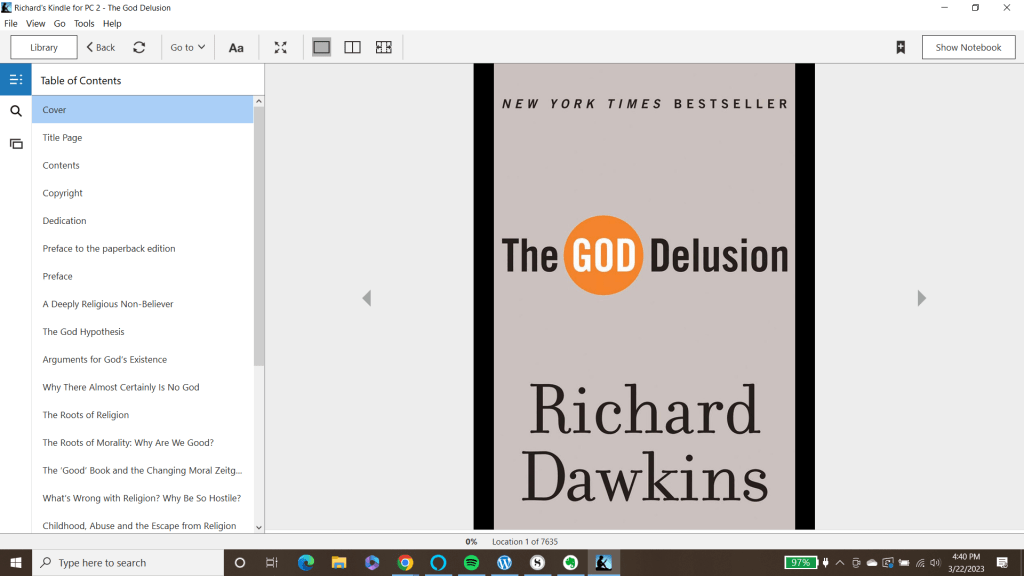



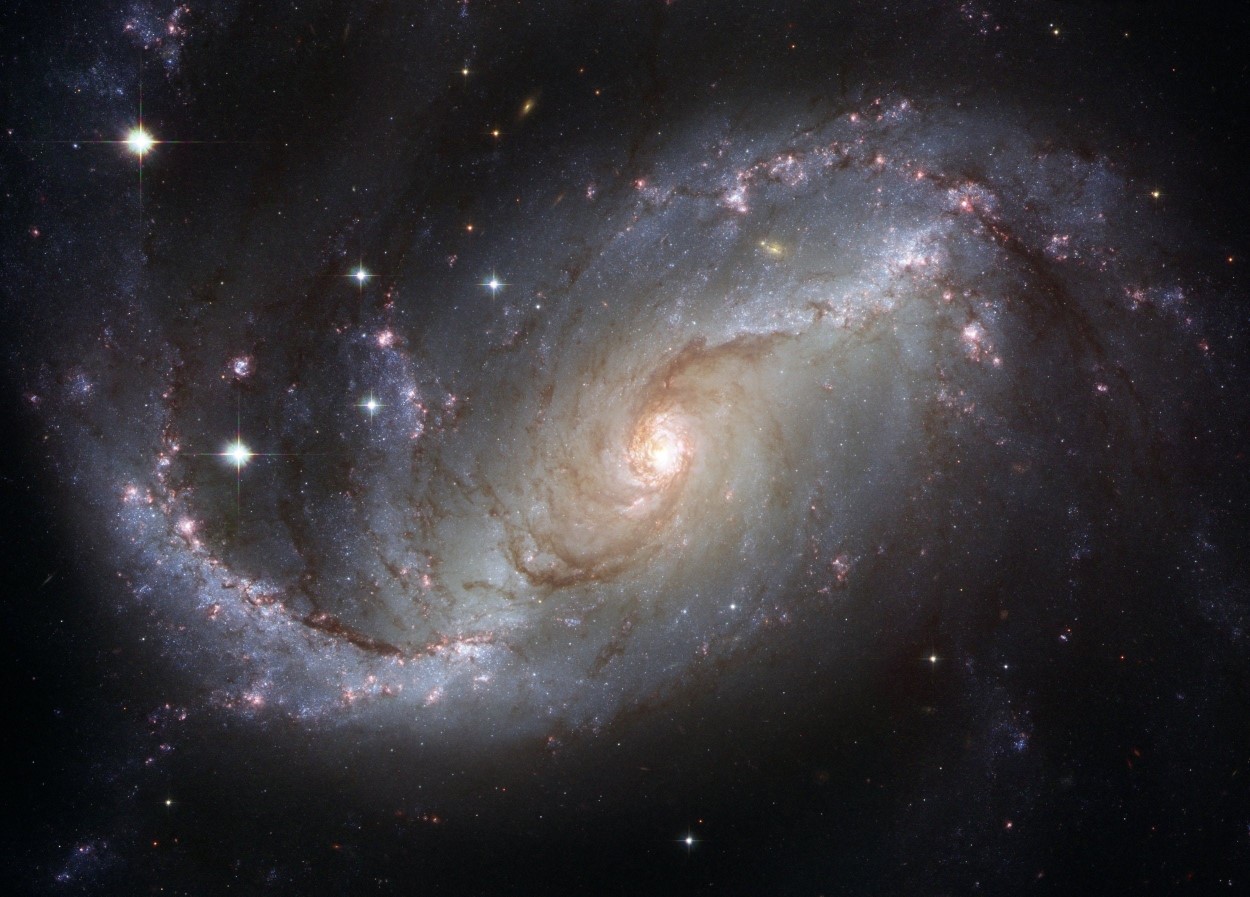



 Richard L. Fricks