Write to Life blog

The lights are flickering in Red America

Here’s the link to this article. You might also want to read this article titled, “Alabama’s attorney general says the state can prosecute those who help women travel for abortions.”

Alabama’s attorney general says the state can prosecute those who help women travel for abortions

Avatar photoby ADAM LEE

AUG 31, 2023

Ante Samarzija via Unsplash

Overview:

Abortion bans, anti-vax ideology, and other right-wing culture-war issues are creating a mass exodus of doctors from red states. Conservative voters will end up paying with their lives for the policies they wanted.

Reading Time: 6 MINUTES

[Previous: Failed states]

It’s a bad time to be pregnant in Idaho:

Bonner General Health, the only hospital in Sandpoint, announced Friday that it will no longer provide obstetrical services to the city of more than 9,000 people, meaning patients will have to drive 46 miles for labor and delivery care.

… “The Idaho Legislature continues to introduce and pass bills that criminalize physicians for medical care nationally recognized as the standard of care,” the hospital’s news release said. “Consequences for Idaho physicians providing the standard of care may include civil litigation and criminal prosecution, leading to jail time or fines.”

… The release also said highly respected, talented physicians are leaving the state, and recruiting replacements will be “extraordinarily difficult.”“Idaho hospital to stop delivering babies. One reason? ‘Bills that criminalize physicians.’” Kelcie Moseley-Morris, Idaho Statesman, 17 March 2023.

The abortion bans springing up across red-state America force physicians into a cruel dilemma. If a pregnant person comes into the emergency room, hemorrhaging or suffering sepsis from a miscarriage or dying from preeclampsia—but the fetus still has a heartbeat—doctors could face criminal charges if they intervene. Their only chance is to hope that the fetus dies before it’s too late to save the mother.

This isn’t a hypothetical scenario. In Oklahoma, a woman with a molar pregnancy—a cancerous, nonviable fetus—sought medical attention, but was told the hospital couldn’t do anything to help her. Staff suggested she wait in the parking lot until she was about to die so that they could act. She gambled on traveling out-of-state instead, and got the care she needed. But it’s only a matter of time until we have an American Savita Halappanavar.

This is an impossible position for doctors and nurses. They either desecrate their professional ethics by standing by and watching someone die whom they could have saved, or else face criminal charges. Understandably, many of them are voting with their feet. They’re leaving these barbarous and backward places in favor of progressive states where they won’t be jailed for practicing medicine.

Sandpoint, Idaho is a case in point. It used to be a medical hub for north Idaho, Montana and Washington, with an ob-gyn ward that delivered hundreds of babies each year—until the fall of Roe and the enactment of abortion bans.

In March, Sandpoint’s obstetrics department completely shut down as doctors fled. Idaho women with high-risk pregnancies now have to travel much further for medical care, like St. Luke’s hospital in Boise. But that one may soon be closed too. It has only six doctors left, most of whom are near the end of their careers. Two younger, recent recruits have already left the state.

Anticipating the likely result, Idaho’s conservative legislature took action. They stopped collecting data on maternal mortality.

Red state brain drain

Red states are suffering brain drain, and not just in Idaho. Doctors are packing up and leaving states like Ohio, Tennessee, West Virginia, and more.

Wyoming has one of the worst physician shortages in the country, with rural hospitals closing their maternity wards. Meanwhile, the state legislature is mulling an abortion ban that will make the problem worse. In South Carolina, more than one-third of counties have no prenatal care at all. In Missouri, rural hospitals are closing in droves.

Texas is an especially sharp example of the problem. Doctors are fleeing the state, worsening a shortage that was already at critical levels:

Almost every provider I spoke with for this story has thought about leaving their practice or leaving Texas in the wake of S.B. 8 and Dobbs. Several have already moved or stopped seeing patients here, at least in large part because of the abortion bans. “If I was ever touch a patient again, it won’t be in the state of Texas,” said Charles Brown, chair of the Texas district of the American College of Obstetricians and Gynecologists (ACOG), who stopped seeing patients last year after decades working as a maternal fetal medicine specialist.

…In 2022, 15 percent of the state’s 254 counties had no doctor, according to data from the state health department, and about two-thirds had no OB-GYN. Texas has one of the most significant physician shortages in the country, with a shortfall that is expected to increase by more than 50 percent over the next decade, according to the state’s projections. The shortage of registered nurses, around 30,000, is expected to nearly double over the same period.

In addition to abortion bans, right-wing persecution of transgender people is worsening the problem. Dell Children’s Hospital in Austin had a world-renowned adolescent health clinic, which treated conditions from eating disorders to menstrual and hormonal problems.

But in May, Texas opened an investigation into the clinic for providing gender-affirming care to trans teenagers. In response, all its doctors quit. The clinic was effectively shuttered, and kids who had been relying on it were left without care.

In another high-profile case, Dr. Jake Kleinmahon, a nationally recognized expert in pediatric transplant surgery, announced in August he was leaving his home state of Louisiana for New York. Dr. Kleinmahon is gay, and he decided that the state’s hostility toward LGBTQ people and families was intolerable:

“Tom and I have discussed at length the benefits of continuing to live in the South, as well as the toll that it takes on our family. Because of this, we are leaving Louisiana. Our children come first. We cannot continue to raise them in this environment,” Kleinmahon wrote.

“Physicians are human beings too”

These departing doctors won’t be easy for red states to replace, if it’s possible at all. A survey of third- and fourth-year medical students—not just OB/GYNs, but other specialties as well—found that more than three-quarters said that abortion restrictions would affect where they choose to live and practice. Almost 60% said they wouldn’t apply to a state that has them.

The decrease for OB-GYN residency applications, 5.2%, was seen in all states, regardless of abortion laws. That percentage dropped by almost double—to a 10.5% decrease—in applications in states with near-total abortion bans.

If the surveys bear out, there could be a serious shortage of OB-GYNs in states with the tightest abortion restrictions. These states already tend to have higher maternal and infant mortality rates.

Another study gives similar numbers:

Our recent study published in the Journal of General Internal Medicine begins to answer this question. In a survey of more than 2,000 current and future physicians on social media, we found that most (82.3%) would prefer to work or train in states with preserved abortion access. In fact, more than three-quarters (76.4%) of respondents would not even apply to states with legal consequences for providing abortion care. The same holds true for states with early or complete bans on abortion or Plan B. In other words, many qualified candidates would no longer even consider working or training in more than half of U.S. states.

…The reasons for physicians’ practice location preferences include, but are not limited to, patient care. While 77.8% of respondents report that their preferences are influenced by patient access to abortion care, others also prioritize preserved access for themselves or their partner (56.1%) or other family members (42.5%). This should not surprise us: physicians are human beings, too, with healthcare needs and personal lives that are not wholly defined by their career choices.How Overturning Roe v. Wade Changed Match Day 2023.” Sarah McNeilly, Morgan S. Levy, Simone A. Bernstein, MD, Jessi A. Gold, MD, MS, and Vineet Arora, MD, MAPP. MedPage Today, 20 March 2023.

At the very least, red states will have to pay more to attract and keep medical practitioners. That means taxes and insurance premiums will skyrocket in these states—for everyone. Conservative voters are going to be hit squarely in the pocketbooks by these spiteful, regressive bans they wanted. It’s also likely that wait times will increase and quality of care will decrease, as these states may be forced to take practitioners who can’t get jobs anywhere else.

Heaping more weight on the pile

The U.S. was already facing a shortage of physicians. However, entrenched conservative hostility to science and medicine is making the problem worse.

This began long before the overturning of Roe v. Wade. For years, right-wing refusal to accept Medicaid expansion has been forcing dozens of rural, red-state hospitals to close. Even before abortion bans, large swaths of rural America were maternity care deserts. The South already had the worst maternal mortality and child welfare rates in the country.

Then COVID-19 came along. As the pandemic raged, Republican politicians nurtured a hydra of conspiracy theories. They displayed a bitter resistance to masks, vaccines, lockdowns, and every other policy created by people who were trying to save lives. They loudly proclaimed that “freedom” sanctified their right to get sick, infect their neighbors, and die slow, agonizing deaths. They accused doctors and hospitals of murdering their loved ones.

They paid an awful price for their obstinacy. During the pandemic, conservative voters died at disproportionate rates compared to pro-science Democrats. COVID deaths dragged life expectancy in Missouri down to a four-decade low. So many people died in Alabama that the total population shrank for the first time on record.

Their partisan rejection of science didn’t end with the pandemic, either. It’s spread to become a mistrust of all vaccines. As a result, long-vanquished diseases like measles, whooping cough and polio are making a comeback.

The people who live in red states are confronting a dire scenario of their own creation.

Republican voters are demanding policies that directly harm themselves and their loved ones. In the name of lower taxes, they forced their own hospitals to close. In the name of freedom, they refused vaccines that would have saved their lives during a pandemic. Now, in the name of banning abortion, they’re heaping even more weight on this pile. They’ve passed laws which ensure that their wives, their daughters, and they themselves won’t have medical care in a crisis. Their culture-war victories are purchased at the cost of their own lives.

The people who live in red states—especially white conservatives who live in far-flung, poverty-stricken rural areas—are confronting a dire scenario of their own creation. In the very near future, they’ll have to travel hundreds of miles for routine care, if they can get it at all. The reddest, most impoverished areas will be reduced to medieval conditions. They’ll regularly suffer from outbreaks of disease, dying from conditions that modern medicine could have cured.

09/04/23 Biking & Listening

Biking is something else I both love and hate. It takes a lot of effort but does provide good exercise and most days over an hour to listen to a good book or podcast. I especially like having ridden.

Here’s my bike, a Rockhopper by Specialized. I purchased it November 2021 from Venture Out in Guntersville; Mike is top notch! So is the bike, and the ‘old’ man seat I salvaged from an old Walmart bike.

Here’s a link to today’s bike ride.


Something to consider if you’re not already cycling.

I encourage you to start riding a bike, no matter your age. Check out these groups:

Cycling for those aged 70+(opens in a new tab)

Solitary Cycling(opens in a new tab)

Remember,

Photo by Suzy Hazelwood on Pexels.com

Podcasts listened to


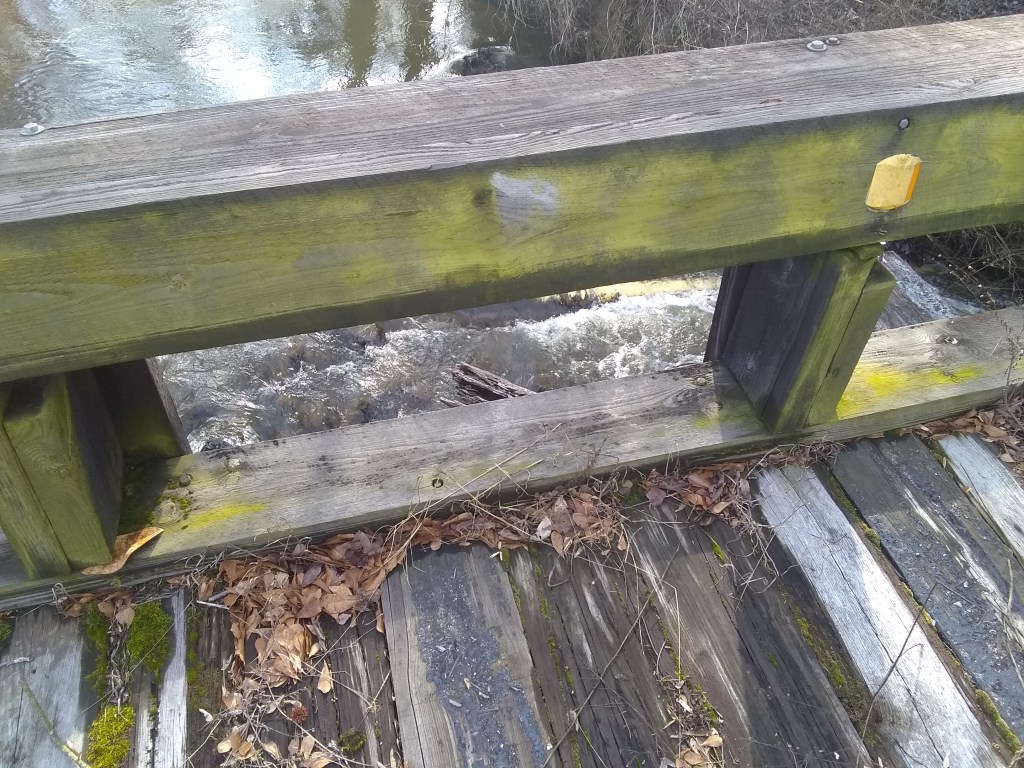
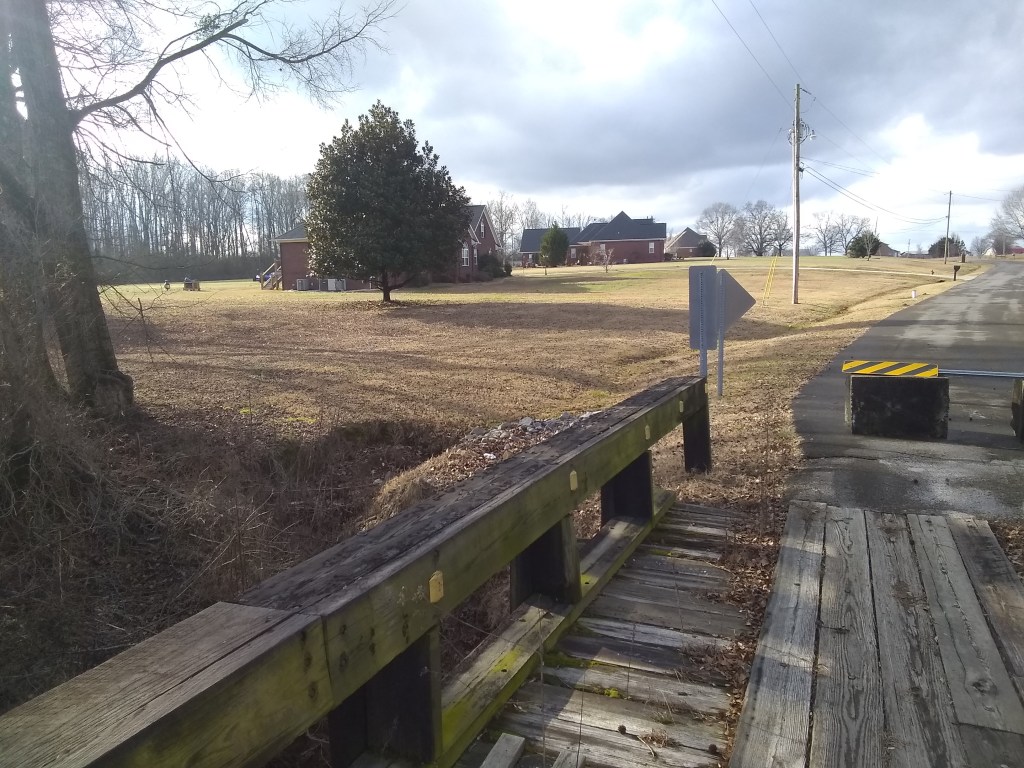
Here’s a few photos from along my pistol route:

For the Trump faithful, it comes down to plot armor

Here’s the link to this article.

Avatar photoby DALE MCGOWAN

AUG 30, 2023

Unsplash

Overview:

If you are trying to puzzle out reality, Donald Trump is done. If you are writing a story with Trump as the hero, he’s invulnerable. The difference comes down to an irritating artifact of bad drama.

Reading Time: 6 MINUTES

In a 2004 article in the New York Times Magazine, journalist Ron Suskind recounted a surreal conversation he had with an aide to President George W. Bush:

The aide said that guys like me were ‘in what we call the reality-based community,’ which he defined as people who ‘believe that solutions emerge from your judicious study of discernible reality’…’That’s not the way the world really works anymore,’ he continued. ‘We’re an empire now, and when we act, we create our own reality. And while you’re studying that reality—judiciously, as you will—we’ll act again, creating other new realities, which you can study too, and that’s how things will sort out.Ron Suskind, “Faith, Certainty and the Presidency of George W. Bush,” NYT Magazine, Oct 17, 2004

It was a simpler time. We thought we had reached our presidential nadir. The reaction from those of us in the reality-based community (RBC) to the statement by the aide—now believed to have been Karl Rove—was utter disbelief that such gibberish could emanate from the White House.

Like I said, a simpler time.

But in the fullness of time, that bush-league reference to created realities would be trumped…

YouTube video

…and given a shiny new name:

YouTube video

Chuck Todd’s sputtering, incredulous reaction to the invocation of “alternative facts,” like mine, was classic RBC. Conway had said something transparently insane. And then both Chuck and I went on our way, shaking our heads but never stopping to wonder if Karl and Kellyanne, each in their own era, might have signaled something useful about this ludicrous timeline of ours.

The question has a new urgency as a former president juggles the court calendar for four felony criminal indictments while his supporters retreat further into another false reality—one in which this obvious figure of unprecedented criminality, corruption, and incompetence is actually a Christ-like victim of a leftist conspiracy bent on keeping him from retaking the White House to resume his ordained mission to fix everything.

The RBC imagines that enormous energy must be required in Trump-supporting heads to manage the cognitive dissonance between the obvious reality and the Beloved Story. But there is no dissonance to manage in a mind that has never done any reality curation to begin with. It’s Beloved Story all the way down. Far from creating dissonance, a perceived attack on a Beloved Story often results in a redoubled commitment and deeper retreat into the story—a psychological defense called reactance or the backfire effect.

https://www.tiktok.com/embed/v2/7262528826960350510?lang=en-US&referrer=https%3A%2F%2Fonlysky.media%2Fdale%2Ffor-the-trump-faithful-it-comes-down-to-plot-armor%2F&embedFrom=oembed

This is the essential point that we in the RBC keep missing. When you’ve spent a lifetime trying to figure out the real world around you, despite your own weaknesses and biases, it’s natural to assume that others are doing the same thing, just really badly.

That’s not what’s happening.

One of the defining features of the human mind is the continuous creation of what research psychologist Dan McAdams calls “narrative identity”—a coherent story into which we can comfortably embed ourselves. That process is inherently subjective. As much as we’d like to think of our senses and minds as faithful recorders of reality, it is never true. Every perception and data point passes through a subjective filter, and our identity emerges from that.

As neuroscientist Mary Helen Immordino-Yang puts it, “Emotion and cognition are not ever separate. There’s no such thing as one without the other. Emotion is the quality of engagement we have with the cognition, and the cognition is driving how we’re going to react and make sense out of it.”

Being in the RBC or engaging in science doesn’t exempt someone from this. The scientific method didn’t eradicate emotion from our observations of the world. It created procedures and systems that control for the subjective emotion that is always, always present where humans are involved, so we could maybe start getting more things right.

But our basic nature has not changed. We are not just incidentally storytellers—it is, for better or worse, a defining feature of who we are.

The luxury to care about the truth

Because of mostly unearned circumstances, I’ve had the luxury to care more about figuring out what’s true than about creating a story in which I could feel safe. When new information presented itself, I learned to deploy a small kit of tools that are mostly designed to get the mess that is me out of the way. It becomes a habit, then a way of life.

As a result, I’ve been able to take in some harsh realities—death is final, there is no all-powerful protector, we broke the climate and probably can’t fix it, my country/race/gender is responsible for enormous suffering, and so on—and incorporate them into my narrative identity without much need for alternative facts. More often than not, I have enough personal security to accept reality, even when it grates against my preferences.

This isn’t the human default.

Consider someone who lacks those advantages. They were born into a family that either didn’t value critical education or couldn’t afford it. They grew up surrounded by parents and peers and pastors who reinforced comforting narratives, plus an entire mediascape devoted to the profitable maintenance of that bubble. They are continually assured that they live in the greatest country in the world, that they worship the right god in the right way, that they will live forever under his wing, and that all those who contradict this story are in thrall to [insert demonic being or social system or political party here].

Now shift the culture under their feet in a way that tips them out of dead center.

A presidential candidate comes along who shares their temperamental disregard for reality, albeit for different reasons. When during the first Republican debate in August 2015, he says, “I think the big problem this country has is being politically correct,” jaws drop on both sides of the reality barrier—the RBC in horror, the narrative-weavers in love.

At that moment, Donald Trump acquired plot armor.

Bending the rules to protect the main character

Plot armor is present when you know an important character in a drama will survive a dangerous situation because they are needed for the plot to continue.

My son discovered this phenomenon at age nine, watching a lightsaber duel in Star Wars: The Phantom Menace. “I hate these fights,” he said. “You know the good guy is going to win.” Maybe it’ll be magic, or luck, or the sudden appearance of the cavalry, or a bending of the laws of physics. One way or another, the necessary good guy will live.

That’s plot armor.

From the reality-based POV, it is beyond bizarre that 80% of white Evangelicals support Trump. But once you grasp narrative identity, it makes perfect sense. They are a people born and bred on the creation of preferred narratives that disregard inconvenient realities, narratives in which they are the good guys and they win. The reason Jesus couldn’t stay dead is the same reason Trump’s support will never drop below a certain floor: both are needed on set for the plot to continue to the cathartic fourth act.

From the white Evangelical perspective, America in 2015 had lost the plot terribly. It was agony. Church attendance and membership were plummeting, the nonreligious were on the rise, a president of the wrong color was finishing his second term, reproductive rights were near their peak, and same-sex marriage was the law of the land. They could feel themselves sliding away from the center of the culture. This was not in the script, the story with which they were raised.

And in that moment, Trump said, You’re right, the world has gone crazy with all this political correctness. Everyone is blaming you, but it’s not your fault. It’s their fault! And I alone can fix it.

That was a moment of intense narrative lock, a way to restore the triumphant story of white Christian supremacy that had been rudely interrupted by all that progress. Nobody else was talking this way. And the other 6,895 candidates in that GOP primary, with their political mealy mouths and half measures, winked out of existence.

This is the crucial realization: Trump supporters are not trying to get it right. They didn’t arrive at their support by examining evidence badly. When the reality-based community says, “How the hell can they still support him?” then trots out the Access Hollywood tape and 30,573 lies and hush money for porn stars and calls for violence and religious and political illiteracy and two open-and-shut impeachments and four criminal indictments and call it “evidence”—it’s only evidence of our failure to get through our heads what they are actually engaged in. They are not trying to get it right. They are trying to finish a story in which they are the good guys and they win.

And you, with your bad storytelling, are going to get thrown out of the writers’ room.

I don’t remember who I was talking to when this dynamic finally struck me. I was arguing against some theological nonsense with an intelligent friend, years ago, assuming that we were engaged in the same enterprise, but seeing him miss the catch over and over, when it hit with the force of revelation: He is not trying to figure it out. He is writing an acceptable story and wondering why I am being so obtuse by losing the plot.

The fortunate thing about Trump’s plot armor is that it doesn’t translate to the ballot box. The unfortunate thing is that when he loses, at the ballot box or in the courtroom, there is no extreme measure the faithful remnant will not consider in defense of the Beloved Story.

The Boaz Stranger–Chapter 48

Don’t forget to check the temperature of the chicken.” It was the third time this morning Kyla had reminded me. I guess she saw how focused I was on grading exams.

She was scrambling to leave for Sunday School. Common to both of us was the habit of forcing too much into too little time. Sometimes it worked, often it didn’t. Kyla had risen a little later than normal, but had already made a trip to Walmart, fed and watered the goats, replaced a set of white lights on the Christmas tree, baked a cake, and put on a whole chicken in the crock-pot for today’s lunch. Her hair was only half-dry as she tucked her Bible under her arm and headed for the front door. “Anything else I need to do?” I said, trying to look like a team player, though truthfully, I was enjoying being a professor again.

“Turn it to ‘Warm’ when it reaches 160 degrees.” Sis rolled her eyes and shook her head as she backed through the opened door onto the front porch. “And you can set the table before I return.”

“Yes, ma.” Kyla’s religious beliefs were a mystery, but she leaned toward some form of supernatural being, maybe even the Christian God. She seemed especially interested in Dr. Mork’s prayer prediction although I’d argued it was a post hoc fallacy: if B follows A, it doesn’t mean A caused B. Now, I didn’t know why I’d shared the doctor’s opinion or been verbally critical of his response.

Lillian was half-dozing in a Lazy Boy while listening to Pandora on her iPhone. I was glad she was using her earphones.

Three hours ago, I’d taken over the den and kitchen, arranging one-hundred three bluebooks neatly, by class, along the leather couch. Bluebook #6719 was at the opposite end of the table; a B minus earned by one of thirty-eight students in my Torts II class. I was now reviewing #4382, which had to be Jodie Allison’s almost incomprehensible scribblings. Although Dean Waters had granted my request to alter the end-of-semester exam and grading procedures (normally, exams are taken on computer and the professor reviews and grades them without knowing the student’s identity), Jodie’s awful penmanship was a megaphone, slowly, clearly, and loudly announcing every syllable of her name.

My teaching colleague Lea had called at 4:30 Friday afternoon and announced her and Steve had packed and shipped the hundred and five blue books an hour after they administered the last exam. Fed-X had delivered the package to Kyla’s before dark yesterday afternoon while Lillian and I were at her house, for the second time since the hospital released her from ICU a week ago.

I returned to Jodie’s (aka, #4382) poor penmanship but par excellence for legal analysis. This Grafton, West Virginia native had grown up with three strikes against her but was inspiring despite her stubbornness. By third grade, the school had identified her as learning disabled and placed the awkward child in special classes. Truth was, Jodie suffered from writer’s cramp and chose not to do any work that required the use of a pencil. Bored, she began reading every book offered by the library in her small and pitifully poor hometown. By age 14, she’d used cunning and shamelessness to misrepresent her age and earn her GED. How at 15 (and after one semester at Pierpont Community College in Fairmont, WV) she’d won a four-year scholarship to Yale was still a mystery. However, Jodie’s near-perfect score on her LSAT was clear-as-day proof why she’d been admitted to the law school. I’d learned a lot about her as a faculty adviser and had somehow convinced her to seek medical care. Jodie suffers from hand dystonia, which causes excessive muscle contractions in the hand and arm. Thankfully, after six weeks of arguing, I’d persuaded her to enroll in a long-term occupational therapy program. Unfortunately, it was too early to tell if penmanship improvements were on the horizon.

I placed an A+ at the top of #4382’s first essay and glanced at Lillian. To my surprise, she was looking straight at me. I returned her smile and slid my chair backwards. Given my mental trip to West Virginia, I needed to stay focused on my grading. Then, I remembered how close I’d come to losing the most important person in my life.

It was now December the twentieth, eight days since they had released Lillian from ICU. As far as we knew, she was doing well. The only noticeable change from her pre-injury status was her frequent naps. This had worried me the first few days after her discharge but now seemed natural and harmless since otherwise she was the same wild and crazy woman I’d fallen in love with.

Speaking of mysteries and injuries, the Etowah County investigators had refused to bring charges against Ray Archer. After interviewing Lillian last Tuesday, they concluded there was insufficient evidence to connect Ray to her injury. Their hypothesis was that a two by four board with an attached L-shaped piece of angle iron had fallen and struck Lillian’s head. Prior to falling, the board hung horizontally across the barn’s ceiling. Somehow, like the closing of a hinge, the end pointing to Cox Gap Road had fallen, hitting Lillian on the side of the head as the board completed its journey, ending in a vertical position against an interior wall. It was the weirdest coincidence I’d ever encountered, making me think it wasn’t. I stood, took three strides to Lillian, and knelt beside her chair, wishing Sherlock Holmes was real and currently applying his enormous mental skills to this deeply troubling mystery.

I clutched her right hand with both of mine and kissed her fingertips. “Have I told you this morning that I love you?”

“Two times, not counting that one.” She lowered her footrest and pulled my head forward. “I’m not complaining,” she whispered as our lips met. It seemed Lillian’s injury and recovery had affected me more than her. I was now a full-blown romantic: more touchy, talkative, and embarrassingly clingy than I’d ever been with Rachel. My discovery of intimacy had to be the product of brushing against the near loss of the sensuous Lillian.

I was still feeling guilty for not going with her and Jane last night to Gadsden. It was the first time we’d been apart since her release from the hospital. I should have joined their shopping and worshiping adventure. Jane had broached the idea, saying it would do Lillian good to go to church and express her thankfulness for her new lease on life. And the shopping would be like icing on the cake.

My left leg was cramping, so I stood and pulled a chair from the dining room table and nestled it close to Lillian’s Lazy Boy. “Don’t forget to give me the receipt.”

She reached to the end table to her left and snatched a slip of paper. “Two hundred thirty-eight dollars and forty-two cents, including taxes and shipping.”

“When should they arrive?” After Lea had called late Friday updating me on the bluebooks, I’d realized I’d forgotten to buy her and Steve a thank-you/Christmas gift. Lillian had suggested HoneyBaked of Rainbow City, relaying that their hams and turkeys had been her choice for the past ten years.

“Tuesday. Even though you paid for overnight shipping. They won’t process your order until tomorrow.”

“Thanks again for taking care of me.” I’d given my debit card to Lillian and insisted she buy Lea and Steve each a turkey and a ham, and another ham for our own Christmas dinner at Harding Hillside. Lillian had taken Kyla’s cooler and a few icepacks and left our ham protected in Jane’s trunk as the two attended a revival service at First Baptist Church in Gadsden. The evangelist must have been long-winded since it was after nine when Lillian walked through the front door with notable sadness on her face.

Now I looked into Lillian’s eyes and saw the same sadness. “What’s wrong, you’ve seemed distant since you returned last night?” I had a feeling I knew the answer. It had everything to do with how I felt. No doubt we brought it on when she helped buy my airplane ticket. We were at her place in Sardis when I reviewed my To-Dos in Evernote. It was a practice I’d let slide since coming to Alabama. I’d seen the one instructing me to buy Lea and Steve a gift. Thankfully, Lillian had the answer to that. Then, I’d seen the task I’d dreaded and subconsciously postponed: the purchase of a plane ticket heralding my departure from Alabama and the woman I loved. I’d used Lillian’s laptop to purchase a Delta one-way ticket to New Haven, departing Birmingham at 2:50 PM on Friday, January the 29th. That date seemed like a semester away, but in the grand scheme of things, the forty-one days would pass like a single sunset.

A lone tear rolled down Lillian’s right cheek. She glanced at me and lowered her footrest. “I can’t stand it. Lee, how long are we going to postpone the inevitable?” I knew what she was talking about. One of us had broached the subject several times since her release. Each time it had been after we’d made love and were lying in her oversized bed in her undersized bedroom.

“You know I’m against you staying in Boaz while you wait for the divorce proceedings to end. That’s why I wanted to purchase two tickets.” I didn’t care if Lillian ever divorced. During the days she was in a coma, I discovered how truly important she was to my very existence. I wanted us together forever, and I intended to make that happen.

“Ray will be in jail before you leave town. I’ll be safe for the few weeks it takes to settle everything. By spring at the latest, I’ll be knocking on your door.” Lillian was exuding her self-confidence.

I thought differently. “You can be so naïve. Why not come with me and deal with the legal wrangling from a distance?” We both stood at the same time.

“I need more coffee and you need to get back to grading papers.” Lillian reached toward the end table for her mug and headed to the coffeemaker beside the sink. I reluctantly returned to my bluebooks.

I mumbled under my breath, “what you need is glasses,” before attacking Jodie’s response to essay question #2.

Before I could absorb three paragraphs of the brilliant student’s near-incomprehensible scribbling, Lillian’s half-scream (a high pitch, ‘oh’) brought me to my feet. She had wandered to the kitchen counter closest to the front door. Her hands were outstretched, holding onto the edge of the countertop. Something was wrong. Was she having a stroke? A heart attack?

Thankfully, in two seconds I learned she was reading yesterday’s Sand Mountain Reporter that Kyla had retrieved from the mailbox earlier this morning and had laid, along with a stack of bills and junk mail, at the end of the counter. “This better be good for the scare you gave me.”

“Read this.” Lillian pointed to an above-the-fold article titled, “Hikers Discover Two Bodies in Dekalb County.” To the right of the text was a bird’s-eye view of a map where the bodies were found. The artist had identified and labeled several locations in the small town of Valley Head, including Valley Head Baptist Church. Each location was to the west of the heavily forested discovery area.

I stood beside Lillian, who was ready to turn the page and read the rest of the article on page 9. “Hold on. Let me catch up.” The first sentence declared the moderately decomposed bodies of two men related to a puzzle local law enforcement were trying to solve. The article didn’t disclose their names but did share those matching tattoos across their lower backs pointed to the same two men from Guntersville who’d been missing for over a week. Before I motioned Lillian to flip the pages, the journalist reported that a 2015 pickup truck found a week ago by a St. Clair County Sheriff’s deputy at Horse Pens 40, a nature park in Steele, Alabama, was likely owned by one of the men. “I’d bet they know more than their sharing.”

“How so?” Lillian said, turning to page 9.

“This article is too aggressive. Better put, the newspaper wouldn’t have announced a connection between these two events—the bodies in Dekalb County and the missing truck in St. Clair County—unless they had confirmed these facts with the investigative agencies.” I tried to think of a way to learn more. I’d always heard and believed the Sand Mountain Reporter was a first-class operation, one with outstanding journalistic integrity.

Lillian seemed to read my mind. She flipped back to page 1. “Nick Lancaster. That’s Stella Newsome’s brother.”

“Uh?” I quickly answered my question when I noticed who’d written the article.

“Jane and Stella are good friends. Maybe she could get us an inside view. I’ll call Jane.”

“Not yet. Flip back to page 9. Let’s see what else Nick has to say.” I couldn’t help but think of what Jane had told me in the hospital’s dining room a few minutes before Lillian had awakened from her coma. Jane had followed Ray to Dogwood Trail and waited. Later, she’d seen him turn right onto Cox Gap Road with his Suburban pulling a flatbed trailer. On it was Buddy’s jacked-up pickup. Before continuing our reading, Lillian and I exchanged looks. Without words, our expressions were clear. We both were confident Ray had killed Buddy and Billy.

“Ray was transporting more than Buddy’s truck. If Jane was being truthful, Ray had killed the brothers at the farm and was moving them to what he thought was their eternal resting place.”

“Like he did Sharon Teague and Kyle Bennett.” I said, sick of the man’s horrendous brutality. Almost as bad was the vivid reminder that he and Lillian had shared a bed for half a century.

On page 9, Nick was even more aggressive. He described a third piece of the puzzle: Sheriff’s deputies had discovered several incriminating items inside Buddy and Billy’s travel trailer. The two had rented space from the State Park in Guntersville for over three years. A nephew had become suspicious when his uncles disappeared. He had attempted to find them, including calling their cell phones, visiting The Shack, the restaurant where they both worked, and finally, breaking into their camper. Inside, he’d discovered a sizeable amount of cash and two paperbacks describing the process of remotely starting a fire.

Nick was thorough. He even answered my question, why would the nephew disclose his findings? There were two reasons. One had to do with the campground’s manager who’d threatened to call the police after being tipped off that a burglary was in process. The second reason, probably the most important, was that the nephew was a preacher. “Though tempted, God gave me strength to do the right thing,” was a direct quote by Nick.

After Lillian and I read the full column on page 9, she repeated her “oh,” thankfully not as loud as the first one, and added a “my goodness.”

“What now? What’d I miss?” I was feeling guilty over the misuse of my grading time.

“The preacher, Alex Mandy, last night at the revival. He’s the nephew, Billy and Buddy’s nephew.”

“No.” I shook my head. “That’s highly unlikely.”

“Hear this before you walk out that limb.” Lillian refolded the newspaper and returned to the coffeemaker. Without looking back at me, she said. “Last night, before the evangelist started preaching, he asked the congregation for prayer. He shared that his two uncles had gone missing, and their bodies had recently been discovered. He said they’d been murdered. At the end of his sermon, Mr. Mandy returned to the subject of his uncles saying that as far as he knew, the two had never accepted Christ as savior, and now it was too late. There were four people in the congregation who responded to the evangelist’s end-of-sermon altar call. Two said Jesus saved them.”

All I could say was, “it’s a small world,” before returning to the bluebooks.

09/03/23 Biking & Listening

Biking is something else I both love and hate. It takes a lot of effort but does provide good exercise and most days over an hour to listen to a good book or podcast. I especially like having ridden.

Here’s my bike, a Rockhopper by Specialized. I purchased it November 2021 from Venture Out in Guntersville; Mike is top notch! So is the bike, and the ‘old’ man seat I salvaged from an old Walmart bike.

Here’s a link to today’s bike ride.


Something to consider if you’re not already cycling.

I encourage you to start riding a bike, no matter your age. Check out these groups:

Cycling for those aged 70+(opens in a new tab)

Solitary Cycling(opens in a new tab)

Remember,

Photo by Suzy Hazelwood on Pexels.com

Podcasts listened to


Here’s a few photos from along my pistol route:

Book curses and book blessings

Here’s the link to this article.

Avatar photoby ADAM LEE

AUG 25, 2023

A medieval manuscript, with a book curse written in the margin | Book curses and book blessings
A medieval book curse. The text on the right reads: “Book of Our Lady Ter Doest donated by Lord Dean Joseph of St. Donaas in Bruges. Whoever takes it away or alienates or tears out a sheet, be damned. Amen.” Credit: Bruges Public Library

Overview:

When books were rare and precious objects, their owners protected them with curses to deter thieves and vandals. We should adopt that same attitude of repugnance toward modern-day censors.

Reading Time: 5 MINUTES

We take it for granted that books are common objects. It’s easy to find one on any subject you want to read about.

You can patronize your favorite bookstore, where the shelves are stacked floor to ceiling with books. You can borrow a treasure trove of books from your local public library for free. Or you can buy anything you want from an online bookseller with an infinite virtual catalog and have it on your doorstep in a few days.

This casual abundance makes it easy to overlook how good we’ve got it. Book lovers of past eras had a much harder time. Until very recently in human history, books were rare and precious treasures.

Before Gutenberg

For thousands of years, from the dawn of literacy until the invention of movable type (1450 in Europe, and several centuries earlier in China), the only way to copy a scroll or a book was by hand, one letter a time.

It was a slow, arduous task requiring the labor of trained scribes. Imagine a medieval scriptorium: rows of monks working by candlelight in unheated rooms, writing with quill pens and ink they made themselves from local pigments. Imagine the straining eyes, the aching backs, the cramping hands. One marginal note, written in a medieval manuscript by the copyist, gives a sense of the labor involved: “Now I’ve written the whole thing. For Christ’s sake, give me a drink!”

Even the parchment that books were written on was a valuable commodity. It was made from calfskin, and it might require the slaughter of dozens or hundreds of calves to yield enough for an entire book. There was good reason not to waste it. This led to the creation of palimpsests: a book whose previous writing was erased, washed or scraped off, so that the precious parchment could be reused for something new.

These palimpsests are a treasure trove for modern scholars. With multispectral imaging, we can read the older, nearly-invisible traces of letters underneath the newer writing. Some ancient manuscripts are only known from these remnants.

Because books were so laborious to produce, the copyists made each one an object of beauty. Many surviving ancient texts are illuminated manuscripts, decorated with elaborate border art and illustrations, sometimes made with gold or silver leaf. A particularly elaborate book like the Lindisfarne Gospels might have taken as long as ten years to craft.

All the work required meant that books were luxuries of the very rich. And to top it all off, books were fragile. Unlike, say, a marble statue or an iron tool, they could easily be destroyed by fire, by water, by rot, or by simple thoughtless vandalism. All that staggering labor could be erased in moments—and often was. (The sum total of written material in Old English comes from a mere four books that survived the centuries.)

Naturally, people who owned books were fiercely protective of them. After you’d gone to the trouble of getting a book copied for your collection, you’d be more than a little piqued if someone borrowed it and never gave it back.

“Let him be fried in a pan”

This inspired one of my favorite literary inventions: the book curse.

Scribes would write these curses at the beginning or end of a book. Like Egyptian pharaohs’ curses on anyone who desecrated their tombs, they promised an awful fate for anyone who stole the book, damaged it, mutilated it, or borrowed it and didn’t return it to the owner.

A short book curse might threaten book thieves with excommunication, damnation or general wrath of God, like this one: “May the sword of anathema slay / If anyone steals this book away.”

However, they could also be longer and more inventive. A more detailed one went like this:

“If anyone take away this book, let him die the death; let him be fried in a pan; let the falling sickness and fever seize him; let him be broken on the wheel and hanged. Amen.”Marc Drogin, Anathema: Medieval Scribes and the History of Book Curses, quoted in Atlas Obscura

Another one reads:

“To steal this book, if you should try,
It’s by the throat you’ll hang high.
And ravens then will gather ’bout
To find your eyes and pull them out.
And when you’re screaming ‘oh, oh, oh!’
Remember, you deserved this woe.”

Medieval people were seriously hardcore about protecting their books.

The evil of book burners

Of course, book curses weren’t magic spells. They had no power outside the superstitious fear they inspired in potential thieves. On the other hand, that’s why the concept is brilliant. The kind of person who’d want to steal a book, presumably, also cares deeply for the written word. That’s the same kind of person who’d be most likely to believe that words have supernatural power to inflict harm on wrongdoers.

Aside from antiques and rare editions, books aren’t so scarce anymore. On the contrary, we’re positively drowning in words. There are more books published than anyone could read in a lifetime. For the first time in history, our biggest problem isn’t finding books, but choosing which ones to read.

We live in a world those candlelit medieval scribes could scarcely have imagined. Even still, there’s something we can learn from them. The lengths they went to to safeguard their precious books—and the violent hatred they felt for thieves and vandals—is an attitude we’d do well to reclaim.

In those ancient times, it was a special kind of evil to burn or otherwise destroy a book. To do so would be to consign countless hours of labor, sweat and devotion to the flames. It was all too possible to erase a book from existence by destroying every copy.

Nowadays, book burning and censorship are merely symbolic acts. The internet enables endless digital replication, perpetual archiving and virtually free distribution, all protected by encryption if necessary. It makes wannabe book destroyers’ efforts perfectly futile. Anyone with a modicum of technical knowledge, or a little bit of money, can read any book they want with very little effort.

Even so, we should hold to the view that to burn a book—literally or metaphorically—is one of the worst crimes you can commit. To keep knowledge out of the hands of those who come seeking it is a grave sin, in the secular sense of the word. Only those with truly depraved souls would attempt such a deed.

Books are accelerators

A book is a distillation of knowledge. It condenses months or years of research into a product that can be read and absorbed in a few hours. Because of this wonderful power, books were the first accelerators that sped up the pace of human progress. The more and more widely we read, the better equipped we are to comprehend the world and to see through others’ eyes. We can each be the beneficiary of many lifetimes’ worth of progress, far more than any one individual could rediscover on their own.

It’s this acceleration that book burners and book censors want to prevent. They want to keep us all tied to a single view of the world, a single set of ideas. Every book that challenges the status quo, that proposes new ways of seeing, is a mortal threat to them. When they come knocking to take the books from our hands, we know what to say to them, courtesy of our medieval forebears. We ought to have our book curses at the ready for any who want to defile the temple of knowledge.

The Boaz Stranger–Chapter 47

For the middle of December, it was a beautiful day: sunny, warm, and just enough breeze to spin to the ground the few remaining leaves clinging to the giant oak at the north side of Ray’s detached garage.

He had pulled his red Corvette outside onto the driveway and was applying butter wet wax, the best product he’d found to provide the deepest, wettest look imaginable in a matter of minutes.

This every-two-month chore had always been Ray’s favorite way to relax. Give him a beautiful day, a six-pack of Coors Light, and Elvis Presley’s gospel music on Pandora repeat, and Ray’s mind, body, and soul would portal to a countryside nirvana.

Except today. Instead of an actual place of bliss, delight, and peace, Ray’s world was sliding towards Hell, both figuratively and literally. Three bottles of Coors weren’t helping. Nor was the Corvette’s shine. Ray was in a slump. He was miserable, troubled, and agitated by the voice in his head reminding him of his many problems.

The least of which was Lillian, or rather, the living Lillian. His creative but failed attempts to eliminate his estranged wife left his estate completely exposed. Damn, if he hadn’t been so eager to sign that last prenuptial agreement. And, double damn, for the divorce lawsuit that private investigator Connor Ford had served on him yesterday afternoon. Lillian was serious. Not only about robbing him of half his wealth, but more so about sending him to prison. The worst thing of all, well, other than inside a jail cell, was living the rest of his life knowing Lee Harding had taken what was his, the woman who had always clothed him in honor and respect.

Ray backed his Corvette into the garage and lowered the overhead door. It was two hours before his meeting with Orin at Dogwood Trail Farm. He walked around the detached garage to its back porch and sat in his favorite rocker. The valley below was lifeless. Ray imagined each leafless tree represented a pending decision, the result yielding fresh growth and life, or decay and death. A rush of cold raced down his spine, though the sun was bright and warm. For a second, he felt he was being smothered, his problems encircling his neck like strong fingers, squeezing harder and harder.

Ted’s call at midnight was the last thing Ray had expected, not to say anything about the surprise news his best friend had shared. The bodies of two men, most likely Billy and Buddy James had been discovered. Murdered. Ted heard this and more from his longtime friend and local crime reporter, Nick Lancaster. Ray hated the guy.

Nick had emailed Ted a draft of the lead article in tomorrow’s Sand Mountain Reporter. Nick argued it connected the two murders to a 2015 pickup truck found at Horse Pens 40, and the Black Friday arson of the Hunt House.

After Ted ended the call, Ray had contemplated calling Jane and asking her to disable his ankle bracelet for the second time. And to run away with him. Although the thought of being with her nonstop was sickening, it was better than leaving her to spill the beans on his life of flaunting the law. She was the key to a vault of evidence against him. Ray considered a series of what-ifs that could easily snowball to his ultimate arrest, conviction, and lifetime incarceration.

What if Buddy had recorded their arson-planning conversations? What if Buddy and Billy had left something exposed, like a stack of photos or a pile of cash hidden beneath a mattress? Anything that could somehow lead the law back to him? What if a security camera had captured him along with his late-night body and truck disposal adventure? Ray could think of many other what ifs.

He stood and walked to the porch railing, imagining he and Jane could already be two or three states away if they’d left early, maybe out of the country if they’d chosen to fly. The latter was still an option, especially a private chartered flight. Ray had connections. And money.

He gripped the wooden post holding the porch ceiling and would have kicked himself if he could. After paying Billy and Buddy for the Hunt House job, he had meant to restock the money in his home safe. He had often thought of setting up offshore bank accounts. There was no excuse. It all had to do with his damn self-confidence. Now, that had fallen to the wayside like the remaining leaves in the valley below.

Ray closed his eyes and clutched the wood railing as tight as he could. He wondered if he was about to have a panic attack. Although he’d never experienced one himself, he’d heard how they were a spitting image of death itself. That’s what Ted had said. The figurative hands around his neck returned and squeezed tighter. Were they retributive hands? Aligning the stars of his demise? Doling out punishment for his past mistakes and crimes?

Why was the Dogwood Trail farm even an issue? Why had his father chosen to sell it and not let it be, allowing Ray to inherit it when his father passed? Thoughts of the domino effect of that sale flooded Ray’s mind, as did the faces of Jackie and Jade Frasier, two folks he knew he could trust. But then, why had they come to mind at such a time as this? Ray’s cell phone vibrated in his pocket, diverting his attention from a question he’d never considered.

He started not to answer, not in the shape he was, but he knew he had to. It might be Ted. Or Jane, Ray’s single hope for redemption and escape.

It was neither Ted nor Jane. “Orin, what say you?” Ray answered with his best effort toward levity.

“I can meet earlier if that works for you?”

“Awesome, I was getting bored sitting here waiting for spring.” Ray said, no longer feeling powerful hands around his throat.

“Uh?”

“Nothing. Just a joke. I’ll head to the farm in ten minutes.”

“Okay, I’m on my way.” The thought of Orin reminded Ray of how close he’d come to jumping into the abyss. How gullible and stupid he’d been to think he’d found a replacement for Billy and Buddy. Thankfully, Jane had snatched him from the jaws of death.

Maybe Ray’s unwillingness to run was rooted in his subconsciousness, or a revelation from the Holy Spirit, or some other mysterious voice guiding him to the light, to a vision and hope of how to resolve, once for all, his legal problems. The key was Jane and her idiotic plan, or the absence of Jane. Ray walked down the sidewalk to the Lodge’s back door and inside to his bedroom. Killing Jane was not an option. It was unnecessary. She would never abandon him. She was smart, smart enough to know she’d never be intimate with anyone as powerful and mesmerizing as himself. Truth is, Jane is addicted, and once an addict, always an addict. Ray opened the bookshelf door and walked inside the narrow corridor to his safe. Orin would respond. Ray worked the combination lock and pulled open the ten-inch-thick door. He removed one of two ten-thousand-dollar bundles, and an unregistered SIG Sauer P226 Equinox. It was Ray’s favorite 9 mm pistol.

Ray took his time driving to the farm. In Mountainboro, waiting at the red light, his mind reproduced the image of himself standing on a small platform hundreds of feet above a rocky valley below. It was his first attempt at bungee jumping. But he was fully untethered, about to descend to the rocky shore where a painful and obliterating death was certain.

A blaring horn from the car at his rear bumper catapulted Ray back to reality. He eased his Suburban across Hwy. 431 and away from the scary platform. Ray figuratively shook his head in amazement at how Jane had discovered Orin was a rat. “The Internet changed everything,” she’d said. “Anna could do this for you all the time if she wasn’t such a lazy ass.”

A few keystrokes, a few dollars for two pay-for-service databases, a phone call to a friend in the county clerk’s office, and a serendipitous tailgating adventure had yielded Jane a wealth of information.

Susan Vick was Orin’s sixty-three-year-old widowed grandmother. She was also the lone biological sibling of the long-dead Sharon Teague. The clerk friend had pulled the case file of State of Alabama vs. Orin Everette Russell. Although Orin was initially charged with kidnapping and sexual assault of his stepmother’s 15-year-old daughter, the Case Action Summary revealed the case was weak. “An unfortunate misunderstanding,” was the subject line from the alleged victim’s hand-written letter she’d filed. The clerk had read the letter to Jane. The victim had lied. She was 17 years old and had been mad at Orin. The two of them had taken a weekend trip to Mentone, Alabama, and made love and hiked for two days. By late Sunday afternoon, they’d discussed marriage, which had led to a fight, and the filing of a false report. The victim admitted the photos were fake, merely staged at her request. The case was still pending, but, as per the clerk, “Orin doesn’t have a snowball’s chance in Hell of being convicted. This isn’t the victim’s first rodeo.”

Two days after the helpful phone conversation, Jane had followed Orin from Ray’s office to a long-abandoned logging road in the Mount Hebron community. There, waiting, was Connor Ford. The conclusion was certain: Orin was a rat. He was an enemy working to destroy Ray.

Half-a-mile from Cox Gap Road, Ray contemplated a Plan B. He eased his Suburban into a cell tower’s driveway to let the bumper-hugging aqua-colored bug pass. Instead of a Volkswagen Beetle as Ray had thought, it was a Chevrolet Spark. He’d heard of them but hadn’t seen one. He couldn’t imagine riding around in something so small. The Suburban was a Goliath compared to the tiny David.

At Cox Gap Road, Ray turned right, and his mind returned to the Biblical reference. His enemies, including the criminal justice system, were the Goliath in his story. Although Ray wasn’t a sheepherder, nor had he ever fought and killed a bear or a lion, he had five smooth stones, all held and controlled by Jane Fordham. Each stone was a weapon and, properly launched, had a good chance of destroying, or at least diverting attention from, the five giant-size threats that were attempting to engulf him. For the second time in less than an hour, Ray concluded Jane was more valuable to him alive than dead.
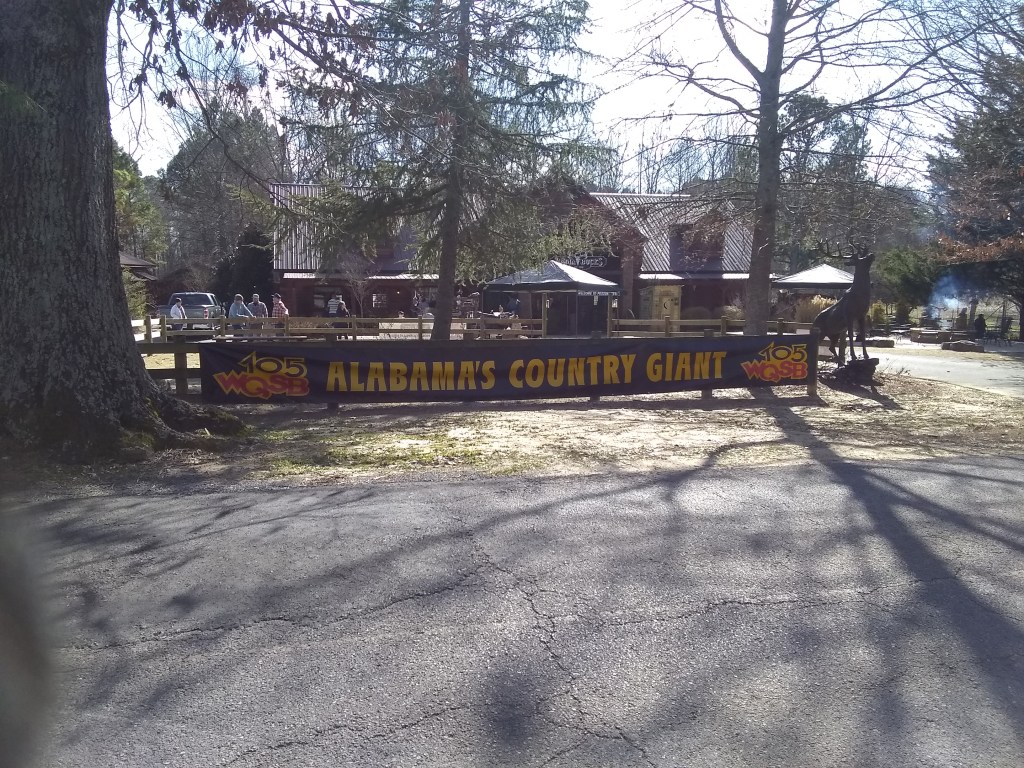
Ray pondered the first stone, the threat posed by the Sharon Teague investigation. This is where Orin came in, even if he was a rat.

Ray tuned his Sirius Radio to Elvis Channel 75. Playing was an all-time favorite: Peace in the Valley. With the volume just shy of deafening, Ray sang along with Elvis:

There will be peace in the valley for me, some day

There will be peace in the valley for me, oh Lord, I pray

There’ll be no sadness, no sorrow

No trouble, trouble, I see

There will be peace in the valley for me.

Orin was sitting on the tailgate of his new Ford Ranger, parked in front of the barn, when Ray arrived. Furnishing his youngest and newest employee with a company vehicle was part of Ray’s initial plan, not Jane’s.

There was nothing Ray hated more than losing. After Jane told him about Orin and him being a snitch, Ray’s anger exploded. Not so much at Orin, but at Connor Ford, Micaden Tanner, and Lee Harding. Those three, enemies all, believed they were running the perfect con. But they didn’t know Ray Archer as well as they thought.

Over every objection Jane could name, Ray was determined to win Orin’s unwavering loyalty. Their week sharing a jail cell had convinced Ray the kid, as he often called him, was all ego and dreamer. He was too much like Ray to give up fame, fortune, and females at his beck and call, to be satisfied with simple, less than fulfilling things such as justice and family commitment.

“How’s Connor Ford?” Ray asked, pulling perpendicular to the Ranger and maintaining a neutral face.

At first, Orin didn’t respond, but after Ray exited his Suburban, he asked a question instead of providing an answer. “Is it too late to get us right?” Smart, thought Ray.

“It’s totally up to you. Do you want a straight road to money and all the good things it buys, or a crooked downhill path to boredom and beans?” Ray pondered his metaphor as he exited the Suburban.

Orin eased from the tailgate and held out his hand to shake. Ray rejected the offer. “I made a giant mistake and I’m sorry.”

“Words are cheap. Actions are the real megaphone.” Ray adjusted the SIG Sauer at his back inside his waistband as Orin walked to the Ranger’s cab.

“I’m listening and not ignoring you. Let me show you something.” Orin reached through the lowered window and removed a folder. “I snapped these photos at my grandmother’s house.” Orin handed the file to Ray.

Inside were two documents, both photographs that had been processed, probably at Walgreen’s or Walmart. The first was a hand-written note. It read: “Per Mr. Ford, Lee Harding found Sharon’s dog tag.” The second document was an 8 1/2 by 11-inch photograph. It brought to Ray’s mind a host of memories, some good, some bad. In the late sixties and early seventies, all schools in Marshall County required their students to wear the thin silver metal identification tag around their neck. Ray vividly remembered removing Sharon’s tag before rolling her into a four-foot-deep grave fifty yards beyond the pond.

“Who knows you took these?” Ray asked.

“Nobody. I was at Granny Vick’s a few days ago. She had to run an errand. So, I snooped around.”

“Tell me what you want. You could still be a rat.” Ray looked closer at the dog tag photo, trying to see signs of being faked. “Matter of fact, why don’t you strip and prove you’re not wearing a wire.”

“What?” Orin paused, contemplating his response. “I said I was sorry. Here’s my answer to your question. I want to work for you. I want fame, fortune, and females. You can trust me, I promise.”

“Orin, you’re smart. Therefore, you should know I have to verify.” Ray’s conciliatory tone was disturbing to him on many levels. He thought of pulling out the SIG and putting a hole in Orin’s head but knew he didn’t need another body to deal with.

Orin started unbuttoning his shirt. After removing it, he kept going to his underwear. When he started to lower them, Ray held up his right hand like a traffic cop. “Get dressed. I don’t need to see your dick.” Truth was, Ray was envious of Orin’s physique. What he would give to be young again, strong, sleek, and sexy like he was in his youth.

“Okay, but I have nothing to hide,” Orin insisted. He redressed and sat on the tailgate to tie his shoes. His next words surprised Ray. “Is Aunt Sharon’s body in your father’s cemetery?” Now, the subject had changed to Jane’s plan. Yesterday, Ray had asked Orin to meet to discuss a new assignment. For the past twenty years, Ray’s grandfather, Randall Archer, had rested in a family plot that his son, Ronald, had established. The plan was to have his body exhumed and moved to Hillcrest Cemetery in Boaz. Jane believed that Connor Ford, Micaden Tanner, and Lee Harding would learn this and conclude it was a ploy, hiding the truth that what Ray was up to was disposing of Sharon Teague’s bones.
“No. And I do not know where she’s buried since I had nothing to do with her death.” Ray knew exactly where he and Rachel had buried Sharon Teague, but he wasn’t about to tell Orin. “But I know where Kyle Bennett is buried.” Ray started not to disclose the location but since the theme of Jane’s plan was all about misdirection, he knew he had to. “They buried his body at the Hunt property, behind where the primary structure was before it burned. Beside the detached garage, which someway survived.”

Connor Ford had shared his theory with Orin that Ray had killed both Sharon Teague and Kyle Bennett. “Are you saying you killed Kyle?” Before Ray could respond, Orin added. “Not that it matters to me or is something I’d ever repeat.”

“No. Orin, to be so smart, you can sometimes be such a dumbass.” Ray verbalized the words exactly like Jane had demanded: “Rachel Kern shot and killed Kyle. Her and her parents buried him there half-a-century ago.”

“I won’t ask how you know this.”

“It’s simple. Rachel told me.”

Ray and Orin spent the next hour exploring the barn and inspecting Randall Archer’s burial plot. Inside the barn was an assortment of Rylan’s signs and fixtures Ray wanted Orin to move before the ground-breaking ceremony. At the cemetery, nestled in a grove of oaks on a hill beyond the pond, Ray instructed Orin to have his grandfather’s body exhumed and transported, being careful to obey all the legal niceties as demanded by Alabama law. The bodies of Roland’s two wives, Norma and Geraldine, were to remain unhindered. Ray had not lost love for either his biological mother or his stepmother. Ray never mentioned the bones of Sharon Teague that lay underground, just outside the white picket fence encircling the family cemetery.

When Ray and Orin returned to their vehicles, Ray removed the SIG Sauer from his waistband and handed it to Orin. “It’s time for a test.”

The worst thought imaginable flooded Orin’s head. ‘He wants me to kill somebody.’ “Ray, I’m sorry. I’ll do most anything you ask, but I can’t shoot anyone. I hate jail.”

Ray belted out a laugh. “That goes for both of us. But you need to take the first step toward proving your loyalty. Think of it as homework.” The two men leaned against Ray’s Suburban as he described what he had in mind. Orin would follow Ray west on Cox Gap Road towards Highway 431. As he passed the pond before reaching Alexander Road, Ray would turn on his flashers. The target house would be on the left, in front of a red barn. Orin would return at dark and break in through the back porch entrance. Once inside, he would search for electronic devices. Ray was particularly interested in the two recorders Lee and Lillian had used at Ted’s cabin the night Ray paid Buddy a hundred grand. After a thorough search, Orin would shoot the SIG sixteen times into Lillian’s bed and snap two photos with his cell phone. One shot of the bullet-ridden bed; the second, a selfie with Lillian’s den in the background. That was it.

Orin hesitated for a few seconds. “No problem. Just never ask me to kill someone.”

“When you’re finished, come to The Shack and I’ll buy you the best rib-eye steak in Alabama. I’ll be waiting for you.” Ray said, smiling and holding the cash towards Orin’s head, thumbing through the hundred-dollar bills. “After we eat, assuming you’ve completed your mission and shown me the photos, this will be yours.”

Orin, still worried, inspected the SIG and walked to the Ranger’s tailgate. “What if I get caught? Remember, I hate jails.”

“You won’t. Lillian will be with Lee at Kyla’s house. I promise, no one will disturb you.”

Orin shook Ray’s cashless hand and nodded affirmatively, acknowledging his commitment to Ray and a future of fame, fortune, and females at his beck and call. The kid was clueless.

09/02/23 Biking & Listening

Biking is something else I both love and hate. It takes a lot of effort but does provide good exercise and most days over an hour to listen to a good book or podcast. I especially like having ridden.

Here’s my bike, a Rockhopper by Specialized. I purchased it November 2021 from Venture Out in Guntersville; Mike is top notch! So is the bike, and the ‘old’ man seat I salvaged from an old Walmart bike.

Here’s a link to today’s bike ride.


Something to consider if you’re not already cycling.

I encourage you to start riding a bike, no matter your age. Check out these groups:

Cycling for those aged 70+(opens in a new tab)

Solitary Cycling(opens in a new tab)

Remember,

Photo by Suzy Hazelwood on Pexels.com

Podcasts listened to


Here’s a few photos from along my pistol route:

The cartoonish corruption of the Supreme Court

Here’s the link to this article.

Avatar photoby ADAM LEE

AUG 28, 2023

Supreme Court justice Clarence Thomas | The cartoonish corruption of the Supreme Court
Credit: Wikimedia Commons/public domain

Overview:

The archconservative justices of the Supreme Court have been enjoying a steady stream of gifts and luxury travel from right-wing billionaire friends. What checks and balances are there for a corrupt judiciary?

Reading Time: 6 MINUTES

Let’s stipulate one thing to start: I don’t doubt that some people call themselves conservative because they believe in small government, low taxes and individual freedom.

However, even granting this, it’s hard to argue that this is the animating idea of the American conservative movement as it exists today. Based on the policies they support, it’s plain to see that its organizing principle is very different. Namely, conservatism appears most concerned with protecting the privileged class—wealthy, white, male Christians for the most part—and ensuring they can do whatever they want. Meanwhile, they want to subject everyone else to increasingly harsh, oppressive and arbitrary laws.

Donald Trump’s shameless attempts to exploit the presidency for his own profit—about which Republicans raised not a peep of protest—are the most glaring example. However, those efforts were unusual only in that they were so brazen. He didn’t pioneer the tactic. He only engaged in it after lesser lights of conservatism had been getting away with it for years.

With that in mind, let’s talk about Clarence Thomas.

Me and my billionaire friends

Thomas has been on the Supreme Court since 1991. He’s one of its most conservative justices, voting against abortion, against gay rights, against gun control, against church-state separation.

Thanks to reporting by ProPublica, we also know that he’s been living large for years on a steady stream of gifts from conservative billionaires. The plutocrats who’ve lavished their wealth on him include Harlan Crow, a Texas real estate mogul; Paul Novelly, an oil baron; David Sokol, a private equity manager; and Wayne Huizenga, a CEO and investor.

In fact, “gifts” is a massive understatement. That word implies a small wrapped package, like something that would fit under a Christmas tree. The gifts that Clarence Thomas has been receiving are of an entirely different order. They’re entrance tickets into a rarefied millionaire lifestyle that the average American can only dream of.

They include flights on private jets and sailing trips on superyachts; VIP passes and skybox seats to sporting events; stays at ultra-luxury hotels, parties at waterfront mansions, and trips to exclusive resorts for the ultrarich. Crow bought several real-estate properties from Thomas and paid the tuition for Thomas’ grandnephew, whom he was raising as a son, to attend private school. He’s even bankrolled Thomas’ insurrectionist wife, Ginni, and her far-right lobbying group Liberty Central (whose mere existence poses its own massive conflicts of interest).

Like clockwork, Thomas’ leisure activities have been underwritten by benefactors who share the ideology that drives his jurisprudence. Their gifts include:

At least 38 destination vacations, including a previously unreported voyage on a yacht around the Bahamas; 26 private jet flights, plus an additional eight by helicopter; a dozen VIP passes to professional and college sporting events, typically perched in the skybox; two stays at luxury resorts in Florida and Jamaica; and one standing invitation to an uber-exclusive golf club overlooking the Atlantic coast.“Clarence Thomas’ 38 Vacations: The Other Billionaires Who Have Treated the Supreme Court Justice to Luxury Travel.” Brett Murphy and Alex Mierjeski, ProPublica, 10 August 2023.

Thomas has mentioned none of this in his yearly financial disclosures. But don’t worry, his billionaire friends swear that they’ve never discussed business on any of their little trips:

In a statement to ProPublica, Sokol said he’s been close friends with the Thomases for 21 years and acknowledged traveling with and occasionally hosting them. He defended the justice as upright and ethical. “We have never once discussed any pending court matter,” Sokol said. “Our conversations have always revolved around helping young people, sports, and family matters.”

Except:

Last October, in New Orleans, Sokol made a direct reference to a pending Supreme Court case while addressing a group of former Horatio Alger scholarship recipients. (Thomas was not in attendance.)

The speech veered into territory that made many of those in attendance uncomfortable and left others appalled, emails and others messages show. Sokol, who has written extensively about American exceptionalism and the virtues of free enterprise, minimized slavery and systemic racism, some felt. He then criticized President Joe Biden’s student loan forgiveness plan, arguing Biden had overstepped the government’s authority, according to a recording of the speech obtained by ProPublica.

“It’s going to get overturned by the Supreme Court,” Sokol predicted, echoing a common legal commentary.

He was right. This summer, the court struck down Biden’s student loan forgiveness plan. Thomas voted in the majority.

This poses the obvious question: Was Sokol only guessing at what the court was going to rule? Or did he have insider knowledge from chatting with his buddy?

It’s not just Thomas going for a dip in the waters of corruption, either. Samuel Alito, another of the court’s archconservatives, went on an extravagant Alaska fishing trip with hedge fund billionaire Paul Singer. Singer flew him there on a private jet costing $100,000 each way and paid for his stay at a $1,000-a-night luxury lodge.

It was a profitable investment:

In 2014, the court agreed to resolve a key issue in a decade-long battle between Singer’s hedge fund and the nation of Argentina. Alito did not recuse himself from the case and voted with the 7-1 majority in Singer’s favor. The hedge fund was ultimately paid $2.4 billion.“Justice Samuel Alito Took Luxury Fishing Vacation With GOP Billionaire Who Later Had Cases Before the Court.” Justin Elliott, Joshua Kaplan and Alex Mierjeski. ProPublica, 20 June 2023.

Like Thomas, Alito didn’t disclose this trip until it was uncovered by reporters. He claimed that “personal hospitality” is exempt from disclosure requirements. This is a willfully dishonest misreading of the law.

An awareness of impropriety

The legal system has a de minimis rule, which states that some acts are too insignificant for the law to concern itself with. If I invite my friend over for dinner at my house and spend $30 on some hamburgers to grill and a six-pack of beer, that would arguably fall under the de minimis exemption.

However, if I instead invite my friend to a catered party at my multimillion-dollar vacation estate, pick him up on a private plane, and hire a celebrity chef to cook for us both, that’s not de minimis. Any reasonable person can see that there’s a vast and significant difference.

The fact that the justices didn’t report these trips suggests an awareness of impropriety. They knew it would give critics grounds to question their impartiality.

The fact that the justices didn’t report these trips suggests an awareness of impropriety.

There doesn’t even have to be an explicit quid pro quo. Any reasonable person can understand that if a Supreme Court justice is personal friends with a billionaire who showers him with gifts, favors and luxury vacations—how likely is it that said justice will vote against his friend’s desires? There can be an implicit, yet still completely obvious, understanding that if they stopped ruling the way their benefactors wanted, the stream of gifts would dry up.

While I don’t think judges should have to take a vow of poverty or live in seclusion like monks, it’s common sense that they should step back from any case which they have a personal connection to. That rule applies if a case before the court involves one of your friends. It also applies if the case involves the conservative think tank your friend has donated tens of millions of dollars to, or the Fortune 500 company whose board of directors your friend sits on, or the dark-money lobbying group your friend underwrites.

In short, if you befriend ultrarich people who have their fingers in many different pies, you should have to accept there’s a much wider spectrum of cases you have to disqualify yourself from. But the conservatives want to have their cake and eat it, too. They want to enjoy the lavish “hospitality” of their wealthy friends, but they also want to keep ruling on cases that concern them. It’s bribery and corruption in the purest sense of the word.

Checks and balances

Much like Donald Trump, these conservative justices are acting as if the law is beneath them. They’re treating their office not as a position of public trust, but as a sinecure they’re entitled to exploit for their own benefit and to do favors for their friends. This would be bad enough in any political office, but it’s especially shocking and revolting with judges appointed to life terms who never have to face the corrective will of the voters.

The simplest Constitutional cure for this rampant corruption is impeachment. Unfortunately, the prospects of that are dim. It takes a two-thirds majority of the Senate to remove a judge from office. In our polarized era, it’s clear that Republican senators value power above all.

Unlike in the days of Nixon, there will never be enough of them who’ll vote to remove a justice of their own party. As long as the Supreme Court’s conservatives keep voting the way they want, they’ll turn a blind eye to corruption or malfeasance, just as they’ve done with Donald Trump.

However, there are other reforms that can be made with a simple majority. For one, Congress could add new justices to the court to counteract the influence of the bad ones.

Or it could impose a mandatory retirement age. That’s a good idea in any case, as lifetime appointments to any office make a mockery of democracy. The judiciary needs regular turnover to keep up with the changing norms of society’s moral consensus. And, of course, it offers a useful test: will those GOP megadonors keep pouring their largesse on their “friends” when they no longer have anything to gain by it?