Write to Life blog

01/10/24 Biking & Listening

Here’s today’s bike ride metrics. Temperature at beginning of ride: 41 degrees. Sunny and cold.  


Photos from today’s ride:

None today.

Why I ride:

Biking is something I both love and hate. The conflicting emotions arise from the undeniable physical effort it demands. However, this exertion is precisely what makes it an excellent form of exercise. Most days, I dedicate over an hour to my cycling routine, and in doing so, I’ve discovered a unique opportunity to enjoy a good book or podcast. The rhythmic pedaling and the wind against my face create a calming backdrop that allows me to fully immerse myself in the content. In these moments, the time spent on the bike seems worthwhile, as I can’t help but appreciate the mental and physical rewards it offers.

I especially like having ridden. The post-biking feeling is one of pure satisfaction. The endorphin rush, coupled with a sense of accomplishment, makes the initial struggle and fatigue worthwhile. As I dismount and catch my breath, I relish the sensation of having conquered the challenge, both physically and mentally. It’s a reminder that the things we sometimes love to hate can often be the ones that bring us the most fulfillment. In the end, the love-hate relationship with biking only deepens my appreciation for the sport, as it continually pushes me to overcome my own limitations and embrace the rewards that follow the effort.


Why you should ride:

Encourages Relaxation:

Cycling is not just a form of physical exercise; it also has a profound ability to encourage relaxation. Here are various ways in which cycling contributes to a relaxed state of mind and body:

  • Physical Activity and Stress Reduction: Engaging in physical activities like cycling can reduce the body’s stress responses. Exercise triggers the release of endorphins, the body’s natural painkillers and mood elevators, which promote relaxation. The physical effort of cycling also helps to use up the energy created by stress, aiding in calming the body.
  • Rhythmic Pedaling as a Meditative Practice: The repetitive nature of cycling, with its steady, rhythmic pedaling, can have a meditative effect. This rhythmic motion can help focus the mind, drawing attention away from stressful thoughts and allowing a sense of calm.
  • Outdoor and Nature Exposure: Cycling outdoors, especially in natural or scenic settings, can enhance relaxation. Being in nature is known to reduce stress and promote a sense of peace. The sights, sounds, and smells of the outdoors can be very soothing.
  • Mindfulness and Presence: Cycling requires a level of present-moment awareness, which is a key aspect of mindfulness. Practicing mindfulness has been shown to reduce stress and promote relaxation. When cycling, the focus on the immediate environment and bodily sensations can help achieve this state.
  • Cardiovascular Health Benefits: Regular cycling improves cardiovascular health, which can help in reducing tension in the body. A healthier heart and circulatory system can contribute to a more relaxed state overall.
  • Reduces Mental Clutter: A bike ride offers a break from daily routines and responsibilities, providing an opportunity to clear the mind. This mental break can be refreshing and relaxing, especially after a long day or during stressful periods.
  • Social Relaxation: For those who enjoy group rides, the social aspect of cycling can be relaxing. Social interactions and the sense of community found in cycling groups can contribute to overall relaxation and well-being.
  • Achievement and Satisfaction: Completing a challenging ride or reaching a cycling goal can bring about a sense of achievement and satisfaction. This positive feeling can promote a relaxed state, as it counters feelings of stress and anxiety.
  • End of Ride Relaxation Response: After a cycling session, the body often experiences a natural relaxation response. The decrease in physical activity coupled with the sense of accomplishment can lead to a profound state of relaxation.
  • Improves Sleep Quality: As cycling improves sleep quality, it indirectly promotes relaxation. Better sleep means the body is better rested and more capable of handling stress, leading to a more relaxed state during waking hours.

In summary, cycling’s ability to encourage relaxation is multifaceted, combining physical, mental, and emotional elements. By incorporating regular cycling into one’s lifestyle, it’s possible to cultivate a more relaxed state of being, beneficial for overall health and well-being.


Please watch

Here’s a couple of links to groups I like. Hopefully, they’ll encourage you to start riding a bike, no matter your age.

Cycling for those aged 70+(opens in a new tab)


Solitary Cycling(opens in a new tab)


My bike:

A Rockhopper by Specialized. I purchased it November 2021 from Venture Out in Guntersville; Mike is top notch! So is the bike. The ‘old’ man seat was salvaged from an old Walmart bike. Seat replaced with new one from Venture Out.


What I’m listening to:

NONFICTION

Blinkest summaries

None today.

Podcasts:

Waking Up app series/courses:

None today.

FICTION

Novels:
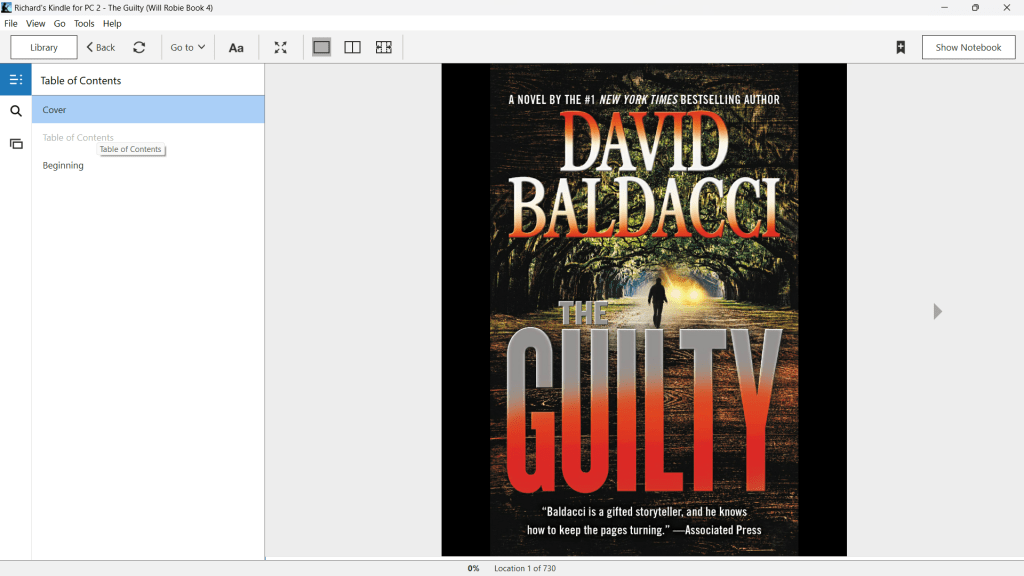
Amazon abstract:

After failing a critical assignment overseas, Will Robie must investigate a murder accusation against his father–but to save him, he’ll have to face a violent and deadly fallout in this New York Times bestselling thriller.

Will Robie escaped his small Gulf Coast hometown of Cantrell, Mississippi after high school, severing all personal ties, and never looked back. Not until the unimaginable occurs. His father, Dan Robie, has been arrested and charged with murder.

Father and son haven’t spoken or seen each other since the day Robie left town. In that time, Dan Robie–a local attorney and pillar of the community–has been elected town judge. Despite this, most of Cantrell is aligned against Dan. His guilt is assumed.

To make matters worse, Dan has refused to do anything to defend himself. When Robie tries to help, his father responds only with anger and defiance. Could Dan really be guilty?

With the equally formidable Jessica Reel at his side, Robie ignores his father’s wishes and begins his own desperate investigation into the case. But Robie is now a stranger to his hometown, an outsider, a man who has forsaken his past and his family. His attempts to save his father are met with distrust and skepticism…and violence.

Unlike the missions Robie undertook in the service of his country, where his target was clearly defined, digging into his father’s case only reveals more questions. Robie is drawn into the hidden underside of Cantrell, where he must face the unexpected and possibly deadly consequences of the long-ago choices made by father and son. And this time, there may be no escape for either of them.


Blinkest fiction book summaries:

None today.

Music:

None today.


Here’s a few photos from previous riding adventures:

Novel Excerpts–The Boaz Scorekeeper, Chapter 87

The primary aim of the "Novel Excerpts" blog category is to showcase my creative writing, specifically from the novels I've written. Hopefully, these posts will provide a glimpse into my storytelling style, themes, and narrative skills. It's an opportunity to share my artistic expressions and the worlds I've created through my novels.
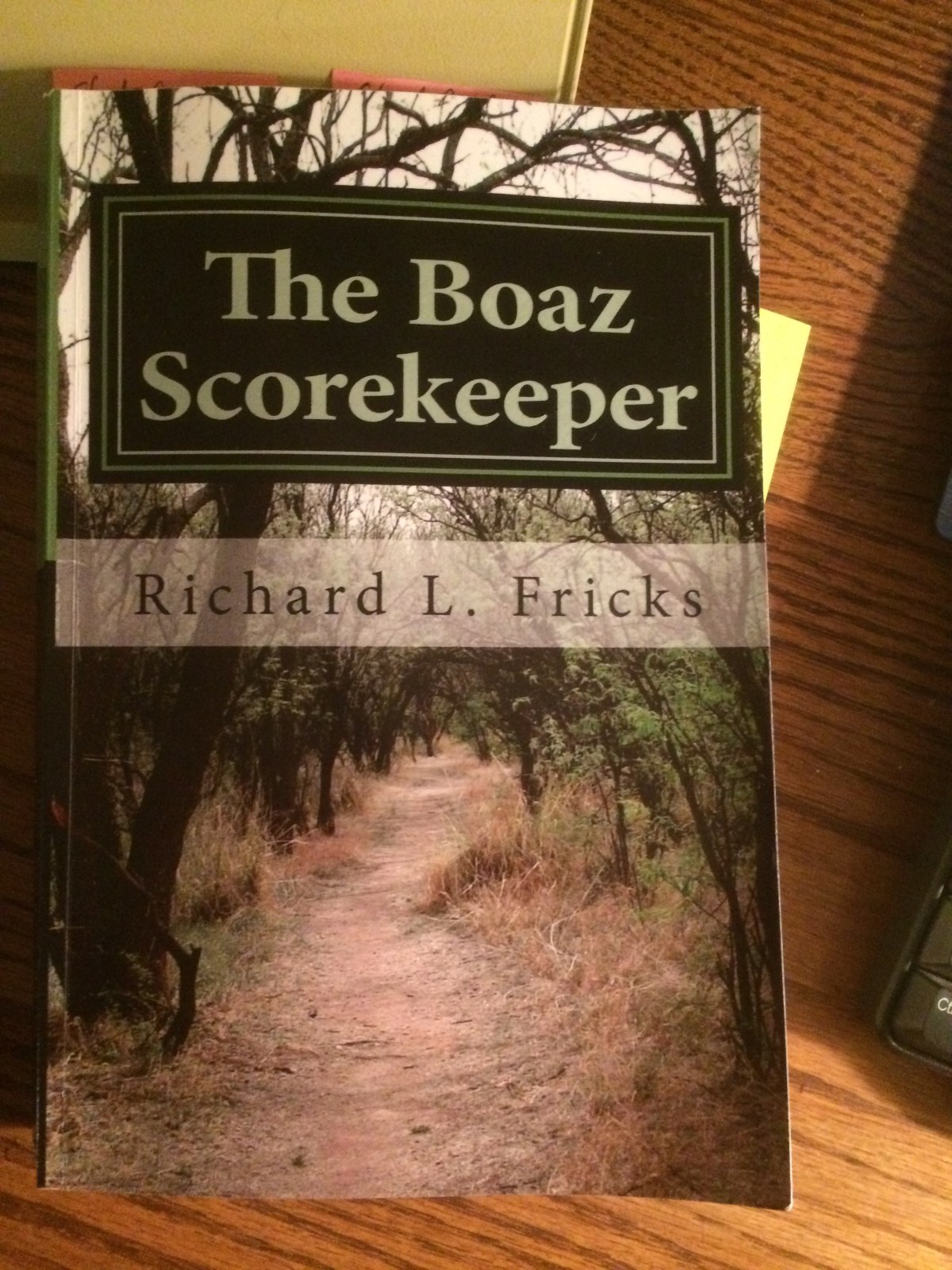
The Boaz Scorekeeper, written in 2017, is my second novel. I'll post it a chapter a day over the next few weeks.

The Federal trial for Wade, James, and the three Boaz Police officers began on Monday, October 8, 2018.  The first three days were consumed with jury selection.   Over the next nine days Greg Gambol examined Fred Billingsley, Dale Watson, Marshall County Detective Darden Clarke, Etowah County Detective Pete Morrow, thirteen other law enforcement officers, four State Forensic technicians, and two medical examiners.  Greg was methodical in his attempt to build a bullet-proof case.  The most the five defense attorneys could do is attempt to react with cross-examination questions that, in the bigger picture, didn’t come within a hundred miles of creating any type of doubt, much less reasonable doubt in the guilt of the five accused.

It was now Friday afternoon, October 19, 2018. We had just returned from the noon break.  Greg had saved me, who he called his star witness, until the last.  It was now near the end of the second week of trial and Greg wanted to end his case presentation and the week with my testimony.  Trial attorneys have long believed that the words from the last witness to appear on a Friday afternoon linger in the minds of jurors all weekend, rooting around and almost assuredly finding a little truth crevice to burrow into.

I was sworn in at 1:30 p.m., and sat down for a long afternoon as the center of attention.  After the standard introductory and contextual questions, Greg asked me about my relationship with Gina Tillman.  He had determined that we might as well get it on the table first, preventing the Defense from making it look like Greg and the prosecution were hiding the key motive for me to kill Gina. I described how in 1973 she had lied about my involvement in the disappearance and death of Wendi and Cindi Murray.  Greg continued his questioning and I revealed how forty plus years later she came to hire me to represent her in a divorce action against her husband, Wade Tillman.  And, how she started snooping around looking for evidence that could help her improve her chances of obtaining a healthy divorce settlement.

It took over an hour but I started with how Gina, after the bodies of Bill and Nellie Murray were found right before their wrongful death case began.  I described how Wade had told her how John, Randall, and James had killed Wendi and Cindi and how all five of their fathers had helped dispose of the bodies and conceal the truth.

I described how she found a file labeled ‘Mission Money,’ and copies of several bank statements showing that he was directing the embezzlement of monies from the First Baptist Church of Christ’s Cooperative Missions Program. Finally, I described how Wade and the other members of Club Eden, along with key insiders in exchange for kickbacks, were involved in stealing money from the City of Boaz, Boaz Utilities, Quintard Pharmacy, and EagleMart.

Greg continued this line of questioning.  I knew what he was doing.  He simply was setting the stage for his most damning evidence. So far, all my testimony, incriminating as it will eventually be in establishing a clear and powerful motive for Wade and James to abduct and murder Gina, was merely building a framework to hang a thick coat of guilt across the faces of the men sitting in the dock.  Before Greg’s paint came out, he had me relay to the jury that Gina had continued periodic-snooping in Wade’s study, and how in late September 2017, she had found a deposit receipt for $100,000 to the Club Eden bank account.  It was from a Moscow, Russia bank.  This discovery had led Gina to purchase a high-tech audio recording system.  I described for the jury how Gina had hidden it in a semi-secret meeting room behind bookshelves in Wade’s church office.

“Let me show you Prosecution’s Exhibit 18.  Do you recognize this document? If so, describe it for the jury.” Greg asked me.

“Yes. Gina gave it to me.  It is the written version of an audio-recording made by Gina in Wade’s secret study.”

“Are you saying that a tape recorder created this written transcript?”

“Objection, your Honor, no foundation.” Defense attorney Tommy Brunner said not even standing up.

“Side bar please your Honor.”  Greg said.

All five defense attorneys and Greg walked to the side of Judge Chambliss’ bench and spent nearly five minutes whispering back and forth with the Judge.  Later, during the next recess, Greg described to me the deal he and the defense attorneys made.  Greg would not object when they questioned me on cross about the disappearance of John Ericson, Randall Radford, or Fred Billingsley.  Greg no doubt thought he had no risk at all by allowing the Defense team to question me about this issue.

When Greg returned to the podium he asked me, “if you know, tell the jury how the hidden recorder worked.”

“I don’t know the technical details but it was a device made by Sony that Gina found on eBay.  It was voice-activated, when it detected a voice it would begin recording.  Thirty minutes after the last voice sounded it would email a written transcript of the conversation to an email address, as long at the device was connected to Wi-Fi.” I responded.

“This email account, Gina had to enter her specific email address.  Correct?”

“Yes, she set up a special account and activated notification alarms be sent to her cell phone after each email was sent.”

“Did you receive these emails?”

“No, not at first.  The system was set up to send them to only one address.”

“What do you mean by ‘not at first’? Greg asked.

I picked up the transcript that Greg had given me, Prosecutor’s Exhibit 18. “At the top here, is the address Gina used.  After Gina was murdered I was rereading this transcript and happened to notice this address.  I knew that Gina’s recorder would still be working unless it had been discovered.  I decided I had to try and access her email account.”

Greg then asked me a series of questions that led me through the process I used to discover both her Google account and her recorder-email account ID and password.

“Let me show you what’s been marked as Prosecutor’s Exhibit 19.  Do you recognize this document?” Greg asked.

“It is the second transcript Gina received from the audio-recorder.”

“Now, here is Prosecutor’s 20. Can you identify it?”

“It is the third transcript she received.” I responded.

Were there any more emails sent to Gina’s email address from the audio-recorder?”

“There was one more.  It was sent on November 5th, one day after Gina was murdered.”

“Mr. Tanner, I am handing you Prosecutor’s Exhibit 21.  Can you identify this document?”

“Yes, it is the email she never lived to see.” I responded.

“To clarify, Exhibit 21 is a transcript of a conversation that took place on Sunday, November 5, 2017 in Wade’s semi-secret study that was automatically emailed to Gina from the hidden recorder.  Correct?”  Greg asked.

“That is exactly right.”

“Please read the text highlighted in yellow.” Greg said.

Defense counsel immediately objected.  This time he stood. “Your honor, this is hearsay upon hearsay and is outside the scope of what Mr. Gambol agreed.”

Once again Judge Chambliss ordered all five attorneys to the Bench. It was nearly 3:00 p.m., a good time for his afternoon break.  He instructed all parties to return to the courtroom at 3:15.

I stepped down from the witness stand and walked outside the Courthouse.  I saw Matt lighting a cigarette and standing under a Maple tree still covered in glowing red leaves. 

“I think I have seen you smoke one cigarette in the past, what, 50 years?  That time I was in the Marshall County Courthouse sitting in ‘Holding’ with two deputies.  You didn’t know it but I saw you sitting on a bench during a recess in my first trial.  This must be serious.  What’s going on?”  I said.

“That day, 1973, dead of winter. I did smoke one cigarette that day.  It was the second one I had smoked in my life.  Since 1973 I’ve smoked two others, until this one.  What’s that?  Five, total?  Five times now in my legal career, I’ve been compelled to seek a high dose of nicotine.  This desire is triggered by a feeling I get, one ominous and deadening.  It’s like I know something horrible is coming but I have no way of knowing what it is.  Remind me on our way home to tell you about each of these incidents.  Well, other than this fifth one.  Hopefully, it’s a false alarm.”

I didn’t respond.  I returned to the Courtroom leaving Matt answering a call on his cell phone.  I avoided the elevator and took the three flights of stairs wondering what, if anything, was coming my way.  I figured if Matt was worrying about something horrible happening, it had to involve me.

I returned to the witness stand not knowing how Judge Chambliss had ruled on the defense’s hearsay objection until Greg asked me his first question.

“Micaden, tell me if you recognize the two voices on this audio-recording.”

Greg had Trevor go to the Courtroom’s Exhibit table where a laptop computer was set up.  He clicked the attached mouse a couple of times and the recording started playing.  It was a voice file attached to the emailed transcript.  This was standard with Gina’s high-tech recorder.  It would create the voice file, then a written transcript, and finally, email it to the address that had been entered when the system was activated. 

Voice One. “What’s so important for us to meet so early, and why here?” Voice Two. “Dad, James and I have done something without Club approval.  It was horrible.”  Voice One.” Tell me.” Voice Two. “I have been suspicious of Gina for a while.  Periodically finding signs someone had been snooping around in my home study.  It had to be her, so I hid a camera.  Yesterday morning it showed me that the night before she was in my desk with my ‘Missions Money’ folder.” Voice One. “You’re telling me you left confidential information where she could just go pull it out of a file?”  Voice Two. “Yes.” Voice One. “What do you suspect she learned from reviewing your folder?” Voice Two. “About the disappearance of the Castenada family and the receipt of the $100,000.” Voice One.  “What have you done that is so horrible?  You said you and James did something horrible.” Voice Two.  “We murdered and buried Gina.”

“Stop.” Greg instructed Trevor.

Greg then asked me, “do you recognize the two voices on this recording? If so, please identify them.”

“Voice one is Walter Tillman.  Voice two is Wade Tillman.”

I was surprised that defense counsel did not object after Greg’s question. Clearly, during the break Judge Chambliss had clarified how this part of my testimony would play out.  He had a reputation for anticipating objections and dealing with them in advance, either in his chambers or during sidebar at the bench.

Greg, standing two feet from the rail in front of the jury, “Please read from page two the text highlighted in pink, again using Walter and Wade’s names instead of Voice One and Voice Two.”

“Walter. How do you know that Gina connected the $100,000 deposit with the Castenada family?  Wade. From my smart ass remark I scribbled across the deposit slip.  I wrote, sale of golden goose. Walter. You were aware that Gina knew that Club members referred to Alma as Mateo’s golden goose?  Wade. In frustration, I may have let it slip when she would bring up at night she had spoken with Alma.  You know they were close. Alma was her father’s golden goose.  Without her involvement with the Hispanic community I don’t think Mateo’s church would have done anything like as well as it did.  Nor, would it have caused so many Hispanics to attend our church.  Walter. Do you think she shared this with her attorney, Micaden?  Wade. I really don’t know.”

For the next half-hour Greg continued asking me to read from the transcript and following up each reading with additional questions.  During this time, the jury learned that the Club, in late May 2017, had abducted Alma and her friend Esmarelda Andres, and Mateo and his wife, and how Boaz Police Officers Chris Anderson and Edward Hall had transported Esmarelda to Muscle Shoals Airport where Gustav Nilsson and sons met them for the exchange.  The jury also learned about Esmerelda’s tragic death.  Three days after Gustav’s plane had landed in Stockholm, Sweden, she jumped to her death from the Västerbron, an arch bridge in central Stockholm, during a botched attempt by a competing gang to steal Esmerelda and two other girls.  The gang got caught up in a traffic jam on the bridge and while stopped, someway Esmerelda exited the vehicle and jumped to her death 300 feet below.  She would have probably lived if she hadn’t landed on a passing barge.

The final question Greg asked me late Friday afternoon to end his direct examination was, “Micaden, did you have anything at all to do with the abduction and murder of Gina Tillman?”

I answered no.  Twenty minutes later Matt and I were traveling Interstate 59 North through Trussville headed home.  It had been a long day and would likely be an even longer Monday.  As we rode in silence I wondered if the ominous feeling Matt experienced had anything to do with what would come during my cross-examination.

01/09/24 Biking & Listening

Here’s today’s bike ride metrics. Temperature at beginning of ride: 51 degrees. Cloudy and very windy. 


Photos from today’s ride:

None today.

Why I ride:

Biking is something I both love and hate. The conflicting emotions arise from the undeniable physical effort it demands. However, this exertion is precisely what makes it an excellent form of exercise. Most days, I dedicate over an hour to my cycling routine, and in doing so, I’ve discovered a unique opportunity to enjoy a good book or podcast. The rhythmic pedaling and the wind against my face create a calming backdrop that allows me to fully immerse myself in the content. In these moments, the time spent on the bike seems worthwhile, as I can’t help but appreciate the mental and physical rewards it offers.

I especially like having ridden. The post-biking feeling is one of pure satisfaction. The endorphin rush, coupled with a sense of accomplishment, makes the initial struggle and fatigue worthwhile. As I dismount and catch my breath, I relish the sensation of having conquered the challenge, both physically and mentally. It’s a reminder that the things we sometimes love to hate can often be the ones that bring us the most fulfillment. In the end, the love-hate relationship with biking only deepens my appreciation for the sport, as it continually pushes me to overcome my own limitations and embrace the rewards that follow the effort.


Why you should ride:

Encourages Relaxation:

Cycling is not just a form of physical exercise; it also has a profound ability to encourage relaxation. Here are various ways in which cycling contributes to a relaxed state of mind and body:

  • Physical Activity and Stress Reduction: Engaging in physical activities like cycling can reduce the body’s stress responses. Exercise triggers the release of endorphins, the body’s natural painkillers and mood elevators, which promote relaxation. The physical effort of cycling also helps to use up the energy created by stress, aiding in calming the body.
  • Rhythmic Pedaling as a Meditative Practice: The repetitive nature of cycling, with its steady, rhythmic pedaling, can have a meditative effect. This rhythmic motion can help focus the mind, drawing attention away from stressful thoughts and allowing a sense of calm.
  • Outdoor and Nature Exposure: Cycling outdoors, especially in natural or scenic settings, can enhance relaxation. Being in nature is known to reduce stress and promote a sense of peace. The sights, sounds, and smells of the outdoors can be very soothing.
  • Mindfulness and Presence: Cycling requires a level of present-moment awareness, which is a key aspect of mindfulness. Practicing mindfulness has been shown to reduce stress and promote relaxation. When cycling, the focus on the immediate environment and bodily sensations can help achieve this state.
  • Cardiovascular Health Benefits: Regular cycling improves cardiovascular health, which can help in reducing tension in the body. A healthier heart and circulatory system can contribute to a more relaxed state overall.
  • Reduces Mental Clutter: A bike ride offers a break from daily routines and responsibilities, providing an opportunity to clear the mind. This mental break can be refreshing and relaxing, especially after a long day or during stressful periods.
  • Social Relaxation: For those who enjoy group rides, the social aspect of cycling can be relaxing. Social interactions and the sense of community found in cycling groups can contribute to overall relaxation and well-being.
  • Achievement and Satisfaction: Completing a challenging ride or reaching a cycling goal can bring about a sense of achievement and satisfaction. This positive feeling can promote a relaxed state, as it counters feelings of stress and anxiety.
  • End of Ride Relaxation Response: After a cycling session, the body often experiences a natural relaxation response. The decrease in physical activity coupled with the sense of accomplishment can lead to a profound state of relaxation.
  • Improves Sleep Quality: As cycling improves sleep quality, it indirectly promotes relaxation. Better sleep means the body is better rested and more capable of handling stress, leading to a more relaxed state during waking hours.

In summary, cycling’s ability to encourage relaxation is multifaceted, combining physical, mental, and emotional elements. By incorporating regular cycling into one’s lifestyle, it’s possible to cultivate a more relaxed state of being, beneficial for overall health and well-being.


Please watch

Here’s a couple of links to groups I like. Hopefully, they’ll encourage you to start riding a bike, no matter your age.

Cycling for those aged 70+(opens in a new tab)


Solitary Cycling(opens in a new tab)


My bike:

A Rockhopper by Specialized. I purchased it November 2021 from Venture Out in Guntersville; Mike is top notch! So is the bike. The ‘old’ man seat was salvaged from an old Walmart bike. Seat replaced with new one from Venture Out.


What I’m listening to:

NONFICTION

Blinkest summaries

None today.

Podcasts:

Waking Up app series/courses:

None today.

FICTION

Novels:

Amazon abstract:

After failing a critical assignment overseas, Will Robie must investigate a murder accusation against his father–but to save him, he’ll have to face a violent and deadly fallout in this New York Times bestselling thriller.

Will Robie escaped his small Gulf Coast hometown of Cantrell, Mississippi after high school, severing all personal ties, and never looked back. Not until the unimaginable occurs. His father, Dan Robie, has been arrested and charged with murder.

Father and son haven’t spoken or seen each other since the day Robie left town. In that time, Dan Robie–a local attorney and pillar of the community–has been elected town judge. Despite this, most of Cantrell is aligned against Dan. His guilt is assumed.

To make matters worse, Dan has refused to do anything to defend himself. When Robie tries to help, his father responds only with anger and defiance. Could Dan really be guilty?

With the equally formidable Jessica Reel at his side, Robie ignores his father’s wishes and begins his own desperate investigation into the case. But Robie is now a stranger to his hometown, an outsider, a man who has forsaken his past and his family. His attempts to save his father are met with distrust and skepticism…and violence.

Unlike the missions Robie undertook in the service of his country, where his target was clearly defined, digging into his father’s case only reveals more questions. Robie is drawn into the hidden underside of Cantrell, where he must face the unexpected and possibly deadly consequences of the long-ago choices made by father and son. And this time, there may be no escape for either of them.


Blinkest fiction book summaries:

None today.

Music:

None today.


Here’s a few photos from previous riding adventures:
01/08/24 Biking & Listening–NOT TODAY–TOO WINDY

Here’s today’s bike ride metrics. Temperature at beginning of ride: 42 degrees. Sunny and cold. Mild wind. 


Photos from today’s ride:

None today.

Why I ride:

Biking is something I both love and hate. The conflicting emotions arise from the undeniable physical effort it demands. However, this exertion is precisely what makes it an excellent form of exercise. Most days, I dedicate over an hour to my cycling routine, and in doing so, I’ve discovered a unique opportunity to enjoy a good book or podcast. The rhythmic pedaling and the wind against my face create a calming backdrop that allows me to fully immerse myself in the content. In these moments, the time spent on the bike seems worthwhile, as I can’t help but appreciate the mental and physical rewards it offers.

I especially like having ridden. The post-biking feeling is one of pure satisfaction. The endorphin rush, coupled with a sense of accomplishment, makes the initial struggle and fatigue worthwhile. As I dismount and catch my breath, I relish the sensation of having conquered the challenge, both physically and mentally. It’s a reminder that the things we sometimes love to hate can often be the ones that bring us the most fulfillment. In the end, the love-hate relationship with biking only deepens my appreciation for the sport, as it continually pushes me to overcome my own limitations and embrace the rewards that follow the effort.


Why you should ride:

Encourages Relaxation:

Cycling is not just a form of physical exercise; it also has a profound ability to encourage relaxation. Here are various ways in which cycling contributes to a relaxed state of mind and body:

  • Physical Activity and Stress Reduction: Engaging in physical activities like cycling can reduce the body’s stress responses. Exercise triggers the release of endorphins, the body’s natural painkillers and mood elevators, which promote relaxation. The physical effort of cycling also helps to use up the energy created by stress, aiding in calming the body.
  • Rhythmic Pedaling as a Meditative Practice: The repetitive nature of cycling, with its steady, rhythmic pedaling, can have a meditative effect. This rhythmic motion can help focus the mind, drawing attention away from stressful thoughts and allowing a sense of calm.
  • Outdoor and Nature Exposure: Cycling outdoors, especially in natural or scenic settings, can enhance relaxation. Being in nature is known to reduce stress and promote a sense of peace. The sights, sounds, and smells of the outdoors can be very soothing.
  • Mindfulness and Presence: Cycling requires a level of present-moment awareness, which is a key aspect of mindfulness. Practicing mindfulness has been shown to reduce stress and promote relaxation. When cycling, the focus on the immediate environment and bodily sensations can help achieve this state.
  • Cardiovascular Health Benefits: Regular cycling improves cardiovascular health, which can help in reducing tension in the body. A healthier heart and circulatory system can contribute to a more relaxed state overall.
  • Reduces Mental Clutter: A bike ride offers a break from daily routines and responsibilities, providing an opportunity to clear the mind. This mental break can be refreshing and relaxing, especially after a long day or during stressful periods.
  • Social Relaxation: For those who enjoy group rides, the social aspect of cycling can be relaxing. Social interactions and the sense of community found in cycling groups can contribute to overall relaxation and well-being.
  • Achievement and Satisfaction: Completing a challenging ride or reaching a cycling goal can bring about a sense of achievement and satisfaction. This positive feeling can promote a relaxed state, as it counters feelings of stress and anxiety.
  • End of Ride Relaxation Response: After a cycling session, the body often experiences a natural relaxation response. The decrease in physical activity coupled with the sense of accomplishment can lead to a profound state of relaxation.
  • Improves Sleep Quality: As cycling improves sleep quality, it indirectly promotes relaxation. Better sleep means the body is better rested and more capable of handling stress, leading to a more relaxed state during waking hours.

In summary, cycling’s ability to encourage relaxation is multifaceted, combining physical, mental, and emotional elements. By incorporating regular cycling into one’s lifestyle, it’s possible to cultivate a more relaxed state of being, beneficial for overall health and well-being.


Please watch

Here’s a couple of links to groups I like. Hopefully, they’ll encourage you to start riding a bike, no matter your age.

Cycling for those aged 70+(opens in a new tab)


Solitary Cycling(opens in a new tab)


My bike:

A Rockhopper by Specialized. I purchased it November 2021 from Venture Out in Guntersville; Mike is top notch! So is the bike. The ‘old’ man seat was salvaged from an old Walmart bike. Seat replaced with new one from Venture Out.


What I’m listening to:

NONFICTION

Blinkest summaries

None today.

Podcasts:

Waking Up app series/courses:

The Doorway to Now

FICTION

Novels:

Amazon abstract:

After failing a critical assignment overseas, Will Robie must investigate a murder accusation against his father–but to save him, he’ll have to face a violent and deadly fallout in this New York Times bestselling thriller.

Will Robie escaped his small Gulf Coast hometown of Cantrell, Mississippi after high school, severing all personal ties, and never looked back. Not until the unimaginable occurs. His father, Dan Robie, has been arrested and charged with murder.

Father and son haven’t spoken or seen each other since the day Robie left town. In that time, Dan Robie–a local attorney and pillar of the community–has been elected town judge. Despite this, most of Cantrell is aligned against Dan. His guilt is assumed.

To make matters worse, Dan has refused to do anything to defend himself. When Robie tries to help, his father responds only with anger and defiance. Could Dan really be guilty?

With the equally formidable Jessica Reel at his side, Robie ignores his father’s wishes and begins his own desperate investigation into the case. But Robie is now a stranger to his hometown, an outsider, a man who has forsaken his past and his family. His attempts to save his father are met with distrust and skepticism…and violence.

Unlike the missions Robie undertook in the service of his country, where his target was clearly defined, digging into his father’s case only reveals more questions. Robie is drawn into the hidden underside of Cantrell, where he must face the unexpected and possibly deadly consequences of the long-ago choices made by father and son. And this time, there may be no escape for either of them.


Blinkest fiction book summaries:

None today.

Music:

None today.


Here’s a few photos from previous riding adventures:
Novel Excerpts–The Boaz Scorekeeper, Chapter 86

The primary aim of the "Novel Excerpts" blog category is to showcase my creative writing, specifically from the novels I've written. Hopefully, these posts will provide a glimpse into my storytelling style, themes, and narrative skills. It's an opportunity to share my artistic expressions and the worlds I've created through my novels.
The Boaz Scorekeeper, written in 2017, is my second novel. I'll post it a chapter a day over the next few weeks.

The morning after the bombing, local talking-heads and State-wide newscasters were predicting a continuing wave of Ferguson, Missouri style rioting and destruction in Boaz and beyond.  It never happened. 

By 4:30 p.m. that afternoon, Nico and Santiago Castenada had completed over six hours visiting and speaking with 90% of the local Hispanic community.  The General Manager of Platinum Foods shut down three departments of the processing plant and allowed the two educated, reasonable, and focused nephews of Mateo Castenada to speak atop a flatbed trailer in the parking lot to a gathering of over 400 Hispanics.  The two young men shared their vision for Boaz, even disclosing details about the school that would open in less than a year.  Nico gave an impassioned speech on the importance of allowing the criminal justice system to punish those who had murdered Mateo, his wife Natamar, and their daughter Alma.  He drew on the 1960s civil right struggle of the blacks and what Martin Luther King’s vision of peace through non-violence had achieved.  Santiago promised change and implored each of them to forgo rioting and redirect their anger towards God, letting Him show them the higher road.  By dark, the message had spread.  The rioting was replaced by the sounds of righteous anger seeping from the windows and doorways of Esperanza Baptist Church.

Something else never happened.  The two bombed out businesses didn’t die.  I shouldn’t have been surprised.  Even though both Adams Chevrolet, Buick & GMC, and Radford Hardware & Building Supply were virtually destroyed by the bombs and fiery aftermath, they quickly announced an aggressive plan to reopen.  Each company maintained full replacement insurance policies.  New construction would begin within a month.  Bulldozers and dump trucks started cleanup less than 24 hours after the explosions.  The real ingenuity of the Adams’ was demonstrated when six car haulers showed up during the last week of July and unloaded 36 new vehicles in the parking lot of the long-empty Outlet Center.  Since the bombings, the 36 employees of the Adams’ dealership had worked tirelessly in setting up a temporary operation including a 10,000-square foot service department under a gigantic tent complete with every tool needed including four hydraulic lifts. The Radford’s followed the Adams’ lead and by mid-August had leased and stocked the empty building directly across from the GM dealership.

Novel Excerpts–The Boaz Scorekeeper, Chapter 85

The primary aim of the "Novel Excerpts" blog category is to showcase my creative writing, specifically from the novels I've written. Hopefully, these posts will provide a glimpse into my storytelling style, themes, and narrative skills. It's an opportunity to share my artistic expressions and the worlds I've created through my novels.
The Boaz Scorekeeper, written in 2017, is my second novel. I'll post it a chapter a day over the next few weeks.

By 9:00 p.m. the rioting had begun.  By 11:30, TV crews from Birmingham and Huntsville were in Boaz and broadcasting live.  Karla and I were glued to the television.  Shortly after midnight, she went to bed.  I changed clothes and drove to Oak Hollow.

Ever since my release from the Etowah County jail in March, I had been executing my plan.  It was one I had started designing after Randall’s disappearance, when I decided not to make a ransom demand.  I had also decided against demanding money when I dealt with James.  However, Gina’s unexpected disappearance and death changed my ability to eliminate him.  Adams Chevrolet, Buick & GMC, and Radford Hardware and Building Company, were the two largest brick and mortar financial targets of all five families.  The Hispanic rioting gave me the best opportunity to do some damage to these two old, but continuing, money presses.

My idea was simple.  The explosives were nearly identical to those used by Timothy McVeigh and Terry Nichols to destroy the Alfred P. Murrah Federal Building in downtown Oklahoma City, Oklahoma, on April 19, 1995. The only difference would be the size and power of the bombs.  I had no intention of killing anyone.  I only wanted to level the two city blocks controlled by the Radford’s and the Adams’.

My plan was both simple and elaborate.  I had used every opportunity when I was out of town on law business to purchase 50-pound bags of ammonium nitrate from farm and garden supply stores.  It’s funny how one doesn’t notice things if he’s not looking for them.  It seems every place I went, Heflin, Muscle Shoals, Russellville, Scottsboro, Huntsville, Moulton, Oneonta, Fort Payne, and dozens of places to and from these county seats, had one or more farm and garden stores.

I was careful.  I always paid with a different prepaid Visa card I had purchased from a Dollar General store in a different area.  And, the cards were never purchased in my name.  I had perfected the creation of false identity cards, such as driver’s licenses and health insurance cards.  For example, when buying four hundred pounds of ammonium nitrate in Oneonta, I used the Visa card I had purchased in a Dollar General store in Heflin that I had loaded cash to in Huntsville.  Also, at every location that I purchased or loaded a prepaid Visa card, or purchased ammonium nitrate or any other ingredient or item I needed to execute my plan, I rotated the disguise I used.  For example, at the Heflin farm and garden supply store, I wore a pair of dark brown coveralls, a blond wig with pony tail pulled back and tied off, a reddish blond mustache, and a Pittsburg Steelers ball cap.  I also arranged with the store clerk to set my purchase somewhere outside where I could come back and pick it up later.  I always parked a block or so away from the store and walked to make the purchase.  Within an hour or so, I would come back in my vehicle.  Sometimes, the store had already closed for the day.  Even if the store was open, I never had anyone notice me as I loaded my purchase.

I was also careful about the two box trucks I purchased.  I located them both on eBay.  The first one, a 1992 Ford F600, was in Birmingham.  It was owned by an older lady whose husband had recently died.  He had purchased it new and used it in their small appliance business.  It even had a lift-gate on the back. The lady’s daughter was helping her sell it online.  I hired a technician from Long Lewis Ford to inspect the truck.  I paid him, not his employer, $375.00 to travel to Roebuck and determine whether the vehicle was road worthy.  If it was, then he was to drive the vehicle to the Cracker Barrel restaurant at the Trussville Exit, locking it and leaving the key wedged under the inside left rear tire.  I told him I was from Chattanooga but was sending my nephew to pick up, and drive the truck to Jackson, Mississippi.  After the technician called my burner phone and gave me the go ahead, I used one of my prepaid Visa cards to pay online.  Later than night, I hired a taxi out of Gadsden to pick me up at the Eaglemart parking lot to take me to Trussville.  Wearing my best suit, I shared that I was the owner of twelve Cracker Barrel Restaurants in Tennessee and Alabama and that my car had broken down after leaving my store in Guntersville.  Everything went like clockwork.  The truck key was where it was supposed to be, the vehicle started right up, was full of gas (thanks to the technician), and performed like a new one all the way back.  At 3:30 a.m., I pulled into the barn’s center hallway at Oak Hollow and rode my previously-positioned bicycle the two miles back to Hickory Hollow. 

I had similar good luck in buying my second truck.  I had to pay more for it given my time frame and the fact I didn’t want to travel so far to drive it home.  I was tempted to again use Love’s Taxi out of Gadsden but knew that wasn’t reasonable.  This time I didn’t use a taxi service at all.  I had Doug from the Albertville Municipal Airport fly me, the real Micaden, to Auburn, Alabama.  I used the cover of a continuing legal education conference at Tichenor Hall titled “What We Can Learn from the Movies,” telling Doug that my wife was meeting me there on Friday.  In Auburn, I caught a cab to Montgomery where the 1998 Chevrolet C7500 box truck was waiting at yet another Cracker Barrel restaurant (later, I beat myself up for not changing this).  That night, actually, that early morning, around 3:00 a.m., I pulled my second box truck into the hallway of my barn at Oak Hollow.

With two good trucks and ten tons of ammonium nitrate, I turned my focus to bomb construction.  I had been amazed at the available information online about bomb making.  I also learned most of it was incomplete.  I ultimately learned the missing two or three secrets from Timothy McVeigh himself, well the U.S. Attorney’s file that investigated and prosecuted Mr. McVeigh.  Here, I won’t share how I gained access to this information, other than saying that Greg unknowingly helped me.  One secret was the process used in saturating the ammonium nitrate with diesel fuel.  This turned into a very laborious process.  I had conducted many tests.  I had learned that simply pouring diesel fuel on the ammonium nitrate wouldn’t cause any explosion.  But, the secret process, which I will maintain as a secret, along with the firepower of the igniter, made all the difference. 

For the month that Nate Baker was in town working on his New York Times article, I spent most nights at Oak Hollow working on my two bombs.  I met with him most every day and began to conclude that what he was going to say would itself be a bomb of another kind.  I had that deep feeling the Hispanic community, already hot and bothered, would take to the streets the night Nate’s article was published.  I decided this would be my cover.  I had to be ready by the middle of July, the time his article would go public. It was not until Saturday July 7th that I tested my activation device in a quarry outside Heflin. Of course, I didn’t use one of my trucks.  The actual process was rather simple.  A phone call to a cell phone packed inside the rear of each truck vibrated just enough to trigger a switch that started a timer that in turn, at the designated time, sent an electronic signal to the battery.  It was like touching the positive end of a jumper cable to a battery that was already grounded.  The over-sized battery was suspended inside a metal garbage can half-filled with gasoline.  One simple spark would explode the gas, and it, in turn, would ignite the fertilizer bomb.

That was a little over two weeks ago, now it’s ‘D’ day.  At midnight, I rode a bicycle to Oak Hollow and drove the Chevrolet truck to the back side of Rayford Hardware and Building Supply.  I had previously scouted this area when I had picked up a generator I had specially ordered. The day I had backed my truck to the loading dock to wait on the generator to be loaded, I had walked around to the side of the building on the west end of the loading dock.  There was an alleyway between the main building and another building that no doubt had been added on.  It created the perfect hiding spot for my truck.

After backing all the way down the alleyway, I exited and locked the door.  I walked two blocks to Snead College where I had stashed a bike.  This would be the hardest part of the night.  I rode the eight miles to Oak Hollow in 45 minutes and drove the Ford truck to Adams Chevrolet, Buick, & GMC.  It was now close to 2:00 a.m., and as I stopped for the light to change on Highway 431, I could see three police cars, and what looked like a hundred Hispanics in the north parking lot.  I turned west on Hwy. 168 and could see that the front windows in the dealership’s show room had been broken.  I almost ditched my plan but noticed the back side of the building was dark.  All the attention was at the front, nearly a city-block away from the entrance to the body shop off Darnell Street.  I pulled the Ford on around the building about half way towards the front which was hidden by a tall hedgerow along a chain link fence.  Parking here was the closest I would get to the center of the facility.  I really had no idea how powerful my bomb was.  I had not been able to conduct a full testing, afraid of being identified.

Once again, I parked and locked the vehicle and this time walked to Duke’s Cleaners where I had hidden another bicycle.  I took the long way this time, down Highway 205 to Mountainboro avoiding Highway 431.  By 3:30 a.m., I was back at Oak Hollow.  I had decided not to detonate the bombs until I was safely away.  I made the first call at 3:34 a.m., and the second was at 3:36.  Inside my truck, sitting at Oak Hollow, I tuned my scanner and waited less than five minutes.  The Boaz Police dispatcher announced a Code 10-80 and ordered two cruisers to Adams Chevrolet and two to Radford Hardware.  I listened to the back and forth chatter for another ten minutes before concluding that the bombs had out-performed my highest expectations.  It seemed half of Boaz was on fire.  I drove home and slept until 7:30 a.m.

01/07/24 Biking & Listening

Here’s today’s bike ride metrics. Temperature at beginning of ride: 42 degrees. Sunny and cold. Mild wind. 


Photos from today’s ride:

None today.

Why I ride:

Biking is something I both love and hate. The conflicting emotions arise from the undeniable physical effort it demands. However, this exertion is precisely what makes it an excellent form of exercise. Most days, I dedicate over an hour to my cycling routine, and in doing so, I’ve discovered a unique opportunity to enjoy a good book or podcast. The rhythmic pedaling and the wind against my face create a calming backdrop that allows me to fully immerse myself in the content. In these moments, the time spent on the bike seems worthwhile, as I can’t help but appreciate the mental and physical rewards it offers.

I especially like having ridden. The post-biking feeling is one of pure satisfaction. The endorphin rush, coupled with a sense of accomplishment, makes the initial struggle and fatigue worthwhile. As I dismount and catch my breath, I relish the sensation of having conquered the challenge, both physically and mentally. It’s a reminder that the things we sometimes love to hate can often be the ones that bring us the most fulfillment. In the end, the love-hate relationship with biking only deepens my appreciation for the sport, as it continually pushes me to overcome my own limitations and embrace the rewards that follow the effort.


Why you should ride:

Encourages Relaxation:

Cycling is not just a form of physical exercise; it also has a profound ability to encourage relaxation. Here are various ways in which cycling contributes to a relaxed state of mind and body:

  • Physical Activity and Stress Reduction: Engaging in physical activities like cycling can reduce the body’s stress responses. Exercise triggers the release of endorphins, the body’s natural painkillers and mood elevators, which promote relaxation. The physical effort of cycling also helps to use up the energy created by stress, aiding in calming the body.
  • Rhythmic Pedaling as a Meditative Practice: The repetitive nature of cycling, with its steady, rhythmic pedaling, can have a meditative effect. This rhythmic motion can help focus the mind, drawing attention away from stressful thoughts and allowing a sense of calm.
  • Outdoor and Nature Exposure: Cycling outdoors, especially in natural or scenic settings, can enhance relaxation. Being in nature is known to reduce stress and promote a sense of peace. The sights, sounds, and smells of the outdoors can be very soothing.
  • Mindfulness and Presence: Cycling requires a level of present-moment awareness, which is a key aspect of mindfulness. Practicing mindfulness has been shown to reduce stress and promote relaxation. When cycling, the focus on the immediate environment and bodily sensations can help achieve this state.
  • Cardiovascular Health Benefits: Regular cycling improves cardiovascular health, which can help in reducing tension in the body. A healthier heart and circulatory system can contribute to a more relaxed state overall.
  • Reduces Mental Clutter: A bike ride offers a break from daily routines and responsibilities, providing an opportunity to clear the mind. This mental break can be refreshing and relaxing, especially after a long day or during stressful periods.
  • Social Relaxation: For those who enjoy group rides, the social aspect of cycling can be relaxing. Social interactions and the sense of community found in cycling groups can contribute to overall relaxation and well-being.
  • Achievement and Satisfaction: Completing a challenging ride or reaching a cycling goal can bring about a sense of achievement and satisfaction. This positive feeling can promote a relaxed state, as it counters feelings of stress and anxiety.
  • End of Ride Relaxation Response: After a cycling session, the body often experiences a natural relaxation response. The decrease in physical activity coupled with the sense of accomplishment can lead to a profound state of relaxation.
  • Improves Sleep Quality: As cycling improves sleep quality, it indirectly promotes relaxation. Better sleep means the body is better rested and more capable of handling stress, leading to a more relaxed state during waking hours.

In summary, cycling’s ability to encourage relaxation is multifaceted, combining physical, mental, and emotional elements. By incorporating regular cycling into one’s lifestyle, it’s possible to cultivate a more relaxed state of being, beneficial for overall health and well-being.


Please watch

Here’s a couple of links to groups I like. Hopefully, they’ll encourage you to start riding a bike, no matter your age.

Cycling for those aged 70+(opens in a new tab)


Solitary Cycling(opens in a new tab)


My bike:

A Rockhopper by Specialized. I purchased it November 2021 from Venture Out in Guntersville; Mike is top notch! So is the bike. The ‘old’ man seat was salvaged from an old Walmart bike. Seat replaced with new one from Venture Out.


What I’m listening to:

NONFICTION

Blinkest summaries

None today.

Podcasts:

Waking Up app series/courses:

The Doorway to Now

FICTION

Novels:

Amazon abstract:

After failing a critical assignment overseas, Will Robie must investigate a murder accusation against his father–but to save him, he’ll have to face a violent and deadly fallout in this New York Times bestselling thriller.

Will Robie escaped his small Gulf Coast hometown of Cantrell, Mississippi after high school, severing all personal ties, and never looked back. Not until the unimaginable occurs. His father, Dan Robie, has been arrested and charged with murder.

Father and son haven’t spoken or seen each other since the day Robie left town. In that time, Dan Robie–a local attorney and pillar of the community–has been elected town judge. Despite this, most of Cantrell is aligned against Dan. His guilt is assumed.

To make matters worse, Dan has refused to do anything to defend himself. When Robie tries to help, his father responds only with anger and defiance. Could Dan really be guilty?

With the equally formidable Jessica Reel at his side, Robie ignores his father’s wishes and begins his own desperate investigation into the case. But Robie is now a stranger to his hometown, an outsider, a man who has forsaken his past and his family. His attempts to save his father are met with distrust and skepticism…and violence.

Unlike the missions Robie undertook in the service of his country, where his target was clearly defined, digging into his father’s case only reveals more questions. Robie is drawn into the hidden underside of Cantrell, where he must face the unexpected and possibly deadly consequences of the long-ago choices made by father and son. And this time, there may be no escape for either of them.


Blinkest fiction book summaries:

None today.

Music:

None today.


Here’s a few photos from previous riding adventures:

01/06/24 Biking & Listening

Here’s today’s bike ride metrics. Temperature at beginning of ride: 48 degrees. Cloudy, cold, wet. Mild wind. 


Photos from today’s ride:

Weird idea I guess.

Why I ride:

Biking is something I both love and hate. The conflicting emotions arise from the undeniable physical effort it demands. However, this exertion is precisely what makes it an excellent form of exercise. Most days, I dedicate over an hour to my cycling routine, and in doing so, I’ve discovered a unique opportunity to enjoy a good book or podcast. The rhythmic pedaling and the wind against my face create a calming backdrop that allows me to fully immerse myself in the content. In these moments, the time spent on the bike seems worthwhile, as I can’t help but appreciate the mental and physical rewards it offers.

I especially like having ridden. The post-biking feeling is one of pure satisfaction. The endorphin rush, coupled with a sense of accomplishment, makes the initial struggle and fatigue worthwhile. As I dismount and catch my breath, I relish the sensation of having conquered the challenge, both physically and mentally. It’s a reminder that the things we sometimes love to hate can often be the ones that bring us the most fulfillment. In the end, the love-hate relationship with biking only deepens my appreciation for the sport, as it continually pushes me to overcome my own limitations and embrace the rewards that follow the effort.


Why you should ride:

Encourages Relaxation:

Cycling is not just a form of physical exercise; it also has a profound ability to encourage relaxation. Here are various ways in which cycling contributes to a relaxed state of mind and body:

  • Physical Activity and Stress Reduction: Engaging in physical activities like cycling can reduce the body’s stress responses. Exercise triggers the release of endorphins, the body’s natural painkillers and mood elevators, which promote relaxation. The physical effort of cycling also helps to use up the energy created by stress, aiding in calming the body.
  • Rhythmic Pedaling as a Meditative Practice: The repetitive nature of cycling, with its steady, rhythmic pedaling, can have a meditative effect. This rhythmic motion can help focus the mind, drawing attention away from stressful thoughts and allowing a sense of calm.
  • Outdoor and Nature Exposure: Cycling outdoors, especially in natural or scenic settings, can enhance relaxation. Being in nature is known to reduce stress and promote a sense of peace. The sights, sounds, and smells of the outdoors can be very soothing.
  • Mindfulness and Presence: Cycling requires a level of present-moment awareness, which is a key aspect of mindfulness. Practicing mindfulness has been shown to reduce stress and promote relaxation. When cycling, the focus on the immediate environment and bodily sensations can help achieve this state.
  • Cardiovascular Health Benefits: Regular cycling improves cardiovascular health, which can help in reducing tension in the body. A healthier heart and circulatory system can contribute to a more relaxed state overall.
  • Reduces Mental Clutter: A bike ride offers a break from daily routines and responsibilities, providing an opportunity to clear the mind. This mental break can be refreshing and relaxing, especially after a long day or during stressful periods.
  • Social Relaxation: For those who enjoy group rides, the social aspect of cycling can be relaxing. Social interactions and the sense of community found in cycling groups can contribute to overall relaxation and well-being.
  • Achievement and Satisfaction: Completing a challenging ride or reaching a cycling goal can bring about a sense of achievement and satisfaction. This positive feeling can promote a relaxed state, as it counters feelings of stress and anxiety.
  • End of Ride Relaxation Response: After a cycling session, the body often experiences a natural relaxation response. The decrease in physical activity coupled with the sense of accomplishment can lead to a profound state of relaxation.
  • Improves Sleep Quality: As cycling improves sleep quality, it indirectly promotes relaxation. Better sleep means the body is better rested and more capable of handling stress, leading to a more relaxed state during waking hours.

In summary, cycling’s ability to encourage relaxation is multifaceted, combining physical, mental, and emotional elements. By incorporating regular cycling into one’s lifestyle, it’s possible to cultivate a more relaxed state of being, beneficial for overall health and well-being.


Please watch

Here’s a couple of links to groups I like. Hopefully, they’ll encourage you to start riding a bike, no matter your age.

Cycling for those aged 70+(opens in a new tab)


Solitary Cycling(opens in a new tab)


My bike:

A Rockhopper by Specialized. I purchased it November 2021 from Venture Out in Guntersville; Mike is top notch! So is the bike. The ‘old’ man seat was salvaged from an old Walmart bike. Seat replaced with new one from Venture Out.


What I’m listening to:

NONFICTION

Blinkest summaries

None today.

Podcasts:

Waking Up app series/courses:

Seeing Ego Clearly

FICTION

Novels:

Amazon abstract:

After failing a critical assignment overseas, Will Robie must investigate a murder accusation against his father–but to save him, he’ll have to face a violent and deadly fallout in this New York Times bestselling thriller.

Will Robie escaped his small Gulf Coast hometown of Cantrell, Mississippi after high school, severing all personal ties, and never looked back. Not until the unimaginable occurs. His father, Dan Robie, has been arrested and charged with murder.

Father and son haven’t spoken or seen each other since the day Robie left town. In that time, Dan Robie–a local attorney and pillar of the community–has been elected town judge. Despite this, most of Cantrell is aligned against Dan. His guilt is assumed.

To make matters worse, Dan has refused to do anything to defend himself. When Robie tries to help, his father responds only with anger and defiance. Could Dan really be guilty?

With the equally formidable Jessica Reel at his side, Robie ignores his father’s wishes and begins his own desperate investigation into the case. But Robie is now a stranger to his hometown, an outsider, a man who has forsaken his past and his family. His attempts to save his father are met with distrust and skepticism…and violence.

Unlike the missions Robie undertook in the service of his country, where his target was clearly defined, digging into his father’s case only reveals more questions. Robie is drawn into the hidden underside of Cantrell, where he must face the unexpected and possibly deadly consequences of the long-ago choices made by father and son. And this time, there may be no escape for either of them.


Blinkest fiction book summaries:

None today.

Music:

None today.


Here’s a few photos from previous riding adventures:

Novel Excerpts–The Boaz Scorekeeper, Chapter 84

The primary aim of the "Novel Excerpts" blog category is to showcase my creative writing, specifically from the novels I've written. Hopefully, these posts will provide a glimpse into my storytelling style, themes, and narrative skills. It's an opportunity to share my artistic expressions and the worlds I've created through my novels.
The Boaz Scorekeeper, written in 2017, is my second novel. I'll post it a chapter a day over the next few weeks.

After rereading Nate’s article, I was packing my briefcase when Matt stuck his head in my office. “You got a minute?”

“Sure, what’s up?”

“I want you to meet two nice gentlemen.  Can you come to the conference room please?”  Matt said.

When I entered, I saw two young, clean-cut, well-dressed Hispanic males.

“Hello, I’m Micaden Tanner.”  I said reaching my hand across the conference room table.

They both stood, smiled, and shook my hand. “I’m Santiago Castenada.”

“I’m Nico Castenada, Santiago’s brother.  It’s nice to meet you.”

Matt explained that the two young men had completed graduate studies in California. Santiago received his Masters of Education from the University of Southern California’s Rossier School of Education, and Nico a Master’s of Divinity from Southern California Seminary in El Cajon, California.

“That’s impressive. Are you guys from Boaz?”  I asked.

“No, but we are planning on moving here.” Nico responded.

“They are from Texas but have spent the past eight years in college and graduate school.  They have hired us as general counsel.”  Matt said.

“We are starting a Christian private school for Hispanics.” Santiago said.

“Again, I’m impressed.  But, why Boaz?”

Our uncle was Mateo Castenada.  We owe him so much.  He is the reason for the opportunity we had to receive such an excellent education.  We want to continue his work here in Boaz, although in a slightly different way. Until his disappearance, his church was instrumental in giving hope to hundreds, thousands of local Hispanics.  There is now a void here, all while the Hispanic population continues to explode.  It’s all about providing hope and opportunity.  Education is the key.”

“That is a totally admirable pursuit.  Also, a very expensive one.  I assume you have already arranged your financing.”  I asked.

“Not totally, but we are making progress.  We have a few benefactors lined up.  We are also participating in the Federal Department of Education’s new voucher program instituted by President Trump in 2017.  As you probably have heard, it allows students to attend certified private Christian schools.  The student’s tuition is paid by the program in an amount equal to the applicable State’s cost to educate a public-school student.  Right now, here in Alabama, that amounts to about $10,000 per student per year.” Nico said.

“Here’s something you will find interesting.” Matt said. “I’ve shared Nick’s New York Times article with Santiago and Nico.  They believe it will trigger rioting.  Even before coming in today, they have spent the last several days in the local Hispanic community and observed the smoldering anger that is widespread.”

“Hispanics generally are quiet, peace loving, and law-abiding citizens.  Like most people, they can be pushed too far.  What has happened over the years is like bringing a pot of chili to a slow boil.  I’d say the recipe is complete: the kidnapping and murders of Mateo, his wife, and Alma, the sex trafficking, and the general abuse Hispanics have endured for years, and now, this article that describes how five of the families who founded Boaz have been manipulating and pillaging the whole community.  The pot is at full boil.”  Santiago said.

The four of us talked for another hour before Nico received a cell call and the two of them had to leave.  Matt and his wife were headed to their daughter’s in Atlanta for the July 4th holiday.  I grabbed my briefcase and drove home.  Tonight, might be the night that I had been waiting for.

Rampant Gospel Confusion, Number 2: Why Four Different Endings?

Here’s the link to this article.

By David Madison at 1/05/2024

Theology is written this way, not history


Devout scholars have been pondering—and arguing about—the four gospel endings for a long time now. Is there any way that these different endings qualify as history? So much has been written about this, so I’m going to mention here just a few of the issues that come to mind. For those who want to insist that the story of Jesus is supremely important, the end of his story—well, the end of his supposed earthly existence—should be of the best possible quality. But that’s not what we find. Let’s look at each of the four endings.

Mark: the first gospel written, and the least said 
 
Until the invention of the printing press in the fifteen century, New Testament manuscripts were copied by hand, and as old manuscripts came to light, it was obvious that a lot of errors and intentional changes had been made: we are at the mercy of scribes who worked without benefit of electric lighting and eyeglasses, and who modified texts according to their theological views. 

The ending of Mark’s gospel—in the oldest manuscripts—is a puzzle. In these documents Mark ends at 16:8. Three women had gone to the tomb, were alarmed to find a young man sitting there. He told them Jesus had been raised and would see them in Galilee. Then the abrupt ending, verse 8: “So they went out and fled from the tomb, for terror and amazement had seized them, and they said nothing to anyone, for they were afraid.”  

There has been disagreement among scholars: did the gospel really end this way? Nothing at all about the activities of the risen Jesus? There can be little doubt that this ending failed to satisfy some early readers, hence an unknown person—just an unknown as the author of the gospel itself—created additional text, verses 9-20, which shows up in later manuscripts. 
This author, no surprise, was committed to the superstitions of the Jesus cult. At the opening of Mark 16, we read that three women had gone to the tomb: Mary Magdalene, Mary the mother of James and Salome. Now in verse 16 it is claimed that Jesus first appeared to Mary Magdalene, “from whom he had cast out seven demons.” She then told his disciples that Jesus had appeared alive to her—and they didn’t believe it. What happened next? “After this he appeared in another form to two of them, as they were walking into the country. And they went back and told the rest, but they did not believe them.” (vv. 12-13)

It is a major violation of cult rules not to believe what the cult teaches. So the author of this supplement reports next that Jesus appeared to the eleven and scolded them for their doubts. There are consequences for not believing: “The one who believes and is baptized will be saved, but the one who does not believe will be condemned.” (v. 16) The primary reason for belonging to the cult of a dying-rising god is to be saved. The primary purpose of this text is to promote that agenda. 

Then we find one of the most bizarre texts in the gospels: 


“And these signs will accompany those who believe: by using my name they will cast out demons; they will speak in new tongues;they will pick up snakes, and if they drink any deadly thing, it will not hurt them; they will lay their hands on the sick, and they will recover.” (vv. 17-18)

The use of Jesus’ name works like a magical spell. It can be used to cast out demons and heal people by touch. And why not throw into the bargain speaking in tongues, picking up snakes, and drinking poison?
We can be confident that not too many clergy these days base sermons on this text—aside from those in snake-handling Jesus-cults in Appalachia.

As soon as Jesus finished saying these goofy things (yes, goofy: believers would agree if no one told them that this is Jesus-script), he ascended to heaven: “So then the Lord Jesus, after he had spoken to them, was taken up into heaven and sat down at the right hand of God.” (v. 19) There is no hint here that forty days had gone by. This author was unaware of the ascension story that would end up in the first chapter of Acts (the forty-day reference in Acts 1:3). 

One final comment on Mark 16:9-20. Modern Bible translators/editors have been honest enough to put this text in a footnote. But their honesty has its limits. They commonly attribute variant readings to “other ancient authorities.” But they have no idea at all who wrote Mark 16:9-20, for example. How does it make sense to call him an authority? This is an attempt to cover up the scandal of so many errors having been made in the copying process. The biggest piece of dishonesty, however, is printing Jesus-script in red, as is the case with Mark 16:15-18—which includes the goofy quote. The translators/editors know very well there is no way whatever to verify that these are authentic words of Jesus. In fact, none of the Jesus-script in the gospels can be verified. 

Matthew, with a touch of Comic Book fantasy 

In the last chapter of Matthew (28) we read that two women (Mary Magdalene and “the other Mary”) went to the tomb. Now we’re told about a dazzling hero flying from the sky:

“And suddenly there was a great earthquake, for an angel of the Lord, descending from heaven, came and rolled back the stone and sat on it. His appearance was like lightning and his clothing white as snow.For fear of him the guards shook and became like dead men.” (Matthew 28:2-4)
 
It is this angel (not a man sitting in the tomb) who tells them that Jesus has risen, and advises them to alert the disciples. But on their way, suddenly they ran into Jesus himself: “And they came to him, took hold of his feet, and worshiped him.” (v. 28:9) His message for the disciples is to go on to Galilee. There indeed they met him: “When they saw him, they worshiped him, but they doubted.” (v. 28:17) Then we find more cult fanaticism: our holy hero has it right:
 
“All authority in heaven and on earth has been given to me. Go therefore and make disciples of all nations, baptizing them in the name of the Father and of the Son and of the Holy Spiritand teaching them to obey everything that I have commanded you. And remember, I am with you always, to the end of the age.”  (28:18-20)
 
Make disciples of all nations, baptize them, teach them to obey. So much damage has been caused by scripture: The Christian colonial powers many centuries later took this as their mandate to invade, conquer, and impose their religion.  
 
Luke, and the Jesus ghost who is not a ghost
 
We read in Luke 24 that Mary Magdalene, Joanna, and Mary the mother of James—and other women as well—went to the tomb, and were surprised that the body of Jesus wasn’t there.

“… suddenly two men in dazzling clothes stood beside them. The women were terrified and bowed their faces to the ground, but the men said to them, ‘Why do you look for the living among the dead? He is not here but has risen.Remember how he told you, while he was still in Galilee, that the Son of Man must be handed over to the hands of sinners and be crucified and on the third day rise again.’” (Luke 24:4-7)
 
The women reported what had happened to the eleven disciples and others, “But these words seemed to them an idle tale, and they did not believe them.” (v. 11) The next verse is missing from some manuscripts—another example of tampering. It reports that Peter rushed to the tomb, saw that it was empty, and went home amazed. 
 
What is truly amazing is that there was disbelief, that the disciples themselves hadn’t camped out at the tomb to see Jesus come alive again, as he had predicted he would do three times
 
Next this author displays his skill as a propagandist for the Jesus cult, i.e., the story of the risen Jesus appearing to two followers on their way to Emmaus (which is not reported in the other gospels). They don’t recognize him, and he draws them into conversation. They explain to this stranger what had happened to Jesus, and how puzzled and disappointed they are—and they get a scolding: 

“‘Oh, how foolish you are and how slow of heart to believe all that the prophets have declared! Was it not necessary that the Messiah should suffer these things and then enter into his glory?’” Then beginning with Moses and all the prophets, he interpreted to them the things about himself in all the scriptures.” (Luke 24:25-27)
 
It was one of the certain beliefs of the cult that Moses himself and “all the prophets” had predicted Jesus’ role in history. 
 
The two fellows persuade Jesus to stop with them to dine at Emmaus. At the very moment when Jesus blessed the bread, “Then their eyes were opened, and they recognized him, and he vanished from their sight.” (v. 31) Isn’t that what ghosts do? 
 
The two fellows rushed back to Jerusalem: “Then they told what had happened on the road and how he had been made known to them in the breaking of the bread.” (v. 35) Then, suddenly, Jesus was right there among them. 
 
“They were startled and terrified and thought that they were seeing a ghost.  He said to them, ‘Why are you frightened, and why do doubts arise in your hearts?  Look at my hands and my feet; see that it is I myself. Touch me and see, for a ghost does not have flesh and bones as you see that I have.’” (vv. 37-39)
 
To drive home the point, Jesus asked for something to eat—and they watched as he ate a piece of boiled fish. Once again, he emphasized what Moses and the prophets had taught about him, and promises what the cult members wanted to hear: “And see, I am sending upon you what my Father promised, so stay here in the city until you have been clothed with power from on high.” (v. 49)
 
Then they headed out to Bethany. “While he was blessing them, he withdrew from them and was carried up into heaven.” More tampering here: “and was carried up into heaven” is missing from some manuscripts. This ascension—quite soon after the resurrection—would contradict the story in Acts 1 that Jesus ascended after forty days. 
 
Robert Conner, in his book, Apparitions of Jesus: The Resurrection as Ghost Story, has demonstrated that the gospel resurrection tales were based on ghost folklore. Luke reports that Jesus ate a piece of fish to prove he wasn’t a ghost, yet he vanished from the dinner table at Emmaus the instant he broke bread. Luke seems not to have grasped his own plot flaws. 
 
John, more piling on of resurrection events
 
The author of John’s gospel was a master at exaggeration. He was obsessed with promotion of the Jesus-cult, centered on its version of a dying-rising savior (an idea absorbed from other such cults). Anyone who has carefully studied Mark, Matthew, and Luke cannot help being puzzled by John’s eccentric, inflated, and sometimes crude theology. He excelled at inflated theology: he claimed that the Galilean peasant preacher had been present at creation. How could he possibly know such a thing? 
 
His story of the raising of Lazarus (missing from the other gospels) is contrived—and crude: Jesus said he was glad he wasn’t there to save Lazarus from dying. The climax of this magical tale (the resurrection is voice activated), is Jesus’ claim that he is the resurrection and the life. Likewise his story of Doubting Thomas (also missing from the other gospels) seems designed to make the point—crucial to the cult: don’t look for evidence on what to believe: just take it on faith. 
 
John’s account of the resurrection differs substantially from the others. It is Mary Magdalene alone who goes to the tomb. She reported to Peter, and the disciple “whom Jesus loved” that Jesus was nowhere to be found. They ran to the tomb, found it empty and returned home. Mary looked in the tomb again, saw two angels dressed in white, then, turning around, saw Jesus, whom she mistook for the gardener. When she realized who it was, she went back to the disciples to report what she’d seen.

Then, in verses 19-29, we find the famous Doubting Thomas story, followed by two verses that feel very much like the end of the gospel. But then we get chapter 21, in which Jesus shows up—unrecognized—at the Sea of Tiberias, where Peter and other disciples had gone fishing. They’ve had bad luck, until Jesus tells then what to do—and they have a massive catch of fish. And that’s breakfast! 

Then Jesus asked Peter three times if he loved him—to the annoyance of Peter. And readers too must wonder: What was the point? The chapter concludes with reference again to “the disciple whom Jesus loved,” with the final claim that it was this disciple who wrote down all these things about Jesus: “This is the disciple who is testifying to these things and has written them, and we know that his testimony is true. But there are also many other things that Jesus did; if every one of them were written down, I suppose that the world itself could not contain the books that would be written.” We know that his testimony is true. This is cult bragging, but it is not the way authentic history is written. The supposed events presented in John 20-21 escaped the notice of the other gospel authors. 
 
A crucial factor needs to be stressed repeatedly: there is no contemporaneous documentation (diaries, letters, transcripts, and other archival materials) by which to verify any of the events and teachings reported in the gospels. Inventing a beloved disciple (unknown to the other gospel authors) who recorded everything doesn’t alter that reality. The four different gospel endings were the inventions of four different advocates for the Jesus-cult. 
 
               
David Madison was a pastor in the Methodist Church for nine years, and has a PhD in Biblical Studies from Boston University. He is the author of two books, Ten ToughProblems in Christian Thought and Belief: a Minister-Turned-Atheist Shows Why You Should Ditch the Faith, now being reissued in several volumes, the first of which is Guessing About God (2023) and Ten Things Christians Wish Jesus Hadn’t Taught: And Other Reasons to Question His Words (2021). The Spanish translation of this book is also now available. 

His YouTube channel is here. At the invitation of John Loftus, he has written for the Debunking Christianity Blog since 2016.
 
The Cure-for-Christianity Library©, now with more than 500 titles, is here. A brief video explanation of the Library is here