
Here We Go Again with the Fake News Christmas Story

Here’s the link to this article.

By David Madison at 12/21/2023

It’s not hard to find the goofs and gaffs

[First Published in December 2022] Churches all over the world will once again get away with the traditional Christmas story, for one simple reason: the folks in the pews can’t be bothered to carefully read the Jesus birth stories in Matthew and Luke. It’s just a fact these stories don’t make sense and cannot be reconciled: Fake News! A few of the more charming verses from these stories have been set to music and are recited during Christmas pageants; these deflect attention from the utter failure of these stories to quality as history.

Sam Harris, in The End of Faith: Religion, Terror, and the Future of Reason, tells it like it is:
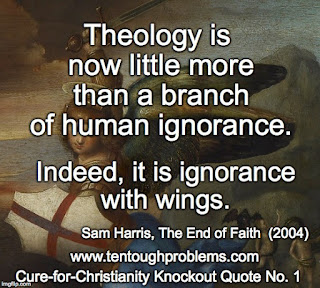

“Surely there must come a time when we will acknowledge the obvious: theology is now little more than a branch of human ignorance. Indeed, it is ignorance with wings.” (p. 173)

The Jesus birth stories are prime examples of theological ignorance in full flight. John Loftus demonstrates this abundantly in chapter 10, “Was Jesus Born of a Virgin?” in the recently published book, Debating Christianity: Opening Salvos in the Battle with Believers. Loftus analyzes the birth stories—far beyond the issue of Mary’s virginity, but he does cover that. Do the devout ever wonder where the Jesus-virgin-birth claim came from? Are they even remotely aware of the religious context that gave rise to Christianity? When this is understood, the virgin birth of Jesus takes a serious hit. Loftus refers to the research of Robert Miller, as summarized in his book, Born Divine:

“People in the ancient world believed that heroes were the sons of gods because of the extraordinary qualities of their adult lives, not because there was public information about the intimate details of how their mothers became pregnant. In fact, in some biographies, the god takes on the physical form of the woman’s husband in order to have sex with her.” (p. 134) Loftus offers examples:

“There was Theagenes, the Olympic champion, who was regarded as divine for being one of the greatest athletes in the ancient world. Hercules was the most widely revered hero of the ancient world. He was promoted to divine status after his death, and it was said he was fathered by Zeus. Alexander the Great was believed to be conceived of a virgin and fathered in turn by Heracles. Augustus Caesar was believed to be conceived of a virgin and fathered by Apollo, as was Plato, the philosopher. Apollonius of Tyana was believed to be a holy man born of a virgin and fathered by Zeus. Pythagoras the philosopher was believed to be a son of Apollo. There were also savior-gods, like Krishna, Osiris, Dionysus, and Tammuz, who were born of virgins…” (page 127, Kindle)

So it’s no big surprise that some early Christian writers felt that Jesus had to be assigned the same high honor. But a couple of the earliest Christian authors hadn’t absorbed this idea. There is no mention of virgin birth in the letters of Paul, and Mark’s gospel gets along quite well without it. The author of John’s gospel had no use for it either. These writers had no way of knowing that science would one day agree, as Loftus notes: “ ..one cannot even have a human being without the genetic contributions of both a male seed and a female egg.” (p. 121, Kindle)

But in the wake of the virgin birth tales in Matthew and Luke, “theological ignorance with wings” got a big boost. The Catholic Church decided that Mary remained a virgin her whole life. The idea of Mary—the mother of the God—having sex was too distasteful. But they had to deal with Mark 6:3: “Is not this the carpenter, the son of Mary and brother of James and Joses and Judas and Simon, and are not his sisters here with us?” The church has claimed that these were children of Joseph from an earlier marriage—based on no evidence whatever. But that didn’t stop even more ignorance with wings. 

It dawned on theologians that virgin birth explained how original sin had not been passed on to Jesus: he didn’t have a human father. Problem solved! Well, not quite. Could not Jesus have been tainted with original sin through his mother? This issue was debated by medieval theologians, and in 1854—wasn’t this a little late in the game? —the Vatican announced the dogma of the Immaculate Conception, i.e., when Mary herself was conceived, miraculously that conception was clean of original sin. Based on no evidence whatever. And it gets even more ridiculous: in 1950, the Vatican announced this: “We proclaim and define it to be a dogma revealed by God that the immaculate Mother of God, Mary ever virgin, when the course of her earthly life was finished, was taken up body and soul into the glory of heaven.” It didn’t provide any evidence that this was revealed by God. Faithful Catholics assume that the Vatican is perfectly tuned into God, so why bother?

There are other examples of theological ignorance with wings that are easy to spot in the Jesus birth stories:

Ignorance with Wings, #1:

For some early Christians, it was especially important that Jesus was descended from king David: that was one of the qualifications for being the messiah. Hence genealogies were proposed to prove exactly that. Both Matthew and Luke deemed it appropriate to include genealogies (but this is awkward: they’re different genealogies), but how does this make any sense at all if Jesus didn’t have a human father? One of the sections of the Loftus essay is titled, “The Genealogies are inaccurate and irrelevant.” Both the authors of Matthew and Luke—we have no idea who they really were—must have had some level of savvy to write lengthy gospels in Greek, but they didn’t notice this contradiction? —or didn’t care. It would seem critical thinking skills were not their strong suits; virgin birth is inconsistent with genealogies intended to prove Jesus’ pedigree. Nor was their readership likely to pay much heed to this blunder.  

Ignorance with Wings, #2:

Detecting this one requires very careful reading and comparison of gospel texts. There is no mention of Bethlehem as the birthplace of Jesus in any of the letters of Paul, and Mark’s gospel states simply that Jesus “came from Nazareth of Galilee” to be baptized by John (1:9). The author of John’s gospel ignored the birth stories in Matthew and Luke; Loftus calls attention to verses John 7:42, 52, and points out: “Jesus was rejected as the Messiah precisely because the people of Nazareth knew he was born and raised in their town! That’s the whole reason they rejected him as the Messiah! They rhetorically asked, ‘How can the Messiah come from Galilee?’” (p. 122 Kindle) Matthew’s solution to this problem was to depict Mary and Joseph living in Bethlehem. That was their town. After the birth of Jesus, to protect him from king Herod, they fled to Egypt—which is a truly farfetched part of Matthew’s account—but once the danger had passed (an angel told him in a dream that Herod had died) Joseph was afraid to return to Bethlehem:

“But when he heard that Archelaus was ruling Judea in place of his father Herod, he was afraid to go there. And after being warned in a dream, he went away to the district of Galilee. There he made his home in a town called Nazareth…” (2:22-23) 

So Matthew’s story was that Mary and Joseph had lived in Bethlehem, then relocated to Nazareth. Apparently, the author of Luke’s gospel believed that Mary and Joseph lived in Nazareth: so how to get them to Bethlehem for Jesus’s birth? He reports that Caesar Augustus had ordered “all the world” to be registered, and since Joseph’s ancestors had come from Bethlehem, he had to travel there for the registration—and took the pregnant Mary with him. But historians have found no record of such a massive registration ordered by the emperor. Even if there had been one, chaos would have resulted if people had been required to go their ancestral homes. This was Luke’s clumsy device for getting Mary and Joseph to Bethlehem. The distance from Nazareth to Bethlehem is some seventy miles. Are we to believe that Mary, about to have a baby, would have made that journey on foot—or on a donkey as commonly depicted in art? 

After the birth of Jesus, after his circumcision and presentation at the temple, “When they had finished everything required by the law of the Lord, they returned to Galilee, to their own town of Nazareth.”  (Luke 2:39) Notice here the huge conflict here with Matthew’s account. Luke says nothing about a “flight to Egypt” and Mary and Joseph subsequently relocating to Nazareth

Both Matthew and Luke wrote their gospels many decades after the birth of Jesus. They were storytellers, not historians. There is no contemporaneous documentation whatever by which we could verify, fact-check the narratives they created. These are indeed fantasy literature, which include god talking to humans in dreams and angels with speaking roles.

Ignorance with Wings, #3:

Matthew also got away with the tall tale of the star-of-Bethlehem. Devout Christians should ask themselves if they really want to contaminate their theology with this bit of astrology. It was a common superstition in the ancient world that heavenly signs could indicate the birth of heroes. 

“In the time of King Herod, after Jesus was born in Bethlehem of Judea, magi [= astrologers] from the east came to Jerusalem, asking, ‘Where is the child who has been born king of the Jews? For we observed his star in the east and have come to pay him homage.’” (Matthew 2:1-2)

Huge mistake, theologically. Why didn’t god whisper the news to them that Bethlehem was the place to go? Their stop in Jerusalem alerted Herod, which resulted in the Slaughter of the Innocents when he was hunting for Jesus. But this never happened either; see Loftus’ comments, “There Was No Slaughter of the Innocents.” (p. 124, Kindle) 

The ignorance with wings is on full display when Matthew reports that the star guided the magi (i.e., moved from north to south—Robert Price has said that it turned into Tinkerbell!) and came to rest over the house where Jesus was. There is no mention of a stable, and Luke knew nothing of the star of Bethlehem. These authors had no idea of what stars are. As Loftus observes, stars

“…certainly don’t appear to move in a southerly direction. They all appear to move from the east to west, like the sun, because of the spin of the earth. Then we’re told the Star stopped in the sky directly over a place in Bethlehem. But there’s no way to determine which specific house a star stopped over, if it did! This is only consistent with pre-scientific notions of the earth being the center of the universe with the stars being moved by a god who sits on a throne in the sky” (p. 125, Kindle).

Nor did the arrival of the magi—according to Matthew—happen on the night Jesus was born. They had seen his star after he was born (Matthew 2:1). How long would their journey have taken? How long did their stopover in Jerusalem take? It’s fair to say Jesus could have been several months old, and was living in a house with his parents, i.e., their home in Bethlehem.  

Whenever I see the Wise Men depicted adoring the new-born Jesus in a stable, surrounded by shepherds and livestock, my impulse is to say, “Get them out of there! Read your Bibles! Pay attention to the texts!” Matthew also specialized in taking Old Testament verses out of context to make them apply to Jesus. For this, see Loftus’ section, “The Prophecies Are Faked.” (p. 125, Kindle) 

Here’s one of my fantasies: that someday laypeople will carefully—with all their critical faculties engaged—read the Jesus birth stories in Matthew and Luke. They will thus be equipped for an encounter with their priests and preachers. They show up for the typical Christmas Eve pageant, but take the clergy in charge aside: “Reverend, why are you continuing to present these fake news stories as if they actually happened? How is it a good idea to fool the children—and the adults, for that matter? Isn’t there a better way to promote the Christian faith?” 

Sad to say—or rather, glad to say—the birth stories are just the tip of the iceberg: the gospels as a whole are a minefield, providing abundant reasons for doubting and rejecting the Christian faith. No wonder the laity avoid reading them, and the clergy are just as happy that they don’t. 

David Madison was a pastor in the Methodist Church for nine years, and has a PhD in Biblical Studies from Boston University. He is the author of two books, Ten Tough Problems in Christian Thought and Belief: a Minister-Turned-Atheist Shows Why You Should Ditch the Faith (2016; 2018 Foreword by John Loftus) and Ten Things Christians Wish Jesus Hadn’t Taught: And Other Reasons to Question His Words (2021). His YouTube channel is here. He has written for the Debunking Christianity Blog since 2016.

The Cure-for-Christianity Library©, now with more than 500 titles, is here. A brief video explanation of the Library is here.

The Lingering Death of the American Church, by Robert Conner

Here’s the link to this article.

By David Madison at 10/10/2023

In recent years a number of American states have passed legislation to open Lookback windows that extend the statute of limitations in cases of sexual assault. Vermont passed such a law in 2019, followed by Nevada and Louisiana in 2021, Colorado and Arkansas in 2022, and California, New York, and Maine in 2023. Lookback windows allow previously silent victims of sexual abuse to file civil claims that often result in substantial financial penalties for organizations that harbored sexual predators.

Faced with hundreds of claims for clergy sex abuse, in 2023 the Archdiocese of San Francisco and the Dioceses of Oakland and Santa Rosa, California, filed for Chapter 11 protection. According to reports, the Diocese of San Diego also plans to file for bankruptcy protection. Extending the statute of limitations for sexual assault, which Catholic leaders have vigorously opposed, has resulted in a bankruptcy stampede across the U.S.; since 2019, 6 of the 8 New York dioceses have filed for Chapter 11 protection.[1] Despite paying north of $3 billion to settle sexual abuse claims and enduring tidal waves of bad press, the culture of obstruction within the Catholic Church doesn’t appear to have materially changed. Mary Pat Fox, president of Voice of the Faithful, a group working to promote “transparency and accountability” in the Church, recently observed, “Just when we think we might be making strides in recovering from the clergy abuse crisis, we are reminded that the Church has not yet moved off the dime where clerical culture trumps the protection of our children and vulnerable adults.”[2]

Although the Catholic Church has earned its well-deserved reputation as an international viper’s nest of serial pedophile predators protected by their bosses, Protestant denominations are running a strong second place. Rarely a week passes without reports of arrests, indictments, and prison sentences for child pornography, solicitation of minors, and sexual assault by preachers, youth ministers, and teachers in Christian schools. Indeed, the frequency of such reports risks reducing them to a commonplace of public life, a form of national background noise. 

An extensive survey of sexual offenders in Protestant churches points out that there are 314,000 Protestant churches in the U.S. with 60 million members versus 17,000 Catholic parishes with 51 million members. Lacking the national hierarchical structure of the Catholic Church, “instances of sexual abuse within Protestant Christianity might appear isolated when they could be part of a larger overall pattern of offender and offending behaviors.” The author notes that “35 Southern Baptist ministers were hired at churches, despite being accused of sexual misconduct or abuse, demonstrating a pattern of institutional issues in responding to alleged sexual abuse.”[3] Given that there are 18 times as many Protestant churches as there are Catholic parishes, it would seem statistically likely, mutatis mutandis, that sexual abuse of children is more common in Protestant churches.

We do have to wonder why all this is happening—indeed, has been happening for a long time. Is it unrealistic to expect that those who become Christian clergy know Jesus in their hearts more perfectly than the rank-and-file of the congregations? But this Jesus-in-their-hearts fails to have the desired impact. The apostle Paul stated confidently that “…those who belong to Christ have crucified the flesh with its passions and desires” (Galatians 5:24). But Christianity doesn’t seem to work this way, does it? Is this just one of many goofs in the New Testament? We also have to wonder how the churches manage to survive, with the many ongoing scandals. 

Speaking of which…

Equally stunning, although nearly unreported in the national media, are the recent trends in Christian academia, epitomized by the fates of the top three evangelical seminaries in the U.S., Fuller, Trinity Evangelical, and Gordon-Conwell. Gordon-Conwell Theological Seminary saw enrollment decline from 1230 students in 2012 to 633 in 2021. According to news reports, the seminary plans to downsize and sell off a portion of its campus in order to continue operating. Fuller Theological Seminary and Trinity Evangelical Divinity School have been forced to consolidate their operations and cut faculty. “Since the 21st Century began, Gordon-Conwell’s FTE [full time equivalent] total is down 34%, Fuller’s by 48% and Trinity’s by 44%.”[4]

Seminaries have merged with other institutions in order to survive; McCormick Theological Seminary and the Lutheran School of Theology merged with the University of Chicago due to falling enrollment. After 66 years of operation, the Claremont School of Theology closed shop and moved to the campus of Westwood United Methodist Church in Los Angeles. Naturally, school officials have tried to put a positive spin on empty classrooms and vacant properties, but the handwriting is on the wall even if it’s gone from the blackboards — the era of the sprawling divinity school campus is over; both the money and the enrollment are drying up.

Other schools, such as Andover Newton Theological School, affiliated with the American Baptist Churches and the United Church of Christ, have closed completely. The roll call of the fallen now includes schools across the denominational spectrum: Iowa Wesleyan University, Cardinal Stritch University, Finlandia University, Holy Names University, Alliance University, Chatfield College, Alderson Broaddus University, Oregon’s Concordia College, Marymount California University, St. Louis Christian College, Ohio Valley University, and Holy Family College in Wisconsin. Other religious schools are planning to merge to save themselves, and failing that, to close.

Even prior to the pandemic, more churches closed annually than opened. The pandemic clearly accelerated that process, but the root cause is simple: “The biggest reason for church closings is a decline in church membership. A March poll from Gallup found that fewer than half (47%) of Americans say they belong to a church, synagogue or mosque, down from more than 70% in 2000.”[5] By current estimates, some 2.7 million people leave church each year in the U.S. and the problem for the American churches is compounded by another factor: “Of course the centre of gravity for global Christianity is shifting, with Asia, Latin America and Africa now the places where church growth is taking place.”[6]

The New Christendom is the global South, the area of the world widely considered to be the most vulnerable to the ravages of global warming, violent political movements, social instability, and the eruption of new epidemic disease, in the countries millions are desperately attempting to escape. Whatever the future holds for Christianity globally, its future in North America appears increasingly bleak.

For a broader discussion of these trends, see my book, The Death of Christian Belief.
 
Robert Conner is also the author of The Jesus Cult: 2000 Years of the Last DaysApparitions of Jesus: The Resurrection as Ghost StoryThe Secret Gospel of Markand Magic in Christianity: From Jesus to the Gnostics.


[1] Jonah McKeown, Catholic News Agency, July 24, 2023.
[2] Voice of the Faithful Statement, March 30, 2023.
[3] Andrew S. Denny, “Child Sex Abusers in Protestant Christian Churches: An Offender Typology,” Journal of Qualitative Criminal Justice & Criminology, 12/1, January 2, 2023.
[4] Richard Ostling, Get Religion, May 26, 2022.
[5] Yonat Shimron, religionnews.com, May 26, 2021.
[6] Bill Muehlenberg, Culture Watch, May 18, 2022.

GUESSINGS ABOUT GOD: Robert Conner’s review of new book by David Madison, PhD Biblical Studies

Here’s the link to this article.

By David Madison at 9/24/2023

Books that question the validity of Christian belief and the historicity of New Testament stories appear regularly these days and they raise quite a few uncomfortable questions. Did Jesus really say the things attributed to him? Was Jesus even a real person? Did the gospel writers simply make up accounts of miracles like the virgin birth? Can we harmonize the contradictory resurrection stories? Do the gospels, written decades after the life of Jesus, record any eyewitness evidence? Who actually wrote the gospels? The gospel authors never identify themselves in their texts or speak in the first person—did they even meet Jesus? Over a century of critical study of the New Testament has raised many such thorny problems.

In the newly-released Guessing About God, David Madison and Tim Sledge take a common-sense approach to a discussion of Christian belief. Although many counter-apologetic works assume some familiarity with psychology, biblical criticism, church history or philosophy, Madison asks little more of the reader than a degree of open-mindedness, access to a Bible, some familiarity with the Christian liturgy, and a willingness to argue in good faith. Like Madison, I spent part of my childhood in Indiana: “Christianity was in the drinking water where I grew up…God was just there, a given.” Questioning what is taken for granted is often painful and occurs in stages, a process tacitly acknowledged by Madison’s thoughtful and empathetic approach.

For the people of the Bible, Yahweh was never far away—an animal ritually slaughtered and burned produced “an aroma pleasing to the Lord.” (Leviticus 3:5, 16) God was close enough to Earth to smell the smoke of sacrifice, to hear the prayers, receive the praise, and observe the actions of his worshippers. The biblical God “makes the clouds his chariot and rides on the wings of the wind.” (Psalm 104:3) Yahweh even accompanies his followers into battle: “God is the one who goes with you to fight for you against your enemies to give you victory.” (Deuteronomy 20:4) However, as Madison points out, these days the God of the Bible is nowhere to be found. Modern theologians are forced to claim that God is “outside space and time,” an assertion that would have been quite incomprehensible to the Bible authors who clearly write about a God that has both location and history.

“If, say, the Space Shuttle were sent speeding toward Alpha Centauri at about 18,000 miles per hour, the journey would take about 80,000 years. And that’s to the nearest star!” Humanity no longer inhabits the biblical microcosm where “all the kingdoms of the world and their splendor” can be viewed from the top of “a very high mountain.” (Matthew 4:8) Indeed, the incomprehensible vastness of the universe threatens to reduce the biblical world and its gods to an invisible, irrelevant speck.

In “Problem 2 — The Bible Disproves Itself,” Madison discusses what I regard as the most fundamental problem of religious belief: sacred books as self-authenticating documents. Philosophy, history, or probability aside, “proving the Bible’s authenticity by quoting from the Bible is closed-loop reasoning…no document on the planet can be self-authenticating.” Truth claims made for a sacred book cannot be substantiated simply by quoting from that book. “This irony is not lost on atheists. The theists, in fact, are among those who deny that the Word of God comes in book form—when it’s the other guy’s book. They are like kids in a playground taunting others, ‘My book is holier than yours!’”

As Madison notes, “Without question, the Bible is the most researched and minutely studied book ever written. There are countless books, articles, scholarly journals, doctoral dissertations, and sermons about the Bible.” Bible study is an industry: “Most lay people, the average individuals in the pews, are unaware that thousands of scholars make their living studying and writing about the Bible.” Likely few believers have reflected on the economic implications of seminaries and departments of religion in secular universities, the Christian broadcasting and publishing empires, or multi-millionaire celebrity preachers with private jets. Religious conviction aside, churches are big business, motivation enough to keep theologizing, philosophizing, preaching, broadcasting and publishing. For many thousands, religious belief is a matter of employment.

The third section of Guessing About God addresses the vexed question of vetting the bona fides of sinless Jesus: “Let’s suppose that in the course of your research, you found that no information was available on this man’s life between the ages of 13 and 29. Wouldn’t this give you pause?” In point of fact, it is well known among scholars that apart from the New Testament, no contemporary evidence confirms the life and career of Jesus of Nazareth. Which raises some additional questions: “Are the Gospels accurate in their portrayal of Jesus? Is their content reliable? Are they history, or something else?”

Until relatively recently, even skeptics thought the gospel accounts retained some historical core of information based on oral traditions about Jesus. It is now known with near certainty that Mark was the first gospel written and that it is a literary construct “that has nothing to do with contemporaneous documentation.” In short, we are back to self-authenticating stories again, a claim that simply won’t bear examination. “It’s no surprise that many church leaders have about as much use for Bible scholars as laypeople do. The task of such leaders is to keep the Jesus brand alive.” 

The third section confronts the reader with the present state of the Jesus Studies debate: “Enter stage left The Mythicists. The people-of-faith New Testament scholars, those who cling to Jesus, even if only by a thread, now face a phalanx of scholars who argue that the whole story of Jesus could be fiction.” At this point, Madison focuses on the best internal support for the mythicist position generally: “In the earliest of the New Testament documents, penned long before the Gospels, Jesus of Nazareth isn’t there. That is, the epistles of Paul and others don’t speak at all about Jesus of Nazareth. Their focus is a divine Christ. There seems to be no awareness of Jesus’s preaching and parables, his miracles, his disputes with religious authorities, or even the Passion narratives. It’s almost as if the real Jesus hadn’t been invented yet, which would not happen until the Gospels had been created.” 

Paul is perfectly clear about the source of his gospel: “For I did not receive it from any man, nor was I taught it, but I received it through a revelation of Jesus Christ.” (Galatians 1:12) This statement is not a confession; it’s self-satisfied boasting. Paul and his house churches had little use for a historical Jesus: “Even though we once regarded Christ according to the flesh, we regard him thus no longer.” (2 Corinthians 5:16) If this represented the attitude of the primitive church, there is even less reason to expect that believers treasured and transmitted details of Jesus’ life or that those details would eventually be enshrined in the text of the gospels. 

I’m in complete agreement with Madison’s conclusion: “The managers of the Christian brand have to hold onto the Gospels for dear life and to believe there must be shreds of evidence in Gospels to underwrite the reality of Jesus. If the Jesus-was-real folks want to paint themselves into this corner, that’s fine with me. I’m delighted with the Gospels as the playing field. I want to stick with the Gospels. They are the best tool for showing that the case for a credible Jesus is weak.”

In his final section, “How I Came to Write this Book,” Madison describes his personal transition from young Bible geek to the emergence of doubts based on deeper knowledge and reflection, to the rejection of his former belief entirely. There are several similarities between my story and the story of David Madison. Although I didn’t pursue an advanced degree in Biblical Studies, I deconverted after two years of university study, convinced that religious belief is without any factual basis. As the number of believers continues to plunge and enrollment in seminaries drops, it appears many more former adherents will be making the trek from conviction to unbelief. For such travelers, Guessing About God will prove a welcome guidebook.

Robert Conner is the author of The Death of Christian BeliefThe Jesus Cult: 2000 Years of the Last DaysApparitions of Jesus: The Resurrection as Ghost StoryThe Secret Gospel of Markand Magic in Christianity: From Jesus to the Gnostics.