Questions for Christians and Other Religious Believers

Here’s the link to this article.

Why Oliver Cromwell was right to beseech you to think it possible you may be mistaken

MICHAEL SHERMER

Very much not in the spirit of “just asking questions,” which is so pervasive among creationists, climate deniers, anti-vaxxers, 9/11 Truthers, Obama Birthers, QAnoners and many others that it has its own skeptical descriptor—JAQing off—I present here some challenging questions for Christians and other religious believers.
I realize that faith doesn’t always open itself to rational inquiry and empirical testing, otherwise it wouldn’t be faith, or “the assurance of things hoped for, the conviction of things unseen” (Hebrews 11:1). But in this age of science and rationality—the twin pillars of Enlightenment humanism—a great many Christians and members of other faiths contend that their claims are true, not in the mythic or metaphorical sense, but in the literal sense.
Skeptic is a reader-supported publication. All monies go to the Skeptics Society, a 501(c)(3) nonprofit. To receive new posts and support my work, consider becoming a free or paid subscriber.

Upgrade to paid

There really is a God called Yahweh. God really created the universe and everything in it. God really vouchsafed to us humans consciousness, morality, and meaning. God really performs miracles. God really grants everlasting life after the provisional proscenium of this world. And so forth.

For over four decades—after my own seven-year stint as an evangelical Christian—I have engaged believers in countless conversations and dozens of formal debates, so I can assure readers that for a great many religious people their beliefs are literally true, in the Enlightenment sense of knowledge as justified true belief. That is, they believe that there are arguments and evidence for religious claims substantial enough to be considered “true,” which I define (in Why People Believe Weird Things) as: a claim for which the evidence is so substantial it would be reasonable to offer one’s provisional assent.
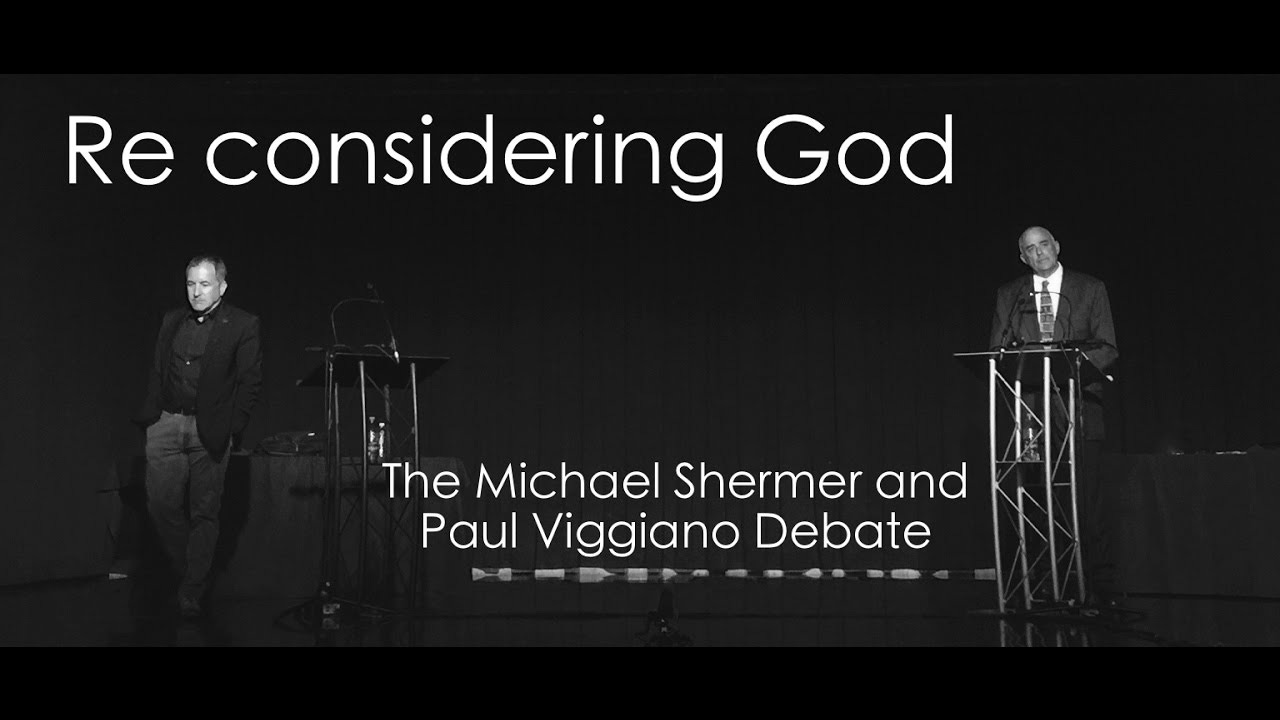
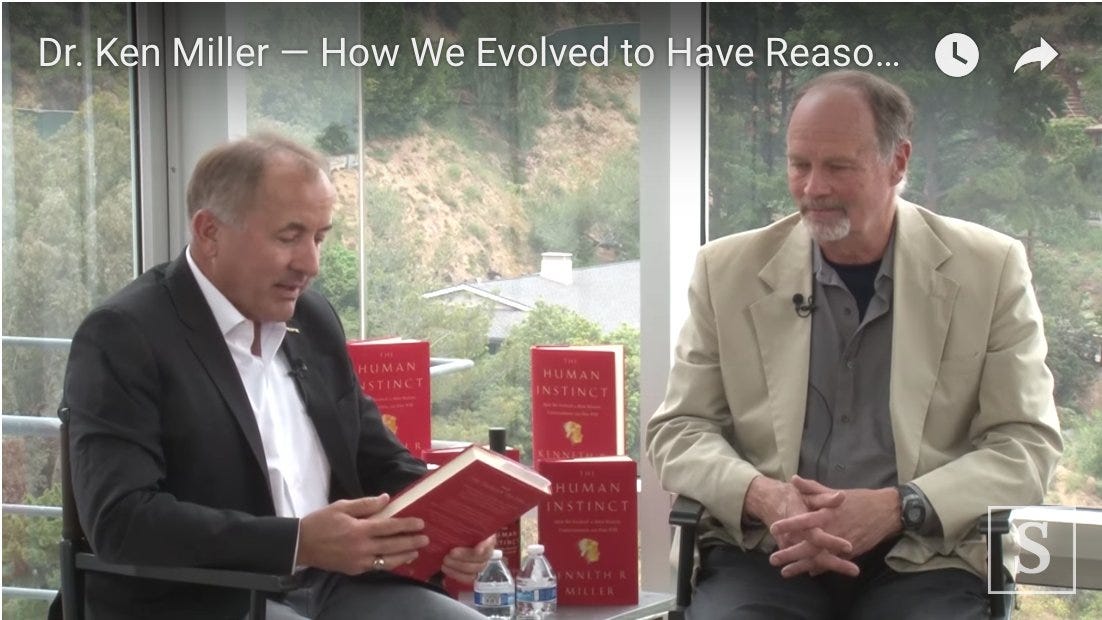
I rarely hear such sentiments as “this is my faith—I’m not claiming that it is literally true.” Or “this is just what I believe and I’m not trying to convince you that you should believe it too.” Or “this is what people of my faith believe but people in other faiths believe something different and all are equally true.” Such qualifiers are rare enough in my world that I can (and have) identified who declared them. The renowned biologist Ken Miller is one, a self-declared Catholic who nevertheless isn’t claiming the central tenets of which are scientific conclusions.
Another is Martin Gardner, one of the founders of the modern skeptical movement and a debunker of all forms of flimflam and flapdoodle, who nevertheless declared himself a philosophical theist, or sometimes a fideist—someone “who believes something on the basis of emotional reasons rather than intellectual reasons,” as he told me in an interview:
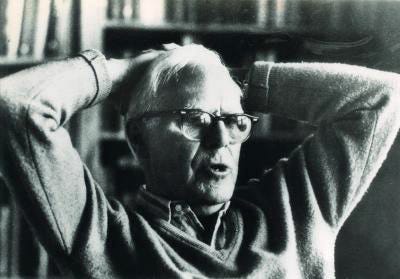
People think that if you don’t believe Uri Geller can bend spoons then you must be an atheist. But I think these are two different things. I call myself a philosophical theist in the tradition of Kant, Charles Peirce, William James, and especially Miguel Unamuno, one of my favorite philosophers. As a fideist I don’t think there are any arguments that prove the existence of God or the immortality of the soul. Even more than that, I agree with Unamuno that the atheists have the better arguments. So it is a case of quixotic emotional belief that is really against the evidence and against the odds. The classic essay in defense of fideism is William James’ The Will to Believe. James’ argument, in essence, is that if you have strong emotional reasons for a metaphysical belief, and it is not strongly contradicted by science or logical reasons, then you have a right to make a leap of faith if it provides sufficient satisfaction.

It makes the atheists furious when you take this position because they can no more argue with you than they can argue over whether you like the taste of beer or not. To me it is entirely an emotional thing.

I pressed Martin to expand on his comment that atheists’ arguments are better than theists’ arguments:

Well, they are better in the sense that the theist has a tremendous problem of explaining the existence of evil, and to me that is the strongest argument against God. If there is a God and he is all powerful and all good, why does he allow evil into the world? Evil exists, so is God all good but not all powerful? Or is he all powerful but not all good? That is a very powerful argument and I don’t know of any good way to answer it.

What about the afterlife, I inquire?

If you believe in God at all, I think you have to believe in a personal God, in a sense. That is, you have to assign to God something analogous to human mind because that is the highest type mind we are acquainted with. If God is just another name for nature then I think it is more honest just to say we are humanists.

Indeed, this is why I call myself a humanist, or more specifically an Enlightenment humanist, but this is not what most people believe by “God”, which Gardner acknowledged:

No, and of course if you do believe in a personal God it is in an analogical sense, so I sometimes like to call myself a theological positivist because I agree completely with Carnap that metaphysical questions are meaningless—if you can’t get at it by logic or by science you really can’t say anything at all about the question.

If you ask me for details about the nature of God I would have to answer “I don’t know.” The kind of God I believe in is so completely transcendent and so wholly Other that you really can’t say anything about God’s nature. To ask, for example, whether God is inside or outside of time, I have no idea what this means or how to reply to it. I can understand arguments saying he is in time, coming from the process theologians; on the other hand I can understand the arguments that place God completely outside of time, in some sort of realm in which time has no meaning. But these are metaphysical arguments and Carnap would say they are meaningless questions, and I would agree to that.

If this is what you believe, that is, you are a philosophical theist in this pragmatic fideist tradition, then the following questions are not for you. If you are a religious believer in the more traditional sense, or if you know people who are, then these questions may prove challenging. (In appreciation and acknowledgment of my friend and colleague Michael Aisner for the inspiration for this exercise.) If you would like to provide answers to or comment on any of these questions feel free to use the Comments section below.

*                                  *                                  *

Given that there dozens of major religions, hundreds of minor religions, and thousands of religious sects, that they often differ substantially in their core beliefs does this suggest one of them is the “right religion” and all the rest are “wrong” (in some epistemological sense), or could it be that they are all human constructions and none of them are right (in an ontological sense)?

If you were raised in a different religion, do you think you would now belong to that religion instead and believe it as much as you do your current religion?

If you pray and hear the voice of God in your head, how can you tell that it is God talking to you or just the normal voices in the head that we all experience?

If that voice of God commanded you to do something immoral or illegal, would you do it? That is, if the voices in your head are a form of evidence for God’s providence, how do you decide which commandments to follow and which to reject?

The bible and other holy books are chockablock full of moral prescriptions (what we should do) and proscriptions (what we shouldn’t do), but they often contradict one other (do I love my neighbor as myself or should I smite them as moral enemies) or are in conflict with modern morals and laws (slavery, torture, capital punishment), so how do you decide which ones to obey and which to ignore?

Echoing Plato’s “Euthyphro’s dilemma” (“whether the pious or holy is beloved by the gods because it is holy, or holy because it is beloved of the gods?”), does God embrace moral principles naturally occurring and external to Him because they are sound (“holy”) or are these moral principles sound only because God says that they are sound or otherwise they wouldn’t be? If moral principles hold value only because we believe that God created them, then what is their value if there is no God? Do we really need God to tell us that murder, rape, slavery, torture, pedophilia, lying, and stealing are wrong?

If God is omniscient, omnipotent, and omnibenevolent, and thus he knows what is in your heart and mind, why does he require you to demonstrate your faith by worshiping him? In any case, why would such a being need to be worshipped? Isn’t worshipfulness a human desire often affiliated with dictators, demagogues, and authoritarians of all stripes?

If God is omniscient, omnipotent, and omnibenevolent, why do holy books describe him as surprised or angered by the actions of humans? Shouldn’t he have known what was going to happen?

If God is omniscient, omnipotent, and omnibenevolent, then how can Jesus be his son and God at the same time? Doesn’t this violate Aristotle’s Law of Identity, or A is A, or “everything is the same as itself and different from another” (Metaphysics IV, 3)?

If God is Jesus is vice versa, then the Christian claim that one must accept Jesus as one’s savior from original sin in order to have everlasting life (and not spend an eternity in hell), doesn’t this mean that God sacrificed…himself…to himself…to save us from himself?

When did Jesus become a capitalist? Didn’t he caution his followers about the dangers of wealth and the worship of money, didn’t he admonish the money changers, and didn’t he preach that it would be easier “for a camel to go through the eye of a needle than for someone who is rich to enter the kingdom of God” (Matthew 19:23)?

If missionaries from your religion are sent to evangelize and convert people in other countries, should missionaries from other religions be sent to your country for the same reason?

When you declare a miracle, does this mean you understand everything that is possible in nature? Could it be that the said miracle is just something that happened for which you have no explanation (the argument from ignorance, or the God of the Gaps argument)?

If God answers prayers and sometimes they seem to come true—say, the healing of someone’s cancer, recovery from a horrific accident, or survival in a seemingly deadly situation—what about all the devout believers who (and whose devout families) fervently prayed for them and they nevertheless died or suffered unmercifully?

If God can heal cancers, cure deadly diseases, enable pregnancies, and perform countless signs and miracles, why can’t he grow new limbs on Christian soldiers maimed in battle? Salamanders can grow new limbs, so why can’t God do that for his faithful and worshipful followers?

Can a mass murderer, serial killer, or child abuser go to heaven if, just before death, he accepts Jesus as his savior? Wouldn’t it be more just if he burned in hell for eternity for his deeds? In other words, don’t works matter more than words?

Do the mass murdering and torturing Crusaders and Inquisitors make it into the Christian heaven if they accepted Jesus as their savior?

If aliens exist on other worlds and they have never heard of your God, what happens to them? Does Jesus visit all exo-planets that contain sentient beings? Are there the equivalent of alien Romans who torture and murder Jesus, who rises from the dead to atone for their original alien sins?
*                                  *                                  *

I have many more such questions, but that should suffice for now to (hopefully) at least give Christians and other religious believers pause in their confidence in the verisimilitude of their knowledge assertions. Perhaps—and here hope springs eternal—religious believers might consider the skeptical admonitions of Oliver Cromwell in his letter to the general assembly of the Church of Scotland on August 3, 1650:

Is it therefore infallibly agreeable to the Word of God, all that you say? I beseech you, in the bowels of Christ, think it possible you may be mistaken.

Skeptic is a reader-supported publication. All monies go to the Skeptics Society, a 501(c)(3) nonprofit. To receive new posts and support our work, consider becoming a free or paid subscriber.

Upgrade to paid

Michael Shermer is the Publisher of Skeptic magazine, the host of The Michael Shermer Show, and a Presidential Fellow at Chapman University. His many books include Why People Believe Weird ThingsThe Science of Good and EvilThe Believing BrainThe Moral Arc, and Heavens on EarthHis new book is Conspiracy: Why the Rational Believe the Irrational.
How To Think About the Resurrection

Here’s the link to this article.

Was Jesus really raised from the dead?

MICHAEL SHERMER

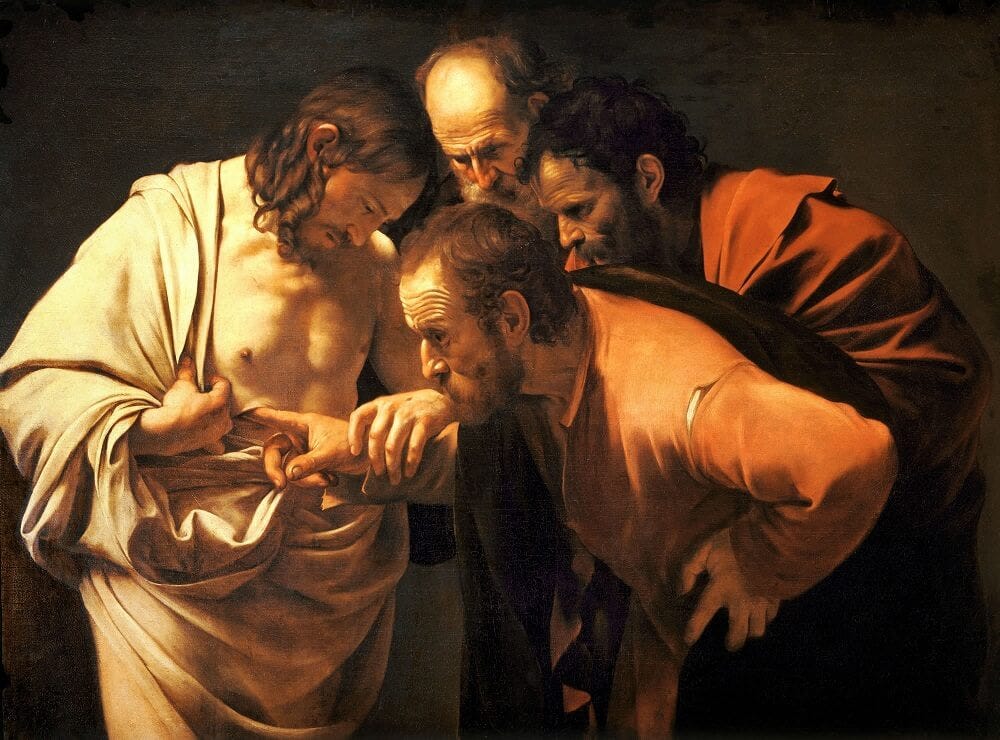
On this Easter 2023, let us reflect on what is arguably the greatest miracle ever performed—the raising from the dead the body, life, and person known as Jesus of Nazareth. This miracle is believed by over 2.6 billion people—a third of humanity—to be true. Is it? Was Jesus really raised from the dead? Like the apostle Thomas, I have my doubts.

First, let me note that what we’re talking about here is the claim of an empirical objective truth: that there was a man named Jesus who was put to death by crucifixion and resurrected from the dead three days later, after which he ascended to heaven. The claim under consideration here is not just a literary truth, as when U.S. Presidential candidate William Jennings Bryan, a deeply religious man, in his 1896 Democratic National Convention “Cross of Gold” speech, famously pronounced “we shall answer their demands for a gold standard by saying to them, you shall not press down upon the brow of labor this crown of thorns. You shall not crucify mankind upon a cross of gold.” Nor is this claim merely a metaphorical or mythic truth, in which readers might be inspired to “bear your own cross” or admonished not to be “crucified” by your enemies, or warned not to “resurrect” bad habits, or encouraged to become “born again” through good habits, or to forgive those who sin against us as God forgives us for our sins through the death and resurrection of his only begotten son.

Nor does this have to do with the proposition that Jesus died for our sins, which is a faith-based truth claim with no purchase on valid knowledge. Such a central tenet of the Christian faith cannot be tested or falsified. It cannot be confirmed or disconfirmed. It can only be believed or disbelieved based on faith or the lack thereof. It is in the realm of religious truths, which are different from empirical truths. Such literary, mythic, and metaphorical truths play a central role in human culture and learning through the arts, literature, and religion, but that is not how most Christians think about the crucifixion and resurrection of Jesus. They believe it is literally true. I know because I have debated a number of theologians and biblical scholars on this and related topics, and when they speak of the death and resurrection of Jesus they are not channeling Joseph Campbell’s “power of myth”. They accept the apostle Paul’s challenge (in 1 Cor. 15:13-19) that: “if there is no resurrection of the dead, then Christ is not risen. And if Christ is not risen, then our preaching is empty and your faith is also empty. For if the dead do not rise, then Christ is not risen. And if Christ is not risen, your faith is futile; you are still in your sins!”

The proposition that Jesus was crucified may be true by historical validation, inasmuch as a man named Jesus of Nazareth probably existed, the Romans routinely crucified people for even petty crimes (recall that the two other people crucified with Jesus that day were impenitent thieves), and most biblical scholars—even those who are atheists, such as the renowned University of North Carolina at Chapel Hill Religious Studies professor Bart Ehrman—assent to this fact. In between these propositions is Jesus’s resurrection, which is not impossible but would be a miracle if it were true. How big a miracle would it be?

Skeptic is a reader-supported publication. Paid subscriptions go to the Skeptics Society, a 501(c)(3) nonprofit. To receive new posts and support my work, consider becoming a free or paid subscriber.Subscribe

Let’s begin our analysis with the Scottish Enlightenment philosopher David Hume, and Section XII of his book Philosophical Essays Concerning the Human Understanding, titled “Of the Academical or Sceptical Philosophy.” Here Hume distinguishes between “antecedent skepticism”, such as Descartes’s method of doubting everything, that has no “antecedent” infallible criterion for belief, which means we can’t really know anything; and “consequent skepticism,” the method Hume employed that recognizes the “consequences” of our fallible senses but corrects them through reason so that we can have confidence that we can know some things with confidence. As he advised: “A wise man proportions his belief to the evidence.”

Let’s call this the principle of proportionality, better known as the ECREE principle—extraordinary claims require extraordinary evidence. Carl Sagan made famous the principle, but he was quoting the lesser-known sociologist of science Marcello Truzzi (thereby confirming the observation that pithy and oft-quoted statements migrate up to the most famous person who said them). Let’s see how this principle cashes out for a miracle like the resurrection and whether or not we should believe it.

How extraordinary a claim is the resurrection? Let’s put some numbers on it. Demographers estimate that throughout all of human history approximately 100 billion people have lived before the 8 billion people alive today. Not one of those 100 billion people has died and returned from the dead, except maybe one—Jesus of Nazareth. So the claim that one person out of those 100 billion people who died came back from the dead would be extraordinary indeed. How extraordinary? 100 billion to 1. That is about as extraordinary a claim as one will ever find. Is the evidence proportional to the conviction? No. Not even close.

According to the University of Wisconsin-Madison philosopher Larry Shapiro in his 2016 book The Miracle Myth, “evidence for the resurrection is nowhere near as complete or convincing as the evidence on which historians rely to justify belief in other historical events such as the destruction of Pompeii.” Because miracles are far less probable than ordinary historical occurrences like volcanic eruptions, “the evidence necessary to justify beliefs about them must be many times better than that which would justify our beliefs in run-of-the-mill historical events.” But, says Shapiro, it isn’t. In fact, it’s not even as good as ordinary historical events.

What about the eyewitnesses? Maybe, Shapiro suggests, they “were superstitious or credulous” and saw what they wanted to see. “Maybe they reported only feeling Jesus ‘in spirit,’ and over the decades their testimony was altered to suggest that they saw Jesus in the flesh. Maybe accounts of the resurrection never appeared in the original gospels and were added in later centuries. Any of these explanations for the gospel descriptions of Jesus’s resurrection are far more likely than the possibility that Jesus actually returned to life after being dead for three days.”

The principle of proportionally also means we should prefer the more probable explanation over the less, which these alternatives surely are. And this is a splendid example of Bayesian reasoning, in which the priors of non-Christians is low for their credence that the resurrection really happened, and to date no new evidence has come forth to change those priors, and so our credence in the verisimilitude of the resurrection remains low. Here’s a model example of Bayesian reasoning from the aforementioned biblical scholar and historian Bart Ehrman in his book Jesus, Interrupted:

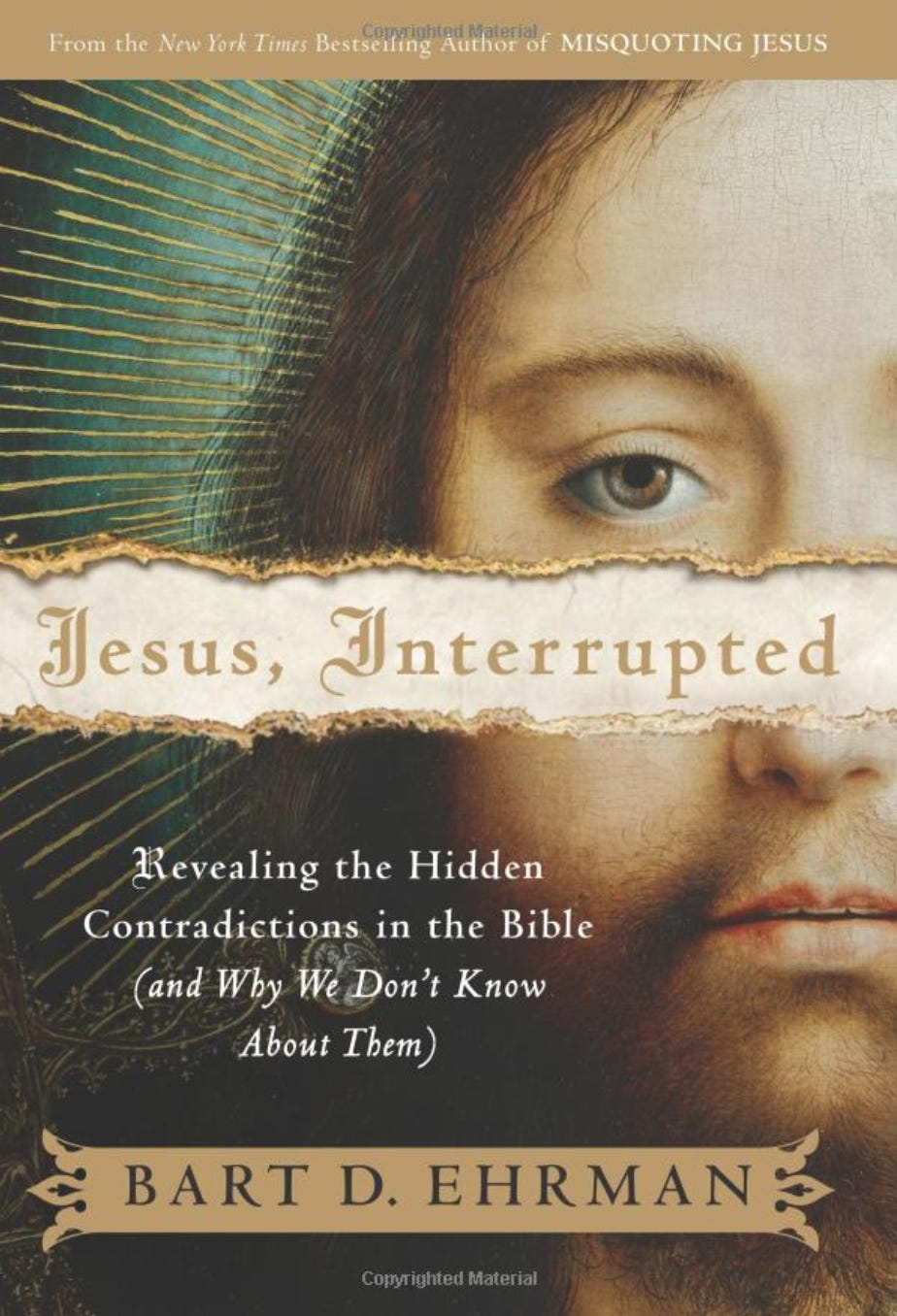
Our very first reference to Jesus’ tomb being empty is in the Gospel of Mark, written forty years later by someone living in a different country who had heard it was empty. How would he know? Anyhow, suppose that it was empty. How did it get that way? Suppose…that Jesus was buried by Joseph of Arimathea in Joseph’s own family tomb, and then a couple of Jesus’ followers, not among the twelve, decided that night to move the body somewhere more appropriate. … But a couple of Roman legionnaires are passing by, and catch these followers carrying the shrouded corpse through the streets. They suspect foul play and confront the followers, who pull their swords as the disciples did in Gethsemane. The soldiers, expert in swordplay, kill them on the spot. They now have three bodies, and no idea where the first one came from. Not knowing what to do with them, they commandeer a cart and take the corpses out to Gehenna, outside town, and dump them. Within three or four days the bodies have deteriorated beyond recognition. Jesus’ original tomb is empty, and no one seems to know why.

Is this scenario likely? Not at all. Am I proposing this is what really happened? Absolutely not. Is it more probable that something like this happened than that a miracle happened and Jesus left the tomb to ascend to heaven? Absolutely! From a purely historical point of view, a highly unlikely event is far more probable than a virtually impossible one.

The number of gospel inconsistencies and incompatibilities doesn’t help the credence of the resurrection. For example, the gospels do not agree on: how many women came to the tomb (1, 2, or 3 plus “others”); when they came (“while it was still dark” or “just after sunrise”); why they came (“to look at the tomb” or “to anoint the body with spices”); who they saw (one angel, two angels, a man dressed in white, or Jesus himself); what was said, who said what, who else came (Peter, or both Peter and John); who saw the resurrected Jesus first (Peter or Mary Magdalene); or what they did as they left the tomb (“they said nothing to anyone” or “they ran to tell his disciples”).

Matthew seems to imply the stone was rolled away in the presence of the women who came to the tomb, while Mark, Luke, and John say the women arrived to discover the stone had already been rolled away. Matthew and Mark have the resurrected Jesus on his way to Galilee by the time the women arrive at the tomb, while Luke and John have the risen Messiah in Jerusalem on the night of first Easter Sunday. The Q document, thought to be the source for Matthew, does not even mention the resurrection. The Gospel of Thomas, discovered near Nag Hammadi, Egypt, in December 1945 and dated to the early 2nd century CE, also fails to mention the resurrection. The earliest reliable written testimony of the resurrection of Jesus is by Paul and the anonymous author of Mark’s Gospel. It is important to note, in the context of the propensity of human memory to forget, conflate, confabulate, edit, redact, and falsify events that happened in the past, that the earliest Gospel of Mark was circa 66-70 CE, many decades after the events in question, with the rest of the gospels written even later.

So the extraordinary resurrection miracle claim hangs on just two early testimonies, from two ancient authors, neither of whom actually saw Jesus rise up from the dead, and neither of whom touched him, or sat down with him for a face to face conversation. We have nothing written by the Romans—or the Jews for that matter!—about Jesus, the content of his preaching, why he was killed, or what they thought about claims that he had been resurrected. You would think some Roman would have exclaimed “Et tu Again, Jesus?” or some Jew would have snapped “Oy Vey!” And the accounts from Josephus, Pliny the Elder, and Tacitus that Christians cite in evidentiary support, were from the 2nd century, and they reference Christ the Messiah, not Jesus, and they too don’t mention the resurrection.

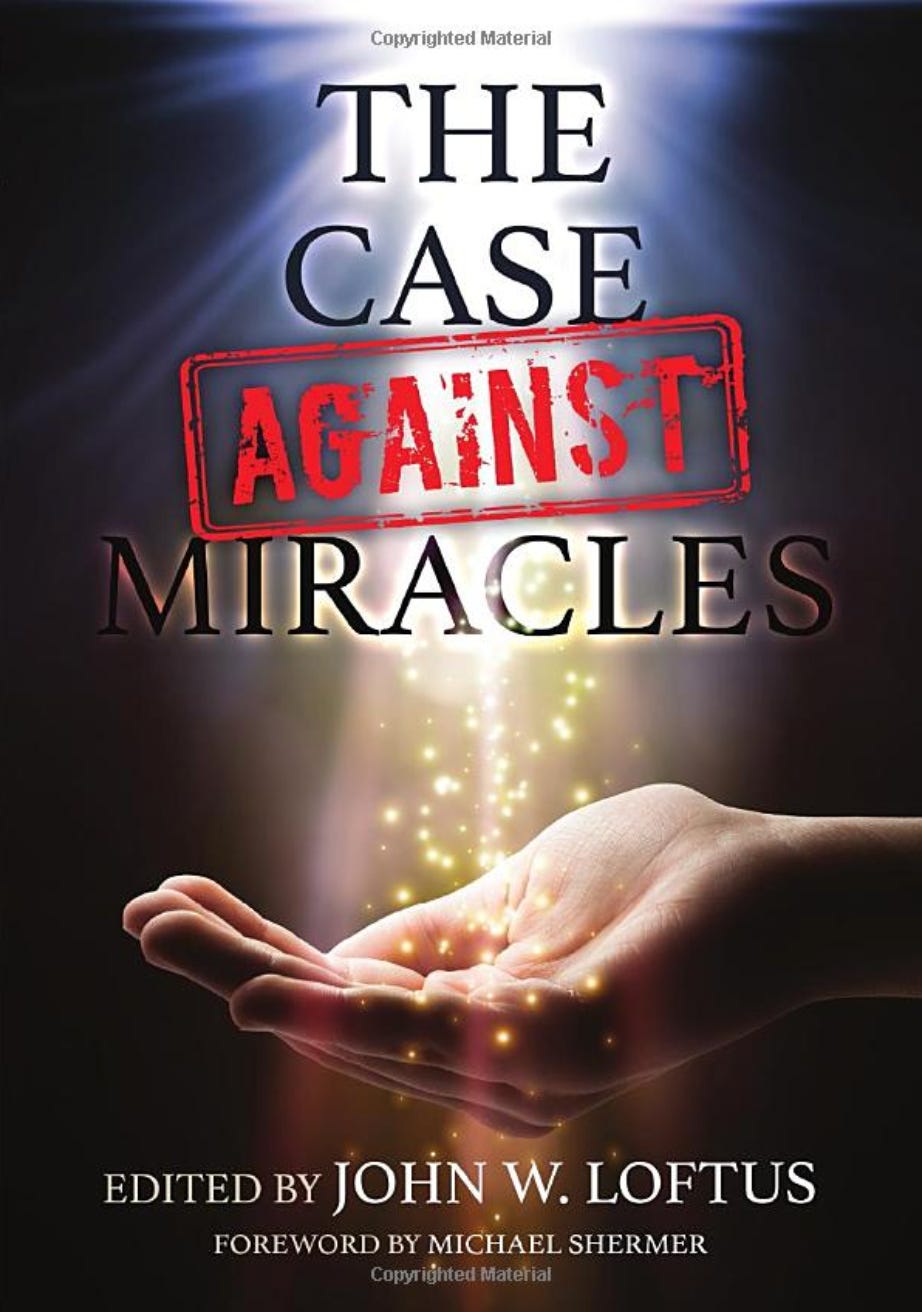
What’s more, in his book The Case Against Miracles, the biblical scholar John W. Loftus notes that “we have no independent corroboration of the Star of Bethlehem at the birth of Jesus, or that the veil of the temple was torn in two at Jesus’ death (Mark 15:38), nor that darkness came ‘over the whole land’ from noon until three in the afternoon (Mark 15:33), or that ‘the sun stopped shining’ (Luke 23:45), nor that there was an earthquake at his death (Matt. 27:51, 54), or another ‘violent’ one the day he arose from the grave (Matt. 28:2).” Could such notable events as these really have occurred without any corroborating evidence? Surely some Roman scribe would have made a note about a three-hour midday eclipse of the sun, not to mention the other miracles. No such extra-biblical evidence exists. Here, the absence of evidence is evidence of absence.

What about the 500 people the apostle Paul says saw the risen Jesus? People often interrupt this to mean that there were 500 independent eyewitness accounts of seeing Jesus after the crucifixion. Not so. We have one account saying there were 500 witnesses, by an evangelist who was highly motivated to write a history in support of his new-found religion—recall that Paul was previously Saul, who converted to Christianity from Judaism after his vision on the road to Damascus.

To that end, a challenge to the resurrection miracle that I often employ is that Jews do not accept it as real, neither in Jesus’ time nor in ours. Think about that: Jews believe in the same God as Christians. They accept the Old Testament of the Bible like Christians do. They even believe in the Messiah. They just don’t think Jesus of Nazareth was him. Jewish rabbis, scholars, philosophers, and historians all know the arguments for the resurrection as well as Christian apologists and theologians making the arguments, and still they reject them. Why? If the arguments and evidence for the resurrection is so solid, in time the community most expert in that field would reach a consensus about it. They haven’t. Christians believe it. Jews don’t. Ben Shapiro explains why here, in our conversation on his Sunday Special show.

Finally, it is important to put the resurrection into historical context, which Bart Ehrman does when he notes that in an ancient view of the divine realm “gods could sometimes be or become humans, and humans could sometimes be or become gods.” Ehrman outlines three models of “divine men” that were common in the ancient world:

  1. Sometimes it was understood that gods could and would come down to earth in human form to make a temporary visit for purposes of their own.
  2. Sometimes it was understood that a person was born from the sexual union of a god and a mortal; thus, that the person was, in some sense, part divine and part human.
  3. Sometimes it was understood that a human was elevated by the gods to their realm, usually after death, and at that point divinized, made into a god.

As Ehrman documents, there are many stories in ancient myths about gods temporarily assuming human form to meet, speak, and interact with humans, and that these stories in many ways are similar to later Christian beliefs about Christ being a preexistent divine being who came to earth as a human, only later to return to the heavenly realm.

Perhaps this is why Jesus was silent when Pilate asked him (John 18:38) “What is truth?”

Skeptic is a reader-supported publication. All monies go to the Skeptics Society, a 501(c)(3) nonprofit. To receive new posts and support my work, consider becoming a free or paid subscriber.Subscribe

Michael Shermer is the Publisher of Skeptic magazine, the host of The Michael Shermer Show, and a Presidential Fellow at Chapman University. His many books include Why People Believe Weird ThingsThe Science of Good and EvilThe Believing BrainThe Moral Arc, and Heavens on EarthHis new book is Conspiracy: Why the Rational Believe the Irrational.