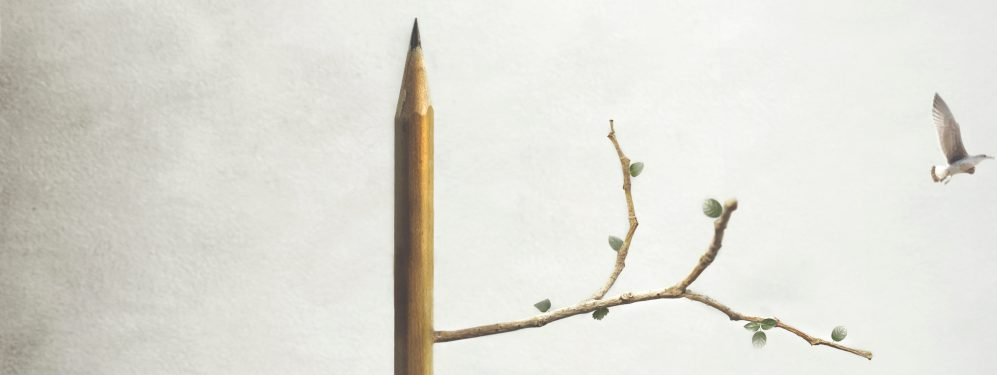
This I Believe

Here’s the link to this article by Joyce Carol Oates.

Five Motives for Writing
Letter, Calligraphy, Ink, Written, Write

Originally published in The Kenyon ReviewNew Series, Vol. 36, No. 4 (Fall 2014)

Edited and arranged by Robert Friedman


It is a very self-conscious thing to speak of one’s “credo.”

I think that most writers and artists love their work, which of course we don’t consider “work”—exactly. As artists love the basic materials of their art—paints, charcoal, clay, marble—so writers love the basic materials of their art—language.

Many visual artists have no “credo” at all. They offer no “artist’s statement.” And they consider those who do to be somewhat suspicious, if not frankly duplicitous.

The oracular, pontificating, self-aggrandizing vatic voice—how hollow it sounds, to others! There are great poets, including even Walt Whitman and Robert Frost, who might have known better, who have fallen into such hollowness, as one might fall into a bog.

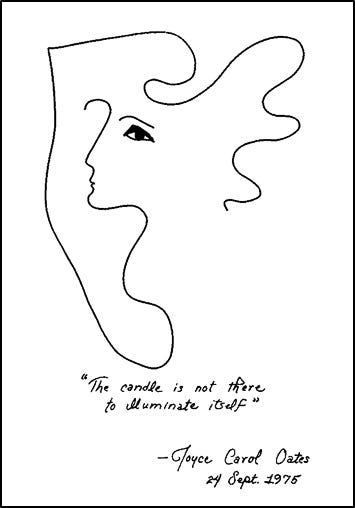
Recall D. H. Lawrence’s admonition—Never trust the teller, trust the tale.
Criticism, as distinct from literature, or “creative” writing, has often been aligned with a particular moral, political, religious sensibility. The 1950s were perceived, proudly and without irony, as an Age of Criticism—at least, by critics. (It does seem rather narrow to define the 1950s as an age of criticism when writers like Jack Kerouac, Allen Ginsberg, Eudora Welty, and Flannery O’Connor, among numerous others, were publishing frequently.) Criticism is more naturally a kind of preaching, or propaganda; there are systems of belief underlying most criticism, intent upon rewarding those who confirm the critic’s core beliefs and punishing those who don’t. But “creative” artists resist defining their beliefs so overtly, as one might wish not to wear one’s clothing inside-out revealing seams and stitches.

However, considering my own life, or rather my career, I think it is likely that my credo, if I were to have one, involves several overlapping ideals.

Subscribe

Commemoration

Much of literature is commemorative. Home, homeland, family, ancestors. Mythology, legend. That “certain slant of light” in a place deeply imprinted in childhood, as in the oldest, most prevailing region of the brain.
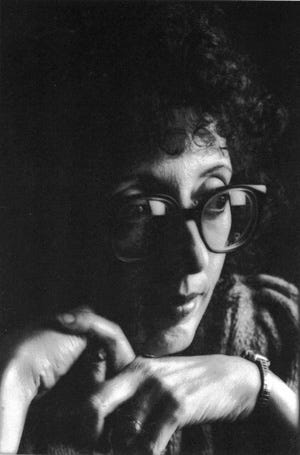
Photo by Graham Gibson

Much of my prose fiction is “commemorative” in essence—it is a means of memorializing a region of the world in which I have lived, a past I’ve shared with others, a way of life that might seem to me vanishing, thus in danger of being forgotten. Not an “old” America but rather an “older” America—those years described as the Depression, through World War II, the Vietnam War, the 1960s, and so forward to the present time in upstate, quasi-rural America. Writing is our way of assuaging homesickness.
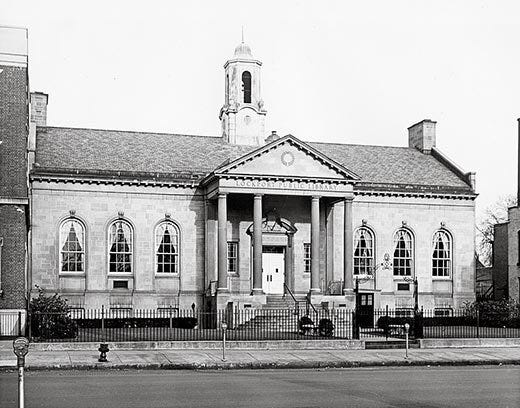
The Lockport Public Library where the author spent many happy hours, c. 1946

Commemoration is identical, for me, with setting. Where a story or a novel is set is at least as significant as what the story—the plot—“is.” In my fiction, characters are not autonomous but arise out of the very physicality of the places in which they live and the times in which they live. There is a spiritual dimension to landscape that gifted photographers can suggest and gifted writers can evoke.

Often, I am mesmerized by the descriptions of landscapes, towns, and cities in fiction—(obviously, the novels of Dickens, Hardy, Lawrence come to mind; it is difficult to name any novels of distinction that are not firmly imbued with “place.”) And if the setting is antagonistic to the spirit, as in our environmentally devastated landscapes and cityscapes, this is a part of the story.

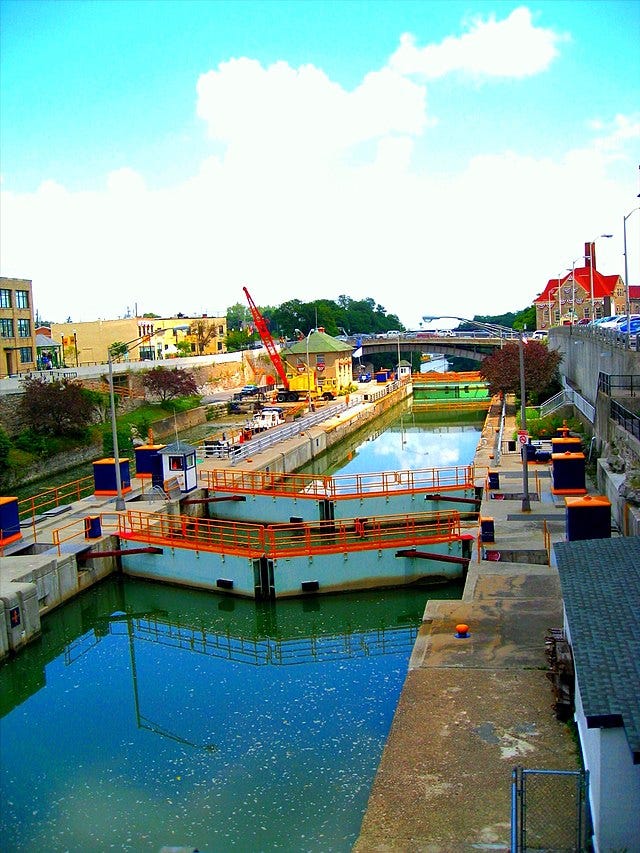
Lockport New York
“For residents of the area who have gone to live elsewhere, it’s the canal—so deep-set in what appears to be solid rock … that resurfaces in dreams.” —Joyce Carol Oates.

Bearing witness

Most of the world’s population, through history, have not been able to “bear witness” for themselves. They lack the language, as well as the confidence, to shape the language for their own ends. They lack the education, as well as the power that comes with education. Politically, they may be totally disenfranchised—simply too poor, and devastated by poverty and the bad luck that comes with poverty, like an infected limb turning gangrenous. They may be suppressed, or terrorized into silence. My most intense sympathies tend to be for those individuals who have been left behind by history, as by the economy; they are all around us, but become visible only when something goes terribly wrong, like a natural disaster, or an outburst of madness and violence.
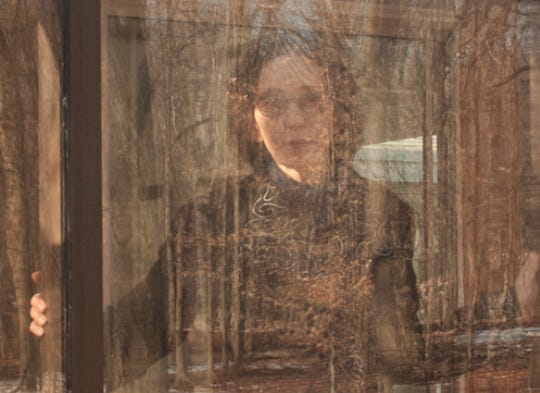
The author, photographed through the window of her Princeton home in 2008, by Charlie Gross

Particularly, I have been sympathetic with the plight of women and girls in a patriarchal society; I am struck by the ways in which weakness can be transformed into strength and vulnerability into survival.

If the writer has any obligation—and this is a debatable issue, for the writer must remain free—it’s to give voice to those who lack voices of their own.

Self-expression

The “self” is, at its core, radically young, even adolescent. Our “selves” are forged in childhood, burnished and confirmed in adolescence. That is why there are great, irresistibly engaging writers of “adolescence”—for instance, Henry David Thoreau, Emily Dickinson, Ernest Hemingway (in his early short stories set in northern Michigan).
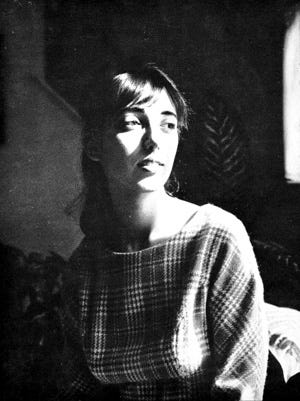
Photo by Robert Benyas for The New York Times Book Review, 1963

Since I began writing fairly seriously when I was very young, my truest and most prevailing self is that adolescent self, confronting an essentially mysterious and fascinating adult world, like a riddle to be solved, or a code to be decoded. The essence of the adolescent is rebelliousness, skepticism. It is very healthy, a stay against the accommodations and compromises of what we call adulthood, particularly “middle age.”

Propaganda, “moralizing”

Once, it was not considered gauche for literary writers (Stowe, Upton Sinclair, Tolstoy, Eliot, Dickens) to address the reader more or less directly, and to speak of moral predilections; now, since the revolution in sensibility generally associated with the early decades of the twentieth century, which we call Modernism, it is virtually impossible to indicate a moral position in any dogmatic way. Ours is still, over all, an age of irony—indirection, obliquity. As Emily Dickinson advises, speaking of her own credo—“Tell all the truth but tell it slant / Success in circuit lies.” And Virginia Woolf, in these thrilling, liberating words:

Art is being rid of all preaching: things in themselves: the sentence in itself beautiful. . . Why all this criticism of other people? Why not some system that includes the good? What a discovery that would be—a system that did not shut out.

Virginia Woolf

Still, most of us who write hope to evoke sympathy for our characters, as George Eliot and D. H. Lawrence prescribed; we would hope not to be reducible to a political position, still less a political party—though writers in other parts of the world are often adamantly political and are political activists—but we write with the expectation that our work will illuminate areas of the world that may be radically different from our readers’ experiences, and that this is a good thing. It is an “educational” instinct—one hopes it is not “preacherly.”

Aesthetic object

Writing as purely gestural, as Woolf suggests—“the sentence in itself beautiful.” In fact, it is very difficult to write a sustained work of fiction that is “purely gestural”— meaning emerges even out of the random, a moral perspective evolves even out of anarchy, nihilism, and amorality; the mere act of writing, still more the discipline of revision, seems to carry with it an ethical commitment to its subject. Yet most of us are drawn to art, not because of its moral gravity, but rather because it is “art”—that is, “artificial”—in some sort of heightened and rarified and very special relationship to reality, which (mere) reality itself can’t provide.
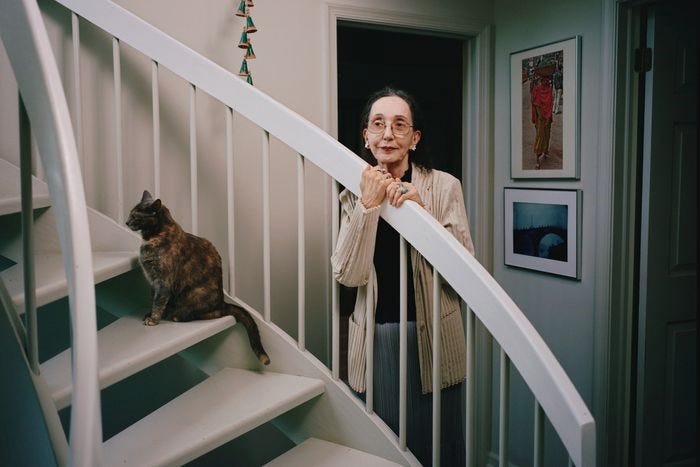
Joyce at home in Princeton 2022, with Lilith. Photo by Peter Garritano for the Wall Street Journal.

Of course, “beauty” in art can be virtually anything, including even conventional ugliness, beautifully/originally treated. In choosing a suitable language for a work of prose fiction, as well as poetry, the writer is making an aesthetic choice: she is rejecting all other languages, or “voices”; she is gambling that this particular voice is the very best voice for this material. The truism “Art for art’s sake” really means “Art for beauty’s sake”—the content of any literary novel is of less significance than the language in which the novel is told.
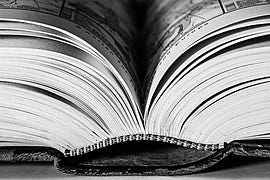
File:Aufgeschlagenes Buch -- 2020 -- 4204 (bw).jpg

Now that much of publishing is digital, the book as aesthetic object is endangered. Storytelling isn’t likely to vanish, but physical, three-dimensional books comprised of actual pages (paper of varying quality) —with their “hard” covers and “dust” jackets—are in a perilous state. Many of us who love to write also love books—the phenomenon of books.
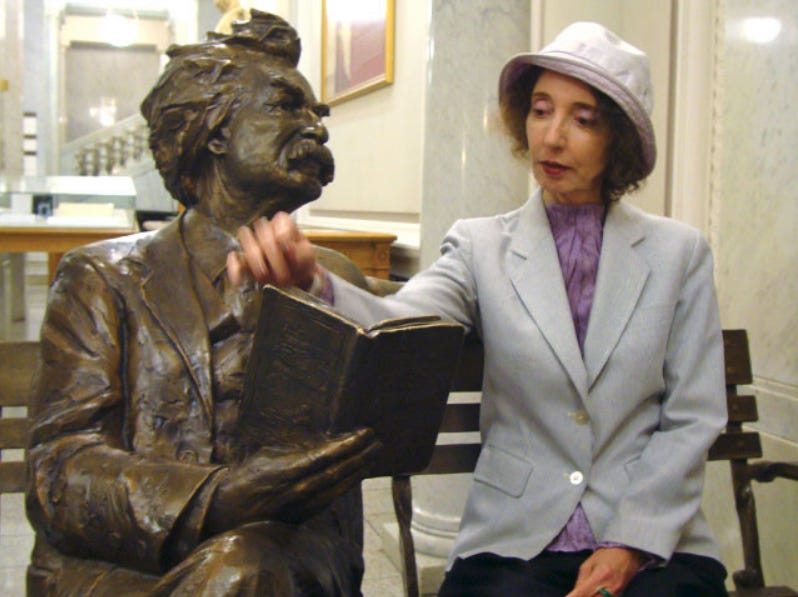
The author and friend, Doe Library UC Berkeley. Photo by Charlie Gross, 2012.

We may have been initially drawn to writing because we fell in love with a very few, select books in childhood, which we have hoped to replicate somehow; we hoped, however fantastically, to join the select society of those individuals whose names are printed on the spines of books. It isn’t to grasp at a kind of immortality—we fell into our yearning as children, long before immortality, or even mortality, was an issue. Rather, we yearn to ally ourselves with a kind of beauty, an object to be held in the hand, passed from hand to hand—an object to place upon a shelf, or to be stood upright, its beautiful cover turned outward to the world.
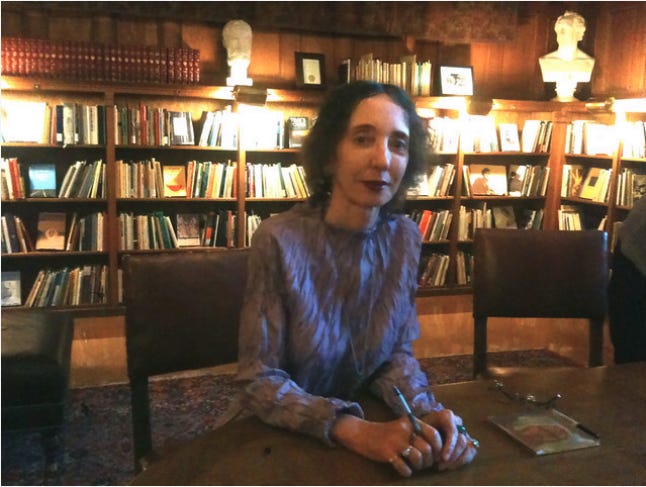
The author at UC Berkeley, Doe Library Reading Room

As Freud said memorably in Civilization and Its Discontents, “Beauty has no obvious use; nor is there any clear cultural necessity for it. Yet civilization could not do without it.”

Would the great writers of our tradition, James Joyce, for instance, have labored quite so hard, and with such fierce devotion, if the end-product of their labor was to have been nothing more than “online” art—sustained purely by electricity, bodiless, near-anonymous, instantaneously summoned as a genie out of a bottle, and just as instantaneously banished to the netherworld of cyberspace?

Like Joyce, most writers still crave the quasi-permanence of the book: not the book as idea but as physical, aesthetic object. This is as close as we are likely to come to the sacramental, which, for some of us, is wonderfully close enough.

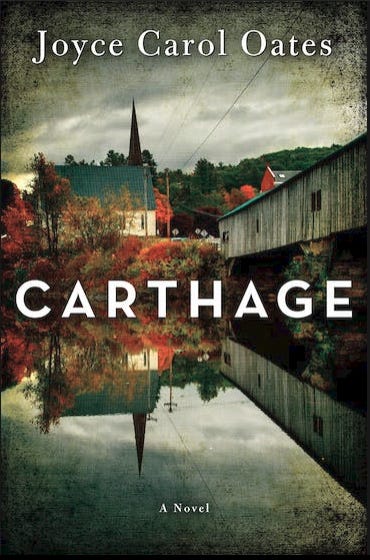
An Unexpected Intimacy, by Joyce Carol Oates

This is a must read for all writers, and especially for those even faintly considering this life-changing art.

Here’s the link to this article. Click here for more by this master-writer.

Some Thoughts on Writing Through the Decades

Joyce Carol Oates

Edited and arranged by Robert Friedman


If you are a writer you locate yourself behind a wall of silence and wherever you are—in public, in solitude, in motion, utterly still—you can still be writing, because you are in that private space.

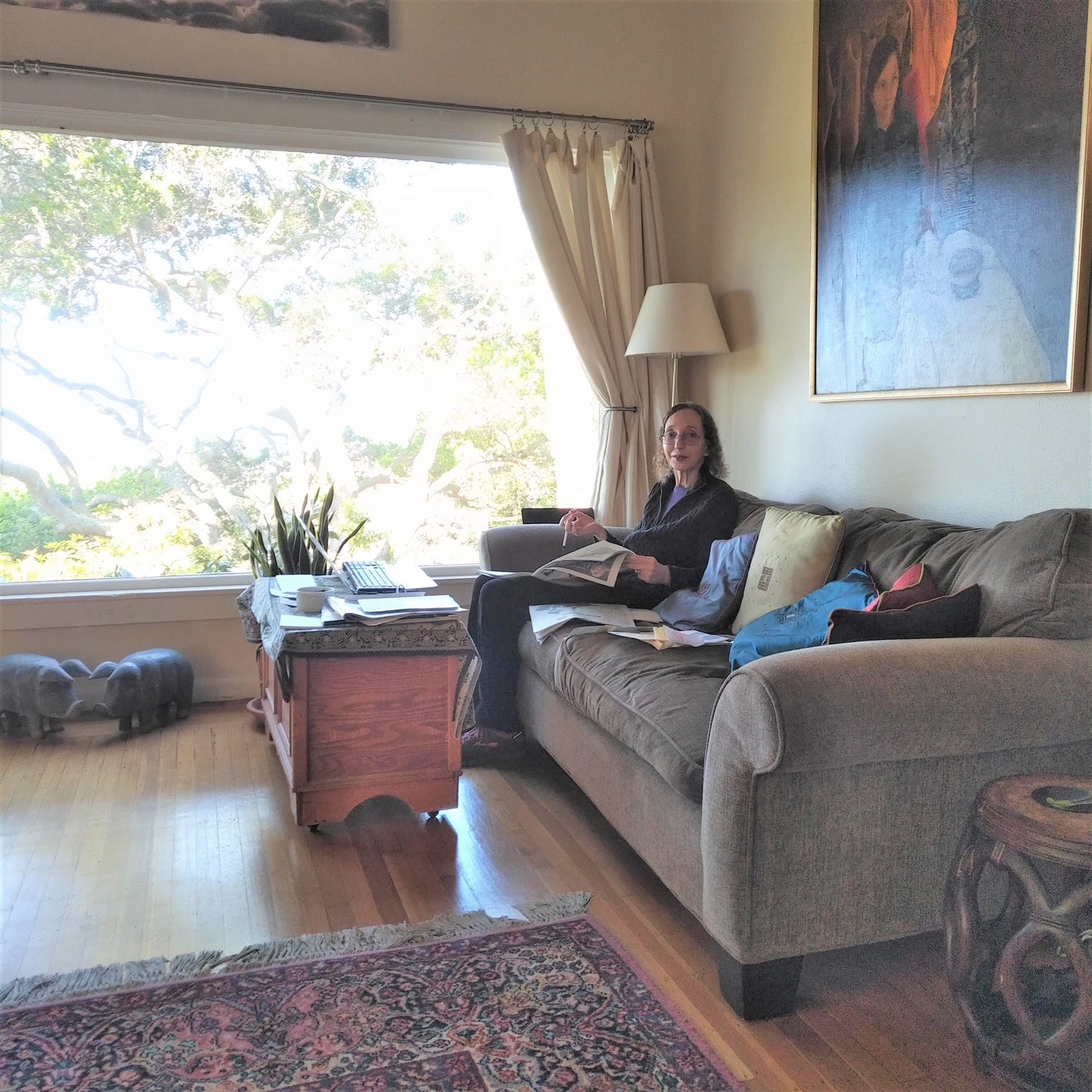
My “study” in Berkeley—at one end of the sofa in a large living room; my late husband Charlie had a desk in a farther corner at a window overlooking San Francisco bay in the distance. Photo by Henri Cole.

When writing goes with painstaking slowness—frustration, dismay—then naturally one ought to continue with the work; it would be cowardly to retreat. But when writing goes smoothly—why then one certainly should keep on working, since it would be very foolish to stop. Consequently one is always writing.

Genius is not a gift, but the way a person invents in desperate circumstances. —Sartre

(My epigraph for “Blonde” which is the innermost truth of my heart.)

Be daring, take on anything. Don’t labor over little cameo works in which every word is to be perfect. Technique holds a reader from sentence to sentence, but only content will stay in his mind.


I tell my students to write of their true subjects. How will they know when they are writing of their true subjects? By the ease with which they write. By their reluctance to stop writing. By the headachy, even guilty, joyous sensation of having done something that must be done, having confessed emotions thought unconfessable, having said what had seemed should remain unsaid. If writing is difficult, stop writing. Begin again with another subject. The true subject writes itself, it cannot be silenced. Give shape to your dreams, your day-dreams, cultivate your day-dreams and their secret meanings will come out.

Life and Biography – Celestial Timepiece
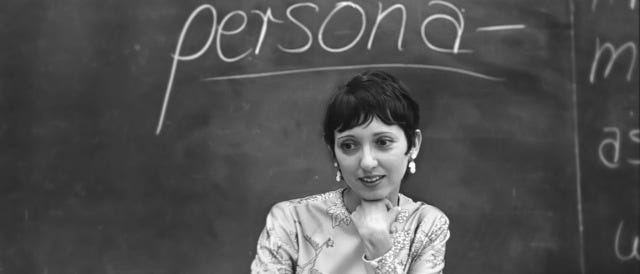
A long-ago photo of me with what appears to be a “pixie” haircut, teaching an introductory literature course at the University of Detroit

Writing is a consequence of being “haunted” by material.  You know that you are “haunted” when nothing else can retain your attention—when your thoughts swerve, in obedience to an inner gravity, to the one true subject that will bring terror and comfort.


I have forced myself to begin writing when I’ve been utterly exhausted, when I’ve felt my soul as thin as a playing card…and somehow the activity of writing changes everything.


“We work in the dark—we do what we can—we give what we have. Our doubt is our passion, and our passion is our task. The rest is the madness of art.”Henry James


The ideal art, the noblest of art: working with the complexities of life, refusing to simplify, to “overcome” doubt.


Fiction that adds up, that suggests a “logical consistency,” or an explanation of some kind, is surely second-rate fiction; for the truth of life is its mystery.


I’m drawn to failure—stories of struggle, failure, even defeat—and the aftermath of defeat. For only someone who attempts something beyond their reach can “fail.” There can be nobility in this,  a strange sort of dignity. Never having failed means never having tried.  Subscribe


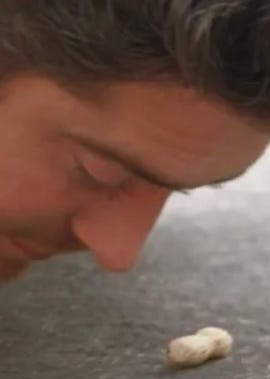
Writing a first draft is like pushing a peanut with your nose across a very dirty floor.  Only when you get to the farther side of the room do you see where you were going—now, you can try again, and you will move much more swiftly!


Revising is the blissful state subsequent to the circle of Hell that is the “first draft.”


I am drawn to write about rural and small-town upstate New York in the way in which a dreamer’s recurring dreams are likely to be set in childhood places. Our oldest memories are the most deeply imprinted in our brains—the first to be absorbed into our physical being, in neurons; the last to be lost, as consciousness fades to black.

Beset by economic crises, as by extremes of weather, upstate New York is emblematic of much of American life in the present day: its urban centers are relatively prosperous, educated, “liberal”—its rural areas, much the greater part of the state, are relatively impoverished, under-educated, “conservative.”

https://upload.wikimedia.org/wikipedia/commons/thumb/0/08/Lockport_New_York_-_Erie_Canal_Locks_34_35_-_%22siamese_twins%22%2C_where_the_upper_door_of_Lock_34_is_also_the_lower_door_of_Lock_35_-_Flickr_-_Onasill_~_Bill_-_103_Million_Views_-_Thank_You.jpg/640px-thumbnail.jpg
Erie Canal locks, Lockport, New York

The secret of being a writer: not to expect others to value what you’ve done as you value it. Not to expect anyone else to perceive in it the emotions you have invested in it. Once this is understood, all will be well. (She wants to think!)


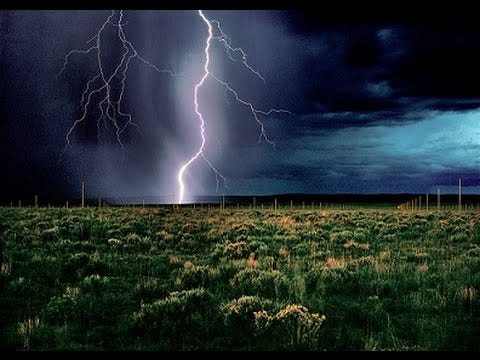
Starting a novel is like standing in a field and waiting for lightning to strike…

The Lightning Field, Catron County, New Mexico

I encourage my students to write a great deal. Keep a journal. Take notes. Write when you are feeling wretched, when your mind is about to break down…who knows what will float up to the surface? I am an unashamed believer in the magical powers of dreams; dreams enhance us. Even nightmares may be marketable—there is something to be said for the conscious, calculating exorcism of nightmares, if they give to us such works as those of Dostoyevsky, Celine, Kafka. So the most important thing is to write, and to write every day, in sickness and in health: who knows but there will come a time when you reread what you have written, not as the writer but as a reader, and a revelation comes to you in a flash—So this is what it has meant!  Now, you can begin.


I’ve never thought of writing as the mere arrangement of words on the page but the embodiment of a vision; a complex of emotions; raw experience. The effort of memorable art is to evoke in the reader or spectator emotions appropriate to that effort.


Critics sometimes appear to be addressing themselves to works other than those I remember writing.

The crucial difference between the critic and the reviewer is: one takes time, the other must meet a deadline.  


Words are like wild birds—they will come when they wish, not when they are bidden. And they may suddenly explode into the air—and disappear.

https://upload.wikimedia.org/wikipedia/commons/thumb/5/58/British_Wildlife_Centre_Apr_2015_-_Geese_%2817169605088%29.jpg/640px-British_Wildlife_Centre_Apr_2015_-_Geese_%2817169605088%29.jpg
Photo by Garry Knight

I am not conscious of working especially hard, or of “working” at all. Writing and teaching have always been, for me, so richly rewarding that I don’t think of them as work in the usual sense of the word.  


It’s up to the writer and the artist to give voice to these people. There are two impulses in art: one is rebellious and transgressive—you explore regions in which you are not wanted, and you will be punished for that. But the other is a way of sympathy—evoking sympathy for people who may be different from us—whom we don’t know. Art is a way of breaking down the barriers between people—these two seemingly antithetical impulses toward rebellion and toward sympathy come together in art.


My belief is that art should not be comforting; for comfort, we have mass entertainment and one another. Art should provoke, disturb, arouse our emotions, expand our sympathies in directions we may not anticipate and may not even wish.


To be entranced, to be driven, to be obsessed, to be under the spell of an emerging, not quite fully “comprehended” narrative—this is the greatest happiness of the writer’s life even as it burns us out and exhausts us, unfitting us for the placid contours of “normality.”


There are those—a blessed lot—who can experience life without the slightest glimmer of a need to add anything to it—any sort of “creative” effort; and there are those—an accursed lot?—for whom the activities of their own brains and imaginations are paramount. The world for these individuals may be infinitely rich, rewarding and seductive—but it is not paramount. The world may be interpreted as a gift, earned only if one has created something over and above the world.


A literary work is a kind of nest: an elaborately and painstakingly woven nest of words incorporating chunks and fragments of the writer’s life in an imagined structure, as a bird’s nest incorporates all manner of items from the world outside our windows, ingeniously woven together in an original design.

File:Bird nest srilanka 001.jpg

I believe that art is the highest expression of the human spirit. I believe that we yearn to transcend the merely finite and ephemeral; to participate in something mysterious and communal called “culture”—and that this yearning is as strong in our species as the yearning to reproduce the species.

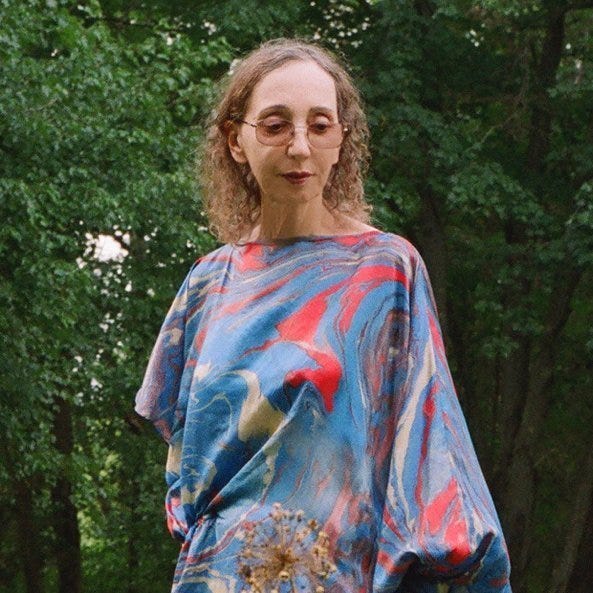
https://www.kwls.org/wp-content/uploads/2016/01/Oates-Joyce-Carol-cr-Beth-Garrabrant-cr-Brydges-Mackinney-Agency-crop.jpg
Photo by Beth Gabbert

Through the local or regional, through our individual voices, we work to create art that will speak to others who know nothing of us. In our very obliqueness to one another, an unexpected intimacy is born.

Subscribe to Joyce Carol Oates: A Writer’s Journal

Launched a year ago

On writing, living with cats, being a widow, movies, running, my current workshops & what we are reading, books, comedy, nature, gardening, friendship, more.Subscribe