[This is a guest post by Zeke Piestrup about his new film. Don’t let the cartoonish background fool you as it quotes from Bible scholars, especially Hector Avalos and Bart Ehrman.]
Praise John Loftus for allowing me to grab the wheel of DC, in hopes of steering y’all straight to my new flick: Satan’s Guide to the Bible! Satan is the substitute Sunday school teacher. Today’s lesson? All the Bible secrets the children’s pastor learned at Christian seminary, but won’t share. He’d get fired. Below is a trailer and the full movie!
Trailer:
Full film:
The film will not be monetized. It will remain paywall and commercial free, so as to be accessible as possible. I eschewed the normal film festival to distributor route (ala my last film APOCALYPSE LATER: HAROLD CAMPING VS THE END) because Christian fascism is a continuing, rising threat to our democracy. Mike Johnson (the House speaker), Greg Abott (the governor of Texas), NAR, Dominionism, Neo-Charismatic Evangelicals… These are adults(!) playing Dungeons and (Revelation) Dragons. As January 6th showed, they’re not thinkers, they’re violencers.
I collaborated on this film with Dreamworks animation director Tim Johnson. He directed ANTZ, HOME, and OVER THE HEDGE. All the animation designs were done by Tim. He even voiced the smooth-talking Satan. Our goal was for the animation quality to be on par with the first season of South Park. I think we met that goal.
For a long time, DC was home to my favorite biblical scholar, the late Dr. Hector Avalos. Praise His name! The first credit at the end of the film is a dedication to Dr. Avalos’ memory. At Dr. Avalos’ service, I stole John’s line about Dr. A being “probably the greatest biblical scholar of our generation.” Thanks, John, and apologies for not citing you.
We are a no-budget operation, dependent upon good people sharing the good news of Satan’s Guide to the Bible! The film is a one-stop shop for the “standard stuff” taught in Christian seminaries. And it’s a rebuttal to pastors, politicians, and Alice Cooper telling us all to read our Bibles.
I hope you all dig the film, while getting a heavy dose of Dr. Avalos. We love and miss you, Dr. A!
[First Published in December 2022] Churches all over the world will once again get away with the traditional Christmas story, for one simple reason: the folks in the pews can’t be bothered to carefully read the Jesus birth stories in Matthew and Luke. It’s just a fact these stories don’t make sense and cannot be reconciled: Fake News! A few of the more charming verses from these stories have been set to music and are recited during Christmas pageants; these deflect attention from the utter failure of these stories to quality as history.
“Surely there must come a time when we will acknowledge the obvious: theology is now little more than a branch of human ignorance. Indeed, it is ignorance with wings.” (p. 173)
The Jesus birth stories are prime examples of theological ignorance in full flight. John Loftus demonstrates this abundantly in chapter 10, “Was Jesus Born of a Virgin?” in the recently published book, Debating Christianity: Opening Salvos in the Battle with Believers. Loftus analyzes the birth stories—far beyond the issue of Mary’s virginity, but he does cover that. Do the devout ever wonder where the Jesus-virgin-birth claim came from? Are they even remotely aware of the religious context that gave rise to Christianity? When this is understood, the virgin birth of Jesus takes a serious hit. Loftus refers to the research of Robert Miller, as summarized in his book, Born Divine:
“People in the ancient world believed that heroes were the sons of gods because of the extraordinary qualities of their adult lives, not because there was public information about the intimate details of how their mothers became pregnant. In fact, in some biographies, the god takes on the physical form of the woman’s husband in order to have sex with her.” (p. 134) Loftus offers examples:
“There was Theagenes, the Olympic champion, who was regarded as divine for being one of the greatest athletes in the ancient world. Hercules was the most widely revered hero of the ancient world. He was promoted to divine status after his death, and it was said he was fathered by Zeus. Alexander the Great was believed to be conceived of a virgin and fathered in turn by Heracles. Augustus Caesar was believed to be conceived of a virgin and fathered by Apollo, as was Plato, the philosopher. Apollonius of Tyana was believed to be a holy man born of a virgin and fathered by Zeus. Pythagoras the philosopher was believed to be a son of Apollo. There were also savior-gods, like Krishna, Osiris, Dionysus, and Tammuz, who were born of virgins…” (page 127, Kindle)
So it’s no big surprise that some early Christian writers felt that Jesus had to be assigned the same high honor. But a couple of the earliest Christian authors hadn’t absorbed this idea. There is no mention of virgin birth in the letters of Paul, and Mark’s gospel gets along quite well without it. The author of John’s gospel had no use for it either. These writers had no way of knowing that science would one day agree, as Loftus notes: “ ..one cannot even have a human being without the genetic contributions of both a male seed and a female egg.” (p. 121, Kindle)
But in the wake of the virgin birth tales in Matthew and Luke, “theological ignorance with wings” got a big boost. The Catholic Church decided that Mary remained a virgin her whole life. The idea of Mary—the mother of the God—having sex was too distasteful. But they had to deal with Mark 6:3:“Is not this the carpenter, the son of Mary and brother of James and Joses and Judas and Simon, and are not his sisters here with us?” The church has claimed that these were children of Joseph from an earlier marriage—based on no evidence whatever. But that didn’t stop even more ignorance with wings.
It dawned on theologians that virgin birth explained how original sin had not been passed on to Jesus: he didn’t have a human father. Problem solved! Well, not quite. Could not Jesus have been tainted with original sin through his mother? This issue was debated by medieval theologians, and in 1854—wasn’t this a little late in the game? —the Vatican announced the dogma of the Immaculate Conception, i.e., when Mary herself was conceived, miraculously that conception was clean of original sin. Based on no evidence whatever. And it gets even more ridiculous: in 1950, the Vatican announced this: “We proclaim and define it to be a dogma revealed by God that the immaculate Mother of God, Mary ever virgin, when the course of her earthly life was finished, was taken up body and soul into the glory of heaven.” It didn’t provide any evidence that this was revealed by God. Faithful Catholics assume that the Vatican is perfectly tuned into God, so why bother?
There are other examples of theological ignorance with wings that are easy to spot in the Jesus birth stories:
Ignorance with Wings, #1:
For some early Christians, it was especially important that Jesus was descended from king David: that was one of the qualifications for being the messiah. Hence genealogies were proposed to prove exactly that. Both Matthew and Luke deemed it appropriate to include genealogies (but this is awkward: they’re different genealogies), but how does this make any sense at all if Jesus didn’t have a human father? One of the sections of the Loftus essay is titled, “The Genealogies are inaccurate and irrelevant.” Both the authors of Matthew and Luke—we have no idea who they really were—must have had some level of savvy to write lengthy gospels in Greek, but they didn’t notice this contradiction? —or didn’t care. It would seem critical thinking skills were not their strong suits; virgin birth is inconsistent with genealogies intended to prove Jesus’ pedigree. Nor was their readership likely to pay much heed to this blunder.
Ignorance with Wings, #2:
Detecting this one requires very careful reading and comparison of gospel texts. There is no mention of Bethlehem as the birthplace of Jesus in any of the letters of Paul, and Mark’s gospel states simply that Jesus “came from Nazareth of Galilee” to be baptized by John (1:9). The author of John’s gospel ignored the birth stories in Matthew and Luke; Loftus calls attention to verses John 7:42, 52, and points out: “Jesus was rejected as the Messiah precisely because the people of Nazareth knew he was born and raised in their town! That’s the whole reason they rejected him as the Messiah! They rhetorically asked, ‘How can the Messiah come from Galilee?’” (p. 122 Kindle) Matthew’s solution to this problem was to depict Mary and Joseph living in Bethlehem. That was their town. After the birth of Jesus, to protect him from king Herod, they fled to Egypt—which is a truly farfetched part of Matthew’s account—but once the danger had passed (an angel told him in a dream that Herod had died) Joseph was afraid to return to Bethlehem:
“But when he heard that Archelaus was ruling Judea in place of his father Herod, he was afraid to go there. And after being warned in a dream, he went away to the district of Galilee. There he made his home in a town called Nazareth…” (2:22-23)
So Matthew’s story was that Mary and Joseph had lived in Bethlehem, then relocated to Nazareth. Apparently, the author of Luke’s gospel believed that Mary and Joseph lived in Nazareth: so how to get them to Bethlehem for Jesus’s birth? He reports that Caesar Augustus had ordered “all the world” to be registered, and since Joseph’s ancestors had come from Bethlehem, he had to travel there for the registration—and took the pregnant Mary with him. But historians have found no record of such a massive registration ordered by the emperor. Even if there had been one, chaos would have resulted if people had been required to go their ancestral homes. This was Luke’s clumsy device for getting Mary and Joseph to Bethlehem. The distance from Nazareth to Bethlehem is some seventy miles. Are we to believe that Mary, about to have a baby, would have made that journey on foot—or on a donkey as commonly depicted in art?
After the birth of Jesus, after his circumcision and presentation at the temple, “When they had finished everything required by the law of the Lord, they returned to Galilee, to their own town of Nazareth.” (Luke 2:39) Notice here the huge conflict here with Matthew’s account. Luke says nothing about a “flight to Egypt” and Mary and Joseph subsequently relocating to Nazareth.
Both Matthew and Luke wrote their gospels many decades after the birth of Jesus. They were storytellers, not historians. There is no contemporaneous documentation whatever by which we could verify, fact-check the narratives they created. These are indeed fantasy literature, which include god talking to humans in dreams and angels with speaking roles.
Ignorance with Wings, #3:
Matthew also got away with the tall tale of the star-of-Bethlehem. Devout Christians should ask themselves if they really want to contaminate their theology with this bit of astrology. It was a common superstition in the ancient world that heavenly signs could indicate the birth of heroes.
“In the time of King Herod, after Jesus was born in Bethlehem of Judea, magi [= astrologers] from the east came to Jerusalem,asking, ‘Where is the child who has been born king of the Jews? For we observed his star in the east and have come to pay him homage.’” (Matthew 2:1-2)
Huge mistake, theologically. Why didn’t god whisper the news to them that Bethlehem was the place to go? Their stop in Jerusalem alerted Herod, which resulted in the Slaughter of the Innocents when he was hunting for Jesus. But this never happened either; see Loftus’ comments, “There Was No Slaughter of the Innocents.” (p. 124, Kindle)
The ignorance with wings is on full display when Matthew reports that the star guided the magi (i.e., moved from north to south—Robert Price has said that it turned into Tinkerbell!) and came to rest over the house where Jesus was. There is no mention of a stable, and Luke knew nothing of the star of Bethlehem. These authors had no idea of what stars are. As Loftus observes, stars
“…certainly don’t appear to move in a southerly direction. They all appear to move from the east to west, like the sun, because of the spin of the earth. Then we’re told the Star stopped in the sky directly over a place in Bethlehem. But there’s no way to determine which specific house a star stopped over, if it did! This is only consistent with pre-scientific notions of the earth being the center of the universe with the stars being moved by a god who sits on a throne in the sky” (p. 125, Kindle).
Nor did the arrival of the magi—according to Matthew—happen on the night Jesus was born. They had seen his star after he was born (Matthew 2:1). How long would their journey have taken? How long did their stopover in Jerusalem take? It’s fair to say Jesus could have been several months old, and was living in a house with his parents, i.e., their home in Bethlehem.
Whenever I see the Wise Men depicted adoring the new-born Jesus in a stable, surrounded by shepherds and livestock, my impulse is to say, “Get them out of there! Read your Bibles! Pay attention to the texts!” Matthew also specialized in taking Old Testament verses out of context to make them apply to Jesus. For this, see Loftus’ section, “The Prophecies Are Faked.” (p. 125, Kindle)
Here’s one of my fantasies: that someday laypeople will carefully—with all their critical faculties engaged—read the Jesus birth stories in Matthew and Luke. They will thus be equipped for an encounter with their priests and preachers. They show up for the typical Christmas Eve pageant, but take the clergy in charge aside: “Reverend, why are you continuing to present these fake news stories as if they actually happened? How is it a good idea to fool the children—and the adults, for that matter? Isn’t there a better way to promote the Christian faith?”
Sad to say—or rather, glad to say—the birth stories are just the tip of the iceberg: the gospels as a whole are a minefield, providing abundant reasons for doubting and rejecting the Christian faith. No wonder the laity avoid reading them, and the clergy are just as happy that they don’t.
"Cognitive Clarity" blog posts are about cultivating a culture of thoughtful and informed discourse. They encourage readers to think deeply, question boldly, and approach the world with an open yet discerning mind.
In 2011 I did a series of posts called “Reality Check: What Must Be the Case if Christianity is True?” I put some of them in the third chapter in The End of Christianity, and the first chapter in God and Horrendous Suffering.
Below I’ve put together thirty of them that most Christians agree on and why they are all improbable:
1) There must be a God who is a simple being yet made up of three inexplicable persons existing forever outside of time without a beginning, who therefore never learned anything new, never took a risk, never made a decision, never disagreed within the Godhead, and never had a prior moment to freely choose his own nature.
2) There must be a personal non-embodied omnipresent God who created the physical universe ex-nihilo in the first moment of time who will subsequently forever experience a sequence of events in time.3) There must exist a perfectly good, omnipotent God, who created a perfectly good universe out of a desire/need to glorify himself by rewarding in heaven the few human beings who just got lucky to believe by being born at the right time and place, and who will condemn to hell those who do not believe.
4) That the highest created being, known as Satan or the Devil, led an angelic rebellion against an omnipotent omniscient omnibenelovent omnipresent God, and expected to win–which makes Satan out to be pure evil and dumber than a box of rocks.
5) That there was a first human pair (Adam & Eve) who so grievously sinned against God when tested that all of the rest of us are being punished for it (including animals), even though no one but the first human pair deserved to be punished. If it’s argued that all of us deserve to be punished because we all would have sinned, then the test was a sham. For only if some of us would not have sinned can the test be considered a fair one. But if some of us would not have sinned under the same initial conditions then there are people who are being punished for something they never would have done.
6) That although there are many other similar mythological stories told in Ancient Near Eastern Literature that pre-date what we read in the Bible, the stories in the Bible are about real events and real people.
7) That although we see completely different perspectives and evolving theologies in the Bible, including many things that are barbaric and superstitious to the core, it was authored by one divine mind.
8) That when it comes to verifiable matters of historical fact (like the Exodus, the extent of the reign of David, Luke’s reported world-wide census, etc) the Biblical stories are disconfirmed by evidence to the contrary as fairy tales, but when it comes to supernatural claims of miracles that cannot be verified like a virgin birth and resurrection from the grave, the Bible reports true historical facts.
9) That although a great number of miracles were claimed to have happened in the different superstitious cultures of the ancient world, only the ones in the Bible actually happened as claimed.
10) That an omniscient God could not foresee that his revealed will in the Bible would lead believers to commit such atrocities against others that reasonable people would conclude there is no divine mind behind the Bible. I call this The Problem of Miscommunication.
11) That God created human beings with rational minds that require evidence before they accept something, and yet this same God does not provide enough evidence but asks them to have faith instead.
12) That although people around the world are raised in different cultures to believe in their particular god(s) there is only one God and he will judge all people based upon whether or not they believe Jesus is Lord.
13) That Jesus fulfilled Old Testament prophecy even though there is not one passage in the Old Testament that is specifically fulfilled in his life, death, and resurrection that can legitimately be understood as a prophecy and singularly points to Jesus as the Messiah using today’s historical-grammatical hermeneutical method.
14) That although there were many false virgin birth claims about famous people (like Julius Caesar, Alexander the Great, Plato) mythical heroes (like Mithra, Hercules) and savior gods (like Krishna, Osiris, Dionysus) in the ancient world, Jesus was really born of a virgin.
15) That while there is no rational explanation for how a person can be 100% man and 100% God, and although ancient pagan superstitious people believed this can take place (Acts 14:11-12; 28:6), Jesus was incarnate God in the flesh.
16) That while the results of science are assured when it comes to chemistry, physics, meteorology, mechanics, forensic science, medical science, rocket science, computer science, and so forth, when it comes to evolutionary science that shows all present life forms have common ancestors, or when science tells us that dead bodies do not arise from the grave because total cell necrosis is irreversible, the results of science are wrong because the Bible says otherwise.
17) That although there is no rational explanation for why Jesus had to die on the cross to atone for our sins, his death atoned for our sins.
18) That although historical reconstructions of the past are are notoriously difficult because they depend on the poor evidence of history, and even though historians must assess that evidence by assuming a natural explanation for it, and even though historical evidence can never establish how to view that evidence, the Christian faith can be established historically anyway. My argument is that when it comes to miraculous claims, yesterday’s evidence no longer can hold water for me, for in order to see it as evidence, I must already believe in the framework that allows me to see it as evidence. In other words, in order to see yesterday’s evidence as evidence for me, I must already believe the Christian framework that allows me to see yesterday’s evidence as evidence for Christianity.
19) That although there is no cogent theodicy that can explain why there is such ubiquitous and massive human and animal suffering if a perfectly good omnipotent God exists, God is perfectly good and omnipotent anyway.
20) That while scientific tests on petitionary prayers have produced at best negligible results and at worst completely falsified them, God answers these kinds of prayers anyway.
21) That even though Christianity shows evidence that it is nothing but a cultural by-product of human invention there is a divine mind behind it anyway.
22) That Jesus is the Son of God even though the textual evidence in the New Testament conclusively shows that the founder of the Jesus cult was a failed apocalyptic prophet who prophesied that the eschaton would take place in his generation, which would involve a total cosmic catastrophe after which God inaugurates a literal kingdom on earth with the “Son of Man” reigning from Jerusalem over the nations.
23) That although there can be no moral justification for the sufferings of animals in this created world, a perfectly good God created this world anyway. We don’t even see God’s care for the lower animals in his supposed revealed word, which is described in Psalm 119 as his “perfect will.” Think otherwise? Then read what I wrote here.
24) That although the only method we have for determining the truth in factual matters is methodological naturalism, which assumes a natural explanation for any phenomena, and although this method is the hallmark of the sciences, the phenomena of the Bible can be exempted from this method as applied through Biblical Criticism, and believed anyway.
25) That although God’s supposed revelation in the canonical Bible is indistinguishable from the musings of an ancient, barbaric, superstitious people, the Bible is the word of God. As SilverBullet recently said: “…the lord doesn’t work in mysterious ways, but in ways that are indistinguishable from his non-existence. It seems to me that there is nothing in the Christian scriptures, no sentence, paragraph, or idea, that couldn’t be anything more than the product of the humans alive at the time that the apparently divinely inspired scriptures and ideas were “revealed”. Sure, its possible for a god to reveal himself in an inspired book, and throughout history, in ways that are indistinguishable from the work of human minds and human minds alone. But how probable does that seem to you?”
26) That although it’s claimed God got the attention of Abraham, Moses, the Pharaoh, Gideon, Mary, Joseph, and Saul (who became Paul) and that he knows how to get the attention of anyone and everyone, there is no objective evidence he’s trying to get the attention of the billions of people who don’t believe. In fact, Christians are much more concerned than God is that non-believers are converted. Just compare the lengths to which Christians will go in order to convert non-believers, with a God who has the means to convert everyone and yet does nothing to help them do this. If you say God is helping to convert non-believers then tell us how to objectively know God is actually doing this.
27) Christianity is a faith that must dismiss the tragedy of death. It does not matter who dies, or how many, or what the circumstances are when people die. It could be the death of a mother whose baby depends upon her for milk. It could be a pandemic like cholera that decimated parts of the world in 1918, or the more than 23,000 children who die every single day from starvation. These deaths could be by suffocation, drowning, a drive-by shooting, or being burned to death. It doesn’t matter. God is good. Death doesn’t matter. People die all of the time. In order to justify God’s goodness Christianity minimizes the value of human life. It is a pro-death faith, plain and simple.
28) That God’s punishments are good, right, and just, even though it means sinners are thrust into a surprisingly dangerous world, and in death will be blindsided by an eternal punishment in hell, which is “Christianity’s most damnable doctrine.” In this world how do you think human beings first learned that venomous creatures like certain kinds of spiders, snakes, ants or scorpions could kill us? People/children had to die, lots of them. How do you think human beings first learned that polluted water or lead poisoning could kill us? Again, people/children had to die, lots of them. It was inevitable since God never told us what to avoid in order to stay alive. We had to learn these kinds of things firsthand. The same thing can be said for hell. People do not know their choices will send them to an eternal punishment in hell. For if we knew this, and if it was possible not to sin at all, we wouldn’t sin. Do you doubt this? Then consider that if you knew with certainty that by crossing a line drawn in the sand you would get beaten to a pulp by a biker gang, you would not do it!
29) When believers like Christians or Muslims contend their faiths are based on reason, one may simply object that this can’t be so because their god in fact doesn’t allow it. Using reason to arrive at any other belief than the correct one will earn you an eternity in hell. Thus, reason is an evil to be avoided….Blind, unquestioning, and unexamined belief is what the theist’s retributive god truly desires, not a belief grounded in reason. And yet they maintain Christianity is reasonable.
30) The Christian thinks there is an objective absolute morality that stems from their perfectly good God, which is both eternal and unchangeable. But the morality we find in the Bible is something quite different than what they claim. Morality has evolved. What we find in the Bible is not something we would expect from a perfectly good God, but Christians believe there is a perfectly good God anyway. So Christians must choose, either 1) hold to a philosopher’s god divorced from the historical realities of the Bible, or 2) continue to worship a moral monster.
[First Published August 2022] I’ve written three books to educate believers on how to honestly seek the truth and defend it: 1) The Outsider Test for Faith: How to Know Which Religion is True. In it I show honest believers how to approach their faith consistently without any double standards or special pleading.
2) How to Defend the Christian Faith: Advice from an Atheist. In it I show Christian apologists how to correctly defend their faith, if it can be defended at all. Apologists should read it before writing another sentence in defense of their faith. In it I challenge apologists to stop doing what they’re doing if they’re honest about defending their Christian faith. The risk is that if they stop it they cannot defend their faith at all. But the risk is worth it if they’re serious about knowing and defending the truth.
3) Unapologetic: Why Philosophy of Religion Must End. In it I show philosophers of religion and other intellectuals how to properly discuss and debate religious beliefs. What I cannot teach however, is to desire the truth. That comes from within. Taken together these three books are the antidote to the faith virus. The problem is almost none of them desire the truth, comparatively speaking. Here’s hoping a few honest believers are reading who desire the truth.
Having previously linked to some reasons why philosophical apologetics is not changing very many minds, especially the most sophisticated philosophy that every serious philosophical apologist loves to recommend, because it says that they understand it! Congrats to you!! A lot of it is obtuse and obfuscationist though. As it’s practiced today, it isn’t that helpful if one wants to change minds. After all, the more sophisticated that philosophy is, the more sophisticated the reader is. At that level it doesn’t change the minds of sophisticated readers because they are already entrenched in what they think. It also has a way of being turned around as a pat on the back! Just see how William Lane Craig responds to a very detailed and knowledgeable question about philosophical apologetics at his website, Reasonable Faith. Craig wrote:
I include your question here for the instruction and encouragement of our Reasonable Faith readers. You have masterfully surveyed for us the current philosophical landscape with respect to atheism. You give our readers a good idea of who the principal players are today.
I hope that theists, especially Christian theists, who read your account will come away encouraged by the way Christian philosophers are being taken seriously by their secular colleagues today.
The average man in the street may get the impression from social media that Christians are intellectual losers who are not taken seriously by secular thinkers. Your letter explodes that stereotype. It shows that Christians are ready and able to compete with their secular colleagues on the academic playing field.
I am in wholehearted agreement with you. I actually find it very sad to see a discipline (the philosophy of religion) I have cherished for many years being debased and distorted by so-called Christian philosophers. Like you, I have now finally and happily found my place in the atheist community. I’m slowly making my way through your “Unapologetic book”, it’s quite fascinating, loving the Nietzschean hammer style.
In Unapologetic I’m taking up the late great Dr. Hector Avalos’s call to end biblical studies as we know them, in a book he wrote that I highly recommend, just as I recommend all of his works! You can read though excerpts of his book here. I am making that same call when it comes to the philosophy of religion. Hector approved of it, telling me (per email):
My proposal is “to end biblical studies as we know it” (The End of Biblical Studies, p. 15), which means in its current religionist and apologetic orientation. So I am for ending the philosophy of religion if its only mission is to defend religion and theism. So, akin to my vision of the end of biblical studies, I would say that the only mission of the philosophy of religion is to end the philosophy of religion as we know it.
He also wrote this blurb for it:
Unapologetic is probably my favorite monograph by John Loftus. It deserves a gold medal for undertaking the Olympian task of explaining in clear and accessible prose why the area known as Philosophy of Religion should be ejected from modern academia and our intellectual life. Pretending that we have good arguments for God is about as useless as pretending we have good arguments for Zeus.
It’s even worse when we consider what some atheists say, like Seth Andrews above. Massimo Pigliucci, a professor of philosophy at City College of New York, who holds Ph.D.s in both biology and philosophy, tweeted: “I’m sorry but I can’t any longer take seriously any essay or paper that itself takes talk of god seriously. It’s simply a non starter” [March 28, 2023]. In response, “The Real Atheology Podcast” tweeted “given the serious work done by many Theistic philosophers, I have to disagree with your comments here.” Pigliucci responded: “I don’t consider any theologian to be ‘serious.’ They may be, and often are, analytically rigorous. But so is the concept of p-zombies. And yet I think it’s a waste of time.” Pigliucci again tweeted: “Consider, for instance, the Medieval Scholastics. They were rigorous and did a lot of work. But it was, as David Hume famously put it, only a bunch of sophistry and illusions. Why? Because it was based on indefensible assumptions and lack of empirical evidence” [March 30, 2023].
For a few years Keith Parsons called it quits regarding the philosophy of religion, saying:
Over the past ten years I have published, in one venue or another, about twenty things on the philosophy of religion. I have a book on the subject, God and Burden of Proof, and another criticizing Christian apologetics, Why I am not a Christian. During my academic career I have debated William Lane Craig twice and creationists twice. I have written one master’s thesis and one doctoral dissertation in the philosophy of religion, and I have taught courses on the subject numerous times. But no more. I’ve had it.
I now regard “the case for theism” as a fraud and I can no longer take it seriously enough to present it to a class as a respectable philosophical position—no more than I could present intelligent design as a legitimate biological theory. BTW, in saying that I now consider the case for theism to be a fraud, I do not mean to charge that the people making that case are frauds who aim to fool us with claims they know to be empty. No, theistic philosophers and apologists are almost painfully earnest and honest; I don’t think there is a Bernie Madoff in the bunch. I just cannot take their arguments seriously any more, and if you cannot take something seriously, you should not try to devote serious academic attention to it. I’ve turned the philosophy of religion courses over to a colleague. LINK.
While I’m at it, I recommend anything David Madison writes for very good reasons. He maintains the largest and most extensive list of atheist books I know [Scroll down]. Any of them is better than than a given apologetics book, if for no other reason than that they are right! Unfortunately, given the number of these books, many of which I have not read, I’m sure I’m overlooking some really powerful books in my recommended list.
Nearly every sophisticated philosopher and apologist looks down their noses on the so-called New Atheists. I don’t. So far I have defended Christopher Hitchens and Richard Dawkins. Recently over at The Secular Frontier website, Bradley Bowen has done an excellent job of showing why sophisticated philosophers and apologists think Dawkins’s book is a failure. But scroll down to read my response in the comments under his take down.
William Patterson has also defended Dawkins’s book! His paper was published in the Journal of Liberal Religion. He introduces his three main points by saying:
In the previous issue of this journal Jason Giannetti launched a vigorous attack against Richard Dawkins‟s best-selling book “The God Delusion.” Giannetti assailed Dawkins on three primary grounds: his understanding and definition of God, his understanding of truth, and his interpretation of religious morality. In response, I will address each of these three areas in turn and demonstrate how Giannetti’s critiques of Dawkins fail. [PDF].
I don’t have much expertise in online YouTube content creators, and I must exclude select papers in the journals, and other websites and blog posts other than mine, since there are so very many of them to choose from. I’m simply recommending the best books of what I know, and it’s only as good as my knowledge as an author myself. Some of these books led me away from the Christian faith. I’m recommending just a few important ones that have the potential to change the minds of college students and educated people in the pulpit or pews, even though this can be a very difficult and largely fruitless goal.
To begin with I recommend all thirteen books of mine and the authors in them, especially Why I Became an Atheist, The Christian Delusion, Christianity is not Great, The Outsider Test for Faith, How to Defend the Christian Faith: Advice from an Atheist, Christianity in the Light of Science, The Case against Miracles, and God and Horrendous Suffering, although it surely is self-serving to do so! All of the chapters I wrote in my books reference many other books for further research. There were so many of them mentioned in my magnum opus, Why I Became an Atheist, that I offered a “recommended” bibliography, not an complete one. It might’ve added 30-40 pages more to an already massive book. Besides, even if I didn’t write anything in my anthologies I would still highly recommend those books. If nothing else, I was able to get the best of the best atheist and agnostic scholars to write chapters for my anthologies. [What’s the real difference between them when it comes to rejecting revealed religions? Nothing!] I highly recommend these authors and their books, even though I’m not going to recommend them separately below. Those books are awesome, even if you don’t read a word I wrote in them. I’ve written several posts that describe these thirteen books, where I offer some excerpts, and share the blurbs of readers who recommend them, most of which received high praise from Christian scholars, which is very rare. See for yourselves.
Boghossian’s book stands squarely in agreement with George H. Smith’s previous book, which I recommend titled: “Atheism: The Case Against God”, for which see my defense of it.
Michael Shermer, The Believing Brain: From Ghosts and Gods to Politics and Conspiracies—How We Construct Beliefs and Reinforce Them as Truths, and also, Why People Believe Weird Things.
Israel Finklestein, & Neil Asher Silberman, “The Bible Unearthed: Archaeology’s New Vision of Ancient Israel and the Origin of Its Sacred Texts.”
On God, Goodness, and Morality
Anything by Phil Zuckerman. Books like “Faith No More: Why People Reject Religion,” “Living the Secular Life: New Answers to Old Questions”, “Society without God: What the Least Religious Nations Can Tell Us About Contentment,” “What It Means to Be Moral: Why Religion Is Not Necessary for Living an Ethical Life.”
Greg Epstein, “Good Without God: What a Billion Nonreligious People Do Believe”.
Michael Werner, “What Can You Believe If You Don’t Believe in God?”
Dan Barker, “God: The Most Unpleasant Character in All Fiction.”
Michael Shermer, “The Moral Arc: How Science Makes Us Better People” and “The Science of Good and Evil: Why People Cheat, Gossip, Care, Share, and Follow the Golden Rule.”
Biblical Criticism:
Richard Friedman, “Who Wrote the Bible?”
Robert J. Miller, “Helping Jesus Fulfill Prophecy”.
Thomas Paine, “The Age of Reason”.
Francesca Stavrakopoulou, “God: An Anatomy”.
Almost anything from Richard Carrier, especially his book, “On the Historicity of Jesus: Why We Might Have Reason for Doubt.”
Thom Stark’s book, “The Human Faces of God.” While it appears as if he’s arguing just against the Christian doctrine of inerrancy (and does a superb job of it), he’s doing far more than that. He argues there are not only “scientific and historical problems” in the Bible, but also that there are “moral, ethical, theological, and ideological problems” with it (p. 208). He goes into some detail on a few of the issues found in my books, mostly in the Old Testament.
Bart D. Ehrman’s book, “Jesus Interrupted.” This is my favorite Ehrman book where he argues that the New Testament is a human, not divine book.
Randel Helms, “Gospel Fictions”, and “The Bible Against Itself: Why the Bible Seems to Contradict Itself”.
Paul Tobin’s magnum opus, “The Rejection of Pascal’s Wager: A Skeptic’s Guide to the Bible and the Historical Jesus.” He might be surprised his book is on this list but it’s deserved. This is a massive book. It will help deprogram you out of some things about the Bible and Jesus you previously believed.
G.A. Wells, “Cutting Jesus Down to Size: What Higher Criticism Has Achieved and Where It Leaves Christianity”.
Books on the Virgin Birth of an Incarnate Baby god:
Robert Price, “The Case Against The Case For Christ: A New Testament Scholar Refutes the Reverend Lee Strobel.”
Uta Ranke-Heinemann, “Putting Away Childish Things: The Virgin Birth, the Empty Tomb, and Other Fairy Tales You Don’t Need to Believe to Have a Living Faith.”
Robin Lane Fox, “The Unauthorized Version: Truth and Fiction in the Bible.”
I know I’m missing some that I just forgot to mention and should be included, so I invite other suggestions.
Lastly, I may put out a book of papers I’ve begun publishing at Internet Infidels. I have some more papers to write. If I get them done you can consider this another book I’m recommending. LINK. No promises.
————–
John W. Loftus is a philosopher and counter-apologist credited with 13 critically acclaimed books, including The Case against Miracles, God and Horrendous Suffering, and Varieties of Jesus Mythicism. Please support DC by sharing our posts, or by subscribing,donating, or buying our books at Amazon. As an Amazon Associate John earns a small amount of money from any purchases made there. Buying anything through them helps fund the work here, and is greatly appreciated!
The Parable of the Mysterious Witness by John C. Wathey:
This fictitious story begins with a sexual predator who has been stalking a family, watching their house. His eye is on the young daughter. He has studied her habits and those of her parents long enough. He decides to attack. So he enters her room through the window, silences the frantic child with duct tape, and carries her to his car. The predator reaches a wooded area and drags the struggling girl with her muffled screams into the woods, where he brutally beats her, rapes her, and buries her alive in a shallow grave. The predator then drives away.
Shockingly there was a mysterious witness watching him, an undercover policeman. Although he carries a gun he did not intervene. Although he has a police radio he did not call for assistance. He simply watched it all take place then drove home, leaving the girl to suffocate to death. Even more shocking we’re told the policeman is the girl’s father, and that he dearly loves her! “The crime of this sexual predator must surely be among the most despicable imaginable. Yet I expect most readers of this story are even more appalled at the behavior of the mysterious witness. How can one possibly rationalize his utter failure to rescue this poor little girl, his own daughter? And yet, for the believer in the omniscient, omnipotent, and benevolent personal god, every horrendous act of evil in the world, every natural disaster, every injury, illness, and genetic defect that causes senseless suffering has just such a mysterious witness: God himself.
[Written by John W. Loftus] As a former Christian, especially soon after I first converted, I thought I knew the answers to the riddle of existence. The answers were all in the Bible. And I thought I could also understand the Bible well enough to know, especially before I had any advanced learning. Initially I was a Bible Thumper. My motto was: God said it. I believe it. That settles it. All of the answers were to be found in the Bible, and I thought I knew them–all of them. So without any education at all I soon had the confidence to speak to college professors I met and not be intimidated at all. And I did. I remember walking away from some conversations thinking to myself how ignorant that professor was. Yep. That’s right. At that time I was what psychologists have dubbed “Unskilled and Unaware of it.” And it appears to me many Christians who comment here are just as I was. They come here with the answers. Some of them do not even have a college education. And yet they offer nothing but ignorant comments. I can’t convince them otherwise. They are like I once was.
Looking back on those initial years I could see clearly that I was not able to think through the issues of the Bible, especially hermeneutics, until after gaining a master’s degree. I would have told you upon receiving my first master’s degree that I was ignorant before then. But I kept on learning and studying. Age had a way of teaching me as well. It seems as though as every decade passed I would say I was more ignorant in the previous one. As every decade passed I see more and more wisdom in Socrates who claimed he was wise because he didn’t know. According to him the wiser that a person is, then the less he claims to know. Awareness of our ignorance only comes with more knowledge.
One writer said:
The British philosopher Bertrand Russell once wrote that “the trouble with the world is that the stupid are cocksure and the intelligent are full of doubt.” This is true whether one interprets “stupid” as foolish (short on smarts) or as ignorant (short on information). Deliberately or otherwise, his sentiment echoes that of Charles Darwin, who over one hundred years ago pointed out that “ignorance more frequently begets confidence than does knowledge.”
The Internet is a veritable all-you-can-eat buffet of such misplaced confidence. Online, individuals often speak with confident authority on a subject, yet their conclusions are flawed. It is likely that such individuals are completely ignorant of their ignorance. Cough.
And so let me link to this writer who in turn links to an important study that can help us determine whether we are ignorant or not. The psychological study is called, Unskilled and Unaware of it.
And it just doesn’t apply to Christians, but anyone who has an overconfident assessment of their skills and abilities, including atheists.
The bottom line is that the more I know the more aware of how little I know. Get it? But there is no way to help a person who has all of the answers know how little he knows except by increasing his knowledge and experience. It’s a catch-22 of sorts. Until you do know a great deal you will never really know how ignorant you are. Therefore only the ignorant are unaware of their ignorance. And only the unskilled are unaware of it too. We see this on shows like American Idol and on Who’s Got Talent? Does it not surprise you how many people audition for these shows who completely lack talent and yet claim they are good? Most bad Karaoke singers do not know they cannot sing. It’s not until they become better at it can they know this for themselves.
It’s not that the ignorant and unskilled don’t know they are at least somewhat ignorant and unskilled. They do. Just ask them. When asked even the ignorant will say so. It’s just that the ignorant do not understand how truly ignorant they really are. They might think it’s a small leap to knowledge when there is a mile (or several miles) to travel for it.
Again, the more we know the more we know that we don’t know, and only people who know can truly know this. Got it? And only people who know can discern others who know. I can have a great conversation/dialogue with some Christians here because I can tell that they know what they are talking about (even if I disagree). And I know who they are because of what they say. It’s a joy to me. In fact, if approved for publication an unnamed Christian scholar and I will be co-writing a book length dialogue about our differences because I can respect that he knows (well, at least as best as a Christian can do anyway). [I’m not defining “know” here as justified knowledge, but in terms of education and awareness, since, as you would expect, I think he’s wrong].
So I’ll continually be bothered daily at DC by ignorant people who are unaware of their ignorance, especially Christians. That’s the nature of this beast. Worse off, they don’t trust me to tell them what they should understand. They will most likely only listen when someone on their side of the fence–whom they respect–tells them.
For now I’m challenging people to consider whether they are ignorant/unskilled and unaware of it. Most Christians who comment here are. I would say this about them as a former professor of philosophy, apologetics, ethics, and the Bible. This is much more true of them now from my perspective.
So the more I know the more I know that I don’t know. But I do know this: I know a hell of a lot more than most people about Christianity. I am not ignorant when it comes to Christianity. I might be wrong, but I’m not ignorant, at least not as ignorant as most of the Christians who comment here. Is this a contradiction? Not at all. For the only way for us to know something like this is to become knowledgeable. Someone can only say he knows a lot when he knows he doesn’t know that much. And only the knowledgeable can have a proper assessment of this because the ignorant are ignorant of their own ignorance!
There is an often repeated argument that marijuana is the gateway drug leading to dangerous drugs. [I think it’s largely false but don’t get sidetracked on it.] There is however, a gateway to doubting the whole Bible that I want to highlight here. Lately I’ve been focusing on the virgin birth claim because this is the gateway to doubting the gospel narratives, just as Genesis 1-11 is the gateway to doubting the Old Testament narratives. It was for me anyway. You can see this double doubting of both Testaments in the list of the five most important books that changed my mind, and the five most powerful reasons not to believe.
Apologists and theologians focus on the resurrection of Jesus primarily because they have studied it so much more than the virgin birth narratives. They now use the minimal facts approach of Gary Habermas, Mike Licona, and William Lane Craig, who want to sweep off the table a great deal of what atheists all agree on, especially their unanimous agreement that a virgin named Mary did not give birth to an incarnate god. The reason this atheist agreement should stay on the table is because it speaks directly to the credibility of the gospel narratives as a whole. Since there’s no good reason to believe the virgin birth myth, there’s no good reason to believe the resurrection myth either, despite any agreements atheist scholars and Christian apologists have about the resurrection narratives. After all, the virgin birth narratives are in the same gospels that contain the resurrection narratives (Matthew & Luke anyway). If the narratives about the virgin-born incarnate god can be shown to be non-historical myth, then so too are the narratives about the resurrection of this same virgin-born incarnate god. The virgin myth began as an concocted explanation for how an incarnate god came into human existence. So now without a credible virgin birth story, Christians are left with no explanation for how an incarnate god came into human existence!
My debate opponent believes a virgin named Mary gave birth to a divine child named Jesus over two-thousand years ago. The most significant problem is that theologians cannot explain how a human being and a god can be one and the same, that is, 100% human and 100% divine, with every essential characteristic of humanity and divinity included. How can a god be a god if he has a body? How can an infinite timeless god exist in time? Conversely, how can a human be a human if he or she doesn’t have a body? How can a finite human take on eternal godlike characteristics and still remain a human being? How can a human be perfectly good incapable of being tempted to sin, and yet also be tempted to sin? Christians themselves have shown the incoherence of a divine/human being by their 2000 year long disagreements over it.
Make no mistake about it. This is what my debate opponent is aiming at in this debate. The virgin birth is a first step toward claiming Jesus was God incarnate. My aim is to stop him short of this first step, even though his case isn’t done until he tackles the second step by dealing with some formidable philosophical objections to a divine/human being. With no such being there’s no virgin birth either.
Let’s start by talking about the kind of evidence we need.
All claims about the objective world require sufficient objective evidence appropriate to the nature of the claim. This applies to ordinary claims, extraordinary claims and miraculous claims. The amount and quality of the evidence required is dependent on the type of claim being made.
An ordinary claim is one made about events that are commonplace within nature, which require ordinary levels of evidence. Most all of these claims are based on testimonial evidence alone. That is, the trustworthiness of the person making the claim is enough to establish them, especially where there’s no reason to suspect deception and there’s no dispute by others as to the facts. [“Earlier today I was in Indiana.”]
An extraordinary claim is one made about events that are extremely unusual, rare and even strange within the world of nature. Mere testimonial evidence is helpful but not enough to establish these claims. They require some strong objective evidence for them. That is, the more unusual the claim is then the stronger the objective evidence must be for them. [“I was abducted by an alien”].
A miraculous claim is one made about events that are impossible to take place by natural processes alone, which requires a high level of strong objective evidence for them. As David Hume argued, “No testimony is sufficient to establish a miracle, unless the testimony be of such a kind, that its falsehood would be more miraculous than the fact which it endeavours to establish.” The fact that a miracle requires extraordinary evidence over and above the fallibility of ordinary human testimony is not an unreasonable demand. It’s the nature of the beast. A forensic TV show I watched had a character say, “The evidence doesn’t lie. People do.” If this is acknowledged in criminal investigations it should be acknowledged much more so in miraculous investigations. So mere testimonial evidence is insufficient when it comes to miracle claims, especially when it comes to miracle claims in the distant past from sources we cannot cross-examine for consistency and truth.
Tonight, I’m going to show that the required objective evidence for the miraculous birth of Jesus is not there, at all. Beyond this I’ll I’m going to show the testimonial evidence in the New Testament is insufficient. My main point is that if the gospels are inaccurate and untrustworthy in historical matters that we can check, then there’s absolutely no reason to think they are accurate and trustworthy when it comes to the miraculous virgin birth of Jesus either.
The most significant problem for my debate opponent is that there’s no objective evidence to corroborate the virgin birth stories in the New Testament. None. None at all! Where’s the evidence Mary was a virgin? We hear nothing about her wearing a barbaric chastity belt to prove her virginity. No one checked for an intact hymen before she gave birth either. Where’s the evidence that neither Joseph nor any other man was not the father? Maury Povich was not there with a DNA test to verify Joseph was not the baby daddy, nor did he test others.
We don’t even have firsthand testimonial evidence for it, since the story is related to us by others, not Mary, or Joseph. At best, all we have is the second-hand testimony of one person, Mary, or two if we include Joseph who was unreasonably convinced Mary was a virgin because of a dream, yes, a dream (see Matthew 1:19-24). We never get to independently cross-examine them, along with the people who knew them, which we would need to do, since they may have a very good reason for lying, like a pregnancy out of wedlock! Before there can be a virgin birth one must first show Mary wasn’t pregnant. One must also show neither Joseph nor any other man was not the baby daddy.
What we know is that neither of the two earliest New Testament writers refer to the virgin birth of Jesus. That’s very telling. Neither the apostle Paul nor the author of the gospel of Mark referred to it. It’s inconceivable neither of them mentioned it. The virgin birth story was an unimportant afterthought for the later gospels of Matthew and Luke. This only makes sense as a non-historical myth made up on hindsight to explain how Jesus came down from the sky above the clouds to earth.
Additionally, in the gospel of Mark the family of Jesus themselves thought he was crazy, not God’s son. “He is out of his mind” they said, and tried “to take charge of him (Mark 3:19–21, 31–35). This makes no sense if the virgin birth stories are true in the later gospels of Matthew and Luke. How could his mother Mary forget how her son Jesus was conceived, or what was said about him at the time of his birth? The angel Gabriel said he would be called “the Son of God” (Luke 1:35). Her cousin Elizabeth said Mary was the “mother of my Lord” (Luke 1:43), and she herself said, “from henceforth all generations shall call me blessed” (Luke 1:48). No mother would ever forget the circumstances of his birth, if it happened as reported.
In Luke’s gospel when Mary first hears from the angel Gabriel that she’s to give birth, she objects by saying, “How shall this be, since I know not a man?” (Luke 1:34). Surely Mary wouldn’t feel it necessary to inform Gabriel that she hadn’t had sex with a man. If this conversation took place at all, she would’ve said, “How shall this be, since I know not my husband.” The way it’s written in Luke is to justify Mary’s virginity to the reader, rather than to tell us what she said. So Mary’s stated objection to the angel is a literary invention.
Now one might simply trust the anonymous gospel writer(s) who wrote this extraordinary story down, but why? How is it possible that THEY could find out a virgin named Mary gave birth to a deity? No reasonable investigation could take Mary and/or Joseph’s word for it. With regard to Joseph’s dream, Thomas Hobbes tells us, “For a man to say God hath spoken to him in a Dream, is no more than to say he dreamed that God spoke to him; which is not of force to win belief from any man.” [Leviathan, chap. 32.6] So it’s down to unreliable hearsay testimonial evidence from Mary. Why should we believe her? Would you?
It gets worse. There are seven facts to consider.
1) The Genealogies are Inaccurate and Irrelevant. The royal genealogies of Jesus in the later gospels of Luke (3:23–37) and Matthew (1:1–17) have historical problems with them. For instance, Matthew’s gospel makes Jesus a descendent of king Jeconiah (1:11), even though the prophet Jeremiah had proclaimed none of Jeconiah’s descendents would ever sit of the throne of David (Jer. 22:30). Someone messed up big time here, don’t you think?
The genealogies of Jesus are irrelevant if he was born of a virgin. Jewish royal lineages are traced through men not women, so Luke’s genealogy is irrelevant since it traces the lineage of Jesus through Mary. Matthew’s genealogy is equally irrelevant, since it traces the lineage of Jesus through Joseph, who was not his father, according to gospel accounts. To desperately claim Mary’s baby was a new divine creation unrelated to the lineages of either Mary or Joseph, also makes the genealogies irrelevant. For then it wouldn’t matter which mother’s womb God decided to create his son inside.
Modern genetics decisively render the genealogies irrelevant since one cannot even have a human being without the genetic contributions of both a male seed and a female egg. To claim, as Catholic New Testament scholar Raymond Brown did, that Jesus was “technically” the adopted son of Joseph, is absurd and also irrelevant since only blood lines count in royal lineages. Adopted sons would never legitimately inherit any throne.
2) Jesus Was Not Born in Bethlehem. In Matthew 2:5 we’re told Jesus was to be born in Bethlehem. But the precise phrase “Bethlehem Ephratah” in the original prophecy of Micah 5:2 refers not to a town, but to a family clan: the clan of Bethlehem, who was the son of Caleb’s second wife, Ephratah (1 Chron. 2:19, 2:50–51, 4:4). Furthermore, Micah’s prophecy predicts a military commander who would rule over the land of Assyria (which never happened), and was certainly not about a future Messiah.
The earliest gospel of Mark begins by saying Jesus came from Nazareth of Galilee, not from Bethlehem (Mark 1:9). Let that sink it. The first gospel says he’s from Nazareth. In the later Gospel of John, Jesus was rejected as the Messiah precisely because the people of Nazareth knew he was born and raised in their town! That’s the whole reason they rejected him as the Messiah! They rhetorically asked, “How can the Messiah come from Galilee?” They said, “A prophet does not come out of Galilee” (John 7:42, 52). [He was from Nazareth. Therefore he’s not the Messiah.]
Since everyone knew the Messiah would not come from Galilee, Matthew and Luke invented conflicting stories to overcome this insurmountable problem. In Matthew’s gospel—the one most concerned with making Jesus fit prophecy—Joseph’s family is living in Bethlehem when Jesus was born (Matt. 2). In order to explain how Jesus got to Nazareth, Joseph was warned in a dream to flee to Egypt because of Herod (Matt. 2:15). After Herod died, Joseph took his family to Nazareth and lived there (Matt. 2:21–23). Luke’s gospel, by contrast, claims Joseph and Mary lived in the town of Nazareth but traveled to Bethlehem for a Roman census, at which time Jesus was born (Luke 1:26; 2:4). After he was born they went back home to Nazareth (Luke 2:39).
When we compare Matthew and Luke’s accounts, Raymond Brown concludes, “Despite efforts stemming from preconceptions of biblical inerrancy or of Marian piety, it is exceedingly doubtful that both accounts can be considered historical. A review of the implications explains why the historicity of the infancy narratives has been questioned by so many scholars, even by those who do not in advance (i.e., a priori) rule out the miraculous.”
To make these stories work they invented a world-wide Roman census (per Luke), to get the holy family to Bethlehem, and the slaughter of the innocents by Herod (per Matthew), to explain why the holy family left Bethlehem for good. Matthew’s gospel invented a Messianic Star for emphasis, which was overkill, based on Numbers 24:17. But there was no census, no massacre of children and no Bethlehem star. [As we’ll see in the next three facts to consider].
3) There Was No Census. Luke’s gospel tells us something bizarre, that Joseph had to go to Bethlehem to register for the census because “he was from the house and lineage of David.” (Luke 2:4) According to Luke’s genealogy king David had lived forty-two generations earlier. Why should everyone have had to register for a census in the town of one of his ancestors forty-two generations earlier? There would be millions of ancestors by that time, and the whole empire would have been uprooted. Why forty-two generations and not thirty-five, or sixteen? If this requirement was only for the lineage of King David, what was Caesar Augustus thinking when he ordered it? He had a king, Herod.
Both Matthew and Luke said Jesus was born during the time of Herod the Great (Matthew 2:1, Luke 1:5). Herod died in 4 BC, so Jesus was born at the latest in 4 BC. The only known census of that period was a local one in Galilee which took place in 6 AD by Syrian governor Quirinius. There’s a gap of ten years between Herod’s death and the alleged census, which means there was no census at the birth of Jesus, if he was born during the reign of Herod. But Luke’s gospel said it was a world-wide census, not a local one. And that census didn’t take place at all, for as Raymond Brown tells: “A census of the known world under Caesar Augustus never happened” and he reigned from 27 BC to 14 AD.
4) There Was No Slaughter of the Innocents. In Matthew’s gospel king Herod was said to have ordered all the male children “in Bethlehem and all the surrounding countryside” to be slaughtered (2:16). But there is no other account of such a massacre in any other source. It’s clear that the first century Jewish historian Josephus hated Herod. He chronicled in detail his crimes, many of which were lesser in kind than this alleged wholesale massacre of children. Yet nowhere does Josephus’ mention this slaughter even though he was in a position to know of it, and even though he would want to mention it. So the story is a gospel fiction, like the virgin birth story.
5) There Was No Star of Bethlehem. Matthew’s gospel says: “The star, which they (the Magi) had seen in the east, went on before them until it came and stopped over the place where the child was.” (2:9–10). There is no independent corroboration of this tale by any other source, Christian or otherwise. No astrologer/astronomer anywhere in the world recorded this event, even though they systematically searched the stars for guidance and predictions of the future. More significantly the author of Luke chose not to include the story of a Star, Magi, or the attempt on Jesus’ life, which is telling, since his gospel was written after “a careful study of everything” he says, so readers could know what actually took place from what didn’t. (1:1-4).
Theories for this Star include a comet, a supernova, or the conjunction of planets. The fatal problem is that none of them conform to what the text actually says in Matthew’s gospel. The Magi see the Star “leading” or directing them to Bethlehem from Jerusalem. Not only are moving stars pre-scientific nonsense, they would be moving in a southern direction, from Jerusalem down to Bethlehem. Stars don’t move in the sky, and they certainly don’t appear to move in a southerner direction. They all appear to move from the east to west, like the sun, because of the spin of the earth. Then we’re told the Star stopped in the sky directly over a place in Bethlehem. But there’s no way to determine which specific house a star stopped over, if it did! This is only consistent with pre-scientific notions of the earth being the center of the universe with the stars being moved by a god who sits on a throne in the sky.
6) The Prophecies Are Faked. In Matthew 1:20–23 the author claims that Isaiah 7:14 predicts Jesus’ virgin birth. The context for the prophecy in Isaiah tells us that before a son born of a “young woman” (not a virgin) “is old enough to know how to choose between right and wrong the countries of two kings (i.e., Syria and Samaria) will be destroyed” (7:15-16). The prophecy in the original Hebrew says nothing whatsoever about a virginal conception. Period. It says nothing about a messiah, either. The prophecy was actually fulfilled in Isaiah 8:3 with the birth of the son Maher-shalal-hash-baz.
The Hebrew word for virgin is betulah. It’s used five times in the book of Isaiah. Isaiah 7:14 isn’t one of them. The word used in Isaiah 7:14 is ‘almah, which means young woman, or simply girl. It does not specify a virgin. Full Stop. The gospel of Matthew’s error was to use a 200 year old Greek translation of the Hebrew which used the word parthenos. Originally the Greek word parthenos meant “young girl,” but by the time Matthew wrote his gospel that word had been changed by usage to signify a “virgin” rather than a young girl. This is not unlike how the words nice and gay have changed in meaning over the years. So Matthew grossly misunderstood the original Hebrew text in Isaiah by incorrectly claiming Jesus was to be born of a virgin.
A second prophecy in Isaiah 9:6–7 reads: “For to us a child is born, to us a son is given, and the government will be on his shoulders. And he will be called Wonderful Counselor, Mighty God, Everlasting Father, Prince of Peace.” [See Luke 1:31-33] Any Jew writing at that time might express the same hope for a Messiah/savior who would rescue their nation from their oppressors. But an expressed hope for a future Messiah is not to be considered a prediction, unless along with that expressed hope are specific details whereby we can check to see if it was fulfilled in a specific person. Isaiah provides none. With no details there isn’t any real prediction.
German theologian Ute Ranke-Heinemann concludes after her own study: “If we wish to continue seeing Luke’s accounts… as historical events, we’d have to take a large leap of faith: We’d have to assume that while on verifiable matters of historical fact Luke tells all sorts of fairy tales but on supernatural matters—which by definition can never be checked—he simply reports the facts. By his arbitrary treatment of history, Luke has shown himself to be an unhistorical reporter—a teller of fairy tales.” [Putting Away Childish Things, p. 14]
7) The Virgin Birth of Jesus Has Pagan Parallels. Robert Miller shows us many important people in the ancient world were believed to have been the product of virgin births: “People in the ancient world believed that heroes were the sons of gods because of the extraordinary qualities of their adult lives, not because there was public information about the intimate details of how their mothers became pregnant. In fact, in some biographies the god takes on the physical form of the woman’s husband in order to have sex with her.” [Born Divine, p. 134] And then he proceeds to document some of these stories. There was Theagenes, the Olympic champion, who was regarded as divine for being one of the greatest athlete’s in the ancient world. Hercules was the most widely revered hero of the ancient world. He was promoted to divine status after his death, and it was said he was fathered by Zeus. Alexander the Great was believed to be conceived of a virgin and fathered in turn by Heracles. Augustus Caesar was believed to be conceived of a virgin and fathered by Apollo, as was Plato, the philosopher. Apollonius of Tyana was believed to be a holy man born of a virgin and fathered by Zeus. Pythagoras the philosopher was believed to be a son of Apollo. There were also savior-gods, like Krishna, Osiris, Dionysus, and Tammuz, who were born of virgins and known to the Gospel writers centuries before.
Justin Martyr was a second-century Christian apologist who tried to convince the pagans of his day of the truth of Christianity. In his First Apology to Roman people he wrote:
When we say that the Word, who is the first-birth of God, was produced without sexual union, and that he, Jesus Christ, our teacher, was crucified and died, and rose again, and ascended into heaven, we propound nothing different from what you believe regarding those whom you esteem sons of Jupiter…Of what kind of deeds recorded of each of these reputed sons of Jupiter, it is needless to tell to those who already know…[I]f we even affirm that he [Jesus] was born of a virgin, accept this in common with what you accept of Perseus.
All that these virgin birth claims show is that someone thought these people were important, and that’s it. None of them are taken to be literal virgin births, probably not even in that day! So it should not come as a surprise that the early Christians came up with similar myths about Jesus. It’s myth all the way down with no historical reality to it. There’s no reason to accept this extraordinary claim at all.
I’ve already published my debate opener on the virgin birth right here. One of the best things about debates, for me anyway, is that they force me to write debate openers. They are succinct statements of why I don’t believe. They will stand the test of time, even if public debates allow for the irrelevancies and non-sequiturs of my debate opponents to muddy the waters.
To write them means I must also participate in a public debates, so I do. In this debate I had some problems with the logistics for several reasons. It was supposed to give presenters 30 minutes each for their opening statements. That’s was too long. So we agreed to limit it to 20 minutes just prior to the debate. I thought it would be better for the audience, and that I could fit my opener into that time. I was wrong. I was also wrong to ask my opponent to time it. There should’ve been someone chosen in the audience to time our debates, and to give us a 5 minute, 2 minute, then 1 minute warning. There should also have been a moderator during our cross-examination, and someone to field questions for us during the Q & A period. I wasn’t in charge of these details but I should have inquired. For without a moderator we interrupted each other far too often. That’s what happens without a moderator, and it sucked. Big Time! For I have a hard time listening and responding to utter nonsense.
I eventually got through my debate opener since during the cross-examination phase I finished it.
On the substantive issues I did well.
One of the most significant points made by my opponent was based on an early Christian forgery called the Proto-Gospel of James (Dated 140-170 AD) which was falsely claimed to be written by James the brother of Jesus. This Gospel was rejected as authentic by the early church. It’s supposed to provide the objective evidence that Jesus was born of a virgin named Mary, my opponent said. I didn’t respond too well, but I did respond adequately. I had said such an account is irrelevant to the case for the virginity of Mary.
The Proto-Gospel of James follows a lot of what we read in the canonical gospel accounts, which is significant, since it repeats some of the fraudulent claims in the gospels, such as the world-wide census under Augustus Caesar, the sign of the Star, the slaughter of the innocents, and Bethlehem being the birthplace of Jesus, which my opening statement debunks. It also repeats the claim that Joseph was initially convinced by a dream that Mary was impregnated by God. *cough*
In the Proto-Gospel of James both Joseph and Mary participated in a barbaric trial by ordeal (based on passages like Numbers 5 quoted below). After drinking contaminated water they did not show evidence of “sin”, that is, adultery or fornication. Exonerated, right? No, not at all. Trial by ordeals do not work. They’re barbaric and unbecoming of a God to require it. One might as well use it on people convicted of a capital crime to determine if juries were correct to find them guilty. If they pass the ordeal then free them, despite what juries had just determined. Why not? If the one in the Proto-Gospel of James is good, so is the other.
In the Proto-Gospel of James there was a midwife for Mary named Salome. She testified Mary was still a virgin afer she gave birth to Jesus, and by doing so, provided testimony that Mary was also perpetual virgin! Reminiscent of the tale of Doubting Thomas, who refused to believe Jesus was resurrected until he saw Jesus and touched his wounds, Salome refused to believe Mary was a virgin until she checked Mary’s hymen after the birth of Jesus! Upon testing Mary for an intact hymen her hand began to burn as if it caught on fire. Salome prays for forgiveness for questioning, and her hand was subsequently healed. [In the tale of Doubting Thomas we’re told to believe without seeing, whereas here we’re told God is displeased when we question–even though in this case it supposedly produced a good result!] You can read a summary of Salome’s bizarre story right here.
A late dated forgery containing an additional miracle such as Salome’s supposed healed hand doesn’t provide support for the original miracle claim of the virgin birth. It isn’t considered objective evidence nor is it considered good testimonial evidence. In fact, if it takes an additional miracle claim to support the original miracle claim of the virgin birth, then this compounds the problem of verification. That’s because Salome’s unevidenced miracle is not evidence for another unevidenced miracle of the virgin birth!
This forged gospel contains known historical falsehoods as it’s based on what we read in the gospels. It is late, untrustworthy and inauthentic. It doesn’t provide the needed objective evidence or testimonial evidence to support a miracle claim, as I mentioned in my opening statement. It is therefore irrelevant!
16 ‘Then the priest shall bring her near and have her stand before the Lord, 17 and the priest shall take holy water in an earthenware vessel; and he shall take some of the dust that is on the floor of the tabernacle and put it into the water. 18 The priest shall then have the woman stand before the Lord and let the hair of the woman’s head go loose, and place the grain offering of memorial in her hands, which is the grain offering of jealousy, and in the hand of the priest is to be the water of bitterness that brings a curse. 19 The priest shall have her take an oath and shall say to the woman, “If no man has lain with you and if you have not gone astray into uncleanness, being under the authority of your husband, be immune to this water of bitterness that brings a curse; 20 if you, however, have gone astray, being under the authority of your husband, and if you have defiled yourself and a man other than your husband has had intercourse with you” 21 (then the priest shall have the woman swear with the oath of the curse, and the priest shall say to the woman), “the Lord make you a curse and an oath among your people by the Lord’s making your thigh waste away and your abdomen swell; 22 and this water that brings a curse shall go into your stomach, and make your abdomen swell and your thigh waste away.” And the woman shall say, “Amen. Amen.”
23 ‘The priest shall then write these curses on a scroll, and he shall wash them off into the water of bitterness. 24 Then he shall make the woman drink the water of bitterness that brings a curse, so that the water which brings a curse will go into her and cause bitterness. 25 The priest shall take the grain offering of jealousy from the woman’s hand, and he shall wave the grain offering before the Lord and bring it to the altar; 26 and the priest shall take a handful of the grain offering as its memorial offering and offer it up in smoke on the altar, and afterward he shall make the woman drink the water. 27 When he has made her drink the water, then it shall come about, if she has defiled herself and has been unfaithful to her husband, that the water which brings a curse will go into her and cause bitterness, and her abdomen will swell and her thigh will waste away, and the woman will become a curse among her people. 28 But if the woman has not defiled herself and is clean, she will then be free and conceive children.
Beginning today, and every Monday morning that follows, I’ll be posting submitted essays, excerpts from my books, and some of the best posts of the past. Today is a post by Professor David Eller. He’s no stranger to readers of my books. He’s one of our best and important scholars on religion.
So as the author of an excellent book on Donald Trump, I asked him to write something for us all to ponder, especially in light of being a twice impeached one-term multiple indicted president. Dr. Eller sent me this:
———–
Trump’s greatest trick is convincing Christians he is not a trickster.
The slavish and really obscene worship of Donald Trump by his misguided acolytes is incomprehensible from a purely political or personal perspective: Americans do not typically grovel at the feet of politicians or erect golden-calf images of them, and Trump is obviously a more despicable person than most would-be leaders.
However, as others have commented, Trump’s Svengali hold on his “base” makes more sense from a religious viewpoint: Christians and conservatives, who have been programmed to genuflect to power and who see him as a perfectly-flawed suffering servant display the same unquestioning commitment to him and his untruths as they do to their god and its untruth.
It goes without saying that Trump has the most un-Christ-like persona we can imagine, conspicuously guilty of the sins of lying, adultery, gluttony, and covetousness and who has bragged about the sin of murder, which he knows his devotees would forgive or even celebrate, as they forgive and celebrate their god’s murder of his own son and of nearly the entire human population in the mythical flood. But he does resemble a different, older, and darker supernatural character, one with a paradoxical appeal across culture and history. This figure is the trickster, who appears in various guises in the world’s mythologies, as a god, a human culture hero, or even an animal. What unifies the fractal face of the trickster, as I write in Trump and Political Theology, is his (for tricksters are usually, at least initially, male) thrilled and thrilling violation of norms and boundaries. He is the personification, not of good and order, but of transgression.
Trickster tales abound in African, Native American, and ancient Greek, Roman, and Norse cultures among others. Hermes was a trickster god, whose first act after birth was to steal from his brother; Prometheus was the trickster who fooled the gods into giving fire to humans. In Native American stories, the trickster is sometimes an animal like the coyote, who plays tricks on other beings as he gets tricks played on him. Throughout religions, tricksters are commonly messengers, mediators, and conduits of knowledge, often forbidden knowledge; in any such role, they are the source of much of humans’ way of life. They are changelings (sometimes shifting form between human and animal or male and female), frequently associated with crossroads, thresholds, marketplaces, and other anomalous or anomic spaces. They are not ultimate creator-gods like Yahweh (not even gods at all in many instances), but they come along to alter or distort the creations of those gods, either intentionally or unintentionally, with their clever/buffoonish selfishness and often unlimited appetites.
Scholars of mythology Scott Leonard and Michael McClure summarized the trickster thusly:
He possesses a funny, absurd, iconoclastic sort of playfulness, yet the Trickster’s playfulness can carry with it serious, even tragic or transcendent, overtones. Tricksters provide the comic relief in the world’s mythologies, but they do so by embodying all the infinite ambiguities of what it is to be alive in the world. Tricksters are characters with attention deficit disorder, sacred clowns, carefree as children, obscene lechers, and generous companions. No single character type embodies so many, often contradictory, qualities. The Trickster is as likely to betray a friend as he is to set the stars in heaven or to become the victim of his own pranks. (Myth and Knowing: An Introduction to World Mythology 2004, p. 250)
This brief portrait should sound familiar, and other observers have noticed the trickster quality of Trump’s rule, over his business empire, his media presence (as the master of apprentices), and our United States of America. If Trump is anything, in one word, he is iconoclastic (the word “unprecedented” applies to too many of his utterances and actions), a violator of tradition, norm, decency, and—as is finally catching up with him—law. He can be funny, at least to his target audience, but his humor is serious and tragic, often cruel. He is definitely carefree, not caring what critics, opponents, journalists, scientists, or rational people think of him; he also suffers from an infamously short attention span. He is overtly absurd, obscene, and contradictory, and he has a long track record of betraying friends and allies, just as he repeatedly demonstrates—and his disciples seem to believe and applaud—that he sets the stars in the sky.
Trump is not the only trickster on the global political stage. Indeed, it is fair to say that the contemporary crop of right-wing populists are all tricksters after a fashion. The description certainly fits Putin, Trump’s pal and role model. Putin too is iconoclastic, mercurial, obscene, cruel, and quick to turn on his former friends and allies, most recently Wagner Group leader Yevgeny Prigozhin, but before that any individual who would dare to challenge his authority or even compete with him in Russia’s (sham) democracy. More than anything else, Putin lies; he lies promiscuously, and he lies not only to misinform us but to portray his power over truth itself. Masha Gessen labeled it “the Putin paradigm,” this readiness to “use language primarily to communicate not facts or opinions but power: it’s not what the words mean that matters but who says them and when. This makes it impossible to negotiate with them and very difficult for journalists to cover them.” What others have called the firehose of falsities is a strategic trickster maneuver, which not only overwhelms listeners with untruth and bullshit but announces to the world that he is, in Gessen’s words, “able to say what he wants, when he wants, regardless of the facts. He is the president of the country and king of reality.”
This is the ultimate power of the modern trickster. A trickster like Trump or Putin replaces law with will, political process with personality, institutions with instincts. Such a trickster is a destroyer (“burn it all down”) but also a creator: if he succeeds, tomorrow the country, the world, reality itself will be his reflection. (American society, and especially the Republican party, is already too much in Trump’s image.) In his populist costume, he speaks for, represents, even embodies “the people,” and anyone who stands against him is not “the people” but rather the enemy of the people, to be shouted down if not gunned down. Tricksters in myth are agents of creative destruction, but they are seldom if ever leaders. It is difficult follow leaders who are so unpredictable, self-absorbed, inattentive, disrespectful, vengeful, and plain dangerous—bringers of chaos and promoters of self.
Throughout history, Christianity has actually vilified the trickster-figure. Christianity, lacking almost entirely a sense of humor—and definitely any sense of humor about its god and his vicars on earth—has tended to demonize disorder and willfulness (after all, messing with the god’s perfect creation can only make it imperfect). The devil acquired all the attributes of the trickster, becoming the master of lies and the prince of trickery. It is not hard to say, then, that Trump-the-trickster more closely resembles Satan than Yahweh or Christ. So what is the appeal to Christians?
I think, deep in their psyche, certain kinds of persons in America (and in other countries, where their own demagogues prowl the society) perceive the archetypal power of trickster-Trump. He is, to them, power incarnate, but they have a very limited vocabulary and conceptual toolkit to understand him. “Trickster” is not a term that Christians are fluent with or that they would endorse if they recognized it. All they have in their restricted language for that kind of overbearing stalking power, that kind of aspiring leviathan, is “god” or “savior,” and so they immediately default to that interpretation. And a trickster, without conscience or commitments of his own, is happy enough to let the masses wallow in their delusion, so long as they follow him, obey him, and ideally adore him. Christians, a few of whom are finally waking to the truth of the matter, have so far been disastrously willing to fall into step behind and pledge their fealty to a leader and savior who in fact is Loki in red, white, and blue garb.
This popular atheist meme values sophistication over pop atheists.
In this essay I’m going to defend what has come to be known as Hitchens’ razor: “What can be asserted without evidence can also be dismissed without evidence.”[1] The point Christopher Hitchens was making is that miracle claims without any evidence should be dismissed without a further thought. Bayes’ theorem (which I’ll explain shortly) requires the existence of some credible evidence—or data—before it can be correctly used in evaluating miracle claims. So to be Bayes-worthy, a miracle claim must first survive Hitchens’ razor, which dismisses all miracle claims asserted without any evidence. If this first step doesn’t take place, Bayes is being used inappropriately and must be opposed as irrelevant, unnecessary, and even counterproductive in our honest quest for truth.[2]
From the outset I should say something about the so-called New Atheism of writers like Sam Harris, Richard Dawkins, and Christopher Hitchens, considered to be pop atheists by the philosophical elite, and not to be taken seriously when speaking of philosophical, biblical, and theological issues. The judgment of both believing and atheist intellectuals is summed up by Steven Poole, writing for The Guardian in 2019: “New Atheism’s arguments were never very sophisticated or historically informed.”[3]I hope to change that perception with regard to Hitchens’ razor. More importantly, I hope to chip away at the value elitist philosophers place on their sophistications.
I do this as a philosopher myself, one who is by no means an anti-intellectual. My difference lies in our motivations. I’m with Karl Marx, who famously said, “The philosophers have hitherto only interpreted the world in various ways. The point, however, is to change it.” While other motivations are valuable, such as discussing issues to further our understanding or more completely learn why people disagree, the goal to sharpen our critical thinking skills by eliminating the use of poor arguments is not one of them. For if that’s the goal, any subject matter will do. That’s like playing chess for the sake of learning to play better, which is fun and challenging, but it doesn’t change the world. Why not sharpen our critical thinking skills on the most difficult task of all, changing the world by changing minds? I’m convinced we already know enough to philosophize with a hammer, as Friedrich Nietzche argued.
I’m not alone in this. Julian Baggini echoes my thoughts in his Secular Web review of Michael Martin and Ricki Monnier’s anthology The Impossibility of God.[4] He said of it, “I just don’t believe that detailed and sophisticated arguments make any significant difference to the beliefs of the religious or atheists.” Why? Because “the unintellectual will obviously have no interest in over four hundred pages of carefully argued philosophy. Employing the arguments it contains against someone who has never seriously considered the basic problem of evil is like using a surgeon’s knife to chop down a tree.” But what of intellectuals? Baggini added: “I suspect that a statistically insignificant number of intellectuals will switch sides on the basis of the kinds of arguments contained here.” While we both admit Martin and Monnier’s anthology is valuable because bad philosophy must be answered, Baggini makes a fundamental point—that it probably benefits theists more. For all that their anthology does “is provide fresh challenges to faith, which can only ultimately show its strength. That which does not kill faith usually makes it stronger, and as a matter of empirical fact these arguments aren’t just not lethal, they barely injure.” Baggini concludes that “when we get to this level of detail and sophistication, the war has become phoney. Converts are won at the more general level.”
So much for sophistication if the goal is to change minds.
Theodore Drange says similar kinds of things when reviewing Jordon Howard Sobel’s book Logic and Theism.[5] Its sophistication is plain to see: “The book is long, abstruse, technical (making ample use of symbolic logic and Bayesian notation), and written in a rather difficult style.” While we both recommend it highly for the philosophical elite, Drange questions its value for others, noting, “The main emphasis of the book is on logic rather than theism.” For as an analytical philosopher, Sobel’s “focus is not so much on issues of fact and content as on issues of definition and logical structure.” But for people “who are more interested in theism than logic,” “who have an interest in converting others either to or away from theism,” who “seek arguments that are both cogent and persuasive,” Sobel’s book “has very limited use for such people.” Drange concludes: “Overall, the book is excellent and of great value for professional analytical metaphysicians and philosophers of religion…. But for the average person with an interest in arguments for and against God’s existence, it would be quite safe to pass it by.”
If the point is to change the world, I would rather have more popular books written by people like Harris, Dawkins, and Hitchens than philosophical elites like Martin and Sobel. It’s not that I agree with how Harris and company present their arguments, since they suffer from a lack of precision, depth, and sophistication. It’s rather that I agree with many of their main points, even defending the main point of Dawkins’ ultimate Boeing 747 gambit.[6] I’m happy those points have been thrust into the general population for discussion, especially when they argue against blind faith in bizarre unevidenced miraculous beliefs. On that score, Hitchens’ razor is all anyone needs to honestly evaluate and subsequently dismiss the miraculous claims of religion.
My specialties are theology, philosophical theology, and especially, apologetics. I am an expert on these subjects even though it’s very hard to have a good grasp of them all. Now it’s one thing for theologically unsophisticated intellectuals like Harris, Dawkins, and Hitchens to argue against religion. It’s quite another thing for a theologically sophisticated intellectual like myself to defend them by saying they are within their epistemic rights to denounce religion from their perspectives. And I do. I can admit they lack the sophistication to understand and respond point for point to sophisticated theology. But it doesn’t matter because all sophisticated theology is based on faith, blind faith, unevidenced faith in the Bible—or Koran or Bhagavad Gita—as the word of God, and/or faith in the Nicene Creed (or other creeds), and/or faith in a church, synagogue, or temple. No amount of sophistication changes this fact.
Three Important Razors
(1) Ockham’s Razor
William of Ockham (1285-1349) had previously articulated what is known as Ockham’s razor, whereby “entities should not be multiplied without necessity.” In other words, simpler explanations that explain all the available evidence should be preferred over more complex ones. Ockham cut out a path for modern scientific inquiry because the addition of supernatural entities adds unnecessary complexity to our explanations. Applying Ockham, supernatural explanations of all the available evidence are not preferred because natural explanations are simpler. The best explanations are those that make the fewest assumptions that fit the available evidence.
One can see this in the work of Pierre-Simon de Laplace (1749-1827), a French mathematician, astronomer, and physicist, who wrote a five-volume work titled Celestial Mechanics (1799-1825). In it he offered a complete mechanical interpretation of the solar system without reference to a god. Upon hearing of Laplace’s work, legend has it that Emperor Napoleon Bonaparte said to him, “They tell me you have written this large book on the system of the universe, and have never even mentioned its creator.” To which Laplace reputedly responded, “Sir, I had no need of that hypothesis.”
(2) Sagan’s Razor
Carl Sagan popularized the aphorism, “Extraordinary claims require extraordinary evidence” (ECREE), which is sometimes referred to as Sagan’s razor. It’s based on a reasonable understanding about claims having to do with the nature, workings, and origins of the natural world. These types of claims require sufficient corroborating objective evidence commensurate with the nature of the claim being made. In my anthology The Case against Miracles, I defended this aphorism in chapter 3. I described three types of claims about the objective world and the evidence needed to accept them.
Ordinary claims require only a small amount of fair evidence.
These are claims about events that take place regularly every day and, as such, require only the testimonial evidence of someone who is trustworthy under normal circumstances. If a trustworthy person tells us there was a car accident on Main Street, we would accept it. There’s no reason not to.
Extraordinary claims require extraordinary levels of evidence.
These are claims about extremely unusual events within the natural world. They require sufficient corroborating objective evidence. The objective evidence should be sufficient, regardless of whether it’s a large amount of unremarkable objective evidence, or a small amount of remarkable objective evidence. If someone claimed to have consecutively sank 18 hole-in-one’s in a row on a par-3 golf course, we would simply scoff at him. Testimonial evidence alone is always insufficient for establishing an extraordinary claim like that. Such a feat is possible, though. Art Wall, Jr. (1923-2001) holds the record of 45 lifetime hole-in-one’s on the PGA tour. But they were not sunk in consecutive order.[7]
Take for another instance the extraordinary claim that aliens abducted a man. Without any objective evidence, there isn’t any reason to believe his testimony. Objective evidence of his alien abduction would include things like him being beamed back down the very next day into a large crowd of family and friends as an older man, in full view of the alien spaceship, who now shows a superior technological knowledge beyond our comprehension, having in his hand a mysterious rock not from our planet, who was implanted with a futuristic tracking device, and is now able to predict the future with pinpoint accuracy. That’s objective evidence. No reasonable person would reject his story. But we never have this kind of strong objective evidence, and strong evidence is required.
Miraculous claims are the highest type of extraordinary claims and require the highest quality and/or quantity of objective evidence.
A miracle is an event impossible to occur by natural processes alone. Miraculous events by definition involve divine supernatural interference in the natural order of the world. Other descriptive words are appropriate here, like the suspending, or transgressing, or breaching, or contravening, or violating of natural law; otherwise, they’re not considered miracles, just extremely rare extraordinary events within the world of nature. If you recover after being told you have a one-in-a-million chance of being healed, that’s not equivalent to a miracle, one that suspends natural law. It simply means you beat the odds, and it happens every day, every hour, and every minute, around the globe. The reason believers see evidence of miracles in extremely rare coincidental events is simply because they’re ignorant about statistics and the probabilities built on them. There can be no reasonable doubt about this.
Statistician David Hand convincingly shows that “extraordinarily rare events are anything but. In fact, they’re commonplace. Not only that, we should all expect to experience a miracle roughly once every month.” He is not a believer in supernatural miracles, though: “No mystical or supernatural explanation is necessary to understand why someone is lucky enough to win the lottery twice, or is destined to be hit by lightning three times and still survive.”[8] Extremely rare events are not miracles. We should expect extremely rare events in our lives many times over. No gods made these events happen.
To believe someone’s testimony that a god suspended natural laws to perform a miracle requires enough objective evidence to overcome our extremely well-founded conviction that the world behaves according to natural processes that can be understood and predicted by scientists. David Hume put it this way: “No testimony is sufficient to establish a miracle, unless the testimony be of such a kind, that its falsehood would be more miraculous, than the fact, which it endeavors to establish.”[9] However, human testimony of a miracle is woefully inadequate for this task, as Hume went on to argue. For if we wouldn’t believe someone’s testimony to have sunk 18 hole-in-one’s in a row on a par-3 golf course, we would all rightly dismiss and ridicule as delusional the additional testimony that the golfer flew in the air like Superman from tee to tee in scoring that perfect 18.
Both Ockham’s razor and Sagan’s razor are epistemological in nature, and both are important. Ockham’s razor has to do with the burden of proof. It’s placed squarely on anyone making miraculous claims since they require the existence of additional entities. I think all reasonable people should agree with Ockham’s razor, which explains why scientists should not invoke a god to explain the complexity of the universe, the evolution of life, or the beginnings of life. Sagan’s razor has to do with the kind and quality of evidence needed to establish one’s burden of proof. The more extraordinary the claim, the better the evidence must be. I think all reasonable people should agree with Sagan’s razor, which requires a sufficient amount of credible evidence commensurate with the type of claim being made.
(3) Hitchens’ Razor
Hitchens’ razor has to do with something more fundamental, the need for objective evidence. Lacking it, miracle claims can be dismissed out of hand without a second’s thought. The application of Hitchens’ razor, which comes from a “pop atheist,” stands in opposition to the application of Bayes’ theorem, the domain of sophisticated philosophers.
To be clear, when we dismiss miracle claims, we still have a responsibility to share the reasons why we dismiss them, depending on the number of believers in a society who hold them and how much these beliefs cause harm. We should do what judges do in a court case. They explain why the case is being dismissed so people can understand. Most of the time they simply say the evidence is not there. Judges almost never state the conditions under which they could be convinced, nor specify the amount of evidence needed. They only need to say that the case doesn’t meet the evidential standards required. So all we have to show is why the needed objective evidence doesn’t exist, and that should be the end of it. There wouldn’t be a reason to respond in much depth at all. Depending on the circumstances, ridicule and mockery are even appropriate.[10] Having said this, I will dispassionately suggest what should be convincing, starting with the Christian belief in a virgin-birthed incarnate god.
There is No Objective Evidence for the Virgin Birth So It Should Be Dismissed
All of the miracle claims in the Bible can legitimately be dismissed out of hand since there is no objective evidence for any of them. Consider the Christian belief in their virgin-birthed deity. Just ask for the objective evidence. You don’t need to do anything until that evidence is presented. Until then, such a belief should be dismissed out of hand.
There is an oft-repeated argument that marijuana is the gateway drug leading to dangerous drugs.[11] There is another gateway, one that leads to doubting the whole Bible. I focus on the virgin birth miracle because it’s the gateway to doubting the Gospel narratives, just as Genesis 1-11 is the gateway to doubting the Old Testament narratives. It was for me, anyway. The objective textual evidence from the Bible shows that, contrary to the virgin birth narratives: (1) The genealogies are inaccurate and irrelevant; (2) Jesus was not born in Bethlehem; (3) there was no worldwide census as claimed; (4) there was no slaughter of the innocents; (5) there was no Star of Bethlehem; (6) the virgin-birthed prophecies are faked; and (7) the belief that Jesus was born of a virgin most likely derived from pagan parallels in those days.[12] It was concocted in hindsight to explain how their belief in an incarnate god came into the world to redeem sinners.
The fact is there is no objective evidence to corroborate the Virgin Mary’s story. We hear nothing about her wearing a misogynistic chastity belt to prove her virginity. No one checked for an intact hymen before she gave birth, either. After Jesus was born, Maury Povich wasn’t there with a DNA test to verify Joseph was not the baby daddy. We don’t even have first-hand testimonial evidence for it since the story is related to us by others, not by Mary or Joseph. At best, all we have is second-hand testimony reported in just two later anonymous gospels by one person, Mary, or two if we include Joseph, who was incredulously convinced Mary was a virgin because of a dream—yes, a dream (see Matthew 1:19-24). We never get to independently cross-examine them or the people who knew them, which we would need to do since they may have a very good reason for lying (pregnancy out of wedlock, anyone?).
Now one might simply trust the anonymous Gospel writers who wrote down this miraculous tale, but why? How is it possible they could find out that a virgin named Mary gave birth to a deity? Think about how they would go about researching that. No reasonable investigation could take Mary’s and/or Joseph’s word for it. With regard to Joseph’s dream, Thomas Hobbes tells us, “For a man to say God hath spoken to him in a Dream, is no more than to say he dreamed that God spake to him; which is not of force to win belief from any man” (Leviathan, chap. 32.6). So the testimonial evidence is down to one person, Mary, which is still second-hand testimony at best. Why should we believe that testimony?
On this fact, Christian believers are faced with a serious dilemma. If this is the kind of research that went into writing the Gospels—taking Mary’s word and Joseph’s dream as evidence—we shouldn’t believe anything else the Gospel writers wrote without corroborating objective evidence. The lack of evidence for Mary’s story speaks directly to the credibility of the Gospel narratives as a whole. Since there’s no good reason to believe the virgin birth myth, there’s no good reason to believe the resurrection myth, either, since the claim of Jesus’ resurrection is told in those same Gospels. If the one is to be dismissed, so should the other.[13]
There are other tales in those same Gospels that should cause us to doubt, like tales of resurrected saints who allegedly came out of their tombs and walked around Jerusalem, but who were never interviewed and never heard from again (Matthew 27:52-53). Keep in mind we’re talking about miracle claims from an ancient superstitious era, as Richard Carrier described:
The age of Jesus was not an age of critical reflection and remarkable religious acumen. It was an era filled with con artists, gullible believers, martyrs without a cause, and reputed miracles of every variety. In light of this picture, the tales of the Gospels do not seem very remarkable. Even if they were false in every detail, there is no evidence that they would have been disbelieved or rejected as absurd by many people, who at the time had little in the way of education or critical thinking skills. They had no newspapers, telephones, photographs, or public documents to consult to check a story. If they were not a witness, all they had was a man’s word. And even if they were a witness, the tales tell us that even then their skills of critical reflection were lacking.[14]
In another place, Carrier is unmistakable:
When we pore over all the [early Christian] documents that survive, we find no evidence that any Christian convert did any fact-checking before converting or even would have done so. We can rarely even establish that they could have, had they wanted to. There were people in antiquity who could and would, but curiously we have no evidence that any of those people converted. Instead, every Christian who actually tells us what convinced him explicitly says he didn’t check any facts but merely believed upon hearing the story and reading the scriptures and just “feeling” it was right. Every third-person account of conversions we have tells the same story. Likewise, every early discussion we have from Christians regarding their methodology for testing claims either omits, rejects, or even denigrates rational, empirical methods and promotes instead faith-based methods of finding secrets hidden in scripture and relying on spiritual inspirations and revelations…. Skepticism and doubt were belittled; faith without evidence was praised and rewarded.
Hence, when we look closely, we discover that all the actual evidence that Jesus rose from the dead consisted of unconfirmable hearsay, just like every other incredible claim made by ancient religions of the day. Christian apologists make six-figure careers out of denying this, but their elaborate attempts always collapse on inspection. There just wasn’t any evidence Jesus really rose from the dead other than the word of a few fanatics and a church community demonstrably full of regular hallucinators and fabricators.[15]
What’s Wrong With Bayes’ Theorem?
In his writings and talks, Carrier does a good job of explaining Bayes’ theorem and is its best advocate for examining the claims of history, including those of miracles. It’s a mathematical formula that asks us to input numbers representing determinants of the probability of a given hypothesis we wish to test, say of whether a murder took place.[16] It asks us to input values for the initial likelihood of a murder based on relevant background factors that would increase or decrease that initial likelihood, such as if the suspect had a motive for murdering the victim, or if the victim was suicidal, accident prone, or had a known enemy sworn to kill him. It also asks us to input values for important factors like what we should expect to find if a murder took place compared to if it didn’t. For instance, we might expect to find a dead body that shows evidence of a struggle, as opposed to a dead body lying peacefully in bed. Then it asks us to input values for the probabilities of alternative scenarios, such as the possibility the victim died of an accident, or faked his own death in order to frame the suspect for murder. After inputting the numbers in the equation, we do the calculations, and the resulting percentage is the probability that a murder took place.
I don’t object to using Bayes’ theorem when it’s applied appropriately to questions for which we have prior objective data to determine their initial likelihood, along with subsequent data to help us in our final probability calculations. It’s an excellent tool when these conditions obtain. Nothing I say in what follows undercuts its proper use. But a problem occurs when someone uses Bayes as if it is the only tool in the tool chest. To people who only have a hammer, everything looks like a nail. The proper tool to use on miracles before there is any objective evidence is Hitchens’ razor. Only after there is some objective evidence can we turn to Bayes’ theorem.
My contention is that using Bayes without any prior or subsequent objective data is using it in a pseudostatistical way. Just consider how you could use Bayes to evaluate my bare assertion, without any objective evidence, that I’m levitating right now. That’s all you need to consider and you can understand my point. All miracle claims must begin and end with objective evidence. Without it, there is nothing else to say or do but dismiss them. No math is needed. No other issue demands to be asked or answered.
I have five specific objections to using Bayes’ theorem to assess miracle claims.
With miracles, there is no objective data to work from.
As just explained, Bayes’ theorem is a mathematical formula that can only be useful when there is objective data to work from. We’re told every logically possible claim has a nonzero probability to it, and that’s true. But the prior probability of a miracle cannot be calculated because we have no prior probability value to input. A pig that can fly of its own power would be a miracle. So we need prior objective data to work from if we’re to use Bayes to assess a specific claim that a pig flew. How many pigs have ever flown of their own power? If anything, the only previous objective data available suggests that the answer is none. So Bayes isn’t the proper tool to use when assessing miracles that lack previous data.
I agree with William L. Vanderburgh, who defended Hume against his critics, that applying Bayes to miracle claims is inappropriate, ineffective, and unnecessary.[17] Hume knew of Bayes’ theorem, but chose not to use it when arguing against miracles.[18] That’s because his objections to miracles also serve to debunk a god of miracles.[19] Even if there is a deity of some kind, which is supposed to tip the balance of probabilities toward accepting miracle claims, Hume argues it’s unreasonable to accept miracle claims as reported by others. As Paul Russell explains, “The key issue, for Hume’s critique of miracles, is whether or not we ever have reason to believe on the basis of testimony that a law of nature has been violated. Hume’s arguments lead to the conclusion that we never have reason to believe miracle reports as passed on to us.”[20] Since there is no good reason to believe testimonies of miracles, there is no good reason to believe in a god of miracles, either. Russell again: “What really matters for assessing Hume’s critique of miracles is to keep in mind that his primary aim is to discredit the actual historical miracle claims that are supposed to provide authority and credibility for the major established religions—most obviously, Christianity.” And on that score Hume’s arguments succeed, since all we have in the Bible are ancient reports of miracles found in ancient texts. So as miracles go by the wayside, so also goes a god of miracles. Just as Hume’s previous objections to design in the universe served to debunk an intelligent, perfectly good divine designer[21], so too his objections to miracles show us there isn’t a good reason to believe in a god of miracles.[22]
When it comes to the supposed miracle of the virgin birth, much less of a virgin-birthed deity, there is no verifiable data that it ever occurred. Since there’s no reason to think any deity was born of a virgin, the odds of such a miracle is at least as low as the number of babies who have ever been born, 1 out of 120 billion! Since we can’t see into the future for the first occurrence of a virgin-birthed deity, there could be an additional 120 billion people or more before such a miraculous event takes place (if ever). So if we justifiably cannot input any numbers for the initial likelihood of this miracle, or only input a prior probability so low that it’s only negligibly distinguishable from zero, we have nothing to input into Bayes’ theorem for us to calculate.
It’s claimed we can use something called “Bayesian reasoning” on miracle claims rather than exact numbers, as with a range of numbers (i.e., not 0.4 but rather 0.4 to 0.01). But if this is true, then we would no longer be using the theorem. For by definition, the application of a theorem requires exact mathematical inputs that can be multiplied and divided. More to the point, the mathematical part of the theorem is the indispensable part of Bayes’ theorem. It’s the part considered to be the original contribution of Thomas Bayes (1702-1761). What makes it important is that the reasoning process behind it “has been quantified, i.e., made it into an expressible equation” for the first time. The “actual process of weighing evidence and changing beliefs is not a new practice.”[23]
In other words, we’ve been reasoning about objective evidence and changing our minds based on the available evidence throughout human history. We’ve also been weighing alternative hypotheses and seeking the best explanation of the evidence for as long as we’ve been reasoning well. So what ends up being called Bayesian reasoning is a cluster of separate questions reasonable people seek answers for when seeking the best conclusion from the available evidence. There’s nothing about Bayesian reasoning we didn’t already do before Bayes quantified it. Every question Bayes asks was already being asked and answered before Thomas Bayes quantified that process. So there’s nothing about what is being called “Bayesian reasoning” that’s specifically due to Bayes’ theorem. One can ask and answer these questions and call it Bayesian reasoning if they want to do so. But it’s not something that originated with Bayes’ theorem, nor is it doing any math, nor is this reasoning helpful unless there is first some objective evidence.
Using Bayes’ theorem gives undue credibility to some miracle claims over others when none of them have any objective evidence for them.
When working with numbers, all possibilities have a nonzero probability. What number should we assign to miracles, which by definition involve the suspension, transgressing, breaching, contravening, or violating of natural law? It’s argued that we should be generous with our initial probabilities for the sake of argument by inputting higher numbers than warranted when dealing with miracles. But why? Why do that if we’re seeking truth?
Some will say Bayes is useful for evaluating hypothetical scenarios—for example, if one wants to make a case that even given the best imaginable evidence, such evidence still wouldn’t support an opponent’s conclusion that a miracle occurred. But why abandon real concrete cases in favor of imagined hypotheticals? To play this language game is to pretend something false, that there is some evidence for a miracle when there isn’t. How does that serve to advance the honest quest for truth? Even if we do this, Baggini’s earlier quote is still spot on, that “a statistically insignificant number of intellectuals will switch sides” on the basis of such sophistication. So there’s little reason to think this strategy will work. Besides, what makes anyone think we can show that a specific miracle claim has no objective evidence for it, if we grant that it has some objective evidence for it? That’s counterproductive. Keep in mind Baggini also said, “That which does not kill faith usually makes it stronger.”
In my book Unapologetic, I explain why responding to fundamentalist arguments in kind gives their beliefs a certain undeserved respectability. To treat the resurrection story as if it has some objective evidence for it when it doesn’t, is to give it undeserved credibility over the other miracle tales told around the world, in previous centuries, reputedly performed by different gods and goddesses, who have had millions of devotees. It also gives it undeserved credibility for the miracle tales told in the very Gospel texts where we read of the Resurrection. Why is no one doing a mathematical analysis of the Christian virgin-birthed son of God, or the supposed resurrected saints at the time of the death of Jesus (Matthew 27:52-53)? That’s the point!
My critiques of religion focus on the lack of objective evidence for the claims of religion.[24] Imagine if every nonbeliever responded to theistic arguments as I advocate? What if every time an apologist for their sect-specific god offered an argument or quoted their scriptures nonbelievers all responded in unison, saying there is no objective evidence for what they claim? If nonbelievers all responded as Hitchens’ razor calls for, Christian apologists would be forced to consider they are pretending their faith true, just as surely as the Sophists in the days of Socrates were pretending to be wise. This is how we currently treat conspiracy theories from QAnon and others. We should treat religions likewise since they are themselves conspiracy theories made up based on no evidence but anonymous sources.
The only response to an assertion that a pig can fly of its own power is to demand to see one fly under test conditions.[25] Lacking any objective data that shows pigs can fly of their own power, the proper way to deal with such a claim is to dismiss it. To go through the motions of calculating such a probability, beginning with a completely made-up nonzero prior probability, is foolishness. It would grant pig-flying believers the credibility they so desperately crave for such a bizarre claim, just because we took it seriously.
Using Bayes’ theorem won’t help convince anyone.
Using Bayes is probably worse as a strategy to convince others, for the only people who would sludge through it are far less likely to be convinced by it, and those who use it don’t show any signs of agreeing. Even among people using Bayes’ theorem, they’re coming to very different conclusions:
Vincent Torley calculated there’s about a 60-65% chance that Jesus rose up from the dead. After reading Michael Alter’s book, Resurrection: A Critical Inquiry (Xlibris Press, 2015). Torley doesn’t think historical evidence can show that a miracle like the Resurrection took place.[26] Now, with his changed mind, the historical evidence for the resurrection of Jesus is probably down to 25-30% for him.
Richard Swinburne calculated the probability of the bodily resurrection of Jesus at 97%.[27]
Timothy and Lydia McGrew calculated the likelihood ratio of the resurrection of Jesus to be 1044 to 1, or 1 followed by 44 zeros to 1.[28]
In Richard Carrier’s estimation, Bayes’ theorem leads him to think the probability that Jesus did not exist could be as high as 67%.[29] So much the worse for a resurrection of a nonexistent person!
Tools are supposed to help. If Bayes helps us, then why does it produce these wildly diverse results? The reason is clear. There are different results precisely because there is no data or evidence for miracles for Bayesians to calculate. This should be evidence all on its own that Bayes is not the right tool when it comes to miracle claims. The right tool is Hitchens’ razor, which requires some credible evidence of a miracle before we give it serious consideration.
Using Bayes’ theorem won’t help clarify our differences.
We don’t need Bayes to know where our differences are to be found. We already know. The main difference between us is that believers value faith—blind faith, the only kind of faith there is, faith without objective evidence—while nonbelievers value sufficient objective evidence, and seek to proportion their views to the strength of the evidence as best as possible. That’s why we’re nonbelievers.
Christian apologists David Marshall and Timothy McGrew scoff at my depiction of faith as “an irrational leap over the evidence.” They define faith as “trusting, holding to, and acting on what one has good reason to believe is true, in the face of difficulties.” They go on to document that “for nearly two millennia many of the greatest names in the Christian tradition have grounded faith in reason and evidence.”[30] However, it’s quite clear to me that most believers in the churches and colleges tout the virtues of faith without evidence. Just watch the many interventions that street epistemologist Anthony Magnabosco has published on his YouTube channel. There you’ll see the overwhelming anecdotal evidence. When questioned, believers on the street almost always revert to blind faith as an answer.[31]
It seems as though average Christian believers understand their faith better than Christian apologists do, just as those same apologists understood their faith before attending Christian seminaries. Average believers have read and understood their Bible, such as the Gospel story of doubting Thomas, who refused to believe without any objective evidence.[32] The whole point of the tale is that faith without objective evidence is a virtue, not a vice. The lesson to be learned comes from the character of Jesus himself: “Blessed are those who have not seen and yet have believed.” This is what 2 Corinthians 5:7 affirms, that “we walk by faith, not by sight,” as does Hebrews 11:1: “Faith is being sure of what we hope for. It is being sure of what we do not see” (NRSV).
In any case, how Marshall and McGrew define faith is irrelevant since there’s no objective evidence for their miracles. Not until they can produce the requisite evidence can they justifiably define faith as trust. Otherwise, their definitions of faith are pure, unadulterated obfuscations hiding the fact that they don’t have any objective evidence for their sect-specific Christian faith. They end up with a faith that trusts in nonexistent objective evidence, so there is every reason not to trust in their faith.[33]
Imagining what might convince us of a miracle is largely an exercise in futility.
Bayes’ theorem asks us to imagine what might convince us of a given hypothesis. This is a reasonable request in criminal trials, and in other kinds of scenarios where actual evidence is being considered. In order to imagine what would convince us to believe that a miracle occurred, however, we will always have to imagine sufficient objective evidence, and it doesn’t exist. Given the miracle tales told in the Bible, this would require changing the past, and that can’t be done. If an overwhelming number of Jews in first-century Palestine had become Christians, that would’ve helped. They believed in their God. They believed their God did miracles. They knew their Old Testament prophecies. They hoped for a Messiah/King based on these prophecies.[34] We’re even told they were beloved by their God! Yet the overwhelming majority of those first-century Jews did not believe Jesus was raised from the dead.[35] They were there and they didn’t believe. So why should we?
If I could go back in time to watch Jesus coming out of a tomb, that would work. But I can’t travel back in time. If someone recently found some convincing objective evidence dating to the days of Jesus, that would work. But I can’t imagine what kind of evidence that could be. As I’ve argued, testimonial evidence wouldn’t work, so an authenticated handwritten letter from the mother of Jesus would be insufficient. If a cell phone was discovered and dated to the time of Jesus containing videos of him doing miracles, that would work. But this is just as unlikely as his resurrection. If Jesus, God, or Mary were to appear to me, that would work. But that has never happened, even in my believing days, and there’s nothing I can do to make it happen either. Several atheists have suggested other scenarios that would work, but none of them panned out.[36]
Believers will cry foul, complaining that the kind of objective evidence needed to believe cannot be found, as if we concocted this need precisely to deny miracles. But this is simply what reasonable people need. If that’s the case, then that’s the case. Bite the bullet. Once honest inquirers admit the objective evidence doesn’t exist, they should stop complaining and be honest about its absence. It’s that simple. Since reasonable people need this evidence, God is to be blamed for not providing it. Why would a God create us as reasonable people and then not provide what reasonable people need? Thinking people should always think about these matters in accordance to the probabilities based on the strength of the objective evidence.
Believers will object that I haven’t stated any criteria for identifying what qualifies as extraordinary evidence for an extraordinary claim. But I know what does not count. Second-, third-, or fourth-hand hearsay testimony doesn’t count. Nor does circumstantial evidence. Nor still does anecdotal evidence as reported in documents that are centuries later than the supposed events, which were copied by scribes and theologians who had no qualms about including forgeries. I also know that subjective feelings, experiences, or inner voices don’t count as extraordinary evidence. Neither do claims that one’s writings are inspired, divinely communicated through dreams, or were seen in visions.
Chasing the definitional demand for specific criteria sidetracks us away from that which matters. Concrete suggestions matter. If nothing else, a God who desired our belief could have waited until our present technological age to perform miracles, because people in this scientific age of ours need to see the evidence. If a God can send the savior Jesus in the first century, whose death supposedly atoned for our sins and atoned for all the sins of the people in the past, prior to his day, then that same God could have waited to send Jesus to die in the year 2022. Doing so would bring salvation to every person born before this year, too, which just adds twenty centuries of people to save.
In today’s world it would be easy to provide objective evidence of the Gospel miracles. Magicians and mentalists would watch Jesus to see if he could fool them, like what Penn & Teller do on their show. There would be thousands of cell phones that could document his birth, life, death, and resurrection. The raising of Lazarus out of his tomb would go viral. We could set up a watch party as Jesus was being put into his grave to document everything all weekend, especially his resurrection. We could ask the resurrected Jesus to tell us things that only the real Jesus could have known or said before he died. Photos could be compared. DNA tests could be conducted on the resurrected body of Jesus, which could prove his resurrection, if we first snatched the foreskin of the baby Jesus long before his death. Plus, everyone in the world could watch as his body ascended back into Heaven above, from where it was believed he came down to earth.
Christian believers say their God wouldn’t make his existence that obvious. But if their God had wanted to save more people, as we read he did (2 Peter 3:9), then it’s obvious he should’ve waited until our modern era to do so. For the evidence could be massive. If nothing else, their God had all of this evidence available to him, but chose not to use any of it, even though with the addition of each unit of evidence, more people would be saved.
It’s equally obvious that if a perfectly good, omnipotent God wanted to be hidden, for some hidden reason, we should see some evidence of this. But outside the apologetical need to explain away the lack of objective evidence for faith, we don’t find it. For there are a number of events taking place daily in which such a God could alleviate horrendous suffering without being detected. God could’ve stopped the underwater earthquake that caused the 2004 Indian Ocean tsunami before it happened, thus saving a quarter of a million lives. Then, with a perpetual miracle, that God could’ve kept it from ever happening in the future. If God did this, none of us would ever know that he did. Yet he didn’t do it. Since there are millions of clear instances like this one, where a theistic God didn’t alleviate horrendous suffering even though he could do so without being detected, we can reasonably conclude that a God who hides himself doesn’t exist. If nothing else, a God who doesn’t do anything about the most horrendous cases of suffering doesn’t do anything about the lesser cases of suffering either, or involve himself in our lives.
This is how to properly think of miracle claims. We simply have to ask for objective evidence. If it doesn’t exist, then say so, say why if you wish to, and be done with it. Just dismiss those claims like reasonable people do to a great number of miracle claims from the beginning of time. Period!
In any case, imagining some nonexistent evidence that could convince us Mary gave birth to a divine son sired by a male god in the ancient superstitious world is a futile exercise, since we already know there’s no objective evidence for it. One might as well imagine what would convince us that Marshall Applewhite, of the Heaven’s Gate suicide cult, was telling the truth in 1997 that an extraterrestrial spacecraft following the comet Hale-Bopp was going to beam their souls up to it, if they would commit suicide with him. One might even go further to imagine what would convince us that he and his followers are flying around the universe today! Such an exercise would be utter tomfoolery, because faith is tomfoolery.
As anthropology professor James T. Houk said, “Virtually anything and everything, no matter how absurd, inane, or ridiculous, has been believed or claimed to be true at one time or another by somebody, somewhere in the name of faith.”[37] Faith-based beliefs cannot be calculated because there’s nothing to base our calculations on.[38]
Final Thoughts
Only if someone thinks there is some credible evidence on behalf of miracles can Bayes be utilized to assess miracle claims. From all I know, there isn’t any.
Again, believers should bite the bullet. We don’t concoct the rules of evidence. If there were a reasonable God, he should know to produce credible evidence for miracles that is commensurate with the rules of evidence he allegedly created.
Again, uncorroborated testimonies cannot establish an extraordinary claim, much less an extraordinary miracle claim of the highest order. Testimonies alone are not objective evidence, nor are hearsay, circumstantial evidence, anecdotal stories, subjective experiences, or claims of divine dreams, visions, or inspiration.
If nonbelievers wish to go into greater depth in dismissing an unevidenced miracle claim, even though it’s not strictly necessary, they can still use the full range of reasoning and scientific skills available by culling from the best of the best. It depends on the level of sophistication needed. Such sophistication does trickle down to the university level, and to less sophisticated educated people in the pulpit, and in the pews. Just keep in mind that the greater the sophistication, the less convincing the argument becomes, since from my experience Baggini is correct that conversion takes place on the general level.
Notes
[1] Christopher Hitchens, God is Not Great: How Religion Poisons Everything (New York, NY: Atlantic Books, 2008), p. 150.
[2] This is a significantly edited essay derived from chapter 1 (pp. 17-49) of my anthology, God and Horrendous Suffering (Denver, CO: GCRR Press, 2021). The original chapter title is “In Defense of Hitchens’s Razor” and contains nearly 15,000 words.
[6] See “Case Studies in Atheistic Philosophy of Religion,” chapter 4 of my book Unapologetic: Why Philosophy of Religion Must End (Pitchstone Publishing, 2016). An excerpt of the chapter is available online.
[8] David J. Hand, The Improbability Principle: Why Coincidences, Miracles, and Rare Events Happen Every Day (New York, NY: Scientific American/Farrar, Straus and Giroux, 2014). See also: Leonard Mlodinow, The Drunkard’s Walk: How Randomness Rules Our Lives (New York, NY: Vintage Books, 2009); Joseph Mazur, Fluke: The Math and Myth of Coincidence (New York, NY: Basic Books, 2016); and Jeffrey S. Rosenthal, Knock on Wood: Luck, Chance, and the Meaning of Everything (Toronto, Canada: HarperCollins Publishers, 2018).
[10] One misunderstanding of ridicule is that it changes the minds of the people we ridicule. It doesn’t. They double down. But they aren’t likely to change their minds anyway. It can and does change the minds of people who are undecided. Another misconception is that I’m arguing we should ridicule believers to their faces. See John W. Loftus, “On Justifying the Use of Ridicule and Mockery” (January 17, 2013). Debunking Christianity blog. <https://www.debunking-christianity.com/2013/01/on-justifying-use-of-ridicule-and.html>. See also John W. Loftus, Unapologetic: Why Philosophy of Religion Must End (Durham, NC: Pitchstone Press, 2016), pp. 211-235.
[11] I think this is largely false, but don’t get sidetracked by it.
[15] Loftus, The End of Christianity (Amherst, NY: Prometheus Books, 2011), pp. 62-63; emphasis mine. I’ll leave it to Carrier to explain why Bayes’ theorem is needed to assess the resurrection miracle even though he admits it has no evidence for it. I thank him for highly recommending my book, God and Horrendous Suffering, where my objections to Bayes are stated in chapter 1, despite his disagreement with me (so far).
[17] On this, see William L. Vanderburgh, David Hume on Miracles, Evidence, and Probability (Lanham, MD, Lexington Books, 2019), which I reviewed in the Appendix to The Case against Miracles, pp. 551-560. Vanderburgh’s book is a direct response to the criticisms of John Earman, Hume’s Abject Failure: The Argument against Miracles (Oxford, UK: Oxford University Press, 2000).
[25] Craig S. Keener has touted a lot of anecdotal miracle stories in his 2-volume work, Miracles: The Credibility of the New Testament Accounts (Grand Rapids, MI: Baker Academic, 2011). To understand how to scientifically examine miracle claims, see Darren M. Slade, “Properly Investigating Miracle Claims” in The Case against Miracles (pp. 114-147) ed. John W. Loftus (United Kingdom: Hypatia Press, 2019). See especially: Theodore Schick, Jr., and Lewis Vaughn, How to Think about Weird Things: Critical Thinking for a New Age, now in its 8th edition (Boston< MA: McGraw-Hill, 2019); Carl Sagan, The Demon Haunted World: Science as a Candle in the Dark (New York, NY: Random House, 1996); the Amazing James Randi, An Encyclopedia of Claims, Frauds, and Hoaxes of the Occult and Supernatural (New York, NY: St. Martin’s Press, 1995); Joe Nickell, The Science of Miracles: Investigating the Incredible (Amherst, NY: Prometheus Books, 2013); and Michael Shermer, Why People Believe Weird Things: Pseudoscience, Superstition, and Other Confusions of Our Time (New York, NY: Holt Paperbacks, 2002).
[27] Richard Swinburne, The Resurrection of God Incarnate (Oxford, UK: Clarendon Press, 2003).
[28] Timothy and Lydia McGrew, “The Argument from Miracles: A Cumulative Case for the Resurrection of Jesus of Nazareth” in The Blackwell Companion to Natural Theology (pp. 593-662) ed. William Lane Craig and J. P. Moreland (Malden, MA: Wiley-Blackwell, 2012).
[29] Richard Carrier, On the Historicity of Jesus: Why We Might Have Reason for Doubt (Sheffield, UK: Sheffield Phoenix Press Ltd, 2014).
[30] Tom Gilson and Carson Weitnauer, True Reason: Confronting the Irrationality of the New Atheism (Grand Rapids, MI: Kregel Publications, 2013), p. 149.
[33] The lack of any objective evidence for miracles is why there are five major strategies for doing apologetics. Upwards to eighty percent of Christian theologians/apologists reject the primary need for objective evidence for their faith in favor of other things. On this, see my chapter 6, “The Abject Failure of Christian Apologetics” (pp. 171-209) in The Case against Miracles.
[34] To see how early Christian’s misused Old Testament prophecy, see Robert J. Miller’s excellent book, Helping Jesus Fulfill Prophecy (Eugene, OR: Cascade Books, 2015).
[35] The most plausible estimate of the first-century Jewish population comes from a census of the Roman Empire during the reign of Claudius (48 CE) that counted nearly 7 million Jews. See the entry “Population” in Encyclopedia Judaica, vol. 13. In Palestine there may have been as many as 2.5 million Jews. See Magen Broshi, “Estimating the Population of Ancient Jerusalem.” Biblical Archaeological Review Vol. 4, No. 2 (June 1978): 10-15. Despite these numbers, Catholic New Testament scholar David C. Sim shows that “Throughout the first century the total number of Jews in the Christian movement probably never exceeded 1,000.” See “How Many Jews Became Christians in the First Century: The Failure of the Christian Mission to the Jews. Hervormde Teologiese Studies Vol. 61, No. 1/2 (2005): 417-440.




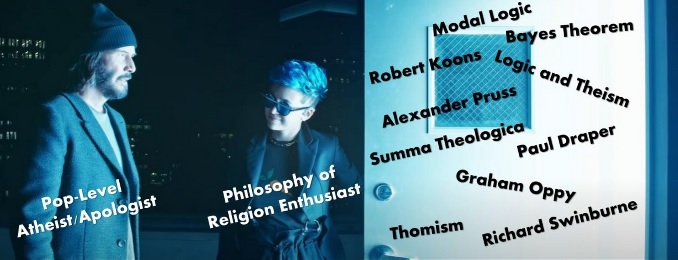
 Richard L. Fricks