Novel Excerpts–The Boaz Scorekeeper, Chapter 92

The primary aim of the "Novel Excerpts" blog category is to showcase my creative writing, specifically from the novels I've written. Hopefully, these posts will provide a glimpse into my storytelling style, themes, and narrative skills. It's an opportunity to share my artistic expressions and the worlds I've created through my novels.
The Boaz Scorekeeper, written in 2017, is my second novel. I'll post it a chapter a day over the next few weeks.

Kaden heard a faint knocking at the door and raised his head and opened his eyes to a blinding sun coming in through the half-open blinds on the double windows.  He had been dreaming, really fantasizing, of what life might be like for him if he moved back to Hickory Hollow and joined Trevor Nixon and Dalton Martin to practice law.  His last subconscious thought about continuing Micaden’s fight against Club Eden evaporated as he saw Lewis standing in the doorway holding a tray and what Kaden hoped was a giant cup of hot and black coffee.  His stomach wasn’t ready for Lewis’ standard breakfast of two eggs over-easy, two pieces of nearly burnt but buttered toast, two slices of overcooked bacon, strawberry jelly, and a small glass of orange juice.  Lewis smiled, set down the tray, and walked out.

At 4:45 a.m., Kaden had laid his head down on the library’s round table after completing his reading of The Boaz Scorekeeper. Since he returned from The Exchange Bank late yesterday morning, Kaden had been immersed in Micaden’s story, taking a break to eat a bowl of Lewis’ chili that he had brought to Kaden at 6:00 p.m., and taking a midnight walk along a moonlit lane from the house to the entrance of Hickory Hollow and back.  

Sipping his hot coffee, Kaden moved over and sat down in Micaden’s more comfortable desk chair and contemplated his book.  Kaden believed every word of it, even, surprisingly, accepting what Micaden had done.  Murder, from a strictly legal sense, was not something Kaden knew much about, only what he had learned in his Crime and Punishment class from law school nearly fifteen years ago.  No doubt, Micaden had committed three murders.  If tried in a court of law he would be convicted.  Micaden had known this but was called to action by his response to one overarching question, ‘how much evil would you allow to go unpunished?’  Kaden sided with his grandfather.  John Ericson, Randall Radford, and Fred Billingsley deserved to die.  They had escaped formal justice that was supposed to come from the criminal courts. They also had escaped a semblance of justice they should have received from the civil courts.  But for Micaden, the Flaming Five would have gotten off scott-free.

Probably the most disturbing thing about Micaden’s life story, was finding out now, after his death, that he so deeply loved Wendi, and his Christian deconversion experience her death had brought about.  Kaden couldn’t help but wish that his grandfather had been more open with him and shared every aspect of his life.  Kaden reminisced how Micaden would spend time with him hunting, fishing, woodworking, splitting firewood, playing chess, and talking about life while working in the garden.  Kaden now felt his grandfather was simply protecting him from the brutal reality of life, postponing if he could, what Kaden would no doubt learn as he went to college, and on through life. 

Kaden pulled his chair closer to Micaden’s desk.  It was stacked with manila files and books of fiction all around the edges.  In the center was several books, opened, but lying face down.  Micaden had always been reading several different novels at the same time.  Kaden never understood how his grandfather could keep up with so many characters and disconnected plot lines at one time.  Kaden, without thinking, inserted an index card as a bookmark into each open book and laid them aside.  Underneath was a copy of The Birmingham News dated Friday, December 19, 2050.  Kaden, for years, had thought his grandfather was too old school, continuing to buy an expensive hardcopy newspaper when he could just read it online.  The newspaper was opened to page two with an article above the fold highlighted in yellow.  The title read, ‘Two Boaz Men Dead Two Days After Release from Federal Prison.’  Kaden’s heart raced as he scanned the article then returned for a deeper reading.

The article stated that Wade Tillman and James Adams were granted parole on Tuesday, December 16th and released later that afternoon. They were both 96 years old having spent the past 32 years at Cumberland Island Federal Penitentiary in Georgia.  The two men had been picked up late afternoon at the prison by family members who drove them back to a hotel in Atlanta to spend the night.  The next morning, they had driven to their hometown of Boaz, Alabama.  Wade spent all day at his grandson Warren’s house, and James stayed with his grandson Justin. 

At 6:00 p.m. on Wednesday, they were driven to the Family Life Center at First Baptist Church of Christ.  The previous Sunday, Warren had preached a heart-wrenching sermon imploring his fellow members to exercise true Christian spirit and forgive the two men who had done horrible things but had paid their punishment in full.  After eating a hardy meal, and enjoying a multitude of heartfelt welcome-home handshakes, the men were driven to Creekside Village, an Assisted Living Facility, on the outskirts of town, where they were left alone in their individual rooms around 9:30 p.m.

The two men were found dead in their beds by Village staff at 6:30 a.m. Thursday morning.  There was no sign of struggle.  At press time, the cause of death was unknown.

Kaden had a million questions but stood up, walked out onto the balcony, and smiled.  He had no doubt the deaths were from the hands of the Boaz Scorekeeper.

Final score:

The Boaz Scorekeeper 5

The Flaming Five        0.

THE END

Novel Excerpts–The Boaz Scorekeeper, Chapter 91

The primary aim of the "Novel Excerpts" blog category is to showcase my creative writing, specifically from the novels I've written. Hopefully, these posts will provide a glimpse into my storytelling style, themes, and narrative skills. It's an opportunity to share my artistic expressions and the worlds I've created through my novels.
The Boaz Scorekeeper, written in 2017, is my second novel. I'll post it a chapter a day over the next few weeks.

A ‘Not Guilty’ verdict is uncommon, an almost unheard-of thing in a capital murder case.  And, finding a person who has avoided a guilty verdict in two capital murder cases in one lifetime is rare indeed.  Even though I had not received a “Not Guilty’ verdict in either case, I still believed I was a rare commodity.  It was impossible to reconcile the two forms of justice I had received in my two criminal trials.  It was also impossible to understand the role mercy and justice played in the shoot-out at Oak Hollow.

A week after I was discharged from Gadsden Regional Medical Center, Karla drove us to Atlanta where we spent the night and caught a flight to Jackson, Wyoming for a two-week vacation that included two nights at the Trial Lawyer’s College in Dubois.  On Friday night, I was introduced as the only member of the tribe who had truly experienced what it was like to be a capital murder defendant, who had exchanged bullets with four of his accusers, and who had represented capital murder defendants all the way from pre-indictment through death-penalty sentencing.  Friday night, I shared the story of my most recent case, and on Saturday afternoon, sat on a panel with three other non-lawyer, former capital murder defendants, and with two tribe member lawyers who had either won outright ‘Not Guilty’ verdicts, or had won on appeal, or through other post-trial proceedings. The rest of mine and Karla’s time in Wyoming was spent taking day trips to the nearby Rocky Mountains and at night, after grilling steaks over a campfire, sitting by the Wind River behind the cabin we had rented. The night before we were to fly back to Atlanta, Trevor had called and said Wade and James were now locked away at Cumberland Island Federal Penitentiary in Georgia.  Two days later I was in the law office.  I continued to practice law although I did limit my work to murder and capital murder cases

The year 2020 was unique and special for many reasons including the opening of Sparksburg on the site of the old Boaz Spinning Mills.  My client (the strawman of course) did everything he promised, and then some.  He also purchased nearly a city block’s worth of property across the street to the south, razed all the old buildings, and built a huge parking lot with a 100-foot statute named Murray Tower.  At its base, was a four-foot square bronze plaque that memorialized the lives of the four Murrays and the tragic events that ended their lives.  It was a miniature Statute of Liberty. 

Two other reasons 2020 was memorable was the opening of a Home Depot store across from the new Radford Hardware and Building Supply facility on Highway 431, and just north, the opening of Prader Volkswagen on the south side of Adams Chevrolet, Buick, & GMC that had relocated across from Marshall Medical Center.  My strawman was instrumental in the opening of these two new businesses.  However, that would have been impossible without the interest and connections of Terry Lynn Gaines.  By early 2019, when my plans began unfolding, Terry was a veteran U.S. Senator serving as Chairman of the Intelligence Committee, and a frequent contributor to all the major TV news networks.  With his substantial power and growing influence it wasn’t easy to convince Terry to come to Hickory Hollow and hear my demands.  In early January, in the quiet and privacy of my library, Terry signed over title to Oak Hollow, and agreed to fully support my Boaz investment plans. 

Later that afternoon, I was amazed how powerful and persuasive Terry Lynn Gaines truly was.  So much so that phone calls to the CEOs was enough to clinch the two deals.  However, his influence just went so far.  Over the next several months, it took dozens of phone calls and two trips to Nuremberg, Germany to convince Helmuth Katz to participate in the Grand Opening and ribbon cutting ceremony.  A visit from Michael Horn, president of Volkswagen of America, was the final tipping point. 

On a dark and stormy afternoon in late December 2020, 94-year-old Katz stood between his 70-year-old twin-daughters, and cut the golden ribbon for the first new car dealership to open in Boaz since Earnest Adams and his son Eugene started Adams Chevrolet in 1920, a hundred years ago to the day.  I thought I had put five million of Club Eden’s money to good use.

The other million, along with the $43,276.81 of interest earned, was contributed to Castenada Academy.  Nico and Santiago fulfilled their promise and opened the first private Christian school in America dedicated solely to educating Hispanics.  They won a $3,000,000 grant from the U.S. Department of Education, and, along with my assistance, persuaded Terry Gaines to enlist the help of all four Hispanic U.S. Senators, Mel Martínez, Ken Salaza, Bob Menendez, and Marco Rubio, to host a one-day telethon promoting the Academy.  It raised nearly $4,000,000 and enabled Nico and Santiago to purchase sixty acres on College Avenue only a mile west of the Platinum Foods facility, and to build a modern, high-tech campus. Nico and Santiago hired the best teachers from across America regardless of their race or ethnicity.  On a hot and muggy day in mid-August 2021, nearly 2,000 Hispanics from as far away as Fort Payne, assembled in 118 classrooms to experience the beginnings of a world-class education, tuition free, thanks to the Trump Administration’s Charter School and Voucher Programs.     

Karla retired from teaching school in May 2021.  Lewis remarried and moved to Chattanooga in 2031 after Kaden graduated from Sardis High School. Kaden earned a full scholarship to Emory University and was set to stay there for law school but changed his mind, over my objection, and chose George Washington University Law School in Washington, D.C. instead.  After graduating and passing the Bar he worked several years in D.C. for the firm of Hastings and Hoogle before moving to New York City to specialize in intellectual property with the law firm of Bainbridge and Shuttleworth. 

Losing Matt was traumatic, something only mildly tolerable even until now, but losing Karla in 2033 was the single worst thing that I had ever experienced.  I was unprepared for her death.  I suppose I had subconsciously thought after she got sick that she would likely die before I did, but I assumed it couldn’t be worse than the loss of Wendi and the aftermath that followed.  I think it was the trust factor.  She was truly a woman of faith.  She didn’t need evidence for her beliefs.  She said she had faith.  She trusted God completely and she did likewise the same with me, although in one big regard, I didn’t deserve it.

In January 1, 2045, my two law partners, Trevor Nixon and Dalton Martin, gave me a triple dose party celebrating my retirement, my 91st birthday, and of course, the New Year.  Overall, I enjoyed my party but I couldn’t help but feel sad and nostalgic recalling the day Matt was gunned down at Oak Hollow.

A few months after Karla’s death, I started writing this book.  Someway, the pain and difficulty of reliving the rough spots of my life was the antidote to the painful depression I was still enduring from Karla’s death.  My writing was the only thing that got me up in the mornings.  But, it didn’t last.  By 2035 I was in the deepest funk of my life.  I truly don’t know what happened over the next nine or ten years.  However, for some strange reason, my retirement party gave me the push I needed to return to my manuscript.  Even then it was a slow slog.  It took me until early 2046 to complete a full first draft and almost another eight months before finishing.  On October 5, 2046, I completed the final edit and on October 16th, I held my one and only book, a hardback titled The Boaz Scorekeeper

Reading the back cover and flipping through the pages I almost wished I had titled my book, Micaden Lewis Tanner, the Tyrant Slayer, but then was reminded that there were still two members of the Flaming Five who were alive and well, walking, eating, and breathing, albeit in a Federal Penitentiary.  Wade and James had avoided the ultimate justice they deserved.  So far at least.

At 92, I had to reconcile myself to the likely fate for Wade and James.  They would die in prison.  I just couldn’t see the Federal Pardons and Parole Board granting them parole in two years even though both would be 95 years old.  I rationalized that my overall score was better than fifty percent:

The Boaz Scorekeeper  3

The Flaming Five         2.

If there was an afterlife, I hoped Wendi and Cindi, and Bill and Nellie, were all giving me the thumbs up.  But, I suspected that Gina was still not completely satisfied that she had received justice.

Novel Excerpts–The Boaz Scorekeeper, Chapter 90

The primary aim of the "Novel Excerpts" blog category is to showcase my creative writing, specifically from the novels I've written. Hopefully, these posts will provide a glimpse into my storytelling style, themes, and narrative skills. It's an opportunity to share my artistic expressions and the worlds I've created through my novels.
The Boaz Scorekeeper, written in 2017, is my second novel. I'll post it a chapter a day over the next few weeks.

I showed Matt my secret hideout.  First, the house with its two converted bedrooms.  One for teasing short stories from my imagination.  The other, for taming runaway and incoherent facts into case stories that would connect defendants to a juror’s heart.  After showing Matt an old wood-fired cook stove in the kitchen, we walked outside onto a small patio with two lawn chairs. I asked him to sit down because I had a confession to make.

I told him that Gina was the only other person who had sat here since I bought the place.  That’s where I began my story.  I went on to share almost every detail.  Ever since I had come to know Matt, over 45 years now, he had been a father figure to me.  He cared deeply for me and was always eager to share his wisdom.  Now, after telling him that I had taken the lives of three men, I regretted not having spent more time with him outside our law practice. I wondered if my life would have turned out differently if I had spent more personal time with Matt. 

We walked down to the graveyard and I shared even more details about the two nights I had abducted John Ericson and Randall Radford.  Matt asked me why I had changed my mind about Fred.  Why I had not brought him here and buried him in one of my pre-dug graves.  I told him that I really didn’t know.  I admitted that at first, I had wanted to dispose of all the Flaming Five at Aurora Lake but eventually concluded it was simply too dangerous.  All members of Club Eden had access and the sons of the Flaming Five, just like they did, used it frequently to camp and just hang out with girls.  But, after John and Randall, my reason and caution went to the wind.  That day I buried Fred at the bottom of Aurora Lake, I acted carelessly, making mistakes that could still land me in prison.

The grave sites were a mess.  The crime scene investigative team had left the graves unfilled after digging up Gina’s body and the two sets of horse bones.  Matt couldn’t believe they had stopped three feet short of reaching John and Randall’s bodies buried beneath the dead horses.  I told him about how I had researched hiding a body by burying an animal on top of the human body, and how this stood a good chance of tricking both the cadaver dogs and their handlers into believing they had found their target. 

We decided we needed a little exercise so we grabbed two shovels that were standing in a pile of dirt and began tossing it back into the grave where investigators had found Gina. After a few minutes, I had Matt follow me back to the house.  I gave him a set of work clothes.  We changed out of our suits and ties and returned to the graveyard.  We spent the next three hours shoveling dirt back into the graves.  We even drove to Farmtown to buy some flower bulbs.  It was almost dark when we finished setting them out.  Matt said he needed to call his wife.  He had left his cell phone on the console in my car so he walked back to the front of the house.  I used a shovel as a rake and started pulling leaves over the graves. 

Bam, Bam, Bam. I heard three shots. Immediately, I ran toward the back door, across the patio, through the kitchen, and into my writing room.  In an old mahogany armoire, I had a Glock 9 mm and a Smith & Wesson 45.  They were fully loaded.  I switched off the safeties and grabbed another clip for each pistol.  I went out the back door and ran around the house toward the front yard.  Turning the corner, I saw Matt laying on the ground in a pool of blood and a black Suburban with four men standing on either end, two at the back of the vehicle and two on the far side of the hood.  I had no doubts.  It was Walter, David, Raymond, and Franklin.

Before I reached Matt, they started shooting at me.  I was maybe fifty feet from them. I raised my 45 and aimed at Franklin Ericson. I had been taught by my Gramp’s growing up that if you’re going to shoot, you need to be aiming at something.  I knew I had to be methodical.  It was as though Franklin tossed his pistol onto the top of the Suburban’s hood.  My bullet centered his heart and in the fraction of a second before he died, his brain ordered his hand to attempt one final return shot.  He died before his action could be completed.

‘Fear no man.’ I could hear Aubrey Kilpatrick tell his son James.  Time seemed to slow to a crawl.  It was like I was experiencing a movie where I was both actor and a movie-watcher.  The reel was rolling at quarter speed.  I had never met Aubrey or James but their story, what had been shared with me by my Dad and Gramp’s, and later through newspaper articles and books that had been written about that fateful day in May 1951, had framed a big part of my mind and heart.  Maybe as much or more than the life teachings of Brother G at Creek Side Baptist Church.

A bullet ripped through the muscle in my left arm, a couple of inches below the top of my shoulder.  I hit the ground and rolled two times to my right and fired two shots just as I stopped.  This time I hit Raymond in his left hip and in the middle of his chest as he fell. 

I got up and started running toward the Suburban, shooting at David who had been standing beside Raymond.  I missed both shots but his last shot hit me in the right side, again, not a wound that would kill me.  My next shot centered his forehead.  I was close enough to see the terror run through his eyes just before my bullet pierced his skull.  

‘Fear no man. Stand tall and deal with trouble head on.’  Walter, by now, had run over behind the old well on the other side of the driveway.  I could barely see the top of his head as he scrunched down beside the round concrete cylinder that capped off the hand-dug well.  I walked toward him and semi-broke my own rule by emptying my clip six feet above his head.  Twenty feet from where he hid, I pulled my Glock from my waistband.  As soon as I did, Walter stood up ready to shoot.  Before I heard his first shot, I saw his pistol raised.  I aimed first for the center of his chest, then for his head.  Both my shots hit their target a fraction of a second after his first shot missed me.  I heard it hit the Suburban behind me, glass shattering.  His second shot ripped flesh from the side of my left chest and the underside of my left arm.  The bullet did minimum damage. 

I walked over behind the well to verify for sure that Walter was dead knowing without looking that what I had learned about shooting and the handling of a gun growing up had prepared me for this shoot-out far better than these guys.

I pulled my cell phone from my front right pocket but it had taken a bullet for me, sparing me from a fourth injury.  I walked toward my car to retrieve Matt’s cell phone, the one he was after when he was gunned down just like Aubrey Kilpatrick. My vehicle was parked forty feet beyond David’s Suburban.  I could see that Walter’s last bullet had busted out the Suburban’s rear window.  I glanced in as I was about to walk on to my car and noticed two bodies, one almost on top of the other.  I opened the rear hatch.  Dale Watson’s body fell to the ground leaving Fitz Billingsley laying face up with a two-foot piece of rope around his neck.  Watson had a hole in his head.  Both were beyond dead.

I walked on to my car and called 911.

Novel Excerpts–The Boaz Scorekeeper, Chapter 89

The primary aim of the "Novel Excerpts" blog category is to showcase my creative writing, specifically from the novels I've written. Hopefully, these posts will provide a glimpse into my storytelling style, themes, and narrative skills. It's an opportunity to share my artistic expressions and the worlds I've created through my novels.
The Boaz Scorekeeper, written in 2017, is my second novel. I'll post it a chapter a day over the next few weeks.

On Tuesday morning, the other four defense attorneys cross-examined me until 11:30 a.m.  After my testimony, Judge Chambliss called for an early lunch recess.  Matt and I went downstairs to Drake’s Courthouse Cafe and were just finishing up our apple pie and ice-cream when my cell phone vibrated.  It was Greg. “Good news.  Wade and James are ready to deal. You don’t have to rush back.”

I told Matt, paid our ticket, and nearly ran the three flights of stairs back to Judge Chambliss’ courtroom.  The parties, Greg and his two associates, and Wade and James and their attorneys were all meeting in the Judge’s Chambers.  I didn’t see the three police officers or their attorneys.  Periodically, Federal Marshalls were transferring Wade and James between Judge’s Chambers and a holding cell just down the hall.

Matt and I sat on a bench just around the corner from the Judge’s office.  We speculated on what was about to happen, our positions differed.  Matt thought Wade and James would agree to life in prison if all State charges against their father and grandfathers were dropped.  I just couldn’t see Greg going for that, nor DA Abbott from Marshall County.  I felt like Wade and James could avoid the death penalty, maybe even life in prison, but someone else was going to spend a few years in State prison.

At 1:15 p.m., Greg came out and told us about the agreement and the pleas Wade and James were about to enter.   These two would plea to the murders of Gina Tillman, Alma Castenada, her parents, four counts of kidnapping for sexual exploitation, and conspiracy to commit a hate crime against a specific people group.  They would be sentenced to life in prison with the possibility of parole in 30 years.  Walter Tillman and Franklin Ericson would plea in State Court to embezzlement and extortion and be sentenced to eight years in prison with the possibility of parole in three years. David Adams and Raymond Radford would plea in State court to two counts of murder in the deaths of Harold Maples and Shawn Taylor.  They would be sentenced to 20 years in prison with the possibility of parole in seven years.  No one would plea to the three hate crimes that occurred in 1901, 1926, and 1946.  The evidence was simply too thin, but the main problem was all the grandfathers and great-grandfathers of the Flaming Five were all dead, except 106-year-old Rudolph Tillman, who had just two days ago suffered a massive stroke and was now in a coma.  The three police officers, Chris Anderson, Paul Thomas, and Edward Hall, would all plead guilty to and were sentenced, like Wade and James, to life with possibility of parole in 30 years.  Dale Watson, like Fitz, escaped formal condemnation and prison in exchange for his cooperation.

At 1:45 p.m., Wade, James, and the three police officers, plead guilty and were taken into custody by the Federal Marshalls.   David, Raymond, Walter, and Franklin would plea Friday in State Court in Marshall County.  By agreement, they could remain on bail. However, DA Abbott warned them to have their affairs in order because Judge Broadside would revoke their bail and place them in custody immediately upon the entering their pleas.

Matt and I left the Courthouse’s parking deck at 2:20 p.m., and drove home telling each other that if we were Fitz Billingsley and Dale Watson we would pack our bags and get lost.  By becoming rats as big as Texas they had escaped felony conviction and prison but had spawned a fiery hatred that would never be extinguished.  As for Fitz, I reminded Matt of Club Eden’s promised punishment for any turncoat.  He asked, “surely the fathers of the Flaming Five would not risk life in prison or even death to carry out the Club’s sentencing.” 

“Are you forgetting the sons of the Flaming Five. They too are members, probably since the mid-nineties.  They are now in their mid-thirties.  I know it seems Warren Tillman is a fine, upstanding man as pastor of First Baptist Church of Christ, but Club loyalty can go rather deep.  I just know that if I were Fitz I would hightail it out of Boaz.”  I said.

As we reached the top of the mountain coming up Highway 431, I knew I had to tell Matt the full truth.  Naturally, I was torn.  I much preferred to let him continue to think I was a better person than I really was.  But, by the time we got to Mountainboro, I was committed to the truth.  He had a right to know the real Micaden Lewis Tanner.  I turned right onto Mountainboro Road and then right again on Cox Gap Road.  In five minutes, we were sitting in the driveway of Oak Hollow.

Novel Excerpts–The Boaz Scorekeeper, Chapter 88

The primary aim of the "Novel Excerpts" blog category is to showcase my creative writing, specifically from the novels I've written. Hopefully, these posts will provide a glimpse into my storytelling style, themes, and narrative skills. It's an opportunity to share my artistic expressions and the worlds I've created through my novels.
The Boaz Scorekeeper, written in 2017, is my second novel. I'll post it a chapter a day over the next few weeks.

It was raining so hard Monday morning it took Matt two hours to drive us to Birmingham.  Judge Chambliss delayed the trial until 10:00 a.m. to await a juror who had gotten involved in a fender-bender on Highway 280. I spent most of this extra hour with Greg preparing for my cross-examination.  He reminded me that he had made a deal with defense attorneys concerning questions about my involvement in the disappearance of John, Randall, and Fred. 

At 10:10 a.m., defense attorney Ralph Summerford approached me sitting in the witness chair and asked, “Mr. Tanner, not only did you abduct and murder Gina Tillman you did the same to John Ericson, Randall Radford, and Fred Billingsley.”

I just sat there.  All I had heard was a statement, not a question.

Summerford said, “Your Honor, please instruct the witness to answer the question.”

“Why don’t you first ask a question Mr. Summerford.” Judge Chambliss said.

And, that’s how my cross-examination began, as the wind-swept sheets of rain against the Courtroom windows.

Summerford then asked the Judge for permission to play a video. He had already ruled it was admissible.  This had been decided in a pretrial hearing where Ricky Browning from First Baptist Church of Christ had appeared to authenticate the tape.

The video showed a man dressed in black, like a Ninja, approaching and crouching down beside John’s 2017 GMC Traverse parked beside the church.  It showed John exiting the Family Life Center carrying a duffel bag.  The vehicle blocked a clear shot since it separated the camera from John, it showed him from about mid-head.  He opened the rear door and appeared to toss in his duffel bag. Then he fell.  A few seconds later the man in black comes around to the side of John’s vehicle closest to the video camera, opens the rear door, reaches in, and pulls John’s body towards him.  The man in black closes the door and walks back around, closes the far side rear door and gets in the driver’s seat.  Within seconds, he gets back out and crouches down out of the camera’s view.  Next, the video shows the Chevrolet Traverse backing up and heading to the parking lot exit.  The vehicle stops and the video clearly shows the man in black get out, open the rear door, crawl inside the vehicle, and then return to the front seat and exit the parking lot.

“The man in black shown here in this video is you, isn’t that correct Mr. Tanner?” Summerford asked me when the video stopped playing.

“Absolutely not.” I responded unbeknownst to everyone except me that I was now splitting hairs.  What I wanted to say was, ‘that is in no way the real me.  What you see here is a man who felt he had no choice but to do what the criminal justice system had failed to do.’ But, I knew that being totally honest wasn’t going to be the best route for me today.

Summerford asked Judge Chambliss if he could call Nyles Strange to the witness stand and afterwards recall me.  His Honor granted Summerford’s request.

Greg had prepared me for this. Again, the admissibility of Nyles Strange’s testimony had been decided during the two days of pre-trial hearings.  The defense called Mr. Strange as an expert in human animation, I forgot the technical term.  He could look at a person on video and perform his detailed analysis, including running computer simulations comparing them to actual persons with known heights and weights, to determine the exact dimensions and sizes of the person or persons shown on the video, right down to the person’s shoe size.

The Judge allowed me to sit with Greg at the Prosecutor’s table during Mr. Strange’s testimony. After qualifying him as an expert witness and leading him through his exact methodology, Summerford had Mr. Strange tell the jury that the man in black was six feet one inches tall, wears a size 10 shoe, weighs approximately 210 pounds, is predominantly right-handed, but most likely is ambidextrous.

Nyles Strange was dismissed and I was recalled to the witness stand.

“Mr. Tanner, please tell the jury your height, weight, and shoe size.”

“I am a little over six feet tall, weigh 204 pounds, and wear a 10 and a half shoe.”

“Are you right or left-handed, normally?”

“Right.”

“Don’t you golf left handed, punt a football with your left foot, bat a ball left handed, and didn’t you throw a touchdown pass with your left hand even though you were a tight-end while you played football at Boaz High School?”  Summerford said.  He had clearly done his homework.

“All four of your questions are true, except I thought it was two touchdown passes instead of one.”  I said.

“Mr. Tanner, the man in black shown here is either your identical twin or it is you, correct?”

“I don’t have a twin brother or sister and the video is not showing me.”

“You do admit that on the night of Monday, May 15th, 2017 Mr. John Ericson went missing?”

“I don’t know when John went missing.”

“Why don’t you tell the jury how you felt about John Ericson.”

“I didn’t like him. In 1972, he lied to frame me for a murder I didn’t commit, one I had nothing to do with.  He was a spoiled, arrogant, and evil man.  He and his four friends murdered Wendi and Cindi Murray the night of May 25, 1972.”

“You cared deeply about these twin sisters, especially Wendi, didn’t you?”

“I sure did.”

“Looks like you had plenty of motive to want John Ericson dead.  Please name the other four friends you mentioned.”

“Wade Tillman, James Adams, Fred Billingsley, and Randall Radford.”  I answered.

“These five were not the only ones who, in 1972, said you were responsible for the deaths of Wendi and Cindi Murray, correct?”

“That’s correct, but these five were the ones that forced Gina Culvert, Rickie Bonds, Nyra Gibson, and Darla Sims to lie for them.”  I said.

“So, Gina Culvert, Gina Tillman after marrying the defendant Wade Tillman, said things back in 1972 that hurt you, that sent you to the Marshall County Jail for over six months until your murder trial in 1973.  Is that what you are telling this jury?”  Summerford said.

“In 1997 and 1998 I learned the truth about what happened.  Gina Tillman and the other three young ladies, were threatened and bribed to lie for the five men who murdered Wendi and Cindi.  They really had no choice.  I had no ill feelings at all against them.  I had nothing to do with Gina Tillman’s death.  The U.S. Attorney has already proven that your and Mr. Brunner’s clients murdered Gina Tillman.” I said.

“Your Honor, I ask that Mr. Tanner’s last statement be struck from the record and the jury instructed to disregard it.”  Summerford said glaring at me.

Summerford spent the next hour trying his best to crack me, to find at least one crevice that he could burrow inside to plant a bomb that would dissuade the jury from believing Wade and James were Gina’s killers.  Summerford first accused me of stealing James’ car and using it to abduct and murder Gina.  When the outcome of this didn’t seem to please him, he accused me of planting evidence in James’ trunk, and scrawling the note inside.  He wisely chose to avoid a ton of other evidence including Orin Synder’s testimony showing mine and Gina’s cell phone activity, and the OnStar information revealing the travel of James’ car during Gina’s death ride.

After I explained that I used the barn and jail cell to stimulate my imagination for my short-story writing, I had a convincing feeling that if I were a member of the jury, I could have reasonably concluded that I was hiding something.  I also felt like I was the one on trial.

It was only after Greg’s redirect that I began to feel a little better.

“Micaden, did law enforcement or the State of Alabama’s forensic department find anything at Oak Hollow that incriminated you?”

“No.”

“Yet, they were there for two days when Gina’s body was discovered, inspecting every square inch, including inside your office and barn.  Correct?”

“Yes.”

Greg finished his redirect having me deny everything that Summerford had accused me of. Greg’s final question was, “Micaden, did you have anything to do with the disappearance and murder of John Ericson, Randall Radford, and Fred Billingsley?”

“Absolutely not.” I said firmly.  I hated to lie but once again rationalized I was doing it for the sake of Wendi and Cindi.

During our ride back to Boaz, all Matt wanted to talk about was the man in black.  Matt kept asking, “I wonder who on earth that was?”  And, “don’t you think it is really weird that you are virtually the exact same size as John’s abductor?”

All I could say was, “it’s as though, once again, someone is trying to frame me.”

Novel Excerpts–The Boaz Scorekeeper, Chapter 87

The primary aim of the "Novel Excerpts" blog category is to showcase my creative writing, specifically from the novels I've written. Hopefully, these posts will provide a glimpse into my storytelling style, themes, and narrative skills. It's an opportunity to share my artistic expressions and the worlds I've created through my novels.
The Boaz Scorekeeper, written in 2017, is my second novel. I'll post it a chapter a day over the next few weeks.

The Federal trial for Wade, James, and the three Boaz Police officers began on Monday, October 8, 2018.  The first three days were consumed with jury selection.   Over the next nine days Greg Gambol examined Fred Billingsley, Dale Watson, Marshall County Detective Darden Clarke, Etowah County Detective Pete Morrow, thirteen other law enforcement officers, four State Forensic technicians, and two medical examiners.  Greg was methodical in his attempt to build a bullet-proof case.  The most the five defense attorneys could do is attempt to react with cross-examination questions that, in the bigger picture, didn’t come within a hundred miles of creating any type of doubt, much less reasonable doubt in the guilt of the five accused.

It was now Friday afternoon, October 19, 2018. We had just returned from the noon break.  Greg had saved me, who he called his star witness, until the last.  It was now near the end of the second week of trial and Greg wanted to end his case presentation and the week with my testimony.  Trial attorneys have long believed that the words from the last witness to appear on a Friday afternoon linger in the minds of jurors all weekend, rooting around and almost assuredly finding a little truth crevice to burrow into.

I was sworn in at 1:30 p.m., and sat down for a long afternoon as the center of attention.  After the standard introductory and contextual questions, Greg asked me about my relationship with Gina Tillman.  He had determined that we might as well get it on the table first, preventing the Defense from making it look like Greg and the prosecution were hiding the key motive for me to kill Gina. I described how in 1973 she had lied about my involvement in the disappearance and death of Wendi and Cindi Murray.  Greg continued his questioning and I revealed how forty plus years later she came to hire me to represent her in a divorce action against her husband, Wade Tillman.  And, how she started snooping around looking for evidence that could help her improve her chances of obtaining a healthy divorce settlement.

It took over an hour but I started with how Gina, after the bodies of Bill and Nellie Murray were found right before their wrongful death case began.  I described how Wade had told her how John, Randall, and James had killed Wendi and Cindi and how all five of their fathers had helped dispose of the bodies and conceal the truth.

I described how she found a file labeled ‘Mission Money,’ and copies of several bank statements showing that he was directing the embezzlement of monies from the First Baptist Church of Christ’s Cooperative Missions Program. Finally, I described how Wade and the other members of Club Eden, along with key insiders in exchange for kickbacks, were involved in stealing money from the City of Boaz, Boaz Utilities, Quintard Pharmacy, and EagleMart.

Greg continued this line of questioning.  I knew what he was doing.  He simply was setting the stage for his most damning evidence. So far, all my testimony, incriminating as it will eventually be in establishing a clear and powerful motive for Wade and James to abduct and murder Gina, was merely building a framework to hang a thick coat of guilt across the faces of the men sitting in the dock.  Before Greg’s paint came out, he had me relay to the jury that Gina had continued periodic-snooping in Wade’s study, and how in late September 2017, she had found a deposit receipt for $100,000 to the Club Eden bank account.  It was from a Moscow, Russia bank.  This discovery had led Gina to purchase a high-tech audio recording system.  I described for the jury how Gina had hidden it in a semi-secret meeting room behind bookshelves in Wade’s church office.

“Let me show you Prosecution’s Exhibit 18.  Do you recognize this document? If so, describe it for the jury.” Greg asked me.

“Yes. Gina gave it to me.  It is the written version of an audio-recording made by Gina in Wade’s secret study.”

“Are you saying that a tape recorder created this written transcript?”

“Objection, your Honor, no foundation.” Defense attorney Tommy Brunner said not even standing up.

“Side bar please your Honor.”  Greg said.

All five defense attorneys and Greg walked to the side of Judge Chambliss’ bench and spent nearly five minutes whispering back and forth with the Judge.  Later, during the next recess, Greg described to me the deal he and the defense attorneys made.  Greg would not object when they questioned me on cross about the disappearance of John Ericson, Randall Radford, or Fred Billingsley.  Greg no doubt thought he had no risk at all by allowing the Defense team to question me about this issue.

When Greg returned to the podium he asked me, “if you know, tell the jury how the hidden recorder worked.”

“I don’t know the technical details but it was a device made by Sony that Gina found on eBay.  It was voice-activated, when it detected a voice it would begin recording.  Thirty minutes after the last voice sounded it would email a written transcript of the conversation to an email address, as long at the device was connected to Wi-Fi.” I responded.

“This email account, Gina had to enter her specific email address.  Correct?”

“Yes, she set up a special account and activated notification alarms be sent to her cell phone after each email was sent.”

“Did you receive these emails?”

“No, not at first.  The system was set up to send them to only one address.”

“What do you mean by ‘not at first’? Greg asked.

I picked up the transcript that Greg had given me, Prosecutor’s Exhibit 18. “At the top here, is the address Gina used.  After Gina was murdered I was rereading this transcript and happened to notice this address.  I knew that Gina’s recorder would still be working unless it had been discovered.  I decided I had to try and access her email account.”

Greg then asked me a series of questions that led me through the process I used to discover both her Google account and her recorder-email account ID and password.

“Let me show you what’s been marked as Prosecutor’s Exhibit 19.  Do you recognize this document?” Greg asked.

“It is the second transcript Gina received from the audio-recorder.”

“Now, here is Prosecutor’s 20. Can you identify it?”

“It is the third transcript she received.” I responded.

Were there any more emails sent to Gina’s email address from the audio-recorder?”

“There was one more.  It was sent on November 5th, one day after Gina was murdered.”

“Mr. Tanner, I am handing you Prosecutor’s Exhibit 21.  Can you identify this document?”

“Yes, it is the email she never lived to see.” I responded.

“To clarify, Exhibit 21 is a transcript of a conversation that took place on Sunday, November 5, 2017 in Wade’s semi-secret study that was automatically emailed to Gina from the hidden recorder.  Correct?”  Greg asked.

“That is exactly right.”

“Please read the text highlighted in yellow.” Greg said.

Defense counsel immediately objected.  This time he stood. “Your honor, this is hearsay upon hearsay and is outside the scope of what Mr. Gambol agreed.”

Once again Judge Chambliss ordered all five attorneys to the Bench. It was nearly 3:00 p.m., a good time for his afternoon break.  He instructed all parties to return to the courtroom at 3:15.

I stepped down from the witness stand and walked outside the Courthouse.  I saw Matt lighting a cigarette and standing under a Maple tree still covered in glowing red leaves. 

“I think I have seen you smoke one cigarette in the past, what, 50 years?  That time I was in the Marshall County Courthouse sitting in ‘Holding’ with two deputies.  You didn’t know it but I saw you sitting on a bench during a recess in my first trial.  This must be serious.  What’s going on?”  I said.

“That day, 1973, dead of winter. I did smoke one cigarette that day.  It was the second one I had smoked in my life.  Since 1973 I’ve smoked two others, until this one.  What’s that?  Five, total?  Five times now in my legal career, I’ve been compelled to seek a high dose of nicotine.  This desire is triggered by a feeling I get, one ominous and deadening.  It’s like I know something horrible is coming but I have no way of knowing what it is.  Remind me on our way home to tell you about each of these incidents.  Well, other than this fifth one.  Hopefully, it’s a false alarm.”

I didn’t respond.  I returned to the Courtroom leaving Matt answering a call on his cell phone.  I avoided the elevator and took the three flights of stairs wondering what, if anything, was coming my way.  I figured if Matt was worrying about something horrible happening, it had to involve me.

I returned to the witness stand not knowing how Judge Chambliss had ruled on the defense’s hearsay objection until Greg asked me his first question.

“Micaden, tell me if you recognize the two voices on this audio-recording.”

Greg had Trevor go to the Courtroom’s Exhibit table where a laptop computer was set up.  He clicked the attached mouse a couple of times and the recording started playing.  It was a voice file attached to the emailed transcript.  This was standard with Gina’s high-tech recorder.  It would create the voice file, then a written transcript, and finally, email it to the address that had been entered when the system was activated. 

Voice One. “What’s so important for us to meet so early, and why here?” Voice Two. “Dad, James and I have done something without Club approval.  It was horrible.”  Voice One.” Tell me.” Voice Two. “I have been suspicious of Gina for a while.  Periodically finding signs someone had been snooping around in my home study.  It had to be her, so I hid a camera.  Yesterday morning it showed me that the night before she was in my desk with my ‘Missions Money’ folder.” Voice One. “You’re telling me you left confidential information where she could just go pull it out of a file?”  Voice Two. “Yes.” Voice One. “What do you suspect she learned from reviewing your folder?” Voice Two. “About the disappearance of the Castenada family and the receipt of the $100,000.” Voice One.  “What have you done that is so horrible?  You said you and James did something horrible.” Voice Two.  “We murdered and buried Gina.”

“Stop.” Greg instructed Trevor.

Greg then asked me, “do you recognize the two voices on this recording? If so, please identify them.”

“Voice one is Walter Tillman.  Voice two is Wade Tillman.”

I was surprised that defense counsel did not object after Greg’s question. Clearly, during the break Judge Chambliss had clarified how this part of my testimony would play out.  He had a reputation for anticipating objections and dealing with them in advance, either in his chambers or during sidebar at the bench.

Greg, standing two feet from the rail in front of the jury, “Please read from page two the text highlighted in pink, again using Walter and Wade’s names instead of Voice One and Voice Two.”

“Walter. How do you know that Gina connected the $100,000 deposit with the Castenada family?  Wade. From my smart ass remark I scribbled across the deposit slip.  I wrote, sale of golden goose. Walter. You were aware that Gina knew that Club members referred to Alma as Mateo’s golden goose?  Wade. In frustration, I may have let it slip when she would bring up at night she had spoken with Alma.  You know they were close. Alma was her father’s golden goose.  Without her involvement with the Hispanic community I don’t think Mateo’s church would have done anything like as well as it did.  Nor, would it have caused so many Hispanics to attend our church.  Walter. Do you think she shared this with her attorney, Micaden?  Wade. I really don’t know.”

For the next half-hour Greg continued asking me to read from the transcript and following up each reading with additional questions.  During this time, the jury learned that the Club, in late May 2017, had abducted Alma and her friend Esmarelda Andres, and Mateo and his wife, and how Boaz Police Officers Chris Anderson and Edward Hall had transported Esmarelda to Muscle Shoals Airport where Gustav Nilsson and sons met them for the exchange.  The jury also learned about Esmerelda’s tragic death.  Three days after Gustav’s plane had landed in Stockholm, Sweden, she jumped to her death from the Västerbron, an arch bridge in central Stockholm, during a botched attempt by a competing gang to steal Esmerelda and two other girls.  The gang got caught up in a traffic jam on the bridge and while stopped, someway Esmerelda exited the vehicle and jumped to her death 300 feet below.  She would have probably lived if she hadn’t landed on a passing barge.

The final question Greg asked me late Friday afternoon to end his direct examination was, “Micaden, did you have anything at all to do with the abduction and murder of Gina Tillman?”

I answered no.  Twenty minutes later Matt and I were traveling Interstate 59 North through Trussville headed home.  It had been a long day and would likely be an even longer Monday.  As we rode in silence I wondered if the ominous feeling Matt experienced had anything to do with what would come during my cross-examination.

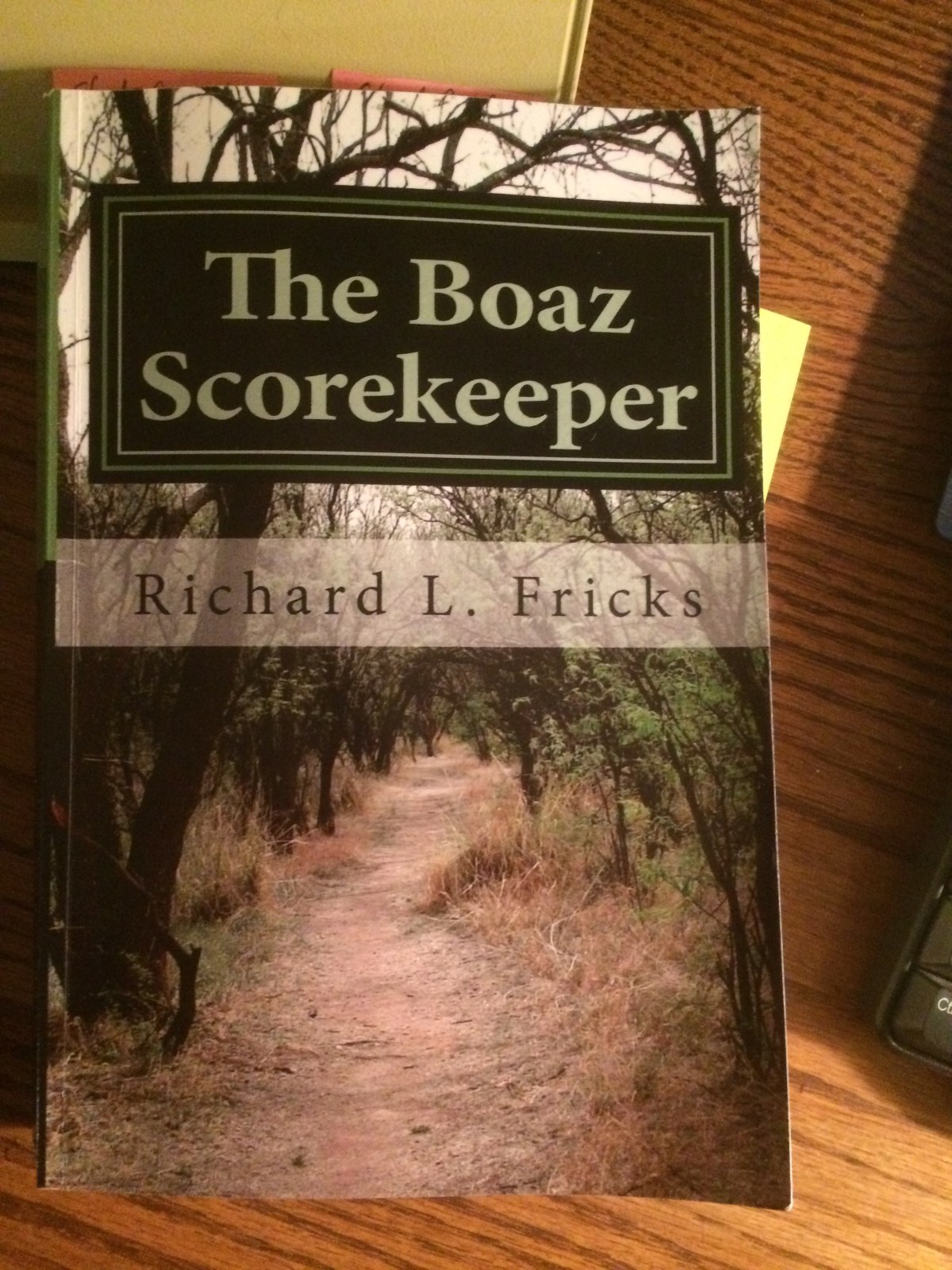
Novel Excerpts–The Boaz Scorekeeper, Chapter 86

The primary aim of the "Novel Excerpts" blog category is to showcase my creative writing, specifically from the novels I've written. Hopefully, these posts will provide a glimpse into my storytelling style, themes, and narrative skills. It's an opportunity to share my artistic expressions and the worlds I've created through my novels.
The Boaz Scorekeeper, written in 2017, is my second novel. I'll post it a chapter a day over the next few weeks.

The morning after the bombing, local talking-heads and State-wide newscasters were predicting a continuing wave of Ferguson, Missouri style rioting and destruction in Boaz and beyond.  It never happened. 

By 4:30 p.m. that afternoon, Nico and Santiago Castenada had completed over six hours visiting and speaking with 90% of the local Hispanic community.  The General Manager of Platinum Foods shut down three departments of the processing plant and allowed the two educated, reasonable, and focused nephews of Mateo Castenada to speak atop a flatbed trailer in the parking lot to a gathering of over 400 Hispanics.  The two young men shared their vision for Boaz, even disclosing details about the school that would open in less than a year.  Nico gave an impassioned speech on the importance of allowing the criminal justice system to punish those who had murdered Mateo, his wife Natamar, and their daughter Alma.  He drew on the 1960s civil right struggle of the blacks and what Martin Luther King’s vision of peace through non-violence had achieved.  Santiago promised change and implored each of them to forgo rioting and redirect their anger towards God, letting Him show them the higher road.  By dark, the message had spread.  The rioting was replaced by the sounds of righteous anger seeping from the windows and doorways of Esperanza Baptist Church.

Something else never happened.  The two bombed out businesses didn’t die.  I shouldn’t have been surprised.  Even though both Adams Chevrolet, Buick & GMC, and Radford Hardware & Building Supply were virtually destroyed by the bombs and fiery aftermath, they quickly announced an aggressive plan to reopen.  Each company maintained full replacement insurance policies.  New construction would begin within a month.  Bulldozers and dump trucks started cleanup less than 24 hours after the explosions.  The real ingenuity of the Adams’ was demonstrated when six car haulers showed up during the last week of July and unloaded 36 new vehicles in the parking lot of the long-empty Outlet Center.  Since the bombings, the 36 employees of the Adams’ dealership had worked tirelessly in setting up a temporary operation including a 10,000-square foot service department under a gigantic tent complete with every tool needed including four hydraulic lifts. The Radford’s followed the Adams’ lead and by mid-August had leased and stocked the empty building directly across from the GM dealership.

Novel Excerpts–The Boaz Scorekeeper, Chapter 85

The primary aim of the "Novel Excerpts" blog category is to showcase my creative writing, specifically from the novels I've written. Hopefully, these posts will provide a glimpse into my storytelling style, themes, and narrative skills. It's an opportunity to share my artistic expressions and the worlds I've created through my novels.
The Boaz Scorekeeper, written in 2017, is my second novel. I'll post it a chapter a day over the next few weeks.

By 9:00 p.m. the rioting had begun.  By 11:30, TV crews from Birmingham and Huntsville were in Boaz and broadcasting live.  Karla and I were glued to the television.  Shortly after midnight, she went to bed.  I changed clothes and drove to Oak Hollow.

Ever since my release from the Etowah County jail in March, I had been executing my plan.  It was one I had started designing after Randall’s disappearance, when I decided not to make a ransom demand.  I had also decided against demanding money when I dealt with James.  However, Gina’s unexpected disappearance and death changed my ability to eliminate him.  Adams Chevrolet, Buick & GMC, and Radford Hardware and Building Company, were the two largest brick and mortar financial targets of all five families.  The Hispanic rioting gave me the best opportunity to do some damage to these two old, but continuing, money presses.

My idea was simple.  The explosives were nearly identical to those used by Timothy McVeigh and Terry Nichols to destroy the Alfred P. Murrah Federal Building in downtown Oklahoma City, Oklahoma, on April 19, 1995. The only difference would be the size and power of the bombs.  I had no intention of killing anyone.  I only wanted to level the two city blocks controlled by the Radford’s and the Adams’.

My plan was both simple and elaborate.  I had used every opportunity when I was out of town on law business to purchase 50-pound bags of ammonium nitrate from farm and garden supply stores.  It’s funny how one doesn’t notice things if he’s not looking for them.  It seems every place I went, Heflin, Muscle Shoals, Russellville, Scottsboro, Huntsville, Moulton, Oneonta, Fort Payne, and dozens of places to and from these county seats, had one or more farm and garden stores.

I was careful.  I always paid with a different prepaid Visa card I had purchased from a Dollar General store in a different area.  And, the cards were never purchased in my name.  I had perfected the creation of false identity cards, such as driver’s licenses and health insurance cards.  For example, when buying four hundred pounds of ammonium nitrate in Oneonta, I used the Visa card I had purchased in a Dollar General store in Heflin that I had loaded cash to in Huntsville.  Also, at every location that I purchased or loaded a prepaid Visa card, or purchased ammonium nitrate or any other ingredient or item I needed to execute my plan, I rotated the disguise I used.  For example, at the Heflin farm and garden supply store, I wore a pair of dark brown coveralls, a blond wig with pony tail pulled back and tied off, a reddish blond mustache, and a Pittsburg Steelers ball cap.  I also arranged with the store clerk to set my purchase somewhere outside where I could come back and pick it up later.  I always parked a block or so away from the store and walked to make the purchase.  Within an hour or so, I would come back in my vehicle.  Sometimes, the store had already closed for the day.  Even if the store was open, I never had anyone notice me as I loaded my purchase.

I was also careful about the two box trucks I purchased.  I located them both on eBay.  The first one, a 1992 Ford F600, was in Birmingham.  It was owned by an older lady whose husband had recently died.  He had purchased it new and used it in their small appliance business.  It even had a lift-gate on the back. The lady’s daughter was helping her sell it online.  I hired a technician from Long Lewis Ford to inspect the truck.  I paid him, not his employer, $375.00 to travel to Roebuck and determine whether the vehicle was road worthy.  If it was, then he was to drive the vehicle to the Cracker Barrel restaurant at the Trussville Exit, locking it and leaving the key wedged under the inside left rear tire.  I told him I was from Chattanooga but was sending my nephew to pick up, and drive the truck to Jackson, Mississippi.  After the technician called my burner phone and gave me the go ahead, I used one of my prepaid Visa cards to pay online.  Later than night, I hired a taxi out of Gadsden to pick me up at the Eaglemart parking lot to take me to Trussville.  Wearing my best suit, I shared that I was the owner of twelve Cracker Barrel Restaurants in Tennessee and Alabama and that my car had broken down after leaving my store in Guntersville.  Everything went like clockwork.  The truck key was where it was supposed to be, the vehicle started right up, was full of gas (thanks to the technician), and performed like a new one all the way back.  At 3:30 a.m., I pulled into the barn’s center hallway at Oak Hollow and rode my previously-positioned bicycle the two miles back to Hickory Hollow. 

I had similar good luck in buying my second truck.  I had to pay more for it given my time frame and the fact I didn’t want to travel so far to drive it home.  I was tempted to again use Love’s Taxi out of Gadsden but knew that wasn’t reasonable.  This time I didn’t use a taxi service at all.  I had Doug from the Albertville Municipal Airport fly me, the real Micaden, to Auburn, Alabama.  I used the cover of a continuing legal education conference at Tichenor Hall titled “What We Can Learn from the Movies,” telling Doug that my wife was meeting me there on Friday.  In Auburn, I caught a cab to Montgomery where the 1998 Chevrolet C7500 box truck was waiting at yet another Cracker Barrel restaurant (later, I beat myself up for not changing this).  That night, actually, that early morning, around 3:00 a.m., I pulled my second box truck into the hallway of my barn at Oak Hollow.

With two good trucks and ten tons of ammonium nitrate, I turned my focus to bomb construction.  I had been amazed at the available information online about bomb making.  I also learned most of it was incomplete.  I ultimately learned the missing two or three secrets from Timothy McVeigh himself, well the U.S. Attorney’s file that investigated and prosecuted Mr. McVeigh.  Here, I won’t share how I gained access to this information, other than saying that Greg unknowingly helped me.  One secret was the process used in saturating the ammonium nitrate with diesel fuel.  This turned into a very laborious process.  I had conducted many tests.  I had learned that simply pouring diesel fuel on the ammonium nitrate wouldn’t cause any explosion.  But, the secret process, which I will maintain as a secret, along with the firepower of the igniter, made all the difference. 

For the month that Nate Baker was in town working on his New York Times article, I spent most nights at Oak Hollow working on my two bombs.  I met with him most every day and began to conclude that what he was going to say would itself be a bomb of another kind.  I had that deep feeling the Hispanic community, already hot and bothered, would take to the streets the night Nate’s article was published.  I decided this would be my cover.  I had to be ready by the middle of July, the time his article would go public. It was not until Saturday July 7th that I tested my activation device in a quarry outside Heflin. Of course, I didn’t use one of my trucks.  The actual process was rather simple.  A phone call to a cell phone packed inside the rear of each truck vibrated just enough to trigger a switch that started a timer that in turn, at the designated time, sent an electronic signal to the battery.  It was like touching the positive end of a jumper cable to a battery that was already grounded.  The over-sized battery was suspended inside a metal garbage can half-filled with gasoline.  One simple spark would explode the gas, and it, in turn, would ignite the fertilizer bomb.

That was a little over two weeks ago, now it’s ‘D’ day.  At midnight, I rode a bicycle to Oak Hollow and drove the Chevrolet truck to the back side of Rayford Hardware and Building Supply.  I had previously scouted this area when I had picked up a generator I had specially ordered. The day I had backed my truck to the loading dock to wait on the generator to be loaded, I had walked around to the side of the building on the west end of the loading dock.  There was an alleyway between the main building and another building that no doubt had been added on.  It created the perfect hiding spot for my truck.

After backing all the way down the alleyway, I exited and locked the door.  I walked two blocks to Snead College where I had stashed a bike.  This would be the hardest part of the night.  I rode the eight miles to Oak Hollow in 45 minutes and drove the Ford truck to Adams Chevrolet, Buick, & GMC.  It was now close to 2:00 a.m., and as I stopped for the light to change on Highway 431, I could see three police cars, and what looked like a hundred Hispanics in the north parking lot.  I turned west on Hwy. 168 and could see that the front windows in the dealership’s show room had been broken.  I almost ditched my plan but noticed the back side of the building was dark.  All the attention was at the front, nearly a city-block away from the entrance to the body shop off Darnell Street.  I pulled the Ford on around the building about half way towards the front which was hidden by a tall hedgerow along a chain link fence.  Parking here was the closest I would get to the center of the facility.  I really had no idea how powerful my bomb was.  I had not been able to conduct a full testing, afraid of being identified.

Once again, I parked and locked the vehicle and this time walked to Duke’s Cleaners where I had hidden another bicycle.  I took the long way this time, down Highway 205 to Mountainboro avoiding Highway 431.  By 3:30 a.m., I was back at Oak Hollow.  I had decided not to detonate the bombs until I was safely away.  I made the first call at 3:34 a.m., and the second was at 3:36.  Inside my truck, sitting at Oak Hollow, I tuned my scanner and waited less than five minutes.  The Boaz Police dispatcher announced a Code 10-80 and ordered two cruisers to Adams Chevrolet and two to Radford Hardware.  I listened to the back and forth chatter for another ten minutes before concluding that the bombs had out-performed my highest expectations.  It seemed half of Boaz was on fire.  I drove home and slept until 7:30 a.m.