I’m currently taking a writing, blogging, and coaching sabbatical due to family health issues. For now, I’ll repost selected articles from my Fiction Writing School. I encourage you to take the time to read these powerful, awe-inspiring words.
Finish the day’s writing when you still want to continue.
Listen to what you have written. A dud rhythm in a passage of dialogue may show that you don’t yet understand the characters well enough to write in their voices.
Reread, rewrite, reread, rewrite. If it still doesn’t work, throw it away. It’s a nice feeling, and you don’t want to be cluttered with the corpses of poems and stories which have everything in them except the life they need.
I’m currently taking a writing, blogging, and coaching sabbatical due to family health issues. For now, I’ll repost selected articles from my Fiction Writing School. I encourage you to take the time to read these powerful, awe-inspiring words.
A work that aspires, however humbly, to the condition of art should carry its justification in every line. And art itself may be defined as a single-minded attempt to render the highest kind of justice to the visible universe, by bringing to light the truth, manifold and one, underlying its every aspect. It is an attempt to find in its forms, in its colors, in its light, in its shadows, in the aspects of matter and in the facts of life what of each is fundamental, what is enduring and essential — their one illuminating and convincing quality–the very truth of their existence. The artist, then, like the thinker or the scientist, seeks the truth and makes his appeal. Impressed by the aspect of the world the thinker plunges into ideas, the scientist into facts — whence, presently, emerging they make their appeal to those qualities of our being that fit us best for the hazardous enterprise of living. They speak authoritatively to our common-sense, to our intelligence, to our desire of peace or to our desire of unrest; not seldom to our prejudices, sometimes to our fears, often to our egoism — but always to our credulity. And their words are heard with reverence, for their concern is with weighty matters: with the cultivation of our minds and the proper care of our bodies, with the attainment of our ambitions, with the perfection of the means and the glorification of our precious aims.
It is otherwise with the artist.
Confronted by the same enigmatical spectacle the artist descends within himself, and in that lonely region of stress and strife, if he be deserving and fortunate, he finds the terms of his appeal. His appeal is made to our less obvious capacities: to that part of our nature which, because of the warlike conditions of existence, is necessarily kept out of sight within the more resisting and hard qualities — like the vulnerable body within a steel armor. His appeal is less loud, more profound, less distinct, more stirring — and sooner forgotten. Yet its effect endures forever. The changing wisdom of successive generations discards ideas, questions facts, demolishes theories. But the artist appeals to that part of our being which is not dependent on wisdom; to that in us which is a gift and not an acquisition — and, therefore, more permanently enduring. He speaks to our capacity for delight and wonder, to the sense of mystery surrounding our lives; to our sense of pity, and beauty, and pain; to the latent feeling of fellowship with all creation — and to the subtle but invincible conviction of solidarity that knits together the loneliness of innumerable hearts, to the solidarity in dreams, in joy, in sorrow, in aspirations, in illusions, in hope, in fear, which binds men to each other, which binds together all humanity — the dead to the living and the living to the unborn.
Fiction — if it at all aspires to be art — appeals to temperament. And in truth it must be, like painting, like music, like all art, the appeal of one temperament to all the other innumerable temperaments whose subtle and resistless power endows passing events with their true meaning, and creates the moral, the emotional atmosphere of the place and time. Such an appeal to be effective must be an impression conveyed through the senses; and, in fact, it cannot be made in any other way, because temperament, whether individual or collective, is not amenable to persuasion. All art, therefore, appeals primarily to the senses, and the artistic aim when expressing itself in written words must also make its appeal through the senses, if its high desire is to reach the secret spring of responsive emotions. It must strenuously aspire to the plasticity of sculpture, to the color of painting, and to the magic suggestiveness of music — which is the art of arts. And it is only through complete, unswerving devotion to the perfect blending of form and substance; it is only through an unremitting never-discouraged care for the shape and ring of sentences that an approach can be made to plasticity, to color, and that the light of magic suggestiveness may be brought to play for an evanescent instant over the commonplace surface of words: of the old, old words, worn thin, defaced by ages of careless usage.
The sincere endeavor to accomplish that creative task, to go as far on that road as his strength will carry him, to go undeterred by faltering, weariness or reproach, is the only valid justification for the worker in prose. And if his conscience is clear, his answer to those who in the fullness of a wisdom which looks for immediate profit, demand specifically to be edified, consoled, amused; who demand to be promptly improved, or encouraged, or frightened, or shocked, or charmed, must run thus: — My task which I am trying to achieve is, by the power of the written word to make you hear, to make you feel — it is, before all, to make you see. That — and no more, and it is everything. If I succeed, you shall find there according to your deserts: encouragement, consolation, fear, charm — all you demand — and, perhaps, also that glimpse of truth for which you have forgotten to ask.
Conrad speaks to the sincerity and solidarity that bind great art and its audience:
To snatch in a moment of courage, from the remorseless rush of time, a passing phase of life, is only the beginning of the task. The task approached in tenderness and faith is to hold up unquestioningly, without choice and without fear, the rescued fragment before all eyes in the light of a sincere mood. It is to show its vibration, its color, its form; and through its movement, its form, and its color, reveal the substance of its truth — disclose its inspiring secret: the stress and passion within the core of each convincing moment. In a single-minded attempt of that kind, if one be deserving and fortunate, one may perchance attain to such clearness of sincerity that at last the presented vision of regret or pity, of terror or birth, shall awaken in the hearts of the beholders that feeling of unavoidable solidarity; of the solidarity in mysterious origin, in toil, in joy, in hope, in uncertain fate, which binds men to each other and all mankind to the visible world.
Conrad concludes with a beautiful metaphor that captures the essence of art as both construct and context:
Sometimes, stretched at ease in the shade of a roadside tree, we watch the motions of a labourer in a distant field, and after a time, begin to wonder languidly as to what the fellow may be at. We watch the movements of his body, the waving of his arms, we see him bend down, stand up, hesitate, begin again. It may add to the charm of an idle hour to be told the purpose of his exertions. If we know he is trying to lift a stone, to dig a ditch, to uproot a stump, we look with a more real interest at his efforts; we are disposed to condone the jar of his agitation upon the restfulness of the landscape; and even, if in a brotherly frame of mind, we may bring ourselves to forgive his failure. We understood his object, and, after all, the fellow has tried, and perhaps he had not the strength — and perhaps he had not the knowledge. We forgive, go on our way — and forget.
And so it is with the workman of art. Art is long and life is short, and success is very far off. And thus, doubtful of strength to travel so far, we talk a little about the aim — the aim of art, which, like life itself, is inspiring, difficult — obscured by mists. It is not in the clear logic of a triumphant conclusion; it is not in the unveiling of one of those heartless secrets which are called the Laws of Nature. It is not less great, but only more difficult.
To arrest, for the space of a breath, the hands busy about the work of the earth, and compel men entranced by the sight of distant goals to glance for a moment at the surrounding vision of form and color, of sunshine and shadows; to make them pause for a look, for a sigh, for a smile — such is the aim, difficult and evanescent, and reserved only for a few to achieve. But sometimes, by the deserving and the fortunate, even that task is accomplished. And when it is accomplished — behold! — all the truth of life is there: a moment of vision, a sigh, a smile — and the return to an eternal rest.
I’m currently taking a writing, blogging, and coaching sabbatical due to family health issues. For now, I’ll repost selected articles from my Fiction Writing School. I encourage you to take the time to read these powerful, awe-inspiring words.
Speaking to a group of students, Bradbury offers some priceless, timeless advice on the life of purpose:
The first year I made nothing, the second year I made nothing, the third year I made 10 dollars, the fourth year I made 40 dollars. I remember these. I got these indelibly stamped in there. The fifth year I made 80. The sixth year I made 200. The seventh year I made 800. Eighth year, 1,200. Ninth year, 2,000. Tenth year, 4,000. Eleventh year, 8,000 …
Just get a part-time job! Anything that’s half way decent! An usher in a theater … unless you’re a mad man, you can’t make do in the art fields! You’ve gotta be inspired and mad and excited and love it more than anything else in the world!
It has to be this kind of, ‘By God, I’ve gotta do it! I’ve simply gotta do it!’ If you’re not this excited, you can’t win!
The time we have alone, the time we have in walking, the time we have in riding a bicycle — [these] are the most important times for a writer. Escaping from a typewriter is part of the creative process. You have to give your subconscious time to think. Real thinking always occurs on the subconscious level.
I never consciously set out to write a certain story. The idea must originate somewhere deep within me and push itself out in its own time. Usually, it begins with associations. Electricity. The sea. Life started in the sea. Could the miracle occur again? Could life take hold in another environment? An electro-mechanical environment?
A writer’s past is the most important thing he has. Sometimes an object, a mask, a ticket stub — anything at all — helps me remember a whole experience, and out of that may come an idea for a story. So I’m a packrat — I’ve kept everything I’ve ever cared about since childhood.
On the practicalities of making a living with writing:
A story sells itself — but not when it’s sitting in the files. A writer needs an agent to go out into the marketplace and sell his wares.
On driving — which I, as a sworn lifelong non-driver, particularly enjoyed, and which Bradbury revisited four decades later in a rare 2003 audio interview:
I never learned to drive. As a kid, I saw too many fatal accidents and I grew up hating the idea. Automobiles slaughter 40,000 people a year, maim a hundred thousand more, and bring out the worst in men. Any society where a natural man — the pedestrian — becomes the intruder, and an unnatural men encased in a steel shell becomes his molester, is a science fiction nightmare.
On storytelling:
A story should be like a river, flowing and never stopping, your readers passengers on a boat, whirling downstream through constantly refreshing and changing scenery.
On the necessity of shifting mental tasks, taking creative breaks, and making “no effort of a direct nature” on the creative problem at hand:
Painting fulfills a need to be non-intellectual. There are times when we have to get our brains out in our fingers.
I’m a storyteller — that’s all I’ve never tried to be. I guess in ancient times, I would’ve been somewhere in the marketplace, alongside the magician, delighting the people. I’d rather delight and entertain than anything else.
On the perils and promise of space exploration and our the relationship between technological progress and human nature in general:
We live in a time of paradox — man is confronted with a terrifying, magnificent choice: destroying himself utterly to the atom, or survive utterly with the same means. Man has always been half-monster, half-dreamer. The very real fear is that now he’ll destroy himself just as he’s about to attain his dreams. Today we stand on the rim of space — man is about to flow outwards, to spread his seed to far new worlds — if he can conquer the seed of his own self-destruction. But man, at his best, is a mortal, and from his beginnings, he has dreamed of reaching the stars. I’m convinced he will.
I’m currently taking a writing, blogging, and coaching sabbatical due to family health issues. For now, I’ll repost selected articles from my Fiction Writing School. I encourage you to take the time to read these powerful, awe-inspiring words.
“Consider the way of the scientists rather than the way of an advertising agent for a new soap.”
BY MARIA POPOVA
Say you’ve already learned how to read a poem, but now crave some verse of your very own. How, exactly, do you do it artfully?
In 1913, Ezra Pound penned “a list of don’ts for those beginning to write verses” under the title of “A Few Don’ts by an Imagiste,” which promised to “throw out nine-tenths of all the bad poetry now accepted as standard and classic [and] prevent you from many a crime of production.” The short essay was part of Pound’s “A Retrospect,” outlining the principles of the imagist group, which he co-founded along with H.D., Richard Adlington, and F.S. Flint. It appears in Literary Essays of Ezra Pound (public library), originally published in 1918, with an introduction by none other than T. S. Eliot.
Pound begins with a piece of advice that applies as much to poetry as it does to the rest of life:
Pay no attention to the criticism of men who have never themselves written a notable work.
He then moves on to specific prescriptions for the use of language:
Don’t use such an expression as ‘dim lands of peace.’ It dulls the image. It mixes an abstraction with the concrete. It comes from the writer’s not realizing that the natural object is always the adequate symbol. Go in fear of abstractions. Don’t retell in mediocre verse what has already been done in good prose. Don’t think any intelligent person is going to be deceived when you try to shirk all the difficulties of the unspeakably difficult art of good prose by chopping your composition into line lengths. What the expert is tired of today the public will be tired of tomorrow. Don’t imagine that the art of poetry is any simpler than the art of music, or that you can please the expert before you have spent at least as much effort on the art of verse as the average piano teacher spends on the art of music. Be influenced by as many great artists as you can, but have the decency either to acknowledge the debt outright, or to try to conceal it. Don’t allow ‘influence’ to mean merely that you mop up the particular decorative vocabulary of some one or two poets whom you happen to admire. A Turkish war correspondent was recently caught red-handed babbling in his dispatches of ‘dove-gray’ hills, or else it was ‘pearl-pale,’ I can not remember. Use either no ornament or good ornament.
Next, he examines rhythm and rhyme:
Let the neophyte know assonance and alliteration, rhyme immediate and delayed, simple and polyphonic, as a musician would expect to know harmony and counter-point and all the minutiae of his craft. No time is too great to give to these matters or to any one of them, even if the artist seldom have need of them. Don’t imagine that a thing will ‘go’ in verse just because it’s too dull to go in prose. Don’t be ‘viewy’ — leave that to the writers of pretty little philosophic essays. Don’t be descriptive; remember that the painter can describe a landscape much better than you can, and that he has to know a deal more about it. When Shakespeare talks of the ‘Dawn in russet mantle clad’ he presents something which the painter does not present. There is in this line of his nothing that one can call description; he presents. Consider the way of the scientists rather than the way of an advertising agent for a new soap.
The scientist does not expect to be acclaimed as a great scientist until he has discovered something. He begins by learning what has been discovered already. He goes from that point onward. He does not bank on being a charming fellow personally. He does not expect his friends to applaud the results of his freshman class work. Freshmen in poetry are unfortunately not confined to a definite and recognizable class room. They are ‘all over the shop.’ Is it any wonder ‘the public is indifferent to poetry?’
Don’t chop your stuff into separate iambs. Don’t make each line stop dead at the end, and then begin every next line with a heave. Let the beginning of the next line catch the rise of the rhythm wave, unless you want a definite longish pause. In short, behave as a musician, a good musician, when dealing with that phase of your art which has exact parallels in music. The same laws govern, and you are bound by no others. Naturally, your rhythmic structure should not destroy the shape of your words, or their natural sound, or their meaning. It is improbable that, at the start, you will be able to get a rhythm-structure strong enough to affect them very much, though you may fall a victim to all sorts of false stopping due to line ends and caesurae. The musician can rely on pitch and the volume of the orchestra. You can not. The term harmony is misapplied to poetry; it refers to simultaneous sounds of different pitch. There is, however, in the best verse a sort of residue of sound which remains in the ear of the hearer and acts more or less as an organ-base. A rhyme must have in it some slight element of surprise if it is to give pleasure; it need not be bizarre or curious, but it must be well used if used at all.
I’m currently taking a writing, blogging, and coaching sabbatical due to family health issues. For now, I’ll repost selected articles from my Fiction Writing School. I encourage you to take the time to read these powerful, awe-inspiring words.
“All writers are vain, selfish, and lazy, and at the very bottom of their motives there lies a mystery.”
BY MARIA POPOVA
Literary legend Eric Arthur Blair, better known as George Orwell (June 25, 1903–January 21, 1950), remains best remembered for authoring the cult-classics Animal Farm and Nineteen Eighty-Four, but he was also a formidable, masterful essayist. Among his finest short-form feats is the 1946 essay Why I Write (public library) — a fine addition to the collected wisdom of great writers.
Orwell begins with some details about his less than idyllic childhood — complete with absentee father, school mockery and bullying, and a profound sense of loneliness — and traces how those experiences steered him towards writing, proposing that such early micro-traumas are essential for any writer’s drive. He then lays out what he believes to be the four main motives for writing, most of which extrapolate to just about any domain of creative output.
He writes:
I give all this background information because I do not think one can assess a writer’s motives without knowing something of his early development. His subject matter will be determined by the age he lives in — at least this is true in tumultuous, revolutionary ages like our own — but before he ever begins to write he will have acquired an emotional attitude from which he will never completely escape. It is his job, no doubt, to discipline his temperament and avoid getting stuck at some immature stage, in some perverse mood; but if he escapes from his early influences altogether, he will have killed his impulse to write. Putting aside the need to earn a living, I think there are four great motives for writing, at any rate for writing prose. They exist in different degrees in every writer, and in any one writer the proportions will vary from time to time, according to the atmosphere in which he is living. They are:
(i) Sheer egoism. Desire to seem clever, to be talked about, to be remembered after death, to get your own back on the grown-ups who snubbed you in childhood, etc., etc. It is humbug to pretend this is not a motive, and a strong one. Writers share this characteristic with scientists, artists, politicians, lawyers, soldiers, successful businessmen — in short, with the whole top crust of humanity. The great mass of human beings are not acutely selfish. After the age of about thirty they almost abandon the sense of being individuals at all — and live chiefly for others, or are simply smothered under drudgery. But there is also the minority of gifted, willful people who are determined to live their own lives to the end, and writers belong in this class. Serious writers, I should say, are on the whole more vain and self-centered than journalists, though less interested in money.
(ii) Aesthetic enthusiasm. Perception of beauty in the external world, or, on the other hand, in words and their right arrangement. Pleasure in the impact of one sound on another, in the firmness of good prose or the rhythm of a good story. Desire to share an experience which one feels is valuable and ought not to be missed. The aesthetic motive is very feeble in a lot of writers, but even a pamphleteer or writer of textbooks will have pet words and phrases which appeal to him for non-utilitarian reasons; or he may feel strongly about typography, width of margins, etc. Above the level of a railway guide, no book is quite free from aesthetic considerations.
(iii) Historical impulse. Desire to see things as they are, to find out true facts and store them up for the use of posterity.
(iv) Political purpose. — Using the word ‘political’ in the widest possible sense. Desire to push the world in a certain direction, to alter other peoples’ idea of the kind of society that they should strive after. Once again, no book is genuinely free from political bias. The opinion that art should have nothing to do with politics is itself a political attitude.
It can be seen how these various impulses must war against one another, and how they must fluctuate from person to person and from time to time.
After a further discussion of how these motives permeated his own work at different times and in different ways, Orwell offers a final and rather dystopian disclaimer:
Looking back through the last page or two, I see that I have made it appear as though my motives in writing were wholly public-spirited. I don’t want to leave that as the final impression. All writers are vain, selfish, and lazy, and at the very bottom of their motives there lies a mystery. Writing a book is a horrible, exhausting struggle, like a long bout of some painful illness. One would never undertake such a thing if one were not driven on by some demon whom one can neither resist nor understand. For all one knows that demon is simply the same instinct that makes a baby squall for attention. And yet it is also true that one can write nothing readable unless one constantly struggles to efface one’s own personality. Good prose is like a windowpane. I cannot say with certainty which of my motives are the strongest, but I know which of them deserve to be followed. And looking back through my work, I see that it is invariably where I lacked a POLITICAL purpose that I wrote lifeless books and was betrayed into purple passages, sentences without meaning, decorative adjectives and humbug generally.
This, of course is to be taken with a grain of salt — the granularity of individual disposition, outlook, and existential choice, that is. I myself subscribe to the Ray Bradbury model:
Writing is not a serious business. It’s a joy and a celebration. You should be having fun with it. Ignore the authors who say ‘Oh, my God, what word? Oh, Jesus Christ…’, you know. Now, to hell with that. It’s not work. If it’s work, stop and do something else.
I’m currently taking a writing, blogging, and coaching sabbatical due to family health issues. For now, I’ll repost selected articles from my Fiction Writing School. I encourage you to take the time to read these powerful, awe-inspiring words.
“Good writing is not a natural gift. You have to learn to write well. Here are 10 hints.”
BY MARIA POPOVA
How is your New Year’s resolution to read more and write better holding up? After tracing the fascinating story of the most influential writing style guide of all time and absorbing advice on writing from some of modern history’s most celebrated writers, here comes some priceless and pricelessly uncompromising wisdom from a very different kind of cultural legend: iconic businessman and original “Mad Man” David Ogilvy (June 23, 1911–July 21, 1999).
I’m currently taking a writing, blogging, and coaching sabbatical due to family health issues. For now, I’ll repost selected articles from my Fiction Writing School. I encourage you to take the time to read these powerful, awe-inspiring words.
“Had I been blessed with even limited access to my own mind there would have been no reason to write.”
BY MARIA POPOVA
The question of what propels creators, especially great creators, is the subject of eternal fascination and cultural curiosity. In “Why I Write,” originally published in the New York Times Book Review in December of 1976 and found in The Writer on Her Work, Volume 1 (public library), Joan Didion — whose indelible insight on self-respect is a must-read for all — peels the curtain on one of the most celebrated and distinctive voices of American fiction and literary journalism to reveal what it is that has compelled her to spend half a century putting pen to paper.
Portrait of Joan Didion by Mary Lloyd Estrin, 1977
Didion begins:
Of course I stole the title for this talk, from George Orwell. One reason I stole it was that I like the sound of the words: Why I Write. There you have three short unambiguous words that share a sound, and the sound they share is this: I I I In many ways writing is the act of saying I, of imposing oneself upon other people, of saying listen to me, see it my way, change your mind. It’s an aggressive, even a hostile act. You can disguise its qualifiers and tentative subjunctives, with ellipses and evasions — with the whole manner of intimating rather than claiming, of alluding rather than stating — but there’s no getting around the fact that setting words on paper is the tactic of a secret bully, an invasion, an imposition of the writer’s sensibility on the reader’s most private space.
I had trouble graduating from Berkeley, not because of this inability to deal with ideas — I was majoring in English, and I could locate the house-and-garden imagery in The Portrait of a Lady as well as the next person, ‘imagery’ being by definition the kind of specific that got my attention — but simply because I had neglected to take a course in Milton. I did this. For reasons which now sound baroque I needed a degree by the end of that summer, and the English department finally agreed, if I would come down from Sacramento every Friday and talk about the cosmology of Paradise Lost, to certify me proficient in Milton. I did this. Some Fridays I took the Greyhound bus, other Fridays I caught the Southern Pacific’s City of San Francisco on the last leg of its transcontinental trip. I can no longer tell you whether Milton put the sun or the earth at the center of his universe in Paradise Lost, the central question of at least one century and a topic about which I wrote 10,000 words that summer, but I can still recall the exact rancidity of the butter in the City of San Francisco’s dining car, and the way the tinted windows on the Greyhound bus cast the oil refineries around Carquinez Straits into a grayed and obscurely sinister light. In short my attention was always on the periphery, on what I could see and taste and touch, on the butter, and the Greyhound bus. During those years I was traveling on what I knew to be a very shaky passport, forged papers: I knew that I was no legitimate resident in any world of ideas. I knew I couldn’t think. All I knew then was what I couldn’t do. All I knew then was what I wasn’t, and it took me some years to discover what I was.
Which was a writer.
By which I mean not a ‘good’ writer or a ‘bad’ writer but simply a writer, a person whose most absorbed and passionate hours are spent arranging words on pieces of paper. Had my credentials been in order I would never have become a writer. Had I been blessed with even limited access to my own mind there would have been no reason to write. I write entirely to find out what I’m thinking, what I’m looking at, what I see and what it means. What I want and what I fear. Why did the oil refineries around Carquinez Straits seem sinister to me in the summer of 1956? Why have the night lights in the bevatron burned in my mind for twenty years? What is going on in these pictures in my mind?
Grammar is a piano I play by ear, since I seem to have been out of school the year the rules were mentioned. All I know about grammar is its infinite power. To shift the structure of a sentence alters the meaning of that sentence, as definitely and inflexibly as the position of a camera alters the meaning of the object photographed. Many people know about camera angles now, but not so many know about sentences. The arrangement of the words matters, and the arrangement you want can be found in the picture in your mind. The picture dictates the arrangement. The picture dictates whether this will be a sentence with or without clauses, a sentence that ends hard or a dying-fall sentence, long or short, active or passive. The picture tells you how to arrange the words and the arrangement of the words tells you, or tells me, what’s going on in the picture. Nota bene.
It tells you. You don’t tell it.
Didion concludes with a quick shot of her signature wry wit:
Let me tell you one thing about why writers write: had I known the answer to any of these questions I would never have needed to write a novel.
I’m currently taking a writing, blogging, and coaching sabbatical due to family health issues. For now, I’ll repost selected articles from my Fiction Writing School. I encourage you to take the time to read these powerful, awe-inspiring words.
“A writer loves the dark, loves it, but is always fumbling around in the light.”
BY MARIA POPOVA
Why do writers write? Some of literary history’s most famous and timeless answers have come from George Orwell, Joan Didion, Susan Sontag, and Charles Bukowski. In her beautiful essay “Uncanny Singing That Comes from Certain Husks,” published in the 1998 anthology Why I Write: Thoughts on the Craft of Fiction (public library), Joy Williams considers the impetus for writing with equal parts insight, irreverence, and that blend of anguishing ambivalence and convulsive conviction so characteristic of the writer’s mind.
It’s become fashionable these days to say that the writer writes because he is not whole, he has a wound, he writes to heal it, but who cares if the writer is not whole, of course the writer is not whole, or even particularly well. There is something unwholesome and destructive about the entire writing process. Writers are like eremites or anchorites — natural-born eremites or anchorites — who seem puzzled as to why they went up the pole or into the cave in the first place. Why am I so isolate in this strange place? Why is my sweat being sold as elixir? And how have I become so enmeshed with works, mere works, phantoms?
[…]
A writer starts out, I think, wanting to be a transfiguring agent, and ends up usually just making contact, contact with other human beings. This, unsurprisingly, is not enough. (Making contact with the self — healing the wound — is even less satisfactory.) Writers end up writing stories — or rather, stories’ shadows — and they’re grateful if they can but it is not enough. Nothing the writer can do is ever enough.
She considers the generative power of awareness:
The significant story possesses more awareness than the writer writing it. The significant story is always greater than the writer writing it. This is the absurdity, the disorienting truth, the question that is not even a question, this is the koan of writing.
[…]
A writer’s awareness must never be inadequate. Still, it will never be adequate to the greater awareness of the work itself, the work that the writer is trying to write. The writer must not really know what he is knowing, what he is learning to know when he writes, which is more than the knowing of it. A writer loves the dark, loves it, but is always fumbling around in the light. The writer is separate from his work but that’s all the writer is — what he writes. A writer must be smart but not too smart. He must be dumb enough to break himself to harness.
On complacency:
The moment a writer knows how to achieve a certain effect, the method must be abandoned. Effects repeated become false, mannered. The writer’s style is his doppelgänger, an apparition that the writer must never trust to do his work for him.
Recounting critical reactions to some of her essays, Williams offers:
But a writer isn’t supposed to make friends with his writing, I don’t think.
On language, and the metaphor from which the essay title comes:
Language accepts the writer as its host, it feeds off the writer, it makes him a husk. There is something uncanny about good writing — uncanny the singing that comes from certain husks. The writer is never nourished by his own work, it is never satisfying to him. The work is a stranger, it shuns him a little, for the writer is really something of a fool, so engaged in his disengagement, so self-conscious, so eager to serve something greater, which is the writing. Or which could be the writing if only the writer is good enough. The work stands a little apart from the writer, it doesn’t want to go down with him when he stumbles or fails to retreat. The writer must do all this alone, in secret, in drudgery, in confusion, awkwardly, one word at a time.
[…]
The good piece of writing startles the reader back into Life. The work — this Other, this other thing — this false life that is even less than the seeming of this lived life, is more than the lived life, too. It is so unreal, so precise, so unsurprising, so alarming, really. Good writing never soothes or comforts. It is no prescription, either is it diversionary, although it can and should enchant while it explodes in the reader’s face. Whenever the writer writes, it’s always three o’clock in the morning, it’s always three or four or five o’clock in the morning in his head. Those horrid hours are the writer’s days and nights when he is writing. The writer doesn’t write for the reader. He doesn’t write for himself, either. He writes to serve…something. Somethingness. The somethingness that is sheltered by the wings of nothingness — those exquisite, enveloping, protecting wings.
Williams ends with a direct yet wonderfully poetic answer:
Why does the writer write? The writer writes to serve — hopelessly he writes in the hope that he might serve — not himself and not others, but that great cold elemental grace which knows us.
A writer I very much admire is Don DeLillo. At an awards ceremony for him at the Folger Library several years ago, I said that he was like a great shark moving hidden in our midst, beneath the din and wreck of the moment, at apocalyptic ease in the very elements of our psyche and times that are most troublesome to us, that we most fear.
Why do I write? Because I wanna be a great shark too. Another shark. A different shark, in a different part of the ocean. The ocean is vast.
I’m currently taking a writing, blogging, and coaching sabbatical due to family health issues. For now, I’ll repost selected articles from my Fiction Writing School. I encourage you to take the time to read these powerful, awe-inspiring words.
“Fiction becomes a weird way to countenance yourself and to tell the truth instead of being a way to escape yourself or present yourself in a way you figure you will be maximally likable.”
BY MARIA POPOVA
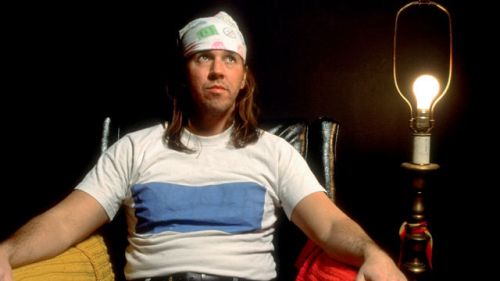
On the heels of the highly anticipated new David Foster Wallace biography comes Both Flesh and Not: Essays (public library) — a collection spanning twenty years of Wallace’s nonfiction writing on subjects as wide-ranging as math, Borges, democracy, the U.S. Open, and the entire spectrum of human experience in between. Among the anthology’s finest is an essay titled “The Nature of the Fun” — a meditation on whywriterswrite, encrusted in Wallace’s signature blend of self-conscious despondency, even more self-conscious optimism, and overwhelming self-awareness. It was originally published in 1998 in Fiction Writer and also included in the wonderful 1998 anthology Why I Write: Thoughts on the Craft of Fiction.
After offering an extended and rather gory metaphor for the writer’s creative output and a Zen parable about unpredictability, he gets to the meat of things:
In the beginning, when you first start out trying to write fiction, the whole endeavor’s about fun. You don’t expect anybody else to read it. You’re writing almost wholly to get yourself off. To enable your own fantasies and deviant logics and to escape or transform parts of yourself you don’t like. And it works – and it’s terrific fun. Then, if you have good luck and people seem to like what you do, and you actually start to get paid for it, and get to see your stuff professionally typeset and bound and blurbed and reviewed and even (once) being read on the a.m. subway by a pretty girl you don’t even know it seems to make it even more fun. For a while. Then things start to get complicated and confusing, not to mention scary. Now you feel like you’re writing for other people, or at least you hope so. You’re no longer writing just to get yourself off, which — since any kind of masturbation is lonely and hollow — is probably good. But what replaces the onanistic motive? You’ve found you very much enjoy having your writing liked by people, and you find you’re extremely keen to have people like the new stuff you’re doing. The motive of pure personal starts to get supplanted by the motive of being liked, of having pretty people you don’t know like you and admire you and think you’re a good writer. Onanism gives way to attempted seduction, as a motive. Now, attempted seduction is hard work, and its fun is offset by a terrible fear of rejection. Whatever “ego” means, your ego has now gotten into the game. Or maybe “vanity” is a better word. Because you notice that a good deal of your writing has now become basically showing off, trying to get people to think you’re good. This is understandable. You have a great deal of yourself on the line, writing — your vanity is at stake. You discover a tricky thing about fiction writing; a certain amount of vanity is necessary to be able to do it all, but any vanity above that certain amount is lethal.
At some point you find that 90% of the stuff you’re writing is motivated and informed by an overwhelming need to be liked. This results in shitty fiction. And the shitty work must get fed to the wastebasket, less because of any sort of artistic integrity than simply because shitty work will cause you to be disliked. At this point in the evolution of writerly fun, the very thing that’s always motivated you to write is now also what’s motivating you to feed your writing to the wastebasket. This is a paradox and a kind of double-bind, and it can keep you stuck inside yourself for months or even years, during which period you wail and gnash and rue your bad luck and wonder bitterly where all the fun of the thing could have gone.
The smart thing to say, I think, is that the way out of this bind is to work your way somehow back to your original motivation — fun. And, if you can find your way back to fun, you will find that the hideously unfortunate double-bind of the late vain period turns out really to have been good luck for you. Because the fun you work back to has been transfigured by the extreme unpleasantness of vanity and fear, an unpleasantness you’re now so anxious to avoid that the fun you rediscover is a way fuller and more large-hearted kind of fun. It has something to do with Work as Play. Or with the discovery that disciplined fun is more than impulsive or hedonistic fun. Or with figuring out that not all paradoxes have to be paralyzing. Under fun’s new administration, writing fiction becomes a way to go deep inside yourself and illuminate precisely the stuff you don’t want to see or let anyone else see, and this stuff usually turns out (paradoxically) to be precisely the stuff all writers and readers everywhere share and respond to, feel. Fiction becomes a weird way to countenance yourself and to tell the truth instead of being a way to escape yourself or present yourself in a way you figure you will be maximally likable. This process is complicated and confusing and scary, and also hard work, but it turns out to be the best fun there is.
The fact that you can now sustain the fun of writing only by confronting the very same unfun parts of yourself you’d first used writing to avoid or disguise is another paradox, but this one isn’t any kind of bind at all. What it is is a gift, a kind of miracle, and compared to it the rewards of strangers’ affection is as dust, lint.
Both Flesh and Not is excellent in its entirety and just as quietly, unflinchingly soul-stirring as “The Nature of the Fun.”




 Richard L. Fricks