
Category: Science
Refuting the Irrefutable Proof of God–part II
Refuting the Irrefutable Proof of God–part I
Must watch series.
How My Mind Was Set Free
Here’s the link to this article by Merle Hertzler.
I learned early that I was not to question my religion. I was to simply have faith. And yet somehow the questions would still come. I would sometimes question the Bible. How did we know it was God’s Word? I would sometimes question Jesus. How did we know he was God? I never dared to ask these questions out loud, but in my own mind, yes, I asked these questions often.
The questions demanded attention. But simultaneously, there was always the nagging fear of what would happen if I died while I was in a state that questioned the faith. I simply could not take that chance. The consequences of dying in doubt could well be unimaginable.
So, I asked questions, yes, but I always knew what the answer needed to be. The side of my mind that argued for Christ had to beat out the side that argued against.
It is as if my mind included an advocate for the faith, an advocate against the faith, and a referee. The referee always sided with the advocate for the faith. And so, the advocate for the faith always won, two to one.
Those times were never fun. I longed to be free from doubts. And so, by sheer willpower, I pushed those questions aside.
But my mind was not really free.
Many years later, the dam would break. The questions would come out–gradually at first, then with a rush. And when it was all over, my mind was free.
I grew up in a conservative Mennonite home. We didn’t listen to secular music, watched only a select few TV shows, and centered our lives on conservative religion.
When I was 14 years old, my family and I joined a fundamentalist church, one that did not question the Bible. Fundamentalism became a way of life for me. Everything that entered my mind had to come through its filter. I soaked it all in.
I was terrified of hell and would often lie awake at night worrying about it. Even in social settings, I would be sitting there thinking about hell. Fundamentalism offered a solution. It said that all one had to do was accept Jesus. So, I did it. Did I do it right? I didn’t know. So, I did it again. I still wasn’t sure that I had done it right. And so, I did it again and again in my mind. I prayed that God would be merciful to me a sinner. I invited Jesus into my heart. Over and over, I accepted him in any way I could think to accept Christ.
One day I read the tract, What Must I Do to Be Saved, by John R Rice. It told me I did not need to concentrate on getting the act of believing right or saying the right words. I just needed to choose to believe. That’s it? All I needed to do was choose to believe? Fine. I chose to believe. Case closed. Let’s move on.
And so, I proceeded in life as though the case was closed. What a relief! I thought that everybody else surely had similar worries and needed to know this news of deliverance from hell.
“Grace, my fears relieved”, the old song says, but before that, “It was grace that taught my heart to fear.” Religion offered a cure for my fears. But what had caused the fears? Religion. Does Christianity invent the fears it then relieves? Is it solving a problem that it created?
I found relief from my fears. But to tell you the truth, faith did not do a really good job of it. The fear of hell had finally become manageable, yes, but it was always in the background.
As a Fundamentalist Baptist
In college, I joined an Independent Fundamentalist Baptist church, which then controlled every aspect of my life. I went door to door on the streets of the Bible belt, witnessing to those who may have missed God’s plan of salvation. Everybody at this church was told to be a soul winner. The pastor boomed his message from the pulpit, yelling at those who stayed home on visitation night. We had to be out there winning souls.
We didn’t want anybody to die and go to hell without knowing the way of salvation. If somebody didn’t know, then we needed to tell them. I wonder now, why did God need us to tell that story? Didn’t he have all the resources he needed? If we failed to tell somebody, and as a result that person suffered for eternity without ever having known the escape plan, how could a loving God let that happen? I never asked those questions back then. I was winning souls.
The pastor also yelled at those that listened to rock music, gave less than 10% of their income to the church, had the wrong haircut, or attended a movie theater. We were told exactly how to live our lives, and we obediently followed. It was the only life we knew.
In my senior year of college (1978) the pastor [1] moved to another church, and the church [2] deteriorated into disarray. I was confused. This was all I had to live for, and it had fallen apart. I saw the dark side of the church. There was chaos at some church functions. Once when we were singing Just as I Am over and over as an alter call, people became so bored that the song died in the middle and we never finished it. I had thought that we were saving the world. Now I looked at the lives that had been saved and wondered if it had meant anything.
Meanwhile, I watched as the story of Jim Jones and the mass suicide in Guyana appeared on TV. The story of those poor people following every command of their leader seemed all too real to me. I had been living my life much like they had. I could understand why they followed so obediently. Religion can do that to a person. Had I been deluded also?
There was something else that bothered me. I had been reading through the Bible every year since I was in 11th grade–every word of every verse–and was disturbed about what I was reading. Have you ever read the tales of killing, greed, and arrogance that fill the Old Testament? Do you ever question their relevance? I was not sure that I could trust the Bible any longer. As my confidence in the Bible withered, apathy set in.
Despair
I graduated from college with no meaning to life. My Christian hope had gone. I cannot begin to describe the despair that filled my life for the first two years after graduation. There was nothing to live for. I wanted to be happy, but I didn’t know why that would matter. Two hundred years from now, who would ever care if the bones left behind had supported a happy person or a sad person? Probably nobody would ever care.
But somehow, I cared. And I wasn’t sure why. I wanted to be happy. But instead, I knew apathy, bitterness, struggle, frustration, anger and confusion.
When my Christian hope had faded, why didn’t I look for something else? I didn’t know there was another way. I had grown up in Christian schools, Sunday schools, and Bible studies. The Bible was the only hope I knew, and it now seemed so inadequate. I never thought to look elsewhere–such is the grip that religion can have. I wish now that somebody had told me how to live the good life without the Bible. But I would not learn that until many years later.
Digging out
In desperation, I turned to Christian books. I had no intention of going back to my Independent Fundamentalist Baptist days. I thought that perhaps a milder brand of Christianity could help. As I read, I felt encouraged. Was God leading me back to himself? I thought that he was. And so, I made a commitment to walk close to the Lord again. I found that Christianity worked much better for me than apathy.
I would often go to a park and find a forsaken place alone with God where I could pray. I would pour out my heart to God, and I would leave refreshed. I took this as proof that Christianity was true.
I was soon to find the writings of C. S. Lewis. I found them fascinating. He did not just quote Bible verses. He used reason. I liked that. I read his books with enthusiasm and formed a new outlook on life.
I was back to seeing myself and others as rebellious sinners against God. I believed that I had rebelled against God, and that this had brought on the two years of depression. It was all my fault.
I saw others also in the same light as I saw myself. If somebody did something that hurt me, then I figured they must be doing it because they had given in to their evil, sinful nature. I would get bitter at those who had followed their inner sinful self in ways that hurt me. Sometimes I snapped at people and let them know how bad they were. That wasn’t good.
But I also found that religion helped me to keep my mouth shut. If inside I was bad, then I needed to keep that bad anger inside. It came from my fallen nature. I would not want my fallen nature to express itself like this. I wanted only my new positive nature, as produced by the Holy Spirit, to come out. So, the old, angry words were constrained. I set out to surrender my basic wants and desires to God.
I now was turning back to faith, not because I feared hell, but because I needed to avoid the despair associated with depression. I was no longer following the Independent Baptist tradition, but one thing I knew, I had had purpose and hope in those college days. And that was certainly better than the depression that had followed. So even if I was not convinced that my Independent Baptist days were on the right path, I figured that at least my life back then had been better. So I thought I needed faith to have purpose in this life. I just needed to make a few adjustments.
The Problem of Pain
I had a low view of human nature. Such views may look strange in light of what many now say in today’s Evangelical churches. These churches have often adopted a feel good, psychological approach to life that seeks to build our self-esteem and encourages us to accept ourselves and our feelings. Many Evangelicals do this in spite of the doctrine of human depravity that is still in Evangelical theology.
It was not long ago that the view of humanity as totally depraved was dominant, not only in fundamentalist churches, but in mainstream Protestant sources like the writings of C.S. Lewis. Since Lewis’s views were so foundational to me at that time, I will digress here to discuss the view of humanity that appears in his book, The Problem of Pain. He writes:
A recovery of the old sense of sin is essential to Christianity. Christ takes it for granted that men are bad. Until we really feel this assumption of His to be true, though we are part of the world He came to save, we are not part of the audience to whom his words are addressed, [3]
Lewis thought that we are bad people, and that God was angry with us for being bad. Lewis thought that Christianity offered no hope to those who did not share this view.
He went on to say that some Christians might ask, “What call has God, of all beings, to be angry with us?” Lewis responded to his own rhetorical question, declaring it to be a blasphemous question:
Now at the moment when a man feels real guilt–moments too rare in our lives–all of these blasphemies vanish away… At such a moment we really do know that our character, as revealed in [some sinful] action, is, and ought to be, hateful to all good men, and, if there are powers above man, to them. A God who did not regard this with unappeasable distaste would not be a good being…When we merely say that we are bad, the “wrath” of God seems a barbarous doctrine; as soon as we perceive our badness, it appears inevitable, a mere corollary from God’s goodness. [4]
Guilt is far too rare? Really? Lewis was not merely telling us that our actions are bad, but also that our very character is something that God hates with unappeasable distaste. He was saying that God is justified in having wrath toward us. For after all, at our very core, we are guilty, bad people.
Why are we so bad? Lewis contended that it is because of Adam’s sin. Can God then blame us for Adam’s sin? Lewis responds to this question:
Theoretically, I suppose, we might say “Yes, we behave like vermin, but then that is because we are vermin. And that, at any rate, is not our fault.” But the fact that we are vermin, so far from being felt as an excuse, is a greater shame and grief to us than any of the particular acts which it leads us to commit. [5]
So we find that we are born as vermin. And Lewis says that it is a shame and grief to us that we are vermin. What is the Christian to do? He continues,
Now the proper good of a creature is to surrender itself to its Creator… In the world as we know it, the problem is how to recover this self-surrender. We are not merely imperfect creatures who must be improved: we are, as Newman said, rebels who must lay down our arms…Hence the necessity to die daily: however often we think we have broken the rebellious self we shall still find it alive…The human spirit will not even begin to surrender self-will as long as all seems to be well with it. [6]
Do you get the picture? Lewis describes us all as inherently depraved descendants of Adam, as evil rebels. We need to die to our own internal wants. Suffering, he claims, is the tool that God uses to effect this change. His books were the biggest influence in my philosophy of life at that time. I also knew of a number of scripture verses to support this low view of humanity (e.g. Job 42:6, Is 64:6, Lu.17:10, and Rom. 3:10-19).
I look at it now, and do not think that I had a very healthy perspective. But this philosophy was mild compared with the Independent Fundamentalist Baptist tradition that I had come out of. And it certainly worked better than apathy. This outlook gave me a reason to live. At the time I assumed that it worked because it was right. Now, I think that it worked because it gave me a purpose. Other ways would have worked better.
C. S. Lewis showed me that life was rough, yes, but that was because we needed pain to change us from vermin to what we should be. Fine. Life is hard, but there was a reason for it. God was dealing with the old me, the vermin. I pushed onwards. And it seemed to be working.
I had found this one great pillar to support my rebuild of faith: Christianity is worthwhile because the path that I had found within Christianity works, at least it works for me.
That pillar would one day collapse on me when it was shown to be inadequate. The observation that faith made me feel better is simply not a good reason to say that the faith is true. But at that time the reasoning seemed solid.
Creationism
There was a second great pillar on which I based my faith. This pillar had stood firm even during the days of despair. I was quite familiar with the teachings of Henry Morris and the young Earth creationists. I thought that this was the most logical explanation for how life began. They argued that the Earth was created by God a few thousand years ago, just as the Bible said. During the time of Noah, a great flood covered the Earth. This flood buried many animals, I was told, and these became the fossils we see today. Creationists argued that all this was supported by scientific findings.
Creationists argued that evolution was impossible. They said that creationism was consistent with true science, but evolution was pseudoscience. I listened to this side only and was convinced.
Other things in the Bible may perhaps be wrong. I was finding simply too many problems with the Bible. But I had these two great pillars of my faith: a belief that Christianity as I knew it worked; and a belief that Genesis was the best explanation of origins.
Exposure to Enlightened Views
In 1987 I moved to the suburbs of Philadelphia and found an exciting Evangelical church. I met many wonderful people and quickly became involved in many aspects of the program. I had found a home and was happy.
Some of the Christians at this church came from a range of religious backgrounds. This was new to me. Some people disagreed with the way I understood Christianity. Some did not agree with me that the Earth was only a few thousand years old, for instance, or that the fossils had come from Noah’s flood.
Others told me that my religious philosophy did not work, that other philosophies worked better. There were big differences. I thought that we should despise our evil inner self; they thought that we should love ourselves. I thought that we must work hard to keep the evil anger inside of us from coming out; they thought that anger was there because we had not vented our anger. I thought that the big problem was overestimating oneself and overconfidence; they thought that the big problem was low self-esteem and a lack of self-confidence. I thought that we needed to die to ourselves; they thought that we need to discover ourselves and self-actualize. I thought that God made us feel guilty about our evil feelings; they thought it was the devil that wanted us to feel guilty about natural feelings. I thought that God allowed people to mistreat us because that was his way of molding our character; they thought that mistreatment damaged our psyche, often requiring counseling to overcome the effects. They thought my philosophy was depressing.
Do you understand why this was a difficult pill for me to swallow? This was a main pillar of my Christian faith–the belief that my Bible-supported views worked. Now here were Christians telling me that my version did not work well. What did they mean it didn’t work well? It absolutely did work. It worked far better for me than the apathy and the depression I had been in. And I had scripture to back it up.
It was not easy for me to accept that my way did not work well and was not based on truth. So, I prayed about it and read the Bible. And what do you think happened when I prayed? That’s right. I was convinced that God was telling me I was right. Seriously, who was I to go against what God was saying to me?
My friends and I all agreed that Christianity had the best answers to life. My experience and prayers told me that my version worked better. Their experiences and prayers told them that their version worked better. Who was right?
Computer Debates
I was soon to have my eyes opened to many other philosophies that supposedly worked best. I would soon meet believers in Mormonism, Islam, Bahai, Judaism, Wicca, and Atheism. Each was sure that his way had worked for him, thus showing that it was the best.
I was going to also hear of many psychological solutions, again with testimonials for each claiming that it was better than other techniques. I was not the only one who had claimed that my experience proved that I was right. Lots of people were claiming that they had tried something, and this made them feel better. Do all philosophies work? Some researchers had looked at the conflicting cures within psychology and wrote, “Is it true that ‘Everyone has won, and all must have prizes’?” [7] Indeed!
I met these people of many religions in the CompuServe debate forum, back in the days when one used a modem to dial into a computer instead of using the Internet. I began to participate in the religion section. I actively debated religion and psychology with anybody that wanted to discuss them. This was to become an important focus of my life.
The biggest lesson I learned during these debates was how to form an argument. It was not enough for me to state that Jay Adams, C. S. Lewis, or Thomas Szasz had written something that agreed with me on a particular point. After all, one can find somebody who will agree with almost any religious viewpoint that he expresses. I needed a more effective argument.
My favorite resource was the Psychoheresy Awareness Ministry of Martin and Deidre Bobgan. They referred to psychological experiments to support their arguments, and often quoted scientific journals. I found that when I described experiments people often listened to what I had to say and were less likely to attack my writings. I developed a love for scientific experiments and the scientific journals that described them.
And so began a regular series of trips to the Philadelphia Public Library, and later, a university library. I would make lists of articles that favored my positions and would go to the library to get more ammunition for my side.
Cracks in the Foundation
These trips became time-consuming, and so, in 1992, I subscribed to my favorite journal, The Journal of Personality and Social Psychology. At $247 a year, this represented a major desire to learn the truth. Having made the commitment, I was determined to learn something from each issue. I began to read papers whether I thought they agreed with my position or not. This was a change for me. I was not merely reading to prove I was right. I was reading to learn.
I read some papers that were enlightening. I read that trying to suppress thoughts can make them stronger. [8] Were my efforts to keep my true thoughts under control making those repressed thoughts stronger? I learned more about the function of self-esteem. Was my viewpoint of myself as an evil sinner harmful? Did my Christianity really not work as well as I had persuaded myself it had? Slowly, microscopic cracks began to develop in this great pillar of my faith. It was slow and subtle, but the cracks were beginning.
The Creationism Pillar Caves
Meanwhile, a strange twist of fate put me right into the middle of the creation-evolution debate. That was not where I wanted to be, for these fights were often quite nasty. I couldn’t believe that I was there in the middle of it all. But I was not about to leave a good debate. I decided to let people know that evolution could not possibly happen.
I made some progress arguing that the complexity of genes made evolution difficult, but somebody wanted to know where all of those fossils had come from, if not from hundreds of millions of years of evolution. I suggested they might have been caused by Noah’s flood. My argument was defeated in one round. I was asked to explain how it is that we find rocks made of wind-blown sand in the midst of all these rocks under the earth. I had no answer. Wind certainly wouldn’t be blowing sand around under the floodwaters. I told myself the problem was that I was not familiar enough with that issue. So, I avoided the flood altogether until I could find better answers.
I never did find a satisfactory answer to this simple question, nor to many of the other problems with Noah’s flood. So, I concentrated instead on problems that I perceived with the mechanism of evolution.
To make a long story short, this led me to a moment of epiphany in which I found myself in a library completely overwhelmed with the evidence for evolution. In shock, it dawned on me that I had no convincing case for my young Earth Creationism.
After the dust had settled, 18 months later, I had switched to arguing for evolution. I describe this transition elsewhere, and won’t repeat it here.
It was a complete change. Many people have survived the switch to evolution, and they still have faith. But the switch to evolution was traumatic for me. For I had two strong pillars left in my faith, the supposed evidence for creationism, and the understanding that Christianity works. The creationism pillar was now gone. The building above was resting on one unstable column.
The Second Pillar Caves
Meanwhile the other pillar of my faith–the one that said conservative Christian philosophy worked–was severely cracking. When I had met people offering all kinds of psychological cures for the condition of the human heart, I had argued that some researchers had found that it was not just the specifics of the cure that helped people, but that it was the caring, nurturing relationship with a friendly helper that was doing more to build hope, and thus help troubled people. [9] I argued that, therefore, others could not force a view on me that they found had worked for them. Perhaps the fact that they felt better had nothing to do with their method. Perhaps they were feeling better only because they were making a cooperative effort with others to address the problem.
One day somebody turned that argument on its end. He asked me how I knew that Christianity worked. Perhaps people were helped within Christianity because they were in a nurturing relationship with caring people, not because of the specifics of the Bible. I had been caught by my own argument, and I had no answer. I knew I could not be sure that it was Christianity that made the difference.
As this was happening, I was also needing to deal with the errors in the Bible. I had known about these problems for years, ever since I had read through the entire Bible six times in my youth. But I had found those two great pillars of my faith, and thus could ignore the Bible’s problems. Those pillars were now in shambles. And I was seeing skeptics on the forum arguing that the Bible commanded massacres (e.g. 1 Samuel 15); praised terrorism (e.g. Psalm 137); and allowed slavery (e.g. Exodus 21). They pointed out contradictions in the Bible. I knew I had no chance against their arguments. It was no longer possible to ignore what the Bible said. My faith was crumbling.
What should I do?
I began to rapidly incorporate new ideas into my mind. I did my best to piece together a progressive philosophy of life that would keep my faith in spite of these problems. I experimented with ways to include evolution, an obviously errant Bible, a higher view of the self, and even Humanism into my Christianity.
Meanwhile, I moved on to other interests: country dancing, movies, and romance. Ah yes, romance. I fell in love with a very special lady, who has become my best companion in life. She has supported me through some tough times, and I am very grateful to her. She has a compassion and concern for others that I can only dream about. I had found somebody that I could love with all of my heart. We were soon to be married. She has not agreed with where my skepticism has finally led me, but she is always my best friend.
I had drifted away from participation in church. I now made one last effort to find my place again. There had been a radical change in my thought process. I was no longer the most conservative thinker on the block. Now I was perhaps the most liberal thinker at church. I persuaded myself that I could still fit in–after all it was the progressive element at church that started me on my journey–but I found it increasingly hard to identify with the church program. And I asked questions that surprised everyone.
There is no stopping the mind set free. It is like that first leak of water through the dam. It reaches a critical size, and then bursts free. My thoughts refused to stop. The dam had been broken. I read books that were critical of the Bible. I read the Bible from a whole new viewpoint. I found skeptical sites on the Internet. I asked many questions–many of which are on my website. I found it harder and harder to identify myself as a Christian.

Even the label of Liberal Christian was losing its appeal. I could no longer believe the basics of Christianity. If I still identified as a Christian, while sidestepping the problems, was I committing the sin of silence?
| The Sin of Silence by Gerald A. Larue What’s the Harm? Why Religious Belief Is Always Bad by Richard Carrier |
Liberal Christianity Links
Where it All Led
In 2002 I decided that I could no longer identify myself as a Christian. What am I? I am now an Ex-Christian, an Agnostic, a Humanist, and a Freethinker. In September 2002 I created the website Questioning: An Examination of Christian Belief to discuss my questions and to explain what had happened to me.
I have not chosen an easy path. It is not easy to tell people that I no longer believe that this message is true. But I find the evidence overwhelming. If the weight of the evidence were marginal, I would follow the believing crowd and not raise the issue. I do not like to be different. I prefer to follow the crowd. All of my life I have been a follower. I have always wanted to fit in. But there are just too many problems with the Bible. I simply cannot unlearn what I have learned. Knowing what I know, I cannot be a Christian. So, I choose the road less traveled.
I am not asking you to follow me. You have a mind of your own. You can decide for yourself. But perhaps you could learn from me.
I now have a different perspective in life. I wrote earlier of how I once saw people that hurt me as being evil. If somebody hurts me now, I think they must do it because, from their perspective and current knowledge, it seems best for them to do what they do. Years ago, it was hard to forgive hateful vermin who did hateful things. It is much easier to forgive confused but well-meaning individuals. This change in perspective works wonders. Instead of concentrating on bridling the tongue, one can concentrate on understanding the person who did hurtful things. Rational questioning changes perspectives, and changed perspectives change lives.
I find that I am far happier without the bonds of a preset religion. My mind has been set free. I am free to explore the world without the need to fit everything into a predefined religious bias.
It is fine to question. It is safe to explore. There is always more to learn. I hope that neither you nor I will ever stop questioning.
The above is an edited copy of the story I shared on the web in 2002. Since then, I have enjoyed a life that is truly free. This story had been part of my Questioning: An Examination of Christian Belief website that was on the Internet until 2017. I have now brought that site back online with a major facelift. I have rebranded it as The Mind Set Free.
by Merle Hertzler, June 11, 2022
Is There Happiness without Jesus?
Here’s the link to this article by Merle Hertzler.

Perhaps to you, Christ is the only hope in this world. Your life is centered on him. He is your purpose in life. I understand. I have been there. I accepted Jesus Christ as my personal savior many years ago. I have read the Bible from cover to cover six times–every chapter, every verse, and every line. I have spent literally hours a week in prayer, as I grew in my personal relationship with the Lord. In college, I never drank alcohol. Instead, I attended prayer meetings and went door-to-door witnessing to get my thrills. I have taught Sunday school, sung in the choir, and worked in the children’s ministry. I have been there and done that. I know what it is like to discuss all the details of my life with the Lord, believing that he was right there in my heart listening to me.
I know the excitement of doing God’s work all day Sunday. And I also know the emptiness that would come on Monday. I used to wonder why a person that was so committed to the Lord would feel that way on Monday. It seemed that the more I allowed myself to get excited on Sunday, the worse I would feel on Monday.
I am no longer a believer. I have found something different. I have learned to question, to explore, to think, to be free, to be me. I have the freedom to freely grasp life without the restraint of religion. I have found a purpose that is as good on Monday as it is on Sunday. Life without Christianity can be far more fulfilling than anything that I had ever found inside. And there are hundreds of others who testify to the same thing.
| Religious Beliefs and Societal Health, By Matthew Provonsha Into the Clear Air by Adam Lee Why are these people so happy? When You Feel Like a Loser by Merle Hertzler Sad? Discouraged? I offer some advice. The Crazy-Making in Christianity by Marlene Winell What faith can do to you, and how to recover. Justin Brierley and the Folly of Christianity by Richard Carrier The Bible and Self Esteem by Merle Hertzler |
Happiness links
Have you found joy in Christ? I am glad that you are happy. But tell me something, please: Why do so many Christians struggle to find that joy? Where is their peace? Why are they so discouraged? Why are they so sad?
How do I know that many Christians are sad? Here is one way to see it: Fire up your search engine and search for “sad discouraged depressed Christians.” As I write this I find 9,570,000 hits.[1 ] Sure, not all of those sites are relevant, but most of the top sites are. They are written by Christians to help sad, depressed Christians. Why are all these people trying to help discouraged Christians? It seems that there is a problem. There must be many thousands of sad, depressed Christians out there.
Let’s look at the solutions offered on these sites. What are Christians depending on to give them hope? Some Christians look to Christ alone as their source of happiness. Others look to other sources also, such as psychology, to help them find their way. What do the top Christian sites propose? I found the usual smattering of Bible verses, and then I found suggestions such as these:
- Replace negative with positive thoughts
- Keep a journal of what you think and feel
- Give yourself affirmations
- Listen to relaxing music
- Get more light or less heat
- Change your normal routine
- Seek professional help
- Take St. John’s Wort
- Try cognitive therapy [2]
We see here a variety of techniques. It would appear to me that these suggestions have little to do with Jesus. Can no freethinker ever listen to relaxing music? Can no atheist go into the sunlight or affirm himself? These things apply to unbelievers as well as Christians. The unbeliever is not missing out on any of this. In fact, many have found that it is easier to enjoy the good life without religion.
Does Jesus really give his followers peace and joy? Then why must Christians walk around giving themselves affirmations to avoid depression?
Do you see the hypocrisy here? Non-Christians are told that they need to accept Christ to have peace and joy in their life. Yet many believers are missing peace and joy, and Christians recommend that these believers turn to therapies such as cognitive therapy, a treatment that was developed in the secular world. Is this consistent? If cognitive therapy is the cure for the troubled mind, why do evangelists tell us that Jesus is the cure?
Psychology vs Faith links
Do you need to give yourself pep talks to avoid discouragement? Do you have a daily struggle trying to find peace and joy? Then you cannot tell me that I need what you have to be happy. It seems to me that it would be hypocritical to claim on Sunday that one has peace and joy in life, and then visit the psychiatrist to deal with a life in despair on Monday. Wouldn’t it be better to face the facts? Wouldn’t it be better for one to admit that, in spite of religion, he is not really happy? Wouldn’t it be better for such a person to say that his Christianity has not really satisfied him?
Perhaps you have indeed found genuine happiness in Christianity. I am glad for you. I hope you understand that others have found happiness elsewhere. You may not need what I have to be happy, and I may not need what you have.
But not all Christians are happy. Many are very sad. Some tell me that it is only weak, carnal Christians who experience such prolonged sadness. They will tell me that mature Christians overcome and are happy. Then why is it that there are sites dedicated to helping depressed missionaries?
| Missionary Care A mental health ministry for Christian missionaries. Psychiatric Wards for Born-Again Christians Only by Edmund D. Cohen |
Christian Depression links
With so many missionaries in need of recovery from depression, it seems that one can be totally dedicated to Christ and not be happy. It is difficult for me to see that they can claim that their faith alone has the way to peace and joy in life.
Some will tell me that depression, as a medical condition, is outside the scope of the Bible. Fine, but psychologists commonly treat depression with Cognitive Behavior Therapy, which originated from humanists such as Albert Ellis. If you turn to Cognitive Behavior Therapy in severe cases of depression, why would not quite similar principles used by humanists be good for mild discouragement?
There are many ways to happiness. As for me, I have found no greater joy than that of being free–free from the need to believe a religion that my mind has found to be false. I can explore the world around me and learn without the need to force my observations into a preconceived mold.
There is no experience quite like setting the mind free.
Albert Einstein once wrote,
The important thing is to not stop questioning. Curiosity has its own reason for existing. One cannot help but be in awe when he contemplates the mysteries of eternity, of life, of the marvelous structure of reality. It is enough if one tries merely to comprehend a little of this mystery every day. Never lose a holy curiosity.Source: https://www.inspiringquotes.us/author/3804-albert-einstein/about-curiosity
Do you have that holy curiosity? Are you free to ask questions–even about your faith? Are you free to take intellectual journeys away from the path that you have been taught? I think you will be happier if you choose to be free.
Robert Ingersoll describes that experience:
When I became convinced that the Universe is natural– that all the ghosts and gods are myths– there entered into my brain, into my soul, into every drop of my blood, the sense, the feeling, the joy of freedom. The walls of my prison crumbled and fell, the dungeon was flooded with light and all the bolts, and bars, and manacles became dust. I was no longer a servant, a serf or a slave. There was for me no master in all the wide world — not even in infinite space. I was free — free to think, to express my thoughts — free to live to my own ideal — free to live for myself and those I loved — free to use all my faculties, all my senses — free to spread imagination’s wings — free to investigate, to guess and dream and hope — free to judge and determine for myself…
For the first time I was free. There were no prohibited places in all the realms of thought — no air, no space, where fancy could not spread her painted wings — no chains for my limbs — no lashes for my back — no fires for my flesh — no master’s frown or threat — no following another’s steps — no need to bow, or cringe, or crawl, or utter lying words. I was free. I stood erect and fearlessly, joyously, faced all worlds.Source: Why I Am Agnostic – Robert Green Ingersoll, offsite
I agree. I am glad that folks like Ingersoll have taught me how to have a good life. They have taught me how to be free. And now I am passing the baton to you.
| Exuberance, an Affirmative Philosophy of Life by Paul Kurtz 20 Atheist Quotes about Joy and Meaning by Valerie Tarico The Promise Of Humanism by Frederick Edwords |
Links on the Good Life
I hope I have helped you to ask questions, that those questions lead you to answers, and that through it all, your mind is set free.
Is There a God?
Here’s the link to this article by Merle Hertzler.
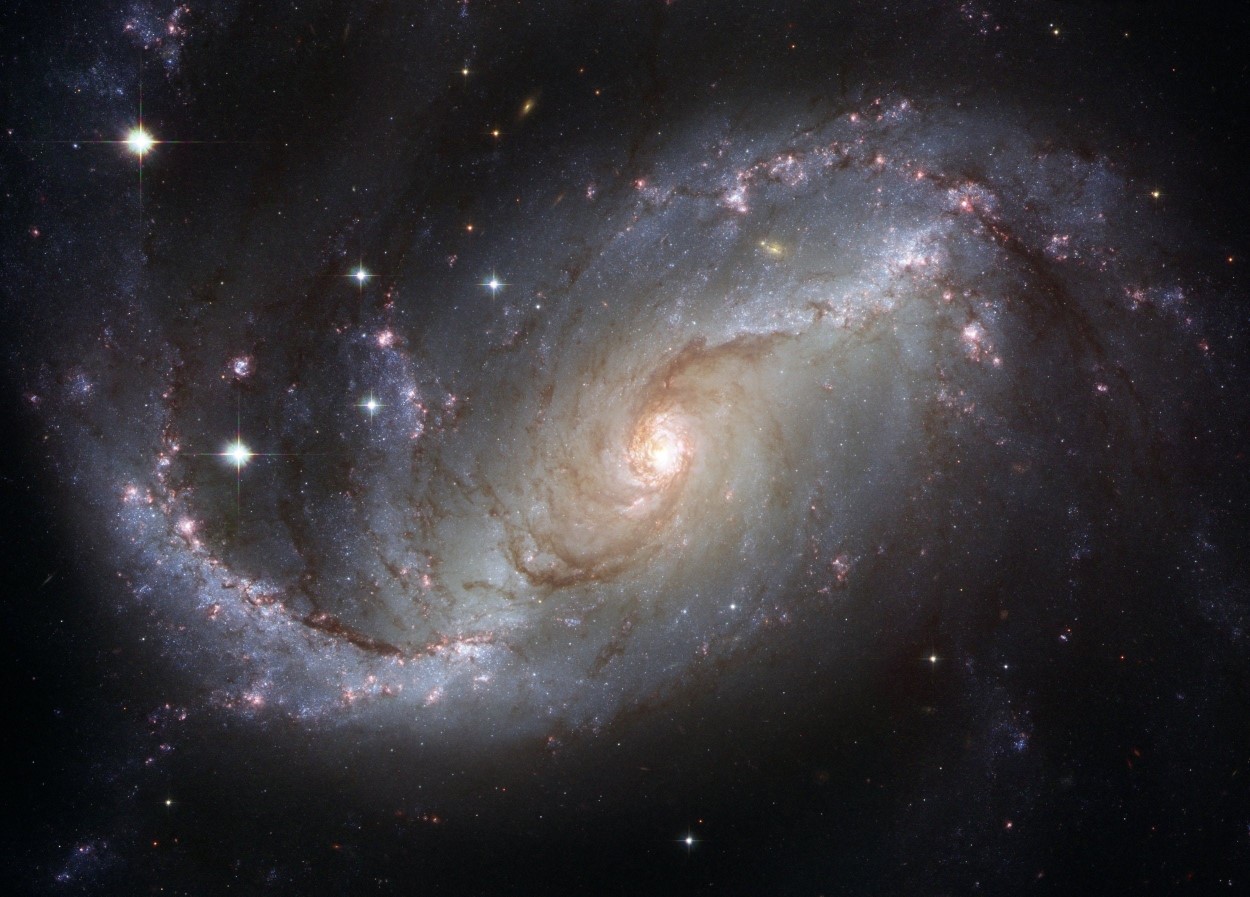
We come now to the key question: Is there a God? Here is my answer: I don’t know.
If you have been reading through this series, you have seen that, if God exists, I do not find him doing many of the things that have been claimed about him. He did not create the world in seven days. He did not inspire the Bible. He did not raise Jesus from the dead. He is not preparing a home for us. He is not in intimate control of our circumstances. He is not speaking to us. What is left for him to do?
Some will claim that he created the universe, and that he still occasionally responds with miracles and answers to prayers. Let’s look. If God exists, we certainly would want to get to know more about such a powerful being. So, let’s honestly look at the evidence.
We will begin our search in the present, and work our way backwards through time, looking for evidence for God. We will look for God in four places.
- The present.
- The first humans.
- The origin of life.
- The origin of the universe.
1. Is God working today?
Some might suggest that God is performing occasional miracles. Where is the evidence? In the past, many people claimed to have seen miracles, but a funny thing happened as time went on. More and more, people realized that there were scientific answers for the unexplained. In modern times, when people can search claims using science, miracle claims are readily debunked. Past claims of miracles could have been sheer fabrications, or misunderstandings from people who didn’t have the backgrounds to scientifically examine the claims.
Suppose God does work miracles. Why would he limit himself to occasional miracles? If he loves everyone, knows we suffer unjustly, and easily works miracles without getting tired, why do so many of our pleas go unanswered? Even if there were a few answered prayers, how can you explain a God who is so absent?
And why does he not readily display that power for all to see? If God can do anything, and wants us to believe in him, why does he not clearly show himself?
Do you remember the story about Elijah demonstrating God’s power? The Bible says Elijah gathered the people together and set up a contest to see who could call fire down from heaven. According to the Bible, Elijah won the contest. Fire came down and burned up a water-soaked sacrifice on an altar. Could you have God duplicate that feat? No? Why not? If God did it once in answer to prayer, why won’t he do it again?
You might say that you are not allowed to test God. Then why does the Bible say that Elijah was allowed to do that test? If he was allowed to do it, why not you? Why wouldn’t God want to make his power clearly known? Or is it possible he isn’t there?
Years ago, magician James Randi had a challenge where he offered a million dollars to anybody who could prove a supernatural or paranormal phenomenon. Over a thousand people tried to do this. All failed. When put to the test, all the claims of supernatural miracles brought before James Randi failed.
So maybe there are no verifiable miraculous events happening today.
Prayer
You may tell me that you have personally seen God answer prayer. I once made similar claims. But it is not enough simply to say that you were once sick, prayed, and get better. After all, many people got sick and got better. Some of them did not pray. And so, you would need to show that prayers actually made a difference. Ideally, you would show that people that were prayed for were more likely to recover compared with those who didn’t have anybody pray for them.
In science, we verify claimed cures by testing them. Preferably, we set up a large study in which some people get the proposed cure, some may get alternate cures, and some just get a placebo. Ideally the patients and the examiners do not know who got which treatment. In the end of the study the researchers reveal who was in which treatment group. They compare the results and see which treatment, if any, worked best.
How would prayer work in a controlled study? Would it work better than a placebo? Recently, researchers did several such studies. When the methodology and statistics were examined, they found no good case for prayer. By contrast, new drugs regularly show evidence of being effective after such trials. Why does prayer not also show a clearly significant effect when tested?
Although your experiences may be very convincing to you, many of us see it as a case of special pleading. We would not allow a new drug on the market based solely on the testimony that somebody once tried it and got better. Why should we accept the claim of miracle with no better evidence for it than similar testimonial evidence for quack cures?
| Does Prayer Work? by Dariusz Jemielniak Have Christians Accepted the Scientific Conclusion That God Does Not Answer Intercessory Prayer? by Brian Bolton Efficacy of Prayer by Irwin and Jack Tessman How Christians Can Test Their Own Prayers Objectively by John W. Loftus This article is behind a paywall at Free Inquiry. Loftus explains how you can test for yourself if your prayers work. The Science of Prayer by Victor J. Stenger Debunking Medical Prayer Studies: Let Us Pray That People Stop Praying by James W. Williamson, M.D. Miraculous Cures by Anthony Campbell The Study of Therapeutic Effects of Intercessory Prayer by Jeffery A. Dusek, PhD et. al. How to properly study prayer. |
Shall we pray? Links to research on the effectiveness of prayer.
In your heart
Others will tell me that they know he lives, for he lives in their heart. I understand. I was once there. I thought my experience proved that it was God working inside me. But I found out later there were many people with quite different experiences, with each thinking his experience proved he was right. Does this prove all are right? No. Simply trying something and feeling better does not prove that what you tried is best for all, or that it is based on truth. Sometimes simply trying, with the help of others, is already a huge part of what it takes to find a better life.
2. Did God create humans?
Many will turn to creation as their proof of God. They will look at something like the greatness of the human mind, and come up with an argument that looks something like this:
- There must be an explanation for why the human mind exists.
- One explanation is God.
- I cannot think of any other good explanations.
- Therefore, God exists.
This argument is faulty. There is indeed another good explanation for why the human mind exists: evolution. We met up with evolution back at the beginning of this series. There I explained how I became convinced that we evolved. You may perhaps agree that there is evidence for evolution, but you just don’t see how this could happen on its own. Something or someone must have been guiding it. Hence, God is still involved in the process.
What do we see if we look at the fossil record? If God is behind it all, gradually transforming life into the humans he wants, one would expect to see most incremental changes be specifically in that direction. Instead, what we see are widely diverging branches in all directions. It sure looks like evolution is trying many different approaches, some of which work, and some of which just branch out to a dead end. This does not look like anybody is actually guiding the process.
Why all the dead-end paths? Dinosaurs, for example, were a major branch of evolution that later died out. Only one small group of dinosaurs survived, becoming modern birds. All the rest died out with no living descendants. If God was guiding evolution to lead to humans, why bother with thousands of species of dinosaurs over many millions of years? Why did that unspeakable carnage in the struggle for existence need to occur? They all died out anyway. A small group of competitors to the dinosaurs, the early mammals, eventually took over and now rule the world that dinosaurs once dominated.
As another example, we talked earlier about the amazing mammallike reptiles that developed mammal features over many millions of years. If we look closely at them in the fossil record, we see this is not a guided evolution toward modern mammals. Rather, there were a whole series of trials and errors in many directions before the group we now call mammals evolved to dominate.
None of this looks like deliberate, guided evolution. We are not seeing the man in charge here.
Hominids
Similarly, when we look at human evolution, we see many fossils, but we don’t see a clearly directed path to Homo sapiens. The lines branch out in many different directions.
We are often not sure which of those branches are our direct ancestors. In fact, since there were many species besides the ones we have found in the fossil record so far, then most likely it is one of these unknown species that is our true ancestor. Unknown species were cousin species to the ones we have found. By studying these cousin species, we can get a good idea how we got here. But what we are seeing may just be dead end species that are cousins to our true ancestors.
But aren’t humans so very different from other animals? Were earlier animals really capable of evolving into Homo sapiens? Yes. In essence, our anatomy is very close to the anatomy of other apes. We share 98.8% of our DNA with chimps. Even that part of our anatomy that we value most, our brain, has clear connections to all animal brains. Other animals experience thoughts, emotions and will just like we do. Their brains store memories just like us. There is a quantitative difference, yes, but the forerunners of all these functions are in the other great apes also.
How can an animal we would class as an ape walk out of the forest and become human? It’s a long story. It appears that, in The Great Rift Valley in Africa, a unique stretch of grasslands opened up as the continents moved. Certain apes ventured out of the woods, perhaps searching for food. They found a different world, one in which they could survive using the high intelligence inherent in all apes. Problem solving was so important out here, brains began to evolve for higher intelligence.
Likewise, out in the plain, there was an advantage to standing upright. One could travel more efficiently, look out over the tall grass to see predators, and use one’s hands for many tasks. The combination of increased intelligence with increased availability of the hands worked out quite well in this new environment, leading to strong evolution of these traits.
But intelligence and dexterity alone would have left our ancestors helpless in the vast grassland. They found that, like us, they needed each other. It’s true. We all need somebody to lean on. So, our ancestors, which we refer to as hominids, used their new brainpower for more than just individual problem solving. They used their brains to communicate with other hominids. This turned out to be quite difficult. Understanding others is hard. If you want to communicate effectively with me, you need a big brain. Likewise, our hominid ancestors needed big brains to communicate.
With effective communication, we learn from each other. You learn things from me. I learn things from you. Together, the combined knowledge can lead to new ideas. The end result can be far greater than simply adding two experiences. And so, there is a huge advantage to good communication. This requires a lot of brainpower.
As human cooperation and brainpower became ever more important, brains became larger, and that can be a big problem for the mothers. There is only so much head that can squeeze down the birth canal. Unfortunately, many hominid females must have died in childbirth–may they rest in peace–as evolution drove brain sizes larger.
But, once again evolution found a solution. If the skull can wait to finish its growth until after birth, then it is easier to give birth to a child who will have a large adult brain. For the mothers, this was good news. They could give birth to babies that then grew up with big brains capable of better supporting the mother, her other offspring, and her grandchildren. This solution was a winner.
But there was a big side effect to all this. Hominid babies are quite helpless while their brain grows. They go through a prolonged childhood before emerging as super-intelligent hominid adults. Other animal babies can walk and begin caring for themselves soon after birth. Not so with hominids or our close ancestors. Nevertheless, when intelligence is a primary necessity for survival, the sacrifice can be worth it. The mother devotes herself to her helpless baby, yes, but oh what a wonder this produces.
How can a mother afford to spend all this effort raising children? It takes a village. That’s right. Child raising requires a team: mothers, fathers, grandparents, siblings, cousins, neighbors, anybody. And that is the beauty of the intelligence and social communication that had evolved. It allowed these hominids to develop as a team, caring for each other and for the young. That led to longer childhoods; to larger brains; to more intelligence; to better communication and cooperation; and back around to longer childhoods and still larger brains. It was an endless upwards spiral.
This led to all the wonderful adaptions of hominids: better tools to hunt and get the needed protein to feed these demanding brains; fires to scare away predators; fires to cook meals; loss of hair, which allowed more persistent hunting without overheating; clothing and blankets to stay warm without all that hair; language; structured social interaction; and yes, partying into the wee hours of the morning while sitting around the campfire. Keep that up for hundreds of thousands of years, and before long we see a big change.
None of that requires direct intervention of God. It is simply the working of nature, driving one evolutionary line in a unique direction after a number of prior adaptions had given that genus a unique survival strategy. No miracle was required.
| Human Evolution –Encyclopedia Britannica Introduction to Human Evolution–Smithsonian Institution Human Evolution–Berkeley University Why Are There Still Apes? A debate at Christian Forums site. How Did Humans Evolve?— History.com Fossil Hominids— TalkOrigins |
Human Evolution Links
3.Did God create the first life?
Years ago, when I was a Creationist, I was losing the argument attacking evolution, so I turned to the origin of life. Here it was much easier to make convincing arguments. For evolution, there was all that pesky evidence that shut me down whenever I tried to bring in creation. But as to the origin of life, here was a gap in which I could insert God. My argument went something like this:
- There must be an explanation for why life exists.
- One explanation is God.
- I cannot think of any other good explanations.
- Therefore, God exists.
That argument should look familiar. It is the same argument I wrote above about humans; except this time I changed the word in italics. It is the same argument from personal ignorance: I cannot think of another explanation; thus, the only explanation I can think of must be true.
This argument is also faulty.
It is true that there are limits to what we understand about the origin of life. It happened long ago and did not leave a lot of evidence. But we have learned a lot about this since the 90s, when I had argued for God as the originator of life. And yet, even back then, I could see that my arguments were losing.
Although we do not know exactly how it happened, we have many good hypotheses and understand how many of these processes may have happened. There are other explanations besides God.
A leading view suggests that self-replicating RNA molecules began to compete to be the best self-replicator, building more elaborate support until they put molecules together as cells. See The Origin of Life.
We don’t understand it all. Can we therefore insert God? What we have here is a God of the Gaps argument. We find a gap in our knowledge. In this gap, we conveniently insert God. The problem is that these gaps keep getting smaller as science fills in our previous lack of knowledge.
If you elect this defense of the faith, you keep on needing to back down as the gaps disappear. So, unless you enjoy doing a moonwalk, constantly going backwards while appearing to go forward, I would suggest avoiding arguing for a God of the Gaps. After several steps backwards, arguing for ever smaller gaps, you may eventually come to the point that I did, where I could no longer take myself seriously when moonwalking backwards while pretending I was making progress defending God.
| From Soup to Cells: The Origin of Life at Berkeley University site Biogenesis and the Laws of Evidence by Richard Carrier |
Biogenesis links
4. Did God create our universe?
So maybe we just better go back further in time, back beyond the story of life on earth, and ask about the beginning of the universe. How could a universe pop up out of nothing? We might frame an argument for this based on the format we had used above:
- There must be an explanation for why our universe exists.
- One explanation is God.
- I cannot think of any other good explanations.
- Therefore, God exists.
You may only be able to think of one explanation for the universe–God. But God is not the only possible universe maker. Perhaps natural forces could also do it.
So, before tracing back to the ultimate cause of everything, let’s look at how whatever or whoever it was that made the universe did it.
Let’s cut to the chase and state how the universe began: with a Big Bang. Regardless of who or what caused the Big Bang, we know the broad overview of what it (or he) did. First there was no universe. Then boom, a Big Bang. And the rest is history.
How do we know there was a Big Bang? Well, for one thing, when we look at distant galaxies, we find that they are all soaring away from us at a high rate of speed. This is exactly what we would expect if they had all originated from matter that was concentrated at the same spot and scattered in the Big Bang. In fact, if we trace back the trajectories of galaxies, we find they all came from the same spot in space 13.72 billion years ago. (That’s right, we now know the answer to 4 decimal places.) They must have all left that location simultaneously at high speed in different directions.

As the galaxies spread out, gravity slowed them down. We can conclude that they must have been going quite fast when the scattering started and slowed down gradually as gravity pulled backwards.
If we trace back to the time when the universe was about 1 second old, they would have been bunched together in a huge mass of high velocity particles at 10 billion degrees C. At that temperature neutrons and protons would have been traveling far too fast to make atoms.
But as the universe expanded and cooled, there would have been numerous atomic “marriages”, as particles settled down to form atoms. Almost all of the atoms that were created at that time would have been one of the three lightest elements, hydrogen, helium, and lithium. We can even calculate the ratios of each element created at those high temperatures. Most protons would stay as single protons and unite with one electron to form a hydrogen atom. About 25% of protons would pair up with another proton and with neutrons to form a helium nucleus. And about 1 in a billion would join with 2 other protons, ending up in the nucleus of a lithium atom.
We can compare this to what we observe today. Obviously, those elemental ratios have changed as time marched on. Much hydrogen has fused in stars to become helium. We know how fast this is happening, and so, if we trace back into the past, we can calculate the ratios these elements would have had 13.72 billion years ago. We find, to a high degree of accuracy, that the ratios predicted by the Big Bang theory (the science, not the show) correspond to the ratios that physical observations today tell us must have originally been there. The two calculations agree to a remarkable degree.
So how can you explain this complete correlation between the physics of a Big Bang and what is actually there today? If a creator did it without that superheated mass of the Big Bang, and he could have used a different ratio, why did he pick that exact ratio that the Big Bang would have created?
It is similar to the conclusion we reached at the start of this series where we saw that the earth is either many millions of years old or was created deceptively to look old. Ruling out deception, we concluded that the earth was old.
Similarly, if we rule out a God that deceptively made the element ratios such that they matched a hot Big Bang, then we are left with the conclusion that the elements came from the Big Bang.
A third verification of the Big Bang is the fact that we can see the background radiation from the Big Bang, exactly as predicted.
I won’t explore all the details of the Big Bang here. There are many sources with more details if you are interested.
| A Universe from Nothing book by Lawrence M. Krauss. The Big Bang at NASA Spontaneous Creation of the Universe from Nothing He Dongshan, et. al. Quantum Fluctuations in Cosmology by Alan H. Guth |
Big Bang Links
Could it be caused by nothing?
Our concern here is not so much the details of the Big Bang, but what caused it. What or who caused it to happen?
One obvious answer is, “God did it”. That is certainly a possibility.
Another answer is that “Nothing did it”. Wait, what? Yes, I said what I mean, maybe Nothing did it. Please note that I capitalize the word Nothing. For it turns out, in our universe, there is no such thing as a spot that is devoid of all forces, all energy, and all matter. Something exists everywhere, even if it is no more than the presence of certain laws of physics. So when I refer to Nothing, I am referring to the specific state of emptiness that is as close to true nothingness as is possible.
The emptiness of outer space is not truly a state of no-thing. For instance, there is that strange dark energy that permeates all of our universe. This dark energy acts in such a way that it tends to force the universe to spread out. Not only is this dark energy within our universe present at every point in space, but it appears to be everywhere, even outside our universe. As the universe gets larger, it contains more volume. Since dark energy is everywhere, the universe is constantly getting more total dark energy as it grows.
A strange thing happened as the universe grew and incorporated more dark energy. Dark energy now overwhelms the rest of the universe. In fact, the total dark energy in the entire observable universe is now 70 times the total energy in the familiar matter that we think of when we think of the universe.
Earlier, we said that the expansion of the universe had slowed down since the initial jolt of the Big Bang. But scientists have also found that, as more and more dark energy is being incorporated into the universe, and as this additional dark energy acts to accelerate the expansion of the universe, the universe is now accelerating. And as it accelerates, it incorporates dark energy even faster, and that makes it accelerate even faster. We keep going outward at faster speeds. Buckle up. We are off for the ride of our lives!
All that comes from the dark energy that inherently exists in all empty space. Empty space is not no-thing.
Not only is Nothing full of dark energy, but quantum mechanics predicts that Nothing regularly creates matter and anti-matter. And it turns out that, in every atom of your body, electrons and anti-electrons pairs are constantly bursting into existence, and then, almost instantly, annihilating each other. For that moment in time there is enough energy involved in this process to affect the energy state of atoms.
If we calculate the energy of atoms without taking these particles into account, our calculations are always inaccurate. But if we include these short-lived particles, we find our calculations reflect the actual energies of atoms to extremely high precision. Thus, they must really be bursting in and out of existence, just as quantum mechanics predicts.
So yes, even in empty space, matter and its evil twin, anti-matter, are constantly coming into existence. Most such particles quickly annihilate each other, but it is at least theoretically possible that some of them have continued to exist. The anti-particle could be swept into a black hole, while the particle itself lives on as a truly new something that came out of Nothing.
Yes, Virginia, in the cosmos there is indeed such a thing as a free lunch!
Similarly, at the Big Bang, we would have had these same quantum mechanics and all its weirdness at play. Quantum mechanics could have caused particles to come into existence.
In addition, we find that our universe in its earliest phases was experiencing a tremendous stretching of space-time itself, a period that we refer to as cosmic inflation. It was a brief period of time, far quicker than the blink of an eye. It lasted less than 10-32 seconds.
As the end of this inflationary period approached, inflation stopped in certain spots quicker than other spots. It was as though those spots had suddenly become frozen and no longer participated in the rapid cosmic inflation that was going on all around them. This caused immense quantum effects in these areas that were dropping out of the inflationary expansion. The quantum events associated with this sudden stoppage could have caused untold billions of particles, both matter and anti-matter, to come into existence.
As the universe continued to expand and cool, these spots multiplied. It was like popcorn: slow popping at first, and then popping everywhere. Eventually inflation stopped completely, and we were left with a boiling broth of matter and anti-matter.
It appears that, for every 1 billion particles of matter created this way, there were also about 999,999,999 anti-particles. As the universe expanded and cooled, most of these particles found mating anti-particles and annihilated each other. But the bachelors, so to speak, lived on to become the universe as we know it.
As mentioned before, the plasma started at temperatures over 10 billion degrees C. How did it get so hot? It appears that, when quantum mechanics creates particles, they start with a velocity equal to their escape velocity. The escape velocity is that speed which is just enough that, if a particle left the brew, it could continue to infinity before gravity finally stopped it. Any slower, and gravity would catch up to it and pull it back down where it started. Any faster, and the particles would easily sail away, to infinity and beyond!
So, the particles were traveling very fast. Since temperature is simply a measure of the average velocity squared of all the particles, that means the brew was very hot.
As the state of this plasma dropped below 10 billion degrees C, the particles then congealed into atoms. These atoms later combined into molecules, then lumps, and finally into stars and planets.

This is a cluster of galaxies about 4.6 billion light years away.
It is possible that this interaction of cosmic inflation and quantum mechanics was much larger in extent than just our universe. Possibly, as our universe “froze” and no longer experienced this wild, inflationary stretching of space-time, all the rest of nearby space-time beyond our universe possibly continued to stretch. And events similar to the Big Bang could have then been happening all over that vast expanse of space-time. We call this a multiverse.
These events could have been separated so far that, if our entire universe were drawn as the size of a period on a map the size of our universe, the nearest neighboring universe might be on the other end of that map. And the total expansion of space time could be so rapid that even light could not possibly make it from one universe to the other. We would never be able to detect any of these other universes. For all we know, we might just be in only one of the possibly infinite number of universes that actually existed or will exist.
If there are many universes being created, they may all be different. They may actually have different physics. Some may be duds, quickly disappearing. Others, like ours, may expand to the point where they can support life. In the dud universes, there is nobody around to observe that space-time creates dud universes. In universes like ours, there are people that ask, “Why is there something rather than nothing at all?”
So, scientists agree that something could come from Nothing in a process similar to that described above. Quantum mechanics produces particles. Empty space itself is full of energy. And a universe that quickly decelerates from cosmic inflation, as our early universe has, could experience a major creation of matter due to quantum effects. All this could have created matter that would be at high temperature and fly rapidly outward to form a vast universe.
This was a brief introduction to the Big Bang. We don’t know exactly how it happened, but we are learning more about it all the time.
What caused the cause of the Big Bang?
For our purposes, we are not so much concerned with how the Big Bang happened, as we are concerned with the ultimate explanation for it. Where did quantum mechanics, cosmic inflation, and all other physical actions come from?
Perhaps quantum mechanics and cosmic inflation always existed. Perhaps it could not be otherwise. Perhaps these physical realities just keep on creating universes.
Or perhaps other physical forces caused quantum mechanics and cosmic inflation to begin. Perhaps there is a multiverse of multiverses. Perhaps there is some innate source of multiverses that is creating multiverses with different physics. These multiverses could be creating universes, each with perhaps distinct versions of the inherited physics of the multiverse they came from.
Ah, but what caused the source of the source of the source of the multiverses? What is the ultimate thing that drove this all? We don’t know. Perhaps there is an infinite series of causation that never ends. Or perhaps, at root, there is a circular causation where A causes B that causes C that causes A ad infinitum. Or perhaps there is some root cause of everything, A, that simply is, and could not be otherwise. Perhaps the root cause is nothing more than, “Things happen.”
Regardless of whether the root cause is a distinct something (A) or a circular something (ABC), an infinite regress, or things just happening, let’s call this root cause of any physics the first cause.
This first cause could either have a mind or not have a mind.
If it has a mind, how could that mind remember anything before there was any matter that can be arranged to save the memories? All memories we know of (brains, computers, books, etc.) consist of an arrangement of atoms that document things. How can a creator’s mind do this, if there is not yet any matter to arrange to preserve those memories?
If the first cause, the process that started it all, had a mind, we should probably call it God. If it didn’t have a mind, we probably should not call it God.
Did the root cause have a mind? Would it be proper to call it God? Ultimately, we don’t know. Hence, regarding God, I am agnostic.
| The Problem with Nothing by Richard Carrier Multiverse Cosmological Models by Paul Davies Six Arguments that a Multiverse is More Probable Than a God by Richard Carrier Cosmological Arguments on the Secular Web. This has many counterarguments to the first cause argument. The God Impossible by Richard Carrier. This explores the question of how a mind could exist if there was no matter. Six Arguments That a Multiverse Is More Probable Than a God by Richard Carrier |
Links about the multiverse and God
Is God knowable?
We could get into endless discussion of what or who is behind it all. But ultimately, it doesn’t matter. Even if a God exists, I find no way of knowing what He wants. I don’t find that the Bible or any book reliably tells us what God wants. And I don’t find that God speaks to us and tells us what he wants. So even if God exists, I have no way of knowing what he wants.
If it turns out the maker of the process that made our universe has a mind, is still alive, and wants to communicate with us, then yes, of course, I would love to be introduced. But as I find no evidence that such a being is communicating, I am not expecting to be contacted.
And besides, even if God did try to speak to me, how would I know it was God? Sure, something like a seemingly miraculous Internet feed could suddenly come through a wormhole in space, complete with unimaginable knowledge and the ability to do things we would see as miracles. Would that prove that the source created the universe? No. It could simply be a super-advanced space alien with powers far beyond human powers. How would we ever know it was the source of the processes that started the universe?
And for that matter, even if you went to heaven after you died, how would you know that the being in charge of this paradise in which you find yourself is actually the originator of the processes that made the universe? Could you prove that the ruler of your paradise was not simply a highly advanced space alien with amazing powers? You would not know. Even though this ruler of this paradise had a Scotty that had beamed you up to this paradise as you were dying on earth, how would you know that there is not actually somewhere a more powerful being than him? How would you know that there are not more powerful beings out there, who will eventually attack your paradise and conquer it? How could you be sure you are on the winning side?
And how would the ruler of this heaven even know that he was really the ultimate God? If a different, more powerful God existed in some other part of spacetime beyond his knowledge, how would he know? If he couldn’t know that which is beyond his knowledge, is it possible that within that “unknown unknown”, as Donald Rumsfeld might have put it, there was some being greater than him?
In summary, I find no convincing evidence that God exists. I find no evidence when I look at the present, at evolution, at the origin of life, or at the origin of matter. If God does exist, I find no way of knowing what he wants. And if someday a being claiming to be the omnipotent creator contacts me, I would have no way to know that he actually was the omnipotent first cause, the creator of all universes.
| How COVID-19 Falsifies the God Hypothesis by Gary Whittenberger |
other links
All of that is a diversion from the business of living life. We have all we need to make our own lives productive, to build meaning and purpose in life. If a powerful, all-knowing someone from space reveals himself, great, I will be first in line to ask to meet him and learn from him, regardless of whether he actually initiated our universe. But until then, I live my life based on the information I do have.
We need to ask one more question before I complete this series. Some would think we are lost in hopeless despair without our faith. Are we lost without hope? I will finish this series by looking at hope.
Making Sense Podcast Episode 313: Apocalypse, A Conversation with Bart D. Ehrman
Here’s the link to this episode on Sam Harris’ website.
Here’s the link on Spotify.
MARCH 25, 2023
Sam Harris speaks with Bart D. Ehrman about the prophecies contained in the book of Revelation. They discuss his latest book, Armageddon, and widespread Christian beliefs about the coming end of the world.
Bart D. Ehrman is a leading authority on the New Testament and the history of early Christianity and a Distinguished Professor of Religious Studies at the University of North Carolina at Chapel Hill. The author of six New York Times bestsellers, he has written or edited more than thirty books, including Misquoting Jesus, How Jesus Became God, The Triumph of Christianity, and Heaven and Hell. Ehrman has also created nine popular audio and video courses for The Great Courses. His books have been translated into twenty-seven languages, with over two million copies and courses sold. Website: https://ehrmanblog.org/Twitter: @BartEhrman
Is There Life after Death?
Here’s the link to this article by Merle Hertzler.

You may have been told that you will live forever, but that seems quite unlikely to me. For our brains will one day be gone. All our lives those brains have been the seat of our thoughts, emotions, and memories. So, when the brain is gone, then the lights must go out. Surely then it is all over.
But some will tell me that something else lives on even after the brain has disintegrated. They often call this the soul. And ultimately, they say, the soul is the seat of the mind. And so, even if the brain is gone, the mind can continue as a function of a soul that survives death.
If the soul is really in charge, why do you even need a brain? If thinking is done by the soul, what is left for the brain to do? Some propose that the brain is simply an interface to the body. It gathers information from the senses and feeds it to the soul. There the soul processes the incoming data, saves memories, and makes decisions. The soul then somehow directs the brain to drive the muscles of the body. The soul is in charge, and the brain handles the interface with the body.
But science has shown that it is truly the brain that is in charge. We think with our brains, not with immaterial souls.
Have you got soul?
Let’s look at some evidence that the brain is in charge, and that there is no separate, non-material soul.
First, there is the evidence of amnesia. When elderly people suffer a stroke, or when trauma occurs to the brain, patients often lose the ability to remember things that happen after that tragic event. The person loses an important mental function, the ability to remember new things. But it was not the soul that had been damaged. The brain was damaged. Somehow damage to the brain causes that person to lose the ability to efficiently store new memories. If memories are actually a function of the soul, why would damage to the brain affect the functioning of the soul? Since damage to the brain affects the ability to store memories, then it must be the brain that stores the memories.
You might argue that what happened is that the brain stops giving the soul new data. Thus, the soul has nothing to remember. But that is clearly not what is happening. The essence of the person is still communicating with us. That person sees us, recognizes us, and communicates. The mind’s senses are still working. The mind is still able to observe, but the person forgets what was observed. Why? The brain is damaged. And this damage hinders memory storage. So, it must be the brain that is remembering. When the brain is affected, the mind is affected.
Second, when conditions prevent a brain from developing properly, the personality does not reach maturity. If the soul is distinct from the brain, why wouldn’t the soul go on to maturity?

A third evidence that the brain is doing the thinking is the fact that, if the brain slows down and goes to sleep at night, the soul also sleeps. Suppose your soul is something different from the brain. Why does the soul go to sleep when the brain sleeps? Why can’t it just keep on being your soul, wide awake, even though the brain goes to sleep and has stopped giving the soul input from the world? It doesn’t work that way. When the brain is affected, the mind is affected.
The effect is even more pronounced under anesthesia. In such procedures, one loses virtually all contact with the world and does not sense even severe pain. After waking up, one is not even aware of the passage of time while he was unconscious. If the soul was distinct from the brain, one would think you could simply start counting as you go under and keep on counting into the thousands in your soul while contact with the world goes blank. It would be like losing the connection while on a Zoom call. The soul would still be awake. The person whose brain is sleeping would still be able to count or plan his next day, but the incoming senses of the world would temporarily be blank. This is not what happens.
Fourth, evidence shows that we inherit our basic personality through our genes. How is it that genes can affect our personality? Genes must surely be directing the brain’s physical development, which then influences the personality development. How could genes also change a separate, immaterial soul? That makes no sense. Personality must therefore be a function of the brain, not of a separate entity known as the soul. How else could genes have such a significant effect on the personality?
Fifth, a patient with Alzheimer’s disease enters a period of altered mental capability due to brain disease. Is the soul of the Alzheimer’s victim also changed by his physical condition? That makes no sense. The disease affects the brain, not the soul. But if the soul is working normally, why are the thoughts so confused?
You may argue that the soul is still normal, but the connection of the brain to the soul is blurred. And yet we can still communicate with the essence of the Alzheimer’s victim, with the part you would call the soul. That spark of the inner person is still there. The communication still works. But we can see that the very essence of the inner person is changing. The part you would call the soul is deteriorating. Why? The brain is being altered. Since the mind is a function of the brain, it too becomes altered.
Are we to believe that death does for the Alzheimer’s victim what no medicine can do? Does death suddenly restore the mind to full functioning? How could that be? The disease gradually destroys the brain, and this deteriorate the mind. How then could the full destruction of the brain at death cause the mind to become restored?
Sixth, if the soul is separate from the brain, exactly how does a soul interface with the brain? As far as we can tell, brain function consists of movements of electrons and chemicals. How could our soul communicate with this brain? Does the soul somehow start moving electrons around in our brains so that the brain knows to move a certain muscle or to command the mouth to say a certain word? How can the stuff of the soul push matter? Wouldn’t a soul push right through an electron, just like spirits supposedly pass through walls?
And if souls actually push molecules or electrons around, why can’t they push the molecules that are outside of the brain? If your soul can push molecules in your brain, why can’t it push molecules in my brain?
None of this can be observed in nature. Nowhere do we find evidence for souls deflecting molecules. So, how can a non-physical soul affect the movements of the body? It can’t. I conclude the mind is simply a function of the brain.
Seventh, as discussed earlier in my Dare to Question series, we have evolved from other animals. Do apes have souls? Do reptiles, fish and germs have souls? If not, exactly when was a soul inserted for the first time? Was the first being to have a soul raised by someone without a soul? It is easy to see how mind functions could develop incrementally through many generations as we evolved. It is difficult to see how an evolved creature would somehow suddenly get a separate, immaterial soul for the first time. And if apes don’t have souls, how do their brains partially duplicate some of the functions we require a soul to do?
For all these reasons, I conclude that it is the brain, not an immaterial soul, that stores memories and does the thinking. For more on mind-brain dependence see The Case Against Immortality by Keith Augustine, Mind-Brain Dependence by Steven J. Conifer, and section III.6 of Sense and Goodness without God by Richard Carrier.
Consciousness
Yes, I know, you look inside, and you see your conscious mind is in there telling the body what to do. Your consciousness is in charge, or so it seems to you. And you equate that consciousness with a soul that is separate from the body. So how can you be perceiving this soul inside you to be directing the show, when actually it is brain molecules that are doing the heavy lifting? Good question.
Science has shown that the brain decides to do things before the person is aware that he made the decision. One experiment that verified this involved subjects who were told to decide to bend their wrist while watching a slowly spinning disk. They were told to tell the experimenters exactly where the disk was when they decided to bend their wrist. The experimenters used this information to determine when the subject was aware that he was making the decision. The subjects were also hooked up to sensors that could detect brain activity that occurred when the subjects decided to act.
It turns out that the brainwaves started before the subjects were aware that they were deciding. If you asked the subjects, they would tell you that they made the decision consciously at the moment that they were aware of it. But the instruments they were wired to indicate otherwise. The brain cells had begun to fire and started the process of commanding the hand to move before the person was consciously aware of the decision. [1]
Could it be that our brain cells are running the show, and that what we call the conscious mind comes along later and fills in the story after the fact? This kind of after-the-fact consciousness has been demonstrated in another experiment. Here is how it worked. A red dot was projected onto a screen. Then the red dot was turned off and, a split second later, a green dot was projected near the spot where the red dot had been. When people saw this, they reported that they saw the red dot start to move to the side, then change suddenly to a green dot as it moved along, and then continue to the new location as a green dot. Obviously, this is not what they saw. There was no moving dot that changed colors. The dot had never been in the middle. But the conscious mind told the story that the dot had traveled, and that the dot’s color had changed from red to green at the middle. The conscious mind was convinced that it had observed this happen. It was mistaken. [2]
And so, in that experiment, we find that minds rewrote history, just like the historians in the novel 1984 rewrote history to reflect what Big Brother wanted. A similar thing must have happened in the minds of the subjects. Their minds had known that objects don’t usually just disappear and immediately show up in a new location. They knew that, in such instances, the object probably moved from point A to point B. And if it changed colors, it had to change somewhere. The mind makes up the story that it observed the dot changing color when it was in the middle of its movement. The subject’s minds rewrote their memories and did it so well that they were confident the revised story was true.
Their conscious memory of seeing the dot change color as it moved was a sheer fabrication. The subjects “remember” it, but it never happened.
You have probably observed the mind rewriting memories. A significant event may happen to somebody, and immediately he tells us what happened. Ten minutes later you hear him tell the same story again, but it is a little different this time. An hour later, the story has been modified further. We hear the same story the next day and the next week. Each time we hear it, it is a little different. And often we can observe a trend in the rewrite. What the person thinks he should have said becomes a memory of what he did say.
True, sometimes the person modifying the story may be deliberately deceptive. But often the person is not trying to lie to us. He is an honest person, and yet his mind is changing the story.
Folks have probably observed a similar thing in you and me. Our minds gradually and unconsciously change the memories of the past so that they conform to what makes sense to us. Thus, we end up with memories of being conscious of something in the past, even though we never actually experienced it that way.
Notice that the memories of the person who saw a dot disappear and another dot appear are just like the memories of the person who truly saw a dot move. One memory reflects what was consciously observed. One is a fabrication. We cannot tell the difference. Our minds are being misinformed about what we consciously experienced. We believe the lies that are being written to our memories.
Notice also that it is our memory of past events that is fundamental to our consciousness. Suppose that you had no ability to remember anything. You would be constantly aware of your current state at each moment, but you would be totally unaware of anything that had happened a microsecond earlier. It would be like listening to a music CD that was stuck on the same chord. Now that would not be real music. Music requires change, and so does consciousness. To really mean anything, our consciousness must consist of an awareness of the narrative that has brought us to the current state.
But as we have seen, this narrative is often freely being changed. We think we have conscious memories of how the story has unfolded, but somehow what we call our conscious memory is only the modified story that our minds create. What we call consciousness is just the story of how we got to where we are. The problem is, this story is somewhat illusory, since our minds are constantly revising that story, sometimes incorrectly.
So perhaps this explains how our minds can deceive ourselves into believing that there is a soul inside that is making the decision, even though experiments show that the decisions were made before we were aware of them. Perhaps our minds continuously create the story we call consciousness and write it in such a way that we think consciousness is making the decisions.
Where do your words come from?
Think about it. Where do your decisions come from? When you decide to speak, for instance, where do those words come from? You really don’t know, do you?
Think about all that is involved in creating spontaneous speech. Your brain contains information about thousands of thoughts that you could express. You have a vocabulary of thousands of words that you can use, and your mind knows the definition of each. And these words must be put together according to the syntax of your language. But you don’t remember sorting through your mental dictionary to look up the meanings of all relevant words to select the proper words to express the thought you chose. No, you just speak, and the right words present themselves to you. And you and your listeners both hear the sentence from your mouth at the same time. But where did the words come from?
If your soul is the speechwriter, why isn’t the soul aware of how the words came into your consciousness? Why isn’t your soul aware of looking up the meanings of all the words it could have used? Instead, behind the scenes, something must be working to look up available words and form those sentences for you. I contend this something is nothing more than the millions of neurons in your brain. They must be working behind the scenes to write your speech for you. You and I think that our conscious mind is speaking, but the conscious mind isn’t even aware of how the speech is being written.
Even when we slowly deliberate, weighing every word carefully before speaking, we cannot tell where those word options originated. The words just present themselves to us. Something looked through our mental dictionary and pulled those words up for us.
Many Christians seem to recognize that thoughts come to us fully formed. I have heard some ascribe different authors to the thoughts that stream through their minds. It is interesting to hear them describe the experience. They will tell me that Satan was saying something in their minds, and then they responded, and then God said something, and then the old nature argued, and then Jesus said something, and so on. It must be interesting being them! There are enough of people inside to have great conversation. But perhaps they are mistaken. Perhaps various thoughts originate, not from various competing spirit beings inside the mind, but from various competing coalitions of neurons in the brain.
Science indicates that there are millions of neurons working in our brains, and that this activity produces thoughts. It is a cacophony of voices, with many different ideas competing for dominance. But somehow the winning thoughts come to the top and present themselves as a string of conscious ideas. The real work, however, is done among all these competing neurons.
Often our language betrays the fact that things are going on outside of our direct conscious control. We say things like “I didn’t mean to do that,” “The words wouldn’t come,” “I couldn’t help myself,” or “I don’t know why I did that.” In such statements there is a subtle recognition that our consciousness is not really in charge.
The consciousness is along for the ride, observing the finished work that the neurons have put together. And the consciousness rewrites its memories in such a way that it seems to us that our consciousness is making the decisions.
For more on how our brains create consciousness see Consciousness Explained by Daniel Dennett and my essay, How Can Molecules Think?
I conclude that thinking is done by the brain, and these thoughts produce our consciousness. Consciousness does not come from an immaterial soul.
Life after death
We know that brain activity stops when we die. If our memories are in the brain, how could they remain after death? And how can the inherited personality survive if the very brain that produced it is destroyed? It seems that it too must be gone. If my memories and personality are gone, how can I still be said to exist?
Some will agree that the brain is doing the thinking here on earth, but there is a soul in there also. And the soul just so happens to want the same thing the brain wants and store the same memories the brain stores. So, though the brain is gone at death, the soul that works in parallel remains. How convenient. Seems implausible to me. So, I won’t waste time hoping that it is so.
Ah, but someone might ask if God couldn’t just make a copy of all that we experienced in our brain. When we die, God restores everything from the backup, just like we would do on a computer. Our mind would literally be backed up in the cloud.
If there is a backup of my mental database that will be used to drive a new body someday, how do we know it won’t happen to two bodies, or even a thousand? Will there be thousands of copies of me out there running off the same backup database of me? It is difficult to see how we can refer to any of those backups as “me”. They are copies, not me. The same thing can be said about the first copy made from a backup database of my memories. It’s not really me. Would it be fair to punish or reward a copy of me for what I have done here on earth?
Is it possible a God is making a backup copy of me that can live forever? Perhaps, but I can make hundreds of similar wild guesses as to what might happen someday. For instance, is there a possibility that aliens will land on Jupiter, transform it into a paradise for humans, and then offer free shuttle service back and forth to earth? Perhaps. But I don’t spend long hoping for that to happen. Nor do I spend long hoping that some backup copy of me lives forever.
So it appears that neither a soul nor a copy of the brain’s database survives death.
But what about bodily resurrection? Perhaps the brain lies dormant until God puts it back together and resurrects the body. But how could that happen? What about the bodies of people that died a thousand years ago? Their bodies have disintegrated, and the constituent atoms are spread throughout the world. Some of those particles could be in your brain now. Some atoms may have been part of many people’s brains throughout history. To which brain will they go in the resurrection?
If, on the other hand, I am reconstructed from a new set of molecules, is not such a reconstructed me just one of many possible copies of me that could be made? We are left with a copy, or even multiple copies, not a continued existence of my mind. A copy of me is not the same thing as me.
So, it appears that our minds will not survive death. Your mind is a function of your brain, and your brain will someday die. If you and I are going to find the good life, we will need to make the most of what we have here. Let us make this life count.
Where does this leave God if he exists? If he is not preparing a place for us, what is he doing for us in this life? Let’s explore that next.
Yes, what (on earth) is God doing?
Addendum: Q&A
WHAT ABOUT NEAR-DEATH EXPERIENCES?
In an online debate of this page, Mountainmanmike suggested that near-death experiences are evidence for souls. He contended that souls can somehow travel from the body and sense events happening remote from the body.
Near-death experiences are reported by less than 20% of people that were near death. If souls really do these things near death, why do not most people observe this?
There are many things that can cause such experiences. Oxygen deprivation, for instance, will restrict side vision, and make it appear like one is in a dark tunnel. Hence, the reports of traveling through a tunnel.
Did the reported experiences truly happen while physical consciousness was gone? We have no proof of that. There can be a rush of thoughts as one fades in and out of consciousness. So, the reported vague consciousness during the experience can simply be memories as one went in and out of consciousness.
What about the fact that people sometimes have knowledge of things that were happening in the room? Such knowledge can come while partially conscious, from later hearing about the events from others, or by simply making educated guesses about what happened.
WHAT ABOUT PEOPLE WHO SENSE THINGS FAR AWAY?
Mountainmanmike also argued that twins can sense the death of a twin far away.
Although there are many such claims, none can be repeated in controlled studies. Yes, a twin may die, and the other twin may report having a strange feeling at that moment, but how does that prove that the soul of the dead twin travelled to be with the other twin? We are going strictly off the memory of the events. And memories change with time. We selectively remember things that match what we want. We ignore all those times when we felt uneasy, and there was no tragedy elsewhere, or when tragedy happened, and nobody reports this experience.
Such claims of remote sensing were never verified in controlled studies, where we would need to show that the knowledge supposedly transmitted was such that it was unlikely to have happened by chance.
And even if twins are shown to consistently know when a distant twin dies, how would that prove that a soul left a body? How would you know that is not just some yet unknown sense such as a bat’s radar that can sense things from a distance?
WHY DO WE NEED CONTROLLED STUDIES?
Anecdotal evidence is extremely unreliable. For years people were pitching snake oil and all kinds of claims based on anecdotal evidence. But people see what they want to see. So, if they invest in snake oil, for instance, they will often think they see fantastic things happen with snake oil. And they will tell stories of the success of snake oil. That is why scientists got away from trusting such anecdotal evidence and look instead for the results of controlled studies.
If we accept claims of remote sensing without having a controlled study to verify it, we are relying only on anecdotal evidence. Should we also go back to the days where all sorts of flimflam cures were promoted on nothing more than anecdotes? Should we abandon modern medicine based on controlled studies, and instead trust anecdotes? I prefer scientific evidence and controlled studies.
| Does paranormal perception occur in near-death experiences? by Keith Augustine How Not to do Survival Research by Keith Augustine Beyond the BICS Essay Contest: Envisioning a More Rigorous Preregistered Survival Study by Etienne LeBel, Keith Augustine & Adam Rock |
Links on Near-Death Experience Studies
WHEN A SCIENTIST DESCRIBES AN EXPERIMENT, ISN’T THAT JUST ANECDOTAL?
Mountainmanmike continued with a long list of pseudoscience mixed with descriptions of science. Since all stories can be called anecdotes, is all evidence anecdotal?
He is confusing telling an account of the experimental procedure and uncontrolled anecdotal evidence. When scientists speak of anecdotal evidence, they are speaking of a claim with no scientific methodology to prevent bias from influencing the result. Real scientists use studies that are designed to discover the truth, regardless of any pre-existing bias that they may have. And when they do such experiments, they describe what they did. Such descriptions of experiments are quite different from anecdotal evidence.
Scientific observation is based on getting information that is not the result of the scientist’s bias. For instance, when testing new medicines, the medicine is tested in a controlled double-blind trial. Such studies, when properly done, minimize the effects of bias on the results. So, the studies give valuable information.
When Mountainmanmike reports that a twin had an odd feeling when a distant twin died, what controls were used to keep bias out of the claim?
There is a difference between a properly done statistical study and anecdotal evidence that has no scientific controls. The table listed at Learn How Anecdotal Evidence Can Trick You is a good description of the difference.
WHAT ABOUT DREAMS?
On this thread, Yaaten wrote, “The soul sleeps at night because the brain is asleep?…Don’t you dream when you’re asleep?”
Yes, of course, I dream while asleep. We can go through stages of consciousness, especially when fading in and out of sleep. But clearly the conscious mind is not in the same state during sleep as it is while awake.
How can you explain that? If you are counting sheep when going to sleep, you will always stop counting when you go to sleep. If your soul or mind is the conscious part of you, and is distinct from the brain, why doesn’t it continue to be the conscious part in a fully alert state while your brain sleeps? Why can’t your independent soul just keep on counting, fully conscious, while the brain dozes?
If the soul is in charge, and the brain is just my connection to the world, why would the soul start dreaming when the connection gets cut off? But if instead, the brain is the seat of the mind, and it goes through various stages of sleep, it is certainly understandable that the brain could then act differently and cause the mind to dream.
NOTES
1. Dennett, Daniel C., Consciousness Explained (Boston: Back Bay Books, 1991) pp. 162-163
2. Dennett, Daniel C., Consciousness Explained (Boston: Back Bay Books, 1991) p 114
Copyright Merle Hertzler 2002, 2005, 2006, 2022. All rights reserved.
Did Jesus Rise from the Dead?
Here’s the link to this article by Merle Hertzler.
We turn now to the central issue of Christianity. Did Jesus rise from the dead?
First, can we agree that this is an extraordinary claim? People that were dead for several days don’t rise again. If your claim is extraordinary, I would like extraordinary evidence, please.
You may think I have just set the bar too high. After all, Peter didn’t have a smart phone or even a printing press. He could not take a movie clip or print a book. Give the guy some slack!
But I am not asking anything different then you would ask when faced with extraordinary claims.
For instance, consider the many tales about the legendary lumberjack, Paul Bunyan. People said that he could chop down a full forest with one swing of his ax, and that he personally dug out Lake Michigan. People have reported that he made the Grand Canyon when he drug his ax along as he walked. Do you believe these stories? I am sure you don’t. Why not? Have you personally reviewed the sources to see if they are credible? I doubt if you have. But you do know that the claim that he made the Grand Canyon by dragging his ax is not credible. It’s not worth taking the time to investigate. He didn’t do it.
When faced with such incredible claims, we would want very strong evidence before we believed it. We would want the evidence to be so overwhelmingly convincing that we would find no choice but to suspend our natural skepticism and accept the claim about Paul Bunyan’s ax.
One would think the same skepticism would apply when faced with the claim of a resurrection.
As I have explained earlier I don’t find the gospels to be reliable history. So if your evidence consists of what the Gospels say, you might not get far in convincing me.
The most likely explanation
Nevertheless, it would be important for us to ask what explanations for the phenomenon of early Christianity are more likely than an actual resurrection. So here I will lay out what I see as the most credible explanation.
PAUL’S VIEW
Yes, I know you usually begin at the Gospels, but I find them to be written late and untrustworthy. So, I will turn to the most prolific writer of the early church, Paul, to see what the early Christians actually thought.
Paul says that Christ rose from the dead ( 1 Corinthians 15: 3-5). But the Christ of which he speaks seems to be a spirit. For instance, he writes, “I am crucified with Christ, “ nevertheless I live; yet not I, but Christ liveth in me: and the life which I now live in the flesh I live by the faith of the Son of God, who loved me, and gave himself for me.” (Galatians 2:20) Obviously he does not mean that the body of the Jesus who walked on earth now lives in him. Jesus would not fit. No, Paul must be referring to some spirit being who somehow indwells him.
Colossians goes on to say that all Christians have Christ in them (Col 1:27). So, if Christ Jesus is now a spirit that dwells in many people, he really cannot now have an earthly body. So what need was there for the earthly body to resurrect? Would it not be better to leave the stinking body behind, and ascend in spirit?
After all, that is how Christians think they will live on after death. The body decays, but the spirit moves on.
So, when I read Paul I want to ask him, “How was Jesus raised? With what body did he come?”
Fortunately for us, Paul asks and answers those very questions:
35 But someone will say, “How are the dead raised? And with what kind of body do they come?” 36 You fool! That which you sow does not come to life unless it dies; 37 and that which you sow, you do not sow the body which is to be, but a bare grain, perhaps of wheat or of something else. 38 But God gives it a body just as He wished, and to each of the seeds a body of its own. 39 All flesh is not the same flesh, but there is one flesh of mankind, another flesh of animals, another flesh of birds, and another of fish. 40 There are also heavenly bodies and earthly bodies, but the glory of the heavenly is one, and the glory of the earthly is another. 41 There is one glory of the sun, another glory of the moon, and another glory of the stars; for star differs from star in glory. 42 So also is the resurrection of the dead. It is sown a perishable body, it is raised an imperishable body; 43 it is sown in dishonor, it is raised in glory; it is sown in weakness, it is raised in power; 44 it is sown a natural body, it is raised a spiritual body. If there is a natural body, there is also a spiritual body.I Corinthians 15:35-44
What is his answer? Paul tells us the earthly body, the terrestrial body, is different from the celestial body. The terrestrial body perishes at death. The celestial body lives on. He compares it to sowing wheat. The grain that we planted never comes out of the ground. But somehow springing up from the inside of that seed comes another plant, with a different body.
Paul seems to be saying this is the way all resurrections work. So, he must also have been saying the same thing about Jesus. When he says that Jesus rose and was seen by witnesses (I Cor 15:3-8), he apparently is saying that the inner spirit of Jesus, the soul, ascended from the physical body, and moved on to glory. Then people supposedly saw visions of that risen spirit.
And that does not require an empty tomb, a missing body, or physical interactions with a human in a body.
Yes, I know, you have read all about a bodily resurrection in the Gospels, but remember, we are starting strictly with the early record. If we turn strictly to Paul, without forcing preconceived notions from reading the later Gospels, we are not seeing a bodily risen Jesus mentioned.
When Paul says Jesus “appeared to me,” is that convincing? According to Acts, that sight consisted only of seeing a bright light and hearing a voice. Is that enough to convince you of a bodily resurrection?
If somebody told you she saw a bright light and heard her deceased grandfather last night, would you take that as proof that the corpse of the grandfather was now alive? Or would you suspect that this person had been drinking too much?
So, if Paul tells us he saw a bright light and heard Jesus, does that make Paul a credible witness to the bodily resurrection? No.
What of the others that Paul mentions seeing Jesus? What did they see? Paul does not tell us. If we are going to read I Corinthians 15: 3-8 at face value, I think we need to conclude that Paul was claiming they saw the same type of thing he apparently was claiming: a vision.
Ah, but you have read all the stories of Peter and the other apostles interacting with a bodily risen Jesus. Yes, but those stories come from the Gospels, which come later. We will discuss those later. Here we are looking only at the earliest record, at Paul. It appears that he claimed nothing more than a vision of a spirit Jesus. One would expect that he thought the other apostles also saw nothing more than he did.
| Then He Appeared to Over Five Hundred Brethren at Once! by Richard Carrier |
PETER’S VIEW
We have several books of the New Testament that claim to be written by the other apostles. We don’t know if any of these are genuine. Let’s assume for now that 1 Peter really was written by Peter as claimed. If he interacted with a risen Jesus, we would expect that story to flow spontaneously from his writing. It doesn’t. Here is what he says about the resurrection:
For Christ also hath once suffered for sins, the just for the unjust, that he might bring us to God, being put to death in the flesh, but quickened by the Spirit: By which also he went and preached unto the spirits in prison;1 Peter 3:18-19
We find no passion of a man who had recently witnessed a bodily resurrection. Rather, we see a theological statement about Jesus being raised by the Spirit and going to preach to spirits. That sounds much more like a spirit Jesus than a Jesus in a body. So, this book does not confirm a bodily resurrection. We are not finding that confirmation in any of the earliest writings.
We have looked at the earliest record, at books by Paul and reportedly by Peter. All are consistent with belief in a spirit resurrection.
BUT WHAT ABOUT THE EARLY CHURCH?
But what about the great explosion of resurrection-believers we hear about in Acts? Again, Acts is late, and is doubtful as history. If we turn to secular history for verification, we find no signs of a massive following of a resurrected Jesus in the first century. If the great explosion of resurrection-believers really happened, as Acts records, how is it that all these secular writers were unaware that this was happening? Earl Doherty wrote:
The Alexandrian Jewish philosopher Philo, who lived until about 50 CE and wrote of unusual sects like the Therapeutae and the Essenes, has nothing to say about Jesus or Christians. Justus of Tiberias, a Jewish historian who wrote in Galilee in the 80s (his works are now lost), is reported later to have made no mention whatever of Jesus. Pliny the Elder (died 79 CE) collected data on all manner of natural and astronomical phenomena, even those which were legendary and which he himself did not necessarily regard as factual, but he records no prodigies associated with the beliefs of Christians, such as an earthquake or darkening of the skies at a crucifixion, or any star of Bethlehem. The first Roman satirist to scorn a sect which believed in a crucified Judean founder who had been a god was not Martial at the end of the first century, nor Juvenal in the first half of the second century, but Lucian in the 160s. Reports of Epictetus, the great Stoic philosopher of the early second century who preached universal brotherhood to the poor and humble masses, record no knowledge on his part of a Jewish precursor. Nor does Seneca, the empire’s leading ethicist during the reign of Nero, make reference to such a figure. Other historians of the time, like Plutarch and Quintilian, are equally silent.Source: The Jesus Puzzle
There simply is no need to explain the surge of people preaching a bodily resurrection in Judea in the first century. If it happened, where is the evidence? Only the later book of Acts details it, and there are reasons to be skeptical about that book.
| How successful was Christianity? by Richard Carrier |
I contend that the early church was only proclaiming a spirit resurrection and was making no stir about a bodily resurrection.
MARK
All this changes around 70 AD with the writing of Mark. As we saw earlier, Mark believed Daniel’s promise about the Son of Man coming shortly after the Abomination of Desolation applied to his day. Thus, he was looking for Jesus shortly after the fall of Jerusalem.
Mark tells the story of Jesus on earth and the crucifixion scene. Where did he get his information? We don’t know. But we have no record of anybody saying much of anything about the earthly story of Jesus until he writes.
The original book ends at Mark 16:5-8 with 3 ladies visiting the tomb:
5 And entering the tomb, they saw a young man sitting at the right, wearing a white robe; and they were amazed. 6 But he said to them, “Do not be amazed; you are looking for Jesus the Nazarene, who has been crucified. He has risen; He is not here; see, here is the place where they laid Him. 7 But go, tell His disciples and Peter, ‘He is going ahead of you to Galilee; there you will see Him, just as He told you.’” 8 And they went out and fled from the tomb, for trembling and astonishment had gripped them; and they said nothing to anyone, for they were afraid.Mark 16: 5-8
That may seem like an odd place to stop, but it fit Mark purposes well. He is telling his audience that Jesus will see them soon in Galilee. That is consistent with his interpretation of Daniel as found in Mark 13.
If the earlier Christians were only speaking of a spirit resurrection, as I contend, how can Mark explain to his audience that it really was a bodily resurrection? If it was bodily, why did nobody notice? Why was nobody talking about it? Mark apparently came up with a neat trick. He declares that an unknown man told some women that the body of Jesus was not there. The women told nobody. So why was nobody talking about it? Mark had a ready explanation. Nobody knew about it but these women, and they were too scared to tell anybody.
The theme of it all being a secret is consistent throughout Mark. Repeatedly Mark had Jesus tell people not to tell others what was happening. (e.g., Mark 3:12, 5:43, etc.) Could it be that Mark was just throwing this in to explain why nobody else had heard these things?
At any rate, we don’t see the original Mark as much evidence for the resurrection.
MATTHEW
With these things in mind, we come to Matthew’s story of the resurrection. Matthew apparently thinks he needs a better witness than the stranger the women found at the tomb in Mark.
2 And behold, a severe earthquake had occurred, for an angel of the Lord descended from heaven and came and rolled away the stone, and sat upon it. 3 And his appearance was like lightning, and his clothing as white as snow. 4 The guards shook from fear of him and became like dead men.Matt 28:2-4
Mark had said the women saw a man. This angel described in Matthew is not a man. This is not even an angel that looks like a man. No, this is an angel that looks like an angel. Had Mark been referring to this angel, how could he call this a man? But Mark had written only about a man. The accounts contradict.
Mark says the women ran with fear and told nobody, but Matthew says they ran to tell the disciples. Both cannot be correct.
Remember Mark had said the disciples would later see Jesus in Galilee. But he tells no story of them seeing him there. When we consider that Mark was claiming Jesus would triumphantly appear in power in Galilee a few years after he wrote, this could well be what he was talking about. His reported stranger at the tomb (a gardener?) could have been saying that when people find themselves scattered in the mountains of Galilee after the fall of Jerusalem, Jesus will arrive there to lead them to victory.
But Matthew, a decade or two after Mark, seeing that this did not happen, comes up with the explanation that the disciples actually saw Jesus in Galilee years before, right after the resurrection. A creative change to the story, but what is it based on? Seeing Matthew’s propensity to insert things into the story, such as many dead people rising and appearing to many, some of us don’t trust him.
So, we find creative changes to the book of Mark, but no reason to believe any of those changes came from an actual witness. We are again left empty.
LUKE AND JOHN
Luke and John come along and add additional stories of resurrection appearances. The four gospels accounts however, are hopelessly incompatible.
| Parallel Gospels- Resurrection by Glaises Baptist Church. See the gospels side by side. They contradict. |
This has all the appearance of people adding stories decades later, rather than telling what happened.

(Approx. dates. Actual dates are unknown)
So, I find this as the most likely scenario: Paul and the early Christians spoke of a spirit resurrection. Years later the gospel writers came along and added increasingly dramatic tales of a physical resurrection.
Other possibilities
Of course, it could be that there really was a story of a bodily resurrection in apostolic times. Let’s look at a few ways such a story could have originated other than through a physical resurrection.
A LOST BODY
One possibility is that the Easter story could have developed after some women had mistakenly searched the wrong grave, or if the body had been removed for some reason. “They have taken away the Lord,” exclaimed Mary after seeing the empty grave, “and we do not know where they have laid Him.” (John 20:2) Of course! Mary had street-smarts that is oddly missing in modern times. The body is not where she expected it to be? Who took it? Where did they put it? It could well be that Mary was right, that somebody did indeed take the body.
Some have argued that the tomb of Joseph could well have been a temporary tomb to hide the body during the Sabbath, and that the body was moved early the next day. If so, this would explain why the women could not find the body.
The story of the missing body could have passed on to others, who could have wondered about it and talked about it frequently. The story could have grown with each telling, until 40 years later the legend had grown to the point where it involved a physical resurrection, leading to the story found in Mark.
RESUCITATION
A second possibility is that Jesus might not have actually died but had been mistakenly thought to be dead. He could have revived and left the grave. Josephus tells us of a man who survived crucifixion (see this offsite link). The Romans were not experts in diagnosing death, and they could have been mistaken. Jesus could have revived and walked off, only to later die in hiding in the wilderness. The stories of the missing Jesus could have circulated and grew, until they developed into a legend of the resurrection.
Now the possibility of an unconscious Jesus that revived may be unlikely. Few people are ever proclaimed dead and then are found to be still alive. But it has happened. If you hear of a man in a third world country who was thought to be dead, and was later found to be alive, which is more likely: that the man was mistakenly thought dead, or that the man actually resurrected? It seems to me that the mistaken diagnosis is far more likely. So, isn’t a mistaken diagnosis of Jesus’s death more likely than the possibility that he rose from the dead?
STOLEN BODY
A third possibility is that somebody could have stolen the body. No, it does not need to be an elaborate hoax in which all 11 remaining disciples were involved. We are told Joseph of Arimathea owned the tomb. He and a helper could have stolen the body and hid it to make it look like Jesus had risen. The disciples could have all been fooled. Only Joseph would have known, and he wasn’t about to tell.
So, we have listed four options here, all of which I think are more likely than a bodily resurrection.
- A perceived spirit resurrection.
- A lost body
- A resuscitation.
- A hoax.
I find Mark’s account was most likely not the result of an actual resurrection. The stories added by the other gospel writers appear to be nothing more than fiction.
| Are there Creditable Witnesses to the Resurrection? by Merle Hertzler My favorite online debate. Why I Don’t Buy the Resurrection Story by Richard Carrier Resurrection: Faith or Fact? My Bonus Reply |
So, did the resurrection occur? If the first five books ohttps://www.richardcarrier.info/archives/15182f the New Testament are seen for what they probably are, later fabrications, we have no real evidence for it. Since the evidence is shaky, and the story is implausible, are we not justified in doubting the story?
What if I am wrong?
What if I am wrong? I frequently am. Do you think that God will condemn me for using my intellect to arrive at this conclusion? I don’t think so.
Can you imagine that you and I will be confronted with a history exam at the pearly gates? Imagine that we are asked to tell what happened at that grave to gain admittance to heaven. Why would a question of history be so important? People differ about history. People differ about whether George Washington cut down the cherry tree; about whether the Trojan Horse story really happened; and about what exactly caused the collapse of the Maya civilization. And isn’t that okay? Can’t we still be friends, even though we may have different interpretations of the past record?
If somebody thinks all three persons of the Godhead remained in heaven, with the resurrection happening in spirit in the heavens, and his view turns out to be historically false, should that person be condemned forever for misunderstanding history?
And will the final exam ask how many persons are in the Godhead? If we answer four, one, or even zero persons, then what? Will people be cast from heaven if they have the wrong count? So perhaps it is okay for you and I to honestly look at history, and come to our own conclusions. I have done that, and I now do not believe in the story of the earthly resurrection.
Let’s move on. If there is no resurrected savior, is there any reason to believe that you and I will survive death? Let’s look at that question next.
SOMETHING NEW AND DECISIVE ABOUT FREE WILL
Here’s the link to this article.
LETHAL TO THE NEED FOR SAVIOR JESUS
WHY ARE YOU WHO YOU ARE?
COMPARE THE EFFECTS — ONLY YOU KNOW – OF THE FACTORS MAKING YOU
AND IMPOSED NOT CHOSEN – CAN ANYONE HAVE FREE WILL?
By Stanley W. Ayre — March 2023
I am a retired marketing executive with 94 years completed. Those have caused me to see Free Will (FW) as the most important moral question in life — in all versions FW is wrong; in the Christian version, it is the epitome of injustice and an unending source of hate and arrogant pride. *** NOTE: This subject is so large and involves such difficult fields as physics, quantum mechanics, neuro-science, psychology, religion and others so that it is impossible for a single individual of the billions to comprehend. There comes a time when one must decide what to believe on the basis of what he- she has learned in life. I have done that here using mainly common sense.*** Christopher Hitchens, just before dying, called for “new ways” to make the case against “this lethal delusion [religion]”. This is a new way, though indirect, and is lethal to religion. Much of it is derived from philosophy and science, but ir will be understood by a far larger audience than they command since it is based on common sense (CS). The most ardent theist cannot deny the truth of its foundation because of their own personal experience. The latter engages the to-be-convinced as an active participant in the argument offered here. He-she compares the FW claim to what only they know about their lives. In many that can touch emotional chords. Lincoln said, ‘All that I am or ever hope to be, I owe to my angel mother.’ FW entails that mothers count for nothing — not even in matters of moral choices. That fact for some may be so astounding, so insulting, so disrespectful, that itcould be a tipping point! *** Of course, this new way is not a silver bullet but it is a mighty arrow In our argument. Everyone can relate to it and understand it. Its active ingredients are the personal experience of the to-be-convinced and his/her inherited instinct for fairness to see that humankind’s eternal destiny simply cannot depend on what we are not responsible for. *** This new way makes the complete case for determinism. Now we have a genuine Trinity — philosophy, science and common sense – and FW’ers don’t.
WITH IT WE CAN SEIZE AND HOLD THE HIGH MORAL GROUND FOREVER.
I SEEK TO PROVE — FREE WIILL IS IMPOSSIBLE AND IMMORAL
Except in crisis situations, deciding a serious moral matter: whether to choose A or B, you bring to mind all you remember and think relevant, along with other pros and cons, then choose. Your choice is dependent on what you have become and learned, not on some FW magic with no connection to you. It must be that way for it to be your choice.
. . St. Augustine (354-430 CE): “. . . God’s precepts would be of no use to a man unless he had real choice of will, so that by performing them he might obtain the promised rewards.” — Retractions Book II, Chapter 66.
. . St. Paul: “And if Christ be not risen then is our preaching vain, and your faith in vain,” –1 Corinthians 15:14
Paul could have said the same for Free Will. If your choices were caused by forces not under your control, you have no need of a Savior because you are not guilty!
WHAT IS HERE
First some absolutely essential definitions, then the new way, some gems from leading scientists, Einstein’s Credo. What many see as embarrassments for determinism (opposite of FW), Determinism’s great virtues,– not the least is countering the HATRED engendered by a doctrine
based on the depravity of man. A conclusion and YOUR DECISION.
BRIEF DEFINITIONS
Free Will discussed here asserts that, unless mentally incompetent, a child, or acting under threat of force, you are able to choose freely between alternatives irrespective of your biological inheritance and all experiences in your life.
Determinists to the contrary, assert that your choices are determined – caused – by your biology and all your experiences as they have interacted to produce you at any point in your life. They agree that we all consider what to do and then do it. That is not a contradiction of determinism, but an affirmation of the whether-we-can-do-as-we-choose question, and an explanation of the far more important, why-do-we-choose-as-we-do question.
Compatibilists Are Determinists! but say we are free to be the self we are, play the cards we are dealt. We choose what we want, and that is not only compatible with FW, but all the FW anyone should want. As with all things philosophic there are very many variations of compatibilism, championed by very smart people.
Christianity adds ‘miracle’ to the power of FW. They claim that every person (with the exceptions mentioned above) has FW which enables each to know and choose the morally correct course!(For those who don’t choose correctly, that is their passport to HELL)
Astonishingly, the Catholic Encyclopedia limits this power of FW to overrule heredity and environment to serious moral matters, seriously deliberated!
What is that but acknowledgement that in non–deliberated and non–grave-moral matters a person cannot act freely? Of course, Christian claims are theological, not conclusions based on reasons or science.
WHAT MAKES US WHO WE ARE? HEREDITY & ENVIRONMENT — YES BUT INADEQUATE
Unfortunately, those shorthand words are utterly inadequate to convey what they include. They hide their meaning. For that one must ponder the flesh and blood details as they apply to the way one has lived his/her life. Doing that thoughtfully is key in the NEW WAY.
The new way juxtaposes the FW claim against the factors that made you. You and only you have certain knowledge of how your life developed and will have opinions about the effects of the factors. The factors will not surprise you, but reviewing them with the FW claim in mind that none of them matter in your choices, will surely astound you, especially when all of them were imposed on you.This will guarantee a better understanding of heredity & environment and its eternal significance to those who believe in heaven or ‘suffering forever in a lake of fire’.
Consider these factors, are they not responsible for who and what you are at any point in life? Do they not apply to everyone who has ever lived or will ever live?
To find their flesh and blood meaning your memory must be seriously engaged and searched. Ask yourself how you would be different had any of the listed factors been different.
. . Being born. In Christian and Islamic theology being born means you are entered into the most consequential gamble imaginable, a chance for Heaven but a far greater chance of suffering in Hell for all eternity. Jesus said ‘few’ would be chosen but ‘the many would suffer in a lake of fire.” Scores of millions believe it.
. . Born male or female physically and emotionally or otherwise. Can you doubt that many of your ‘free’ decisions in life would have been quite different depending on which you are?
. . Your brain and body (DNA) — with or without incurable and chronic pain and countless other attributes contributing to or preventing happiness.
. . Your life in the womb, shaping your genetic self. Many mothers many behavior addict their babies in the womb from the heavy use of drugs, alcohol or cigarettes. These babies are born sick and hurt.
. . The mutations in your brain and body throughout life, and random events that may have afflicted you in such a way that a normal life was severely impaired or impossible.
. . The time in history and where on earth you were raised. Is it likely you would make all the same choices, especially on grave moral matters seriously deliberated, whether you were born in Mecca, Calcutta or Moscow?
. . Your parents, childhood, education, intelligence, personality, and sense of humor. Not of your choice, whether wonderful or horrible..
. . Your physical stature, looks, smile and voice, your natural ability in sports, music and dance. How would your life have been affected had any of these been significantly different? Impossible to know, but surely different.
. . Your sexual proclivities and the intensity of that drive. All are awesome in consequences.
. . Your religious indoctrination, economic circumstances, cultural influences, political and civil rights, the prevailing customs of your times. Colossal in their importance and implications for you.
, , The blizzard of experiences throughout life, not chosen by you but which happened to you, and in many cases changed your life in most dramatic ways.
Does this not account for everything that went into the making of YOU and who you are today? If anything is missing add it.
Of course, you made decisions early on and every day of your life which had effects – some huge – but when you did so they were caused by the YOU who was made by the complex of factors listed at the time you made those decisions.
Is it not ludicrous that anything you do could be independent of everything that made you, you?
CONSIDER TOM’S WARRING WANTS
Three times Tom made a choice between committing adultery and remaining faithful to the wife he dearly loved. His company sent him to a distant city to settle a dispute and Mary was his contact there. From that day he fantasized about an affair with this much younger woman. Soon she made it clear she would welcome it.
Weighing heavily against adultery was his dread of being unfaithful for the first time in his 20 years of marriage. He obsessed if caught about the hurt to his wife, his children, his parents, reputation and his career, though he thought that very unlikely due to Mary’s distant location. He even worried that the woman might have an infection he would pass to his wife.
All of this and more caused him to decline two previous opportunites for this affair. The third time was too much, they got together without discovery. Tom both wanted to — and wanted not to.
The determinist asks you to believe the most likely reasons Tom made the to-do choice was because he, 1) was born male, 2) heterosexual, 3) had a very strong drive for Mary, 4) was turbo-charged by his certainty she wanted the affair too, 5) thought the chances of discovery were remote and 6) for a host of other reasons that neither he, we, nor all the wise men could ever know.
The reasons he declined twice before can be summarized: at those times the pull of the ‘don’t’ factors outweighed those of the ‘do’.
The FW’er asks you to believe that Tom’s FW operated all three times and every time without any influence from the listed life-shaping factors! Remember, the will can’t be free if anything outside causes its choice.
There it is. Which do you believe?
JUST HOW IMPORTANT IS ALL THIS?
Overcoming the free will illusion — “would be a bigger revolution in our thinking than Einstein, or Copernicus, or Newton, or Galileo, or Darwin — it would alter our whole conception of our relation with the universe.” — John Searle, famed philosopher and Professor of the Graduate School at the U. of CA, Berkeley.
SOME SCIENCE GEMS ON FW
What science says ought to be of greatest interest to Christians and others who believe we are created by God. Because all that science ever says on the matter is based on the deep systematicand validated study of — “God’s premier creation’. What nature reveals, surely ought to trump what men say God said – and what he meant.
. . Dr. David Eagleman, Professor of Neuroscience at Stanford University, from his book INCOGNITO: As far as we can tell, all activity in the brain is driven by other activity in the brain, in a vastly complex, inter-connected network. For better or worse, this seems to have no room for anything other than neural activity – that is, no room for a ghost in the machine. … If Free Will is to have any effect on the actions of the body, it needs to influence the ongoing activity in the brain. And to do that it needs to be physically connected to at least some of the neurons, but we don’t find any spot in the brain that is not itself driven by other parts of the network. Instead, every part of the brain is densely inter-connected with – and driven by –other brain parts. And that suggests that no part is independent and therefore “free”. So in our current understanding of science we cannot find the physical gap to slip Free Will – the uncaused causer – because there seems to be no part of the machinery that does not follow in a causal relationship from the other parts. [Emphasis added.]
Who you even have the possibility to be starts at conception. If you think genes don’t affect how people behave, consider this fact: If you are a carrier of a particular set of genes [defining males] the probability that you will commit a violent crime is” [He then cites crimes where being male is 4. 3, 5, and 8 times more likely the perpetrator is male rather than females; males have 13 times greater chance of being arrested for a sex offense and 51 times greater chance of being on Death Row!]
. . SWA NOTE: If both have FW, why would males commit crime — even if only one percent of males do — at such a greater rate than females? If everyone has FW,does it not follow that the incidence of serious moral wrong in any random group in the population will apprxomate their incidence in the population. How would you bet if records were kept on the next million newborns anywhere in the world and examined for crimes after 10, 20 and 30 years?
. . Dr.Eagleman, this time from his book, THE BRAIN –The Story of You. At this very moment, just like every moment of your life, networks in your brain are buzzing with activity: billions of electrical signals are racing along cells, triggering chemical pulses at trillions of connections between neurons. Simple acts are underpinned by a massive labor force of neurons. You remain blissfully unaware of all that activity, but your life is shaped and colored by what is happening under the hood: how you act, what matters to you, your reactions, your loves and desires, what you believe to be true and false. Your experience is the final output of these hidden networks. So who exactly is steering the ship? How do I decide? Brains are composed of multiple competing networks, each of which has its own goals and desires. . . .” [Tom’s case.– Emphasis added.]
. . Bruce Hood, PhD Psychology, formerly Professor at Harvard U. and Massachusetts Institute of Technology, now at U. of Bristol, UK, from his book, THE SELF ILLUSION. It seems absurd to question my free will here, but as much as I hate to admit it, these experiences are not what they seem. This is because of a multitude of hidden factors ranging from genetic inheritance, life experiences, current circumstances and planned goals. Some of these influences must also come from external sources, but they all play out as patterns of neuronal activity in the brain. This is the matrix of distributed networks of nerve cells firing across my neuronal architecture. My biases, my memories, my perceptions and my thoughts are the interacting patterns of excitation and inhibition in my brain and when the checks and balances are finally done, the resulting sums of all of these complex interactions are the decisions and the choices that I make. We are not aware of these influences because they are unconscious and so we feel that the decision has been arrived at independently . . . .” [Emphasis added.]
.. Dr.Robert Sapolsky, Professor of Neuro-enterology, Stanford U from his book, BEHAVE: Adolescence shows us that the most interesting part of the brain evolved to be shapedminimally by genes and maximally by experience; that’s how we learn – context, context, context. We are constantly being shaped by seemingly irrelevant stimuli, subliminal information, and internal forces we don’t know a thing about. Our worse behaviors, ones we condemn and punish, are the products of our biology. But don’t forget that the same applies to our best behaviors. [Emphasis added.]
Dr. Sapolsky has a new book, Determined: A Science of Life Without Free Will, which is entirely devoted to our subject. It will be published in October 2023.
.. Sam Harris, PhD, Neuroscience, UCLA and a degree in philosophy, Stanford U., from his book FREE WILL,., Once we recognize that even the most terrifying predators are, in a very real sense, unlucky, the logic of hating – as opposed to fearing – them begins to unravel. . . . even if you believe that every human being has an immortal soul, the picture does not change: Anyone born with the soul of a psychopath has been profoundly unlucky.
SWA NOTE: Harris fully realized that profound luck also applied to him and all those in any field who have premier abilities, including the grit to work very hard, long hours in awful conditions and pull themselves upWhat an antidote to arrogance!
THE PARADOX IN DETERMINISM WHICH IS EASILY EXPLAINED
Ironically, determinists must pretend we have FW. The whole world works that way – as it must — in order to demand and expect adherence to mutual promises and understandings, the essence of relations between family, friends, others, in business and everywhere.
The pretense is easy because determinists live that way too. It takes a non-emotional, thinking state to remind ourselves that our choices are effects of causes. In everyday life the determinist’s reaction to certain events is as emotional as the FW’er, and when emotional, just as judgmental. It requires effort to remember that it is a necessary fiction . . . and we do not always make it.
But it certainly makes it far easier to see Jesus’ utterly utopian “love your neighbor” as simply required to be just; to offer a soft answer which, as the Bible says, ‘turneth away wrath’ and easier to forgive slights and even serious wrongs. It reduces tensions and stress.
Determinism also has the salutary effect of reminding the above average among us that they too would be average or below but for very good luck. Many will bristle at that idea and point to the double jobs they had while going to night school and then studying to well after midnight every night! They worked hard when they could have played, that is why they are on top! Yes, no doubt. But where did they get that grit and determination? That too was in the cards they were dealt – luck.
EINSTEIN’S 1932 SPEECH ENTITLED MY CREDO – AN EXTRACT
I do not believe in free will. Schopenhauer’s words: ‘Man can do what he wants, but he cannot will what he wills,’ accompany me in all situations throughout my life and reconcile me with the actions of others, even if they are rather painful to me. This awareness of the lack of free will keeps me from taking myself and my fellow men too seriously as acting and deciding individuals, and from losing my temper.
Compare Einstein to those who are quite proud to have it said of them, ‘He/she does not tolerate fools gladly’
FW GIVES EXTREMISTS REASON TO HATE
FW is inescapably a source and sustainer of HATE, especially among some ardent and aggressive Christians. After all, the religion is based on guilt and the urgent necessity to repent sins, accept Jesus as savior, and be rewarded with eternal life in HEAVEN. Those who will not accept the ‘loving’ offer of salvation before they die, will suffer forever in HELL
So is it surprising that if Christ on Judgment Daysees one as so evil, that he will consign him/her to the worst fate within imagination, that some of his followers might presume to know who these evil people are and try make them suffer in the here and now – cancel their right to be heard, read, or seen, to employment, harass them wherever they are, all in an explosion of self-righteous zeal?
ACCOUNTABLE BUT NOT RESPONSIBLE? A MORTAL DISTINCTION
If a five year old pulled the trigger that killed his sister, he is not responsible for killing herbecause he is too young to know the consequences of his act. But he is accountablefor why the gun discharged.
FW’ers make much of the idea that determinists would not hold the Hitlers and CharlesMansons ofthe world responsible for their crimes. True, but we would hold them fully accountableand stop their crimes just as society does now.
THAT DETERMINIST’S MUST PRETEND FW IS TRUE HAS IMMENSE SOCIAL VALUE
Holding one to his/her commitments is an experience for them to which they will react. That is the way we all change. The arsenal of experiences includes education, example, praise, reward, work, admonition, reproof, scorn, ridicule, and punishment ranging from fine, public service, jail or prison where there is plenty of time for reflection – even to capital punishment. The experience becomes a memory recorded physically in their brain. Reflecting on it at the time or even well into the future could cause them to understand that the view of things that permitted them to engage in anti-social behavior was wrong – or, just the opposite, reinforce their bad behavior.
Whichever is the case, it is a natural process, easily accepted because wholly unforced, In a sense the miscreant reaches a new conclusion. Often enough that conclusion results in a change in a socially useful direction.
If individuals have engaged in illegal behavior they can be compelled to endure certain experiences, some extremely unpleasant. The object is, or should be, to cause them to naturally change behavior in the right way. Should this be impossible society must do whatever is necessaryfor public safety. Determinism does not entail mollycoddling criminals; but their reform if possible.
The very, very difficult challenge – in way too many cases it is impossible — is to find the right dosage of experience that will cause natural self-change as desired.
All of these measures treat the subject as if responsible for his/her behavior. But the determinist at the intellectual level realizes, or should, that no matter the crime, the subject is not responsible for whom he/she is and therefore must not be hated.
CONCLUSION
Determinism is based on the beyond-argument evidence that we are all victims of circumstances over which we had no control, compelled to exist with an imposed genetic makeup which, interacting with countless imposed experiences and perhaps sprinkled with random mutations in body and brain, combined to make us who we are. With our recipe tweaked in other ways, we would all have different selves.
This understanding fosters a more humane and sympathetic view of others as it dampens undue pride among the very lucky.
TOM’S CASE PRESENTS THE ISSUE SQUARELY
The case of Tom, the reluctant but seriously pre-meditating adulterer, presents the essence of the issue: FW or Determinism.
Did he decline adultery twice because he loved his wife; his morals forbade it, fear of discovery, etc.?
Did he go ahead once because he was born male, heterosexual, had a powerful desire for this younger woman, etc.?
Or, was his FW operating on all three occasions, and he made those decisions totally free of any influence from all the life-shaping factors that made him, and over which he had no control whatever?
That is for you to decide.
 Richard L. Fricks