Millennials are defying long-established patterns by getting older without becoming more religious or voting more conservative. It’s an unpleasant surprise for the American religious right.
Reading Time: 5 MINUTES
You get more conservative as you get older. Everyone knows that.
As you age, you settle into the world. Your youthful passions cool, and the fire of rebellion fizzles out. You get a corporate job, a steady paycheck, a pension, and a house in the suburbs. The reckless fantasies of your younger self become fond memories of the good old days. As old age creeps up, you get used to things as they are, and you instinctively become suspicious of change.
It happened to the Boomers. Those rebellious beatniks and peace-loving hippies became retirees, churchgoers, Trump supporters. It happened to Gen X too. Now, as the Millennials approach middle age, it’s their turn. It’s the way of things, as natural and inevitable as the seasons.
There’s just one problem. It’s not happening this time.
Millennials are breaking the oldest rule of politics
It’s true, historically speaking, that people tend to be liberal in their youth and to become more conservative as they age. As John Burn-Murdoch writes in the Financial Times, summing up a trend that applies to the U.K. and the U.S.:
The pattern has held remarkably firm. By my calculations, members of Britain’s “silent generation”, born between 1928 and 1945, were five percentage points less conservative than the national average at age 35, but around five points more conservative by age 70. The “baby boomer” generation traced the same path, and “Gen X”, born between 1965 and 1980, are now following suit.“Millennials are shattering the oldest rule in politics.” John Burn-Murdoch, Financial Times, 30 December 2022.
With this evidence on their side, conservatives might have had an excuse for complacency. However, the Millennial generation has broken the pattern. Not only did we start out more liberal than average, we’re staying that way as we age. In fact, we’re getting even more liberal:
If millennials’ liberal inclinations are merely a result of this age effect, then at age 35 they too should be around five points less conservative than the national average, and can be relied upon to gradually become more conservative. In fact, they’re more like 15 points less conservative, and in both Britain and the US are by far the least conservative 35-year-olds in recorded history.
This chart shows just how dramatic the trend lines are:
Speaking as a Millennial, I can add an anecdote to confirm this data. I’m 41 now, middle-aged by any measure, and I’m a homeowner with a family. But I haven’t become the slightest bit more conservative. I haven’t become any less of a ferocious atheist, nor have my highest priorities become lower taxes and lawn care. I’m as bright-blue liberal as I ever was—maybe more.
This is a looming apocalypse for the religious right. Until recently, their voter pool was steadily replenished as people joined the ranks of the elderly. But if Millennials aren’t aging into conservatism, that means their voters are dying off with no replacement. It’s no wonder that Republicans are resorting to increasingly aggressive gerrymandering, vote suppression, legislating from the bench by far-right judges, and other anti-democratic measures. Once they lose their grip on power, they may never get it back.
We shouldn’t have been surprised
As welcome as this news is, it shouldn’t have come as a surprise. This isn’t the first precedent Millennials have shattered.
In our heyday, Millennials were the least religious generation in American history up to that point (although Gen Z surpassed us). As poll after poll confirmed this result, Christian apologists were dismayed and bewildered.
They made some half-hearted suggestions about how to evangelize to us, but they were confident that their best ally was time. They insisted that we were just having a secular rumspringa, sowing some wild oats, and that we’d come back to Christianity as we settled down and grew older.
That didn’t happen. Instead, Millennials have been growing less religious with time.
Are these trends related? It’s very likely. Frequent church attendance and self-reported religiosity both map to political conservatism. You can debate which direction the arrow of causality points, but the connection is there. Since the Millennials are less religious than older generations, it’s to be expected that we’d also be less conservative.
Pulling up the ladder
There’s another explanation that Burn-Murdoch’s article suggests. Conservatism often accompanies wealth, stability, and a sense of security—in short, the things that make you feel like your life is going well and you’d like to keep it that way. However, younger generations haven’t had that same opportunity to build wealth.
In the U.S., the post-war generation enjoyed unprecedented prosperity. Rather than pass on those opportunities to the young, they’ve done their best to pull up the ladder behind them. Over the last few decades, conservative legislators have crippled union power, kept the minimum wage frozen at a pittance, taken a chainsaw to tax rates at the top, allowed college tuition to skyrocket, stonewalled the construction of affordable housing, and done their utmost to block universal health care.
The predictable result is that a tiny minority has accumulated vast wealth, whereas life for everyone else has become harder and more precarious than ever. The Millennial generation has been pinched between recessions. Many of us can’t afford to buy houses. We have far lower rates of stock ownership.
All of this has left a lasting mark on Millennials’ political views. We never had the chance to become invested in the system the way our parents and grandparents did. It’s the least surprising thing imaginable that we’re in favor of a stronger safety net, higher taxes on the rich and other progressive economic policies.
“Dropped like a rock”
As Millennials and Gen Z grow older, their opinions become a bigger part of the national mix. That’s probably why “the importance of patriotism and faith has dropped like a rock”, according to a Fox News take on this poll from the Wall Street Journal:
The Monday poll questioned U.S. respondents about the importance of patriotism, religious faith, having children and other traditional U.S. metrics. The poll found that just 39% of Americans say their religious faith is very important to them, and just 38% say patriotism is very important. The WSJ compared those numbers to the first time it ran the poll in 1998 when 62% of Americans said religion was very important to them, and 70% said patriotism was very important.
Needless to say, these results have occasionedhand-wringing among the American right. However, they’ve got no one to blame for it but themselves.
For decades, conservatives have sought to weld both religion and patriotism to their own brand of politics. They wanted to convince people that the only way of being patriotic was to be a right-wing Christian. Arguably, they succeeded. But instead of forcing everyone into their mold, as they intended, all they achieved was to turn off everyone who didn’t identify with their brand and send them rushing for the exits.
That’s a major factor behind the decline of Christianity, and the same thing is happening with patriotism. Younger Americans are less inclined to identify with a country that ignores their desires and devalues their lives, just as they’re less inclined to identify with a religion that ignores their views on LGBTQ rights, climate change, gun control, and racial justice. It’s the ultimate reaping-the-whirlwind moment for the religious right.
Over the past couple of years, the SBC’s newest schism has centered around the question of women pastors.
After decades of decline, the hardline ultraconservative faction has swung into action to cast out one megachurch for appointing three women pastors.
Though hundreds of SBC churches have women pastors, suddenly it’s a big deal. They’re ignoring all of the denomination’s problems to focus on this one extremely secondary issue—the hill they will die upon.
Reading Time: 10 MINUTES
The argument over women pastors is heating up for the Southern Baptist Convention (SBC). They’ve been in decline for many decades now, by their own reckoning, with a protracted and uninterrupted drop in membership for the last 15 years or so. And yet their current strategy involves attacking anyone who’s even sympathetic to the notion of women pastors. To outsiders, this newest strategy might not make a whole lot of sense. But to Southern Baptist leaders, it’s the hands-down most important question of their day.
The absolute state of the SBC
When I said the SBC has been in decline for decades, I referred to what they call their baptism ratio. This is the number of baptisms they score compared to their overall membership: 1 person baptized per however many existing members. It’s a measure of their recruitment effectiveness more than anything else, a marker of how well their resources function to draw in new SBC-lings.
Many years ago, SBC leaders decided that recruitment is their ride-or-die mission. That makes their baptism ratio their ride-or-die statistic.
They’ve kept track of this ratio for a long time through their Annual Reports. From the late 1800s to the 1970s, sometimes it’d dip as low as 1:20, or it might rise as high as 1:31. But after 1975, it never dipped below 1:30 again. In 1986, it reached the 40s for the first time. By 2002, it stayed in the 40s for good.
After hovering in the 40s for a while, the 2013 report reveals it hitting 1:50 for the first time. By 2019, they’d dipped to 1:60, and would never see the 50s again. And the pandemic walloped them clear to 1:114. They’ve only slightly recovered from that drop by rising back up to 1:88. They might recover a bit more this year, but I doubt they’ll ever see the 60s again.
Membership has also struggled mightily. After reporting 16M members in the 2002 report and swelling to 16.3M by 2007, that figure, too, began to drop: 15M by 2012, 14M by 2019, and finally 13M in 2022, its most recent report. The last time they had 13M members was in 1983.
Focusing on anything but their decline
As you can tell from the numbers, the SBC’s decline has been accelerating in recent years. Various scandals and crises, like the 2019 “Abuse of Faith” crisis detailing the pervasiveness of sex abuse and cover-ups in pastoral ranks, have shattered the flocks’ confidence in their leaders. The SBC has also proven singularly incapable of responding well to Americans’ growing secularization.
One might think that a denomination that is in a decline this marked might be concentrating on retention, at least. But no.
They’re arguing about women pastors.
As in, pastors who are women. Specifically as in, SBC pastors who are women. And the SBC church leaders that have hired them, or might one day potentially hire them, or are even halfway sympathetic to the idea of some other SBC church potentially hiring them one day.
The SBC’s long and difficult relationship with women pastors
Back in the 1980s and 1990s, the SBC underwent a schism that its victors now call the Conservative Resurgence. By planting ultraconservative allies in key positions throughout the denomination, and capturing its presidency for a set period of time, a small cabal of plotters drove out every church and church leader who was even vaguely non-conservative. Then, they set about progress-proofing the SBC for what they hoped would be all time.
And the entire official reason why they did all that, why they drove away literally thousands of member churches, literally why they went to all this trouble and planning and scheming, was to prevent women from becoming SBC pastors.
In the heyday of women’s rights advances, a number of women were making tracks toward pastor jobs in SBC churches. This development deeply alarmed the schemers.
Here is how Al Mohler, one of the earliest cronies and lickspittles of the takeover, put it:
Albert Mohler, president of Southern Baptist Theological Seminary in Louisville, Ky., recalled in a seminary chapel sermon the reaction when the Southern Baptist Convention in 1984 for the first time adopted a resolution declaring the office of pastor is restricted to men qualified by Scripture.
“That incited one of the most incredible denominational controversies — in the midst of that great controversy of the ’70s and the ’80s and the ’90s — that one could imagine.”Baptist News Global, 2010
It’s not an exaggeration to say that women pastors became the singular doctrinal crisis that drove the takeover of the SBC. The winners might claim it was over literalism and inerrancy, sure. But it was literalism and inerrancy in the service of barring women from pastorships.
So yes, it’s sort of like the role slavery played in the American Civil War.
Surprisingly, this came from PragerU’s YouTube channel, but it’s from a West Point professor and colonel. You can find the transcript of this video at their site.
In the case of women pastors during the Conservative Resurgence, those ultraconservative schemers won that fight.
Preventing women pastors is the NUMBER ONE PRIORITY for these guys
By the year 2000, the deed was done—at which point SBC leaders brought forth the Baptist Faith and Message 2000, or BFM2k. It’s like their Constitution. Here is what Article VI says about how a church ought to be structured:
Its scriptural officers are pastors and deacons. While both men and women are gifted for service in the church, the office of pastor is limited to men as qualified by Scripture.BFM2k, Article VI
For the past 20ish years, SBC-lings have considered this dictate to be as binding as the Bible itself. (Well, at least the parts that aren’t too uncomfortable to follow literally, like all those strange-seeming dietary laws.) In short, SBC churches aren’t allowed to have women pastors—and the BFM2k wrote that rule in stone.
But then, something happened along the way to the Annual Meeting a few years ago:
Abuse of Faith became a lightning rod of controversy and change
That’s the name that secular journalists gave the SBC’s sex-abuse crisis. Back in 2019, those journalists uncovered and publicly revealed decades of sex abuse and cover-ups in the SBC’s (male) pastoral ranks. This abuse and its cover-ups infested the entire denomination, and it reached all the way up to the SBC’s highest ranks.
As outraged SBC-lings wrestled with this crisis, new calls for women pastors rang out. Perhaps more and more SBC-lings had begun to notice that when demographic groups are disenfranchised from power, they become powerless—and then they become prey for the powerful. After all, the same thing had happened with Black people under “separate but equal” laws. (That’s why our government abolished the entire legal fiction of separate-but-equal. And here, it’s worth noting that the SBC has another long and very troubled history with racism.)
Or maybe SBC-lings just saw women pastors as part of an overarching move toward progress.
Whatever the case, more and more ultraconservative SBC-lings and leaders became alarmed over the new inroads SBC women were making toward positions of power.
It was like the Conservative Resurgence hadn’t even happened!
Leaping into action to solve the biggest problem in the whole entire dadgum dang ol’ world
It’s interesting to me to note that the SBC’s top leaders have fought like three cats in a pillowcase over how to handle Abuse of Faith.
One faction, which I’ve dubbed the Old Guard, wants to do basically nothing about it: let churches handle it however they see fit, but they insist that it’s not the denomination’s responsibility at all. (That worked great for decades, right? At least for the most powerful men in the SBC.) The other faction, which I call the Pretend Progressives, want to tackle it in only slightly more meaningful ways.
The Old Guard viciously attacks their enemy faction for focusing on abuse rather than recruitment. Meanwhile, the Pretend Progressives seem focused on fixing the problem without doing anything too invasive or extensive. As well, both factions are deeply concerned about recruitment levels and tanking retention rates. But each has its own strategy for dealing with those: the Old Guard wants everyone to just Jesus harder, while the Pretend Progressives introduce endless cringey evangelism campaigns that quickly fizzle and fade away.
At least, that’s how things have been going for several years.
But now, women pastors have overtaken the sex-abuse crisis as the factions’ main argument.
Anatomy of a new schism
It’s like watching a particularly-bad reboot of an old movie franchise. Women pastors have become the new argument, the new political football, the new scapegoat for everything that each faction views as wrong with the SBC today.
Last year, at the SBC’s 2021 Annual Meeting, each faction presented a number of initiatives for the denomination to work on during the next year. One of these involved tackling the question of the growing numbers of women pastors in the SBC. This was a solidly Old Guard initiative. But both factions’ leaders officially oppose women pastors. (In the 2021 President’s Address in the Annual Report on page 115, J.D. Greear—a solid Pretend Progressive—states that the SBC’s rules are “crystal clear” regarding no women pastors.)
On page 169 of the 2021 Annual Report, we see an initiative from 2019 that requested the addition of “and function” to Article VI. Its proposer wanted it to read:
While men and women are gifted for service in the church, the office and function of pastor is limited to men as qualified by scripture.2021 Annual Report, p. 169
That “and function” is very important right now. SBC ultraconservatives do not want women as pastors. But in addition, they also don’t want women doing anything that even smells like pastoral work.
So during the 2022 Annual Meeting, the question arose again. This time, the initiative’s proposer asked for even more sweeping language in the BFM2k:
“That Article III, Section 1, of the SBC Constitution be amended to add ‘(6) Does not affirm, appoint, or employ a woman as a pastor of any kind.’”2022 Annual Report, p. 57
And that bit about “affirm[ing]” isn’t accidental, either.
Ultraconservatives don’t just want to attack churches that hire women pastors. They want to destroy anyone who even thinks that idea is fine by Jesus.
Right now, that means Saddleback Church.
Why Saddleback Church is at the center of the maelstrom over women pastors
Rick Warren is the former head pastor of Saddleback Church. He wrote the popular Purpose-Driven Life series.
Saddleback Church itself is a megachurch. Like most of its breed, it is so large that its leaders employ a large flotilla of sub-pastors.
Now, Saddleback Church isn’t the first SBC church to do this. Not by a longshot. The SBC, and in particular Al Mohler, likes to pretend otherwise, but Saddleback isn’t alone here at all. As a hardline Old Guard site pointed out in 2020, the SBC contains hundreds of churches that are pastored by women.
Of course, that’s hundreds of churches out of 47,614 churches (as of 2021). But as those hardliners point out, they tend to be the biggest churches in the SBC:
One writer gave us a list of a whole bunch of churches with pastors without the Y chromosome, but we likewise did a big expose on this too last year, when we discovered that 10% of the biggest churches in the Southern Baptist Convention have women pastors on staff, and another 15% have women functioning in the role of pastor, just without the title. 47 of them based on 466 churches. Add another 35,000 churches to the list, and it doesn’t take much to know we have a problem.Pulpit & Pen
THE HORROR!
They went on to name some of those “biggest churches,” too. (Part of me wonders if their flocks even know they attend an SBC-branded church. Some SBC churches seem to try very hard to obscure that connection.)
But the biggest, best-recognized name in the list is arguably Saddleback. And so Saddleback has become the newest scapegoat in this newest schism.
The retaliation against Saddleback has already begun
Dysfunctional authoritarians, like those we find at the rotted heart of evangelicalism, tend to retaliate brutally hard against dissenters and heretics. However, in modern evangelicalism there are simply so many of those that the tribe has to focus its efforts on those who stand out from the rest. By being such a high-prominence, well-known megachurch, Saddleback has lifted itself into prime position as a perfect retaliation target.
So in the 2021 Annual Report (p. 74), we find someone requesting that the SBC “break fellowship” with Saddleback.” (In Christianese, “break fellowship” means kicking out and ostracizing someone until they mend their ways.) The requester specifically names, as his reason for this request, the ordination of those three women pastors.
In 2022’s Annual Report (p. 60-61), the SBC’s leaders render their verdict. Or rather, their non-verdict:
The Credentials Committee reports. . . that it is unable to form an opinion regarding the relationship of Saddleback Church to the Southern Baptist Convention, until clarity is provided regarding the use of the title “pastor” for staff positions with different responsibility and authority than that of the lead pastor.2022 Annual Report, page 61
Then, they punted to the future. They asked their fellow SBC leaders to appoint yet-another-committee this year to study the all-important question of exactly what the words “office of pastor” mean, then report back at the 2023 Annual Meeting. Then, they can figure out how to handle women pastors. Only then can they decide upon Saddleback’s fate.
Women pastors, and the problems nobody has been able to solve
The attacks on Saddleback are already just incredible in their animosity, as are the arguments around women pastors. I cannot imagine how that’s going to heat up over the coming months.
Rick Warren himself has pronounced the issue “secondary.” He’s right—at least in the grand scheme of things, and for the SBC itself. But in another way, this issue is not only primary but possibly the most important argument in the entire denomination’s recent history.
Here’s why:
Nobody in the entire SBC has ever managed to figure out any way to end their hemorrhage of members, much less to reverse their decline. Nor has anybody in the SBC ever come up with any reliable method of recruitment that actually works, much less any method that their increasingly confrontation-averse flocks are actually willing to do. Every proposal evangelicals have ever put into action on the evangelism front has failed, often hilariously. And cracking down harder on authoritarianism to improve retention has led only to new abuse scandals.
Adding to those woes, now they’ve got this huge sex-abuse crisis that’s now three years old, almost four. It began in February 2019. In those almost-four-years, the SBC has barely managed to fully identify the problem. Addressing it meaningfully might take another four!
For most of those almost-four-years, the Old Guard have simply denied they have any duty to handle the problem, while the Pretend Progressives have either dragged their feet or introduced ridiculous busy-work like Caring Well as a substitute for meaningful action.
In situations like this one, I can easily imagine the sheer relief the leaders of both factions felt when the topic of women pastors crossed their paths.
Clearly, the best way to handle unsolvable problems is to find something else to argue about
In a lot of ways, this fight must feel like a welcome distraction from all those other problems that neither faction can adequately address.
It is also a shorthand, dogwhistle-loaded battle that each faction’s leaders are using to highlight their own imagined superiority over their enemies.
The Old Guard’s leaders sneer: THEY want to “reinterpret the BFM 2000” just like “classic liberal[s]” always do. Stop letting these liberalism-infected elites mangle TRUE CHRISTIANITY™!
Yes yes, but would that be the Great Plan, or the Ineffable Plan? (From Good Omens.)
And while the factions wrangle over this question, gaining followers and votes and swaying decisions as best they can, the actual real problems of the SBC—retention, recruitment, and that still-almost-entirely-unaddressed abuse crisis—continue to fester.
I’m absolutely positive that both factions’ leaders hope that by the time any of those three problems become completely unavoidable dealbreakers, they’ll be long retired and living out their sunset years in luxury.
But in the meanwhile, they have a football in play that is clearly acceptable to both factions. The battle over women pastors is, unlike all three of those other problems, a winnable battle.
Whoever wins this fight will control the SBC for the foreseeable future, just as the people who won the last fight won the Conservative Resurgence. It is a proxy fight masking the real priorities of those who fight the battle for ownership over what is still the biggest Protestant denomination in America.
This newsletter is free, but it’s only able to sustain itself due to the support I receive from a small percentage of regular readers. Would you please consider becoming one of those supporters? You can use the button below to subscribe to Substack or use my usual Patreon page!
A recent survey from Lifeway Research, an arm of the Southern Baptist Convention, found that most Protestant pastors (54%) plan to thwart a potential church shooting by having armed members of the congregation. (In 2019, that number was 45%.)
Only 5% of those pastors said their safety measures involve having a uniformed cop on site while only 20% have “armed private security personnel.” Shockingly, for people who seem to think a shootout could occur on any given Sunday, only 1% of pastors bother with metal detectors at the entrance.
It might make sense if smaller churches with less money felt like hiring security wasn’t a viable option so they relied on their own armed members… but that’s not the case at all. In fact, it’s the larger churches (with over 250 attendees each week) that are more likely to have armed members.
That means more pastors think they’re better off having random church members with weapons on them instead of hiring private or public police officers with presumably more training in those situations.
None of the security measures involves praying more. Which is telling since that’s the typical response from Christian leaders whenever there’s a shooting in a public school. Thoughts and prayers are the default conservative responses after mass shootings, but conservative Christians refuse to let Jesus take the wheel when it comes to their own safety. They want action. They’re wrong about which action to take, but they know something needs to change, and a Higher Power won’t help.
It’s also noteworthy that so many of these pastors have just accepted that their places of worship could become actual battlegrounds. Apparently God can’t protect them as much as an assault weapon could.
There is, of course, nothing wrong with having a plan in place in the event of a mass shooting, even in church, and there are legitimate debates to be had about the best ways to stop someone with the intention of harming others. Arming “good guys” isn’t always the best option. We’ve unfortunately seen multiple situations, like in Parkland and Uvalde, where armed cops did nothing significant to stop the shooters.
Given all that, it would be nice if these pastors put an ounce of thought into why gun violence is on the rise.
You may recall that, shortly after the Uvalde shooting, a (now-deleted) tweet from a gun manufacturer called Daniel Defense went viral. That was the company that made the weapon used to kill 19 children and two adults. The tweet featured a child holding a weapon, justified with a Bible verse (Proverbs 22:6).
That wasn’t an accident. Daniel Defense is a Christian company that mixes religion and death for an audience that eats it all up. That company also created the weapon used in the mass shooting in Las Vegas, which killed another 60 people and injured literally hundreds more.
Conservative Christians think guns are the solution to a gun culture they helped create. Just as God is their solution to another problem they created (sin), they see more weapons as the response to a society made worse by more weapons.
Last year, historian Peter Manseaupublished an essay in the New York Times(gift article)in which he linked the conservative Christian obsession with guns and God:
In Florida, Spike’s Tactical (“the finest AR-15s on the planet”) makes a line of Crusader weapons adorned with a quote from the Psalms. Missouri-based CMMG (“the leading manufacturer of AR15 rifles, components and small parts”) advertises its employees’ “commitment to meet each and every morning to pray for God’s wisdom in managing the enormous responsibility that comes with this business.” And in Colorado, Cornerstone Arms explains that it is so named because “Jesus Christ is the cornerstone of our business, our family and our lives” and the “Second Amendment to our Constitution is the cornerstone of the freedom we enjoy as American citizens.”
For many American Christians, Jesus, guns and the Constitution are stitched together as durably as a Kevlar vest.
There’s a reason those companies exist. White evangelical Christians have a higher rate of gun ownership than any other religious (or explicitly non-religious) demographic in the country. The people who loudly and proudly declare themselves to be “pro-life” are also the most eager to put a bullet in a theoretical enemy. And the companies that profit from their gun fetish have helped create a culture where mass shootings are commonplace and citizens are falsely led to believe more guns are the solution to any safety issue—even though other countries are well aware that fewer guns and more restrictions on them are the way to go.
Manseau also (correctly) pointed out that this created another obstacle to gun safety measures: Anything politicians do to keep weapons off the streets and out of the hands of people who might use them for evil is inherently seen by these zealots as anti-Christian.
To imagine yourself as a Good Guy With a Gun… may inspire action-movie day dreams, but it is ultimately a religious vision of a world in which good and evil are at war, where God and firepower make all the difference.
Some of us want to see guns regulated like cars. Owners should have to go through a registration process that involves significant training and insurance and a license that could be taken away if you’re irresponsible. But the conservative Christians who see guns as an extension of their faith—and the solution to a potential shooting in church—refuse to accept any kind of sensible restriction on them. They couldn’t handle attendance restrictions or mask mandates in church during the pandemic, and they can’t handle red flag laws or mandatory registration on their weapons.
They believe freedom involves their ability to hurt as many strangers as possible. (It’s what Jesus would have wanted.) And they apparently also think freedom means having people in their churches who spend at least a part of Sunday morning thinking about how they might have to kill someone that morning in case of an emergency.
Obviously, #NotAllChristians are on board with this belief. Many side with progressives on gun safety and understand what all the data in the world has repeatedly told us about what we need to do to save lives. They are victims and first responders and as troubled by the right-wing obsession with guns as the rest of us. But unless they acknowledge the role their religion has played in creating this increasingly dangerous environment Americans currently live in, it’ll be virtually impossible to create change from within. That means pastors with a spine need to speak out against the Second Amendment extremists even if that means denouncing their fellow Christian leaders.
Disarming the church doesn’t mean putting their congregations in harm’s way. Disarming everyone means more safety for more people. At the very least, weapons should be limited to the hands of trained professionals as opposed to anyone who can get his hands on a weapon and wants to cosplay as a hero.
The 2023 Book of Reports contains several key takeaways: a devastating membership drop, huge losses of member churches, and nowhere near enough bounceback in their baptism metrics.
Of note, the report also provides a little information about an ongoing federal investigation into possible criminal charges over their ongoing sex abuse crisis, as well as some distressing information about their summer recruitment drives for children.
Reading Time: 14 MINUTES
Despite its troubles, the Southern Baptist Convention remains the largest Protestant denomination in America. Every year ahead of its big Annual Meeting, their leaders release a sneak peek at the previous year’s metrics. And this year, that sneak peek has been spectacular. Let’s go over the numbers they’ve just released in their 2023 Book of Reports to see what this beleaguered denomination behemoth is dealing with nowadays.
(Author’s note: The figures I’m citing in this post come from Southern Baptist Convention Annual Reports, which are all available here. Each report covers the previous year’s performance.)
Takeaway 1: The worst-ever Southern Baptist Convention membership drop
Most of the significant metrics can be found on page 8 of their 2023 Book of Reports (page numbers reflect the pages of the PDF file itself). As with all Southern Baptist Annual Reports, these figures cover the previous year.
And last year, their total membership fell from 13,680,493 to 13,223,122. That is a drop of 457,371. That number represents the biggest drop in total membership in the entire history of the Southern Baptist Convention. Since their decline began in earnest in the 2000s, they’ve usually faced drops of about 200k. For example, from 2014 to 2015, they lost 204,409 members. Their previous contender for biggest drop ever came in 2020, when they lost 435,632 people from the previous year’s count.
The last time they stood at 13.2M members was around 1979, when they recorded 13.3M. But those were their halcyon days of explosive growth, as we’ll see in a moment.
Takeaway 2: Baptisms
The 2023 Book of Reports does contain smidgens of good news for Southern Baptists, and their small bounce-back on baptisms is one of those smidgens. Long ago, Southern Baptist leaders decided that their most important focus would be on recruitment. And they’d measure recruitment effectiveness by baptisms. With baptism, new members make a formal statement of affiliation and obedience to both Southern Baptist Convention rules and ideology.
So when baptism metrics falter, Southern Baptist folks get twitchy.
Of course, the pandemic completely destroyed most churches’ and denominations’ performance metrics. This one is no different. Indeed, in 2019 they claimed 235,748 baptisms. But in 2020, they record only 123,160—a precipitous drop indeed. In the two years since, they’ve bounced back by inches: 154,701 in 2021, and now 180,177 in 2022. They are still nowhere near the slow-but-inexorable decline in baptisms that they’ve seen over the past 15-ish years, but they’re hyping this slight increase with all the gusto they can muster.
With baptism, new SBC members make a formal statement of affiliation and obedience. So when baptism metrics falter, Southern Baptist folks get twitchy.
I’d really love to know exactly who’s getting dunked here. Around 2014, a Southern Baptist baptism task force admitted that 80% of their churches weren’t baptizing more than 1 young adults (age 18-29) per year, and that “the only consistently growing age group in baptisms is age 5 and under.” I also know that evangelicals do love to be re-baptized for various reasons (joining a new church, sliding from one denomination to another, wanting to reconfirm their vows to Jesus after periods of laxity, etc).
Takeaway 3: The all-important Southern Baptist baptism ratio
Ever since they began calling themselves the Southern Baptist Convention, these evangelicals have tracked what they call their baptism ratio. This is their ride-or-die, make-or-break statistic. It’s simply a ratio that expresses how effective Southern Baptist recruitment attempts are: the number of baptisms according to the total number of Southern Baptist members overall. It tells us how many Southern Baptist members’ resources it takes to bag one baptism.
If someone doesn’t understand this ratio’s drastic importance, not much else about Southern Baptists will make sense. It’s how J.D. Greear could claim that the Southern Baptist Convention has been in decline for forty years: Their baptism ratio began to tank in the mid-1980s. Even though their membership continued to grow by leaps and bounds, their baptism ratio told the true story: their recruitment simply wasn’t as effective as it’d once been.
Southern Baptist leaders used to really like seeing that ratio in the 1:20 range, but 1:30 was okay in a pinch. It ranged in the 1:20s until the mid-1960s. Then, it ranged in the 1:30s all the way until 1985, when it hit 1:41 for the first time. The denomination flirted with the high 1:30s and low 1:40s until 2001. After that point, they never saw the 1:30s ever again.
If you’re now suspecting that this ratio’s decline is accelerating, you’re quite right. In 2012, it hit 1:50. At the time, I saw a lot of Southern Baptist leaders fretting hard about that and spilling great amounts of digital ink lamenting it. None of it mattered, though, because it just kept getting worse. In 2018, it hit 1:60 (and Southern Baptist leaders were generally silent about it this time). Then, the pandemic walloped them with 1:114 in 2020. They clawed their way back to 1:88 in 2021, and now it sits at 1:73 in 2022.
To put this into perspective, remember that 1979 membership figure, 13.3M? That year, they recorded 368k baptisms for a ratio of 1:36. Had they been operating with 1:73, as they did this past year, that would have given them only about 172k baptisms. That’s less than half what they managed in 1979 with far more effective recruitment. And even then, they already knew their baptism ratio told a story of dwindling effectiveness.
So yes, the denomination’s leaders are trying very hard to celebrate a small bounce back. I don’t think it’ll bounce much further back; most evangelicals seemed to forget all about the pandemic last year and were living life on normal mode again. So I think Southern Baptist leaders will be very lucky indeed if they ever see the high end of the 1:60s ever again.
Takeaway 4: Possibly the biggest-ever drop in Southern Baptist member churches as well
In 2022, the Southern Baptist Convention went from 47,614 to 47,198 member churches. That’s a net loss of 416 churches.
I’ve never seen such a huge drop in member churches. Most reports proudly point to an increase there, not a decrease. In 2018, they lost 88 churches, but normally they gain a few hundred. Even in the sheer chaos of 2020, they added 62 new churches. In 2021, they added only 22, but that’s still a teeny tiny bit of growth.
As I said, this is, of course, a net total. Churches always open and close in the Southern Baptist Convention. Even during their last schism, the Conservative Resurgence that saw almost 2000 churches leave the denomination in 1990, they consistently saw their member church totals do nothing but rise. In the past, I’ve even found specific strategies used by this denomination’s leaders to keep the number of churches growing overall by flinging new churches everywhere to keep pace with closures. Keeping that number rising is a big priority for them.
But this past year, nobody could work around or massage that tally into positive net growth.
That drop tells us quite a story on its own
Back in 1979, 13.3M Southern Baptist members squeezed into 35,605 member churches. Now, 13.2M Southern Baptist members spread out comfortably among 47,198 churches. We don’t know what attendance looked like in 1979, since the denomination wasn’t tracking it in their Annual Reports. But since they started recording it around 1992, attendance has fallen from 40-45% of membership to about 35% of it. That’s all perfectly normal. Even the most devout evangelicals can barely be arsed to show up in church every few Sundays. (It’s probably for the best. If the number of Christians claiming rock-solid every-Sunday attendance actually did it, churches couldn’t possibly hold all of them.)
At least, that’s how things looked until the pandemic.
The pandemic decimated attendance figures. In-person counts dropped from 5.2M in 2019 (36.1%) to 4.4M in 2020 (31.5%). So for their 2022 report, Southern Baptist leaders decided to wrap online church participation in with in-person headcounts for their 2021 figure. That got them 3.6M in-person attendees plus 1.4M claimed online participation, for a total of 5.05M (36.9%). For 2022’s counts, they got 3.8M in-person attendees and 1.06M online attendees, for a total of 4.86M (36.7%).
For the past couple of years, though, I’ve been hearing about how the pandemic has destroyed church finances across the board. At the same time, it’s crushed the spirits of many evangelical pastors who began seeing a darker side of their flocks that they really hadn’t known existed. So it’s not just the Southern Baptist Convention’s twin crises of racism and sex abuse that are alienating evangelicals en masse. It’s also the general toxicity of evangelicals and the sheer financial difficulty of operating a church—even with the incredible tax breaks churches get from our secular government.
When a Southern Baptist church closes, then, all of its claimed members vanish along with it. The denomination’s leaders have known for years that large numbers of churches are closing, and their go-to solution has always been to drown out that truth with tons of new church plants. This time, there’s no drowning out a voice that loud and insistent. Even with them adding 917 new congregations to their member rolls (as we see on p. 93), they ended up with that net loss of 416 this past year.
And one interesting omission from the 2023 Book of Reports
Various news articles online about this year’s reports cite an increase in “undesignated receipts.” And yes, they did rise somewhat over last year, from $9.7B to $9.9B.
What’s so strange is that the 2023 Book of Reports doesn’t list total receipts.
They’ve always listed both together before. Even in the 2022 report, we see total receipts ($11.8B) right under undesignated receipts (again, $9.7B). As far back as I can find, they’ve listed total receipts. Even with the pandemic’s devastation, they’ve listed both amounts.
But for some weird reason, the 2023 report doesn’t include total receipts. It’s not happening because this isn’t the full Annual Report, either. In 2021, we had a similar situation with the Book of Reports coming out ahead of the formal Annual Report released after the Annual Meeting. However, Total Receipts is definitely in that report in several places.
Page 77 indicates that total receipts increased by $304M in 2021. That is true. They recorded it in the 2022 Annual Report. But they also don’t tell us what last year’s total receipts were in this current year’s report.
We can make some educated guesses here. If Southern Baptist reports omit figures they usually include, there’s usually only one reason for it.
Also, on page 7 of the PDF in the 2023 report, we can see that Total Cooperative Program donations fell about $500k from the previous year. Though it’s a tiny drop (.11%) percentage-wise, that drop could function as an editorial comment or vote of no confidence, since churches have in the past threatened to withhold funds from that program over squabbles.
So yes, I am intensely curious about this total receipts situation.
Other interesting takeaways
Back in 2013, Southern Baptist leaders realized that almost no members left anything to their churches in their wills. They dearly wanted to get some of that free money. Page 47 of the 2023 Book of Reports proudly reveals that their action in this area has produced luscious fruit. The Southern Baptist Convention went from $23M in future gifts in wills in 2013 to $628M in 2022.
On page 50 of the PDF, we learn that their Ministers’ Financial Assistance program paid out $11.6M in assistance in 2022. That’s a sharp rise from $8.8M in 2021. That money goes to retired ministers in financial distress, as well as their spouses and widows. About 2/3 of recipients are pastors’ widows. This program sets age and tenure requirements, as well as poverty income requirements for larger amounts of help. Someone living under the program’s poverty level cutoff with 25+ years of ministerial service (or marriage to someone who had it) gets a whopping $550/month if single.
However, at the same time, 748 fewer people participated in their personal life insurance plans and 400 fewer participated in their medical and disability insurance plans. Group employee life insurance plans saw an increase in participants.
These are all absolutely awful numbers. Group employee life insurance plans had about 30k members covered. The personal plans cover almost 13k more members. But with 47,198 member churches and who even knows how many paid ministers and staffers beyond just pastors and their spouses to consider, I’d guess that barely 1/3 of Southern Baptist ministers and spouses are covered by any life insurance plans. The medical insurance plans fare even worse, covering about 25k members between group and personal plans.
I also note that most of their seminaries are struggling with declines in enrollment.
A bright spot of better news from Lifeway
On the plus side, Lifeway’s new president, Ben Mandrell, reports that the organization had “revenue growth” last year (p. 62). After how much Thom Rainer, the previous president, apparently mucked things up, I bet Southern Baptist Convention folks will be glad to hear that news.
On page 69, we also learn that Southern Baptist denominational and church leaders unabashedly consider Vacation Bible Schools to be evangelism opportunities. That means they are completely okay with indoctrinating and recruiting children, especially the children of unaffiliated adults who clearly don’t know that these recruitment events are far more than fun, supervised summer activities with a slight frosting of Jesus-ness to keep their kids busy.
The only moral recruitment is their recruitment. And every accusation is a confession. I hope non-evangelical parents are paying attention here.
Personally, I find Southern Baptists’ eagerness to hard-sell their religion to defenseless little kids to be downright sinister. I know they sense that 4-14 window closing fast on Gen Alpha, the children coming up next after Gen Z. However, that doesn’t excuse their desires. There’s nothing divine at all in Christianity, but there’s even less divine about the sheer Machiavellian nature of evangelicals’ intense focus on childhood indoctrination.
And a letter addressing that federal investigation
On page 11, we find a section titled “Significant actions of the SBC Executive Committee.” The Executive Committee is the denomination’s top-ranking group. They make the day-to-day decisions of the denomination all year long, as well as crafting budgets for the various denominational endeavors (like seminaries). In addition, the presidency of this committee has become the most recent battleground between the two current political factions of the Southern Baptist Convention.
Every year, this section runs after the metrics page. In previous years, it offered staffing news. It talked about people retiring, people getting hired or elected. It recounted lists of who occupied the committee’s top roles. Very rarely, we see important votes recorded—like in 2020, when the report discusses the vote the committee held in March 2020 to cancel that year’s Annual Meeting due to COVID-19.
But this year, the #1 item on the list concerns the Department of Justice’s decision to investigate the Southern Baptist Convention for possible crimes committed in its shielding and shuffling-around of sexual predators in ministry.
I looked, but have seen absolutely nothing about this investigation since August last year. But if the January 6 situation has taught me anything, it is that the wheels of justice grind very slowly—but exceedingly fine.
Of course, the letter in the report expresses complete cooperativeness with the federal investigation, as well as ongoing dedication to fully implement reforms to prevent future sex abuse. I’d expect nothing less, though I wonder how they’ll explain that their sweeping investigation has so far seen only one Southern Baptist church (Freedom Church of Vero Beach, Florida) kicked out of the denomination recently for not cooperating with a sex abuse investigation.
(By contrast, between Fall 2022 and early 2023 they also kicked out one church for being too nice to gay people, as well as five churches for being okay with women pastors. And that first church had voted to leave the Southern Baptist Convention back in 1999. So they were surprised to hear that the denomination had formally kicked them out last year.)
Interestingly, this letter is not signed by any Executive Committee members—except for Willie McLaurin, its Interim President. Since the list is arranged alphabetically, he appears near the end. Drowning out his name, we see various other big-name Southern Baptist officers: seminary presidents, missionary organization presidents, the president of their financial planning group, leaders of important groups like Lifeway, and even the president of the Southern Baptist Convention himself, Bart Barber.
I understand why the denomination felt it was important to show their biggest names supporting the investigation to the hilt, but it’s still such a strange look.
About that Southern Baptist sound bite going around
It’s easy to see why even secular news sites have talked about the 2023 Book of Reports. All of them mention a sound bite mentioned in Lifeway’s article about the report:
The 457,371 members lost is the largest single year numerical drop in more than 100 years.Lifeway, May 9, 2023
That little bit of info appears in almost every article I’ve seen on the topic.
However, I genuinely don’t know where they’re getting that information. All of their Annual Reports are right online. Anybody can look at them and compile information from them. (In fact, every year I do exactly that.) So I went back over their reports from 1920-1925.
There was no membership dip. They grew from about 2.9M members (from the 1920 report) to 3.5M members recorded in 1925, all without a hiccup.
At most, they lost about 800 churches in 1924, 700ish of which were dropped due to an ongoing lack of contact for three year, they said. That same year, they recorded almost 30k fewer baptisms. Otherwise, it was another typical growth year in terms of membership and donations.
That said, I don’t think they’re lying. They’re just not being very specific. Maybe they’re thinking further back, around when a similar pandemic, this time of influenza, decimated communities around the world. If Lifeway mentioned that 100-years figure hoping people would connect their current difficulties to the pandemic we face now, it was a clever move—but I’m not sure that most people would make that connection.
Besides, their Annual Reports from 1916-1920 don’t record anything but membership growth, so that can’t be whatever they’re using as an example.
I’m really curious about what their biggest drop was, if 2022 wasn’t the gold-medal winner there.
I don’t think this Southern Baptist membership drop is just recordkeeping ‘finally catching up’
The director of Lifeway’s research division, Scott McConnell, theorizes that the drop in membership happened because “the record keeping is finally catching up” with long-inactive members. I’m not so sure that’s the reason.
In reality, several factors are contributing to that alarming drop.
First and foremost, churches are closing like whoa. As I said, when a church closes, all of its members leave the rolls. Churches are the ones reporting all of these numbers to each Annual Report. If nobody’s at the church to report those figures, their previous count zeroes out.
Second and almost as important, reporting is purely voluntary and seems to be entirely done on the honor system. The Southern Baptist Convention gathers these numbers through their Annual Church Profile (ACP), which isn’t at all mandatory. Entire state conventions don’t even ask for some of the information appearing in their summary tables.
For example, the Florida Baptist Convention didn’t ask for a total membership count in their ACP, while the state conventions of Florida, Oklahoma, Arkansas, Georgia, Kentucky, the Pacific Northwest, and one of the Texas conventions didn’t ask about online worship participation. Moreover, if a church has nothing but bad news to report, nothing stops them from deciding maybe not to report it.
Even back in 2014, that baptism task force lamented that “[m]ore of our SBC churches in recent years fail to see the value of the annual reporting of statistics (Annual Church Profile),” which makes accurate assessment much more difficult. (However, they’re quick to add that their “statisticians” said there was still a baptism decline even if churches weren’t reporting.)
Third, yes indeed, churches are disaffiliating from the Southern Baptist Convention. In the vast majority of cases, they aren’t leaving over the denomination’s entrenched racism (as happened in 2020) or its slow response to its sex abuse crisis. (That said, I’ve found one former Southern Baptist church that appears to have disaffiliated in fear of its abusive pastor being discovered.)
However, the current Southern Baptist stronghold of ultraconservatism, the Conservative Baptist Network (CBN), still fights hard for control over the denomination. Their officially-stated reason for fighting is simple:
The Conservative Baptist Network believes the United States follows the SBC, seeing the SBC as “one of the few remaining roadblocks keeping liberalism from overtaking the United States.”Editorial in Baptist Standard, April 20, 2022
What a hilariously overblown sense of narcissistic importance! But I’d sure like to learn their second reason, because I’m certain they are even more motivated by the $10B+ dollars the Southern Baptist Convention still rakes in every year.
The upshot of the 2023 Southern Baptist Book of Reports
In this age of Christianity’s decline, the Southern Baptist Convention remains one of the few denominations issuing reports like this every year. They aren’t actually humanity’s Designated Adults except in their dreams, but they do act as a bellwether indicating future priorities and strategies of the Christian Right in general. That’s why I find it useful to keep an eye on them.
With this year’s firecracker of a report, we see a still-failing denomination struggling to find good news to report. Its leaders are trying their hardest to put a brave face on endless waves of bad news. They still haven’t recovered from the pandemic, and they probably won’t ever see their pre-pandemic numbers again.
But at the same time, they’re squeezing more money out of fewer churches. They can also look forward to way more money from dead Southern Baptist members’ estates. All of that extra money helps them stay hyper-politicized. It also helps them fling more and more money at recruitment efforts. They need to be spending more there, too. As their recruitment efforts become less and less effective, it takes ever-increasing amounts of resources to bag each baptism.
Amid it all, though, their factions are still at each other’s throats, there’s that scary federal investigation to look forward to, and they’ve got almost a half million fewer members and over 400 fewer churches total to deal with it all.
Their Annual Meeting next month is going to be interesting. I have no doubt about it.
Here’s the link to this article. I admit it might be a little late since several local churches have just their indoctrination week’s.
Article was written by Bruce Gerencser.
It is summertime, a time when school children spend their waking hours in leisure pursuits. I have many fond memories of the warm days of summer, three months of freedom from the rigors of the classroom. I spent countless hours at the swimming pool, riding bikes, playing baseball, going to Kings Island/Cedar Point, overnight camping, and aimless hanging out with friends. I suspect children today do many of the things I did half a century ago.
Evangelical churches know that they will have numerous opportunities over the summer months to — through coercive means — win boys, girls, and teenagers to Jesus. Church members are encouraged to scour their neighborhoods in search of children to invite to their church’s Vacation Bible School (VBS), Backyard Bible Club, or Day Camp. Non-Christian parents, unaware of the ulterior motive of Evangelicals, readily allow their children to attend programs that serve no other purpose than to turn children into Evangelical Christians.
Evangelical churches are quite savvy when it comes to methods used to attract children to what can only be described as indoctrination camps/meetings. Years ago, Vacation Bible School was the main tool used by churches to evangelize neighborhood children. While many churches still use this method, other Evangelical churches use day camps to draw children to their lair. These camps are fun-filled weeks sure to thrill most children. Some of these camps focus on sports. Regardless of the theme or focus, the end game is always the same — evangelizing children and teenagers.
Most of the time at these events will be spent doing fun activities. Fun! Fun! Fun!, says advertising material. What’s never stated is that the fun is a means to an end — making sure every attendee has an opportunity to ask Jesus into their heart/get saved/become a Christian. Some churches even baptize youthful converts at special services at the end of the week.
Sadly, many non-Christian (and Christian) parents are way too trusting. If Evangelical neighbor Susie stops by to invite their children to VBS or day camp, many parents quickly say yes. After all, the events are being held at churches, parents think. What harm could possibly come from allowing my children to go? As those of us who follow closely the machinations and shenanigans of Evangelical churches know, churches are NOT safe havens for children and teenagers. I would never advise parents to send their children to church unattended. The risk is too great, especially now that we know that sexual predators and child abusers are often fine, upstanding church members, pastors, deacons, youth group leaders, and Sunday school teachers. No parents in their right minds would allow their children to spend time with neighborhood registered sex offenders. Doing so would warrant a visit from child protective services. Yet, these very same parents don’t think twice about letting their children attend church activities that are magnets for predators. (Churches rarely do criminal background checks on summer program workers or the ministry teams that go from church to church holding camps/meetings.)
Evangelical churches should state very clearly their motives when inviting neighborhood children to VBS or day camps. Imagine what the response would be if advertising material contained the following:
VACATION BIBLE SCHOOL
We are Wonderful Baptist Church 666 Salvation St Defiance, Ohio 43512 419-956-Jesus
Come Join Us June 13-17 6:00-9:00 P.M.
Lots of Fun and Games Crafts and Snacks Too
And while your children are with us we plan to use coercive means to evangelize them. We plan to scare the hell out of your children, teaching them that if they do not repent, they will spend eternity being tortured by God.
Disclaimer: We plan to use workers who have not been thoroughly vetted. It’s too darn expensive to do a background check on everyone. Besides, we are Christians. Everyone knows Christians would never hurt children.
Something tells me that doing so would drastically reduce VBS/day camp attendance. Maybe not. Surely the fine folks down at First Baptist Church would never, ever do anything to harm children, right? People need to open their eyes and pay attention to the nefarious methods used by Evangelical churches (and some mainline churches) to evangelize and indoctrinate unchurched children. Just remember, it’s never just about fun, food, and fellowship. The ultimate goal is always to win wicked, sinful children to saving faith in Jesus Christ.
In any other setting such methods would be roundly criticized and condemned. Churches, however, get a free pass because they are considered depositories of morality and ethics. Until people realize that churches do not warrant such trust, children will continue to be targeted for evangelization and indoctrination.
Bruce Gerencser, 66, lives in rural Northwest Ohio with his wife of 45 years. He and his wife have six grown children and thirteen grandchildren. Bruce pastored Evangelical churches for twenty-five years in Ohio, Texas, and Michigan. Bruce left the ministry in 2005, and in 2008 he left Christianity. Bruce is now a humanist and an atheist.
But the red and gold cover tempted me like the devil himself. Loudspeakers announced flight numbers in monotone stability while my heart committed vertigo. I stepped closer to the display table. Blasphemy! I glimpsed the name of the author, Thich Nhat Hanh. Liar! I picked up the book with quaking fingers. Damned!
I was 20 years old and had never read nonfiction from anywhere but a Christian bookstore. Hudson Booksellers might as well have been the Tree of Knowledge. The innocuous paperback in my sweaty palms felt like holding the crevice to a canyon of no return, and I imagined demons rubbing their hands like gleeful flies as I read the back cover, giving Satan a foothold. The demon-flies buzzed ecstatic.
Knowing I might be a goner but praying for the protection of angels anyway, I opened the book mid-flight and braced. Nothing bad happened. Not even a bump of turbulence. I read the monk’s meditations on Christlike Buddhism with a pounding heart.
Thich Nhat Hanh did not suggest Jesus and Buddha had been literal brothers. Rather, he presented Christ’s teachings alongside the Buddha’s in a way that made it impossible for me to deny their similarities. My mind exploded with questions above an autumn patchwork of fields. Other religions cared about the teachings of Jesus? I’d been forbidden from even thinking of exploring other faiths. Was it possible reincarnation was real? That the soul didn’t simply reside in heaven or hell when we died but recycled on some cosmic mission? Was it further possible that Jesus was actually Buddha in another body?
My thoughts screeched to a halt. God might allow the plane to crash if I pondered any more blasphemy.
But back in LA, my curiosity only intensified. Going Home was my gateway drug to intellectual sovereignty. Questions I’d never dared to ask drove me to the library in search of other spiritual texts, which led to psychological texts, which led to books on quantum theory and astrophysics and histories of the world. Although I feared the expansion of my mind, my need to know what was real took precedent. I wanted to know the truth. Each book I read in search of answers only left me with more questions.
Thich Nhat Hanh was the first author to open me to the world of theoretical exploration. As a Buddhist monk, he may not have intended for his work to encourage the eventual embrace of nonbelief—of outright atheism, which is where I find myself today. But I like to think that what the Vietnamese monk and I have in common is the courage to question.
Stepping outside the boundaries of my former faith liberated me from its fear-driven clutches. The slope was indeed as slippery as everyone warned it would be, but instead of leading into flames, it led me to freedom.
Journalist, LGBTQ and freethought activist
BARRY DUKE
Abook you’ve never heard of changed my life.
In the late sixties, while working as a reporter on The Star newspaper in South Africa, I got a tip-off from a furious librarian. She’d been ordered by the Publications Control Board to remove copies of Black Beauty from her shelves.
At the time, SA had the most draconian censorship laws in the world, but the Board operated under a cloak of semi-secrecy, and items it banned – ranging from the movie Zulu to posters proclaiming “Black is Beautiful” – were listed only in The Government Gazette, a publication few ever read.
The only publication created to encapsulate a full list of all banned items – around 50,000 books, movies and even classical statuettes – was Jacobsen’s Index to Objectionable Literature, which could only be found in libraries.
I had never heard of it until I got that call, and I scurried off to the library where I spent hours extracting examples from Jacobsen’s of lunacies perpetrated by the censors, headed by an antiquated Calvinist called Jannie Kruger, who – please don’t laugh – was later awarded an honorary doctorate in literature!
I was so fired up by Jacobsen’s that I implored my editor to allow me to write a weekly column that would pull no punches in ridiculing the censors’ decisions, and I was given the green light to do just that.
It was a short-lived column. Kruger was livid and was instrumental in having legislation passed that made it a criminal offense to criticize his Board.
However, an entertainment magazine, TimeOut, invited me to restart the column for its readers. Soon after, the magazine was banned outright.
While scouring the pages of Jacobsen’s I learned that The Freethinker magazine I now edit was on the banned list, as were all publications deemed to “promote” atheism.
From that point on, I used Jacobsen’s to point me to publications I desperately wanted to read, and I drew up a list that I sent to friends and relatives abroad, begging them to post them to me. And they dutifully obliged.
In particular, as an ardent science fiction fan, I wanted to read some of the banned novels written by atheist Harry Harrison, especially his virulently anti-Christian The Streets of Ashkelon (1962). It is now available online, and tells of the horrors unleashed by a Christian missionary on a far-off planet.
When I was forced to leave the country for my involvement with the banned African National Congress and the Communist Party – a warrant had been issued for my arrest in 1973 – I sought asylum in the UK.
There, two incredible things inspired by Jacobsen’s happened. I began writing for The Freethinker, and became friends with Harrison, who had left the US and was living a few miles from me. He was a regular at the Mitre Pub in Brighton, where a group of science-fiction fans and writers regularly met.
Jacobsen’s, a book no-one’s ever heard of, had changed the course of my life.
Author, folklorist, sex educator JEANA JORGENSEN
Ifirst read Cunt: A Declaration of Independenceby Inga Musciowhen I was 16 or 17 years old, and I knew immediately that I would have to wait a couple of years for my younger sister to be old enough to read it. This was the book that cemented my feminism, that had me experimenting with sea sponges and other menstrual contraptions rather than buying tampons and pads, and that taught me to speak of these topics without shame.
I already knew something was wrong with the world; it was one reason I retreated into books as a child, being slow to seek out friends and a social life as a teen. I knew that my life was comparatively comfy, that hardship would take a while to find my middle-class Californian family. But I knew that difficulties and judgments awaited me, and Cunt helped me put a finger on why: because I share the condition, along with roughly half of humanity, of being a woman. My mere existence in certain spaces would be enough to invite disparaging comments about my intellectual or sexual worth, or even to invite assault. My reproductive rights would be constantly embattled. My role in society would be constantly questioned. After all, why would cunt be a bad word, if not to demonize women’s bodies, sexualities, and selves?
As a teenager, I had already settled on some form of agnosticism, so I knew the bullshit most religions peddled about womanhood needn’t apply to me. And yet.
Religion is only one source for misogyny; plenty of other arenas of culture uphold tired gender roles, from the law and medicine to the educational system and entertainment. Even benevolent, humorous forms of sexism are detrimental: anyone who firmly believes in an essential, eternal, universal difference between genders is likely contributing to women’s inequality, and Cunt taught me that. From frank discussion of abortion to masturbation to rape, the book was a revelation. Somehow, I never took a women’s studies class in college, but I arrived at grad school ready for a gender studies PhD minor, and that’s in large part thanks to Cunt.
Rereading Cunt now, I appreciate Muscio’s spunky voice, seeing in it the seeds of my own at-times irreverent blogging voice. I see the unfortunate exclusion of transgender and non-binary people (many of whom are impacted by misogyny) in the 1st edition of the book, which Muscio attempted to remedy in the 2nd edition. I see the ways in which Muscio points readers towards understanding the intersectional oppression of women due to race, social status, and citizenship. All these concepts have become a part of me, have influenced how I walk in the world.
Cunt taught me to question patriarchal authority, to seek common cause with fellow women and other oppressed folk, and to give a giant middle finger to anyone who implies that feminine things are tinged with shame. Cunt was indeed a declaration of independence for my teenage self – and I’ve not looked back.
ALICE GRECZYN
Alice Greczyn is an actress, author, and the founder of Dare to Doubt, a resource site for people detaching from belief systems they come to find harmful. She’s Midwest-raised and LA-based. More by Alice Greczyn
JEANA JORGENSEN
FOXY FOLKORIST Studied folklore under Alan Dundes at the University of California, Berkeley, and went on to earn her PhD in folklore from Indiana University. She researches gender and sexuality in fairy… More by Jeana Jorgensen
BARRY DUKE
Veteran journalist and free speech activist Barry Duke was, for 24 years, editor of The Freethinker magazine, the second oldest continually active freethought publication in the world, established by G.W…. More by Barry Duke
Human harms should require forgiveness to come from human victims. With belief in God, believers can end up being morally lazy.
Crimes or harm to others can take on many different forms, but some can be particularly heinous. Far be it for me to constrain your imagination in detailing any such horrible harms. Instead, let us more closely consider the ramifications of causing harm to others.
Forgiveness is often defined as something like “a conscious, deliberate decision to release feelings of resentment or vengeance toward a person or group who has harmed you, regardless of whether they actually deserve your forgiveness.”
The problem for believers is that God is at the center of everything. Everything.
So when a harm is leveled against another human, it’s really leveled against God. Ultimately. A “sin” against a human is more importantly a sin against God, and it’s God from whom we supposedly want forgiveness. As a typical apologetics website claims:
To be forgiven by God means that your sins have been removed, and restoration has taken place. By God’s gracious gift of forgiveness through Christ, any wrong you have done is not held against you. God is eager to forgive and provides forgiveness to you through faith in Jesus Christ. It’s your choice to receive it.
Rape, murder, genocide, racial abuse…whatever the harm, it is not to the victims or their families that we turn to for forgiveness, but to the real victim: God.
Seeking forgiveness from God, then, is arguably a cop-out and morally lazy…
There is something thoroughly distasteful in this. The concern for what God thinks rather than the real and tangible victim seems rather unsavory. And this is made all the worse by the fact that, if we did believe in such a deity, we would still never know if it had actually forgiven us. Instead we ourselves, or the local priest, would assure us that God had done so to assuage us of guilt and make right the horrific harm we might have done.
To another human. That harm, sin, crime, wrong, was done to a fellow human. Who might still be suffering and far from being in a place to forgive us themselves.
Seeking forgiveness from God, then, is arguably a cop-out and morally lazy because it essentially involves making stuff up. And it can also excuse habitually uncorrected behaviors, “It’s okay, God will forgive me.”
I often wonder about sex-abusing priests: Do they really believe in God given that they continually commit such crimes? Most probably, because forgiveness is easy when it is essentially the perpetrator deciding by proxy that God has given them forgiveness. This then excuses the harmer from ever properly facing their crimes in the form of their victim. The “real victim” is God—that abstract entity that exists in their mind.
Thus, seeking God’s forgiveness can act as an excuse for not having to deal with the human realities of causing pain and harm to others.
Joshua Butler recently published a book explaining evangelicals’ extended metaphor about sex and marriage. It has caused an absolute uproar in evangelicalism due to its shoddy theology, its obsession with men’s pleasure, and the ease with which its message can be used to rationalize abuse.
Reading Time: 14 MINUTES
Recently, evangelical pastor Joshua Butler resigned from his church position. This resignation was sparked by his new book about marriage. And that book’s caused an absolute uproar. Now, with evangelicals’ current nonstop sex and sex-abuse scandals, you’d think someone might have stopped him before the book ever came close to publication. You’d think someone might have told the guy much earlier that his ideas perpetuated some really sickening and toxic dynamics between spouses.
But nobody did. Really, nobody even could have. Here’s why nobody stopped him, and why Joshua Butler isn’t backing down at all.
Everyone, meet Joshua Butler—and his weird sex book
I first ran across Joshua Butler in an evangelical book, Before You Lose Your Faith (2021). It’s a collection of evangelical talking points, strawmen, and fallacious arguments that its creators hope will short-circuit deconstruction and deconversion. Butler’s chapter of the book poorly addressed dealbreaker questions involving Hell.
Butler first rose to prominence through his first church, Imago Dei Community in Portland, Oregon. He’s exactly that kind of evangelical that evangelicals envision as best-case examples of their faith: a socially-conscious culture warrior who embraces evangelical misogyny and bigotry as the most perfect plan a god could possibly devise for humanity. They think he makes their vast cruelty sound divinely loving and compassionate.
In 2018, Butler wrote movingly of his decision to accept an offer to be the co-lead pastor of Redemption Church of Tempe, Arizona. Naturally, he couched the decision as a divine order. In his post, Butler repeatedly asserted that he thought Jesus was calling him there—and that his wife, a real live prophet, had foreseen this major change.
He lasted in Arizona for about five years.
Incidentally, neither his old church nor his new one appears on the master list of Southern Baptist member churches. Redemption certainly seems to be generally of the same mind on a lot of topics, though. In particular, they share the same alarming view of church discipline that all too many Southern Baptist church leaders like to push on their flocks.
This past March, Butler’s newest book, Beautiful Union, came out. Its subtitle reveals that it offers the usual standard-issue evangelical talking points about sex: “How God’s Vision for Sex Points Us to the Good, Unlocks the True, and (Sort of) Explains Everything.”
An introduction to evangelicals’ beloved marriage metaphor: the Bride of Christ
Many hardline evangelical authors offer sites like The Gospel Coalition (TGC) teaser excerpts from their upcoming books. TGC always seems happy to print them. This particular author was no exception to that rule, either. The site published his teaser excerpt on March 1st, 2023.
I want need to stress this point beyond all possible others:
Nothing Joshua Butler says about sex is new or unique. Evangelicals have pushed all of these talking points for decades. All Butler did was regurgitate these tired old talking points back to an audience well-used to hearing them. He just did it in a way they really liked, and then he went into way more detail than that audience is used to hearing.
Evangelicals like to imagine that married-people sex is a metaphor for Jesus Christ and his Church, which is Christianese for the collective group of Christians everywhere. Often, they also describe the Church as a body, and yes, they really do think of it like that. It’s like Voltron: there’s all these separate machines that can do stuff completely separately, but then they can also come together to do the Christian equivalent of kicking some giant monster’s ass into the next galaxy.
(Feel free to speculate about the rabidly anti-gay nature of evangelicals while their men are apparently completely okay with being the Bride of Christ. Over the years, a lot of folks certainly have.)
So Christians are the bride in the marriage, and Jesus is the husband. That’s how evangelical men rationalize their insistence on virginal brides, and also how they rationalize their extremely misogynistic treatment of those brides. After all, Jesus doesn’t take orders from Christians, now does he?
If you’ve never been evangelical or tangled much with evangelicals, you likely have no idea just how deep this metaphor goes. (<– Pun very much intended.) But it is integral to evangelicalism. It goes all the way from the nitty gritty sticky act of sex itself all the way to parenting and household chore distribution. Evangelicals like to imagine this metaphor as governing every single facet of marriage.
Of course, this metaphor also governs how churches operate. But here, we’re just looking at its treatment of marriage.
Joshua Butler’s ideas about sex aren’t unique at all, nor even new
If you read Butler’s post over at TGC, you will find nothing new there. He offers the usual testimony format:
Act I: He had unapproved sex. Alas, that kind of sex failed to make him happy.
Act II: Moment of epiphany. He figured out that evangelicals’ rules for sex are perfect for all humans.
Act III: A cosmic reversal of Act I. He discovers that evangelicals’ version of sex is awesome!
Here is the climax of the essay (<– Pun unintended, but I’m letting it ride):
This is a picture of the gospel. Christ arrives in salvation to be not only with his church but within his church. Christ gives himself to his beloved with extravagant generosity, showering his love upon us and imparting his very presence within us. Christ penetrates his church with the generative seed of his Word and the life-giving presence of his Spirit, which takes root within her and grows to bring new life into the world.Joshua Butler, TGC
The next two paragraphs detail how the Bride of Christ anticipates and responds to this divine penetration. In the last, we learn: “Their union brings forth new creation.”
Interestingly, the essay doesn’t actually tell us that Butler began following those rules and finally experienced joyful, satisfying sex for the first time. Instead, he pushes a very typical evangelical narrative line: Correct behavior and great results always follow correct beliefs, as the night the day. His implication is that now that he knows exactly what sex means in religious metaphor form, he is now prepared to have satisfying, loving sex with his wife.
I want to stress once again that absolutely nothing in this essay was new to me as an ex-Christian and ex-Pentecostal. It’s gross, but it’s definitely not new. Indeed, these were all standard-issue marriage teachings in the 1980s and 1990s. In somewhat sanitized form, I even heard versions of all of this stuff preached at wedding ceremonies.
All Butler did was take that tired metaphor way, way, way further than evangelicals were used to hearing. As Ph.D scholar Laura Robinson asked in her Twitter thread:
So… that’s it? In conclusion, sex is all about marriage, female purity, and male sexual gratification?
But that’s literally exactly what every other pastor says about sex! Why did Josh write an ENTIRE NEW BOOK about this? He adds nothing!Laura Robinson, Twitter thread, March 1
Indeed. I think Butler managed to make even evangelical men who’d grown up hearing this metaphor their entire lives feel uncomfortable.
Joshua Butler must have thought the world was now his oyster…
Even more amazingly, we learn in that archived post, TGC had already tapped him to lead a special seven-week-long online course called “The Beauty of the Christian Sexual Ethic.”
I’m not that surprised that they seemed to like this guy so much. After all, they’ve hosted Butler’s bad arguments about other topics for a while now, and they’re the ones who organized and published Before You Lose Your Faith.
If we imagine the thing this way, I’ll wager most men will insist on continuing to imagine themselves, not as the bride, but as Jesus. And there’s the first problem. If we forget the limits of the analogy, men are going to think they’re like Jesus in a way that women are not like Jesus. And men may also think that Jesus is like whatever sinful twisting of masculinity their culture upholds. [. . .]
It’s a euphoric ode to the glories of ejaculation, which the article characterizes as “gift” and “sacrificial offering.”Beth Felker Jones, March 5
Meanwhile, Laura Robinson neatly summarized it:
In sex, a man is generous by providing semen. Correspondingly, a woman is hospitable by providing a place for semen. [. . .]
Josh apparently thinks the analogy between atoning blood, the Holy Spirit, Jesus Christ, revelation, and semen is so clear it does not require elaboration.@LauraRbnsn, March 1
Jones also noted the potential for abuse within this metaphor:
The giver/receiver paradigm carries dangerous baggage. Giver/receiver can easily be rephrased as “active/passive” or “Lord/subject.” This can be weaponized; we’re sinners, after all. The built-in asymmetry of power lends itself to abuse, too often telling women to submit in inhuman situations.Beth Felker Jones, March 5 (Archive)
This is absolutely correct. And it’s exactly why evangelical leaders push this metaphor so hard. Indeed, a large number of evangelical women pointed out that their husbands and churches had used this exact metaphor as their permission slip to abuse anyone under their power. All that separate but equal, complementary spheres blahblah evangelicals spout breaks down once anybody remembers why that concept is no longer acceptable under law.
Eventually, TGC realized they’d made a drastic mistake with Butler’s excerpt
If you go to the original URL of Butler’s TGC post now, you won’t see a single bit of Butler’s excerpt. (So I thank you, quick-witted archivist, whoever you are.)
Instead, you’ll see an abject apology from TGC’s president, Julius Kim—and the news that Butler has resigned from the Keller Center and that the planned online sex course won’t be happening at all.
However, it’s unlikely that theology arguments and women’s pain had much, if anything, to do with TGC’s decision-making. Evangelicals have faced both of those for decades now, and it hasn’t had any impact on their misogyny.
Instead, one Christian site, Dissenter, claims that TGC only began to second-guess the wisdom of running that excerpt after they began getting tons of pushback from evangelicals who found the metaphors a little too extended for comfort (<– Pun sort of intended).
Dissenter also notes that some of the big-name Christians who contributed endorsements to Butler’s book have publicly withdrawn those endorsements. Given how endorsements work in the evangelical publishing world, it’s almost certain that those folks hadn’t even read the book. Some of those Christians were also associated with TGC, meaning they’re likely hardline, ultraconservative, Calvinist culture-warrior evangelicals like the site itself is.
TGC might have a fight ahead of them to reestablish their reputation with evangelicals. This incident has even earned a mention at a site that lists examples of “Deception in the Church.” Considering TGC’s positioning, that’s got to smart.
Joshua Butler is not backing down, either
In response to the furor, Joshua Butler resigned last week from his co-lead pastor position at Redemption Church. (They’ve already removed his photo from their staff page.) Butler sent his former congregation a letter about his decision that speaks volumes about why he resigned—and what he plans to do next:
We have found ourselves in an impossible situation. On the one hand, I feel called to step more into these public conversations. I desire to be humble, charitable, winsome, and wise. There are some mistakes I’ve made I wish to own but also deep convictions I hold that I wish to contribute to the broader conversation. [. . .]
I want to affirm that I am committed to a process of repair with any members of Redemption who desire it. For some of you, my lack of greater pastoral nuance in areas of the excerpt evoked pain, particularly for some women with histories of sexual abuse. I want to apologize for not showing greater consideration for how my words in this section could be heard from within your shoes. I’m truly sorry.
I’ve worked with the publisher to make revisions to the excerpt based on a dozen additional sensitivity reviews I commissioned this last month from women (including sexual abuse survivors, counselors, and those who grew up in purity culture). These revisions will be incorporated into the next printing of my book.From Joshua Butler’s resignation letter, presented by this Tweeter (archive)
There is a lot of Christianese in this letter, and it’s doing a lot of heavy lifting. Let’s unpack it like a radioactive knapsack to see what Joshua Butler is telling his former congregation.
The Christianese that tells us everything
Christianese is a context-heavy language that uses jargon and group-specific memes to convey loads of information in few words. We find it mostly in hardline Catholic and evangelical circles. (I’ve noticed that the more off-limits and objectively-false the group’s beliefs, behavior, and goals are, the more Christianese they use.)
“I felt called” is a blatant appeal to authority. Evangelicals believe that Jesus Christ himself hands them assignments, which they term callings. The process of handing them the assignment is Jesus calling them. When evangelicals say they “felt called,” they mean Jesus has asked them to do something. So Jesus told Butler to talk more about his weird evangelical sex ideas. If someone disagrees, then they are disagreeing with the wisdom and judgment of their Savior.
“… humble, charitable, winsome, and wise.” I award him a Miss Congeniality point for using an Oxford comma. However, these are all beloved evangelical self-descriptions. “Winsome,” especially, is seen as a very Jesus-y attribute. To evangelicals, it means presenting ideas in a way that wins people’s hearts. Butler, then, is pushing hard on the purity of his motivations.
“There are some mistakes I’ve made I wish to own…” Evangelicals love to hype up how totally accountable they are for their behavior (and by contrast, how much they think heathens hate to be accountable). When they talk like this, they mean accountability to Jesus, not to people. In reality, no evangelical wants to really own their mistakes. It’d open them to attacks. In this case, real accountability would require a lot more than gaining buy-in from a bunch of sensitivity readers and a carefully-couched not-pology worded in the most ego-defending way imaginable.
“Deep convictions” are related to callings. Evangelicals think that Jesus himself hands certain opinions to his best, most dedicated followers. They call these divinely-given opinions convictions. Similarly, when they talk about feeling convicted, they mean that Jesus has personally made them feel guilty about something.
“Pastoral nuance” is what most other people would call empathy and common sense. In this case, Butler concedes that as a pastor, he perhaps should have known better than to push the particular ideas he did without tons and tons of qualifications and asterisked conditions.
What this Christianese means
Dude’s coming out swinging.
He’s not sorry for what he wrote, only in how he worded it. The basic concepts remain, in his opinion, completely correct. He just forgot to make the usual evangelical mouth-noises about not taking Jesus’ metaphor as permission to abuse—which I guarantee every abusive evangelical husband has already heard and enthusiastically supports, because they would never.
Or a really, really big umbrella. This diagram often made the rounds in my Pentecostal church in the 80s and 90s.
However, Butler’s church isn’t willing to go down fighting with him. They clearly don’t want any part of the media firestorm that has already come Butler’s way.
And I’m guessing that they most especially don’t want to be known as a church that implicitly signs off on, condones, or agrees with Butler’s extremely extended metaphor about the divine power and cosmic value of men’s orgasms or their ejaculate and ejaculation.
That said, I’ve no doubt in the world that Butler’s message to evangelical men will find a receptive audience. (<– Pun unintended, but c’mon.)
Why evangelical marriage metaphors break down so spectacularly in real life
Joshua Butler is not the first person whose attempt to wrestle with evangelical metaphors has run afoul of reality. With great regularity, evangelical marriage and sex books do exactly the same thing.
[Blogger Sheila Wray] Gregoire says she’s heard from hundreds of women who say one of the book’s main themes — that giving a husband “unconditional respect” can lead to a happy marriage — contributed to abuse in their marriages. She wants Focus on the Family, which originally published the book in partnership with Integrity Publishing, to drop its endorsement.Religion News Service
Please note that evangelicals often slide between two completely different meanings of “respect.” Often, they do this within the same sentence. The word can mean either complete deference or polite civility. Context alone will show you which flavor of the word is meant; in this case, it’s obvious that “unconditional respect” means complete deference.
In the case of power-hungry evangelical men, they deserve next to no deference. But most of them ache for it, thanks to their membership in an extremely toxic, dysfunctional authoritarian system. Deference means safety as well as personal power that can be flexed at will. These men all believe that the women around them should show them this deference, which they have earned simply by accident of birth. Their wives should show them even more deference.
Unwarranted power is a poison that rots the spirit. Power without real accountability is a curse to everyone who comes into contact with the person holding it. And the power given to evangelical men in marriage is both of these.
How evangelicals rationalize the abuse caused by their teachings
In response, Eggerichs simply said that, gosh, any book’s advice could be misused by bad-faith actors. His publisher, Focus on the Family, issued a statement along similar lines:
“The fact of the matter is that we believe Mrs. Gregoire has seriously misread and misjudged various aspects of Love & Respect, and we further maintain that its central message aligns both with Scripture and with the common-sense principles of healthy relationships.”Religion News Service
They further stated that the examples of abuse that Gregoire and other women described were clear examples of “one or both spouses misapplying the text, not as the result of the book’s actual message.”
Of course. I’d expect them to say nothing else.
Evangelicalism is a broken system. Its groups long ago lost their ability to achieve their own stated goals. Instead, evangelical leaders use this system as a means of amassing power at members’ expense.
In broken systems, their message is always perfect. It can’t be questioned or criticized. If anyone has trouble with making the message work the way the system’s masters say it should work, that never reflects a problem with the message. People are the only weak link in that entire sequence, so they must have done something wrong in applying the message.
So naturally, if any woman faces spousal abuse after her husband absorbs messages like the ones found in Butler’s and Eggerichs’ books, her husband just misapplied the message.
Real accountability requires the examination of the message that keeps getting used to rationalize abuse. If it’s so easy to misapply even by the very most devout and pious of all real true Christians, then it can’t possibly be all that divine.
But the evangelical world is facing unprecedented scrutiny and pressure
Joshua Butler didn’t tell evangelicals anything new in his book. However, the evangelical world has changed significantly in the last five years, and I don’t think Butler ever got that memo.
Between the nonstop sex scandals and the abuse crises being revealed, evangelicals are more sensitive these days to misogyny and doctrines that encourage abuse. They’re not sensitive enough to question their broken system as a whole yet, but they have begun to realize that concepts like “the Bride of Christ” only open the door to abuse within marriage. They’re starting to understand why representation at all levels of power is so important in preventing abuse and encouraging real accountability. And they’re noticing that in systems like theirs, powerful networks exist to prevent that accountability from ever striking too close to home.
An entire book about how women perform hospitality for men by acting as receptive receptacles for men’s divine gift of semen might have been a bridge too far even for some of the extremists among them. Even TGC regulars couldn’t stomach that.
And the things evangelicals will never, ever ask Joshua Butler
As we’ve already read in his 2018 essay about heading for Arizona, Butler prays about all of his decisions. He even tells us that his wife is a real live “prophet,” which means in Christianese that she gets divine messages straight from Jesus. I’m assuming that every other person associated with his sex book prayed about getting involved with it. And I’m assuming that Julius Kim and TGC pray about their hiring and publishing decisions.
In The Hunt for Red October, there’s a line in it that perfectly describes evangelicals. Admiral Painter listens to Jack Ryan’s excited chatter about intercepting Captain Ramius in his state-of-the-art submarine. Then, he asks a direct question:
Painter means that a man like Ramius wouldn’t even have begun his trip without knowing ahead of time exactly what he’d be doing with the crew, the sub, the route, and everything else. The Americans don’t need to worry about any of that stuff, because Ramius has already figured it all out. All they have to do is help him with his plan.
Evangelicals are much the same way. Though I don’t think they pray nearly as often as they claim to do, I do think that they pray before every major decision. We’ve got TGC, publishers, endorsement writers, editors, proofreaders, family members, church congregations, and who even knows who else—and not one of those hundreds, even maybe thousands of people heard a peep out of their ceilings about this book’s serious flaws.
So why did Jesus fail to tell a single one of these praying Christians that this sex book and its TGC excerpt would be such a stunning disaster? How is it even possible that so many people in so many different organizations utterly failed to notice how easily Butler’s writing could be bent toward rationalizing abuse?
I mean, non-believers already know why. Evangelicals, however, might consider wondering a bit about the matter.
The sin script may have gotten seriously rolling in the late 1980s. Since then, it’s been honed razor-sharp. It helps evangelical leaders who are mired in scandal to keep their jobs—and their followers’ trust and love. But it sure doesn’t help any of the people victimized by these leaders.
Reading Time: 12 MINUTES
When abusive evangelical pastor Christian Watts tried to downplay his grooming of a teenager decades earlier, he described his predation as ‘my past sin.’ That’s a time-honored tactic for people caught in his exact circumstances. Let’s take a closer look at this tactic to see why it works so well in evangelical culture.
Those who are without sin, cast the first stone
In the Bible, a famous passage describes Jesus’ defusing of a very sensitive situation. Jewish leaders in Jerusalem asked him to adjudicate the case of a woman caught committing adultery. By Jewish law, the community was now compelled to stone her to death. (That means throwing rocks at her until she died. God of love, everybody!) But the city leaders wanted to “test” Jesus by seeing how he’d handle the situation.
Instead of answering them, Jesus knelt and wrote in the ground with his finger. The story does not relate what he wrote. But when they pressed him, he finally told them something that’s so famous that even non-Christians usually know it:
“Let him who is without sin among you be the first to cast a stone at her.”John 8:7
Apparently, that suggestion so embarrassed the city leaders that they left the scene. Finally, only Jesus was left with the woman. And he told her he wasn’t going to condemn her. Instead, he released her, telling her to “go and sin no more.”
We never learn anything else about the woman. She simply drops out of the story.
Christians love to quote that one line from it, though, especially when defending one of their own who has been caught doing something illegal or distasteful.
Not too illegal or distasteful, of course. If one of the flock does something completely beyond the pale, that person becomes a fake Christian. The rest of the flock strips the label of “Christian” from them just like the Skeksis strip the Chamberlain’s clothes from him after he loses the duel in The Dark Crystal, and for the same reasons.
However, it takes a lot to move an evangelical pastor across that line.
What evangelicals mean by ‘sin’
In Christianese, the word sin does a lot of heavy lifting. First and foremost, it means the commission of any deed, word, or thought that offends Jesus.
Second, it means any deed, word, or thought that didn’t happen but needed to, thus offending Jesus. You’ll often hear this second meaning expressed as “missing the mark,” an allusion to 1 Timothy 1:6. In this verse, evangelicals learn that “mark” means a shooting target. And their god, of course, is the one who sets the target up for them to hit. When people talk about “sins of omission,” this is what they mean.
You might notice that sin has nothing to do with hurting other people, however. Sin only concerns evangelicals insofar as it offends their god. His opinion is the only one that matters to them.
As a result of this focus, sins are often completely victimless. Consensual sex between two adults who are not married is utterly sinful. Even if they marry, if they are of the same sex then it’s still sinful. Almost all evangelicals regard masturbation as sinful as well.
And because Jesus’ opinion is the only one that truly matters to them, evangelical abusers tend to be curiously callous toward their victims—just like their god.
Because victims get swept aside in the rush to seek Jesus’ forgiveness, evangelicals tend only to focus on that forgiveness above all. Thankfully for them, Jesus is quick to forgive literally anything. Once he forgives, he forgets. And so must everyone else, or they risk Jesus’ wrath for remembering what he has already forgotten.
Most importantly, evangelicals believe that all sins are equal in Jesus’ eyes.
I could not design a better system for shielding abusers and perpetuating abuse—not even if I had ten years, a million dollars, and a mission statement etched in gold above my throne.
How abusers use sin to minimize predatory behavior
I know these past several weeks have been difficult and I am so sorry for the pain and hurt many of you have experienced as a result of my past sin.From a screengrab of Christian Watts’ November 2nd post
His “past sin,” of course, was grooming a 13-year-old in the youth group he led as a married Southern Baptist youth pastor, then initiating sex with her once she turned 16. This abuse lasted until she left town for college. To my knowledge, he’s never apologized to his victim. He insists that because it was technically legal at the time for him to have sex with a 16-year-old, he’s done nothing really wrong. But here he is apologizing to his congregation for having sinned.
They’d already forgiven him, though, if their own comments to his earlier statements are anything to go by. One even specifically referred to the stone-throwing story from the Gospels.
And why wouldn’t they fully support him? He’d invoked the S-word. They’ve been primed since birth to respond exactly like this. Evangelical leaders have taught them for decades how to react to their leaders’ confessions of sin.
“I do not plan in any way to whitewash my sin or call it a mistake,” he told his tearful but apparently forgiving congregation. “I call it a sin.”The Crimson, 1988
If confessions exactly like his weren’t already a template, they sure became so afterward.
After Ted Haggard got exposed for drug-fueled sexcapades with another man, he drew upon the sin template to write a 2013 blog post criticizing evangelicals’ focus on “image management and damage control”:
My sin never made me suicidal, but widespread church reaction to me did. [. . .]
Jesus has been faithful to all of us in the midst of our pain, our suffering, and our disappointments. Why don’t we tell that? Every one of us have had sin horribly intrude in our lives after being saved and filled with the Holy Spirit, and God is faithfully healing us or has healed us. Why don’t we tell that?“Suicide, Evangelicalism, and Sorrow,” Ted Haggard’s blog, 2013
He’s ostensibly talking about two children of major evangelical figures who had recently died by suicide. But he can’t help but link the parents’ anguish and their children’s own shortcomings to his own sin, meaning the drug-fueled sexcapades. He’s got something to say on that score:
Everyone I’ve mentioned here has fallen because of obvious sin. But I did not mention the proud, envious, gluttonous, angry, greedy, blamers and scrutinizers in the body of Christ who have equally fallen but their sins are acceptable in our culture so they do not even realize their sin or need for repentance. Why? They are too busy with the sins of others.“Suicide, Evangelicalism, and Sorrow,” Ted Haggard’s blog, 2013
And that, he insists, is what actually “stimulates sin,” especially in evangelicals.
Very quickly, evangelicals learned to accept this template
Haggard’s comments are filled with Christians who agree completely with him:
JohnR: We are all sinners, it makes no difference what the sin is, it’s still sin, and we will continue to sin until we all meet at Jesus’ feet.
Eric Cowley: Our Lord Jesus said, he that has not sinned cast the first stone. I have friends in the ministry who have committed adultery and I will not judge them as it is by the grace of God we go. I am thankful you bring up the point that what is the difference between sexual sin and other sins.
laurakthompson: Pastor Ted could easily have disappeared from public life after his tragedy. Goodness knows that there were enough people who wanted him to do just that. But his message of hope for the hurting, grace for the sinners (read: every single one of us), and restoration for the fallen is so powerful and true, I am thankful he chose to heed the voice of God instead of the voice of the Pharisees.
Yolie Parsons: We are ALL sinners saved by grace by a loving God. Why are we surprise when somebody sins? Why don’ we have each other’s back?
Scott Helsel: Three and a half years ago my wife and i left a church that we planted because of my sin. We had been married 17 years and I hid my unfaithfulness from early in our marriage. . . I know that it was my inability to face my fears of exposure and my intense need to be pleasing in the sight of man that kept me in hiding.Various comments to Ted Haggard’s blog post
They’ve learned well.
Just call it sin, and watch the criticism fade!
In December 2016, Clayton Jennings decided to issue a confession of sin. The handsome, puppy-dog-eyed evangelist and author’s timing was impeccable. At the time, six different women were accusing him of manipulating them into “sexual behavior.” One even claimed he told her to take a morning-after pill after they’d had sex, because “his entire ministry would be ruined if [she] were to get pregnant.” Once he’d gotten what he wanted from these women, he ghosted them with claims that he was dying or had to tend to a sick relative.
These are devastating claims, but Jennings used the usual sin script to get out of them:
“I never claimed to be perfect and I never said I was sinless. Presenting you with a fake facade of greatness is never why I got in this,” he said in the video. “I want you to know this: I’ve sinned—a lot.”
“I could tell you stories of my past sin, but I wouldn’t know when to stop.”“Promiscuous Preacher Caught in Sex Scandal Aims for New Year Comeback Despite Elders’ Counsel.” Reprinted at Bishop Accountability. Originally from Christian News Network, December 30, 2016.
At the time, he attended his dad’s church. That church’s elders strongly urged Jennings to take a break from ministry for a while to focus on “repentance,” which is the process of getting forgiveness-and-forgetting from Jesus. Jennings chose to ignore this good advice. Instead, he scooted across to another church that had offered him a ministry position despite the scandal. In relaying that news, Jennings wrote in an email:
“I understand that being a public figure comes with attacks from people and the press. I also understand that I am guilty of certain sins in the past that I wish I could take back. Thankfully, God forgives and forgets, even when others try to hold it over your head and gossip/lie about it.”“Promiscuous Preacher Caught in Sex Scandal Aims for New Year Comeback Despite Elders’ Counsel.” Reprinted at Bishop Accountability. Originally from Christian News Network, December 30, 2016.
Like jeez, why was everyone still talking about him preying on young women? That was, like, months ago!
But I’m not sure he’s been doing much since then. He has a very sparse Facebook presence and a YouTube channel containing some old “spoken word” evangelical poetry of his. If he holds any public-facing ministry positions, I haven’t found anything about it.
In May this year (2022), an Indiana pastor named John Lowe II resigned his position at New Life Christian Church and World Outreach. Twenty years earlier, he told his congregation, he’d “committed adultery.” He left out exactly how, though. He took a 16-year-old girl’s virginity on his office floor after apparently grooming her for a while. Once it began in earnest, the sexual abuse continued for many years, according to her husband. It was witnessed at least once by her brother.
My personal guess is that Lowe realized the jig was up and he was about to be exposed. So he chose to proactively resign. To do it, he used Jimmy Swaggart’s sin script, telling his congregation:
“I committed adultery. It was nearly 20 years ago. It continued far too long. It involved one person, and there has been no other nor any other situations of unbecoming conduct for the last 20 years. I will not use the Bible to defend, deflect, protect my past sin. I have no defense. I committed adultery,” Lowe said without sharing any specifics.Christian Post, May 2022
But he didn’t commit adultery, as that Christian Post article points out. He committed an actual crime against a child. In Indiana, the age of consent is 16, yes. But if an adult “in a position of supervision or trust” engages in any kind of sexual activity with someone that old, that’s a crime. Unfortunately, because of how long ago it happened, he probably won’t ever face justice for abusing that girl.
But this time, the sin script went pear-shaped
After Lowe finished his statement, the victim and her husband came to the microphone to set the record straight. To the church’s credit, they overwhelmingly supported the victim.
Once the victim and her husband had finished revealing exactly what Lowe had done to her, Lowe went back to the microphone to try to sweet-talk the congregation into not throwing stones at him:
Lowe took the microphone and confirmed that he began having sex with the victim when she was a teenager.
“You should have went to prison,” a voice shouted back at him.
“It was wrong. … I can’t make it right,” Lowe said. “All I can do is ask your forgiveness. … I’m doing what the biblical process is. I am stepping down, stepping aside. … I deeply hurt them, I deeply hurt you. I ask you to forgive me.”Christian Post, May 2022
It’s refreshing to see an evangelical church take abuse seriously.
What’s happening when an evangelical leader uses the sin script
When an evangelical leader reaches for the tribe’s sin script, it’s not being done accidentally. These leaders know exactly how this script manipulates the flocks’ minds and hearts.
First, it zings them with the entire force of their indoctrination. They only know one punishment for sin, after all: Hell. Only Jesus’ forgiveness-and-forgetting prevents this penalty from landing on their own heads.
Further, all sins are considered equal to Jesus. When I was just a little Catholic girl, my aunt-the-nun taught me that even if I’d been the only human ever born, my sins would have been enough to make Jesus need to die for them.
At the time, I was mightily dubious. I mean, I was eight years old. I knew that I hadn’t ever done anything that bad. But my aunt insisted. Just being born meant inheriting the full weight of humans’ sins against Jesus.
Later, in evangelicalism, I heard exactly the same teachings. All sin made Jesus sad and unhappy with us. And everybody sinned.
It’s not hard to find evangelicals trying to amend this shoddy teaching. Even Billy Graham’s site tries, bless its cotton socks. But for the sin script to work, that’s how it must be. The person using it needs their audience to put their offenses on the same scale as the sins they themselves commit/omit.
And a quick yank of the leash before anyone thinks twice
The idea of Jesus’ forgiveness always looms large in these scripts, too. It must. Once Jesus has forgiven a sin, he forgets it. It’s washed away by his blood, as the macabre evangelical saying goes. So refusing to forgive a sinner, or refusing to forget about the sin, becomes sinful in and of itself. It’s like slapping Jesus in the face.
That’s why Clayton Jennings specifically referred to how Jesus “forgives and forgets.” He contrasted that sublime state to how sinful evangelicals refused to do that. Instead, they were “holding it over [his] head.” They were “gossiping/lying” about what he’d done.
You’ll look in vain for any explanation of exactly what such critics are gossiping or lying about. Same for Christian Watts, who claimed that a news site’s article about him contained “gross inaccuracies.” He’s never specified what wasn’t accurate. Somehow, that info never seems to make it into an abuser’s defiant statements. But he, too, praised Christians who “see [him] through the eyes of Jesus.”
It’s also why John Lowe specifically invoked “the biblical process” for confessing his sins to his congregation. He wasn’t really following it at all, but that’s not the point. By yanking his congregation’s attention to the Bible (probably Matthew 18, which contains a set of instructions beloved of evangelical abusers), Lowe hoped to jump-start their obedience to their indoctrination. Thankfully, it did not work.
When one’s myths revere the forgiven, forgiveness becomes mandatory
For centuries, Christians have thrilled to stories of sweeping personality changes induced by Jesus’ forgiveness. They love hearing about the guy who made the song “Amazing Grace,” even if their mythology differs from reality in some key respects. The point, they think, is that Jesus totally changes people who put their faith in him. Even if that offer contains a lot of asterisked terms and conditions, and even though it fails to happen more often than not, they still take it as a canonical belief.
That’s why so many of Christian Watts’ congregation referred to this myth in their replies to his social media posts. One replied, “Obviously the publication doesn’t understand God’s redemptive and restorative power.” Another thought that Watts’ past had better prepared him to be a better leader for their church. Their meaning is clear: Jesus had clearly forgiven-and-forgotten what their pastor did. They felt that he’d learned from his sinful past. And they refused to throw stones at him.
But it wasn’t their stones that Watts should have feared.
It was those of his victim.
Why sin is such an evil concept
Christian Watts’ congregation had nothing to forgive him for doing.
Neither did Jesus.
The person he’d really offended was his victim.
Only her forgiveness has ever mattered here.
And even if she ever forgives him, evangelicals still have a moral duty to keep abusers out of ministry positions. No matter what this guy claims to have learned through his abuse of her, no matter what divine grace he claims to feel after appealing to Jesus for forgiveness, he has permanently disqualified himself from ministry forever. He needs to find something to do that will keep him well away from future victims for the rest of his life. He needs to begin a new career in, I dunno, drain cleaning.
[Note: That’s what Watts has actually been doing lately for money.]
By cutting his victim out of his entire sin narrative, Christian Watts—like his fellow predatory evangelical peers—was able to forgive-and-forget the harm he’d done to her. As long as he kept that abuse secret, it might as well not have happened at all.
Even after the news reached the public, he tried to use the evangelical sin script to avoid repercussions for his decision to abuse a child. He tried to minimize what he did. To manipulate his flock into embracing him and keeping him firmly ensconced in his pulpit.
I’ve never heard a single word from him or his congregation about the person he abused. I’ve looked. Nobody has expressed a single word of concern for her or her well-being. She might as well be a character from a morality play starring Christian Watts as Everyman. When all that happened to her is Sin, then the solution is just more Jesus-ing for her and her abuser both.
We need to pay attention when evangelicals ascribe their criminal, predatory, hypocritical, and most execrable behavior as sin. They always do it for a reason.
Deceptive translators don’t want readers to see the problems
There has been a meme floating about on the Internet: “If you ever feel worthless, remember, there are people with theology degrees.” These degrees are granted by a huge variety of religious schools, ranging from fundamentalist Protestant to Vatican-loyal Catholic. So among those holding these degrees—what else would we expect?—there is substantial disagreement regarding what god is like, how he/she/it expects people to behave, how he/she/it wants to be worshipped. This is one of the reasons Christianity has splintered into thousands of quarreling brands.
This confusion and strife can be traced to many sources (e.g., personality conflicts, egos, desire for power and control), but the Bible must take a large share of the blame. It is a deeply flawed document that shows no evidence whatever of divine inspiration: it contains so many contradictions, so much incoherence and bad theology. Thus the irony that the Bible itself—carefully read, that is—has destroyed faith for so many people. Mark Twain argued that the “best cure for Christianity is reading the Bible.” Andrew Seidel has pointed out that “the road to atheism is littered with Bibles that have been read cover to cover.”
Even a casual reading of the Bible can be shocking: “God so loved the world,” yet he got so mad at humans that he destroyed all human and animal life—except for the crowd on Noah’s boat. Jesus suggested that people should forgive seventy-times seven, yet assured his disciples that any village that did not welcome their preaching would be destroyed—and that hatred of family was a requirement for following him. This is what I mean by incoherence and bad theology. Anyone with common sense can figure it out.
These are items that are visible on the surface, and it gets worse; a closer examination reveals deeper problems. Devout Bible scholars have been aware for a long time that this is the case, and secular scholars don’t hesitate to expose the ways—unnoticed by the laity—in which the Bible itself destroys the faith that so many hold dear. On 1 May 2023, an article written by John Loftus was published on The Secular Web: Does God Exist? A Definitive Biblical Case. This is a must read. Bookmark the link for future reference. I printed the article to go in a binder of important essays. If you can manage to get Christian family and friends to do some homework on the Bible, this piece should be included.
Loftus invites his readers to see what is actually there in the Bible:
“What is almost always overlooked in debating the existence of the theistic god is that such a divine being has had a complex evolution over the centuries from Elohim, to Yahweh, to Jesus, and then to the god of the philosophers, without asking if the original gods had any merit…If believers really understood the Bible, they wouldn’t believe in any of these gods.”
Theologians and apologists, priests and preachers, have worked so hard over the centuries to clean up the god(s) that we find in the Bible, so that the faith today—that so many people are comfortable embracing—has a noble, positive flavor. If only the devout would bother to think carefully about their most common, cherished Bible texts. For example: “Our father, who art in heaven, hallowed be thy name.” Just what is god’s name? An easy answer would be, “Well, Jesus, of course.” But before Jesus, what was it? As Loftus mentions, one of them was Elohim, but pious translators sense their god having a name might make it look like he was just one of many of the pagan gods. And that was exactly the case, as Loftus notes: “When we take the Bible seriously, we discover a significant but unsuccessful cover-up about the gods that we find in the Bible, who evolved over the centuries through polytheism to henotheism to monotheism.”
When I printed the Loftus essay, it came to twenty pages, seven of which are about Elohim—and most of this content never comes to the attention of devout laypeople. Loftus offers a careful analysis of the first two verses of Genesis 1, which are commonly translated something like this:
“In the beginning God created the heavens and the earth. Now the earth was without form and void, and darkness covered the surface of the abyss, and the Spirit of God was moving over the waters.”
He points out that this is a more accurate rendering:
“Elohim made the skies and dry land, beginning with land that was without form and void, with darkness covering the surface of the chaos, and the wind of Elohim hovering over the waters,” while noting that “the original grammar is a bit difficult to translate. If nothing else, consider this a slightly interpretive translation using corrected wording.”
Loftus notes seven elements of this text that are commonly misunderstood, e.g., there is nothing here about the beginning of time, or creation out of nothing. Nor is the claim by contemporary theologians that an all-powerful cosmic god did the deed. Believers want to assume this was the case, and translators cooperate in promoting this deception, i.e., “In the beginning, God…” But the text says that Elohim was the initiator of this drama.
Just who was this Elohim? “The Hebrew word Elohim is derived from the name of the Canaanite god El, a shortened version of which is El Elyon, or ‘God Most High.’” Well, there, don’t you have the grand god Christians want? No, far from it: “El was the head of the Canaanite pantheon of gods.” Loftus quotes scholar Mark S. Smith:
“Archaeological data in the Iron I age suggests that the Israelite culture largely overlapped with and derived from Canaanite culture… In short, Israelite culture was largely Canaanite in nature.” (The Early History of God: Yahweh and Other Deities of Ancient Israel, 2002, pp. 6-7.)
The influence of Elohim-belief is reflected in so many of the names familiar to us in the Old Testament, e.g., Bethel, Michael, Daniel, and even Israel.
Elohim the tribal deity was imagined as we would expect of ancient writers who had no understanding whatever of the Cosmos. So it is silly to read the god imagined by modern believers into the Genesis story. Loftus describes the naïveté of these ancient theologians:
“Elohim showed no awareness of dinosaurs, nor the fact that the history of evolution has shown that 99.9% of all species have gone extinct, since evolution produces a lot of dead ends on its way to producing species that survive. Imagine that! On every day in Genesis 1 the supposed creator god Elohim knows nothing about the universe! … There is no excuse for a real creator to utterly fail a basic science class…There is no excuse for a real creator to mislead his creatures about something so important, which would lead generations of scientifically literate people away from the Christian religious faith and into damnation.”
Do things get any better with the other tribal deity who plays a major role in the Old Testament, namely Yahweh? Devout folks today can be forgiven if, when asked what god’s name is, they fail to answer, Yahweh. One of the most famous—and annoying—Christian cults proudly labels itself Jehovah’s Witnesses. That is, they know god’s name, as adjusted in English translation. Ancient Hebrew was written without vowels, and some of the consonants were flexible. Hence YHWH could also be JHVH. Plug in different vowels, and it becomes Jehovah instead of Yahweh. Even so, most of the devout—outside the Witness cult—wouldn’t right way agree that god’s name is Jehovah, let alone Yahweh.
One of the reasons for this, again, is that translators are eager to cover up the tribal god’s name, as Loftus points out:
“In the Old Testament, whenever you come across ‘the Lord Our God,’ or ‘the Lord God,’ or even ‘Lord,’ Christian translators have hidden the truth behind those words. It’s ‘Yahweh’ or ‘Yahweh your god.’” It’s easy to spot this coverup in the Revised Standard Version, which renders Yahweh as LORD, i.e., all capital letters. The ancient theologians who cobbled together the Old Testament were happy to put stories about Elohim right beside stories about Yahweh, e.g. the two creation stories in Genesis.
Loftus devotes a full eight pages in this essay to Yahweh, making quite clear that this was indeed an inferior tribal deity. He presents four aspects of Yahweh that qualify him as a moral monster, especially his behavior in the story of Job:
“In this story Yahweh lives in a separate palace in the sky and acts like a petty narcissistic king who would treat his subjects terribly simply because he could do so, just like any other despotic Mediterranean king they knew. Job was a pawn who was tortured for the pleasure of Yahweh and other sons of Elohim. At the end Yahweh doesn’t reveal why Job suffered, just that Job wasn’t capable of understanding why, so he was faulted for demanding an answer from the Almighty.”
Loftus also describes Yahweh’s guilt in terms of genocide, slavery, and child sacrifice—and limited power. Translators should be especially ashamed of labelling this deity LORD God: far from being omnipotent, its inferior status is obvious: “The LORD was with Judah, and he took possession of the hill country but could not drive out the inhabitants of the plain, because they had chariots of iron” (Judges 1:19).
Loftus is right: “Imagine that! An all-powerful god cannot defeat men in iron chariots! What could he do against tanks and fighter jets?”
In the final pages of the essay Loftus addresses the issue of Jesus as god. He had pointed out that Yahweh was depicted as having a body (in the Genesis story of the Garden of Eden, in his meetings with Moses), but the ultimate god-in-bodily-form would have to be Jesus. But the utter moral failures of Yahweh should encourage even the devout to admit, “No, that tribal god didn’t really exist.” But Loftus notes the devastating implications for the Jesus story:
“If the embodied moral monster Yahweh doesn’t exist, then the embodied god Jesus depicted in the Gospels doesn’t exist, either, since he’s believed to be the son of Yahweh, a part of the Trinity, and in complete agreement with everything that Yahweh said and did. That should be the end of it.”
This is not necessarily to say that Jesus as an actual historical person didn’t exist—although there are serious arguments that cause us to doubt it. But Loftus is saying that Jesus as a god is based so thoroughly on Yahweh the flawed tribal deity; hence the divine nature of Jesus can’t be taken seriously. He also notes that Justin Martyr, “the grandfather of the entire tradition of Christian apologetics,” sought to bolster the case for divine Jesus by arguing that he was like others who came before him:
“When we say that the Word, who is the first-birth of God, was produced without sexual union, and that He, Jesus Christ, our Teacher, was crucified and died, and rose again, and ascended into heaven, we propound nothing new from what you believe regarding those whom you esteem sons of Zeus.”
Loftus notes Richard Miller’s summation of Justin Martyr’s approach: “Our new hero is just like your own, except ours is awesome, whereas yours are the deceptions of demons.” (Miller, Resurrection and Reception in Early Christianity, 2017) Sounds a lot like how Christians put down other brands of Christians!
In my article here last week, I argued that core Christian beliefs are a “clumsy blend of ancient superstitions, common miracle folklore, and magical thinking.” Christian theologians have worked so hard over the centuries to overcome this huge handicap. Their god must be the best, the ultimate—he must be an omni-god: all good, all powerful, all knowing. But these arguments plunge their faith into massive incoherence. Loftus notes that the “problem of horrendous suffering renders that god-concept extremely improbable to the point of refutation” (see his anthology, God and Horrendous Suffering). Their whole endeavor—creating the god of the philosophers—is a fool’s errand: “If theists think that an omni-everything God can legitimately be based on the Bible or its theology, they are fooling themselves. They are inventing their own versions of God, just like the ancient peoples in the Bible did.”

 by ADAM LEE
 by
by 



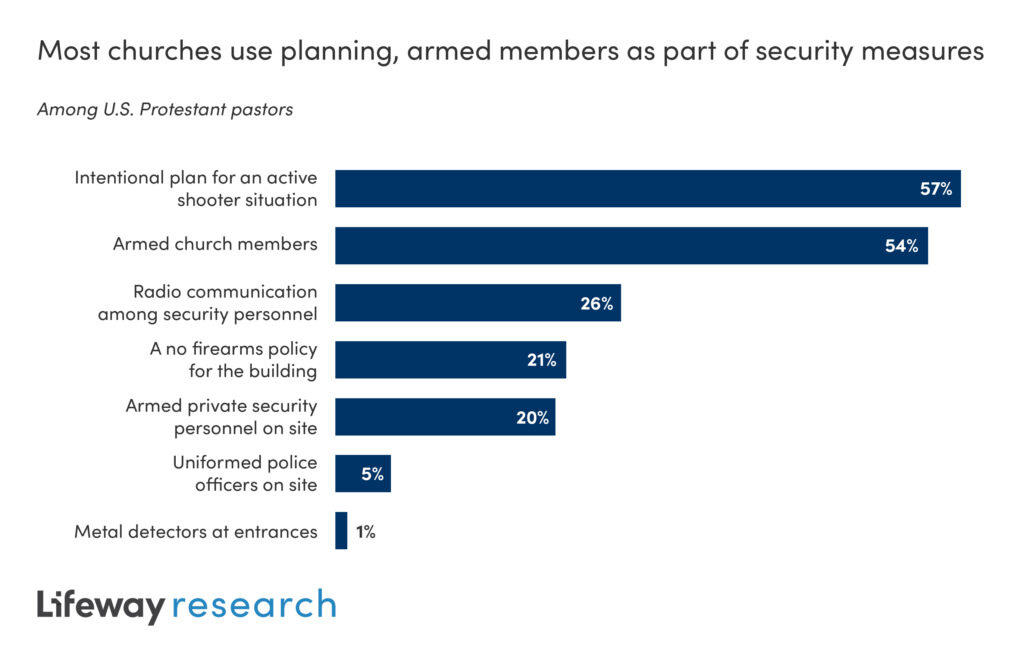







 by
by 


 by
by 


 Richard L. Fricks
