
Category: Reason/Reasonable

The Marginalian: A Spell Against Stagnation: John O’Donohue on Beginnings
Here’s the link to this article.
BY MARIA POPOVA

There are moments in life when we are reminded that we are unfinished, that the story we have been telling ourselves about who we are and where our life leads is yet unwritten. Such moments come most readily at the beginning of something new.
To begin anything — a new practice, a new project, a new love — is to cast upon yourself a spell against stagnation. Beginnings are notation for the symphony of the possible in us. They ask us to break the pattern of our lives and reconfigure it afresh — something that can only be done with great courage and great tenderness, for no territory of life exposes both our power and our vulnerability more brightly than a beginning.

How to leap into the thrilling and terrifying unknowns of the possible is what the Irish poet and philosopher John O’Donohue (January 1, 1956–January 4, 2008) explores in a chapter of his parting gift to the world, To Bless the Space Between Us: A Book of Blessings (public library), which also gave us his luminous meditation on kindling the light between us and within us.
He begins by telescoping into deep time, reminding us that we are but a small and new part of something ancient and immense — a vast totality that holds us in our incompleteness, in our existential loneliness, in the vulnerability of our self-creation:
There are days when Conamara is wreathed in blue Tuscan light. The mountains seem to waver as though they were huge dark ships on a distant voyage. I love to climb up into the silence of these vast autonomous structures. What seems like a pinnacled summit from beneath becomes a level plateau when you arrive there. Born in a red explosion of ascending fire, the granite lies cold, barely marked by the millions of years of rain and wind. On this primeval ground I feel I have entered into a pristine permanence, a continuity here that knew the wind hundreds of millions of years before a human face ever felt it.
When we arrive into the world, we enter this ancient sequence. All our beginnings happen within this continuity. Beginnings often frighten us because they seem like lonely voyages into the unknown. Yet, in truth, no beginning is empty or isolated. We seem to think that beginning is setting out from a lonely point along some line of direction into the unknown. This is not the case. Shelter and energy come alive when a beginning is embraced… We are never as alone in our beginnings as it might seem at the time. A beginning is ultimately an invitation to open toward the gifts and growth that are stored up for us. To refuse to begin can be an act of great self-neglect.
[…]
Our very life here depends directly on continuous acts of beginning.

Just as our lives are shaped by those necessary endings — by what we choose to let go — they are shaped by what we choose to begin, however precarious the precipice of the new.
A century after Van Gogh exulted in risk as the crucible of the creative life and a decade after David Bowie urged young artists to “always go a little further into the water than you feel you’re capable of being in,” O’Donohue adds:
Perhaps the art of harvesting the secret riches of our lives is best achieved when we place profound trust in the act of beginning. Risk might be our greatest ally. To live a truly creative life, we always need to cast a critical look at where we presently are, attempting always to discern where we have become stagnant and where new beginning might be ripening. There can be no growth if we do not remain open and vulnerable to what is new and different. I have never seen anyone take a risk for growth that was not rewarded a thousand times over.

And yet we are homeostasis machines, our very organism oriented toward maintaining the status quo of comfort and predictability, which every beginning inevitably disrupts with its fulcrum of change and its brunt of uncertainty. O’Donohue considers what it takes to override our creaturely reflex for habituation:
Sometimes the greatest challenge is to actually begin; there is something deep in us that conspires with what wants to remain within safe boundaries and stay the same… Sometimes a period of preparation is necessary, where the idea of the beginning can gestate and refine itself; yet quite often we unnecessarily postpone and equivocate when we should simply take the risk and leap into a new beginning.
He renders the vulnerability and redemption of that leap in a poem — a kind of self-blessing to consecrate the courage of beginning:
FOR A NEW BEGINNING
by John O’DonohueIn out-of-the-way places of the heart,
Where your thoughts never think to wander,
This beginning has been quietly forming,
Waiting until you were ready to emerge.For a long time it has watched your desire,
Feeling the emptiness growing inside you,
Noticing how you willed yourself on,
Still unable to leave what you had outgrown.It watched you play with the seduction of safety
And the gray promises that sameness whispered,
Heard the waves of turmoil rise and relent,
Wondered would you always live like this.Then the delight, when your courage kindled,
And out you stepped onto new ground,
Your eyes young again with energy and dream,
A path of plenitude opening before you.Though your destination is not yet clear
You can trust the promise of this opening;
Unfurl yourself into the grace of beginning
That is at one with your life’s desire.Awaken your spirit to adventure;
Hold nothing back, learn to find ease in risk;
Soon you will be home in a new rhythm,
For your soul senses the world that awaits you.

Sometimes — in fact, often — beginnings are tucked into endings. In consonance with his philosopher-poet friend David Whyte’s poignant reflection on ending love and beginning love, O’Donohue writes:
Often when something is ending we discover within it the spore of new beginning, and a whole new train of possibility is in motion before we even realize it. When the heart is ready for a fresh beginning, unforeseen things can emerge. And in a sense, this is exactly what a beginning does. It is an opening for surprises. Surrounding the intention and the act of beginning, there are always exciting possibilities.
Paying attention to those portals of possibility is both an act of self-respect and a reverence of life:
Part of the art of living wisely is to learn to recognize and attend to such profound openings in one’s life.
Complement with poet Pattiann Rogers’s stunning ode to our ongoing self-creation and the poetic psychoanalyst Allen Wheelis on how people change, the revisit John O’Donohue on why we fall in love, the essence of friendship, and how we bless each other.
The God Illusion: Why the Doctrine of Inerrancy Contradicts the Gospels
The Marginalian: The Paradoxes and Possibilities of Transformation: Adam Phillips on Our Ambivalent Desire for Change
Here’s the link to this article.
BY MARIA POPOVA

When answering the Orion questionnaire, a question stopped me up short by contracting an incomprehensible expanse of complexity into a binary:
Are you the same person you were as a child?
It is fundamentally a question about change — its possibility and its paradoxes, our yearning for it and our ambivalence toward it. Here I am, living on a different landmass from the one I was born on, in a body composed of cells not one of which existed in its present form at my birth, but my sources of joy and suffering feel largely unchanged since I was a child. What, then, is change — and who is it doing the changing?
“We create ourselves. The sequence is suffering, insight, will, action, change,” the psychoanalyst Allen Wheelis wrote in his 1973 field guide to how people change. But when we wish to recreate ourselves, to change for the better, how do we know what to want, what is truly and dependably better? “The things we want are transformative, and we don’t know or only think we know what is on the other side of that transformation,” Rebecca Solnit wrote in her wonderful Field Guide to Getting Lost, shining a sidewise gleam on our staggering blind spot about transformation — we are simply incapable of imagining ourselves on the other side of a profound change, because the present self doing the imagining is the very self that needs to have died in order for the future self being imagined to emerge.

This is why the profoundest changes tend to happen not willed but spawned by fertile despair — the surrender at the rock bottom of suffering, where the old way of being has become just too painfully untenable and a new way must be found. (Such changes tend to happen especially in midlife, when the accumulation of familiar suffering collides with our diminishing store of time to press us against the blade of urgency.)
The psychoanalyst Adam Phillips takes up these restive questions with his characteristic rigor and sensitivity in On Wanting to Change (public library) — an insightful investigation of the paradoxes and possibilities of change, at the heart of which is our fundamental confusion about knowing what we really want, and what to want. He writes:
Wanting to change is as much about our wanting, and how we describe it, as it is about the changes we want. Getting better means working out what we want to get better at.
When we want to think of our lives as progress myths, in which we get better and better at realizing our so-called potential; or conversely as myths of degeneration — as about decay, mourning and loss (ageing as the loss of youth, and so on) — we are also plotting our lives. Giving them a known and knowable shape and purpose; providing ourselves with guidelines, if not blueprints, of what we can be and become. It is not that our lives are determined by our descriptions of them; but our descriptions do have an effect, however enigmatic or indiscernible it might be. And there is no description of a life without an account of the changes that are possible within it.

Change is often a consequence of, and a coping mechanism for, the contradictions we live with — an attempt at greater cohesion. With an eye to the various divides that sunder our lives — nature and culture, appearance and reality, the private and the public, the conscious and the unconscious — Phillips considers this essential fulcrum of change:
The so-called self is what we have come to call, in William James’s phrase, “a divided self”; and after James and Winnicott, a true and false self, or a self in language, in fantasy, but perhaps, or really, no self at all. A self and its absence co-existing, in its most modern form and formulation. A self always, at least, having to manage conflicting and competing versions of itself; a self always having to get its representations of itself right, even while knowing, in the modern way, that they are only representations, pictures and descriptions of something that may only exist in its pictures and descriptions. A self riddled with conflict, having to straddle the contradictions; or, at its most minimal, do something with or about them.
In the Judeo-Christian tradition, Phillips observes, the need for resolving and reconciling these inner contradictions has culminated in the notion of conversion, which he defines as “the exchange that demands change, and claims to know the change that is needed,” often “prompted by something unbearable.” But the two most formative conversions in that tradition, Paul and Augustine, “simply expose the conflicts they were meant to resolve and clarify.” (“The trouble with human happiness is that it is constantly beset by fear,” Hannah Arendt wrote in her incisive Augustine-lensed meditation on love and loss, and nowhere is our happiness more beset by fear than in our fear of change. “It’s frightening to step out of oneself, but everything new is frightening,” Clarice Lispector wrote in her novel The Hour of the Star, and what is change if not our supreme way of stepping out of ourselves.) Phillips writes:
This tells us something revealing, so to speak, about our modern scepticism about personal change at its most dramatic and significant. This profound modern ambivalence about conversion experiences — mostly but not always from the non-religious — leads to many questions not only about people’s relationship to God, but about their relationship to change, to transformation itself; questions about how it occurs, and what it might be for (what it might be in the service of).
At the center of these ambivalences, of course, is the problem of free will and the fact that myriad unchosen variables, from genetic and cultural inheritance to accidents and natural disasters, constrain our capacity for change. But beyond this question of whether and how we can choose our transformation is the question of what transformation to choose at all — a fundamental question of self-knowledge, riddled with all the ways in which we are fundamentally opaque to ourselves.
Phillips observes:
Change as an object of desire is a question of knowledge, of in some sense knowing what we want to be, or to become, or knowing that we don’t know what we want but that we want something.

A great deal of change takes place in relationships. “What’s the use of falling in love if you both remain inertly as-you-were?” Mary McCarthy wrote to Hannah Arendt. With an eye to Donald Winnicott’s pioneering work in developmental psychology, which illuminated how the mother-child relationship lays the foundation of future relationships, Phillips writes:
People are only ever converted to something they believe they can depend on… For Winnicott… the developmental question for everyone is: how can I depend on someone whose reliability can never be guaranteed? It is a straight line from this to the idea of faith; and the equation between believing in and depending on… Questions like this might help us to clarify the differences between conversion, addiction, entrapment and ownership; and whatever the alternatives could be in human relations. Conversion, addiction, entrapment and ownership, we should note, are all forms of consistency; and if and when consistency is equated with reliability, or dependability, or trust, these will be alluring, if malign, options. Winnicott proposes a capacity for surprise as an alternative to the need to be believed; an openness to surprise, a desire for it being integral, in his view, to a realistic and enlivening dependence on anything or anyone.
That capacity for surprise is another way of saying we must trust the uncertainty inherent in change if we are to reap the rewards of true transformation, undergo an inner conversion — one of “those momentous changes of belief that are changes of life.” And the refusal to ossify, the wish to change one’s life, shimmers with the deepest desire to live it. Virginia Woolf knew this: “A self that goes on changing is a self that goes on living.”
Complement On Wanting to Change with poet and philosopher John O’Donohue on the art of beginnings — that supreme springboard of change — then revisit Phillips on knowing what you want and the courage to change your mind.
The God Illusion: Hard Knocks: Who Are the Jehovah’s Witnesses?
The God Illusion: The Origin of Adam & Eve Will Blow Your Mind
The Marginalian: The Pleasure of Being Left Alone
Here’s the link to this article.
BY MARIA POPOVA

There is a form of being together that feels as easy and spacious as being alone, when your experience is not crowded out or eclipsed by the presence of the other but deepened and magnified. Such companionship is extremely rare and extremely precious. All other company, no matter how dear, inevitably reaches a saturation point and begins to suffocate. If one is an introvert, that point comes sooner and more violently. A return to solitude then becomes nothing less than a rapture.
Rose Macaulay (August 1, 1881–October 30, 1958) channels this ecstatic relief with great charm and poetic passion in a piece from Personal Pleasures: Essays on Enjoying Life (public library) — her 1935 collection of reflections kindred to, and a century ahead of, poet Ross Gay’s wonderful Book of Delights.

Despite publishing twenty-two books in twenty years, alongside numerous essays, poems, and newspaper columns — prolificacy only possible through the deepest and most undistracted solitude, haunted by Susan Sontag’s lament that “one can never be alone enough to write” — Macaulay was no hermit. She gave talks, attended events, threw parties, and appeared frequently on public radio to offer incisive commentary on the state of the world. During WWI, she worked as a nurse and a civil servant. During WWII, like Marie Curie a war earlier, she became a volunteer ambulance driver at the age of sixty. She regularly wrote to the editors of the Oxford English Dictionary — her favorite book — with suggestions, corrections, and improvements. (“To amend so great a work gives me pleasure,” she writes in one of these essays on life’s littlest and deepest joys.) When her flat was demolished in the Blitz, all her books destroyed, it was the dictionary volumes she most mourned. When she rebuilt her home, she continued hosting friends for salons and soirees.
But despite her surface sociality, Macaulay embodied the true test of an introvert — not whether one engages in social activity, but whether one is charged or drained by it. In an essay titled “Departure of Visitors,” she exults in the pleasure of being at last left alone:
An exquisite peace obtains: a drowsy, golden peace, flowing honey-sweet over my dwelling, soaking it, dripping like music from the walls, strowing the floors like trodden herbs. A peace for gods; a divine emptiness.
[…]
The easy chair spreads wide arms of welcome; the sofa stretches, guest-free; the books gleam, brown and golden, buff and blue and maroon, from their shelves; they may strew the floor, the chairs, the couch, once more, lying ready to the hand… The echo of the foolish words lingers on the air, is brushed away, dies forgotten, the air closes behind it. A heavy volume is heaved from its shelf on to the sofa. Silence drops like falling blossoms over the recovered kingdom from which pretenders have taken their leave.
What to do with all this luscious peace? It is a gift, a miracle, a golden jewel, a fragment of some gracious heavenly order, dropped to earth like some incredible strayed star. One’s life to oneself again. Dear visitors, what largesse have you given, not only in departing, but in coming, that we might learn to prize your absence, wallow the more exquisitely in the leisure of your not-being.

Paradoxically, even Macaulay’s muse was a visitor from whom she eventually needed a break. In another essay, she offers a strikingly similar inner response to finishing a book — that moment when, upon setting down the last word on the last page, the mind becomes uncrowded again. She writes:
Leisure spreads before my dazzled eyes, a halcyon sea, too soon to be cumbered with the flotsam and jetsam of purposes long neglected, which will, I know it, drift quickly into view again once I am embarked upon that treacherous, enticing ocean. Leisure now is but a brief business, and past return are the days when it seemed to stretch, blue and unencumbered, between one occupation and the next. There are always arrears, always things undone, doubtless never to be done, putting up teasing, reproachful heads, so that, although I slug, I slug among the wretched souls whom care doth seek to kill. But now, just emerged as I am from the tangled and laborious thicket which has so long embosked me, I will contemplate a sweet and unencumbered slugging, a leisure and a liberty as of lotus eaters or gods.
Couple with May Sarton’s stunning ode to the art of being alone from the era of Macaulay’s Personal Pleasures, then revisit Olivia Laing on the modern art of being alone amid the crowd and Stephen Batchelor’s field guide to glad solitude.
The God Illusion: Megachurch Pastor Robert Morris accused of sexually abusing 12-year-old girl
Here’s the link to this article by Hemant Mehta.
JUN 16, 2024
Morris, a Donald Trump ally, admitted to “inappropriate sexual behavior” with a “young lady”
Robert Morris, a megachurch pastor who used his reputation to help Donald Trump get elected, admitted to sexually abusing a child for a “few years” beginning when she was only 12. He was in his twenties at the time of the attacks. Morris is now downplaying the severity of what he did by referring to it merely as “inappropriate sexual behavior with a young lady.”
Before going into the details of the allegations, it’s important to understand Morris’ standing in the evangelical world.
When Trump was trying to convince conservative Christians to support him in the summer of 2016, he released a list of his “evangelical executive advisory board,” a collection of mostly white, mostly male Christians who would be guiding him in the months ahead. That list included the likes of James Dobson, Jerry Falwell, Jr., and Ralph Reed.
It also included Robert Morris, the senior pastor of Gateway Church in Dallas, Texas.

Morris is the sort of person who claims his prayers can cure women’s infertility and that it’s “scientifically impossible to be an atheist.” He even prayed over Trump in the White House in 2019.
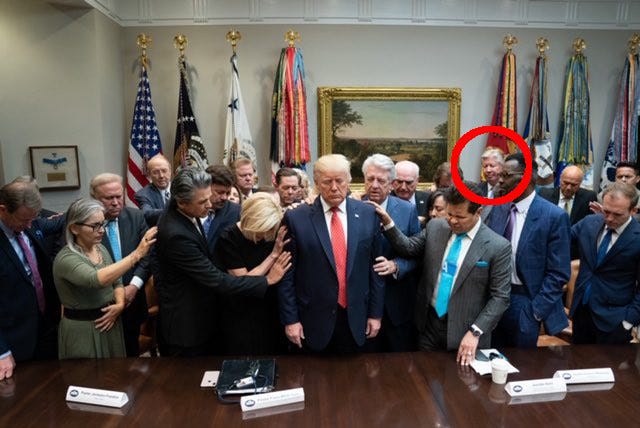
In 2020, Trump visited Gateway Church for an event on race relations and the economy. During the event, he thanked Morris and other church leaders by saying they were “Great people with a great reputation.”
The reason Morris amassed the sort of power that allowed him to be that close to the president is because he was able to hide his own actions for decades.
According to the Wartburg Watch, which first broke this story, Morris was a traveling evangelist in 1981 when he visited Tulsa, Oklahoma and met a family with an 11-year-old daughter named Cindy Clemishire. (Because she’s gone public with her story, I’m naming her here.)
Morris, along with his wife and son, stayed with Cindy’s family frequently. They all became very close.
On Christmas Day, 1982, he allegedly invited Cindy to come to his bedroom where he proceeded to touch her beneath her clothing. He then told her, “Never tell anyone about this because it will ruin everything.”
As a little girl, she didn’t know any better.
Part of the reason Morris was able to get away with it, and the way he was able to get so much alone time with the child, was by telling his wife he was “counseling” the little girl.
This sort of behavior continued for years, through 1987.
At one point, Cindy told a friend what had happened and the news came back to her own father, who “demanded that Morris get out of ministry.” Morris stepped down for two years. When he finally returned to preaching, he began the church that would later become Gateway Church.
It wasn’t until Cindy was much older that she realized the extent to which she had been abused and just how inappropriate (and criminal) it was.
In 2005, she obtained an attorney to file a civil lawsuit. Robert Morris’s attorney responded by implying that they believed it was her fault because she was “flirtatious.” She asked for $50,000 (which was not much in my estimation.) They responded that they would give her $25,000 if she signed an NDA. She refused, so she can now tell her side of the story.
If that story is true, it’s appalling (but not surprising) that the attorney blamed the child for what Morris did to her. No 12-year-old girl can legally consent to sex with an adult. She was not flirting with him.
(Interestingly enough, in one of Morris’ books, he writes about how he stepped down from ministry in his mid-20s—a time period that coincides with when Cindy’s father demanded he get out. The book, however, says God told Morris to take time away from the pulpit to deal with his “pride.”)
When reporter Leonardo Blair of the Christian Post asked Morris for comment about these allegations, the church responded with a confession of sorts. But they’re all acting like it’s not that big of a deal.
“When I was in my early twenties, I was involved in inappropriate sexual behavior with a young lady in a home where I was staying. It was kissing and petting and not intercourse, but it was wrong. This behavior happened on several occasions over the next few years,” Morris said in a statement to The Christian Post after Gateway Church was asked about the allegations.
“In March of 1987, this situation was brought to light, and it was confessed and repented of. I submitted myself to the Elders of Shady Grove Church and the young lady’s father. They asked me to step out of ministry and receive counseling and freedom ministry, which I did. Since that time, I have walked in purity and accountability in this area,” Morris added.
He explained that he returned to ministry in March of 1989, two years after his abuse was exposed with the blessing of the survivor’s father and the elders of his church. He further noted that he and his wife met with the survivor and her family in October 1989.
“I asked their forgiveness, and they graciously forgave me,” Morris said.
She was not a “young lady.” She was a 12-year-old girl.
It wasn’t merely “inappropriate.” It was criminal.
It wasn’t just “kissing and petting.” According to Cindy, Morris “touch[ed] every part of my body and inserted his fingers into me.”
And Cindy’s father did not give Morris his blessings.
“My father never ever gave his blessing on Robert returning to ministry! My father told him he’s lucky he didn’t kill him. I am mortified that he is telling the world my dad gave his blessing! Of course, we forgive because we are called to biblically forgive those who sin against us. But that does not mean he is supposed to go on without repercussions,” she said.
The statement from Gateway Church also included comment from the church’s elders, but it’s no better than anything Morris said.
“Pastor Robert has been open and forthright about a moral failure he had over 35 years ago when he was in his twenties and prior to him starting Gateway Church. He has shared publicly from the pulpit the proper biblical steps he took in his lengthy restoration process,” they said.
“The two-year restoration process was closely administered by the Elders at Shady Grove Church and included him stepping out of the ministry during that period while receiving professional counseling and freedom ministry counseling,” they said. “Since the resolution of this 35-year-old matter, there have been no other moral failures. Pastor Robert has walked in purity, and he has placed accountability measures and people in his life. The matter has been properly disclosed to church leadership.”
It wasn’t a “moral failure.” It was criminal sexual assault.
He didn’t share publicly from the pulpit why he needed any kind of “restoration.”
The fact that it happened 35 years ago is irrelevant largely because this was never made public until the survivor told her side of the story. (The Catholic Church learned the hard way that people won’t forgive them for clergy abuse that occurred decades ago.)
And no one should simply accept that Morris has had “no other moral failures” since that time because we already have evidence of this particular crime being covered up.
If “church leadership” knew all about what he did, what does it say about them that the congregation was never told Morris was a child sex predator? (In an internal Slack channel for Gateway, church staffers were given the same statement with no further details about how Morris sexually assaulted a child for many years.)
There’s simply no accountability of any kind happening here.
Morris is still, as of this writing, the senior pastor of Gateway. He’s not facing any punishments from his church, much less criminal charges. Hell, there’s a good chance he’ll downplay this story whenever he talks about it and receive a warm embrace from the people in the pews who he’s been lying to for all these years.
That’s what conservative Christians have a habit of doing whenever their pastors are forced to admit an incident of sexual assault that they thought they had swept under the rug. They do it so often that pastors have developed a playbook for these things. All they have to do is say they did something immoral, but it happened in the past, and they prayed on it, and God forgave them, and they’ve been doing great ever since. Rinse, lather, repeat.
There’s never any mention of all the people they hurt. There are never any details offered about the exact nature of their “immorality.” There are never any serious consequences for their actions.
The Dallas Morning News says that Morris wasn’t around on Saturday as this story began to spread:
Morris did not preach at the Southlake campus’ Saturday afternoon service, and the allegations were not addressed by pastors during the service. Several attendees either declined to comment or said they were unaware of the allegations.
It’s unclear if he’ll be in the pulpit today.
Morris has spent years preaching about sexual ethics and sin and consequences for one’s actions. During that time, he promoted a presidential candidate (and later president) who did all the things Morris urged people not to do because Christians like him love hypocrisy.
And all those years, he’s been hiding his own troubling secret. If the church’s initial response is any indication, they’re all still trying to bury the story.
Sam Harris: The Anatomy of Embarrassment

Here’s the link to this article.
Poker anyone?

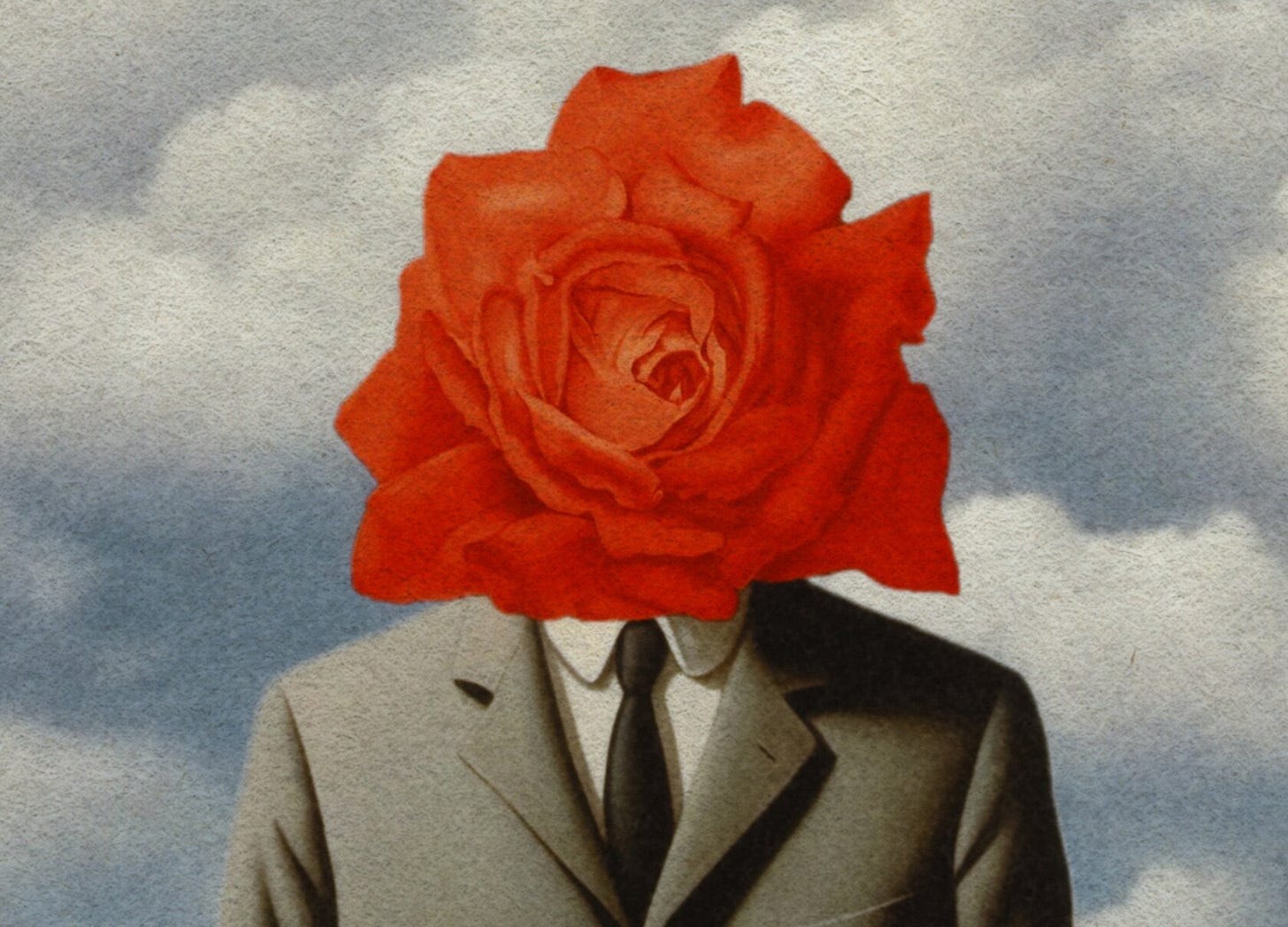
Nature seems to have given us six primary emotions—happiness, sadness, fear, anger, surprise, and disgust. A glance at those cards suggests that the deck may be stacked against us. Only happiness seems worth wanting for its own sake. The rest, even the ambiguously valanced surprise, are generally unwelcome. Most of us regularly enjoy happiness, of course, and amusement, contentment, delight—even ecstasy—are among its many facets. But we must overcome countless forms of irritation and anguish to do so.
Layered on top of the primary emotions, we find moral ones like pride, guilt, shame, empathy, gratitude, and outrage. Once again, it seems that anyone who simply wants to be happy in this world will find themselves at a disadvantage. If pride is good, it is so only for children. And, as Paul Bloom has noted, even empathy (in the emotional, rather than cognitive, sense) is overrated.
We begin to experience these moral emotions as toddlers, and their emergence very likely coincides with our ability to distinguish ourselves from others—not merely as separate bodies in space, but as independent beings capable of distinct states of mind. Leaving moral outrage aside, to feel pride, guilt, shame, empathy, or gratitude is to intuit, if only unconsciously, that other people have points of view, and that one’s own person is among the many things they might harbor views about. Each of us thereafter, as Sartre famously put it, becomes an object in the world for others.
Somewhere in the vicinity of guilt and shame we find further sources of comedy and tragedy—in particular, the acutely self-conscious states of embarrassment and humiliation. Telling these sisters apart is more art than science. Some use the terms interchangeably, or merely consider humiliation to be an extreme form of embarrassment. Both types of assault upon our self-esteem require the gaze of others—by whose light we see ourselves to have lost status in a social hierarchy. However, the experiences differ in at least one respect. As William Ian Miller observed in his book, Humiliation, we are often eager to describe our past embarrassments, as other people tend to find these stories quite funny. Not so with our genuine humiliations.
Let us now consider the happier sister—embarrassment:
The Oxford English Dictionary indicates that the term “embarrassment” was in use for nearly a century before it acquired its current, most common meaning:
Intense emotional or social discomfort caused by an awkward situation or by an awareness that one’s own or another’s words or actions are inappropriate or compromising, or that they reveal inadequacy or foolishness; awkwardness, self-consciousness… Typically distinguished from shame in being caused by something that is socially awkward or inappropriate rather than morally wrong or debasing.
It’s first known usage in this sense seems to have occurred in the year 1751:
She pretended to be with child by him… She brought a man whom she called uncle, to add weight to her threats; and these violent proceedings threw Mr. Baker under great embarrassment. He always was extreamly tender of his reputation with the world. (London Magazine April 198/2)
One wants to know more about this “uncle.” In any case, there is a Mr. Baker in each of us—running a frenzied circuit between the medial prefrontal cortex (self-reflection and self-evaluation), the anterior cingulate (error detection, emotional regulation, and awareness of physical and social pain), the insula (the perception of emotion and other internal states of the body), the amygdala (emotional salience and threat detection), and the temporal-parietal junction (understanding the mental states of others).
However, we live not merely in our brains, but in the world.
Imagine you’re at a party. Though you happen to be in an expansive mood and have met many interesting people, all your interactions have felt slightly off-kilter. Most conversations have terminated abruptly—as though your company was best appreciated in the act of leaving of it. After more than an hour of pointlessly caroming off strangers in this way, you go to the restroom to freshen up, only to discover a 5-carat booger prominently displayed in one of your nostrils.
Of course, the change in you is instantaneous—and yet your inner mixologist has been working for nearly a million years in evolutionary time to produce the precise cocktail of destructive emotions that you are now obliged to drink.
Though I am no psychologist, the resulting state of mind strikes me as right on the boundary between embarrassment and humiliation. Everything depends on whether you are viewed, by yourself and others, as an object of comedy or contempt—both in the moment and, most important, in the final analysis. It is the presence (or painful absence) of good-natured laughter—once you exit the bathroom, having restored a semblance of bodily integrity—that will determine on which side of this invisible frontier you will live out your days.
Think of the most embarrassing moment in your life. Surely a few stand out. Pick one, and bring this experience to mind as vividly as you can. I’m asking you to recall, not an experience that left you traumatized and pining for the scaffold, but one about which you can now laugh, no matter how complete a loss of face it entailed at the time. Think of the most embarrassing story you would be willing to tell another human being.
Ok, now that you’ve prepared, let’s play a game of poker. I believe that I hold the higher cards.
Want to bet?
It begins, as most great stories do, with a prostate exam…
I was nearly forty and decided that it was time for a checkup. My primary physician had recently retired, and so without giving the matter much thought, I scheduled an appointment with the doctor who had inherited his practice.
When booking this appointment, however, I learned that this new doctor was a woman. There was nothing surprising about this, of course. I’d seen several female doctors over the years for specialized concerns—dermatology, tropical medicine, ophthalmology. But I’d never had one as my primary physician.
When I told a friend about this impending encounter, I detected an unflattering gleam in his eye.
“So a woman is going to give you a prostate exam?” He said.
I admit that the prospect suddenly struck me as somehow uncanny. Pressing further, my friend suggested that it would stand to reason that having a prostate gland of one’s own might better qualify a person to perform this intimate procedure. I asked him how often he felt his own prostate and what exactly these adventures in proctology had qualified him for.
The appointed hour came soon enough, and I found myself standing face-to-face with my new physician. After a period of perfectly rational discussion and a few lesser intrusions—blood taken, reflexes checked, breathing analyzed—the moment foretold finally arrived:
“Ok, so now I need to check your prostate.” Her tone was matter-of-fact, but she might as well have added, “and you and I both know that you’ve thought about nothing else since you set foot in my office.”
The exam itself went without incident, and at no point did I have occasion to regret my choice of doctor—that is, until the final moment, when she stepped away from the exam table to record her findings.
It was then, with her back turned to me, that she spoke the following words:
“Your prostate is enlarged.”
A perfectly ordinary sentence.
But its meaning entered my brain with the force of incantation. As I rose to a sitting position at the end of the exam table—elevated, as I was about to learn, for the comfort of the working physician, not the safety of her patients—the idea that my prostate was “enlarged,” as opposed to “fine,” or “normal,” or indeed “the best I’ve ever known”—struck me with uncommon power. So much power, it seems, that it rendered me unconscious.
It is perhaps relevant at this point to confess that I had been, at various periods in my life, a committed martial artist. I had even trained in ninjitsu, the fabled art of the Ninja. I was also a decent marksman. Fighting with knives was a topic about which I had well-formed opinions. What I am trying to say is that I had prepared for most species of human violence—except, it would seem, the quiet violence of an unfavorable prostate exam.
The next thing I remember is the sound of a woman’s scream. Sometime later, I could faintly make out the desperate comings and goings of at least two people moving above me. Above me, of course, because I was now lying on the floor, having travelled there headfirst, as an intrepid diver might—who, with the assurance of deep water beneath him, could forego the protective use of his arms.
There can be no doubt that my arms had hung limply at my sides, as I pitched forward from that high table, and smashed my head against the wall, and then a helpless chair, and finally the floor.
But the good doctor had been composing her notes and hadn’t seen me fall. She only heard the centripetal crashings of a man hurled to earth, his stout body smashing against every object in its path and then flopping, naked but for his blameless choice of Calvin Klein briefs in black, at her feet.
We have all be raised to believe that there are only four fundamental forces of Nature—the weak and strong nuclear forces, electromagnetism, and finally gravity—which had so suddenly declared itself my enemy. But there is a 5th force, which often works in direct opposition to gravity. That force is embarrassment.
We have all witnessed the effect—whether in real life or in videos online—when some hapless person slips on ice, or while attempting a silly stunt to amuse his friends. If they are not grievously injured, such people leap to their feet with astonishing speed. This force, which gives even an old woman sprawled among her groceries the sudden agility of an Olympic gymnast—this is the primordial spirit of embarrassment.
As I came to my senses and began to realize what had just happened, the fact that I had fainted at a mere rumor about the condition of my prostate gland (the very existence of which, I might add, remains little more than a rumor) and had collapsed with greater suddenness than any man felled in battle—for not even an arrow shot into a man’s heart is likely to bring him down with the full force of gravity—the knowledge that I had not managed so much as a shout or a stagger, but had been literally struck senseless by a mere utterance, as if by some witch’s curse, produced in me the first stirrings of that ancient feeling.
I was properly embarrassed. Which meant, as a wide literature will attest, that I understood that I had violated some basic norms of self-presentation by collapsing on my new doctor’s floor in a nearly-naked heap.
But my vision and hearing had returned, and my mind began to thrill to a new purpose—one that is all but encoded in the DNA of our species—to restore social cohesion. Yes, I needed to recapture the sense of decorum and feelings of fellowship that had prevailed up to and—a surprising fact this—even beyond the point that this strange woman, with whom I had just been discussing world affairs only moments prior, had inserted a gloved finger into my ass.
And so, sensing the vindication that would be mine the moment I was once again sitting, standing, and walking among the living, I began to get up.
Unfortunately, this brought me into immediate conflict with medical authority. My doctor, who had found nothing to do for me in my state of prostration, now applied all her skills to prevent my escaping it.
The case she made was simple: While she had heard all the violence I had meted out to her office, she had seen nothing. She was, therefore, unable to even speculate as to the immensity of my injuries. Even now, as she stood over me like some an avenging angel of medical reproach, she couldn’t say whether I was suffering a brain hemorrhage or a broken spine. Under no circumstances could she permit me to move.
You might have thought that a doctor’s office would be a better place than most to fall and hit your head, but you would be mistaken. In fact, your doctor is no more equipped to assess your injuries, much less to treat them, than a random tourist would be, should you lose consciousness at the zoo or on the floor of a casino. In fact, your own doctor, styled in a white lab coat and stethoscope and surrounded by framed degrees from the world’s finest medical institutions, can do nothing under the circumstances but call 911 and summon an ambulance.
And so it was that after I had been lying on the floor of my new doctor’s office for long enough to have run out of things to talk about—and for her to begin doing clerical work of some sort as I studied the acoustical tiles that lined her ceiling—four young firemen came hurtling into the room, bearing all the gear necessary to rescue me had I driven my car into a raging river.
I am happy to say that, staring up at their sunburned faces, I was granted a vision of the glory of youth. I knew at once that these young men could have saved me from any conceivable emergency. But as for the inconceivable—the 20-megaton sunburst of embarrassment that had by now detonated inside me, the blast wave from which seemed likely to bring down the very walls around us—they were powerless to intervene.
Nevertheless, these young heroes quickly secured the patient’s neck with a plastic collar, immobilized his spine by strapping him to a board, and then bore the fallen man in his underwear through a crowded reception area, out onto a once familiar street, and into a waiting ambulance, so that he could be driven scarcely 500 feet to the nearest emergency room.
To appreciate the roiling splendor of my embarrassment at this point, you must picture each station of the cross that was now mine to bear: You must see me meeting the ambulance crew proffering oxygen, and then the battle-hardened men and women who greeted me upon intake at the ER. You must picture every point of entanglement with the great machine of a modern hospital—each encounter with the orderlies, residents, doctors, and technicians that attended my triage, X-ray imaging, and physical exam—and you must, in the theater of your imagination, linger on those moments when I or the person then responsible for me had to give some account of what had happened. For while these medical professionals had seen and heard much, mine was a tale that none were expecting. Had I been in a car accident? Had I been physically attacked? Was I an athlete who had pushed his skills beyond their natural limit?
To understand my predicament, you really must see me as I lay supine upon that gurney, fully immobilized and merely able to cast sidelong glances at those in attendance. And then understand that over the course of several hours, I could think of nothing more dignified or exculpatory to say, again and again and again and again, than this: “It was only a prostate exam.”
My brain had not hemorrhaged. My spine was intact. But the fall seemed to have produced in me a form of extrasensory perception. I now find that if I listen closely, I can hear the faint, crackling sound that other minds emit when they struggle not to laugh.
What cards are you holding?
Subscribe to Sam Harris
Sam Harris is the author of five NYT bestsellers, host of the Making Sense podcast, and creator of the Waking Up app.
The Marginalian: Ursula K. Le Guin on Being a Man
Here’s the link to this article.
BY MARIA POPOVA

Who are we when we, to borrow Hannah Arendt’s enduring words, “are together with no one but ourselves”? However much we might exert ourselves on learning to stop letting others define us, the definitions continue to be hurled at us — definitions predicated on who we should be in relation to some concrete or abstract other, some ideal, some benchmark beyond the boundaries of who we already are.
One of the most important authors of our time, Ursula K. Le Guin (October 21, 1929–January 22, 2018) has influenced such celebrated literary icons as Neil Gaiman and Salman Rushdie. At her best — and to seek the “best” in an altogether spectacular body of work seems almost antithetical — she blends anthropology, social psychology, and sheer literary artistry to explore complex, often difficult subjects with remarkable grace. Subjects, for instance, like who we are and what gender really means as we — men, women, ungendered souls — try to inhabit our constant tussle between inner and outer, individual and social, private and performative. This is what Le Guin examines in an extraordinary essay titled “Introducing Myself,” which Le Guin first wrote as a performance piece in the 1980s and later updated for the beautifully titled, beautifully written, beautifully wide-ranging 2004 collection The Wave in the Mind: Talks and Essays on the Writer, the Reader, and the Imagination (public library). To speak of a subject so common by birth and so minced by public discourse in a way that is completely original and completely compelling is no small feat — in fact, it is the kind of feat of writing Jack Kerouac must have had in mind when he contemplated the crucial difference between genius and talent.Ursula K. Le Guin by Laura Anglin
Le Guin writes:
I am a man. Now you may think I’ve made some kind of silly mistake about gender, or maybe that I’m trying to fool you, because my first name ends in a, and I own three bras, and I’ve been pregnant five times, and other things like that that you might have noticed, little details. But details don’t matter… I predate the invention of women by decades. Well, if you insist on pedantic accuracy, women have been invented several times in widely varying localities, but the inventors just didn’t know how to sell the product. Their distribution techniques were rudimentary and their market research was nil, and so of course the concept just didn’t get off the ground. Even with a genius behind it an invention has to find its market, and it seemed like for a long time the idea of women just didn’t make it to the bottom line. Models like the Austen and the Brontë were too complicated, and people just laughed at the Suffragette, and the Woolf was way too far ahead of its time.

Noting that when she was born (1929), “there actually were only men” — lest we forget, even the twentieth century’s greatest public intellectuals of the female gender used the pronoun “he” to refer to the whole lot of human beings — Le Guin plays with this notion of the universal pronoun:
That’s who I am. I am the generic he, as in, “If anybody needs an abortion he will have to go to another state,” or “A writer knows which side his bread is buttered on.” That’s me, the writer, him. I am a man. Not maybe a first-rate man. I’m perfectly willing to admit that I may be in fact a kind of second-rate or imitation man, a Pretend-a-Him. As a him, I am to a genuine male him as a microwaved fish stick is to a whole grilled Chinook salmon.
Le Guin turns to the problem of the body, which is indeed problematic in the context of this Generic He:
I admit it, I am actually a very poor imitation or substitute man, and you could see it when I tried to wear those army surplus clothes with ammunition pockets that were trendy and I looked like a hen in a pillowcase. I am shaped wrong. People are supposed to be lean. You can’t be too thin, everybody says so, especially anorexics. People are supposed to be lean and taut, because that’s how men generally are, lean and taut, or anyhow that’s how a lot of men start out and some of them even stay that way. And men are people, people are men, that has been well established, and so people, real people, the right kind of people, are lean. But I’m really lousy at being people, because I’m not lean at all but sort of podgy, with actual fat places. I am untaut.

For an example of someone who did Man right, Le Guin points to Hemingway, He with “the beard and the guns and the wives and the little short sentences,” and returns to her own insufficient Manness with a special wink at semicolons and a serious gleam at the significance of how we die:
I don’t have a gun and I don’t have even one wife and my sentences tend to go on and on and on, with all this syntax in them. Ernest Hemingway would have died rather than have syntax. Or semicolons. I use a whole lot of half-assed semicolons; there was one of them just now; that was a semicolon after “semicolons,” and another one after “now.”
And another thing. Ernest Hemingway would have died rather than get old. And he did. He shot himself. A short sentence. Anything rather than a long sentence, a life sentence. Death sentences are short and very, very manly. Life sentences aren’t. They go on and on, all full of syntax and qualifying clauses and confusing references and getting old. And that brings up the real proof of what a mess I have made of being a man: I am not even young. Just about the time they finally started inventing women, I started getting old. And I went right on doing it. Shamelessly. I have allowed myself to get old and haven’t done one single thing about it, with a gun or anything.
But between the half-assed semicolons and the guns lies the crux of the gender-imitation problem — the tyranny of how we think and talk about sex:
Sex is even more boring as a spectator sport than all the other spectator sports, even baseball. If I am required to watch a sport instead of doing it, I’ll take show jumping. The horses are really good-looking. The people who ride them are mostly these sort of nazis, but like all nazis they are only as powerful and successful as the horse they are riding, and it is after all the horse who decides whether to jump that five-barred gate or stop short and let the nazi fall off over its neck. Only usually the horse doesn’t remember it has the option. Horses aren’t awfully bright. But in any case, show jumping and sex have a good deal in common, though you usually can only get show jumping on American TV if you can pick up a Canadian channel, which is not true of sex. Given the option, though I often forget that I have an option, I certainly would watch show jumping and do sex. Never the other way round. But I’m too old now for show jumping, and as for sex, who knows? I do; you don’t.
Le Guin parlays this subtle humor into her most serious and piercing point, partway between the tragic and the hopeful — the issue of aging:
Here I am, old, when I wrote this I was sixty years old, “a sixty-year-old smiling public man,” as Yeats said, but then, he was a man. And now I am over seventy. And it’s all my own fault. I get born before they invent women, and I live all these decades trying so hard to be a good man that I forget all about staying young, and so I didn’t. And my tenses get all mixed up. I just am young and then all of a sudden I was sixty and maybe eighty, and what next?
Not a whole lot.
I keep thinking there must have been something that a real man could have done about it. Something short of guns, but more effective than Oil of Olay. But I failed. I did nothing. I absolutely failed to stay young. And then I look back on all my strenuous efforts, because I really did try, I tried hard to be a man, to be a good man, and I see how I failed at that. I am at best a bad man. An imitation phony second-rate him with a ten-hair beard and semicolons. And I wonder what was the use. Sometimes I think I might just as well give the whole thing up. Sometimes I think I might just as well exercise my option, stop short in front of the five-barred gate, and let the nazi fall off onto his head. If I’m no good at pretending to be a man and no good at being young, I might just as well start pretending that I am an old woman. I am not sure that anybody has invented old women yet; but it might be worth trying.
The Wave in the Mind, like Le Guin’s mind, is joltingly original in its totality, Chinook salmon in the wild. Complement this particular bit with Anna Deavere Smith on how to stop letting others define us.
 Richard L. Fricks