The Final Lecture

Here’s the link to this article. Definitely worth a read.

Ten lessons on living a good life and being resilient in the teeth of entropy, problems, setbacks & obstacles, aka normal life

MICHAEL SHERMER

MAY 16, 2023

For the past 12 years I have been a Presidential Fellow at Chapman University, where I have taught a course called Skepticism 101: How to Think Like a Scientist, examples for which I draw from over 30 years of publishing Skeptic magazine and directing the Skeptics Society. I lecture on causality and determining truth, Bayesian reasoning, Signal Detection Theory, the scientific method, rationality and irrationality, game theory, cognitive biases, cults, conspiracies, Holocaust denial, creationism, science and religion, and much more (you can watch some of the lectures that I recorded remotely during the pandemic here).

In the final minutes of the final lecture of my final semester at Chapman a student asked what practical lessons for life I might share with them. I offered as much as I could think of off the top of my head, but since I have researched and written a fair amount on this topic over the decades (and tried to apply these lessons to my own life) I thought I would deliver a final lecture here, not only for my students but for anyone who is interested in knowing what tools science and reason can provide for how to live a good life and how to deal with entropy, problems, setbacks and obstacles, aka normal life. I have kept this short and limited to ten lessons, but I plan to expand each of these into chapter-length lessons and add a number more (possibly for a book). Watch for those in this space as well as in eSkeptic and on my podcast. To that end, please consider becoming a paid subscriber below. All monies go to the Skeptics Society, a 501(c)(3) nonprofit educational organization.

Skeptic is a reader-supported publication. All monies go to the Skeptics Society, a 501(c)(3) nonprofit. To receive new posts and support my work, consider becoming a free or paid subscriber.

Lesson 1. The First Law of Life

The Second Law of Thermodynamics is first law of life, namely to expend energy to survive and flourish. That sounds rather anodyne, so let me unpack that briefly here, then we will see how it applies to all the other lessons.

We are physical beings living in a physical universe governed by the laws of nature. One of the most fundamental of all the laws of nature is called the Second Law of Thermodynamics, sometimes called “entropy”, which holds that in a closed system energy dissipates, disorder increases, and things run down.

A hot cup of coffee, for example, will get cold if you don’t do anything to heat it up again. Why? Because heat is produced by all the jiggling of the water and coffee molecules in the cup, and since energy decreases and disorder increases, over time the molecules will jiggle less and the heat will dissipate into the environment, like the air above the cup or your hand holding the cup (which itself temporarily warms as the heat is transferred). In this case, a microwave oven to re-heat the coffee is your way of fighting back against entropy by putting energy into the cup. Of course, the energy to run the microwave comes from electricity generated by power plants, which you have to pay for each month, so there’s no free lunch in the universe!

Humans are open systems. We capture energy from food and convert it to power our muscles to move and push back against entropy, like making coffee, cleaning the house, going to work, and so forth. This is what I mean when I say that the Second Law of Thermodynamics is the First Law of Life. Your purpose in life is to expend energy to carve out pockets of order that lead to survival and flourishing.

Examples of entropy abound: metal rusts if you don’t maintain it. Weeds overrun gardens if you don’t weed them. Wood rots if you don’t paint it. Beds stay unmade and bedrooms get cluttered if you don’t make and clean them. Your body will grow weak and flabby if you don’t stress it regularly with exercise. Your mind becomes fuzzy and confused if you don’t challenge it to think. Friendships and relationships must be maintained through regular communication. An empty bank account is what happens if you don’t go to work and earn money. Poverty is what societies get if they do nothing productive.

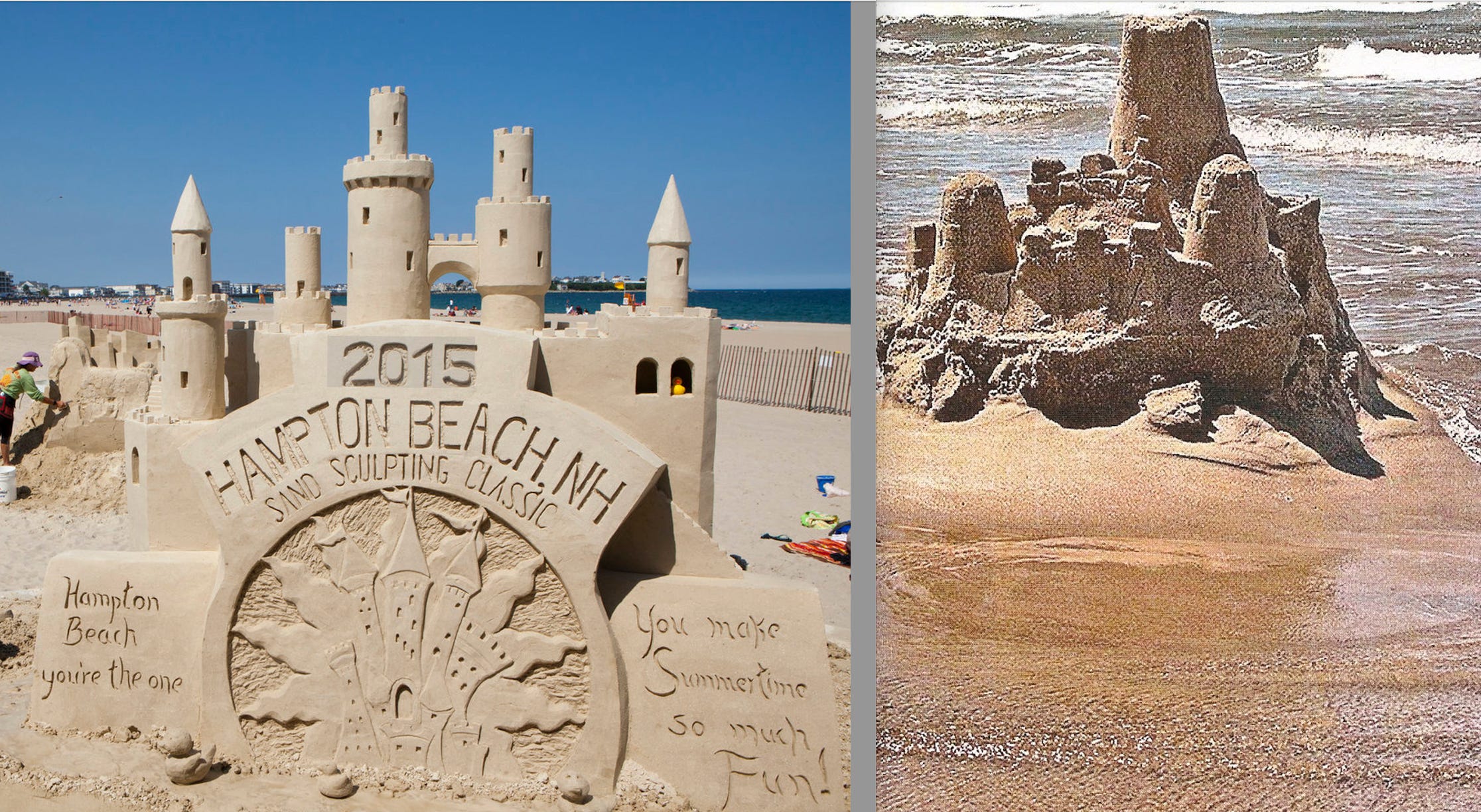
Entropy is not a “force” per se, like gravity. It’s just what happens if energy isn’t put into the system. Think of a sandcastle: There are a near infinite number of ways that grains of sand can be configured into an amorphous blob that resembles nothing in particular, but with just the right amount of water mixed with the sand there are a limited number of ways that the grains can be congealed into structures that resemble castles. What happens if the sandcastle is not maintained? Wind and waves and dogs and children erode it back into a featureless glob. There are simply far more ways for sand to be unstructured than structured. Life consists of building sand castles and maintaining them.

This also explains why failures in life are so much more common than successes: there are simply more ways to fail than there are to succeed. And the higher you aim the more obstacles there are going to be for you to get there, and entropy will push back against you along the way. Remember that the next time you fail. Like sandcastles, failure is normal, success unusual.

Lesson 2. To Thine Own Self Be True

In William Shakespeare’s play Hamlet, the character Polonius says:

“This above all: to thine own self be true,

And it must follow, as the night the day.

Thou canst not then be false to any man.”

To thine own self be true. What does this mean, exactly? Let’s begin with what philosophers call the Law of Identity: A is A, which means that each thing is identical with itself. The 15th century philosopher Nicholas of Cusa explained it this way: “there cannot be several things exactly the same, for in that case there would not be several things, but the same thing itself.”

Being true to yourself means recognizing and acknowledging that A is A, that you are you and not someone else. To try to be something that you are not, or to pretend to be someone else, is a violation of the Law of Identity: A cannot be non-A.

A is A means discovering who you are, your temperament and personality, your intelligence and abilities, your needs and wants, your loves and interests, what you believe and stand for, where you want to go and how you want to get there, and what matters most to you. Thine own self is your A, which cannot also be non-A. The attempt to make A into non-A has caused countless problems, failures, and heartaches in peoples’ lives.

How do you figure out who you are? By testing yourself, by trying new things, by meeting new people, by exploring, traveling, and reading, by trying different jobs and considering different careers. In time you will discover that most things you try, you will not be good at, but out of all those failures will emerge a handful of things that you are good at, a few people whom you are drawn to, and slowly the real you will emerge and thine own true self will come into focus.

Lesson 3. Be Antifragile

If the purpose of life is to survive and flourish in the teeth of entropy pushing back against everything you do, then you need to be antifragile, a word coined by the risk analyst Nassim Nicholas Taleb in his 2012 book of that title, Antifragile: Things That Gain from Disorder, on how to live in a world that is unpredictable and chaotic, and how to thrive during times of stress and even disaster.

Antifragile means growing and prospering from randomness, uncertainty, opacity, and disorder, and benefitting from a variety of shocks. Here’s how my psychologist friend and colleague Jonathan Haidt applies the concept of antifragility to raising children:

Bone is anti-fragile. If you treat it gently, it will get brittle and break. Bone actually needs to get banged around to toughen up. And so do children … they need to have a lot of unsupervised time, to get in over their heads and get themselves out.

For example, peanut allergies were once extremely rare. A mid-1990s study found that only 4 out of 1,000 children under the age of eight had a peanut allergy. A 2008 study by the same researchers, however, found that the rate had skyrocketed by 350 percent to 14 per 1,000. Why? Because parents and teachers had protected children from exposure to peanuts. The lesson is clear: immune systems become antifragile by exposure to environmental stressors, and so too do our minds and bodies to the stressors of daily life.

One solution to this problem may be found in an old saying: “Prepare the child for the road, not the road for the child.” Other idioms capture the principle behind the lesson of antifragility: “What doesn’t kill you makes you stronger,” Nietzsche famously said. “Tough times don’t last but tough people do,” my mother often told me. Here is what I wrote one of my students when she was going through a particularly difficult time:

No matter who you reach out to, ultimately it will come down to you and how you respond to your issues. There’s only so much other people can do. In the end, you have to help yourself. Whatever has happened in your life, you can’t do anything about that now as it is in the past and is out of your control. What is in your control is how you respond to it, whatever the “it” is, starting by deciding today that you are not going to let yourself be a victim any longer. It has to stop.

Ultimately only you can make it stop. Psychologists, family, and friends can only do so much. You must dig deep inside yourself and call up reserves you didn’t know you had, and from there rebuild your life, day by day, hour by hour, until it no longer is holding you back from realizing your full potential. What does not kill you makes you stronger. Whatever happened, it didn’t kill you. You are alive. You are engaged in the world. You are working on assignments. You will grow stronger with every accomplishment.

The current craze of overprotecting students from anything that makes them uncomfortable, including ideas that may challenge them, is making them weaker, not stronger, fragile, not antifragile.

Lesson 4. Be Self-Disciplined Because Action is Character

As the name implies, discipline comes from within the self. You are the architect of your life. You are responsible for what you do. So do it. How? Change your behavior and your cognition will follow. Change your habits and your thoughts will follow.

Everyone is looking for a hack, an easy way around the self-discipline problem. There is no hack and no way around being self-disciplined. External motivations, like motivating yourself with rewards for changing your habits, will not last. The motivation must eventually come from within. Internal motivation is the key to self-discipline.

You want to stop eating sugar and unhealthy food? Stop eating sugar and unhealthy food! Where? Here. When? Now. Self-discipline happens here and now. Stop eating bad food and start eating good food…here and now. Just do it.

Toward the end of his life the novelist F. Scott Fitzgerald wrote that “action is character,” by which he meant that what you do is who you are. Cognitive psychologists call this “embodied cognition”, in which action becomes character. My friend the science writer Amy Alkon wrote a book about this, colorfully titled Unfuckology: A Field Guide to Living with Guts and Confidence, with a chapter title that perfectly captures this principle: “The Mind is Bigger Than the Brain.” Here’s how Amy explains the principle in her humorous way:

Embodied cognition research shows that who you are is not just a product of your brain. It’s also in your breathing, your gut, the way you stand, the way you speak, and, while you’re speaking, whether you make eye contact or dart your eyes like you’re about to bolt under a car like a cat.

By acting and behaving a new way, you push out of your mind the old ways of being that you want to change. You are what you do. So act the way you want to feel. Be the person you want to be by acting like that person. As the Buddha counseled:

Your worst enemy cannot harm you as much as your own thoughts, unguarded. But once mastered, no one can help you as much.

Lesson 5. Don’t be a Victim

In their 2018 book The Rise of Victimhood Culture: Microaggressions, Safe Spaces, and the New Culture Wars, the sociologists Bradley Campbell and Jason Manning document how Western society has transitioned from an honor culture to a dignity culture and now is shifting into a victimhood culture.

In a culture of honor, each person has to earn honor and, unable to tolerate a slight, takes action himself. The big advance in Western society was to let the law handle serious offenses and ignore the inevitable minor ones—what sociologists call the culture of dignity, which reigned in the 20th century. It allows diversity to flourish because different people can live near each other without killing each other. As such, a culture of honor leads to autonomy, independence, self-reliance, confidence, courage, and strength of character.

The past quarter century, however, has seen the rise of a victimhood culture, where people are hypersensitive to slights as in the honor culture, but they don’t take care of it themselves. Instead they appeal to a third party to punish for them. A culture of victimhood leads people to divide the world into good and bad classes—victims and oppressors. As such, a culture of victimhood makes one weak, dependent, timid, afraid, and lacking courage and character.

Yes, any of us can be victims, but how you handle it matters. In a victimhood culture the primary way to gain status is to either be a victim or to condemn alleged perpetrators against victims, leading to an accelerating search for both. An Oxford student explained what happened to her after she joined a campus feminist group named Cuntry Living and started reading their literature on misogyny and patriarchy:

Along with all of this, my view of women changed. I stopped thinking about empowerment and started to see women as vulnerable, mistreated victims. I came to see women as physically fragile, delicate, butterfly-like creatures struggling in the cruel net of patriarchy. I began to see male entitlement everywhere.

As a result she became fearful and timid, afraid even to go out to socialize:

Feminism had not empowered me to take on the world—it had not made me stronger, fiercer or tougher. Even leaving the house became a minefield. What if a man whistled at me? What if someone looked me up and down? How was I supposed to deal with that? This fearmongering had turned me into a timid, stay-at-home, emotionally fragile bore.

Here is an antifragile way to deal with misogyny and patriarchy, from the model and pro-nuclear energy activist Isabelle Boemke:

If your Spanish is rusty a biblical metonymy may be found in the command to “go forth and multiply” (with your mother).

So stop with the safe spaces, trigger warnings, microaggressions, and especially the deplatforming and cancelation of speakers who may cause students to rethink their beliefs—you know, what colleges and universities were designed to do. It is turning young adults into fragile snowflakes instead of antifragile warriors.

Lesson 6. Don’t Eat the Marshmallow

When video of Admiral William H. McRaven’s 2014 commencement address at the University of Texas at Austin was posted online, the speech went viral. Millions of viewers will remember the core message summed up in his memorable line: “If you want to change the world, start off by making your bed.” The Navy SEAL veteran explained the psychology behind such a simple task:

If you make your bed every morning you will have accomplished the first task of the day. It will give you a small sense of pride and it will encourage you to do another task and another and another. By the end of the day, that one task completed will have turned into many tasks completed. Making your bed will also reinforce the fact that little things in life matter. If you can’t do the little things right, you will never do the big things right. And, if by chance you have a miserable day, you will come home to a bed that is made—that you made—and a made bed gives you encouragement that tomorrow will be better.

Admiral McRaven’s “life lessons” in his speech are, in fact, variations on a theme explored by the legendary psychologist Walter Mischel in his 2014 book The Marshmallow Test. The key to being a successful Navy SEAL—or anything else in life—is summed up in the book’s subtitle, Mastering Self-Control. Mischel begins by describing how, in the late 1960s, he and his colleagues devised a straightforward experiment to measure self-control at the Bing Nursery School at Stanford University.

In its simplest form, children between the ages of 4 and 6 were given a choice between one marshmallow now or two marshmallows if they waited 15 minutes. Some kids ate the marshmallow right away, but most engaged in unintentionally hilarious attempts to overcome temptation. They averted their gaze, covered their eyes, squirmed in their seats, or sang to themselves. They made grimacing faces, tugged at their ponytails, picked up the marshmallow and pretended to take a bite. They sniffed it, pushed it away from them, covered it up. If paired with a partner, they engaged in dialogue about how they could work together to reach the goal of doubling their pleasure.

In 2006, Professor Mischel published a new paper in the prestigious journal Psychological Science. The researchers did a follow-up study with the students they had tested 40 years before, examining the type of adults they had grown into. They found that the children who were able to delay gratification had higher SAT scores entering college, higher grade-point averages at the end of college, and they made more money after college. Perhaps not surprisingly, they also tended to have a lower body-mass index. That is, they were less likely to have a weight problem.

So, not eating the marshmallow is good for both your body and your mind. And all of life is a series of marshmallow tests.

Lesson 7: Directing Your Future Self

In an episode of the hit animated television series The Simpsons, Marge warns her husband that he might regret the drinking binge he’s about to go on, to which Homer replies: “That’s a problem for future Homer. Man, I don’t envy that guy.”

All of us, in fact, have future selves. Or, more accurately, there is no fixed self, but rather an ever-changing self, and the fact that we can project ourselves into the future means we can not only anticipate how our future selves might act, we can take measures today to alter how our future selves behave.

In the field of behavioral economics this problem of the future self is called future discounting, or myopic (nearsighted) discounting, and research shows that most of us discount the future too steeply, for example, electing to spend too much now instead of saving some for later. People are notoriously bad at long-term investing, as well as selecting smart retirement plans. The reason is that in the world we evolved in, and in all of human history until recently, life was, in the words of the political theorist Thomas Hobbes, “nasty, brutish, and short.” Why save for a fabulous 75th birthday party when the odds were high that you’d be dead by 50?

For most of our ancestors, a bird in the hand was worth two in the bush. In that world, it was better to eat one marshmallow now rather than risk the promised two marshmallows later that might be purloined or otherwise lost. A bumper sticker captures the temptation psychology: “Life is short. Eat dessert first.”

In today’s world, however, there is a good chance you will live a long life, so there is some justification to figuring out how to delay gratification, save for the future, plan for retirement, and expect your future self to be around for awhile.

The key here is projecting your current self into the future, asking yourself now what you want to happen then, and set up conditions today that you know will take effect later when your future self may not be trusted with doing the right thing.

That is, you don’t want to be Homer and say of your future self “man, I don’t envy that guy.”

Lesson 8: Be Your Own Financial Advisor

The comedian Woody Allen once joked, “It is better to be rich than it is to be poor…if only for financial reasons.” Well, yes, it is, and those financial reasons are not trivial.

Money may not be able to buy you love, happiness, or meaningfulness, but it sure can make life more comfortable and, more importantly, it can increase your opportunities for finding love, happiness and meaningfulness. How?

First, if you’re living on the margin—that is, your income barely covers your expenses and you have next to nothing left over for additional consumption or investment—your opportunities for doing anything else, from vacations to hobbies to retirement, are reduced to next to nothing.

Second, money buys you time, and that time can be put to use to make more money, as well as enjoy life by enriching it with additional opportunities for both business and pleasure.

Third, money buys a better life: better food, better clothes, better homes, better education, better transportation, better travel, better recreation, and better retirement.

How do you make money? Investments in real estate or the stock market (or both). I recommend a book called The Gone Fishin’ Portfolio by a financial advisor named Alex Green, who subsequently became a friend of mine. What Alex demonstrates is that no one can consistently beat the market. You may hear about people who do—for example, fund managers like Bill Miller, who in 2006 was declared by CNNMoney.com to be “The Greatest Money Manager of our Time” because he beat the S&P 500 stock index 15 years in a row.

But as my science writer friend Leonard Mlodinow calculated in his book The Drunkard’s Walk: How Randomness Rules Our Lives, there are over 6,000 fund managers in the U.S., and so if you do a simple coin-flip calculation of the odds that someone in that cohort of 6,000 fund managers would beat the S&P 500 15 years in a row, it turns out to be .75, or 3 out of 4. As Len says, the CNNMoney headline should have read “Expected 15-Year Run Finally Occurs: Bill Miller Lucky Beneficiary.” And, wouldn’t you know it, in the two years after Miller’s 15-year streak, the story read: “the market handily pulverized him.”

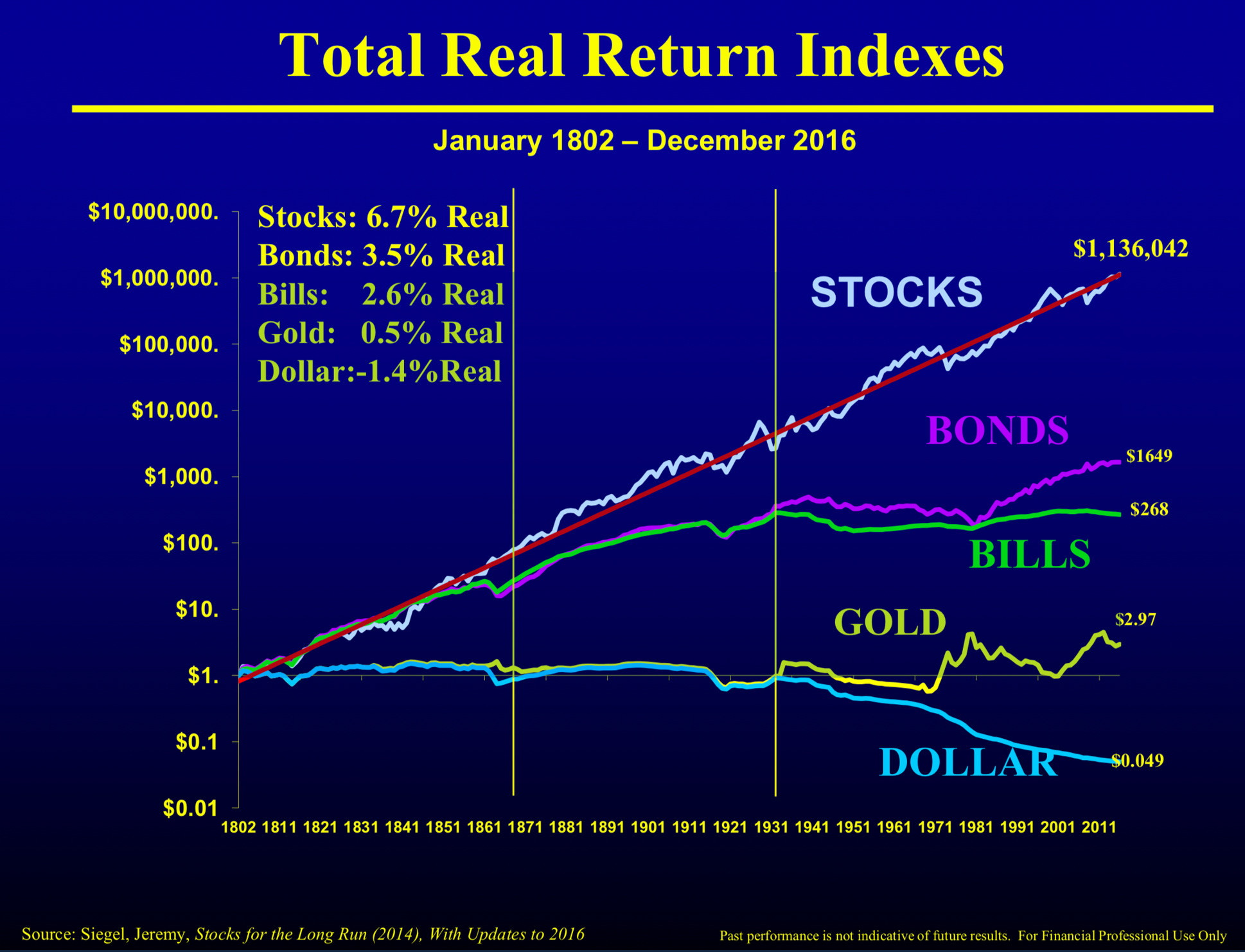
When Alex Green says to “go fishin” what he means is that you should not try to be the next Bill Miller. Why? Because only after the fact can we pick out the winners. Instead, you should pick stocks in companies with a solid track record—or, even better, invest in mutual funds tied to, for example, the S&P 500—and then, well, go fishing; that is, leave your investments alone. For example, Green calculates that if you invested $10,000 in 1990 in a mutual fund tied to the entire S&P 500 and then went fishing, 20 years later you would have $90,000, not counting dividend reinvestment, which would push you well over the $100,000 figure.

By contrast, if you tried to be actively involved in trading—buying and selling stocks and trying to anticipate what the market would do—you risk missing the biggest increases in that 20-year block. For example, if you miss just the 5 best days in that 20 years, your $90,000 account would plummet to $45,000. If you miss the 10 best days you’d end up with around $35,000. If you miss the best 25 days your $10,000 investment would only bring you only $19,000. And if you miss the best 50 days…you’d actually lose money.

Anyone can compute for you how much stocks have returned to investors in the past. No one can do that for the future. In the case of the S&P 500, since the 1920s it has returned an annualized average of around 10%. The returns for the NASDAQ, which is heavily loaded in tech stocks that have done so well the past 20 years, is significantly higher. Whichever fund you invest in, however, you should expect that your returns will not be significantly higher or lower than the long-term average, which in any block of time in a two-digit positive number. Here’s how Alex Green explains it:

History clearly demonstrates that no other asset class returns more than stocks over the long haul. Once you understand this—and accept the steep odds against timing the market—you’ve made the first step toward adopting an investment strategy that can generate high returns with an acceptable level of risk.

Here’s a chart showing the value of different assets over the very long run:

Lesson 9: Build Strong Social Networks

Diet and exercise are very important tools for living a long, healthy, and high-quality life, but believe it or not there’s something else you can do that produces even better results and it doesn’t require getting up at Zero Dark Thirty, doing push-ups, or eating kale. All you have to do is be sociable. Here are some comparisons of things you can do to lower your mortality risk based on the latest studies in longevity by scientists around the world:

  • Exercise lowers mortality risk by 33%. A happy marriage lowers it by 49%.
  • Eating 6 or more servings per day of fruits and vegetables lowers mortality risk by 26%. Having a large social network lowers it by 45%
  • Eating 3 servings a day of whole grains lowers mortality risk by 23%. Feeling you have others you can count on for support lowers it by 35%.
  • Eating a Mediterranean diet lowers mortality risk by 21%. Living with someone lowers it by 32%.

These numbers, and their implications for what you can do to improve your life, were compiled by the science journalist Marta Zaraska and published in her book Growing Young: How Friendship, Optimism, and Kindness can Help You Live to 100. Here are some of her suggestions of simple things you can do, all backed by scientific research:

  • Engage in more physical contact with others: kiss your partner more often, hold hands with your kids, hug your friends, rub each other’s back, look others in the eyes.
  • Prioritize your romantic relationship and really commit to it. Read books and articles on how to be a better partner. Avoid contempt, criticism, stonewalling, and defensiveness. Talk with your partner about good things that happen in your daily life. Try new and fun things together and have some fun.
  • Invest in your friendships. Spend more time together, disclose your secrets, and don’t be afraid to ask for favors. When you’re with your partner or friends and family, put your phone away and focus on them.
  • Be more extraverted by greeting staff in a store, calling a friend whom you haven’t talk to in awhile, try a new restaurant or bar or café where you will meet new people working there.

In Zaraska’s words, here’s the bottom line:

It’s time we recognize that improving our social lives and cultivating our minds can be at least as important for health and longevity as are diet and exercise. When you grow as a person, chances are, you will also grow young. To Michael Pollan’s famous statement, “Eat food. Not too much. Mostly plants,” I would add: “Be social, care for others, enjoy life.”

Lesson 10. Find Your Meaning and Purpose in Life

What, specifically, should you do to find meaning and purpose in life? Philosophers, theologians, and sages from spiritual traditions have been writing about this topic for millennia, and recently psychologists have undertaken scientific studies of people and what they do to find meaning and purpose in life. Here are some of their findings.

1. Love and family. The bonding and attachment to other people increases one’s circle of sentiments and a corresponding sense of purpose to care about others as much as, if not more than, oneself. A core principle of leading a meaningful life is to make it more than just about yourself.

2. Meaningful work and career. Having a passion for work and a long-term career gives most people a drive to achieve goals beyond the needs of themselves and their immediate family that lifts all of us to a higher plane, and society toward greater prosperity and moral progress. Having a reason to get up and around in the morning, and having a place to go where one is needed, is a lasting purposeful goal.

3. Social and community involvement. We are not isolated individuals but social beings with a drive to participate in the process of determining how best we should live together, for the benefit of ourselves, our families, our communities, and our societies. This is not just voting but, for example, being actively engaged in the political process; it is not just a matter of joining a club or society, but caring about its goals and the actions of the other members working toward the same goals. Get out and participate!

4. Challenges and goals. Most of us need tests and trials and things at which to aim, both ordinary, such as the physical challenge of sports and recreation and the mental challenge of games and intellectual pursuits, as well as extraordinary, such as striving for abstract principles like truth, justice, and freedom, and struggling through obstacles in the way of realizing them.

5. Transcendency and spirituality. Possibly unique to our species is the capacity for aesthetic appreciation, spiritual reflection, and transcendent contemplation through a variety of expressions such as art, music, dance, exercise, sports, meditation, prayer, quiet contemplation, religious revere, and spiritual contemplation, connecting us to that which is outside of ourselves, and generating a sense of awe and wonder at the vastness of humanity, nature, the world, and the cosmos. The idea that we live in a universe that is 13.8 billion years old, and on a planet that is but one among trillions of planets in our galaxy alone, itself one of hundreds of billions of other galaxies, in a universe that is possibly just one in a multiverse of universes, is so staggering a thought as to leave one speechless in reverence for the vastness of it all.

I will end this reverie on lessons for life with an inspiring poem that completely changed how I looked at my life when I first encountered it. It’s called Invictus, written in 1920 by William Ernest Henley, and is particularly poignant as he wrote it when he was terminally ill:

Out of the night that covers me,

Black as the pit from pole to pole,

I thank whatever gods may be

For my unconquerable soul.

In the fell clutch of circumstance

I have not winced nor cried aloud.

Under the bludgeonings of chance

My head is bloody, but unbowed.

Beyond this place of wrath and tears

Looms but the Horror of the shade,

And yet the menace of the years

Finds and shall find me unafraid.

It matters not how strait the gate,

How charged with punishments the scroll,

I am the master of my fate:

I am the captain of my soul.

Please consider supporting Skeptic by becoming a free or paid subscriber below. All monies go to the Skeptics Society, a 501(c)(3) nonprofit educational organization.
Upgrade to paid

###

Michael Shermer is the Publisher of Skeptic magazine, the host of The Michael Shermer Show, and a Presidential Fellow at Chapman University. His many books include Why People Believe Weird ThingsThe Science of Good and EvilThe Believing BrainThe Moral Arc, and Heavens on EarthHis new book is Conspiracy: Why the Rational Believe the Irrational.

Anaïs Nin on the Meaning of Life and the Dangers of the Internet, Before the Internet

Here’s the link to this article.

“We believe we are in touch with a greater amount of people… This is the illusion which might cheat us of being in touch deeply with the one breathing next to us.”

BY MARIA POPOVA

Last week’s widely reverberating meditations on the meaning of life by cultural icons like Charles Bukowski, Annie Dillard, Arthur C. Clarke, and John Cage reminded me of a passage from the altogether sublime The Diary of Anais Nin, Vol. 4: 1944-1947 (public library) — the same tome that gave us this poignant reflection on why emotional excess is essential to creativity.

In an entry from May 1946, Anaïs Nin once again challenges our presentism bias by thinking deeply and timelessly about issues we tend to believe we’re brushing up against for the very first time, from the pitfalls of always-on communication technology to the pace of modern life to the venom of procrastination.

Even more interesting than the striking similarity between what Nin admonishes against and the present dynamics of the internet is the fact that she essentially describes Marshall McLuhan’s seminal concept of the global village… a decade and a half before he coined it. She writes:

The secret of a full life is to live and relate to others as if they might not be there tomorrow, as if you might not be there tomorrow. It eliminates the vice of procrastination, the sin of postponement, failed communications, failed communions. This thought has made me more and more attentive to all encounters, meetings, introductions, which might contain the seed of depth that might be carelessly overlooked. This feeling has become a rarity, and rarer every day now that we have reached a hastier and more superficial rhythm, now that we believe we are in touch with a greater amount of people, more people, more countries. This is the illusion which might cheat us of being in touch deeply with the one breathing next to us. The dangerous time when mechanical voices, radios, telephones, take the place of human intimacies, and the concept of being in touch with millions brings a greater and greater poverty in intimacy and human vision.

For more on Nin’s timeless insights on life, see Lisa Congdon’s stunning hand-lettered diary quotes.

Loving the Tree of Life: Annie Dillard on How to Bear Your Mortality

Here’s the link to this essay.

“We live and move by splitting the light of the present, as a canoe’s bow parts water.”

BY MARIA POPOVA

Loving the Tree of Life: Annie Dillard on How to Bear Your Mortality

“To die is different from what any one supposed, and luckier,” wrote Walt Whitman a century and a half before Richard Dawkins considered the luckiness of death as a radiant token of the improbable odds of having lived at all. Death — the harrowing fact of our mortality — is the central animating force of life, the one great terror for which we have devised the coping mechanisms of love and art. Everything we make, everything we do, is a bid for bearing our transience. And yet this is the native poetry of the cosmos — in a universe churned by entropy, the very fact of our impermanence is life’s most enduring source of meaning.

That is what the uncommonly poetic and penetrating Annie Dillard explores throughout her book For the Time Being (public library), published in the final year of the world’s deadliest century.

Total eclipse of the sun, observed July 29, 1878, at Creston, Wyoming Territory
Total solar eclipse by Étienne Léopold Trouvelot. (Available as a print and as stationery cards.)

With an eye to sand — Earth’s emissary of deep time, builder and dismatler of civilizations — Dillard writes:

Since sand and dirt pile up on everything, why does it look fresh for each new crowd? As natural and human debris raises the continents, vegetation grows on the piles. It is all a stage set — we know this — a temporary stage on top of many layers of stages, but every year fungus, bacteria, and termites carry off the old layer, and every year a new crop of sand, grass, and tree leaves freshens the set and perfects the illusion that ours is the new and urgent world now. When Keats was in Rome, he saw pomegranate trees overhead; they bloomed in dirt blown onto the Colosseum’s broken walls. How can we doubt our own time, in which each bright instant probes the future? We live and move by splitting the light of the present, as a canoe’s bow parts water.

In every arable soil in the world we grow grain over tombs — sure, we know this. But do not the dead generations seem to us dark and still as mummies, and their times always faded like scenes painted on walls at Pompeii?

We live on mined land. Nature itself is a laid trap. No one makes it through; no one gets out.

Art from Duck, Death and the Tulip by Wolf Elbruch — a German picture-book about making sense of death

“You don’t have to think very hard to realize that our dread of both relationships and loneliness,” David Foster Wallace wrote as he reckoned with mortality and redemption, “has to do with angst about death, the recognition that I’m going to die, and die very much alone, and the rest of the world is going to go merrily on without me.” In consonance with Wallace, Dillard writes:

Are we ready to think of all humanity as a living tree, carrying on splendidly without us? We easily regard a beehive or an ant colony as a single organism, and even a school of fish, a flock of dunlin, a herd of elk. And we easily and correctly regard an aggregate of individuals, a sponge or coral or lichen or slime mold, as one creature — but us? When we people differ, and know our consciousness, and love? Even lovers, even twins, are strangers who will love and die alone. And we like it this way, at least in the West; we prefer to endure any agony of isolation rather than to merge and extinguish our selves in an abstract “humanity” whose fate we should hold dearer than our own. Who could say, I’m in agony because my child died, but that’s all right: Mankind as a whole has abundant children? The religious idea sooner or later challenges the notion of the individual. The Buddha taught each disciple to vanquish his fancy that he possessed an individual self. Huston Smith suggests that our individuality resembles a snowflake’s: The seas evaporate water, clouds build and loose water in snowflakes, which dissolve and go to sea. The simile galls. What have I to do with the ocean, I with my unique and novel hexagons and spikes? Is my very mind a wave in the ocean, a wave the wind flattens, a flaw the wind draws like a finger?

We know we must yield, if only intellectually. Okay, we’re a lousy snowflake. Okay, we’re a tree. These dead loved ones we mourn were only those brown lower branches a tree shades and kills as it grows; the tree itself is thriving. But what kind of tree are we growing here, that could be worth such waste and pain? For each of us loses all we love, everyone we love. We grieve and leave.

Complement with Marcus Aurelius on embracing mortality and the key to living fully, Rilke on befriending our transience, Marguerite Duras on our only taste of immortality, and physicist Alan Lightman on what actually happens when we die, then revisit Dillard on how to live with mystery and what Earth’s most otherworldly tree teaches us about being human.

Practical Mysticism: Evelyn Underhill’s Stunning Century-Old Manifesto for Secular Transcendence and Seeing the Heart of Reality

Here’s the link to this article.

“Because mystery is horrible to us, we have agreed for the most part to live in a world of labels; to make of them the current coin of experience, and ignore their merely symbolic character, the infinite gradation of values which they misrepresent.”

BY MARIA POPOVA

Practical Mysticism: Evelyn Underhill’s Stunning Century-Old Manifesto for Secular Transcendence and Seeing the Heart of Reality

The great paradox of consciousness is that it constitutes both our entire experience of reality and our blindfold to reality as it really is. Forever trapped within it, we mistake our concepts of things for the things themselves, our theories for the universe, continually seeing the world not as it is but as we are. The supreme frontier of human freedom may be the ability to accept that something exists beyond understanding, that understanding is a machination of the mind and not a mirror of the world — that the world simply is, and our consciousness is a participant in its being but not a creator of it.

The English poet, novelist, mystic, and peace activist Evelyn Underhill (December 6, 1875–June 15, 1941) explores how to do that in her 1914 book Practical Mysticism (public library | public domain) — a field guide to mystical experience that is secular rather than religious, the product of “ordinary contemplation” springing from the very essence of human nature, available to all.

Evelyn Underhill

Acknowledging what modern cognitive scientists well know — that our attention is “an intentional, unapologetic discriminator” — Underhill observes that “only a few amongst the wealth of impressions we receive are seized and incorporated into our picture of the world,” and reflects on the spiritual significance of this tendency to mistake representation for reality:

The distinction between mystic and non-mystic is not merely that between the rationalist and the dreamer, between intellect and intuition. The question which divides them is really this: What, out of the mass of material offered to it, shall consciousness seize upon — with what aspects of the universe shall it “unite”?

It is notorious that the operations of the average human consciousness unite the self, not with things as they really are, but with images, notions, and aspects of things. The verb “to be,” which [the self] uses so lightly, does not truly apply to any of the objects amongst which the practical man supposes himself to dwell. For him, the hare of Reality is always ready-jugged [jugged hare is a traditional English dish of hare marinated in wine and juniper berries, cooked in the animal’s blood]: he conceives not the living, lovely, wild, swift-moving creature which has been sacrificed in order that he may be fed on the deplorable dish which he calls “things as they really are.” So complete, indeed, is the separation of his consciousness from the facts of being, that he feels no sense of loss. He is happy enough “understanding,” garnishing, assimilating the carcass from which the principle of life and growth has been ejected, and whereof only the most digestible portions have been retained.

This, Underhill observes, is the opposite of the mystical orientation, which opens us up to a kind of knowledge beyond understanding — the kind that Elizabeth Bishop invoked in her astonishing poem “At the Fishhouses,” consonant with the notion of adaequatio and kindred to Maurice Bucke’s notion of cosmic consciousness.

Plate from An Original Theory or New Hypothesis of the Universe by Thomas Wright, 1750. (Available as a print and as stationery cards.)

Five years earlier, Underhill had voiced these existential reckonings through the heroine of her novel The Column of Dust:

She had seen, abruptly, the insecurity of those defences which protect our illusions and ward off the horrors of truth. She had found a little hole in the wall of appearances; and peeping through, had caught a glimpse of that seething pot of spiritual forces whence, now and then, a bubble rises to the surface of things.

That bubble, she intimates in Practical Mysticism, is what mysticism as “the art of union with Reality” surfaces in us. She writes:

Because mystery is horrible to us, we have agreed for the most part to live in a world of labels; to make of them the current coin of experience, and ignore their merely symbolic character, the infinite gradation of values which they misrepresent. We simply do not attempt to unite with Reality. But now and then that symbolic character is suddenly brought home to us. Some great emotion, some devastating visitation of beauty, love, or pain, lifts us to another level of consciousness; and we are aware for a moment of the difference between the neat collection of discrete objects and experiences which we call the world, and the height, the depth, the breadth of that living, growing, changing Fact, of which thought, life, and energy are parts… Then we realise that our whole life is enmeshed in great and living forces; terrible because unknown… The more sacred plane of life and energy which seems to be manifested in the forces we call “spiritual” and “emotional” — in love, anguish, ecstasy, adoration — is hidden from us too. Symptoms, appearances, are all that our intellects can discern: sudden irresistible inroads from it, all that our hearts can apprehend. The material for an intenser life, a wider, sharper consciousness, a more profound understanding of our own existence, lies at our gates. But we are separated from it, we cannot assimilate it; except in abnormal moments, we hardly know that it is.

Art by Kay Nielsen from East of the Sun and West of the Moon, 1914. (Available as a print and as stationery cards.)

Those who bridge the separation, Underhill argues, are the mystics. Pointing to Walt Whitman as one such secular mystic — a person who “has achieved a passionate communion with deeper levels of life than those with which we usually deal” — she invites a layered understanding of what this notion of practical mysticism means:

The visionary is a mystic when his vision mediates to him an actuality beyond the reach of the senses. The philosopher is a mystic when he passes beyond thought to the pure apprehension of truth. The active man is a mystic when he knows his actions to be a part of a greater activity. Blake, Plotinus, Joan of Arc, and John of the Cross — there is a link which binds all these together: but if he is to make use of it, the inquirer must find that link for himself.

This practical mysticism, she argues as she contrasts it with an “indolent and useless mysticality,” is available to the ordinary person as an invitation “to a training of his latent faculties, a bracing and brightening of his languid consciousness, an emancipation from the fetters of appearance, a turning of his attention to new levels of the world.” She offers a sentiment of winged assurance:

As the beautiful does not exist for the artist and poet alone — though these can find in it more poignant depths of meaning than other men — so the world of Reality exists for all; and all may participate in it, unite with it, according to their measure and to the strength and purity of their desire.

The Dove No. 1 by Hilma af Klint. (Available as a print and as stationery cards.)

Underhill considers the ultimate reward of practical mysticism:

Mysticism [is] the art of union with Reality [and], above all else, a Science of Love. Hence, the condition to which it looks forward and towards which the soul of the contemplative has been stretching out, is a condition of being, not of seeing. As the bodily senses have been produced under pressure of man’s physical environment, and their true aim is not the enhancement of his pleasure or his knowledge, but a perfecting of his adjustment to those aspects of the natural world which concern him — so the use and meaning of the spiritual senses are strictly practical too. These, when developed by a suitable training, reveal to man a certain measure of Reality: not in order that he may gaze upon it, but in order that he may react to it, learn to live in, with, and for it; growing and stretching into more perfect harmony with the Eternal Order, until at last, like the blessed ones of Dante’s vision, the clearness of his flame responds to the unspeakable radiance of the Enkindling Light.

Indeed, she places the ability — the willingness — to “look with the eyes of love” at heart of this practice of seeing reality clearly — a practice containing “the whole art of spiritual communion.” In a passage consonant with Dostoyevsky’s insistence that “nature, the soul, love, and God, one recognizes through the heart, and not through the reason,”, and evocative of Hilton Als’s notion of love as the art of receptivity, Underhill writes:

The attitude which it involves is an attitude of complete humility and of receptiveness; without criticism, without clever analysis of the thing seen. When you look thus, you surrender your I-hood; see things at last as the artist does, for their sake, not for your own. The fundamental unity that is in you reaches out to the unity that is in them: and you achieve the “Simple Vision” of the poet and the mystic — that synthetic and undistorted apprehension of things which is the antithesis of the single vision of practical men. The doors of perception are cleansed, and everything appears as it is. The disfiguring results of hate, rivalry, prejudice, vanish away. Into that silent place to which recollection has brought you, new music, new colour, new light, are poured from the outward world. The conscious love which achieves this vision may, indeed must, fluctuate… But the will which that love has enkindled can hold attention in the right direction. It can refuse to relapse to unreal and egotistic correspondences; and continue, even in darkness, and in the suffering which such darkness brings to the awakened spirit, its appointed task, cutting a way into new levels of Reality.

Complement these fragments of Underhill’s wholly revelatory Practical Mysticism with the poetic physicist Alan Lightman on transcendence for the science-spirited, then revisit Emerson on nature, transcendence, and how we become our most authentic selves.

Henry James on Losing a Mother

Here’s the link to this article.

“These are hours of exquisite pain; thank Heaven this particular pang comes to us but once.”

BY MARIA POPOVA

Henry James on Losing a Mother

“Every man or woman who is sane, every man or woman who has the feeling of being a person in the world, and for whom the world means something, every happy person, is in infinite debt to a woman,” the visionary psychoanalyst Donald Winnicott wrote as he considered the mother as a pillar of society. Having a mother is a lifelong complexity. Losing a mother, no matter the nature or duration of the relationship, is the cataclysm of a lifetime.

That is what Henry James (April 13, 1843–February 28, 1916) reckoned with in his thirty-ninth year, recording the loss in a breathtaking diary entry found in The Complete Notebooks of Henry James (public library).

Henry James and his mother, Mary Robertson Walsh James

James writes:

I came back from Washington on the 30th of last month (reached Cambridge the next day), to find that I should never again see my dear mother. On Sunday, Jan. 29th, as Aunt Kate sat with her in the closing dusk (she had been ill with an attack of bronchial asthma, but was apparently recovering happily), she passed away. It makes a great difference to me! I knew that I loved her — but I didn’t know how tenderly till I saw her lying in her shroud in that cold North Room, with a dreary snowstorm outside, and looking as sweet and tranquil and noble as in life. These are hours of exquisite pain; thank Heaven this particular pang comes to us but once.

After making funeral arrangements with his father and his sister Alice — herself a writer of genius and consummate wisdom on the art of dying — he reflects on the kaleidoscopic nature of the loss:

It is impossible for me to say — to begin to say — all that has gone down into the grave with her. She was our life, she was the house, she was the keystone of the arch. She held us all together, and without her we are scattered reeds. She was patience, she was wisdom, she was exquisite maternity. Her sweetness, her mildness, her great natural beneficence were unspeakable, and it is infinitely touching to me to write about her here as one that was.

Kinship by Maria Popova. (Available as a print.)

One of the greatest betrayals of our illusion of permanence, one of the sharpest daggers of loss, is the retroactive recognition of lasts — the last time you sat across from a person you now know you will never see again, the last touch of a hand that is no more, the last kiss of lips that shall never part again — lasts the finality of which we can never comprehend in the moment, lasts we experience with sundering shock in hindsight. James shudders with this recognition, then finds in it an exhale of relief, of reconciliation with reality that borders on sanctity:

When I think of all that she had been, for years when I think of her hourly devotion to each and all of us — and that when I went to Washington the last of December I gave her my last kiss. I heard her voice for the last time — there seems not to be enough tenderness in my being to register the extinction of such a life. But I can reflect, with perfect gladness, that her work was done — her long patience had done its utmost. She had had heavy cares and sorrows, which she had borne without a murmur, and the weariness of age had come upon her.

I would rather have lost her forever than see her begin to suffer as she would probably have been condemned to suffer, and I can think with a kind of holy joy of her being lifted now above all our pains and anxieties. Her death has given me a passionate belief in certain transcendent things — the immanence of being as nobly created as hers — the immortality of such a virtue as that… She is no more of an angel today than she had always been; but I can’t believe that by the accident of her death all her unspeakable tenderness is lost to the things she so dearly loved. She is with us, she is of us — the eternal stillness is but a form of her love. One can hear her voice in it — one can feel, forever, the inextinguishable vibration of her devotion.

In a bittersweet reminder that we must never hold back our tenderness, for we never know how many chances to share it are left us, he adds:

I can’t help feeling that in those last weeks I was not tender enough with her — that I was blind to her sweetness and beneficence. One can’t help wishing one had only known what was coming, so that one might have enveloped her with the softest affection.

Complement with My Mother’s Eyes — a soulful animated short film about loss and the unbreakable bonds of love — and Mary Gaitskill on how to move through life when your parents are dying — some of the simplest, most redemptive advice for those who have the chance-granted luxury of choosing it — then revisit James on how to stop waiting and start living.

HT Diaries of Note

Let Your Heart Be Broken

Here’s the link to this article.

“The miracle is that we rise again out of suffering… The miracle is that we create ourselves anew.”

BY MARIA POPOVA

Let Your Heart Be Broken

We spend our lives trying to anchor our transience in some illusion of permanence and stability. We lay plans, we make vows, we backbone the flow of uncertainty with habits and routines that lull us with the comforting dream of predictability and control, only to find ourselves again and again bent at the knees with surrender to forces and events vastly larger than us. In those moments, kneeling in a pool of the unknown, the heart breaks open and allows life — life itself, not the simulacrum of life that comes from control — to rush in.

How to live with that generative brokenness is what composer Tina Davidson explores throughout her memoir Let Your Heart Be Broken: Life and Music from a Classical Composer (public library) — a lyrical reckoning with what it takes to compose a life of cohesion and beauty out of shattered bits and broken stories.

She recounts attending a talk by Stephen Levine — the poet and author best known for his work on death and dying — at which an audience member asked what the meaning of life is. Acknowledging the vastness of the question, Levine paused, then offered: “I think the meaning of life is to let your heart be broken.” Reflecting on his words, Davidson writes:

Let your heart be broken. Allow, expect, look forward to. The life that you have so carefully protected and cared for. Broken, cracked, rent in two. Heartbreakingly, your heart breaks, and in the two halves, rocking on the table, is revealed rich earth. Moist, dark soil, ready for new life to begin.

The Human Heart. One of French artist Paul Sougy’s mid-century scientific diagrams of life. (Available as a print.)

Davidson — who is living with congestive heart failure after a savage bacterial infection — was a small child when her heart was first broken. Long before she became an accomplished pianist and composer, she was a three-year-old girl living with her foster parents and siblings in Sweden, until she was ripped from the only family she knew to be adopted by an English teacher from Ohio, who eighteen years later was revealed to be her birth-mother, having abandoned her newborn in the heartbreak of an ill-fated love affair. Davidson writes:

Here was the heart of loss. To my three-year-old self, my foster family was my family. The day my mother rang Solvig’s doorbell and brought me home as an adopted child, I lost my first mother and father, my three brothers, a home, a country, and a language. I lost myself and became another child. The shining child waited at the window. The dark child emerged. To the passing eye, I was unremarkable, even normal — but my inner self was silent, dark, and eternally sad for a loss that had no name.

Soon, her single mother married and Tina became the eldest of five children living in an itinerant family across Turkey, Germany, and Israel. Eventually, that dark inner child found light in music as she became an accomplished classical composer, creating with “that wonderful absorbing feeling of being,” with “a sigh of homecoming.” She writes:

Music, like life, is no more than itself. There is no implicit reason to it except that it is. And that is its magic. Like swimming in a dark underground grotto, life miraculously pulses open.

Music by Maria Popova. (Available as a print and as stationery cards.)

And yet an unslaked longing lurked beneath it all. Thirty years after the separation, Davidson set out to reconnect with her foster family, only to find that her foster mother had died of carcinoma a year earlier. Inhabiting her grief — grief “patient and enduring” that untucked hidden griefs she had been living with at the edges of being — became her way of wresting new life from the broken pieces of her heart. She reflects on this tender and tumultuous process:

The path of memory was littered with startling beliefs and perceptions that operated, silent and deadly, behind the scenes. My progress was uneven. I reworked an understanding, leaped ahead, then wallowed for weeks in a fog. After a remission, I emerged to work on a new piece of the puzzle. The darkness began to lighten, my rage abated, my depressions lessened; I began to breathe.

Punctuating the particular story of her own life with reflections on the universal pulse-beat of all life, she considers what readies the soil for this new fecundity as we continually tussle with our past, with the selves we have been and the lives we have lived and the losses we have lost:

The past presses on the present with staggering consistency. Nothing is separate or fresh, always an afterimage. The slow time-lapse photograph catches the multi-image movement of our lives. Danger lurks in every corner. To reconstruct will challenge perceptions of self, to restore will allow old pain to well up.

The price of forgotten memories, however, is more costly. My puppeteer of darkness is cruel. He perpetuates false beliefs and forces reenactments I cannot control.

The miracle is light. The miracle is that we rise again out of suffering. The miracle is the persistence of the soul to find itself, to look hard into the darkness, reach back, and grasp remnants of ourselves. The miracle is that we create ourselves anew.

Art by Dorothy Lathrop, 1922. (Available as a print and as stationery cards.)

With an eye to both creative work and life itself, she echoes Henry Miller’s penetrating insight on control and surrender, and contours the most generative orientation of being:

The word allow asks for balance and helps me rethink the issue of ownership and parentage. Allow provides a medium for growth and questions authority. Too much control forces a finger into sacred ground, leaving a trail of infection. To allow, in the end, is to have.

Let Your Heart Be Broken is a consummate read in its entirety, exploring with uncommon sensitivity and poetic insight the fundamentals of love, forgiveness, creativity, and what it takes to emerge from the inner darkness into a vast vista of light, rooted in the life-tested truth that “we are, in the end, a measure of the love we leave behind.” Complement these fragments from it with Kahlil Gibran on how to weather the uncertainties of love, Hannah Arendt on love and the fundamental fear of loss, and Alain de Botton on surviving heartbreak.

The Osprey and the Meaning of Life: The Poetic Physicist Alan Lightman on Science and Our Spiritual Bond with Nature

Here’s the link to this article.

“Faith is the willingness to give ourselves over, at times, to things we do not fully understand… the full engagement with this strange and shimmering world.”

BY MARIA POPOVA

“If we ever reach the point where we think we thoroughly understand who we are and where we came from,” Carl Sagan wrote in his timeless meditation on science and religion“we will have failed.” It’s a sentiment that dismisses in one fell Saganesque swoop both the blind dogmatism of religion and the vain certitude of science — a sentiment articulated by some of history’s greatest minds, from Einstein to Ada Lovelace to Isaac Asimov, all the way back to Galileo, and one that Sagan echoed a decade later, three months before his death, writing: “The notion that science and spirituality are somehow mutually exclusive does a disservice to both.” Yet centuries after Galileo and decades after Sagan, humanity remains profoundly uneasy about reconciling these conflicting frameworks for understanding the universe and our place in it.

That vital discomfort is precisely what physicist Alan Lightman — celebrated author of both nonfiction and novels, one of the finest science essayists writing today, the very first person to receive dual appointments in science and the humanities at MIT, an extraordinary storyteller, and one of my favorite minds — explores in one of the essays in his entrancing new anthology, The Accidental Universe: The World You Thought You Knew (public library | IndieBound).

Alan Lightman (Photograph courtesy of MIT)

In the foreword, Lightman recounts attending a lecture by the Dalai Lama at MIT, “one of the world’s spiritual leaders sitting cross-legged in a modern temple of science,” and hearing about the Buddhist concept of sunyata, translated as “emptiness” — the notion that objects in the physical universe are vacant of inherent meaning and that we imbue them with meaning and value with the thoughts of our own minds. From this, Lightman argues while adding to history’s finest definitions of science, arises a central challenge of the human condition:

As a scientist, I firmly believe that atoms and molecules are real (even if mostly empty space) and exist independently of our minds. On the other hand, I have witnessed firsthand how distressed I become when I experience anger or jealousy or insult, all emotional states manufactured by my own mind. The mind is certainly its own cosmos. As Milton wrote in Paradise Lost, “[The mind] can make a heaven of hell or a hell of heaven.” In our constant search for meaning in this baffling and temporary existence, trapped as we are within our three pounds of neurons, it is sometimes hard to tell what is real. We often invent what isn’t there. Or ignore what is. We try to impose order, both in our minds and in our conceptions of external reality. We try to connect. We try to find truth. We dream and we hope. And underneath all of these strivings, we are haunted by the suspicion that what we see and understand of the world is only a tiny piece of the whole.

[…]

Science does not reveal the meaning of our existence, but it does draw back some of the veils.

This tension between internal and external reality is also what lies at the root of the age-old tension between science and religion. In one of the best essays in the collection, titled “The Spiritual Universe,” Lightman sets out to lift the veil of this immutable inquiry. He cites a discussion that took place at a monthly gathering of scientists and artists at MIT, aimed at exploring the interplay of science and art, wherein a playwright proposed that science is the religion of our century. Lightman considers the inherent challenges to this notion:

If science is the religion of the twenty-first century, why do we still seriously discuss heaven and hell, life after death, and the manifestations of God? Physicist Alan Guth, another member of our salon, pioneered the inflation version of the Big Bang theory and has helped extend the scientific understanding of the infant universe back to a trillionth of a trillionth of a trillionth of a second after t = 0. A former member, biologist Nancy Hopkins, manipulates the DNA of organisms to study how genes control the development and growth of living creatures. Hasn’t modern science now pushed God into such a tiny corner that He or She or It no longer has any room to operate—or perhaps has been rendered irrelevant altogether? Not according to surveys showing that more than three-quarters of Americans believe in miracles, eternal souls, and God. Despite the recent spate of books and pronouncements by prominent atheists, religion remains, along with science, one of the dominant forces that shape our civilization. Our little group of scientists and artists finds itself fascinated with these contrasting beliefs, fascinated with different ways of understanding the world. And fascinated by how science and religion can coexist in our minds.

As a scientist and self-professed humanist himself, Lightman exorcises his lifelong struggle to reconcile these conflicting worldviews by proposing a set of criteria for the kind of religious belief that would be compatible with rather than contradictory to science:

The first step in this journey is to state what I will call the central doctrine of science: All properties and events in the physical universe are governed by laws, and those laws are true at every time and place in the universe. Although scientists do not talk explicitly about this doctrine, and my doctoral thesis adviser never mentioned it once to his graduate students, the central doctrine is the invisible oxygen that most scientists breathe. We do not, of course, know all the fundamental laws at the present time. But most scientists believe that a complete set of such laws exists and, in principle, that it is discoverable by human beings, just as nineteenth-century explorers believed in the North Pole although no one had yet reached it.

[…]

Next, a working definition of God. I would not pretend to know the nature of God, if God does indeed exist, but for the purposes of this discussion, and in agreement with almost all religions, I think we can safely say that God is understood to be a Being not restricted by the laws that govern matter and energy in the physical universe. In other words, God exists outside matter and energy. In most religions, this Being acts with purpose and will, sometimes violating existing physical law (that is, performing miracles), and has additional qualities such as intelligence, compassion, and omniscience.

Starting with these axioms, we can say that science and God are compatible as long as the latter is content to stand on the sidelines once the universe has begun. A God that intervenes after the cosmic pendulum has been set into motion, violating the physical laws, would clearly upend the central doctrine of science. Of course, the physical laws could have been created by God before the beginning of time. But once created, according to the central doctrine, the laws are immutable and cannot be violated from one moment to the next.

With these criteria in mind, he offers a taxonomy of religious beliefs, based on the degree of control they assign to their highest deity: At the extreme end, denying the existence of a God, is atheism; up the sliding scale of faith is deism, whose God created the universe but has not interfered since that initial spark — a favorite model in the 17th and 18th centuries, with such prominent proponents as Voltaire; then comes immanentism with yet more divine intervention, which holds that God created the physical universe and its laws, and continues to propel it but only through the stringent and consistent application of these permanent laws; at the other extreme end, opposite atheism, is interventionism — God created the universe and its laws, and can occasionally interfere with their predictable function to produce unpredictable results, commonly called miracles. Because most major religions — including Christianity, Judaism, Islam, and Hinduism — are built upon an interventionist view of God, Lightman points out that they are incompatible with science and observes the logical conclusion:

Except for a God who sits down after the universe begins, all other Gods conflict with the assumptions of science.

The situation is further muddled by the fact that the majority of laypeople who are both religious and understand the value of science don’t subscribe to its central doctrine — that same logical foundation that renders an interventionist God impossible. Lightman cites a sociological study which found that 25% of scientists at elite American universities believe in the existence of God and don’t consider science the only framework for explaining the world. Lightman, who considers himself an atheist, illustrates the conundrum with his own beliefs and points to the humanities — that essential anchor of the human experience — as the spiritual complement to science:

I completely endorse the central doctrine of science. And I do not believe in the existence of a Being who lives beyond matter and energy, even if that Being refrains from entering the fray of the physical world. However, I certainly agree with [such scientists] that science is not the only avenue for arriving at knowledge, that there are interesting and vital questions beyond the reach of test tubes and equations. Obviously, vast territories of the arts concern inner experiences that cannot be analyzed by science. The humanities, such as history and philosophy, raise questions that do not have definite or unanimously accepted answers.

This is where Lightman’s exquisite touch as both an essayist and a humanist springs so vibrantly alive:

There are things we take on faith, without physical proof and even sometimes without any methodology for proof. We cannot clearly show why the ending of a particular novel haunts us. We cannot prove under what conditions we would sacrifice our own life in order to save the life of our child. We cannot prove whether it is right or wrong to steal in order to feed our family, or even agree on a definition of “right” and “wrong.” We cannot prove the meaning of our life, or whether life has any meaning at all. For these questions, we can gather evidence and debate, but in the end we cannot arrive at any system of analysis akin to the way in which a physicist decides how many seconds it will take a one-foot-long pendulum to make a complete swing. The previous questions are questions of aesthetics, morality, philosophy. These are questions for the arts and the humanities. These are also questions aligned with some of the intangible concerns of traditional religion.

Reflecting on his early days as a physics grad student, where he was taught that the concept of a “well-posed problem” — a question stated so clearly that it would guarantee an answer — he turns to Rilke’s famous wisdom and considers both the difference and the margin of complement between art and science:

At any moment in time, every scientist is working on, or attempting to work on, a well-posed problem, a question with a definite answer. We scientists are taught from an early stage of our apprenticeship not to waste time on questions that do not have clear and definite answers.

But artists and humanists often don’t care what the answer is because definite answers don’t exist to all interesting and important questions. Ideas in a novel or emotion in a symphony are complicated with the intrinsic ambiguity of human nature. … For many artists and humanists, the question is more important than the answer. As the German poet Rainer Maria Rilke wrote a century ago, “We should try to love the questions themselves, like locked rooms and like books that are written in a very foreign tongue. Then there are also the questions that have definite answers but which we cannot answer. The question of the existence of God may be such a question.

As human beings, don’t we need questions without answers as well as questions with answers?

Indeed, this tolerance for the unanswered — and possibly the unanswerable — is not only at the heart of creativity and the secret of happiness, but also, Lightman argues, the essence of faith:

Faith, in its broadest sense, is about far more than belief in the existence of God or the disregard of scientific evidence. Faith is the willingness to give ourselves over, at times, to things we do not fully understand. Faith is the belief in things larger than ourselves. Faith is the ability to honor stillness at some moments and at others to ride the passion and exuberance that is the artistic impulse, the flight of the imagination, the full engagement with this strange and shimmering world.

Once again, Lightman envelops us in his enchanting storytelling to make this point as dimensional as it is when it manifests in life: He tells the story of a family of ospreys that nested near his home in Maine for many years, arriving from South America each spring to lay eggs, then raising their babies until the little ones took their first flight in late summer. Lightman and his wife recorded these cycles of life obsessively year after year in their “osprey journals” filled with notes, photographs, and lovingly collected data on that “small part of the universe.”Osprey and young from Richard Lydekker’s 19th-century natural history encyclopedia of birds of prey. (Available as a print.)

But while Lightman might describe himself as a humanist, this final anecdote exposes him as a true “creaturist” who lives with remarkable respect for non-human beings and our shared existence:

One August afternoon, the two baby ospreys of that season took flight for the first time as I stood on the circular deck of my house watching the nest. All summer long, they had watched me on that deck as I watched them. To them, it must have looked like I was in my nest just as they were in theirs. On this particular afternoon, their maiden flight, they did a loop of my house and then headed straight at me with tremendous speed. My immediate impulse was to run for cover, since they could have ripped me apart with their powerful talons. But something held me to my ground. When they were within twenty feet of me, they suddenly veered upward and away. But before that dazzling and frightening vertical climb, for about half a second we made eye contact. Words cannot convey what was exchanged between us in that instant. It was a look of connectedness, of mutual respect, of recognition that we shared the same land. After they were gone, I found that I was shaking, and in tears. To this day, I do not understand what happened in that half second. But it was one of the most profound moments of my life.

Adult and baby ospreys in nest, Maine, 2007. (Photograph courtesy of Alan Lightman)

Lightman closes the chapter with a beautiful meditation on where all of this leaves us:

Some people believe that there is no distinction between the spiritual and physical universes, no distinction between the inner and the outer, between the subjective and the objective, between the miraculous and the rational. I need such distinctions to make sense of my spiritual and scientific lives. For me, there is room for both a spiritual universe and a physical universe, just as there is room for both religion and science. Each universe has its own power. Each has its own beauty, and mystery. A Presbyterian minister recently said to me that science and religion share a sense of wonder. I agree.

The Accidental Universe is a sublime, mind-bending, soul-expanding read in its entirety, exploring such magnificent mysteries of our world and the cosmos as dark matter, multiverses, and the arrow of time, all considered through the dimensional lens of a mind at once voracious for knowledge and at peace with the unknown. Complement it with Dorion Sagan, son of Carl, on why science and philosophy need each other.

The Nature of the Self: Experimental Philosopher Joshua Knobe on How We Know Who We Are

Here’s the link to this article.

A mind-bending new understanding of our basic existential anchor.

BY MARIA POPOVA

“The fate of the world depends on the Selves of human beings,” pioneering educator Annemarie Roeper wrote in her meditation on how poorly we understand the self. Indeed, while philosophers may argue that the self is a toxic illusion and psychologists may insist that it’s forever changing, we tend to float through life anchored by a firm conviction that the self is our sole constant companion. But when psychologist David DeSteno asks “Can the present you trust the future you?” in his fantastic exploration of the psychology of trust, the question leaves us — at least, leaves me — suddenly paralyzed with the realization that the future self is in many ways fundamentally different from the present self. Our emotions and beliefs and ideals are constantly evolving — Anaïs Nin put it perfectly“I am a series of moods and sensations. I play a thousand roles… My real self is unknown.” — and even biologically, most cells in the our bodies are completely renewed every seven years. How, then, do we know how “we” are? How do we hold the “self” with any sense of firmness?

Over the past decade, the emerging field of experimental philosophy — a discipline that pursues inquiries about the human condition traditionally from the realm of philosophy with the empirical methods of psychology — has tackled this paradox, along with its many fringe concerns spanning morality, happiness, love, and how to live. In this fascinating video from the 2013 HeadCon seminar shot by TED Talks film director Jason Wishnow, Yale University professor and experimental philosopher Joshua Knobe, editor of the anthology Experimental Philosophy (public library), takes us through some mind-bending, soul-deconstructing thought experiments that push our notions of the self to the limit and past it, into a new understanding of our basic existential anchor.

Illustration by Mimmo Paladino for a rare edition of James Joyce’s Ulysses. Click image for more.

Although the full talk is remarkable in its entirety and is well worth the watch, here is what I find to be Knobe’s most poignant pause-giver:

One specific thing [has] really been exploding in the past couple of years and this is experimental philosophy work on the notion of the self. This is work on questions about what is the self, how does the self extend over time, is there a kind of essence of the self, how do we know what falls inside or outside the self?…

Philosophers have called [this] the “question of personal identity.” It’s a question in philosophy that goes back, at least, to the time of John Locke. It’s one that philosophers are still talking about up until the present day. You can get a sense for the question pretty easily just by thinking about a certain kind of initial question, and it’s this:

Imagine how the world is going to be a year from now. A year from now there are going to be all these people in this world, and one of those people is going to have a very special property. That person is going to be you. So, with any luck a year from now, there’ll be someone out there who’s you. But what is it about that person that makes that person you?

At this moment you have a certain kind of body, you have a certain kind of goals, and beliefs, and values, you have certain emotions. In the future there are going to be all these other people that are going to have certain bodies, they’re going to have certain goals, certain beliefs, certain emotions. Some of them are going to be, to varying degrees, similar and, to varying degrees, different from yours; and one of those people is going to be you. So, what makes that person you?

[…]

Imagine what things are going to be like in 30 years. In 30 years, there’s going to be a person around who you might normally think of as you — but that person is actually going to be really, really different from you in a lot of ways. Chances are, a lot of the values you have, a lot of the emotions, a lot of the beliefs, a lot of the goals are not going to be shared by that person. So, in some sense you might think that person is you, but is that person really you? That person is like you in certain respects, but … you might think that person is kind of not me anymore.

Once you start to reflect on that, you might start to have a really different feeling about that person — the person you’re going to turn into. You might even start to feel a little bit competitive with that person. Suppose you start saving money right now. You are losing money and he or she is the one gaining the money. The money is being taken away from the person who has the values, the emotions, and the goals that you really care about and going to this other person.

Be sure to watch the full talk — you’ll be glad you did — and dive deeper into this fascinating fledgling field with Knobe’s second volume of Experimental Philosophy, featuring fourteen of the most influential recent essays and articles at this illuminating intersection of philosophy and psychology.

Henry Miller on Art, War, and the Future of Humanity

Here’s the link to this article.

“It is almost banal to say so yet it needs to be stressed continually: all is creation, all is change, all is flux, all is metamorphosis.”

BY MARIA POPOVA

In the heat of World War II, Henry Miller (December 26, 1891–June 7, 1980) — voracious readermasterful letter-writerchampion of combinatorial creativityone disciplined writer — was living in Beverly Glen, California, and wrestling with the soul-stirring questions that war inevitably brings to the surface. It was then he penned “Of Art and the Future,” a wide-ranging essay on war, art, technology, the role of women in society, and mankind’s future, eventually published in Sunday After the War (public library) in 1944. In 1959, it was included in The Henry Miller Reader — also featuring Miller’s wonderful “The Wisdom of the Heart” — where he contextualizes it with a caveat: “The war was still on, my royalties from Europe were cut off, and I was in the doldrums.” Still, the essay offers a timeless and immeasurably timely lens on the triumphs and tyrannies of the human spirit.

Miller begins by considering the continuum of time:

To most men the past is never yesterday, or five minutes ago, but distant, misty epochs some of which are glorious and others abominable, Each one reconstructs the past according to his temperament and experience. We read history to corroborate our own views, not to learn what scholars think to be true. About the future there is as little agreement as bout the past, I’ve noticed. We stand in relation to the past very much like the cow in the meadow — endlessly chewing the cud. It is not something finished and done with, as we sometimes fondly imagine, but something alive, constantly changing, and perpetually with us. But the future too is with us perpetually, and alive and constantly changing. The difference between the two, a thoroughly fictive one, incidentally, is that the future we create whereas the past can only be recreated. As for that constantly vanishing point called the present, that fulcrum which melts simultaneously into past and future, only those who deal with the eternal know and live in it, acknowledging it to be all.

He articulates the era’s familiar fear of technology:

The cultural era of Europe, and that includes America, is finished. The next era belongs to the technician; the day of the mind machine is dawning. God pity us!

Vintage illustration for Homer’s ‘The Iliad and the Odyssey’ by Alice and Martin Provensen. Click image for details.

In a prescient contemplation, all the more true and urgent today, Miller considers the state of war and peace:

In the future we shall have only “world wars” — that much is already clear.

With total wars a new element creeps into the picture. From now on, every one is involved, without exception. What Napoleon began with the sword, and Balzac boasted he would finish with the pen, is actually going to be carried through by the collaboration of the whole wide world, including the primitive races whom we study and exploit shamelessly and ruthlessly. As war spread wider and wider so will peace sink deeper and deeper into the hearts of men. If we must fight more whole-heartedly we shall also be obliged to live more whole-heartedly.

He then goes on to echo his then-lover Anaïs Nin‘s poignant meditation on individuals and mass movements:

This war will bring about the realization that the nations of the earth are made up of individuals, not masses. The common man will be the new factor in the world-wide collective mania which will sweep the earth.

Miller considers the role and responsibility of inventors and “geniuses” in moving society forward — something astrophysicists Neil deGrasse Tyson recently discussed on Colbert — with equal parts optimism for human nature and caution of power-warped human intentions:

The problem of power, what to do with it, how to use it, who shall wield it or not wield it, will assume proportions heretofore unthinkable. We are moving into the realm of incalculables and imponderables in our everyday life just as for the last few generations we have been accustoming ourselves to this realm through the play of thought. Everything is coming to fruition, and the harvest will be brilliant and terrifying. To those who look upon such predictions as fantastic I have merely to point out, ask them to imagine, what would happen should we ever unlock the secret patents now hidden in the vaults of our unscrupulous exploiters. Once the present crazy system of exploitation crumbles, and it is crumbling hourly, the powers of the imagination, heretofore stifled and fettered, will run riot. The face of the earth can be changed utterly overnight once we have the courage to concretize the dreams of our inventive geniuses. Never was there such a plentitude of inventors as in this age of destruction. And there is one thing to bear in mind about the man of genius — even the inventor — usually he is on the side of humanity, not the devil. It has been the crowning shame of this age to have exploited the man of genius for sinister ends. But such a procedure always acts as a boomerang: ultimately the man of genius always has his revenge.

One could easily see him as a champion of today’s 99%:

What is now at the bottom will come to the top, and vice versa. The world has literally been standing on its head for thousands of years.

Vintage illustration for Homer’s ‘The Iliad and the Odyssey’ by Alice and Martin Provensen. Click image for details.

Two years before Races of Mankind, Miller makes an eloquent case for abolishing racist sensibilities:

We have talked breathlessly about equality and democracy without ever facing the reality of it. We shall have to take these despised and neglected ones to our bosom, melt into them, absorb their anguish and misery. We cannot have a real brotherhood so long as we cherish the illusion of racial superiority, so long as we fear the touch of yellow, brown, black or red skins.

He then presents a vision for the future of the city, strikingly aligned with today’s notion of global citizenship:

The city, which was the birth-place of civilization, such as we know it to be, will exist no more. There will be nuclei of course, but they will be mobile and fluid. The peoples of the earth will no longer be shut off from one another within states but will flow freely over the surface of the earth and intermingle. There will be no fixed constellations of human aggregates.

Miller’s addition to history’s famous definitions of art mirrors Joan Didion’s conception of writing as power. He writes:

At the root of the art instinct is this desire for power — vicarious power. The artist is situated hierarchically between the hero and the saint.

[…]

To put it quite simply, art is only a stepping stone to reality; it is the vestibule in which we undergo the rites of initiation. Man’s task is to make of himself a work of art. The creations which man makes manifest have no validity in themselves; they serve to awaken, that is all.

Despite his own profound passion for books, Miller envisions a future where the bound page no longer is:

In a few hundred years or less books will be a thing of the past. There was a time when poets communicated with the world without the medium of print; the time will come when they will communicate silently, not as poets merely, but as seers. What we have overlooked, in our frenzy to invent more dazzling ways and means of communication, is to communicate.

Nearly two decades before Marshall McLuhan’s seminal treatise on how new communication media shape our desires and cultural norms, Miller makes a similar observation:

No, the advance will not come through the use of subtler mechanical devices, nor will it come through the spread of education. The advance will come in the form of a breakthrough. New forms of communication will be established. New forms presuppose new desires. The great desire of the world today is to break the bounds which lock us in. It is not yet a conscious desire. Men do not yet realize what they are fighting for. This is the beginning of a long fight, a fight from within outwards.

In contemplating the era’s political landscape — an observation at once timeless and timelier than ever, with the urgency of this season’s election — he laments:

Often, when I listen to the radio, to a speech by one of our politicians, to a sermon by one of our religious maniacs, to a discourse by one of our eminent scholars, to an appeal by one of our men of good will, to the propaganda dined into us night and day by the advertising fiends, I wonder what the men of the coming century would think were they to listen in for just one evening.

Ultimately, however, Miller’s characteristic faith in the human spirit remains unabated:

Myself I cannot see the persistence of the artist type. I see no need for the individual man of genius in such an order. I see no need for martyrs. I see no need for vicarious atonement. I see no need for the fierce preservation of beauty on the part of a few. Beauty and Truth do not need defenders, nor even expounders. No one will ever have a lien on Beauty and Truth; they are creations in which all participate. They need only to be apprehended; they exist externally. Certainly, when we think of the conflicts and schisms which occur in the realm of art, we know that they do not proceed out of love of Beauty or Truth. Ego worship is the one and only cause of dissension, in art as in other realms. The artist is never defending art, but simply his own petty conception of art. Art is as deep and high and wide as the universe. There is nothing but art, if you look at it properly. It is almost banal to say so yet it needs to be stressed continually: all is creation, all is change, all is flux, all is metamorphosis.

Complement Sunday After the War with Miller on the secret to remaining young at heartthe meaning of life, and his eleven commandments of writing.

How We Spend Our Days Is How We Spend Our Lives: Annie Dillard on Choosing Presence Over Productivity

Here’s the link to this article.

“The life of sensation is the life of greed; it requires more and more. The life of the spirit requires less and less.”

BY MARIA POPOVA

The meaning of life has been pondered by such literary icons as Leo Tolstoy (1904), Henry Miller (1918), Anaïs Nin (1946), Viktor Frankl (1946), Italo Calvino (1975), and David Foster Wallace (2005). And although some have argued that today’s age is one where “the great dream is to trade up from money to meaning,” there is an unshakable and discomfiting sense that, in our obsession with optimizing our creative routines and maximizing our productivity, we have forgotten how to be truly present in the gladdening mystery of life.

From The Writing Life (public library) by Annie Dillard — a wonderful addition to the collected wisdom of beloved writers — comes this beautiful and poignant meditation on the life well lived, reminding us of the tradeoffs between presence and productivity that we’re constantly choosing to make, or not:

How we spend our days is, of course, how we spend our lives. What we do with this hour, and that one, is what we are doing. A schedule defends from chaos and whim. It is a net for catching days. It is a scaffolding on which a worker can stand and labor with both hands at sections of time. A schedule is a mock-up of reason and order—willed, faked, and so brought into being; it is a peace and a haven set into the wreck of time; it is a lifeboat on which you find yourself, decades later, still living. Each day is the same, so you remember the series afterward as a blurred and powerful pattern.

She goes on to illustrate this existential tension between presence and productivity with a fine addition to history’s great daily routines and daily rituals:

The most appealing daily schedule I know is that of a turn-of-the-century Danish aristocrat. He got up at four and set out on foot to hunt black grouse, wood grouse, woodcock, and snipe. At eleven he met his friends, who had also been out hunting alone all morning. They converged “at one of these babbling brooks,” he wrote. He outlined the rest of his schedule. “Take a quick dip, relax with a schnapps and a sandwich, stretch out, have a smoke, take a nap or just rest, and then sit around and chat until three. Then I hunt some more until sundown, bathe again, put on white tie and tails to keep up appearances, eat a huge dinner, smoke a cigar and sleep like a log until the sun comes up again to redden the eastern sky. This is living…. Could it be more perfect?”

Dillard juxtaposes the Danish aristocrat’s revelry in everyday life with the grueling routine of a couple of literary history’s most notorious self-disciplinarians:

Wallace Stevens in his forties, living in Hartford, Connecticut, hewed to a productive routine. He rose at six, read for two hours, and walked another hour—three miles—to work. He dictated poems to his secretary. He ate no lunch; at noon he walked for another hour, often to an art gallery. He walked home from work—another hour. After dinner he retired to his study; he went to bed at nine. On Sundays, he walked in the park. I don’t know what he did on Saturdays. Perhaps he exchanged a few words with his wife, who posed for the Liberty dime. (One would rather read these people, or lead their lives, than be their wives. When the Danish aristocrat Wilhelm Dinesen shot birds all day, drank schnapps, napped, and dressed for dinner, he and his wife had three children under three. The middle one was Karen.)

[…]

Jack London claimed to write twenty hours a day. Before he undertook to write, he obtained the University of California course list and all the syllabi; he spent a year reading the textbooks in philosophy and literature. In subsequent years, once he had a book of his own under way, he set his alarm to wake him after four hours’ sleep. Often he slept through the alarm, so, by his own account, he rigged it to drop a weight on his head. I cannot say I believe this, though a novel like The Sea-Wolf is strong evidence that some sort of weight fell on his head with some sort of frequency — but you wouldn’t think a man would claim credit for it. London maintained that every writer needed a technique, experience, and a philosophical position.

At the heart of these anecdotes of living is a dynamic contemplation of life itself:

There is no shortage of good days. It is good lives that are hard to come by. A life of good days lived in the senses is not enough. The life of sensation is the life of greed; it requires more and more. The life of the spirit requires less and less; time is ample and its passage sweet. Who would call a day spent reading a good day? But a life spent reading — that is a good life. A day that closely resembles every other day of the past ten or twenty years does not suggest itself as a good one. But who would not call Pasteur’s life a good one, or Thomas Mann’s?

The Writing Life is sublime in its entirety, the kind of book that stays with you for lifetimes.

Illustration by Wendy MacNaughton