According to the devout, evidence for their god is so obvious, “I feel Jesus in my heart!” “Just open the Bible, it’s right there.” “People all over the world have seen visions of the Virgin Mary.” “Every day I receive guidance from my god in prayer.” “The holy spirit fills me with joy during Sunday worship.”
Please note these claims are usually made by people who have been groomed from a very young age to accept what they’re been told by preachers and priests. Or maybe they converted to Christianity as adults—which is no surprise, since the marketing of Jesus is a multi-billion-dollar business. There are thousands of churches ready to welcome converts into their grooming communities.
It doesn’t take much thought to see the doubtful quality of these pretend examples of evidence. Devout Jews and Muslims, for example, don’t feel Jesus in their hearts—they were trained much differently. Nor do devout Jews or Muslims see much evidence for god in the New Testament—it fails utterly as their scripture. It’s very common for Protestants to ridicule the very idea of the Virgin Mary showing up around the world: all those visions are obviously Catholic delusions. Devout theists of so many varieties receive very different “guidance” during their prayer experiences; for example, on any major social issue, theists will tell us their god has offered conflicting advice. And the joy derived from worship services? That especially is derived from years of careful grooming and conditioning.
So what’s going on here? Theists themselves deny/doubt the “evidence” that other theists brag about! In fact, there is scandalous disagreement about god among the world’s most devout, fervent theists—because they’re not using valid data in depicting their god. Full Stop: when we ask for evidence for god(s), we want to see reliable, verifiable, objective evidence. Sentiments about Jesus, confidence in the Bible, visions, prayers, worship emotion simply do not qualify.
Reliance on the Bible is especially misplaced. In an article published here on 30 June, What Would Convince Us Christianity Is True?, John Loftus asks readers to consider the problems historians face when they evaluate Matthew’s account of the Virgin Birth. Here’s what we read in Matthew 1:18-20:
“When his mother Mary had been engaged to Joseph, but before they lived together, she was found to be pregnant from the Holy Spirit. Her husband Joseph, being a righteous man and unwilling to expose her to public disgrace, planned to divorce her quietly. But just when he had resolved to do this, an angel of the Lord appeared to him in a dream and said, ‘Joseph, son of David, do not be afraid to take Mary as your wife, for the child conceived in her is from the Holy Spirit.’”
How would the author of Matthew’s gospel—writing perhaps eighty years after the conception of Jesus—know any of this information? What were his sources? Historians look for contemporaneous documentation, i.e., records that were made very close to the time of events described. My question has always been: did Joseph keep a diary—in which he wrote about his dreams—and, if so, how could Matthew have accessed such a diary? It’s much more likely that Matthew belonged to a community of Jesus believers in which this tale had been handed down for a couple of generations. Loftus correctly calls this “2nd 3rd 4th 5th handed down testimony.” And this is crucial, as Loftus points out:
“Christian believers are faced with a serious dilemma. If this is the kind of research that went into writing the Gospel of Matthew—by taking Mary’s word and Joseph’s dream as evidence—then we shouldn’t believe anything else we find in that Gospel without corroborating objective evidence. The lack of evidence for Mary’s story speaks directly to the credibility of the Gospel narrative as a whole.”
Moreover, dreams fail utterly as reliable, verifiable evidence. Loftus quotes the skepticism voiced by Thomas Hobbs (1588-1679): “For a man to say God hath spoken to him in a Dream, is no more than to say he dreamed that God spake to him; which is not of force to win belief from any man.”
It’s also just a fact that the virgin birth of Jesus is a minority opinion in the New Testament. It’s not found in Mark’s gospel, and the author of John’s gospel probably saw no need for it whatever. His Jesus had been present at creation, so his divine status was beyond reproach. Nor do we find virgin birth mentioned in the epistles. Would it have meant anything at all to the apostle Paul, for whom the resurrection was essential event?
Since virgin birth—that is, a woman impregnated by a god—was a common theme in myths about heroes in the ancient world, we can suspect that Matthew and Luke thought that virgin birth would give a boost to their hero.
No matter where we turn in the gospels, we run into the lack of contemporaneous documentation, a missing element that doesn’t seem to bother lay people at all: they’ve been trained not to evaluate the gospels critically, skeptically. Question everything is not what they’ve been taught. The clergy know very well there’s too much danger in that approach.
Loftus forcefully drives home the point:
“Once honest inquirers admit the objective evidence doesn’t exist, they should stop complaining and be honest about its absence. It’s that simple. Since reasonable people need this evidence, God is to be blamed for not providing it. Why would a God create us as reasonable people and then not provide what reasonable people need? Reasonable people should always think about these matters in accordance to the probabilities based on the strength of the objective evidence.”
Loftus also provides a link in this article to one he wrote in 2017, What Would Convince Atheists to Become Christians: Four Definitive Links!Here he calls believers to account for not believing in gods other than their own, for example Allah or the ancient Jewish god, Adonai—precisely because there’s no evidence for them. Years ago, in conversation with a Catholic friend, he protested that he wasn’t an atheist. I pointed out that he indeed was. Did he believe in Neptune or Poseidon, gods of seas? No, he had been groomed to believe in Yahweh—although Christianity has abandoned that name for the god of the Bible.
On top of this huge embarrassment—that verifiable, reliable, objective evidence is missing—there have been so many tragic events that reduce the probability of a caring, powerful god to zero, as Loftus notes:
“God could’ve stopped the underwater earthquake that caused the 2004 Indian Ocean tsunami before it happened, thus saving a quarter of a million lives. Then, with a perpetual miracle God could’ve kept it from ever happening in the future. If God did this, none of us would ever know that he did. Yet he didn’t do it. Since there are millions of clear instances like this one, where a theistic God didn’t alleviate horrendous suffering even though he could do so without being detected, we can reasonably conclude that a God who hides himself doesn’t exist. If nothing else, a God who doesn’t do anything about the most horrendous cases of suffering doesn’t do anything about the lesser cases of suffering either, or involve himself in our lives.”
Devout believers may be absolutely sure that their god involves himself in their lives, but without reliable, verifiable, objective evidence that this is the case, we are entitled to suspect pathetic wishful thinking. And some of the devout who get hit hard by life may come to doubt it themselves. Seventy-nine years ago, 462 women and children were murdered in a church in the village Oradour-sur-Glane in rural France, causing major slippage in belief in a good, caring god. Such a horror just didn’t make sense in the context of Christian theology.
The wars of the last century totally destroy god-is-good theology. Tens of millions of people were killed—on the battlefields and in cities that were heavily bombed during the Second World War, e.g., the blitz in England, the fire-bombing of Dresden, the atomic bombs dropped on Hiroshima and Nagasaki. In December 1941, 50,000 people starved to death during the siege of Leningrad, six million people were murdered in the Holocaust, one of the most thoroughly documented crimes in
human history. How does god-is-good theology survive? Primarily, I suppose, because the devout aren’t supposed to think about these events—nor are they asked to consider the devastating implications.
In his 2017 essay, Loftus provided the link to an essay by Daniel Bastian, What Would Convince You? Loftus describes this “as the most comprehensive list of answers I’ve found”—that is, reasons for giving up god-belief. Bastian’s essay is indeed worth careful study and reflection. Just a couple of excerpts:
“In a world where Christians and other monotheists profess belief in a meddler god who influenced ancient texts, answers prayers, appoints semi-sane politicians to run for office, and worked all manner of miracles throughout history, the utter vacuum of evidence for such assertions begins to speak volumes.”
“…given the extraordinary claims made on its behalf, the Bible should exhibit an ethical blueprint that transcends the rate of cultural evolution observed across history. Yet on issues such as slavery, the status of women, penalties for various innocuous (and imaginary) crimes, and the treatment of unbelievers, the biblical texts are found to be par for the Bronze Age course.”
Bastian also takes aim at the weaknesses of the gospels, i.e., their failure to provide credible information about Jesus. Why couldn’t a competent god have done better?
As a preface to his presentation of twenty realities that undermine theism, Bastian notes: “My personal view is that a wider appreciation of reality reveals a universe that does not appear the way we would expect if theism were true, leaving non-belief as a supremely rational position to hold.”
The impact of all twenty is devastating, or as Loftus puts it: “Read ’em and weep Christians. Ya got nothing. You’ll have to whine about something else from now on.”
What do Christians claim as the One True Faith? That their god required a human sacrifice to enable him to forgive sin, and that magic potions play a role in winning eternal life, i.e., eating the flesh of the human sacrifice and drinking his blood (see John 6:53-56). How crazy can you get? Loftus quotes anthropology professor James T. Houk, “Virtually anything and everything, no matter how absurd, inane, or ridiculous, has been believed or claimed to be true at one time or another by somebody, somewhere in the name of faith.”
Loftus’ parting shot: “This is exactly what we find when Christians believe on less than sufficient objective evidence.”
David Madison was a pastor in the Methodist Church for nine years, and has a PhD in Biblical Studies from Boston University. He is the author of two books, Ten Tough Problems in Christian Thought and Belief: a Minister-Turned-Atheist Shows Why You Should Ditch the Faith, (2016; 2018 Foreword by John Loftus)now being reissued in a new series titled, Ten Tough Problems in Christian Belief, Book 1: Guessing About God) and Ten Things Christians Wish Jesus Hadn’t Taught: And Other Reasons to Question His Words (2021). The Spanish translation of this book is also now available.
His YouTube channel is here. He has written for the Debunking Christianity Blog since 2016.
What’s a miracle, and how would we know if we found one?
Here’s my submission to John Loftus’ call for responses to a Q&A in an upcoming Christian documentary on miracles and the evidence thereof. What follows is probably not sound-bitey enough to be used, but I was on a roll and couldn’t stop. Do take note of (7), as it draws from personal experience growing up as a fundamentalist Christian.
(1) Why do you believe I should not believe in God?
You’re welcome to believe whatever you want, and in any god of your choosing. But whatever you believe should be preceded by honest engagement with the evidence, defensible by way of rational argument, and continually challenged and interrogated in the form of skeptical inquiry. That last bit is critical. After all, if your beliefs can’t stand up to scrutiny, the scrutiny is not the problem. And regularly having to explain away inconvenient evidence is a good sign that your beliefs are ready for revision. Such insights can and should be exported far beyond the matter of belief in God.
(2) What’s a miracle?
This is less a historical or scientific question than a philosophical or metaphysical question. How to approach miracles and the supernatural in a formal sense remains a methodological challenge upon which none of us wholly agree. One commonly given definition of a ‘miracle’ is that it is a suspension of the natural order or the known laws of physics, often attributed to supernatural as opposed to natural agencies. This definition places the referent outside historical and scientific methods.
For example, the question of whether Jesus was born of a virgin, walked on water, and raised bodily from the dead; whether the angel Moroni appeared before Joseph Smith; whether the prophet Muhammad split the moon in two and ascended to heaven on a winged horse — conventionally these aren’t questions that either historians or scientists are methodologically equipped to answer. Rather, these are theological questions with philosophical underpinnings that go beyond what the historian can attest.
The reasons being that (1) these disciplines lack the critical methods to resolve questions of metaphysical complexity and (2) such questions imply certain realities that run counter to the factual uniformity of nature and our current rational scientific understanding. While we hang a question mark over miracle claims of the past, we do acknowledge the presence of theological elements and incorporate how beliefs about the supernatural operated within their historical context. That is, we can still attest to how common such beliefs were at the time, what effects they had on society and the surrounding culture, and how those effects informed, set the stage for, and enabled us to make better sense of later events, without rendering a verdict on individual theological perspectives.
The important point is that answers to questions about the supernatural cannot rest on historical or scientific evidence alone. As Dr. James Tabor writes:
“As far as the subjects of the miraculous and the supernatural, historians of religions remain observers. The fact is we do not exclude religious experience in investigating the past–far from it. We actually embrace it most readily. What people believe or claim to have experienced becomes a vital part of our evidence…Historians likewise deal with “beliefs” about the afterlife and the unseen world beyond, but without asserting the historical reality of these notions or realms. We can evaluate what people claimed, what they believed, what they reported, and that all becomes part of the data, but to then say, “A miracle happened” or this or that “prophet” was truly hearing from God, as opposed to another who was utterly false prophecy, goes beyond our accessible methods.”
(3) What is knowledge?
Another philosophical question with few convergent answers. One definition which gained steam during the Enlightenment, and may date as far back as Plato, is this notion of ‘justified true belief’. This formulation calls for a belief to be true insofar as one’s belief that it is true is justified, either by evidence, argument or otherwise.
I will typically simplify things by saying that one’s claim to knowledge is justified provided it adheres to one or more basic standards of intellectual honesty: namely that we proportion our beliefs to the evidence and adjust our conclusions to the strength of that evidence. Echoing the late philosopher John Dewey, the idea is not to invoke beliefs we merely wish to be true, or latch onto any compelling or fanciful notion that comes our way, but rather to withhold judgment until justifying reasons are found.
(4) Under what circumstances would it be rational to believe a healing miracle occurred? When would it not be rational?
The latter question is easier than the former. It would not be rational to accept claims of healing miracles for which perfectly reasonable natural explanations are readily available. For example, appealing to supernatural agency to explain the recovery of a cancer patient is not rational since we know that spontaneous remission from cancer is a natural process that occurs with some regularity.
Miracle claims associated with Lourdes are of this variety, as Michael Nugent has pointed out. Of the 200 million or so people who’ve traveled to Lourdes, there have been 69 recognized miracles since the Middle Ages — a 1 in 3 million chance of being cured. That’s considerably less than the natural rate of recovery for common illnesses like cancer. It’s also difficult to explain, by way of supernatural agency, why 90% of those cured happen to be women.
A circumstance in which an amputee regrows a lost limb would constitute more compelling evidence that a miracle claim had occurred, since this is not known to happen among primates. This is just one example that could meet certain criteria for a healing miracle. For a comprehensive exploration of what evidence for the supernatural might look like more generally, see my essay What Would Convince You in which I outline the kinds of claims I would find convincing, regardless of whether they terminate in the God of Christianity or any of the other deities to which humans have ascribed such claims.
That said, the bar for validating claims associated with miracles and supernatural meddling should be tremendously high at this point in human history, owing, among other things, to their historically fraught track record. No examples exist of phenomena once explained by science that were later found to be better explained by the supernatural, but plenty of examples exist in reverse. It’s no accident that as science marched ahead, miracle claims took a nosedive.
As William Inge writes in Christian Ethics and Modern Problems (1930, p. 198):
“Spinoza, who identified the divine will and natural law, had to pronounce miracles a priori impossible: but the Rationalist, who does not see the logic of believing in an omnipotent power and then limiting its capabilities, makes it entirely a question of evidence. There is no more sound evidence of such things at Lourdes than in the Middle Ages or ancient Judaea, and the fact that they were once understood to happen daily, and to have decreased with the progress of exact inquiry, is significant enough.”
Were we presented with observational evidence more denotative of supernatural as opposed to natural phenomena, would it then be within reason to lend credence to the miracle claim? Well, maybe, maybe not. It would depend on the specifics of any single occurrence. But in practice, how would we know what to look for?
And therein lies the dilemma. The abstract nature of the “supernatural” as a concept beleaguers our ability to intelligibly discuss it. Since the referent(s) the term is meant to describe has never been quantified in any formal sense, it’s doubtful we would possess the means to identify such a thing were it to occur. And even if we did, we’d still have little reason to opt for the supernatural explanation over the natural one given our vast capacity for error on this score. Absent any especial characteristics, we would always be left with the nagging suspicion that anything attributed to supernatural causes would inevitably fall prey to Clarke’s Third Law, destined to serve as yet another placeholder for a more informed appreciation of the natural world.
(5) Why should I have a bias against supernatural claims?
See (4) above. Rather than “bias,” I prefer to say that any claims of the miraculous or supernatural ought to be taken with a healthy dose of skepticism simply due to the longrunning trajectory of mistakenly ascribing phenomena to non-natural and religious explanations only to later be accounted for by natural processes. Scientific discovery has consistently raised the curtain on our intuitions and our hard-wired predispositions to patternicity and agenticity, among other ornaments of human cognition.
Put simply, when we lacked answers, we invented our own. Science offered a way forward by testing the received wisdom against observation. But old habits die hard.
“There is no way of proving once and for all that the world is not magic; all we can do is point to an extraordinarily long and impressive list of formerly-mysterious things that we were ultimately able to make sense of. There’s every reason to believe that this streak of successes will continue, and no reason to believe it will end.”
In the natural sciences, we tend to adhere to a rubric known as methodological naturalism (MN). This is not necessarily taken a priori but it is one that gradually caught fire in the scientific community because we found that invoking the supernatural didn’t aid in our ability to do science. That such explanations didn’t augment the scientific process in any way — that they didn’t help us in understanding how the universe works. Our theories work just fine without them.
Of course, the ultimate irony lies with those who in one breath decry MN and in the next declare that miracles, gods, and the like are questions that lie outside of science. That can’t be right.
(6) What are natural occurrences that people often mistake for miracles?
See (4) above. The tendency to assign ordinary workings of the universe and the human body to supernatural causation is ancient, and observed as far back as we have historical evidence. A return to health after suffering illnesses from which people naturally recover — from cancer to the common cold — are often attributed to divine intervention. Fundamentalist types take seemingly every opportunity to ascribe natural disasters like hurricanes and earthquakes to God’s wrath or vengeance. This is perhaps a slight improvement over pre-Socratic Greece, where earthquakes were pinned on Poseidon stomping around like a madman drunk with rage — or maybe just drunk.
Another example would be “close calls,” as exemplified by one of the characters in the recent Netflix original drama series Ozark. Jason Bateman’s character meets a pastor who recounts a harrowing story that ultimately led to his religious conversion. Years earlier he had waltzed into a convenience store in the midst of being robbed. The thief had a gun, and shot him in the chest. The bullet narrowly missed his critical arteries and he survived. Only a heavenly Providence could explain this apparent miracle that allowed him to survive while two others bled out on the floor around him.
Oldie but a goodie.
(7) What advice would you give people in the Pentecostal/Charismatic tradition?
As someone who grew up in the Charismatic tradition of Pentecostal Christianity, I would encourage people to question the teachings and those who offer them. Question your youth leaders and question your pastors. Engage your peers in theological discourse. Pose skeptical questions and counterarguments. Esteem your beliefs by challenging them. Put the doctrines and dogmas of your church under the microscope and ask whether they pass logical and moral muster. Evaluate whether they can be squared with a rational understanding of the physical world. Research, research, research. Subject your faith to a skeptical examination of the Bible — its origins, authorship, composition, and preservation. Study up on other world religions and their sacred texts.
Pursue knowledge for its own sake. Be open and willing to revise those beliefs that fall astride of the facts. Learn to favor doubt and residual uncertainty, to resist blind dogmatism and stubborn absolutism. Seek out democratic discussion over echo chambers free of dissent. Step out of your ideological comfort zone, thrust yourself into new contexts, and seek out people of differing perspectives and worldviews. If you only entertain views you already agree with, you will be ill-equipped to make an informed decision. Making an informed decision only works when you have alternatives to choose from.
Never suppress the urge to question or pass up an opportunity to critically examine your beliefs. Wield skepticism like the virtue it is, and steer clear of those who condemn you for it. Refuse to accept convenient answers and recycled rationalizations that only validate your existing biases and deeply held convictions. Follow the evidence.
Joel Osteen is an anti-intellectual demagogue. Don’t be like Joel Osteen.
Above all else, stay curious. As Arnold Edinborough once wrote, “Curiosity is the very basis of education and if you tell me that curiosity killed the cat, I say only the cat died nobly.”
Donald Trump, the greatest failure in American history, betrayed the United States of America and desecrated the presidential oath of office.
Twice impeached and charged with 37 felony counts over his alleged misconduct involving the nation’s most sensitive secrets, Donald Trump will soon be held accountable for inciting an insurrection against the US Constitution and trying to take political power illegally. He attempted to incite a coup d’état. It was planned, organized and executed from within his White House. It was seditious and criminal.
There is no betrayal against the American flag that equals Trump’s since the Civil War. His treachery equals that of Jefferson Davis. He attacked what he swore to preserve, protect and defend. He assaulted the sacrifices and memory of 250 years of patriots who built the United States with his outlandish misconduct. His presidency was a national humiliation without respite.
His current candidacy is our national herpes. He is America’s loathsome canker and most exquisite scum bag. He is rotten, dishonest, staggeringly corrupt, bombastic, ignorant and cruel. He combines imbecility and arrogance into a potent weapon, which for some reason has found appeal among America’s vast taker and victim classes. Wherever grievance is a virtue and self-pity heroic, a Trump flag will be flying high. The pathetic and weak need their heroes too, after all.
All of the graves in the American cemetery that lies above Omaha Beach face west, back across the Atlantic Ocean towards the United States. The graves are laid out in perfect symmetry. It is an American army at permanent rest. Each died in combat against a profound evil. They died so that darkness would not fall over the world. How are we measuring up?
Donald Trump is a criminal and an abomination. He is a grotesquerie. He tried to burn America down. What he did was criminal, and no one is above the law in America. He is a shameful man and his bill has come due — finally.
As an atheist and former theist I am on occasion asked what it would take to change my mind on this central metaphysical question. What met conditions or circumstances would reincorporate into my worldview the conviction that God exists and, more specifically, that Christianity offers the best explanation for the world we observe?
However we may currently identify, and however strong our convictions in any one area, we must take these questions seriously. If we possess well considered reasons justifying our beliefs, then we should also consider possibilities that could weaken or undermine those beliefs. A worldview which can never be moved around, reconfigured into different shapes, is a worldview better characterized by creed and dogma than by epistemic openness and intellectual integrity. If we are to be responsible in our commitment to truth, our positions must ultimately be defeasible — open to revision in light of new information — lest we fall victim to playing tennis without the net.
With this in mind, my overriding approach is that a belief should be demonstrable on the weight of evidence and argument. If new information is forthcoming, if the evidence (or interpretation of that evidence) changes, or if arguments with greater explanatory scope and internal consistency are offered, it is our epistemic duty to honestly assess these new inputs and what it entails for our existing orientation. This is a basic feature used to build conclusions in philosophy and science and can be broadly exported to other areas of our discourse.
Before we dive in, it will be useful to clarify an oft-omitted distinction that tends to bog down discussions on this topic. The distinction is that between a “direct participant” deity — the god of theism — who intervenes in space and time and cares about how the drama of life plays out, and the noninterventionist, “absentee landlord” variety of deism. The latter is irrelevant because its existence and nonexistence are logically identical (from our perspective) and thus is not the focus of this essay. Rather, I will deal here with the former, a transcendent being that has a hand in the natural order and is in some sense involved in the affairs of humans. This is the territory of theism, the regime with the most relevance to our daily lives and metaphysical luggage.
The “God Hypothesis”
Contrary to some atheists, I don’t subscribe to the notion that there is, in principle or otherwise, a falsifiable “God hypothesis.” Refuting God is not like refuting the proposition All swans are white by finding a gaggle of black-plumaged swans in Scandinavia, thereby bringing us closer to the truth about the nature of swans. While I do think certain religious beliefs have been rendered untenable by the lights of modern science and historical inquiry, I don’t think we can definitively adjudge an entity’s nonexistence in the case of theism.
What we can do, however, is point out the lack of evidence where evidence ought to be — in other words, build an evidential case for nonexistence. And this is where popular conceptions of theism tend to break apart, because a god that intervenes in space and time is a god that is accessible to scientific study. In a world where Christians and other monotheists profess belief in a meddler god who influenced ancient texts, answers prayers, appoints semi-sane politicians to run for office, and worked all manner of miracles throughout history, the utter vacuum of evidence for such assertions begins to speak volumes. If demons and angels and spirits and souls were part of the furniture of reality, then their effects in the world should have been clearly documented by now. Given all that is attributed to these ethereal entities, this paradox should at the very least strike a person as strange.
Accordingly, though we may not be able to conclusively rule out the God of theism and his confederacy of celestial beings — à la Russell’s teapot — we can be reasonably confident that no such entities exist, in short, because things that don’t exist leave no evidence behind. They can’t, after all, because they don’t exist.
If we want to be more careful in our language here, rather than claim outright that God does not exist we can simply say that we see no good evidence for God, and therefore (recalling John Dewey) a verdict cannot be reached on the question unless and until good reasons to warrant the belief are found. It’s an important distinction, in the same way that a jury for a criminal trial either finds sufficient evidence to convict, or not. A ‘not guilty’ verdict does not mean the defendant is innocent, only that there is insufficient evidence to establish guilt.
The purpose here is to offer 20 examples that would move a jury, namely me, beyond reasonable doubt. In so doing, we will look at a number of expectations that could be considered consistent with the claim that God exists and then see how those expectations correspond to the world we actually observe. As noted above, most of the following will interface with the generic god of theism and in the process make direct contact with Christianity in particular. My personal view is that a wider appreciation of reality reveals a universe that does not appear the way we would expect if theism were true, leaving nonbelief as a supremely rational position to hold.
1. If evolution were false. That is to say, if our scientific understanding of the diversity of life were irreparably refuted. The theological challenge presented by common descent has less to do with any putative conflict between science and fundamentalist religion than the larger dissonance it poses for teleological value systems. Those who flippantly maintain that evolution and faith are compatible rarely come to terms with what the great Book of Nature really tells us: We are an evolutionary accident, an infinitesimal, stochastically produced whimper in a four billion-year chain of existence that when compressed to a single year has man emerging within the final fifteen minutes of the calendar. If we truly are God’s chosen — the foreordained purpose of all that is and ever will be — why so much time spent with “unensouled” microbes?
This can be a tough pill to swallow precisely because it taps into something more profound than clumsy interpretations of ancient texts. Not only do evolution and deep time blunt our cosmic significance, but its ends are achieved through the instrument of death. Within the context of natural selection, death is not an unnatural state but is in fact integral to the process: it is the mechanism by which less fit individuals are removed from the gene pool, allowing those left standing to carry on. The corrosive influence of this most foundational of scientific formalisms was perhaps best expressed in a letter to the editor popularized by the late Stephen Jay Gould:
“Pope John Paul II’s acceptance of evolution touches the doubt in my heart. The problem of pain and suffering in a world created by a God who is all love and light is hard enough to bear, even if one is a creationist. But at least a creationist can say that the original creation, coming from the hand of God was good, harmonious, innocent and gentle. What can one say about evolution, even a spiritual theory of evolution? Pain and suffering, mindless cruelty and terror are its means of creation. Evolution’s engine is the grinding of predatory teeth upon the screaming, living flesh and bones of prey…If evolution be true, my faith has rougher seas to sail.”
Those who prefer a “God-guided” evolutionary model, moreover, must contend with the abundance of suboptimal design and overt inefficiencies with which nature is replete. Classic examples like the recurrent laryngeal nerve and the crossing of the air and food passages in vertebrates seem far removed from the realized premeditated vision of a competent architect. And if we owe our presence here to the illimitable wisdom of a Master Engineer who populated the planet in special acts of creation — as alleged by literalist readers of Genesis — we would not expect the rampant dysteleology evident in nature any more than we would expect the indisputable genetic, embryological, paleontological, and biogeographic evidence pointing to common descent.
Far from suggesting humanity occupies the climax of any cosmic production, the available evidence suggests we are an accidental scene in an otherwise haphazardly produced drama. The privileged plank on which so many religions place humanity is permanently deposed through the lens of evolution. To believe that there is some discarnate, phantasmic agency out there that harbors deep concern for our species is perhaps the most delusional, nay, conceited notion one can countenance.
2. If God appeared to me or made its presence known to me. The canonical gospels of the Christian New Testament are filled with post-mortem appearances. Jesus is said to have appeared to Cephas (Saint Peter) and the apostles, and to more than 500 others. In the Hebrew Bible Yahweh appears to Moses so often the two are on a first-name basis. A god concerned about the affairs of its creation, about what we believe and our eventual destination, could appear to every one of us, convincing us instantly of its existence and preeminence — yet we are left only with silence. Indeed, a direct manifestation would very likely convince me posthaste, though I would of course first ensure that I had not been in a chemically induced or comatose state at the time.
3. If we were not made of “star stuff.” Imagine the human race were composed of material utterly foreign to the rest of the cosmos. Suppose that baked into our biology were elements or unique forms of matter or energy not found in any other species, or anywhere else in the universe. Such radical discontinuity would at the very least be tantalizing enough to wax poetic about our “specialness.” Drawing a straight line from here to Jesus would be rather naïve, as scientific inquiry could lead us to other, more mundane reasons for our sui generis composition. But this would be a good launching pad for theism.
As the science shows, however, there are universal inheritance patterns linking up the diversity of all life on Earth. The DNA and RNA found in all living things — from microbes and archaea to plants and mammals — are altered over time in response to changing circumstances, with more closely related kin sharing more features (and DNA) in common than more remote kin. Our bodies are littered with echoes of Homo sapiens’ evolutionary ancestry — from retroviral DNA, pseudogenes, and vestigial structures to the assortment of point mutations we share with our chimpanzee cousins. We all come from common clay, an inspiring and beautiful fact in its own right.
4. If a natural disaster were stopped in its tracks. There would be no explaining away a major cataclysm being miraculously averted, say, the tsunami which thumped the island of Sumatra in December 2004, laying waste to a quarter million people, 40% of which were children. A hurricane that mysteriously changed direction or an approaching asteroid that was inexplicably deflected away from Earth, trouncing the known laws of physics: divine involvement of this magnitude would likely blow the lid off my ideological center. By contrast, the biblical Yahweh saw fit to intervene on behalf of the fleeing Israelites by parting the Red Sea, and on behalf of Elisha by issuing flesh-hungry bears to maul his antagonizers. Alas, the God of the Bible has apparently grown lax over the years.
The problem of justice in a world created by a personal force remains unsolved, though certainly not unchallenged. The moral position on matters of avertable harms declares the bystander to be guilty, and as the eternal Bystander, God, should he exist, must be indicted as the worst offender of all.
5. If the efficacy of prayer could be conclusively demonstrated as superior to modern medical remedies. To date there have been several well-controlled, double-blind studies on the efficacy of prayer. In each of these studies, the null hypothesis was confirmed (i.e., prayer was shown to have no effect on patient condition). One of the largest and most significant of these studies was funded by the Templeton Foundation, who of course was trying to prove the opposite. Templeton solicited Christian petitioners across America and provided them with the first name and last initial of 1,802 patients to pray for. The whole unctuous affair lasted for months, and the results were published in the American Heart Journal in April 2006. No relationship observed.1
6. If we were to observe a true medical miracle. Qualifying phenomena include an amputee regrowing a limb — a capacity granted to starfish and many reptiles but not to us — or some other marvel outside the confines of our genetic toolkit. Or perhaps one of the millions of children who die every year being resurrected after declared death. Were the saints in Matthew more precious than these children, year after year?
Benny Hinn. Mind the typo.
7. If miracles like the ones crowding the Bible had occurred since the arrival of video cameras and modern methods of recording and preservation. Contrasting the Yahweh who intervened spectacularly in ancient times — taking up residence in a burning bush, raining fire down from the sky to establish Baal’s inferiority — or the Jesus who walked on water and transformed it into wine, with the utter absence of such enchanting productions following the arrival of video capture would seem to clinch the case against Judeo-Christianity almost singlehandedly. A falloff in miracle claims at precisely the moment our technology is capable of documenting them is not what we would expect were God as active in the world as many believers proclaim.
Frequency of miracles over time
8. If we found two cultures who had independently received an identical revelation. As secular author David McAfee has noted, “If one religion were ‘true’, we would expect to see, even if only once in all of recorded history, a religious missionary that had stumbled upon a culture that shared the same revelations — brought forth by the same deity.”
Were we to discover that two uncontacted peoples inhabiting opposite ends of the planet worshipped the same god, lionized the same verbatim scriptures, and were bestowed duplicate revelations, this would strongly suggest divine origin or supernatural agency. Even more convincing would be the arrival of an extraterrestrial civilization that was found to have had an identical revelation to one here on Earth.
Meanwhile…
Instead, what we have found is that geography and birthparents are the leading predictors for religious affiliation. Which god one believes in and which values one adheres to are predominantly determined by the culture in which one happens to be born. This is not what we should expect if a single revelation had a more tactile connection to the truth. We find, moreover, that none of the major world religions sync up with one another; many are mutually contradictory, and even members of the same religion often disagree as much among themselves as they do with those of other faiths. Within the framework of personal revelation, we should expect more consensus in the realm of religious experience, with internal agreement and conversion rates tipped in favor of those claims with something real behind them.
Religious demographics are better explained anthropologically, in which cultural traditions, beliefs, and norms are largely rooted in that culture’s heritage and social environment. And this is as true now as it was in the ancient world. The biblical writers, like those of the Islamic, Buddhist, and Hindu scriptures, drew from and adapted existing ideas to speak to their particular historical perspective.
9. If divine messages were embedded within our mathematical or physical laws. Were we to find some hidden intelligible code in our numeral systems or field equations escaping all plausible coincidence, this might suggest a message from above. An example could be a discernible pattern located in pi‘s unending chain of decimals that only makes sense in the context of Hindu or Christian scriptures. Suppose the pattern could be cross-walked perfectly to our oldest biblical manuscripts in their original Hebrew or Greek to the extent that we could read the scriptures strictly from the decimals. Or perhaps a string of prime numbers that could not possibly have arisen by sheer chance and carried unmistakable signs of intelligence.2
This one is abstract, and astute sci-fi fans will recognize traces of these ideas from Carl Sagan’s 1985 novel Contact.
The Problem of Senseless Suffering
10. If there were not 10,000 different genetic disorders, and counting. The wrong DNA in the wrong place can prove fatal to those with lackluster genetic heritage. Maladies big and small, especially those occurring throughout one’s life, can usually be traced to irregularities in one or a combination of genes. Some gene-based diseases threaten our quality of life and beleaguer us daily, while others kill us outright with devastating effectiveness. Such malfunctions of our biological makeup account for more than 150,000 babies per year in the U.S. alone who die from birth defects during or shortly after birth. That’s 411 every single day that an all-powerful God must choose not to rescue.
Granted, these tragic circumstances are simply the result of evolution in action paired with imperfect cell repair mechanisms. Unless we were to short-circuit the very processes which keep us humming along, genetic mistakes will continue to be a part of life for the foreseeable future. But surely that doesn’t prevent God from tidying up some of the delinquent DNA we’ve accumulated across evolutionary time. Could a God who fashioned cellular superstructures not rid our species of this “natural evil” that nudges us toward mortality through no fault of our own?
11. If the infant mortality rate (IMR) dropped faster than could be accounted for by scientific advances.IMR is the total number of newborn babies who die under one year of age divided by the total number of births per year. Two hundred years ago, there was a 50 percent chance of your child not surviving past its first year. By 1850, IMR for babies born in America was 217 per 1,000 for whites and 340 for African Americans. By 1950, global IMR was down to 152 per 1,000 babies born (15.2 percent).
It is thanks to advancements in medicine and biomedical science that these numbers have been reduced to 4.3 percent today and continue to fall. Were this rate to experience a sudden sharp drop on a global scale that could not be explained by improvements in healthcare, it might just indicate that God is looking out for us and cares what happens down here.
Yet nothing like this has been observed. New life is still shuttered at staggering rates across the third world from malnutrition, infectious diseases, and a miscellany of genetic factors. One can only imagine how high these numbers have climbed historically, prior to when these types of records were kept. Salvation of these newborns has clearly been delivered by the hands of science, not by any god or goddess.
12. If the people of one religion experienced dramatically less suffering relative to all others. Consider that in 1990 around 12.6 million children died who were under the age of five. In 2011 the under-five toll was 7 million, and this figure is lower by about two-thirds compared with just a couple of centuries prior. One of the leading causes is malnourishment and starvation, which currently affects 800 million people — 11 percent of the world population — many of whom will not survive to the end of the year. Hunger alone accounts for more than a third of child mortality.
To put these figures in perspective, consider that every 4.5 seconds some under-five child will have died somewhere around the world. By the time you have finished reading this essay, and while men and women of faith are thanking God for parking spots and promotions, some several dozen children will have perished in misery, most likely from overwhelmingly Christian countries in sub-Saharan Africa. Yahweh is portrayed in the Bible as the Ultimate Provider, showering manna from the sky to nourish the Israelites in time of need. Once again, we see this deity has apparently grown more callous with time.
If a single faith group were special enough to reap God’s favor, we might expect different outcomes among the world’s religions. Against the harsh realities outlined above, we might see longer life expectancies, lower infant, child, and maternal mortality, fewer epidemics, and an overall higher quality of life for Jain-majority communities, say. Yet religion doesn’t seem to play a role in any of these factors, each of which are better predicted by geography, socioeconomic status, and access to healthcare. If anything it is non-religious societies which predominantly meet these conditions. Indeed, as Greg Gaffin writes in Anarchy Evolution: Faith, Science, and Bad Religion in a World Without God:
“By every objective measure, open, liberal, secular societies are healthier than closed, bigoted, superstitious ones. Countries with a high percentage of nonbelievers are among the freest, most stable, best educated, and healthiest nations on earth. When nations are ranked according to a Human Development Index, which measures such factors as life expectancy, literacy rates, and educational attainment, the five highest-ranked countries — Norway, Sweden, Australia, Canada, and the Netherlands — all have high degrees of nonbelief. Of the fifty countries at the bottom of the index, all are intensely religious.”
13. If we did not have such a somber record of mass extinctions. Our excavation of the past has revealed that the glamour and diversity of life on Earth was punctuated by great loss and collapse. Depending on how you count species, anywhere from 30 billion to 4,000 billion (that’s 4 trillion) have met their demise, which means that 99.99 percent of everything that has ever lived is no longer with us.
The most recent event was the Chicxulub impact marking the Cretaceous-Paleogene (K-Pg) boundary. This 10-mile wide asteroid not only laid the dinosaurs to rest but wiped out 75 percent of all extant species. Yet even this is eclipsed by the Permian-Triassic (P-Tr) extinction, the most ruinous event on record. Swings in climate and geologic activity around 252 mya saw 96 percent of all marine life and 70 percent of terrestrial vertebrates blink out of existence. In taxonomic terms, some 57 percent of all families and 83 percent of all genera along the tree of life went extinct, as did over 90 percent of all species sea, land, and air.
What is the most reasonable inference one can draw from these facts? I submit that an omniamorous creator god is about the last thing one would deduce from such information.
14. If our own species had not been jerked to the precipice of extinction multiple times in our relatively brief time on this planet. Consider man’s evolutionary past. Anatomically modern humans first arose around 200,000 years ago. For our ancestors, life was less a gift than a burdensome, calamitous, and affliction-laden existence. The absence of anything we would call medicine or quality of life meant death was a hurried and unrelenting affair, with average life expectancy hovering below age thirty.
Disasters such as the supervolcanoes of Yellowstone and Lake Toba, genetic diseases, epidemics, and virus outbreaks variously culled our population numbers to the low thousands in a series of bottlenecks that very nearly signaled the death knell for our species. At our nadir, we were but a few thousand casualties short of joining the 99.99 percent of other species in annihilation. And if events had proceeded a bit differently, we might not be here at all.
It was Ambrose Bierce who wrote: “Religions are conclusions for which the facts of nature supply no major premises.” Our universe is no idyll. Nature’s a serial killer, the boldest and most successful that’s ever lived. It’s clever, it’s ruthless, and it’s highly efficient. Indeed, it seems as if the universe was engineered for the express purpose of snuffing out life forms with unmetered brutality. Is such a universe consistent with a benevolent God?3
Christianity’s House of Cards
15. If the Bible were non-discrepant, free of error, and internally consistent. A central feature of revealed religion is that God authors books. He doesn’t code software. He doesn’t produce feature films or compose plays. Rather, within the narrative of Judeo-Christianity, God is said to have inspired a diverse collection of writings sometime between the years 1000 BCE and 135 CE. What might we expect of a corpus inspired by the Creator of the universe? Maybe not one riddled with contradictions and inconsistencies. Given the claims made on its behalf, we would expect to find a level of perfection which transcends that of ordinary, man-made works, and such excellence would be positive evidence in favor of those claims. We do not find this.
No religious texts pass this test.
16. If the Bible, or any purported holy text, contained prescient moral and scientific truths. What about matters of ethics and morality and insights about the physical world? Here again, given the extraordinary claims made on its behalf, the Bible should exhibit an ethical blueprint that transcends the rate of cultural evolution observed across history. Yet on issues such as slavery, the status of women, penalties for various innocuous (and imaginary) crimes, and the treatment of unbelievers, the biblical texts are found to be par for the Bronze Age course.
Consider the issue of slavery. In the time of St. Paul and the other New Testament writers, enslavement was a common and completely accepted social institution, as ubiquitous in Judea, Galilee, and the Roman Empire writ large as stock trading is to our own. What better opportunity to condemn in clear and certain terms and bring an early end to a practice that would haunt and oppress the underprivileged for the better part of the next two thousand years? Yet neither Paul nor any other biblical figure is recorded as saying anything in opposition. Not even Jesus, supposed moral exemplar to the stars, utters a word against slaveholding.4
Likewise, the Bible is bereft of insights about the universe: no scientific precocity, nothing that has stood the test of time. As Sam Harris has noted, there isn’t a single sentence in the Bible that could not be uttered by someone today or that could not have been uttered “by someone for whom a wheelbarrow would have been a breathtaking example of emerging technology.” If within the pages of the Bible or other (prescientific) text we were to find passages on DNA, electricity, principles of infectious disease, astronomical and cosmological truths, references to common descent and DNA, quarks, Higgs or other subatomic particles, then one could easily advance a sensible case for divine inspiration.
And it should be assessed like any other.
As it stands, the Bible, like other primitive works, is a product of its time. Its authors betray a manifest ignorance on matters pertaining to nature and ethical judgment, just as we would expect of a work sprung from the ancient world. The confluence of these problems casts considerable doubt on the very idea that the Judeo-Christian texts are of heavenly origin. If truly these were instructional messages vouchsafed to humanity by an all-knowledgeable, all-loving agency, we should expect to see the apotheosis of ethical counsel, the consummation of moral enlightenment, and the cutting edge in cosmic literacy. We do not find this.
17. If the biblical texts were purely preserved. Most Christians assume their nicely printed and bound book, conveniently translated into modern English idiom, contains the pure, unvarnished words passed down from their time of origin. This could not be further from the truth. In fact, we have not one of the autographs (originals) for any text in either the Old or New Testaments. As with any document from antiquity, the originals were lost or destroyed a long time ago. What survives are copies of the originals several centuries removed from their point of provenance.
When we compare the later manuscripts to our earliest witnesses, we find hundreds of thousands of variants, some material in nature (the alternate endings for Mark’s gospel, the Johanine Comma, the silencing and disesteeming of women in Paul’s epistles), some less so (innocent copy errors and the like). The evidence of our manuscript traditions confirms that these texts have been edited, revised, and redacted down through the centuries, often by way of mistake but also for theological and political motives, and the further back we go in the catalog the more errors that appear. If God deemed it prudent to deliver us a textbook of instruction, then why was the same care not taken in preserving it for us?
“For most people, the Bible is a non-problematic book. What people don’t realize is that they’re reading translations of texts, and we don’t have the originals. Given the circumstance that God didn’t preserve the words, the conclusion seemed inescapable to me that he hadn’t gone to the trouble of inspiring them.” —Bart Ehrman
18. If we had a more reliable historical record of the life and deeds of Jesus. As far as we know, Jesus didn’t leave any writings of his own behind, and neither did any of his disciples (who were most likely illiterate; see here and here) or anyone who knew him. Christians are often surprised to learn that we don’t actually know who wrote the gospels; the titles we see at the top today were added centuries later. The gospel accounts were written anonymously by Greek-speaking persons (read: not Aramaic) several decades after Jesus’ death.
To be fair, Jesus is hardly alone on this score. Our surviving sources for most historical figures are non-autographic, non-eyewitness, and in many cases irreconcilably contradictory. This does not mean historical reconstruction is impossible, but it does complicate the task. Where Jesus differs relative to most figures from the ancient world is, firstly, that accounts of him have come down to us in the form of the gospels, which are largely theological in nature. Particularly compared to other contemporary works by the Roman-era Josephus, Tacitus, Plutarch, or Suetonius, we are not reading rote history when we read the canonical material.
Second, many of the miracles attributed to him we would expect to be externally attested if they did in fact occur. Mark tells of a darkness which covered the earth upon Jesus’ last breath and is strangely specific as to its duration (from noon to three in the afternoon). Matthew describes a rock-splitting earthquake accompanied by a parade of corpses leaving empty tombs behind. Paul informs us that the resurrected Jesus appeared to more than five hundred people at once. Surely these goings-on made it into other writings of the day? Except nowhere outside the Bible do we find mention of any of these miraculous events. Not even the other New Testament writers mention them.
In fact, the only legitimate references we have to Jesus outside the New Testament canon are from the Jewish historian Josephus, writing around 93 CE, and the Roman senator-cum-historian Tacitus, writing in the second century. And neither make any mention of the miracle wonders front and center in the gospel narratives. Taken together, the scattered and contradictory nature of the historical sources calls into question any confidence surrounding the details of his life, leaving the truth about what he said and did largely inaccessible and uncertain.
It’s important to note here that such silence and contradiction are not evidence against the very existence of Jesus as a historical figure. The reality is that Jesus simply did not make that big a splash in his day. That the source material is so scant is only surprising or problematic if one subscribes to Jesus the miracle-worker as opposed to Jesus the obscure, illiterate, penniless Jew whose life was posthumously embellished by his most devoted followers. Thus the fact that we have no extra-canonical sources for Jesus’ miracles merely serves as evidence against the historicity of those miracles, not against the historicity of Jesus himself.5
19. If Christianity were not so divided and had not repeatedly found itself on the wrong side of history, all the while citing divine revelation. Christians claim their God embodies absolute morality, yet they are in absolute disagreement over what those morals are. One would expect a group with a direct landline to the Creator to agree upon moral matters. They do not. And they have not. With no modicum of irony, those with no religion tend to experience much greater unity on ethical matters than do religionists.
In the same way, Christians claim their faith is uniquely characterized by a relationship with God, yet they are in consummate disagreement over God’s nature and God’s will and basic Christian doctrine, testified by the 41,000+ denominations and splinter sects. When it would take the better part of a lifetime or two to sift through all of these non-negotiable disagreements and sub-disagreements, clearly we have missed the revelation. Is God not available for an air-clearing Q&A to set the record straight?
Click to enlarge
20. In a certain sense, the foregoing is ultimately beside the point. It stands to reason that an infinitely wise god that made entrance to heaven dependent on proper belief would know exactly what criteria each of us would require. An all-knowing god that craves certain convictions on the part of bipedal mammals and longs for our attention in the form of a personal relationship would doubtless find this essay of marginal utility. An infinitely capable god that cares sincerely about the safe haven of our souls would spare no expense, and leave no measure untaken, in ensuring our demands for evidence had been met.
That the god theists insist is real and present in our world has altogether failed to do so may point to the thin foundation on which these belief systems rest. A god that has made itself impossible to detect — that, indeed, has ostensibly crafted a universe using processes indistinguishable from nature itself — and neglected to act on our behalf when and where such intercession was most desperately needed, undercuts our expectations of a cosmos governed by a benevolent watchman.
“Fix reason firmly in her seat, and call to her tribunal every fact, every opinion. Question with boldness even the existence of a god; because if there be one he must approve of the homage of reason more than that of blindfolded fear.”
—Thomas Jefferson, letter to Peter Carr, 10 August 1787
I challenge my Christian friends to compile a similar list. If practicing theists were genuinely concerned with the truth of their beliefs, they should be able to replicate this exercise. What array of facts, happenings, or circumstances might it take to convince a theist of the truth of atheism?
Interestingly, in the single blind study (where the patients were aware they were being prayed for), the patient’s condition actually worsened. It is thought that anxiety crept in because the patients assumed they should be recovering since they were being prayed for, and when they didn’t, this stressed them out even more than the illness itself.[↩]
That the world contains too much suffering for it to be the creation of a good God is an idea dating back to the days of Epicurus. Often when the argument from evil is raised, the theist will respond by calling attention to all of the goodness and beauty in the world. Consider Van Gogh and Picasso, Roethke and Rachmaninov, Mozart and Chopin and Bach and Miles Davis, or Caravaggio and Rothko, they may intone. But can this not be turned around? To whom, then, should we be grateful for the likes of Elizabeth Bathory, Talat Pasha, Josef Mengele, Osama bin Laden, Adolf Hitler, Kim Il Sung, Nero, Caligula, Ivan the Terrible, Idi Amin, Pol Pot, or Vlad the Impaler?If you would count the former ensemble as evidence for God, in the interest of consistency is it not only fair you should count the latter cast as evidence against God? This thought experiment has been posed by a number of philosophers, including most recently Stephen Law in the form of the “Evil God Challenge” (YouTube animation here; foreword to a new book by John Zande here). The argument contends the following: If goodness is sufficient evidence to rule out the existence of a supremely evil being, then why isn’t evil sufficient evidence to rule out a supremely good being? Try though they might, theists cannot have their cake and eat it too.[↩]
As historian Morton Smith has argued: “There were innumerable slaves of the emperor and of the Roman State; the Jerusalem Temple owned slaves; the High Priest owned slaves (one of them lost an ear in Jesus’ arrest); all of the rich and almost all of the middle class owned slaves. So far as we are told, Jesus never attacked this practice. He took the state of affairs for granted and shaped his parables accordingly. As Jesus presents things, the main problem for the slaves is not to get free, but to win their master’s praise. There seem to have been slave revolts in Palestine and Jordan in Jesus’ youth (Josephus, Bellum, 2:55-65); a miracle-working leader of such a revolt would have attracted a large following. If Jesus had denounced slavery or promised liberation, we should almost certainly have heard of his doing it. We hear nothing, so the most likely supposition is that he said nothing.”[↩]
Myth and legend often, but not always, point to some historical kernel. Just because we have no good reasons to accept the fantastical claims attributed to St. Francis of Assisi, for example — on whose body it is said miraculously appeared stigmata impressed by a seraph with six wings — does not ipso facto give us reason to doubt the very existence of the figure behind them. Mythological accretion over time is common to sacred narratives, however historically rooted those narratives may originally have been. What I have found is that those who are quick to reject the consensus of scholarship (on any question, not just the historical Jesus question) do so because it is ideologically convenient for them to do so.From my perspective, the question “Did Jesus exist?” is an uninteresting one, and I would go so far as to say an irrelevant one, at least for the naturalist, because the question of historicity is subordinate to the much larger questions about supernaturalism, whether gods exist, and so forth. If we have good reasons for thinking the miracles and other supernatural contents of the gospels amount to fiction and fabrication, then should it matter that an itinerant, parabolic sermonizer was perambulating around Galilee two thousand years ago? If the figure to which the gospels point was exclusively human, endowed with no different attributes from you and I, then the question of historicity should strike the naturalist as trivial. If Jesus existed, he was simply another self-styled prophet about whom legendary stories developed. And if Jesus was merely an historicized amalgam of antecedent mythology, the naturalist position is no more or less secure.Of course, the Christian faith is pinned entirely on whether the gospel accounts are historically true as regards the nature of Jesus. So the better question is, “What kind of Jesus existed?” An answer to this question in line with Christian orthodoxy is very difficult to defend. Given how much of the gospel accounts is considered historically dubious — such as the fabrications surrounding Jesus’ birth, in which the Septuagint’s mistranslation of the Hebrew rendering for “young woman” in Isaiah was used by the author of Matthew to render ‘parthenos‘ (‘virgin’); the likely fictitious trial before Pontius Pilate; the three-hour darkness that apparently no contemporary observer noticed; the rock-splitting earthquake that history apparently felt apt to omit; the parades of corpses thronging the streets of Jerusalem for which there exists no extra-canonical account — what confidence do we have in the central tenets of Christian faith that have coalesced around the figure of Jesus, namely that he performed miracles in violation of physical law and physical causality culminating in that pinnacle of contra-physics known as the resurrection? Unfortunately, it doesn’t give us much confidence at all.In short, sure, a rabbi touting himself as the Messiah likely existed with some threadbare connection to the narratives in the gospels, along with the scores of other Messianic figures around that time period who and for whom were claimed many of the same things. But this isn’t what all the hubbub was ever about.
Here’s the link to this article (and free offer) by Bart Ehrman.
July 10, 2023
I am happy to announce that I will be doing a new course, Why I Am Not a Christian: How Leaving the Faith Led to a Life of More Meaning and Purpose. I explain it all below, but as spoilers: it is July 23, it will involve four talks and a Q&A, and it is free. You can sign up for it at bartehrman.com/lifeafterfaith
The course will be unlike any other I have given in any context. It will indeed cover major issues involving the New Testament, early Christianity, and the formation of the Christian religion. But it will also be deeply personal and autobiographical. I became a scholar because of my Christian faith; then my Christian faith changed because of my scholarship. My “quest for truth” led me to evangelical Christianity; and then – as I grew, matured, learned, and reflected – it led me to away from the Christian faith.
In this course of lectures I explain how it all happened and discuss what the results were – for my scholarship, my understanding of Jesus, the New Testament and early Christianity. But also for me personally, on the social, emotional and professional level.
The course consists of four 40-45 minute talks, to be followed by a long question and answer period. I will be covering topics I have never lectured on or written about and tell stories I have never publicly shared.
My goal will not be to deconvert or convert anyone. It will be to discuss the problems of the Christian faith as I came to see them through a serious and sustained engagement. I will explain why, in the end, these problems led me to to leave the faith and how my move into agnosticism/atheism created emotional struggles and personal turmoil. But I will also explain why, in the end, my move away from faith led me to a happier, more satisfied, and more meaningful life.
No one’s life is like any other’s. Each of us has to make decisions about what to think, what to believe, and how to live. My view is that these decisions should be made thoughtfully, not unreflectively. “The unexamined life is not worth living” (Socrates, in Plato’s Apology). I came to embrace that view already as a committed evangelical, and it ended up leading me in directions I never expected. My hope is not that this course will convince others to end up where I did, but it is to encourage others to follow a similar path, thoughtfully, honestly, and earnestly pursuing the questions of what to believe and how to live, to find a life of meaning and purpose.
My courses are not directly connected to the blog, even though, of course, I always inform blog members of them (you can see a list at bartehrman.com. Normally there is a ticket fee, but this one is a freebie. If you’re interested, go to http://bartehrman.com/lifeafterfaith
If you know of others who might be interested in such a course, please tell them about it.
Here is a summary of the lectures I’m planning to give.
Lecture One: My Escape from Fundamentalism: Reading the Bible Again for the First Time
When I was “born again” at the age of fifteen, I moved from a nominal / lukewarm faith to hard-core Christianity. Overnight I became committed to the inerrancy of the Bible and everything it teaches. But I also wanted to “follow the truth wherever it leads.” What happens when, after years of post-conversion study, a devout but open-minded person comes to realize the Bible contains contradictions, discrepancies, historical mistakes, and a range of other errors? Is it best to hope the problems will simply all go away? If not, is it possible to rethink what it means to believe without leaving the faith?
In graduate school I felt compelled to change my views about the Bible and some of the major religious beliefs based on it. Not everyone goes that route. In this lecture I discuss why I moved away from a conservative evangelical form of belief to one I thought was more intellectually respectable and honest.
Lecture Two: My Leaving the Faith: Going Where the “Truth” Leads You
A surprising number of people in our world today think that anyone who does not “believe the Bible literally” cannot be a Christian. Historically that is just non-sense. Indeed, most historical scholars of the Bible today recognize its many problems and yet remain committed believers. I was one of them for many years.
But I came to realize that there are even more serious challenges to the Christian faith than the inerrancy of Scripture. The ultimate issue is the existence of God himself: no God, no Christianity. During my years as s a conservative Christian I could (and often did) recite numerous “proofs” for God. Later, as a liberal Christian I didn’t think God was susceptible of proof like a linear equation or law of physics. Like so much else of human life, faith wasn’t based on math or science.
Even so, after a number of years, my faith in God began to crumble. I came to think there was no divine being in and over this world. Very few of my many biblical-scholar friends went that route or, to this day, agree with me. But I felt I had (and have) no choice. In this lecture I explain why.
Lecture Three: The Traumas of Deconversion: Emotional, Social, and Eschatological (Think: Fears of Afterlife!)
Christian faith is far, far more than a set of beliefs about God, Christ, sin, salvation, the nature of the world, the Bible, and so on. Like so many other committed Christians, in my church years I was surrounded by an all-embracing web of Christian significance and meaning deeply affecting my family life, friendships, social activities, morality, personal motivations, decisions about how to live, emotions, and on and on. Leaving the faith can affect nearly every part of a person’s life. Could it could possibly be worth it?
In addition, there was a very serious religious issue. The fear of hell had long been driven into me. What if I left the faith and it turned out I was simply wrong. Was I in danger of eternal torment?
In short, becoming an agnostic/atheist was a frightening prospect for me and at first I wasn’t sure if was worth it. When I made the leap, though, I quickly realized it was, despite the long term emotional and personal turmoil. In this lecture I explain why.
Lecture Four: Is There Life After Faith? What Agnosticism/Atheism Means for Well-Being, Happiness, and a Meaningful Existence.
Can there be any purpose and meaning in life if there is no God? Most believers say the answer is absolutely no. Some atheists agree, even as they struggle on with their lives. For me that was the greatest fear while questioning my faith, before leaving it.
Would I have any reason to be concerned about the lives of others and not just about myself? My entire ethical existence had always been tied up in this view — Christ wants us to love others. But what would happen when I no longer believed Christ was the son of God, let alone that there was any God at all? Would I have any guidance at all for my life? Would I be cast to the winds with no moral compass? Would my life be random anarchy?
More than that, how could there be any meaning in a world without God? If we are merely material creatures “in a material world,” with no divinely given purpose or destination, how can we have any goals, hopes, and ultimate aspirations? How can there be any meaning at all?
On the personal level, would I become completely apathetic? A sensual cretin? A nihilist? Would I live in angst and deep despair?
Once I became an agnostic/atheist, I realized all these fears were completely groundless. I actually came to appreciate and enjoy life more, to find deeper meaning in this brief existence, and to be even more concerned for the lives and well-being of others. I am more happy and content. How does that work? In this lecture I try to explain.
“The things we want are transformative, and we don’t know or only think we know what is on the other side of that transformation… Never to get lost is not to live.”
BY MARIA POPOVA
“On how one orients himself to the moment,”Henry Miller wrote in reflecting on the art of living, “depends the failure or fruitfulness of it.” Indeed, this act of orienting ourselves — to the moment, to the world, to our own selves — is perhaps the most elusive art of all, and our attempts to master it often leave us fumbling, frustrated, discombobulated. And yet therein lies our greatest capacity for growth and self-transcendence.
Rebecca Solnit, whose mind and writing are among the most consistently enchanting of our time, explores this tender tango with the unknown in her altogether sublime collection A Field Guide to Getting Lost (public library).
Solnit writes in the opening essay:
Leave the door open for the unknown, the door into the dark. That’s where the most important things come from, where you yourself came from, and where you will go. Three years ago I was giving a workshop in the Rockies. A student came in bearing a quote from what she said was the pre-Socratic philosopher Meno. It read, “How will you go about finding that thing the nature of which is totally unknown to you?” I copied it down, and it has stayed with me since. The student made big transparent photographs of swimmers underwater and hung them from the ceiling with the light shining through them, so that to walk among them was to have the shadows of swimmers travel across your body in a space that itself came to seem aquatic and mysterious. The question she carried struck me as the basic tactical question in life. The things we want are transformative, and we don’t know or only think we know what is on the other side of that transformation. Love, wisdom, grace, inspiration — how do you go about finding these things that are in some ways about extending the boundaries of the self into unknown territory, about becoming someone else?
Illustration from ‘Where You Are: A Collection of Maps That Will Leave You Feeling Completely Lost.’ Click image for details.
Certainly for artists of all stripes, the unknown, the idea or the form or the tale that has not yet arrived, is what must be found. It is the job of artists to open doors and invite in prophesies, the unknown, the unfamiliar; it’s where their work comes from, although its arrival signals the beginning of the long disciplined process of making it their own. Scientists too, as J. Robert Oppenheimer once remarked, “live always at the ‘edge of mystery’ — the boundary of the unknown.” But they transform the unknown into the known, haul it in like fishermen; artists get you out into that dark sea.
But unlike the dark sea, which obscures the depths of what is, of what could be seen in the present moment, the unknown spills into the unforeseen. Solnit turns to Edgar Allan Poe, who argued that “in matters of philosophical discovery … it is the unforeseen upon which we must calculate most largely,” and considers the deliberate juxtaposition of the rational, methodical act of calculation with the ineffable, intangible nature of the unforeseen:
How do you calculate upon the unforeseen? It seems to be an art of recognizing the role of the unforeseen, of keeping your balance amid surprises, of collaborating with chance, of recognizing that there are some essential mysteries in the world and thereby a limit to calculation, to plan, to control. To calculate on the unforeseen is perhaps exactly the paradoxical operation that life most requires of us.
The poet John Keats captured this paradoxical operation elegantly in his notion of “negative capability,” which Solnit draws on before turning to another literary luminary, Walter Benjamin, who memorably considered the difference between not finding your way and losing yourself — something he called “the art of straying.” Solnit writes:
To lose yourself: a voluptuous surrender, lost in your arms, lost to the world, utterly immersed in what is present so that its surroundings fade away. In Benjamin’s terms, to be lost is to be fully present, and to be fully present is to be capable of being in uncertainty and mystery. And one does not get lost but loses oneself, with the implication that it is a conscious choice, a chosen surrender, a psychic state achievable through geography. That thing the nature of which is totally unknown to you is usually what you need to find, and finding it is a matter of getting lost.
T and O map by Bartholomaeus Angelicus, 1392, from Umberto Eco’s ‘The Book of Legendary Lands.’ Click image for details.
The word “lost” comes from the Old Norse los, meaning the disbanding of an army, and this origin suggests soldiers falling out of formation to go home, a truce with the wide world. I worry now that many people never disband their armies, never go beyond what they know. Advertising, alarmist news, technology, incessant busyness, and the design of public and private space conspire to make it so.
Taking back the meaning of lost seems almost a political act, a matter of existential agency that we ought to reclaim in order to feel at home in ourselves. Solnit writes:
There’s another art of being at home in the unknown, so that being in its midst isn’t cause for panic or suffering, of being at home with being lost.
[…]
Lost [is] mostly a state of mind, and this applies as much to all the metaphysical and metaphorical states of being lost as to blundering around in the backcountry.
The question then is how to get lost. Never to get lost is not to live, not to know how to get lost brings you to destruction, and somewhere in the terra incognita in between lies a life of discovery.
Illustration for ‘Mapping Manhattan.’ Click image for details.
During a recent vacation, I went horseback riding on a California ranch, home to a tight-knit equine community. Midway along the route, my horse glimpsed his peer across the field, carrying another rider on a different route, and began neighing restlessly upon the fleeting sight. Our guide explained that the horses, despite being extraordinarily intelligent beings, had a hard time making sense of seeing their friends appear out of nowhere, then disappear into the distance. Falling out of sight held the terror of being forever lost. My horse was calling out, making sure his friend was still there — that neither was lost. Underneath the geographic disorientation, one can imagine, lies a primal fear of losing control.
Despite the evolutionary distance, this equine disposition bears a disorienting similarity to the duality of our own relationship to the concept of lost — losing something we care about, losing ourselves, losing control — which Solnit captures beautifully:
Lost really has two disparate meanings. Losing things is about the familiar falling away, getting lost is about the unfamiliar appearing. There are objects and people that disappear from your sight or knowledge or possession; you lose a bracelet, a friend, the key. You still know where you are. Everything is familiar except that there is one item less, one missing element. Or you get lost, in which case the world has become larger than your knowledge of it. Either way, there is a loss of control. Imagine yourself streaming through time shedding gloves, umbrellas, wrenches, books, friends, homes, names. This is what the view looks like if you take a rear-facing seat on the train. Looking forward you constantly acquire moments of arrival, moments of realization, moments of discovery. The wind blows your hair back and you are greeted by what you have never seen before. The material falls away in onrushing experience. It peels off like skin from a molting snake. Of course to forget the past is to lose the sense of loss that is also memory of an absent richness and a set of clues to navigate the present by; the art is not one of forgetting but letting go. And when everything else is gone, you can be rich in loss.
“The search for meaning, much like the search for pleasure, must be conducted obliquely. Meaning ensues from meaningful activity: the more we deliberately pursue it, the less likely are we to find it.”
BY MARIA POPOVA
“The sole purpose of human existence,” Carl Jung wrote in his notebooks, “is to kindle a light in the darkness of mere being.” In a universe devoid of purpose in the human sense, in which we are but a cosmic accident, the darkness of mere being can easily overwhelm us — and yet we go on striking the match of meaning. “However vast the darkness,” Stanley Kubrick urged in a 1968 interview, “we must supply our own light.”
Yalom has done for psychotherapy what Oliver Sacks has done for neurology, using case studies as a storytelling springboard for contemplating some of the largest and most perennial human questions. Through the stories of ten patients, he examines what the four main aspects of psychotherapy — the inevitability of death, the freedom to shape our own lives, our ultimate aloneness, and the absence of any obvious meaning or sense to life.
The last of the four, which Yalom considers the existential human dilemma of “a being who searches for meaning and certainty in a universe that has neither,” is both the most elusive and the most fertile, for embedded in it are the other three. He writes:
If death is inevitable, if all of our accomplishments, indeed our entire solar system, shall one day lie in ruins, if the world is contingent (that is, everything could as well have been otherwise), if human beings must construct the world and the human design within that world, then what enduring meaning can there be in life? … We are meaning-seeking creatures. Biologically, our nervous systems are organized in such a way that the brain automatically clusters incoming stimuli into configurations. Meaning also provides a sense of mastery: feeling helpless and confused in the face of random, unpatterned events, we seek to order them and, in so doing, gain a sense of control over them. Even more important, meaning gives birth to values and, hence, to a code of behavior: thus the answer to why questions (Why do I live?) supplies an answer to how questions (How do I live?).
Art from a vintage children’s-book adaptation of Voltaire’s philosophical homage to Newton and the human condition. Click image for more.
The search for meaning, much like the search for pleasure, must be conducted obliquely. Meaning ensues from meaningful activity: the more we deliberately pursue it, the less likely are we to find it; the rational questions one can pose about meaning will always outlast the answers. In therapy, as in life, meaningfulness is a by-product of engagement and commitment, and that is where therapists must direct their efforts — not that engagement provides the rational answer to questions of meaning, but it causes these questions not to matter.
Art by Jean-Pierre Weill from ‘The Well of Being.’ Click image for more.
In both therapy and life, this sidewise gleam of meaning requires cultivating a comfort level with uncertainty and continually asking what Hannah Arendt so memorably termed the “unanswerable questions” that make us human; it then requires that, to paraphrase Rilke’s immortal words, we live those questions. Yalom writes:
The capacity to tolerate uncertainty is a prerequisite… The powerful temptation to achieve certainty through embracing an ideological school and a tight therapeutic system is treacherous: such belief may block the uncertain and spontaneous encounter necessary for effective therapy.
[…]
I must assume that knowing is better than not knowing, venturing than not venturing; and that magic and illusion, however rich, however alluring, ultimately weaken the human spirit.
“The grounds for hope are in the shadows, in the people who are inventing the world while no one looks, who themselves don’t know yet whether they will have any effect…”
I’ve found no more lucid and luminous a defense of hope than the one Rebecca Solnit launches in Hope in the Dark: Untold Histories, Wild Possibilities (public library) — a slim, potent book penned in the wake of the Bush administration’s invasion of Iraq; a book that has grown only more relevant and poignant in the decade since.
Rebecca Solnit (Photograph: Sallie Dean Shatz)
We lose hope, Solnit suggests, because we lose perspective — we lose sight of the “accretion of incremental, imperceptible changes” which constitute progress and which render our era dramatically different from the past, a contrast obscured by the undramatic nature of gradual transformation punctuated by occasional tumult.
Each of our lifetimes brims with personal evidence of these collective cultural shifts: At the time I was born, no one imagined that the Cold War would end and a girl raised in communist Bulgaria would make a life for herself reading and writing about books in English while facing the Manhattan skyline; a mere decade ago, it seemed inconceivable that a distributed tribe of strangers would raise a million dollars for refugees in another part of the world via an instantaneous global communication system of 140-character neo-telegrams; just a couple of years ago, it was hard to imagine that the day would come when all of us would be able to marry the people we love.
Solnit writes:
There are times when it seems as though not only the future but the present is dark: few recognize what a radically transformed world we live in, one that has been transformed not only by such nightmares as global warming and global capital, but by dreams of freedom and of justice — and transformed by things we could not have dreamed of… We need to hope for the realization of our own dreams, but also to recognize a world that will remain wilder than our imaginations.
Imagine the world as a theater. The acts of the powerful and the official occupy center stage. The traditional versions of history, the conventional sources of news encourage us to fix our gaze on the stage. The limelights there are so bright they blind you to the shadowy spaces around you, make it hard to meet the gaze of the other people in the seats, to see the way out of the audience, into the aisles, backstage, outside, in the dark, where other powers are at work. A lot of the fate of the world is decided onstage, in the limelight, and the actors there will tell you that no other place matters.
What is onstage is a tragedy, the tragedy of the inequitable distribution of power and of the too-common silence of those who settle for being audience while paying the price of the drama. Traditionally, the audience is supposed to choose the actors, and the actors are quite literally supposed to speak for us. This is the idea behind representative democracy. In practice, various reasons keep many from participating in the choice, other forces — like money — subvert that choice, and onstage too many of the actors find other reasons — lobbyists, self-interest, conformity — to fail to represent their constituents.
Hope, Solnit observes, dies when we choose to watch the unfolding drama in resignation and abdicate all responsibility, pointing a blaming finger at those in the limelight. (Lest we forget, Joseph Brodsky put it best: “A pointed finger is a victim’s logo.”)
She considers the disposition of the hopeless:
They speak as though we should wait for improvement to be handed to us, not as though we might seize it. Perhaps their despair is in some ways simply that they are audience rather than actors.
Our most radiant horizon of hope, Solnit argues, lies in the darkness beyond the limelight:
The grounds for hope are in the shadows, in the people who are inventing the world while no one looks, who themselves don’t know yet whether they will have any effect, in the people you have not yet heard of who will be the next Cesar Chavez, the next Noam Chomsky, the next Cindy Sheehan, or become something you cannot yet imagine. In this epic struggle between light and dark, it’s the dark side — that of the anonymous, the unseen, the officially powerless, the visionaries and subversives in the shadows — that we must hope for. For those onstage, we can just hope the curtain comes down soon and the next act is better, that it comes more directly from the populist shadows.

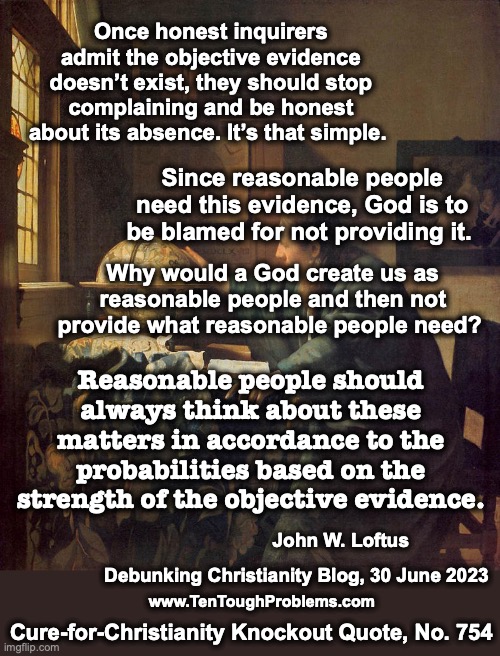




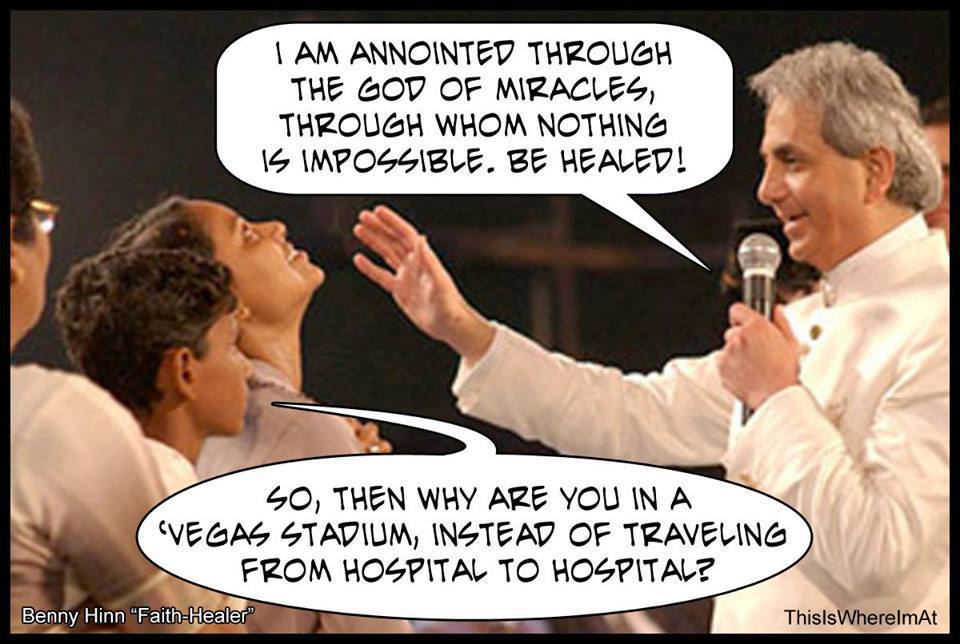
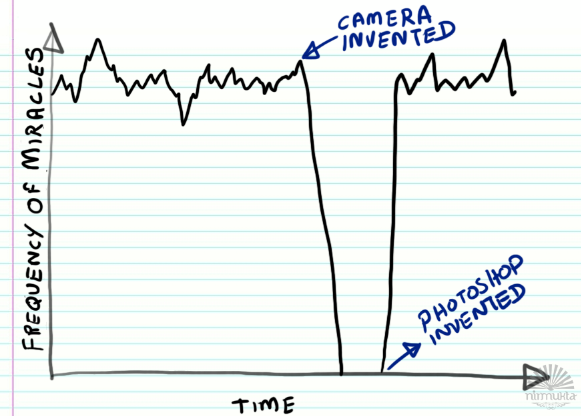
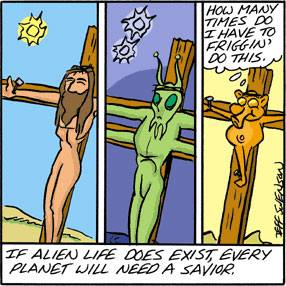
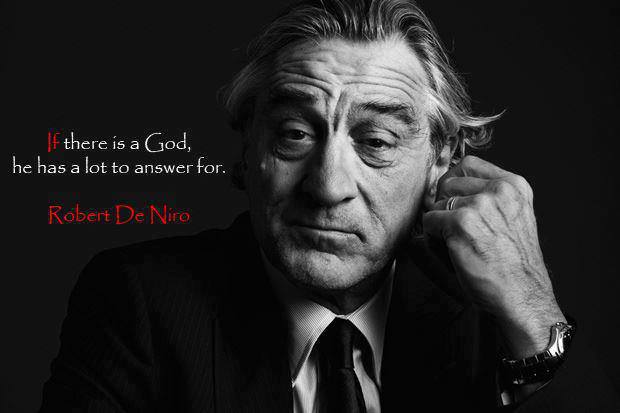
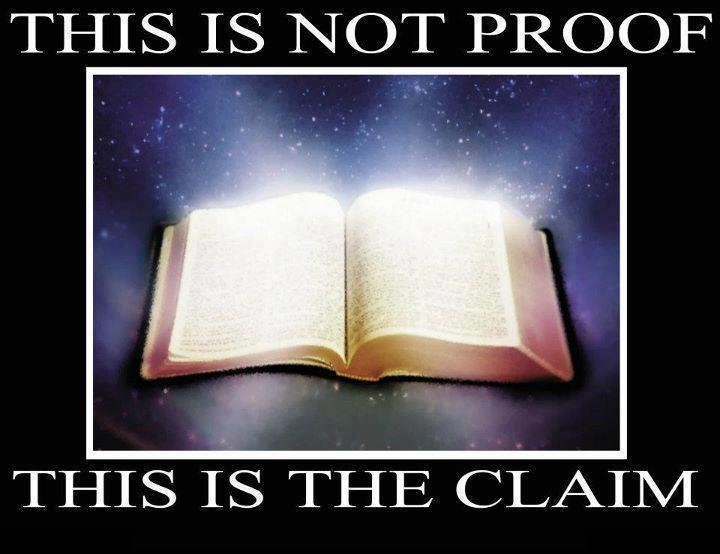
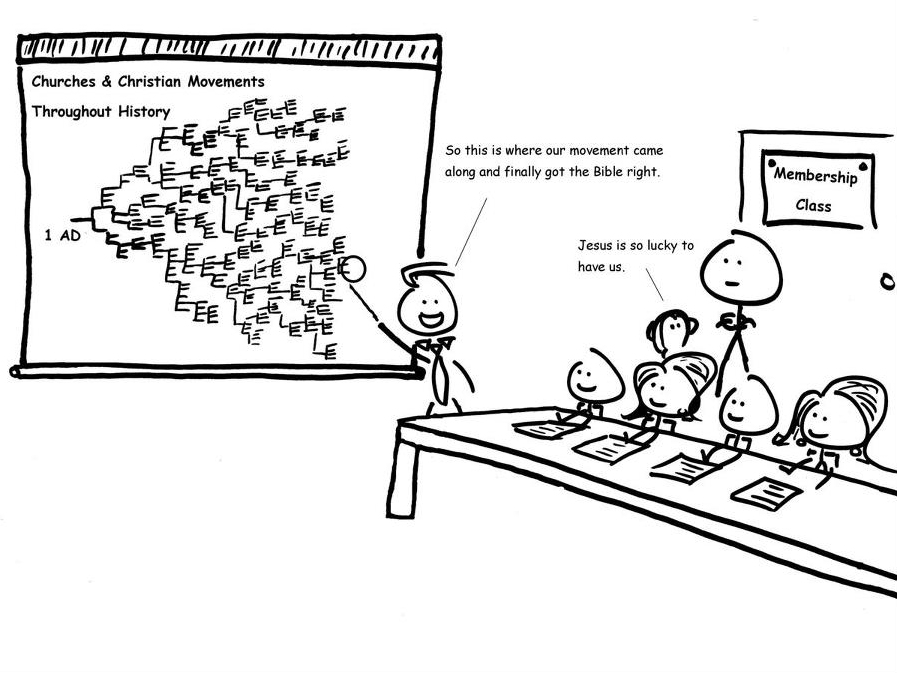



 Richard L. Fricks