What would other deep thinkers in the ancient world have thought of Paul’s teachings? Short answer: not much.
Earlier this year I posted on one of my favorite Greek philosophers, Epicurus (341 – 270 BCE). Epicurus acquired a bad reputation already in antiquity, and still has one among many people today, mainly because his views are widely misunderstood and often simply misrepresented. As it turns out, he advocated views that have widely become dominant in our world, and for good reasons. For that reason I’ve always read him as remarkably prescient, entertaining ideas that would not become popular for two thousand years.
And they stand precisely at odds with the views of the apostle Paul. I’ve recently begun to think about this more deeply — especially since they talk about the same *topics* but take completely different stands on them..
Unfortunately, we do not have very many of Epicurus’s writings. In fact, the most important sources we have are simply three long letters, quoted in toto by a significant but little-read author named Diogenes Laertius, writing around the year 200 CE or so, in his book called “Lives of Eminent Philosophers.” In this book he discusses the lives, writings, and views of major philosophers down to his own day, and he often quotes their writings. Diogenes’ work comes to us in ten “books,”, and the entire tenth book is devoted to Epicurus. That’s where we find these three letters.
I won’t summarize all his views here. But I will say that like many scientists and other serious thinkers today Epicurus was a complete materialist. He believed that there was no “spiritual realm” outside the material world. The entire universe was made up of atoms that combined in an infinite number of ways to create large entities, such as our world and living creatures in it — including us and the gods. The gods, like us, are material beings who came into existence at one point and will go out of existence later, in a never-ending cycle. Everything, except the atoms themselves, does.
Epicurus develops his understanding of physics in one of his three preserved long letters, and his closely-related understanding of how people ought to live – his ethics – in another (the letter to an otherwise unknown person named Menoeceus). For now I’m interested in this letter on ethics, as I’ve been reading it slowly in Greek and relishing its cleverness and compelling views.
It was just a few days ago that I realized that Epicurus is very much concerned with precisely he same things as Paul is, and takes ENTIRELY different views of them. Here is a kind of précis.
What is Most Important to Them
Paul: The Gospel of Christ. Reading Paul’s letters it is clear that his main passion is preaching and defending his gospel message, that Christ’s death and resurrection were the fulfillment of God’s plan to provide salvation to the world, coming to all who believe.
Epicurus: The Love of Wisdom. Epicurus begins his letter by insisting that people should seek out wisdom, that is, they should “philosophize.” The word “philosophy” literally means “love of wisdom” and Epicurus maintains that no one is too young to think deeply about the world so as to understand it and our place in it, and no one is too old. And we should live in light of this wisdom. That should be the focus our lives.
The Nature of God
Paul: There is one God, the God of the Jews, the Creator of the World, who sent Christ as the savior in fulfillment of the divine plan as found in the writings of the prophets. God has always been and continues to be active in the world, deeply concerned about human affairs, intervening in them, and chiefly intent on judging and saving humans who have sinned against him. Paul knew full well this was an unusual view in his polytheistic environment: he preached his gospel precisely to counter the widespread views.
Epicurus: Epicurus was a polytheist but an unusual one. At the outset of his letter to Menoeceus he insists that wisdom shows that the common view of the gods is completely wrong. In his case it was because the gods were perfect beings who were completely removed from the affairs of humans, having nothing to do with them and no interest in them. They were at complete peace and harmony in their own sphere, and had never been involved with humans or concerned about how humans regarded or worshiped them.
The Central Importance of Death
Paul: there are forces of evil in the world that are opposed to God; these are the wicked nemeses of all people, and include the devil and his minions, the power of sin (which is a demonic force compelling people to violate God’s will and so be alienated from him), and, above all, death – the worst power of all, which is set to destroy people and remove them permanently from God’s presence (see e.g. Romans 5-7; 1 Corinthians 15:21-56). Death is the enemy to be feared most of all, and only by believing and being baptized into Christ can a person escape its power.
Epicurus: death is a natural event that occurs to all living things. Everything comes into life, everything leaves life. Including the gods. They too will cease to exist. But it is senseless, even absurd, to fear death, and life can be happy when we realize that death is nothing to be afraid of. Why fear death? When death comes, we no longer exist; while we exist, death has not come. So death is irrelevant to our lives. That is, when we are alive we don’t experience the death; and when we die we don’t experience life. Why should we be afraid of something that hasn’t happened yet, and that when it does happen, we won’t be around to experience it? Death is not an enemy to be feared but a natural process with nothing to be afraid of. Realizing that is one of the keys to happiness.
How Then Shall We Live?
Paul: People should not care or fret about the present sufferings of life. What matters is eternal life, what comes after death. This world is controlled by evil powers and naturally those who side with the good will be opposed and oppressed by them. But that is of no ultimate concern. People should not seek out their own happiness but the welfare of others, serving others the way Christ served us, giving up everything for others, even their lives if necessary, being more concerned with the welfare of others than for themselves.
Epicurus: Everyone ultimately seeks to lead a life that is happy, fulfilled, and contented. And that is what we should seek: a life filled with pleasure and lacking in pain. Pleasure for Epicurus was not wild, excessive, extreme bodily pleasure at all costs. He was accused of thinking that (and still is) but it’s the opposite of his view. His view was that it takes very little to make us truly happy, content, satisfied. We should avoid things that cause pain — and licentious and riotous living in the end does cause pain. So we should live a simple life without too many needs or demands. Having good friends, loving family, eating good meals in the company of others, have interesting and meaningful conversations, not getting overly involved in the craziness of the political and social worlds so important to others and so on. We should live for our own happiness and fulfillment, focused on contentment in this life.
In short: for Paul true life meant living the life of the crucified victim. For Epicurus it meant living anything but the life of a crucified victim. Two billion people in the world today consider themselves devotees of Paul, but many (most?) of them actually agree with Epicurus.
We can assume that some (many?) churchgoers read the gospels, but, it would appear, without critical thinking skills fully engaged. When the devout come across Mark 14:62, does it bother them that Jesus was wrong? At his trial, Jesus was asked point blank if he was the messiah, to which he replied: “I am, and you will see the Son of Man seated at the right hand of the Power and coming with the clouds of heaven.” The main thrust of Mark’s gospel was that kingdom of his god was so close. But obviously those at his trial did not witness the arrival of Jesus on the clouds. The apostle Paul was confident too that Jesus would arrive in the sky soon. He promised members of the Thessalonian congregation that their dead relatives would rise to meet Jesus—and that he too would be there to join them (I Thessalonians 1:15-17). So Paul was wrong as well.
Paul was pumped for years by his delusions, which show up continually in his letters: he knew for sure that Jesus spoke to him in his visions. Is there any better foundation for all those “words of Jesus” in the gospels? We have no way at all to verify that the Jesus-script in Mark 14—or anywhere else—is authentic. Any historian would want to know how the author of Mark’s gospel—written some forty years after the death of Jesus—knew what was said at the trial. Was there a transcript that Mark could access? It’s very doubtful, in the wake of the very destructive first Jewish-Roman war (66-73 CE). It’s much more likely that this author created scenes as he saw fit: he was writing to promote the beliefs of his cult.
This is but one aspect of the problem of evidence that hobbles Christianity. The gospels are so highly esteemed by churchgoers, who have been raised to believe that these documents “got the story right.” But on close examination—with critical thinking skills fully engaged—it’s hard to make the case for that. There is wide consensus among devout scholars—outside of fundamentalist circles—that the gospels were written several decades after the death of Jesus. The anonymous authors never identify their sources, not even the author of Luke’s gospel, who claims in his opening verses that his stories can be traced back to eyewitnesses. But these are never identified. So historians are stumped: there is no way to verify anything we find in the gospels.
How do historians do their job? Here’s one example: in Helen Langdon’s 391-page biography of Caravaggio (1998), at the end we find a 27-page fine-print list of her sources: details about the documentation her work is based on. That’s how historians operate. But they can’t operate that way when they take up the challenge of accurately reporting the story of Jesus. There are no letters, diaries, transcripts, stenographer notes contemporaneous with Jesus that corroborate the gospel accounts. To make matters worse, these accounts are chock full of errors, contradictions, and conflicting agendas: the four gospel authors were intent on correcting each other, culminating with John, who created a very different Jesus.
They couldn’t even agree on the resurrection stories. Just read the four accounts of Easter morning, and you can appreciate the mess. I suspect the apostle Paul would have been horrified by John’s account of Doubting Thomas sticking his finger in the risen Jesus’ sword wound. No, no, no: our risen bodies will be different:
“Look, I will tell you a mystery! We will not all die, but we will all be changed,in a moment, in the twinkling of an eye, at the last trumpet. For the trumpet will sound, and the dead will be raised imperishable, and we will be changed. For this perishable body must put on imperishability, and this mortal body must put on immortality” (I Corinthians 15:51-53).
Where is the evidence to verify Paul’s claim (I’m being generous: his delusion) that the dead will be raised imperishable? Where is the evidence that John’s Doubting Thomas story (missing from the other gospels) didn’t come from the author’s imagination? —after all, he was a master at making things up! There have been memes floating around Facebook and Twitter: “This comic book is the proof that Superman is real!” “These Harry Potter books are the proof that Harry is real!” The challenge for Christians is to show how and why the gospels deserve a higher historical ranking than comic and fantasy fiction books. No, I’m not kidding. Jesus studies have been in turmoil for a long time now—totally unnoticed by the folks who attend church— because devout scholars cannot agree on which gospels texts should/can be taken seriously.
Richard Carrier has stated the problem:
“…the NT underwent a considerable amount of editing, interpolation and revising over the course of its first two centuries, and not merely as a result of transcription and scribal error, but often with specific dogmatic intent…This is not something to sweep under the rug. It makes a real difference in how we estimate probabilities. Unlike most other questions in history, the evidence for Jesus is among the most compromised bodies of evidence in the whole of ancient history. It cannot be said that this has no effect on its reliability.” (On the Historicity of Jesus, pp. 275-276)
Are we going to have any better luck with evidence for god?
I recommend a careful reading of a recent article here by John Loftus, Daniel Mocsny’s Rebuttal of Paul Moser’s Definitional Apologetics, Which Obfuscates the Fact That Christianity is Utter Nonsense!Loftus has repeatedly requested that Christian theologians and philosophers provide objective evidence that their god is real, can be verified by data. Moser faulted Loftus for not being precise about what constitutes objective evidence. But this is a dodge, indeed obfuscation. Since theists are those claiming that god exists, they should be fully prepared to specify the evidence they have—and show us where we can find it.
A common claim is that their god is all-powerful, in fact mighty enough to have ignited the cosmos, and now to have billions of galaxies under management. Thus we can conclude that such vast power must be detectable by science. Edwin Hubble provides a good example of what can happen when smart humans look for data. Just about 100 years ago, using the new 100-inch telescope at Mount Wilson, Hubble determined that the Andromeda Galaxy is indeed a galaxy far beyond our own; a common view among astronomers at the time was that our Milky Way Galaxy was the universe. Hubble’s search for data, for objective, verifiable data, brought this important insight to human understanding of where we are in the Cosmos.
Is it too much to expect that theologians should be able to tell us where to find crucial data about their all-powerful god? This is where they fumble. “Oh, but our god commands a spiritual realm that is undetectable by science.” Our next question then must be: “How do you know this?” Where is the reliable, verifiable, objective data that backs up this claim? If they continue to fumble and equivocate, then
we know for sure they have retreated to theobabble, i.e., a form of eloquence designed to cover up their lack of actual knowledge. The church has thrived on theobabble for centuries.
Daniel Mocsny holds Paul Moser’s feet to the fire in the latter’s attempt to evade the call for evidence: “But most people don’t demand rigorous compact definitions of things like ‘chairs’ because most people have a working understanding of what a chair is, and it’s good enough. In other words there’s no need to play dumb about what a chair is, and similarly no need to play dumb about what evidence is.”
And Mocsny calls attention to the stark contrast between religion and science:
“I assume Moser plies his trade from an office and never applies his thinking to solving problems in the real world – such as how might we collect raw materials and transform them into a working smartphone. Given the astronomical number of ways to combine materials at random, the overwhelming majority of which will not result in a working smartphone, presumably Moser will agree that for scientists and engineers to manage this trick billions of times with a very low failure rate, they must have rules for evidence that are stupendously good.”
“It’s trivial to show that no religion has evidence as strong as either the law or science demands. No religion can prove its supernatural claims in a legitimate court of law, and no religion relying on faith builds anything like a smartphone. What has any religion produced besides words, and manipulating people? There is nothing to suggest that any religion has the kind of deep insight into reality that enables science to work actual near-miracles.”
“If Paul Moser were to call AAA for roadside assistance with a flat tire, I’m fairly sure the receptionist wouldn’t engage him in a tiresome (see what I did there?) debate about what, epistemically speaking, constitutes a flat tire. The tire, after all, still appears to be about 70-80% round; it’s just flat in that one spot.”
“Most people who are not institutionalized realize almost without reflection that Moser’s schtick is insanity on roller skates; in any real occupation his ‘thinking’ would get a person fired on the spot and escorted from the premises by security. That in Moser’s case it’s a tenured position in a Catholic university should tell us everything we need to know about the philosophy of religion.”
Embarrassed by the lack of science-based evidence for their deity, theologians and clergy commonly resort to “rounding up the usual suspects” (that classic line from the movie Casablanca), e.g., revelation through scripture, visions, prayer-based insights about god. But these all fail to deliver: Christianity has splinted into thousands of conflicting denominations because—among other things—they disagree about the god, based on the Bible itself. And, of course, the “inspired” scriptures of Mormons and Muslims are rejected. Visions too have yielded vastly different images of god(s) and saints; Protestants commonly ridicule Catholic vision claims. Christians have prayed endlessly to their god, but hold very different views on what god wants and expects.
Isn’t it so obvious that an all-powerful, competent, wise, caring god could have cleared up this mess a long time ago? “God can do anything!” devout believers claim. “Well, good, have him say Hi!” Let the evidence be clear and obvious. The gospel resurrection story itself fails by this standard. Why didn’t the resurrected Jesus show up at Pilate’s house on Easter morning? Why didn’t he appear to Caesar himself?
Especially since the all-power Christian god gets really furious when humans don’t obey and worship him, it is very strange that he has failed so miserably when it comes to the presentation of evidence.
David Madison was a pastor in the Methodist Church for nine years, and has a PhD in Biblical Studies from Boston University. He is the author of two books, Ten ToughProblems in Christian Thought and Belief: a Minister-Turned-Atheist Shows Why You Should Ditch the Faith, now being reissued in several volumes, the first of which is Guessing About God(2023) and Ten Things Christians Wish Jesus Hadn’t Taught: And Other Reasons to Question His Words (2021). The Spanish translation of this book is also now available.
His YouTube channel is here. At the invitation of John Loftus, he has written for the Debunking Christianity Blog since 2016.
There is an often repeated argument that marijuana is the gateway drug leading to dangerous drugs. [I think it’s largely false but don’t get sidetracked on it.] There is however, a gateway to doubting the whole Bible that I want to highlight here. Lately I’ve been focusing on the virgin birth claim because this is the gateway to doubting the gospel narratives, just as Genesis 1-11 is the gateway to doubting the Old Testament narratives. It was for me anyway. You can see this double doubting of both Testaments in the list of the five most important books that changed my mind, and the five most powerful reasons not to believe.
Apologists and theologians focus on the resurrection of Jesus primarily because they have studied it so much more than the virgin birth narratives. They now use the minimal facts approach of Gary Habermas, Mike Licona, and William Lane Craig, who want to sweep off the table a great deal of what atheists all agree on, especially their unanimous agreement that a virgin named Mary did not give birth to an incarnate god. The reason this atheist agreement should stay on the table is because it speaks directly to the credibility of the gospel narratives as a whole. Since there’s no good reason to believe the virgin birth myth, there’s no good reason to believe the resurrection myth either, despite any agreements atheist scholars and Christian apologists have about the resurrection narratives. After all, the virgin birth narratives are in the same gospels that contain the resurrection narratives (Matthew & Luke anyway). If the narratives about the virgin-born incarnate god can be shown to be non-historical myth, then so too are the narratives about the resurrection of this same virgin-born incarnate god. The virgin myth began as an concocted explanation for how an incarnate god came into human existence. So now without a credible virgin birth story, Christians are left with no explanation for how an incarnate god came into human existence!
My debate opponent believes a virgin named Mary gave birth to a divine child named Jesus over two-thousand years ago. The most significant problem is that theologians cannot explain how a human being and a god can be one and the same, that is, 100% human and 100% divine, with every essential characteristic of humanity and divinity included. How can a god be a god if he has a body? How can an infinite timeless god exist in time? Conversely, how can a human be a human if he or she doesn’t have a body? How can a finite human take on eternal godlike characteristics and still remain a human being? How can a human be perfectly good incapable of being tempted to sin, and yet also be tempted to sin? Christians themselves have shown the incoherence of a divine/human being by their 2000 year long disagreements over it.
Make no mistake about it. This is what my debate opponent is aiming at in this debate. The virgin birth is a first step toward claiming Jesus was God incarnate. My aim is to stop him short of this first step, even though his case isn’t done until he tackles the second step by dealing with some formidable philosophical objections to a divine/human being. With no such being there’s no virgin birth either.
Let’s start by talking about the kind of evidence we need.
All claims about the objective world require sufficient objective evidence appropriate to the nature of the claim. This applies to ordinary claims, extraordinary claims and miraculous claims. The amount and quality of the evidence required is dependent on the type of claim being made.
An ordinary claim is one made about events that are commonplace within nature, which require ordinary levels of evidence. Most all of these claims are based on testimonial evidence alone. That is, the trustworthiness of the person making the claim is enough to establish them, especially where there’s no reason to suspect deception and there’s no dispute by others as to the facts. [“Earlier today I was in Indiana.”]
An extraordinary claim is one made about events that are extremely unusual, rare and even strange within the world of nature. Mere testimonial evidence is helpful but not enough to establish these claims. They require some strong objective evidence for them. That is, the more unusual the claim is then the stronger the objective evidence must be for them. [“I was abducted by an alien”].
A miraculous claim is one made about events that are impossible to take place by natural processes alone, which requires a high level of strong objective evidence for them. As David Hume argued, “No testimony is sufficient to establish a miracle, unless the testimony be of such a kind, that its falsehood would be more miraculous than the fact which it endeavours to establish.” The fact that a miracle requires extraordinary evidence over and above the fallibility of ordinary human testimony is not an unreasonable demand. It’s the nature of the beast. A forensic TV show I watched had a character say, “The evidence doesn’t lie. People do.” If this is acknowledged in criminal investigations it should be acknowledged much more so in miraculous investigations. So mere testimonial evidence is insufficient when it comes to miracle claims, especially when it comes to miracle claims in the distant past from sources we cannot cross-examine for consistency and truth.
Tonight, I’m going to show that the required objective evidence for the miraculous birth of Jesus is not there, at all. Beyond this I’ll I’m going to show the testimonial evidence in the New Testament is insufficient. My main point is that if the gospels are inaccurate and untrustworthy in historical matters that we can check, then there’s absolutely no reason to think they are accurate and trustworthy when it comes to the miraculous virgin birth of Jesus either.
The most significant problem for my debate opponent is that there’s no objective evidence to corroborate the virgin birth stories in the New Testament. None. None at all! Where’s the evidence Mary was a virgin? We hear nothing about her wearing a barbaric chastity belt to prove her virginity. No one checked for an intact hymen before she gave birth either. Where’s the evidence that neither Joseph nor any other man was not the father? Maury Povich was not there with a DNA test to verify Joseph was not the baby daddy, nor did he test others.
We don’t even have firsthand testimonial evidence for it, since the story is related to us by others, not Mary, or Joseph. At best, all we have is the second-hand testimony of one person, Mary, or two if we include Joseph who was unreasonably convinced Mary was a virgin because of a dream, yes, a dream (see Matthew 1:19-24). We never get to independently cross-examine them, along with the people who knew them, which we would need to do, since they may have a very good reason for lying, like a pregnancy out of wedlock! Before there can be a virgin birth one must first show Mary wasn’t pregnant. One must also show neither Joseph nor any other man was not the baby daddy.
What we know is that neither of the two earliest New Testament writers refer to the virgin birth of Jesus. That’s very telling. Neither the apostle Paul nor the author of the gospel of Mark referred to it. It’s inconceivable neither of them mentioned it. The virgin birth story was an unimportant afterthought for the later gospels of Matthew and Luke. This only makes sense as a non-historical myth made up on hindsight to explain how Jesus came down from the sky above the clouds to earth.
Additionally, in the gospel of Mark the family of Jesus themselves thought he was crazy, not God’s son. “He is out of his mind” they said, and tried “to take charge of him (Mark 3:19–21, 31–35). This makes no sense if the virgin birth stories are true in the later gospels of Matthew and Luke. How could his mother Mary forget how her son Jesus was conceived, or what was said about him at the time of his birth? The angel Gabriel said he would be called “the Son of God” (Luke 1:35). Her cousin Elizabeth said Mary was the “mother of my Lord” (Luke 1:43), and she herself said, “from henceforth all generations shall call me blessed” (Luke 1:48). No mother would ever forget the circumstances of his birth, if it happened as reported.
In Luke’s gospel when Mary first hears from the angel Gabriel that she’s to give birth, she objects by saying, “How shall this be, since I know not a man?” (Luke 1:34). Surely Mary wouldn’t feel it necessary to inform Gabriel that she hadn’t had sex with a man. If this conversation took place at all, she would’ve said, “How shall this be, since I know not my husband.” The way it’s written in Luke is to justify Mary’s virginity to the reader, rather than to tell us what she said. So Mary’s stated objection to the angel is a literary invention.
Now one might simply trust the anonymous gospel writer(s) who wrote this extraordinary story down, but why? How is it possible that THEY could find out a virgin named Mary gave birth to a deity? No reasonable investigation could take Mary and/or Joseph’s word for it. With regard to Joseph’s dream, Thomas Hobbes tells us, “For a man to say God hath spoken to him in a Dream, is no more than to say he dreamed that God spoke to him; which is not of force to win belief from any man.” [Leviathan, chap. 32.6] So it’s down to unreliable hearsay testimonial evidence from Mary. Why should we believe her? Would you?
It gets worse. There are seven facts to consider.
1) The Genealogies are Inaccurate and Irrelevant. The royal genealogies of Jesus in the later gospels of Luke (3:23–37) and Matthew (1:1–17) have historical problems with them. For instance, Matthew’s gospel makes Jesus a descendent of king Jeconiah (1:11), even though the prophet Jeremiah had proclaimed none of Jeconiah’s descendents would ever sit of the throne of David (Jer. 22:30). Someone messed up big time here, don’t you think?
The genealogies of Jesus are irrelevant if he was born of a virgin. Jewish royal lineages are traced through men not women, so Luke’s genealogy is irrelevant since it traces the lineage of Jesus through Mary. Matthew’s genealogy is equally irrelevant, since it traces the lineage of Jesus through Joseph, who was not his father, according to gospel accounts. To desperately claim Mary’s baby was a new divine creation unrelated to the lineages of either Mary or Joseph, also makes the genealogies irrelevant. For then it wouldn’t matter which mother’s womb God decided to create his son inside.
Modern genetics decisively render the genealogies irrelevant since one cannot even have a human being without the genetic contributions of both a male seed and a female egg. To claim, as Catholic New Testament scholar Raymond Brown did, that Jesus was “technically” the adopted son of Joseph, is absurd and also irrelevant since only blood lines count in royal lineages. Adopted sons would never legitimately inherit any throne.
2) Jesus Was Not Born in Bethlehem. In Matthew 2:5 we’re told Jesus was to be born in Bethlehem. But the precise phrase “Bethlehem Ephratah” in the original prophecy of Micah 5:2 refers not to a town, but to a family clan: the clan of Bethlehem, who was the son of Caleb’s second wife, Ephratah (1 Chron. 2:19, 2:50–51, 4:4). Furthermore, Micah’s prophecy predicts a military commander who would rule over the land of Assyria (which never happened), and was certainly not about a future Messiah.
The earliest gospel of Mark begins by saying Jesus came from Nazareth of Galilee, not from Bethlehem (Mark 1:9). Let that sink it. The first gospel says he’s from Nazareth. In the later Gospel of John, Jesus was rejected as the Messiah precisely because the people of Nazareth knew he was born and raised in their town! That’s the whole reason they rejected him as the Messiah! They rhetorically asked, “How can the Messiah come from Galilee?” They said, “A prophet does not come out of Galilee” (John 7:42, 52). [He was from Nazareth. Therefore he’s not the Messiah.]
Since everyone knew the Messiah would not come from Galilee, Matthew and Luke invented conflicting stories to overcome this insurmountable problem. In Matthew’s gospel—the one most concerned with making Jesus fit prophecy—Joseph’s family is living in Bethlehem when Jesus was born (Matt. 2). In order to explain how Jesus got to Nazareth, Joseph was warned in a dream to flee to Egypt because of Herod (Matt. 2:15). After Herod died, Joseph took his family to Nazareth and lived there (Matt. 2:21–23). Luke’s gospel, by contrast, claims Joseph and Mary lived in the town of Nazareth but traveled to Bethlehem for a Roman census, at which time Jesus was born (Luke 1:26; 2:4). After he was born they went back home to Nazareth (Luke 2:39).
When we compare Matthew and Luke’s accounts, Raymond Brown concludes, “Despite efforts stemming from preconceptions of biblical inerrancy or of Marian piety, it is exceedingly doubtful that both accounts can be considered historical. A review of the implications explains why the historicity of the infancy narratives has been questioned by so many scholars, even by those who do not in advance (i.e., a priori) rule out the miraculous.”
To make these stories work they invented a world-wide Roman census (per Luke), to get the holy family to Bethlehem, and the slaughter of the innocents by Herod (per Matthew), to explain why the holy family left Bethlehem for good. Matthew’s gospel invented a Messianic Star for emphasis, which was overkill, based on Numbers 24:17. But there was no census, no massacre of children and no Bethlehem star. [As we’ll see in the next three facts to consider].
3) There Was No Census. Luke’s gospel tells us something bizarre, that Joseph had to go to Bethlehem to register for the census because “he was from the house and lineage of David.” (Luke 2:4) According to Luke’s genealogy king David had lived forty-two generations earlier. Why should everyone have had to register for a census in the town of one of his ancestors forty-two generations earlier? There would be millions of ancestors by that time, and the whole empire would have been uprooted. Why forty-two generations and not thirty-five, or sixteen? If this requirement was only for the lineage of King David, what was Caesar Augustus thinking when he ordered it? He had a king, Herod.
Both Matthew and Luke said Jesus was born during the time of Herod the Great (Matthew 2:1, Luke 1:5). Herod died in 4 BC, so Jesus was born at the latest in 4 BC. The only known census of that period was a local one in Galilee which took place in 6 AD by Syrian governor Quirinius. There’s a gap of ten years between Herod’s death and the alleged census, which means there was no census at the birth of Jesus, if he was born during the reign of Herod. But Luke’s gospel said it was a world-wide census, not a local one. And that census didn’t take place at all, for as Raymond Brown tells: “A census of the known world under Caesar Augustus never happened” and he reigned from 27 BC to 14 AD.
4) There Was No Slaughter of the Innocents. In Matthew’s gospel king Herod was said to have ordered all the male children “in Bethlehem and all the surrounding countryside” to be slaughtered (2:16). But there is no other account of such a massacre in any other source. It’s clear that the first century Jewish historian Josephus hated Herod. He chronicled in detail his crimes, many of which were lesser in kind than this alleged wholesale massacre of children. Yet nowhere does Josephus’ mention this slaughter even though he was in a position to know of it, and even though he would want to mention it. So the story is a gospel fiction, like the virgin birth story.
5) There Was No Star of Bethlehem. Matthew’s gospel says: “The star, which they (the Magi) had seen in the east, went on before them until it came and stopped over the place where the child was.” (2:9–10). There is no independent corroboration of this tale by any other source, Christian or otherwise. No astrologer/astronomer anywhere in the world recorded this event, even though they systematically searched the stars for guidance and predictions of the future. More significantly the author of Luke chose not to include the story of a Star, Magi, or the attempt on Jesus’ life, which is telling, since his gospel was written after “a careful study of everything” he says, so readers could know what actually took place from what didn’t. (1:1-4).
Theories for this Star include a comet, a supernova, or the conjunction of planets. The fatal problem is that none of them conform to what the text actually says in Matthew’s gospel. The Magi see the Star “leading” or directing them to Bethlehem from Jerusalem. Not only are moving stars pre-scientific nonsense, they would be moving in a southern direction, from Jerusalem down to Bethlehem. Stars don’t move in the sky, and they certainly don’t appear to move in a southerner direction. They all appear to move from the east to west, like the sun, because of the spin of the earth. Then we’re told the Star stopped in the sky directly over a place in Bethlehem. But there’s no way to determine which specific house a star stopped over, if it did! This is only consistent with pre-scientific notions of the earth being the center of the universe with the stars being moved by a god who sits on a throne in the sky.
6) The Prophecies Are Faked. In Matthew 1:20–23 the author claims that Isaiah 7:14 predicts Jesus’ virgin birth. The context for the prophecy in Isaiah tells us that before a son born of a “young woman” (not a virgin) “is old enough to know how to choose between right and wrong the countries of two kings (i.e., Syria and Samaria) will be destroyed” (7:15-16). The prophecy in the original Hebrew says nothing whatsoever about a virginal conception. Period. It says nothing about a messiah, either. The prophecy was actually fulfilled in Isaiah 8:3 with the birth of the son Maher-shalal-hash-baz.
The Hebrew word for virgin is betulah. It’s used five times in the book of Isaiah. Isaiah 7:14 isn’t one of them. The word used in Isaiah 7:14 is ‘almah, which means young woman, or simply girl. It does not specify a virgin. Full Stop. The gospel of Matthew’s error was to use a 200 year old Greek translation of the Hebrew which used the word parthenos. Originally the Greek word parthenos meant “young girl,” but by the time Matthew wrote his gospel that word had been changed by usage to signify a “virgin” rather than a young girl. This is not unlike how the words nice and gay have changed in meaning over the years. So Matthew grossly misunderstood the original Hebrew text in Isaiah by incorrectly claiming Jesus was to be born of a virgin.
A second prophecy in Isaiah 9:6–7 reads: “For to us a child is born, to us a son is given, and the government will be on his shoulders. And he will be called Wonderful Counselor, Mighty God, Everlasting Father, Prince of Peace.” [See Luke 1:31-33] Any Jew writing at that time might express the same hope for a Messiah/savior who would rescue their nation from their oppressors. But an expressed hope for a future Messiah is not to be considered a prediction, unless along with that expressed hope are specific details whereby we can check to see if it was fulfilled in a specific person. Isaiah provides none. With no details there isn’t any real prediction.
German theologian Ute Ranke-Heinemann concludes after her own study: “If we wish to continue seeing Luke’s accounts… as historical events, we’d have to take a large leap of faith: We’d have to assume that while on verifiable matters of historical fact Luke tells all sorts of fairy tales but on supernatural matters—which by definition can never be checked—he simply reports the facts. By his arbitrary treatment of history, Luke has shown himself to be an unhistorical reporter—a teller of fairy tales.” [Putting Away Childish Things, p. 14]
7) The Virgin Birth of Jesus Has Pagan Parallels. Robert Miller shows us many important people in the ancient world were believed to have been the product of virgin births: “People in the ancient world believed that heroes were the sons of gods because of the extraordinary qualities of their adult lives, not because there was public information about the intimate details of how their mothers became pregnant. In fact, in some biographies the god takes on the physical form of the woman’s husband in order to have sex with her.” [Born Divine, p. 134] And then he proceeds to document some of these stories. There was Theagenes, the Olympic champion, who was regarded as divine for being one of the greatest athlete’s in the ancient world. Hercules was the most widely revered hero of the ancient world. He was promoted to divine status after his death, and it was said he was fathered by Zeus. Alexander the Great was believed to be conceived of a virgin and fathered in turn by Heracles. Augustus Caesar was believed to be conceived of a virgin and fathered by Apollo, as was Plato, the philosopher. Apollonius of Tyana was believed to be a holy man born of a virgin and fathered by Zeus. Pythagoras the philosopher was believed to be a son of Apollo. There were also savior-gods, like Krishna, Osiris, Dionysus, and Tammuz, who were born of virgins and known to the Gospel writers centuries before.
Justin Martyr was a second-century Christian apologist who tried to convince the pagans of his day of the truth of Christianity. In his First Apology to Roman people he wrote:
When we say that the Word, who is the first-birth of God, was produced without sexual union, and that he, Jesus Christ, our teacher, was crucified and died, and rose again, and ascended into heaven, we propound nothing different from what you believe regarding those whom you esteem sons of Jupiter…Of what kind of deeds recorded of each of these reputed sons of Jupiter, it is needless to tell to those who already know…[I]f we even affirm that he [Jesus] was born of a virgin, accept this in common with what you accept of Perseus.
All that these virgin birth claims show is that someone thought these people were important, and that’s it. None of them are taken to be literal virgin births, probably not even in that day! So it should not come as a surprise that the early Christians came up with similar myths about Jesus. It’s myth all the way down with no historical reality to it. There’s no reason to accept this extraordinary claim at all.
I’ve already published my debate opener on the virgin birth right here. One of the best things about debates, for me anyway, is that they force me to write debate openers. They are succinct statements of why I don’t believe. They will stand the test of time, even if public debates allow for the irrelevancies and non-sequiturs of my debate opponents to muddy the waters.
To write them means I must also participate in a public debates, so I do. In this debate I had some problems with the logistics for several reasons. It was supposed to give presenters 30 minutes each for their opening statements. That’s was too long. So we agreed to limit it to 20 minutes just prior to the debate. I thought it would be better for the audience, and that I could fit my opener into that time. I was wrong. I was also wrong to ask my opponent to time it. There should’ve been someone chosen in the audience to time our debates, and to give us a 5 minute, 2 minute, then 1 minute warning. There should also have been a moderator during our cross-examination, and someone to field questions for us during the Q & A period. I wasn’t in charge of these details but I should have inquired. For without a moderator we interrupted each other far too often. That’s what happens without a moderator, and it sucked. Big Time! For I have a hard time listening and responding to utter nonsense.
I eventually got through my debate opener since during the cross-examination phase I finished it.
On the substantive issues I did well.
One of the most significant points made by my opponent was based on an early Christian forgery called the Proto-Gospel of James (Dated 140-170 AD) which was falsely claimed to be written by James the brother of Jesus. This Gospel was rejected as authentic by the early church. It’s supposed to provide the objective evidence that Jesus was born of a virgin named Mary, my opponent said. I didn’t respond too well, but I did respond adequately. I had said such an account is irrelevant to the case for the virginity of Mary.
The Proto-Gospel of James follows a lot of what we read in the canonical gospel accounts, which is significant, since it repeats some of the fraudulent claims in the gospels, such as the world-wide census under Augustus Caesar, the sign of the Star, the slaughter of the innocents, and Bethlehem being the birthplace of Jesus, which my opening statement debunks. It also repeats the claim that Joseph was initially convinced by a dream that Mary was impregnated by God. *cough*
In the Proto-Gospel of James both Joseph and Mary participated in a barbaric trial by ordeal (based on passages like Numbers 5 quoted below). After drinking contaminated water they did not show evidence of “sin”, that is, adultery or fornication. Exonerated, right? No, not at all. Trial by ordeals do not work. They’re barbaric and unbecoming of a God to require it. One might as well use it on people convicted of a capital crime to determine if juries were correct to find them guilty. If they pass the ordeal then free them, despite what juries had just determined. Why not? If the one in the Proto-Gospel of James is good, so is the other.
In the Proto-Gospel of James there was a midwife for Mary named Salome. She testified Mary was still a virgin afer she gave birth to Jesus, and by doing so, provided testimony that Mary was also perpetual virgin! Reminiscent of the tale of Doubting Thomas, who refused to believe Jesus was resurrected until he saw Jesus and touched his wounds, Salome refused to believe Mary was a virgin until she checked Mary’s hymen after the birth of Jesus! Upon testing Mary for an intact hymen her hand began to burn as if it caught on fire. Salome prays for forgiveness for questioning, and her hand was subsequently healed. [In the tale of Doubting Thomas we’re told to believe without seeing, whereas here we’re told God is displeased when we question–even though in this case it supposedly produced a good result!] You can read a summary of Salome’s bizarre story right here.
A late dated forgery containing an additional miracle such as Salome’s supposed healed hand doesn’t provide support for the original miracle claim of the virgin birth. It isn’t considered objective evidence nor is it considered good testimonial evidence. In fact, if it takes an additional miracle claim to support the original miracle claim of the virgin birth, then this compounds the problem of verification. That’s because Salome’s unevidenced miracle is not evidence for another unevidenced miracle of the virgin birth!
This forged gospel contains known historical falsehoods as it’s based on what we read in the gospels. It is late, untrustworthy and inauthentic. It doesn’t provide the needed objective evidence or testimonial evidence to support a miracle claim, as I mentioned in my opening statement. It is therefore irrelevant!
16 ‘Then the priest shall bring her near and have her stand before the Lord, 17 and the priest shall take holy water in an earthenware vessel; and he shall take some of the dust that is on the floor of the tabernacle and put it into the water. 18 The priest shall then have the woman stand before the Lord and let the hair of the woman’s head go loose, and place the grain offering of memorial in her hands, which is the grain offering of jealousy, and in the hand of the priest is to be the water of bitterness that brings a curse. 19 The priest shall have her take an oath and shall say to the woman, “If no man has lain with you and if you have not gone astray into uncleanness, being under the authority of your husband, be immune to this water of bitterness that brings a curse; 20 if you, however, have gone astray, being under the authority of your husband, and if you have defiled yourself and a man other than your husband has had intercourse with you” 21 (then the priest shall have the woman swear with the oath of the curse, and the priest shall say to the woman), “the Lord make you a curse and an oath among your people by the Lord’s making your thigh waste away and your abdomen swell; 22 and this water that brings a curse shall go into your stomach, and make your abdomen swell and your thigh waste away.” And the woman shall say, “Amen. Amen.”
23 ‘The priest shall then write these curses on a scroll, and he shall wash them off into the water of bitterness. 24 Then he shall make the woman drink the water of bitterness that brings a curse, so that the water which brings a curse will go into her and cause bitterness. 25 The priest shall take the grain offering of jealousy from the woman’s hand, and he shall wave the grain offering before the Lord and bring it to the altar; 26 and the priest shall take a handful of the grain offering as its memorial offering and offer it up in smoke on the altar, and afterward he shall make the woman drink the water. 27 When he has made her drink the water, then it shall come about, if she has defiled herself and has been unfaithful to her husband, that the water which brings a curse will go into her and cause bitterness, and her abdomen will swell and her thigh will waste away, and the woman will become a curse among her people. 28 But if the woman has not defiled herself and is clean, she will then be free and conceive children.
Here’s the link to this article. You might also want to read this article titled, “Alabama’s attorney general says the state can prosecute those who help women travel for abortions.”
Alabama’s attorney general says the state can prosecute those who help women travel for abortions
Abortion bans, anti-vax ideology, and other right-wing culture-war issues are creating a mass exodus of doctors from red states. Conservative voters will end up paying with their lives for the policies they wanted.
Bonner General Health, the only hospital in Sandpoint, announced Friday that it will no longer provide obstetrical services to the city of more than 9,000 people, meaning patients will have to drive 46 miles for labor and delivery care.
… “The Idaho Legislature continues to introduce and pass bills that criminalize physicians for medical care nationally recognized as the standard of care,” the hospital’s news release said. “Consequences for Idaho physicians providing the standard of care may include civil litigation and criminal prosecution, leading to jail time or fines.”
The abortion bans springing up across red-state America force physicians into a cruel dilemma. If a pregnant person comes into the emergency room, hemorrhaging or suffering sepsis from a miscarriage or dying from preeclampsia—but the fetus still has a heartbeat—doctors could face criminal charges if they intervene. Their only chance is to hope that the fetus dies before it’s too late to save the mother.
This isn’t a hypothetical scenario. In Oklahoma, a woman with a molar pregnancy—a cancerous, nonviable fetus—sought medical attention, but was told the hospital couldn’t do anything to help her. Staff suggested she wait in the parking lot until she was about to die so that they could act. She gambled on traveling out-of-state instead, and got the care she needed. But it’s only a matter of time until we have an American Savita Halappanavar.
This is an impossible position for doctors and nurses. They either desecrate their professional ethics by standing by and watching someone die whom they could have saved, or else face criminal charges. Understandably, many of them are voting with their feet. They’re leaving these barbarous and backward places in favor of progressive states where they won’t be jailed for practicing medicine.
Sandpoint, Idaho is a case in point. It used to be a medical hub for north Idaho, Montana and Washington, with an ob-gyn ward that delivered hundreds of babies each year—until the fall of Roe and the enactment of abortion bans.
In March, Sandpoint’s obstetrics department completely shut down as doctors fled. Idaho women with high-risk pregnancies now have to travel much further for medical care, like St. Luke’s hospital in Boise. But that one may soon be closed too. It has only six doctors left, most of whom are near the end of their careers. Two younger, recent recruits have already left the state.
Texas is an especially sharp example of the problem. Doctors are fleeing the state, worsening a shortage that was already at critical levels:
Almost every provider I spoke with for this story has thought about leaving their practice or leaving Texas in the wake of S.B. 8 and Dobbs. Several have already moved or stopped seeing patients here, at least in large part because of the abortion bans. “If I was ever touch a patient again, it won’t be in the state of Texas,” said Charles Brown, chair of the Texas district of the American College of Obstetricians and Gynecologists (ACOG), who stopped seeing patients last year after decades working as a maternal fetal medicine specialist.
…In 2022, 15 percent of the state’s 254 counties had no doctor, according to data from the state health department, and about two-thirds had no OB-GYN. Texas has one of the most significant physician shortages in the country, with a shortfall that is expected to increase by more than 50 percent over the next decade, according to the state’s projections. The shortage of registered nurses, around 30,000, is expected to nearly double over the same period.
In addition to abortion bans, right-wing persecution of transgender people is worsening the problem. Dell Children’s Hospital in Austin had a world-renowned adolescent health clinic, which treated conditions from eating disorders to menstrual and hormonal problems.
But in May, Texas opened an investigation into the clinic for providing gender-affirming care to trans teenagers. In response, all its doctors quit. The clinic was effectively shuttered, and kids who had been relying on it were left without care.
In another high-profile case, Dr. Jake Kleinmahon, a nationally recognized expert in pediatric transplant surgery, announced in August he was leaving his home state of Louisiana for New York. Dr. Kleinmahon is gay, and he decided that the state’s hostility toward LGBTQ people and families was intolerable:
“Tom and I have discussed at length the benefits of continuing to live in the South, as well as the toll that it takes on our family. Because of this, we are leaving Louisiana. Our children come first. We cannot continue to raise them in this environment,” Kleinmahon wrote.
The decrease for OB-GYN residency applications, 5.2%, was seen in all states, regardless of abortion laws. That percentage dropped by almost double—to a 10.5% decrease—in applications in states with near-total abortion bans.
If the surveys bear out, there could be a serious shortage of OB-GYNs in states with the tightest abortion restrictions. These states already tend to have higher maternal and infant mortality rates.
Another study gives similar numbers:
Our recent study published in the Journal of General Internal Medicine begins to answer this question. In a survey of more than 2,000 current and future physicians on social media, we found that most (82.3%) would prefer to work or train in states with preserved abortion access. In fact, more than three-quarters (76.4%) of respondents would not even apply to states with legal consequences for providing abortion care. The same holds true for states with early or complete bans on abortion or Plan B. In other words, many qualified candidates would no longer even consider working or training in more than half of U.S. states.
…The reasons for physicians’ practice location preferences include, but are not limited to, patient care. While 77.8% of respondents report that their preferences are influenced by patient access to abortion care, others also prioritize preserved access for themselves or their partner (56.1%) or other family members (42.5%). This should not surprise us: physicians are human beings, too, with healthcare needs and personal lives that are not wholly defined by their career choices.“How Overturning Roe v. Wade Changed Match Day 2023.” Sarah McNeilly, Morgan S. Levy, Simone A. Bernstein, MD, Jessi A. Gold, MD, MS, and Vineet Arora, MD, MAPP. MedPage Today, 20 March 2023.
At the very least, red states will have to pay more to attract and keep medical practitioners. That means taxes and insurance premiums will skyrocket in these states—for everyone. Conservative voters are going to be hit squarely in the pocketbooks by these spiteful, regressive bans they wanted. It’s also likely that wait times will increase and quality of care will decrease, as these states may be forced to take practitioners who can’t get jobs anywhere else.
Heaping more weight on the pile
The U.S. was already facing a shortage of physicians. However, entrenched conservative hostility to science and medicine is making the problem worse.
Then COVID-19 came along. As the pandemic raged, Republican politicians nurtured a hydra of conspiracy theories. They displayed a bitter resistance to masks, vaccines, lockdowns, and every other policy created by people who were trying to save lives. They loudly proclaimed that “freedom” sanctified their right to get sick, infect their neighbors, and die slow, agonizing deaths. They accused doctors and hospitals of murdering their loved ones.
They paid an awful price for their obstinacy. During the pandemic, conservative voters died at disproportionate rates compared to pro-science Democrats. COVID deaths dragged life expectancy in Missouri down to a four-decade low. So many people died in Alabama that the total population shrank for the first time on record.
Their partisan rejection of science didn’t end with the pandemic, either. It’s spread to become a mistrust of all vaccines. As a result, long-vanquished diseases like measles, whooping cough and polio are making a comeback.
The people who live in red states are confronting a dire scenario of their own creation.
Republican voters are demanding policies that directly harm themselves and their loved ones. In the name of lower taxes, they forced their own hospitals to close. In the name of freedom, they refused vaccines that would have saved their lives during a pandemic. Now, in the name of banning abortion, they’re heaping even more weight on this pile. They’ve passed laws which ensure that their wives, their daughters, and they themselves won’t have medical care in a crisis. Their culture-war victories are purchased at the cost of their own lives.
The people who live in red states—especially white conservatives who live in far-flung, poverty-stricken rural areas—are confronting a dire scenario of their own creation. In the very near future, they’ll have to travel hundreds of miles for routine care, if they can get it at all. The reddest, most impoverished areas will be reduced to medieval conditions. They’ll regularly suffer from outbreaks of disease, dying from conditions that modern medicine could have cured.
In my previous Skeptic column, Deconstructing the Decalogue, I offered a personal view on how to think about the Ten Commandments from the perspective of 3,000 years of moral progress since they were first presented in two books of the Old Testament (Exodus 20:1-17 and Deuteronomy 5:4-21). Here I would like to reconstruct them from the perspective of a science- and reason-based moral system, a fuller version of which I developed in my 2015 book The Moral Arc, from which this material is partially excerpted.
Note: This is a purely intellectual exercise. I am not a preacher or teacher of moral values, nor do I hold myself up as some standard-bearer of morality. Since I do not believe in God, nor do I think that there are any rational reasons to believe that morals derive from any source outside of ourselves, I feel the necessity to offer an alternative to religious- and faith-based morality, both descriptively (where do morals come from if not God?) and prescriptively (how should we act if there is no God?), which I have done in 30 years of publishing Skeptic magazine and in a number of my books, including How We Believe (1999), The Science of Good and Evil (2004), and the aforementioned The Moral Arc. Here I am building on the work of secular philosophers and scholars from the ancient Greeks through the Enlightenment and into the modern era where a massive literature exists addressing these deep and important matters.
Galileo Demonstrating the New Astronomical Theories at the University of Padua. Painting by Félix Parra, 1873. Museo Nacional de Arte, Mexico City.
Skeptic is a reader-supported publication. Your subscription goes to the Skeptics Society, a 501(c)(3) nonprofit. To receive new posts and support my work, consider becoming a free or paid subscriber.
Upgrade to paid
The problem with any religious moral code that is set in stone is just that—it is set in stone. Anything that can never be changed has within its DNA the seeds of its own extinction. A science-based morality has the virtue of having built into it a self-correcting mechanism that does not just allow redaction, correction, and improvement; it insists upon it. Science and reason can be employed to inform—and in some cases even determine—moral values.
Science thrives on change, on improvement, on updating and upgrading its methods and conclusions. So it should be for a science of morality. No one knows for sure what is right and wrong in all circumstances for all people everywhere, so the goal of a science-based morality should be to construct a set of provisional moral precepts that are true for most people in most circumstances most of the time—as assessed by empirical inquiry and rational analysis—but admit exceptions and revisions where appropriate. Indeed, as humanity’s concept of “who and what is human, and entitled to protection” has expanded over the centuries, so we have extended moral protection to categories once thought beneath our notice.
Here are some suggested commandments for our time. Feel free to add your own in the comments section below.
1. The Golden-Rule Principle: Behave toward others as you would desire that they behave toward you.
The golden rule is a derivative of the basic principle of exchange reciprocity and reciprocal altruism, and thus evolved in our Paleolithic ancestors as one of the primary moral sentiments. In this principle there are two moral agents: the moral doer and the moral receiver. A moral question arises when the moral doer is uncertain how the moral receiver will accept and respond to the action in question. In its essence this is what the golden rule is telling us to do. By asking yourself, “how would I feel if this were done unto me?” you are asking “how would others feel if I did it unto them?”
2. The Ask-First Principle: To find out whether an action is right or wrong, ask first.
The Golden Rule principle has a limitation to it: what if the moral receiver thinks differently from the moral doer? What if you would not mind having action X done unto you, but someone else would mind it? Smokers cannot ask themselves how they would feel if other people smoked in a restaurant where they were dining because they probably wouldn’t mind. It’s the nonsmokers who must be asked how they feel. That is, the moral doer should ask the moral receiver whether the behavior in question is moral or immoral. In other words, the Golden Rule is still about you. But morality is more than just about you, and the Ask-First Principle makes morality about others.
3. The Happiness Principle: It is a higher moral principle to always seek happiness with someone else’s happiness in mind, and never seek happiness when it leads to someone else’s unhappiness through force or fraud.
Humans have a host of moral and immoral passions, including being selfless and selfish, cooperative and competitive, nice and nasty. It is natural and normal to try to increase our own happiness by whatever means available, even if that means being selfish, competitive, and nasty. Fortunately, evolution created both sets of passions, such that by nature we also seek to increase our own happiness by being selfless, cooperative, and nice. Since we have within us both moral and immoral sentiments, and we have the capacity to think rationally and intuitively to override our baser instincts, and we have the freedom to choose to do so, at the core of morality is choosing to do the right thing by acting morally and applying the happiness principle. (The modifier “force or fraud” was added to clarify that there are many activities that do not involve morality, such as a sporting contest, in which the goal is not to seek happiness with your opponent’s happiness in mind, but simply to win, fairly of course.)
4. The Liberty Principle: It is a higher moral principle to always seek liberty with someone else’s liberty in mind, and never seek liberty when it leads to someone else’s loss of liberty through force or fraud.
The Liberty Principle is an extrapolation from the fundamental principle of all liberty as practiced in Western society: The freedom to think, believe, and act as we choose so long as our thoughts, beliefs, and actions do not infringe on the equal freedom of others. What makes the Liberty Principle a moral principle is that in addition to asking the moral receiver how he or she might respond to a moral action, and considering how that action might lead to your own and the moral receiver’s happiness or unhappiness, there is an even higher moral level toward which we can strive, and that is the freedom and autonomy of yourself and the moral receiver, or what we shall simply refer to here as liberty. Liberty is the freedom to pursue happiness and the autonomy to make decisions and act on them in order to achieve that happiness.
Only in the last couple of centuries have we witnessed the worldwide spread of liberty as a concept that applies to all peoples everywhere, regardless of their race, religion, rank or social and political status in the power hierarchy. Liberty has yet to achieve worldwide status, particularly among those states dominated by theocracies and autocracies that encourage intolerance, and dictate that only some people deserve liberty, but the overall trend since the Enlightenment has been to grant greater liberty, for more people, everywhere. Although there are setbacks still, and periodically violations of liberties disrupt the overall historical flow from less to more liberty for all, the general trajectory of increasing liberty for all continues, so every time you apply the liberty principle you have advanced humanity one small step forward.
5. The Fairness Principle: When contemplating a moral action imagine that you do not know if you will be the moral doer or receiver, and when in doubt err on the side of the other person.
This is based on the philosopher John Rawls’ concepts of the “veil of ignorance” and the “original position” in which moral actors are ignorant of their position in society when determining rules and laws that affect everyone, because of the self-serving bias in human decision making. Given a choice, most people who enact moral rules and legislative laws would do so based on their position in society (their gender, race, class, sexual orientation, religion, political party, etc.) in a way that would most benefit themselves and their kin and kind. Not knowing ahead of time how the moral precept or legal law will affect you pushes you to strive for greater fairness for all. A simpler version is in the example of cutting a cake fairly: if I cut the cake you choose which piece you want, and if you cut the cake then I choose which piece I want.
6. The Reason Principle: Try to find rational reasons for your moral actions that are not self-justifications or rationalizations by consulting others first.
Ever since the Enlightenment the study of morality has shifted from considering moral principles as based on God-given, Divinely-inspired, Holy book-derived, Authority-dictated precepts from the top down, to bottom-up individual-considered, reason-based, rationality-constructed, science-grounded propositions in which one is expected to have reasons for one’s moral actions, especially reasons that consider the other person affected by the moral act. This is an especially difficult moral commandment to carry out because of the all-too natural propensity to slip from rationality to rationalization, from justification to self-justification, from reason to emotion. As in the first commandment to “ask first,” whenever possible one should consult others about one’s reasons for a moral action in order to get constructive feedback and to pull oneself out of a moral bubble in which whatever you want to do happens to be the most moral thing to do.
7. The Responsibility and Forgiveness Principle: Take full responsibility for your own moral actions and be prepared to be genuinely sorry and make restitution for your own wrong doing to others; hold others fully accountable for their moral actions and be open to forgiving moral transgressors who are genuinely sorry and prepared to make restitution for their wrong doing.
This is another difficult commandment to uphold in both directions. First, there is the “moralization gap” between victims and perpetrators, in which victims almost always perceive themselves as innocent and thus any injustice committed against them must be the result of nothing more than evil on the part of the perpetrator; and in which perpetrators may perceive themselves to have been acting morally in righting a wrong, redressing an immoral act, or defending the honor of oneself or family and friends. The self-serving bias, the hindsight bias, and the confirmation bias practically ensure that we all feel we didn’t do anything wrong, and whatever we did was justified, and thus there is no need to apologize and ask for forgiveness.
As well, the sense of justice and revenge is a deeply evolved moral emotion that serves three primary purposes: (1) to right wrongs committed by transgressors, (2) as a deterrent to possible future bad behavior, (3) to serve as a social signal to others that should they commit a similar moral transgression the same fate of your moral indignation and revenge awaits them.
8. The Defend Others Principle: Stand up to evil people and moral transgressors, and defend the defenseless when they are victimized.
There are people in the world who will commit moral transgressions against us and our fellow group members. Either through the logic of violence and aggression in which perpetrators of evil always feel justified in their acts, or through such conditions as psychopathy, a non-negligible portion of a population will commit selfish or cruel acts. We must stand up against them.
9. The Expanding Moral Category Principle: Try to consider other people not of your gender, sexual orientation, class, family, tribe, race, religion, or nation as an honorary group member equal to you in moral standing.
We have a moral obligation not only to ourselves, our kin and kind, our family and friends, and our fellow in-group members; we also owe it to those people who are different from us in a variety of ways, who in the past have been discriminated against for no other reason than that they were different in some measurable way. Even though our first moral obligation is to take care of ourselves and our immediate family and friends, it is a higher moral value to consider the moral values of others, and in the long run it is better for yourself, your kin and kind, and your in-group to consider members of other groups to be honorary members of your own group, as long as they so honor you and your group (see #8 above).
10. The Biophilia Principle: Try to contribute to the survival and flourishing of other sentient beings, their ecosystems, and the biosphere as a whole.
Biophilia is the love of nature, of which we are a part. Expanding the moral sphere to include the environments that sustain sentient beings is the loftiest of moral commandments.
If by fiat I had to reduce these Ten Commandments to just one it would be this:
Try to expand the moral sphere and to push the arc of the moral universe just a bit further toward truth, justice, and freedom for more sentient beings in more places more of the time.
This popular atheist meme values sophistication over pop atheists.
In this essay I’m going to defend what has come to be known as Hitchens’ razor: “What can be asserted without evidence can also be dismissed without evidence.”[1] The point Christopher Hitchens was making is that miracle claims without any evidence should be dismissed without a further thought. Bayes’ theorem (which I’ll explain shortly) requires the existence of some credible evidence—or data—before it can be correctly used in evaluating miracle claims. So to be Bayes-worthy, a miracle claim must first survive Hitchens’ razor, which dismisses all miracle claims asserted without any evidence. If this first step doesn’t take place, Bayes is being used inappropriately and must be opposed as irrelevant, unnecessary, and even counterproductive in our honest quest for truth.[2]
From the outset I should say something about the so-called New Atheism of writers like Sam Harris, Richard Dawkins, and Christopher Hitchens, considered to be pop atheists by the philosophical elite, and not to be taken seriously when speaking of philosophical, biblical, and theological issues. The judgment of both believing and atheist intellectuals is summed up by Steven Poole, writing for The Guardian in 2019: “New Atheism’s arguments were never very sophisticated or historically informed.”[3]I hope to change that perception with regard to Hitchens’ razor. More importantly, I hope to chip away at the value elitist philosophers place on their sophistications.
I do this as a philosopher myself, one who is by no means an anti-intellectual. My difference lies in our motivations. I’m with Karl Marx, who famously said, “The philosophers have hitherto only interpreted the world in various ways. The point, however, is to change it.” While other motivations are valuable, such as discussing issues to further our understanding or more completely learn why people disagree, the goal to sharpen our critical thinking skills by eliminating the use of poor arguments is not one of them. For if that’s the goal, any subject matter will do. That’s like playing chess for the sake of learning to play better, which is fun and challenging, but it doesn’t change the world. Why not sharpen our critical thinking skills on the most difficult task of all, changing the world by changing minds? I’m convinced we already know enough to philosophize with a hammer, as Friedrich Nietzche argued.
I’m not alone in this. Julian Baggini echoes my thoughts in his Secular Web review of Michael Martin and Ricki Monnier’s anthology The Impossibility of God.[4] He said of it, “I just don’t believe that detailed and sophisticated arguments make any significant difference to the beliefs of the religious or atheists.” Why? Because “the unintellectual will obviously have no interest in over four hundred pages of carefully argued philosophy. Employing the arguments it contains against someone who has never seriously considered the basic problem of evil is like using a surgeon’s knife to chop down a tree.” But what of intellectuals? Baggini added: “I suspect that a statistically insignificant number of intellectuals will switch sides on the basis of the kinds of arguments contained here.” While we both admit Martin and Monnier’s anthology is valuable because bad philosophy must be answered, Baggini makes a fundamental point—that it probably benefits theists more. For all that their anthology does “is provide fresh challenges to faith, which can only ultimately show its strength. That which does not kill faith usually makes it stronger, and as a matter of empirical fact these arguments aren’t just not lethal, they barely injure.” Baggini concludes that “when we get to this level of detail and sophistication, the war has become phoney. Converts are won at the more general level.”
So much for sophistication if the goal is to change minds.
Theodore Drange says similar kinds of things when reviewing Jordon Howard Sobel’s book Logic and Theism.[5] Its sophistication is plain to see: “The book is long, abstruse, technical (making ample use of symbolic logic and Bayesian notation), and written in a rather difficult style.” While we both recommend it highly for the philosophical elite, Drange questions its value for others, noting, “The main emphasis of the book is on logic rather than theism.” For as an analytical philosopher, Sobel’s “focus is not so much on issues of fact and content as on issues of definition and logical structure.” But for people “who are more interested in theism than logic,” “who have an interest in converting others either to or away from theism,” who “seek arguments that are both cogent and persuasive,” Sobel’s book “has very limited use for such people.” Drange concludes: “Overall, the book is excellent and of great value for professional analytical metaphysicians and philosophers of religion…. But for the average person with an interest in arguments for and against God’s existence, it would be quite safe to pass it by.”
If the point is to change the world, I would rather have more popular books written by people like Harris, Dawkins, and Hitchens than philosophical elites like Martin and Sobel. It’s not that I agree with how Harris and company present their arguments, since they suffer from a lack of precision, depth, and sophistication. It’s rather that I agree with many of their main points, even defending the main point of Dawkins’ ultimate Boeing 747 gambit.[6] I’m happy those points have been thrust into the general population for discussion, especially when they argue against blind faith in bizarre unevidenced miraculous beliefs. On that score, Hitchens’ razor is all anyone needs to honestly evaluate and subsequently dismiss the miraculous claims of religion.
My specialties are theology, philosophical theology, and especially, apologetics. I am an expert on these subjects even though it’s very hard to have a good grasp of them all. Now it’s one thing for theologically unsophisticated intellectuals like Harris, Dawkins, and Hitchens to argue against religion. It’s quite another thing for a theologically sophisticated intellectual like myself to defend them by saying they are within their epistemic rights to denounce religion from their perspectives. And I do. I can admit they lack the sophistication to understand and respond point for point to sophisticated theology. But it doesn’t matter because all sophisticated theology is based on faith, blind faith, unevidenced faith in the Bible—or Koran or Bhagavad Gita—as the word of God, and/or faith in the Nicene Creed (or other creeds), and/or faith in a church, synagogue, or temple. No amount of sophistication changes this fact.
Three Important Razors
(1) Ockham’s Razor
William of Ockham (1285-1349) had previously articulated what is known as Ockham’s razor, whereby “entities should not be multiplied without necessity.” In other words, simpler explanations that explain all the available evidence should be preferred over more complex ones. Ockham cut out a path for modern scientific inquiry because the addition of supernatural entities adds unnecessary complexity to our explanations. Applying Ockham, supernatural explanations of all the available evidence are not preferred because natural explanations are simpler. The best explanations are those that make the fewest assumptions that fit the available evidence.
One can see this in the work of Pierre-Simon de Laplace (1749-1827), a French mathematician, astronomer, and physicist, who wrote a five-volume work titled Celestial Mechanics (1799-1825). In it he offered a complete mechanical interpretation of the solar system without reference to a god. Upon hearing of Laplace’s work, legend has it that Emperor Napoleon Bonaparte said to him, “They tell me you have written this large book on the system of the universe, and have never even mentioned its creator.” To which Laplace reputedly responded, “Sir, I had no need of that hypothesis.”
(2) Sagan’s Razor
Carl Sagan popularized the aphorism, “Extraordinary claims require extraordinary evidence” (ECREE), which is sometimes referred to as Sagan’s razor. It’s based on a reasonable understanding about claims having to do with the nature, workings, and origins of the natural world. These types of claims require sufficient corroborating objective evidence commensurate with the nature of the claim being made. In my anthology The Case against Miracles, I defended this aphorism in chapter 3. I described three types of claims about the objective world and the evidence needed to accept them.
Ordinary claims require only a small amount of fair evidence.
These are claims about events that take place regularly every day and, as such, require only the testimonial evidence of someone who is trustworthy under normal circumstances. If a trustworthy person tells us there was a car accident on Main Street, we would accept it. There’s no reason not to.
Extraordinary claims require extraordinary levels of evidence.
These are claims about extremely unusual events within the natural world. They require sufficient corroborating objective evidence. The objective evidence should be sufficient, regardless of whether it’s a large amount of unremarkable objective evidence, or a small amount of remarkable objective evidence. If someone claimed to have consecutively sank 18 hole-in-one’s in a row on a par-3 golf course, we would simply scoff at him. Testimonial evidence alone is always insufficient for establishing an extraordinary claim like that. Such a feat is possible, though. Art Wall, Jr. (1923-2001) holds the record of 45 lifetime hole-in-one’s on the PGA tour. But they were not sunk in consecutive order.[7]
Take for another instance the extraordinary claim that aliens abducted a man. Without any objective evidence, there isn’t any reason to believe his testimony. Objective evidence of his alien abduction would include things like him being beamed back down the very next day into a large crowd of family and friends as an older man, in full view of the alien spaceship, who now shows a superior technological knowledge beyond our comprehension, having in his hand a mysterious rock not from our planet, who was implanted with a futuristic tracking device, and is now able to predict the future with pinpoint accuracy. That’s objective evidence. No reasonable person would reject his story. But we never have this kind of strong objective evidence, and strong evidence is required.
Miraculous claims are the highest type of extraordinary claims and require the highest quality and/or quantity of objective evidence.
A miracle is an event impossible to occur by natural processes alone. Miraculous events by definition involve divine supernatural interference in the natural order of the world. Other descriptive words are appropriate here, like the suspending, or transgressing, or breaching, or contravening, or violating of natural law; otherwise, they’re not considered miracles, just extremely rare extraordinary events within the world of nature. If you recover after being told you have a one-in-a-million chance of being healed, that’s not equivalent to a miracle, one that suspends natural law. It simply means you beat the odds, and it happens every day, every hour, and every minute, around the globe. The reason believers see evidence of miracles in extremely rare coincidental events is simply because they’re ignorant about statistics and the probabilities built on them. There can be no reasonable doubt about this.
Statistician David Hand convincingly shows that “extraordinarily rare events are anything but. In fact, they’re commonplace. Not only that, we should all expect to experience a miracle roughly once every month.” He is not a believer in supernatural miracles, though: “No mystical or supernatural explanation is necessary to understand why someone is lucky enough to win the lottery twice, or is destined to be hit by lightning three times and still survive.”[8] Extremely rare events are not miracles. We should expect extremely rare events in our lives many times over. No gods made these events happen.
To believe someone’s testimony that a god suspended natural laws to perform a miracle requires enough objective evidence to overcome our extremely well-founded conviction that the world behaves according to natural processes that can be understood and predicted by scientists. David Hume put it this way: “No testimony is sufficient to establish a miracle, unless the testimony be of such a kind, that its falsehood would be more miraculous, than the fact, which it endeavors to establish.”[9] However, human testimony of a miracle is woefully inadequate for this task, as Hume went on to argue. For if we wouldn’t believe someone’s testimony to have sunk 18 hole-in-one’s in a row on a par-3 golf course, we would all rightly dismiss and ridicule as delusional the additional testimony that the golfer flew in the air like Superman from tee to tee in scoring that perfect 18.
Both Ockham’s razor and Sagan’s razor are epistemological in nature, and both are important. Ockham’s razor has to do with the burden of proof. It’s placed squarely on anyone making miraculous claims since they require the existence of additional entities. I think all reasonable people should agree with Ockham’s razor, which explains why scientists should not invoke a god to explain the complexity of the universe, the evolution of life, or the beginnings of life. Sagan’s razor has to do with the kind and quality of evidence needed to establish one’s burden of proof. The more extraordinary the claim, the better the evidence must be. I think all reasonable people should agree with Sagan’s razor, which requires a sufficient amount of credible evidence commensurate with the type of claim being made.
(3) Hitchens’ Razor
Hitchens’ razor has to do with something more fundamental, the need for objective evidence. Lacking it, miracle claims can be dismissed out of hand without a second’s thought. The application of Hitchens’ razor, which comes from a “pop atheist,” stands in opposition to the application of Bayes’ theorem, the domain of sophisticated philosophers.
To be clear, when we dismiss miracle claims, we still have a responsibility to share the reasons why we dismiss them, depending on the number of believers in a society who hold them and how much these beliefs cause harm. We should do what judges do in a court case. They explain why the case is being dismissed so people can understand. Most of the time they simply say the evidence is not there. Judges almost never state the conditions under which they could be convinced, nor specify the amount of evidence needed. They only need to say that the case doesn’t meet the evidential standards required. So all we have to show is why the needed objective evidence doesn’t exist, and that should be the end of it. There wouldn’t be a reason to respond in much depth at all. Depending on the circumstances, ridicule and mockery are even appropriate.[10] Having said this, I will dispassionately suggest what should be convincing, starting with the Christian belief in a virgin-birthed incarnate god.
There is No Objective Evidence for the Virgin Birth So It Should Be Dismissed
All of the miracle claims in the Bible can legitimately be dismissed out of hand since there is no objective evidence for any of them. Consider the Christian belief in their virgin-birthed deity. Just ask for the objective evidence. You don’t need to do anything until that evidence is presented. Until then, such a belief should be dismissed out of hand.
There is an oft-repeated argument that marijuana is the gateway drug leading to dangerous drugs.[11] There is another gateway, one that leads to doubting the whole Bible. I focus on the virgin birth miracle because it’s the gateway to doubting the Gospel narratives, just as Genesis 1-11 is the gateway to doubting the Old Testament narratives. It was for me, anyway. The objective textual evidence from the Bible shows that, contrary to the virgin birth narratives: (1) The genealogies are inaccurate and irrelevant; (2) Jesus was not born in Bethlehem; (3) there was no worldwide census as claimed; (4) there was no slaughter of the innocents; (5) there was no Star of Bethlehem; (6) the virgin-birthed prophecies are faked; and (7) the belief that Jesus was born of a virgin most likely derived from pagan parallels in those days.[12] It was concocted in hindsight to explain how their belief in an incarnate god came into the world to redeem sinners.
The fact is there is no objective evidence to corroborate the Virgin Mary’s story. We hear nothing about her wearing a misogynistic chastity belt to prove her virginity. No one checked for an intact hymen before she gave birth, either. After Jesus was born, Maury Povich wasn’t there with a DNA test to verify Joseph was not the baby daddy. We don’t even have first-hand testimonial evidence for it since the story is related to us by others, not by Mary or Joseph. At best, all we have is second-hand testimony reported in just two later anonymous gospels by one person, Mary, or two if we include Joseph, who was incredulously convinced Mary was a virgin because of a dream—yes, a dream (see Matthew 1:19-24). We never get to independently cross-examine them or the people who knew them, which we would need to do since they may have a very good reason for lying (pregnancy out of wedlock, anyone?).
Now one might simply trust the anonymous Gospel writers who wrote down this miraculous tale, but why? How is it possible they could find out that a virgin named Mary gave birth to a deity? Think about how they would go about researching that. No reasonable investigation could take Mary’s and/or Joseph’s word for it. With regard to Joseph’s dream, Thomas Hobbes tells us, “For a man to say God hath spoken to him in a Dream, is no more than to say he dreamed that God spake to him; which is not of force to win belief from any man” (Leviathan, chap. 32.6). So the testimonial evidence is down to one person, Mary, which is still second-hand testimony at best. Why should we believe that testimony?
On this fact, Christian believers are faced with a serious dilemma. If this is the kind of research that went into writing the Gospels—taking Mary’s word and Joseph’s dream as evidence—we shouldn’t believe anything else the Gospel writers wrote without corroborating objective evidence. The lack of evidence for Mary’s story speaks directly to the credibility of the Gospel narratives as a whole. Since there’s no good reason to believe the virgin birth myth, there’s no good reason to believe the resurrection myth, either, since the claim of Jesus’ resurrection is told in those same Gospels. If the one is to be dismissed, so should the other.[13]
There are other tales in those same Gospels that should cause us to doubt, like tales of resurrected saints who allegedly came out of their tombs and walked around Jerusalem, but who were never interviewed and never heard from again (Matthew 27:52-53). Keep in mind we’re talking about miracle claims from an ancient superstitious era, as Richard Carrier described:
The age of Jesus was not an age of critical reflection and remarkable religious acumen. It was an era filled with con artists, gullible believers, martyrs without a cause, and reputed miracles of every variety. In light of this picture, the tales of the Gospels do not seem very remarkable. Even if they were false in every detail, there is no evidence that they would have been disbelieved or rejected as absurd by many people, who at the time had little in the way of education or critical thinking skills. They had no newspapers, telephones, photographs, or public documents to consult to check a story. If they were not a witness, all they had was a man’s word. And even if they were a witness, the tales tell us that even then their skills of critical reflection were lacking.[14]
In another place, Carrier is unmistakable:
When we pore over all the [early Christian] documents that survive, we find no evidence that any Christian convert did any fact-checking before converting or even would have done so. We can rarely even establish that they could have, had they wanted to. There were people in antiquity who could and would, but curiously we have no evidence that any of those people converted. Instead, every Christian who actually tells us what convinced him explicitly says he didn’t check any facts but merely believed upon hearing the story and reading the scriptures and just “feeling” it was right. Every third-person account of conversions we have tells the same story. Likewise, every early discussion we have from Christians regarding their methodology for testing claims either omits, rejects, or even denigrates rational, empirical methods and promotes instead faith-based methods of finding secrets hidden in scripture and relying on spiritual inspirations and revelations…. Skepticism and doubt were belittled; faith without evidence was praised and rewarded.
Hence, when we look closely, we discover that all the actual evidence that Jesus rose from the dead consisted of unconfirmable hearsay, just like every other incredible claim made by ancient religions of the day. Christian apologists make six-figure careers out of denying this, but their elaborate attempts always collapse on inspection. There just wasn’t any evidence Jesus really rose from the dead other than the word of a few fanatics and a church community demonstrably full of regular hallucinators and fabricators.[15]
What’s Wrong With Bayes’ Theorem?
In his writings and talks, Carrier does a good job of explaining Bayes’ theorem and is its best advocate for examining the claims of history, including those of miracles. It’s a mathematical formula that asks us to input numbers representing determinants of the probability of a given hypothesis we wish to test, say of whether a murder took place.[16] It asks us to input values for the initial likelihood of a murder based on relevant background factors that would increase or decrease that initial likelihood, such as if the suspect had a motive for murdering the victim, or if the victim was suicidal, accident prone, or had a known enemy sworn to kill him. It also asks us to input values for important factors like what we should expect to find if a murder took place compared to if it didn’t. For instance, we might expect to find a dead body that shows evidence of a struggle, as opposed to a dead body lying peacefully in bed. Then it asks us to input values for the probabilities of alternative scenarios, such as the possibility the victim died of an accident, or faked his own death in order to frame the suspect for murder. After inputting the numbers in the equation, we do the calculations, and the resulting percentage is the probability that a murder took place.
I don’t object to using Bayes’ theorem when it’s applied appropriately to questions for which we have prior objective data to determine their initial likelihood, along with subsequent data to help us in our final probability calculations. It’s an excellent tool when these conditions obtain. Nothing I say in what follows undercuts its proper use. But a problem occurs when someone uses Bayes as if it is the only tool in the tool chest. To people who only have a hammer, everything looks like a nail. The proper tool to use on miracles before there is any objective evidence is Hitchens’ razor. Only after there is some objective evidence can we turn to Bayes’ theorem.
My contention is that using Bayes without any prior or subsequent objective data is using it in a pseudostatistical way. Just consider how you could use Bayes to evaluate my bare assertion, without any objective evidence, that I’m levitating right now. That’s all you need to consider and you can understand my point. All miracle claims must begin and end with objective evidence. Without it, there is nothing else to say or do but dismiss them. No math is needed. No other issue demands to be asked or answered.
I have five specific objections to using Bayes’ theorem to assess miracle claims.
With miracles, there is no objective data to work from.
As just explained, Bayes’ theorem is a mathematical formula that can only be useful when there is objective data to work from. We’re told every logically possible claim has a nonzero probability to it, and that’s true. But the prior probability of a miracle cannot be calculated because we have no prior probability value to input. A pig that can fly of its own power would be a miracle. So we need prior objective data to work from if we’re to use Bayes to assess a specific claim that a pig flew. How many pigs have ever flown of their own power? If anything, the only previous objective data available suggests that the answer is none. So Bayes isn’t the proper tool to use when assessing miracles that lack previous data.
I agree with William L. Vanderburgh, who defended Hume against his critics, that applying Bayes to miracle claims is inappropriate, ineffective, and unnecessary.[17] Hume knew of Bayes’ theorem, but chose not to use it when arguing against miracles.[18] That’s because his objections to miracles also serve to debunk a god of miracles.[19] Even if there is a deity of some kind, which is supposed to tip the balance of probabilities toward accepting miracle claims, Hume argues it’s unreasonable to accept miracle claims as reported by others. As Paul Russell explains, “The key issue, for Hume’s critique of miracles, is whether or not we ever have reason to believe on the basis of testimony that a law of nature has been violated. Hume’s arguments lead to the conclusion that we never have reason to believe miracle reports as passed on to us.”[20] Since there is no good reason to believe testimonies of miracles, there is no good reason to believe in a god of miracles, either. Russell again: “What really matters for assessing Hume’s critique of miracles is to keep in mind that his primary aim is to discredit the actual historical miracle claims that are supposed to provide authority and credibility for the major established religions—most obviously, Christianity.” And on that score Hume’s arguments succeed, since all we have in the Bible are ancient reports of miracles found in ancient texts. So as miracles go by the wayside, so also goes a god of miracles. Just as Hume’s previous objections to design in the universe served to debunk an intelligent, perfectly good divine designer[21], so too his objections to miracles show us there isn’t a good reason to believe in a god of miracles.[22]
When it comes to the supposed miracle of the virgin birth, much less of a virgin-birthed deity, there is no verifiable data that it ever occurred. Since there’s no reason to think any deity was born of a virgin, the odds of such a miracle is at least as low as the number of babies who have ever been born, 1 out of 120 billion! Since we can’t see into the future for the first occurrence of a virgin-birthed deity, there could be an additional 120 billion people or more before such a miraculous event takes place (if ever). So if we justifiably cannot input any numbers for the initial likelihood of this miracle, or only input a prior probability so low that it’s only negligibly distinguishable from zero, we have nothing to input into Bayes’ theorem for us to calculate.
It’s claimed we can use something called “Bayesian reasoning” on miracle claims rather than exact numbers, as with a range of numbers (i.e., not 0.4 but rather 0.4 to 0.01). But if this is true, then we would no longer be using the theorem. For by definition, the application of a theorem requires exact mathematical inputs that can be multiplied and divided. More to the point, the mathematical part of the theorem is the indispensable part of Bayes’ theorem. It’s the part considered to be the original contribution of Thomas Bayes (1702-1761). What makes it important is that the reasoning process behind it “has been quantified, i.e., made it into an expressible equation” for the first time. The “actual process of weighing evidence and changing beliefs is not a new practice.”[23]
In other words, we’ve been reasoning about objective evidence and changing our minds based on the available evidence throughout human history. We’ve also been weighing alternative hypotheses and seeking the best explanation of the evidence for as long as we’ve been reasoning well. So what ends up being called Bayesian reasoning is a cluster of separate questions reasonable people seek answers for when seeking the best conclusion from the available evidence. There’s nothing about Bayesian reasoning we didn’t already do before Bayes quantified it. Every question Bayes asks was already being asked and answered before Thomas Bayes quantified that process. So there’s nothing about what is being called “Bayesian reasoning” that’s specifically due to Bayes’ theorem. One can ask and answer these questions and call it Bayesian reasoning if they want to do so. But it’s not something that originated with Bayes’ theorem, nor is it doing any math, nor is this reasoning helpful unless there is first some objective evidence.
Using Bayes’ theorem gives undue credibility to some miracle claims over others when none of them have any objective evidence for them.
When working with numbers, all possibilities have a nonzero probability. What number should we assign to miracles, which by definition involve the suspension, transgressing, breaching, contravening, or violating of natural law? It’s argued that we should be generous with our initial probabilities for the sake of argument by inputting higher numbers than warranted when dealing with miracles. But why? Why do that if we’re seeking truth?
Some will say Bayes is useful for evaluating hypothetical scenarios—for example, if one wants to make a case that even given the best imaginable evidence, such evidence still wouldn’t support an opponent’s conclusion that a miracle occurred. But why abandon real concrete cases in favor of imagined hypotheticals? To play this language game is to pretend something false, that there is some evidence for a miracle when there isn’t. How does that serve to advance the honest quest for truth? Even if we do this, Baggini’s earlier quote is still spot on, that “a statistically insignificant number of intellectuals will switch sides” on the basis of such sophistication. So there’s little reason to think this strategy will work. Besides, what makes anyone think we can show that a specific miracle claim has no objective evidence for it, if we grant that it has some objective evidence for it? That’s counterproductive. Keep in mind Baggini also said, “That which does not kill faith usually makes it stronger.”
In my book Unapologetic, I explain why responding to fundamentalist arguments in kind gives their beliefs a certain undeserved respectability. To treat the resurrection story as if it has some objective evidence for it when it doesn’t, is to give it undeserved credibility over the other miracle tales told around the world, in previous centuries, reputedly performed by different gods and goddesses, who have had millions of devotees. It also gives it undeserved credibility for the miracle tales told in the very Gospel texts where we read of the Resurrection. Why is no one doing a mathematical analysis of the Christian virgin-birthed son of God, or the supposed resurrected saints at the time of the death of Jesus (Matthew 27:52-53)? That’s the point!
My critiques of religion focus on the lack of objective evidence for the claims of religion.[24] Imagine if every nonbeliever responded to theistic arguments as I advocate? What if every time an apologist for their sect-specific god offered an argument or quoted their scriptures nonbelievers all responded in unison, saying there is no objective evidence for what they claim? If nonbelievers all responded as Hitchens’ razor calls for, Christian apologists would be forced to consider they are pretending their faith true, just as surely as the Sophists in the days of Socrates were pretending to be wise. This is how we currently treat conspiracy theories from QAnon and others. We should treat religions likewise since they are themselves conspiracy theories made up based on no evidence but anonymous sources.
The only response to an assertion that a pig can fly of its own power is to demand to see one fly under test conditions.[25] Lacking any objective data that shows pigs can fly of their own power, the proper way to deal with such a claim is to dismiss it. To go through the motions of calculating such a probability, beginning with a completely made-up nonzero prior probability, is foolishness. It would grant pig-flying believers the credibility they so desperately crave for such a bizarre claim, just because we took it seriously.
Using Bayes’ theorem won’t help convince anyone.
Using Bayes is probably worse as a strategy to convince others, for the only people who would sludge through it are far less likely to be convinced by it, and those who use it don’t show any signs of agreeing. Even among people using Bayes’ theorem, they’re coming to very different conclusions:
Vincent Torley calculated there’s about a 60-65% chance that Jesus rose up from the dead. After reading Michael Alter’s book, Resurrection: A Critical Inquiry (Xlibris Press, 2015). Torley doesn’t think historical evidence can show that a miracle like the Resurrection took place.[26] Now, with his changed mind, the historical evidence for the resurrection of Jesus is probably down to 25-30% for him.
Richard Swinburne calculated the probability of the bodily resurrection of Jesus at 97%.[27]
Timothy and Lydia McGrew calculated the likelihood ratio of the resurrection of Jesus to be 1044 to 1, or 1 followed by 44 zeros to 1.[28]
In Richard Carrier’s estimation, Bayes’ theorem leads him to think the probability that Jesus did not exist could be as high as 67%.[29] So much the worse for a resurrection of a nonexistent person!
Tools are supposed to help. If Bayes helps us, then why does it produce these wildly diverse results? The reason is clear. There are different results precisely because there is no data or evidence for miracles for Bayesians to calculate. This should be evidence all on its own that Bayes is not the right tool when it comes to miracle claims. The right tool is Hitchens’ razor, which requires some credible evidence of a miracle before we give it serious consideration.
Using Bayes’ theorem won’t help clarify our differences.
We don’t need Bayes to know where our differences are to be found. We already know. The main difference between us is that believers value faith—blind faith, the only kind of faith there is, faith without objective evidence—while nonbelievers value sufficient objective evidence, and seek to proportion their views to the strength of the evidence as best as possible. That’s why we’re nonbelievers.
Christian apologists David Marshall and Timothy McGrew scoff at my depiction of faith as “an irrational leap over the evidence.” They define faith as “trusting, holding to, and acting on what one has good reason to believe is true, in the face of difficulties.” They go on to document that “for nearly two millennia many of the greatest names in the Christian tradition have grounded faith in reason and evidence.”[30] However, it’s quite clear to me that most believers in the churches and colleges tout the virtues of faith without evidence. Just watch the many interventions that street epistemologist Anthony Magnabosco has published on his YouTube channel. There you’ll see the overwhelming anecdotal evidence. When questioned, believers on the street almost always revert to blind faith as an answer.[31]
It seems as though average Christian believers understand their faith better than Christian apologists do, just as those same apologists understood their faith before attending Christian seminaries. Average believers have read and understood their Bible, such as the Gospel story of doubting Thomas, who refused to believe without any objective evidence.[32] The whole point of the tale is that faith without objective evidence is a virtue, not a vice. The lesson to be learned comes from the character of Jesus himself: “Blessed are those who have not seen and yet have believed.” This is what 2 Corinthians 5:7 affirms, that “we walk by faith, not by sight,” as does Hebrews 11:1: “Faith is being sure of what we hope for. It is being sure of what we do not see” (NRSV).
In any case, how Marshall and McGrew define faith is irrelevant since there’s no objective evidence for their miracles. Not until they can produce the requisite evidence can they justifiably define faith as trust. Otherwise, their definitions of faith are pure, unadulterated obfuscations hiding the fact that they don’t have any objective evidence for their sect-specific Christian faith. They end up with a faith that trusts in nonexistent objective evidence, so there is every reason not to trust in their faith.[33]
Imagining what might convince us of a miracle is largely an exercise in futility.
Bayes’ theorem asks us to imagine what might convince us of a given hypothesis. This is a reasonable request in criminal trials, and in other kinds of scenarios where actual evidence is being considered. In order to imagine what would convince us to believe that a miracle occurred, however, we will always have to imagine sufficient objective evidence, and it doesn’t exist. Given the miracle tales told in the Bible, this would require changing the past, and that can’t be done. If an overwhelming number of Jews in first-century Palestine had become Christians, that would’ve helped. They believed in their God. They believed their God did miracles. They knew their Old Testament prophecies. They hoped for a Messiah/King based on these prophecies.[34] We’re even told they were beloved by their God! Yet the overwhelming majority of those first-century Jews did not believe Jesus was raised from the dead.[35] They were there and they didn’t believe. So why should we?
If I could go back in time to watch Jesus coming out of a tomb, that would work. But I can’t travel back in time. If someone recently found some convincing objective evidence dating to the days of Jesus, that would work. But I can’t imagine what kind of evidence that could be. As I’ve argued, testimonial evidence wouldn’t work, so an authenticated handwritten letter from the mother of Jesus would be insufficient. If a cell phone was discovered and dated to the time of Jesus containing videos of him doing miracles, that would work. But this is just as unlikely as his resurrection. If Jesus, God, or Mary were to appear to me, that would work. But that has never happened, even in my believing days, and there’s nothing I can do to make it happen either. Several atheists have suggested other scenarios that would work, but none of them panned out.[36]
Believers will cry foul, complaining that the kind of objective evidence needed to believe cannot be found, as if we concocted this need precisely to deny miracles. But this is simply what reasonable people need. If that’s the case, then that’s the case. Bite the bullet. Once honest inquirers admit the objective evidence doesn’t exist, they should stop complaining and be honest about its absence. It’s that simple. Since reasonable people need this evidence, God is to be blamed for not providing it. Why would a God create us as reasonable people and then not provide what reasonable people need? Thinking people should always think about these matters in accordance to the probabilities based on the strength of the objective evidence.
Believers will object that I haven’t stated any criteria for identifying what qualifies as extraordinary evidence for an extraordinary claim. But I know what does not count. Second-, third-, or fourth-hand hearsay testimony doesn’t count. Nor does circumstantial evidence. Nor still does anecdotal evidence as reported in documents that are centuries later than the supposed events, which were copied by scribes and theologians who had no qualms about including forgeries. I also know that subjective feelings, experiences, or inner voices don’t count as extraordinary evidence. Neither do claims that one’s writings are inspired, divinely communicated through dreams, or were seen in visions.
Chasing the definitional demand for specific criteria sidetracks us away from that which matters. Concrete suggestions matter. If nothing else, a God who desired our belief could have waited until our present technological age to perform miracles, because people in this scientific age of ours need to see the evidence. If a God can send the savior Jesus in the first century, whose death supposedly atoned for our sins and atoned for all the sins of the people in the past, prior to his day, then that same God could have waited to send Jesus to die in the year 2022. Doing so would bring salvation to every person born before this year, too, which just adds twenty centuries of people to save.
In today’s world it would be easy to provide objective evidence of the Gospel miracles. Magicians and mentalists would watch Jesus to see if he could fool them, like what Penn & Teller do on their show. There would be thousands of cell phones that could document his birth, life, death, and resurrection. The raising of Lazarus out of his tomb would go viral. We could set up a watch party as Jesus was being put into his grave to document everything all weekend, especially his resurrection. We could ask the resurrected Jesus to tell us things that only the real Jesus could have known or said before he died. Photos could be compared. DNA tests could be conducted on the resurrected body of Jesus, which could prove his resurrection, if we first snatched the foreskin of the baby Jesus long before his death. Plus, everyone in the world could watch as his body ascended back into Heaven above, from where it was believed he came down to earth.
Christian believers say their God wouldn’t make his existence that obvious. But if their God had wanted to save more people, as we read he did (2 Peter 3:9), then it’s obvious he should’ve waited until our modern era to do so. For the evidence could be massive. If nothing else, their God had all of this evidence available to him, but chose not to use any of it, even though with the addition of each unit of evidence, more people would be saved.
It’s equally obvious that if a perfectly good, omnipotent God wanted to be hidden, for some hidden reason, we should see some evidence of this. But outside the apologetical need to explain away the lack of objective evidence for faith, we don’t find it. For there are a number of events taking place daily in which such a God could alleviate horrendous suffering without being detected. God could’ve stopped the underwater earthquake that caused the 2004 Indian Ocean tsunami before it happened, thus saving a quarter of a million lives. Then, with a perpetual miracle, that God could’ve kept it from ever happening in the future. If God did this, none of us would ever know that he did. Yet he didn’t do it. Since there are millions of clear instances like this one, where a theistic God didn’t alleviate horrendous suffering even though he could do so without being detected, we can reasonably conclude that a God who hides himself doesn’t exist. If nothing else, a God who doesn’t do anything about the most horrendous cases of suffering doesn’t do anything about the lesser cases of suffering either, or involve himself in our lives.
This is how to properly think of miracle claims. We simply have to ask for objective evidence. If it doesn’t exist, then say so, say why if you wish to, and be done with it. Just dismiss those claims like reasonable people do to a great number of miracle claims from the beginning of time. Period!
In any case, imagining some nonexistent evidence that could convince us Mary gave birth to a divine son sired by a male god in the ancient superstitious world is a futile exercise, since we already know there’s no objective evidence for it. One might as well imagine what would convince us that Marshall Applewhite, of the Heaven’s Gate suicide cult, was telling the truth in 1997 that an extraterrestrial spacecraft following the comet Hale-Bopp was going to beam their souls up to it, if they would commit suicide with him. One might even go further to imagine what would convince us that he and his followers are flying around the universe today! Such an exercise would be utter tomfoolery, because faith is tomfoolery.
As anthropology professor James T. Houk said, “Virtually anything and everything, no matter how absurd, inane, or ridiculous, has been believed or claimed to be true at one time or another by somebody, somewhere in the name of faith.”[37] Faith-based beliefs cannot be calculated because there’s nothing to base our calculations on.[38]
Final Thoughts
Only if someone thinks there is some credible evidence on behalf of miracles can Bayes be utilized to assess miracle claims. From all I know, there isn’t any.
Again, believers should bite the bullet. We don’t concoct the rules of evidence. If there were a reasonable God, he should know to produce credible evidence for miracles that is commensurate with the rules of evidence he allegedly created.
Again, uncorroborated testimonies cannot establish an extraordinary claim, much less an extraordinary miracle claim of the highest order. Testimonies alone are not objective evidence, nor are hearsay, circumstantial evidence, anecdotal stories, subjective experiences, or claims of divine dreams, visions, or inspiration.
If nonbelievers wish to go into greater depth in dismissing an unevidenced miracle claim, even though it’s not strictly necessary, they can still use the full range of reasoning and scientific skills available by culling from the best of the best. It depends on the level of sophistication needed. Such sophistication does trickle down to the university level, and to less sophisticated educated people in the pulpit, and in the pews. Just keep in mind that the greater the sophistication, the less convincing the argument becomes, since from my experience Baggini is correct that conversion takes place on the general level.
Notes
[1] Christopher Hitchens, God is Not Great: How Religion Poisons Everything (New York, NY: Atlantic Books, 2008), p. 150.
[2] This is a significantly edited essay derived from chapter 1 (pp. 17-49) of my anthology, God and Horrendous Suffering (Denver, CO: GCRR Press, 2021). The original chapter title is “In Defense of Hitchens’s Razor” and contains nearly 15,000 words.
[6] See “Case Studies in Atheistic Philosophy of Religion,” chapter 4 of my book Unapologetic: Why Philosophy of Religion Must End (Pitchstone Publishing, 2016). An excerpt of the chapter is available online.
[8] David J. Hand, The Improbability Principle: Why Coincidences, Miracles, and Rare Events Happen Every Day (New York, NY: Scientific American/Farrar, Straus and Giroux, 2014). See also: Leonard Mlodinow, The Drunkard’s Walk: How Randomness Rules Our Lives (New York, NY: Vintage Books, 2009); Joseph Mazur, Fluke: The Math and Myth of Coincidence (New York, NY: Basic Books, 2016); and Jeffrey S. Rosenthal, Knock on Wood: Luck, Chance, and the Meaning of Everything (Toronto, Canada: HarperCollins Publishers, 2018).
[10] One misunderstanding of ridicule is that it changes the minds of the people we ridicule. It doesn’t. They double down. But they aren’t likely to change their minds anyway. It can and does change the minds of people who are undecided. Another misconception is that I’m arguing we should ridicule believers to their faces. See John W. Loftus, “On Justifying the Use of Ridicule and Mockery” (January 17, 2013). Debunking Christianity blog. <https://www.debunking-christianity.com/2013/01/on-justifying-use-of-ridicule-and.html>. See also John W. Loftus, Unapologetic: Why Philosophy of Religion Must End (Durham, NC: Pitchstone Press, 2016), pp. 211-235.
[11] I think this is largely false, but don’t get sidetracked by it.
[15] Loftus, The End of Christianity (Amherst, NY: Prometheus Books, 2011), pp. 62-63; emphasis mine. I’ll leave it to Carrier to explain why Bayes’ theorem is needed to assess the resurrection miracle even though he admits it has no evidence for it. I thank him for highly recommending my book, God and Horrendous Suffering, where my objections to Bayes are stated in chapter 1, despite his disagreement with me (so far).
[17] On this, see William L. Vanderburgh, David Hume on Miracles, Evidence, and Probability (Lanham, MD, Lexington Books, 2019), which I reviewed in the Appendix to The Case against Miracles, pp. 551-560. Vanderburgh’s book is a direct response to the criticisms of John Earman, Hume’s Abject Failure: The Argument against Miracles (Oxford, UK: Oxford University Press, 2000).
[25] Craig S. Keener has touted a lot of anecdotal miracle stories in his 2-volume work, Miracles: The Credibility of the New Testament Accounts (Grand Rapids, MI: Baker Academic, 2011). To understand how to scientifically examine miracle claims, see Darren M. Slade, “Properly Investigating Miracle Claims” in The Case against Miracles (pp. 114-147) ed. John W. Loftus (United Kingdom: Hypatia Press, 2019). See especially: Theodore Schick, Jr., and Lewis Vaughn, How to Think about Weird Things: Critical Thinking for a New Age, now in its 8th edition (Boston< MA: McGraw-Hill, 2019); Carl Sagan, The Demon Haunted World: Science as a Candle in the Dark (New York, NY: Random House, 1996); the Amazing James Randi, An Encyclopedia of Claims, Frauds, and Hoaxes of the Occult and Supernatural (New York, NY: St. Martin’s Press, 1995); Joe Nickell, The Science of Miracles: Investigating the Incredible (Amherst, NY: Prometheus Books, 2013); and Michael Shermer, Why People Believe Weird Things: Pseudoscience, Superstition, and Other Confusions of Our Time (New York, NY: Holt Paperbacks, 2002).
[27] Richard Swinburne, The Resurrection of God Incarnate (Oxford, UK: Clarendon Press, 2003).
[28] Timothy and Lydia McGrew, “The Argument from Miracles: A Cumulative Case for the Resurrection of Jesus of Nazareth” in The Blackwell Companion to Natural Theology (pp. 593-662) ed. William Lane Craig and J. P. Moreland (Malden, MA: Wiley-Blackwell, 2012).
[29] Richard Carrier, On the Historicity of Jesus: Why We Might Have Reason for Doubt (Sheffield, UK: Sheffield Phoenix Press Ltd, 2014).
[30] Tom Gilson and Carson Weitnauer, True Reason: Confronting the Irrationality of the New Atheism (Grand Rapids, MI: Kregel Publications, 2013), p. 149.
[33] The lack of any objective evidence for miracles is why there are five major strategies for doing apologetics. Upwards to eighty percent of Christian theologians/apologists reject the primary need for objective evidence for their faith in favor of other things. On this, see my chapter 6, “The Abject Failure of Christian Apologetics” (pp. 171-209) in The Case against Miracles.
[34] To see how early Christian’s misused Old Testament prophecy, see Robert J. Miller’s excellent book, Helping Jesus Fulfill Prophecy (Eugene, OR: Cascade Books, 2015).
[35] The most plausible estimate of the first-century Jewish population comes from a census of the Roman Empire during the reign of Claudius (48 CE) that counted nearly 7 million Jews. See the entry “Population” in Encyclopedia Judaica, vol. 13. In Palestine there may have been as many as 2.5 million Jews. See Magen Broshi, “Estimating the Population of Ancient Jerusalem.” Biblical Archaeological Review Vol. 4, No. 2 (June 1978): 10-15. Despite these numbers, Catholic New Testament scholar David C. Sim shows that “Throughout the first century the total number of Jews in the Christian movement probably never exceeded 1,000.” See “How Many Jews Became Christians in the First Century: The Failure of the Christian Mission to the Jews. Hervormde Teologiese Studies Vol. 61, No. 1/2 (2005): 417-440.
The majority of biblical scholars, and those with an interest in the origins of Christianity, see the crucifixion of Jesus of Nazareth as a historical reality. While it is important to recognize a vociferous and often well-informed ‘Jesus mythicism’ movement whose members hold that none of the events in Jesus’ life actually happened, the Crucifixion passes a number of tests used by historians. First, references to it appear in independent sources, and while one must be very cautious indeed when considering the hugely hagiographic Gospels, renowned chroniclers such as Tacitus[1] and Josephus[2] refer to it. The Crucifixion is also historically consistent with practices within the Roman Empire; those who were deemed to be a threat to Roman order were summarily nailed to a cross and left to die. Most convincingly, Jesus’ execution passes the so-called ‘criterion of embarrassment.’ This suggests that statements are more likely to be true if they are embarrassing to those making them and are unlike what they would be expected to invent. For the early Christians to have invented the detail of the Crucifixion seems implausible. Jesus was meant to have led Israel into a new golden age, not to be ignominiously killed by its enemy, the Romans. The Crucifixion also requires no supernatural beliefs and so does not demand that we suspend our belief that the laws of biology apply at all times.
The Resurrection is a different matter. Ultimately, organisms cannot come back to life if all biological functions have ceased for a few days. For this reason, the necessary position for humanists to take is that the events following the Crucifixion did not happen as the Bible portrays: that a human verified to be dead by a Roman centurion (Mark 15:44), wrapped in cloth, and placed in a tomb with a rock rolled in front of its entrance (Mark 15:46) was able, two days later, to revive, roll the stone away, and leave (Mark 16:4-6). It helps us, however, to have a hypothesis for the events following the Crucifixion, particularly as many of the early followers of Jesus seem to have genuinely believed and testified to the fact that he had risen from the dead.
In fact, they did not kill him, nor did they crucify him, but it appeared to them as if they did. (Qur’an 4:157)
Interestingly, one of the first attempts at supplying a naturalistic explanation for the Resurrection comes from the early days of Islam. Muslims to this day have believed that Jesus was a mere prophet, unblessed with divine powers. The most common interpretation of the above verse from the Qur’an is that someone resembling Jesus was crucified, thus providing us with an explanation as to why he was seen following the Crucifixion; it was not him on the cross, but either a willing volunteer, a stooge, or a victim of Roman mistaken identity. Another hypothesis based around the idea that Jesus did not die on the cross—the ‘swoon hypothesis’—had its first famous exponent in the form of maverick German biblical scholar Karl Friedrich Bahrdt. In the 1700s he proposed that it was actually Jesus who was crucified, but that a combination of drugs and resuscitation by Joseph of Arimathea (a follower to whom the body was subsequently entrusted) enabled him to cheat death.[3]
There is evidently a state of being when someone can appear to be dead, when the heartbeat is undetectable, though he/she is still technically alive. In the modern era, methods of determining death are of course more exact, but even as late as 1895, the physician J. C. Ouseley claimed that as many as 2,700 people were buried prematurely each year in England and Wales for this reason alone.[4] Many give the fact that the Gospels say that Jesus was only on the cross for six hours as evidence for this hypothesis—it would generally take people a couple of days before they finally expired. However, there are alternative explanations as to why Jesus was reported to have been on the cross for a short space of time. One is that the flogging that he had received prior to being crucified hastened his death (John 19:1, Mark 15:15, & Matthew 27:26). It could also be suggested that he was merely reported to have been on the cross for a short time to make events compliant with Jewish law. Not only would leaving him overnight have meant that anointing would have to take place on the Sabbath—which would have involved work in contravention of the Ten Commandments (Exodus 20:8)—but there was also a law in the Torah that a body should not be “left on a tree overnight” (Deuteronomy 21:22).
However, the swoon hypothesis fails, as it takes as given the historically inconsistent assertion that Pontius Pilate, the Roman governor who presided over the province of Judaea from 27 to 37 CE (and over the Crucifixion), would allow a body to be taken down from a cross and given a burial. First, one of the purposes of crucifixion was to act as a deterrent to anybody who even harbored thoughts that they might challenge the power of Rome. To this end, crucified corpses would be left on crosses for days for all to see, with birds of prey feasting on the remains. Victims were then typically ‘buried’ in a crude common grave. Second, for Pilate to allow someone to be taken down prematurely is at odds with what we can learn about his character from the sources available to us. The Gospels paint the picture of Pilate as an amenable and weak figure. However, their writers wanted to make Jesus’ Jewish opponents guilty for the sentencing of Jesus, so it was necessary to depict Pilate as being so easily swayed by them.
Two other sources may give us a more accurate description of Pilate. Philo of Alexandria, a Jew who chronicled 1st-century Jewish life in the Levant, describes Pilate as “a man of inflexible, stubborn and cruel disposition” and recalls an incident that may have occurred in the very same year as the Crucifixion itself. Pilate had commissioned some golden shields to be made honoring the then-emperor Tiberius, which he displayed at his palace in Jerusalem. Local Jews protested at the tribute to a figure regarded as a deity, or at least a ‘son of god,’ by Romans, and requested their removal. Pilate flatly refused. He refused again when members of King Herod’s family intervened, only eventually agreeing to move them out of Jerusalem when the Emperor himself intervened after being petitioned by the Herodians.[5] The Jewish historian Josephus tells of Pilate using treasure looted from the Jewish temple in Jerusalem to pay for an aqueduct. Pilate had those taking part in the subsequent protest beaten with clubs, with many dying from the brutality of the punishment or through being trampled by horses.[6] Both events suggest that Pilate was a much more intransigent figure, unsympathetic or even ignorant of Jewish sensitivities. The suggestion that he would show compassion towards a Jewish sect’s wishes towards a leader that he had put to death for sedition seems implausible.
That said, the Resurrection was not completely an invention of the Gospel writers, writing as they did at least thirty years after the events that they claim to recount. The Resurrection was not a late addition to the legends about Jesus. Instead, it was a tradition that can be traced back to the very roots of Christianity. Our very first Christians scriptures were written in the 50s CE by Paul, who, although he had never met Jesus in his lifetime, became a key player in the early development of Christianity. Paul mentioned the Resurrection of Jesus throughout his writings, and it is clear that in his letters to churches based around the Mediterranean that it was a firmly established belief. However, there are a number of other aspects of later Christian beliefs that he did not seem to know about, such as the Virgin Birth and the Ascension (Jesus’ bodily return to Heaven after the Resurrection). Paul also made no mention of any of Jesus’ miracles, and the only quote in any of his writings is where Jesus asked his followers to partake in the breaking of bread and drinking of wine in remembrance of him (1 Corinthians 11:24-25).
Similarly, there was no mention of what many of us recognize as the key elements of the Christian account of the resurrection of Jesus in Paul’s writings. There was no mention of the taking down of the body from the cross, the tomb, the stone, the visit two days later by followers, the stone being rolled away, or the earthquakes and the presence of angelic beings (Matthew 28:2). There was no talk of the discourse and meetings that Jesus is said to have subsequently had with his disciples (Matthew 28, Luke 24, John 20 & John 21), or any reference to the Ascension.
[H]e appeared to Cephas [St. Peter], then to the twelve [disciples]. Then he appeared to more than five hundred brothers and sisters at one time, most of whom are still alive, though some have died. Then he appeared to James, then to all the apostles. Last of all, as to one untimely born, he appeared also to me. (1 Corinthians 15:5-8)
Paul does not mention these traditions because ultimately they did not yet exist. The renowned New Testament professor and theologian Rudolf Bultmann remarked: “the accounts of an empty tomb are legends, of which Paul as yet knew nothing.”[7] Another important point to consider is that Paul’s quote above does not reveal any distinction between the Resurrection experiences of the disciples—men who spent their time with Jesus during his earthly life—and those of his own; his encounter with the risen Jesus is not distinct from that of the disciples. And to Paul, the body that Jesus was resurrected in was “not natural,” but “spiritual” (see 1 Corinthians 15:44), and one with which he did not record any interactions, by either himself or anybody else. One can almost envisage the viewings of Jesus as akin to a ghostly apparition; this was perhaps the only way that he could be seen by followers who were cognizant of the fact that Jesus could not be resurrected in his earthly body—it would have simply been too badly damaged after days (not hours) on the cross.
In the Gospels, written at least thirty years after the event, Jesus becomes essentially a reanimated human body after the Resurrection, able to talk with disciples and eat fish—so possessive of a material digestive system and vocal tract—and with a body whose crucifixion wounds could be touched by Thomas (John 20:27). The writers of the later book of Acts, said to have been written by the same author who wrote Luke’s gospel, had to deal with the fact that Paul could not have experienced this type of risen Jesus; Paul was not part of the inner circle of the Jesus movement until some years after the Crucifixion, and was certainly not around within the forty-day window that the Book of Acts says was afforded to other followers before the Ascension (Acts 1:3). Paul is therefore depicted as seeing Jesus as a light in the sky while he is traveling on the road to Damascus some years later (Acts 9:3-9).
One of the methods used by historians to determine historical truth is to show a preference to those sources that originate closest to the time of the events that they report. As Torsten Thurén states in his highly regarded 1997 book Source Criticism, “the closer a source is to the event that it purports to describe, the more one can trust it to give an accurate historical description of what actually happened.”[8] Therefore, if we are to find any kernel of truth in the Resurrection narratives in the Bible, it must be in Paul’s initial nebulous, vision-type experiences that he suggests are experienced both by Jesus’ closest contemporary followers and by himself, a later convert. The later Gospel accounts (that disagree with each other in a number of ways) can be dismissed as fanciful invention.
In his book How Jesus Became God[9], Bart Ehrman gives three criteria that make such visions of the deceased much more common. All of them are met in the case of the death of Jesus of Nazareth. They happen when “the deceased was especially beloved; when his or her death was sudden, unexpected, or violent; and when the visionary feels guilt.” With regards to the latter, the criterion of embarrassment might suggest that there might be some truth in the Bible accounts of disciples deserting Jesus in the hours approaching the Crucifixion (see Mark 14:50 & Matthew 26:56)—an act about which Jesus’ followers may have experienced considerable guilt, thus exacerbating their visionary experiences further. Such postdeath encounters with the dead are very, very real to those undergoing them. They explain why Jesus’ early followers insisted so fervently on the resurrection of Jesus as an event grounded in reality, helping to make it such a widely held belief almost two thousand years later.
Notes
[1] Tacitus, The Annals, trans. F. Goodyear, T. Woodman, and R. Martin (Cambridge, UK: Cambridge University Press, 1972). (Originally written 2nd century CE.)
[2] Josephus, Jewish Antiquities (Cambridge, MA: Harvard University Press, 1998). (Originally written 93-94 CE.)
[3] More details about the swoon hypothesis can be found on Wikipedia.
[4] Jan Bondeson, Buried Alive: The Terrifying History of our Most Primal Fear (New York, NY: Norton, 2001).
[5] Philo, The Complete Works of Philo, trans C. D. Yonge (Peabody, MA: Hendrickson, 1991). (Originally written 1st century CE.)
[6] Josephus, Jewish Antiquities.
[7] Rudolf Bultmann, Theologie des Neuen Testaments (Tübingen, Germany: Mohr/Siebeck, 1984).



 by
by 

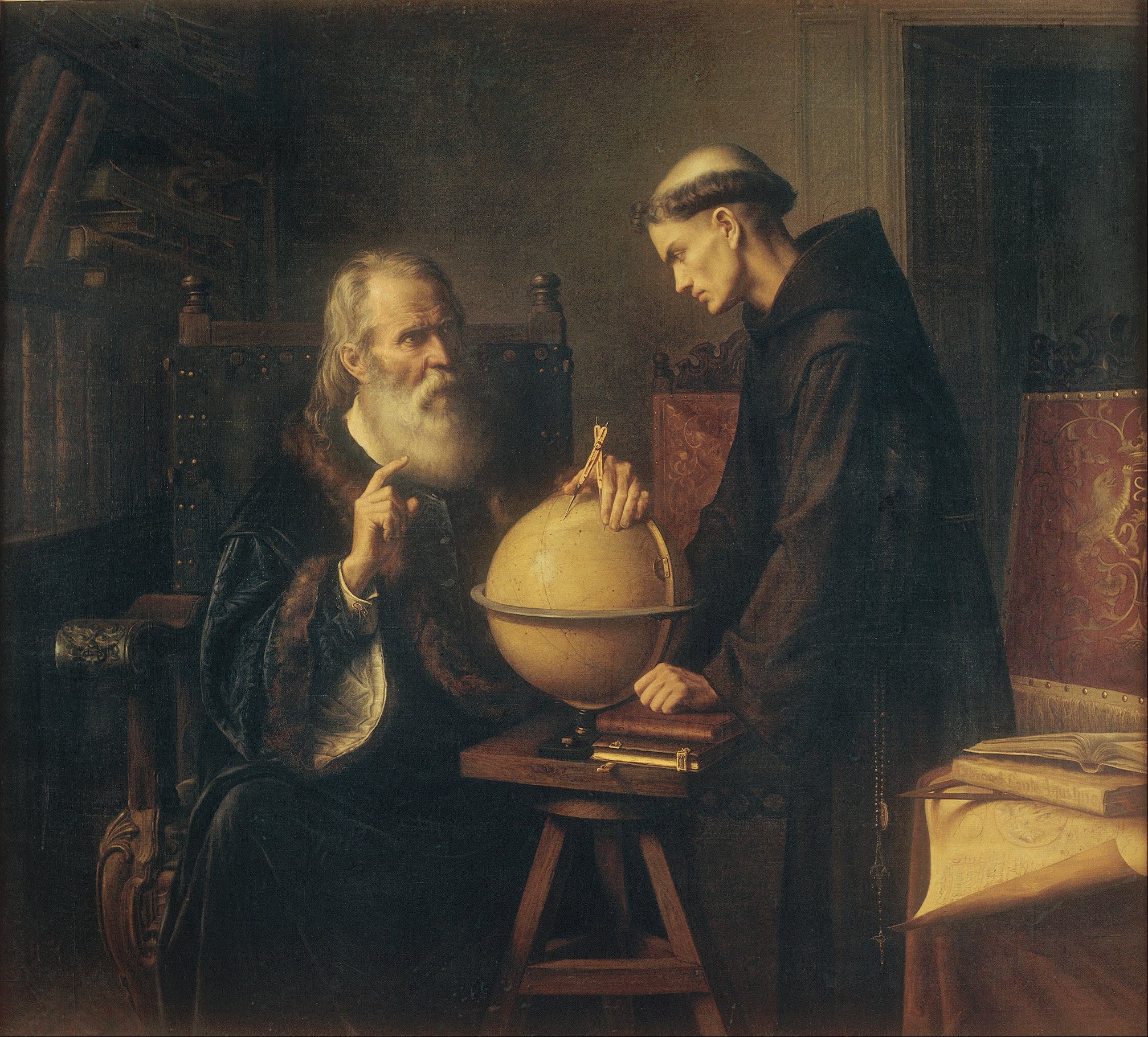
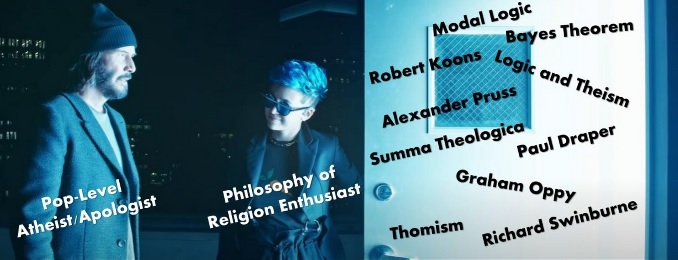
 Richard L. Fricks