Clarify your understanding of mindfulness and explore how it develops in stages.
***
For more information, click here.
Clarify your understanding of mindfulness and explore how it develops in stages.
***
For more information, click here.
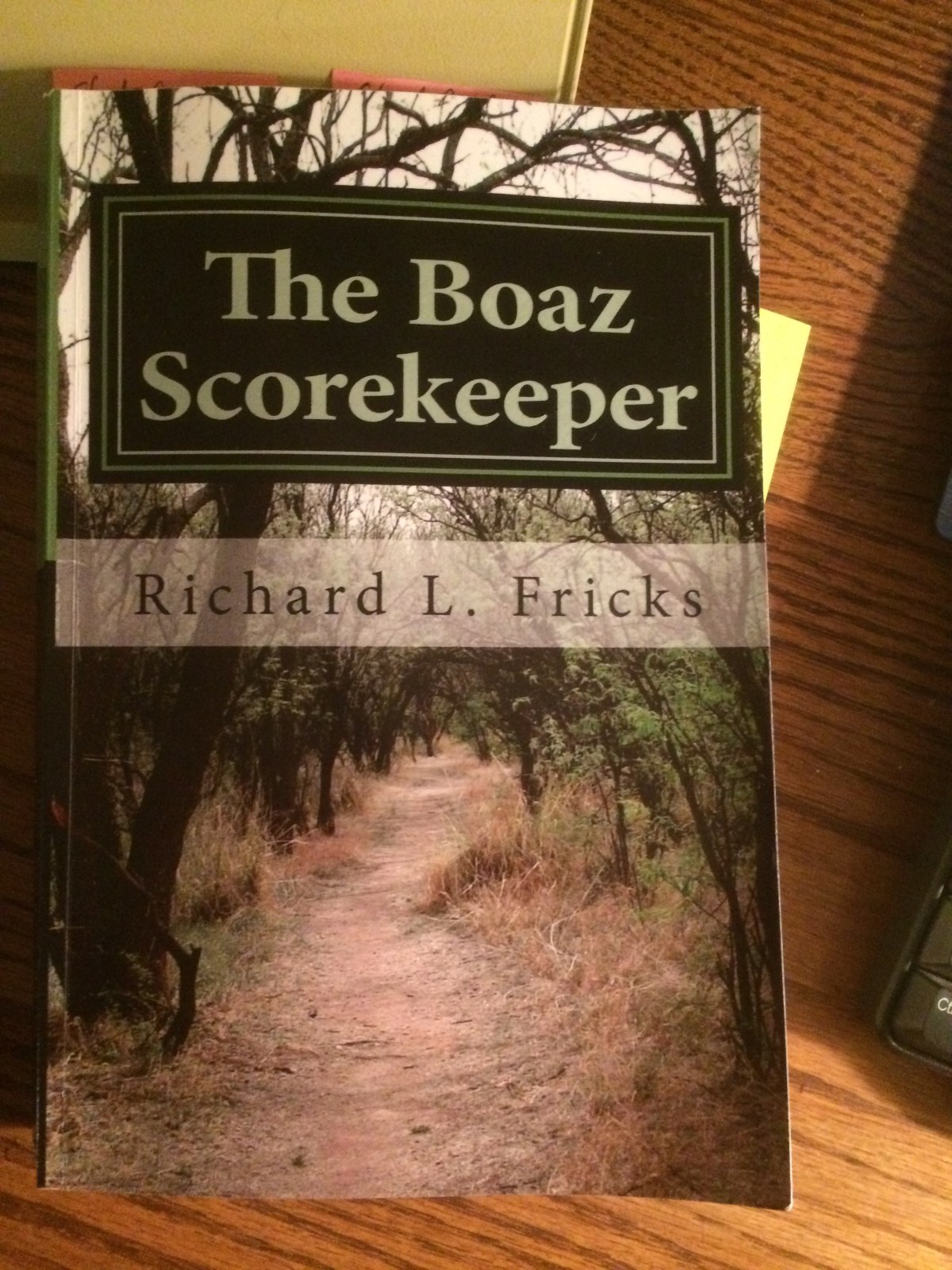
The Boaz Scorekeeper, written in 2017, is my second novel. I'll post it, a chapter a day, over the next few weeks.
Almost immediately, Matt and I started taking depositions.
Nyra Sue Gibson Ellsworth now lives in Montgomery. She was one of the four cheerleaders who were at the Graduation Party. Attorney Gil Burns, a friend of Matt’s, allowed us to use his conference room.
She arrived without an attorney and before she was sworn in she looked at me and said, “Micaden, I am sorry I did not help you back in 1973.” I started to respond but Matt said this all needed to be on the record. After the court reporter swore her in and after he laid out the general rules for depositions, Matt began:
Matt: What did you say to Micaden when you first walked in this morning?
Nyra: I am sorry I did not help you back in 1973.
Matt: What did you mean?
Nyra: I did not tell all I knew.
Matt: Let’s go back to that day, May 25, 1972. You agree you were at the graduation party that took place at Club Eden?
Nyra: I do, at the time I didn’t know what the place was called. I learned that later.
Matt: Who else was at the party?
Nyra: Gina Culvert, Rickie Bonds, Darla Sims, two girls I didn’t really know named Wendi and Cindi, Micaden, and the Flaming Five.
Matt: If you will, name the Flaming Five.
Nyra: Wade Tillman, James Adams, Randall Radford, Fred Billingsley, and John Ericson.
Matt: How did you get to the party?
Nyra: I rode with the Flaming Five.
Matt: Where did they pick you up?
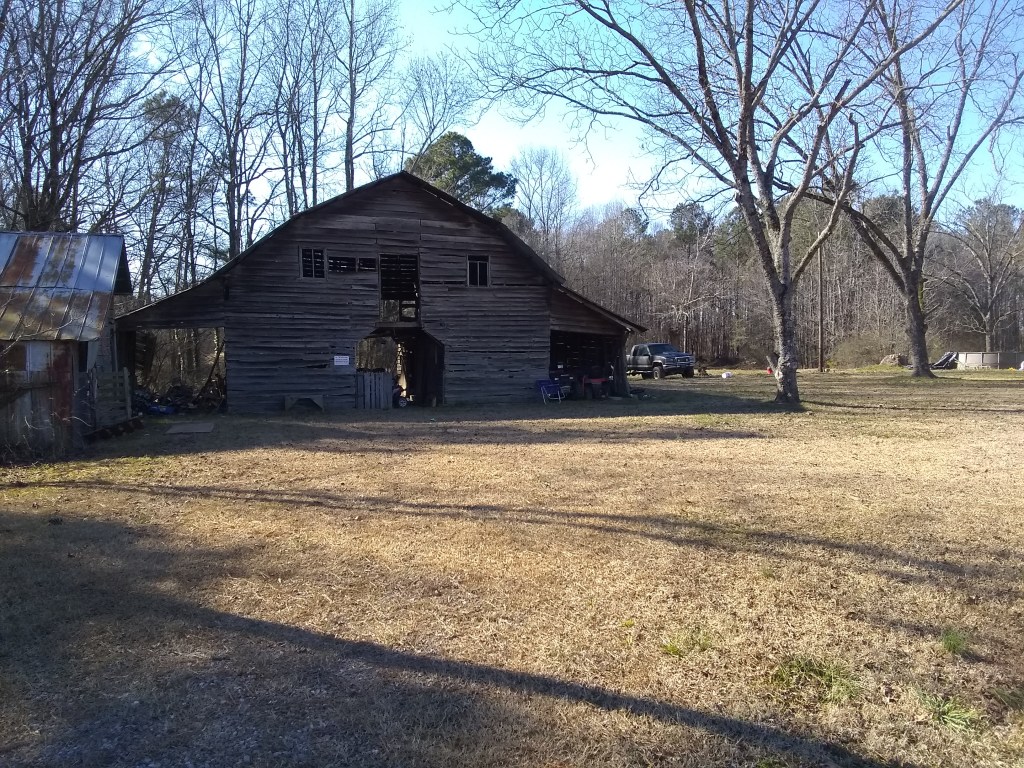
Nyra: At a barn off Martin Road.
Matt: Can you be a little more descriptive?
Nyra: It was a place John’s father owned. We had met there before. Anytime we went to their Club we would drive there and one of them would pick us up.
Matt: Are you referring to Gina Culvert, Rickie Bonds, Darla Sims?
Nyra: Yes, we drove my car that night and James, Randall, and John were already there.
Matt: Do you know where the Hutchinson’s live on Martin Road?
Nyra: Yes, if you’re talking about Whitesville on the hill?
Matt: For the record, why did you call it Whitesville?
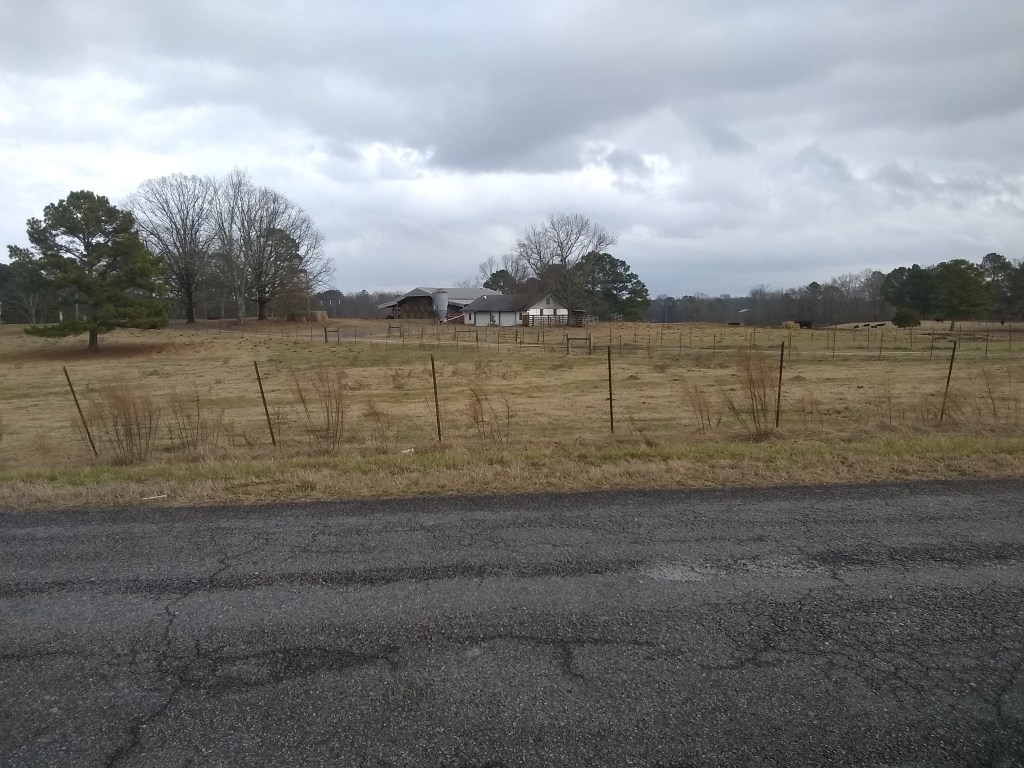
Nyra: That’s a nickname. What I always heard it called. Everything is white, the house, the barns, the fence.
Matt: Where was the Ericson’s barn in relation to the Huntchinson’s place?
Nyra: Just beyond on the right. Go past for about a half-mile and it’s on the right. I haven’t been out that way in 25 years. There was a gate and the barn was way back beyond a grove of trees down a little narrow lane. The road or path kept going a long way to the back side of the property. John and I had walked back there a few times before that night.
Matt: So, you left your car parked at the barn and all seven of you went to Club Eden?
Nyra: Yes
Matt: Who drove?
Nyra: John drove his red Blazer and James drove his van. All the cheerleaders rode with John.
Matt: So, Randall, James, and John were there in two vehicles?
Nyra: Yes.
Matt: You mentioned that there were two other girls present at the party. How did they get there?
Nyra: Oh, I forgot. We followed Randall and James to the Dairy Queen where they picked up the two girls.
Matt: Had they driven there?
Nyra: I assume so. They were sitting in a little blue car waiting on us when we arrived.
Matt: Give me an overview of what happened at the party.
Nyra: We arrived and grilled out a cooler full of steaks. I remember Micaden and Wendi, she had introduced herself. The two of them went walking and, inside the tent. It was like they already knew each other because they stayed paired up all night. We all hung out by the fire and started playing spin the bottle. I’m sure you know what that is.
Matt: Tell me please.
Nyra: You sit in a circle and spin a bottle. Whoever it points to goes to the tent. And the next person spins the bottle. The person of the opposite sex that the bottle points to goes to the tent. It’s up to the two people in the tent to decide what they want to do. I’m pretty sure we all made out with each other that night. Except for Micaden and Wendi. Like I said, they stayed paired off to themselves all night.
Matt: Did anyone force you to do anything you didn’t want to do?
Nyra: No. Absolutely not.
Matt: When did you leave the party?
Nyra: It was late, probably 1:00 or 2:00 a.m.
Matt: Who did you leave with?
Nyra: All six of us girls left with James, Randall, and John, in James’ van.
Matt: So, Micaden, Wade, and Fred stayed at the Club?
Nyra: Yes. James drove us back to the barn.
Matt: What about Wendi and Cindi?
Nyra: James didn’t drop them off at Dairy Queen. He just drove straight to the barn on Martin Road.
Matt: What happened when you all got there?
Nyra: Gina, Rickie, Darla, and I got in my car and we left. We went to Darla’s house and slept for hours.
Matt: So, when you four left the barn on Martin Road, Wendi and Cindi were there with Randall, James, and John?
Nyra: Yes.
Matt: Do you know why James didn’t drop them off at Dairy Queen? Wasn’t that where they had left their car? Ya’ll had to pass it on the way from the Club to the barn, didn’t you?
Nyra: That’s right. I remember Wendi saying, “you missed the turn” or something like that. She seemed upset that James didn’t stop and let them out.
Matt: What did James say?
Nyra: He said something about wanting to show Wendi and Cindi where the barn was so they would know where to meet next time.
Matt: Is there anything else you can remember about what happened at the barn before you and your three friends drove off?
Nyra: Wendi asked if she and Cindi could go with us.
Matt: What did you say?
Nyra: I said sure, but we’ll have to cram inside my car.
Matt: Why didn’t they?
Nyra: The guys wouldn’t let them. They kept saying that was out of the way and that they would drop them off.
Matt: What happened next?
Nyra: I drove me, Gina, Rickie, and Darla back to her house.
Matt: Leaving Wendi and Cindi alone at the barn with Randall, James, and John?
Nyra: Yes.
Matt: You of course realize that this is not the story you gave at Micaden’s trial?
Nyra: I do, and again Micaden, I am so very sorry that I lied.
Matt: I have a copy of your trial testimony. In it you say that Micaden was the one who drove all the girls home from the party dropping you, Gina, Rickie, and Darla off at Boaz High School, and then leaving with Wendi and Cindi.
Nyra: I know that’s what I said but now you know what really happened.
Matt: Why did you lie?
Nyra: I was pressured to lie.
Matt: By who?
Nyra: By the Flaming Five and their fathers.
Matt: Please be more specific.
Nyra: The day after the party, John came to see me and told me that the two girls, Wendi and Cindi, were missing. He said there was going to be trouble for all of us. He said we needed to go for a ride. He drove us back to the Ericson’s barn. Everyone was there.
Matt: Please name everyone who was there.
Nyra: Of course, me and John, his father Franklin, Randall and his father Raymond, Fred and his father Fitz, Wade and his father Walter, James and his father David. Also, Gina Culvert, Rickie Bonds, and Darla Sims were there.
Matt: Please continue.
Nyra: Walter and David were kind of the ring leaders. They said that the Flaming Five could likely wind up in prison unless we got our stories straight. Walter said that Randall, James, and John had dropped the twins off at the Dairy Queen early Saturday morning and that’s the last they saw them. He said no one knew what happened to them but the truth would raise too much suspicions for the Flaming Five. David then told me and the other girls what we were to say when we were questioned. None of us liked the idea. Darla and Gina refused. Fitz said that they had an offer that would change our lives forever. He said that each of us would receive a fully paid education at either Auburn or Alabama and that we would be paid a monthly payment of $200.00 for ten years. Walter then handed each of us an envelope containing $1,000.00. The Flaming Five and their fathers all made us promise that we would never say anything about this meeting or our agreement. They threatened us and our families if we ever said anything.
The deposition ended and Matt and I drove back to Boaz thankful for the helpful evidence we had discovered but both knowing that it was far from what we would have to have to win Bill and Nellie Murray’s wrongful death case.
Biking is something I both love and hate. The conflicting emotions arise from the undeniable physical effort it demands. However, this exertion is precisely what makes it an excellent form of exercise. Most days, I dedicate over an hour to my cycling routine, and in doing so, I’ve discovered a unique opportunity to enjoy a good book or podcast. The rhythmic pedaling and the wind against my face create a calming backdrop that allows me to fully immerse myself in the content. In these moments, the time spent on the bike seems worthwhile, as I can’t help but appreciate the mental and physical rewards it offers.
I especially like having ridden. The post-biking feeling is one of pure satisfaction. The endorphin rush, coupled with a sense of accomplishment, makes the initial struggle and fatigue worthwhile. As I dismount and catch my breath, I relish the sensation of having conquered the challenge, both physically and mentally. It’s a reminder that the things we sometimes love to hate can often be the ones that bring us the most fulfillment. In the end, the love-hate relationship with biking only deepens my appreciation for the sport, as it continually pushes me to overcome my own limitations and embrace the rewards that follow the effort.

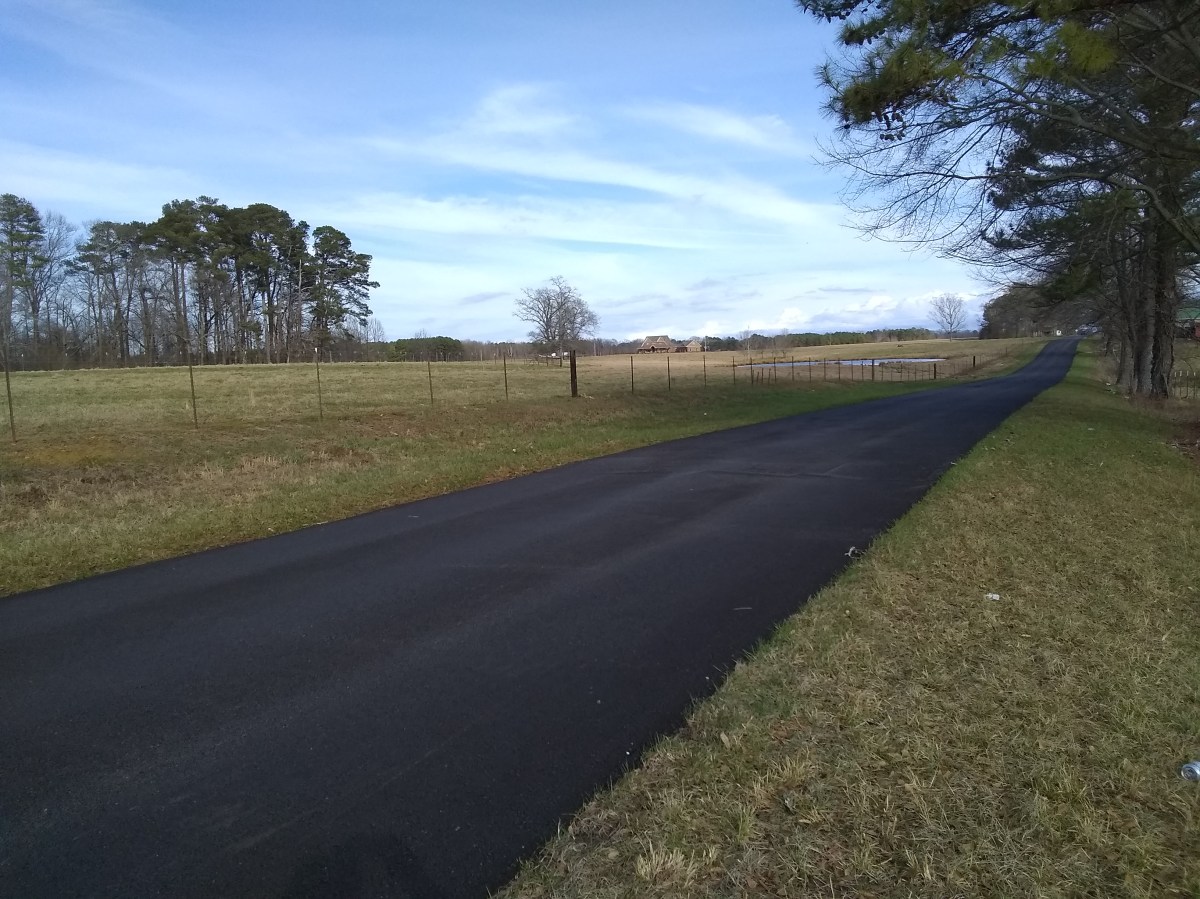
A Rockhopper by Specialized. I purchased it November 2021 from Venture Out in Guntersville; Mike is top notch! So is the bike. The ‘old’ man seat was salvaged from an old Walmart bike (update: seat replaced, new photo to follow, someday).
I encourage you to start riding a bike, no matter your age. Check out these groups:
Cycling for those aged 70+(opens in a new tab)
Solitary Cycling(opens in a new tab)
Remember,


Don’t miss the #1 New York Times bestselling blockbuster and Reese Witherspoon Book Club Pick that’s sold over 2 million copies–now an Apple TV+ limited series starring Jennifer Garner!
The “page-turning, exhilarating” (PopSugar) and “heartfelt thriller” (Real Simple) about a woman who thinks she’s found the love of her life—until he disappears.
Before Owen Michaels disappears, he smuggles a note to his beloved wife of one year: Protect her. Despite her confusion and fear, Hannah Hall knows exactly to whom the note refers—Owen’s sixteen-year-old daughter, Bailey. Bailey, who lost her mother tragically as a child. Bailey, who wants absolutely nothing to do with her new stepmother.
As Hannah’s increasingly desperate calls to Owen go unanswered, as the FBI arrests Owen’s boss, as a US marshal and federal agents arrive at her Sausalito home unannounced, Hannah quickly realizes her husband isn’t who he said he was. And that Bailey just may hold the key to figuring out Owen’s true identity—and why he really disappeared.
Hannah and Bailey set out to discover the truth. But as they start putting together the pieces of Owen’s past, they soon realize they’re also building a new future—one neither of them could have anticipated.
With its breakneck pacing, dizzying plot twists, and evocative family drama, The Last Thing He Told Me is a “page-turning, exhilarating, and unforgettable” (PopSugar) suspense novel.


Here’s the link to this article.
In their strange cosmogony predating Copernicus by two millennia, the ancient Greek scientific sect of the Pythagoreans placed at the center of the universe a ball of fire. It was not hell but the heart of creation. Hell, Milton told us centuries and civilizations later, is something else, somewhere else: “The mind is its own place,” he wrote in Paradise Lost, “and in it self can make a Heav’n of Hell, a Hell of Heav’n.”
Grief and despair, heartache and humiliation, rage and regret — this is the hellfire of the mind, hot as a nova, all-consuming as a black hole. And yet, if are courageous enough and awake enough to walk through it, in it we are annealed, forged stronger, reborn.
That is what the non-speaking autistic poet Hannah Emerson celebrates in her shamanic poem “Center of the Universe,” found in her extraordinary collection The Kissing of Kissing (public library), song of the mind electric, great bellowing yes to life.
CENTER OF THE UNIVERSE
by Hannah EmersonPlease try to go
to hell frequently
because you will
find the light thereyes yes — please
try to kiss the ideas
that you find there
yes yes — pleasetry to get that
it is the center
of the universe
yes yes — pleasetry to help yourself
by kissing the hot hot
hot life that is born
there yes yes — pleasetry to yell in hell
yes yes — please
try to free yourself
by pouring yourselfinto the gutter all
guttural guttural yell
yes yes yes — please
try to get that youbecome the being
that you came there
to be yes yes — please
try to go to the greatgreat great fire that you
created because you
become the light
that the fire makesinside of you
yes yes — please
try to kiss yourself
for going thereyes yes — please
get that you are
reborn there
yes yes — pleasebegin your day
Drink in more soul-slaking poetry here, then revisit the story of how Dostoyevsky, just after his death sentence was repealed, found himself “regenerated into a new form… reborn for the better.”
Here’s the link to this article.
By John W. Loftus at 11/02/2023
[First Published August 2022] I’ve written three books to educate believers on how to honestly seek the truth and defend it: 1) The Outsider Test for Faith: How to Know Which Religion is True. In it I show honest believers how to approach their faith consistently without any double standards or special pleading.
2) How to Defend the Christian Faith: Advice from an Atheist. In it I show Christian apologists how to correctly defend their faith, if it can be defended at all. Apologists should read it before writing another sentence in defense of their faith. In it I challenge apologists to stop doing what they’re doing if they’re honest about defending their Christian faith. The risk is that if they stop it they cannot defend their faith at all. But the risk is worth it if they’re serious about knowing and defending the truth.
3) Unapologetic: Why Philosophy of Religion Must End. In it I show philosophers of religion and other intellectuals how to properly discuss and debate religious beliefs. What I cannot teach however, is to desire the truth. That comes from within. Taken together these three books are the antidote to the faith virus. The problem is almost none of them desire the truth, comparatively speaking. Here’s hoping a few honest believers are reading who desire the truth.
————–
John W. Loftus is a philosopher and counter-apologist credited with 12 critically acclaimed books, including The Case against Miracles, God and Horrendous Suffering, and Varieties of Jesus Mythicism. Please support DC by sharing our posts, or by subscribing, donating, or buying our books at Amazon. Thank you so much!
The Boaz Scorekeeper, written in 2017, is my second novel. I'll post it, a chapter a day, over the next few weeks.
When Karla, Lewis, and I moved back from Atlanta we visited Clear Creek Baptist Church for several weeks. It just wasn’t the same without Brother G. And the more I investigated the Murray’s wrongful death case, the more I realized that the walls of First Baptist Church of Christ held a library full of secrets, many of which were likely relevant to Wendi and Cindi’s justice.
The first Sunday we visited we attended only the worship hour. We thought it best to tip toe into the cool waters before jumping off the high dive into the deep and lurking waters of Sunday School.
By the end of summer 1997, the Murray’s wrongful death lawsuit against the Flaming Five was well known throughout Marshall County. It was perpetual talk, from old men sipping coffee at Grumpy’s Diner, to women of all ages getting their hair done at the ten assorted beauty salons scattered across Boaz.
I could not have imagined a colder welcome. We walked in and were guided by an usher to the back of the middle section. Only two older ladies gave us a smile and a handshake during the fellowship song before preaching began. However, I did feel the other four hundred or so eyes staring at me with each painting my face equally evil alongside the ever-roving Satan. Particularly burning were the dark eyes glaring down on me from the choir loft. Randall Radford stood like a statue in the center of the back row with uncharacteristically drooping shoulders. I guessed he had rather be on the golf course than worshipping here together. As other people mingled, shook hands, and sang “Victory in Jesus,” I saw James Adams, Fred Billingsley, and John Ericson, along with their wives and parents, anchoring the front half of the center section.
Pastor Walter Tillman, Wade’s father, was out of town leaving the preaching to his equally competent son. Wade announced that his father would continue his series on Marriage the following Sunday and that he had been led to preach on the grace and wisdom of Jesus. I noticed the church bulletin had titled Wade’s sermon as “Saved from Stones.” I recognized the scripture verses next to the sermon title knowing they described how Jesus had handled the woman caught in adultery. Wade’s eyes caught mine when he asked the congregation to stand for him to read John 8:1-11:
“Jesus went unto the mount of Olives. And early in the morning he came again into the temple, and all the people came unto him; and he sat down, and taught them. And the scribes and Pharisees brought unto him a woman taken in adultery; and when they had set her in the midst, They said unto him, Master, this woman was taken in adultery, in the very act. Now Moses in the law commanded us, that such should be stoned: but what sayest thou? This they said, tempting him, that they might have to accuse him. But Jesus stooped down, and with his finger wrote on the ground, as though he heard them not. So, when they continued asking him, he lifted up himself, and said unto them, He that is without sin among you, let him first cast a stone at her. And again, he stooped down, and wrote on the ground. And they which heard it, being convicted by their own conscience, went out one by one, beginning at the eldest, even unto the last: and Jesus was left alone, and the woman standing in the midst. When Jesus had lifted up himself, and saw none but the woman, he said unto her, Woman, where are those thine accusers? hath no man condemned thee? She said, No man, Lord. And Jesus said unto her, Neither do I condemn thee: go, and sin no more.”
I would have given half a year’s salary to have known what Wade had truly thought as he had read these verses. I would never know but I did learn how talented he was behind the pulpit. Wade presented a powerful three-point sermon that would please any Southern Baptist preacher. He analogized the woman’s plight and problem to a broad array of modern day issues, including a major exam at school, a struggling business, and the loss of a loved one. Wade acknowledged that life in America didn’t include being stoned for adultery, yet we felt as though it did. He argued that we all face problems that to us cause us to run away if nothing more than in our minds. He proclaimed that there is a better way. He led us through how Jesus stood between the guilty woman and the ready stones of her accusers. Wade encouraged us to notice how the woman didn’t continue to run, that she stood, weak-kneed no doubt, and faced the mighty wave rolling her way, and rested in the mighty wisdom of Christ.
It was a moving sermon and the entire congregation sat silent lapping up every word. I couldn’t help but think, something that I knew Christians were warned against doing, that this scripture wasn’t even part of the earliest Greek manuscripts from which the Bible was taken. I had long concluded that the Bible was simply a man-made book and Wade’s verses, like so many others, had simply been added hundreds of years later. I wondered how otherwise educated and rational people could believe the Bible was the inerrant, infallible Word of God. Of course, I knew why. They, like me, all my growing up years, had been told one side of the story. They had never been told the truth. And, like so much of life itself, many are not interested in the truth.
While exiting the auditorium, I shook Fitz Billingsley’s hand. I hadn’t seen Fred’s father since I was in the 11th grade when my Dad had taken me to First State Bank to co-sign a promissory note for me to buy my first car, a 1968 Chevrolet Corvair. I’m sure Fitz would not have shaken my hand in most any other circumstance. But here, he was one of two deacons stationed at the back door charged with extending the right hand of fellowship as God’s people marched outside and onward to share with neighbors and friends how Jesus was always near, saving them from stones.
Biking is something I both love and hate. The conflicting emotions arise from the undeniable physical effort it demands. However, this exertion is precisely what makes it an excellent form of exercise. Most days, I dedicate over an hour to my cycling routine, and in doing so, I’ve discovered a unique opportunity to enjoy a good book or podcast. The rhythmic pedaling and the wind against my face create a calming backdrop that allows me to fully immerse myself in the content. In these moments, the time spent on the bike seems worthwhile, as I can’t help but appreciate the mental and physical rewards it offers.
I especially like having ridden. The post-biking feeling is one of pure satisfaction. The endorphin rush, coupled with a sense of accomplishment, makes the initial struggle and fatigue worthwhile. As I dismount and catch my breath, I relish the sensation of having conquered the challenge, both physically and mentally. It’s a reminder that the things we sometimes love to hate can often be the ones that bring us the most fulfillment. In the end, the love-hate relationship with biking only deepens my appreciation for the sport, as it continually pushes me to overcome my own limitations and embrace the rewards that follow the effort.

A Rockhopper by Specialized. I purchased it November 2021 from Venture Out in Guntersville; Mike is top notch! So is the bike. The ‘old’ man seat was salvaged from an old Walmart bike (update: seat replaced, new photo to follow, someday).
I encourage you to start riding a bike, no matter your age. Check out these groups:
Cycling for those aged 70+(opens in a new tab)
Solitary Cycling(opens in a new tab)
Remember,


Don’t miss the #1 New York Times bestselling blockbuster and Reese Witherspoon Book Club Pick that’s sold over 2 million copies–now an Apple TV+ limited series starring Jennifer Garner!
The “page-turning, exhilarating” (PopSugar) and “heartfelt thriller” (Real Simple) about a woman who thinks she’s found the love of her life—until he disappears.
Before Owen Michaels disappears, he smuggles a note to his beloved wife of one year: Protect her. Despite her confusion and fear, Hannah Hall knows exactly to whom the note refers—Owen’s sixteen-year-old daughter, Bailey. Bailey, who lost her mother tragically as a child. Bailey, who wants absolutely nothing to do with her new stepmother.
As Hannah’s increasingly desperate calls to Owen go unanswered, as the FBI arrests Owen’s boss, as a US marshal and federal agents arrive at her Sausalito home unannounced, Hannah quickly realizes her husband isn’t who he said he was. And that Bailey just may hold the key to figuring out Owen’s true identity—and why he really disappeared.
Hannah and Bailey set out to discover the truth. But as they start putting together the pieces of Owen’s past, they soon realize they’re also building a new future—one neither of them could have anticipated.
With its breakneck pacing, dizzying plot twists, and evocative family drama, The Last Thing He Told Me is a “page-turning, exhilarating, and unforgettable” (PopSugar) suspense novel.


Here’s the link to this article.
This is the fourth of nine installments in the animated interlude season of The Universe in Verse in collaboration with On Being, celebrating the wonder of reality through stories of science winged with poetry. See the rest here.
Months before Edwin Hubble finally published his epoch-making revelation about Andromeda, staggering the world with the fact that the universe extends beyond our Milky Way galaxy, a child was born under the star-salted skies of Washington, D.C., where the Milky Way was still visible before a century’s smog slipped between us and the cosmos — a child who would grow up to confirm the existence of dark matter, that invisible cosmic glue holding galaxies together and pinning planets to their orbits so that, on at least one of them, small awestruck creatures with vast complex consciousnesses can unravel the mysteries of the universe.
Night after night, Vera Rubin (July 23, 1928–December 25, 2016) peered out of her childhood bedroom and into the stars, wonder smitten with the beauty of it all — until she read a children’s book about the trailblazing astronomer Maria Mitchell, who had expanded the universe of possibility for half of our species a century earlier. The young Vera was suddenly seized with a life-altering realization: Not only was there such a thing as a professional stargazer, but it was a thing a girl could do.

In 1965 — exactly one hundred years after Maria Mitchell was appointed the first professor of astronomy at Vassar, which Vera Rubin had chosen as her training ground in astronomy — she became the first woman permitted to use the Palomar Observatory. Peering through its colossal eye — the telescope, devised the year Rubin was born, had replaced the one through which Hubble made his discovery as the world’s most powerful astronomical instrument — she was just as wondersmitten as the little girl peering through the bedroom window, just as beguiled by the beauty of the cosmos. “I sometimes ask myself whether I would be studying galaxies if they were ugly,” she reflected in her most personal interview. “I think it may not be irrelevant that galaxies are really very attractive.”
Galaxies had taken Rubin to Palomar, and galaxies — the riddle of their rotation, which she had endeavored to solve — became the key to her epochal confirmation of dark matter. One of the most mesmerizing unsolved puzzles in astronomy, dark matter had remained only an enticing speculation since the Swiss astrophysicist Fritz Zwicky had first theorized it when Vera was five.
A generation later, a small clan of astronomers at Cambridge analyzed the deepest image of space the Hubble Space Telescope had yet captured — that iconic glimpse of the unknown, revealing a universe “so brutal and alive it seemed to comprehend us back” — to discern the origin of the mysterious dark matter halo enveloping the Milky Way. Spearheading the endeavor was an extraordinary young astronomer back to work during a remission of a rare terminal blood cancer ordinarily afflicting the elderly.

Nursed on geology and paleontology on the shores of a prehistoric lake, Rebecca Elson (January 2, 1960–May 19, 1999) was barely sixteen and already in college when she first glimpsed Andromeda through a telescope. Instantly dazzled by its “delicate wisp of milky spiral light floating in what seemed a bottomless well of empty space,” she became a scientist but never relinquished the pull of the poetic dimensions of reality. During her postdoctoral work at Princeton’s Institute for Advanced Study, Elson found refuge from the narrow patriarchy of academic science in a gathering of poets every Tuesday evening. She became a fellow at a Radcliffe-Harvard institute for postgraduate researchers devoted to reversing “the climate of non-expectation for women,” among the alumnae of which are Anne Sexton, Alice Walker, and Anna Deavere Smith. There, in a weekly writing group, she met and befriended the poet Marie Howe, whose splendid “Singularity” became the inspiration for this animated season of The Universe in Verse.
It was then — twenty-nine and newly elected the youngest astronomer in history to serve on the Decennial Review committee steering the course of American science toward the most compelling unsolved questions — that Elson received her terminal diagnosis.
Throughout the bodily brutality of her cancer treatment, she filled notebooks with poetic questions and experiments in verse, bridging with uncommon beauty the creaturely and the cosmic — those eternal mysteries of our mortal matter that make it impossible for a consciousness born of dead stars to fathom its own nonexistence.
Rebecca Elson lived with the mystery for another decade, never losing her keen awareness that we are matter capable of wonder, never ceasing to channel it in poetry. When she returned her borrowed stardust to the universe, a spring shy of her fortieth birthday, she left behind nearly sixty scientific papers and a single, splendid book of poems titled A Responsibility to Awe (public library) — among them the staggering “Theories of Everything” (read by Regina Spektor at the 2019 Universe in Verse) and “Antidotes to Fear of Death (read by Janna Levin at the 2020 Universe in Verse).
Permeating Elson’s poetic meditations, the mystery of dark matter culminates in one particular poem exploring with uncommon loveliness what may be the most touching paradox of being human — our longing for the light of immortality as creatures of matter in a cosmos governed by the dark sublime of dissolution.
Bringing Elson’s masterpiece to life for this series is Patti Smith (who read Emily Dickinson’s pre-atomic ode to particle physics at the 2020 Universe in Verse), with animation by Ohara Hale (who animated Emily Dickinson’s pre-ecological poem about ecology in Chapter One of this experimental season of The Universe in Verse) and music by Zoë Keating (who read Rita Dove’s paleontological poem at the 2018 Universe in Verse).
LET THERE ALWAYS BE LIGHT (SEARCHING FOR DARK MATTER)
by Rebecca ElsonFor this we go out dark nights, searching
For the dimmest stars,
For signs of unseen things:To weigh us down.
To stop the universe
From rushing on and on
Into its own beyond
Till it exhausts itself and lies down cold,
Its last star going out.Whatever they turn out to be,
Let there be swarms of them,
Enough for immortality,
Always a star where we can warm ourselves.Let there be enough to bring it back
From its own edges,
To bring us all so close we ignite
The bright spark of resurrection.
Previously on The Universe in Verse: Chapter 1 (the evolution of life and the birth of ecology, with Joan As Police Woman and Emily Dickinson); Chapter 2 (Henrietta Leavitt, Edwin Hubble, and the human hunger to know the cosmos, with Tracy K. Smith); Chapter 3 (trailblazing astronomer Maria Mitchell and the poetry of the cosmic perspective, with David Byrne and Pattiann Rogers).
Learn how it’s possible to improve the quality of your mind through meditation.
***
For more information, click here.