Writer / Observer / Builder — Presence, clarity, and living without a script
Author: Richard L. Fricks
Writer. Observer. Builder. I write from a life shaped by attention, simplicity, and living without a script—through reflective essays, long-form inquiry, and fiction rooted in ordinary lives. I live in rural Alabama, where writing, walking, and building small, intentional spaces are part of the same practice.
I’m currently taking a writing, blogging, and coaching sabbatical due to family health issues. For now, I’ll repost selected articles from my Fiction Writing School. I encourage you to take the time to read these powerful, awe-inspiring words.
“Good writing is not a natural gift. You have to learn to write well. Here are 10 hints.”
BY MARIA POPOVA
How is your New Year’s resolution to read more and write better holding up? After tracing the fascinating story of the most influential writing style guide of all time and absorbing advice on writing from some of modern history’s most celebrated writers, here comes some priceless and pricelessly uncompromising wisdom from a very different kind of cultural legend: iconic businessman and original “Mad Man” David Ogilvy (June 23, 1911–July 21, 1999).
I’m currently taking a writing, blogging, and coaching sabbatical due to family health issues. For now, I’ll repost selected articles from my Fiction Writing School. I encourage you to take the time to read these powerful, awe-inspiring words.
“Had I been blessed with even limited access to my own mind there would have been no reason to write.”
BY MARIA POPOVA
The question of what propels creators, especially great creators, is the subject of eternal fascination and cultural curiosity. In “Why I Write,” originally published in the New York Times Book Review in December of 1976 and found in The Writer on Her Work, Volume 1 (public library), Joan Didion — whose indelible insight on self-respect is a must-read for all — peels the curtain on one of the most celebrated and distinctive voices of American fiction and literary journalism to reveal what it is that has compelled her to spend half a century putting pen to paper.
Portrait of Joan Didion by Mary Lloyd Estrin, 1977
Didion begins:
Of course I stole the title for this talk, from George Orwell. One reason I stole it was that I like the sound of the words: Why I Write. There you have three short unambiguous words that share a sound, and the sound they share is this: I I I In many ways writing is the act of saying I, of imposing oneself upon other people, of saying listen to me, see it my way, change your mind. It’s an aggressive, even a hostile act. You can disguise its qualifiers and tentative subjunctives, with ellipses and evasions — with the whole manner of intimating rather than claiming, of alluding rather than stating — but there’s no getting around the fact that setting words on paper is the tactic of a secret bully, an invasion, an imposition of the writer’s sensibility on the reader’s most private space.
I had trouble graduating from Berkeley, not because of this inability to deal with ideas — I was majoring in English, and I could locate the house-and-garden imagery in The Portrait of a Lady as well as the next person, ‘imagery’ being by definition the kind of specific that got my attention — but simply because I had neglected to take a course in Milton. I did this. For reasons which now sound baroque I needed a degree by the end of that summer, and the English department finally agreed, if I would come down from Sacramento every Friday and talk about the cosmology of Paradise Lost, to certify me proficient in Milton. I did this. Some Fridays I took the Greyhound bus, other Fridays I caught the Southern Pacific’s City of San Francisco on the last leg of its transcontinental trip. I can no longer tell you whether Milton put the sun or the earth at the center of his universe in Paradise Lost, the central question of at least one century and a topic about which I wrote 10,000 words that summer, but I can still recall the exact rancidity of the butter in the City of San Francisco’s dining car, and the way the tinted windows on the Greyhound bus cast the oil refineries around Carquinez Straits into a grayed and obscurely sinister light. In short my attention was always on the periphery, on what I could see and taste and touch, on the butter, and the Greyhound bus. During those years I was traveling on what I knew to be a very shaky passport, forged papers: I knew that I was no legitimate resident in any world of ideas. I knew I couldn’t think. All I knew then was what I couldn’t do. All I knew then was what I wasn’t, and it took me some years to discover what I was.
Which was a writer.
By which I mean not a ‘good’ writer or a ‘bad’ writer but simply a writer, a person whose most absorbed and passionate hours are spent arranging words on pieces of paper. Had my credentials been in order I would never have become a writer. Had I been blessed with even limited access to my own mind there would have been no reason to write. I write entirely to find out what I’m thinking, what I’m looking at, what I see and what it means. What I want and what I fear. Why did the oil refineries around Carquinez Straits seem sinister to me in the summer of 1956? Why have the night lights in the bevatron burned in my mind for twenty years? What is going on in these pictures in my mind?
Grammar is a piano I play by ear, since I seem to have been out of school the year the rules were mentioned. All I know about grammar is its infinite power. To shift the structure of a sentence alters the meaning of that sentence, as definitely and inflexibly as the position of a camera alters the meaning of the object photographed. Many people know about camera angles now, but not so many know about sentences. The arrangement of the words matters, and the arrangement you want can be found in the picture in your mind. The picture dictates the arrangement. The picture dictates whether this will be a sentence with or without clauses, a sentence that ends hard or a dying-fall sentence, long or short, active or passive. The picture tells you how to arrange the words and the arrangement of the words tells you, or tells me, what’s going on in the picture. Nota bene.
It tells you. You don’t tell it.
Didion concludes with a quick shot of her signature wry wit:
Let me tell you one thing about why writers write: had I known the answer to any of these questions I would never have needed to write a novel.
I’m currently taking a writing, blogging, and coaching sabbatical due to family health issues. For now, I’ll repost selected articles from my Fiction Writing School. I encourage you to take the time to read these powerful, awe-inspiring words.
“A writer loves the dark, loves it, but is always fumbling around in the light.”
BY MARIA POPOVA
Why do writers write? Some of literary history’s most famous and timeless answers have come from George Orwell, Joan Didion, Susan Sontag, and Charles Bukowski. In her beautiful essay “Uncanny Singing That Comes from Certain Husks,” published in the 1998 anthology Why I Write: Thoughts on the Craft of Fiction (public library), Joy Williams considers the impetus for writing with equal parts insight, irreverence, and that blend of anguishing ambivalence and convulsive conviction so characteristic of the writer’s mind.
It’s become fashionable these days to say that the writer writes because he is not whole, he has a wound, he writes to heal it, but who cares if the writer is not whole, of course the writer is not whole, or even particularly well. There is something unwholesome and destructive about the entire writing process. Writers are like eremites or anchorites — natural-born eremites or anchorites — who seem puzzled as to why they went up the pole or into the cave in the first place. Why am I so isolate in this strange place? Why is my sweat being sold as elixir? And how have I become so enmeshed with works, mere works, phantoms?
[…]
A writer starts out, I think, wanting to be a transfiguring agent, and ends up usually just making contact, contact with other human beings. This, unsurprisingly, is not enough. (Making contact with the self — healing the wound — is even less satisfactory.) Writers end up writing stories — or rather, stories’ shadows — and they’re grateful if they can but it is not enough. Nothing the writer can do is ever enough.
She considers the generative power of awareness:
The significant story possesses more awareness than the writer writing it. The significant story is always greater than the writer writing it. This is the absurdity, the disorienting truth, the question that is not even a question, this is the koan of writing.
[…]
A writer’s awareness must never be inadequate. Still, it will never be adequate to the greater awareness of the work itself, the work that the writer is trying to write. The writer must not really know what he is knowing, what he is learning to know when he writes, which is more than the knowing of it. A writer loves the dark, loves it, but is always fumbling around in the light. The writer is separate from his work but that’s all the writer is — what he writes. A writer must be smart but not too smart. He must be dumb enough to break himself to harness.
On complacency:
The moment a writer knows how to achieve a certain effect, the method must be abandoned. Effects repeated become false, mannered. The writer’s style is his doppelgänger, an apparition that the writer must never trust to do his work for him.
Recounting critical reactions to some of her essays, Williams offers:
But a writer isn’t supposed to make friends with his writing, I don’t think.
On language, and the metaphor from which the essay title comes:
Language accepts the writer as its host, it feeds off the writer, it makes him a husk. There is something uncanny about good writing — uncanny the singing that comes from certain husks. The writer is never nourished by his own work, it is never satisfying to him. The work is a stranger, it shuns him a little, for the writer is really something of a fool, so engaged in his disengagement, so self-conscious, so eager to serve something greater, which is the writing. Or which could be the writing if only the writer is good enough. The work stands a little apart from the writer, it doesn’t want to go down with him when he stumbles or fails to retreat. The writer must do all this alone, in secret, in drudgery, in confusion, awkwardly, one word at a time.
[…]
The good piece of writing startles the reader back into Life. The work — this Other, this other thing — this false life that is even less than the seeming of this lived life, is more than the lived life, too. It is so unreal, so precise, so unsurprising, so alarming, really. Good writing never soothes or comforts. It is no prescription, either is it diversionary, although it can and should enchant while it explodes in the reader’s face. Whenever the writer writes, it’s always three o’clock in the morning, it’s always three or four or five o’clock in the morning in his head. Those horrid hours are the writer’s days and nights when he is writing. The writer doesn’t write for the reader. He doesn’t write for himself, either. He writes to serve…something. Somethingness. The somethingness that is sheltered by the wings of nothingness — those exquisite, enveloping, protecting wings.
Williams ends with a direct yet wonderfully poetic answer:
Why does the writer write? The writer writes to serve — hopelessly he writes in the hope that he might serve — not himself and not others, but that great cold elemental grace which knows us.
A writer I very much admire is Don DeLillo. At an awards ceremony for him at the Folger Library several years ago, I said that he was like a great shark moving hidden in our midst, beneath the din and wreck of the moment, at apocalyptic ease in the very elements of our psyche and times that are most troublesome to us, that we most fear.
Why do I write? Because I wanna be a great shark too. Another shark. A different shark, in a different part of the ocean. The ocean is vast.
I’m currently taking a writing, blogging, and coaching sabbatical due to family health issues. For now, I’ll repost selected articles from my Fiction Writing School. I encourage you to take the time to read these powerful, awe-inspiring words.
“Fiction becomes a weird way to countenance yourself and to tell the truth instead of being a way to escape yourself or present yourself in a way you figure you will be maximally likable.”
BY MARIA POPOVA
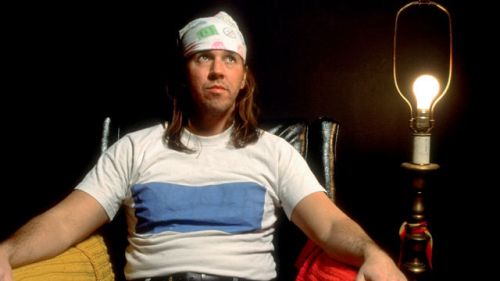
On the heels of the highly anticipated new David Foster Wallace biography comes Both Flesh and Not: Essays (public library) — a collection spanning twenty years of Wallace’s nonfiction writing on subjects as wide-ranging as math, Borges, democracy, the U.S. Open, and the entire spectrum of human experience in between. Among the anthology’s finest is an essay titled “The Nature of the Fun” — a meditation on whywriterswrite, encrusted in Wallace’s signature blend of self-conscious despondency, even more self-conscious optimism, and overwhelming self-awareness. It was originally published in 1998 in Fiction Writer and also included in the wonderful 1998 anthology Why I Write: Thoughts on the Craft of Fiction.
After offering an extended and rather gory metaphor for the writer’s creative output and a Zen parable about unpredictability, he gets to the meat of things:
In the beginning, when you first start out trying to write fiction, the whole endeavor’s about fun. You don’t expect anybody else to read it. You’re writing almost wholly to get yourself off. To enable your own fantasies and deviant logics and to escape or transform parts of yourself you don’t like. And it works – and it’s terrific fun. Then, if you have good luck and people seem to like what you do, and you actually start to get paid for it, and get to see your stuff professionally typeset and bound and blurbed and reviewed and even (once) being read on the a.m. subway by a pretty girl you don’t even know it seems to make it even more fun. For a while. Then things start to get complicated and confusing, not to mention scary. Now you feel like you’re writing for other people, or at least you hope so. You’re no longer writing just to get yourself off, which — since any kind of masturbation is lonely and hollow — is probably good. But what replaces the onanistic motive? You’ve found you very much enjoy having your writing liked by people, and you find you’re extremely keen to have people like the new stuff you’re doing. The motive of pure personal starts to get supplanted by the motive of being liked, of having pretty people you don’t know like you and admire you and think you’re a good writer. Onanism gives way to attempted seduction, as a motive. Now, attempted seduction is hard work, and its fun is offset by a terrible fear of rejection. Whatever “ego” means, your ego has now gotten into the game. Or maybe “vanity” is a better word. Because you notice that a good deal of your writing has now become basically showing off, trying to get people to think you’re good. This is understandable. You have a great deal of yourself on the line, writing — your vanity is at stake. You discover a tricky thing about fiction writing; a certain amount of vanity is necessary to be able to do it all, but any vanity above that certain amount is lethal.
At some point you find that 90% of the stuff you’re writing is motivated and informed by an overwhelming need to be liked. This results in shitty fiction. And the shitty work must get fed to the wastebasket, less because of any sort of artistic integrity than simply because shitty work will cause you to be disliked. At this point in the evolution of writerly fun, the very thing that’s always motivated you to write is now also what’s motivating you to feed your writing to the wastebasket. This is a paradox and a kind of double-bind, and it can keep you stuck inside yourself for months or even years, during which period you wail and gnash and rue your bad luck and wonder bitterly where all the fun of the thing could have gone.
The smart thing to say, I think, is that the way out of this bind is to work your way somehow back to your original motivation — fun. And, if you can find your way back to fun, you will find that the hideously unfortunate double-bind of the late vain period turns out really to have been good luck for you. Because the fun you work back to has been transfigured by the extreme unpleasantness of vanity and fear, an unpleasantness you’re now so anxious to avoid that the fun you rediscover is a way fuller and more large-hearted kind of fun. It has something to do with Work as Play. Or with the discovery that disciplined fun is more than impulsive or hedonistic fun. Or with figuring out that not all paradoxes have to be paralyzing. Under fun’s new administration, writing fiction becomes a way to go deep inside yourself and illuminate precisely the stuff you don’t want to see or let anyone else see, and this stuff usually turns out (paradoxically) to be precisely the stuff all writers and readers everywhere share and respond to, feel. Fiction becomes a weird way to countenance yourself and to tell the truth instead of being a way to escape yourself or present yourself in a way you figure you will be maximally likable. This process is complicated and confusing and scary, and also hard work, but it turns out to be the best fun there is.
The fact that you can now sustain the fun of writing only by confronting the very same unfun parts of yourself you’d first used writing to avoid or disguise is another paradox, but this one isn’t any kind of bind at all. What it is is a gift, a kind of miracle, and compared to it the rewards of strangers’ affection is as dust, lint.
Both Flesh and Not is excellent in its entirety and just as quietly, unflinchingly soul-stirring as “The Nature of the Fun.”
I’m currently taking a writing, blogging, and coaching sabbatical due to family health issues. For now, I’ll repost selected articles from my Fiction Writing School. I encourage you to take the time to read these powerful, awe-inspiring words.
In the winter of 2010, inspired by Elmore Leonard’s 10 rules of writing originally published in The New York Times nearly a decade earlier, The Guardianasked some of today’s most celebrated authors to each produce a list of personal writing commandments. After 10 from Zadie Smith and 8 from Neil Gaiman, here comes Margaret Atwood with her denary decree:
Take a pencil to write with on aeroplanes. Pens leak. But if the pencil breaks, you can’t sharpen it on the plane, because you can’t take knives with you. Therefore: take two pencils.
If both pencils break, you can do a rough sharpening job with a nail file of the metal or glass type.
Take something to write on. Paper is good. In a pinch, pieces of wood or your arm will do.
If you’re using a computer, always safeguard new text with a memory stick.
Do back exercises. Pain is distracting.
Hold the reader’s attention. (This is likely to work better if you can hold your own.) But you don’t know who the reader is, so it’s like shooting fish with a slingshot in the dark. What fascinates A will bore the pants off B.
You most likely need a thesaurus, a rudimentary grammar book, and a grip on reality. This latter means: there’s no free lunch. Writing is work. It’s also gambling. You don’t get a pension plan. Other people can help you a bit, but essentially you’re on your own. Nobody is making you do this: you chose it, so don’t whine.
You can never read your own book with the innocent anticipation that comes with that first delicious page of a new book, because you wrote the thing. You’ve been backstage. You’ve seen how the rabbits were smuggled into the hat. Therefore ask a reading friend or two to look at it before you give it to anyone in the publishing business. This friend should not be someone with whom you have a romantic relationship, unless you want to break up.
Don’t sit down in the middle of the woods. If you’re lost in the plot or blocked, retrace your steps to where you went wrong. Then take the other road. And/or change the person. Change the tense. Change the opening page.
Prayer might work. Or reading something else. Or a constant visualization of the holy grail that is the finished, published version of your resplendent book.
I’m currently taking a writing, blogging, and coaching sabbatical due to family health issues. For now, I’ll repost selected articles from my Fiction Writing School. I encourage you to take the time to read these powerful, awe-inspiring words.
From The Wisdom of the Heart (public library) — the sublime anthology of Henry Miller’s short stories, profiles, and literary essays that gave us his insights on the art of living and the future of mankind — comes a fantastic, timeless essay titled “Reflections on Writing,” in which Miller examines the psychological, emotional, and social roots of the impulse to create literature.
Writing, like life itself, is a voyage of discovery. The adventure is a metaphysical one: it is a way of approaching life indirectly, of acquiring a total rather than a partial view of the universe. The writer lives between the upper and lower worlds: he takes the path in order eventually to become the path himself.
I began in absolute chaos and darkness, in a bog or swamp of ideas and emotions and experiences. Even now I do not consider myself a writer in the ordinary sense of the word. I am a man telling the story of his life, a process which appears more and more inexhaustible as I go on. Like the world-evolution, it is endless. It is a turning inside out, a voyaging through X dimensions, with the result that somewhere along the way one discovers that what one has to tell is not nearly so important as the telling itself. It is this quality about all art which gives it a metaphysical hue, which lifts it out of time and space and centers or integrates it to the whole cosmic process. It is this about art which is ‘therapeutic’: significance, purposelessness, infinitude.
From the very beginning almost I was deeply aware there is no goal. … With the endless burrowing a certitude develops which is greater than faith or belief. I become more and more indifferent to my fate, as writer, and more and more certain of my destiny as man.
In describing his initial attempts to analyze and imitate the writing of his literary heroes, but failing to produce “good” writing himself, Miller depicts failure as a kind of creative catharsis, an essential prerequisite for discovering one’s own purpose:
My huge failure was like the recapitulation of the experience of the race: I had to grow foul with knowledge, realize the futility of everything, smash everything, grow desperate, then humble, then sponge myself off the slate, as it were, in order to recover my authenticity. I had to arrive at the brink and then take a leap in the dark.
On the surface, where the historical battles rage, where everything is interpreted in terms of money and power, there may be crowding, but life only begins when one drops below the surface, when one gives up the struggle, sinks and disappears from sight. Now I can as easily not write as write: there is no longer any compulsion, no longer any therapeutic aspect to it. Whatever I do is done out of sheer joy: I drop my fruits like a ripe tree. What the general reader or the critic makes of it is not my concern. I am not establishing values: I defecate and nourish. There is nothing more to it.
[…]
Paradise is everywhere and every road, if one continues along it far enough, leads to it.
He considers the vital difference between words and language:
I do not believe in words, no matter if strung together by the most skillful man: I believe in language, which is something beyond words, something which words give only an adequate illusion of. Words do not exist separately, except in the minds of scholars, etymologists, philologists, etc. Words divorced from language are dead things, and yield no secrets.
Understanding is not a piercing of the mystery, but an acceptance of it, a living blissfully with it, in it, through and by it.
He zeroes in on the quintessential purpose of the writer with breathtaking poetic precision to convey an ethos reminiscent of his once-lover Anaïs Nin’s:
It is the stuff of life, the very sign of livingness. One gets nearer to the heart of truth, which I suppose is the ultimate aim of the writer, in the measure that he ceases to struggle, in the measure that he abandons the wills. The great writer is the very symbol of life, of the non-perfect. He moves effortlessly, giving the illusion of perfection, from some unknown center which is certainly not the brain center but which is definitely a center, a center connected with the rhythm of the whole universe and consequently as sound, solid, unshakable, as durable, defiant, anarchic, purposeless, as the universe itself. Art teaches nothing, except the significance of life.
I believe that one has to pass beyond the sphere and influence of art. Art is only a means to life, to the life more abundant. It is not in itself the life more abundant. It merely points the way, something which is overlooked not only by the public, but very often by the artist himself. In becoming an end it defeats itself. Most artists are defeating life by their very attempt to grapple with it. They have split the egg in two. All art, I firmly believe, will one day disappear. But the artist will remain, and life itself will become not ‘an art,’ but art, i.e., will definitely and for all time usurp the field. In any true sense we are certainly not yet alive.
Between subjective and objective there is no vital difference. Everything is illusive and more or less transparent. All phenomena, including man and his thoughts about himself, are nothing more than a movable, changeable alphabet. There are no solid facts to get hold of.
Fiction and invention are of the very fabric of life. The truth is no way disturbed by the violent perturbations of the spirit.
Thus, whatever effects I may obtain by technical device are never the mere results of technique, but the very accurate registering by my seismographic needle of the tumultuous, manifold, mysterious and incomprehensible experiences which I have lived through and which, in the process of writing, are lived through again, differently, perhaps even more tumultuously, more mysteriously, more incomprehensibly. The so-called core of solid fact, which forms the point of departure as well as repair, is deeply embedded in me: I could not possibly lose it, alter it, disguise it, try as I may. And yet it is altered, just as the face of the world is altered, with each moment that we breathe. To record it then, one must give a double illusion — one of arrestation and one of flow. It is this dual trick, so to speak, which gives the illusion of falsity: it is this lie, this fleeting, metamorphic mask, which is of the very essence of art. One anchors oneself in the flow: one adopts the lying mask in order to reveal the truth.
Just as life begins at any moment, through an act of realization, so the work. But each beginning, whether of book page, paragraph, sentence or phrase, marks a vital connection, and it is in the vitality, the durability, the timelessness and changelessness of the thoughts and events that I plunge anew each time. Every line and word is vitally connected with my life, my life only, be it in the form of deed, event, fact, thought, emotion, desire, evasion, frustration, dream, revery, vagary, even the unfinished nothings which float listlessly in the brain like the snapped filaments of a spider’s web. There is nothing really vague or tenuous — even the nothingnessses are sharp, tough, definite, durable. Like the spider I return again and again to the task, conscious that the web I am spinning is made of my own substance, that it will never fail me, never run dry.
He echoes the Japanese ethos of wabi-sabi, a philosophy of finding beauty in impermanence and decay:
In an age marked by dissolution, liquidation seems to me a virtue, nay a moral imperative. … I have always looked upon decay as being just as wonderful and rich an expression of life as growth.
Miller ends with a poignant, poetic meditation on authenticity and the life of purpose:
I had to learn to think, feel and see in a totally new fashion, in an uneducated way, in my own way, which is the hardest thing in the world. I had to throw myself into the current, knowing that I would probably sink. The great majority of artists are throwing themselves in with life-preservers around their necks, and more often than not it is the life-preserver which sinks them. Nobody can drown in the ocean of reality who voluntarily gives himself up to the experience. Whatever there be of progress in life comes not through adaptation but through daring, through obeying the blind urge. ‘No daring is fatal,’ said René Crevel, a phrase which I shall never forget. The whole logic of the universe is contained in daring, i.e., in creating from the flimsiest, slenderest support. In the beginning this daring is mistaken for will, but with time the will drops away and the automatic process takes its place, which again has to be broken or dropped and a new certitude established which has nothing to do with knowledge, skill, technique or faith. By daring one arrives at this mysterious X position of the artist, and it is this anchorage which no one can describe in words but yet subsists and exudes from every line that is written.
I’m currently taking a writing, blogging, and coaching sabbatical due to family health issues. For now, I’ll repost selected articles from my Fiction Writing School. I encourage you to take the time to read these powerful, awe-inspiring words.
“Popular magazines inculcate a careless and deplorable style which is hard to unlearn… If such things must be read, let them be skimmed over as lightly as possible.”
BY MARIA POPOVA
“If there is a magic in story writing,”Steinbeck admonished, “and I am convinced there is, no one has ever been able to reduce it to a recipe that can be passed from one person to another.” And yet, famousadviceonwritingabounds.
In January of 1920, iconic science fiction and fantasy author H. P. Lovecraft published a short guide titled “Literary Composition” for United Amateur Press Association — a grassroots literary education collective that dubbed itself an “exponent of amateur journalism,” an early version of today’s blogs and citizen journalism. Found in the anthology Writings in the United Amateur (free download; public library), the essay offers aspiring writers technical tips and big-picture wisdom on the art and craft of the written word.
No aspiring author should content himself with a mere acquisition of technical rules. … All attempts at gaining literary polish must begin with judicious reading, and the learner must never cease to hold this phase uppermost. In many cases, the usage of good authors will be found a more effective guide than any amount of precept. A page of Addison or of Irving will teach more of style than a whole manual of rules, whilst a story of Poe’s will impress upon the mind a more vivid notion of powerful and correct description and narration than will ten dry chapters of a bulky textbook.
It is also important that cheaper types of reading, if hitherto followed, be dropped. Popular magazines inculcate a careless and deplorable style which is hard to unlearn, and which impedes the acquisition of a purer style. If such things must be read, let them be skimmed over as lightly as possible. An excellent habit to cultivate is the analytical study of the King James Bible. For simple yet rich and forceful English, this masterly production is hard to equal; and even though its Saxon vocabulary and poetic rhythm be unsuited to general composition, it is an invaluable model for writers on quaint or imaginative themes.
One superlatively important effect of wide reading is the enlargement of vocabulary which always accompanies it. The average student is gravely impeded by the narrow range of words from which he must choose, and he soon discovers that in long compositions he cannot avoid monotony. In reading, the novice should note the varied mode of expression practiced by good authors, and should keep in his mind for future use the many appropriate synonymes he encounters. Never should an unfamiliar word be passed over without elucidation; for with a little conscientious research we may each day add to our conquests in the realm of philology, and become more and more ready for graceful independent expression.
But in enlarging the vocabulary, we must beware lest we misuse our new possessions. We must remember that there are fine distinctions betwixt apparently similar words, and that language must ever be selected with intelligent care.
Like Thoreau, Lovecraft finds in nature a literary muse:
For the purpose of securing epithets at once accurate and felicitous, the young author should familiarize himself thoroughly with the general aspect and phenomena of Nature, as well as with the ideas and associations which these things produce in the human mind.
He offers a meditation on fact and fiction, with a cautionary note about narrative sequence:
In fictional narration, verisimilitude is absolutely essential. A story must be consistent and must contain no event glaringly removed from the usual order of things, unless that event is the main incident, and is approached with the most careful preparation. In real life, odd and erratic things do occasionally happen; but they are out of place in an ordinary story, since fiction is a sort of idealization of the average. Development should be as lifelike as possible, and a weak, trickling conclusion should be assiduously avoided. The end of a story must be stronger rather than weaker than the beginning; since it is the end which contains the denouement or culmination, and which will leave the strongest impression upon the reader. It would not be amiss for the novice to write the last paragraph of his story first, once a synopsis of the plot has been carefully prepared—as it always should be. In this way he will be able to concentrate his freshest mental vigour upon the most important part of his narrative; and if any changes be later found needful, they can easily be made. In no part of a narrative should a grand or emphatic thought or passage be followed by one of tame or prosaic quality. This is anticlimax, and exposes a writer to much ridicule.
Lovecraft enumerates the twenty most common mistakes of young authors, “aside from those gross violations of syntax which ordinary education corrects,” and offers a common cure for all:
Erroneous plurals of nouns, as vallies or echos.
Barbarous compound nouns, as viewpoint or upkeep.
Want of correspondence in number between noun and verb where the two are widely separated or the construction involved.
Ambiguous use of pronouns.
Erroneous case of pronouns, as whom for who, and vice versa, or phrases like “between you and I,” or “Let we who are loyal, act promptly.”
Erroneous use of shall and will, and of other auxiliary verbs.
Use of intransitive for transitive verbs, as “he was graduated from college,” or vice versa, as “he ingratiated with the tyrant.”
Use of nouns for verbs, as “he motored to Boston,” or “he voiced a protest.”
Errors in moods and tenses of verbs, as “If I was he, I should do otherwise,” or “He said the earth was round.”
The split infinitive, as “to calmly glide.”
The erroneous perfect infinitive, as “Last week I expected to have met you.”
False verb-forms, as “I pled with him.”
Use of like for as, as “I strive to write like Pope wrote.”
Misuse of prepositions, as “The gift was bestowed to an unworthy object,” or “The gold was divided between the five men.”
The superfluous conjunction, as “I wish for you to do this.”
Use of words in wrong senses, as “The book greatly intrigued me,” “Leave me take this,” “He was obsessed with the idea,” or “He is a meticulous writer.”
Erroneous use of non-Anglicised foreign forms, as “a strange phenomena,” or “two stratas of clouds.”
Use of false or unauthorized words, as burglarize or supremest.
Errors of taste, including vulgarisms, pompousness, repetition, vagueness, ambiguousness, colloquialism, bathos, bombast, pleonasm, tautology, harshness, mixed metaphor, and every sort of rhetorical awkwardness.
Errors of spelling and punctuation, and confusion of forms such as that which leads many to place an apostrophe in the possessive pronoun its.
Of all blunders, there is hardly one which might not be avoided through diligent study of simple textbooks on grammar and rhetoric, intelligent perusal of the best authors, and care and forethought in composition. Almost no excuse exists for their persistent occurrence, since the sources of correction are so numerous and so available.
I’m currently taking a writing, blogging, and coaching sabbatical due to family health issues. For now, I’ll repost selected articles from my Fiction Writing School. I encourage you to take the time to read these powerful, awe-inspiring words.
“However thoroughly we lose ourselves in the vortex of our invention, we inhabit a corporeal world.”
BY MARIA POPOVA
Every few years, a new anthology of essays on why writers write comes along. While most tend to be invariablyexcellent, one of the best presents I’ve ever received was a copy of the 2001 collection Writers on Writing: Collected Essays from The New York Times (public library). What made this particular tome special, besides the wonderful selection of essays by contemporary literary icons like Saul Bellow, Ann Patchett, Joyce Carol Oates, and John Updike, was that many of the essays were signed by their respective authors.
One of my favorite pieces in the volume comes from Mary Gordon, at the time in her early fifties, and is titled “Putting Pen to Paper, but Not Just Any Pen to Just Any Paper.”
Gordon begins:
There may be some writers who contemplate a day’s work without dread, but I don’t know them. Beckett had, tacked to the wall beside his desk, a card on which were written the words: ‘Fail. Fail again. Fail better.’
It’s a bad business, this writing. No marks on paper can ever measure up to the world’s music in the mind, to the purity of the image before its ambush by language. Most of us awake paraphrasing words from the Book of Common Prayer, horrified by what we have done, what we have left undone, convinced that there is no health in us. We accomplish what we do, creating a series of stratagems to explode the horror. Mine involves notebooks and pens. I write by hand.
Writing by hand is laborious, and that is why typewriters were invented. But I believe that the labor has virtue, because of its very physicality. For one thing it involves flesh, blood and the thingness of pen and paper, those anchors that remind us that, however thoroughly we lose ourselves in the vortex of our invention, we inhabit a corporeal world.
In fact, the tool itself is a fanciful transporter, a gateway to a different sense of self:
My pen. It is a Waterman’s, black enamel with a trim of gold. When I write with it, I feel as if I’m wearing a perfectly tailored suit, and my hair is flawlessly pulled back into a chignon. Elizabeth Bowen, maybe, only French. Anna de Noialles, but played by Deborah Kerr. My pen is elegant, even if I’m wearing the terry robe whose frayed state suggests a fashion statement from a gulag. My ink is Waterman’s black. Once while traveling I could only find blue-black. I used it for a few weeks, but it made me feel like a punitive headmistress.
Gordon, who subscribes to Joan Didion’s cult of the notebook, goes on to describe her various notebooks, acquired during her travels and serving equally varied purposes — a small, soft-covered one from her last trip to Paris, several confectionary-colored ones from Orleans, a long, canary one for fiction and a square red one for journalism from Dublin, a hard turquoise one for literary criticism purchased across the street from the British Museum, a handful of Swedish ones in primary colors for her most uncensored journals. A fellow fan of diaries and letters, she then contributes to the daily routines of other famous writers a tour of her own:
So what do I do after I’ve played with my pen and notebooks like a time-killing kindergartner? Before I take pen to paper, I read. I can’t begin my day reading fiction; I need the more intimate tone of letters and journals. From these journals and letters — the horse’s mouth — I copy something that has taken my fancy, some exemplum or casual observation I take as advice. These usually go into the Swedish journal, except for the occasional sentence that shimmers on its own, and then it goes into the handmade Vermonter.
I move to Proust; three pages read in English, the same three in French. In my Proust notebook I write down whatever it is I’ve made of those dense and demanding sentences. Then I turn to my journal, where I feel free to write whatever narcissistic nonsense comes into my head.
I listen to music, often string quartets or piano sonatas. … I enjoy the music and the rhythm of the mindless copying. Or not entirely mindless; I’m luxuriating in the movement of the words which are, blessedly, not mine. I’m taking pleasure in the slow and rapid movements of my pen, leaving its black marks on the whiteness of paper. … I can’t listen to music when reading poetry or fiction. Into the notebook I am using for the fiction I’m writing, I copy paragraphs whose heft and cadence I can learn from. And some days, if I’m lucky, the very movement of my hand, like a kind of dance, starts up another movement that allows me to forget the vanity, the folly, of what I am really about.
Nestled between the words of others, Gordon finds a certain comfort, soothing assurance that the road, while winding and often dark, has been traveled before and doesn’t lead into the abyss:
It is remarkably pleasant, before the failure starts, to use one’s hand and wrist, to hold and savor pleasant objects, for the purpose of copying in one’s own delightful penmanship the marks of those who have gone before. Those whom we cannot believe have ever thought of failing, or of (as I do each morning) envying hod carriers, toxic waste inspectors, any of those practitioners of high and graceful callings that involve jobs it is possible to do.
I’m currently taking a writing, blogging, and coaching sabbatical due to family health issues. For now, I’ll repost selected articles from my Fiction Writing School. I encourage you to take the time to read these powerful, awe-inspiring words.
“Coming back is the thing that enables you to see how all the dots in your life are connected.”
BY MARIA POPOVA
In 2006, writer Ann Patchett gave the commencement address at Sarah Lawrence College, her alma mater. The speech, a worthy addition to history’s mostmemorable graduation addresses, spurred such wide resonance that it was soon adapted into a small and lovely hardcover book titled What Now? (public library) and designed by none other than the great Chip Kidd — a fate not entirely uncommon, also shared by David Foster Wallace’s celebrated This Is Water commencement-address-turned-book.
Patchett opens:
If all fairy tales begin ‘Once upon a time,’ then all graduation speeches begin ‘When I was sitting where you are now.’ We may not always say it, at least not in those exact words, but it’s what graduation speakers are thinking. We look out at the sea of you and think, Isn’t there some mistake? I should still be sitting there. I was that young fifteen minutes ago, I was that beautiful and lost.
Having once sat in those very chairs herself, Patchett offers a poetic, bittersweet meditation on the elasticity of time:
Time has a funny way of collapsing when you go back to a place you once loved. You find yourself thinking, I was kissed in that building, I climbed up that tree. This place hasn’t changed so terribly much, and so by an extension of logic I must not have changed much, either.
Echoing Steve Jobs, who in his own fantastic commencement address famously cautioned that “you can’t connect the dots looking forward; you can only connect them looking backwards,” Patchett urges these new graduates to be sure to return at some point — this, she argues, would let them reflect on the series of small choices which, as William James put it a century ago, “[spin] our own fates, good or evil, and never to be undone.” Patchet writes:
Coming back is the thing that enables you to see how all the dots in your life are connected, how one decision leads you to another, how one twist of fate, good or bad, brings you to a door that later takes you to another door, which aided by several detours — long hallways and unforeseen stairwells — eventually puts you in the place you are now. Every choice lays down a trail of bread crumbs, so that when you look behind you there appears to be a very clear path that points straight to the place where you now stand. But when you look ahead there isn’t a bread crumb in sight — there are just a few shrubs, a bunch of trees, a handful of skittish woodland creatures. You glance from left to right and find no indication of which way you’re supposed to go. And so you stand there, sniffing at the wind, looking for directional clues in the growth patterns of moss, and you think, What now?
Sometimes not having any idea where we’re going works out better than we could possibly have imagined.
Patchett goes on to offer a treasure trove of insight on the craft of writing, from honing your daily routine to dealing with rejection. Complement What Now? with more fantastic advice for graduates — or for anyone turning a new leaf of any variety — from Neil Gaiman and Jacqueline Novogratz.






 Richard L. Fricks