Biking and stuffed animals

Yesterday, I rode my bike for the first time since December 27th. I was crossing the old wooden bridge at Short Creek when out of the blue I had a strange thought. It was actually a question: what will happen to Molly’s stuffed animals when her and Millie abandon their Sentra?

Here’s what I had written several days earlier.

Millie took ten minutes to eat a cold slice of last night’s pizza and drink a large cup of coffee. Out of habit, she poured the remaining coffee from the pot into the sink and dumped the coffee grounds and filter into the trash. “Okay, okay,” she said aloud if answering the voice in her head that asked, “what are you doing?” Habits were hard to break.

She walked back up stairs, this time taking two steps at a time. It took ten-minutes to pack two duffel bags with an assortment of clothes and toiletries, and toss all of Molly’s stuffed animals into a large trash bag. Whatever else they needed, they could purchase down the road or in New York City.

Millie skipped a shower and changed into jeans and a sweatshirt, and removed Colton’s S & W 357 pistol from his nightstand. Although the theft would send Colton into a rage Millie believed she had no choice. They were hitting the road and would face all types of danger. Simply put, the pistol was for protection, her’s and Molly’s. Plus, the S & W was her only choice, since Colton kept his other guns locked in the giant safe at the end of the hall. Millie stuffed the gun into her duffel and transported everything outside to the twenty-year old Sentra.

from Millie’s Story

When the thought appeared I wasn’t thinking about my story. But, apparently my subconscious was. It recognized there might be an issue, or it was trying to make a mountain out of a mole hill (sorry!). When I pedaled ahead and pondered the issue the only thing I could come up with was the Toledo bus station might have some old suitcases to sell (maybe they’d been abandoned by prior customers), and the stuffed animals would tag along underneath the bus all the way to New York City.

But, this morning at my desk, I did some more brainstorming and decided Millie will ask Ray (from Ray’s Service Center) if he will ship the stuffed animals to Molly in New York City (she already has their apartment’s address).

I don’t have a clue where thoughts come from. The thought at the old bridge just appeared, out of the blue. My thoughts since then about how to handle this issue appear more self-directed. But, are they? Did they too just appear? One would think they’re caused by something, but what?

I’m pretty sure I don’t consciously choose my thoughts. As Sam Harris says, “we cannot choose what we choose.” I think he means they appear, otherwise we’d have to think them before we think them.

This is a little deep for me so, for now, I’m going to blame Millie. She’s the one who tossed Molly’s stuffed animals into a trash bag and carried them to the Sentra.

Drafting–Maumee River Breakdown

When was the last time you drove your car (or, you were a passenger) from Chicago to New York City? Ever?

Me?

No. Never.

But, that’s what Millie was doing at the end of yesterday’s scene. Well, her and daughter Molly were starting that journey having just merged onto I-90.

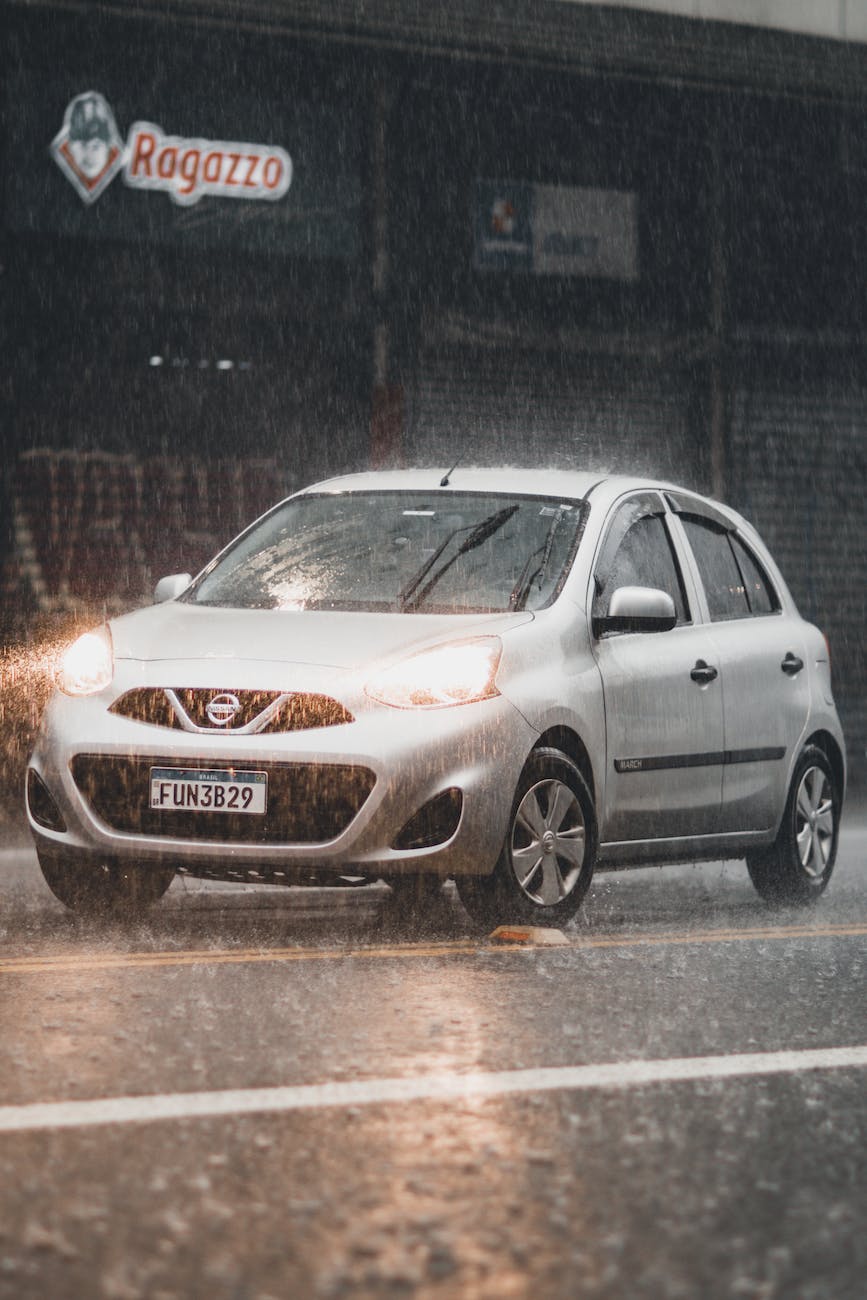
Four hours later their always-before-now trusty 1999 Sentra balks on I-80 while crossing the Maumee River just east of Perrysburg, Ohio. The high mileage Nissan calls it quits before exiting the quarter-mile causeway.

This imaginary event came to mind during this morning’s planning. Initially, I knew today’s writing objective—and probably tomorrow’s and maybe even Sunday’s—was to draft the details of Millie and Molly’s near-800 mile journey. In part, I wanted it to be especially memorable for Molly, Millie’s precocious twelve-year-old.

In an earlier scene I’d mentioned Millie’s vehicle so today I felt it realistic for it to develop some mechanical issues, even breakdown. I supposed I likened the twenty-year-old Sentra to Chekhov’s gun. “If in the first act you have hung a pistol on the wall, then in the following one it should be fired. Otherwise don’t put it there.”

My auto breakdown idea was all I knew about this scene (now, I’m thinking it’s going to take several scenes). This is inherent in being a pantser. Even if I were a plotter, I suspect its impossible to know everything before the drafting process begins.

My type of scene planning always involves brainstorming. No different today. In deciding where the breakdown would take place (my decision, not Millie’s!) I used Google Maps and found a city around four hours ‘down the road.’ There was some trial and error. I saw Perrysburg, OH along the route and plugged it into the Directions feature (FROM Chicago, TO Perrysburg). I then scanned the Map using satellite view and spotted the Maumee River east of Perrysburg. Magic.

The next question was easy. What would Millie do? Note, it’s important to ‘become’ the main character. What would she do? Not necessarily what you the author would do. Her answer, she would call for help. After a quick Google search, “auto repair/road service near Perrysburg, OH,” she chose Ray’s Service Center & Towing over Steve’s Family Auto. Obviously, these are real places. It’s okay to use them fictionally. Ray’s tows the Sentra to his garage in Perrysburg.

Once he diagnoses the car’s problem, Millie has another question to answer. She’s just learned the cost to repair her Sentra is more than its worth. Recall, she and Molly are fleeing a bad situation in Chicago. Millie is committed to leaving Colton behind. Forever. She ultimately concludes her and Millie will take Greyhound bus to New York City. A couple of Google searches reveal the nearest bus station is in Toledo, fifteen miles away, and an Uber service is available to take them there.

At this point, I (as author) need to obtain details about the Greyhound bus ride. Fortunately, their website supplied all I needed. I believe it is important to discover the logistics, to learn what my characters will have to deal with. Greyhound’s site allowed me—without registering or anything–to plug in the desired departure time and location, and the destination. It even provided a detailed itinerary showing arrival and departure times at every stop along the way, which are, in order: Cleveland, Akron, and Youngstown, OH; Pittsburgh, Midway Plaza, Harrisburg, Norristown King Prussia E., and Philadelphia, PA; Camden, Mt. Laurel, and Newark, NJ; and, New York George Washington Bridge in New York City. Doesn’t this twenty-one hours and five-minute journey sound fun?

There’s still a lot of brainstorming to do, but this is a start.

Drafting–From Millie’s Story

You might not write well every day, but you can always edit a bad page. You can’t edit a blank page.

Jodi Picoult

Here’s my attempt today to avoid a blank page:

The moment the school’s front door closed behind them, Molly grabbed Millie’s hand. “Stop, tell me what happened. What did he hit you with this time?” The twelve-year-old knew good and well her mother’s blackening eye and three-inch stitching wasn’t from an accident.

“I will, but come on. There’s probably cameras out here.”

Molly descended the stairs and raced to the parked Sentra. After tossing her book bag in the rear seat she waited on her mother thankful their nightmare was ending. “Did you call the police?” Now, she wished she hadn’t spent the night with Alisha.

“Hop in.” The scene from Thanksgiving flashed across Millie’s mind.

The drive to Walmart took five minutes. Thankfully, the traffic on S. Vincennes was light. By the time they arrived Millie had shared a detailed account of what had happened the night before, leaving out the main reason Colton had become enraged.

“If I’d been there I would have killed him.”

“Molly, don’t say that. I’ve taught you better. Think.” They exited the car and headed to the main entrance. “What would have happened to you, to us, if you had shot Colton?”

“Did I say I would have shot him?”

“You know what I mean.” Millie was proud that her daughter was as open as she was, especially after what they’d been through the past year.

“Maybe me in prison or a group home but you would at least have your freedom.” Molly grabbed a buggy as they entered Walmart.

Millie lay an arm across Molly’s shoulder and gave her a squeeze. “Dear, that wouldn’t be freedom for either of us.” They paused to disinfect their hands.

“Here’s a better idea. Why don’t we take a road trip and never come back.”
“Deal.” Mother and daughter fist-bumped and headed to Electronics.

By 10:15 Millie and Molly had purchased two new cell phones and an assortment of snacks at Walmart, withdrawn eighteen hundred forty six dollars and twenty-eight cents from their secret account at the 83rd Street Bank of America, swung by That’s-a-Burger, and merged onto I-90E.

“New York City, here we come.” Molly screamed into the cold air rushing in from her lowered window before cramming a giant bite of turkey burger in her mouth.

Cheat Sheet

On January 1st I wrote “A New Year’s Challenge.” Let’s not make this more difficult than it is. Recall, the challenge isn’t to write a story every day, but a snippet every day (of course, you can do more).

When I think of story I typically think fiction with its standard three divisions: a beginning, a middle, and an end. Further, a fictional story will contain five basic elements: characters, setting, plot, conflict, and resolution.

As for snippet, recall it’s simply a small part or piece of a story. For our purposes, it can be most anything. To name just a few: a snippet could be a sentence or two, even a paragraph, about a particular character, a certain setting or part thereof, something about an event, or a snapshot of conflict, such as an argument between two characters or a struggle between a character and a raging sea. Finally, it could be dialog that takes place during the story’s climax.

If you need a little nudge in writing a snippet, look at a newspaper or two (this is why I titled this post, Cheat Sheet). Granted, ‘story’ isn’t limited to fiction. We tell stories all the time that are true. For example, I’ve recently written two non-fiction stories: “The 2022 Orange Bowl,” and “A Plumbing Adventure.” Both are based on my own personal experiences.

Back to using newspapers. Start with a non-fiction story or two and use parts of both and fictionalize them. Of course, you don’t have to use two stories, you can fictionalize one of them.

Here’s two headlines I read earlier today: “New year, new babies,” and “Tragedy strikes twice.” I picked these at random and couldn’t help but notice that the first one reveals a happy, joyous occasion. The latter, is a heartbreakingly sad story of parents losing both sons to auto accidents in eight months.

When I say fictionalize, I obviously intend to change names and any fact (s) that would prevent someone from thinking I was writing about what actually happened to the people in the original newspaper accounts. Of course, you can do this but it comes with risks that I won’t address here.

My idea of combining the above two headlines into a fictionalized story is rooted in what a grandfather said of his newborn granddaughter. “She a gift from God.” My thinking is I could write a snippet, say of a grandfather at a funeral of his fifteen year old granddaughter who was killed in boating accident. As a song (name the song) is sung he thinks back to her birth and how he claimed she was a gift from God. He now, sadly, he questions himself. We obviously could go on from here.

Again, the purpose of this is to find a seed for a snippet (of course, seeds can grow into full blown stories). It’s simply a brainstorming exercise to get us writing. Again, for our challenge purposes, to write a snippet everyday during 2023.

I’ll close with a couple of snippets, one Lydia Davis’, and the other mine own. By the way, I’ve recently discovered Ms. Davis and her writing, a lot of which are mere snippets.

Here’s one titled, Ödön von Horváth Out Walking, from her book, Can’t and Won’t:

“Ödön von Horváth was once walking in the Bavarian Alps when he discovered, at some distance from the path, the skeleton of a man. The man had evidently been a hiker, since he was still wearing a knapsack. Von Horváth opened the knapsack, which looked almost as good as new. In it, he found a sweater and other clothing; a small bag of what had once been food; a diary; and a picture postcard of the Bavarian Alps, ready to send, that read, ‘Having a wonderful time.'”

Here’s mine. It’s actually a longer snippet but it meets our definition of being a small part or piece of the whole:

The afternoon had been a week long. So it seemed to Millie as she tossed her purse and computer bag into the back seat of the twenty-year old Sentra. The going away party was the only thing that had made today tolerable. Actually, it wasn’t a party at all, just a holdover gathering in the conference room after the weekly case review meeting. After the others left, Matt and Catherine had huddled around, wishing her the best. These two were the only ones at work who knew she was leaving. Both had been so nice, so sympathetic. Matt had even slipped her five hundred dollars in cash, and whispered, “I hate losing the best paralegal I’ve ever had, but know your secret is safe with me. Forever.”

Now, it’s your turn.

Delighted with Delight

It’s early, but I’m planning on being delighted today? This sounds like I’m fantasizing about the future. What’s wrong with being delighted now? Heck, I’ve just written thirty or so words. That, in itself, is something to be delighted about.

What does it take for you to experience delight? This begs a definition. Delight. “a feeling of extreme pleasure or satisfaction; something or someone that provides a source of happiness.”

Let me start with the word ‘satisfaction.’ Most all my life, especially my adult life, I’ve been dissatisfied, discontented. I always wanted more. I believed that if I accomplished one more thing, I’d be the person I was meant to be. In other words, I’d find my god-given purpose. I became adept at creating challenges for myself, and I would, as they say, “bust butt” to achieve the goal. Ultimately, all this changed once I realized no one (including God) had a plan for my life, that my life purpose wasn’t created before I was born. No, it was up to me to create my own meaning.

Now that I’m sixty-eight, it’s relatively easy to see the many wrong turns I made along life’s journey. I might say I’ve come full circle back to my early childhood. Then (at least that’s what I’ve been told), I would spend hours playing in the dirt with my toy army men, driving nails in an old wagon anchored by time to the back pasture, and exploring the woods and fields surrounding our place with my dog Laddie.

Better late than never, the saying goes. The words ring true, at least for me, today. What about you?

Whatever the path that got me here, I have a growing interest in the present. Some say that’s all we have, and we don’t have much of that. For example, I duplicated this writing at 5:23 AM and at 5:28 AM to measure my progress. Turns out, both drafts were the same. I hadn’t written a single word during that five minutes. But, you know what, it’s now 5:58 AM. Gone forever is that five minute span. So, time keeps marching on. I want to be satisfied, DELIGHTED, now. Forget, tomorrow.

I still remember Psalm 118:24: “This is the day the LORD has made; let us rejoice and be glad in it.” Although I no longer believe in anything supernatural, I draw meaning and encouragement from these words. Today is the day, now is the moment, to experience delight. And, the things that stir such feeling don’t have to be complex or expensive. The simplest pleasures are the best. Another saying I recall.

As a young boy I found hours of delight in playing in the dirt with my little green army men. It can be the same today, even now. It’s been two hours since I poured my coffee and it has grown lukewarm. But, it’s still tasteful, enjoyable, with its tad of milk and a little sweetener. I’ll rewarm it later, but this shouldn’t deprive me of delight right now. Another sip, another feeling of satisfaction.

Delight seems to spawn thankfulness. I could be that person who doesn’t have any coffee but yet wants a cup, or two. He doesn’t have any because he’s poor, or he’s facing some medical procedure that forbids coffee. This morning, I can have my coffee. I’m thankful.

One thing that used to drive me to the next challenge was that I was bored. Or, that’s what I thought at the time. Now, I know I was deluding myself. Sam Harris says that “boredom is simply the lack of paying attention.” I think he’s right.

Living in the now is all about paying attention. Could we say that finding delight in the ordinary things of life, the mundane experiences of the every day, depends in great part on paying attention?

We don’t have to go on vacation, or to a party, or orchestrate anything. Most of us are blessed with an abundance of ordinariness all around us. I suspect you might be a little like me. Paying attention (and feeling pleasure or satisfaction) is something that might take some effort, some self-training.

Trained or not, let’s begin. Find something to look at. I’m sitting at my desk writing this but, as I often do, I see a five inch by five inch plaque someone gave me. It has a saying by Theodore Roosevelt (I’ve since learned he, in his autobiography, attributed the words to Squire Bill Widener, of Widener’s Valley, Virginia). Here are the words: “Do what you can, with what you have, where you are.” I might simply add, do it now, or, start doing it now.

Isn’t life just a cumulative pile of individual moments? Whatever you’re looking at, it soon, very soon, will become a part of your pile. For some of us, our moments are gathered together into mountains, even ranges of mountains. I’d rather many of my moments stay buried, but they’re quite a few that bring delight.

Take time today to pay attention to the dripping faucet, the half-filled glass, your reflection in the window, the grandkids toys sitting idle awaiting their next visit.

Afterwards, think about the feeling you got from paying attention. Can you align it with delight? Are you delighted with delight?

Describe this feeling in words. Write a few of them down.

A Plumbing Adventure

Over the past few days I’ve noticed—somewhat subconsciously—water pooling on top of the ground next to the cutoff valve that controls the water to the barn. We’ve had little rain so that’s not the source. Here’s the picture: the PVC line and cutoff are around eighteen inches underground, with the valve accessible via an eight inch by two-foot vertical pipe. I keep a small bucket over the top end of this cylinder to keep out the rain.

Yesterday, it was sunny and warm and my cold was worse if anything. What better time to piddle outside? I donned my khaki Levi’s, tee shirt, hat, and work boots in the mudroom and walked outside. What a beautiful New Year’s Day. I was greeted by Eddie, the lab lookalike, AKA, the Black Tornado, who thanks me every day for rescuing him last May. I estimate he’s now twelve to fourteen months old. The two of us amble around the yard a while and fortuitously wind up staring at the pooling water by the barn. What better day will I have to address the issue and exercise my tenacity? I remove the bucket and notice water covering the valve a good five or six inches. I have a leak.

This wasn’t the first leak I’ve recently discovered. Thankfully, they’ve all been in the barn kitchen and not in the house. I’m confident all of them were caused by the recent cold weather. Several nights a week ago the temperatures plunged below ten degrees, two nights below five degrees.

Eddie strolls off to explore. I grab a shovel and wheelbarrow, and start digging. I’ll need to remove all the dirt and mud and pooling water in a two or three foot square to diagnose the problem. The ground is soft but heavy, saturated with water. After removing the top eight or ten inches the ground turns to a mixture of half-mud and half-slop. The wheelbarrow is almost full and I don’t want to add the messy mixture. I walk inside the barn and find a two-foot by six-foot piece of discarded metal roofing to serve as a holding place for the mud until I remove it in the days ahead.

I use the bucket to scoop the muddy slop and toss onto the metal I’d placed a couple of feet away. Ultimately I have to get down on hands and knees to reach inside the deepening hole. The bucket finally grazed the PVC pipe. I keep scooping and tossing until the water level is below the bottom of the piping. The sound of pressurized water escaping its confined space confirms my suspicions. I have a leak. What surprised me was the location of the leak. It was not from a split in the PVC pipe, but from a small hole in a Tee fitting, in the curve of one of the two sides that form ninety degree angles. It’s like a sixteen penny nail has bored a hole through the PVC creating an unobstructed pathway for water to escape.

By now, my clothes, hands, and arms are wet and slimy. And, I’m an inch taller because of the mud sticking to the bottom of my boots. Since it’s New Year’s Day, I doubt FarmTown or any other local hardware store is open. Thankfully, I have an inch-sized PVC cap I can use as a temporary fix. I walk sixty yards or so to another valve that controls all the incoming water to our place (the water meter is over a quarter-mile away on Cox Gap Road). I close the valve and return to the work-site.

Now is the perfect time to exercise my tenacity. I bucket out the water that’s filled the hole since the last bailing, then go grab a hacksaw. I have to lay horizontal on the ground to make the cuts, three are required to gain the needed access to easily install the cap. The first one is the main, the incoming line. With saw in my right hand I start making the cut but have to use increasing force to lift the PVC line on the left of the cut to provide just enough space for the saw to pass through the inch line and complete the cut. I maneuver my body enough to complete the two other cuts. To be clear, two years ago when we renovated the barnhouse we’d dug up this same area and connected a new line that carried water to a faucet at the carport. Now, both lines intersect prior to the cutoff. The third cut was somewhat optional but in order to remove the section of pipe and glued fittings, thus to make easier access to the to-be capped line, I opted to make it also. By now, I’m a muddy mess.

I bail the water that poured into the hole after the cuts, grab some dry rags and use several to wipe down the pipe. I use some rubbing alcohol to clean the end of the targeted pipe. Thankfully, I’d bought a new can of PVC glue last Thursday at FarmTown so that wasn’t an issue. I again maneuvered myself in position to apply the glue to the cleaned end of the incoming line and twisted on the cap. All this just for a temporary fix. Since I didn’t have the fittings needed to reconnect everything, the ultimate goal still lies in the future.

It’s time to wait. I know ‘they’ say PVC glue drys almost instantly but I always choose to give it a while. Unfortunately, I have other things my mind demands I do. Earlier, when attempting to move the heavy-laden wheelbarrow away from the job site I’d turned it over and half the load spilled onto the ground. True to nature, I had to pour it all out because it was too heavy to set upright half loaded. It wasn’t too difficult, but did take a while to re-shovel the water-laden dirt back into the wheelbarrow. When I finally finished, I carefully rolled the load a couple hundred feet to the edge of the woods along our south gorge and dumped it opting not to reuse it to fill the hole.

I greatly enjoyed the next ten minutes sitting in a lawn chair facing the sun. It was warm and fitting, an elixir for my bad cold, and aggravated sinuses. I closed my eyes and thought about what I’d spent the past hour or so doing, and how much writing is like plumbing. Both are arduous and messy. By messy, I don’t mean I get mud and watery slop all over me when I write. But, maybe there’s an analogy there. To create one we’ll need some figurative mud and watery slop. What could that be? Well, first, what function did the mud and watery slop serve in yesterday’s plumbing adventure? Weren’t they obstacles and barriers that huddled and hovered in the way of fulfilling the goal; they were warriors stationed at multiple lookouts, at every turn of the shovel, at every act of bailing. Their goal? To hinder, inhibit, or halt all progress?

You get the idea. Anything worth doing is difficult. There’s always an audience of excuses ready to be tapped. In my experience, plumbing does often require a high degree of tenacity, but, although it can be physically messy work, in a way it’s easy compared to writing. For me, the latter is something I literally hate doing and love doing at the same time. It is a battle every day I sit down to write. I can so easily be tempted by things pretty and ugly. The easiest thing to do is nothing, or to scroll Twitter, or watch a few YouTubes, maybe read an online newspaper article or two, or three. Writing is both physical and mental, but mostly mental.

I admit, I’m an elementary level writer and likely always will be, but there’s such power in having written. I normally start my daily writing time rereading what I wrote the day before. This does several things for me but one thing stands out. It reminds me that I was living in the moment when I wrote this. I wasn’t daydreaming, I wasn’t thinking of days gone by or days not yet seen. I was in the now, the place I yearn to be more and more every day.

As stated in yesterday’s post, writing, writing most anything, short or long, gives me a feeling of accomplishment, unlike anything I’ve ever experienced. Here’s something that has never existed before. I suspect it’s a similar feeling any artist gets when she does her own creating whether it’s a piece of music, a painting, or a clay pot. There’s another thing I suspect. No matter the artist, no matter the medium, tenacity is required. What is that? The dictionary says tenacity is “persistent determination.”

Back to my plumbing adventure. When I’d waited what I figured was long enough, I returned to the main cutoff and turned it counterclockwise. I could hear the water surging forward toward the barn. Thankfully, I’d waited long enough. The glue had done its job. The cap was anchored. No more leak.

One final thought before I end this rather long post. Travel with me to January 1st, 2024. What will it feel like to look back on 2023 and smile, smile heartedly at the ‘pile’ of snippets we’ve written over the course of the year? Could there possibly be 365 of these tasty and powerful morsels? But, even if the ‘pile’ isn’t what we’d hoped for, let’s start rereading. After a long while, we sense there’s a connection, currently undefined and mysterious, between the ones we wrote on March the sixth and September the twenty-fourth. Our minds sizzle, something snaps in place. Story? Could it be? Yes it is. We’ve discovered an idea for a story, whether short or long.

Oh well, this blog post is finished. It’s time to work on my novel in progress. Gosh, there’s mud and watery slop everywhere.

A 2023 New Year’s Challenge

I challenge you to write something every day during 2023. And, file it in some retrievable format.

For many—maybe most everyone who reads this post—this will not be a challenge at all. If this is you, then pass my challenge along to someone who you suspect doesn’t write everyday.

So, why write every day? I could quote a hundred writers in answering this question. But I won’t, except for the one who matters most to me. You guessed it, ME. I write mainly for myself, not for an audience even though I publish my work. On the days I write, especially if I write a scene or snippet for my current novel in progress, I feel alive. I feel like I’ve accomplished something meaningful. If I’ve spent a few hours at my desk and penciled (or keyboarded) some words, my day is a success. If I do nothing the remainder of the day, I’m good. (I know. This is a psychological trick, but believe me, it works).

I relate accomplishment to production. Now don’t get me wrong. I wouldn’t call myself much of a producer. I mostly consume. What about you? You may be like me in that during a typical day, you read something: articles, books (fiction and non-fiction), Twitter, Facebook (not me, I hate Facebook). Also, you watch TV, or, I should say the TV screen which now days includes a zillion streaming services. In addition, you may watch YouTube Videos and listen to audio books. There’s probably a thousand other ways we spend our time consuming what someone else has created. In other words, most of us consume a lot more than we produce.

My challenge is for us to change that, to start writing something every day. Now, granted, there’s many other ways to be creative, to produce something. You could use your mind and ear to score a new song, use your hands to paint a landscape, build a doghouse, or add a room to your own house. You could rebuild a car engine. You could design and create a robot to cook hamburger helper without guidance, one so smart it would wash the dishes afterward. I’m certain, you can quickly list a dozen other ways to produce.

Certainly, you might argue you’re not a writer. I beg to differ, at least for most of you. If you can talk, you’re a writer (or can be). If you cannot speak but can remember, think, or imagine, anything, then you’re a writer (or can be). I’m not saying you are, or ever will be, an Ernest Hemingway or a William Faulkner, or a John Grisham, or a Michael Connelly. I simply mean you have the ability, right now, to transfer some words from your mind, through your fingers, to a sheet of paper (or computer). And, don’t forget dictation. Simply say your words outloud and watch them appear on the computer screen (think WORD software).

Have you ever written a grocery list? Probably, even if it was simply, “buy milk, bread, and eggs.” You already have the memory of a trip to the grocery store. Write about it. Just write down what your memory is telling you. Don’t worry about grammar or format to start with. If your memory is foggy, that’s okay, just make something up. Hence, use your imagination. Add in some mystery. Questions are always helpful. You might write, “why was the 600 pound redheaded woman who was riding the motorized buggy buying all that Crest toothpaste?” If you want, answer your question, or attempt to. Write more than one reason.

Let me digress. You may not have noticed but I just did something no one else in the world has ever done (if you believe Google knows everything). I copied and pasted my 600 pound question into Google, including the quotation marks, and here’s the result.

This just proved (kinda) that I created/produced something unique.

Sorry for that. Notice that so far I haven’t said anything about creating stories. And, I won’t now other than to say you will decide if and when you want to enter that wonderful world. For now, it’s quite okay to stick with what I call snippets. Here’s the formal definition from Merriam-Webster: “a small part, piece, or thing.” And, here’s a few synonyms for snippet: bit, fragment, morsel, smidgen, scrap, and snip.” You get the idea.

I bet you’re already producing snippets. Things like this: “Call Howard at Snead Ag.” I wrote this one yesterday. It’s about reminding him to do what he promised—to send a rollback and haul my tractor to Wilks Tire to fix the right rear tire I’ve already paid for. You guessed it, the tire wasn’t properly repaired; it still goes flat. The above quote is all I penciled on the 3 by 3 inch paper square. But now, I’ve written more about that note. There’s a lot more I could write about it. Like the conversation I had with Howard on (I forget) where he made his promise.

It’s time I work on my current novel in progress, but I want to end with the second part of my challenge, “And, file it in some retrievable format.” This obviously depends on whether you write with pencil or pen, or using a computer. Either is fine, just store your snippets in a way you can return to them when you want. For a physical system, you could write on notecards and date and file them chronologically. For a digital system, you could use something like Evernote with the date written as the title. There’s a zillion ways.

I basically have two forms of writing. My blogging and my novel writing. For the later, I use Scrivener. It allows me to create a project for every book. Admittedly, I no longer keep up with my daily word count for my novel writing. I sensed such was producing unneeded/unwanted pressure. Further, I know I’m rewardingly immersed in my current project if I’m producing a book every year (and that’s another story since it’s now been a little over a year since I published my last book), but I digress.

For blogging, I use WordPress. Earlier, as I thought about what I would write today, I wanted to see if I’d written a blog post on January 1, 2022. Thankfully, I did. I wrote it in pencil, snapped a photo, and posted it to my blog. Here it is if you want to read .

I feel better now.

I’ll leave you with this. Dorothy Parker once said: “I hate writing, but I love having written.” Doesn’t this go for a lot of things in life? They aren’t all chocolate candy and pickle juice (I love pickle juice) when tantalizing our taste buds, but for one or more reasons, after the task, we feel good about what we’ve done. We might even say, the world is better off, at least our own little world.

For a better life, write. Write something. Write every day.

And, every once in a while, reread what you’ve written.

The 2022 Orange Bowl

“Maybe there’s a bowl game on.” I said out loud so J, the controller of the TV’s controller, would check.

At the time we were watching an episode of Blue Bloods and I’d just said, “I’m reminded why I never liked this program. It’s too dramatic. Actually, it’s melodramatic.” I guess I need to tell you why I said this.

Jamie had been shot. “The bullet got under his vest,” according to his brother Danny. The wounded Reagan was rushed to the hospital. The family gathers, all except Frank because he’s on recon with his priest buddy. The hospital scene is intense. The doctor announces the bullet is close to the spine and Jamie could become paralyzed when he attempts to remove it during surgery. The family is desperate as is normal. Danny leaves and goes hunting for the shooter. He’s successful. The doctor removes the bullet. There’s no paralysis. Jamie’s discharged, well, not that quick but in screen time only a few minutes. As Eddie (not the black tornado Eddie from yesterday’s post), Jamie’s wife, wheels him out of the hospital they’re met by a huge crowd of hospital personnel, police officers, and family members. Big Frank, in his three piece suit (another pet peeve) is standing front and center. He immediately salutes Jamie, who stands and returns the salute. The clapping begins and continues and continues. Too melodramatic. Just one reason I don’t like Blue Bloods.

J announces the results of his Google search: The Orange Bowl starts at 7:00; Tennessee vs. Clemson. It’s now 6:57. We wait.

I grab my iPad and open Kindle and read. At 7:00, J checks Hulu and learns the game starts at 7:10. We wait more. I read more.

The Cheez-It Bowl, Clemson vs. Iowa State. What’s going on? We watch for several minutes, voicing questions such as, “Where’s Tennessee?” and “I thought you said it was the Orange Bowl?” Why is Clemson playing Iowa State?

Finally, I do some investigating. Somehow, J selected a rerun, last year’s Cheez-It Bowl in Orlando. He maneuvers Hulu and gets us to this year’s Orange Bowl.

Sure enough, it’s Clemson vs. Tennessee.

Shortly after we start watching, Tennessee scores a touchdown. After their kickoff to Clemson I begin to notice something’s strange. Why all the background noise? The fans are yelling. The bands are playing. Loudly. I barely hear an announcer calling the game. It’s like being at a high school football game, actually present in the stands, too close to the cheering section. Noisy, stressful. “Where’s the commentators?” I ask. Even the visual angles of the game, the players, seemed off. I think this was an ESPN production. What happened? Are all future football games going to be like this?

I decide to check Twitter. I fully agree with Brian Cassady
@bcassady28, “Trying to watch the 2022
@OrangeBowl and hate the production quality. This Skycast camera is terrible. No announcers. Hard to follow the action. The PA announcer is boring. If this is the new way to watch the bowl games, it’s awful.”

After a few more plays I have my own announcement. “I’m going to bed. You guys can sit up as long as you want.” I take my nightly medications, brush my teeth, rub my chest with Vick’s, and head to bed. I’ll read until my little white sleeping pill closes my eyes.

I hate Blue Bloods. But, I love college football games, watching from my lazy boy, listening to great commentators, virtually oblivious to the stressful noise from the melodramatic bands and fans, which is nearly as bad as watching Tom Selleck’s facial expressions.

A Fun Trip to Dollar General

I drove to the nearest Dollar General–the one by Four-Way Express–last Tuesday for some cough drops and vapor rub. Eddie went with me (he’s the black lab I rescued May 24th). When we arrived I fastened his leash to his collar and opened the driver’s side door. As usual, he jumps out and I struggle to hold onto him. After coaxing him back into the car I walk inside the DG.

After I wander around a while I find the Hall’s Cough Drops but not the Vick’s–that’s the brand I want because that’s what Mother always used when I was a kid. I walk to the cashier, an older lady (defined by her long gray hair) with semi-thick glasses. I asked for the Vick’s. She offered to show me where it was.

Unsurprisingly, I’d missed it since it was with the other ‘Health Aids.’ She returned to her post and I pondered the purchase. Confused, I chose not to purchase this boxed item. It didn’t look like what I remembered Mother buying.

I kept the cough drops and returned to the Cashier. There were two customers ahead of me. The first transaction was quick and the thick girl departed. I asked myself if I looked as homeless as she did. Probably. I’d chosen comfortable and worn clothes to my new and stylish garments. Joke.

The Cashier was now dealing with the second customer, a man, maybe 6 foot 2, wearing blue-jeans, a dark sweatshirt, and a pair of well work cowboy boots. He looked as though he might have just gotten off a cattle drive. He laid his cell phone on the counter and removed a pile of cash from his front right pocket. He started to count the money, arranging it in stacks. I guessed, one hundred dollar stacks.

From the carefully selected screen showing on his cell phone and his methodical counting and stacking of cash on the counter I imagined he was attempting to transfer money to a prepaid debit card. Obviously, I could be wrong. Just as a guess, the Cashier could be his mother and he was repaying her for some old debt. I digress, this was not likely what was happening.

I continued to wait. The cashier, now, is recounting the money. One stack at a time. The fifth stack, or, it might have been the sixth, was trouble. She recounted it two times. I could tell this stack had some five dollar bills in it. The Cashier conducted the third count of the fifth (sixth?) stack backwards. The man reached into his left front pocket and pulled out a handful of coins and started laying them out in more stacks, actually not stacks, but circles, each coin laying on the counter and segregated into distinct categories.

The Cashier displayed her best confused look but didn’t give up. She plunged into a recount of all five (six?) stacks, for now ignoring the piles of coins. To me it seemed like hours had transpired. In truth, it had only been a few minutes. I decided I didn’t need these particular Hall’s cough drops after all. I turned and placed the small bag on the candy rack behind me and walked out. Eddie was waiting patiently in the driver’s seat.

I drove us to Walgreen’s in Boaz for a different bag of Hall’s cough drops and a container of Vick’s vapor rub, the type Mother bought and used on me as a kid, maybe sixty years ago.

During mine and Eddie’s ride home I realized how proud my dearly departed mother would be if she knew how patient and diligent I’d been taking care of my three-day old cold, and for rescuing this black tornado.

Keeping the Folks in the Pews in the Dark

By David Madison at 10/21/2022

Here’s the link to this article.

What the church doesn’t want them to think about

Worship services are a form of show business, at which some Christian brands excel especially. How much does the Vatican spend every year on its worship costumes alone? But most denominations, while not so extravagant, do their best to “put on the show,” which includes music, liturgy, ritual, props, sets—those stained-glass depictions of Bible stories—and the trained actors, i.e., the clergy. All this is designed to promote the beliefs and doctrines of each denomination. But there are so many different denominations: who is getting Christianity right? Is there any denomination that urges its followers to look beyond the liturgies? What’s behind it all? What are the origins of the beliefs celebrated in liturgies?
 

John Loftus, in The Christian Delusion: Why Faith Fails, has correctly noted how the church—of whatever brand—tries to win and keep converts:

“New converts in different social contexts have no initial way of truly investigating the proffered faith. Which evangelist will objectively tell the ugly side of the Bible and of the church while preaching the good news? None that I know of. Which evangelist will tell a prospect about the innumerable problems Christian scholars must solve? None that I know of.” (p. 90)

Indeed, it might be argued that the worship spectacle—it really is a show—is meant to divert attention from truly distressing realities that are best ignored—for the sake of keeping faith intact. 

Here are four of these distressing realities:

1.     The Bible doesn’t qualify as divinely inspired

The Bible has been hyped for centuries as a source of information about a god. A splendid edition of the Bible is commonly found on the church altar, and no Christian home would be complete without at least one copy. Presidents are sworn in using the Bible as a prop. One Christian sect has footed the bill for placing more than a billion copies of it in hotel rooms. It has been translated into hundreds of languages, not doubt because of Jesus-script in Matthew 28:19, “Go therefore and make disciples of all nations…”

Yet with all this, how embarrassing that many Christians pay so little attention to it, maybe because they’ve tried reading it, and given up. They grasp—but would rarely admit—that Hector Avalos’ analysis is correct: going line by line, 99% of the Bible would not be missed. After trying to wade through much of the Old Testament or the letters of the apostle Paul, they’re happy with the feel-good verses read from the pulpit. Moreover, they are largely unaware that intense scholarly study of the Bible—for the last two centuries—has revealed how deficient the Bible is from the perspectives of morality, history, or even what might reasonably be called sane religion. 

This is the distressing reality, for which I make a full case in my essay, “Five Inconvenient Truths that Falsify Biblical Revelation,” in John Loftus’ 2019 anthology, The Case Against Miracles. I’ll offer one specific example here. In January 2018, on this blog, I published an article, Getting the Gospels Off on the Wrong Foot, in which I discussed several bizarre features of Mark’s gospel—specifically about Jesus. Hence my warning to those Christians who want to believe that Mark’s gospel was divinely inspired: “If you accept the Jesus of Mark’s gospel, you are well on the way to full-throttle crazy religion. No slick excuses offered by priests and pastors—none of their pious

posturing about ‘our Lord and Savior’—can change that fact.” 

Christian apologists have written countless books and articles trying to rescue the Bible, to hold on to it as divinely inspired scripture. For the most part, they convince only each other.

2.     Christian origins scuttle its claim to be the One True Religion

It is common to celebrate the heroism and determination of the apostle Paul, especially as he is portrayed in the Book of Acts. But then we hit a brick wall: this apostle, whose writings are the first we have about Jesus Christ, never met or knew Jesus—and bragged that he didn’t learn anything about Jesus from those who had followed him: “For I want you to know, brothers and sisters, that the gospel that was proclaimed by me is not of human origin, for I did not receive it from a human source, nor was I taught it, but I received it through a revelation of Jesus Christ.”   (Galatians 1:11-12) Paul had no problem claiming it was “a revelation,” but we can be properly skeptical about getting messages from the spiritual realm: where is the reliable, verifiable data that this actually happens?  A better explanation is that Paul suffered from hallucinations. So this is not good: the Christian religion received a major primary boost from the hallucinations of a man who never met Jesus. This must qualify as a distressing reality.

Nor can Christians fall back on the gospels as a firm anchor for the truth about Jesus. There is scant evidence that they were written by eyewitnesses. The broad consensus among Christian scholars—outside of fundamentalist/evangelical circles—is that the gospels were written after the destruction of Jerusalem by the Romans in 70 CE during the First Jewish-Roman War. This ferocious conflict brought widespread devastation; it is highly improbable that anyone in the original Jesus-sect, i.e., eyewitnesses, would have survived. Thus one of the agonizing dilemmas in New Testament scholarship: there is no way to verify any of the words and deeds of Jesus reported in the gospels. Especially since the gospels read so much like fantasy literature. Devout readers may think this is okay—after all, they believe in miracles. But each miracle story, each bit of folklore and magical thinking, forces historians to concede that the gospels fail as history. They qualify rather as propaganda literature for the early Jesus cult. And they worked so well in this capacity for centuries, until critical, skeptical analysis of the gospels began to take over.

The fact that the gospels were written in Greek points to even more complications in figuring out Christian origins. Dennis MacDonald has shown, in several of his books, that the gospel writers were influenced by Greek literature in creating their stories about Jesus. Thus it’s no surprise that themes common in other religions were grafted onto the Jesus narratives, e.g., a hero or divine son born of a virgin, a dying-and-rising god bringing salvation to followers; so many of the wonders attributed to Jesus are similar to miracle folklore found in other religious traditions. 

Yet all these factors that influenced the birth and evolution of Christianity remain outside the awareness of those who show up for church—for the worship experience. Many priests and preachers may be in the dark themselves. They were trained to “spread the gospel,” not to encourage probing, skepticism, and doubt. The literature on the complex origins of the Christian faith is now vast; scholars have been studying it for a long time. But almost none of this has filtered down to the laity. 

3.     Christians have fought and killed each other over theological differences

What a sorry history this is, a distressing reality indeed. Even in the New Testament itself, we find the beginnings of Christian dissention. The apostle Paul was blunt: “But when Cephas [Peter] came to Antioch, I opposed him to his face because he stood self-condemned…” (Galatians 2:11) And in I Corinthians 1:10-13 we read: 

“Now I appeal to you, brothers and sisters, by the name of our Lord Jesus Christ, that all of you be in agreement and that there be no divisions among you but that you be knit together in the same mind and the same purpose. For it has been made clear to me by Chloe’s people that there are quarrels among you, my brothers and sisters.  What I mean is that each of you says, ‘I belong to Paul,’ or ‘I belong to Apollos,’ or ‘I belong to Cephas,’ or ‘I belong to Christ.’ Has Christ been divided?” 

This tendency of Christians to disagree has resulted in the endless—and continuing—splintering of this religion, with now well over 30,000 different denominations, divisions, sects, and cults: because they cannot agree on theology and worship practice. Which doesn’t seem to bother the faithful, and is even piously denied: “In Christ there is no east or west, in him no south or north, but one great fellowship of love throughout the whole wide earth.” (Hymn lyrics by John Oxenham, 1908)  

Philip Jenkins came up with one of the best titles ever: Jesus Wars: How Four Patriarchs, Three Queens, and Two Emperors Decided What Christians Would Believe for the Next 1,500 Years. (2010) This is one of his observations: “By the year 500 or so, the churches were in absolute doctrinal disarray, a state of chaos that might seem routine to a modern American denomination, but which in the context of the time

seemed like satanic anarchy.” (p. 242)

The Thirty Years’ War (1618-1648) is an appalling example (four to eight million dead) of Christians killing other Christians. Consider also World War I, Christian nations locked in mutual slaughter for four years. 

One more example—a less terrifying one—of Christians not being able to get along. In this case, Catholics. There are Catholic women who want to become priests, convinced this is their vocation because of they’ve been called to it by the Holy Spirit. But the patriarchy will have none of it, saying, in effect, that the holy-spirit-experience of these devout women is not valid. The male priests, anchored in their own theological certainties, don’t want to admit women to their fellowship of love. 

4.     Small and epic episodes of horrendous suffering cancel belief in a good, powerful god

This is a distressing reality that is perhaps ignored the most. The spectacle of worship is a way for the devout to hold on to their belief that the Cosmos is friendly, that a caring father-god is accessible, and can be influenced by flattery, i.e., “How great thou art!” “Hallowed be thy name!” etc. Even a little reflection shows that this doesn’t bring the desired results. We live in a dangerous world, and even the most fervent believers are not exempt from ssuffering. Just look at the way the world works—if you’re religious, look at the way your god allows the world to work: school shootings, church shootings (one in particular, in which hundreds of women and children were machine-gunned to death), endless warfare for millennia (all that aggression…god couldn’t have done better designing the human brain?), thousands of genetic diseases, the agony of mental illness, plagues, pandemics, cancers; our brutal planet, i.e., earthquakes, tsunamis, hurricanes, floods, tornadoes, wildfires.

The faithful need to reflect on the implications of these horrors. But critical thinking doesn’t come easily. We’ve all heard the stories of houses burning down, people killed, but wow: a Bible was left untouched by the flames. A miracle! A plane crashes, hundreds die, but wow one person somehow survived. A miracle! Such nonsense is encouraged by clerical explanations for small and epic episodes of horrendous suffering:

“God works in mysterious ways.”

“God has a bigger plan that we don’t know about.”

These are guesses, speculation. To take them seriously we need to know where we can find the reliable, verifiable, objective data upon which they’re based. No such luck, these are evasive tactics, cowardly dodges: “We don’t want to think about issues that might damage our faith.” And so many of the laity follow. Other excuses are even worse:

“God is testing us, punishing us.”

Of course, the clergy can turn to the Bible to back up this excuse. Bible-god threatens repeated—in both the Old and New Testaments—to destroy people for their sins. Believers who nod approval apparently don’t notice their descent into bad theology, oblivious to a god who qualifies as a moral monster. On the other hand, I suspect that some church folks shy away from Bible reading because the abusive theology is all too obvious, e.g., in this Jesus-script: “I tell you, on the day of judgment you will have to give an account for every careless word you utter…” (Matthew 12:36) 

The ministry requires certain skills for spreading the good news, preaching the standard creeds, but at the same time suppressing curiosity: “It’s better not to think about the things we don’t want you to think about. Take what we say on faith—please.” 

David Madison was a pastor in the Methodist Church for nine years, and has a PhD in Biblical Studies from Boston University. He is the author of two books, Ten Tough Problems in Christian Thought and Belief: a Minister-Turned-Atheist Shows Why You Should Ditch the Faith (2016; 2018 Foreword by John Loftus) and Ten Things Christians Wish Jesus Hadn’t Taught: And Other Reasons to Question His Words (2021). His YouTube channel is here. He has written for the Debunking Christianity Blog since 2016.

The Cure-for-Christianity Library©, now with more than 500 titles, is here. A brief video explanation of the Library is here