
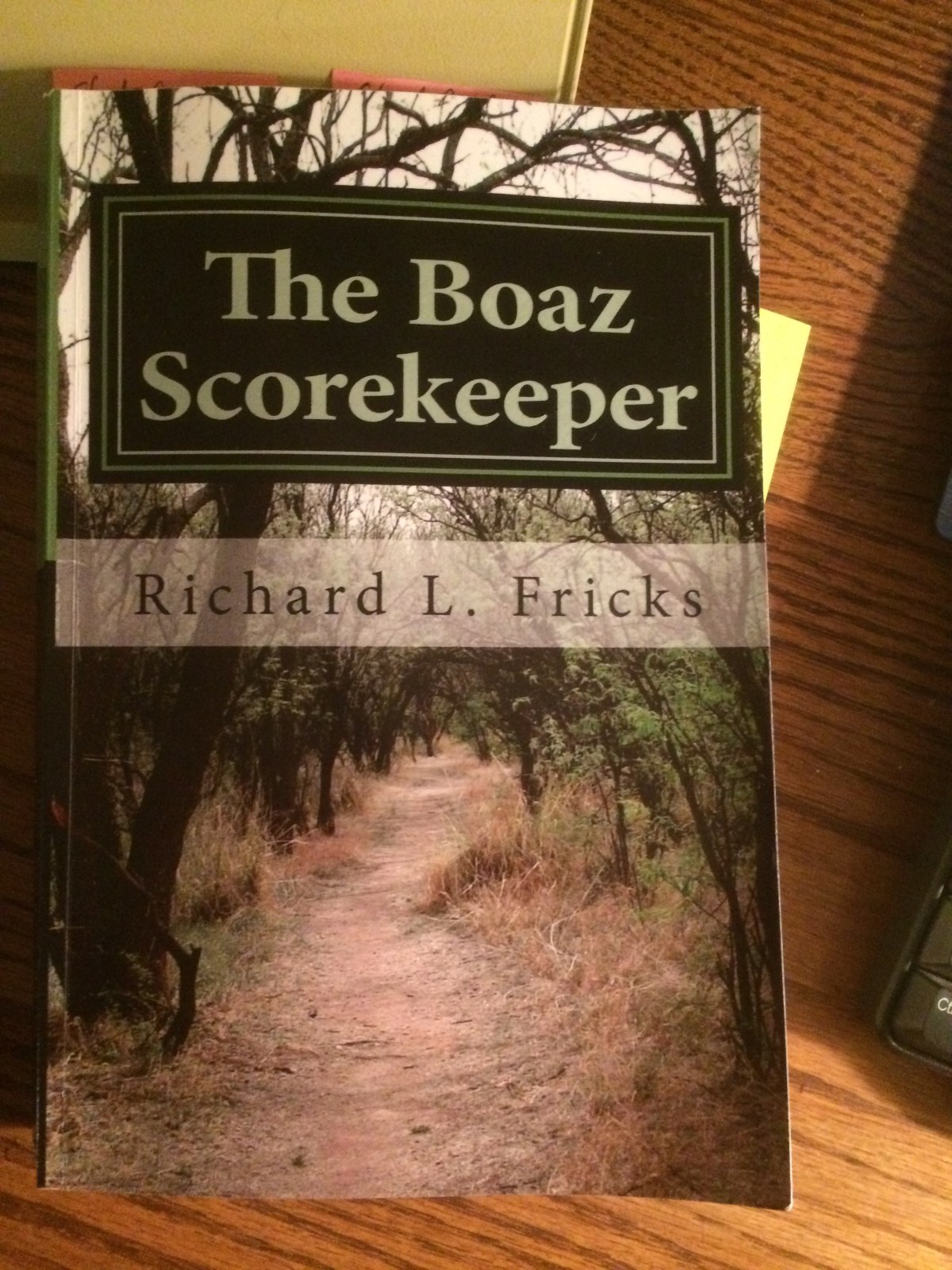
The primary aim of the "Novel Excerpts" blog category is to showcase my creative writing, specifically from the novels I've written. Hopefully, these posts will provide a glimpse into my storytelling style, themes, and narrative skills. It's an opportunity to share my artistic expressions and the worlds I've created through my novels.
The Boaz Scorekeeper, written in 2017, is my second novel. I'll post it a chapter a day over the next few weeks.
The next section of Nate’s lengthy article was titled, The 1901 Murder of a Black Man and his Son.
Success for the five prominent families didn’t come uninterrupted. Things changed forever in 1901. Waymon’s long held belief that all men were created in God’s image was radically altered when Leroy Jones, his wife Eliza, and their two children, Sally and Toby, moved into the Boaz community. Waymon had never had much contact with black folks even though for the first twelve years of his life he lived where there were hundreds of slaves on dozens of plantations all within a few miles of downtown Jackson, Georgia. But, Waymon had never spoken with one. His father was a preacher and they lived in town. His father forbid Waymon from engaging with black folks.
At Mercer Preparatory School, Waymon learned from Professor Sherwood that Abraham Lincoln believed Negroes were inferior to whites and that the two races should not mix socially or politically. But Waymon, deeply influenced by Sherwood and his infatuation with the Book of Ruth and the colorblind Boaz, remained, at a minimum, neutral in his beliefs.
This changed when Mary, his daughter, feel in love with Toby Jones. The two met at Red Apple church in the late Spring of 1901. Mary, at 19, had traveled with a group of ladies from First Baptist Church of Christ to Red Apple to host a Vacation Bible School for a sister church whose pastor had been killed by a falling tree during a heavy snow storm the past February.
Toby and his family lived across the road from Red Apple Church alongside the Church’s cemetery. Toby and his sister Sally had been out working in their garden when Mary was strolling through the cemetery before their School started that morning. Toby was tall and handsome with light brown skin. Mary, for the first time in her life, felt sexual desire as she watched Toby working a middle buster plow behind a short, white pony.
Over the next nine days of Bible School, Mary visited the cemetery every morning, and someway Toby found a reason to always be in the family garden. After three days, they were talking. Mary was surprised how clearly and intelligently Toby spoke and conversed. She had read many books that all seemed to paint Negroes as ignorant and unsavory. On day four, they were sharing thoughts of their favorite books and stories. Mary invited Toby to town to visit the new library that had recently opened, but Toby declined saying that wouldn’t be possible right now. On day five, they were sitting on a stump toward the back side of the cemetery unseen to anyone across the road at the Church. Day eleven was a Saturday, the day after Vacation Bible School had ended. Mary got up early and walked the three miles and met Toby, as planned, at the old oak stump. They spent all day walking and talking, sitting and laying on a blanket Toby had brought. They enjoyed a picnic down by Clear Creek that ran behind the Jones’ place. As late afternoon approached, Mary stood up and packed her basket. Toby rolled up their blanket and they returned to the old oak stump. It was there their physical intimacy began. But, not because of Toby’s initiation. It was Mary who reached out and pulled Toby’s face into hers for their first kiss. Mary, standing on top of the old oak stump, was face to face with the man, the Negro man, she had fallen in love with in less than two weeks. Neither one of them realized that Matt Rawlings was watching their every move through a grove of white oaks on the other side of the fence as he sat fishing alongside a long-neglected pond.
Nate shared that he could have written an entire article about the sweet and innocent love affair between Mary and Toby. However, his editors wouldn’t allow it. Nate shared how Waymon found out what Mary was up to and forbid her ever seeing Toby Jones again. Everyone could predict her next move. Waymon next went to visit Leroy Jones and the meeting didn’t go well. Leroy’s beliefs sounded like Waymon’s, well, the former Waymon. By now, Waymon’s true heart had erupted and he found justification in Scripture for his current belief that whites and blacks should not date or marry, or otherwise intermingle. Mary’s behavior and rejection of him led to Waymon’s pure hatred. This was the birth of Waymon’s lifelong bigotry toward people of color.
In early Fall, Leroy and his son Toby, went missing. Four days later they were found, and a week later Leroy’s wife and daughter moved back to their hometown of Gadsden. Waymon and the other four members of Club Eden had lured the two Negroes to Nedmore Grocery where supposedly the store owner held a package for them that he had mistakenly picked up at the Red Apple Post Office. A mile before reaching Nedmore, Waymon and company surprised the two who had slowed their small buggy to cross a creek. Rumors had it that Earl Adams and Rufus Radford hung Leroy from a low-hanging oak limb, and Frasier Billingsley and Abraham Ericson stoned Toby and cut off his private part as he lay dying. Four days later, their bodies were found where the five members of Club Eden had left them. Leroy and Toby Jones’ killers were never found. Nate declared that it is more than rumor that Mary, a week after Eliza and Sally moved away from Red Apple, left Boaz to never return.

 Richard L. Fricks