
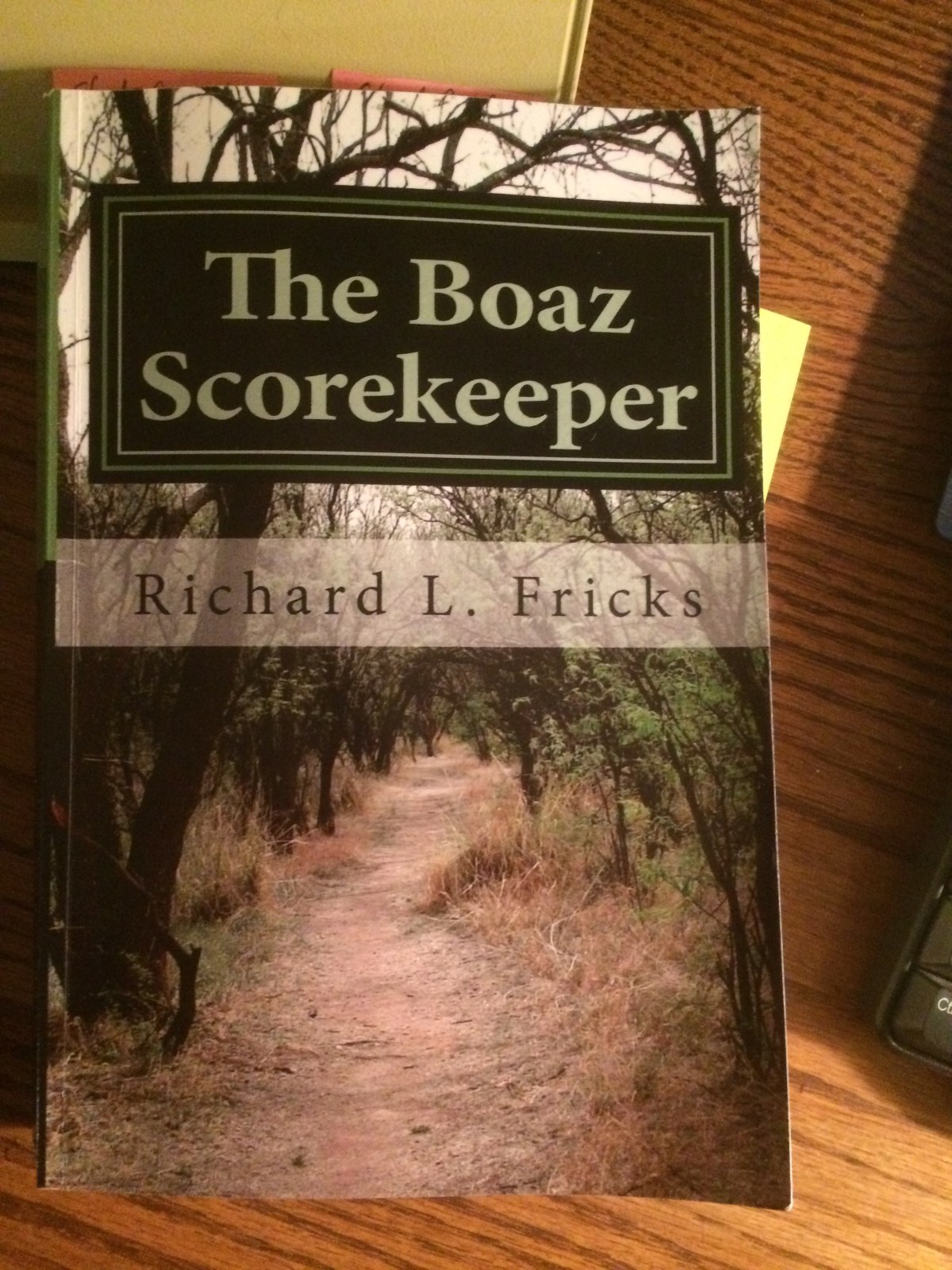
The Boaz Scorekeeper, written in 2017, is my second novel. I'll post it, a chapter a day, over the next few weeks.
The 30th of December, four days after the Murray’s met with Walter Tillman and his lawyer Ralph Summerford, Matt and I purchased a building in old downtown Boaz. When the Realtor first showed it to us in early November, neither Matt or I remembered that it was the building where the Sand Mountain Bank had started its business operations back in the early 1930’s. The bank had moved in the late 70’s or early 80’s to a modern building on Broad Street. Even though for the past 20 years or so the original building had been used as a beauty shop it still revealed the architecture and mystique of a depression era bank. Matt and I both loved it from the very first visit even though it would require a lot of renovation to convert it into a workable law office.
The building’s owner was a bank out of Gadsden. It had acquired it two years earlier through foreclosure. After interviewing several contractors, we decided to take it slow and do some of the initial demolition work ourselves. We felt the activity might be good for us since we spent most of our days either sitting behind a desk or standing in courtrooms.
We decided to close Wednesday through Sunday to celebrate the New Year’s Holiday, but mostly to work tearing out a ceiling that had been installed after the bank had moved out. The ceiling was less than eight feet high and we wanted a reception area with high ceilings that revealed the Bank’s original architecture.
By late Saturday afternoon, Matt and I were nearly exhausted and had just finished toting out another huge pile of ripped paneling and broken two-by-fours when we noticed a single piece of plywood nailed fifteen feet or so up the south wall that we had exposed when we tore out the false ceiling. The remainder of this wall, that is, the part that we could see, was covered with beautiful pine boards, running vertically, each at least ten inches wide. These boards came all the way down to the floor and they also were against the wall under the piece of plywood.
We placed our two extension ladders on either side of the piece of plywood, and with crowbars and hammers, removed the four by eight sheet of plywood. After Matt nearly tipped backwards off his ladder we slid the plywood gently down to the floor. When we looked back up we saw what looked like a solid oak door, closed inside what had to be a hand-carved frame. We went back up and the door knob resisted only minimally. I pushed the door open and stepped off my ladder and inside to a dark and musty smelling room.
Matt went out to his truck and brought two flashlights. We couldn’t believe what we saw. There were dozens and dozens of cardboard boxes containing manila files. The ones we opened mainly contained loan files: copies of promissory notes, deeds, mortgages, and sometimes hand-written notes setting out personal property items the borrower was putting up as collateral for the cash the bank was providing. One note said, ‘Betsy, my finest cow,” and another one I could barely read said “my turning plow, my two and only middle buster plows, and my Georgia stock plow.”
There were two old ladder back chairs almost hidden against the side wall and buried under a pile of wooden boxes. Each of these boxes had a metal clasp with a lock but none of them were fastened. I opened one of the boxes and found twelve high-quality journal books, each with a red leather spine. I glanced through a couple and saw listings of payments the bank had made. This box contained one journal per month for the year 1938. I opened several other wooden boxes and found more disbursement journals, but I also found boxes that contained journals with green leather spines. Rightly so, these were receipts journals. I looked through the February 1944 journal and saw daily listings of what appeared to be every deposit the bank took in for every day during this month.
After I moved thirty or so boxes from on top of, besides, and in front of the two ladder back chairs, I pulled them into the center of the room. Matt sat in one and kept on infatuated with the handwritten notes he was finding in loan files. I pulled another wooden box over in front of me and sat down in the other chair. It contained twelve journals with green spines representing January through December 1972. There was another journal in this box. As I removed it, I noticed it’s black leather spine. I opened it and saw an envelope taped to the inside front cover. It contained a hand-written letter. The letter was dated December 23, 1946 and read: “Harold, thanks for your friendship and being the most creative bookkeeper in the world. I appreciate you. Merry Christmas,” signed “Fitz.” Under the taped envelope and in big bold letters on the inside front cover was written, “Journal No. 15.”
“That’s enough cows, pigs, chickens, and plows for one day. I’m heading home. You ready?” Matt said wiping his forehead with a blue and white checkered handkerchief.
I agreed, but carried the black-spine journal with me. We turned off the lights, locked the door, and Matt drove off. I tied down the pile of lumber and paneling on the back of my truck and headed home glancing down every few minutes to the journal beside me thinking, “red for cash paid out, green for cash taken in, and black for … what?”

 Richard L. Fricks