
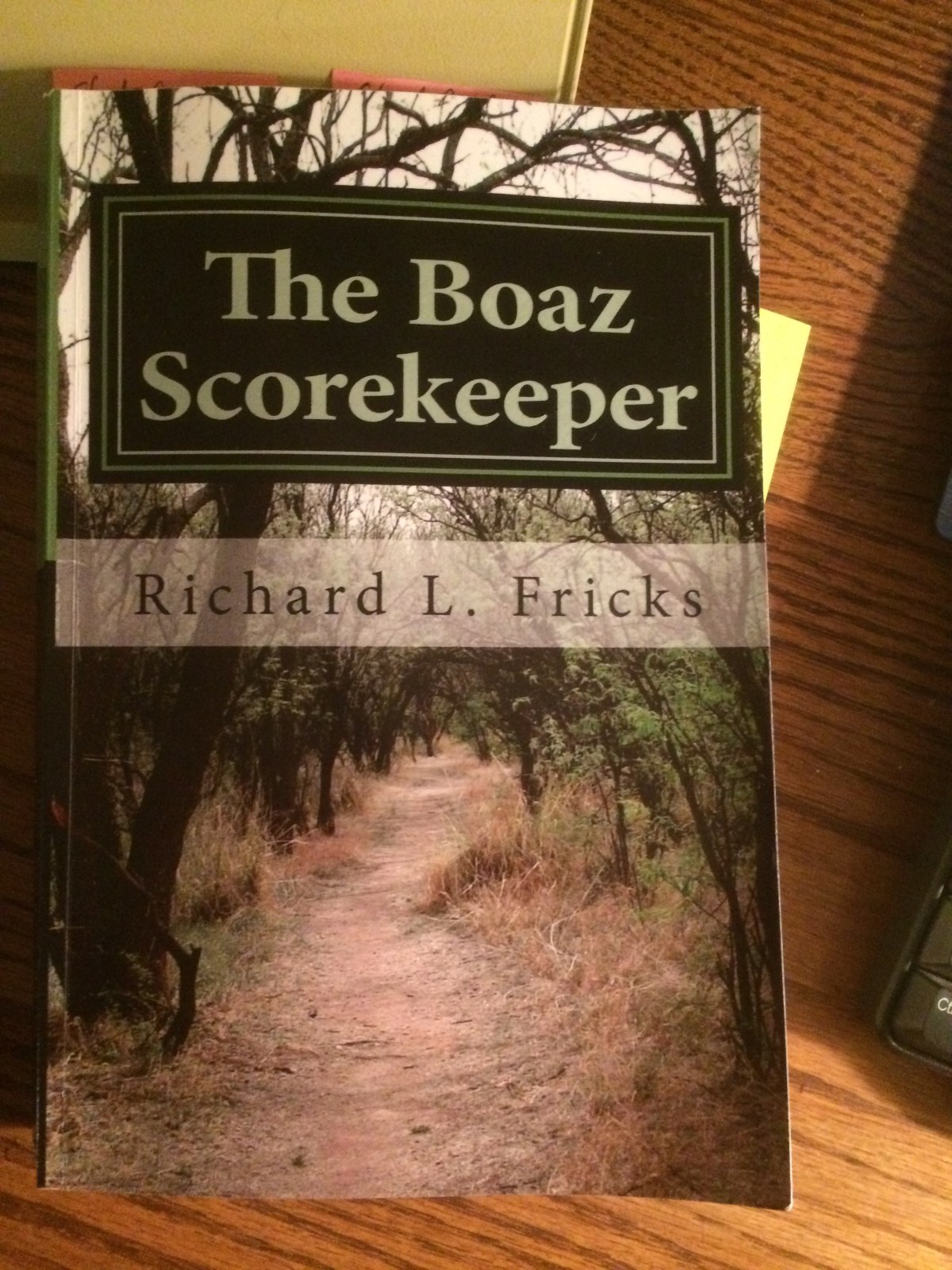
The Boaz Scorekeeper, written in 2017, is my second novel. I'll post it, a chapter a day, over the next few weeks.
When Karla, Lewis, and I moved back from Atlanta we visited Clear Creek Baptist Church for several weeks. It just wasn’t the same without Brother G. And the more I investigated the Murray’s wrongful death case, the more I realized that the walls of First Baptist Church of Christ held a library full of secrets, many of which were likely relevant to Wendi and Cindi’s justice.
The first Sunday we visited we attended only the worship hour. We thought it best to tip toe into the cool waters before jumping off the high dive into the deep and lurking waters of Sunday School.
By the end of summer 1997, the Murray’s wrongful death lawsuit against the Flaming Five was well known throughout Marshall County. It was perpetual talk, from old men sipping coffee at Grumpy’s Diner, to women of all ages getting their hair done at the ten assorted beauty salons scattered across Boaz.
I could not have imagined a colder welcome. We walked in and were guided by an usher to the back of the middle section. Only two older ladies gave us a smile and a handshake during the fellowship song before preaching began. However, I did feel the other four hundred or so eyes staring at me with each painting my face equally evil alongside the ever-roving Satan. Particularly burning were the dark eyes glaring down on me from the choir loft. Randall Radford stood like a statue in the center of the back row with uncharacteristically drooping shoulders. I guessed he had rather be on the golf course than worshipping here together. As other people mingled, shook hands, and sang “Victory in Jesus,” I saw James Adams, Fred Billingsley, and John Ericson, along with their wives and parents, anchoring the front half of the center section.
Pastor Walter Tillman, Wade’s father, was out of town leaving the preaching to his equally competent son. Wade announced that his father would continue his series on Marriage the following Sunday and that he had been led to preach on the grace and wisdom of Jesus. I noticed the church bulletin had titled Wade’s sermon as “Saved from Stones.” I recognized the scripture verses next to the sermon title knowing they described how Jesus had handled the woman caught in adultery. Wade’s eyes caught mine when he asked the congregation to stand for him to read John 8:1-11:
“Jesus went unto the mount of Olives. And early in the morning he came again into the temple, and all the people came unto him; and he sat down, and taught them. And the scribes and Pharisees brought unto him a woman taken in adultery; and when they had set her in the midst, They said unto him, Master, this woman was taken in adultery, in the very act. Now Moses in the law commanded us, that such should be stoned: but what sayest thou? This they said, tempting him, that they might have to accuse him. But Jesus stooped down, and with his finger wrote on the ground, as though he heard them not. So, when they continued asking him, he lifted up himself, and said unto them, He that is without sin among you, let him first cast a stone at her. And again, he stooped down, and wrote on the ground. And they which heard it, being convicted by their own conscience, went out one by one, beginning at the eldest, even unto the last: and Jesus was left alone, and the woman standing in the midst. When Jesus had lifted up himself, and saw none but the woman, he said unto her, Woman, where are those thine accusers? hath no man condemned thee? She said, No man, Lord. And Jesus said unto her, Neither do I condemn thee: go, and sin no more.”
I would have given half a year’s salary to have known what Wade had truly thought as he had read these verses. I would never know but I did learn how talented he was behind the pulpit. Wade presented a powerful three-point sermon that would please any Southern Baptist preacher. He analogized the woman’s plight and problem to a broad array of modern day issues, including a major exam at school, a struggling business, and the loss of a loved one. Wade acknowledged that life in America didn’t include being stoned for adultery, yet we felt as though it did. He argued that we all face problems that to us cause us to run away if nothing more than in our minds. He proclaimed that there is a better way. He led us through how Jesus stood between the guilty woman and the ready stones of her accusers. Wade encouraged us to notice how the woman didn’t continue to run, that she stood, weak-kneed no doubt, and faced the mighty wave rolling her way, and rested in the mighty wisdom of Christ.
It was a moving sermon and the entire congregation sat silent lapping up every word. I couldn’t help but think, something that I knew Christians were warned against doing, that this scripture wasn’t even part of the earliest Greek manuscripts from which the Bible was taken. I had long concluded that the Bible was simply a man-made book and Wade’s verses, like so many others, had simply been added hundreds of years later. I wondered how otherwise educated and rational people could believe the Bible was the inerrant, infallible Word of God. Of course, I knew why. They, like me, all my growing up years, had been told one side of the story. They had never been told the truth. And, like so much of life itself, many are not interested in the truth.
While exiting the auditorium, I shook Fitz Billingsley’s hand. I hadn’t seen Fred’s father since I was in the 11th grade when my Dad had taken me to First State Bank to co-sign a promissory note for me to buy my first car, a 1968 Chevrolet Corvair. I’m sure Fitz would not have shaken my hand in most any other circumstance. But here, he was one of two deacons stationed at the back door charged with extending the right hand of fellowship as God’s people marched outside and onward to share with neighbors and friends how Jesus was always near, saving them from stones.

 Richard L. Fricks