
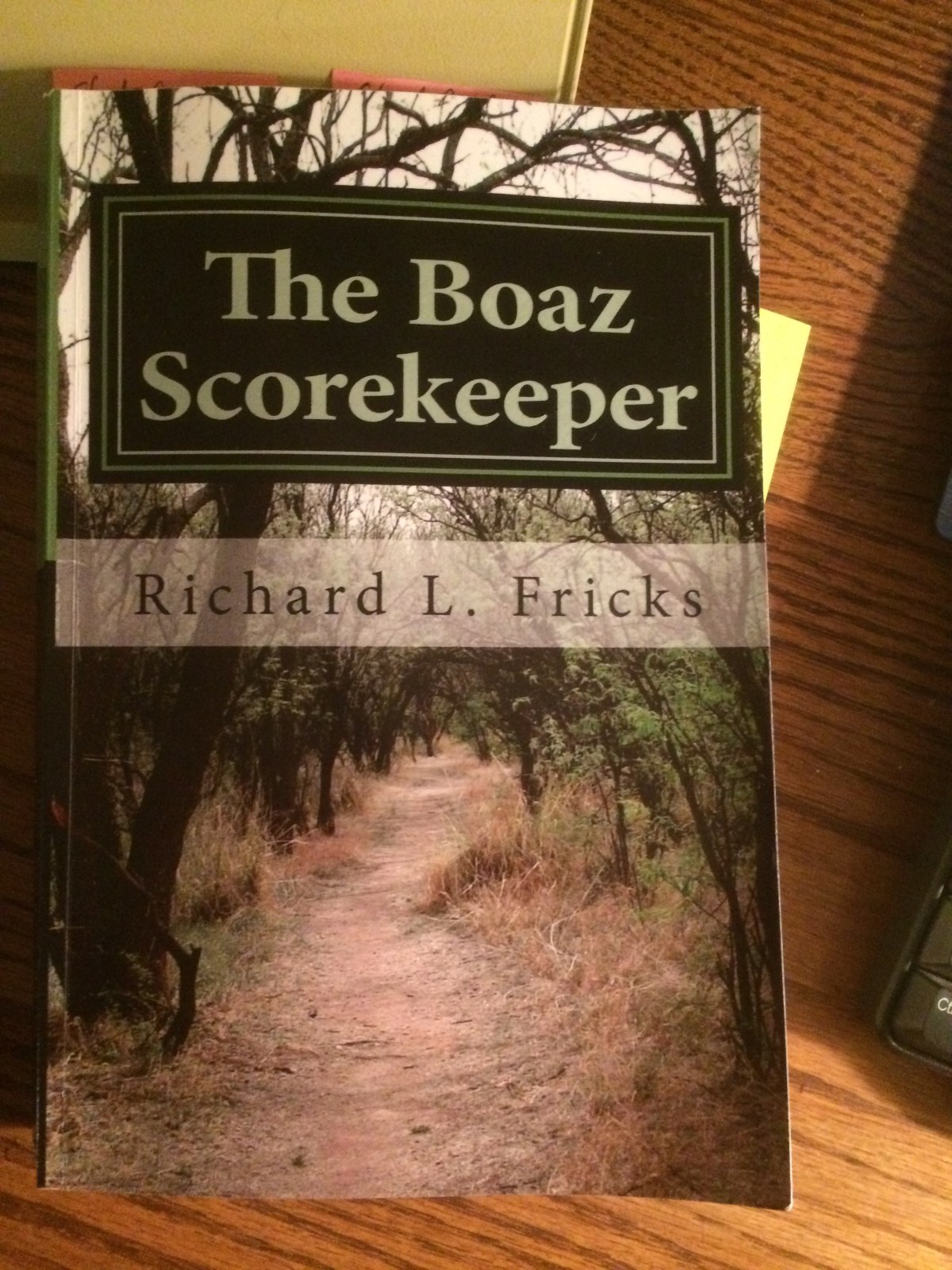
The Boaz Scorekeeper, written in 2017, is my second novel. I'll post it, a chapter a day, over the next few weeks.
We put our furniture and other belongings in storage and lived with Karla’s parents until we rented a house on College Avenue in Boaz. It was an older house, but with ample room for the three of us. It was within easy walking distance of Matt’s office in Scott Plaza.
I didn’t waste any time. Three days after leaving Atlanta I reported for work. On the ride in from Rodentown, where the Jacobson’s lived, I was thankful Matt had called last night and given me an overview of what to expect. I really liked him saying, “welcome to Bearden and Tanner, Attorneys at Law.”
Matt had a small but busy solo practice. After I arrived, the number of lawyers had instantly grown by 100 percent. But, if you counted Tina, the law firm had legal knowledge approaching the big firm I had just resigned from in Atlanta. Her name was Tina Bonds. She was the heavy lifter who wore a multitude of hats including secretary, paralegal, bookkeeper, Internet snoop, and professional gopher.
In our phone call yesterday Matt had given me the rundown on ‘Tiny,’ as she called herself. He warned me that Tina and only Tina could refer to her as ‘Tiny.’ Tina Guthrie Bonds was the daughter of Big Jim Guthrie, the most famous lawyer in North Alabama for over sixty years. He practiced in Gadsden from the early 1930s until five years ago when he died of a heart attack making a closing argument in an automobile accident case in the Honorable Donald Stewart’s courtroom. Big Jim was 88.
Tina graduated from Etowah High School in 1963. At eighteen she already had eight years’ experience working in a law office. Since she was ten years old Big Jim had her scanning caselaw books searching for some barn burner legal principle he could use to bushwhack an opposing attorney. ‘Tiny’ was Big Jim’s invention. He said there was nothing tiny about her. She was tall like him and between her ears lay the “most fertile mind ever to darken the halls of Etowah High.” By the time Tina was in 9th grade, she was sitting beside Big Jim at counsel feeding him cross-examination questions that often caused even the judges to shake their heads in disbelief.
It took only ten years for the perfect duo to run ashore. About half of Big Jim’s clients were blacks but he didn’t see the color of their skin. His only concern was for their inalienable rights. Tina dating a black man named Robbie changed Big Jim’s vision. The short of it was most unfortunate. It likely severed the two best legal minds ever to team up in Alabama. Tina and Robbie were arrested in the Fall of 1972 by Boaz Police when they were passing through returning from a trip to Huntsville. The patrol officer didn’t like the feisty Tina and put her in cuffs for speeding, obstruction of justice, and ‘smart-assing’ a police officer. Two days later Matt had received a call from Big Jim himself. He said he wouldn’t come to his daughter’s rescue but knew she might need a second chair because she would never plea out.
Two weeks later Tina moved to Boaz and became the anchor for new-to-Boaz attorney Matt Bearden. Robbie came along too but had a change of mind a month later after weekly pull-overs by the Boaz Police. Tina said goodbye and wished him well.
Tina had a double front office spending most of her time in the one only partially seen by clients waiting out in her front receptionist office. The dark room, as it was called, was like a war zone. Her large oak desk in the middle of the room contained the only semblance of organization and neatness. Along the edges of the six-foot desk were stacks of multi-colored files forming a giant U. Within the U was the protected zone where only one file could be open at a time. A two-foot square computer monitor sat on an attached side table that was six inches or so lower than the desk top. An ancient oak chair without rollers was Tina’s favorite for sitting here to draft the standard motions for the various divorce, bankruptcy, criminal, and custody cases that Matt handled. He drafted the more complex motions and sent them over to Tina via the office’s intranet.
Along the walls in Tina’s back office were floor to ceiling shelves that were in total disarray although she warned me not to even touch anything on the shelves. Southeastern Reporters, forms books, and what looked like full collections of John Grisham, James Patterson, and Lawrence Block were just a few of what I saw during my first office tour. Along the front window were two six-foot tables that Tina said were for case intake and bookkeeping. In front of the shelves along the wall behind her giant oak desk were two card tables where a recent tornado had camped out. She said, “the civil table is Discovery in and out. The criminal table is Discovery in and out.” I didn’t question her.
After an hour with Tina, Matt finally came out of his office and directed me to a cramped little office next to a large back room that served quadruple duty as file center, kitchen, utility, and recreation headquarters, complete with ping-pong and pool tables.
My office was empty except for an old five-foot oak kitchen table, a leather chair, a computer desk, and one metal bookcase. A telephone was on the table. “Sorry about your office. I’m looking for us another place, maybe we can buy something before too long.” Matt said.
Tina brought me the Murray file and I spent the rest of the morning reading a memorandum that Tina had drafted, and reviewing the complete transcripts of the case, State of Alabama vs. Micaden Lewis Tanner. Vividly reliving the darkest days of my life had spun my mind and stomach leaving me both sick and hungry. At 12:00 noon Matt took me to lunch at the Food Basket in Albertville.

 Richard L. Fricks