
Here’s the link to this article.
It’s hard to think of yourself as the default when you know so many other counterexamples.
 by CAPTAIN CASSIDY OCT 19, 2023

Overview:
Kate Cohen’s excellent essay about the importance of atheists being open about their atheism is exactly right. But maybe we need to extend that sentiment even further.
I’ve been in both situations: a onetime Pentecostal who saw Christianity as the default setting for humanity, and an outsider who was no longer part of the tribe.
Recently, Kate Cohen wrote a moving opinion piece for Washington Post concerning atheism. In her essay, she speaks of a number of reasons why atheists should—if they can—be vocally atheistic. All of them sound perfectly fine. I’d like to add one more: the essential nature of diversity in a society that values human rights and civil liberties. That diversity destroys dysfunctional authoritarians’ perceived base of power even as it opens the door to dialogues between different people.
I learned that lesson myself at a very tender age when I got my first taste of being a despised majority.
(Related: Prayer Warriors for Jesus; Biff vs the Dianic Separatist Lesbians; The day I debated my M.Div professor about religion.)
PRAYER WARRIORS FOR JESUS
Set your Wayback Machine for about 1990. Grunge was taking over the world, and yet Princess Di still owned our hearts. The best Total Recall adaptation came out that year, along with The Hunt for Red October. One of the most popular songs that year was “U Can’t Touch This” by MC Hammer.
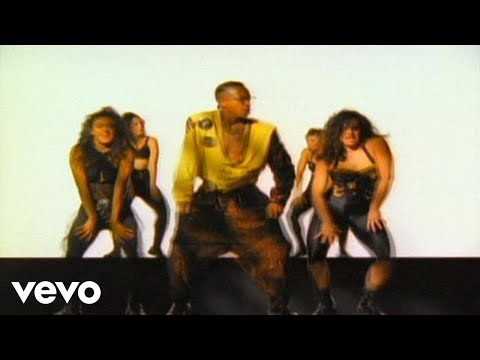
As far as Gallup knew that year, the percentage of Christians in America had fallen from 92% in 1952 to 81% in 1990.
As far as I knew, though, we were damn near 100% of the count.
That year, I was in college and newly married to my Evil Ex Biff. One day, he announced that he would be starting a prayer group on campus with a weird new-convert friend of his named James. Mainly, this was James’ idea, but Biff loved it.
We attended a very large state-funded university that was very generous to student groups. Thus, it cost Biff nothing whatsoever to start this group. They’d give us meeting rooms, audiovisual materials of all sorts almost upon demand, and even a small allowance we could use for campus events. All they really required in exchange for that largesse were three officers who were actively-enrolled students there, and for us to actually use what we requested from them.
Eventually, the group ran afoul of both requirements.
First of all, there simply weren’t three Pentecostals on campus willing to act as active officers of the group. James wasn’t even enrolled anywhere. And I’m female and therefore was ineligible (in our flavor of Christianity) for any leadership over men, even if my demanding school schedule allowed me to be active in any group. After some fuss, Biff discovered a friend from church who attended our school, then calmed his misogyny long enough to ask me to sign me up anyway. With Tim and me willing to pretend to be officers at least, Biff could file the startup paperwork for the group. He titled it PRAYER WARRIORS FOR JESUS. Yes, in all caps. Of course. Before its first meeting, Biff had already drawn up a logo with impressively sharp, gleaming, sword-like edges to the words.
We officers represented the entire membership of the group. Nobody ever joined for what now seem like obvious reasons.
Undeterred, Biff reserved rooms for our group to use for prayer five days a week.
Now, why did three or four individual Christians need a whole meeting room reserved for prayer? Why couldn’t they just pray anywhere in our school’s expansive, garden-like campus that they liked? Or even, dare I mention, at the school’s beautiful nondenominational chapel?
Because our university printed campus-group meeting schedules every day, then posted them all over the place. Biff wanted everyone to see PRAYER WARRIORS FOR JESUS prominently figuring in those schedules.
This desire of Biff’s had nothing to do with evangelism. Maybe that motivated James, but not Biff, who never once mentioned soulwinning as a motivation. What Biff actually said at the time was that he wanted people to see the name and know that TRUE CHRISTIANS™ were on campus.
Biff’s special calling was apparently to combat atheism on campus
In evangelicalism as well as in other flavors of Christianity, Christians believe that Jesus has created every person with a special role to play in his divine, ineffable plan for Earth. They call this role their divine calling. It represents their main purpose in life. It’s the reason they exist, the mission for which they were born.
At some point, Biff got the idea that his calling involved converting atheists and defeating atheism on our college campus. He very mistakenly thought that tons of atheists attended our university, making atheism a valid enemy to Christians like himself.
Being in Texas, most students there were Christian. But there were some outspoken atheists among the student body, and Biff glommed right onto them.
He’d been unsuccessfully evangelizing atheists for two years by the time we married and he started PRAYER WARRIORS FOR JESUS.
Something strange was happening on campus, though. People did notice the group. They just weren’t reacting as I’d expected. Biff, I think, expected all of the reactions he ever got. He was an experienced RL troll (what people sometimes more graciously term a provocateur and less graciously a chain-yanking asshole). But I sure wasn’t, and so I didn’t.
What it’s like to grow up in a cultural bubble
I grew up before everything, it feels like: Before nearly ubiquitous home computers, before the internet, before cell phones, before smartphones, before AI, before the internet of things. For the first two decades of my life, most libraries used card catalogs with actual typed-up 3×5″ cards in long drawers to keep track of their books. Local-area dial-up Bulletin Board Systems (BBSs) barely began to pop up in major cities when I was in my teens.
Making my world even more insular, I was also a military brat. My family lived on military bases sometimes, in regular houses other times, but we always tended to center our lives on my dad’s work.
So my entire world was Christian. I didn’t need to attend parochial school to be fully immersed in that bubble!
Everybody I knew was Christian. Everything in my world centered around Christianity and its rituals, its myths and folklore, its rules, its culture, its entire worldview. The only real question to ask was what flavor of Christian someone was, not whether they were Christian at all. We all already knew the answer to that.
(This is how I suspect Southerners picked up the habit of asking newcomers to their communities what church they attend. They still do it. Long ago, it was a legit question. Nowadays, it’s much more of a veiled interrogation.)
Until I went to college, I didn’t know anyone who wasn’t at least nominally Christian. If I ever ran into anyone who wasn’t, I didn’t even think about them. They were exceptions; they fell out of my mind and memory. Confirmation bias ensured that.
Nowadays, you’ve got to be a religiously-homeschooled evangelical kid with particularly controlling parents to come even close to this level of insularity. Back then, though, it was normal for kids in my area and circumstances. We just didn’t have any counterpoints or other frames of reference.
Well, college fixed that for me in a hurry.
My worldview takes a roundhouse to the jaw
I attended a couple of prayer meetings myself, but very soon I became entirely too busy for it. (I had also gotten weirded out at how non-divine prayer looked and felt when performed in a corporate meeting room.) That was fine, though. The entire idea was really the Biff and James Show, live every weekday at 12:00 noon.
One day while relaxing in a student lounge, I opened our campus newspaper. I was (and still am) a readaholic who must read All. The. Words, so I started with the letters to the editor. A minor funding squabble had erupted on campus over an increase in student fees covering campus groups, so most letters addressed that subject. One in particular stood out to me: A student making the point that that fee covered all students, even those with groups diametrically opposed to the views of any one particular student, and that this was a good thing because it encouraged diverse opinions in an educational setting.
She used PRAYER WARRIORS FOR JESUS as a specific example of what she meant in her own case.
I just stared at that letter for a long time. My brain had gone into vapor lock. My entire worldview had just tilted on its ear and divided by zero.
It’s not like I hadn’t recognized the group’s name as an attention-seeking tactic from my supremely narcissistic then-husband. But the way that student talked, she wasn’t even Christian at all.
Atheism is part of the human situation
By then, I’d been in college for two years. However, I still perceived Christianity as the default state of humanity. When I considered the overall arc of human history, I still put Christianity front and center. Though I’d met any number of atheists and pagans and Muslims (oh my!) by then, I still generally perceived them as pre-Christian. Even the other Christians I met got judged by my own doctrinal beliefs, even if I wasn’t arguing with them for anywhere near as long as Biff did.
Yes, I was exactly that Christian kid in the iconic “Jesus is so lucky to have us!” cartoon:

As if by magic, that student’s letter pulled me out of my entire way of thinking. Perhaps it was because I didn’t have any idea who she was. She could have been any woman I walked past on campus. Any woman I walked past on campus, in other words, could be thinking that PRAYER WARRIORS FOR JESUS was dumb, irrelevant, and utterly counter to her own worldview. For that matter, any person period could be thinking that.
With that, my perception of myself began to subtly alter. The arrogance and privilege of my presumptuous placement of Christianity as the default began to fade. It could not survive my sudden realization that lots of people lived in this world and all had their own ideas about religion.
I suspect most people learn similar lessons in childhood. Somehow, I’d avoided that one until I was twenty. But better late than never. My world became a tapestry of living colors as if I was an extra in the movie Pleasantville.

Just a couple of years later, when my slow-burn deconversion began in earnest, I still didn’t know anyone who’d deconverted. For a long time, I thought I was the literal only person in the history of Christianity who’d ever believed what we called the full gospel and then realized it wasn’t true. I didn’t meet another ex-Pentecostal for a long time, and when I did, she had thought the same about herself!
We ex-Christians had to forge a path from scratch, just about, on an individual basis with each one of our deconversions. Nowadays, that’s nowhere near as common a story. There’s such a painful sense of sheer isolation when you’re positive you’re the only one who ever.
It’s not just atheism. The world needs everyone who can do so to be vocal about who and what they are.
As Kate Cohen notes in her essay, lots of people even in America aren’t free to express their beliefs/nonbelief. Anyone who’s done hard time in the Deep South likely knows this truth painfully well. It can be risky to declare one’s status as out-of-step with the lockstep march that evangelicalism in particular demands.
Insular religious communities like those are risky precisely because the members of the perceived majority like it that way. They like there being no other options besides the one they offer. There’s way less chance of someone veering out of step that way.
When someone isn’t keeping the beat, it’s glaringly obvious to everyone else. That poor schmuck stands out! As a result, it doesn’t take much effort from the rest of the group to get that person back into line. Social freezing-out, nasty comments, loss of customers, maybe trouble fomented at school or a little “evandalism” of the black sheep’s possessions: it’s minor stuff that functions as a prelude to the big guns: mysteriously losing one’s job, marriage, kids, and community standing.
But if a solid 25% of the marchers lose step and start veering off-course, the majority suddenly has a whole bunch of problems. Now there are too many targets for the tribe’s usual methods of retaliation. They can’t focus properly on any one person, much less on all of the people requiring their Christian love.
It’s like adding another person to the safety net’s edges to hold it out for the others
Oh, but matters get still worse for the majority. Thirty years ago, a whole bunch of Christians didn’t even know anyone who wasn’t Christian. Now, with so many more non-Christians floating around in the mix, Christians can’t help knowing at least one person who isn’t like themselves. In fact, they probably know a lot of non-Christians by now.
The tribe’s party line about outsiders can hold only when there aren’t a lot of ’em around. The more Christians learn about outsiders, the more they’ll realize the party line isn’t correct at all. Once one false belief gets shaken, let me tell you from painful personal experience along exactly these lines, it’s a lot easier to shake the rest.
Those false beliefs have lasted for many years precisely because the majority group heard next to no pushback about them. The sort of Christians who want to rule over everything, in particular, tend to assume that if they don’t hear any pushback, then whatever they’re doing is A-OK.
So if it’s safe for anyone to start being vocal and open about their worldview, that makes the waters just a tiny bit safer for every other person who wants to do the same, but can’t right now.
(In other words, don’t ever wonder why it’s those Christians who viciously fight against diversity and anti-racism measures.)
Whether someone is simply an ex-Christian, a None, an agnostic, an atheist, a pagan, or whatever else, they have a part in this glorious multicolored tapestry that depicts the human situation. With every new, colorful thread woven into it, it becomes progressively more difficult for the one-time majority to go back to their monochrome world.
The more hands we can get on deck, the better it’ll get for those who must watch quietly from the shore.

 Richard L. Fricks