The following can also be found at the About page.
Since 2015, I’ve written eleven novels. One thing I’ve learned from fiction writing experts is the importance of character development, especially for the story’s protagonist (aka, hero). A common ingredient in great stories is for the hero to have a positive character arc. This means, she (or he) will mature enough to overcome a weakness by the end of the story, and thus be prepared to live a better life. This maturing means she learns something new, which obviously means at the beginning of the story there are things she doesn’t know or her knowledge is incomplete or confused.
Novels represent a story world and its occupants. These stories often feel more real than the world you and I experience. However, one giant similarity between our world and story worlds is we, as characters, start off knowing very little. As time goes by, through formal schooling and life experiences, we learn more and more. Sometimes, often really, we grow stagnant believing we’ve learned all we need to know concerning certain subjects. Take football for example (American football that is). Don’t real zealous fans know more than the refs? You bet we do, and it’s probably okay we don’t invest time learning more.
But, when it comes to more important issues (not to denigrate football), like those involving religion, politics, and science, shouldn’t we choose a positive character arc for our lives? That is, being open to learning which portends assurance we’ll grow and mature as we age. Maybe we need to return to the drawing board and start over (tell ourselves to Think Again, as does Adam Grant in his wonderful book), like a hero does at the beginning of a new novel. For some of us, we might start with assessing our weaknesses which likely include those areas we feel so certain about.
Thus, this positive character arc in real life greatly depends on a commitment to reading. In sum, this process is what I call Reading to Death–to discover and dispel false opinions and beliefs, replacing them with the truth. On the contrary, I suspect a negative character arc will be virtually guaranteed if we fail to actively pursue reading.
So, you want to adopt and implement reading as a lifelong pursuit but have trouble reading for more than a few minutes at a time. Maybe, you could benefit from an active pursuit of mindfulness, what Sam Harris (and others) refer to as meditation. To further understand what I’m talking about, I encourage you to listen to Sam Harris describe the importance of mental training (6 minute audio). Mental Training.
I have but one question. Are you open to challenging your thinking? If so, I encourage you to read this blog. It’s all about challenging the status quo.
I’m currently taking a writing and blogging sabbatical due to family health issues. For now, I’ll repost selected articles from Timeless Advice on Writing: The Collected Wisdom of Great Writers. I encourage you to take time to read these powerful, awe-inspiring words.
“Anyone who writes down to children is simply wasting his time. You have to write up, not down.”
BY MARIA POPOVA
The loving and attentive reader of children’s books knows that the best of them are not one-dimensional oversimplifications of life but stories that tackle with elegant simplicity such complexities as uncertainty, loneliness, loss, and the cycle of life. And anyone who sits with this awareness for a moment becomes suddenly skeptical of the very notion of a “children’s” book. Maurice Sendak certainly knew that when he scoffed in his final interview: “I don’t write for children. I write — and somebody says, ‘That’s for children!’” Seven decades earlier, J.R.R. Tolkien had articulated the same sentiment, with more politeness and academic rigor, in his terrific essay on why there is no such thing as writing “for children.” But one of the finest, most charming and most convincing renunciations of the myths about writing for children comes from E.B. White (July 11, 1899–October 1, 1985), nearly two decades after he sneezed Charlotte’s Web.
In a 1969 interview, included in the altogether unputdownable The Paris Review Interviews, vol. IV (public library) — which also features wonderfully wide-ranging conversations with Haruki Murakami, Maya Angelou, Ezra Pound, Marilynne Robinson, William Styron and more — White turns his formidable amalgam of wit and wisdom to our culture’s limiting misconceptions about storytelling “for children.”
When the interviewer asks whether there is “any shifting of gears” in writing children’s books, as opposed to the grownup nonfiction for which he is best known, White responds with the rare combination of conviction and nuance:
Anybody who shifts gears when he writes for children is likely to wind up stripping his gears. But I don’t want to evade your question. There is a difference between writing for children and for adults. I am lucky, though, as I seldom seem to have my audience in mind when I am at work. It is as though they didn’t exist.
Echoing Ursula Nordstrom — the visionary editor and patron saint of childhood who brought to life not only Charlotte’s Web but also such classics as Goodnight Moon, Where the Wild Things Are, and The Giving Tree, and who famously insisted that children never want a blunt creative edge — White adds:
Anyone who writes down to children is simply wasting his time. You have to write up, not down. Children are demanding. They are the most attentive, curious, eager, observant, sensitive, quick, and generally congenial readers on earth. They accept, almost without question, anything you present them with, as long as it is presented honestly, fearlessly, and clearly. I handed them, against the advice of experts, a mouse-boy, and they accepted it without a quiver. In Charlotte’s Web, I gave them a literate spider, and they took that.
E. B. White’s drawings of the vectors of the web-spinning process. Click image for more.
Some writers for children deliberately avoid using words they think a child doesn’t know. This emasculates the prose and, I suspect, bores the reader. Children are game for anything. I throw them hard words, and they backhand them over the net. They love words that give them a hard time, provided they are in a context that absorbs their attention. I’m lucky again: my own vocabulary is small, compared to most writers, and I tend to use the short words. So it’s no problem for me to write for children. We have a lot in common.
A writer should concern himself with whatever absorbs his fancy, stirs his heart, and unlimbers his typewriter… A writer has the duty to be good, not lousy; true, not false; lively, not dull; accurate, not full of error. He should tend to lift people up, not lower them down. Writers do not merely reflect and interpret life, they inform and shape life.
[…]
A writer must reflect and interpret his society, his world; he must also provide inspiration and guidance and challenge. Much writing today strikes me as deprecating, destructive, and angry. There are good reasons for anger, and I have nothing against anger. But I think some writers have lost their sense of proportion, their sense of humor, and their sense of appreciation. I am often mad, but I would hate to be nothing but mad: and I think I would lose what little value I may have as a writer if I were to refuse, as a matter of principle, to accept the warming rays of the sun, and to report them, whenever, and if ever, they happen to strike me.
I’m currently taking a writing and blogging sabbatical due to family health issues. For now, I’ll repost selected articles from Timeless Advice on Writing: The Collected Wisdom of Great Writers. I encourage you to take time to read these powerful, awe-inspiring words.
“Just set one day’s work in front of the last day’s work. That’s the way it comes out. And that’s the only way it does.”
BY MARIA POPOVA
Many celebrated writers have championed the creative benefits of keeping a diary, but no one has put the diary to more impressive practical use in the creative process than John Steinbeck (February 27, 1902–December 20, 1968). In the spring of 1938, shortly after performing one of the greatest acts of artistic courage — that of changing one’s mind when a creative project is well underway, as Steinbeck did when he abandoned a book he felt wasn’t living up to his humanistic duty — he embarked on the most intense writing experience of his life. The public fruit of this labor would become the 1939 masterwork The Grapes of Wrath — a title his politically radical wife, Carol Steinbeck, came up with after reading The Battle Hymn of the Republic by Julia Howe. The novel earned Steinbeck the Pulitzer Prize in 1940 and was a cornerstone for his Nobel Prize two decades later, but its private fruit is in many ways at least as important and morally instructive.
Alongside the novel, Steinbeck also began keeping a diary, eventually published as Working Days: The Journals of The Grapes of Wrath (public library) — a remarkable living record of his creative journey, in which this extraordinary writer tussles with excruciating self-doubt (exactly the kind Virginia Woolf so memorably described) but plows forward anyway, with equal parts gusto and grist, driven by the dogged determination to do his best with the gift he has despite his limitations. His daily journaling becomes a practice both redemptive and transcendent.
Steinbeck had only two requests for the diary — that it wouldn’t be made public in his lifetime, and that it should be made available to his two sons so they could “look behind the myth and hearsay and flattery and slander a disappeared man becomes and to know to some extent what manner of man their father was.” It stands, above all, as a supreme testament to the fact that the sole substance of genius is the daily act of showing up.
Steinbeck captures this perfectly in an entry that applies just as well to any field of creative endeavor:
In writing, habit seems to be a much stronger force than either willpower or inspiration. Consequently there must be some little quality of fierceness until the habit pattern of a certain number of words is established. There is no possibility, in me at least, of saying, “I’ll do it if I feel like it.” One never feels like awaking day after day. In fact, given the smallest excuse, one will not work at all. The rest is nonsense. Perhaps there are people who can work that way, but I cannot. I must get my words down every day whether they are any good or not.
The journal thus becomes at once a tool of self-discipline (he vowed to write in it every single weekday, and did, declaring in one of the first entries: “Work is the only good thing.”), a pacing mechanism (he gave himself seven months to complete the book, anticipated it would actually take only 100 days, and finished it in under five months, averaging 2,000 words per day, longhand, not including the diary), and a sounding board for much-needed positive self-talk in the face of constant doubt (“I am so lazy and the thing ahead is so very difficult,” he despairs in one entry; but he assures himself in another: “My will is low. I must build my will again. And I can do it.”) Above all, it is a tool of accountability to keep him moving forward despite life’s litany of distractions and responsibilities. “Problems pile up so that this book moves like a Tide Pool snail with a shell and barnacles on its back,” he writes, and yet the essential thing is that despite the problems, despite the barnacles, it does move. He captures this in one of his most poignant entries, shortly before completing the first half of the novel:
Every book seems the struggle of a whole life. And then, when it is done — pouf. Never happened. Best thing is to get the words down every day. And it is time to start now.
A few days later, he spirals into self-doubt again:
My many weaknesses are beginning to show their heads. I simply must get this thing out of my system. I’m not a writer. I’ve been fooling myself and other people. I wish I were. This success will ruin me as sure as hell. It probably won’t last, and that will be all right. I’ll try to go on with work now. Just a stint every day does it. I keep forgetting.
Indeed, upon starting the diary, Steinbeck is clear about its disciplining purpose and its role as a reminder this incremental daily progress, often slow and small, is precisely what produces the greater whole. In one of the first entries in early June, he writes:
This is the longest diary I ever kept. Not a diary of course but an attempt to map the actual working days and hours of a novel. If a day is skipped it will show glaringly on this record and there will be some reason given for the slip.
Steinbeck’s commitment to discipline isn’t mere moral vanity or fetishism of productivity — his is an earnest yearning to create the greatest work of his life, the height of what he as a conscious and creative human being is capable. In one of the early entries, he resolves:
This must be a good book. It simply must. I haven’t any choice. It must be far and away the best thing I have ever attempted — slow but sure, piling detail on detail until a picture and an experience emerge. Until the whole throbbing thing emerges. And I can do it. I feel very strong to do it.
But per Dani Shapiro’s astute distinction between confidence and courage, this is a statement of the latter, the truer virtue — Steinbeck is well aware of everything that might derail his efforts, vexations both external and internal, and yet he decides to exert himself anyway, to be wholehearted about the endeavor despite a profound lack of confidence. Here is courage, alive and throbbing, from another of the early entries:
All sorts of things might happen in the course of this book but I must not be weak. This must be done. The failure of will even for one day has a devastating effect on the whole, far more important than just the loss of time and wordage. The whole physical basis of the novel is discipline of the writer, of his material, of the language. And sadly enough, if any of the discipline is gone, all of it suffers.
So single-minded is his sense of purpose that in one entry he declares:
Once this book is done I won’t care how soon I die, because my major work will be over.
And in another:
When I am all done I shall relax but not until then. My life isn’t very long and I must get one good book written before it ends.
But some days, his resolve barely overpowers his self-doubt:
If only I could do this book properly it would be one of the really fine books and a truly American book. But I am assailed with my own ignorance and inability. I’ll just have to work from a background of these. Honesty. If I can keep an honesty it is all I can expect of my poor brain — never temper a word to a reader’s prejudice, but bend it like putty for his understanding.
And some, the self-doubt becomes completely overwhelming:
If I can do that it will be all my lack of genius can produce. For no one else knows my lack of ability the way I do. I am pushing against it all the time. Sometimes, I seem to do a good little piece of work, but when it is done it slides into mediocrity.
On others, he is able to recognize the doubt but not buy into it:
For some reason I’m slightly skittish. That does not always mean anything. I’ll just take a running dive at it and set down what happens.
This, in a way, is the journal’s most emboldening quality — it is almost a Buddhist scripture, decades before Bradbury’s Zen in the Art of Writing, as Steinbeck faces the ebb and flow of experience. He feels his feelings of doubt fully, lets them run through him, and yet maintains a higher awareness that they are just that: feelings, not Truth.
Still, most striking and yet most strangely assuring of all — especially to those also laboring in the seething cauldron of uncertainty that is creative work — is Steinbeck’s chronic and acute case of Impostor Syndrome. Even though he had reached both critical and financial success with his earlier work, he seems not only mistrustful but even contemptuous of that success, seeing in it a source not of pride but of shame. In an early journal, he writes:
For the moment now the financial burdens have been removed. But it is not permanent. I was not made for success. I find myself now with a growing reputation. In many ways it is a terrible thing… Among other things I feel that I have put something over. That this little success of mine is cheating.
He is extremely harsh on himself, to a point of letting his suspicion of his own success swell into suspicion of his personal valor and the basic goodness of his character:
I must be sure to choose which is love and which sorryness. I’m not a very good person. Sometimes generous and good and kind and other times mean and short.
Like most artists, he repeatedly questions the validity of his art and his qualification for it:
Taylor [Ed. — next-door neighbor] just rakes his yard and putters. But he would probably do a better job of this than I am doing. More ship-shape. I wish I were he sometimes. Just rake the yard and mix a little cement. How did I ever get started on this writing business anyway? To work.
Even as he nears completion of the novel — remember, one that would win a Pulitzer and earn Steinbeck the Nobel Prize — he still mistrusts its merit and his talent:
This book has become a misery to me because of my inadequacy.
Shortly before beginning The Grapes of Wrath, Steinbeck captures in another journal the fake-it-till-you-make-it nature of self-salvation — of incredulously pulling oneself up by one’s own bootstraps despite a grave sense of insufficiency, of being a fraud about to be found out — and even anthropomorphizes the journal itself, addressing its pages with the same conflictedness with which he beholds his success:
I’m tired of the struggle against all the forces that this miserable success has brought against me. I don’t know whether I could write a decent book now. That is the greatest fear of all. I’m working at it but I can’t tell. Something is poisoned in me. You pages — ten of you — you are the dribble cup — you are the cloth to wipe up the vomit. Maybe I can get these fears and disgusts on you and then burn you up. Then maybe I won’t be so haunted. Have to pretend it’s that way anyhow.
He is especially mistrustful of public acclaim and the complacency it breeds:
Strange thing honor. The most sapping thing in the world.
Indeed, he measures his success not by income or acclaim but by the day’s work. In an entry from the beginning of the diary, he marvels at the enterprise and lays out its objectives:
Here is the diary of a book and it will be interesting to see how it works out. I have tried to keep diaries before but they don’t work out because of the necessity to be honest. In matters where there is no definite truth, I gravitate toward the opposite. Sometimes where there is a definite truth, I am revolted by its smugness and do the same. In this however, I shall try simply to keep a record of working days and the amount done in each and the success (as far as I can know it) of the day.
Steinbeck is equally unperturbed by the commercial prospects of the finished product — it is the process that he extolls above all else, as a moral necessity:
Don’t know who will publish my book. Don’t know at all. No reason to let it slide though. Must keep at it. Necessary.
That process, for him, is fueled by what Anne Lamott would call the “bird by bird” approach to writing some decades later. The journal then becomes a pacing mechanism. A month into the work, Steinbeck writes:
I wonder whether I will ever finish this book. And of course I’ll finish it. Just work a certain length of time and it will get done poco a poco. Just do the day’s work.
As he nears the finish line, he is even more certain of this incremental reach for greatness:
I’ll get the book done if I just set one day’s work in front of the last day’s work. That’s the way it comes out. And that’s the only way it does.
In an entry that calls to mind Mary Oliver — “Rhythm is one of the most powerful of pleasures, and when we feel a pleasurable rhythm we hope it will continue,”she wrote — Steinbeck reasons with himself to find a healthier pace and rhythm:
Must slow down and take it easier. Saturday had a feeling of exhaustion near to collapse. I guess I’d been working too hard. It’s not the amount of work but the almost physical drive that goes into it that seems to make the difference. I should take it a little easier or I won’t be finishing. I have just a page or so over 100 typescript pages done out of 600. I have five times as much work left to do as I have done already, so I must conserve strength because I do want to do this novel and finish it this time. Must get no fatal feelings about it.
A few days later, he paces himself again:
Think. Think tonight and tomorrow work harder but get sleep tonight. Need sleep.
And yet he is well aware that moderation is not among his talents:
I am simply incapable of working any way but hard and fast. That is the only way I can make it.
When he finishes the first section of the book, jubilant, he rewards himself with a rare period of rest:
And now Book One is done — rhyme, rhyme. And I am going to take Friday, Saturday, Sunday, and Monday off.
One of the most heartening aspects of the diary is that it isn’t a log of the perfection of genius but a deeply assuring record of a flawed human being’s repeated micro-failures, followed by repeated returns to discipline. In one entry, he observes with equal parts incredulous marvel and dismay:
Although I got up early this morning I’m late getting to work and I don’t in the least know why.
In another, he laments:
Today much to my disgust the time has slipped away.
And then, he quickly exhorts himself, as he often does in the diary, which becomes a catalog of productivity mantras and positive self-talk out of doubt’s abyss:
Now to work god damn it and different work. Must get to it.
Particularly of note is Steinbeck’s relationship with distraction, which encompasses everything outside the work — both positive and negative interferences. Life itself is a distraction from the living world he is writing into existence — visits from friends (“Sue and Bob showed up this morning. Had to kick them out. Simply can’t have people around on working days.”), outings on the town (“Good time but Jesus how the work suffers.”), rest periods (“Always on week ends I have the feeling of wasted time.”), his own body (“I’m a little sick today… It is time to go to work and that is all there is to it.”), the dentist (“I go to the dentist at four. After which digression, get back to work.”), and even something as neutral as the seasonality of summer (“Exciting but I can’t allow excitement. Leave that for this winter.”). The diary becomes his voice of reason, in which he is constantly counseling himself on retaining focus, as he does in this entry from late August:
I must re-establish the discipline. Must get tough. So many attractive things are happening that it is difficult.
In another entry, penned shortly before he headed into town for a rodeo, Steinbeck urges himself:
Must be sure not to drink too much.
And yet he fails, then self-flagellates for the failure, writing the next day:
Only a quarter page. Rodeo blues and weakness… Drank lots of whiskey and had a fair time. Empty feeling, empty show. Same enthusiasm circus had whips up… And now home with a little stomach ache that doesn’t come from the stomach. Terrible feeling of lostness and loneliness.
But he manages, always, to get back on the bull –a constant dance of discipline and distraction that recurs throughout the diary. The next day, he writes:
Yesterday was a bust and I’m sorry but I think today will be all right.
In another entry, he chastises himself capitally — “Big Lazy Time” — and bemoans the fissures of his willpower:
Demoralization complete and seemingly unbeatable. So many things happening that I can’t not be interested.
Well past the midpoint of the book, he decries the external strain on the internal process:
Was ever a book written under greater difficulty?
But he is also well aware of his own responsibility, far from the illusion that external conditions alone determine the course of the work:
I’m afraid for this book, really afraid. Part of the difficulty lies in all the shooting at me, but the other half lies within myself.
In another entry, the dual pull of exasperation and commitment accelerates:
Always something. Just more this time. I can do it and I will do it, by God. It is just the discipline that is all. I’m wasting time today and I don’t care much. Everything goes in circles and I must think WORK.
Indeed, the diary becomes as much a tool of discipline as one of self-forgiveness. One day, he gives himself permission for diversion:
I’m dawdling today… I don’t care if I do dawdle some.
But if there is one lesson to be found in this difficult tango between distraction and discipline, it’s that half the work is abating distraction and the other half not becoming so preoccupied with abating it that the effort itself becomes a distraction device. (After all, E.B. White put it best: “A writer who waits for ideal conditions under which to work will die without putting a word on paper.”) At one point, Steinbeck becomes particularly preoccupied with the distracting presence of sound. In mid-June, he despairs:
After spending nearly seven thousand dollars to be alone and quiet, the neighbors run their radio all day and I get the benefit of it. Carol can hear them reading their letters to each other. We may have to move from this beautiful place.
But Steinbeck seems fully conscious of the admonition at the heart of White’s proclamation. In another entry, he writes:
It is particularly fine today because the noise next door has stopped at least for the moment. No cement mixer, or pounding on pipe or things like that. Almost too good to be true. It would be funny if the absence of noise made it hard. It won’t. It is delicious this silence. Absolutely delicious.
In some entries, he goes through the entire cycle of self-doubt, self-consolation, and crystalline awareness of the whole experience in a single stream-of-consciousness paragraph. Here is one from September 7, about a month away from finishing:
Dreamy sleep and coughing from too much smoking and confused by too many things happening and pretty worn out from too long work on manuscript. Have to cut down smoking or something. I’m afraid this book is going to pieces. If it does, I do too. I’ve wanted so badly for it to be good. If it isn’t, I’m afraid I’m through in more ways than one. Carol is working too hard now, too. And I’ve been with this book so long now that I don’t know much about it, I’m afraid. Well — have to take that chance. After all, if only I wouldn’t take this book so seriously. It is just a book after all, and a book is very dead in a very short time. And I’ll be dead in a very short time too. So the hell with it. Let’s slow down, not in pace or wordage but in nerves. I wish I could do that. I wish I would write only one page a day but I can’t. Got to go on at this rate or suffer for it. It must go on. I can’t stop.
Indeed, he frequently turns to the diary as a form of self-soothing, as much a mechanism for mobilization as one for calming himself:
This book is my sole responsibility and I must stick to it and nothing more. This book is my life now or must be. When it is done, then will be the time for another life. But, not until it is done. And the other lives have begun to get in. There is no doubt of that. That is why I am taking so much time in this diary this morning — to calm myself. My stomach and my nerves are screaming merry hell in protest against the inroads. I won’t be glad when it is done so why try to hurry it done? Now, I hope I calm down enough to start work again.
Underpinning all his practical frustrations and commitment to the writing process is Steinbeck’s larger philosophical awareness of the flash of presence we call life and the way in which we so often mistake the doing for the being:
So many things are happening. This is probably the high point of my life if I only knew it.
He comes to use the diary the way David Lynch uses meditation — as a moral center and an anchor of creative purpose:
When I think how I am not following orders to do what people think I should do, I am scared, but then I think that it is my own work, if anything, that will be remembered. I can’t work for other people. I don’t do good work with their ideas. So I’ll go on with my own.
And yet even as he approaches the end, his self-doubt remains as unshakable as his commitment to finish:
I only hope it is some good. I have very grave doubts sometimes. I don’t want this to seem hurried. It must be just as slow and measured as the rest but I am sure of one thing — it isn’t the great book I had hoped it would be. It’s just a run-of-the-mill book. And the awful thing is that it is absolutely the best I can do. Now to work on it.
The book, of course, was far from run-of-the-mill. In addition to earning the two highest accolades in literature, The Grapes of Wrath remained atop the bestseller list for almost a year after it was published on April 14, 1939, and sold nearly 430,000 copies in its first year alone. And therein lies the very thing that makes Working Days a necessary creative scripture for anyone laboring in the arts — the journal’s deeply assuring testament to the fact that even those of exceptional genius are plagued by constant self-doubt, and that perhaps the most important quality setting the brilliant apart from the mediocre is their willingness to let the doubt happen but plow forward anyway, not to be shown up by it but to show up doggedly for the day’s task, however monumental its ask and however small its give.
The great payoff is not critical or commercial success, but the knowledge that one has simply done one’s best.
I’m currently taking a writing, blogging, and coaching sabbatical due to family health issues. For now, I’ll repost selected articles from my Fiction Writing School. I encourage you to take the time to read these powerful, awe-inspiring words.
“It’s such a lucky accident, having been born, that we’re almost obliged to pay attention.”
BY MARIA POPOVA
In the 1996 treasure Creativity: The Psychology of Discovery and Invention (public library) — the same invaluable trove of insight that demonstrated why “psychological androgyny” is essential to creative genius and gave us Madeleine L’Engle on creativity, hope, and how to get unstuck — pioneering psychologist Mihaly Csikszentmihalyi interviewed 91 prominent artists, writers, scientists, and other luminaries, seeking to uncover the common tangents of the creative experience at its highest potentiality. Among the interviewees was the poet Mark Strand (April 11, 1934–November 29, 2014) — a writer of uncommon flair for the intersection of mind, spirit and language, who was awarded the Pulitzer Prize and a MacArthur “genius” fellowship, and served as poet laureate of the United States.
For Strand, Csikszentmihalyi writes, “the poet’s responsibility to be a witness, a recorder of experience, is part of the broader responsibility we all have for keeping the universe ordered through our consciousness.” He quotes the poet’s own reflection — which calls to mind Rilke’s — on how our sense of mortality, our awareness that we are a cosmic accident, fuels most creative work:
We’re only here for a short while. And I think it’s such a lucky accident, having been born, that we’re almost obliged to pay attention. In some ways, this is getting far afield. I mean, we are — as far as we know — the only part of the universe that’s self-conscious. We could even be the universe’s form of consciousness. We might have come along so that the universe could look at itself. I don’t know that, but we’re made of the same stuff that stars are made of, or that floats around in space. But we’re combined in such a way that we can describe what it’s like to be alive, to be witnesses. Most of our experience is that of being a witness. We see and hear and smell other things. I think being alive is responding.
Illustration by Bárður Oskarsson from ‘The Flat Rabbit,’ an unusual Scandinavian children’s book about making sense of mortality. Click image for more.
But that response is not a coolly calculated, rational one. Echoing Mary Oliver’s memorable assertion that “attention without feeling … is only a report,” Strand describes the immersive, time-melting state of “flow” that Csikszentmihalyi himself had coined several years earlier — the intense psychoemotional surrender that the creative act of paying attention requires:
[When] you’re right in the work, you lose your sense of time, you’re completely enraptured, you’re completely caught up in what you’re doing, and you’re sort of swayed by the possibilities you see in this work. If that becomes too powerful, then you get up, because the excitement is too great. You can’t continue to work or continue to see the end of the work because you’re jumping ahead of yourself all the time. The idea is to be so… so saturated with it that there’s no future or past, it’s just an extended present in which you’re, uh, making meaning. And dismantling meaning, and remaking it. Without undue regard for the words you’re using. It’s meaning carried to a high order. It’s not just essential communication, daily communication; it’s a total communication. When you’re working on something and you’re working well, you have the feeling that there’s no other way of saying what you’re saying.
The theme of the poem emerges in the writing, as one word suggests another, one image calls another into being. This is the problem-finding process that is typical of creative work in the arts as well as the sciences.
Illustration by Julie Paschkis from ‘Pablo Neruda: Poet of the People.’ Click image for more.
Strand speaks to this himself:
One of the amazing things about what I do is you don’t know when you’re going to be hit with an idea, you don’t know where it comes from. I think it has to do with language. Writers are people who have greater receptivity to language, and I think that they will see something in a phrase, or even in a word, that allows them to change it or improve what was there before. I have no idea where things come from. It’s a great mystery to me, but then so many things are. I don’t know why I’m me, I don’t know why I do the things I do. I don’t even know whether my writing is a way of figuring it out. I think that it’s inevitable, you learn more about yourself the more you write, but that’s not the purpose of writing. I don’t write to find out more about myself. I write because it amuses me.
I am always thinking in the back of my mind, there’s something always going on back there. I am always working, even if it’s sort of unconsciously, even though I’m carrying on conversations with people and doing other things, somewhere in the back of my mind I’m writing, mulling over. And another part of my mind is reviewing what I’ve done.
And yet too much surrender to this pull of the unconscious, Csikszentmihalyi cautions, can lead to a “mental meltdown that occurs when he gets too deeply involved with the writing of a poem.” He cites the practical antidotes Strand has developed:
To avoid blowing a fuse, he has developed a variety of rituals to distract himself: playing a few hands of solitaire, taking the dog for a walk, running “meaningless errands,” going to the kitchen to have a snack. Driving is an especially useful respite, because it forces him to concentrate on the road and thus relieves his mind from the burden of thought. Afterward, refreshed by the interval, he can return to work with a clearer mind.
Driving, coincidentally or not, is also something Joan Didion memorably extolled as a potent form of self-transcendence, and rhythmical movement in general is something many creators — including Twain, Goethe, Mozart, and Kelvin — have found stimulating. But perhaps most important is the general notion of short deliberate distractions from creative work — something more recent research has confirmed as the key to creative productivity.
Csikszentmihalyi crystallizes Strand’s creative process, with its osmotic balance of openness and structure, reveals about the optimal heartbeat of creative work:
Strand’s modus operandi seems to consist of a constant alternation between a highly concentrated critical assessment and a relaxed, receptive, nonjudgmental openness to experience. His attention coils and uncoils, its focus sharpens and softens, like the systolic and diastolic beat of the heart. It is out of this dynamic change of perspective that a good new work arises. Without openness the poet might miss the significant experience. But once the experience registers in his consciousness, he needs the focused, critical approach to transform it into a vivid verbal image that communicates its essence to the reader.
Csikszentmihalyi points out another necessary duality of creative work that Strand embodies:
Like most creative people, he does not take himself too seriously… But that does not mean that he takes his vocation lightly; in fact, his views of poetry are as serious as any. His writing grows out of the condition of mortality: Birth, love, and death are the stalks onto which his verse is grafted. To say anything new about these eternal themes he must do a lot of watching, a lot of reading, a lot of thinking. Strand sees his main skill as just paying attention to the textures and rhythms of life, being receptive to the multifaceted, constantly changing yet ever recurring stream of experiences. The secret of saying something new is to be patient. If one reacts too quickly, it is likely that the reaction will be superficial, a cliché.
Illustration by Marianne Dubuc from ‘The Lion and the Bird.’ Click image for more.
In a sentiment that calls to mind one of Paul Goodman’s nine kinds of silence — “the fertile silence of awareness, pasturing the soul, whence emerge new thoughts” — Strand himself offers the simple, if not easy, secret of saying something new and meaningful:
Keep your eyes and ears open, and your mouth shut. For as long as possible.
For more of Strand’s genius in the wild, treat yourself to his sublime Collected Poems (public library), released a few weeks before his death.
The opening piece in the collection, which is one of my all-time favorite poems, offers a remembrance particularly befitting in the context of Strand’s lifelong serenade to mortality:
WHEN THE VACATION IS OVER FOR GOOD
It will be strange Knowing at last it couldn’t go on forever, The certain voice telling us over and over That nothing would change,
And remembering too, Because by then it will all be done with, the way Things were, and how we had wasted time as though There was nothing to do,
When, in a flash The weather turned, and the lofty air became Unbearably heavy, the wind strikingly dumb And our cities like ash,
And knowing also, What we never suspected, that it was something like summer At its most august except that the nights were warmer And the clouds seemed to glow,
And even then, Because we will not have changed much, wondering what Will become of things, and who will be left to do it All over again,
And somehow trying, But still unable, to know just what it was That went so completely wrong, or why it is We are dying.
I’m currently taking a writing, blogging, and coaching sabbatical due to family health issues. For now, I’ll repost selected articles from my Fiction Writing School. I encourage you to take the time to read these powerful, awe-inspiring words.
“When you have made a thorough and reasonably long effort, to understand a thing, and still feel puzzled by it, stop, you will only hurt yourself by going on.”
BY MARIA POPOVA
In addition to having authored my all-time favorite book, Alice’s Adventures in Wonderland, Lewis Carroll (January 27, 1832–January 14, 1898) was a man of extraordinary and frequently prescient wisdom on matters of everyday life — his nine commandments of letter-writing offer timely insight into how we can make modern digital communication more civil, and his four rules for digesting information are a saving grace for our age of information overload. In The Life and Letters of Lewis Carroll (public library; free download), this blend of timelessness and timelines so characteristic of Carroll’s thinking comes vibrantly ablaze, but nowhere more so than in an 1885 letter to one of his child-friends, a young lady named Edith Rix.
Carroll addresses the age-old question of how to overcome creative block. More than a century before psychologists identified the essential role of taking breaks in any intense creative endeavor, and long before our earliest formal theories about the stages of the creative process, Carroll offers spectacularly prescient counsel on how to work through creative difficulty and seemingly unsolvable problems — a testament to the fact that in the study of creativity, psychology often simply names and formalizes the intuitive insights artists have had for centuries, if not millennia.
Carroll offers young Edith three tips:
When you have made a thorough and reasonably long effort, to understand a thing, and still feel puzzled by it, stop, you will only hurt yourself by going on. Put it aside till the next morning; and if then you can’t make it out, and have no one to explain it to you, put it aside entirely, and go back to that part of the subject which you do understand. When I was reading Mathematics for University honors, I would sometimes, after working a week or two at some new book, and mastering ten or twenty pages, get into a hopeless muddle, and find it just as bad the next morning. My rule was to begin the book again. And perhaps in another fortnight I had come to the old difficulty with impetus enough to get over it. Or perhaps not. I have several books that I have begun over and over again.
His second tip is particularly noteworthy for the way it compares and contrasts Carroll’s two domains of genius, writing and mathematics — for, lest we forget, behind the pen name Lewis Carroll always remained the brilliant mathematician and logician Charles Dodgson. He writes:
My second hint shall be — Never leave an unsolved difficulty behind. I mean, don’t go any further in that book till the difficulty is conquered. In this point, Mathematics differs entirely from most other subjects. Suppose you are reading an Italian book, and come to a hopelessly obscure sentence — don’t waste too much time on it, skip it, and go on; you will do very well without it. But if you skip a mathematical difficulty, it is sure to crop up again: you will find some other proof depending on it, and you will only get deeper and deeper into the mud.
In a way, this dichotomy also illuminates the difference between reading and writing. Writing is almost mathematical, in the sense that it requires a clarity of logic in order for the writer to carry the plot forward. A reader may be able to read over a muddled sentence and still follow the plot — but only if that sentence was unmuddled for the writer in carrying the plot forward. In that sense, while Carroll’s advice to Edith considers her experience as a reader, his advice to a writer regarding creative block would be more closely aligned with the mathematician’s experience — if a writer were to skip over a difficulty in the construction of a story, which is essentially a logical difficulty, it too “is sure to crop up again.”
Carroll’s third tip is at once remarkably simple and remarkably challenging to apply for anyone who has ever tussled with the mentally draining but spiritually sticky process of creative problem-solving:
My third hint is, only go on working so long as the brain is quite clear. The moment you feel the ideas getting confused leave off and rest, or your penalty will be that you will never learn Mathematics at all!
I’m currently taking a writing, blogging, and coaching sabbatical due to family health issues. For now, I’ll repost selected articles from my Fiction Writing School. I encourage you to take the time to read these powerful, awe-inspiring words.
“Only a person who is congenitally self-centered has the effrontery and the stamina to write essays,” E.B. White wrote in the foreword to his collected essays. Annie Dillard sees things almost the opposite way, insisting that essayists perform a public service — they “serve as the memory of a people” and “chew over our public past.” Although he had never written an essay himself, the advice Pulitzer-winning poet Robert Frost (March 26, 1874–January 29, 1963) offered to his eldest daughter, Lesley, not only stands as an apt mediator between White and Dillard but also some of the most enduring wisdom on essay-writing ever committed to paper.
During her junior year in college, Lesley shared her exasperation over having been assigned to write an academic essay about a book she didn’t find particularly inspiring. In a magnificent letter from February of 1919, found in The Letters of Robert Frost, Volume 1 (public library), the beloved poet gave his daughter sage counsel on her particular predicament, emanating general wisdom on writing, the art of the essay, and even thinking itself.
Five years before he received the first of his four Pulitzer Prizes, 45-year-old Frost writes:
I pity you, having to write essays where the imagination has no chance, or next to no chance. Just one word of advice: Try to avoid strain or at any rate the appearance of strain. One way to go to work is to read your author once or twice over having an eye out for anything that occurs to you as you read whether appreciative contradictory corroborative or parallel…
He speaks to the notion that writing, like all creativity, is a matter of selecting the few thrilling ideas from the lot of dull ones that occur to us — “To invent… is to choose,” as French polymath Henri Poincaré famously proclaimed. Frost counsels:
There should be more or less of a jumble in your head or on your note paper after the first time and even after the second. Much that you will think of in connection will come to nothing and be wasted. But some of it ought to go together under one idea. That idea is the thing to write on and write into the title at the head of your paper… One idea and a few subordinate ideas — [the trick is] to have those happen to you as you read and catch them — not let them escape you… The sidelong glance is what you depend on. You look at your author but you keep the tail of your eye on what is happening over and above your author in your own mind and nature.
The Frost family in Bridgewater, New Hampshire, 1915: Elinor and Robert, Lesley and Irma, Marjorie and Carol (University of Virginia Library)
Reflecting on his days as an English teacher at New Hampshire’s Pinkerton Academy, Frost points to precisely this over-and-above quality as the factor that set apart the few of his students who mastered the essay from the vast majority of those who never did. (Although by the time of his tenure the Academy officially accepted young women, Frost’s passing remark that his class consisted of sixty boys reveals a great deal about women’s plight for education.) He writes:
They seem incapable of the over-and-above stuff. I think maybe it goes on in their heads as they read but they are incapable of catching it. They are too directly intent on the reading. They cant get started looking two ways at once. I think too they are afraid of the simplicity of many things they think on the side as they read. They wouldn’t have the face to connect it in writing with the great author they have been reading. It may be a childhood memory; it may be some homely simile; it may be a line or verse of mother goose. They want it to be big and bookish. But they haven’t books enough in their heads to match book stuff with book stuff. Of course some of that would be all right.
Indeed, in many ways Frost’s advice on essay-writing is really advice on reading — that mutuality of thought between reader and writer, pulsed through by the book as “a heart that only beats in the chest of another.” Echoing Virginia Woolf’s dictum on how to read a book, Frost offers counsel so passionate that it becomes almost a stream-of-consciousness prose poem, barely punctuated:
The game is matching your author thought for thought in any of the many possible ways. Reading then becomes converse — give and take. It is only conversation in which the reader takes part addressing himself to anything at all in the author in his subject matter or form. Just as when we talk together! Being careful to hold up our end and to do our part agreeably without too much contradiction and mere opinionation. The best thing of all is going each other one better piling up the ideas anecdotes and incidents like alternating hands piled up on the knee. Well its out of conversation like this with a book that you find perhaps one idea perhaps yours perhaps the book’s that will serve for other lesser ideas to center around. And there’s your essay.
He lands from this poetic elation into some practical advice:
Be brief at first. You have to be honest. You don’t want to make your material seem more than it is. You won’t have so much to say at first as you will have later. My defect is in not having learned to hammer my material into one lump. I haven’t had experience enough. The details of essay won’t come in right for me as they will in narrative. Sometimes I have gotten round the difficulty by some narrative dodge.
[…]
Take it easy with the essay whatever you do. Write it as well as you can if you have to write it. Be as concrete as the law allows in it — concrete and experiential. Don’t let it scare you. Don’t strain. Remember that any old thing that happens in your head as you read may be the thing you want. If nothing much seems to happen, perhaps another reading will help. Perhaps the book is bad or is not your kind — is nothing to you and can start nothing in your nature one way or another.
He interjects a meta-remark on the nature — and naturalness — of the essay form:
Of course this letter is essay. It is material that has come to the surface of my mind in reading just as frost brings stones to the surface of the ground.
At the very end, before signing off “Affectionately Papa,” Frost can’t resist taking a little jab at the essay, voicing the sentiment that seems to explain his own lifelong resistance to partaking in the genre:
I don’t know you know whether its worth very much — I mean the essay — when you have it written. I’m rather afraid of it as an enemy to the really creative writing that holds scenes and things in the eye voices in the ear and whole situations as a sort of plexus in the body (I don’t know just where).
Robert Frost with his daughter Lesley (left) and her two children, 1945
Lesley grew up to be an author herself, albeit not of essays — she published two books of stories for children: Really Not Really in 1962, published mere months before her father’s death, and Digging Down to China in 1968.
I’m currently taking a writing, blogging, and coaching sabbatical due to family health issues. For now, I’ll repost selected articles from my Fiction Writing School. I encourage you to take the time to read these powerful, awe-inspiring words.
“I doubt I would have written a line … unless some minor tragedy had sort of twisted my mind out of the normal rut.”
BY MARIA POPOVA
My daily rhythms of reading and writing were recently derailed by a temporary but acute illness that stopped, unceremoniously and without apology, the music to which mind and matter are entwined in their intimate tango. For the second time in my adult life — the first being a food poisoning episode — I was made palpably aware of how body and brain conspire in the thing we call being. The extreme physical weakness somehow short-circuited the “associative trails” upon which fruitful thinking is based and my card to the library of my own mind was mercilessly revoked, and yet I was granted access to a whole new terra incognita of the mind, a Wonderland of fragmentary ideas and sidewise gleams at Truth. Then, as recovery airlifted me out of the mental haze, returning to my mere baseline of cognitive function felt nothing short of miraculous — as soon as I resumed reading, everything sparked fireworks of connections and illuminated associative trails in all directions. It was as though the illness had catapulted me to a higher plane of what Oscar Wilde called the “temperament of receptivity.”
This, of course, is not an uncommon experience — both the tendency to treat illness as an abstraction until it befalls the concreteness of our body-minds, and the sense of not merely renewed but elevated mental and creative faculties coming out on the other end of a physically and mentally draining stretch. But no one has articulated this odd tradeoff more masterfully than beloved British children’s book author, novelist, and short story writer Roald Dahl (September 13, 1916–November 23, 1990).
In 1954, Dahl traveled to Jamaica with his friend and mentor Charles E. Marsh — a Texas publisher Dahl had come to see as a father figure and a model for the “geriatric child” the author himself would later become — where Marsh contracted cerebral malaria from a mosquito bite and suffered a series of small strokes that left his speech and mobility severely damaged. When Dahl returned to New York — Marsh was too weak to leave Jamaica — he set out to lift his mentor’s spirits with a magnificent letter of sympathetic solidarity and supportive assurance, found in Donald Sturrock’s altogether absorbing Storyteller: The Authorized Biography of Roald Dahl (public library).
Dahl, who had barely survived a plane crash thirteen years earlier while working as a wartime fighter pilot in Britain’s Royal Air Force, reflects on how his own struggle with debilitating chronic pain provided the mental springboard for his career as a writer:
I just want to tell you this: I am an expert on being very ill and having to lie in bed. You are not. Even after you get up and get well after this, you still will be only an amateur at the game compared with us pros. Like any other business, or any unusual occupation, it’s a hell of a tough one to learn. But you know I’m convinced that it has its compensations — for someone like me it does anyway.
I doubt I would have written a line, or would have had the ability to write a line, unless some minor tragedy had sort of twisted my mind out of the normal rut. You of course were already a philosopher before you became ill. But I predict that you will emerge a double philosopher, and a super philosopher after all this is over. I emerged a tiny-philosopher, a fractional philosopher from nothing, so it stands to reason that you will advance from straight philosopher to super philosopher.
I mean this. I know that serious illness is a good thing for the mind. It is always worth it afterwards. There’s something of the yogi about it, with all its self-disciplines and horrors. And it’s one of the few experiences that you’d never had up to now. So take my view and be kind of thankful that it came. And if afterwards, it leaves you with an ache, or a pain, or a slight disability, as it does me, it doesn’t matter a damn; at least not to anyone but yourself. And as you’ve taught me so well, that is the only unimportant person — oneself.
Much more of Dahl’s insight and genius spring to life in Storyteller, which chronicles the life of this beloved eternal child from his adventurous youth to his days as a fighter pilot (during which he dreamt up his gremlins) to the creation of Willy Wonka and beyond. For a lighter treat, complement it with some real recipes from Dahl’s beloved children’s books.
I’m currently taking a writing, blogging, and coaching sabbatical due to family health issues. For now, I’ll repost selected articles from my Fiction Writing School. I encourage you to take the time to read these powerful, awe-inspiring words.
“If you’re going to be a writer you have to be one of the great ones… After all, there are better ways to starve to death.”
BY MARIA POPOVA
Gabriel García Márquez (March 6, 1927–April 17, 2014) is one of the greatest authors of all time, and yet he had an unlikely path to greatness. His life-story is an emboldening antidote to the tyrannical myth that the crib is the crucible of creative genius, that only those who turn their childhood dreams into reality are destined for cultural significance, and that unless you have clarity about your purpose early in childhood, you’re doomed to a life of floundering and mediocrity.
García Márquez had no such precocious clarity. (For that matter, neither did Van Gogh.) Instead, the celebrated author’s life stands as a heartening testament to the fact that a purpose is not something you are born with but something you find and cultivate, something that reveals itself when you let your life speak — even when what your life has to say is not, at first, what you want to hear.
García Márquez grew up wanting to be a musician. “I had dreamed about the good life, going from fair to fair and singing with an accordion and a good voice, which always seemed to me to be the oldest and happiest way to tell a story,” he writes in his magnificent memoir, Living to Tell the Tale (public library), before recounting the unlikely beginnings of his career as a writer:
I did not have the courage and sense of independence of my brother Luis Enrique, who did only what he wanted to do. And who without a doubt would achieve a happiness that is not what one desires for one’s children but is what allows them to survive the immoderate affections, the irrational fears, and the joyful expectations of their parents.
The expectations of his parents were lofty. As a young boy, Gabo had always been an excellent student, a genial and unproblematic child — so much so that his grandmother, who was instrumental in raising him, frequently commended him for being “the perfect kid.” But now he was struggling through his secondary education, unhappy in a school that had a “bad reputation as a laboratory of political perversion.” Dejected, he started hanging out with questionable friends, abusing alcohol, and staying out well into the night — he had veered, as he aptly puts it, toward “the wrong path.”
His parents were understandably perturbed at the sudden change. García Márquez relays a pivotal conversation he had with his mother at the age of eighteen:
“Well, I don’t know what we’re going to do,” she said after a lethal silence, “because if we tell all this to your father he’ll die a sudden death. Don’t you realize you’re the pride of the family?”
For them it was simple: since there was no possibility I would be the eminent physician my father could not be because he did not have the money, they dreamed I would at least be a professional in something else.
“Well, I won’t be anything at all,” I concluded. “I refuse to let you force me into being what I don’t want to be or what you would like me to be, much less what the government wants me to be.”
These tense conversations recurred over the remainder of the week, until one day his mother, “as if by chance,” suggested something that profoundly surprised him:
“They say that if you put your mind to it you could be a good writer.”
I had never heard anything like it in the family. Since I was a child my inclinations had allowed me to suppose that I would draw, be a musician, sing in church, or even be a Sunday poet. I had discovered in myself a tendency, known to everyone, toward writing that was rather convoluted and ethereal, but this time my reaction was one of surprise.
Although his reply was one of cynical skepticism, in it — since cynicism is simply hope masked with fear — has the kernel of aspiration that would define his life:
“If you’re going to be a writer you have to be one of the great ones, and they don’t make them anymore,” I told my mother. “After all, there are better ways to starve to death.”
But once the veil of youthful cynicism was lifted, García Márquez saw he had no choice but to make himself “one of the great ones.” Four decades later, he received the Nobel Prize in Literature “for his novels and short stories, in which the fantastic and the realistic are combined in a richly composed world of imagination, reflecting a continent’s life and conflicts”.
I’m currently taking a writing, blogging, and coaching sabbatical due to family health issues. For now, I’ll repost selected articles from my Fiction Writing School. I encourage you to take the time to read these powerful, awe-inspiring words.
“All makers must leave room for the acts of the spirit. But they have to work hard and carefully, and wait patiently, to deserve them.”
BY MARIA POPOVA
Since long before the question of where good ideas come from became psychologists’ favorite sport, readers, fans, and audiences have been hurling it at authors and artists, much to their frustration. A few brave souls like Neil Gaiman, Albert Einstein, and David Lynch have attempted to answer it directly, or in Leonard Cohen’s case to delightfully non-answer it directly, but none have done so with greater vigor of mind and heart than Ursula K. Le Guin — a writer of extraordinary wisdom delivered with irresistible wit, and the eloquent recipient of the National Book Foundation’s 2014 Medal for Distinguished Contribution to American Letters.
Noting that audiences frequently ask her the canonical question after lectures and talks, she considers the two reasons that make it impossible to answer:
The reason why it is unanswerable is, I think, that it involves at least two false notions, myths, about how fiction is written.
First myth: There is a secret to being a writer. If you can just learn the secret, you will instantly be a writer; and the secret might be where the ideas come from.
Second myth: Stories start from ideas; the origin of a story is an idea.
I will dispose of the first myth as quickly as possible. The “secret” is skill. If you haven’t learned how to do something, the people who have may seem to be magicians, possessors of mysterious secrets. In a fairly simple art, such as making pie crust, there are certain teachable “secrets” of method that lead almost infallibly to good results; but in any complex art, such as housekeeping, piano-playing, clothes-making, or story-writing, there are so many techniques, skills, choices of method, so many variables, so many “secrets,” some teachable and some not, that you can learn them only by methodical, repeated, long-continued practice — in other words, by work.
[…]
Some of the secretiveness of many artists about their techniques, recipes, etc., may be taken as a warning to the unskilled: What works for me isn’t going to work for you unless you’ve worked for it.
Seconding Jack Kerouac’s question of whether writers are born or made, Le Guin considers the role of what we call natural talent and what lies beneath it:
My talent and inclination for writing stories and keeping house were strong from the start, and my gift for and interest in music and sewing were weak; so that I doubt that I would ever have been a good seamstress or pianist, no matter how hard I worked. But nothing I know about how I learned to do the things I am good at doing leads me to believe that there are “secrets” to the piano or the sewing machine or any art I’m no good at. There is just the obstinate, continuous cultivation of a disposition, leading to skill in performance.
She then turns to the second central fallacy of the origin-of-ideas question, namely the notion of the “idea” itself:
The more I think about the word “idea,” the less idea I have what it means. … I think this is a kind of shorthand use of “idea” to stand for the complicated, obscure, un-understood process of the conception and formation of what is going to be a story when it gets written down. The process may not involve ideas in the sense of intelligible thoughts; it may well not even involve words. It may be a matter of mood, resonances, mental glimpses, voices, emotions, visions, dreams, anything. It is different in every writer, and in many of us it is different every time. It is extremely difficult to talk about, because we have very little terminology for such processes.
I would say that as a general rule, though an external event may trigger it, this inceptive state or story-beginning phase does not come from anywhere outside the mind that can be pointed to; it arises in the mind, from psychic contents that have become unavailable to the conscious mind, inner or outer experience that has been, in Gary Snyder’s lovely phrase, composted. I don’t believe that a writer “gets” (takes into the head) an “idea” (some sort of mental object) “from” somewhere, and then turns it into words and writes them on paper. At least in my experience, it doesn’t work that way. The stuff has to be transformed into oneself, it has to be composted, before it can grow a story.
Mystical as the process may be, Le Guin goes on to outline its “five principal elements,” which must “work in one insoluble unitary movement” in order to produce great writing:
The patterns of the language — the sounds of words.
The patterns of syntax and grammar; the way the words and sentences connect themselves together; the ways their connections interconnect to form the larger units (paragraphs, sections, chapters); hence the movement of the work, its tempo, pace, gait, and shape in time.
The patterns of the images: what the words make us or let us see with the mind’s eye or sense imaginatively.
The patterns of the ideas: what the words and the narration of events make us understand, or use our understanding upon.
The patterns of the feelings: what the words and the narration, by using all the above means, make us experience emotionally or spiritually, in areas of our being not directly accessible to or expressible in words.
Artwork from Stefanie Posavec’s ‘Writing Without Words,’ visualizing the patterns of sentences, paragraphs, and words in a text. Click image for details.
All these kinds of patterning — sound, syntax, images, ideas, feelings — have to work together; and they all have to be there in some degree. The inception of the work, that mysterious stage, is perhaps their coming together: when in the author’s mind a feeling begins to connect itself to an image that will express it, and that image leads to an idea, until now half-formed, that begins to find words for itself, and the words lead to other words that make new images, perhaps of people, characters of a story, who are doing things that express the underlying feelings and ideas that are now resonating with each other.
If any of these processes get scanted badly or left out, in the conception stage, in the writing stage, or in the revising stage, the result will be a weak or failed story. Failure often allows us to analyze what success triumphantly hides from us.
In a sentiment that Rebecca Solnit would come to second decades later in reflecting on the shared intimacy of reading and writing, Le Guin deploys one of her characteristically animated metaphors that can’t help but put a smile on the soul:
Beginners’ failures are often the result of trying to work with strong feelings and ideas without having found the images to embody them, or without even knowing how to find the words and string them together. Ignorance of English vocabulary and grammar is a considerable liability to a writer of English. The best cure for it is, I believe, reading. People who learned to talk at two or so and have been practicing talking ever since feel with some justification that they know their language; but what they know is their spoken language, and if they read little, or read schlock, and haven’t written much, their writing is going to be pretty much what their talking was when they were two.
Illustration by Emily Hughes from ‘Wild,’ one of the best children’s books of the year. Click image for details.
She returns to the vital balance of those five elements:
There is a relationship, a reciprocity between the words and the images, ideas, and emotions evoked by those words: the stronger that relationship, the stronger the work. To believe that you can achieve meaning or feeling without coherent, integrated patterning of the sounds, the rhythms, the sentence structures, the images, is like believing you can go for a walk without bones.
Le Guin considers the epicenter of that relationship — of the elements, of reader and writer:
Imagery takes place in “the imagination,” which I take to be the meeting place of the thinking mind with the sensing body… In the imagination we can share a capacity for experience and an understanding of truth far greater than our own. The great writers share their souls with us — “literally.”
[…]
The intellect cannot do the work of the imagination; the emotions cannot do the work of the imagination; and neither of them can do anything much in fiction without the imagination.
Where the writer and the reader collaborate to make the work of fiction is perhaps, above all, in the imagination. In the joint creation of the fictive world.
With a self-effacing wink at her profession and the odd creative rituals of her ilk, Le Guin considers the writer’s eternal tussle with his or her consciousness of, and often self-consciousness about, the audience — an audience that, today, is exponentially more able and willing to make its presence and opinion known via likes, tweets, and other innocuously named, spiritually toxic Pavlovian mechanisms:
Writers are egotists. All artists are. They can’t be altruists and get their work done. And writers love to whine about the Solitude of the Author’s Life, and lock themselves into cork-lined rooms or droop around in bars in order to whine better. But although most writing is done in solitude, I believe that it is done, like all the arts, for an audience. That is to say, with an audience. All the arts are performance arts, only some of them are sneakier about it than others.
Illustration by Jim Stoten from ‘Mr. Tweed’s Good Deeds.’ Click image for details.
But her most piercing point — one she would come to echo three decades later in her National Book Award acceptance speech — is a monumental disclaimer:
I beg you please to attend carefully now to what I am not saying. I am not saying that you should think about your audience when you write. I am not saying that the writing writer should have in mind, “Who will read this? Who will buy it? Who am I aiming this at?” — as if it were a gun. No.
While planning a work, the writer may and often must think about readers: particularly if it’s something like a story for children, where you need to know whether your reader is likely to be a five-year-old or a ten-year old.* Considerations of who will or might read the piece are appropriate and sometimes actively useful in planning it, thinking about it, thinking it out, inviting images. But once you start writing, it is fatal to think about anything but the writing. True work is done for the sake of doing it. What is to be done with it afterwards is another matter, another job. A story rises from the springs of creation, from the pure will to be; it tells itself; it takes its own course, finds its own way, its own words; and the writer’s job is to be its medium.
And yet the reader, Le Guin argues, is an essential piece of the telling of the story. The writer’s work should extend an invitation for collaboration to the reader:
The writer cannot do it alone. The unread story is not a story; it is little black marks on wood pulp. The reader, reading it, makes it alive: a live thing, a story.
[…]
It comes down to collaboration, or sharing the gift: the writer tries to get the reader working with the text in the effort to keep the whole story all going along in one piece in the right direction (which is my general notion of a good piece of fiction).
In this effort, writers need all the help they can get. Even under the most skilled control, the words will never fully embody the vision. Even with the most sympathetic reader, the truth will falter and grow partial. Writers have to get used to launching something beautiful and watching it crash and burn. They also have to learn when to let go control, when the work takes off on its own and flies, farther than they ever planned or imagined, to places they didn’t know they knew. All makers must leave room for the acts of the spirit. But they have to work hard and carefully, and wait patiently, to deserve them.
I’m currently taking a writing, blogging, and coaching sabbatical due to family health issues. For now, I’ll repost selected articles from my Fiction Writing School. I encourage you to take the time to read these powerful, awe-inspiring words.
“Success consists in felicity of verbal expression, which every so often may result from a quick flash of inspiration but as a rule involves a patient search… for the sentence in which every word is unalterable.”
BY MARIA POPOVA
When Italo Calvino was offered the 1985–1986 term of the prestigious Charles Eliot Norton Professorship of Poetry — Harvard’s annual lectureship held by such luminaries as T.S. Eliot, Robert Frost, Aaron Copland, E.E. Cummings, Jorge Luis Borges, Leonard Bernstein, and John Cage — he hurried to commit to paper the six lectures he would deliver over the course of the term, exploring “the millennium of the book” that was about to end and peering forward into what the future might hold for “the expressive, cognitive, and imaginative possibilities” of writing. But as he contemplated this grand cultural precipice, he himself ran out of time.
Perhaps the most poignant of his lectures, both in the context of Calvino’s own fate in the hands of time’s merciless gallop and in his prescience about today’s age of compulsive speediness that he never lived to see, is the second one, titled “Quickness.”
Calvino begins by considering objects and the storytelling mesmerism that they hold, as in real life, in fiction:
The moment an object appears in a narrative, it is charged with a special force and becomes like the pole of a magnetic field, a knot in the network of invisible relationships. The symbolism of an object may be more or less explicit, but it is always there. We might even say that in a narrative any object is always magic.
He then turns to the particular magic of quickness, but not before an essential caveat:
I do not wish to say that quickness is a value in itself. Narrative time can also be delaying, cyclic, or motionless. In any case, a story is an operation carried out on the length of time involved, an enchantment that acts on the passing of time, either contracting or dilating it.
One mode of contracting time, which Calvino points out is particularly common in the folklore traditions of oral storytelling, is repetition — the same strategy that so enchants the brain in music. He writes:
Sicilian storytellers use the formula “lu cuntu nun metti tempu” (time takes no time in a story)… It leaves out unnecessary details but stresses repetition: for example, when the tale consists of a series of the same obstacles to be overcome by different people. A child’s pleasure in listening to stories lies partly in waiting for things he expects to be repeated: situations, phrases, formulas. Just as in poems and songs the rhymes help to create the rhythm, so in prose narrative there are events that rhyme.
Calvino points to folktales and fairy tales as an especially enduring example of masterful quickness, for “the economy, rhythm, and hard logic with which they are told.” He extols their genius of playing with the elasticity of time and making its relativity their material:
Everything mentioned has a necessary function in the plot. The very first characteristic of a folktale is economy of expression. The most outlandish adventures are recounted with an eye fixed on the bare essentials. There is always a battle against time, against the obstacles that prevent or delay the fulfillment of a desire or the repossession of something cherished but lost. Or time can stop altogether, as in the castle of Sleeping Beauty.
Illustration by the late Yan Nascimbene for Calvino’s short stories. Click image for details.
Quickness also matters, Calvino argues, because of “the relationship between physical speed and speed of mind” — something captured in the oft-used metaphor of the horse as a symbol of speed, and of speed of thought, pioneered by Galileo (who, as we know, practically invented modern timekeeping and sparked the tyranny of the clock). Calvino quotes Galileo himself:
If discoursing on a difficult problem were like carrying weights, when many horses can carry more sacks of grain than a single horse, I would agree that many discourses would do more than a single one; but discoursing is like coursing, not like carrying, and one Barbary courser can go faster than a hundred Frieslands.
Noting that for Galileo “good thinking means quickness, agility in reasoning, economy in argument, but also the use of imaginative examples,” Calvino — in a remark wonderfully prescient a quarter century later — considers how this question of quickness illuminates the role of literature in a modern world obsessed with speed in all of its permutations:
In an age when other fantastically speedy, widespread media are triumphing, and running the risk of flattening all communication onto a single, homogeneous surface, the function of literature is communication between things that are different simply because they are different, not blunting but even sharpening the differences between them, following the true bent of written language.
The motor age has forced speed on us as a measurable quantity, the records of which are milestones in the history of the progress of both men and machines. But mental speed cannot be measured and does not allow comparisons or competitions; nor can it display its results in a historical perspective. Mental speed is valuable for its own sake, for the pleasure it gives to anyone who is sensitive to such a thing, and not for the practical use that can be made of it. A swift piece of reasoning is not necessarily better than a long-pondered one. Far from it. But it communicates something special that is derived simply from its very swiftness.
Illustration for ‘Alice in Wonderland’ by Lisbeth Zwerger. Click image for details.
And yet, just as embedded in his tribute to lightness in the first lecture was a deep respect for weight, Calvino is careful to point out that his “apologia for quickness does not presume to deny the pleasures of lingering.” (Milton Glaser captured this beautifully in asserting that “everything exists at once with its opposite.”) Among literature’s most rewarding techniques for slowing down the course of time and inviting lingering, Calvino argues, is the art of digression. He extols its singular joys:
In practical life, time is a form of wealth with which we are stingy. In literature, time is a form of wealth to be spent at leisure and with detachment. We do not have to be first past a predetermined finish line. On the contrary, saving time is a good thing because the more time we save, the more we can afford to lose. Quickness of style and thought means above all agility, mobility, and ease, all qualities that go with writing where it is natural to digress, to jump from one subject to another, to lose the thread a hundred times and find it again after a hundred more twists and turns.
Citing Tristram Shandy as the ultimate example of a novel “completely composed of digressions” — curiously, without mentioning that Laurence Sterne himself memorably called digression “the sunshine of narrative” in a meta-remark inside that very novel — Calvino writes:
The digression is a strategy for putting off the ending, a multiplying of time within the work, a perpetual evasion or flight. Flight from what? From death, of course.
He quotes a passage by Italian writer Carlo Levi from the introduction to an Italian edition of Tristram Shandy:
Death is hidden in clocks… Every means and every weapon is valid to save oneself from death and time. If a straight line is the shortest distance between two fated and inevitable points, digressions will lengthen it; and if these digressions become so complex, so tangled and tortuous, so rapid as to hide their own tracks, who knows — perhaps death may not find us, perhaps time will lose its way, and perhaps we ourselves can remain concealed in our shifting hiding places.
Illustration from ‘About Time’ by Vahram Muratyan. Click image for more.
With a sentiment invariably bittersweet in the context of Calvino’s own death a few weeks later, he echoes Alan Watts on hurrying and delaying as he simultaneously celebrates Levi’s perspective and counters it:
Because I am not devoted to aimless wandering, I’d rather say that I prefer to entrust myself to the straight line, in the hope that the line will continue into infinity, making me unreachable. I prefer to calculate at length the trajectory of my flight, expecting that I will be able to launch myself like an arrow and disappear over the horizon. Or else, if too many obstacles bar my way, to calculate the series of rectilinear segments that will lead me out of the labyrinth as quickly as possible.
From my youth on, my personal motto has been the old Latin tag, Festina lente, hurry slowly.
Calvino ends with what is effectively the last direct reflection on his own work he ever wrote, folded into which is a broader meditation on the secret of great writing:
My work as a writer has from the beginning aimed at tracing the lightning flashes of the mental circuits that capture and link points distant from each other in space and time. In my love of adventure stories and fairytales, I have always searched for the equivalent of some inner energy, some motion of the mind. I have always aimed at the image and the motion that arises naturally from the image, while still being aware that one cannot speak of a literary result until this stream of imagination has been turned into words. Just as for the poet writing verse, so it is for the prose writer: success consists in felicity of verbal expression, which every so often may result from a quick flash of inspiration but as a rule involves a patient search for the mot juste, for the sentence in which every word is unalterable, the most effective marriage of sounds and concepts. I am convinced that writing prose should not be any different from writing poetry. In both cases it is a question of looking for the unique expression, one that is concise, concentrated, and memorable.
He takes one last sidewise look at quickness and its necessary counterpoint, one last prophetic glance into the future, as he salutes the power of introverts and the art of stillness as the driving force behind great art:
In the even more congested times that await us, literature must aim at the maximum concentration of poetry and of thought.
[…]
Certainly literature would never have existed if some human beings had not been strongly inclined to introversion, discontented with the world as it is, inclined to forget themselves for hours and days on end and to fix their gaze on the immobility of silent words. Certainly my own character corresponds to the traditional features of the guild to which I belong. I too have always been saturnine, whatever other masks I have attempted to wear. My cult of Mercury is perhaps merely an aspiration, what I would like to be. I am a Saturn who dreams of being a Mercury, and everything I write reflects these two impulses.

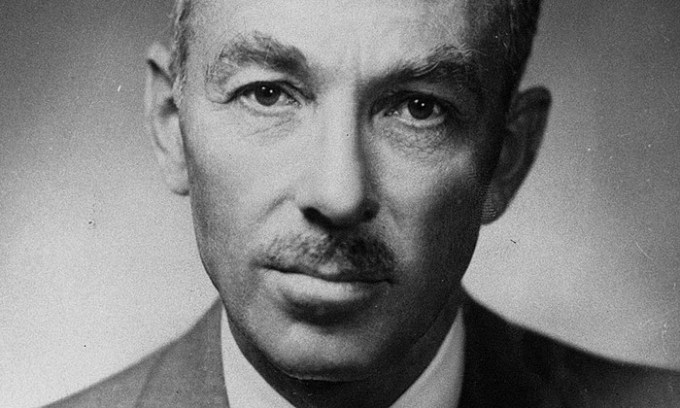


 Richard L. Fricks