I’m currently taking a writing, blogging, and coaching sabbatical due to family health issues. For now, I’ll repost selected articles from my Fiction Writing School.
One way to think about plot is as a “push-pull between protagonist and antagonist.” Although the protagonist is the character who frames and, indeed, decides the story’s structure, the role of the antagonist in story structure is equally important.
Last week, I shared an overview of the antagonist’s role in the first five major structural beats within a story. I originally intended it to be one post, but it turned out to be nearly twice as long as usual, so I split it in two. Today, we’ll be rounding out the subject by examining the role of the antagonist in the second half of a story’s structure—the Second Pinch Point through the Resolution.
1. The antagonistic force will function in fixed (and therefore relatively universal) ways within story structure, in order to evoke the most resonant responses from the protagonist.
2. The antagonist, as a human character, however, will be much more dynamic and even unpredictable within the story. What I’ve shared in this series is focused more on the antagonistic force’s impact upon the structure, and is therefore very general. Within your specific story, the antagonist as a character may function in ways much more nuanced than what is presented here.
The Antagonist’s Role in the Second Half of a Story’s Structure
For the protagonist, the Second Pinch Point mirrors the First Pinch Point in emphasizing the stakes and the potential threat of the antagonist. Specifically, it will foreshadow the “Low Moment” of the Third Plot Point to follow. Whatever the antagonist threatens here will be significantly endangered or destroyed later in the Third Plot Point. However, the very threat itself is what prompts the protagonist into the (possibly hubristic) gambit of the False Victory that precedes the Low Moment.
For the antagonist, the Second Pinch Point also mirrors the First Pinch Point in representing a moment of significant aggression (to whatever degree) against the protagonist. Here, the antagonist flexes his muscles, acting from his place of strength after the Midpoint. His strength is real, but because he has not gained any new insights (either practically or thematically), his ability to adapt to the forward momentum of the plot is beginning to stall out. In short, the protagonist is evolving faster than the antagonist—and this will be the deciding factor in the end.
Antagonist’s Role in the Second Pinch Point: The antagonist will initiate the events of the Second Pinch Point based on his advancements at the Midpoint. From his perspective, what he enacts here may seem like the beginning of the endgame. He may push back at the protagonist in the belief that one more shove will be enough to topple his foe and remove the protagonist as an obstacle. However, he will likely overestimate his own position and underestimate the protagonist’s. As a result, he may not even fully realize that the effort he expends here does not have its desired effect. The protagonist may seem to retreat, but unbeknownst to the antagonist, this retreat is only so the protagonist can gather her forces for what the protagonist deems as the beginning of the endgame.
At the Third Plot Point, everything changes for both characters. The protagonist initiates this major beat with a calculated pushback against the antagonist (or, alternatively, toward the protagonist’s own plot goal). In many ways, the protagonist’s gambit will succeed. She will use what she has learned in the previous beats to overcome the obstacles that once stymied her. She may well strike a significant and damaging blow against the antagonist. But because of her own ongoing and incomplete inner conflict between Lie and Truth, she will also pay a huge price for this attack. For the protagonist, the two sides of the Third Plot Point can be termed False Victory and Low Moment.
For the antagonist, this beat is similarly complicated. On the one hand, the protagonist just hit him where it hurts. Prior to this, the antagonist believed himself in a good position from which to triumph. Now, his weaknesses and blind spots have been exposed. But on the other hand, as we’ve already seen, this was a Pyrrhic victory for the protagonist—meaning the antagonist may still be able to win, if only by default. Both parties will retreat to lick their wounds. From here on, a final confrontation is not only necessary but inevitable. Their next meeting will decide who will reach their ultimate plot goals and who will not.
The Role of the Antagonist in the Third Plot Point: The antagonist will be consolidating his own resources and preparing for a major pushback against the protagonist as well. He may receive the protagonist’s efforts with some sort of ambush, which turns the tables on the protagonist at the last minute. The antagonist will not be defeated here and may even gain some significant ground in the overall conflict. However, for the antagonist too, the Third Plot Point will usually represent a comparatively desperate moment. Time is running out; both parties will recognize that the conflict will soon have to be decided. Although the antagonist may well still hold at least a slight advantage over the protagonist, the playing field will have leveled some since the beginning of the conflict. Even if the antagonist’s goal is within reach, he is still likely to be feeling the tremendous pressure of the stakes.
The Climax properly begins halfway through the Third Act and will ramp up to varying degrees until the Climactic Moment at the end of the entire story. This turning point is what moves the protagonist and antagonist out of their respective reactions to the Third Plot Point and into their final confrontation.
This confrontation may be directly between these two characters and may even be the entire point of the story. One character will defeat the other. This defeat is either the goal of the story or the single remaining obstacle to enabling the goal.
However, the “confrontation” may also be indirect or even incidental. It’s possible the protagonist’s final pursuit of her goal may not require that she directly move against or overcome the antagonist; rather, just in doing whatever she must to triumph in her own goal, she may incidentally defeat the antagonistic force. The latter is particularly likely in stories that focus on inner or relational conflict.
The Antagonist’s Role in the Climax: At this point in the story, it is more important than ever to keep in mind that the antagonist is a character with personal desires and goals of his own. Although his primary goal at this point may indeed be to destroy the protagonist, he must still be pursuing that end for a reason—and now that the conflict has reached its final deciding stroke, that reason will be more important to the antagonist than ever. What he has been working toward throughout the story is about to be decided in a definitive way. Even if the stakes seemed higher for the protagonist throughout most of the story, now the playing field has been leveled. The antagonist has every bit as much at stake as does the protagonist.
The Climactic Moment ends the Climax—and the plot conflict. It is the moment that decides who “wins” and who “loses.” In a positive story, the winner is almost always the protagonist. However, the concept of “defeating” the antagonistic force should be understood in the context of the obstacles having been removed from between the protagonist and her ultimate plot goal. This is what brings the conflict to an end. (Thus, it is not so much that there is no conflict without an antagonist, but more so that there is no antagonist without the need for conflict.)
In a story in which the predominate aspect of the antagonistic force is found within the protagonist, the external antagonist’s ultimate positioning within the finale will not be as important. For instance, returning to last week’s example of a story about competitors, the protagonist’s victory may be moral than literal. Even if it is a literal victory within the competition, the emphasis will be less on the protagonist’s having overcome at the antagonist’s expense and more on the protagonist’s own inner transformation into strength.
In fact, in some stories the conflict will end with the protagonist and antagonist resolving their differences and perhaps even mutually claiming the plot goal.
The Antagonist’s Role in the Climactic Moment: The Climactic Moment functions similarly for both characters. It is the beat in which the conflict ends. The relationship of both protagonist and antagonist to their plot goals will be definitively decided, via their actions, in some way. There will be no forward progression toward this particular goal any longer.
The Resolution is the beat after the Climactic Moment. In most stories, it will be given at least a scene, maybe more. In other stories, it is literally nothing more than a beat. It is the closing note in the story, the “fade out.” Functionally, it exists to provide closure to the cause and effect of the entire story and the Climactic Moment in particular. It shows the reactions of the protagonist and antagonist to what just happened.
The Antagonist’s Role in the Resolution: In many stories, the antagonist will not be present for the Resolution. Either he will have been functionally eliminated from the story world (killed off, banished, etc.), or he will have become irrelevant to the protagonist now that he is no longer an obstacle. In other stories, particularly those in which the antagonist is an important relationship character, the Resolution may offer a conciliation between the characters. This may range from a full-on partnership agreement between them to merely a shaking of hands and a nod of respect before they go their separate ways. It is also possible that one party (probably the protagonist if she’s following Positive-Change Arc) may be willing to reconcile but the other is not and simply walks away, effectively banishing himself.
***
Too often, we synonymize “antagonist” with “bad guy.” From a structural perspective, the antagonist is merely a force opposing the protagonist’s forward progress and therefore prompting the protagonist’s growth. Understood in this way, the role of the antagonist in structure can be strengthened to create a more rounded and convincing story at every beat.
I’m currently taking a writing, blogging, and coaching sabbatical due to family health issues. For now, I’ll repost selected articles from my Fiction Writing School.
Emily Dickinson, Virginia Woolf, Oliver Sacks, Rebecca Solnit, Bronson Alcott, Michael Pollan, Jamaica Kincaid, and more.
BY MARIA POPOVA
Something happens when you are in a garden, when you garden — something beyond the tactile reminder that, in the history of life on Earth, without flowers, there would be no us. Kneeling between the scale of seeds and the scale of stars, touching evolutionary time and the cycle of seasons at once, you find yourself rooted more deeply into your own existence — transient and transcendent, fragile and ferociously resilient — and are suddenly humbled into your humanity. (Lest we forget, humility comes from humilis — Latin for low, of the earth.) You look at a flower and cannot help but glimpse the meaning of life.
Perhaps because the life of a garden is also a vivid reminder that anything of beauty and radiance takes time, takes care, takes devotion to seed and sprout and bloom, gardens have long been living cathedrals for the creative spirit.
Here, drawn from a lifetime of marginalia on great writers’ and artists’ letters and diaries, essays and novels, is a florilegium of my favorite exultations in the rewards and nourishments of gardens.
VIRGINIA WOOLF
In the spring of 1939, looking back on her life, Virginia Woolf (January 25, 1882–March 28, 1941) recounted her earliest memory — red and purple anemones printed on her mother’s black dress — and her most vivid childhood memory, also of a flower, in the garden by the large white house on the Celtic Sea coast where she grew up:
I was looking at the flower bed by the front door; “That is the whole”, I said. I was looking at a plant with a spread of leaves; and it seemed suddenly plain that the flower itself was a part of the earth; that a ring enclosed what was the flower; and that was the real flower; part earth; part flower. It was a thought I put away as being likely to be very useful to me later.
All writers are unhappy. The picture of the world in books is thus too dark. The wordless are the happy: women in cottage gardens.
This was less a lament than a life-tested truth, for Woolf had found the most reliable salve for her own battle with the darkness in a cottage garden.
At the end of WWI, as the Spanish Flu pandemic was sweeping the world, Virginia and Leonard Woolf knew they had to leave London — their landlord had given them notice a year earlier. They went to the country, went to an auction, and purchased, for £700, Monk House — a sixteenth-century clapboard cottage without running water or electricity, but with a splendid acre of living land. Its story and its centrality to Woolf’s life and art comes alive in Virginia Woolf’s Garden (public library) by Caroline Zoob, who lived at Monk House and tended to its lush grounds for a decade.
Flowers by the Bloomsbury artist Vanessa Bell, Virginia Woolf’s sister.
At first, Virginia Woolf approached gardening the way one approaches any new creative endeavor: with passionate curiosity and quavery confidence. She wanted to grow her own food, but was unsure what would thrive or how to tend to it; she wanted flowers, but was unsure what would bloom or how to start the seeds, so she planted some in soap boxes filled with soil, then wrote to a friend asking if this was the way. Within a couple of years, much thanks to Leonard’s increasingly ardent devotion to the garden, she was eating pears for breakfast and reporting that “every flower that grows booms here.”
At the peak of her first spring at Monk House, having worked in the garden past sunset on the unusually chilly last day of May, Virginia exulted in her diary:
The first pure joy of the garden… weeding all day to finish the beds in a queer sort of enthusiasm which made me say this is happiness.
Over the next few years, the garden became her great joy and solace; for Leonard, it became a life’s work and his great creative achievement. Just before the December holidays of 1925, during that most contemplative of seasons, she wrote in her diary:
I’ve had two very happy times in my life — childhood… and now. Now I have all I want. My garden — my dog.
Virginia Woolf at Monk House with her dog. (Photograph by Vita Sackville-West.)
For nine years at Monk House, she had been using the unheated garden toolshed as a writing studio. In 1928, the surprising success of Orlando — the art she made of her love for Vita Sackville-West, which Vita’s son later called “the longest and most charming love letter in literature” — rendered Virginia and Leonard solvent for the first time in their shared life. Now, with a half-disbelieving eye to a proper room of her own, she exulted in finally having “money to build it, money to furnish it.”
And build it she did, overlooking the garden, which she came to regard as nothing less than “a miracle.” She gazed out at the “vast white lilies, and such a blaze of dahlias” that, even on cold grey English days, “one feels lit up.”
After a particularly debilitating spell of her lifelong depression began lifting, she found her “defiance of death in the garden,” declaring in the diary: “I will signalise my return to life — that is writing — by beginning a new book.”
But it seems to me that it was only after a guided tour of Shakespeare’s house one May day in her early fifties that Virginia Woolf, in recognizing the role of the garden in his creative life, fully allowed herself to recognize its role in her own.
Marveling at the mulberry tree outside Shakespeare’s window and the “cushions of blue, yellow, white flowers in the garden,” she wrote in her diary:
All the flowers were out in Shakespeare’s garden. “That was where his study windows looked out when he wrote The Tempest,” said the man… I cannot without more labour than my roadrunning mind can compass describe the queer impression of sunny impersonality. Yes, everything seemed to say, this was Shakespeare’s, had he sat and walked; but you won’t find me, not exactly in the flesh. He is serenely absent-present; both at once; radiating round one; yes; in the flowers, in the old hall, in the garden; but never to be pinned down… To think of writing The Tempest looking out on that garden: what a rage and storm of thought to have gone over any mind.
I find it not coincidental that Shakespeare haunts the conclusion of her exquisite reflection on the childhood memory of the flower-bed that revealed to her the meaning of art and the meaning of life, inspiring her most direct formulation of a personal philosophy:
It is a constant idea of mine; that behind the cotton wool is hidden a pattern; that we — I mean all human beings — are connected with this; that the whole world is a work of art; that we are parts of the work of art. Hamlet or a Beethoven quartet is the truth about this vast mass that we call the world. But there is no Shakespeare, there is no Beethoven; certainly and emphatically there is no God; we are the words; we are the music; we are the thing itself.
EMILY DICKINSON
“If we love Flowers, are we not ‘born again’ every Day,” Emily Dickinson (December 10, 1830–May 15, 1886) wrote to a friend just before her springtime death at fifty-five. When her coffin was carried across the field of buttercups to the nearby cemetery, as she had requested, most of the townspeople awaiting it knew the enigmatic woman with the auburn hair as a gardener rather than a poet. Her first formal act of composition as a girl had been not a poem but an herbarium, and only four of her nearly two thousand surviving poems had been published in her lifetime, all sidewise to her overt consent. Susan — the great love of Emily’s life, to whom she had written her electric love letters and dedicated most of her poems — listed her “Love of flowers” as the foremost attribute of the poet who often signed herself as “Daisy.”
But make no mistake — the garden was the true laboratory for Emily Dickinson’s art, and in that art flowers figured as her richest symbolic language. She might have written her poems on the seventeen and a half square inches of her cherrywood writing desk upstairs in the sunlit bedroom facing West, but all creative work comes abloom first in the mind — the rest is mere transcription — and her mind was most sunlit among her flowers. It was there, too, that she beamed her penetrating intellect at the invisible interleaving of the universe and came to see, a year before Ernst Haeckel coined the term ecology, how every single flower is a microcosm of complex ecological relationships between numerous organisms and their environment.
Emily Dickinson captured this understanding in a spare, stunning 1865 poem, in which the flower emerges not as the pretty object of admiration to which the conventions of Victorian poetry had confined it but as a ravishing system of aliveness — a silent symphony of interconnected resilience, which the flower-loving one-woman orchestra Joan As Police Woman set to song for the opening installment in the animated season of The Universe in Verse, with art by Ohara Hale based on Emily Dickinson’s herbarium and lettering by Debbie Millman based on Emily Dickinson’s handwriting:
BLOOM by Emily Dickinson
Bloom — is Result — to meet a Flower And casually glance Would cause one scarcely to suspect The minor Circumstance Assisting in the Bright Affair So intricately done Then offered as a Butterfly To the Meridian — To pack the Bud — oppose the Worm — Obtain its right of Dew — Adjust the Heat — elude the Wind — Escape the prowling Bee Great Nature not to disappoint Awaiting Her that Day — To be a Flower, is profound Responsibility —
DEBBIE MILLMAN
A century after Virginia and Leonard Woolf started their Monk House garden amid the Spanish Flu pandemic, Debbie Millman — my longtime former partner and now darling friend — and her wife Roxane undertook a kindred act of resistance to despair as the deadliest pandemic of our own century was furling humanity into fetal position. Watching their small garden grow into a blooming emblem of aliveness, Debbie composed an illustrated love letter to its unexpected gifts, to the way it bridged the seasonal and the cosmic, the transient and the eternal, to its blooming, buzzing affirmation of Gwendolyn Brooks’s poetic-existential observation that “wherever life can grow… it will sprout out, and do the best it can.”
Looking back on the record of his experiment, he observes:
Patterns and themes and concerns show up… My mother is often on my mind. Racism is often on my mind. Kindness is often on my mind. Politics. Pop music. Books. Dreams. Public space. My garden is often on my mind.
The garden indeed proves to be his readiest source of daily delight — a living reminder that spontaneity, unpredictability, and the occasional gladsome interruption of our habitual consciousness are essential components of delight. In an early-August entry titled “Inefficiency,” he writes:
I don’t know if it’s the time I’ve spent in the garden (spent an interesting word), which is somehow an exercise in supreme attentiveness — staring into the oregano blooms wending through the lowest branches of the goumi bush and the big vascular leaves of the rhubarb — and also an exercise in supreme inattention, or distraction, I should say, or fleeting intense attentions, I should say, or intense fleeting attentions — did I mention the hummingbird hovering there with its green-gold breast shimmering, slipping its needle nose in the zinnia, and zoom! Mention the pokeweed berries dangling like jewelry from a flapper mid-step. Mention the little black jewels of deer scat and the deer-shaped depressions in the grass and red clover. Uh oh.
This wildly delightful tone, fusing the miraculous and the mischievous, carries the book:
When people say they have a black thumb, meaning they can’t grow anything, I say yeah, me too, then talk about the abundant garden these black thumbs are growing.
Inevitably, Gay — like every gardener — arrives at the spiritual aspect of this earthliest and earthiest of the arts:
A lily was the first flower I planted in my garden, and I pray to it daily in the four to six weeks that it offers up its pinkish speckling by getting on my knees and pushing my face in, which, yes, is also a kind of kissing, as I tend to pucker my lips and close my eyes, and if you get close enough you’d probably hear some minute slurping between us, and for some reason I wish to deploy the verb drowning, which, in addition to being a cliché, implies a particular kind of death, and I will follow the current of that verb to suggest that the flower kissing, the moving so close to another living and breathing thing’s breath, which in this case is that of the lily I planted six years ago, will in fact kill you with delight, will annihilate you with delight, will end the life you had previously led before kneeling here and breathing the breathing thing’s breath, and the lily will resurrect you, too, your lips and nose lit with gold dust, your face and fingers smelling faintly all day of where they’ve been, amen.
I plan my garden as I wish I could plan my life, with islands of surprise, color, and scent. A seductive aspect of gardening is how many rituals it requires… By definition, the gardener’s errands can never be finished, and its time-keeping reminds us of an order older and one more complete than our own. For the worldwide regiment of gardeners, reveille sounds in spring, and rom then on it’s full parade march, pomp and circumstance, and ritualized tending until winter. But even then there’s much to admire and learn about in the garden.
Considering the existential universals that pulsate beneath the particulars of any category of creative expression, she adds:
Gardeners have unique preferences, which tend to reflect dramas in their personal lives, but they all share a love of natural beauty and a passion to create order, however briefly, from chaos. The garden becomes a frame or their vision of life… Nurturing, decisive, interfering, cajoling, gardeners are extreme optimists who trust the ways of nature and believe passionately in the idea of improvement. As the gnarled, twisted branches of apple trees have taught them, beauty can spring in the most unlikely places. Patience, hard work, and a clever plan usually lead to success: private worlds of color, scent, and astonishing beauty. Small wonder a gardener plans her garden as she wishes she could plan her life.
ROBIN WALL KIMMERER
The preeminent bryologistRobin Wall Kimmerer has devoted her life and her lyrical prose to contemplating our relationship with the rest of nature. In Braiding Sweetgrass: Indigenous Wisdom, Scientific Knowledge and the Teachings of Plants (public library), she bridges her scientific training with her Native heritage to explore “the equations of reciprocity and responsibility, the whys and wherefores of building sustainable relationships with ecosystems” — questions rendered most intimate and alive in the garden.
In a splendid antidote to the four-century delusion of dualism Descartes cast upon us, Kimmerer writes:
A garden is a way that the land says, “I love you.” … Gardens are simultaneously a material and a spiritual undertaking.
Illustration by Carson Ellis from What Is Love? by Mac Barnett
Half a century after the protagonist of Willa Cather’s novel My Antonia exclaimed while lying on his back in his grandmother’s garden that to find happiness is “to be dissolved into something complete and great,” Kimmerer reflects:
It came to me while picking beans, the secret of happiness.
I was hunting among the spiraling vines that envelop my teepees of pole beans, lifting the dark-green leaves to find handfuls of pods, long and green, firm and furred with tender fuzz. I snapped them off where they hung in slender twosomes, bit into one, and tasted nothing but August, distilled into pure, crisp beaniness… By the time I finished searching through just one trellis, my basket was full. To go and empty it in the kitchen, I stepped between heavy squash vines and around tomato plants fallen under the weight of their fruit. They sprawled at the feet of the sunflowers, whose heads bowed with the weight of maturing seeds.
As she ambles past the potato patch her daughters had left off harvesting that morning, Kimmerer considers the parallels between parenting and gardening in what it means to care for, to steward, to love — whether the particular piece of nature that is every child and every living thing, or the totality of nature. Drawing on the ways she shows her daughters love — making them maple syrup in March, bringing them wild strawberries in June, watching the meteor showers together in August — she finds a mirror-image in the way nature loves us:
How do we show our children our love? Each in our own way by a shower of gifts and a heavy rain of lessons.
Maybe it was the smell of ripe tomatoes, or the oriole singing, or that certain slant of light on a yellow afternoon and the beans hanging thick around me. It just came to me in a wash of happiness that made me laugh out loud, startling the chickadees who were picking at the sunflowers, raining black and white hulls on the ground. I knew it with a certainty as warm and clear as the September sunshine. The land loves us back. She loves us with beans and tomatoes, with roasting ears and blackberries and birdsongs. By a shower of gifts and a heavy rain of lessons. She provides for us and teaches us to provide for ourselves. That’s what good mothers do.
I am reminded here of how the English language, unlike my native Bulgarian, pays homage to this parallel between parenting and planting in its lexicon: nursery is the word for both the place where we nurture our young as they start their lives and the place where we start our gardens. Kimmerer captures this parent-like responsibility to the life of the land, to the mutuality of care:
In a garden, food arises from partnership. If I don’t pick rocks and pull weeds, I’m not fulfilling my end of the bargain. I can do these things with my handy opposable thumb and capacity to use tools, to shovel manure. But I can no more create a tomato or embroider a trellis in beans than I can turn lead into gold. That is the plants’ responsibility and their gift: animating the inanimate. Now there is a gift.
People often ask me what one thing I would recommend to restore relationship between land and people. My answer is almost always, “Plant a garden.” It’s good for the health of the earth and it’s good for the health of people. A garden is a nursery for nurturing connection, the soil for cultivation of practical reverence. And its power goes far beyond the garden gate — once you develop a relationship with a little patch of earth, it becomes a seed itself.
The garden is a place of many sacraments, an arena — at once as common as any room and as special as a church — where we can go not just to witness but to enact in a ritual way our abiding ties to the natural world. Abiding, yet by now badly attenuated, for civilization seems bent on breaking or at least forgetting our connections to the earth. But in the garden the old bonds are preserved, and not merely as symbols. So we eat from the vegetable patch, and, if we’re paying attention, we’re recalled to our dependence on the sun and the rain and the everyday leaf-by-leaf alchemy we call photosynthesis. Likewise, the poultice of comfrey leaves that lifts a wasp’s sting from our skin returns us to a quasi-magic world of healing plants from which modern medicine would cast us out.
Such sacraments are so benign that few of us have any trouble embracing them, even if they do sound a faintly pagan note. I’d guess that’s because we’re generally willing to be reminded that our bodies, at least, remain linked in such ways to the world of plants and animals, to nature’s cycles.
REBECCA SOLNIT
“If war has an opposite, gardens might sometimes be it,” Rebecca Solnit writes in Orwell’s Roses (public library) — the unsynthesizably wonderful story of the rose garden the thirty-three-year-old George Orwell planted at the small sixteenth-century cottage his suffragist aunt had secured for him as he contemplated enlisting in the Spanish Civil War.
Solnit observes that the garden, paradoxically, both feeds and counterbalances the art that is both her life’s work and Orwell’s:
A garden offers the opposite of the disembodied uncertainties of writing. It’s vivid to all the senses, it’s a space of bodily labor, of getting dirty in the best and most literal way, an opportunity to see immediate and unarguable effect.
[…]
To spend time frequently with these direct experiences is clarifying, a way of stepping out of the whirlpools of words and the confusion they can whip up. In an age of lies and illusions, the garden is one way to ground yourself in the realm of the processes of growth and the passage of time, the rules of physics, meteorology, hydrology, and biology, and the realms of the senses.
In this place of paradoxes and pleasing tensions — control and chaos, transience and durability, planning and surprise — none is more pleasing than the garden’s dual reminder that we are insignificant particles in vast a cosmos of process and phenomena, and we are potent seeds of change, our littlest actions rippling out into the evolutionary unfolding of the whole. Solnit captures this with her signature pointed poetics:
To garden is to make whole again what has been shattered: the relationships in which you are both producer and consumer, in which you reap the bounty of the earth directly, in which you understand fully how something came into being. It may not be significant in scale, but even if it’s a windowsill geranium high above a city street, it can be significant in meaning.
DEREK JARMAN
In 1989, shortly after his HIV diagnosis and his father’s death, the English artist, filmmaker, and LGBT rights activist Derek Jarman (January 31, 1942–February 19, 1994) left the bustling pretensions of London for a simple life on the shingled shores of Kent. He took up residence in a former Victorian fisherman’s hut between an old lighthouse and a nuclear power plant on the headland of Dungeness, a newly designated a conservation area. He named it Prospect Cottage, painted the front room a translucent Naples yellow, replaced the ramshackle door with blue velvet curtains, and set about making a garden around the gnarled century-old pear tree rising from the carpet of violets as the larks living in the shingles sang high above him in the grey-blue English sky.
At low tide, he collected some handsome sea-rounded flints washed up after a storm, staked them upright in the garden “like dragon teeth,” and encircled each with twelve small beach pebbles. These rudimentary sundials became his flower beds, into which he planted a wondrous miniature wilderness of species not even half of which I, a growing gardener, have encountered — saxifrage, calendula, rue, camomile, shirley poppy, santolina, nasturtium, dianthus, purple iris, hare-bell, and his favorite: sea kale. (A gorgeous plant new to me, which I immediately researched, procured, and planted in my Brooklyn garden.)
As the seasons turned and his flowers rose and the AIDS plague felled his friends one by one, Jarman mourned loss after loss, then grounded himself again and again in the irrepressible life of soil and sprout and bud and bloom. The garden, which his Victorian ancestors saw as a source of moral lessons, became his sanctuary of “extraordinary peacefulness” amid the deepest existential perturbations of death, his canvas for creation amid all the destruction. On the windblown shore, living with a deadly disease while his friends — his kind, our kind — are dying of it in a world too indifferent to human suffering, gardening became his act of resistance as he set out to build an alternative garden of Eden:
Before I finish I intend to celebrate our corner of Paradise, the part of the garden the Lord forgot to mention.
The record of this healing creative adventure became Jarman’s Modern Nature (public library) — part memoir and part memorial, a reckoning and a redemption, a homecoming to his first great love: gardening. What emerges from the short near-daily entries is a kind of hybrid between Tolstoy’s Calendar of Wisdom, Rilke’s Book of Hours, and Thoreau’s philosophical nature journals.
On the last day of February, after planting lavender in a circle of stones he collected from the beach under the clear blue sky, he writes:
Apart from the nagging past — film, sex and London — I have never been happier than last week. I look up and see the deep azure sea outside my window in the February sun, and today I saw my first bumble bee. Plated lavender and clumps of red hot poker.
Iris from A Curious Herbal by Elizabeth Blackwell, 1737. (Available as a print, benefitting the Nature Conservancy.)
In the first week of March, Jarman arrives at what may be the greatest reward of gardening:
The gardener digs in another time, without past or future, beginning or end. A time that does not cleave the day with rush hours, lunch breaks, the last bus home. As you walk in the garden you pass into this time — the moment of entering can never be remembered. Around you the landscape lies transfigured. Here is the Amen beyond the prayer.
In the essay on Jarman, titled “Paradise,” she twines the questions of whether gardening is a form of art and whether art is a form of resistance — a necessary tool for building the Garden of Eden we imagine a flourishing society to be:
Gardening situates you in a different kind of time, the antithesis of the agitating present of social media. Time becomes circular, not chronological; minutes stretch into hours; some actions don’t bear fruit for decades. The gardener is not immune to attrition and loss, but is daily confronted by the ongoing good news of fecundity. A peony returns, alien pink shoots thrusting from bare soil. The fennel self-seeds; there is an abundance of cosmos out of nowhere.
[…]
Is art resistance? Can you plant a garden to stop a war? It depends how you think about time. It depends what you think a seed does, if it’s tossed into fertile soil. But it seems to me that whatever else you do, it’s worth tending to paradise, however you define it and wherever it arises.
A century and a half after Walt Whitman extolled the healing powers of nature after his paralytic stroke, the poetic neurologist Oliver Sacks (July 9, 1933–August 30, 2015) gave empirical substantiation to these unparalleled powers.
As a writer, I find gardens essential to the creative process; as a physician, I take my patients to gardens whenever possible. All of us have had the experience of wandering through a lush garden or a timeless desert, walking by a river or an ocean, or climbing a mountain and finding ourselves simultaneously calmed and reinvigorated, engaged in mind, refreshed in body and spirit. The importance of these physiological states on individual and community health is fundamental and wide-ranging. In forty years of medical practice, I have found only two types of non-pharmaceutical “therapy” to be vitally important for patients with chronic neurological diseases: music and gardens.
Having lived and worked in New York City for half a century — a city “sometimes made bearable… only by its gardens” — Sacks recounts witnessing nature’s tonic effects on his neurologically impaired patients: A man with Tourette’s syndrome, afflicted by severe verbal and gestural tics in the urban environment, grows completely symptom-free while hiking in the desert; an elderly woman with Parkinson’s disease, who often finds herself frozen elsewhere, can not only easily initiate movement in the garden but takes to climbing up and down the rocks unaided; several people with advanced dementia and Alzheimer’s disease, who can’t recall how to perform basic operations of civilization like tying their shoes, suddenly know exactly what to do when handed seedlings and placed before a flower bed. Sacks reflects:
I cannot say exactly how nature exerts its calming and organizing effects on our brains, but I have seen in my patients the restorative and healing powers of nature and gardens, even for those who are deeply disabled neurologically. In many cases, gardens and nature are more powerful than any medication… The effects of nature’s qualities on health are not only spiritual and emotional but physical and neurological. I have no doubt that they reflect deep changes in the brain’s physiology, and perhaps even its structure.
BRONSON ALCOTT
“I had a pleasant time with my mind, for it was happy,” Louisa May Alcott wrote in her diary just after she turned eleven, a quarter century before Little Women bloomed from that uncommon mind — a mind whose pleasures and powers were nurtured by the profound love of nature her father wove into the philosophical and scientific education he gave his four daughters.
The progressive philosopher, abolitionist, education reformer, and women’s rights advocate Bronson Alcott (November 29, 1799–March 4, 1888) developed his ideas about human flourishing and social harmony by observing and reflecting on the processes, phenomena, and pleasures of the natural world — something he shared with the Transcendentalists of his generation, and particularly with his best friend: the naturalistic transcendence-shaman Ralph Waldo Emerson.
In 1856, while living next door to the visionary Elizabeth Peabody in Boston — the seedbed of Transcendentalism, a term Peabody herself had coined — Alcott borrowed and devoured Emerson’s copy of a book sent to him by an obscure young Brooklyn poet as a token of gratitude for having inspired it: Walt Whitman’s Leaves of Grass, published months earlier.
Hot pepper from Elizabeth Blackwell’s A Curious Herbal. (Available as a print, benefitting The Nature Conservancy.)
Whitman’s unexampled verse — so free from the Puritanical conventions of poetry, so lush with a love of life, so unabashedly reverent of nature as the only divinity — stirred a deep resonance with Bronson’s own worldview and inspired him to try his hand at the portable poetics of nature: gardening. Right there in the middle of bustling Boston, where his young country was just beginning to find its intellectual and artistic voice, Alcott set up his humble urban garden. One May morning — a century and a half before bryologist Robin Wall Kimmerer contemplated gardening and the secret of happiness, before Olivia Laing wrote of gardening as an act of resistance, before neurologist Oliver Sacks drew on forty years of medical practice to attest to the healing power of gardens — the fifty-six-year-old Alcott planted some peas, corn, cucumbers, and melons, then wrote in his journal:
Human life is a very simple matter. Breath, bread, health, a hearthstone, a fountain, fruits, a few garden seeds and room to plant them in, a wife and children, a friend or two of either sex, conversation, neighbours, and a task life-long given from within — these are contentment and a great estate. On these gifts follow all others, all graces dance attendance, all beauties, beatitudes, mortals can desire and know.
By mid-summer, Alcott had discovered in his garden not only a creaturely gladness but a portal into the deepest existential contentment — something akin to the creative intoxication that he, like all artists, found in his literary calling:
My garden has been my pleasure, and a daily recreation since the spring opened for planting… Every plant one tends he falls in love with, and gets the glad response for all his attentions and pains. Books, persons even, are for the time set aside — studies and the pen. — Only persons of perennial genius attract or recreate as the plants, and of books we may say the same, as of the magic of solitude.
JAMAICA KINCAID
A chief gladness of gardening comes from its dual nature, from how it salves our longing for making order out of chaos but also frustrates it. There is elemental satisfaction in the reminder that we can never fully control nature — that, in fact, any sense of control is a childish fantasy, for we ourselves are children of nature, made by the selfsame forces and phenomena we play at bridling.
That is what the writer and gardener Jamaica Kincaid celebrates in My Garden (Book) (public library) — a fractal delight I discovered via Ross Gay, who devotes to it a midsummer entry in his yearlong journal of daily delights. (All delight is fractal.)
Writing in the first year of the twenty-first century, in a passage evocative of the poetic physicist Richard Feynman’s insistence that “nature has the greatest imagination of all,” Kincaid reflects:
How agitated I am when I am in the garden, and how happy I am to be so agitated. How vexed I often am when I am in the garden, and how happy I am to be so vexed. What to do? Nothing works just the way I thought it would, nothing looks just the way I had imagined it, and when sometimes it does look like what I had imagined (and this, thank God, is rare) I am startled that my imagination is so ordinary.
What to do? becomes the recurring incantation of the garden’s imagination. Puzzled by why her Wisteria floribunda is blooming out of season and reason, in late July rather than in May, Kincaid wonders:
What to do with the wisteria? should I let it go, blooming and blooming, each new bud looking authoritative but also not quite right at all, as if on a dare, a surprise even to itself, looking as if its out-of-seasonness was a modest, tentative query?
[…]
My garden has no serious intention, my garden has only series of doubts upon series of doubts.
This, of course, is the definition of the scientific method — the vector of revelation as a series of doubts and tentative queries continually tested against reality. But there is also a spiritual dimension to Kincaid’s questioning refrain, to the longing for an answer from an external entity with higher powers of omniscience — this, of course, is the definition of religion. In her gasping wonderment, she arrives at something beyond reason and beyond belief — the single animating force beneath all science and all spirituality:
What to do? Whom should I ask what to do? Is there a person to whom I could ask such a question and would that person have an answer that would make sense to me in a rational way (in the way even I have come to accept things as rational), and would that person be able to make the rational way imbued with awe and not so much with the practical; I know the practical, it will keep you breathing; awe, on the other hand, is what makes you (me) want to keep living.
I’m currently taking a writing, blogging, and coaching sabbatical due to family health issues. For now, I’ll repost selected articles from my Fiction Writing School.
Have you ever written for several hours, then emerged from your creative stupor feeling like you’ve just run a marathon?
I tend to hang around a lot of writers, and our routine is as follows: Wake up > eat > write > nap > eat > write > sleep. Notice that nap wedged in the middle of writing? Yeah, that’s necessary.
It could be because we’ve been staring at a screen for hours on end, or maybe it’s the growing cramp in our hands, but if you catch us sans-nap, we’re gonna look like zombies.
From start to finish, the writing process is exhausting. We all know how difficult a first draft can be, and the edits that follow are painful and seemingly never-ending. But that’s not the only reason writing drains the life out of us.
The fact of the matter is, writing can be a very strenuous activity on the brain.
Before we get into the segment I’d like to call “This is your brain on drugs writing,” we have a couple myths to bust.
Myth #1 – Humans Only Use 10% of Their Brain
If you’ve seen the movie Lucy, or Limitless, or the T.V. show Limitless, or The Matrix, or pretty much any sci-fi movie that involves brain power, you might hold the misconception that humans only use a limited portion of their brains. This means the possibilities, should we be able to access the full extent of our brain power are… I guess you could say… limitless.
That’s a load of hooey.
Neuroscientists exist to study the brain; they’ve been doing it for years and have gotten pretty good at it. They take their work seriously, but if you ask any one of them about the “unused section of your brain,” they’ll probably laugh at you.
According to neurologist Barry Gordon in an article by Scientific American, the entirety of our brain remains active “almost all the time,” and we use every part of it.
This is doubly true when you’re writing, but we’ll get into that in a bit. Your main takeaway from this busted myth is that we do use all of our brains, and it is possible to operate at full capacity.
As a side note, though, never write a story about accessing the full extent of your brain. It’s overdone.
But I digress.
Myth #2 – The Left Brain and the Right Brain
The second myth that we need to bust is a very widely held belief. That of the left brain and the right brain.
Many believe that the human population can be split into two categories: the analytical left-brain thinkers and the creative right-brain thinkers.
While some people can be defined by their logic and some by their creativity, it’s not the side of the brain they most use that gives them those traits.
Yes, it’s true that the brain has a left side and a right side, and that they even have somedifferent functions (strong emphasis on some). However, one side cannot operate without the other, one side cannot dictate your personality, and there is no way for one side to be “more dominant.” That’s not how brains work.
So, when people say that writers, artists, or (insert creative profession here) are brilliant because their left brain and right brain are working together, it’s like saying someone is alive because their heart and lungs are working together.
DUH. THAT’S WHAT BRAINS DO.
And that leads us to the main point of this article.
Your Brain on Writing
We are lucky to live in an age of technology, invention, and discovery. Scientists yearn to understand how the world works and how the people who inhabit the world operate. They run tests and conduct studies until they find evidence that satisfies them.
Enter Martin Lotze of the University of Greifswald in Germany.
Martin Lotze and his merry band of researchers sought to discover what the brain looked like when engaged in a writing activity, comparing a novice writer’s brain to an expert writer’s brain as they wrote.
Lotze had done multiple studies on artists’ brains, but never writers, because of the intricacies of the available technology.
To pull off this study, Lotze had to find a way to take a brain scan —more specifically an fMRI — while his subjects were writing. This would require that their heads be in a gigantic, magnetized device, with limited movement, and it would require that they see what they are writing. See the challenge?
Lotze found a way to use a series of mirrors attached to the machine (and a specially designed desk) that would allow the subjects to see their writing without having to move their head around. Then, all Lotze needed were volunteers.
To gather a control level for his subjects’ brain waves while writing by hand, he had his 28 writers copy an excerpt. After the baseline brain activity was gathered, he had the subjects brainstorm and write a short story for three minutes.
According to the research, some areas of the brain became more active when the writers were asked to come up with their own stories rather than just copy text.
During the brainstorming session, the occipital lobe (which helps with visualization) became more active — meaning that the subjects might have been “seeing” the scenes they were writing in their heads.
When the actual creating began, the hippocampus and the front of the brain became active. Lotze suggests that these regions were gathering factual information to include in the story and sorting through the different characters and plotlines available to the writer.
The research shows that different parts of your brain are active at different stages of the writing process. If shown a photo of your brain, a neuroscientist could probably figure out whether you’ve been writing or not, and how far you’ve gotten in the process.
But What About Expert Writers?
The ones to whom brainstorming comes as second nature, and who can juggle characters and plotlines more effortlessly.
Lotze and his team moved their study to the University of Hildesheim and their prestigious writing program. They recruited 20 expert writers (or, those who were attending this prestigious program) to participate in the same study, allowing Lotze and his team to discover whether expertise affects brain activity.
What they found was interesting.
Muscle Memory
Ok, so the brain isn’t technically a muscle, but it often behaves like one.
Expert athletes have trained their muscles to perform certain functions, and expert creatives can do the same with their brain.
Lotze and his team of researchers discovered that, while writing down their stories, the expert writers used an additional part of their brain — the caudate nucleus.
The caudate nucleus is the region of the brain that handles automatic functions, or functions that are practiced over time. For example, the act of handwriting letters on a page. You learned the letters when you were a toddler, traced them, and learned how to write them yourself. After years of practice, it’s now an automatic function. When that region is active, it means there is some form of memory involved.
What kind of memories are expert writers pulling from? It’s kind of hard to know what someone is thinking when their brain is cycling through ideas, sentences, and the many automatic functions it takes to write. Our technology is advanced, but not that advanced.
We could hypothesize that they are pulling memories from sentences they’ve formulated in the past, stories they’ve thought up before, or maybe even techniques they’ve learned about storytelling. But we may never know.
They also discovered that, in the expert writer’s brain, the regions that deal with speech and word formation (known as Broca’s and Wernicke’s areas) are used more frequently in the brainstorming stage compared to novice writers, who tend to visualize in pictures more. This could mean that, before even putting pen to paper, expert writers are already thinking about words or phrases they are going to use to tell their story.
It could also mean that expert writers have trained their brain to see things differently, to be more language oriented, and to visualize not just with the occipital lobe.
Training Your Brain
If you’re not a professional writer, or haven’t been for very long, chances are your brain operates like the novice writers’ in Lotze’s study.
How do you get from novice to expert? How do you train your brain and activate your caudate nucleus?
You need three things:
Time
Willpower
Several hundred pieces of paper
Ok, so maybe you need several hundred things (if we’re counting every sheet of paper you’re going to use).
The point is, training your brain takes practice, maybe even years of it. Ever heard of the rule that you need 10,000 hours of practice to become an expert? Spoiler alert: scientists debunked that a while back, but the base idea still stands. It may take 1,000 hours. It may take 10,000; it may even take 50,000. It depends on your brain plasticity (or your brain’s ability to change over time). Either way, you’ll need patience and a whole lot of willpower to get through it.
Here are some activities you can do to help expand your mind and train that brain!
Free write every day for at least two minutes a day. You can write whatever you want in those two plus minutes. You could write a haiku, a diary entry, or something a little more ambitious. (That isn’t to say haikus aren’t ambitious.) The goal is to get used to the act of writing and coming up with content as you go.
Read your #writinggoals. If you’re a writer, you’re a reader, and all readers have their idols. Read the kind of content you aspire to write, and read a lot of it. Your brain will absorb the vocabulary, syntax, and general style of the writing you’re reading and naturally incorporate it into your own work.
Look things up. Artists, athletes, and even scientists are always learning new techniques to help them get better. Writers can do the same. Expand your vocabulary by flipping through a thesaurus or a dictionary, study grammar books, and definitely look something up if you don’t know it. Push yourself to learn more about your craft, and you’ll grow because of it.
Overwhelm your brain. The brain is pretty damn powerful. If you push it, chances are it will rise to the occasion. Test your limits by writing for an hour longer than you think you can. Read Derrida. Write a haiku! Treat your brain like a muscle and do reps until you just can’t do it anymore. Just like a muscle, your brain will grow.
Don’t think about it too much. If you put in the work, your brain will grow on its own. Your subconscious will pick up on what you are doing and adjust accordingly. Trust your brain. It’s gotten you this far, hasn’t it?
Work Hard, Play Hard
If there is anything the research tells us, it’s that our brain is one very active organ when we’re writing. Both the left hemisphere and the right hemisphere work together to handle the comprehension, brainstorming, story creation, and physical writing of a story. Not 10% of your brain, ALL of your brain.
No wonder you feel exhausted after writing for a few hours. Your brain has just run a marathon!
Moreover, the research on expert writers tells us that some can actually operate on a sort of autopilot. It proves that writing is a skill that takes practice and repetition to train your brain before it becomes easier.
To become an expert writer, you’ll have to work at it, dedicating a lot of time and patience to the craft. Luckily, all that practice has scientifically proven results.
So keep working hard, but make sure you take a break every so often. Your brain deserves it!
I’m currently taking a writing, blogging, and coaching sabbatical due to family health issues. For now, I’ll repost selected articles from my Fiction Writing School.
Procrastination – the act of delaying an event – is a universal human habit. Authors fall victim to it just like everyone else. Despite claiming writing is our passion, many of us will do almost anything to distract ourselves from putting words on the page. That’s fine in short periods. It becomes a problem, though, when you let it happen so often you hardly ever write. Millions of passionate writers have killed their careers by allowing this sickness to possess them. A monstrous seagull of a mental state, procrastination picks off fledgeling writers like turtle hatchlings on a beach, and even pecks at experienced authors to stop them slipping back into the water.
To be clear, procrastination can be a symptom of burnout, but it isn’t burnout itself. Yes, you might feel tired of writing, but those who suffer from burnout haven’t been slacking off, avoiding it for weeks, months or years; they’ve hustled relentlessly and injured themselves from overwork. It you’re burnt out then only rest will help you. If, however, you suspect you’re not injured from overwork but paralysed every day by the seagull of procrastination in your mind, you’re in a good position to escape that seagull and get back into the flow.
As you will find out in today’s blog post, while procrastination never goes away completely, you can manage it. Yes, the seagull will appear on occasion but, unlike turtles, we can learn survival tactics. We can create and carry mindset tools to protect ourselves and internalise strategies to live in a way that helps us avoid the beast altogether. Killing procrastination for good is impossible but, by educating ourselves and changing our habits, we can clip its wings and tame it. This article will show you how.
Remove Obstacles
Those who give advice on how to write more often start with time management tips. The problem, though, is that procrastinating writers often have spare time and know how they should spend it. Their issue isn’t availability or knowledge; it’s friction. James Clear, author of the habit guide Atomic Habits, explains it clearly when she says, “The greater the obstacle — that is, the more difficult the habit — the more friction there is between you and your desired end state.” Writing isn’t hard but it is a daunting obstacle and, to procrastinating authors, other activities seem easier by comparison. As a result, many of us follow the path of least resistance.
Eliminate those easier paths from your life, however, and your writing will seem like less of an obstacle. You could, for instance, clean and tidy your workspace the night before a writing session to ensure you’re not tempted when you should be writing. Or you could turn off the internet before you begin. Having your writing pad, laptop, voice recorder — whatever you use — set in your workspace will also help, removing the friction of having to carry them from elsewhere. Outline what you plan to write in your next session at the end of your current one, too. That makes starting the next day less daunting as you’ll know how to begin.
Block Out Time
We’ve all told ourselves that we’ll do something “later” only to reach the end of the day and realise it’s too late to start so we’ll have to “do it tomorrow.” The issue is that if you keep kicking the proverbial can down the road, 30 years pass and that can eventually becomes a cannot. If you actually want to beat procrastination and make progress then you must make time for it every day until it’s done. For you, that might mean blocking out time for which you can only work on your book, as you would block out a dentist’s appointment. Give your writing importance and make it non-negotiable, otherwise you will let other people derail it forever.
According to a 1997 study cited in Fast Company, morning people tend to excel at nurturing good habits and staving off bad habits. Plus, they tend to procrastinate less. One explanation why is that they execute early in the day when they have more energy, and before the people in their life divert their attention. Not everyone is a morning person, but you can produce similar results by copying the habits of morning people. For example, if you struggle to block out time to write, or you find yourself unable to focus late at night, try going to bed earlier and setting an earlier alarm. In doing so, you’ll create a distraction free time block where nobody expects anything from you as you’re normally asleep. That way, you can execute on your writing before the day begins.
Lower the Bar
“It doesn’t really matter much if on a particular day I write beautiful and brilliant prose that will stick in the minds of my readers forever, because there’s a 90 percent chance I’m just gonna delete whatever I write anyway. I find this hugely liberating.”
That quote comes from mega-bestselling teen fiction author John Green. It’s interesting because his work is both critically acclaimed and wildly commercial. He acknowledges that his first drafts are bad and that, for him, the initial writing process is simply about getting words on the page. This means his editing process is the magic that turns a delete-able first draft into an acclaimed bestseller.
Consider this when tackling your own procrastination. Don’t focus on investing too much emotional energy into writing a perfect first draft. Instead, lower the bar to remove the expectations that paralyse you from writing. Once you’ve done that, you can write without fear of consequence, knowing all you’re doing is filling the page. Worry about editing it later. This approach can work in relation to quality and quantity. Afraid you can’t write your first draft like polished Hemingway prose? Neither could Hemingway! Make peace with writing badly. Daunted by a 2,000-word target? Drop the minimum goal to 100 words and trust that getting over that initial hurdle will kickstart your flow state. Lower every bar and you will start writing more consistently.
Learn Just in Time
It’s impressive when you watch a seasoned self-published author at work. They can effortlessly hop from one task to another; writing solid prose, formatting like an artist, managing designers, crafting efficient blurbs, collating effective metadata and building strong marketing campaigns. When we hear about these people, we want to learn their ways — to become publishing polymaths ourselves — and we want it now. Hence, many of us stop writing so we can consume every blog post, podcast and YouTube video we can find just in case we need the information. Then, after some time, we realise:
We’ve learned a lot but haven’t written in ages.
We probably won’t need most of what we’ve learned.
We’ll have to re-learn a lot by the time we need it.
This is the trap of just-in-case learning. It feels productive but it’s actually a form of procrastination — more edutainment than education. When we do this, we don’t need or remember most of the knowledge we encounter. To work efficiently and make progress like the pros, what you really need is to not learn just in case, but just in time. This means searching for any knowledge you need at the moment you need it. Will this lead to you making mistakes through ignorance? Yes, but the time it takes to correct those mistakes is often far shorter than the time you would have spent becoming a walking publishing encyclopaedia, full of mis-remembered information.
Publish Often
Facebook has a motto: “Move fast and break things.” It endorses the idea of taking frequent action to make swift progress, even if the product you launch isn’t perfect. This idea has served Facebook well because it teaches employees to launch imperfect products rather than keep tweaking forever. It suggests they will never have enough information to achieve perfection so might as well release a product as soon as it’s passable. By their logic, it’s only by releasing a product and receiving feedback that you can learn how to improve it. Authors who spend years writing their debut novel could benefit from this mentality. By releasing a good but imperfect book, they would learn more from the experience than they ever would revising an unfinished manuscript.
Set a deadline to publish often and you too can overcome this form of tweaker’s procrastination. Putting time limits on projects forces you to create on a regular basis. As prolific author, blogger and entrepreneur Seth Godin has said when discussing his secret to writing success:
“If you know you have to write a blog post tomorrow, something in writing, something that will be around 6 months from now, about something in the world, you will start looking for something in the world to write about.”
This is true for the creation of ideas and words. A deadline makes writers’ block irrelevant. When you know you have to publish something next week, you will choose ideas and find words. Will the work meet your idea of perfection? No, but you’ll learn more from a complete project than an unfinished one. Hence, if you keep getting bogged down by aiming for perfection, publish often — somewhere public to keep yourself accountable.
Beating procrastination isn’t easy. It takes time to eradicate bad habits and form new neural pathways to solidify good ones. Follow the tips outlined in this blog, however, and you will procrastinate less and write more often. The seagull will turn up some days, but it won’t stick around long if you keep working to minimise its influence. Push through any blips and writing will eventually become your way of life.
Daniel Parsons
Dan Parsons is the bestselling author of multiple series. His Creative Business books for authors and other entrepreneurs contains several international bestsellers. Meanwhile, his fantasy and horror series, published under Daniel Parsons, have topped charts around the world and been used to promote a major Hollywood movie. For more information on writing, networking, and building your creative business, check out all of Dan’s non-fiction books here.
I’m currently taking a writing, blogging, and coaching sabbatical due to family health issues. For now, I’ll repost selected articles from my Fiction Writing School.
We hear it over and over: Show, don’t tell. You can’t get away from this advice, not in writing workshops, at conferences, or heck, even when visiting this blog. Writers Helping Writers and the thesaurus work we do is all about strengthening show, don’t tell skills.
There’s a good reason for this, though. Showing draws a reader in so they are more emotionally involved. Telling informs.
Often paired with “show, don’t tell” advice is the assertion that not all telling is bad. That’s also true. Telling is necessary, and acts as a balance to showing. If everything was shown, books would be 400,000 word monstrosities. And our readers? Asleep after twenty pages.
Does this means our stories should be equal parts showing and telling? Not by a long shot. In storytelling, showing is King.
The spirit of show, don’t tell is recognizing when a detail or moment is important, and then slowing things down briefly to describe it.
Now “slowing things down” doesn’t mean lazy, liquid writing – far from it. Adding sugary, fluffy words without purpose might pretty up a sentence, but it also slows the pace and weakens writing.
Think of words as currency–limited currency. If we only have so many words to work with, we become more careful about how we use them.
Being choosy is a good thing in writing. Is something important to the story? Will it add meaning and depth, reveal something about the characters, and enhances the reader’s experience? If so, it’s probably a detail to expand upon.
Show, Don’t Tell & Emotion
Most articles and workshops on show, don’t tell focus on emotion. It’s no wonder because emotion is one area where showing almost always trumps telling. After all, we want readers to feel part of what’s happening and connect with what a character is feeling, and it’s easier to do that through showing. Consider these:
Dee waited for Kirk to get home. She was furious. (Telling)
Dee paced the kitchen. She was as mad as Hell. (Weak showing + telling)
Dee lapped the kitchen table, crushing fistfuls of air and counting the minutes until she’d have something more solid to choke. Kirk was a dead man. (Showing.)
Showing engages. It involves. It can make readers feel like they are participating in the moment. That’s why scenes with emotions usually have a higher percentage of showing.
Show, don’t tell is something that we should always keep at the front of our mind as it forces us to think about the reader’s experience and how to make it better. And because we want to do more with less (word currency) we try harder to find the best words to describe something. When we become picky about our description and language, our writing improves!
Mary stopped on the sidewalk. The house in front of her was old and creepy. This couldn’t be the right place, could it? (Telling)
The house towered over Mary, blocking the sun and stealing warmth from the air. Peeling porch steps sagged and the shutters hung askew, like old bones barely able to hold together. Mary dug for the slip of paper Grandmother had given her. This must be the wrong address. Had to be. A cold tingle slid across her shoulders and she froze. Someone, or something, was watching. (Showing)
Showing usually requires more word count, which is why we want to think carefully about which details to include and which not to. I could have also described the scabby lawn and toppled flower pots, or even how the trees seemed to bend toward the house as if cradling its secrets. But it’s easy to get carried away, especially when you are trying to build atmosphere and mood. Choose powerful details that do the job and keep the writing tight.
Show, Don’t Tell & A Character’s Physical Features
Show, don’t tell isn’t always about using one over the other. It’s about using both effectively and challenging ourselves to do more with description. Consider:
Marcy pounded on her upstairs neighbor’s door, ready to lash into the jerk blasting his My dog died and my tractor left me country music at six AM. An old, blue-hair answered, shocking the words right out of Marcy. Not what she expected, not at all.
Marcy pounded on her upstairs neighbor’s door, ready to lash into the jerk blasting his My dog died and my tractor left me country music at six AM. A cherubic grandmother answered, white curls carefully coiffed and a flower-print apron circling her thick waist. “Good morning, dear.” Her smile was the equivalent of a warm cookie on a plate next to an inviting glass of milk.
I, uh, just wanted to introduce myself. Marcy.” She thrust out her hand. “I have the, you know, basement suite.”
Which one sets up the neighbor’s kindly personality and displays Marcy’s shock?
Does every character require thoughtful physical description? No. It’s really up to you to decide which characters are important enough to describe and to what degree, but when you do, challenge yourself to ditch generic details and instead choose ones that give readers insight into who the character is deep down, how they feel, or something else significant and interesting.
Make Each Word Earn the Right to Be Included
Thinking in terms of show don’t tell will make you a more effective storyteller because you get used to doing more with your description.
If you need help getting into this mindset, try One Stop for Writers’ descriptive thesaurus database. It’s the largest database of its kind and will help you brainstorm meaningful details to push the story forward and reveal your character’s deeper layers. If you like our thesaurus books, this database of ours is like that, only much, MUCH bigger!
Remember, the reader doesn’t need to know everything, only the important things. Whenever you’re not sure if you should show or tell, just think about what you the audience to get out of this moment. Do you have a point to make? Are you trying to show a character’s deeper emotions, hint at a traumatic past, or showcase how their flawed behavior is holding them back in life? If there’s something important you want readers to see, chances are you need to show.
I’m currently taking a writing, blogging, and coaching sabbatical due to family health issues. For now, I’ll repost selected articles from my Fiction Writing School.
In writing, voice happens at three levels: the author, the narrator, and the characters each have their own voices. While many editors and readers openly state they are hooked and reeled into a story by a strong voice, many writers struggle to understand let alone implement voice. Despite voice often being regarded as elusive, and even magical, voice can be understood and honed just like any other element of storytelling.
Hello everyone, September C. Fawkes here, and I’m going to be covering the writing tip this week, which is all about understanding voice. By the end, you’ll see it isn’t quite as tricky to utilize as many often think, and you’ll have some insight to help strengthen voice in your own stories. Then they, too, may have that extra magic to hook and reel in audiences.
What is Voice, Really?
First, let’s talk about what voice is. Recently I was a guest on The Rebel Author Podcast, and Author Sacha Black pointed out that voice is essentially that person’s personality, as it shows up on the page. In my opinion, when broken down, voice is made up of two things:
What the Person Thinks or Talks About + How They Say It = Voice
This is the equation I like to use when it comes to understanding voice, and it works at any level.
What the Writer Thinks or Talks about + How She Says It = Author Voice
&
What the Narrator Thinks or Talks about + How He Says It = Narrator Voice
&
What the Character Thinks or Talks about + How He Says It = Character Voice
Look at the two ingredients of voice. One is about content and the other is about how it’s communicated. Voice is made up of both, not just the content and not just the way it’s communicated.
Together, this is generally how the writer’s, narrator’s, and/or character’s personality gets on the page.
How The 3 Levels of Voice Work Together
But September, you lament, how do all these voices work together at the same time?(Or maybe you don’t lament, in any case, I’ll be happy to answer )
It’s sorta like a Russian nesting doll.
The biggest doll is the author’s voice–because every story the writer writes helps make up that voice.
Inside of that is the narrator’s voice–this is the voice of the narrator of a particular story.
Inside of that is the character’s voice–and you may even break this down further, into the viewpoint character’s voice and then into any nonviewpoint characters’ voices (which is often coming through the viewpoint character’s perspective, obviously). . . . Or not, it just depends how you want to slice and dice it.
Of the three, I think character voice is the easiest to spot and understand, so let’s focus in on that one.
Character Voice and The Voice Equation
Almost every character should have their own voice—their distinctive way of communicating their worldview (because, after all, every character has his or her own personality).
To illustrate, here are three lines from Harry Potter that reveal Hermione’s, Ron’s, and Harry’s individual voices, respectively.
“Don’t go picking a row with Malfoy, don’t forget, he’s a prefect now, he could make life difficult for you…”
“Can I have a look at Uranus too, Lavender?”
“I don’t go looking for trouble. Trouble usually finds me.”
Because Hermione believes in following rules, she regularly tells Ron and Harry to do likewise, and she’s often very logical about it. Ron, however, tends to be a little coarser than the other two and usually says comical one-liners. Finally, Harry, who is always associated with trouble, often has to defend and explain himself.
Three distinct characters. Three distinct voices.
Let’s go through the equation in regard to character voice.
What Your Character Talks About
What someone chooses to talk about (and arguably not talk about) reveals character. It reveals worldview, personality, and priorities. For this reason, it’s often helpful to work from the inside out. Knowing your character’s wants, needs, flaws, fears, and layers, will make crafting their voice easier. With that said, it’s also okay to work from the outside in, especially for side characters. You may craft a pleasing voice that then indicates who the character is.
In The Lord of the Rings, the Hobbits often talk about food. They eat a lot more than other characters so food is a higher priority for them. Because they bring up food a lot, we know it’s what they are thinking about a lot. They don’t casually strike up conversations about advanced battle tactics; they don’t have a war-based background. And any conversation they do have about battle tactics wouldn’t be on the same level as a warrior.
So, their culture, interests, and experiences influence their voices. And because they come from similar places, they talk about similar things. However, each Hobbit still has his own voice (because each Hobbit has his own personality). While Pippin would ask about second breakfast without a second thought, Frodo wouldn’t say anything.
If your character is a nutritionist, she might look at her lunch and talk about complex carbs, protein, calories, and vitamins. A fashionista might notice that her best friend is wearing this season’s color. A dentist might see people’s teeth first. Consider your character, what does she think and talk about?
How Your Character Talks
Just as the character’s background and personality influence what she talks about, they also influence how she talks. Education, age, and social circles will factor in as well. You will want to consider word choice and speech patterns, and when appropriate, slang and dialect. The character’s dominating emotions can also play into their voice’s tone.
Listen to how Samwise Gamgee talks:
“It’s like the great stories, Mr. Frodo . . . Those were the stories that stayed with you. That meant something, even if you were too small to understand why. But I think I do, Mr. Frodo, I do understand. . . . . Folk in those stories had lots of chances of turning back, only they didn’t. They kept going.”
Notice words like “Mr. Frodo,” and “folk,” help establish Sam’s voice. Pretend, instead, Gandalf said this. The word choices and speech patterns would be different. Instead of “lots of chances” he might say “many opportunities.” He might pause in different places and use different sentence structures. He’s far more educated and experienced than Sam, so he’d say those same thoughts in a different way.
Then think how Gollum would say those thoughts. . . oh, wait, he wouldn’t say those thoughts. Gollum doesn’t think like that. That’s voice too.
Consider the following example: an old friend shows up at an event the protagonist is hosting.
Notice how these different responses communicate different voices.
“Jason, thanks for coming. I know you’re really busy. How’s your son doing?”
“It’s about time you showed up to one of these things,” she teased.
“I didn’t think you cared about these events.”
“You finally came!” She gasped, ” . . .Looking like that?”
“You finally came and you look like that.”
“Did your mother guilt you into coming?”
Silence.
“What the heck?”
“Jason, I’m flattered you came.”
“Jason,” she said. “You came. I’m flattered.”
Look at the last two examples. Same words, different delivery. Putting the dialogue tag after “Jason,” adds a pause to the character’s speech, which can communicate shock over Jason himself. Whereas, the former version sounds more relaxed.
Applying The Voice Equation to the Author and Narrator
These same concepts apply to you, the author. You are a unique person. You have unique experiences, a unique personality, a unique worldview, a unique belief system. There are particular types of stories you like to write, and some you would never write. There are sentence structures you like using more than others. Maybe you are prone to choosing metaphors that come from nature. Perhaps you never use profanity. Unlike the other layers of voice, your author voice isn’t so much something you “create” as something you are. However, this isn’t an excuse for poor writing. You have an author voice, but you still have to refine how to communicate it, and that comes from study, practice, and experience. To learn more about the author’s voice, check out “Defining and Developing Your Author Voice.”
This same equation applies to the narrator. And often these days, the narrator is the viewpoint character, so you’ll need to write the narration, more or less, from that character’s perspective. Nonetheless, it is possible to narrate from a different perspective, or even a fully omniscient perspective.
Now go forth and write with voice.
Bio:
Sometimes September C. Fawkes scares people with her enthusiasm for writing and storytelling. She has worked in the fiction-writing industry for over ten years, with nearly seven of those years under David Farland. She has edited for both award-winning and best-selling authors as well as beginning writers. She also runs an award-winning writing tip blog at SeptemberCFawkes.com and serves as a writing coach on Writers Helping Writers. When not editing and instructing, she’s penning her own stories. Some may say she needs to get a social life. It’d be easier if her fictional one wasn’t so interesting.
I’m currently taking a writing, blogging, and coaching sabbatical due to family health issues. For now, I’ll repost selected articles from my Fiction Writing School.
Lucia is a writer with Reedsy, a marketplace that connects authors with editors, designers, and marketers. In Lucia’s spare time, she enjoys drinking coffee and planning her historical fantasy novel.
Whether we’re piecing together the timeline for a homicide or puzzling out the intricacies of Newtonian mechanics, cause and effect are crucial to how we make sense of, well, everything. Of course, I say “we” loosely. As writers, most of us won’t actually be catching killers or solving the coefficient of fiction. But still, stories are no exception to this rule: without cause and effect, they fall apart.
At the end of the day, writers should have as tight a grasp on causality as any detective or physicist. It doesn’t matter if you’re working on a doorstopper to rival War and Peace, or a breezy picture book for baby bookworms: you’ll need to craft a storyline that makes sense. This makes your readers want to spend time in the world you’ve created — and ensures they’ll leave it feeling enlightened and satisfied.
Of course, you can get there haphazardly, writing juicy scenes as they come to mind and attacking the chaos of your draft with a merciless red pen. But if you want to save time during the editing process, keep cause and effect in mind as you plot.
Let’s try that process for a hypothetical novel, a quirky romance called Heart of Moss with a randomly generated plot. Our heroine, Princess Felicienne, grows attached to a hitman, codenamed “Moss,” who spends most of his time — when not assassinating the rich and powerful — as a mild-mannered florist named Alan Gill.
Ensuring the reader’s suspension of disbelief
Your readers might be razor-sharp connoisseurs of plot — the type who can spot a twist from a mile away and catalogue the clichés on every page with a sneer. But your job as a storyteller is to make them forget all that. You want to enthrall them so deeply they can’t do anything but turn the page, reading compulsively with slack-jawed awe.
Readers should approach your book as fans, not critics. The second they switch their brains to reviewer mode, you’ve already lost them. One guaranteed way to do that? Disrupting their fragile suspension of disbelief by introducing plot points from seemingly out of nowhere.
Remember Game of Thrones’ much-maligned last season? The conqueror-queen Daenerys spent much of her considerable screen-time insisting she refused to be a “queen of the ashes,” presiding over a wasteland of war dead and charred ground. But just when the city she strove so hard to take signals its surrender, she turns around and sprays it with dragon-fire.
There’s been lots of ink spilled on Daenerys’ apparent turn to the dark side, and maybe that’s a storytelling success in its own right. But as a plot point, there’s no denying it didn’t work for a lot of viewers. This unsatisfying plot twist forced them to step back from the story and watch the footage at a distance — as critics. That’s because the dragon-queen’s rampage seemed out of left field, an effect with no discernible cause.
Using Beemgee to keep track of cause and effect
Let’s try our hand at plotting out Heart of Moss without falling into Daenerys Syndrome, as we might call it. Our plot generator provided us with an opening: a meet-cute at a baseball stadium. A downpour furnished a perfect excuse for two strangers with great chemistry to get close to one another, huddling under the same umbrella.
Beemgee’s Plot tool allows us to organize our story in narrative order: that is, the order in which it’s told. So let’s enter these first few plot points:
This setup is cute enough, but it’s also pretty implausible — even by the standards of a light, romcom-style read. How exactly do a princess and a hitman end up together at a baseball game, with enough privacy to end up on a quasi-date? What is the cause — or causes, plural — behind this seemingly bizarre set of circumstances?
To figure that out, we’ll need to determine what happened before this rain-soaked meet cute. So let’s toggle over to Beemgee’s chronological view. This lets us order events according to when they happen, regardless of any flashbacks and flash forwards. How did Felicienne, a princess presumably supported by an enormous royal staff, end up at a baseball game unsupervised, without an umbrella?
And what about Alan? A hitman, cozying up to a foreign dignitary, feels awfully suspicious, even if she lied to him about her identity. Did he really offer her his umbrella because he thought she was cute, or did he have an ulterior motive? What was the actual cause behind his presence in the stadium?
When we return to the narrative view, we can decide when, in the story, to reveal that sweet-natured Alan, with his handy umbrella, is also the notorious hitman Moss. Do we clue the readers in before or after Felicienne herself finds out?
Either way, the cause and effect behind Alan’s appearance in the stadium should remain unchanged — and that should color how we write the scene. Even if we hold back some of the truth, we can’t make Alan do anything that will outright contradict the fact that he’s secretly also a hitman. If we do, readers will be frustrated when they reach the reveal.
By toggling between the chronological and narrative views, it’s easy to ensure that a story is plotted with impeccable causality, even if it’s told in an order that keeps the characters — or even the audience — in the dark. That way, your readers can enjoy your story as fans instead of critics, no matter how many twists you throw their way.
To read more of Beemgee’s writing craft articles click here
I’m currently taking a writing, blogging, and coaching sabbatical due to family health issues. For now, I’ll repost selected articles from my Fiction Writing School.
The midpoint is structurally the most significant point in a narrative.
Given that stories have a tendency to symmetry, the centre of a narrative should mark the zenith of the story arc, and with that, the pivotal point of the story.
So, to get to (mid)point: What happens in the middle of a story?
Here are some typical midpoint events:
Something searched for is found (Star Wars IV, Raiders of the Lost Ark, Lolita)
A hidden truth is unveiled (to the audience, at least) – if not yet understood (Matrix, Pride and Prejudice, The Gruffalo)
A dramatic event thwarts all plans made hitherto (James Cameron’s Titanic)
The centre of the narrative may be the discovery of something missing – in crime stories a vital piece of the puzzle may be revealed here (either to the audience or to the audience as well as the protagonist).
In any genre or dramatic category, the midpoint may be a moment of truth. This might be just a clue for the audience or perhaps an initial revelation of the true state of things.
If a character realises or finds out something that has so far been hidden, then this is the point at which the character begins to gain awareness. This counts in particular for the recognition of the character’s own internal problem. From here on the story might possibly lead up to a moment of choice at the crisis, when it becomes clear to the audience whether the character has learnt from this new awareness or not. In other words, the real need begins to overcome or supplant the character’s initial want due to what happens at the midpoint.
Some well-known examples of the midpoint
In the famous children’s book The Gruffalo, the mouse invents the creature of the title on the spur of the moment in order to scare off first a fox, then an owl, and finally a snake. In the middle of the story the mouse discovers that the Gruffalo does indeed exist. Thereupon the mouse meets (this time accompanied by the Gruffalo) the snake, the owl, and the fox – in reverse order! Perfect symmetry. The truth is revealed in the middle.
The midpoint is powerful and can swing the story into a new direction. Hamlet realises in the middle of the tragedy that Claudius did indeed murder his father. He takes action – and kills Polonius through a curtain.
The goal may be achieved at the midpoint. Indiana Jones finds the Lost Ark in the middle of the story; Humbert Humbert gets Lolita for himself when her mother dies in the middle of the story; Luke Skywalker rescues Princess Leia in the middle of the original Star Wars story. In these examples, the second half of the narrative deals with the consequences of the protagonist having attained the initial goal.
While a midpoint can be so subtle you might miss it (like Princess Leia saying to Luke Skywalker, “Aren’t you a little short for a Stormtrooper?”), in some cases the scene might be designed to be particularly memorable. The fully grown Alien in Alien doesn’t appear in all its horror until the middle of the movie. In The Godfather, it is Michael assassinating the competing mafia don along with the corrupt Police Chief. In The Godfather II, the midpoint is decidedly less spectacular but just as significant: Michael realises that his brother Fredo has betrayed the family. The consequence of this realisation only becomes apparent to the audience at the end.
The central fact of the story of the Titanic, the single most important action or event of this story, is that the ship hit an iceberg. When James Cameron made his film about the Titanic, he put the central event in the centre of the narrative.
So the midpoint marks the most significant point of change, a point of no return. After this, life cannot be the same for the protagonist, not until a new order is established at the end of the story.
After the midpoint, the forces of antagonism gather strength and close in.
The midpoint in theory
Given its striking significance, surprisingly little is made of the midpoint in narrative theory.
Gustav Freytag calls the midpoint the “climax”, but nowadays that term is generally used to refer to the final confrontation between protagonist and antagonism that typically occurs towards the end of the narrative. In Freytag’s terminology, the section of narrative after the “climax” is “falling action”, because he called everything that leads up to the midpoint “rising action”.
Freytag’s pyramid is more famous today than his novels, and to an extent it corresponds to the currently fashionable image of the “story arc”. An arc obviously heads downwards after its zenith, but Freytag calling it “falling action” seems counter-intuitive, since the build up to the final confrontation or dénouement feels much more like rising tension. After all, the midpoint escalates the action. Freytag’s unfortunate terminology may be one reason why he is now mostly relegated to academia.
How Checkov’s Gun relates to the midpoint
So, authors composing stories do well to consider which important scene or action is pivotal to the plot or provides the audience with a new understanding of the story. If you’re planning a plot, determine this one scene of greatest significance and place it as close to the exact middle of the narrative as you can.
Then consider all the scenes to the left and right of it, and see how they relate to each other. Arrange the scenes in such a manner that the scenes in the second half correspond to equivalent scenes in the first half. This achieves symmetry in the story.
The technique of foreshadowing or planting (also know as set-up and pay-off) is one of the most emotive of dramaturgical devices. Audiences react more strongly to dramatic events when they have been foreshadowed. And foreshadowing works particularly well when symmetry is taken into account.
So if you have 100 scenes, make sure scene 50 (or thereabouts) is highly significant. And if in scene 90 a gun is fired, see if you can plant that gun in scene 10.
I’m currently taking a writing, blogging, and coaching sabbatical due to family health issues. For now, I’ll repost selected articles from my Fiction Writing School.
Oliver Burkeman’s new book, Four Thousand Weeks: Time and How to Use It explores how to build a life of creativity, productivity and meaning when we have limited time available – and even less control over that time. I caught up with him to ask what that means for how we live and how we write.
Time and how to use it
Writing a weekly productivity column for The Guardian, self-confessed productivity geek, Oliver Burkeman likened himself to an alcoholic employed as a wine expert. He realised that getting more done just made him more stressed and unhappy so he turned to ancient and contemporary philosophers, psychologists, spiritual teachers to better understand how to live. Four Thousand Weeks: Time and How to Use Itshares what he learnt about leading a fulfilling and meaningfully productive life.
Productivity is personal
The problem with a lot of productivity advice, said Burkeman, “is how much of the given piece of advice is good, versus that person has the right personality for it?”
I find this a comfort. Because we are all different we don’t have to attain the one, gold standard, approved, best way of doing things. Accepting this takes the pressure off you to conform to the myth of a creative genius. Instead, when figuring out what works for your life and writing, start with you, your life, your personality and preferences.
I was keen to find out what this means for his writing. In a follow up to my 2014 interview, Oliver Burkeman shares his take on how to write when time is limited.
“I’m an expert in a very amateur way – I’m vacuuming up all the research and testing it out with a sample size of exactly one. I stumble through in trial and error, so to some extent I can say I have figured some things out.” Oliver Burkeman
Oliver Burkeman’s tips on writing when time is limited
1. Do a few things that matter to you
A lot of productivity advice promises that soon you’re going to become limitlessly capable of doing everything you need to do: to produce perfect work, to be able to deal with every incoming demand, to get round to every goal and satisfy every person.
That’s systematically, inherently impossible. It’s not because you didn’t find the right technique. It’s not because you haven’t put enough elbow grease into it.
Once you see that that ship has sailed, it’s great. That huge super-structure of pointless stress, lifts away from you, and you can just do a few things that matter to you.
2. Limit the things on your to-do list
I think that a lot of us spend a lot of our time demanding impossible things from ourselves and becoming paralysed in the process. If you were just going to wake up in the morning and pick from all the opportunities, it’s unmanageable.
What I try to do is funnel through work-in-progress where I only allow 10 things. The goal is you’ve just got 10. That narrows your focus a bit. Narrowing it to one item would be hopelessly unrealistic, because you need to bounce around a bit, you need to take care of different life domains. And then once I’ve done a few, and the number’s gone down to six, then bring four more in. It’s not flawless, because you can still use it to just keep turning over three or four easy tasks, but it’s mainly working.
When I’m really in a rut, I then follow some version of this technique where you literally write down an action on a notebook.
Do it, cross it out, write down the next one. Do it, cross it out.
You’re taking yourself by the hand and telling yourself: “Okay, we’re just going to do one thing.” It’s so gentle and the time horizon is just literally the next five minutes. And of course you can chain together a whole career that way. That’s all you’re ever actually doing is one action after another, right?
4. You already have enough to write
Writing is based on things that you’ve already written. It’s based on ideas that you’ve been reading about, things you’ve been talking about with your friends at the park or the pub, and the things you’ve been thinking in the shower.
In other words, the answer isn’t that you have to become some kind of genius who can sit down and summon brand new ideas into being.
5. Hold on to the ideas you have
I don’t think there’s such a thing as a brand new idea.
You just have to have personal systems that allow you to keep track of all the ideas you’re already having and already encountering in your life. Carry a notebook everywhere you go, save all these articles you discover when you’re browsing online.
Create a moment in your daily or weekly routine where you take all these scraps of paper that you’ve been writing ideas on, or the notebook that you’ve kept in your pocket, and put them all into a file to keep track of them. Then all you need to do when it’s time to is to take what you’ve got and work with it.
6. Write little and often
Confronting limitation is about understanding how true it is for almost all writers that little and often is the better path to a productive output than writing in binges.
Again, if you’re a binge writer and you work for days at a time and it works for you, don’t let me stop you. But I think for most people it doesn’t work or it works for three days, and it puts you out of action for a month, which is another way of saying it doesn’t work.
I suggest working in small amounts. Aim only to do half an hour or an hour in a day, maybe a little bit more depending on whether you’re combining it with a day job, but not very much.
7. Stop when your time is up
It took me a while to learn that you also have to stop when your time is up, even if you feel like you’re on a roll and you can continue. It’s all about ignoring that voice in your head that says, “I’ve written 700 words, so why don’t I try to write 3,000 today? That will be amazing.”
Every time you resist that voice, you’re building a muscle, building a capacity for patience, for coming back to the job day after day after day which will lead to much more writing because it will make you feel more excited about getting down to that work and not like writing is something you flog yourself to death on.
Writing, or creative work in general, often feels quite difficult. It’s uncomfortable to do it. It’s kind of hard. It makes you feel a bit grouchy.
I think this is another way in which we deny our limitations. We think that if we really knew what we were doing, it would feel totally lovely to be doing it. We’d be in a constant state of flow and therefore, if that’s not how it feels, well, we must have writer’s block. We must just not have the skills that we need to write.
You get into this double-bind where like writing feels like a problem, which it is, but it also feels like it’s a problem that it feels like a problem, which it isn’t.
It’s uncomfortable, but you can totally handle that discomfort. You don’t need to try to power through it and make it go away. You can just say, “Okay, I feel reluctant about doing this. I didn’t particularly want to do it. It feels difficult and I’m going to do it at the same time.”
9. Overcome your discomfort by setting tiny goals
The prospect of this kind of discomfort will stop you doing things for days and weeks and years on end.
Then, it’s consistently mind-blowing how almost all the time, it isn’t a big deal to go through that discomfort. You have to learn this lesson over and over and over again.
That’s another very good reason for these tiny goals and writing in tight bursts is that it gets harder and harder to fool yourself that you can’t cope with that discomfort, because actually 10 minutes of discomfort, you can cope with.
I’ve often assumed that the next thing would be incredibly hard or scary, and that’s a good reason to procrastinate. I’ve definitely procrastinated on all the book work that I’ve done.
But when you actually get into it, the experience doesn’t justify the anxiety you had about it. Part of the reason that feeling anxious and procrastinating on things is because they boost the feeling of control. If you don’t start something, you’re still in the driver’s seat.
I think most of us will do anything to avoid that lack of control. Because it’s like jumping off the diving board where you don’t know what’s going to happen.
11. The fantasy of perfection
A lot of people are fixed in these perfectionistic ideas, where the moment you start doing 10 minutes that’s not very good on your manuscript – that’s the moment at which you’ve had to wave goodbye to doing five hours a day and it all being Tolstoy quality.
I mean, you can hang onto that thought as long as you don’t start. As long as your finitude doesn’t come into act or contact with the world and you start doing things, you can hang onto the greatest fantasies about how it’s going to be.
12. Reject what doesn’t work
There’s this whole culture of goal-setting which is to use the ambitiousness of the goal to drive to ever greater heights and that has never worked for me.
I never get round to implementing Cal Newport style annual goals. It’s not that I disagree with them. But I have to say, it never quite works out for me. It’s never the way I actually seem to break the most ground.
13. Do what works
All the useful productivity stuff that’s ever worked for me and that continues to work is just about coming up with a slightly wiser answer to the question: “What shall I do right now?” And it’s feeling slightly more motivated and enthusiastic about what shall I do right now.
That idea of just writing a single thing and crossing it out, that’s the sort of most basic expression of “what do I do now?”
14. The game changer: Finish it!
And then the other thing I try to do a lot is to limit work in progress so that there’s a fixed number of things that I’m working on right now and that I will finish one of them or abandon it before I bring in another one.
As and when I manage to motivate myself to do three or four hours of serious creative work, it’s going to be on the same thing for two or three days, until that’s done.
That’s a game-changer. Because otherwise what happens is the moment any project feels a little bit difficult, you just bounce off to another project and you never make serious progress on any of them.
“Done is better than perfect,” relates to this idea that 100 words that you write are better than 10,000 words that you think about writing one day. One thing done is better than 10 things not getting very far.
What I’m doing when I launch into 10 projects at once is fundamentally fuelling my sense of being unlimited or godlike. Busyness can do that sometimes. On some level you’re thinking, “Hey I’m in demand. I’ve got all these things going on, that’s great.” But it’s actually a way of hiding from picking one of them, putting it on the table in front of you and doing that thing.
Make sure that you have, in your own life and work, the personal systems that allow you to keep having and developing ideas, writing words, and sending those words out into the world. What happens then is you gradually expand the perimeter of your reach, and as that perimeter expands, you sort of bump into more of the opportunities that might lead to greatest success.
***
Four Thousand Weeks – Time and How to Use It by Oliver Burkeman
I loved talking to Oliver Burkeman and finding out his advice on how to live and how to write and encourage you to read his book for more wisdom.
Four Thousand Weeks: Time and How to Use Itexplores how to build a life of creativity, productivity and meaning when we have limited time available – and even less control over that time. The 4,000 weeks of the title is the equivalent to 80 years of life. It’s a number we can all relate to and helps us understand our finitude (a rather nice euphemism for death). That is not reason for despair but, Burkeman argues, a liberating concept. Accepting our limited time on earth allows us to leverage the possibilities and opportunities we have. In short, confronting our own death is the key to leading a fulfilling and meaningfully productive life. And of course, and writing more.







 )
)


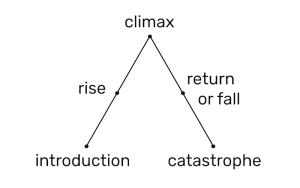
 Richard L. Fricks